For three years, Saudi Arabia has sought to contain the Houthis while avoiding a return to full-scale war. What happens next turns on what Riyadh decides, Mohammed Qubaty, a Yemeni political figure, told TML
[ISTANBUL] Saudi Arabia is weighing whether to back a Yemeni ground campaign to retake the Red Sea coast from the Houthis, an offensive that would test forces Riyadh has spent seven months assembling out of rival Yemeni militias.
Ballistic missiles hit the commercial vessel Tihama on Tuesday in Bab-el-Mandeb, the strait at the southern mouth of the Red Sea, killing four of its crew. They were the first crew deaths from a Houthi attack since the American and Israeli war with Iran began in February.
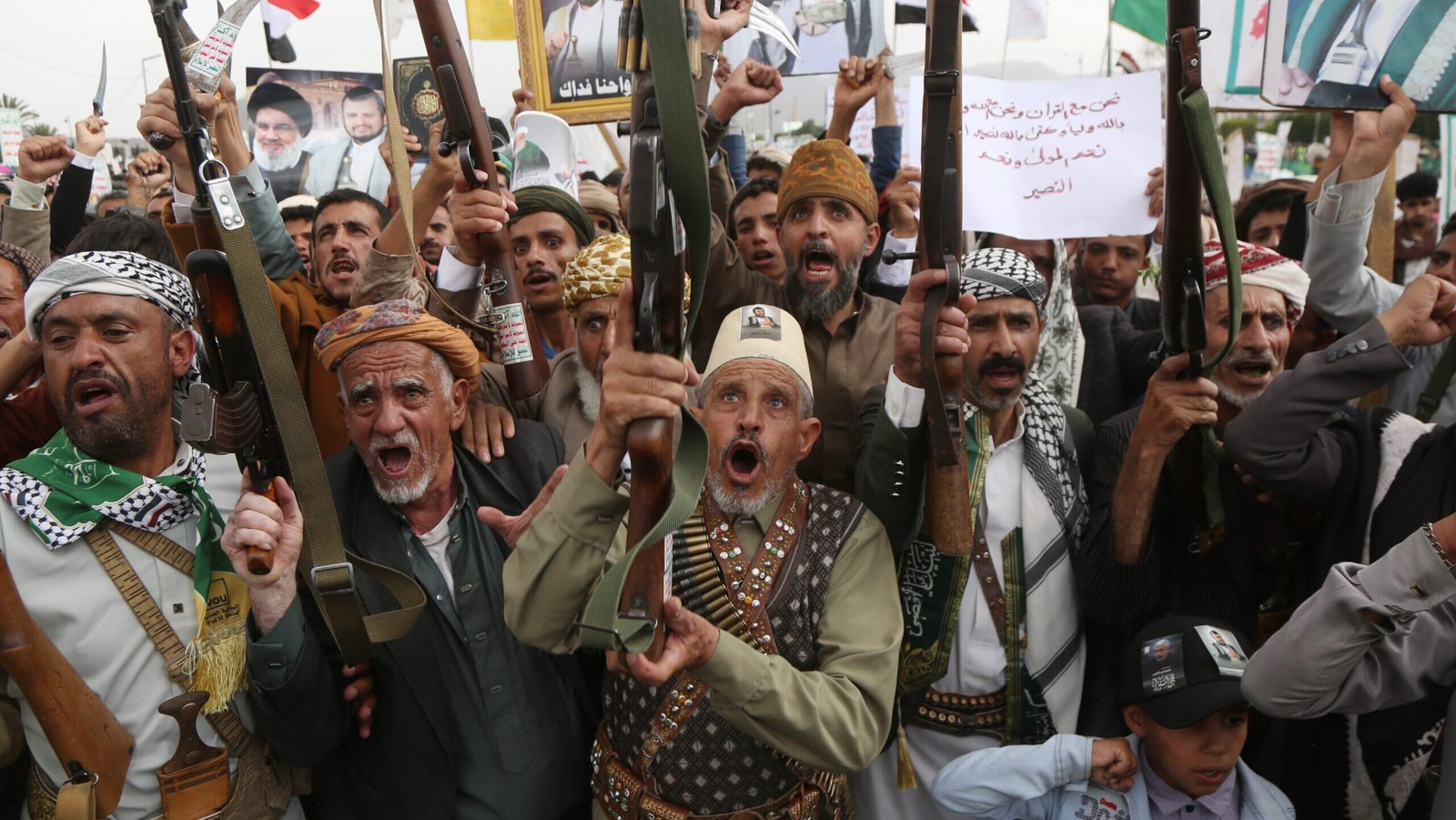
The Houthis are the Iran-backed movement that has held Yemen’s capital and its north since 2014. They now control the Red Sea shore facing Saudi Arabia, and their weapons reach into the kingdom itself. On Aug. 9, they said a drone struck the Aramco refinery at Jazan, in southern Saudi Arabia. Yanbu, the Saudi export terminal farther up that coast, ships about 4 million barrels of crude a day.
Yemen’s Transport Ministry said three missiles struck the Tihama in succession and that the dead were three Pakistanis and an Indonesian. The coast guard put the toll at six dead and 10 wounded, including two Yemeni rescue personnel it said were also targeted. The Saudi daily Al-Watan reported three. The first account came from Al-Jumhuriya, a network owned by Tareq Saleh, a commander in Yemen’s internationally recognized government.
The Houthis did not claim responsibility for several hours. That evening, the Houthi-run channel Al-Masirah carried a statement from what it called the Yemeni armed forces announcing an operation against a ship carrying Saudi military equipment. It did not name the vessel. Iranian outlets, which call the group Ansarullah, reported two events that day: a commercial ship hit in the morning and a second at midday. Ambrey, a British maritime security company, said the Tihama was neither Saudi-owned nor Saudi-operated and had sailed from Mocha on Saturday.
“The whole coastline, from Bab-el-Mandeb through Mokha and Hodeidah to Ras Isa and As-Salif, is strategically important,” Mohamed Qubaty, a former Yemeni tourism and mass media minister who is acting chairman of the Southern Civil Democratic Rally, told The Media Line. “The Houthis know that eventually the outcome of any major confrontation could be tested there.”
That government, seated in the southern port of Aden, has spent a decade fighting the Houthis with Saudi backing and a decade divided against itself. Its army is a set of rival militias, some raised by Saudi Arabia and some by the United Arab Emirates, and welding them into one force is the problem Riyadh has worked on since January.
I think Saudi Arabia is keeping its options open and taking steps to ensure that, if confrontation with the Houthis becomes necessary, it enters it from a much stronger position
“I think Saudi Arabia is keeping its options open and taking steps to ensure that, if confrontation with the Houthis becomes necessary, it enters it from a much stronger position,” Nadwa Al-Dawsari, a Yemeni conflict analyst at the Middle East Institute and the Center on Armed Groups, told The Media Line.
Houthi missiles and drones have hit Mokha, a government-held port on the Red Sea, in seven waves, the seventh on Aug. 9, said Col. Wadhah al-Dubaish, spokesman for the Joint Forces on the west coast. Yemen’s Health Ministry put the toll at seven civilians killed and 30 wounded, two of them children; Al-Watan reported eight killed and 26 wounded. An earlier attempt on a fuel tanker inside the port killed a fisherman nearby. Missiles also hit al-Khokha, farther north.
On Aug. 5, Houthi military spokesman Yahya Saree claimed a ballistic missile strike on the Saudi oil tanker Wafa off Yanbu, and later that day, a second Saudi tanker, the Daisy, in the Gulf of Aden. Riyadh confirmed neither.
Mokha is a base for the Joint Forces, al-Dawsari said. The Houthis are trying to weaken them before they can join a ground offensive and to keep any escalation on their own terms.
Qubaty said he does not believe the Houthis can degrade them decisively. “We are speaking about formations numbering in the thousands,” he said. “The more important question is whether those formations can operate together.”
He said the Houthis may be striking before the government completes its military reorganization. “The recent strikes should not necessarily be read simply as evidence of Houthi confidence,” Qubaty said. “Preemptive violence can also reveal strategic anxiety—an attempt to disrupt forces before an adversary recovers the initiative.”
Preemptive violence can also reveal strategic anxiety—an attempt to disrupt forces before an adversary recovers the initiative
Inland, the fighting is over Marib, the government’s stronghold and the center of Yemen’s oil and gas production. The death toll from Houthi strikes there and in neighboring Hadramout on Aug. 6 ranges from 17 to 58. A military officer told Xinhua, the Chinese state news agency, that at least 35 government soldiers were killed.
China has an arrangement no one else does. Beijing opened direct talks with the Houthis after the July blockade and now clears its tankers one ship at a time, keeping Tehran informed, according to Chinese trade outlets and regional officials briefed on the matter. China buys most of Iran’s sanctioned crude, revenue that helps fund the Houthis. At least four Saudi tankers bound for China have since crossed.
India has more riding on the strait than most. Saudi Arabia was its third-largest crude supplier in June, and with Hormuz shut, that oil crosses the kingdom by pipeline and leaves through Bab-el-Mandeb. Two Saudi tankers bound for India and China turned back last month.
Fertilizer is the larger exposure. Saudi Arabia supplies 42% of India’s diammonium phosphate imports under contracts signed last year for 3.1 million tons a year, and the Gulf about 70% of its urea. India buys roughly a third of the world’s traded DAP and grows its rice and wheat on it. Delayed or costlier cargoes land in the October sowing season, and from there on, food prices.
“The Houthis have demonstrated that relatively modest military capabilities—combining drones, precision-guided missiles, and small maritime platforms — can impose enormous costs on the global economy,” Harsh V. Pant, vice president for studies and foreign policy at the Observer Research Foundation in New Delhi, told The Media Line.
The divided command has long kept the government from coordinating its forces, Qubaty said. New army and air force commanders have been appointed, and integration has accelerated over the past six months.
What changed in January was that the two patrons fell out. In late December, coalition aircraft bombed a weapons shipment that reached an Emirati-linked base in eastern Yemen without Saudi permission, coalition spokesman Turki al-Maliki said. Riyadh accused the United Arab Emirates of pushing southern separatists into operations along its border, and President Rashad al-Alimi gave Emirati forces 24 hours to leave.
Saudi airstrikes stopped those separatists, the Southern Transitional Council, from taking the south outright. Its leader was charged with treason and removed from the governing council on Jan. 15, and much of the leadership is in exile or detained in Riyadh. Abu Dhabi still backs the movement, and the two approaches remain at odds, al-Dawsari said.
A Saudi general, Maj. Gen. Falah al-Shahrani, now supervises the folding of those southern units into Yemen’s defense and interior ministries. He also oversees Nation’s Shield and the Emergency Forces, Saudi-created units struck this month.
For roughly three years, Saudi Arabia has sought to contain the Houthis while avoiding a return to full-scale war. What happens next turns on what Riyadh decides, Qubaty said. He distinguishes between preparing for contingencies and deciding to launch an offensive, and cannot conclude that Riyadh has made that decision.
Neither the United Arab Emirates nor Oman joined the 14-state maritime coalition Riyadh launched on July 30 to protect Red Sea shipping, and no Gulf partner signed the mutual defense pact Riyadh made in Mecca on Aug. 7 with Turkey and Pakistan. The Saudi Defense Ministry called the coalition purely defensive.
The Houthis called it an alliance to defend Saudi crimes, and denied charging ships to pass through the strait. Reuters reported in late July that the group was weighing transit fees, exempting Chinese vessels. “Instead of weeping over the targeted ships, stop your blockade and unjust aggression against the people of Yemen,” Saree said.
Saudi Arabia built the East-West Pipeline, known as Petroline, to move crude across the country to Yanbu and skip the Persian Gulf. But tankers leaving Yanbu for Asia must still sail the length of the Red Sea and out through Bab-el-Mandeb, past the Houthis. Houthi attacks there reduce the value of the alternative route and raise insurance and shipping costs, Qubaty said.
The Houthis have protected their military spending while many civilian employees go unpaid, Qubaty said. The group collects taxes, customs duties, and fees in the territory where most Yemenis live. Under a 2018 United Nations deal, revenue from the Houthi-held port of Hodeidah was to help pay those salaries, but about 50 billion Yemeni riyals, roughly $90 million at the rate used in Houthi areas, built up before the group took it, he said.
Mohammad Bagher Zolghadr, secretary of Iran’s Supreme National Security Council, said on Aug. 8 that the Strait of Hormuz will not open until Washington changes its behavior. His conditions include an end to operations against Iran and its allies in Lebanon, Iraq, Yemen, and the Palestinian territories, an end to the naval blockade, and sanctions relief.
Iranian influence over Houthi decisions has grown lately, Qubaty said, particularly in areas that touch on the wider regional confrontation and the chokepoints. “I would not say Tehran is necessarily in the driving seat, but it is highly influential,” he said.
I would not say Tehran is necessarily in the driving seat, but it is highly influential
Yemeni security sources told Al-Watan that Houthi leaders have converted hotels in the capital and two other cities they hold into temporary headquarters, and that officers of Iran’s Revolutionary Guard are running an operations room directing both the escalation and the group’s media line. Qubaty said Iranian and Revolutionary Guard-linked personnel have operated in Houthi-held territory for years, but declined to name individuals.
“Air and maritime power can degrade capabilities and contain immediate threats, but they do not by themselves change the territorial condition that generates those threats,” Qubaty said.
Any campaign has to be fought by Yemenis, not Americans, he said.
“A durable strategy requires three concentric circles of deterrence working together: Yemeni forces restoring sovereign control on the ground; regional partners providing the strategic support necessary to sustain that effort; and international powers securing the wider maritime environment,” Qubaty said. “None of the three is sufficient alone.”
“The strategic objective should not simply be military action for its own sake,” he said. “It should be to change the balance sufficiently that serious political negotiation becomes unavoidable.”
“The danger is that the Houthis demonstrate that an armed nonstate actor controlling strategically important territory can continue exercising coercive leverage over Bab el-Mandeb and international commerce,” Qubaty said. “That would have consequences far beyond Yemen.”