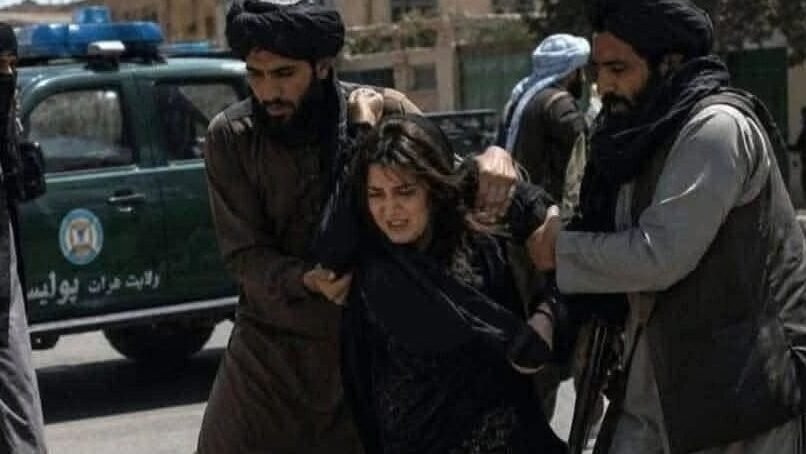
For Ziba Mastoor, escaping Afghanistan did not end the danger. After fleeing Taliban pursuit into Pakistan and then Qatar, the former Afghan government official now fears that a temporary visa could send her back to the country she says condemned her to death for converting to Christianity.
In his article, Female Afghan Christian Convert Flees Taliban, Only To Risk Deportation, The Media Line’s Arshad Mehmood presents Mastoor’s account that Taliban intelligence operatives targeted her after she embraced Christianity in 2019, raided her home in an attempt to arrest her, and later sentenced her to “stoning to death.” She said continued harassment forced her to flee first to Pakistan and then to Qatar, where she now faces the prospect of deportation once her visitor visa expires. The Media Line could not independently verify her account of the alleged death sentence.
Her story unfolds against a broader regional crackdown on Afghan refugees. Pakistan and Iran have accelerated deportations over the past year, raising concerns among humanitarian organizations that women, religious minorities, and other vulnerable Afghans could be returned to persecution under Taliban rule.
Afghanistan’s Christian community remains exceptionally difficult to document because believers generally worship in secret. Kabul-based analyst Fazal Ur Rehman Zadran said openly practicing Christianity is prohibited and that many Christian families have concealed their identities or fled to neighboring countries since the Taliban returned to power. Those who escaped now face growing uncertainty as deportation policies tighten.
The report also examines the Taliban’s broader record on women’s rights and religious freedom. Since returning to power in 2021, the Taliban has barred girls from secondary schools and universities, restricted women from much of public life, and faced criticism from the Organization of Islamic Cooperation and Islamic scholars, who argue that many of its policies have no basis in Islamic law.
UNHCR spokesperson Qaisar Khan Afridi urged that Afghan refugees not be returned to situations where their lives or freedom could be threatened, while human rights advocates Rebecca Trotter and Hadia Sahibzada argued that international pressure on the Taliban has fallen short. Both called for stronger protection measures for Afghan women and other vulnerable groups.
Mehmood’s full report places Mastoor’s ordeal within a wider humanitarian crisis, showing how Afghans who escaped Taliban rule can remain trapped between persecution at home and the risk of forced return abroad.