<
article id=”post-951522″>
On January 5, 2025, Saudi Arabia’s then ambassador to Bangladesh, Essa Youssef Essa Al Duhailan, delivered a stark reminder of a lost opportunity. Saudi Aramco, the Kingdom’s state-owned oil giant, had sent high-level delegations to Bangladesh three times between 2016 and 2018 to explore investment opportunities, including an oil refinery. Yet, according to the ambassador, the delegations received little meaningful attention and ran up against entrenched bureaucratic barriers.
The announcement, initially in 2025, raised hopes that a Saudi Arabian oil refinery could bolster Bangladesh’s longstanding energy security. However, the enthusiasm was quickly tempered, as Bangladesh appeared to remain outside meaningful negotiations to persuade Saudi Arabia to bring Aramco’s oil refinery project into the country’s investment landscape, despite continuing to purchase Saudi crude oil on commercial terms. This exposes an underlying reality in which Bangladesh could not translate a diplomatic engagement into a concrete investment outcome.
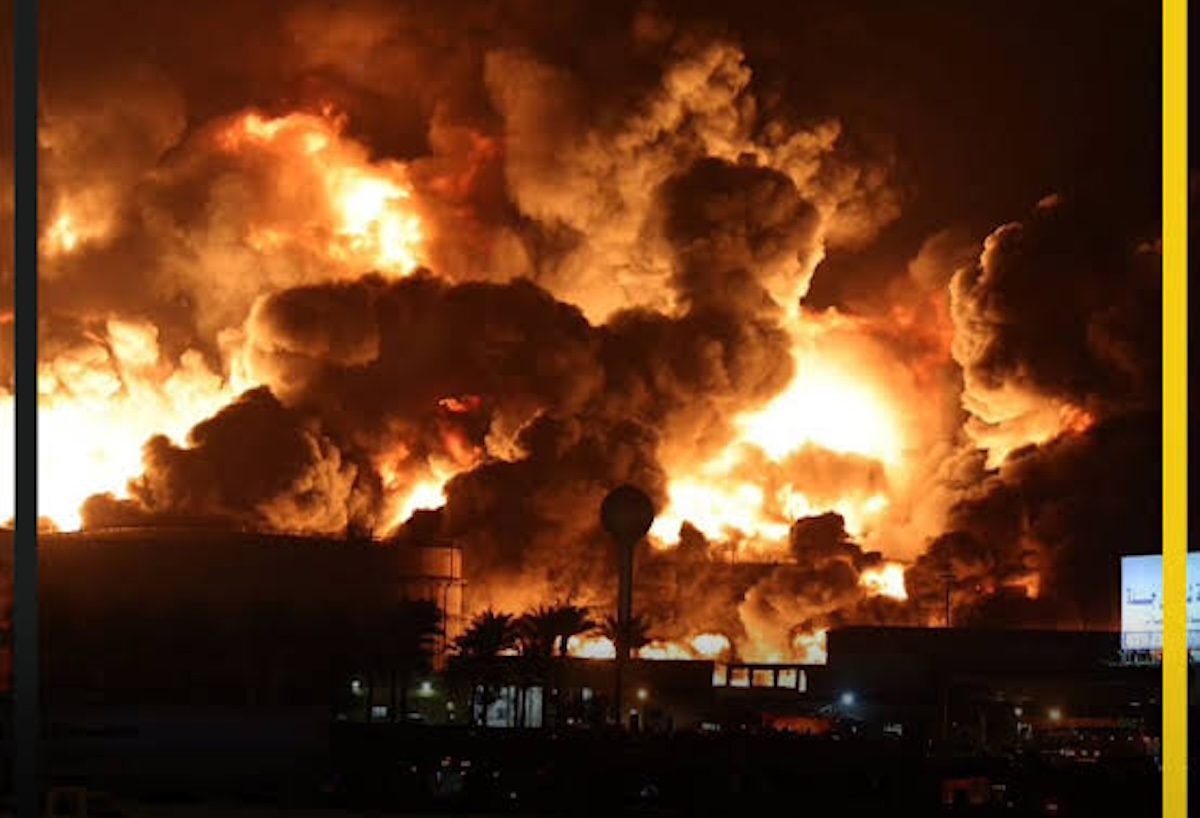
A similar case emerged when Bangladesh failed to seriously pursue South Korean conglomerate Samsung, allowing the opportunity to slip into Vietnam’s hands. Although Samsung’s prospect has faded, Aramco’s refinery still remains a possibility. Moreover, the geopolitical upheavals of 2026 – including the US-Israeli war on Iran, the closure of the Strait of Hormuz, Houthi attacks on Saudi Arabia’s domestic oil refineries, and Bangladesh’s protracted energy crisis, import dependence and eroding industrial capacity – make the question increasingly urgent: Rather than dwell on missed opportunities, what would it take for Bangladesh to bring that Saudi investment back to the negotiating table?
An energy system exposed to external shocks
Bangladesh’s case for expanding domestic refining is compelling. According to Bangladesh Petroleum Corporation (BPC) figures reported in 2026, the country’s annual petroleum demand stands at approximately 7.2 million metric tons, around 92% of which is met through imports. Eastern Refinery Limited (ERL), the country’s sole state-owned crude oil refinery, has an annual processing capacity of approximately 1.5 million tons, meeting roughly one-fifth of national fuel demand.
The imbalance is striking. Bangladesh imports substantial quantities of finished diesel, furnace oil, octane and jet fuel, while importing crude oil for domestic processing. BPC’s 2023–24 annual report recorded approximately $4.20 billion in expenditure on imported refined petroleum products alone. Including crude oil, total petroleum import expenditure reached approximately $5.04 billion that fiscal year.
These figures reveal the economic stakes. A substantial share of the country’s foreign exchange must be devoted to securing fuel essential for transport, agriculture, manufacturing and electricity generation. International price spikes, shipping disruptions and geopolitical tensions can quickly translate into pressure on reserves, higher operating costs and inflation.
The vulnerability is not theoretical. In 2026, disruptions to crude shipments through the Strait of Hormuz contributed to operational difficulties at Eastern Refinery. Bangladesh’s dependence on imported fuel means that even a disruption thousands of kilometres away can affect domestic energy availability.
A refinery cannot fully eliminate this exposure. Bangladesh would still need to import crude oil, and the price of petroleum would remain linked to international markets. Nevertheless, greater refining capacity could reduce dependence on imported finished products, improve supply flexibility and retain more value within the domestic economy.
Eastern Refinery expansion: necessary, but is it enough?
The government has already taken an important step. On 3 September 2026, Bangladesh and the Islamic Development Bank signed a $1 billion financing agreement for the modernization and expansion of Eastern Refinery. The wider project is valued at approximately $2.5 billion and is expected to add three million tonnes of annual refining capacity, increasing the refinery’s total capacity to 4.5 million tonnes.
According to the Islamic Development Bank, the expansion is expected to save approximately $394 million in foreign exchange annually by reducing dependence on imported refined petroleum products. It is also projected to lower the cost of major petroleum products by around 5% and enable production meeting Euro 5 fuel standards, replacing the current Euro 2 grade.
These are substantial gains. Yet, against annual petroleum demand of approximately 7.2 million tons, even a fully operational 4.5-million-ton refinery would not eliminate the need for imported fuels. Nor does nominal refining capacity necessarily equal actual domestic supply: performance depends on crude availability, maintenance, product yields and operating efficiency.
The Eastern Refinery expansion should therefore be viewed as a foundation, not a declaration that Bangladesh’s future petroleum requirements have been settled. Whether an additional Saudi-backed refinery would be worthwhile requires rigorous demand forecasts, cost-benefit analysis and comparison with alternative investments. But the prospect deserves serious examination before Bangladesh’s future options narrow further.
Why Saudi Arabia might still be interested
For Saudi Arabia, a refinery in Bangladesh could offer more than an outlet for crude oil. Aramco’s global strategy includes integrating upstream production with downstream refining and petrochemicals, thereby securing demand for its crude while capturing additional value across the petroleum supply chain.
Bangladesh has several potential attractions: a population exceeding 170 million, continuing demand for petroleum products, access to the Bay of Bengal and proximity to South and Southeast Asian markets. A well-designed refinery could potentially supply domestic consumers while exploring export opportunities in neighboring markets. Bangladesh should use this broader interest to reopen a structured conversation with Saudi Arabia, this time by presenting a credible project with transparent bureaucracy, and with a realistic commercial model.
Why now – and what Bangladesh must do
Recent security threats to Saudi Arabia’s energy infrastructure add another dimension to the debate, as Yemen’s Houthi militia has repeatedly targeted critical Saudi energy facilities amid renewed hostilities involving the kingdom and the Iran-aligned group.
If Bangladesh seeks to attract Aramco to establish a refinery along its Bay of Bengal coast, the present circumstances may offer a strategic opening. However, the strongest argument is not that Saudi Arabia should relocate its energy infrastructure to escape geopolitical threats, but that Bangladesh could provide a commercially viable platform for serving South Asia’s growing energy market through a mutually beneficial partnership.
To make this proposition credible, Dhaka must address the very obstacles Saudi representatives have identified: securing suitable land, developing the necessary supporting infrastructure, and establishing transparent, efficient investment procedures.
Writer and independent journalist Md. Abu Saim completed his MSS in International Political Economy from Dhaka University.