TOKYO – No one complains about holding a winning lottery ticket. By that logic, South Korea has nothing to apologize for — it’s landed, almost by accident, at the center of the AI windfall now being minted in real time.
Six months ago, SK Hynix, Samsung and the rest of Korea Inc were bracing for a brutal 2026, squeezed between US President Donald Trump’s trade war and China’s deflationary slide. The best-case scenario was simply staying out of the line of fire as the world’s two largest economies traded blows.
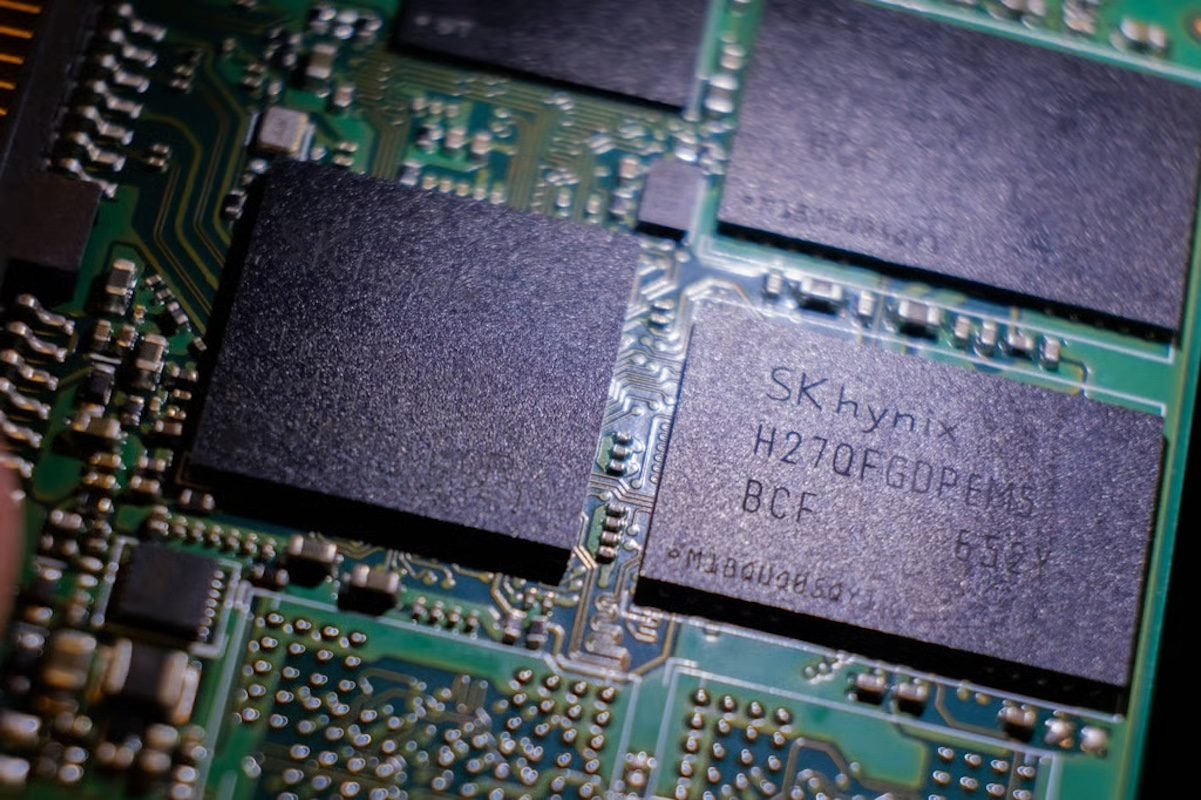
Nobody in Seoul expected artificial intelligence to ride in to the rescue — let alone this dramatically. The same forces driving the Kospi’s rally past 111% this year — AI’s all-in trade and the global data center buildout — are lifting almost every corner of Asia’s fourth-largest economy. SK Hynix shares are up 348% year-to-date, Samsung up 199% and the rest of the tech sector isn’t far behind.
The broader economy is along for the ride, too. Korea’s $1.9 trillion GDP got a direct lift in the first quarter, when AI-fueled demand pushed exports up 40% and helped deliver a stronger-than-expected 1.7% year-on-year growth rate — enough to offset soft consumer spending, sagging auto sales and creeping inflation.
Korea is hardly alone. China, Japan, Malaysia, Taiwan, Vietnam and other economies are, to varying degrees, getting caught up and carried in the frenzy. “This is what an AI supercycle looks like,” says Evercore ISI analyst Amit Daryanani.
In Korea’s case, the growing dependence on AI puts it squarely in the path of a much bigger question: is AI a bubble rivaling the dot-com crash, or something larger still, given the sheer scale of money pouring into data centers?
Tuesday’s jarring 10% plunge in the Kospi already feels like old news, erased by Micron’s blockbuster forecast, which put the global AI trade right back on solid footing.
For now, anyway. The possibility of a dot-com-style reckoning hasn’t escaped the notice of some prominent financiers and economists.
Michael Burry, of “The Big Short” fame, said in mid-May that he’s seeing technical and fundamental signals all pointing toward the “same conclusion” he reached when sizing up the late-1990s frenzy against today’s AI boom.
This week, Nobel laureate Paul Krugman weighed in. In a Substack post titled “The Chips Are Down,” Krugman observed that the whole setup looks “very fragile. It’s a kind of bubble, but not in the normal sort of asset-price form. It’s more of a kind of fad, almost a social delusion. And that, it seems likely, certainly got ahead of itself.”
So what happens when an entire industry’s meme-ification starts putting whole economies at risk? Asia is about to find out, in ways that could prove genuinely revealing.
A tech downturn could rattle Korea, Taiwan and other economies now deeply dependent on the sector — with the risk of contagion spreading to China, Japan and eventually Malaysia and Vietnam.
The deeper concern is how thoroughly AI has become the defining industry across Asia’s major economies. El Salvador betting its fortunes on crypto is one thing. It’s another matter entirely when Korea — the world’s 15th-largest economy — and Taiwan (22nd-largest), along with others positioned to spread the pain further, tie their economic futures to a technology that hasn’t yet proven it can generate returns to match the hype.
Consider Korea, where exports jumped 60.4% year-on-year in the first 20 days of June alone. Chip exports nearly tripled to $25.5 billion on surging AI-driven memory demand, with semiconductors now making up over 41% of total exports — up sharply from 18% a year earlier.
Notably, auto exports have stayed flat or worse, and investors barely seem to notice. That indifference would have been unthinkable on January 1. It captures just how aggressively Seoul has thrown itself behind AI, backing the push with more than $102 billion in incentives — and increasingly erasing the line between the AI sector and the economy at large.
The catch is that the AI trade rests on the shoulders of a handful of massive conglomerates. In Korea, that means the family-run chaebols — already known for opacity and outsized market control — are only growing more dominant.
“Any time you have narrow leadership, despite what is doing the leading, it just creates more of a fragility in markets in general,” Matt Stucky, a portfolio manager at Northwestern Mutual Wealth Management, tells Yahoo Finance. “That growth in the fundamentals, even though it’s broadened some, it’s showing up in more concentrated markets today.”
Taiwan faces a similar dilemma with Taiwan Semiconductor Manufacturing Co. (TSMC), whose 48% rally this year is pulling the entire market — and the economy — along with it. In May, Taiwan’s export orders jumped more than 47% year-on-year, marking 16 consecutive months of gains.
The information and communications technology sector generated $32 billion in exports, and electronics another $37 billion — both up more than 60% from a year earlier. Combined, the two categories now make up nearly 78% of Taiwan’s total exports.
The chip boom is doing the heavy lifting, more than offsetting weak domestic spending and the dent in household confidence from Iran-war-driven inflation. Taiwan’s economy grew a stunning 13.7% in the first quarter, its fastest pace since 1987.
As in Korea, Taiwan’s economic fate is becoming nearly inseparable from global demand for AI hardware. To a lesser but still meaningful degree, AI is also feeding growth in Japan and China.
Japan, meanwhile, holds dominant positions in semiconductor manufacturing equipment and specialized electronic components. China runs the manufacturing ecosystem that assembles most tech hardware globally, weaving AI into everything from consumer electronics to electric vehicles to its broader supply chains.
Malaysia and Vietnam’s roles owe to their growing positions in the chip supply chain itself. Malaysia has become a key hub for chip “back-end” work — the testing, assembly, and packaging that complex AI processors require.
Vietnam, for its part, has been the standout winner of Trump’s trade wars dating back to 2017, emerging as the go-to backup manufacturing base for multinationals seeking shelter from years of US-China friction.
But here, too, Korea is drawing the most attention — and feeling the most vertigo. On January 1, most Koreans would likely have named cars, ships, smartphones or K-pop as the country’s signature industry. Now it’s AI, for better or worse, with 51 million Koreans scrambling to keep pace.
The whiplash in President Lee Jae-myung’s political fortunes tells the story. When he entered the Blue House in June 2025, he carried two overriding mandates. The first was restoring calm and predictability to a political system still reeling from his predecessor’s spectacular collapse.
Only Yoon Suk-yeol knows what drove him to declare martial law in December 2024 — a move that got him impeached and imprisoned, and briefly lumped Asia’s fourth-largest economy in with the likes of Indonesia, Myanmar, the Philippines, and Thailand. Rebuilding credibility, both at home and abroad, fell to Lee.
His second mandate was tackling the “Korea discount” — the chronic undervaluation that has dogged Kospi-listed companies for years. On the campaign trail, Lee promised tighter oversight and stronger corporate governance, setting a goal of doubling the Kospi from roughly 2,500 to 5,000 over his five-year term.
AI ended up doing the heavy lifting for him. The Kospi’s surge recently pushed the benchmark briefly past 9,100 — landing Korea Inc in global headlines for all the right reasons and sparking a FOMO rush, with Korean households and fund managers worldwide alike scrambling to ride the latest wave out of Seoul.
Whether this year’s AI rally reflects genuine foresight or simple irrational exuberance is the question hanging over markets right now — made sharper by the death this same week of the man who coined that phrase. Alan Greenspan first used it in December 1996 as a warning against dot-com euphoria, drawing explicitly on Japan’s late-1980s boom and the bust that followed.
Tokyo’s progress in strengthening corporate government, meanwhile, is real, even if incomplete. The Nikkei’s climb to a record 70,000 suggests AI is playing an outsized role.
Korea, too. The case that Lee’s government has done notable structural work over the past year is thin. If it had, MSCI would already be moving to elevate Korea to developed-market status, an upgrade Seoul has lobbied for over two decades. Instead, on Wednesday, MSCI kept Korea’s $5 trillion market grouped with Brazil, China, India and South Africa.
That should give Kospi bulls pause. Korea’s potential is real. But MSCI’s unresolved concerns — including restrictions on offshore won trading — point to structural friction that hasn’t gone away. As MSCI put it, investors have signaled that the underlying issues remain unresolved. Potential and performance are two different things.
That doesn’t mean they’ll stay that way. But the same reservations that kept investors from going all-in on Korea Inc on January 1 are still very much alive 175 days later.
Korea’s Finance Ministry essentially conceded the point, stating: “If we continue to implement reforms in the foreign exchange and capital markets on our own schedule, we believe we can be included among advanced economies.”
This might matter less if Seoul’s stock market weren’t now sitting at the center of the “chip-wreck” narrative sweeping global markets. The same goes for officials in Beijing, Hanoi, Kuala Lumpur, Tokyo and beyond, as AI turns equity discounts into runaway premiums faster than investors can keep up with.
Follow William Pesek on X at @WilliamPesek