
When the Iran war closed the Strait of Hormuz earlier this year, about 20% of the world’s liquefied natural gas supply stopped flowing almost overnight. Roughly 90% of the LNG that moves through the strait goes to Asia, so the continent has absorbed the worst of it.
Gulf producers have had few good responses. Saudi Arabia cut prices for Asian buyers to soften the blow, but buyers have already begun de-risking and diversifying away from Middle Eastern supplies toward African ones.
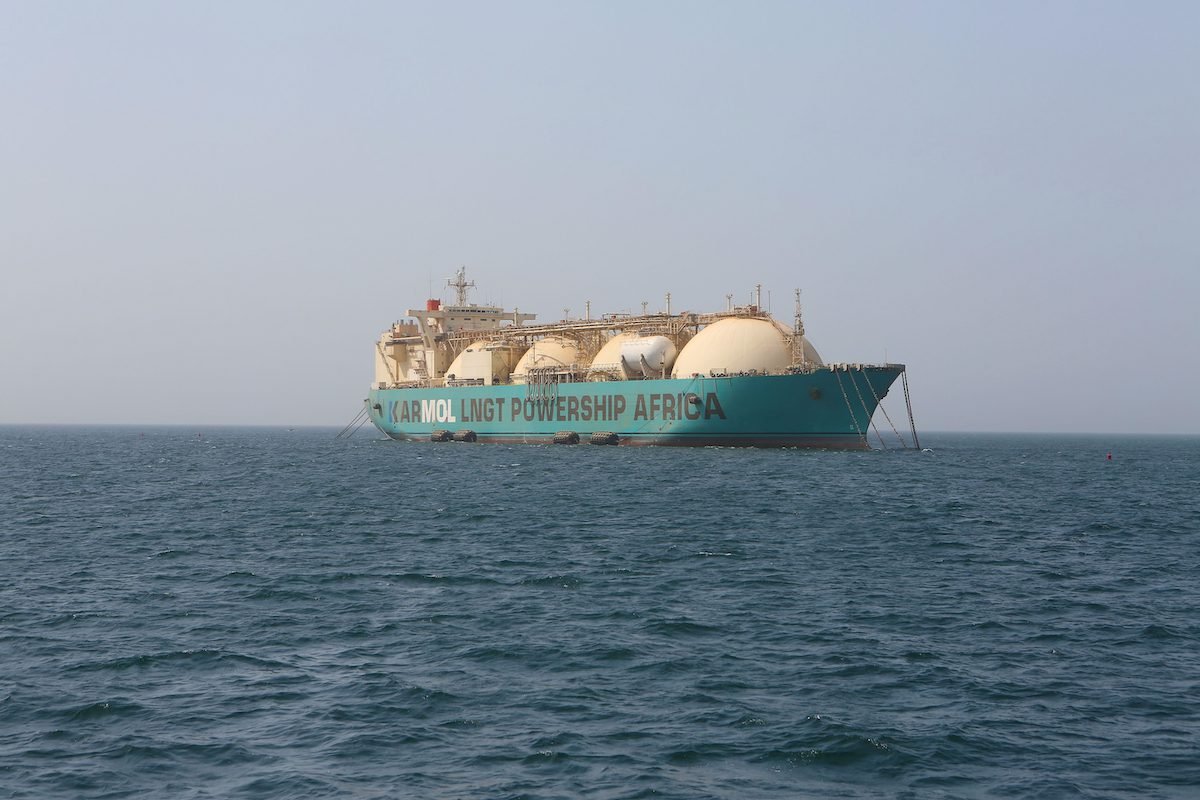
Africa’s LNG base has been growing for some time, and several countries are now entering the market. Mozambique’s output could rise from 3.7 million to 18.6 million tons per year when ExxonMobil’s Rovuma LNG project is completed in 2031. Total is expanding its LNG trains in Mozambique.
In Nigeria, Train 7 is more than 90% complete and will add another eight million tons a year to the market. Mauritania and Senegal’s Greater Tortue Ahmeyim project shipped its first cargo in April 2025, opening another Atlantic-side source of the fuel.
Congo and Gabon have smaller projects under way. Tanzania, meanwhile, could eventually rival Mozambique in output.
More suppliers and more shipping options will favor Asian buyers. Rystad Energy estimates that Africa holds roughly 20% of global LNG capacity, about 93 million tons a year, and S&P Global expects African production to nearly double by the end of the decade.
East African gas has a natural route to Asia across the Indian Ocean, while West African cargoes can go to Europe or Asia, whichever pays more. Any buyer in a hurry to reroute will find African cargoes competing for its business.
Asian buyers want exactly that kind of diversification competition. Southeast Asia alone is forecast to account for about 40% of global LNG imports by 2050. This year Asian buyers have already diverted at least eight Atlantic Basin cargoes away from Europe.
Commodity traders sit at the center of the rerouting. They work across multiple LNG markets, linking producers, buyers, shipping and infrastructure, and while governments talk about diversification, traders are the ones building a more global LNG market with roots in Africa.
Companies like Trafigura, Gunvor, BGN Group and Hartree Partners all have footholds in African supply markets such as Nigeria and Morocco. In Egypt, BGN has become a preferred supplier of liquefied petroleum gas and gasoline and has announced a procurement contract for 160 LNG cargoes through 2026.
Its supply comes from Morocco, where it operates fuel terminals at three sites. BGN has also moved early to serve Asian demand, forming a shipping venture with South Korea’s HMM and signing a long-term charter with Japan’s IINO Lines for an LPG dual-fuel VLGC, a ship that can run on either LPG or conventional marine fuel like marine gas oil.
Arrangements like these are changing supply chains in practice, extending Africa’s gas network to Asia and the Pacific.
That said, Africa’s own appetite could eventually eat into exports. African LNG exports rose 27% in the first quarter of 2026. The International Energy Agency expects African production to grow about 1.3%, but domestic demand is growing at roughly 3%.
For now, there is enough gas to go around, but getting the logistics in order will be challenging. Egypt became a net gas importer again in 2024 despite a string of major discoveries since the 2011 Arab Spring.
Logistics technicians and traders are also helping the pivot to Africa, building infrastructure like regasification terminals so that gas can move across the continent and around the world in forms Asian buyers demand.
To be sure, Africa will not replace the Gulf. But African suppliers can and are broadening Asian buyers’ options while lowering prices. Indeed, they are fast becoming a dependable supply link between Atlantic and Pacific markets. For East Asia, that may matter more in the long run than any eventual ceasefire in Hormuz.