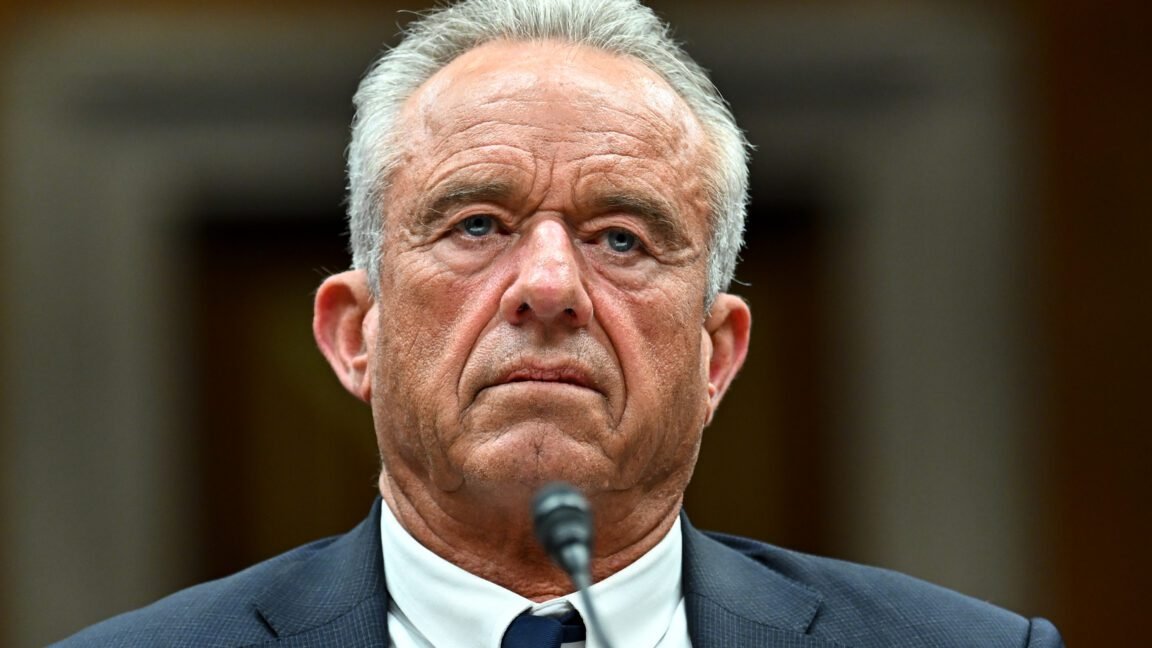
While the Trump administration has reportedly tried to rein in Health Secretary Robert F. Kennedy Jr.’s widely unpopular anti-vaccine agenda, the political strategy is not working when it comes to words or actions. Kennedy on Tuesday suggested he would continue to meddle with federal vaccine policy, and news broke Wednesday that his political appointees have discarded scientific data that conflicts with Kennedy’s anti-vaccine views.
In a Congressional hearing Tuesday, Kennedy refused to commit to supporting evidence-based vaccine policy from the next director of the Centers for Disease Control and Prevention. At the same time, he refused to say that he wouldn’t interfere with the agency’s recommendations.
Last week, Trump nominated Erica Schwartz to be the next CDC director, a role that requires Senate confirmation. Schwartz is a respected physician and former public health official who has championed the use of vaccines during her distinguished career. Outside experts were pleasantly surprised by the uncontroversial choice but wary of her ability to implement evidence-based policy under Kennedy. Last year, Kennedy—who has no medical, scientific, or public health background—ousted the previous Senate-confirmed director, Susan Monarez, who was, like Schwartz, a well-qualified and respected pick for the role. Monarez testified that she was pushed out for refusing to rubber-stamp vaccine recommendations from Kennedy’s hand-selected anti-vaccine advisors. Monarez lasted as CDC director for just 29 days.
Kennedy’s response Tuesday suggested Schwartz could face an equally short tenure. His answer came amid an exchange with Rep. Raul Ruiz (D-Calif.) in a hearing of the House Committee on Energy and Commerce. Ruiz asked Kennedy: “If Dr. Schwartz is confirmed, will you commit on the record today to implement whatever vaccine guidance she issues without interference?”
Kennedy replied without hesitation: “I’m not going to make that kind of commitment.”
“Because you probably won’t,” Ruiz said. “You’ll probably fire her, too, like you did director Monarez, because you will not accept the recommendations based on science.”
Suppressed science
A report from the Washington Post on Wednesday seemed to support Ruiz’s concern for Kennedy’s continued anti-vaccine interference. The Post reported that the CDC has decided to entirely scrap a scientifically vetted study that identified significant health benefits from the 2025–2026 COVID-19 vaccine. While Kennedy has called COVID-19 vaccines the “deadliest vaccine ever made,” the study found that the shot reduced the risk of emergency department or urgent care visits by 50 percent, and reduced the risk of COVID-19-associated hospitalizations by 55 percent, compared with healthy adults who did not get this season’s shot.
The study had previously cleared scientific review and was set for publication in the agency’s Morbidity and Mortality Weekly Report on March 19. But the study was instead held up by acting CDC director Jay Bhattacharya, who said he had concerns about the study’s methods. The study used a standard, widely accepted design. A flu vaccine study using the same design was published in the MMWR earlier in March.
Last month, Andrew Nixon, spokesperson for the Department of Health and Human Services, said that CDC scientists were working to address Bhattacharya’s concerns. But this week, Nixon told the Post that an “editorial assessment identified concerns regarding the methodological approach to estimating vaccine effectiveness and the manuscript was not accepted for publication.”
The Post’s sources said that was not an accurate account of what happened.