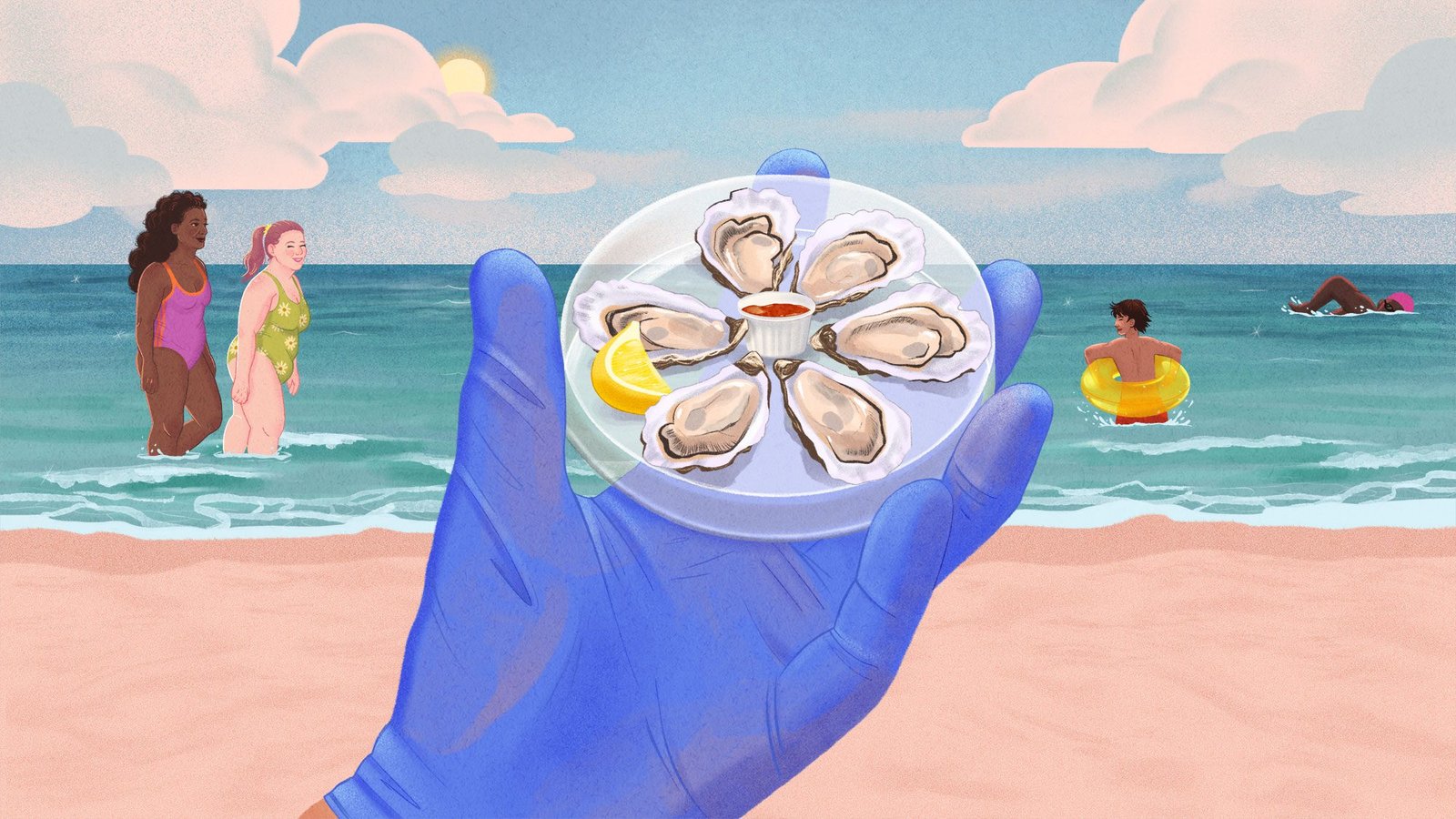
This story was produced by Grist and co-published with States Newsroom. It is part of the Grist series Vital Signs, exploring the ways climate change affects your health. This reporting initiative is made possible thanks to support from the Wellcome Trust.
Bailey Magers and Sunil Kumar cut strange figures on Pensacola Beach. Bags of disinfectant solution surrounded them on the white sand; their gloved hands juggled test tubes while layers of rubber and plastic shielded their skin from the elements. As the two organized their seawater samples on the popular Florida shoreline last August, an older woman wearing a swimsuit walked over to ask what they were doing.
“We’re just actively monitoring water quality,” they told her, but she pressed on.
“Are you looking for that flesh-eating bacteria?”
“We’re looking into it,” they replied, hoping not to frighten her. The woman turned back toward the ocean, her curiosity satisfied. As she walked away, Kumar noticed that she had scrapes and bruises on her body. A few minutes later, he watched her step into the waves. He shook off a chill and returned to the task at hand.
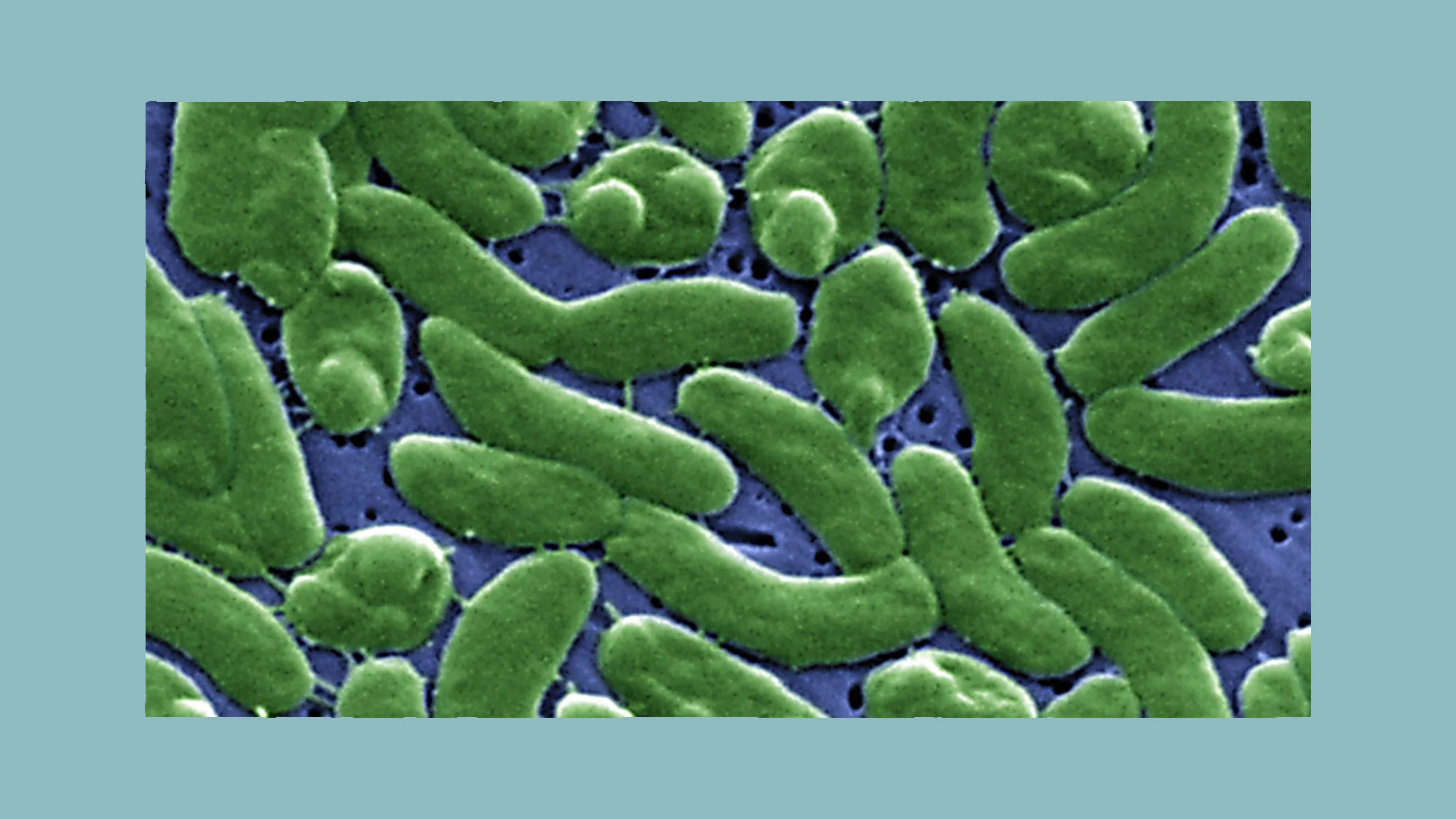
Magers and Kumar study a bacteria called Vibrio, part of a lineage of ancient marine species that likely emerged sometime around the Paleozoic Era. Enormous, shallow seas flooded the massive, interconnected supercontinents that constituted the Earth’s landmass at the time, and complex marine ecosystems developed that thrived in these temperate, freshly-formed bodies of water. Researchers think there are more than 70 Vibrio species in the environment today, hundreds of millions of years later. The organisms float in warm, brackish water, attaching themselves to plankton and algae and accumulating in prolific water-filtering species like clams and oysters.
A small number of Vibrio species can sicken and even kill. In worst-case scenarios, a person who has been exposed to the most dangerous of them — by swimming in brackish water with an open wound or ingesting a piece of raw shellfish that is contaminated with the tasteless and odorless toxin — may find themselves with only hours before the flesh on one or more extremities starts to bruise, swell, and decay. Without the quick aid of powerful antibiotics, septic shock can set in and lead to death. Anyone can get infected, though it is much more likely in people who have liver disease or are immunocompromised, elderly, or diabetic.
Climate change is making the world’s oceans, which have absorbed more than 90 percent of the excess heat trapped by greenhouse gas emissions, more hospitable to Vibrio. Research shows that temperature and salinity are the largest predictors of how widespread Vibrio bacteria are. As water temperatures rise, so does the concentration of Vibrio in seawater — boosting the risk of infection for beachgoers and shellfish consumers. The bacteria start getting active in water temperatures above 60 degrees Fahrenheit and multiply rapidly as coastal waters warm throughout the summer.
In recent years, scientists have documented Vibrio expanding into places that were once too cold to support the bacteria, pushing as far north along the U.S. East Coast as Maine and appearing with more prevalence in temperate seas around the world.
Vibriosis infections in general are the leading cause of shellfish-related illness in the U.S. They have increased “more than any other illness caused by a pathogen in the U.S. food supply” since the Centers for Disease Control and Prevention, or CDC, started keeping tabs on such illnesses in 1996, according to a 2019 analysis by the International Association for Food Protection. The report attributed the precipitous rise to a “perfect storm” of factors that include climate change, food handling practices, expanding globalization, a patchwork of regulatory oversight, and improved diagnosis.
On their conspicuous expeditions to Pensacola and other Sunshine State beaches, Magers and Kumar are trying to understand where, and when, harmful Vibrio species are present across the state. The research they’re doing is part of an ongoing effort by a laboratory at the University of Florida to create a Vibrio early warning system for the eastern United States — a program that can alert public health departments to high Vibrio concentrations in any given area a month in advance.
How many limbs would be saved, Magers wonders, if doctors and nurses could be warned ahead of time that their emergency rooms would soon see an uptick in these chronically underdiagnosed infections?
The work serves more than one purpose: As Vibrio bacteria spread north into cooler waters, they serve as a first warning signal of changing marine conditions — giving researchers a heads-up that the familiar composition of marine species in their local waters may be starting to shift. In Europe’s Baltic Sea, for example, a spike in Vibrio infections in July 2014 closely mirrored a heatwave that rapidly warmed the shallow sea.
The incident showed researchers that Vibrio spikes herald unusually warm marine conditions — and they have since been utilized as barometers for ocean heatwaves and sea-surface warming patterns, not just food safety.
“We see Vibrio as the indicator for climate change,” said Kyle Brumfield, a microbiologist at the University of Maryland who has been studying the bacteria for a decade. “We can use the presence of Vibrio and Vibrio cases as a proxy for water health in general.”
The CDC estimates that about 80,000 cases of vibriosis occur in the U.S. every year, resulting in about 100 deaths. Of those 80,000 cases, most are caused by a Vibrio called parahaemolyticus, which most commonly results in gastroenteritis, or food poisoning. The vast majority of the deaths, however, are caused by a type of Vibrio called vulnificus — the Latin word for “wound-making.”
Vulnificus is so potent it can squeeze through a pinhole-sized cut in the skin and lead to death in just 24 hours. In the last five years, the CDC registered 429 such vulnificus cases, plus 136 foodborne cases. But even though foodborne cases are less numerous, the patients that contract vulnificus by eating contaminated shellfish are more likely to die than those infected via open wounds. Thirteen percent of those nonfoodborne cases died, compared to 32 percent of people who got the infection from eating seafood. Most cases occur in the Gulf and Atlantic coastal regions.
As far as infectious diseases go, vulnificus is exceedingly rare: The CDC reports between 150 and 200 cases a year. The sexually-transmitted disease chlamydia, by comparison, one of the most common bacterial infections in the U.S., infects northward of 1.5 million Americans annually. But vulnificus’ astonishing speed and high fatality rate — 15 to 50 percent, depending on the health of the person exposed and the route of infection — makes it a unique public health threat, particularly as climate change grows its pathways of exposure.
Vulnificus is not the kind of pathogen you’d want behaving erratically, but that’s exactly what it’s been doing since the late 2010s. Across the Eastern Seaboard, local and federal health officials have been reporting “unusual increases” in vulnificus prevalence — jagged spikes in infections that appear to correspond to extreme weather events like hurricanes and marine heatwaves.
In 2022 and 2024, years when the brackish water that Vibrio bacteria thrive in was pushed inland by major hurricanes, Florida’s public health department reported 17 and 19 deaths, respectively, linked to vulnificus exposure via open wounds. North Carolina, New York, and Connecticut also saw small clusters of infections during a record-breaking heatwave in the summer of 2023. “As coastal water temperatures increase,” the CDC warned in its investigation of those outbreaks, “V. vulnificus infections are expected to become more common.”
A 2023 study that analyzed a 30-year database of confirmed vulnificus infections from outdoor recreation along the U.S. Gulf and Atlantic coasts found the northern boundary of infections has moved north by a rate of 30 miles per year since 1998. The study noted that “V. vulnificus infections may expand their current range to encompass major population centers around New York,” and that annual case numbers may double as temperatures rise and America’s elderly population grows.
“In the 1980s, Vibrio abundance would increase in the late spring and stay high through the summer and drop in the middle of October,” Brumfield, who conducts research on Vibrio in Maryland, said. “Now … we can pretty much find them almost year-round.”
Just how worried we should be about the changing dynamics of Vibrio bacteria depends on who you ask and what you read. The gruesome and fast-acting nature of the vulnificus infection makes it enticing fodder for local and national news media, fueling a spree of terrifying reports every time a new severe infection or death surfaces.
“Virginia dad wades in calf-high water, dies 2 weeks later of flesh-eating bacteria that ‘ravaged’ his legs,” read a recent headline in People magazine. “2 dead after eating oysters, contracting flesh-eating bacteria, officials say,” per a 2025 web story about two deaths linked to oyster consumption in Louisiana and Florida. Like many others in their mold, neither story mentions how rare the bacteria are.
The press is bad news for some in the seafood industry, which does not welcome a national conversation about the rise in vibriosis cases, vulnificus in particular. Shellfish farmers and industry representatives that Grist spoke to in Florida and New York argued media attention on the safety of their products is unwarranted. “‘Flesh-eating bacteria,’” said Leslie Sturmer, a researcher who works for the University of Florida’s shellfish aquaculture extension program and consults with the shellfish industry on research and regulation — “the media loves it.”
Paul McCormick, an oyster farmer in Long Island who sells 750,000 oysters a year, thinks all press is bad press. “Even if the title of your article says ‘New York oysters are the safest oysters in the universe,’” he told me on the phone from his office in East Moriches in January, “you’ve already created a problem.”
Shellfish tags used to keep track of where and when shellfish is harvested. Zoya Teirstein / Grist
A sign advertises oysters for sale in Cedar Key, Florida. Zoya Teirstein / Grist
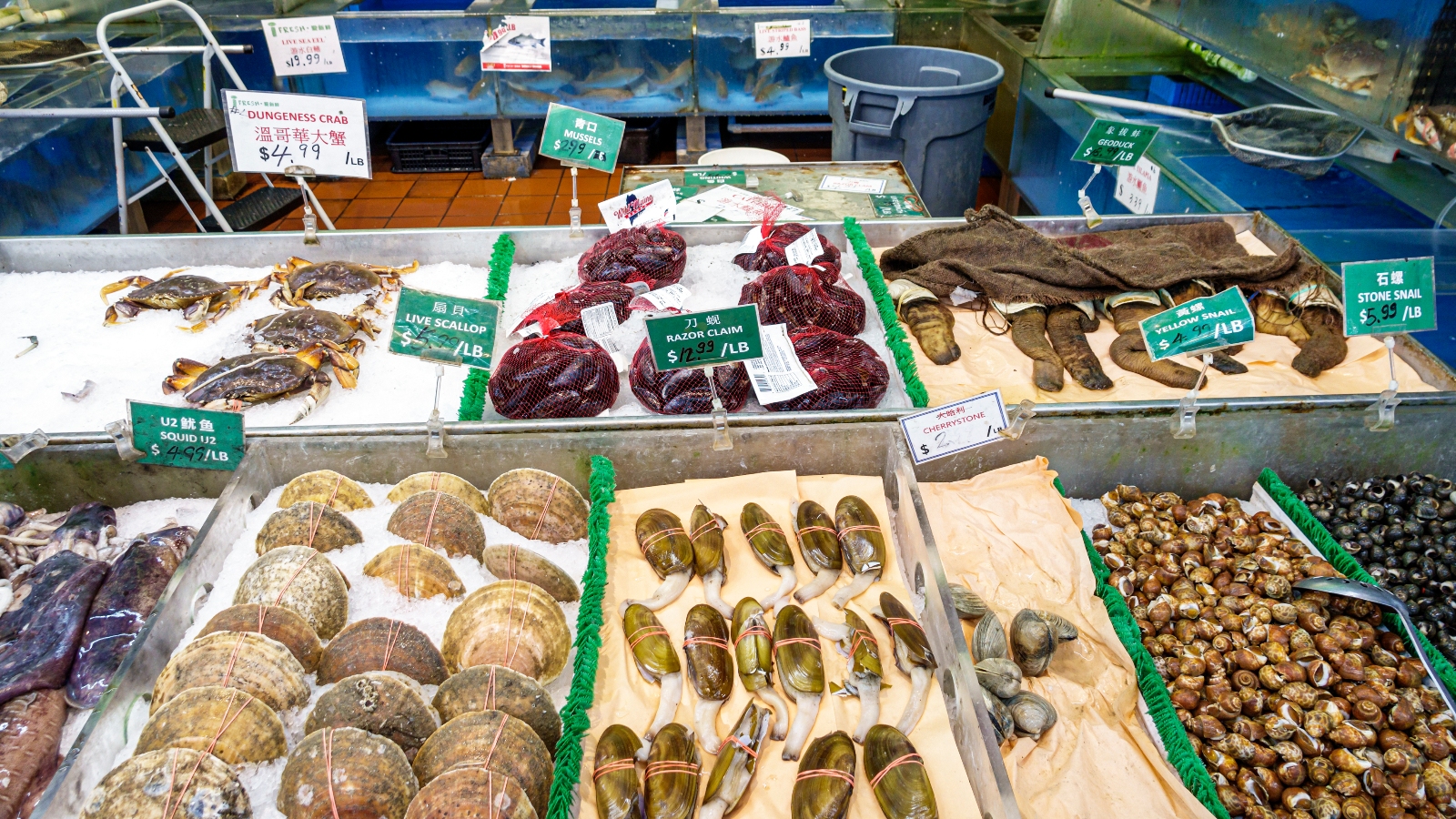
In unrefrigerated oysters left out in warm conditions, Vibrio bacteria reproduce every 20 minutes. But in 2010, states began deploying strict protocols known as “Vibrio control plans,” which require harvesters to rapidly cool their catch onboard and then refrigerate it at a shellfish processing facility within a set number of hours. The measures have proven effective at stopping the growth of Vibrio in harvested shellfish and preventing disease.
The fact that infections can happen in one of two ways — shellfish consumption and seawater exposure — makes it easy to shift blame and point fingers. Consumers have more control over how much exposure they have to Vibrio than they have with E. coli, for example. A person with a kidney condition can choose not to eat oysters on the half shell. E. Coli, often found in raw vegetables, is far tricker to avoid. Likewise, someone with an open wound can opt not to bathe in brackish waters if they are aware of the risks lurking in the surf.
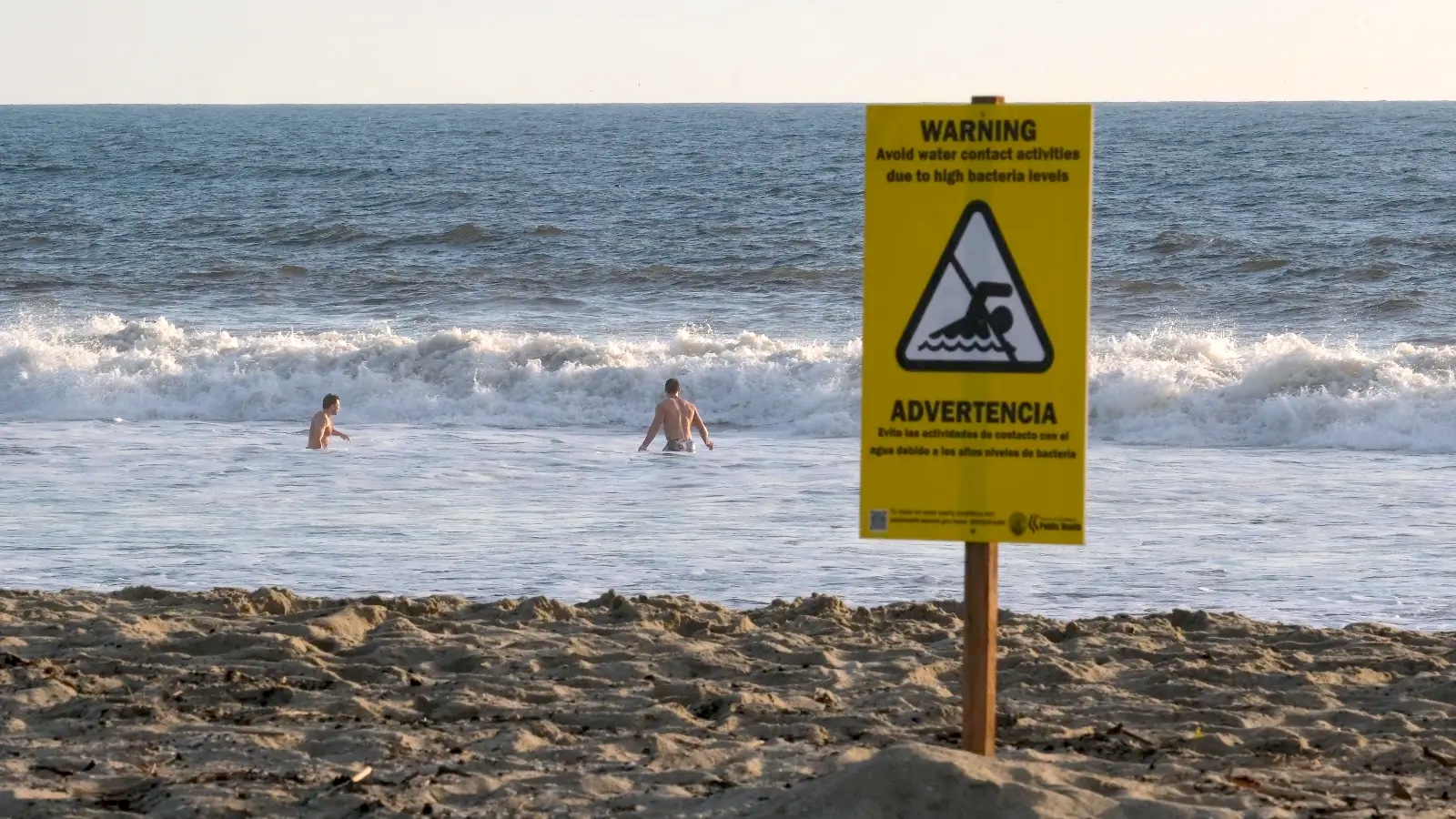
For shellfish industry representatives, personal responsibility is the primary way to bring caseloads down. “The person is the risk,” said Sturmer. “Not the climate, not the water, not the bacteria.” Implicitly, this appears to be the government’s position as well: There is currently no numerical threshold at which state public health agencies will “shut down” a beach for outdoor recreation, though states will issue public advisories and, very rarely, close beaches if they happen to find high levels of Vibrio in the water.
But that perspective doesn’t account for the rapid marine changes brought on by climate change, the patchiness of vibriosis awareness, and the fact that Americans often make personal decisions that are at odds with their own health and safety.
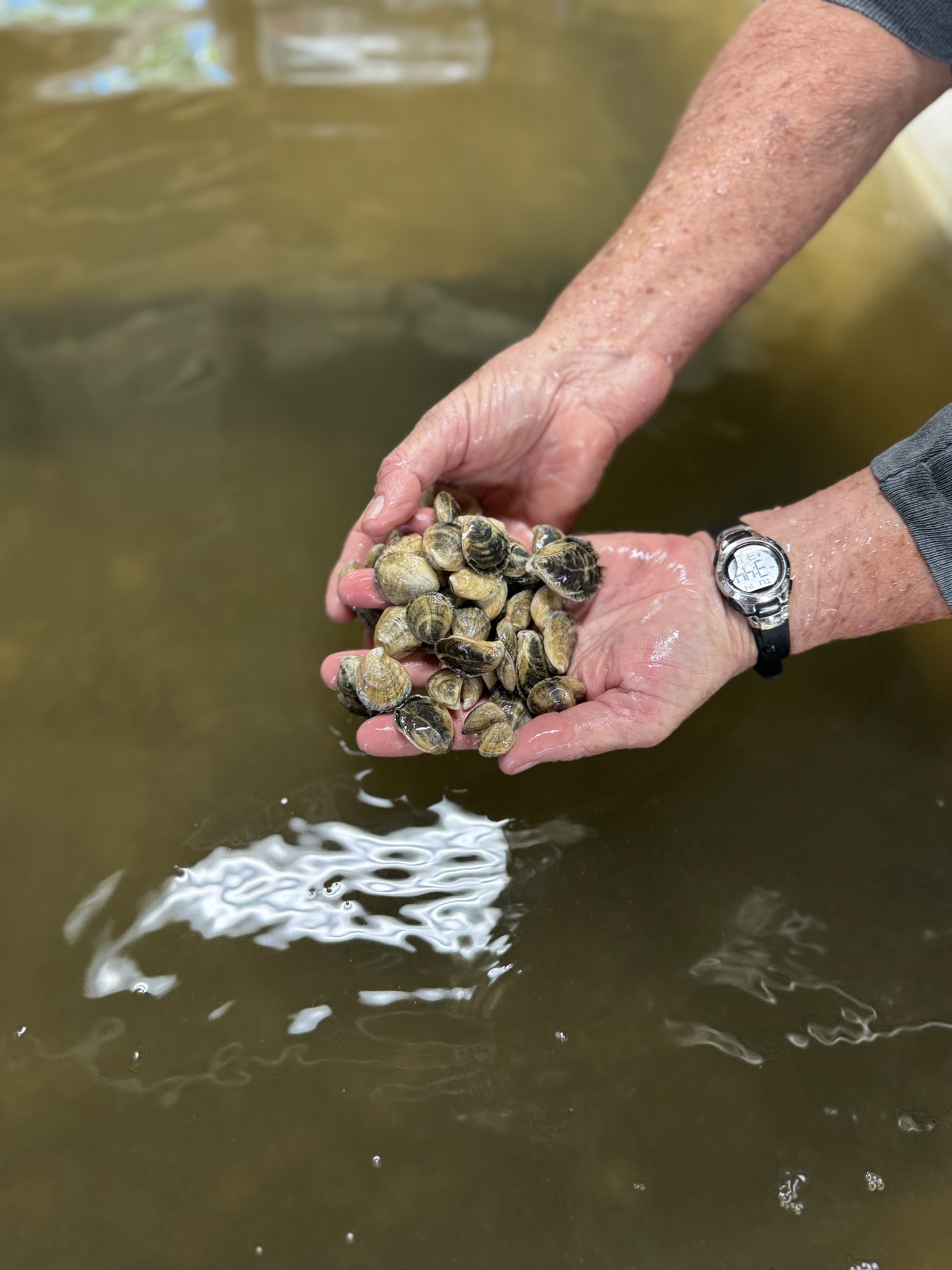
 uniquely threatened by rising ocean temperatures, ocean acidification, and sea level rise, issues that can lead to thin shells, low crop yields, and mass die-offs on farms. A detailed understanding of climate science, in other words, is good business for those who make their living fishing.
The problem, according to Sturmer, is that shellfishers have been unfairly singled out for a health issue that doesn’t affect most consumers and is more often contracted by ocean bathing rather than raw oyster consumption. While beaches stay open even when Vibrio bacteria are present in the water and lead to infections, a small number of foodborne vibriosis cases can trigger state closures of shellfish harvesting areas and product recalls. The National Centers for Coastal Ocean Science noted that these precautions “erode consumer confidence and likely decrease sales.”
 2024 study asked more than 350 shellfish consumers in Rhode Island — a state that relies heavily on its shellfish industry, particularly in summer months when people vacation along the coastline — to bid on entrees of raw oysters and clams. After showing study participants a real newspaper article about a 2015 Vibrio outbreak linked to an oyster farm in Massachusetts, the researchers reported that the news had a “significant negative impact” on participants’ willingness to bid on oysters. It had a depressive effect on clam sales, too.
“You should really be out there beating the drum on botulism or salmonella or E. Coli,” Sturmer told me on a recent visit to her lab in Cedar Key. “Why worry about [vulnificus] when the number of cases are so minimal?” Sturmer is quick to point out that even the term “flesh-eating bacteria” is a misnomer. She’s right, in a sense: The bacteria doesn’t “eat” tissue; it destroys it. But it’s hard to say whether someone who has survived a bout of necrotizing fasciitis, the medical term for what vulnificus does to the flesh, would care to dispute the difference.
Protecting consumers from being sickened by the bacteria isn’t as simple as trusting people with underlying medical conditions not to eat shellfish. Americans consume 2.5 billion oysters every year, half of which are eaten raw. Vibrio infections, which most often resemble food poisoning, are still underreported and underrecognized, even among individuals who are most at risk of developing a severe infection. Vulnificus infections are also underreported, but much less so than other Vibrio-related infections because they often require a hospital or emergency room visit.
The system is far from perfect. When the model was first trained and evaluated, it was only 23 percent precise in pinpointing high-risk counties, meaning just one in four of the counties the program labeled as high-risk actually ended up seeing a vibriosis case in a given month. But it was very good at determining which counties were low-risk, capturing those regions with 99 percent precision. And it improved over time as the quality of the data they fed it got better. When they had the model do a test run on data collected by the Florida Department of Public Health from 2020 to 2024, 72 percent of total cases occurred in counties the tool flagged as high-risk for vibriosis.
Perhaps most significantly, the model was especially adept at predicting high-risk counties ahead of Hurricanes Helene and Milton in 2024 — more than 80 percent of the vibriosis cases that occurred in Florida in the aftermath of those hurricanes were reported in counties the model had already flagged as high-risk.
The tool is geared toward predicting water-borne infections, but it may also provide useful information to the shellfishing industry, though the system isn’t a replacement for the established protocols farmers already use — protocols that have proven to be effective, particularly in states that are aggressive about enforcing them. What the new tool could do, however, is supplement those Vibrio control plans, especially when an upcoming weather pattern deviates from the historical norm — something that has been happening a lot lately.
 2019 analysis that diagnosed the “perfect storm” for Vibrio spread.)
But the shellfish industry doesn’t appear enthusiastic about the idea of assigning counties a risk category based on Vibrio prevalence. Vibrio researchers, by their own admission, haven’t done a good job of reaching out to shellfishers to find out how such a tool would work best for them. At an August meeting of the Delaware Bay Section of the New Jersey Shellfisheries Council last year, the director of a shellfish research laboratory brought up the idea of using Vibrio predictive models to “determine optimal days to harvest to reduce the transfer of infection to humans.” A lengthy discussion ensued. The consensus, ultimately, was that the model was a bad idea, and could be “used against the industry.”
Not all shellfishers are dead set against the kind of work Magers and Kumar are doing. “If Vibrio is an indicator of global warming, then that’s just an unfortunate bad luck scene for us,” McCormick, the Long Island oysterman, said. But it’s hard for him to see what relevance that research has to an industry that already has its own methods of controlling Vibrio. “In my mind that exists in one realm and the safety of our oysters is a whole different thing.”
As we move deeper into the 21st century, however, those two realms will have more overlap. If countries keep up their current pace of greenhouse gas emissions, most coastal communities along the East Coast will be environmentally primed for vibriosis outbreaks during peak summer months by midcentury. It won’t be a question of if there will be more vibriosis cases — it will be a matter of how to manage them. That’s the scenario Magers and Kumar are preparing for.
“In 30, 40, 100 years, these models won’t even matter because the risk is so high,” said Magers, the lead author of the predictive modeling study. “When it gets to that point, it would probably be a different kind of modeling strategy where we’d be modeling case numbers instead of infection risk.”