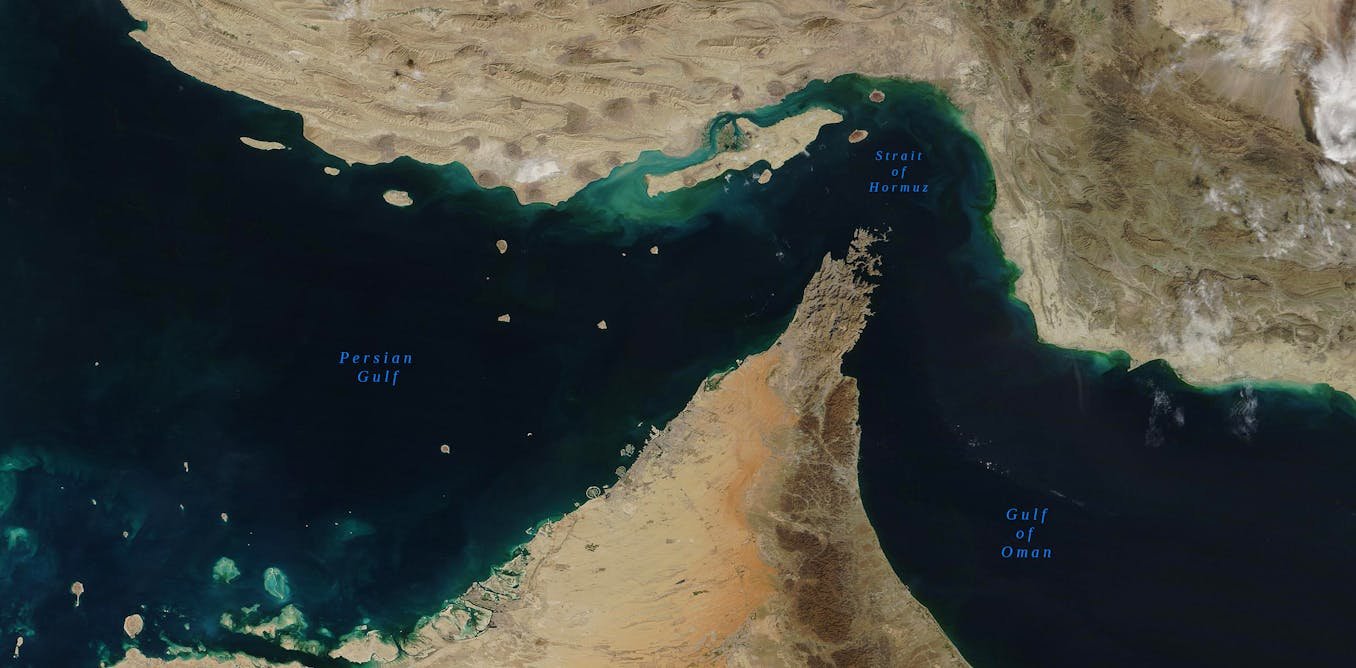
Iran’s military might was never going to be a match for the US and Israel. So instead it turned to the highly effective weapon it has at its disposal – geography.
Blocking off the Strait of Hormuz has shaken the global economy. It has doubled the price of a barrel of crude oil, which has a knock-on effect on the price the rest of the world pays for everything from fuel to heating and food to holidays.
It also made Donald Trump have a rethink. The world is now waiting to see what happens next in a stretch of water which carries around 20% of the world’s oil and liquefied natural gas.
For Iran, the Strait of Hormuz has been an extremely valuable geopolitical asset. And its surprisingly strong negotiating position demonstrates a classic principle of game theory, the mathematical study of strategic interactions.
This principle, sometimes referred to as Rubinstein bargaining, basically says that during a conflict, each side’s strength depends on two things: how badly off it would be without a resolution, and how impatient it is to get things resolved.
Iran will certainly be badly off if the war continues, using up its stockpiles of missiles and drones while its infrastructure gets bombed. But dictatorships can afford to be patient, crushing dissent if it arises.
For the US, continuing with the conflict means spending billions more taxpayer dollars on those bombs, while a blocked-off Strait of Hormuz risks more rises in the price of fuel paid by American motorists. With midterm elections coming up in November, perhaps the White House will lose patience quickly.
The Strait of Hormuz, then, has played an enormous role in the conflict so far. The US’s position is much weaker than first thought because of a stretch of water the world can’t do without.
Game theory suggests that to achieve a position of strength, countries and regions need to come up with their own version of the strait – something others need which will strengthen their negotiating position.
It doesn’t have to be a shipping route, of course. China’s version could be its global dominance in manufacturing. It would be very hard for most countries to live without the things China makes.
Sub-Saharan Africa’s strength is its natural resources, such as most of the world’s cobalt being mined in the Democratic Republic of Congo. In the future, it may also be able to leverage the fact it is the last continent with a young and growing population, while the rest of the world is rapidly ageing.
The EU’s strength, meanwhile, has been the size of its united single market. It has been able to leverage this market to get preferential treatment, protecting its produce and exports. It also managed to impose European standards on food and products across the world.
But the EU’s strength is by no means guaranteed. Most economic growth is now expected to come from the likes of China, India or Indonesia, weakening Europe’s negotiating position. Research suggests the only way to get some of this strength back is to integrate European markets even more, and to enlarge the EU further.
This is also why the UK will soon probably return to the European single market, one way or another. Brexit has considerably weakened the international negotiating position of both the UK and EU.
Strait and narrow
Having a version of the Strait of Hormuz seems especially important now that alliances and divisions have become much less clear. Old alliances and promises have lost a lot of their meaning.
The US has threatened to leave Nato, and said it would annex Canada and Greenland. Both it and Russia have jointly campaigned for the failed re-election of Viktor Orbán in Hungary.
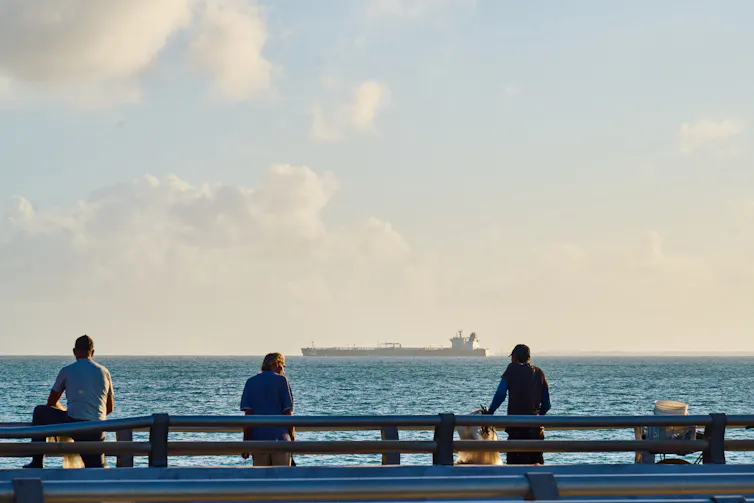
But in a world without reliable alliances, all countries are interdependent. Supply chains are so interconnected that a small change in one country can have a major impact on the other side of the world. Oil tankers not moving near Iran could mean no pork sausages in UK grocery stores this summer.
In these circumstances, game theory tells us that success requires two things: not relying on a single partner, and offering something that others cannot do without. When everything is about leverage, power comes from being impossible to ignore.
The countries that will thrive in the next decades will be those which manage to establish their own version of the Strait of Hormuz. And make sure they never need to sail through anyone else’s.