<
article id=”post-951451″>
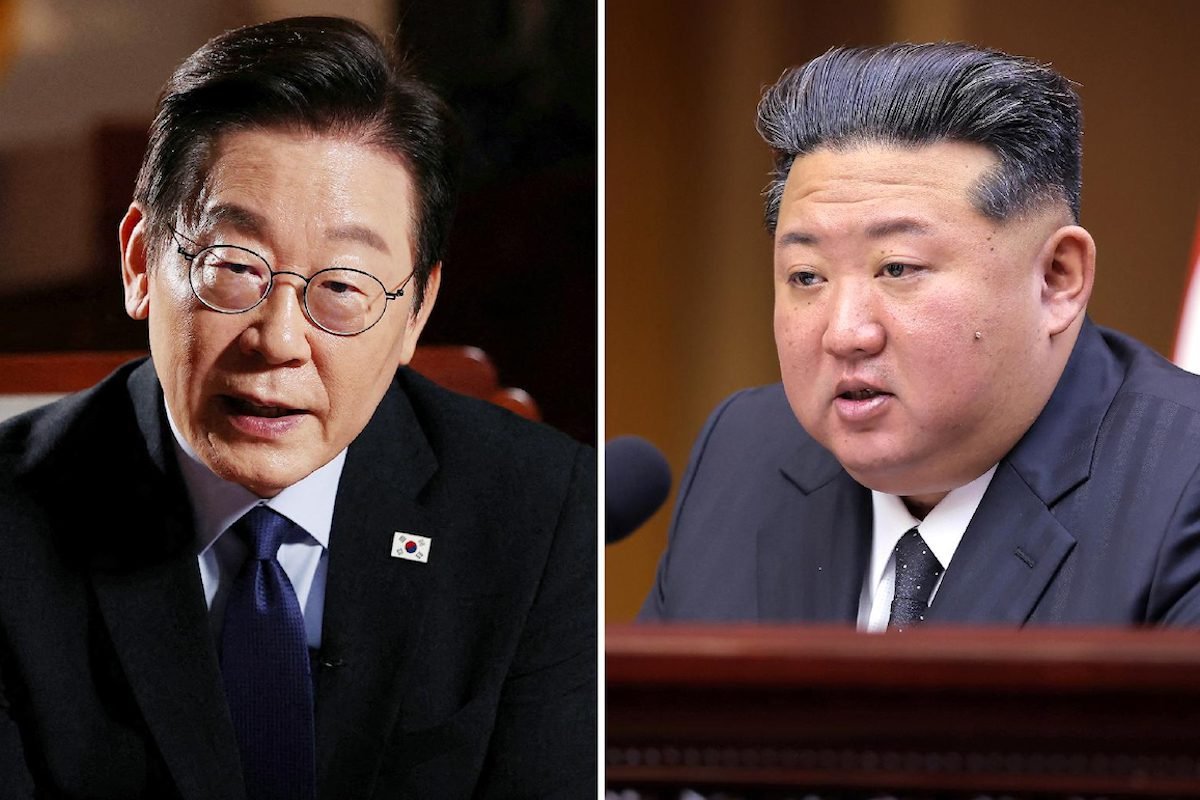
Recent incidents involving the explosion of a North Korean landmine in the Demilitarized Zone (DMZ) and the repatriation of North Korean POWs held in Ukraine have led to a dramatic increase in North Korea-related coverage by South Korean media outlets, which had shown little interest in the North for some time.
The reason is that the South Korean government’s consistently passive and defensive responses to these issues have provoked dissatisfaction not only among conservatives but also among political moderates. Of course, there is some logic behind the ROK government’s approach.
What might that logic be? Senior officials in the Lee Jae-myung administration and South Korean progressives seem to retain a strong nostalgia for the foreign policy of the Roh Moo-hyun era (2003-08), particularly the Sunshine Policy, and apparently still hope to revive a similar approach in the near future.
The so-called “Korean Peninsula Spring” of 2018-2019, in the days of the Moon Jae-in administration, can also be seen, to some extent, as an attempt to revive the Sunshine Policy. That attempt, however, ended in failure. What followed the Korean Peninsula Spring was not summer, but winter. This was no coincidence.
The reactions of progressives and the Lee Jae-myung administration to the landmine incident and the issue of North Korean prisoners of war demonstrate that they have yet to fully grasp just how much the world has changed.
Even if the South Korean government exercises patience and responds passively to North Korea’s actions, there is virtually no chance that such restraint will have a positive impact on inter-Korean relations.
I generally supported the Sunshine Policy. However, I am well aware that reviving it is no longer possible. What has changed? First and foremost, there is the growing confrontation between the United States and China, accompanied by the accelerating division of the world into rival blocs.
In the early 2000s, US-China relations were so amicable that terms such as “Chimerica” and “G2” became fashionable. Today, however, the two countries are locked in a new cold war, which is likely to continue for decades.
Since the 1950s, during the original Cold War, North Korean diplomacy has been remarkably adept at exploiting rivalries and tensions among great powers to advance its own interests.
Having once skillfully exploited the Sino-Soviet split to secure enormous amounts of foreign assistance, Pyongyang now finds itself once again in the geopolitical environment that is most familiar and advantageous to it.
During the Sunshine Policy era, however, Pyongyang faced a very different international environment. Although rivalries between states certainly existed, they were relatively mild, and neither China nor Russia saw much reason to provide North Korea with substantial support.
Having lost its reliable patrons, North Korea made considerable efforts to obtain assistance from South Korea. In particular, when progressive administrations that placed great hopes in inter-Korean national cooperation came to power in Seoul, Pyongyang could obtain massive amounts of aid with relative ease.
Of course, even at that time, inter-Korean contacts were dangerous from Pyongyang’s perspective. The North Korean authorities were particularly concerned that such contacts might expose ordinary North Koreans to South Korea’s economic prosperity, thereby generating dissatisfaction with their own political system.
Nevertheless, in the early 21st century, North Korea had few alternatives and was therefore compelled to actively pursue contacts with South Korea and seek economic assistance from the South.
Today, however, China and Russia are actively supporting North Korea, while the North Korean regime has firmly shut its doors to the outside world. Last year, North Korea admitted only Russian citizens. Even then, the number of Russian tourists who visited the country was a mere 5,100.
Foreign organizations and NGOs that left North Korea during the Covid-19 pandemic have virtually no prospect of being allowed to return.
From Pyongyang’s perspective, this approach is perfectly rational. After all, any foreigner represents a potential danger to the North Korean regime, and South Koreans are particularly dangerous.
In the past, North Korea had little choice but to tolerate the presence of South Koreans and Westerners in order to secure foreign assistance. Now, thanks to Chinese and Russian support, that necessity has disappeared.
Over the past three years, the Kim Jong Un regime has earned more than US$20 billion from arms exports to Russia. It is also receiving support from China.
Under these circumstances, it would be unwise to expect Pyongyang to respond positively to the same old tune, which has long since become outdated.
Andrei Lankov is a professor at Kookmin University whose published books include “The Real North Korea: Life and Politics in the Failed Stalinist Utopia.”
This article was originally published in Korean by the Seoul newspaper Maeil Kyongje Daily Economy. The English translation is republished with permission.





 and the repatriation of North Korean POWs held in)