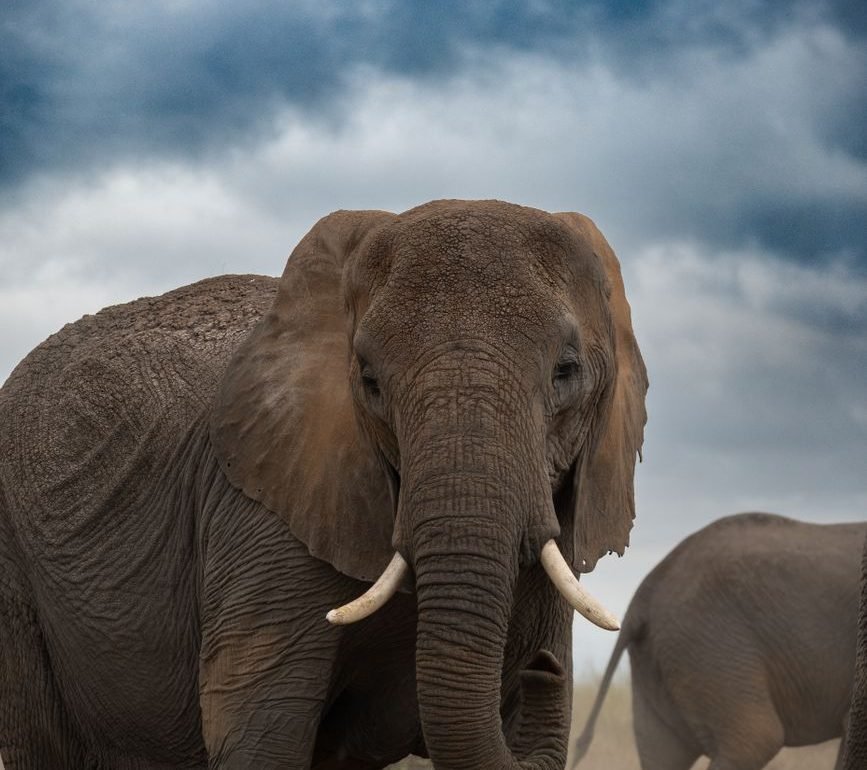
A notorious wild elephant in Nepal has been accused of stalking one family for more than a decade and killing four of their loved ones in two separate attacks 14 years apart.
The elephant, known as Dhurbe, has long been feared near Chitwan National Park. Officials say the aggressive bull elephant has now killed 25 people since 2010.
For Shanichara Bote, the nightmare began in December 2012.
That was when Dhurbe fatally trampled Bote’s parents in the Nepalese town of Madi, near Chitwan National Park, according to the Kathmandu Post.
After the attack, Bote did what any grieving son might do. He moved his family away.
He packed up and relocated across the Rapti River to Jagatpur, about nine miles from where his parents had been killed. He believed the distance, and the river, would help keep his family safe.
It did not.
Earlier this month, Dhurbe allegedly found the family again.
The elephant reportedly burst into their home and killed Bote’s daughter-in-law, 25-year-old Ashika Bote, and his 4-year-old grandson, Bharat Bote.
“We believed that moving across the major rivers would keep us safe,” Bote told the Kathmandu Post. “But after all these years, the exact same elephant found us again, raided our home and took my daughter-in-law and my little grandson.”
Then he added the heartbreaking words that summed up his family’s terror: “There is nowhere left for us to run.”
The latest attack has deepened fear around Dhurbe, a wild bull elephant with a long and deadly history.
Park officials said the animal had already been blamed for 23 human deaths before the most recent incident.
“Prior to this tragic incident, Dhurbe had officially claimed 23 human lives,” Abinash Thapa Magar, a representative for Chitwan National Park, told the outlet. “With these latest two casualties in Jagatpur, the confirmed number of fatalities attributed to this single elephant has now risen to 25.”
Magar said officials have been using a satellite tracking collar to follow Dhurbe’s movements.
“We have been utilizing a satellite tracking collar to monitor the movements of this highly aggressive male elephant,” he said.
According to Magar, tracking data placed Dhurbe near the scene of the deadly attack on July 4.
“Our data logs show that this location coordinates were pinned directly around the perimeter of the incident site on [July 4],” he said.
Dhurbe’s reputation has been building for years.
According to Vice, 93 soldiers were sent to kill the elephant after the fatal 2012 attack. The animal was shot twice but managed to escape.
He later resurfaced in 2016.
Officials fitted him with a new tracking collar in 2020 after the original one stopped working. A third collar was reportedly placed on him in 2023.
The collar pings Dhurbe’s location every hour. But even with constant monitoring, officials have not been able to stop the attacks.
For Bote and his surviving relatives, the tragedy has turned one elephant into a symbol of fear that has followed them across rivers, across years, and across what they thought was a safer life.
They moved to escape the horror.
Now, after losing four family members to the same animal, Bote says there is nowhere else to go.