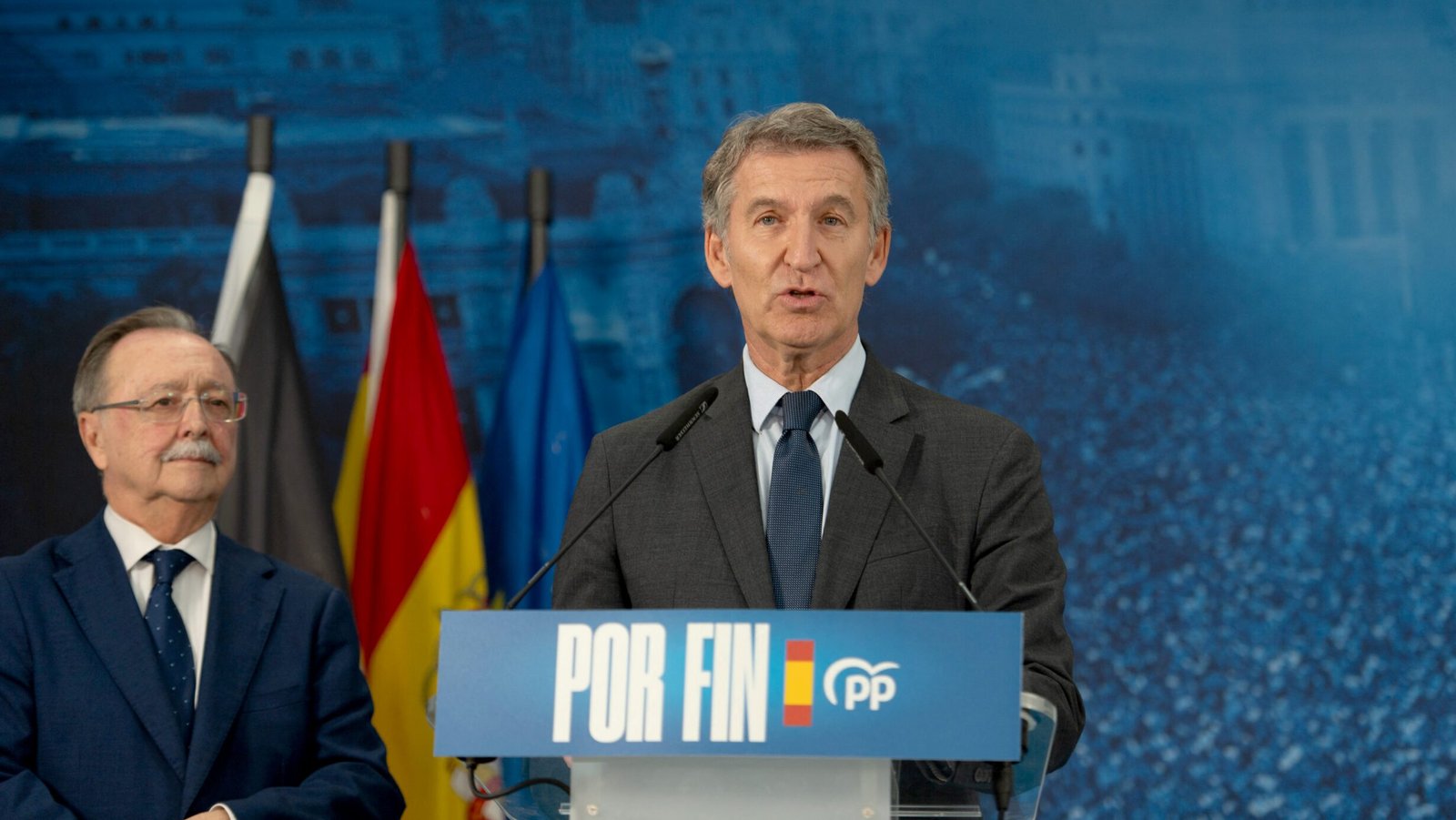
Vox MEP Juan Carlos Girauta calls for a “180-degree” foreign policy shift as the Nov. 29 vote opens a campaign shaped by housing, corruption cases, Catalonia, migration, and Israel
Spain will vote on Nov. 29 in a snap general election called by Prime Minister Pedro Sánchez after a parliamentary defeat over housing exposed the fragility of his governing coalition, opening a campaign in which current polling gives the center-right Popular Party and Vox a combined parliamentary majority.
For Juan Carlos Girauta, a Vox member of the European Parliament, the stakes extend well beyond domestic politics.
There is a very clear awareness that Spain’s foreign policy under Sánchez needs a 180-degree turn
“There is a very clear awareness that Spain’s foreign policy under Sánchez needs a 180-degree turn,” Girauta said, looking beyond the election to the changes he would like to see from a new government.
Polling averages currently favor the right, but the campaign has only begun. An Oct. 5 average compiled by Spain’s public broadcaster RTVE projected 137 seats for the Popular Party (PP) and 65 for Vox, giving the two parties a combined 202 seats in the 350-member Congress of Deputies. The Socialists were projected at 104 seats. An absolute majority requires 176.
Vox is a relatively recent chapter in Girauta’s political career. Born in Barcelona in 1961, the lawyer and journalist entered elected politics with Ciudadanos, winning a seat in the European Parliament in 2014 before moving to the Spanish Congress, where he became one of the party’s most visible figures. He left Ciudadanos in 2020 and returned to the European Parliament on the Vox ticket in 2024.
Sánchez called the election on Oct. 5, three days after Congress rejected two government housing decrees. The election had previously been expected in 2027.
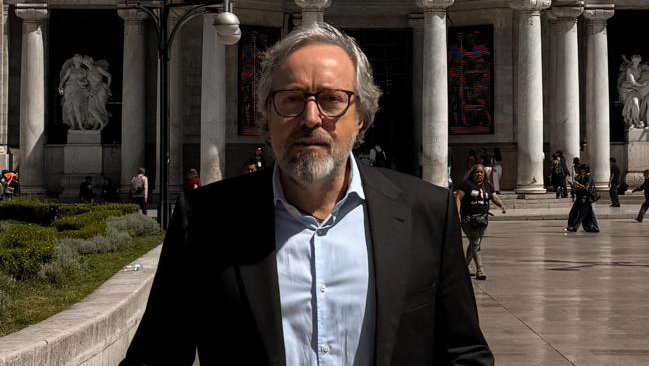
Member of the European Parliament Juan Carlos Girauta. (Courtesy)
Girauta told The Media Line that the housing defeat mattered, but not because it created the crisis.
“The final trigger, not the fundamental cause, but the last straw, was Sánchez’s attempt to recover the initiative and some popularity,” he said in an interview conducted in Spanish.
That effort followed the eviction of María del Carmen “Maricarmen” Abascal, an 87-year-old Madrid woman whose case became a symbol of Spain’s housing crisis. Protesters rallied in her support and established an encampment in Puerta del Sol. Five days after her eviction, the property-management company reached an agreement allowing her to return under a new lease.
Sánchez responded to the protests with housing measures aimed at protecting vulnerable tenants, regulating temporary and room rentals, restricting certain rent increases, and helping first-time buyers. The package included plans for interest-free loans of up to €50,000 (around $56,000) toward a home purchase.
Congress rejected both decrees on Oct. 2 after Junts, the Catalan separatist party led by Carles Puigdemont, joined the PP and Vox in voting against them. Junts’ seven deputies had helped Sánchez secure another term in 2023. This time, their votes helped derail a central government initiative.
Girauta calls the government’s approach “Operation Maricarmen.” He sees it as an effort to take a genuine grievance and turn it into a political rescue operation.
“He takes that banner and says, ‘Now I am going to fix this,’” Girauta said. “Not by building more housing or anything like that, but by creating the kind of legal uncertainty that makes supply contract even further.”
He spoke at greater length about what the housing shortage looks like away from parliament. Young Spaniards, he said, are delaying independence, sharing crowded apartments, and abandoning hopes of buying homes.
“They not only cannot buy. They have to rent with other people,” he said. “There are things happening that were not seen in Spain, at least not in my generation. People from different families have to share a flat and the expenses just to pay the rent.”
Sánchez has acknowledged that his government has not solved Spain’s housing problems. In calling the election, he argued that a larger progressive majority was needed to advance housing, public services, and other reforms blocked in the current parliament.
His government has not abandoned the housing measures. On Oct. 6, the Cabinet approved revised versions of the two decrees, retaining much of the original program and adding a €10 billion financing package for first-home loans. The measures must now go before the Permanent Deputation, the parliamentary body that continues operating after the chambers are dissolved.
The PP and Vox will also try to make the election a referendum on Sánchez himself.
The opposition has spent months pointing to criminal cases involving former Socialist officials and members of the prime minister’s family. Former Transport Minister José Luis Ábalos was sentenced in June to 24 years and three months in prison for crimes including bribery, embezzlement, influence peddling, and participation in a criminal organization.
Sánchez’s brother, David Sánchez, was convicted in July of administrative misconduct connected to his hiring by a provincial government and sentenced to nine years of disqualification from public office. The ruling is being appealed.
The prime minister’s wife, Begoña Gómez, has been ordered to face trial on influence-peddling and embezzlement charges involving alleged misuse of public funds. Gómez denies wrongdoing, and Sánchez himself has not been charged in either family case. He has accused political opponents of using the courts against his family and has argued that wrongdoing by individual officials does not establish broader corruption within his government.
Girauta rejects that defense. He said the court cases had become inseparable from the government’s loss of authority. He also described pressure from Socialist regional leaders who feared paying the price for Sánchez’s problems in their own elections.
They do not want the kick aimed at Sánchez to land on them
“They do not want the kick aimed at Sánchez to land on them,” Girauta said. “They want it to land on him first, and then, when their regional elections arrive, to be judged on their own management.”
Girauta’s interest extends beyond who controls parliament. He expects the election to reopen questions about Spain’s relationship with its traditional allies, including Israel and the United States.
Spain formally recognized a Palestinian state in May 2024. Sánchez’s government later codified an arms embargo on Israel, barred imports from Israeli settlements in the West Bank and from certain Israeli neighborhoods in east Jerusalem under its settlement-related trade restrictions, and increased support for the Palestinian Authority and UNRWA, the UN agency responsible for aiding Palestinian refugees. Sánchez has repeatedly described Israel’s conduct in Gaza as genocide. Vox rejects that characterization and opposed the arms embargo.
Girauta said a new government should “stop inciting antisemitism in international forums, stop practicing anti-Westernism, stop doing everything possible to irritate the United States, and stop yielding to Morocco.”
Stop inciting antisemitism in international forums, stop practicing anti-Westernism, stop doing everything possible to irritate the United States, and stop yielding to Morocco
His criticism of Morocco follows the extraordinary migration crisis in Ceuta in late July, when tens of thousands of people crossed from Morocco into the Spanish enclave over two days. Spanish authorities later put the total at about 80,000, with most subsequently returning to Morocco.
Girauta described the episode as “hybrid warfare” by Morocco. A later Spanish police report said Moroccan security personnel appeared to have helped guide migrants toward the crossing, although it did not identify who ordered the operation or assign responsibility to the Moroccan government. Rabat has denied orchestrating the influx and says it cooperated with Spain in returning migrants.
Catalonia will provide another unpredictable element in the campaign.
The Constitutional Court ruled this week that Spain’s amnesty law applies to misuse-of-public-funds offenses connected to the 2017 Catalan independence drive. The Supreme Court then lifted the arrest warrant for Puigdemont, clearing the way for his possible return to Spain after years in Belgium.
The development is politically awkward for Sánchez. His 2023 agreement with Junts helped secure his return to office and led to passage of the amnesty law, but Puigdemont’s party later withdrew its support on key legislation and helped defeat the housing measures that preceded the snap election.
Girauta also pointed to the political climate surrounding an Oct. 7 pro-Palestinian demonstration scheduled for Barcelona’s Plaça Universitat and associated with Samidoun, the Palestinian Prisoner Solidarity Network. The public call for the event referred to the third anniversary of “Tufan al-Aqsa,” the Arabic name used by Hamas for its Oct. 7, 2023, attack, and urged support for Palestinian resistance.
Samidoun was sanctioned by the US Treasury in 2024, which described it as an international fundraising front for the Popular Front for the Liberation of Palestine. Canada has listed the organization as a terrorist entity, while Germany banned it in 2023.
Girauta criticized both the amnesty and the government’s housing strategy. His sharpest warning, though, concerned the tone of the campaign and the possibility that political confrontation could spill beyond argument.
What counts here is the free exchange of arguments and messages, and then measuring ourselves at the ballot box. Everything else must be rejected and denounced.
“We are in a democracy,” Girauta said. “What counts here is the free exchange of arguments and messages, and then measuring ourselves at the ballot box. Everything else must be rejected and denounced.”
With less than two months until voting day, the polls give Spain’s right a substantial numerical advantage, but they are a snapshot rather than a result. Sánchez has built much of his political career on surviving situations in which his opponents believed his time was up. The Nov. 29 election will determine whether he does so again—and whether Spain’s domestic upheaval produces a sharp change in its policies toward Israel, the United States, Morocco, and the rest of Europe.