In a war, length is far more important than ferocity. Trying to keep a war from escalating might seem like a prudent thing (and academic theory, which simply does not understand history, says as much). However, clamping down on escalation can actually make things far worse.
What such a move can do, in a vain attempt to keep a war under control, is lengthen a war out of all expectation. And length of war is almost always the key variable in how horrible a war becomes. Short escalation if it can be effective is far preferable to the kind of long and grotesque war we are now seeing in Ukraine.
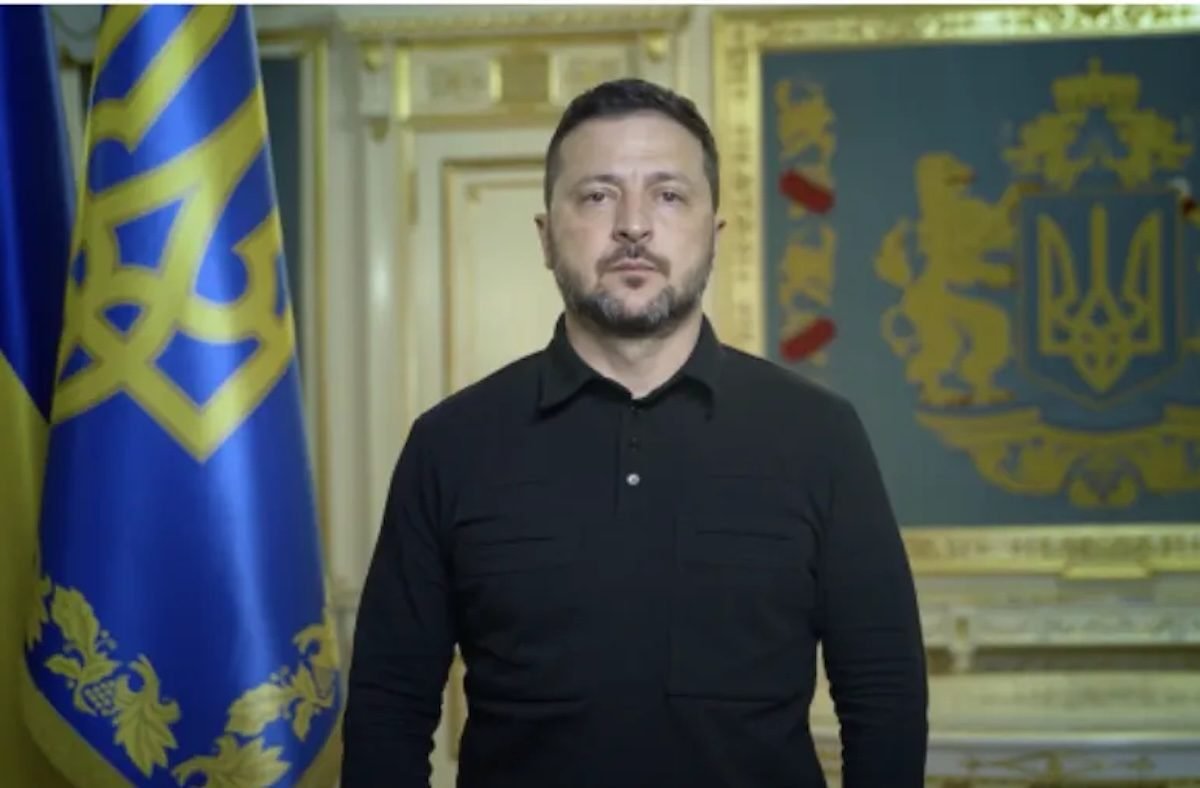
I was struck by that this week when President Volodymyr Zelensky did something that would have seemed shockingly escalatory a few years ago, but which actually people passed over quite quickly now – he announced the “de facto” closing of Russian commercial airspace.
In other words, we are escalating now and people have stopped caring. It brings us back to the opening phase of the full-scale invasion, when people believed such escalation could be controlled.
Now, I am always amused when people accuse me of being a great Biden supporter because I criticize Trump. For the first two years of my Substack (more than half of the time of its existence) I spent much of my time pointing out the great flaws in the Biden administration’s escalation policy.
By trying to restrain escalation, what the Biden administration was actually doing was protecting Russia and lengthening the war. They were at best simply delaying any escalation and in doing so they would actually make that escalation worse and cause more damage. I wrote pieces on just this theme in January 2024 and May 2024.
Now, under Trump, US policy has been revealed as the real disaster that it was. Putin is now free to escalate without any fear that the US will do anything to stop him – and that means the Ukrainians are left playing a brutal game of catch-up. This past week we saw a prime example of this when the Ukrainians announced that they will now ‘de facto’ threaten civil aviation in Russia. They have had to deal with their airspace being a wild west for years and now they are trying to turn the tables.
All that is indicative of what we are going to see this fall and winter. Both Ukraine and Russia are now, more than four and a half years into the war, facing the reality that this war is going to get even more intense and horrible, setting up a reality where life itself for all people will become increasingly hard. And both sides at the same time have the ability to do more and more damage with their ranged campaign—far more than they could have done a few years ago.
This is what not helping Ukraine to win the war quickly has done – lengthened the war and made it worse. Trying to artificially restrain escalation has led the war to be far more horrible and extensive than it needed to be.
Other stories in this weekend update include a spate of different stories from the US administration about US positioning and the war. The upshot is that Trump is explicit now that Russia is the friend and Ukraine is despised.
Finally, General Drapatyi released a new set of principles for the Ukrainian military. They are worth reflecting on – for all militaries. And they say nothing about needing to give all soldiers a testosterone shot.
It will be a brutal fall and winter
During his evening address on September 1, President Zelensky made a very pointed statement about what he believes will happen in the war against Russia. He believes now that the meaning of the number and type of drones/missiles that the Ukrainians are firing against Russia (and in particular against cities like Moscow and St Petersburg which have large international airports) is that Ukraine is “de facto” closing much of Russian air space to “civilian aircraft”. Here is a story about what he said.
Zelensky was so determined to get the message out, that he tweeted out the warning in English right after the address.

As the above statement showed, Zelensky believes that Ukraine “effectively” closing Russian air space is a direct result of Russia being allowed to escalate with impunity over the last few years – continuing this week.
And of course Zelensky is right. This week has shown just how Russia is able and willing to attack whatever it wants in Ukraine without worry about being accused of escalating, without worrying about being accused of escalating, and without Ukraine’s partners being willing to help Ukraine (let alone do anything strong to deter Russia).
It is worth noting what did happen this week. The Russians killed more civilians, 38, in one air strike than they have done at any other time this year. To reinforce the point that what the Ukrainians are doing in threatening air traffic is part and parcel of how Russia has waged this war, on Friday night the Russians hit two major Ukrainian airfields.
Both sides are also engaging in campaigns of targeted assassination which were reconfirmed this week. The Russians put a drone into the office of the head of Ukrainian military intelligence – which is in one of the most central and prominent positions in Kyiv. The Ukrainians, meanwhile, seem to have assassinated a Russian military officer in St Petersburg, an officer who had been accused of war crimes.
And this is just the start of what we are about to see. As both sides understand, this winter could be quite determinative in shaping the end of the war, particularly if it is as cold and terrible as last winter. The Ukrainians I know are already starting preparations, on the assumption that they may lose power and heating for large stretches of the winter.
The Ukrainians admitted in August that up to 80% of their pre-war power generation facilities have been either completely or partially destroyed. Zelensky even stated that Ukraine had “virtually no intact thermal power plants” and that “Russian missiles are aimed precisely at making the lives of Ukrainians unbearable.” What is left is to a large degree based on nuclear power plants that Russia for reasons of self-interest is reluctant to attack. However there are signs that even this reluctance is breaking down.
In other words, this winter could see major power and heating cuts, making the lives of millions of Ukrainians extremely hard.
The Ukrainians’ response will be fascinating. It could potentially be to hit back in a similar way. So far the vast majority of Ukrainian attacks of this kind have been against Russia’s fuel industry – primarily its refineries. What it has not tried to do, though conceivably it could, is turn the lights and heat out in Moscow or St Petersburg.
By warning that civilian aviation is not safe in Russia, Zelensky is “de facto” warning that all such infrastructure is potentially now at risk. If airfields are not safe, neither are power plants, etc.
The Russians’ response has been to threaten even greater attacks on Ukrainian power generation but as they have basically done as they can, they cannot really escalate in that regard.
The upshot of all of this is that we are poised for a pretty harsh fall and winter. The policy of trying to control and stop escalation has failed utterly. It might have delayed escalation for a little while, but has made it now far worse when it happened. It has already led to great suffering and will lead to much more.
Trump speaks his truth about Russia and Ukraine
At times Donald Trump speaks the truth. It can happen when he loses control and gets so angry that he blurts out what he really thinks. He did that this past week on Twitter when he started a rant about the US reporting of his war with Iran – a rant that he then turned into a whine about how the US needs to be paid back for giving Ukraine aid under the Biden Administration.

It seems he could not control himself and Natalie could not either, so he just had to let his resentment towards Ukraine come out.
Note that this aid was all Congressionally sanctioned, so actually the US cannot demand any money back. Trump cares so little for Congress that he overlooks that. However the truth is there that, if Trump could make Ukraine pay back the aid, he would.
At the same time that Trump could not control himself about Ukraine, he revealed his instinctive respect and affection for Putin by defending the Russian dictator from the charge that it was Russians who had orchestrated the attack on Germany’s Leipzig airport (which is now what the German government is stating clearly). When Trump was asked about the German government’s claim, he instinctively jumped to Putin’s defense, and, as he often does with the Russian dictator, talked up the fact that the two of them have a close personal relationship:
This instinctive Trumpian affection for Putin and Russia was shown in the other big story of the last few days, the visit of Steve Witkoff and Jared Kushner to Moscow and Kyiv. That trip (which started when the two reached Moscow and which should soon see them in Kyiv) reveals just how deep the affection runs between Trump and Putin.
When Witkoff and Putin sat down with Putin, the Americans could not have been more positive. Witkoff gushed about his repeated pleasure at meeting Putin, saying that when he retires he will look back on all these “incredible stories and incredible memories and yours will be right at the top.”

Beyond Trump’s and Witkoff’s obvious affection for Putin, the staging of the visits reveals a great deal. Even though the two have never before visited Ukraine, Trump felt the need for them to go to Moscow first, to show Putin he is, always, the number 1 priority. Only after seeing Putin, and presumably working out a plan with him, can they be allowed finally to visit Ukraine. Remember, the last time they presented a “compromise” plan to the Ukrainians, it was practically word for word a dictation of a Russian plan.
So, once again, the US government seems to need to agree on a position with Putin before it can talk with Ukraine.
Such behavior, by the way, makes me doubt that the real reason behind the Ratcliffe visit was to somehow tell Putin the war was going badly for Russia. The US government remains in Putin’s thrall.
So the last few days reveal once again the instinctive position of Donald Trump and, through him, the US government. He/they want to help and work with Putin and believe that Ukraine needs to do what it is told.
And it has always been thus.
Drapatyi’s Principles
On September 2, Commander-in-Chief of the Ukrainian Armed Forces Major General Mykhailo Drapatyi publicly released a document entitled “Principles of Leadership and Military Development in Wartime.” If you want to read the full text in English (and I recommend that you do) here is a link to a translatable version.
By the way, here is the piece that I wrote about Drapatyi when he was first appointed. Since then I can happily report that everything I have heard from Ukrainians has been extremely positive about what he is doing. He might be an even better selection than he seemed at the time.
What Drapatyi writes is fascinating and heartening. It gives an indication of what Drapatyi believes are the key tenets of how Ukraine needs to fight the war and how the Ukrainian army needs to be run. Foundationally, he believes that the Ukrainians must out-think and out-adapt the Russians. Key elements that will make this possible are keeping Ukrainian casualties down, keeping morale high and demanding accountability from Ukraine’s officer corps.
The first part of the document has a subhead that starts: “People are the most valuable combat capability..
It is very well reasoned. Drapatyi does not talk about saving lives through not fighting or taking no risks. He sees this happening by taking the right risks and always trying to stay ahead of the Russians in the adaptation and innovation cycle. To do that, he calls on Ukrainian officers not just to give orders, but to listen. He is saying to them, “it is your responsibility to put your soldiers in the best possible position to achieve their objectives and save their lives.”
Here was a fascinating reflection on precisely that point.
A separate priority is accelerating adaptation and the implementation of innovation. The purpose of this work, as set out in the Principles, is linked to people: technologies are needed where they enable tasks to be accomplished with fewer casualties and less risk to those directly holding the front line. The source of change is not limited to headquarters: commanders are required to create an environment in which “good ideas can come from any service member, regardless of military rank or position.
And you know what he says is the linchpin of all of this: It is truth. Drapatyi calls for truth from the top of the Ukrainian military on down. Sorry for all the quotes, but the whole document is really worth digesting. Note—translating the text from Ukrainian to English can lead to some awkward phrasing.
- Truth makes us stronger
- The document requires commanders and headquarters to provide honest assessments and not allow optimism, fear or personal ambitions to distort reality.
- “Problems that are ignored only grow.” “Healthy professional debate strengthens decisions; silence weakens them.”
- The same standards of conduct apply to generals, officers, sergeants and civilian leaders: there is no place in the Armed Forces for corruption, abuse of authority, harassment, discrimination or injustice. A separate requirement for everyone commander is the responsible use of state resources.
In reading this I was struck how different it is from the values not only of the Russian military, but also those of the present leadership in the Pentagon. In the latter, truth is considered a useless commodity. A focus on brains and adaptability over brainless bravery is considered the sign of being a sissy. And accountability has been thrown out of the window.
The US military is being run by a group that apes the Russians and not the Ukrainians – when we have in front of us, from the latter, one of the best statements of command principles I have ever seen. It is a tragedy.
The USA is going to have to change so many things in the future, and that will start with understanding that it needs to learn from others and that the present US ethos is one that fosters failure. The US military could do far worse than to start its rebuild based on Drapatyi’s principles of command.
And as I said above, there are no testosterone shots or cosplay warriors in sight.
Phillips O’Brien is professor of strategic studies at the University of St. Andrew.
This article, originally published by Phillips’s Newsletter, is republished with permission.