Big changes are coming to Android apps, but they’re not the changes Google wanted. The settlement between Google and Epic that aimed to put to rest the companies’ long-running antitrust battle is being withdrawn, and that means third-party app stores are coming to the Play Store. Google has confirmed that it will begin distributing rival app stores next week, setting the stage for competing platforms to take a bite out of Google’s Android revenue stream.
This case has the potential to upend software distribution on Android, and it’s all because of V-Bucks. In 2020, Epic Games was frustrated that it had to pay a 30 percent cut to Apple and Google every time someone bought a bundle of V-Bucks in a mobile version of Fortnite. The publisher added a direct purchase option to the game in violation of both Apple’s and Google’s rules. Naturally, Fortnite was pulled from the App Store and Google Play, kicking off the antitrust lawsuit that is only now reaching its conclusion.
While Apple suffered little penalty in its Epic case, Google was tripped up by its anti-competitive management of the supposedly open Android ecosystem. Google used its market position to discourage device makers from promoting or pre-loading non-Google app stores and attempted to hide that conduct. The remedies set by Judge James Donato included lower fees, mirroring Google Play apps in other stores, and most vitally, placement of alternative app stores in Google Play.
The court felt adding third-party app stores to Google Play was the best way to ensure fair access. After all, Google was found guilty of anticompetitive conduct, which entrenched the Play Store and made it the only source of software for most Android users. The network effects of Google’s dominant position would therefore make it difficult for a competitor to attract significant market share with sideloading.
When Google and Epic announced their settlement in late 2025, the Google Play distribution provisions were gone. Instead, Google promised to launch a Registered App Store program globally, allowing stores to access streamlined installation and other system features, making them first-class citizens on Android. They would have to get users to sideload the app store clients, though.
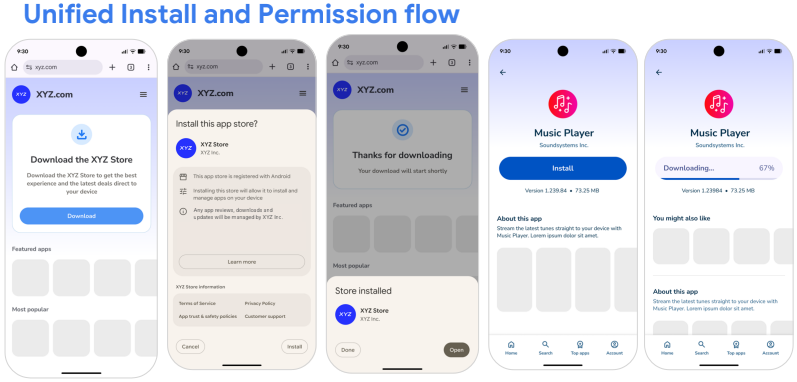
From the start, this modification of the remedies was on shaky ground. Donato expressed skepticism about the proposal in early 2026, noting that it may not serve the market’s interests. Still, Google forged ahead with Registered App Stores, planning an international rollout before expanding to the US with court approval.
A brave new app store
Google and Epic were set to return to court on July 16 to argue in favor of the settlement. However, the writing may have been on the wall. In a recent expert analysis provided to the court, MIT economics professor Nancy Rose noted that the settlement was “unlikely to enable Google Play’s potential competitors to overcome their long-standing network-effect disadvantage in a timely manner.”
With settlement approval looking increasingly unlikely, Epic and Google agreed this week to call the whole thing off. Here’s how Google Trust and Reputation Communications Lead Dan Jackson explains the company’s decision:
“We’ve agreed with Epic to withdraw our motion to modify the US Court’s injunction rather than prolonging this process which creates uncertainty for the ecosystem. This allows us to focus on executing our recently announced global business model evolution to deliver greater app store choice, lower prices, and more opportunities for developers and users. We remain committed to maintaining Android’s industry-leading security and fostering a competitive ecosystem where every app store and developer has the freedom to compete. In parallel, we continue to comply with the US Court’s injunction.”
In a brief filing, Google’s legal team informs the court that Google is prepared to begin distributing third-party app stores in Google Play on July 22. Under the terms of Judge Donato’s original injunction, these stores will have access to the full catalog of Google Play apps by default. Developers will have the option to opt out of distribution in these stores, and Google has a support page explaining how to do so.
Google also has documentation on how app stores can get access to the Google Play catalog. It won’t be mirroring those apps in any shady storefront that asks. The court has allowed Google to charge reasonable fees to cover its security and compliance review of third-party stores, which will be $5,000 per year.
Google will also require approved stores to block malware, respect intellectual property, and include mechanisms to update and uninstall apps. App stores can be removed from the program if more than 1 percent of attempted app installs appear to be malware or unwanted software. It’s unclear if there will be separate, possibly more stringent requirements for storefront distribution in the Play Store. However, Google is prohibited from unreasonably blocking third-party store clients uploaded to Google Play.
The changes Google has announced under the Epic agreement will proceed for now. That means Registered App Stores will happen globally, but they will probably only appear in the Play Store for US users. Google hasn’t specified if there will be any differences in the features available to the stores downloaded from Play versus registered stores. We’ve asked for clarification and will update if Google provides more information.