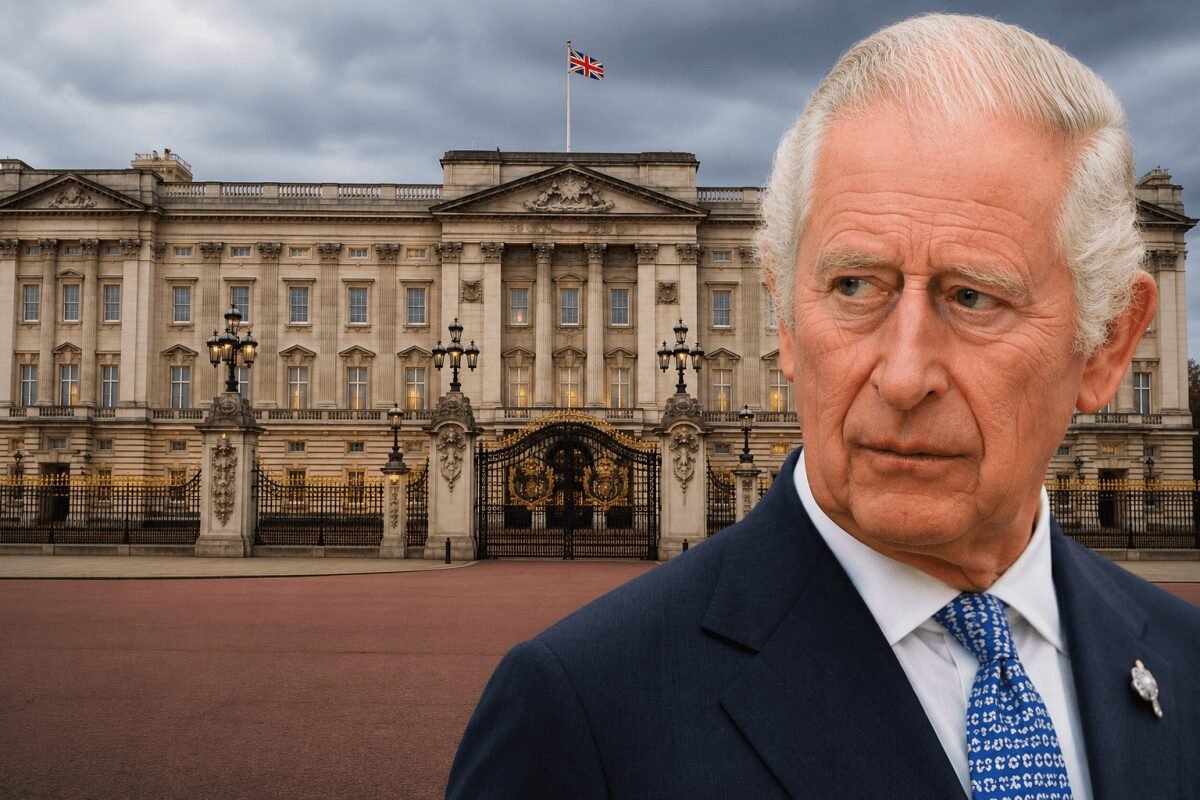
King Charles is facing fresh backlash after deciding he will not move back into Buckingham Palace, even after taxpayers helped fund a massive renovation project costing nearly half a billion dollars.
The decision has sparked outrage among critics who say the King should live in the historic palace after so much public money was poured into fixing it up.
Charles, 77, and Queen Camilla, 78, are expected to keep Clarence House as their main London home instead of returning to Buckingham Palace when its long-running refurbishment is finished.
The palace has been undergoing a major 10-year overhaul to replace old boilers, electrical systems, plumbing and other aging infrastructure. The project was designed to reduce the risk of fire and flooding while bringing the famous royal residence into the modern age.
But now that the work is almost complete, some are asking a blunt question: What was the point of spending all that money if the King does not even plan to live there?
One senior Labour figure in Britain has been especially critical of the decision.
Baroness Margaret Hodge, a former Labour MP and former chair of the Commons Public Accounts Committee, questioned whether the huge renovation bill really gave taxpayers value for money.
“They’ve spent £370million on doing up Buckingham Palace,” Hodge said. “They’re now not going to move back there.”
When asked if she believed that was a problem, she replied: “I think it is.”
Royal officials have pushed back against the criticism, insisting the decision is not as dramatic as it sounds. They noted that Buckingham Palace has not been used as a regular royal home for several years.
Queen Elizabeth II last stayed overnight at the palace on March 18, 2020, before moving to Windsor Castle ahead of the first Covid lockdown.
Instead of serving as the King and Queen’s personal residence, Buckingham Palace will continue to operate as the official headquarters of the monarchy. The palace will still be used for state events, royal duties and formal occasions.
James Chalmers, Keeper of the Privy Purse, said the decision was made partly to open more of the palace to the public.
“After careful consideration, and to greatly increase opportunities for public access, the King and Queen have decided not to adopt Buckingham Palace as a personal residence and will instead continue to use Clarence House as their London home,” Chalmers said.
He added that the King and Queen will still have access to private rooms inside the palace during working days.
“Their Majesties will, however, have access to private rooms within the palace where they can retire during the course of a working day, and which could be utilized as potential residential accommodation in times ahead,” he said.
Buckingham Palace has been the official home of British monarchs since Queen Victoria moved her court there in 1837. Over the years, it became one of the most recognizable symbols of the monarchy and one of Britain’s biggest tourist attractions.
That is why critics say Charles’ decision feels like a snub to the building’s history — and to the taxpayers who helped pay for its renovation.
One critic blasted the move as “selfish and self-indulgent.”
“With this amount of money being spent on Buckingham Palace, Charles should install himself there and help bring in tourism money to Britain,” the critic said.
The controversy comes as royal finances are once again under the microscope.
The latest royal accounts showed Charles paid about $17.4 million in tax during the 2024-25 financial year, after paying an estimated $15.8 million the year before. Since becoming King in 2022, he has paid more than $40.5 million in taxes.
Prince William, 44, also disclosed his tax payments for the first time. He paid around $10.5 million in 2024-25 and roughly $11.3 million the previous year.
The accounts also revealed that William’s charter flight to Saudi Arabia in February was the royal family’s most expensive overseas trip, costing about $176,000.
Meanwhile, the Sovereign Grant, which funds the monarch’s official duties and household operations, is also rising. It increased to about $178 million for 2025-26, while its core funding is expected to climb from around $70 million to roughly $135 million by 2027-28.
Hodge also took aim at the wider royal money machine, including the Duchy of Cornwall and Duchy of Lancaster.
“Their personal taxation shouldn’t be a concern of us,” she said. “What I am bothered about is that they get the sovereign grant, they get money from the Crown Estate, and then they have these two big pots of money, they have the Duchy of Cornwall and the Duchy of Lancaster.”
She argued those funds should be treated as public money.
“Now, in my view, those are both public pots of money,” Hodge said. “The Royal Family doesn’t agree with me.”
She added: “They were given to the Royal Family in the 13th century by Edward III as a sovereign grant, so I think they should still be part of the public pot, and if you put all that together, it’s one heck of a lot of money.”
For Charles, the Buckingham Palace decision may have been framed as practical and modern. But to critics, it is another royal money controversy at a time when many families are struggling with rising costs.
And after nearly $500 million in renovations, the optics are hard to ignore: the palace is polished, modernized and ready — but the King appears to have no interest in calling it home.