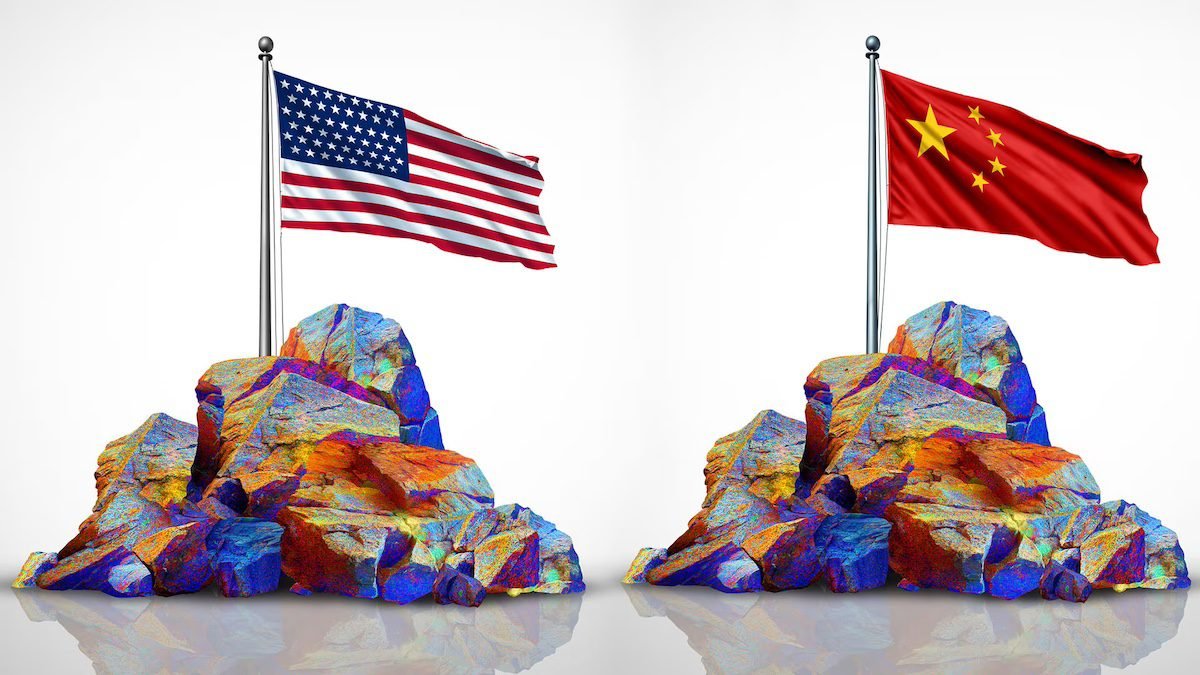
The recent Trump-Xi summit in Beijing revealed how deeply commodities have become embedded in 21st-century geopolitics. Far beyond a conventional trade negotiation, the summit effectively showcased the emergence of resource diplomacy as a central organizing principle of great-power competition.
According to White House statements, China agreed to purchase at least US$17 billion annually in US agricultural products through 2028, supplementing earlier soybean agreements concluded in 2025. Beijing also reportedly committed to restoring market access for American beef and poultry.
Separately, US officials earlier claimed that Beijing had agreed to increase purchases of US oil in response to the ongoing instability around the Strait of Hormuz. In turn, China is expected to address US concerns over shortages of rare earth and critical minerals.
The summit underscored a major strategic evolution in Washington’s worldview. Commodities are no longer treated merely as instruments of commerce; they are increasingly viewed as tools of geopolitical leverage, industrial resilience and strategic coercion.
Agricultural exports, oil flows, rare earth minerals, shipping corridors and critical resource supply chains now occupy the center of statecraft. The Trump administration appears to view resource dependency itself as vulnerability, while resource dominance constitutes geopolitical advantage.
This framework is especially visible in the administration’s handling of China. For years, Beijing’s dominance over critical mineral supply chains has alarmed American strategists.
China controls large shares of global refining and processing for rare earths, graphite, cobalt and battery materials essential for semiconductors, electric vehicles, advanced weapons systems, renewable infrastructure and artificial intelligence hardware.
The US administration increasingly sees this dominance not simply as an economic challenge but as a strategic threat that could undermine American military and industrial capacity in a crisis.
As a result, Washington has moved aggressively toward a policy of critical mineral securitization. Recent executive actions invoke emergency powers to accelerate domestic mining, expand refining capacity, support deep-sea extraction projects, and create strategic stockpiles. The objective is not merely self-sufficiency but strategic insulation from Chinese coercive power.
The US administration’s focus extends beyond extraction itself. Policymakers increasingly recognize that China’s true advantage lies not in raw resource ownership alone but in processing and industrial integration. Rare earths mined outside China are often still refined inside China before entering global manufacturing chains.
Consequently, the administration’s strategy increasingly resembles a Cold War-style industrial mobilization effort aimed at reconstructing entire domestic supply ecosystems from mine to magnet to military application.
This represents a profound shift from earlier assumptions about globalization. During the post-Cold War era, economic interdependence was widely viewed as stabilizing and mutually beneficial. The emerging Trump doctrine instead treats interdependence as a liability when rival powers control strategic chokepoints.
Washington, therefore, favors tariffs, industrial subsidies, domestic extraction mandates, friend-shoring, and strategic decoupling in sectors tied to national security.
The geopolitical importance of rare earths today parallels the strategic role of oil in the twentieth century. Rare earth magnets are embedded in fighter aircraft, missile guidance systems, drones, radar systems and advanced computing technologies.
Semiconductor manufacturing depends on multiple critical minerals vulnerable to supply disruption. In Washington’s strategic imagination, Chinese export restrictions now resemble a potential energy embargo capable of crippling the industrial foundations of American power.
The administration’s embrace of deep-sea mining reflects this mindset. Offshore polymetallic nodules rich in nickel, cobalt, manganese, and rare earth elements are increasingly viewed as strategic assets in the competition with Beijing.
White House language on seabed extraction explicitly frames offshore minerals as instruments to reduce dependence on Chinese-controlled supply chains. The resource frontier is thus expanding from land-based mining to the ocean floor itself.
At the same time, hydrocarbons remain central to the administration’s geopolitical doctrine. Unlike many European governments that increasingly frame climate transition as the organizing principle of economic policy, the Trump administration continues to treat oil and natural gas dominance as enduring strategic advantages. Cheap domestic energy supports industrial competitiveness, strengthens export capacity, and gives Washington leverage over energy-dependent rivals.
Here, China’s vulnerabilities are particularly significant. Beijing remains heavily dependent on imported hydrocarbons, especially from the Middle East. Much of this energy supply passes through the Strait of Hormuz, one of the world’s most critical maritime chokepoints.
The Trump administration increasingly appears to view American naval dominance and energy export capacity as interconnected strategic tools that can constrain Chinese freedom of action.
This explains Iran’s centrality within the administration’s broader commodity strategy. Iran is not merely a regional adversary; it sits astride global energy routes essential to Asian economies. The 2026 Strait of Hormuz crisis has dramatically reinforced this reality.
Iranian disruptions to shipping routes have sent shockwaves through global oil markets and exposed the fragility of Asian energy security, especially for China and India, as the two principal rising superpowers capable of rivaling the US.
Against this backdrop, the Trump-Xi summit’s oil discussions became highly significant. According to US officials, Xi expressed interest in increasing purchases of American oil partly to reduce China’s exposure to Hormuz-related instability.
This reflects a remarkable geopolitical irony: the US is simultaneously positioning itself as China’s principal strategic rival while also seeking to become a stabilizing supplier of the very energy resources China requires to sustain economic growth.
This transactional flexibility is characteristic of Trumpian geopolitics. The administration does not necessarily seek full economic disengagement from China. Instead, it aims to restructure interdependence on terms more favorable to American leverage.
Commodity flows become bargaining instruments within broader strategic negotiations involving tariffs, sanctions, military tensions, and technological competition.
Iran remains central to this architecture because of its growing relationship with China. Chinese refiners persisted in purchasing Iranian oil despite Western sanctions, effectively providing Tehran with an economic lifeline.
Washington’s sanctions pressure on Chinese entities linked to Iranian crude, therefore, served multiple objectives simultaneously: constraining Iran, increasing costs for Beijing, and reinforcing US dominance over global financial and energy systems.
The summit also highlighted the continued geopolitical importance of agricultural commodities. American agriculture has long been one of Washington’s most underappreciated strategic assets. Food dependency creates political leverage, particularly during periods of supply disruption or inflation.
China’s renewed commitment to large-scale agricultural purchases, therefore, carries strategic significance beyond simple trade balances. It stabilizes politically important American farming constituencies while reinforcing Washington’s role as a critical supplier of global food security.
India occupies a more ambiguous position within this emerging resource order. Washington increasingly views India as a key balancing power against China, yet also recognizes that India’s economic rise will intensify global competition for hydrocarbons, minerals, fertilizers, and industrial inputs.
India remains deeply dependent on imported energy and has resisted fully aligning with Western sanctions regimes against Russia and Iran. From Washington’s perspective, integrating India into non-Chinese supply chains while preserving leverage over its resource dependencies represents a long-term strategic objective.
The administration’s broader resource strategy also has military implications. Resource-rich regions are increasingly becoming theatres of geopolitical competition. Access to lithium in Latin America, cobalt in Africa, rare earths in Central Asia and Greenland, amid vital Arctic shipping lanes, are now viewed through a strategic lens.
Ultimately, the Trump administration’s commodity resource strategy reflects the return of classical geopolitics in the face of a technologically advanced age. Energy, food, minerals, shipping routes, and industrial supply chains are being reconceived as instruments of national power comparable to military bases or naval fleets.
The May 2026 Trump-Xi summit vividly illustrated this transformation. Agricultural trade, oil security, Hormuz stability, sanctions policy and critical minerals were all folded into a single integrated geopolitical negotiation.
The US administration appears to believe that the balance of power in the coming decades will depend less on abstract globalization and more on who controls the material foundations of modern civilization: energy flows, strategic minerals, industrial supply chains, and maritime chokepoints.
In this emerging world order, commodities are no longer simply traded goods. They are strategic weapons in an increasingly resource-focused era of great-power rivalry.