A thousand years ago, the ancestors of today’s Barkindji people carefully buried a dingo (or garli, in the Barkindji language) in a mound of shells.
Archaeologists recently studied the burial in what’s now New South Wales, Australia. They found that the Barkindji ancestors had buried the dingo with the same care and ceremony as any beloved human member of the community and looked after the grave for centuries. The burial reveals that dingoes were, as Australian Museum and University of Sydney archaeologist and study co-author Amy Way puts it, “deeply valued and loved” by ancient people in Australia.
The long-lost dingo
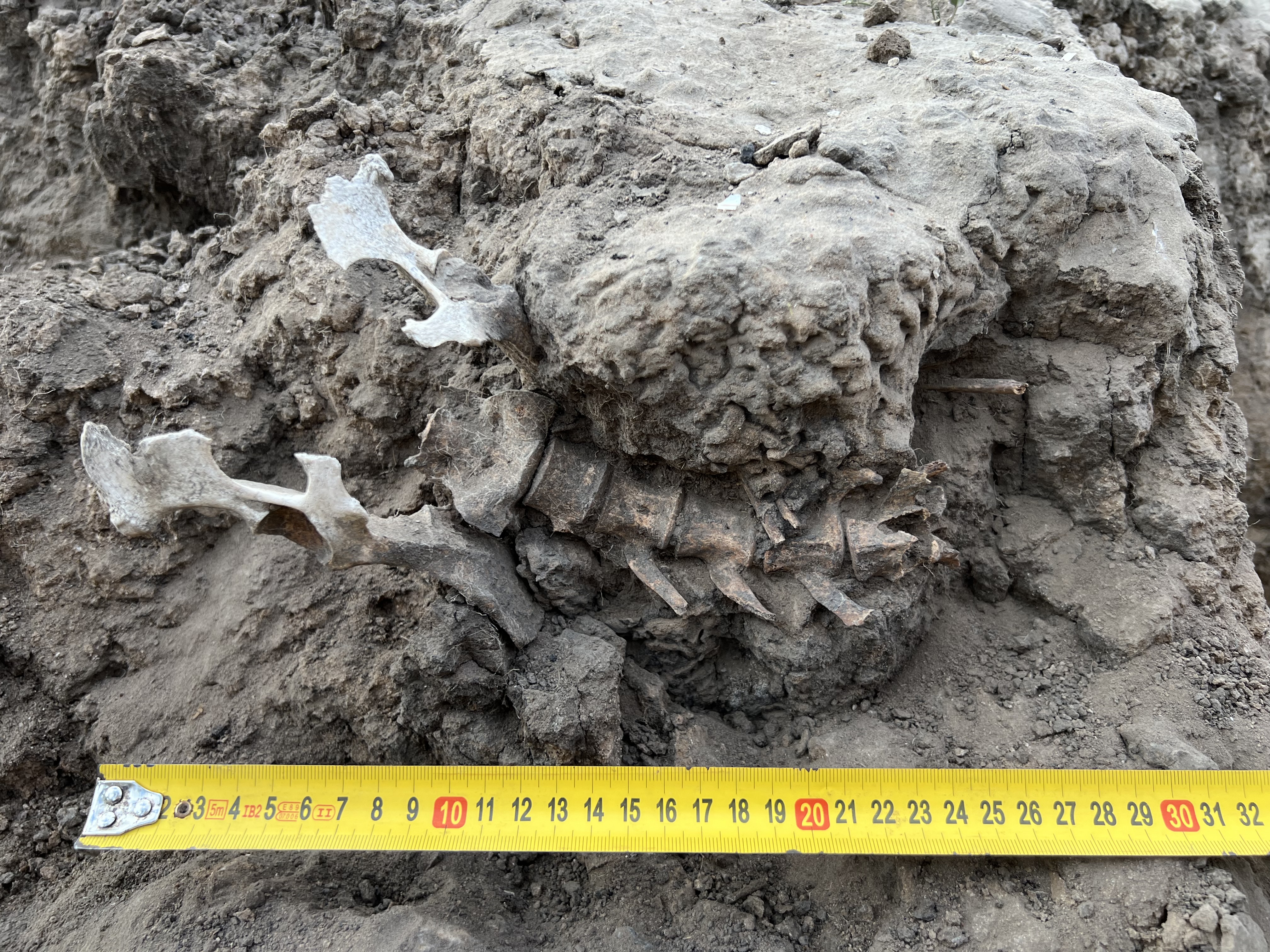
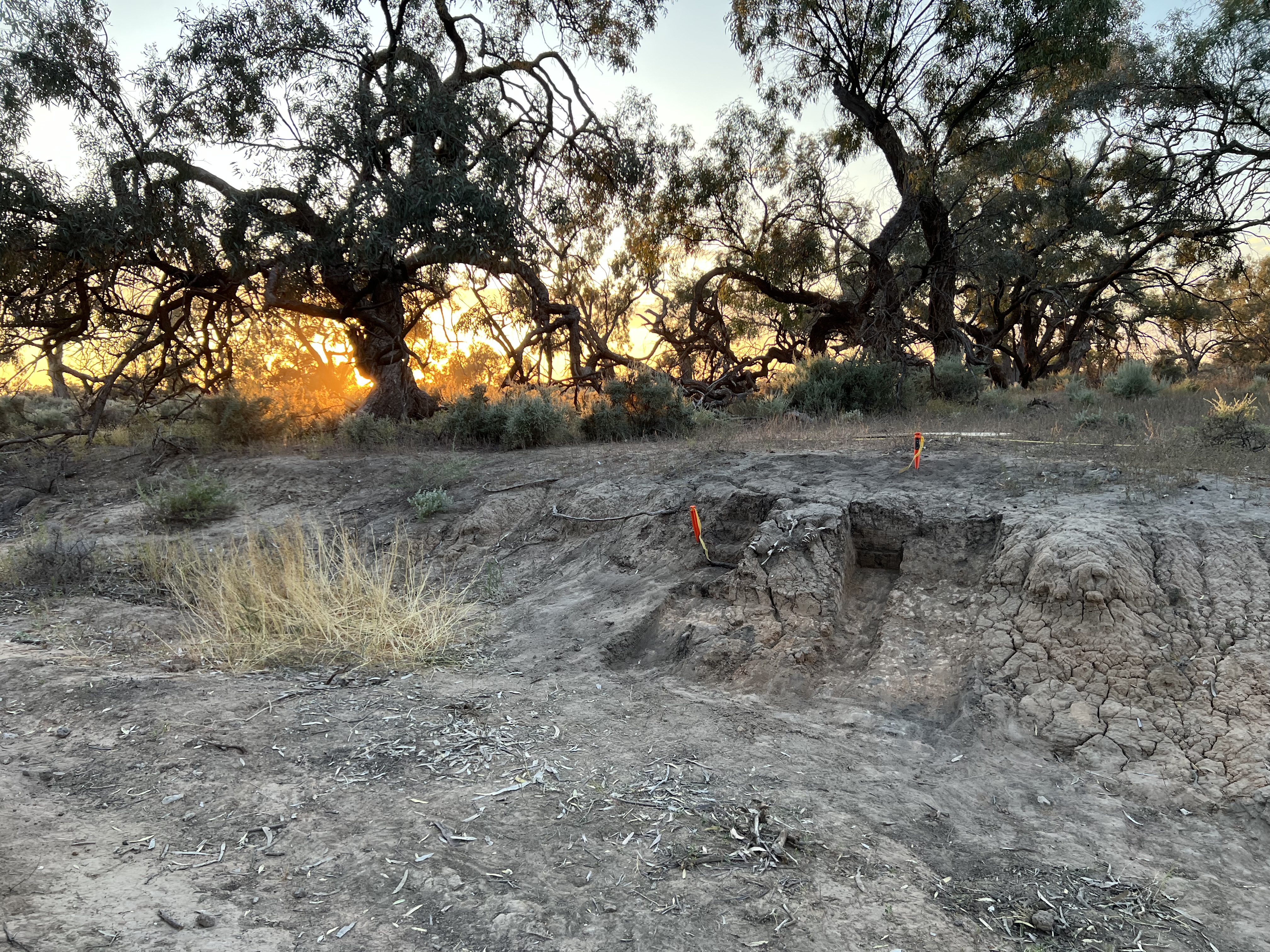
Five years ago, Barkindji Elder Uncle Badger Bates and National Parks and Wildlife Service archaeologist Dan Witter saw bones eroding out of a road cut in Kinchega National Park, an area along the Baaka, or Darling River, in Western Australia. Badger recognized the bones as a dingo, lying on its left side in what was once a carefully built mound of river mussel shells.
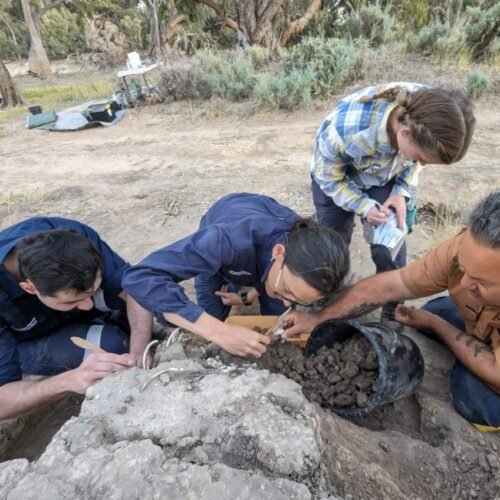
At the urging of the Menindee Aboriginal Elders Council, who worried that erosion would end up destroying the dingo bones and any information about the past they contained, a team of archaeologists, working alongside Barkindji elders, excavated and studied the skeleton. The bones turned out to belong to an elderly male dingo, with worn teeth and possible signs of arthritis. Broken and healed bones suggested that he’d lived a tough, active life but also been cared for by people.
And the layers of shells around him revealed that generations of Barkindji had tended his grave and ritually “fed” him by adding shells to the mound for centuries after his death. This is definitely not the first dingo burial ever found in Australia, but it’s farther north and west than any other example. It reveals a far more profound and lasting relationship between ancient people and dingoes than outside researchers, at least, had previously fully realized.
“This confirms these traditions were much more widespread than we once thought,” said University of Western Australia specialist Loukas Koungoulos, the lead author of the paper, in a press release.
Hunting kangaroo and snoozing by the fire
The dingo’s bones tell their own story. Koungoulos says he was probably between 4 and 7 years old, which would be late middle age for a wild dingo today. Heavily worn teeth were the first hint of the dingo’s senior citizen status, but the ends of his leg bones also showed signs of bone decay, probably thanks to long-term inflammation: possibly something like arthritis.
And he was shorter than most wild dingoes, based on the length of his femurs. That’s not unusual—domesticated animals are often shorter than their wild relatives, and it doesn’t take many generations for that to show up—but it could say something interesting about exactly how close wild dingoes got to domestication in the centuries before European colonists wrecked everything.
At some point, the dingo had suffered a broken rib and lower leg. Koungoulos suggest the injuries look like the aftermath of a kangaroo kick and may have happened on a hunt. The injuries themselves aren’t too surprising; wild dingoes hunt kangaroos, and Aboriginal hunters worked with dingoes the same way people in other parts of the world have hunted with dogs for millennia. What’s more striking is that the two injuries were long-since healed. Somebody nursed this dingo back to health after his kangaroo encounter.
“What stands out about garli is that he was old and well-cared-for,” said Koungoulos. “The healed injuries, worn teeth, and careful burial tell us that this animal lived a long life alongside people, and that his death was marked intentionally and with respect.”
How dingoes became beloved community members
People have lived in this part of Australia for at least 40,000 years, and the oldest traces of humans on the continent date to 65,000 years ago. But dingoes are relative newcomers; the first dingoes arrived on Australia’s shores between 5,000 and 3,500 years ago: just a relative handful of domestic dogs that tagged along with seafarers from New Guinea, according to genetic studies. But that small starting population went wild, both literally and figuratively.
And, of course, they’re undeniably friend-shaped. It didn’t take Australia’s First Nations peoples long to bond with the dingoes, finding a place for them in their creation stories and in their communities.
“These creatures were the first non-humans who answered back, came when called, helped in the hunt, slept with people, and learned to understand some of the vocabulary of human languages,” wrote anthropologist Deborah Bird Rose in her book Wild Dog Dreaming: Love and Extinction. “People gave them names, fitted them into the wider kinship structure, and took care of dead dingoes in the same way they took care of dead people.”
The Baaka dingo is proof of just how deeply dingoes had worked their way into people’s hearts and lives by around a thousand years ago. Radiocarbon dating of the freshwater mussel shells reveal that the dingo’s burial mound was built between 963 and 916 years ago, around the same time the dingo died. But layers of shells kept being added over the centuries, in what Barkindji elders describe as a “feeding” ritual meant to honor the dead dingo as one of the community’s own ancestors.
“If garli were buried with the same care and respect we see for human ancestors, including mothers and elders, it tells us these animals were profoundly valued and loved,” said Way.
In many places, shell middens begin as refuse piles, and eventually become parts of the foundations of buildings or settlements. But in Australia, middens “are sites built by the Old People,” write Way, Barkindji elder and artist Barb Quayle, and Barkindji custodian Dave Doyle in a 2023 article about their work. They’re built on purpose as burial sites for family members—both two- and four-legged. But this is the first time archaeologists have actually unearthed a midden with evidence that people added to it regularly for so many generations.
That’ll do, garli, that’ll do.
The Barkindji people have shown this small, elderly dingo the same care their ancestors did. Koungoulos and Doyle excavated the bones only after Quayle had performed a smoking ceremony over the grave, which involves passing smoke over the grave and the bones as a form of spiritual cleansing. Way and her colleagues have been working with Barkindji representatives for several years to learn more about the Barkindji people’s more than 40,000-year history in the region, combining traditional knowledge and priorities with modern scientific techniques.
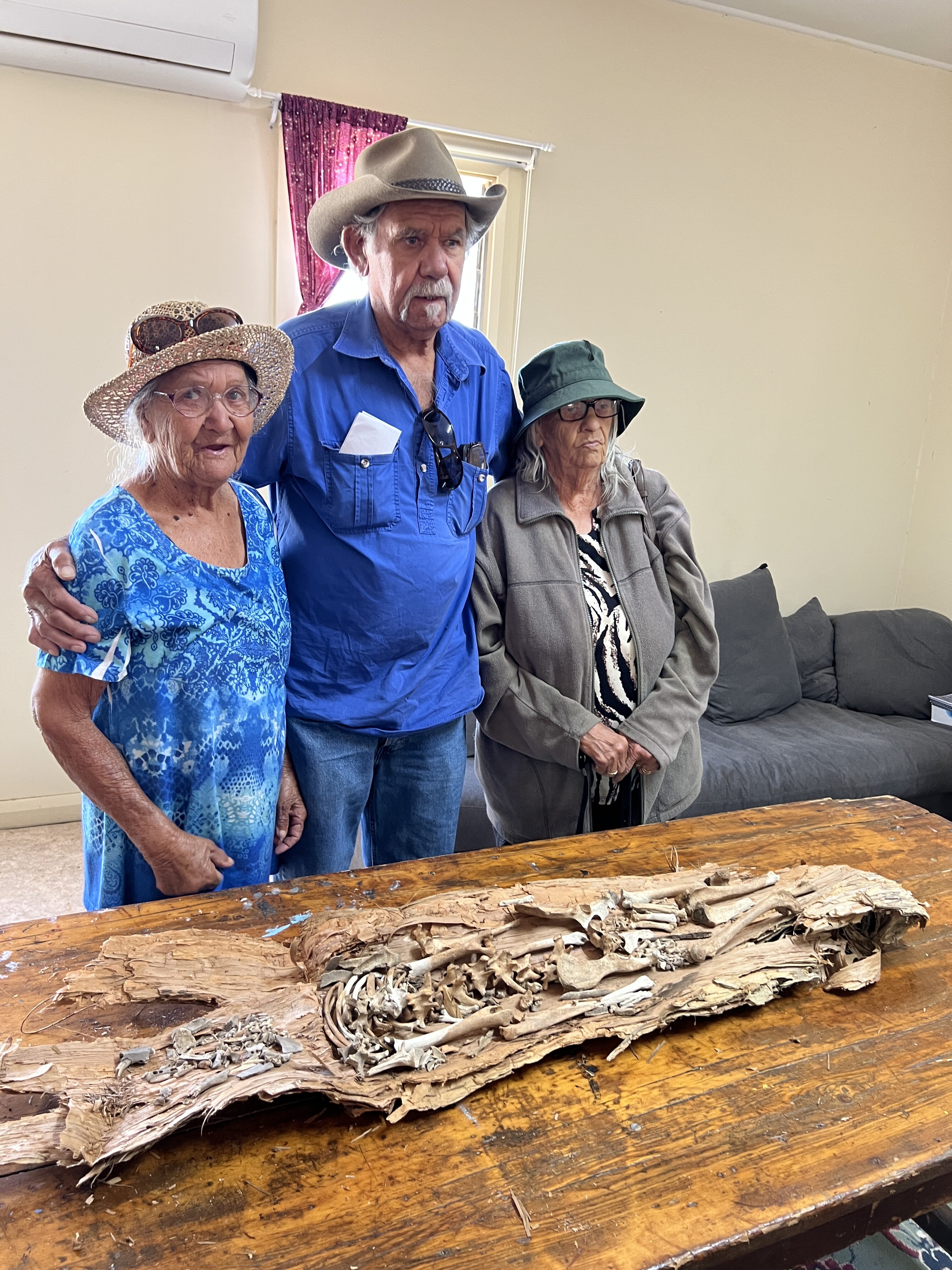
And earlier this year, Barkindji Elders and archaeologists reburied the dingo on Barkindji land. In Australia, this kind of repatriation is called a return to Country.
“This research reinforces what Barkindji people have always known,” said Way. “These relationships with animals, ancestors, and Country were deep, deliberate, and ongoing.”
Australian Archaeology, 2026. DOI: 10.1080/03122417.2026.2650909. (About DOIs)