In an increasingly divided nation, Americans agree on at least two things. For one, politicians across the political spectrum are scrambling to get more housing built, which happens to be an accidentally powerful way to fight climate change. And two, Americans love their parks: A recent poll found that 88 percent of them visited one in the past year. Nearly 90 percent of people who voted for Kamala Harris, and 80 percent of those who voted for Donald Trump, consider these spaces critical infrastructure in their communities.
That alone should encourage elected officials to build as many of them as possible. But a new report finds another, potentially even more motivating, factor for American cities: For every dollar invested in parks and recreation, communities reap $3 in local economic benefits each year. “You really do get so much goodness out of them,” said Will Klein, director of parks research at the Trust for Public Land, which produced the report. “People are healthier, people connect with each other. They drive business activity, especially for small businesses.”
Parks aren’t as much about land as they are about people. In an increasingly commodified world, they’re one of the few remaining public places where folks can roam without the pressure of spending money. That makes them a critical kind of “third place,” somewhere to gather beyond the workplace and the home. Whereas people must pay a premium to use a gym, they can use a park or rec center for free.
This brings huge benefits, and cost savings, to public health. The new report notes that the United States spends $5.3 trillion annually on health care. Physical inactivity, which greatly increases the risk of chronic problems like cardiovascular disease, costs the country more than $200 billion a year. “Our polling this year showed that the most popular place in America in 2025 to run around and play and exercise are parks and public spaces, much more popular than private gyms,” Klein said. “That physical activity has real health and economic benefits, about $2,000 per person in health care savings each year.”
Parks boost mental health as well. Simply being among greenery boosts positive well-being, research has shown. Parks also foster social interaction and reduce loneliness, which is a public health crisis of its own. This kind of commerce-free third place is especially important for the elderly, who may be living on fixed incomes and can’t afford to frequent cafes and the like. “There’s movie nights in the park, concerts in the park,” Klein said. “Just playing on the playground, talking to neighbors, having barbecues — all that stuff allows people to afford that higher quality of life.”
Even though they exist outside of the frenzy of capitalism, parks provide major economic value. The crowds they attract, for example, filter into surrounding neighborhoods, buying food and drinks for picnics or perusing mom-and-pop shops and boutiques. Famous green spaces — New York City’s Central Park, Chicago’s Millennium Park, San Francisco’s Golden Gate Park and newly minted Sunset Dunes — attract tourists, too. The Trust for Public Land says that the Florida Gulf Coast Trail, the 420-mile greenway it’s helping develop, will bring $200 million in economic activity in Sarasota County alone by attracting bicyclists and other recreationists.
Even if you own a home near a park but never visit it, you’re benefiting economically in a way. “People want to live near green spaces,” Klein said. “So you see increased property values, which supports a broader tax base, which can be reinvested into community benefits through the increased property tax revenue.”
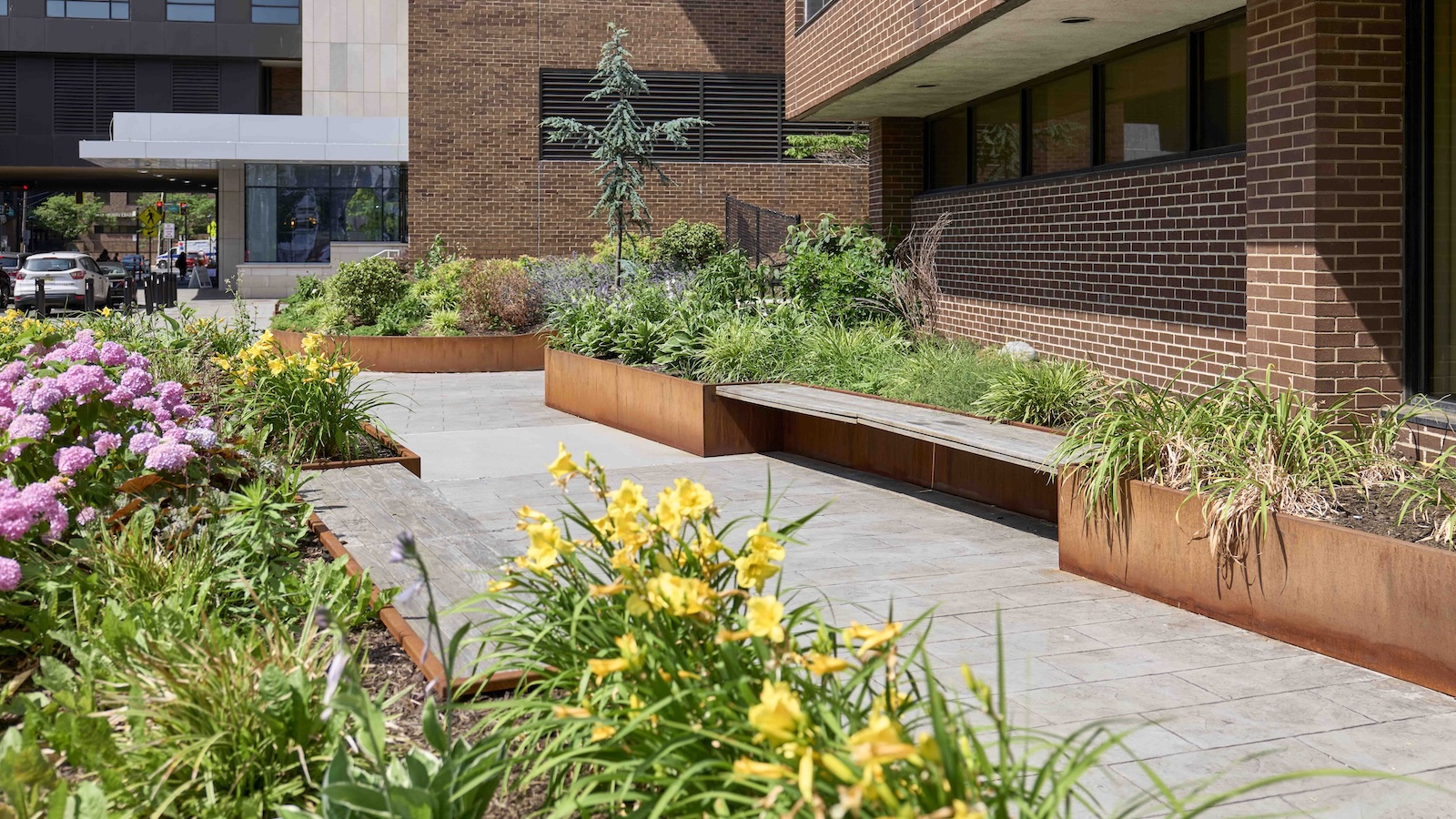
The trick is ensuring everyone — not just those who can afford condos and single-family homes — can enjoy the aura of these jewels. While new housing developments might seem at odds with green spaces, the two can exist in harmony. Even if they’re crammed into the densest of cities, affordable complexes can incorporate pocket gardens, which have the added benefit of reducing increasingly unbearable urban temperatures. Some developers are even building communities around working farms, known as agrihoods, which bring yet another benefit of local food production.
Any additional green space will also help cities adapt to one of the stranger consequences of climate change: It’s raining a lot harder. City sewer systems were designed to handle the rainstorms of old, but are overwhelmed by the additional water falling today. By soaking up some of that liquid, parks help save money in two ways: They reduce the amount of water that a city has to pay to manage, and they help prevent the surrounding neighborhood from flooding, avoiding property damage.
More so than ever before, then, the humble green space is a surprisingly powerful way to solve a bunch of problems at once — improving mental health, helping cities adapt to climate change, and supercharging economic activity. “Parks,” Klein said, “are actually one of these solutions hiding under the feet of all these local leaders.”