The portraits aim to ensure that the artists themselves, not only the works they left behind, remain part of the collective memory of October 7
When Hamas and other terrorists invaded southern Israel on October 7, 2023, they murdered residents of the kibbutzim, destroyed their homes and, in many cases, ransacked and burned the work of local artists. In other cases, they murdered the artists, leaving behind their artwork without its creators.

Bilha Yinon, Netiv haShayra. (Courtesy)
Now, three years later, a new exhibition in Tel Aviv is bringing some of those artists and their work back into the spotlight. And over the weekend, there were moving moments as internationally acclaimed Israeli artist Yigal Ozeri, known for his distinctive photorealist paintings, presented portraits of some of the murdered artists to their families.
I suggested that I do portraits of most of the artists that died there and that did not have the chance to succeed
“I suggested that I do portraits of most of the artists that died there and that did not have the chance to succeed,” Ozeri told The Media Line by phone ahead of the exhibition’s opening. “A lot of them were so young. We are going to show Israeli portraiture of their faces, and also some of their art. The artists themselves are very interesting.”
Ozeri, born in Israel but living in New York for more than 30 years, is considered one of Israel’s most internationally successful artists. His work has appeared in museums from the Whitney in New York to the Albertina in Vienna and many places in between. His acquaintances include Lizzy Jagger, Jon Bon Jovi and Whoopi Goldberg, and he has painted portraits of some of the world’s most famous people.
On October 23, his latest exhibition opened at the Zemack Gallery in Tel Aviv. Over the weekend, he visited communities near the Gaza border and met with families whose loved ones are featured in the show.

Yigal Ozer. (Courtesy)
The memorial project, titled Artist. Portrait. Artist., was developed in collaboration with Yad Ben-Zvi’s “Eretz Hefetz” team, which has been collecting, documenting, and preserving objects and artworks left behind after October 7.
Ozeri told The Media Line that the idea for the exhibition was inspired by the deaths of so many artists on October 7, particularly Haim Perry, a peace activist and artist from Kibbutz Nir Oz whose death in Hamas captivity was announced in June 2024.
These people wanted peace with them; they hosted them for years and years in their homes, and these people went to kill and destroy
“It is the absurdity of Hamas and all these people,” Ozeri said. “These people wanted peace with them; they hosted them for years and years in their homes, and these people went to kill and destroy.”
Ozeri said that artists are often among those who seek peace and beauty in the world, making their murders especially painful for him. He said it “hurt me so much” to learn what had happened to them.
He wanted to give something back to their families, so he began painting portraits of the murdered artists, hoping that the works would help preserve their memories.
Using photographs of the artists, Ozeri set out to capture not only their physical likenesses but also the individuality and creative spirit that shaped their work. The portraits aim to ensure that the artists themselves, not only the works they left behind, remain part of the collective memory of October 7.
The idea took shape through a collaboration with Dr. Nirit Shalev-Khalifa, curator and head of the Visual History and Documentation Department at Jerusalem’s Yad Ben-Zvi Institute. The connection grew from a professional visit by Yad Ben-Zvi representatives to New York, where they met with staff at the 9/11 Memorial & Museum to learn how to document and preserve objects associated with traumatic events for future generations.
The Israeli team was working to establish specialized storage facilities for objects recovered from the devastated Gaza border communities. Among the challenges they faced was how to protect paintings, sculptures, and other works of art created by people murdered in the massacre, many of which require particular conservation conditions to prevent further deterioration.
During a chance meeting with Ozeri, the team discussed these efforts, and the conversation eventually developed into the portrait initiative.

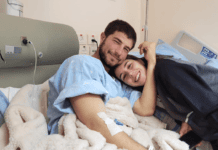
Tamar Kedem Siman Tov and family. (Courtesy)
Two exhibitions are now being presented at the Zemack Gallery. The first, Road Trip, features a series of photorealistic paintings in which Ozeri explores the American Dream through images of the country’s landscapes, highways, architecture, and everyday life. At first glance, his paintings could be mistaken for photographs, but they capture familiar scenes of Americana while giving them an almost dreamlike quality. Through these images, Ozeri examines the American ideals of freedom, opportunity, and discovery, using the open road as a symbol of the possibilities that have long captured the country’s imagination.
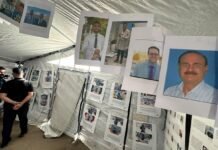
The second exhibition, Artist. Portrait. Artist. features 10 portraits of artists from the Gaza border communities who were murdered on October 7, alongside a selection of their own artwork.
Shalev-Khalifa told The Media Line that she first met Ozeri in New York in February 2024 and that he has been trying to help her team ever since.
Initially, she said, Ozeri wanted to paint portraits of all 1,200 people murdered on October 7, but he eventually realized that such a project would be unrealistic. Instead, he began with 10 artists, whose portraits he plans to give to their families.
The portraits are only one part of the initiative. Ozeri has also committed to helping raise money to ensure that the original works created by the murdered artists are properly preserved.
Ozeri will also offer other paintings for sale, with the proceeds intended to fund professional conservation and storage facilities for artworks recovered after October 7. The money could also help families who have kept their loved ones’ paintings or sculptures at home get expert conservators to protect them for the future.
But while Ozeri has been working to preserve the memories of those murdered on October 7, he said the massacre and its aftermath have also changed his own life.

Margit and Yossi Silberman, Nir Oz. (Courtesy)
People he had known for years have distanced themselves from him. Journalists who previously covered his exhibitions have sometimes chosen to ignore them. He has encountered situations in which staff members resigned, or prospective employees decided not to take jobs after learning that he was Israeli.
He said he has also been attacked in his own studio and accused of murdering babies.
During his last exhibition in New York, in November 2025, Ozeri said special security guards had to be hired after protesters gathered outside, shouting slurs and attempting to disrupt the show in support of the Palestinians.
Today, he said, visitors must have their bags checked before entering his exhibitions.
“I am 69 years old, and I was in the army so many years ago,” Ozeri said. “People say stupid things.”
He recalled one particularly disturbing encounter with a prospective assistant who had expressed interest in working for him before October 7. Before her interview, she wrote to tell him that she would not be coming because he had served in the Israeli army, which she accused of killing children.
Art is not about politics
“I was shocked that she could say something like that,” Ozeri said. “We don’t kill children. It is a lie. All of these young people, they don’t understand history.”
He added, “Art is not about politics.”