Home Blog

President Trump Blames Midterm Losses on Iran War, ‘Great Dislike’ of Israel; Rubio Calls Iran Demands ‘Ridiculous’ 

0
president-trump-blames-midterm-losses-on-iran-war,-‘great-dislike’-of-israel;-rubio-calls-iran-demands-‘ridiculous’ 
President Trump Blames Midterm Losses on Iran War, ‘Great Dislike’ of Israel; Rubio Calls Iran Demands ‘Ridiculous’ 


President Donald Trump stated that widespread opposition to the Iran war and a “great dislike” of Israel contributed to Republican losses in the US midterm elections, as negotiations between Washington and Tehran remained deadlocked over Iranian demands that Secretary of State Marco Rubio dismissed as “outrageous.” 

Speaking on CBS’s “60 Minutes,” President Trump initially attributed the Republican defeat to his absence from the ballot before acknowledging broader dissatisfaction with the conflict and rising fuel costs. 

“I was not on the ballot. And I think if I was on the ballot, it would have been a much different situation,” President Trump said. 

“But there’s something beyond that. They didn’t like the war. They didn’t like the fact that gasoline went up,” he added. 

President Trump linked higher gasoline prices to the military campaign against Iran but defended the war as necessary to prevent Tehran from developing nuclear weapons. 

“Because I think everyone agrees that Iran cannot have a nuclear weapon,” he said. 

“And they will never have a nuclear weapon. They won’t have that. And there’s a great dislike, incredibly, for Israel.” 

Iranian Foreign Minister Abbas Araqchi responded to PresidentTrump’s interview by accusing Israel of drawing Washington into prolonged military conflicts. 

“Americans are fed up with Israel maneuvering the US into being dragged into endless wars. They and our region are fed up,” Araqchi said. 

Meanwhile, Rubio rejected reports that negotiations aimed at ending the conflict had achieved a breakthrough. 

“I wouldn’t say we’re close to a breakthrough. The president always prefers to resolve things through diplomacy, unfortunately that’s not always possible,” Rubio said before departing for the G7 summit in Paris. 

He described Tehran’s negotiating positions as unacceptable and, in some cases, “outrageous, ridiculous —and not really realistic.” 

Separately, an Iranian Revolutionary Guards Navy source claimed that Iranian forces had disabled enemy navigation systems along the southern route of the Strait of Hormuz. 

The source told Iranian state media that no ships violating Iranian restrictions had entered the route overnight. 

“Oil smuggling through the southern route of the Strait of Hormuz has been completely stopped,” the source told Iranian television. 


Source: Iwpost.com

Alex Trebek’s Heartbreaking Final Hours Revealed

0
alex-trebek’s-heartbreaking-final-hours-revealed
Alex Trebek’s Heartbreaking Final Hours Revealed


Six years after Alex Trebek’s death, heartbreaking details about the beloved Jeopardy! host’s final hours are offering a touching reminder of what mattered most to him as he faced the end of his life.

Trebek, who died on November 8, 2020, at age 80 following a battle with stage 4 pancreatic cancer, spent his final day exactly where he had hoped to be: beside his wife, Jean, quietly watching the horizon from a backyard swing he had repaired himself.

The television icon had spoken openly about his cancer diagnosis since March 2019, continuing to host Jeopardy! despite the devastating toll of his illness. Remarkably, he recorded his final episodes on October 29, just 10 days before his death.

Former Jeopardy! executive producer Mike Richards later revealed that Trebek had been suffering tremendous pain during his final taping, although viewers would never have guessed just how difficult those last appearances had become.

Richards recalled watching the legendary host push through his discomfort with extraordinary determination. After filming wrapped, he approached Trebek and praised what he had witnessed. The usually modest television personality quietly thanked him, a response Richards took as a sign of how hard Trebek had been fighting.

But away from the cameras, Trebek’s final day reportedly unfolded much differently.

Speaking to NBC’s Today shortly after his death, Richards revealed that Trebek had fulfilled a deeply personal wish he had expressed in his memoir, The Answer Is… Reflections on My Life.

He wanted to spend his final moments sitting beside Jean, his wife of 30 years, on their beloved backyard swing.

“He was coherent. He wasn’t in pain,” Richards recalled, adding that knowing Trebek had enjoyed a peaceful final day brought comfort to those who loved him.

In another interview, Richards described a quiet day surrounded by family, filled with moments of laughter before Trebek went to sleep. After battling a devastating illness for more than a year and a half, the longtime television host had been able to enjoy something wonderfully ordinary.

The following morning, Jeopardy! announced his death, confirming that Trebek had passed away peacefully at home surrounded by loved ones.

While millions knew him as the sharp-witted host who had become a fixture in American living rooms since 1984, his children remembered a much more personal side of the television legend.

His son Matthew recalled how Trebek enthusiastically attended his paintball tournaments, taking an interest in a sport he initially knew little about.

Daughter Emily remembered her father’s remarkable talent for home improvement. When she purchased her first house, Trebek spent countless hours helping with renovations, working alongside her and teaching her valuable construction skills.

His eldest daughter, Nicky, whom he adopted during his first marriage, recalled a memorable dinner attended by actor Vincent Price. The evening became even more special when Trebek shared the happy news that he planned to marry Jean.

Those family memories painted a picture of a devoted father whose greatest accomplishments extended far beyond television.

During his extraordinary career, Trebek hosted more than 8,200 episodes of Jeopardy!, earned seven competitive Daytime Emmy Awards and became one of the most recognizable personalities in television history.

His final episode aired on January 8, 2021, ending an unforgettable run that spanned more than 36 years.

Yet as fans mark the sixth anniversary of his death, perhaps the most moving detail of Trebek’s final chapter has nothing to do with the game show that made him famous.

After decades of asking questions in front of millions, he spent his last day enjoying a simple, quiet moment with the woman he loved.

And according to those closest to him, that was exactly how he wanted it.

Source: Iwpost.com

Chinese regulatory shadow hangs over Nigeria’s OPay IPO failure

0
chinese-regulatory-shadow-hangs-over-nigeria’s-opay-ipo-failure
Chinese regulatory shadow hangs over Nigeria’s OPay IPO failure

<

article id=”post-952669″>

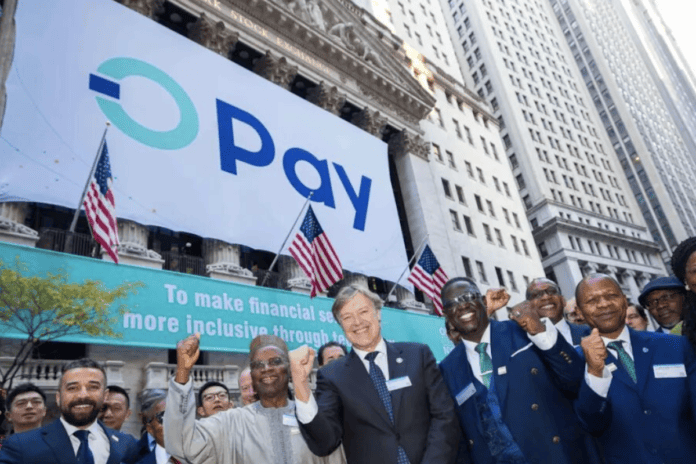
OPay’s executives rang the bell at the New York Stock Exchange on October 30. A few hours later, their US$304 million flotation was off.

The Nigeria-focused payments group had priced 16 million American depositary shares at $19 the previous evening, a valuation of around $4 billion. Then, at about 3:30 p.m., trading was halted, and not one share traded.

OPay’s own explanation was brief. It cited a regulatory inquiry in a jurisdiction it considered immaterial to its business, and named neither the country nor the authority. Reports later pointed to a Chinese regulator, citing people familiar with the matter. OPay has not confirmed this, and an inquiry establishes no misconduct.

So where, exactly, does OPay belong? Its headquarters are in Singapore and its holding company sits in the Cayman Islands. Its founder, Zhou Yahui, is Chinese, while Nigeria supplied 89.5% of first-half revenue in 2026.

Behind those addresses sits an enormous volume of everyday payments. By the end of July 50.1 million people were using the platform each month, and in the twelve months to June it had handled $558 billion in transactions. First-half revenue stood at $467.1 million, with net income of $90.9 million.

Across Nigeria, OPay’s agents help customers send money and let merchants take payments without a bank branch in sight, and credit is a growing sideline. The company says none of this is affected, and users may scarcely register that anything happened in New York.

Nobody has said what the inquiry is about, and China’s rules on overseas listings are the natural place to start. Since March 2023, a company the authorities consider Chinese has had to file before certain share offerings abroad, offshore entities included.

OPay had thought about this long before the bell. Its prospectus reported that Chinese legal advisers saw no need to file, given that the group had no mainland revenue in 2025 and kept its operating assets and most of its management abroad. Interpretations of the rules could change, the same document acknowledged.

For indirect overseas listings, the 2023 test has two limbs, and both must be met. For one, at least half of the issuer’s revenue, profit, assets or net assets must come from mainland companies. And its business must be conducted mainly in China or run by managers who are mostly Chinese citizens or residents.

A founder’s passport does not satisfy that test, and Zhou, who held 21.3% of OPay’s shares before the proposed offering, is its non-executive chairman.

The rules also tell regulators to judge by substance over form, and a discretion of that kind leaves room for wider readings. Chinese regulators are entitled to apply their criteria of control and operations to companies they regard as Chinese. Less obvious is where those criteria stop, and a caveat in an offering document is cold comfort once the share price has been set.

A Chinese entrepreneur who builds a business in Africa may find the regulatory tie to home outlasting the customers and the revenue, which settle elsewhere soon enough. The address of an offshore holding company will not change that.

Stanbic Africa Holdings, part of South Africa’s Standard Bank Group, had agreed to buy shares worth up to $200 million, subject to the flotation and to regulatory approvals. The two groups were also discussing co-operation in payments and lending.

A South African bank’s stake in a Nigerian company thus hung on an offering in North America and, if those reports are right, on an unresolved regulatory question in China. The next move would then belong to an authority over which no African investor, exchange or supervisor has any say.

A Nigerian secondary listing was meant to follow New York. It would have let local investors own part of a company whose strongest market is their own, and with the primary listing withdrawn it has no confirmed date.

Had both gone ahead, complications would remain, since OPay itself warned that shares traded in Nigeria might not be freely exchangeable with the American depositary shares, so prices could diverge and liquidity split between two markets.

African exchanges will have to solve such problems if more of the continent’s successful technology companies are to list at home. On October 20, MNT-Halan began trading on the Egyptian Exchange after floating a fifth of its Egyptian business for about US$150 million.

The sequence of OPay’s own plan is telling. New York would come first, and Lagos only once a price had been set abroad. Its venture backers, SoftBank among them, would have gained a route towards a dollar-denominated exit, while the Cairo debut valued MNT-Halan’s Egyptian business at around US$750 million, a fraction of the $4 billion OPay was seeking.

Customers at home and capital abroad make an arrangement that works until a regulator somewhere else takes an interest. Meanwhile, funding is thinning. In the first ten months of 2026, only 343 African companies raised at least $100,000, against 438 a year earlier, and total funding fell 12% to $2.4 billion, although equity funding rose 5%.

Exits are what allow venture funds to return cash to their own backers, and African start-ups have seen relatively few. OPay, profitable and valued in the billions, looked ready to supply one.

Its preferred shareholders also have a date to watch. If no qualifying IPO has taken place by December 31, 2027, they can seek redemption on the agreed terms, which return the original investment plus 8% annual simple interest. A long delay therefore costs something even if the payments business keeps growing.

OPay says it expects the inquiry to end satisfactorily. It has named no regulator and offered no timetable for another attempt. In the meantime, its agents will carry on moving money across Nigeria, while investors who put in their money years ago wait for a market in which to sell.

Source: Iwpost.com

2 Gazans killed, 12 others wounded in continued Israeli attacks

0
2-gazans-killed,-12-others-wounded-in-continued-israeli-attacks
2 Gazans killed, 12 others wounded in continued Israeli attacks
Two Palestinians, including a woman, were killed and 12 others, including a woman, were injured in Israeli attacks across the Gaza Strip since dawn Sunday, in the latest violations of a ceasefire in effect since October 2025, Anadolu reports.

A medical source at Nasser Medical Complex said two Palestinians, including a woman, were killed and seven others sustained injuries of varying severity in an Israeli strike on a group of civilians in the Al-Mawasi area of Khan Younis in southern Gaza.

A medical source told Anadolu Agency that four Palestinians were wounded, including one seriously, in an Israeli strike targeting a group of civilians in northern Gaza.

Eyewitnesses said a drone fired a missile into a gathering of people in the Bir al-Naaja area, west of Jabalia in northern Gaza.

READ: Large crowds in Amsterdam join Red Line demonstration for Gaza

In the south, a woman was shot in the back by Israeli forces while she was in the Qatari Camp, east of the Hamad residential complex in Khan Younis, the source said.

According to eyewitnesses, Israeli military vehicles opened heavy fire toward southern Khan Younis and the al-Shakoush area, west of Rafah in southern Gaza.

Local sources told Anadolu Agency that Israeli artillery also shelled areas east of Gaza City, with no injuries reported.

At least 1,610 Palestinians have been killed and 5,819 others injured by Israeli fire since the ceasefire that took effect on Oct. 10, 2025, according to Gaza’s Health Ministry.​​​​​​​

The agreement was reached after two years of Israel’s genocidal war, which began in October 2023, killing more than 74,000 Palestinians, injuring over 175,000, and devastating 90% of civilian infrastructure.

READ: Israel’s Arab Joint List warns of worsening Gaza crisis as floods swamp 70,000 tents

Source: Iwpost.com

Oil falls as Trump signals restraint on Iran amid fresh Hormuz shipping attacks

0
oil-falls-as-trump-signals-restraint-on-iran-amid-fresh-hormuz-shipping-attacks
Oil falls as Trump signals restraint on Iran amid fresh Hormuz shipping attacks
cde.news desk · 2 min read

Oil prices ‌fell on Monday after US President Donald Trump downplayed the likelihood of new strikes on Iran, though attacks on ships near the Strait of Hormuz kept supply concerns in focus.

Brent fell 1.5% to $96.91 a barrel by 0629 ​GMT, while US West Texas Intermediate fell 1% to $89.85 a barrel.

Brent fell 16% last week, ​the steepest weekly drop since the start of the COVID pandemic.

“The (oil) market appears ⁠to be pricing in a relatively optimistic scenario of de-escalation, even though a comprehensive agreement between ​Washington and Tehran has yet to materialise,” said Sugandha Sachdeva, founder of SS WealthStreet, a New ​Delhi-based research firm.

“Unless there is a meaningful diplomatic breakthrough accompanied by a sustained normalisation of shipping flows through the Strait of Hormuz, crude oil prices are likely to retain a geopolitical risk premium, with near-term support seen at $93 ​a barrel for Brent,” she said.

Trump said on Sunday he was highly unlikely to order fresh ​attacks on Iran as long as talks to end the conflict progressed, even as both countries reported that ‌shipping had ⁠been hit in or near the Strait of Hormuz.

He had hinted at renewing attacks on Iran after last week’s US midterm elections, but there has been no sign of a large-scale US military operation. Iran has said it would respond by striking US and Israeli targets.

Tim Waterer, chief analyst ​at KCM Trade, called ​Trump’s comments “more measured” but ⁠said “the market is still waiting to see whether the midterms have produced a lasting shift in Trump’s approach to the conflict, or whether this is ​just another temporary change in tone.”

Oil is headed for a glut again ​as recovering ⁠Middle Eastern oil flows, rising production from other countries and weak demand have pushed global supply above consumption, JPMorgan said in a report on Friday, estimating a surplus of 1.1 million barrels per day in ⁠September, widening ​to 1.4 million bpd in October.

Separately the Iran-aligned Houthis said they were ​responsible for an attack on Saudi Aramco’s offices in the capital Riyadh on Sunday that left windows blown out but ​no reported casualties.

Source:  Reuters

Source: Iwpost.com

Anti-Trans Panic Couldn’t Save Republicans in Deep-Red Texas

0
anti-trans-panic-couldn’t-save-republicans-in-deep-red-texas
Anti-Trans Panic Couldn’t Save Republicans in Deep-Red Texas


On an election night handing Republicans a beating in critical House and Senate races across the country, the GOP fell short even in once deep-red Texas after a campaign run on a go-to outrage tactic: fearmongering over the rights of transgender people.

Democrats escaped the political wilderness in the Longhorn State on Tuesday night, when Democrat James Talarico defeated Republican Ken Paxton — despite the far-right attorney general’s relentless attacks on the trans community and his party’s claims that Democrats would enforce so-called “transgenderism” as a kind of ideology. 

The massive upset was paired with a victory for Democratic gubernatorial candidate Gina Hinojosa, who beat Republican incumbent Gov. Greg Abbott shortly after the Senate race was called for Talarico. 

In Dallas, Paxton voter Rachel Fuller told The Intercept she was alarmed by what she believed was Talarico’s support for “far-fetched” ideas, like “giving children the right to decide — and making parents, calling them abusive for not letting them have transgender changes.” 

Her comments suggested some of the $78 million Republicans spent on anti-trans attack advertisements in Texas were working. But they weren’t enough to help Republicans hold onto power in Texas, which hasn’t had a Democratic senator since the 1990s.

The ads made up almost half of all ad spending in support of Paxton, according to an analysis from Puck using data from AdImpact.

By and large, the ads spread blatant misinformation about Talarico’s record. 

One infamous $29 million ad created by Texas PAC, a political action committee primarily funded by billionaire Elon Musk, claimed that Talarico supported jailing parents who did not support gender-affirming surgeries for minors. “Every mom in Texas should be worried about James Talarico putting parents in jail if they do not support surgically transitioning their children,” a woman in the ad warned ominously. 

That attack, which according to Puck received 1.9 billion views as of October, does seem to have caught the attention of Texans — even with voters who ultimately supported Talarico. 

Julius Ishola, a canvasser for Black TOP, an operation under Texas Organizing Project that targets Black voters, told The Intercept he had frequently heard Black voters raise concerns that Talarico intended to jail parents. 

“I’ve been getting a lot of bad feedback regarding James Talarico,” Ishola told The Intercept, saying many voters cited concerns of “gender sex change and possibly prosecuting parents who go against that … and allowing transgenders into female restrooms.” 

As a state legislator, Talarico fought bans on transgender athletes’ participation in youth sports, and famously said that God is “nonbinary,” earning him ridicule from Republicans, who nicknamed the Senate candidate “Talafreako.” In the face of those attacks this cycle, Talarico appeared to backtrack on the issue, telling Fox News in September that he supported bans on transgender children’s participation in sports if it risks “safety or fairness” — without clarifying what that meant. 

His wavering does not seem to have reached many voters. 

“I voted Republican all the way. And that’s my fear of Talarico going in,” said Carol Billings, a voter who cast her ballot for Paxton at the Living Waters Church in Dallas County. Like Fuller, she cited her perception of the Democratic nominee’s trans policies as a major source for concern.

Still, many voters in Black districts, which were vital to Talarico’s victory, barely mentioned Talarico. 

“At the end of the day,” said Dallas Jones, a Houston-based Democratic political strategist whose firm focuses on African American voter engagement and backed Talarico, “the results show that people care more about their everyday lives than they do about trans Americans who just want to get by.”  

Some voters told The Intercept they were far more concerned with issues of affordability. “ I just hope we can get these gas prices down,” said Darryl Moore, a Fort Worth voter.

Akela Lacy reported from Dallas, Texas.

Source: Iwpost.com

Elevating US-Vietnam defense ties for regional stability

0
elevating-us-vietnam-defense-ties-for-regional-stability
Elevating US-Vietnam defense ties for regional stability

<

article id=”post-952655″>

The June 2026 defense dialogues in Hanoi — underscored by the concurrent deployment of US Navy and Army cooperation missions to Central Vietnam — signal that the US-Vietnam security dynamic has transcended symbolic diplomacy.

What began as careful tactical engagement is now a vital anchor for regional stability under the Comprehensive Strategic Partnership.

Yet as the Ministry of National Defense accelerates preparations for the Third Vietnam International Defense Expo in Hanoi this December, policymakers in both capitals should answer a key question: how do we translate this political momentum into durable, structured capabilities?

Real partnerships survive on an ongoing capacity to adapt, demanding Hanoi and Washington to broaden their defense architecture while respecting the strategic boundaries that define Vietnam’s foreign policy. Doing so requires anchoring the future in the exceptional trust capital born of war legacy remediation.

Over the past decades, sweeping joint initiatives — from the Bien Hoa dioxin cleanup to unexploded ordnance clearance in provinces like Quang Tri — have served as the bedrock of the relationship.

This cooperation is reciprocal. Vietnam’s decades-long dedication to accounting for missing US personnel is met by expanded Washington assistance in deploying advanced DNA analysis to identify fallen Vietnamese soldiers.

As this historic post-war reconciliation nears completion, it should no longer be treated as a standalone achievement and instead be leveraged as a launchpad for modern security cooperation. To catalyze this next strategic phase, Washington and Hanoi should prioritize four decisive steps.

First, they should deepen maritime security and domain awareness. The volatile security environment in the East Sea demands that maritime cooperation transcend basic hardware handovers. While past transfers of Hamilton-class cutters enhanced patrolling, the priority should shift toward real-time intelligence integration and secure, shared data networks.

Elevating Hanoi’s capacity to counter gray-zone threats and monitor its exclusive economic zone secures Vietnamese waters and empowers the Vietnam Coast Guard to act as a resilient provider of humanitarian assistance, disaster relief, and search-and-rescue operations across critical international sea lanes.

Second, Washington and Hanoi should catalyze defense industry cooperation and tech transfer via supply chain integration and statutory reform. December’s Defense Expo in Hanoi provides the prime catalyst for US defense firms to pivot from a traditional vendor-purchaser model toward genuine industrial partnerships.

Establishing maintenance, repair, and overhaul facilities on Vietnamese soil and co-producing dual-use technologies will accelerate Vietnam’s goal of forging a self-reliant defense industry.

Realizing this vision, however, requires Washington to dismantle lingering bureaucratic impediments, most notably by streamlining International Traffic in Arms Regulations export controls and creating flexible statutory waivers under the Countering America’s Adversaries Through Sanctions Act for legacy Russian hardware transitions, alongside a reevaluation of Vietnam’s market economy status and the relaxation of outdated export controls.

Crucially, such co-development unlocks a vital bilateral loop: US technology expands local capabilities, while Hanoi helps Washington secure and diversify critical technology supply chains through its expanding semiconductor and critical mineral sectors.

Third, Washington and Hanoi should engage regional actors and anchor their cooperation within multilateral frameworks. Bilateral defense ties are most resilient when they reinforce, rather than bypass, regional architecture.

Consequently, US-Vietnam defense initiatives should lock step with mechanisms from the Association of Southeast Asian Nations (ASEAN), particularly the Defense Ministers’ Meeting Plus. At the same time, Washington and Hanoi should harmonize capacity-building efforts with shared regional partners like Japan and Australia.

Focusing on functional coordination — such as joint coast guard training and maritime law enforcement seminars — advances a free, open, and lawful Indo-Pacific without forcing rigid bloc politics or feeding zero-sum rivalries with Beijing.

Fourth, Washington and Hanoi should invest in next-generation thinkers and doers to ensure institutional continuity. Because strategic partnerships live and die by human networks, both capitals should insulate the relationship. Doing so means formalizing strategic dialogues designed for rising scholars and young military officers.

Furthermore, both capitals should scale up joint training and logistical funding for United Nations Peacekeeping Operations, an area where Vietnam’s recently enacted Law on Participation in UN Peacekeeping Operations underscores Hanoi’s desire to act as a responsible global security contributor outside the friction of major-power rivalries.

Concurrently, expanding military education exchanges—such as sending more Vietnamese officers to US staff colleges—and building joint research pipelines for emerging tech talent will forge the resilient institutional tissue required to sustain cooperation over the long term.

This multifaceted expansion of defense cooperation is aligned with Vietnam’s independent foreign policy. Adhering to the sovereign “Four No’s” doctrine—which rules out military alliances, backing one country against another, hosting foreign bases, or using force in international relations—is not a barrier to engagement.

Rather, it is what makes the relationship sustainable. Diversifying defense procurement, securing high-tech supply chains, and cultivating a capable generation of strategic thinkers strengthens Vietnam’s strategic autonomy. A robust, self-reliant, and prosperous Vietnam is in the US national interest, as Washington reaffirms continuously.

The evolution of the US-Vietnam relationship demonstrates that former adversaries can anchor a profound peace when guided by mutual respect and aligned interests. By implementing these structural, regional, and generational recommendations, Washington and Hanoi will ensure that their shared strategic horizon remains anchored in mutual trust, industrial resilience and enduring stability.

David Santoro is president and CEO of the Hawaii-based Pacific Forum, which runs the annual Honolulu Defense Forum (HDF), an event that facilitates dialogue between public and private-sector actors to advance regional stability and cooperation across the Indo-Pacific.

Source: Iwpost.com

US big-deck amphibious push risks a Chinese missile trap

0
us-big-deck-amphibious-push-risks-a-chinese-missile-trap
US big-deck amphibious push risks a Chinese missile trap

<

article id=”post-952645″>

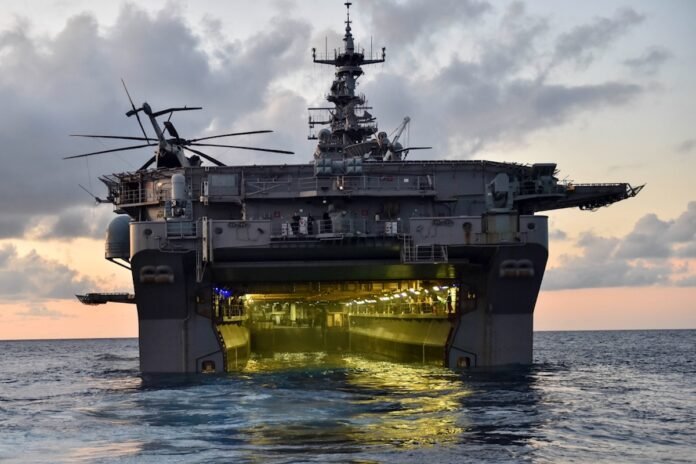
The US Navy and Marine Corps’ push to expand the amphibious fleet has reignited a fundamental strategic dilemma: whether big-deck amphibious assault ships remain indispensable power-projection assets or high-value liabilities in an era of precision strike.

This month, The War Zone (TWZ) reported that US Navy and Marine Corps leadership has agreed the military needs 40 amphibious warfare vessels — up from the statutory fleet floor of 31 mandated by the US Congress—to reliably maintain three persistently deployed Marine Expeditionary Units (MEU) worldwide, a senior Marine modernization official said.

In a joint review conducted by the Amphibious Force Readiness Board, the services determined that sustaining a continuous 3.0 Amphibious Ready Group (ARG) and MEU presence requires 13 large-deck amphibious assault ships and 27 amphibious transport docks.

The requirement marks a notable strategic pivot from former Commandant General David Berger’s Force Design 2030, which explicitly favored smaller, dispersed, and more survivable vessels over concentrated, large-deck assault ships.

US Marine Corps officials plan to reach the 40-ship target through a mix of new construction, including existing multi-ship procurement contracts with shipbuilder Huntington Ingalls Industries, and selective service-life extensions for older amphibious hulls.

However, the expansion proposal faces severe fiscal and legislative headwinds in the US Congress after midterm elections returned Democratic control to both chambers, where incoming House Armed Services Committee Chairman Adam Smith signaled plans to scrutinize defense spending above US$1 trillion.

Compounding the legislative challenge, the existing amphibious fleet has a 47% combat surge readiness rate, driven by chronic shipyard maintenance delays, extended operational deployments, and mounting sustainment costs from US military operations against Iran.

This push to acquire additional amphibious assault ships highlights an acute debate between sustaining forward power projection and expeditionary warfare capabilities on one side, and adapting force structure to the evolving nature of maritime warfare on the other.

In a June 2026 Atlantic Council article, Caleb Eames and Amy Cowley stress the importance of amphibious assault ships for the US Navy, noting that more such ships are needed to sustain forward deterrence, respond to international crises within hours, and bridge critical gaps in aircraft carrier coverage.

Eames and Cowley say that embarked Marine Expeditionary Units provide flexible, multidomain capabilities — launching amphibious assaults, seizing terrain, and executing vertical envelopment with F-35B stealth fighters — while sustaining self-sufficient operations ashore for 30 days.

They add that meeting strategic commitments, including concurrent operational demands across the Middle East and the Western Pacific, hinges on maintaining three deployed amphibious ready groups continuously at sea to present adversaries with complex, simultaneous dilemmas in vital littorals.

However, increasing the number of US large amphibious assault ships may conflict with the operational reality of contemporary maritime conflict.

Hew Strachan argues in a July 2024 article for the Royal United Services Institute (RUSI) journal that large-scale amphibious assaults aimed at seizing permanent footholds are virtually obsolete in modern conflict due to lethal anti-access/area-denial (A2/AD) networks.

Strachan states that advanced sensors, guided missiles, and drones eliminate the operational surprise and sea control that massive Normandy-style invasions require. Consequently, he argues that amphibious forces have shifted from mass concentration to raiding, dispersion, and sabotage.

He points out that rather than deploying massed armadas off hostile shores, modern marines operate as agile, light stand-in forces designed to secure small littoral outposts, execute vertical envelopment, and enable long-range maritime strikes without relying on conventional beach landings.

However, large amphibious assault ships may still play a role within a hybrid fleet structure consisting of manned and unmanned assets. Brian Kerg argues in a July 2026 War on the Rocks article that in future amphibious assaults, traditional large amphibious warfare ships will be phased out of the perilous opening assault phase in favor of cheaper, uncrewed landing craft.

Kerg points out that as precision strike capabilities turn large, expensive vessels into lucrative targets whose destruction could imperil entire campaigns, navies must adapt by deploying robotic landing craft to establish initial beachheads.

He says that in this transformed doctrine, conventional amphibious ships and their embarked human formations are held back from the vulnerable first wave, instead serving in follow-on roles to reinforce, sustain, and exploit lodgments secured by robotic systems.

Another debate surrounding the utility of amphibious assault ships in contemporary power projection and expeditionary operations is whether they can supplement traditional carriers in those roles.

In line with that, the lightning carrier concept transforms big-deck amphibious assault ships into light aircraft carriers by embarking up to 20 F-35B short takeoff and vertical landing stealth fighters.

Capitalizing on aviation-optimized America-class amphibious assault ships — which forgo floodable well decks for expanded hangar, fuel, and munitions capacity — the design allows two full fighter squadrons to deploy together.

Rather than replacing nuclear supercarriers, the platform acts as an agile supplement across the vast Pacific, delivering high-end multidomain strike, intelligence collection, and electronic warfare to contested airspace without relying on dedicated carrier escort wings.

These ships could alleviate a possible US carrier shortage in the Pacific. The US Department of Defense (DoD) 2025 China Military Power Report (CMPR) notes that China may have up to nine carriers in the Pacific by 2035, which could leave the US outnumbered. While the US Navy is mandated to maintain a minimum of 11 carriers, global deployments and maintenance requirements reduce their availability.

The US Navy has three or four carriers deployed at any given time; at the same time, a third of the fleet is undergoing training and held in reserve, while another third is undergoing deep maintenance. Even if the US Navy deploys its carriers in a 60/40 Pacific-Atlantic split, it may have only six or seven carriers in the Pacific at any given time.

However, Talbot Manvel argues in a July 2023 Proceedings article that lightning carriers face severe design, survivability, and sustainment constraints. Manvel says the America-class amphibious assault ships meet Level II survivability standards, not the Level III standard required of carriers. He adds that their open, unarmored internal layouts lack blast shielding and fire curtains, leaving them vulnerable to catastrophic fires.

He also notes that their 45,000-ton hulls restrict flight operations to below 50 percent availability in rough seas like the South China Sea. He adds that their small ordnance magazines, designed for short-term Marine support, quickly exhaust munitions when fielding 20 F-35B stealth fighters, requiring risky, disruptive underway vertical replenishments.

But even with those constraints, lightning carriers could be deployed in permissive environments against irregular or non-peer adversaries, freeing carriers for operations against near-peer adversaries like China.

Ultimately, the amphibious fleet’s future viability will depend on whether naval strategists can move beyond legacy platform-count metrics in the US Congress and instead pioneer integrated, distributed battle networks that redefine how these versatile hulls survive and create dilemmas in twenty-first-century contested waters.

Source: Iwpost.com

How a Bank Built for Ordinary Paraguayans Brought Down a President

0
how-a-bank-built-for-ordinary-paraguayans-brought-down-a-president
How a Bank Built for Ordinary Paraguayans Brought Down a President


Paraguayan editor Juan Carlos Dos Santos González explains how Ueno Bank transformed everyday banking, why Santiago Peña lost his party’s backing, and the challenges facing his successor

For some Paraguayan retirees, collecting their pensions at Ueno Bank was a Sunday outing. They could withdraw their money, sit down with a newspaper, and enjoy a coffee. In towns with limited banking options, Ueno offered around-the-clock access to its facilities, including staffed services on Sundays.

It was a completely different experience

“It was a completely different experience,” Juan Carlos Dos Santos González, an editor at Paraguay’s La Nación newspaper, told The Media Line. With an ID and 100,000 guaraníes, about $15 at the exchange rate he cited, customers could open an account, apply for a credit card, and begin using the bank’s app.

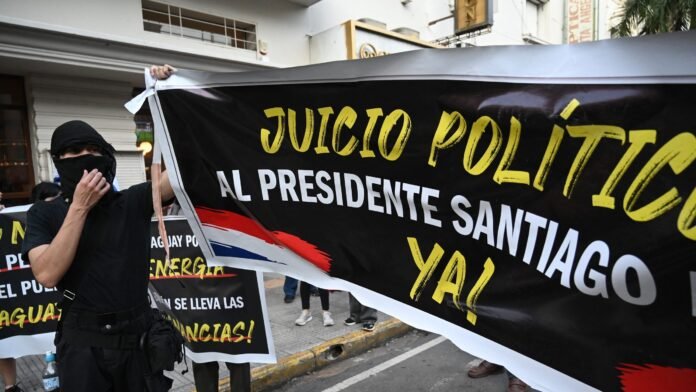
That accessibility helped Ueno attract nearly three million customers. But on November 3, Paraguay’s central bank began proceedings to wind down the lender after finding that its solvency ratio had fallen below half the regulatory minimum. Customers were suddenly unable to access their accounts, protests erupted, and a banking crisis rapidly became a political one.

Three days later, the Senate removed President Santiago Peña, who had held shares in Ueno’s parent company until March 2025. Vice President Pedro Alliana, also a member of the ruling Colorado Party, assumed the presidency that evening. He will serve the remainder of Peña’s term, which ends in August 2028.

Alliana inherited the challenge of restoring depositors’ access to their savings while prosecutors investigate how government agencies and Paraguay’s social security institute came to place hundreds of millions of dollars in the troubled bank.

Ueno had become a familiar presence in Paraguayan life, extending well beyond banking. Its name appeared on major soccer stadiums, including Defensores del Chaco in Asunción. Following the bank’s collapse, soccer authorities began removing its branding.

Dos Santos said Ueno had broken with “the conservative banking system we knew.” Its appeal to ordinary customers helped explain the public outrage when it failed.

The involvement of the Instituto de Previsión Social (IPS), Paraguay’s social security institute, made the crisis particularly serious. Its reserves include mandatory contributions from workers and employers, and approximately $355 million of its funds had been placed in Ueno, according to allegations made by lawmakers.

“Putting those funds at risk was very dangerous,” Dos Santos said.

The bank’s failure also exposed a political struggle within the Colorado Party. Former President Horacio Cartes, the party’s powerful leader and Peña’s onetime political patron, turned against his former protégé as the crisis intensified.

Cartes had helped launch Peña’s political career, appointing him finance minister and supporting his presidential ambitions. But analysts cited by The Associated Press described growing tensions as Peña sought to establish a political base independent of his former mentor. When the bank collapsed, Cartes publicly backed efforts to remove him.

Peña submitted his resignation on November 5 as the Chamber of Deputies considered impeaching him. Lawmakers voted 78–0 to proceed, while a separate congressional session considering his resignation ended without a completed vote after legislators withdrew and deprived it of a quorum.

On November 6, all 44 senators present voted to remove Peña from office.

The decision to pursue impeachment rather than accept his resignation had significant legal consequences. Under Paraguay’s Constitution, democratically elected former presidents are entitled to lifetime seats in the Senate, with speaking rights but no vote, unless they have been impeached and found guilty. The position also carries parliamentary protections.

I think he wanted to resign so he could keep his immunity and avoid the legal situation he’s facing now

“I think he wanted to resign so he could keep his immunity and avoid the legal situation he’s facing now,” Dos Santos said.

Peña maintained that his offer to resign was intended to preserve stability and help depositors recover their money.

During the impeachment proceedings, the Senate rejected Peña’s request for additional time to prepare his defense. His lawyers appeared on his behalf and challenged the evidence presented against him.

For Dos Santos, the speed of events recalled Paraguay’s political upheaval in March 1999, when deadly protests preceded the resignation of President Raúl Cubas. He said the memory of that violence contributed to the urgency surrounding the latest crisis.

This time, demonstrators gathered wearing Paraguayan soccer jerseys and carrying national flags. Dos Santos recalled an incident in which protesters turned away an opposition politician who attempted to join them.

“We’re here for the people who were affected, and we want Santiago Peña removed,” he recalled them telling the politician.

Peña’s removal was followed by criminal proceedings. Police initially detained him at his residence. On November 7, Judge Humberto Otazú ordered him held in pretrial detention at the Presidential Escort Regiment, a military facility in Asunción.

Prosecutors charged Peña with breach of trust and administration for personal gain. They allege that he used his position to influence public institutions to deposit or retain funds at Ueno despite his financial connections to the banking group.

Peña denies wrongdoing and has maintained that the bank’s problems were a regulatory matter.

Otazú also ordered pretrial detention for Carlos Carvallo, a former Ueno executive who subsequently became president of Paraguay’s central bank. Carvallo faces charges including breach of trust, administration for personal gain, and producing false public documents.

The court also ordered restrictions on Peña’s and Carvallo’s assets, including the preventive seizure of funds in their bank accounts.

A separate criminal investigation concerns loans and overdrafts extended to businesses affiliated with Ueno’s owners. Prosecutors charged 27 people in connection with the alleged irregularities. Six former bank executives and directors were ordered held in pretrial detention, while two others were placed under house arrest with electronic monitoring.

As the investigations continue, Alliana has begun consolidating his administration.

A former member of the Chamber of Deputies who also led the Colorado Party, Alliana enters the presidency with considerable experience in party politics.

He has more political backing than Peña had

“He has more political backing than Peña had,” Dos Santos said.

That support may help Alliana navigate the political crisis, although he is not entirely removed from the investigation. He was also named in a complaint concerning the Ueno affair that prosecutors are examining. He has not been charged in connection with the case.

Congress elected Senator Antonio Barrios to succeed Alliana as vice president. The new president also began reshaping his Cabinet, making new appointments to the Interior Ministry, the Public Works Ministry, and his chief of staff’s office.

Other senior officials, including Economy and Finance Minister Óscar Lovera and Foreign Minister Rubén Ramírez Lezcano, remained in their posts.

Despite the abrupt change in leadership, Dos Santos expects continuity in Paraguay’s foreign relations.

Ramírez Lezcano began contacting foreign counterparts on Alliana’s instructions to reassure them that the country would maintain its existing foreign policy.

The foreign minister would “carry on the same work he was doing under Santiago Peña,” Dos Santos said.

Israel was among the countries that quickly established contact with the new administration. On November 7, Israeli Foreign Minister Gideon Sa’ar congratulated Alliana, who reaffirmed his commitment to strengthening relations between the two countries.

The relationship was already familiar to Alliana. In October, while still vice president, he visited Jerusalem alongside Ramírez Lezcano, meeting Sa’ar on October 7 and Prime Minister Benjamin Netanyahu the following day.

Taiwan’s embassy in Paraguay also pledged continued cooperation, including in health, education, trade, and investment.

The United States emphasized institutional stability as the crisis unfolded. The US Embassy in Asunción urged Paraguayan authorities and citizens to maintain peace and respect democratic institutions, a message Dos Santos interpreted as support for allowing the impeachment process to proceed.

Following Alliana’s inauguration, Washington described Paraguay as a strategic partner and expressed its willingness to work with the new government.

Brazilian President Luiz Inácio Lula da Silva also moved quickly to congratulate Alliana, expressing hope that the two leaders would meet in Brasília.

Although their governments differ ideologically, Dos Santos pointed to the shared interests that underpin relations between Paraguay and Brazil.

We have something very important in common, the Itaipú dam

“We have something very important in common, the Itaipú dam,” he said, referring to the enormous hydroelectric facility jointly operated by the neighboring countries.

For Ueno’s customers, diplomatic assurances offer little immediate comfort. Their principal concern remains recovering their money.

Paraguay’s ability to begin repayments relatively quickly reflects lessons learned from earlier banking crises.

Dos Santos traced the development of the country’s financial safeguards to the banking crisis that began in 1995 and the intervention in Banco Alemán in 2002.

In 2003, Paraguay enacted legislation establishing a deposit guarantee fund and procedures for dealing with failing financial institutions.

“We were prepared for a similar situation,” he said.

Following Ueno’s collapse, Congress amended the legislation to accelerate repayments. The changes authorized advances of up to 40 monthly minimum wages, equivalent to approximately 121.7 million guaraníes per depositor, against the existing deposit guarantee of 75 minimum wages, or approximately 228.3 million guaraníes. Outstanding debts to the bank could reduce the amounts paid.

By November 7, Paraguay’s central bank reported that nearly 1.2 million depositors had received repayments totaling approximately $160 million.

Customers with accounts at other financial institutions could receive their repayments through direct transfers. Arrangements were also made to open accounts at other banks for customers who had relied exclusively on Ueno.

That process is particularly important for retirees who previously collected their pensions through Ueno.

The IPS said approximately 32,000 of its 90,000 pensioners had received their benefits through the bank and were being transferred to other financial institutions. Its president, Derlis León, assured beneficiaries that their next monthly payments and annual bonuses would be made as scheduled on November 17.

Recovering the social security institute’s own investments presents a more complicated challenge. Liquidators must determine the value of Ueno’s loans and other assets, establish how much can be recovered, and assess the losses that remain.

For the 32,000 pensioners transferred to other banks, the November 17 payments will be an important test of the government’s response. But while individual depositors are beginning to recover their savings, the fate of approximately $355 million in public retirement funds remains unresolved.
Source: Iwpost.com

Dave Chappelle Sparks Outrage with Shocking Charlie Kirk Murder Joke (Video)

0
dave-chappelle-sparks-outrage-with-shocking-charlie-kirk-murder-joke-(video)
Dave Chappelle Sparks Outrage with Shocking Charlie Kirk Murder Joke (Video)


Comedian Dave Chappelle has ignited a firestorm after telling a packed Madison Square Garden audience that he feels “better” since conservative activist Charlie Kirk was assassinated, drawing laughter from the crowd and furious condemnation from some of the biggest names in conservative media.

The 53-year-old comedian made the controversial remarks during his “Karmageddon” tour stop in New York City over the weekend of November 6–7. A leaked recording of the performance quickly spread across social media, sparking accusations that Chappelle had crossed the line from provocative comedy into making light of a political assassination.

“It’s scary being a public speaker,” Chappelle told the audience before bringing up Kirk’s September 2025 murder.

“Ever since that guy Charlie Kirk got murdered… and I shouldn’t say this publicly, but I feel better,” he continued.

The audience responded with a mixture of laughter, gasps and scattered applause as Chappelle doubled down on the uncomfortable punchline.

“I know I shouldn’t say that, but it’s just a feeling,” he added, joking that he sometimes finds himself in an unusually good mood before remembering Kirk’s death.

Although Chappelle has built his career on controversial humor, his latest routine prompted a particularly fierce backlash because Kirk was fatally shot while addressing college students at a public event.

Among the most prominent critics was billionaire Elon Musk, who responded on X with a blistering rebuke: “Shame, shame, shame on Chappelle.”

Political commentator Tim Pool declared that the comedian had crossed a line he could not come back from, while Meghan McCain questioned what was wrong with him.

Conservative commentator Benny Johnson described the routine as sick rather than funny, and journalist Joe Concha expressed disappointment, saying he had always admired Chappelle’s comedy.

British broadcaster Piers Morgan also condemned the remarks, pointing to a troubling irony in the comedian’s past.

Morgan noted that Chappelle himself survived an onstage attack in 2022, when an audience member rushed him during a performance at the Hollywood Bowl in Los Angeles. Morgan called the joke disgusting and criticized the audience’s reaction.

The controversy also drew a response from Kirk’s widow, Erika Kirk, who condemned people who laugh about political assassinations in a social media statement.

Although she did not specifically name Chappelle, her comments came as the comedian’s remarks were spreading online.

“You do not have to agree with someone’s politics to recognize the value of their life,” she wrote, warning against treating political violence as entertainment.

Kirk, 31, was shot and killed on September 10, 2025, while speaking at Utah Valley University in Orem, Utah. His assassination sent shockwaves through American politics and intensified concerns about threats against public figures.

Tyler Robinson, 23, has been charged with aggravated murder and other offenses in connection with Kirk’s death. In September 2026, a Utah judge ruled that there was sufficient evidence for Robinson to stand trial. He has pleaded not guilty.

Adding another layer to the controversy, Chappelle previously acknowledged that Kirk’s assassination had left him deeply shaken.

In his December 2025 Netflix special, “The Unstoppable,” Chappelle discussed the dangers of speaking publicly after witnessing the aftermath of Kirk’s murder.

“If you talk for a living and see Charlie Kirk get murdered that way, I’m gonna be honest, I was shook,” he said.

That earlier admission stands in sharp contrast to the joke now making headlines.

However, the widely circulated footage captures only part of Chappelle’s Madison Square Garden routine, and the full context of his remarks remains unclear. The comedian has frequently used dark humor to explore uncomfortable political and social issues, leaving room for debate over whether the joke was intended as genuine commentary or deliberate provocation.

As of Sunday, November 8, Chappelle had not publicly addressed the growing backlash.

For a comedian whose career has repeatedly tested the boundaries of free expression, the controversy has reignited a familiar argument: How far can comedy go when the punchline involves a real-life tragedy?

Source: Iwpost.com

0FansLike
0FollowersFollow
0FollowersFollow
0SubscribersSubscribe
- Advertisement -
Google search engine

Recent Posts