The idea of replicating Bali’s success across the Indonesian archipelago through the “10 New Balis” initiative was one of the country’s most ambitious economic development visions when it was first launched a decade ago.
The objective was compelling: diversify tourist flows, reduce the national economy’s chronic dependence on the Island of the Gods and spread the benefits of tourism development to regions that had long remained on the margins.
Yet over time, this grand ambition collided with fiscal realities and a slower-than-expected response from private investors. The government ultimately adopted a more pragmatic approach, narrowing its focus to five destinations designated as Indonesia’s Super-Priority Tourism Destinations (SPTDs): Lake Toba, Borobudur, Mandalika, Labuan Bajo and Likupang.
The shift from 10 destinations to five is framed officially as a philosophical evolution, from quantity-driven mass tourism to higher-value quality tourism.
But a closer examination suggests that the downsizing was also an acknowledgment of the shortcomings of the original plan and the limitations of the state budget in financing multiple large-scale infrastructure projects simultaneously.
Opening ten development fronts at once without strong private-sector participation would likely have produced a collection of half-finished projects that consumed public funds without generating commensurate returns.
Evidence of this substantial fiscal commitment is evident in the scale of infrastructure spending. Indonesia’s Ministry of Public Works and Housing reported that projects across the five super-priority destinations alone received nearly four trillion rupiah (US$224 million) in funding.
Borobudur received the largest share, with more than two trillion rupiah allocated for gateway improvements and cultural corridor development, followed by hundreds of billions of rupiah for Lake Toba.
These enormous expenditures were justified by the optimistic assumption that state-led infrastructure development would attract private investment, which was originally expected to finance up to 68% of the destinations’ long-term funding requirements.
The critical question, however, is whether these trillions of rupiah in public spending have truly created self-sustaining tourism ecosystems or merely constructed an artificial façade of prosperity.
Assessing tourism policy cannot be reduced to measuring the kilometers of completed toll roads, the grandeur of racing circuits or the elegance of newly built marinas from offices in Jakarta.
A rigorous evaluation requires examining conditions on the ground, where the clash between aesthetic modernization and local socio-ecological realities often leaves deep structural inequalities in its wake.
Cracked replication model
At Lake Toba, the premium tourism megaproject, centered on the integrated luxury development of Toba Caldera Resort in Sigapiton, has sparked significant land disputes. Local indigenous communities strongly opposed the acquisition of active agricultural land for access roads serving the resort, leading to confrontations with security forces.
The conflict exposed a darker side of development, where the livelihoods and territorial rights of communities that have inhabited the area for generations were subordinated to state-backed projects because their customary land claims lacked formal legal recognition. Residents rejected what they considered inadequate compensation, unwilling to become mere spectators on their ancestral land.
A similar contradiction can be found in Mandalika, West Nusa Tenggara. The international motorcycle racing circuit has undoubtedly put Lombok on the global sporting map.
Yet the glamor of world-class racing events stands in sharp contrast to the economic realities of surrounding villages. Efforts to empower locally owned tourism accommodations have struggled to compete with the dominance of luxury resorts.
The same pattern is evident in Labuan Bajo, East Nusa Tenggara, which has transformed itself into a venue for high-profile international gatherings. While urban beautification projects and marina redevelopment have been completed, ecological pressure on Komodo habitats and social tensions surrounding public-space access for local fishing communities continue to intensify.
Further north, Likupang in North Sulawesi continues to face obstacles due to unresolved permits required to connect the main access road to its tourism special economic zone.
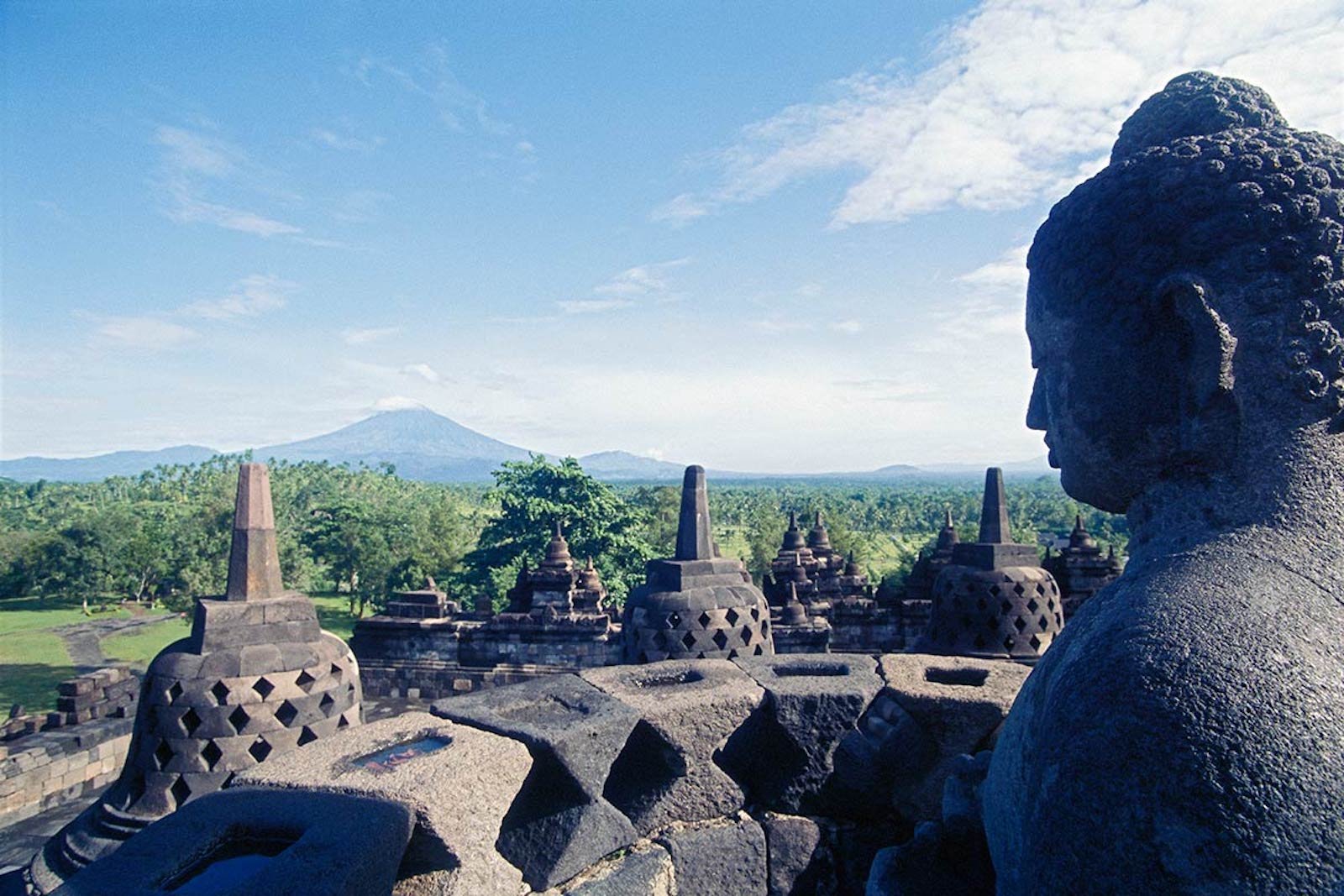
Meanwhile, Borobudur in Central Java faces a different challenge: balancing heritage conservation with modernization. Infrastructure upgrades around the temple complex must comply with UNESCO’s strict requirements for heritage impact assessments.
These technical and regulatory hurdles demonstrate that creating world-class tourism destinations is far more complicated than simply reallocating funds from Jakarta to regional governments.
The fate of destinations that were ultimately dropped from the super-priority list is even more telling. Tanjung Kelayang in Bangka Belitung, for example, appears to have been left to chart its own course after losing its priority status.
Sustainability audits found that the destination failed to meet many internationally recognized sustainable tourism criteria, largely because of weak long-term management strategies and insufficient community participation.
In Tanjung Lesung, Banten, delays in toll-road construction have discouraged private investment. Meanwhile, Wakatobi in Southeast Sulawesi has suffered a sharp decline in international tourist arrivals due to the absence of direct flight connectivity in the post-pandemic period, illustrating how even extraordinary natural attractions become vulnerable without reliable transportation infrastructure.
Impressive macro, miserable welfare
The government, of course, has a strong defense supported by impressive macroeconomic indicators.
Over the past year, international arrivals to Indonesia have grown significantly, reaching nearly 14 million. Domestic tourism has also surged, surpassing one billion trips. The tourism sector is estimated to generate billions of dollars in foreign-exchange earnings while contributing an increasing share to national GDP.
Regional economic studies suggest that improving the quality and diversity of tourism attractions has a far greater economic multiplier effect than simply increasing visitor volumes.
Expanding tourism offerings has been shown to stimulate higher visitor spending and extend average lengths of stay. In this sense, the government’s strategic shift toward quality tourism is academically sound and economically defensible.
Yet these impressive aggregate figures often conceal structural inequalities at the local level. Across Indonesia’s super-priority destinations, many of the jobs created remain concentrated in the informal sector and offer relatively low wages.
As luxury hotels and high-end facilities emerge, better-paying managerial and technical positions are frequently filled by workers from outside the region due to the limited quality and standardization of local vocational tourism education.
As a result, local communities often receive only a small share of the benefits, largely confined to low-skilled positions, housekeeping work, or informal street vending, which remain highly vulnerable to economic shocks.
Another irony emerges in the domestic market, which should serve as the foundation of Indonesia’s tourism resilience. Official data indicate that the average length of stay among domestic travelers has declined sharply by nearly 20%, falling to just four nights.
The primary cause is clear: soaring domestic airfares, driven by an uncompetitive aviation market structure, have weakened the purchasing power of Indonesia’s middle class.
The contradiction is striking. The state spends trillions of rupiah in taxpayer funds to beautify destinations outside Java while simultaneously keeping airfares so high that many Indonesians find international holidays more affordable than domestic travel.
Need for a better model
These structural shortcomings and widening disparities should serve as a serious warning that Indonesia’s tourism development strategy requires substantial recalibration.
A top-down development model driven primarily by the interests of large corporations must give way to an approach that treats local communities and indigenous groups as equal stakeholders and co-owners of tourism development rather than merely as objects of policy or recipients of compensation.
The territorial rights and cultural sovereignty of indigenous communities should not be sacrificed in pursuit of exclusive premium-tourism aesthetics.
Environmental sustainability must also take precedence over short-term investment interests. The failure of Tanjung Kelayang to meet global sustainability benchmarks should serve as a cautionary lesson for all super-priority destinations. Physical development without robust environmental governance risks creating irreversible ecological damage.
The government should require every destination manager to implement strict environmental monitoring systems, wastewater treatment standards and visitor-capacity limits to ensure that the natural assets underpinning tourism are not destroyed by excessive development and overcrowding.
Finally, regulatory coordination and transportation policy require comprehensive reform. Greater synchronization between regional tourism master plans and national regulations is essential to prevent overlapping authority between central government tourism agencies and local administrations, a problem that has frequently undermined legal certainty and project implementation.
At the same time, decisive intervention in Indonesia’s domestic aviation market is critical to reducing airfares to super-priority destinations. Without affordable air connectivity for Indonesians themselves, the impressive infrastructure built with public funds and public debt risks becoming little more than silent monuments to luxury, standing amid the persistent poverty of the communities that surround them.
Ronny P. Sasmita (PhD) is senior analyst at the Indonesia Strategic and Economic Action Institution, a Jakarta-based think tank.