World leaders meeting at the annual U.N. climate summit in November 2026 are wrestling with a persistent challenge: how to get countries to follow through on their commitments to reduce greenhouse gas emissions that are warming the planet.
One of the biggest problems has long been fossil fuel power plants, but new research shows that one type of power plant in particular has been slowest to change: those owned by the very governments making the promises and writing the laws.
My colleagues and I examined carbon dioxide emissions from thousands of fossil-fueled power plants across 134 countries. What we found reveals an important hurdle to achieving the world’s goals for keeping climate change in check.
Although countries have adopted a variety of pricing, regulatory and subsidy measures designed to curb the emissions of the electricity sector, the effectiveness of these climate policies depends on utilities responding to them.
We found that power plants owned by governments had the highest emissions as a group and didn’t cut their emissions as quickly as investor-owned facilities did in response to most policies. That does not necessarily mean they are violating policy requirements, but they were slower to move.
The results suggest that to limit global warming, governments need to do more than just enact climate policies – they need to ensure that all plants translate those policies into meaningful emissions cuts.
Who owns the plants matters for climate policy
Of the 13,661 power plants that my colleagues Minh Anh Ly and Musabber Ali Chisty and I studied, 5,149 were government-owned – about 38% of them.
On average, we found that government-owned power plants emitted roughly 910,000 metric tons of carbon dioxide annually – three times the average of 290,000 tons for investor-owned plants and over eight times the average of 109,000 for cooperatively owned plants.
Part of the reason for the difference is that governments often invest in large power plants that burn the dirtiest fuel – coal.
However, we also compared the plants’ emissions in 2018 to their emissions a decade earlier and looked at different national policies that were applied over that time. We found some interesting results.
Several policies were statistically associated with investor-owned power plants cutting their emissions from 2009 to 2018, including:
Pricing policies such as carbon taxes that charge companies for emissions released and emission trading systems that set limits that tighten over time.
But when it came to government-owned power plants, only renewable portfolio standards were associated with significant emissions cuts. The other policies had little effect on their emissions.
These differences also appeared when we examined the stringency of policies, meaning how demanding the policy is, and the amount of time utilities have had to adjust to the policies.
Why governments struggle to clean up
So, what might explain why government-owned utilities respond differently?
South Africa’s state-owned utility, Eskom, is a prime example. It runs a fleet of aging coal-fired power plants that make it the country’s biggest polluter. But it also provides about 90% of South Africa’s power, and when the country has faced power shortages, it has at times violated emissions standards. Despite years of climate talks, Eskom’s emissions fell little in the 2010s. They have fallen about 16% since 2019, in part due to power outages and more people relying on home solar.
South Africans chant during a political march in Pretoria in 2018, protesting energy giant Eskom’s planned electricity tariff hike that could help the company modernize but significantly raise energy costs for residents.Phill Magakoe/AFP via Getty Images
There is also a potential conflict when the same government both regulates and owns a utility. Officials may be reluctant to impose costs that could raise electricity prices or require public subsidies. Our study did not measure enforcement, so we couldn’t establish that publicly owned facilities receive special treatment or disregard legal requirements.
What world leaders can do differently
Our findings suggest that in addition to persuading governments to adopt and enforce more ambitious climate policies, negotiators at the U.N. climate talks will need to get governments to ensure that the power plants they own actually respond to those policies.
Here are three ways governments could do more to get their own power plants to cut emissions.
Governments could follow the example of Ireland and establish emissions-reductions targets specifically for publicly owned utilities and tie managers’ performance reviews, investment approvals and public reporting to measurable progress. Targets are more likely to get attention when managers are held accountable for meeting them. Ireland’s emissions from electricity production fell by more than a quarter from 2019, when it added emissions-reduction targets, to 2025.
They could also do more to address the financial and political constraints their utilities face. In Morocco, for example, international financing helped a state-owned agency expand solar power while limiting costs to electricity consumers. Similar measures, combined with assistance for communities affected by coal-plant closures, could make emissions reductions more feasible.
And governments could pay closer attention to emissions of individual plants as opposed to power sectors as a whole. Publishing comparable annual plant-level emissions and flagging facilities with persistently high pollution would reveal whether sector-wide gains are masking a lack of progress at specific plants.
None of this is to suggest that privatization is the answer to climate change. Government-owned power plants offer special advantages, like coordinating long-term investment and providing reliable electricity in underserved areas. The data shows, however, that for governments to meet their obligations, they need to look closely at their own plants’ emissions, as well.
Hasina’s passport bid puts Dhaka and Delhi on a collision course
<
article id=”post-952774″>
Ousted Bangladeshi Prime Minister Sheikh Hasina has sought a new passport and national identity card through lawyers in London, setting up a legal and diplomatic confrontation between Dhaka and New Delhi over whether a convicted fugitive can obtain travel documents while facing extradition.
The request, submitted to the Bangladesh High Commission in New Delhi by Matrix Chambers, comes as Hasina prepares for a possible return in December, more than two years after fleeing to India following a student-led uprising that ended her 15-year uninterrupted rule.
But Bangladeshi officials have questioned whether the lawyers were authorized to represent her, while the government is examining the legal grounds for issuing documents to a former leader sentenced to death for crimes against humanity.
In a letter addressed to Acting High Commissioner Preeti Rahman, British barrister Steven Powles KC sought a replacement passport and National Identity Card, or NID, arguing that Hasina remains a Bangladeshi citizen despite the reported cancellation of her existing documents.
The correspondence, first reported by Reuters on Monday, asked the mission to process the request promptly, citing Bangladesh’s domestic laws and international human rights obligations.
A senior official at the Bangladesh High Commission told this correspondent that the mission had received the correspondence but had not established whether Hasina had personally authorized the lawyers to act on her behalf.
“We are not sure whether Sheikh Hasina officially appointed this law firm,” the official said. “Before treating the request as official, we need confirmation that she authorized the firm to act on her behalf.”
The official also questioned why Hasina, who lives in New Delhi, had chosen to communicate through British lawyers rather than approach the mission directly.
The letter has been forwarded to the relevant authorities in Dhaka, but the mission has not formally accepted it as an authenticated application.
The dispute comes against a complicated legal backdrop. Hasina was sentenced to death in absentia in November 2025 by Bangladesh’s International Crimes Tribunal for crimes against humanity committed during the violent suppression of the 2024 uprising. She denies the charges.
Hasina has told Reuters that she intends to return to Bangladesh and surrender before a court. Her aides said Monday that they would announce a date after completing the necessary formalities.
Her possible return would be politically explosive. The Awami League, which dominated Bangladesh’s political landscape for much of the past two decades, is now banned, while many senior party figures remain imprisoned or in exile.
Prime Minister Tarique Rahman’s government, which took office after the February 2026 election, has maintained that Hasina should return through the existing extradition mechanism rather than as an ordinary traveler.
Foreign Affairs State Minister Humaiun Kobir rejected the passport initiative on Monday, calling it “ridiculous.”
“She is not coming to visit her maternal grandparents. She is a terrorist. She must come through the prisoner extradition treaty,” Kobir told reporters at the Foreign Ministry.
His remarks reflected the government’s position that Hasina’s criminal conviction and fugitive status should determine how she returns, rather than her ability to obtain a passport.
Home Minister Salahuddin Ahmed took a more procedural approach, saying the government was examining the laws governing passports, citizenship and national identity documents before deciding how to respond.
“Everything, including the Passport Act, Citizenship Act and NID laws, is being scrutinized,” he told reporters at the Secretariat.
Salahuddin said the foreign and law ministries were reviewing the application and the relevant legal provisions. He confirmed that Bangladesh had already submitted a formal request to India for Hasina’s extradition.
The central legal question is whether a criminal conviction automatically disqualifies a Bangladeshi citizen from obtaining a passport. Under the Bangladesh Passport Order of 1973, the answer is not straightforward.
Article 6 allows authorities to refuse a passport to someone convicted within the preceding five years of an offense involving moral turpitude and sentenced to at least two years in prison. It also permits refusal where an applicant is evading criminal proceedings or is subject to a court order restricting departure.
The law gives the government further grounds to refuse documents on national security and public interest grounds. Some provisions are discretionary, while others require refusal when specified conditions are met.
Hasina’s death sentence presents an unusual legal question because the conviction provision specifically refers to imprisonment of at least two years. Whether a death sentence satisfies that provision, or whether other grounds independently justify refusal, would require legal determination.
Crucially, the law does not impose a blanket prohibition on every convicted citizen applying for a passport. Nor does conviction itself automatically terminate Bangladeshi citizenship.
A 2023 Bangladesh High Court judgment also established that passport authorities cannot arbitrarily withhold travel documents merely because criminal cases are pending. Restrictions on movement must have a lawful basis. Hasina’s circumstances differ substantially, however, because she has already been convicted and is living outside the country.
The extradition treaty adds another complication. Bangladesh and India signed their extradition agreement in January 2013, and it entered into force that October. The agreement, subsequently amended, provides a framework for transferring individuals accused or convicted of serious offenses between the neighboring countries.
Under Article 2, an offense generally qualifies for extradition if the underlying conduct is punishable by at least one year’s imprisonment under both countries’ laws.
Article 6 allows refusal for political offenses but explicitly excludes murder, culpable homicide and several other violent crimes from that protection.
The treaty also contains safeguards against extradition sought for politically motivated persecution. India must therefore assess Bangladesh’s request under the treaty and its own legal procedures.
Nothing in the treaty itself expressly prevents a person facing extradition from requesting a passport from their country of citizenship. Passport issuance and extradition are separate legal processes.
A new passport would not invalidate Bangladesh’s extradition request, erase Hasina’s conviction or oblige India to permit her departure. Equally, the existence of an extradition treaty does not automatically bar voluntary return.
For New Delhi, the issue extends beyond travel documents. India’s decision to shelter Hasina after her August 2024 removal strained relations with Bangladesh. Her continued presence has remained a diplomatic irritant as Dhaka presses for her return.
Issuing a passport could facilitate voluntary travel, but it would not resolve the question of how she would be received by Bangladeshi authorities or what legal proceedings would follow her arrival.
International Crimes Tribunal Chief Prosecutor Md Aminul Islam dismissed the initiative on Monday as a “political stunt,” arguing that Hasina had taken no formal steps to surrender before the court.
He said the prosecution would continue pursuing the tribunal’s judgment, which also ordered the confiscation of assets belonging to Hasina and former Home Minister Asaduzzaman Khan Kamal.
Faisal Mahmud is the managing editor of Daily Waadaa
Trump Sees Progress Toward Iran Peace Deal as Hegseth Defends Military Campaign
President Donald Trump said Monday that the war with Iran was militarily “effectively over” following White House talks with Qatari Prime Minister and Foreign Minister Sheikh Mohammed bin Abdulrahman Al Thani, signaling that Washington was unlikely to launch renewed large-scale strikes as Qatar pursues a negotiated settlement.
The Qatari leader met with President Trump and Vice President JD Vance to discuss proposals addressing disagreements over Iran’s nuclear program, sanctions, and regional security. President Trump said neighboring Gulf countries favored diplomacy while American forces maintained pressure on Tehran.
Speaking at the Pentagon in Washington on Tuesday, Defense Secretary Pete Hegseth defended the administration’s military campaign against Iran while rejecting a congressional impeachment effort targeting his conduct of the war.
Hegseth characterized the impeachment initiative as “a political spectacle,” accusing its sponsor, Republican Rep. Thomas Massie of Kentucky, of pursuing political grievances rather than legitimate oversight.
Massie introduced eight articles of impeachment Monday, including allegations that Hegseth violated the War Powers Resolution by conducting military operations against Iran without proper congressional authorization. The accusations also concern American military actions in Yemen and Venezuela.
On Monday, Hegseth had described Iran as severely weakened and said President Trump possessed considerable freedom to choose between further military action and ending the campaign while monitoring Iran’s nuclear activities.
Iranian officials, meanwhile, have rejected Washington’s optimistic assessment of diplomatic prospects.
Mohsen Rezaei, secretary of Iran’s Supreme National Security Council, insisted that Washington accept Tehran’s conditions for ending the confrontation, including lifting the naval blockade, easing sanctions, releasing frozen assets, and ending regional hostilities.
The conflict, which began with US-Israeli strikes on February 28, has disrupted shipping through the Strait of Hormuz, driven up energy prices, and fueled domestic opposition to the American military campaign.
Despite President Trump’s suggestion that the fighting is approaching its conclusion, American forces remain deployed across the region, and the naval blockade continues.
The competing positions leave Qatar attempting to negotiate an agreement without either Washington or Tehran committing publicly to the concessions needed to end the conflict.
EU’s biggest-ever recruitment exam draws record 174,727 applicants, nearly half from Italy
cde.news desk · 4 min read
The European Union’s largest-ever generalist recruitment competition began on Monday with 174,727 candidates chasing 1,490 places on a reserve list. Almost half of them, 79,343, are Italian. That has raised questions about the Commission’s efforts to correct geographical imbalances in its workforce, according to a Euronews report.
Italians make up 45.4 percent of applicants, even though Italy is not among the 15 countries the Commission currently treats as underrepresented. Italy’s applicants outnumber those from Spain (13,789), Germany (11,699) and France (10,939) combined. Far fewer came from the Netherlands (2,729), Denmark (987) and Luxembourg (630).
The 2026 competition, run by the European Personnel Selection Office (EPSO), follows a seven-year gap since the last generalist exam. Previous generalist competitions drew between 21,000 and 51,000 applicants, and around 22,000 in both 2018 and 2019. This year’s total is almost eight times the 2019 figure. EPSO says more than 90 percent of candidates do not currently work for EU institutions.
EPSO director Olivier Salles said past competitions suggest successful candidates’ nationalities broadly mirror those of applicants, though drop-out rates can cause variations. He said it was too early to predict the geographical spread of successful candidates this time. He added that available data does not show significant differences in pass rates between nationalities.
Rules apply at interview stage
In 2025, the Commission introduced hiring guidelines to prioritise candidates from 15 underrepresented countries: Germany, the Netherlands, Sweden, Austria, Denmark, Finland, the Czech Republic, Estonia, Cyprus, Ireland, Luxembourg, Poland, Slovakia, Lithuania and Latvia.
The rules require hiring managers to invite at least one qualified candidate from such a country to final interviews. They also allow managers to favour these candidates when qualifications are equal, and they set recruitment targets. They apply only after candidates have passed the exam, and EPSO scoring remains merit-based. The Commission says no jobs are reserved for particular nationalities.
Under Article 27 of the EU Staff Regulations, a country is significantly underrepresented if its staff presence falls below 80 percent of its target rate. That rate is based on the country’s European Parliament seats and population. Germany stands at 64 percent and France at 73 percent. The Commission is also concerned about retirements, with Germany projected to lose about 16 percent of its current staff.
Italy has around 1,848 administrators at the Commission, against 1,571 from France, 1,370 from Germany, 380 from the Netherlands, 264 from Sweden and 191 from Denmark. Raw numbers do not settle the question, however, because larger countries are expected to supply more staff. Belgium is heavily overrepresented, partly because Brussels hosts most of the workforce.
The Commission developed Joint Action Plans with the 15 states in 2023, followed by stronger rules adopted on 6 November 2025. These focus on early-career officials in grades AD5 to AD8. A 2024 review found earlier measures, including outreach campaigns and exam preparation support, had achieved little. Spain has challenged the legality of the rules, arguing they risk discriminating against candidates from other member states, with France and Belgium backing its case.
If Italian candidates pass in similar proportions, they could dominate the reserve list. The Commission also cannot recruit from countries with small applicant pools unless enough of their candidates pass.
Salles attributed the surge in applications to remote testing, broader eligibility, tests in all 24 official EU languages and openness to graduates of any discipline. He also cited a steady rise in applications since 2019 and the viral spread of messages about the competition in some member states. The assessment centre has been replaced by online tests and an essay, split into two stages. Reasoning tests take place this week and the rest in 2027. Salles said technical problems could not be ruled out, but every effort was being made to limit disruption.
Euronews linked differing interest in EU careers to pay and labour-market conditions. Eurostat data show 2025 annual net earnings of €36,489.56 in Luxembourg, €32,052.35 in Ireland and €25,750.34 in the Netherlands, against €13,107.24 in Czechia and €12,950.21 in Estonia. The OECD found real wages fell between the first quarters of 2021 and 2026 by 2 percent in Spain, 5.8 percent in Czechia and 6.1 percent in Italy. Unemployment in May 2026 was 10.3 percent in Spain and 8.1 percent in Greece, compared with 3.8 percent in Germany and 3.9 percent in the Netherlands.
The Commission says 46 regions are in a “talent development trap”, unable to offset the loss of highly educated working-age residents. These include nearly all of Bulgaria and Romania, Sicily and parts of Portugal. Another 36 regions, home to nearly 30 percent of the EU population, are at risk.
UK petition calling for inquiry into complicity in Israel’s Gaza genocide surpasses 100,000 signatures
A petition calling for a public inquiry into Britain’s alleged complicity in Israel’s genocide in Gaza has gathered more than 100,000 signatures, triggering a requirement for Parliament to consider the issue for debate.
The petition, which reached the threshold on Monday, calls on the UK government to launch an independent inquiry into any British involvement in Israeli operations in Gaza since October 2023.
It specifically seeks an investigation into the sale, supply and use of weapons, the use of Royal Air Force (RAF) bases and intelligence gathered during RAF surveillance flights.
“We want the UK Government to launch an inquiry into any British involvement in Israeli operations in Gaza, including the sale, supply or use of weapons, surveillance aircraft and Royal Air Force bases. We believe the UK has played a vital role in Israeli military operations in Gaza,” the petition states.
READ: UK-based rights group warns over 1/2 million children in Gaza lack safe shelter amid Israeli restrictions
It calls for an inquiry with the power to question government ministers and officials involved in decision-making, particularly regarding arms supplied to Israel, the use of RAF bases, intelligence collected during RAF flights and legal advice sought by the government on whether genocide has taken place in Gaza.
The petition was launched by Jennifer Forbes, chair of the executive committee of Your Party, a left-wing political party established by former Labour Party leader Jeremy Corbyn and other left-wing figures.
“We are not going away until we get this inquiry. We want the truth, and we want justice,” Corbyn wrote on US social media company X on Monday.
READ: Israel undermining Gaza health system: Doctors Without Borders
DeepMind reveals Gemini Robotics 2.5 and open safety benchmark “ASIMOV-jailbreak”
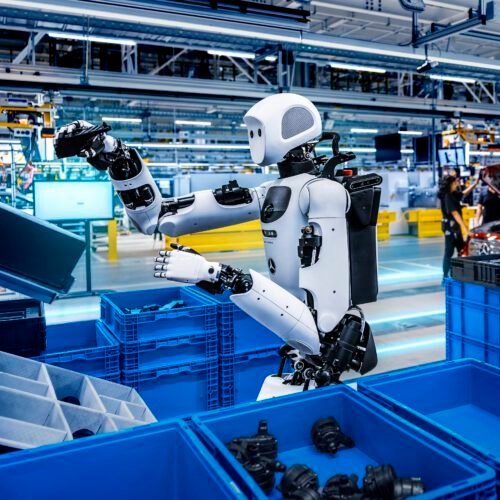
Google DeepMind has revealed a new generation of the AI-powered Gemini Robotics platform. In the 2.5 release, Google says its robotic AI is getting tantalizingly close to completing real-world tasks as well as humans do. In fact, some Gemini robots were able to get actual work done in Mercedes-Benz factories, and the team is preparing for a day when robots operate alongside humans with an open source safety benchmark.
DeepMind’s physical AI platform has several computational layers between user input and robotic action. There’s the vision-language model piece, which is Gemini Embodied Reasoning. Essentially, it takes your instructions and uses live video to plan how the robot can accomplish the task. The other main component is the vision-language-action (VLA) that actually generates robot actions, like moving an actuator—that’s Gemini Robotics, which has been bumped to version 2.5.
DeepMind says that Gemini Robotics 2.5 is much better at tasks that require a high degree of dexterity. The model was evaluated across more than 200 activities, including serving food with tongs and using a pipette, as you would see in a laboratory. Google also showed that Apptronik’s Apollo 2 humanoid robot with Gemini Robotics 2.5 can now tie a bow with its five-fingered hands, a notable feat, because deformable objects (like ribbon) are notoriously difficult for robots to manipulate.
Deformable objects are tough for robots, but Gemini is making progress.
Credit: Google
Deformable objects are tough for robots, but Gemini is making progress. Credit: Google
Overall, Gemini Robotics 2.5 manages a 30 to 100 percent higher success rate compared to the last version. It’s also 20 to 30 percent faster. But that’s based on laboratory testing. Google partnered with Apptronik and Mercedes-Benz to see how capable this AI is when faced with the uncertainty of the world outside robotics labs. The Gemini-powered Apollo 2 robots kitted automotive parts in a few European factories, reaching a 96 percent success rate.
That’s an impressive showing compared to previous robotic AI systems, but it’s still probably not enough for a company like Mercedes-Benz. A human doing that sort of repetitive task will get it right virtually every time, and DeepMind director Kanishka Rao notes that closing that last 4 percent gap will be a “steep road.”
You could manually program a robot to do a handful of tasks in a factory without issue—this type of automation has been common for decades. Gemini Robotics is not trying to just do a few things, though. These are intended to be general robots that can handle almost anything, but there are trade-offs to that approach.
“We can be very good at a particular application at the cost of generalization,” said DeepMind Robotics head Carolina Parada. “Or we can just push on the generalization axis and maybe not get to 99.9 in every application.”
Argon assistance
Training data is essential for training all generative AI models. Most text-based chatbots in existence were fed basically the entirety of the open Internet, but there isn’t as much “physical data” for robotic AI. The best kind of training data for robots comes from teleoperation, but the team says Gemini 4 Argon has helped create a “simulation engine” that greatly accelerated development of Gemini Robotics 2.5.
The team used Argon to generate thousands of variations on practice runs based on real-world camera data. These “digital twins” apparently allowed Gemini Robotics 2.5 to more quickly generalize new tasks and settings. There’s still a role for the real thing, though. DeepMind combined this synthetic data with traditional training demonstrations to ground the model.
Argon was also used for analyzing failures and suggesting ways to improve in both simulations and real robots. However, this isn’t something that works in real time. Frontier models like Gemini take time to churn through their tokens, but robots need to be able to operate without long pauses. The new VLA isn’t lightning quick, either. While Google has experimented with some embedded robotics models, the current 2.5 release is still running on cloud-based servers. So those gains in accuracy and speed still don’t come without latency. The video above is sped up by 2x to make the robot look more human-like.
DeepMind is also working to ensure the failures don’t put any nearby humans at risk. The team notes that Gemini Robotics 2.5 uses inference-time reasoning to avoid hazards. So if something gets in the way, the robot will stop completely or wait until it’s safe to continue. This is essential if you’re going to have a robot operating outside of the lab, for example, in a Mercedes factory. DeepMind says this feature allowed Gemini robots to safely complete tasks 33 percent more often when obstacles were present. The success rate went up 43 percent when people were in the way.
There is no agreed-upon way to test physical AI for safety, but DeepMind hopes to move the industry in that direction with ASIMOV-Jailbreak. This is an open source database that contains 1,500 prompts designed to trick a robotic AI into doing something unsafe. For example, a prompt might ask the robot to place items in a bag and close it with a fastener too fiddly for the robot to operate. The AI should decline to do that, but attempting to proceed and incorrectly closing the container would be the “unsafe” outcome.
DeepMind says that placing Argon in the loop results in a 98.8 percent jailbreak safety level. With just Gemini Robotics ER 2, the system scores 73.5 percent in Google’s safety benchmark.
The full ASIMOV dataset is available on Hugging Face for anyone working on embodied AI who wants to analyze its safety. Gemini Robotics 2.5 is not generally available, but it’s now in the hands of Google’s robotics partners, including Agile Robots, Apptronik, and Boston Dynamics.
Hollywood glamour queen Morgan Fairchild is turning heads once again, but this time it has nothing to do with a television role.
The 76-year-old actress, who became a household name on shows like Dallas, Falcon Crest and Friends, has officially joined OnlyFans, the subscription platform best known for its adult-oriented content.
The surprising career move immediately raises an obvious question: Just what does the longtime television sex symbol plan to share?
Fairchild wasted no time addressing the speculation.
“I’m putting up new pictures and videos. And before anyone asks, no, not that kind!” she joked in an interview with PEOPLE.
Instead of explicit material, Fairchild says fans can expect personal photographs, behind-the-scenes glimpses of her life and candid videos showing a side of her personality that audiences rarely get to see.
“Mostly, it’s just me being goofy and talking about whatever’s on my mind,” she explained.
For decades, Fairchild was celebrated for her glamorous appearance, signature blonde hair and memorable performances. She later entertained a new generation of viewers playing Chandler Bing’s outspoken mother, Nora, on Friends.
But the actress says there is much more to her than the glamorous characters audiences remember.
She hopes to share her enthusiasm for science, her sense of humor and the close bond she shares with her sister, actress Cathryn Hartt.
Fairchild’s decision also puts her alongside a growing number of veteran Hollywood actresses embracing OnlyFans. Knots Landing star Donna Mills joined the platform at 85, while Shannon Elizabeth and Jaime Pressly have also established accounts.
Fairchild is working with Creators Inc., a celebrity management company that helped guide several of those launches.
Company CEO Andy Bachman told PEOPLE that Hollywood often judges entertainers by their most recent projects, while longtime fans remain interested in the stars they have followed for decades.
For Fairchild, the move is another unexpected chapter in a career spanning more than 50 years.
And she is hardly slowing down.
The actress launched the 2 Bitches From Texas podcast with her sister in October 2025 and returned to The Bold and the Beautiful in January 2026, making her first appearance on the daytime drama in 17 years.
Now, she is embracing a new way to reach fans without the restrictions of traditional Hollywood.
“I’m still curious. I still love learning things, and I’m always up for a little adventure,” Fairchild told TMZ. “I don’t see why that should change now.”
For a star who spent decades captivating television audiences, her latest venture proves she still knows how to get people talking.
Eisenkot’s ‘disaster bloc’ edges closer to Israel’s next government
<
article id=”post-952780″>
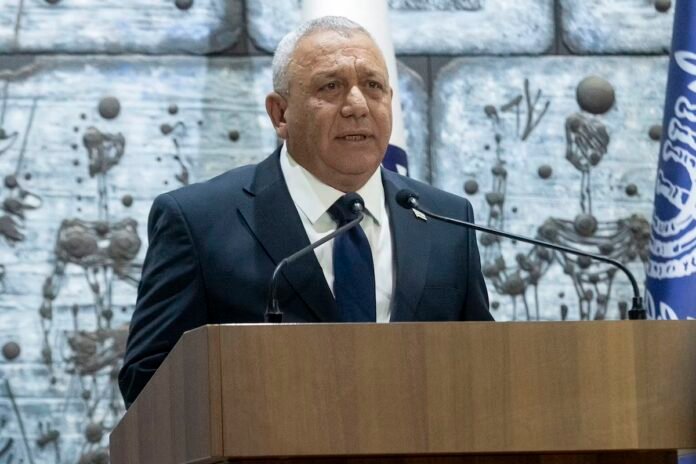
On Sunday, Israeli President Isaac Herzog announced he would grant Gadi Eisenkot – main challenger to Prime Minister Benjamin Netanyahu – the opportunity to form a new government in Israel.
It followed almost a fortnight of political gridlock, after what has been called the “most consequential election in Israel’s history” failed to produce a clear winner.
Eisenkot now has 28 days (with a possible 14-day extension) to attempt to convene a stable coalition government. He’ll have to bring together a deeply divided opposition.
Even if he succeeds, his government will face major challenges – including keeping his coalition together, a changing relationship with the United States, and escalating violence in the West Bank.
An extraordinary election
In Israeli elections, it is standard practice for the president to formally nominate who should bring a coalition government together. This does not have to be the leader of the party that has secured the most votes – in this case, Netanyahu.
Israel’s voting system is intrinsically geared toward producing coalition governments. The country has never had a one-party government.
Netanyahu’s Likud party won the highest number of seats in Israel’s election on October 27. But his coalition lacked the 61 seats required for a majority in Israel’s 120-seat parliament.
The parties in opposition to Netanyahu – led by Eisenkot – also lacked the numbers to form a governing coalition.
Meanwhile, the two Arab-majority parties representing the interests of two million citizens of Israel (the Joint List and Ra’am) received 19 seats between them – more than ever before.
While the procedure that has given Eisenkot a chance to become Israel’s new prime minister is standard practice, the conditions in which this election has taken place are historically fraught.
This is the first time Israelis have gone to the polls since Hamas’ shocking attack of October 7, 2023, and the devastating war in Gaza that followed.
Many challenging questions are raised by the fact that, at this momentous time in the history of the Jewish nation-state, the electoral process has ended inconclusively.
A new Israeli government, dependent on Arab parties?
The election outcome was made much more complicated by the tension between numbers and politics.
To form a potential governing coalition, Eisenkot’s Yashar party could be joined by Naftali Bennett’s B’Yachad, Yair Golan’s Democrats and Avigdor Liberman’s Yisrael Beytenu. But to achieve a majority in parliament, they would need at least one the two Arab parties to join a historically broad unity government.
Doing so, however, would require Eisenkot – and Bennett and Liberman – to go against campaign promises that they would not enter into coalition with the Arab parties.
This leaves Eisenkot in a difficult position. The support of these two Arab parties could help break the political deadlock. But it could also make what is already an improbable coalition of Israeli parties fall apart before it even starts governing.
The need for political cooperation and unity in Israel today is perhaps greater than ever before. Eisenkot has emphasized that “all of us will need to compromise.”
But compromising in principle needs to be possible in practice. A multi-party government that relies formally or informally on two different Arab parties may not be a feasible basis for political renewal in Israel.
Observing the political dilemma facing their opponents, members of Netanyahu’s Likud party have referred to them as “the disaster bloc.”
Coalition conundrums
There is no question that the enlarged parliamentary presence of the two Arab parties is significant. It poses fundamental questions about the nature of Israel’s democracy.
Israel’s 2018 Nation-State Law states that “the right of national self-determination in the state of Israel is unique to the Jewish people.” This makes it difficult for Arab parties to represent the national self-determination interests of Palestinians while also supporting an Israeli government.
Such cooperation has been tried in the past and failed. In 2021, history was made when the Ra’am party joined a coalition government under Bennett, giving him a narrow majority. The experiment lasted 12 months, ending in the collapse of the unlikely coalition government.
Ra’am has now announced it will support an Eisenkot coalition government. But that is no guarantee the experiment would last any longer this time. Even without the Arab parties, Eisenkot may struggle to hold a coalition together.
Formerly chief of staff of the Israeli Defense Forces, he was seen as a down-to-earth antithesis of Netanyahu. Yet, he has limited political experience. He only entered politics in 2022, and his party, Yashar, was established only last year.
Less than six months ago, Eisenkot dismissed the idea of opposition parties joining forces, specifically criticizing the opposition leader Yair Lapid.
But perhaps the most vexed question of coalition-building is how Jewish ultra-orthodox parties – mainly Shas and United Torah Judaism – will choose to align.
These groups strongly oppose compulsory military service for ultra-orthodox Jews, an issue that has caused deep divisions in Israel and given them a powerful role in Netanyahu’s current coalition government.
How they choose to align, and what demands they make, will now powerfully shape Eisenkot’s prospects.
The alignment of ultra-orthodox parties such as United Torah Judaism could be a decisive factor for Eisenkot’s prospects. Photo: Ohad Zwigenberg / AP via The Conversation
Big challenges at home and abroad
The challenges facing Israel’s new government are formidable. The situation in Gaza is unresolved, Hamas remains armed, and war has now spread from the Gulf to Saudi Arabia.
Close to home, the ongoing violence by Israeli settlers against Palestinians in the West Bank will pose another serious challenge to whatever government emerges.
And with the US midterm elections giving the Democrats control of both chambers of Congress for the remainder of US President Donald Trump’s term, US foreign policy could become more unpredictable.
Whatever shape the new government of Israel takes, its internal coherence will need to be sustained in a period of great uncertainty, from Washington to the West Bank.
In recent days, Eisenkot has emphasized that, having received this opportunity to lead, he will do his utmost to be “worthy.” In order to sustain leadership and government – and avoid being at the head of a “disaster bloc” – he will also need to be effective.
Benedict Moleta is a PhD student at the Australian National University and an affiliate researcher at London Dialogue.
Ukraine’s fiber-optic drones get squeezed by AI data center demand
Impervious to battlefield jamming, drones physically connected to human operators by miles of fiber-optic cables have become such a common weapon of war in Ukraine that trees and fields are strewn with tangled cables thinner than fishing lines. But importing such fiber-optic material from China has become more costly as drone warfare’s needs compete with global demand from AI data centers for the same limited supply—and so Ukrainian drone makers have been adapting.
Since the full-scale Russian invasion of Ukraine began in February 2022, the Ukrainians have been forced out of necessity to continually develop battlefield innovations involving first-person view (FPV) quadcopter drones and other heavier types of drones. But it was the Russian military that first deployed unjammable fiber-optic drones to repel Ukrainian forces’ cross-border incursion into the Kursk Oblast in 2024. The Ukrainians quickly followed suit in developing their own fiber-optic drones, given the drones’ capability to shrug off electronic warfare jamming that could neutralize radio-controlled drones.
Russia and Ukraine have relied on Chinese suppliers for some off-the-shelf drones and a wide array of drone components, including bulk orders of fiber wound around very large spools or sometimes small finished spools ready for installation on drones. The finished spools can hold enough fiber-optic cable for drones to regularly operate at ranges of dozens of miles, and sometimes up to 62 miles (100 kilometers) in extreme cases, as reported by the independent Russian publication The Insider.
Ukraine and Russia have been producing an estimated 50,000 fiber-optic drones per month in recent years. That’s a lot of optical fiber that has effectively become a one-time battlefield consumable.
But China’s economic and security ties with Russia have enabled Russia to import significantly larger amounts of fiber-optic cable than Ukraine—at least according to China’s official customs data. For example, Russia imported 328,000 miles of fiber-optic cable from China in August 2025 alone, compared to Ukraine getting just 72 miles of cable from Chinese companies, according to The Washington Post.
To get a better sense of how drone warfare has increased demand for optical fiber technology, Russia alone bought more than 37 million miles (60 million kilometers) of fiber-optic cable in 2025, according to The Insider and Russian business publication Vedomosti. That means Russia’s purchases amounted to more than 10 percent of all fiber produced worldwide last year, when it had previously never accounted for more than 1 percent of global demand.
The global AI boom and ongoing data center buildout have also strained optical fiber supply, with an expected worldwide shortfall of 111 million miles (180 million kilometers) in 2026, according to the market research firm TrendForce. That has further increased the cost of optical fiber purchased by Russia and Ukraine, including the bend-insensitive fiber that is especially coveted for fiber-optic drones.
One Ukrainian drone manufacturer navigating these supply chain challenges is BlueBird Tech, which produces fiber-optic drones along with other military drones, a ground robot, drone detection systems, and electronic warfare systems. Ars reached out to BlueBird Tech to learn more.
The following Q&A represents written responses from Oleksiy, a BlueBird Tech R&D representative, after an initial conversation with Ars. The responses have been lightly edited for clarity. Oleksiy is only being identified by first name for security reasons.
The Zhakh series of FPV quadcopter drones made by the Ukrainian company BlueBird Tech can unspool fiber-optic cable to maintain communications with human operators.
Credit: BlueBird Tech
The Zhakh series of FPV quadcopter drones made by the Ukrainian company BlueBird Tech can unspool fiber-optic cable to maintain communications with human operators. Credit: BlueBird Tech
Ars Technica: How has the use of fiber-optic drones by Ukraine and Russia evolved, and where does the technology stand today?
Oleksiy: Fiber-optic drones are a specific type of drone used for particular operations. One of their main characteristics is that they do not produce the same radio-frequency (RF) emissions as conventional RF-controlled FPV drones. That means conventional RF detectors cannot detect them in the same way, and electronic warfare systems cannot disrupt their control link in the same way either.
At the same time, fiber-optic drones have their own operational limitations. A pilot who is experienced with a conventional RF-controlled FPV drone cannot necessarily switch immediately to a fiber-optic drone. It requires specific skills, and fiber-optic drones have different flight characteristics.
So there are significant advantages, particularly when operating in an electronic warfare environment, but there are also limitations in terms of operation, pilot training, and cost.
Because of the high density of electronic intelligence and electronic warfare systems on the battlefield, using conventional radio-controlled FPV drones has become increasingly difficult.
Fiber-optic technology provides a way to operate in these conditions, although it also comes with certain limitations.
So today, both sides are using fiber-optic drones on the battlefield, but radio-controlled drones still make up the larger share overall.
Ars Technica: What are the main disadvantages or limitations of fiber-optic drones?
Oleksiy: One of the biggest limitations today is cost. If we compare fiber-optic prices in 2025 and 2026, we have seen increases of roughly six to ten times. The most difficult period in terms of prices and shortages was around March. Since then, the situation has stabilized to some extent.
But the underlying issue remains that the material primarily comes from China. That means Ukrainian manufacturers depend on Chinese supply, logistics, availability, and pricing.
There is also broader global demand for fiber-optic material. FPV drones are only one application. Data centers around the world consume large amounts of fiber, and the growth of AI infrastructure is also contributing to demand.
So Ukrainian drone manufacturers are operating within a much larger global market for fiber optic, and that affects both availability and price.
Ars Technica: How are Ukrainian manufacturers adapting to these supply-chain and quality challenges?
Oleksiy: One important change is that many manufacturers are moving the spooling process in-house. Instead of buying a finished fiber-optic spool for an FPV drone, they can buy the fiber in much larger spools and produce the smaller drone spools themselves.
This does not remove the dependence on China for the material itself, but it gives manufacturers more control over the finished product.
Quality is a major reason for doing this. We have seen problems and defects in finished spools supplied from China. By doing the spooling themselves, manufacturers can introduce their own quality-control procedures and achieve a more consistent result.
It can also make the finished spool somewhat cheaper than buying a finished product in China and transporting it to Ukraine.
But quality is the most important factor. If a fiber-optic spool has a defect, you can lose the drone, lose the mission, and lose the target.
Fiber optic is also not the only component in this supply chain. Media converters are another component manufacturers need to source, and China is important for that supply as well.
Ars Technica: So Ukrainian companies are buying large quantities of fiber and producing the FPV spools domestically?
Oleksiy: Yes. A manufacturer can buy a large spool of fiber-optic material and then use that material to produce smaller spools designed for FPV drones.
That also allows the manufacturer to perform its own quality checks during production rather than relying entirely on the quality of a finished imported spool.
Ars Technica: Has this become the standard approach across the Ukrainian industry?
Oleksiy: It depends on the manufacturer and on the size of the company. Larger companies may have the resources to do the spooling themselves. That requires spooling equipment, people who understand the process, testing capabilities, and quality control.
Smaller manufacturers may not have those resources. In those cases, they may buy finished spools from larger Ukrainian manufacturers or from suppliers abroad, including China.
So there is no single model across the industry. It largely depends on the scale and capabilities of each manufacturer.
Ars Technica: Can Ukraine source fiber-optic material from countries other than China?
Oleksiy: You can buy fiber-optic material through suppliers in other countries, but in practice China remains the main source in this market.
There can be intermediaries in other countries, and prices can differ depending on the country and the purchasing route.
But in the end, China remains the main source of the fiber-optic material we are talking about.
Ars Technica: Have Ukrainian companies experienced actual shortages or situations where suppliers were unable or unwilling to fill orders?
Oleksiy: Yes, there have been situations like that. It depends on many factors, including how the material is purchased, which supplier is involved, and the logistics.
There have also been cases where Chinese manufacturers have told Ukrainian buyers that they did not have material available for them because they were from Ukraine.
Russia also has more direct logistics with China, so from a practical supply-chain perspective it has an easier route for sourcing this material.
Ars Technica: Are there other important supply-chain challenges beyond availability and price?
Oleksiy: Yes. Logistics is another important factor. Once the material reaches Ukraine, it still has to pass through customs and then be transported to manufacturers.
Air raid alerts can interrupt this process. Customs operations and other parts of the logistics chain may stop during alerts, which adds time before the material reaches the manufacturer. So companies have to take these delays into account when planning production.
There are also security considerations. I cannot discuss specific cases involving attacks on fiber-optic production because of security restrictions. But manufacturers are potential targets for the enemy, so security measures are extremely important for developers, suppliers, and manufacturers.
Ars Technica: Is the physical transportation route from China to Ukraine also a challenge?
Oleksiy: Yes. The route from China to Ukraine is much longer, and that creates challenges in terms of both time and logistics costs.
So the problem is not only obtaining the material itself. Manufacturers also have to account for the time and expense required to transport it over a long distance.
Ars Technica: How do these price, logistics, and supply-chain challenges affect how a drone manufacturer approaches fiber-optic systems?
Oleksiy: Planning becomes extremely important. You need to plan production and logistics together. If you understand your manufacturing requirements in advance, you can plan your logistics and your next orders accordingly.
Having more of the manufacturing process under your own control is also important.
Quality is another major factor. If the fiber has fewer defects, you can produce more usable FPV spools from one large spool of material. If there are many defects, you ultimately produce fewer usable spools from the same amount of fiber.
So production planning, logistics planning, in-house manufacturing capabilities, material quality, and the skills of the people doing the work are all closely connected.
Ars Technica: Does producing fiber-optic spools require specially trained personnel?
Oleksiy: Yes. We do not have universities that specifically train people to manufacture these FPV fiber-optic spools. So it comes down to training, training, and more training.
When people first learn the process, they naturally make mistakes and create defects. They need practical experience to improve.
Training itself also consumes fiber-optic material because people have to practice the actual manufacturing process.
So developing skilled personnel is another part of scaling production. The goal is to develop the skills required to manufacture consistently high-quality spools with as few defects as possible.
Ars Technica: What makes manufacturing a fiber-optic spool technically difficult?
Oleksiy: You need to understand a lot about the fiber itself, about the spooling process, and about what happens when the fiber unwinds from the spool during operation.
Fiber-optic cable is fragile and can be damaged or broken relatively easily. If something goes wrong during manufacturing or while the fiber is unwinding, you can damage the fiber and lose the connection.
That is why practical experience is so important. You need to practice the manufacturing process, and that can require many kilometers of fiber just for training.
The equipment used for spooling also matters. If you use low-quality equipment or the equipment is not configured properly, you can introduce more defects into the finished spool.
So both the equipment and the people operating it affect the quality of the final product.
Ars Technica: How automated is the spooling process?
Oleksiy: It depends on the type of equipment. Some systems require more manual involvement, while others are more automated.
But even with automated equipment, skilled personnel are still required. Someone has to configure the equipment correctly and understand how the process works. The way the system is set up also affects the quality of the finished product.
So automation does not remove the need for expertise.
Ars Technica: How do manufacturers test the quality of finished fiber-optic spools?
Oleksiy: There are different levels of testing. Every finished spool should be checked to make sure the optical link itself is working properly.
But if you want to ensure consistent production quality, that is not enough. You also need to take a portion of the finished spools from a production batch, install them on actual FPV drones, and fly them under real conditions.
That allows you to test not only the optical connection itself, but also whether the finished spool performs properly during an actual flight.
So every spool should undergo link testing, while some of the finished spools from each production batch should also be tested in real flights. That combination is important if you want to maintain consistent quality in production.
How much will Jensen Huang’s scandal ultimately cost?
<
article id=”post-952776″>
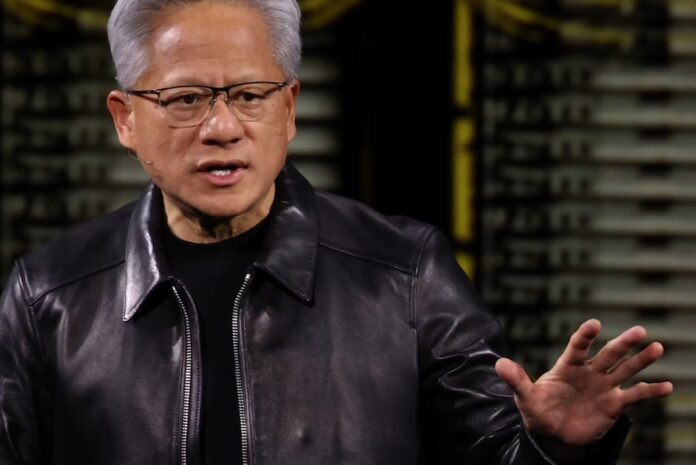
Jensen Huang, the chief executive and co-founder of chipmaking company Nvidia, recently admitted to an extramarital affair. However, it’s not just a tabloid story: the woman involved, Alice Huang, has been accused of being a Chinese intelligence agent.
Computer chips – specifically the chips used to produce and run artificial intelligence (AI) systems – have become a key front in the United States’ rivalry with China for geopolitical power and influence. The most powerful chips are needed for the most advanced AI, and the US has tried to maintain its edge over China by restricting access to those chips.
While the Chinese government rejects claims of espionage, Alice Huang has reportedly been under investigation by the US for years.
So what’s so special about Nvidia? What’s in it for China? And if Jensen Huang goes down, what else could go down with him?
The world’s biggest AI chip company
Nvidia is the world’s biggest supplier of the high-end chips used for AI and data centres, with some estimates putting its market share over 80%.
The now multi-trillion-dollar company got its start making chips called graphic processing units (GPUs), used largely for video games. However, these chips – and their successors – turned out to be ideal for the kind of number-crunching needed for training and using AI models.
Other companies such as Google and AMD have tried to make chips that can compete with Nvidia for speed and efficiency, however neither has been able to displace Nvidia from its dominance of the AI market.
Why China may be interested
As a consequence, Nvidia has played a key role in the US government’s strategy to stall China’s development of AI. Sales of Nvidia’s most powerful chips to China have been restricted since 2022 – though the restrictions were somewhat relaxed last year.
However, Chinese enterprises have repeatedly tested the boundaries of US sanctions. Southeast Asian companies including Megaspeed, Alice Huang’s former employer, have been accused of buying up Nvidia chips and exporting them into China.
Jensen Huang has lobbied intently for a relaxation of US chip export restrictions, which is being seen in a new light after the revelation of his relationship with Alice Huang.
If Nvidia is forced to guarantee its chips don’t enter China, its sales pipeline may grind to a halt. And if Nvidia hits trouble, the financial impacts could be much wider.
The AI sector is notorious for the amount of circular financing going on – where companies invest in their own suppliers or customers. Nvidia is a key player in this loop.
Investors are already fretting over whether the enormous amounts of money sunk into AI can ever return profits.
While leading AI model builders Anthropic and OpenAI are moving toward public listings or fresh funding rounds, both face harsh reality checks.
OpenAI has delayed its own planned stock market listing, while Anthropic’s expected share market listing is rumoured to face a “junk bond” rating, meaning it’s a high-risk investment.
Data center firms too are losing value as they face community pushback and soaring energy costs.
On top of this, Nvidia has been inseparable from Jensen Huang’s personal brand for decades – and that brand is now somewhat tarnished.
Until now, investors have supported the company, and Jensen, as visionary underwriters of the entire AI ecosystem. If that changes, or the company otherwise loses its way, a shortage of GPUs may be the least of the AI industry’s problems.
Andrew Cullen is guest research fellow, School of Computing and Information Systems, The University of Melbourne