8.4 C
London
Friday, November 6, 2026
Home Blog

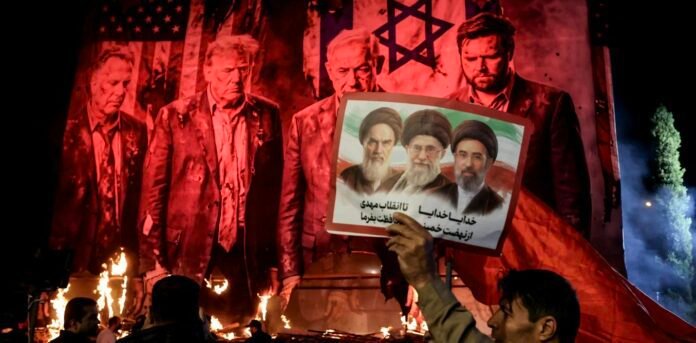
JD Vance singled out Iran War for midterm rout – he didn’t say what should happen next in conflict

0
jd-vance-singled-out-iran-war-for-midterm-rout-–-he-didn’t-say-what-should-happen-next-in-conflict
JD Vance singled out Iran War for midterm rout – he didn’t say what should happen next in conflict
While votes were still being counted in the U.S. midterm elections, administration figures in Washington were already inviting speculation over how the results might be connected to the conflict with Iran.

On the morning after the election, Vice President JD Vance wrote on X that the major reason for the dramatic loss for Republicans was the American public’s opposition to the war. “Everyone knows why we lost. And any honest conversation about where we go from here must start there,” he wrote, in reference to the ongoing conflict that began with U.S.-Israeli airstrikes against Iran in late February 2026.

While it is rare for a vice president to make such a critical proclamation about their own administration’s policy, President Donald Trump later stated that he did not disagree with Vance’s appraisal of the role that frustration with the Iran war played in voters’ minds.

But whether this changes Trump’s view on next steps in the ongoing conflict remains unclear. Reporting over the past few weeks has indicated that the U.S. military has been actively preparing options and increasing capabilities in the Persian Gulf region in the event the president directs a resumption of hostilities.

As an expert on Middle East affairs and a former senior official at the National Security Council during the first Trump administration, I’m aware that months of conflict have failed to bring Iran to its knees, force regime change or militarily defeat a perceived threat to U.S. assets and allies. Escalating now is unlikely to change those realities – and it carries the additional risk of further damaging Republicans in the eyes of Americans voters as they turn toward the 2028 presidential race.

Even if Trump were to ratchet up the conflict, moreover, it’s unclear how much wiggle room he’ll have come January facing a Democratic Congress almost uniformly opposed to the war.

Protesters hold a sign saying 'No War in Iran'

Demonstrators protest the Iran war near the Lincoln Memorial Reflecting Pool on Nov. 2, 2026. Kevin Carter/Getty Images

Sunk costs

Part of the issue facing Iran war hawks in Washington now is that the conflict has caused serious setbacks for the regime in Tehran without satisfying the officially stated strategic reasons for going to war.

They argue that pulling back now – as welcome as that might be for Americans struggling with the associated rising cost of fuel – may allow Iran to rebuild before the conflict is “won.” Moreover, it would render the military and reputational costs already sunk by Washington as wasted.

Among the achievements of this war touted by the Trump administration has been the death of former Supreme Leader Ali Khameini, along with the killing of scores of senior leaders within the Islamic Revolutionary Guard Corps – including individuals like the former head of Iran’s National Security Council Ali Larijani. Significant elements of Iran’s air defense and radar network, ballistic missile and drone production, and storage and launch sites have also been destroyed. And Iran’s already outdated navy and air force has been further degraded.

Meanwhile, the U.S.-imposed naval blockade against Iranian-linked shipping in the Persian Gulf cut off a crucial lifeline for Iran’s economy. And additional sanctions and economic penalties imposed by Washington have served to further devalue Iran’s currency and deprive Iran of additional financial links to the international banking system.

Down but not out

Yet for all the U.S. successes in degrading the Iranian military by limitless aerial bombardment and the significant financial pressure against the Iranian economy, an obvious endgame remains elusive.

Despite weakening the Iranian government – now led by Ali Khameinei’s son, Mojtaba, and a new echelon of senior IRGC commanders – the Islamic Republic remains intact. Moreover, it still possesses enough ballistic missiles and drones to hold the region at risk, while continuing to impose significant control over its population.

Meanwhile, U.S. military spending continues to rise. In September, the U.S. Congressional Budget Office assessed that the military costs of the Iran War had already totaled US$38 billion. Since then, that number has only increased. And that is to say nothing of the associated global economic costs that have resulted from Iran’s de facto closure of the Strait of Hormuz – a key shipping route for oil and gas.

Should Trump decide to change course on Iran, he – and others – may think that the money, effort and lives of 19 American servicemen killed in the conflict would have been spent with no obvious objective achieved. Yet continued military expenditure with no strategic endgame could only magnify those same costs.

A group of uniformed people carry a casket with a flag draped over it.

The casket of Army Sgt. Angel Rampersad – one of 19 U.S. service members killed in the Iran war. Spencer Platt/Getty Images

To Iran, the midterm results have not changed its public position. Mojtaba Khameini has issued statements directing the IRGC to widen the conflict in the region and perhaps beyond should the U.S. and Israel attack again. At the same time, a statement attributed to him indicates that hostilities between the United States and Iran will persist regardless of the balance of party political power in Washington.

This raises questions about the prospects for diplomacy. During the summer, the U.S. and Iran agreed to an initial 14-point memorandum of understanding that, if finalized, could have brought a permanent end to the hostilities. But since the 60-day clock on that agreement lapsed, no parallel diplomatic agreement has emerged.

No practical solution

Even with the major shift in the U.S. political landscape, it remains unclear whether Trump will resume operations against Iran before the new Congress is sworn in. The messy election result in Israel – which has left the pro-war, and potentially outgoing, Prime Minister Benjamin Netanyanu with potentially more reason to double-down in Iran – only complicates matters.

The U.S. military certainly appears to be ready to engage in a new round of attacks against Iran if so directed, and Iran is ready to retaliate. But given the shortcomings in the U.S. inventory – with munitions and missile and air defense capabilities depleted by eight months of war – escalation is something Trump and his inner circle will have to consider with caution.

Iran might force the issue by engaging in asymmetric attacks in the region or beyond that they have not attempted already. Or it could launch a coordinated offensive with its partners in the region – notably the Houthis in Yemen, who have become more active in their own conflict with Saudi Arabia in recent months.

But save an event that the Trump administration perceives is giving it cover to act, there are no clear indications emerging from Washington as to which way it will move.

Vance diagnosed a widely perceived political problem for Republicans: Voters don’t want more war. But what he noticeably didn’t mention was a practical solution. The Middle East conflict – and the United States’ role in it – are, as such, locked in a stalemate.

America and Iran have both borne significant political, military and economic costs. A decision not to pursue an endgame would leave those sunk; doing so may only increase them.

Source: Iwpost.com

NASA unveils mysterious X-70 experimental aircraft using AI-generated image

0
nasa-unveils-mysterious-x-70-experimental-aircraft-using-ai-generated-image
NASA unveils mysterious X-70 experimental aircraft using AI-generated image
NASA has announced a new experimental aircraft, the X-70 Fractal, that will supposedly feature reconfigurable flight-control technology and a modular design for swapping in different payloads. But much remains unknown about the aircraft’s design and development timeline, even as NASA administrator Jared Isaacman said the X-plane could take flight within two years.

The mystery surrounding NASA’s newest X-plane was exemplified by the agency’s press release, including an apparently AI-generated image of the X-70, showing a dark silhouette vaguely resembling a military fighter jet obscured by smoke. The news was announced by Isaacman during the UP.Summit held at the agency’s Kennedy Space Center in Florida on November 4.

“The X-70 Fractal gives NASA a crewed, high-performance platform to test advanced flight-control, maneuverability, and other cutting-edge technologies in real flight,” Isaacman said. “Its modular design and ability to rapidly swap internal and external payloads will keep our teams flying, learning, and moving quickly from one experiment to the next.”

NASA’s press release described the X-70 as a crewed aircraft designed to cruise at Mach 0.75 while reaching a maximum altitude of up to 45,000 feet, and having an operational range beyond 1,726 miles (2,778 kilometers). The article did not mention a specific aircraft manufacturer that might be helping the agency develop the X-plane.

The X-70 would also have a takeoff weight of 10,000 pounds (4,536 kilograms) and a design capable of accommodating up to 2,000 pounds (907 kilograms) of experimental payloads both internally and externally. Ars has reached out to NASA for more details.

Return of the Blackbird?

Another X-plane is also expected to be announced at the UP.Summit on November 6, according to Aviation Week. That would coincide with a scheduled announcement from President Donald Trump at the event.

This comes after Isaacman previously appeared in front of another smoke-shrouded silhouette image with the tagline “Rebuilding our X-plane portfolio” during the All-In Summit in Los Angeles held from September 12–14, according to TWZ. That silhouette appeared strikingly similar to the SR-71 Blackbird that flew Cold War reconnaissance missions at supersonic speeds in the stratosphere.

Rumors have circulated about a possible revival of the SR-71 in one form or another, after former NASA employees told Aviation Week they received job offers to help restore an SR-71 to operational flight capability.

In September, the publication also reported on the removal of a NASA-owned SR-71 with the tail number 844 that had stood on display at NASA’s Armstrong Flight Research Center inside Edwards Air Force Base in California.

Quiet supersonic flight testing

Meanwhile, NASA recently commemorated the first flight anniversary of its supersonic X-59 Quesst, a needle-nosed aircraft designed by Lockheed Martin to reduce sonic booms to sonic thumps. Ars has previously looked at how this X-plane program is intended to support the design of future supersonic airliners that may fly overland while minimizing disturbances for buildings and people below.

Since first taking to the skies on October 28, 2025, the X-59 has completed over 40 flight tests, including both low-speed flights and supersonic test runs reaching Mach 1.53, according to NASA. Such testing has taken place at NASA’s Armstrong Flight Research Center inside Edwards Air Force Base in California.

The X-59 also recently completed its first cross-country journey from California to Florida with stopovers in Texas and Alabama, accompanied by an F-15 and an F/A-18 from the agency’s research fleet that served as chase planes. It sat on the ground as a static display during the NASA Max Power airshow at Kennedy Space Center in Florida from November 7–8.

The supersonic aircraft will resume its test flight schedule once it returns to Armstrong Flight Research Center in California, a NASA spokesperson told Ars. Given the agency’s latest X-plane push, the X-59 may not be flying alone for many more years.

Source: Iwpost.com

Melania Trump to Get Nobel Peace Prize?

0
melania-trump-to-get-nobel-peace-prize?
Melania Trump to Get Nobel Peace Prize?


President Donald Trump’s longtime dream of winning the Nobel Peace Prize has taken an unexpected twist, with his own wife suddenly emerging as a contender for the prestigious honor and sparking jokes that her success could spell trouble for their marriage.

First Lady Melania Trump has climbed ahead of her husband in prediction markets for the 2027 Nobel Peace Prize following her involvement in negotiating a humanitarian ceasefire between Russia and Ukraine.

The surprising development has fueled speculation about how the president, who has repeatedly argued that he deserves the award, might react if his wife received the recognition before him.

The first lady’s newfound attention follows her role in securing a temporary ceasefire in Oleshky, a Russian-occupied Ukrainian city devastated by years of war. The agreement, reached October 23, allowed desperately needed humanitarian supplies to enter the region and provided a safe passage for civilians seeking evacuation.

The diplomatic breakthrough resulted in the evacuation of nearly 800 people, according to the White House. On Thursday, November 5, Melania welcomed Russian and Ukrainian representatives to Washington, where Ukrainian officials presented her with the Order of Princess Olga, First Class, in recognition of her efforts.

Her growing international profile has also shaken up the Nobel Peace Prize predictions. Earlier this week, Melania briefly climbed into second place on the Kalshi prediction market, with a 4% chance of winning compared with her husband’s approximately 1%. By November 4, her market-implied odds had risen to roughly 6%, while Trump’s stood near 1.5%.

Although those figures reflect speculative trading rather than the Nobel Committee’s actual deliberations, the prospect of Melania beating her husband to the prize quickly became a source of political entertainment.

During an episode of the “Inside Trump’s Head” podcast, journalist and author Michael Wolff joked about what might happen if the first lady won.

“He would divorce her,” Wolff quipped.

Podcast host Joanna Coles took the joke even further, suggesting Trump would leave his wife for longtime aide Natalie Harp.

The remarks were humorous speculation, not evidence that the Trumps are considering divorce. Still, they attracted attention because of the president’s well-documented fascination with the Nobel Peace Prize and his previous comments about sharing the spotlight with his wife.

During a Republican fundraising dinner in March, Trump joked about Melania’s success following the release of her documentary, “Melania.”

“There’s only room for one star in a family,” he told the audience, suggesting that his wife’s growing celebrity was creating some unexpected competition at home.

The president delivered the remarks playfully and went on to praise her performance as first lady. Nevertheless, the comments have resurfaced as Melania’s diplomatic accomplishments draw international recognition.

Trump’s pursuit of the Nobel Peace Prize has become a recurring political storyline. He was passed over in 2025 when Venezuelan opposition leader María Corina Machado received the honor. Machado later presented Trump with her Nobel medal, although the Nobel Committee clarified that the award itself could not be transferred.

The president was disappointed again in October 2026 when former United Nations human rights chief Navi Pillay received the prize for her work advancing peace and international law.

Melania’s latest accomplishment has introduced another intriguing possibility into that ongoing saga.

Her diplomatic efforts have also involved cooperation with Pope Leo XIV, who separately appealed for humanitarian assistance in Oleshky. The Vatican has acknowledged the first lady’s role in helping secure the ceasefire while emphasizing the contributions of multiple parties.

Despite the jokes about marital rivalry, there is no verified evidence that Melania’s Nobel prospects have caused trouble between the couple. Trump has publicly praised her work on Ukraine, and the 2027 award remains nearly a year away.

For now, the irony is difficult to ignore: After years of chasing one of the world’s most coveted honors, Donald Trump is watching his wife receive serious international attention for the very achievement he has long wanted for himself.

Source: Iwpost.com

Blue Origin says it is building a higher-performing rocket engine at 1/4 the cost

0
blue-origin-says-it-is-building-a-higher-performing-rocket-engine-at-1/4-the-cost
Blue Origin says it is building a higher-performing rocket engine at 1/4 the cost
KENNEDY SPACE CENTER, Fla.—Blue Origin announced two significant upgrades to its New Glenn rocket on Thursday, reducing the cost of manufacturing the vehicle and expanding its capacity for payload delivery to geostationary orbit and the Moon.

With these upgrades, the company aims to eventually position New Glenn to launch more than 1,000 times a year.

“There has never been higher demand for launch, ever,” Dave Limp, chief executive officer of Blue Origin, said during the UP.Summit conference at the Shuttle Landing Facility in Florida.

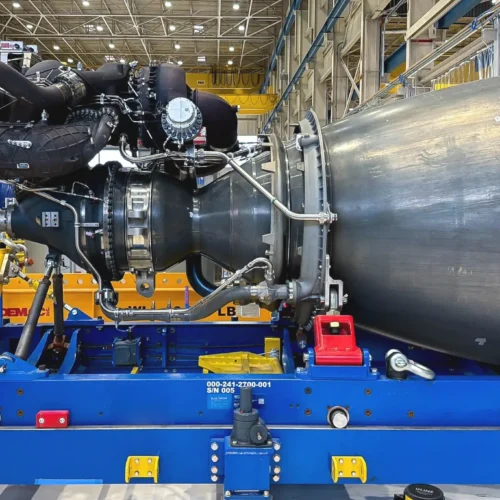
Blue Origin has already begun test firing a new engine, called Northstar, that will eventually replace the BE-4 engine that powers the first stage of New Glenn. Separately, the company also said it was developing a hydrogen-oxygen third stage for the rocket, GS3, to give it an extra kick.

A new Northstar

The Northstar engine is a simplified but more powerful version of the BE-4 engine, Limp said. It has half the number of parts, 30 percent less mass, and about 65 percent can be 3D-printed.

Blue Origin believes it can manufacture the engine at 25 percent of the cost of a BE-4 engine, and eventually reach the point where each engine can be assembled in less than a day. The company is deep into development and testing of Northstar, having already begun a test-firing campaign.

“To get access to space at a lower cost, we have to look at every part of the vehicle,” Limp said. “This is going to be a game-changer.”

The BE-4 engine powering New Glenn today has a thrust of 640,000 pounds, and Limp said Northstar will have a starting thrust of 715,000 pounds. Like the BE-4 engine, Northstar burns methane and liquid oxygen using an oxygen-rich staged combustion cycle and a single-shaft turbopump architecture.

Limp said the company will continue to manufacture the existing BE-4 engine for United Launch Alliance, which uses two of the engines to power its Vulcan rocket.

GS3 provides a nice kick

Blue Origin is developing a third stage for New Glenn called GS3 (creatively named Glenn Stage 3) to offer direct injection to geostationary orbit and Earth-escape trajectories. The third stage fits within an interstage, preserving the full fairing volume for customer payloads.

The stage can fly on both the smaller 7×2 variant (as in seven first stage engines and two second stage engines) of New Glenn as well as the larger 9×4 variant. According to Blue Origin, a GS3-equipped New Glenn 7×2 can carry 8 metric tons directly to geostationary orbit and 10 metric tons to translunar injection. Those figures increase to 14 tons and 20 tons, respectively, for the larger 9×4 variant.

As the rocket’s third stage, it needs to be light, Limp said. For this reason, the third stage is made mostly of composites, which are high-performing and lightweight. But there’s a problem with that.

The trouble with hydrogen

The stage will be powered by the company’s BE-7 engine, already used by its lunar landers. This engine is optimized for in-space operations and uses liquid hydrogen and oxygen propellants. But hydrogen is the smallest atom and therefore leaky. With composites, thermal cycling and mechanical strain can cause cracking, exacerbating losses of molecular hydrogen.

Limp said the company was not sure a large composite tank, 5.5-meter diameter in this case, could be constructed that would contain hydrogen at high pressures.

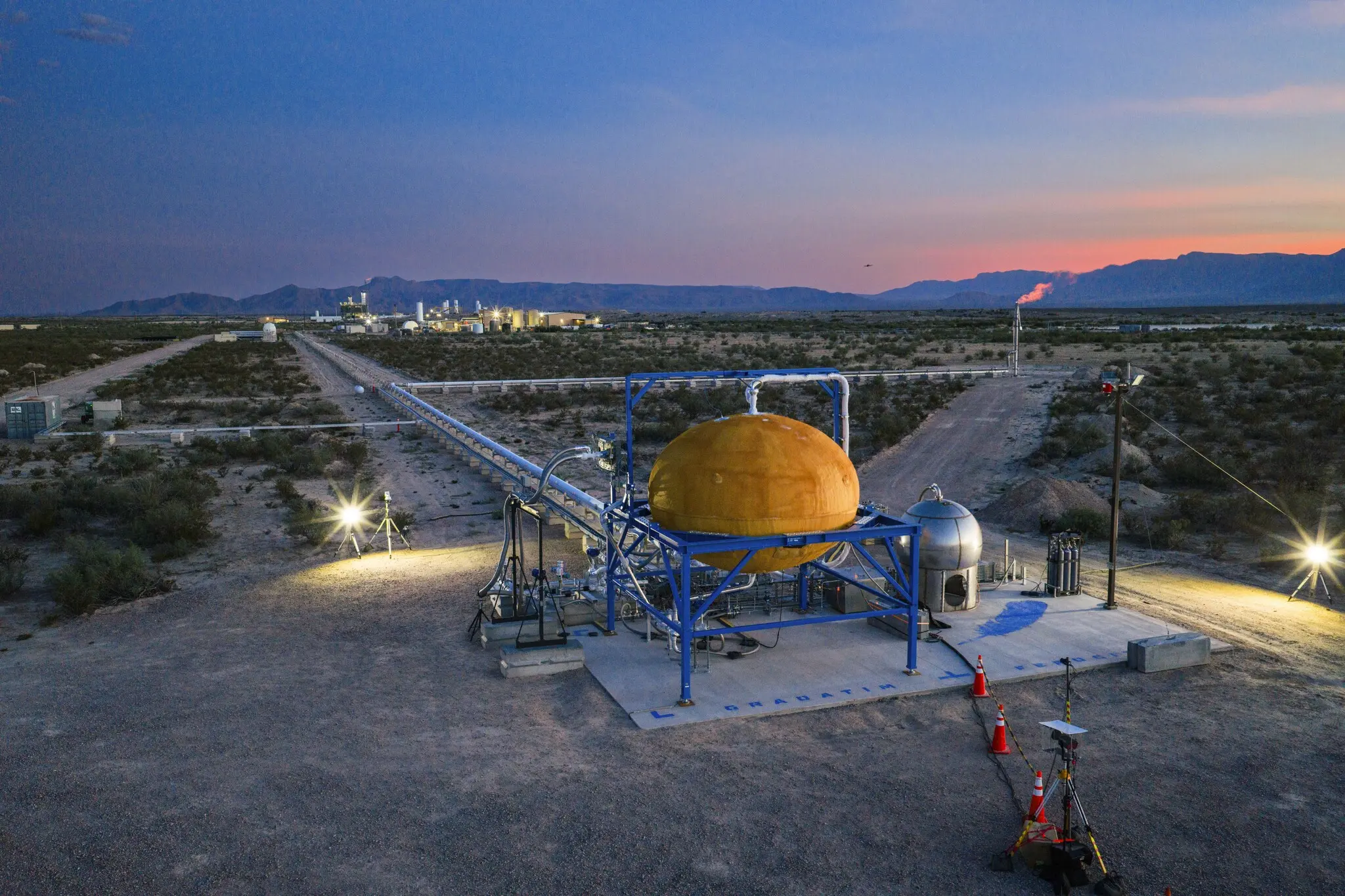
Blue Origin has successfully tested a 5.5-meter composite test tank in West Texas.

Blue Origin has successfully tested a 5.5-meter composite test tank in West Texas. Credit: Blue Origin

The company recently had a breakthrough at Launch Site One in Texas, when it completed its first composite liquid hydrogen tanking test. During the test, the tank was pressurized to 100 percent of the maximum force expected during operation for 2.5 hours. It was even successfully tested at 150 percent of this maximum pressure for 10 minutes.

That gave the company confidence that a GS3 based on composite tanks was a concept that could go forward, and now the company is aiming for a debut in 2028 for a government customer.

“We have one customer signed up for cislunar space in 2028,” Limp said. “We are open for business.”

Source: Iwpost.com

Israel’s election wave of another color

0
israel’s-election-wave-of-another-color
Israel’s election wave of another color

<

article id=”post-952391″>

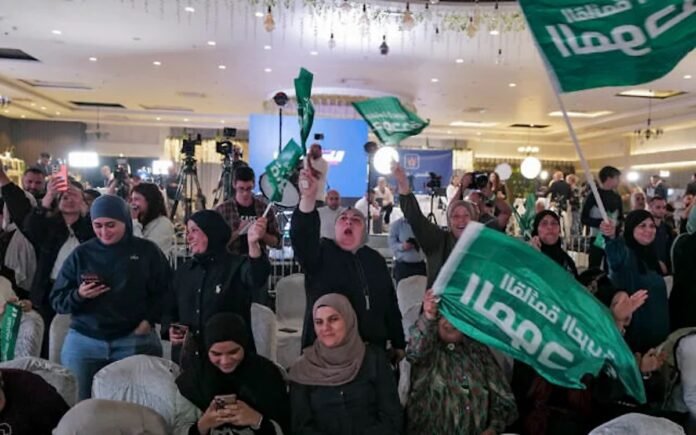
The headline of Israel’s October 27 election was supposed to be a referendum on Benjamin Netanyahu. Instead, the most consequential result came from the fifth of the country that Israeli politics has spent decades treating as a spectator. The Joint List and Ra’am won 19 of the Knesset’s 120 seats, the most Arab-led parties have ever held.

That number sits squarely in the gap between the two Jewish-led blocs. Neither Netanyahu’s camp nor Gadi Eisenkot’s can reach 61 seats alone. For the first time, the question of who governs Israel runs directly through Nazareth, Sakhnin and Rahat.

The scale of the shift is hard to overstate. According to the Central Elections Committee’s completed count, the Joint List won 11 seats and Ra’am 8, against a combined 10 in the outgoing Knesset. The previous high-water mark was the 15 seats the united Joint List won in March 2020.

Nearly 840,000 people voted for the two Arab-led lists, a 64% increase over 2022. Arab turnout roughly doubled to about 80%, outpacing a national turnout that was itself a historic 78%. Arab-led parties took about 14.7% of the national vote, up four points.

The local stories are even starker. In Tarabin, a Bedouin village in the Negev where Likud had won majorities in the past two elections, turnout nearly doubled and Ra’am took 93% of the vote.

Why the wave came

Three forces converged. The first was unity. Arab turnout has long tracked whether the parties run together: it reached 63.5% when the Joint List first formed in 2015 and peaked near 65% in 2020, then collapsed after the 2021 split. In 2026 Hadash, Ta’al and Balad re-formed the Joint List, and voters responded.

The second was fear. Arab communities have endured a crime wave the state has failed to contain: 252 Arab citizens were murdered in 2025, the deadliest year on record. Since October 7, Arab citizens have also faced heightened suspicion, arrests over speech and a campaign in which candidates openly courted Jewish voters with anti-Arab rhetoric. Even the right to run was contested: the Supreme Court overturned the Central Elections Committee’s disqualification of both the Joint List and Ra’am on October 2.

The third was a sense that the vote could finally matter. With the Jewish blocs evenly split, Arab parties campaigned on a simple pitch: staying home is not neutral. Both lists ran on security in Arab towns and investment in Arab local authorities, even as they diverged on the wider conflict.

From voters to kingmakers

The arithmetic is simple. Eisenkot’s bloc plus the two Arab-led parties makes 67 seats, a comfortable majority. Netanyahu’s 53 has no path to 61 without defections from the other side.

But the two Arab parties bring very different theories of power to the table. Ra’am’s Mansour Abbas, who in 2021 made his party the first independent Arab faction to join a governing coalition, wants back in. He has said he would join an Eisenkot government if Ra’am receives the internal security portfolio, and his party’s Jewish deputy is a deliberate signal of openness.

The Joint List, led by Yousef Jabareen, is offering something narrower. It says it will vote with the opposition to remove Netanyahu, Itamar Ben-Gvir and Bezalel Smotrich, but will not sit in a government while the occupation of the West Bank continues. That points to a minority government: Ra’am inside, the Joint List supporting from outside on confidence votes.

The opposition’s dilemma

The obstacle is not Arab willingness but Jewish reluctance. Eisenkot and his partners campaigned on a pledge not to rely on Arab parties. Avigdor Liberman still refuses outright, and right-leaning members of Eisenkot’s own Yashar party could balk.

Eisenkot has instead set conditions for cooperation, reportedly including recognition of Israel as a Jewish state, support for national service and condemnation of Hamas as a terrorist group. Abbas has said these need not be an obstacle. Jabareen counters that they apply to coalition members, which the Joint List does not intend to be.

Meanwhile, Netanyahu and Likud have claimed, without evidence, that Arab parties “stole” the election with foreign backing, and have cast any Jewish-Arab partnership as dangerous to Israel. They point to the arrest of three activists suspected of vote-buying with alleged ties to Ra’am, which the party denies. Election officials have rejected the broader charge: the committee’s chair, Justice Noam Sohlberg, said that even if the suspicions are proven, they would not undermine the overall result.

The street is split too. Thousands rallied in Tel Aviv for a Jewish-Arab government, while protesters gathered outside Eisenkot’s home in Herzliya to oppose one.

What the wave means

The argument for partnership is that 19 seats are the democratic voice of a fifth of Israel’s citizens. Shutting them out would tell Arab voters that turning out changes nothing, and invite the disengagement that followed 2021. Supporters also note that Ra’am’s last stint in government delivered an unprecedented budget for Arab towns.

The argument against is that the Joint List rejects Israel’s definition as a Jewish state, and that a government dependent on parties outside the Zionist consensus would be fragile on security and war. Critics recall that the 2021 coalition with Ra’am lasted under two years.

Either way, something has shifted. When President Isaac Herzog begins consultations after certification, Arab party leaders are expected to recommend Eisenkot, which may make him the frontrunner for the mandate. Whoever receives it will have 28 days, extendable by 14, to build a government.

Waves recede. Whether this one leaves a permanent mark depends less on Arab voters, who have made their point, than on whether Israel’s Jewish-led parties are prepared to treat that vote as a partner rather than a problem. The answer will shape not just the next government, but what Arab citizens conclude about the value of the ballot box.

Leon Hadar is a journalist, blogger, analyst, author and consultant. Read his Global Zeitgeist Substack here and become a subscriber here.

Source: Iwpost.com

Eisenkot Secures Majority of Endorsements as Israeli President Weighs Next Government

0
eisenkot-secures-majority-of-endorsements-as-israeli-president-weighs-next-government
Eisenkot Secures Majority of Endorsements as Israeli President Weighs Next Government


Gadi Eisenkot emerged from Israel’s post-election presidential consultations Thursday with the backing of 67 lawmakers, a majority in the 120-seat Knesset, after two Arab-led parties endorsed his bid to replace Prime Minister Benjamin Netanyahu.

Netanyahu secured recommendations from 46 lawmakers, while the seven members of United Torah Judaism declined to support either candidate, breaking with their party’s longstanding practice of backing the Likud leader.

President Isaac Herzog confirmed the figures Thursday evening after concluding two days of consultations with all factions elected to the Knesset in the October 27 election. He announced that he intends to assign the mandate to form Israel’s next government on Sunday, November 8.

“The results of the consultations may appear clear, but the authority vested in me by law is to determine who has the ability to form a government, and that is not entirely clear, given the mutual vetoes between the blocs and within the blocs themselves,” Herzog said.

The president said he would hold additional personal talks with party leaders before making his decision, pledging to “leave no stone unturned” in seeking a stable government.

The Joint List’s decision Thursday to recommend Eisenkot added 11 lawmakers to his tally, joining the eight members of Ra’am and 48 lawmakers from four Jewish-led parties: Eisenkot’s Yashar, Naftali Bennett and Yair Lapid’s B’Yachad, the Democrats, and Avigdor Liberman’s Yisrael Beitenu.

The Joint List said its decision reflected public demands to prevent Netanyahu’s return to power. Its endorsement, however, does not constitute an agreement to join an Eisenkot-led coalition.

Although Eisenkot commands 67 presidential recommendations, his four Jewish-led supporting parties hold just 48 seats, and potential coalition partners have opposed governing with the Arab parties.

Netanyahu faces a different obstacle. UTJ, whose seven lawmakers have traditionally belonged to his political camp, withheld its recommendation following a dispute over legislation exempting ultra-Orthodox yeshiva students from military service. Party representatives indicated that future government support would depend on resolving the issue.

The decision marked the first time in two decades that UTJ had declined to recommend Netanyahu for prime minister. In 2006, the ultra-Orthodox alliance backed Kadima leader Ehud Olmert, although it subsequently remained outside his coalition.

Herzog, who described his discussions with the factions as “open, candid, and also probing,” said he had challenged party representatives to reconsider entrenched positions.

“I asked difficult questions in an effort to help the parties and the public to break free from set ways of thinking and open their minds to other paths,” he said.

Under Israeli law, the candidate receiving the mandate will have 28 days to form a government, with a possible 14-day extension.

Herzog’s announcement sets a timetable for a decision, but the central obstacle remains unresolved: Eisenkot has the support of a majority of lawmakers in the presidential consultations, without a clear path to assembling a coalition that can command the confidence of the Knesset.

Source: Iwpost.com

Mysterious death of prominent German politician in Berlin hotel room

0
mysterious-death-of-prominent-german-politician-in-berlin-hotel-room
Mysterious death of prominent German politician in Berlin hotel room
cde.news desk · 2 min read

German police have launched an investigation after a senior politician was found dead in a hotel room in Berlin on Wednesday evening.

Authorities are probing whether a third party was involved in the death of Hubert Aiwanger, the deputy premier of the state of Bavaria and leader of a small conservative party.

Mr Aiwanger, 55, who served as the economy minister in Germany’s largest state, was due to give a speech at the opening of an office for his Free Voters party, but missed the occasion because he felt unwell, German outlet Bild reported.

“The aim of the inquest is to establish the specific cause of death and the circumstances surrounding it, and to rule out any possible third-party culpability,” Berlin police and prosecutors said in a statement, giving no further details.

“The sudden death of Hubert Aiwanger is a terrible tragedy. We are all deeply shocked,” Bavarian Premier Markus Soeder said in a statement published on the state government website.

“Our thoughts are first and foremost with his family and his children. We mourn with them and pray for them.”

A statement on the regional government’s website said it “mourns” the loss of the 55-year-old.

Bild reported that he was found in the Hotel Neuer Fritz in central Berlin. Police cars and several state government cars were parked outside the hotel that evening.

After he reported being unwell, staff members believed he might be suffering an infection, while members of the CSU parliamentary group said he had been experiencing gastrointesinal problems, the outlet reported.

The Berlin public prosecutor’s office told Bild that there is “no initial suspicion of a crime” but that “nothing can be ruled out”. The outlet reported that Mr Aiwanger’s body had no external injuries.

Source: Iwpost.com

Abdul El-Sayed Won His Senate Seat With a Mandate on Palestine. Can He Deliver?

0
abdul-el-sayed-won-his-senate-seat-with-a-mandate-on-palestine.-can-he-deliver?
Abdul El-Sayed Won His Senate Seat With a Mandate on Palestine. Can He Deliver?


One senator out of the 100 who will fill the upper chamber of the 120th Congress was elected to his seat on a loud campaign promise to end U.S. complicity in Israel’s genocide in Gaza. 

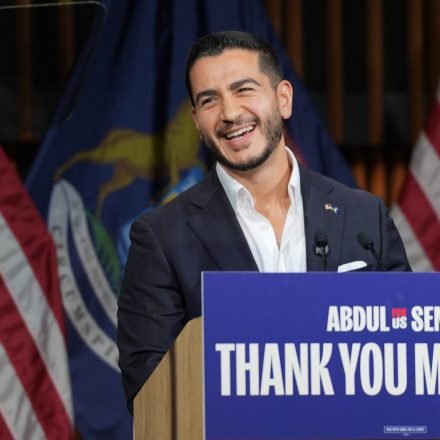
Abdul El-Sayed will walk into a newfound Democratic majority after animating his base with pro-Palestine pledges seldom heard from a U.S. Senate contender. As a first-term senator, he’ll lack seniority on the committees to which he’s assigned. And although his critiques of the U.S. relationship with Israel have proven overwhelmingly popular in public opinion surveys and among voters at the polls, the same can’t be said for most of his soon-to-be colleagues.

“It’s going to be a fight,” said Beth Miller, political advocacy director for Jewish Voice for Peace Action, which supported El-Sayed’s campaign. “The Democratic establishment, when it’s in control, has not taken measures in support of Palestine in the past. And so this is about making sure that now they finally start listening to what the overwhelming majority of their bases say.”

El-Sayed’s run marked the first time the Jewish-led, anti-Zionist group backed a Senate campaign. Pro-Palestine lobbying groups like JVP Action have been pushing for legislation to block weapons transfers to Israel for years, aligning themselves with a small but growing number of left-leaning House members. The group helped author the Block the Bombs Act, introduced by Delia Ramirez, D-Ill., which netted 82 co-sponsors and became a pro-Palestine litmus test in some Democratic primary campaigns.

Building consensus around a single bill in the Senate is harder, but the upper chamber offers stronger levers to pull. Senators can force votes called Joint Resolutions of Disapproval that would block foreign security assistance, such as weapons sales to Israel. Sen. Bernie Sanders, I-Vt., has exercised this option repeatedly throughout the genocide in Gaza to try and block the sale of certain bombs, firearms, and other military equipment to Israel. While his resolutions failed in the Republican-controlled Senate, the most recent ones drew support from wide majorities of Democrats — soon to be the party in power.

Yet with the looming threat that Democrats might actually be able to pass legislation, El-Sayed would find himself under pressure from the likely Senate majority leader, Chuck Schumer, who has long maintained the support of the pro-Israel lobby, to fall in line with party priorities.

“The question is, ‘Who does he want to be?’ Does he want to be someone like Bernie, who is willing to sometimes stand up to leadership?” said Hamid Bendaas, communications director for the Institute for Middle East Understanding Policy Project, which also backed El-Sayed’s run. “It’s hard to do that as a freshman and someone who’s just getting in there.”

Bendaas expressed confidence that the Michigan senator would be a champion of pro-Palestine legislation, but he noted that El-Sayed would have to balance his priorities, especially after running a campaign focused on economic populism and providing universal healthcare through Medicare for All. 

Shifting Winds

There is a tension revealed by the dilemma facing Sen.-elect El-Sayed: While a growing share of Americans — and an overwhelming majority of Democrats — disapprove of the U.S. spending billions of dollars on aid to Israel, voters’ clear No. 1 concern in the 2026 election cycle was the cost of living and their own economic precarity.

Some pundits have encouraged pro-Palestine candidates like El-Sayed to put their anti-genocide principles aside, arguing that more moderate Democrats performed better on Tuesday night. They compare El-Sayed’s 7-percentage-point defeat of Mike Rogers to James Talarico’s 12-point win over Ken Paxton in Texas — and some have already asked Talarico to defy his new colleague.

But on the campaign trail, El-Sayed often connected the issues of a high cost of living and outsized U.S. spending on aid to Israel. “We ought to be spending our money here, to build schools and provide healthcare and child care here, rather than sending our money abroad to a foreign government that’s done terrible things with our money,” he said in a September interview with Bloomberg TV. El-Sayed’s approach made him the target of nearly $40 million in outside spending from the super PAC for the American Israel Public Affairs Committee, which supported widespread anti-Arab and Islamophobic attacks and accusations of antisemitism in an attempt to keep a vocal critic of Israel out of the Senate. 

“None of it mattered,” said Yousef Munayyer, a senior fellow at the Arab Center Washington D.C. who likened the gravity of El-Sayed’s win to that of New York City Mayor Zohran Mamdani. “And this is not the Commie Corridor. This is a swing state. A lot of taboos here have been shattered, and people are going to learn from this and be emboldened now.”

“This is not the Commie Corridor. This is a swing state. A lot of taboos here have been shattered, and people are going to learn from this and be emboldened now.”

In addition to bringing joint resolutions to block future weapons transfers — like the Trump administration’s planned sale of $2.8 billion in 2,000-pound bombs to Israel — El-Sayed could introduce resolutions citing the Foreign Assistance Act; Sen. Chris Van Hollen, D-Md., used one to demand a State Department report on Israeli detention of Palestinian children and Israeli military and settler killings of American citizens in the West Bank. He would also be able to introduce amendments to the Pentagon’s annual spending bill that carves out billions of dollars in joint U.S.–Israel weapons research. (The Senate is currently sitting on this year’s $1.15 trillion National Defense Authorization Act, which would even more deeply enmesh Israeli technology within the Pentagon’s programs and supply chain.)

Munayyer, the former head of the U.S. Campaign for Palestinian Rights, said that despite the uncertainty over whether moderate Democrats will be willing to link arms with progressives next session, El-Sayed’s win creates an environment ripe for accountability over Israel.

“You have a climate now where there’s going to be a lot less intimidation felt by people who had previously been hesitant to speak out on these issues because they thought it was political suicide,” he said. 

Even Republicans are beginning to feel the shifting winds. On the morning of Election Day, President Donald Trump made a surprise announcement on Fox News that the U.S. would halt the annual $4 billion in military aid to Israel. The move would only cut off one path for Israel to get weapons from the U.S. — still allowing direct weapons sales to Israel from U.S. companies and weapons development and sharing with the Pentagon — and Trump said it was made in agreement with Israeli Prime Minister Benjamin Netanyahu, who had been previewing it for months. Tactically, Trump said the goal was to take a “talking point” away from Democrats. He cited El-Sayed by name.

While ballots were still being counted on Wednesday, Vice President JD Vance, an expected 2028 presidential contender, posted on X an early post-mortem of the massive GOP losses across the country. He wrote that the party could bring back “voters who had abandoned us” if they “End the war” in Iran and “Change our relationship to Israel.”

Such recognition from the Trump White House is new territory for U.S. politics, Munayyer said.

“We are about to witness, in my view, something we have never seen before in American politics,” Munayyer said. “A robust debate in the presidential primary campaigns in both parties, where the question of the U.S.-Israel relationship is going to come up time and again. That’s never happened before, and it’s gonna be seismic.”

“We are about to witness, in my view, something we have never seen before in American politics.”

The question is whether Democrats will stay on top of the wave. If Schumer, a staunch supporter of Israel, remains in charge of the Senate majority, he’ll have power over appointments to key committees — giving him the opportunity to curb the influence of a figure like El-Sayed. 

“I don’t think that Democrats want to have a messy fight about this stuff when the base is largely in agreement on it,” Munayyer said. But while Senate Democrats have evolved on the issue of Israel and Palestine — even Sanders expressed far weaker critiques of the Israeli state a few years ago — it’s one thing to be the dissenting party when you’re in the minority. It’s another to wield serious power.

Constant Pressure

El-Sayed is perhaps the most vocal supporter of Palestinian rights of any U.S. senator elected since James Abourezk of South Dakota, who in the late 1970s became the first Arab American to serve in the Senate. Abourezk frequently advocated for a Palestinian state and was an early critic of the pro-Israel lobby. After his time in Congress, he founded the American-Arab Anti-Discrimination Committee. 

El-Sayed, now the first Muslim elected to the U.S. Senate, frequently referred to Israel on the campaign trail as an “ethnostate” and said he opposes any nation that organizes its government by ethnicity and religion. In an appearance on ABC News, El-Sayed argued Israel was not a U.S. ally. Two days before the election, he spent a large portion of his sit-down with “60 Minutes” calling for Palestinians’ right of self-determination and repudiated the question of whether Israel had a right to exist. In his victory speech, he criticized attempts by pro-Israel critics to conflate advocacy for Palestinians rights as “hate.” 

Even so, in the lead-up to the general election, El-Sayed started being subjected to pressure from some on the pro-Palestine left. Critics chastised his decision to stump with former Vice President Kamala Harris over her complicity in the Biden administration’s support for the genocide in Gaza. Similar ire was directed at his partnership with former President Barack Obama, who has yet to name or condemn the genocide and governed over U.S. wars in the Middle East that saw the United States kill thousands of civilians.

Advocates for Palestinian rights, however, told The Intercept they recognized the utility in El-Sayed’s campaigning with the highest-profile members of the Democratic Party, and they counted it as a success that he earned their support. But they said they were not pinning all their hopes on a single individual.

On top of all the other calcified interests and long-standing political biases that shape the U.S. Senate, there’s the influence of the sprawling U.S. weapons industry, with manufacturing giants like Lockheed Martin and Boeing lobbying for their interests and showering politicians in campaign cash. That industry wants to keep profiting off the genocide in Gaza, said JVP Action’s Miller, and El-Sayed alone is not enough to stop that.

“This is not gonna be that one man comes into the Senate and changes everything,” she said. “This is that one person has been elected with a mandate that has demonstrated where the masses of people are at on this issue, and now we have to keep fighting harder than ever before.”

Source: Iwpost.com

Israel issues tenders for 91 settlement units in occupied West Bank, revises E1 tender schedule

0
israel-issues-tenders-for-91-settlement-units-in-occupied-west-bank,-revises-e1-tender-schedule
Israel issues tenders for 91 settlement units in occupied West Bank, revises E1 tender schedule
Israeli authorities issued two new tenders for the construction of 91 settlement units in the northern occupied West Bank and revised the timetable for another settlement tender east of Jerusalem, a Palestinian organization said Thursday, Anadolu reports.

The Colonization and Wall Resistance Commission said in a statement that the two tenders cover land in the illegal Oranit settlement, built on land in the Qalqilya governorate.

The 91 units are divided among seven compounds, with the first tender covering four compounds for 86 multi-story housing units.

The second tender covers three compounds for five low-rise settlement units. Bidding is scheduled to open Nov. 16 and close Dec. 29.

The commission also said Israel revised the timetable for Tender No. 460/2025, related to the E1 settlement project east of Jerusalem near the illegal Ma’ale Adumim settlement.

The tender covers 2,167 settlement units.

Under the revised timetable, the opening of bidding and publication of detailed tender documents were postponed to Dec. 1, while the deadline for submitting bids was extended to Dec. 28.

READ: China urges Israel to halt ‘forced establishment’ of settlement expansion in occupied West Bank

Several Arab, Muslim and Western countries have recently rejected Israeli moves to advance the E1 project, warning that it would undermine prospects for a two-state solution.

The two-state solution, backed by UN resolutions, envisages an independent Palestinian state alongside Israel.

Israeli military attacks and occupier violence against Palestinians and their property in the occupied West Bank, including East Jerusalem, have sharply escalated since the start of Israel’s genocidal war on the Gaza Strip in October 2023.

The attacks have included killings, arrests, home demolitions, property destruction, bulldozing of agricultural land, displacement and settlement expansion.

Palestinians warn that the measures are paving the way for Israel to formally annex the occupied West Bank, undermining prospects for an independent Palestinian state.

READ: Israeli army arrests 30 Palestinians in new raids across occupied West Bank

Source: Iwpost.com

Meet *sshole, the vulnerability that lets hackers SSH into Linux devices

0
meet-*sshole,-the-vulnerability-that-lets-hackers-ssh-into-linux-devices
Meet *sshole, the vulnerability that lets hackers SSH into Linux devices
Devices running some configurations of Alpine Linux, and possibly other distributions, are affected by a decade-old vulnerability that allows attackers to log into devices with no password.

The vulnerability exists in the interaction between OpenSSH, the code library implementing SSH connections, and musl, a lightweight alternative to the libc library that, unlike most other Linux distributions, is used in Alpine. Further, OpenSSH using musl (pronounced muscle) must not use PAM (pluggable authentication modules), a framework that handles user authentication and account-access checks. Alpine is a lightweight, widely used Linux distribution. Other platforms may be affected if they use the same configurations.

One connection, works every time, needs no retries

There are two other conditions necessary for successful exploitation. First, a system must have at least one user account that’s accessible using a password that is hashed using the SHA256 or SHA512 functions. Second, the target system account must be configured to be passwordless, by way of specifying a “*” in the password field in /etc/shadow, the Linux file where password hashes are stored. Passwordless accounts are commonly used for accounts that use certificate-based authentication. This setting is common for certain types of accounts.

When all the conditions are met, the consequences are high.

“An attacker who can reach your SSH port can log in without knowing any password,” Alpine maintainers said Thursday. “It takes one connection, works every time, and needs no retries.”

When logging into a passwordless account, the attacker can gain access by inputting more than 256 characters in the password field.

Security firm Checkpoint said that the use of the SHA256 or SHA512 functions “matters because sshd borrows that account’s salt. Without it, the attack fails.”  Company researchers said their testing also showed that the account must be active, not just hold a hash. Checkpoint further reported that root accounts are safe under the default PermitRootLogin prohibit password setting, though reachable accounts with doas or sudo rights can still become root.

Despite the prerequisites, *sshole—the vulnerability name given by the person who discovered it—likely threatens large numbers of systems. The Docker Hub base image for Alpine has more than 1 billion downloads. Alpine has long been popular in routers, smart TVs, industrial controllers, and other types of embedded devices, many of which can’t be easily updated, if at all. More recently, Alpine has been adopted for use in desktops and servers. Alpine is also used in many container images.

According to security firm Detectify, Shodan lists around 22 million systems with SSH open on port 22. Only a fraction meet the conditions necessary for exploitation, but given the ease and speed of testing each one, locating vulnerable devices won’t require much effort or time.

It’s not entirely clear where the vulnerability resides. OpenSSH, which issued an update Thursday, said: “We consider the root cause of this bug to be outside sshd, but it is exploitable via sshd and can be avoided there.” Musl developer Rich Felker, meanwhile, wrote: “It is my position that this is not a bug in musl just an erroneous use by the caller.” Felker went on to say that musl developers have wanted to make changes to the mechanism “for a while now” and planned to do so in an upcoming release. Alpine has also issued an update.

It’s not yet known what other packages may be vulnerable. The person who discovered *sshole said OpenWRT is affected, but by default, that OS uses the Dropbear package, not OpenSSH, for SSH connections (though maintainers provide instructions for installing the latter). The discoverer also names the packages buildroot and yocto as being affected, but that isn’t yet confirmed.

Despite the uncertainty, anyone using a Linux system that uses both musl and OpenSSH should take time to immediately investigate if they’re affected. A good starting point is here. Both Alpine and OpenSSH patches should be installed on all affected systems. There is no known CVE designation for the vulnerability.

Source: Iwpost.com

0FansLike
0FollowersFollow
0FollowersFollow
0SubscribersSubscribe
- Advertisement -
Google search engine

Recent Posts