8.4 C
London
Friday, November 6, 2026
Home Blog

Egypt, Saudi Arabia urge diplomacy to prevent renewed military confrontations in region

0
egypt,-saudi-arabia-urge-diplomacy-to-prevent-renewed-military-confrontations-in-region
Egypt, Saudi Arabia urge diplomacy to prevent renewed military confrontations in region
Egypt and Saudi Arabia on Thursday called for prioritizing dialogue and giving diplomacy more time to prevent renewed military confrontations in the region and their consequences, Anadolu reports.

The appeal came during a phone call between Egyptian Foreign Minister Badr Abdelatty and his Saudi counterpart Prince Faisal bin Farhan, according to a statement by the Egyptian Foreign Ministry.

Ministry spokesman Nader Zaki said the two ministers discussed joint efforts to restore calm and prevent regional escalation in coordination with regional and international partners, including the US and Qatar.

The ministers stressed the need to prioritize wisdom and dialogue, allow more time for diplomatic and political efforts, and encourage the parties concerned to engage in negotiations and demonstrate the necessary flexibility.

They also emphasized the importance of preventing renewed military confrontations in the region, which continues to suffer from the consequences of previous hostilities, the statement said.

Both sides agreed to intensify coordination and contacts with relevant parties to build consensus on prioritizing negotiations and securing commitments to avoid escalatory steps that could further deteriorate the security situation.

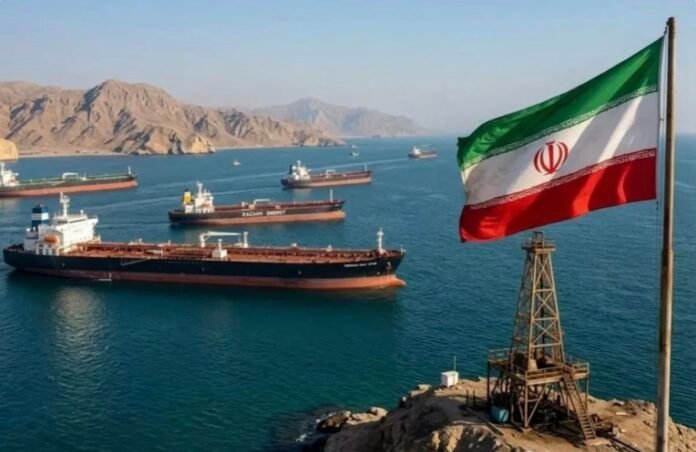
READ: Iran says 4 oil tankers destroyed by sea mines in Strait of Hormuz

The statement did not specify which parties were being urged to negotiate or provide details about planned diplomatic initiatives.

The talks come amid mediation efforts led by Qatar and Pakistan between the US and Iran to revive negotiations aimed at ending the war and resolving disputes over Tehran’s nuclear program, sanctions and maritime security in the Strait of Hormuz.

On Nov. 3, Qatar said Washington and Tehran continued to exchange proposals through mediators, expressing hope for an agreement despite ongoing military tensions.

The US and Israel launched military attacks against Iran on Feb. 28, 2026, before a ceasefire was reached in April and a memorandum of understanding was signed through regional mediation in June.

However, the understandings later broke down, and fighting resumed in July, while diplomatic efforts continue to seek a settlement that would prevent the conflict from spreading across the region.

READ: Syrian president, Saudi crown prince discuss bilateral cooperation, regional developments

Source: Iwpost.com

Iran Considering ‘Concrete’ Nuclear Proposals in Doha Peace Talks 

0
iran-considering-‘concrete’-nuclear-proposals-in-doha-peace-talks 
Iran Considering ‘Concrete’ Nuclear Proposals in Doha Peace Talks 


Iran is reviewing proposals from mediators concerning its nuclear program as negotiations continue in Doha over ending the war, five officials, including an American and two Iranians, told The New York Times, raising the possibility of progress toward an agreement. 

The officials characterized the terms under consideration as “concrete proposals” but did not disclose their contents or explain which aspects of Iran’s nuclear activities they address. 

Qatari officials are mediating the negotiations in Doha and have also recently held discussions with Iranian representatives in Armenia, according to sources familiar with the diplomatic efforts. 

Vice President JD Vance has backed Qatar’s attempts to prevent a resumption of hostilities, three of the officials said. 

The diplomatic developments follow an initiative by Vance last month to establish direct negotiations between Washington and Tehran. 

In a letter addressed to Mohsen Rezaei, head of Iran’s Supreme National Security Council, Vance proposed direct peace talks that would include discussions about Iran’s nuclear program. 

Rezaei subsequently characterized the American approach as a change in Washington’s position toward Tehran, describing the letter as evidence of the “Iranian nation’s strength and victory.” 

The negotiations are taking place following congressional midterm elections in which Democrats secured overwhelming victories, prompting discussion within the Trump administration about the political consequences of the Iran war. 

In a post on X following the elections, Vance identified public opposition to the conflict as one of the principal factors contributing to Republican defeats. 

President Donald Trump also acknowledged that the war might have influenced the election results but defended his decision to launch military operations against Iran. 

Speaking to reporters, Trump maintained that preventing the Iranian regime from acquiring nuclear weapons justified the campaign and said he did not regret his decision. 

Vance’s support for continued Qatari mediation comes as Washington and Tehran consider possible arrangements addressing both the nuclear dispute and the broader conflict. 

The Iranian Foreign Ministry did not immediately respond to a request for comment on the proposals reportedly under review. 


Source: Iwpost.com

Sony revives the original Walkman headphones, adds USB-C

0
sony-revives-the-original-walkman-headphones,-adds-usb-c
Sony revives the original Walkman headphones, adds USB-C
Color us nostalgic.

Sony has brought back the MDR-3-series headphones that debuted in 1979 alongside the Walkman TPS-L2 cassette player.

In this marketing image Sony shared, you can see the Walkman TPS-L2.

In this marketing image Sony shared, you can see the Walkman TPS-L2. Credit: Sony

Originally called the “MDR-3L2,” the first Walkman headphones were known for their sleek, adjustable gray plastic headband, which extended via metal sliders and ended in signature orange, circular ear cushions. The lightweight, on-ear headphones are a contrast to the bulky headsets that are popular these days, which use wide, cushioned headbands for long-term comfort and large earcups that can support big drivers and are often heavily padded for noise isolation.

The new MDR-3R (note the slightly different name) headphones look just like the originals and come with orange and blue ear cushions.

The MDR-3R headphones in blue and orange.

Closer look at the MDR-3R.

Closer look at the MDR-3R. Credit: Sony

New headphones are often wireless these days, but the MDR-3R continues the wired tradition of the MDR-3, with an essential twist: a USB-C connector.

“The MDR-3R has been redesigned for modern use while preserving the experience value of freely taking music out into the world, which the original MDR-3 helped popularize,” Sony’s announcement says.

For better or worse, the new headphones also use “the same 23 mm driver units as the MDR-3 to reproduce sound quality close to the original,” per Sony. Audiophiles will prefer something more advanced, perhaps with additional acoustic features. A review of the new headphones from Gizmodo says that the MDR-3R headphones “hold their own,” have “bright and clear” mids and highs, and good stereo separation. However, we don’t expect strong bass.

Unlike their predecessor, the MDR-3R has an in-line remote control and an integrated microphone. Without noise-canceling, though, the microphone isn’t ideal for calls in noisy environments.

But nostalgic gear isn’t about having top-of-the-line capabilities; it’s about showing off your love of old-school tech while enjoying familiar technologies that have reliably served their functions for years.

The MDR-3R may also capitalize on surging renewed interest in wired headphones and even physical media and Walkmans. Today’s Walkmans aren’t cassette players, of course, but are Android-powered, touchscreen media players.

The headphones are available for $60.

Source: Iwpost.com

Iran’s Hormuz toll regime to punish weakened Trump’s Asian allies

0
iran’s-hormuz-toll-regime-to-punish-weakened-trump’s-asian-allies
Iran’s Hormuz toll regime to punish weakened Trump’s Asian allies

<

article id=”post-952412″>

On November 3, as Americans voted in the midterm elections, Tehran announced which states may use the Strait of Hormuz. Amir Hayat Moqaddam, deputy chairman of the Iranian parliament’s National Security and Foreign Policy Committee, stated that vessels from India, China, Iraq and Qatar are exempt from its transit restrictions.

These ships “pass freely,” he added, and “the Americans do not intercept them either.” The remarks came in a parliamentary interview rather than as a formal decree. They nonetheless follow a pattern set in March, when Iranian Foreign Minister Abbas Araghchi cleared China, Russia, India, Iraq and Pakistan as “friendly nations” for transit.

On the eve of America’s midterm vote, US forces conducted fresh strikes on Iran, following a month in which attacks on shipping around the strait reached a record high. President Donald Trump had pledged that the war would end “immediately after” the election, yet US pump prices have stayed above US$4 a gallon since June.

On November 4, Brent crude fell 0.7% to $102.87 a barrel as markets weighed the Democrats’ sweep of Congress against the risk of renewed strikes. Front-month futures for Brent fell around 6% coincident with Vice President JD Vance’s tweet saying the Republicans’ midterm loss owed largely to the Iran war, signaling a potential shift toward ending rather than escalating the war.

For Asian governments, the strategic question thus extends beyond whether Washington chooses escalation or negotiation to who retains access to Hormuz in the interim. Iran’s stated exemptions convert a wartime blockade into a licensing regime based on nationality.

Since May, Iran’s Persian Gulf Strait Authority has issued transit permits only upon payment, with ships reportedly paying up to US$2 million per transit in Chinese yuan.

Moqaddam was explicit about what each exemption secures for Tehran. The Indian exemption facilitates Iran’s medicine imports, while the Chinese exemption is intended to secure Beijing’s political support. Indian and Chinese vessels pay transit fees, while Qatari ships cross free of charge.

Tehran frames these charges as payment for navigation and environmental services and invokes the Turkish Straits as a comparable case. The analogy is unpersuasive, because the Montreux Convention is a multilateral treaty that confines charges to specified services.

Hormuz, by contrast, falls under the transit passage regime of the UN Convention on the Law of the Sea (UNCLOS), which Iran signed but never ratified.

Washington, the Gulf states and European governments reject the fees as unlawful. Trump, however, has described a toll arrangement as a “beautiful thing” and at one point even floated a joint venture with Iran.

Each paid transit, combined with Washington’s mixed signals, risks establishing a precedent for other chokepoints vital to Asian trade, from Bab el-Mandeb to Malacca.

The costs of this regime fall hard on Asia, but unevenly. Gulf crude and condensate exports averaged 14 million barrels a day in October, roughly 86% of pre-war levels. Most of these barrels flow eastward, and Iran’s list now differentiates among Asian buyers by political alignment rather than need.

China lost its discounted Iranian supply once Iranian oil afloat outside the US blockade line fell to zero by mid-October. The exemption therefore matters because Chinese imports from the wider Gulf were on course to exceed 5 million barrels a day in October.

India’s Ministry of External Affairs confirmed on November 3 that 23 Indian nationals, including 15 seafarers, have died in the conflict, and Tehran has since reaffirmed the Indian exemption. New Delhi can justify paying for passage as crisis management, although doing so binds India to a fee regime that its closest defense partner rejects.

Qatar’s free passage safeguards LNG supplies for Indian and East Asian buyers. Iraq’s exemption, by contrast, has not restored its export volumes, which fell again in October.

Japan and South Korea, the region’s most exposed economies, remain outside the list. Tokyo released national reserves equivalent to about one month of supply in March and a further 20 days of supply from May. Japan’s crude imports from Saudi Arabia fell 41.2% between April and July, compared with a 21% decline for South Korea.

Both governments endorsed a March joint statement condemning Iran’s closure of the strait. Their alignment with Washington now imposes an energy cost that neutral competitors avoid.

Yet this divide is less absolute than Iran’s list implies. Seoul secured priority access to 200 million barrels of Saudi crude from June to the end of the year and has contracted October and November supplies at last year’s monthly average.

The substantive gap therefore lies in cost, certainty and political exposure. Neutral buyers pay a predictable toll, whereas US allies depend on reserves, rerouting through Yanbu and Fujairah, and case-by-case bargaining.

Neither Tehran nor Washington holds as strong a position as this arrangement suggests. Iran itself is not exporting oil because of the US blockade, so transit fees partly compensate for lost revenue. Its seven conditions for reopening the strait, including sanctions relief, suggest that the permit system is a bargaining instrument rather than a durable order.

Washington, for its part, blockades Iranian ports while maintaining that the strait remains open. Allowing exempted ships to pass keeps oil flowing for an administration that has just lost Congress partly over high fuel costs.

If Moqaddam’s account is accurate, China-bound Gulf crude is moving under an Iranian license with American acquiescence. The allies that supported Washington’s position bear the higher cost of this pragmatism.

The midterm results raise the cost of this ambiguity for Tokyo and Seoul. A week before the vote, Brent closed at $115.32 following reports that Washington had told Gulf states to prepare for strikes after the election. Renewed strikes could push prices above $120, and markets now place the probability of US military action above 50% by late November.

A negotiated settlement would compel Tokyo and Seoul to seek their own arrangements with Tehran. Escalation, by contrast, would leave them bearing the costs of a war they did not choose. Either scenario increases the incentive for separate deals, and a single bilateral concession could unravel the coalition for open navigation.

A universal reopening remains the preferable outcome, and a diplomatic channel for it already exists. Araghchi has proposed a Qatar-mediated “two-day plan” to end the standoff. Under this plan, the United States would implement agreed measures on the first day, and Iran would restore normal navigation on the second.

On November 3, however, senior official Mohsen Rezaei described Washington’s response to Iran’s seven conditions as “not convincing”. Mediators Qatar and Pakistan are working to narrow the remaining gap. The dispute concerns sequencing and sanctions relief rather than whether the strait should reopen at all.

Asian importers have the largest stake in closing this gap and greater leverage than they currently exercise. Iran’s permit system functions only as long as China, India, Japan and South Korea negotiate passage separately. Sino-Japanese rivalry and New Delhi’s commitment to strategic autonomy make a joint front unlikely.

A minimal common position nonetheless remains achievable. Governments using exemptions should state publicly that they do not recognize any Iranian right to levy transit charges.

The most exposed importers should pool their supply security, building on mechanisms such as Seoul’s crude swap system and the coordinated emergency release, which had delivered about 330 million barrels by mid-October.

Industrialized importers still hold around 1.1 billion barrels of public emergency stocks, giving them room to resist Tehran’s terms. China, India, Japan and South Korea should also support the Qatar-Pakistan mediation, on the condition that any settlement restores free passage for vessels of every flag.

A strait that is open to certain nationalities and not others is not an open strait. Every exemption accepted today sets a precedent for future chokepoint coercion. Asian governments should therefore insist that the US-Iran war end with Hormuz open to all shipping. Otherwise, Tehran will continue to dictate the terms of their energy security.

Bilal Habib Qazi is a research analyst at the Institute of Regional Studies, Islamabad. He can be reached at bhqazi@gmail.com. The views expressed in this piece belong solely to the author and do not necessarily reflect those of the affiliated organization.

Source: Iwpost.com

McDonald’s says US sales on the mend

0
mcdonald’s-says-us-sales-on-the-mend
McDonald’s says US sales on the mend
cde.news desk · 2 min read

McDonald’s said its US sales were improving on the back of promotions and marketing, following a decline ​in the third quarter as financially stretched consumers cut back on dining out.

Executives highlighted gains from increased marketing towards entry-level meal deals and extra value meals alongside the return of promotional offers, including a $2 breakfast sandwich and free fries with a $1 minimum purchase.

This helped bring back customers who were opting for cheaper alternatives from rivals, convenience stores and ​home-cooked meals as they face rising costs of living.

“We’re taking the right steps to improve our near-term ​performance in the US, and I’m encouraged by our baseline traffic trends in September and ⁠October,” CEO Chris Kempczinski said.

Customer visits to McDonald’s restaurants fell 4.6% from a year earlier in the third quarter, according to ​Placer.ai, and rose recently due to the return of the chain’s Monopoly promotion and Halloween-themed Boo Buckets, though still below year-ago levels.McDonald’s announced ​its new turnaround strategy called “NEXT” in June. The plan includes simplifying operations, modernizing restaurant designs and investing in employee training, and aims to improve restaurant-level efficiency.

However, the company has faced mounting tensions with franchisees who have complained about eroding control and rising costs. McDonald’s executives in ​August said execution of its under-$3 menu was hurt by a third of franchisees that did not participate.

“How deep ​and how lasting those meal deals are will depend on whether McDonald’s or its franchisees are willing to carry the cost,” said ‌Nagham Hassan, ⁠market analyst at eToro.

“If McDonald’s leaves the cost to franchisees, expect the deals to be patchy and the recovery slow.”

Kempczinski said corporate and US franchisees are in conversation about pricing, and the two sides are “in a good spot with the exception of this entry-level value”.

Comparable sales in McDonald’s largest market fell 0.2% in the quarter ended September 30, missing ​analysts’ expectations for a 0.1% ​fall, according to data compiled ⁠by LSEG. It was the company’s first such decline after five quarters of growth.

Kempczinski also said the company aims to expand the use of Archie, an AI assistant for drive-thru ordering, across the ​majority of US restaurants by the end of 2027.

The ​company’s quarterly global comparable sales rose 1.5%, in line with expectations.

Adjusted earnings rose ​to $3.57 per share from $3.22 a year earlier, beating expectations of $3.38, helped by a decline in operating costs and higher gains on the sale of ​restaurants from franchising efforts.

Source:  Reuters

Source: Iwpost.com

JD Vance singled out Iran War for midterm rout – he didn’t say what should happen next in conflict

0
jd-vance-singled-out-iran-war-for-midterm-rout-–-he-didn’t-say-what-should-happen-next-in-conflict
JD Vance singled out Iran War for midterm rout – he didn’t say what should happen next in conflict
While votes were still being counted in the U.S. midterm elections, administration figures in Washington were already inviting speculation over how the results might be connected to the conflict with Iran.

On the morning after the election, Vice President JD Vance wrote on X that the major reason for the dramatic loss for Republicans was the American public’s opposition to the war. “Everyone knows why we lost. And any honest conversation about where we go from here must start there,” he wrote, in reference to the ongoing conflict that began with U.S.-Israeli airstrikes against Iran in late February 2026.

While it is rare for a vice president to make such a critical proclamation about their own administration’s policy, President Donald Trump later stated that he did not disagree with Vance’s appraisal of the role that frustration with the Iran war played in voters’ minds.

But whether this changes Trump’s view on next steps in the ongoing conflict remains unclear. Reporting over the past few weeks has indicated that the U.S. military has been actively preparing options and increasing capabilities in the Persian Gulf region in the event the president directs a resumption of hostilities.

As an expert on Middle East affairs and a former senior official at the National Security Council during the first Trump administration, I’m aware that months of conflict have failed to bring Iran to its knees, force regime change or militarily defeat a perceived threat to U.S. assets and allies. Escalating now is unlikely to change those realities – and it carries the additional risk of further damaging Republicans in the eyes of Americans voters as they turn toward the 2028 presidential race.

Even if Trump were to ratchet up the conflict, moreover, it’s unclear how much wiggle room he’ll have come January facing a Democratic Congress almost uniformly opposed to the war.

Protesters hold a sign saying 'No War in Iran'

Demonstrators protest the Iran war near the Lincoln Memorial Reflecting Pool on Nov. 2, 2026. Kevin Carter/Getty Images

Sunk costs

Part of the issue facing Iran war hawks in Washington now is that the conflict has caused serious setbacks for the regime in Tehran without satisfying the officially stated strategic reasons for going to war.

They argue that pulling back now – as welcome as that might be for Americans struggling with the associated rising cost of fuel – may allow Iran to rebuild before the conflict is “won.” Moreover, it would render the military and reputational costs already sunk by Washington as wasted.

Among the achievements of this war touted by the Trump administration has been the death of former Supreme Leader Ali Khameini, along with the killing of scores of senior leaders within the Islamic Revolutionary Guard Corps – including individuals like the former head of Iran’s National Security Council Ali Larijani. Significant elements of Iran’s air defense and radar network, ballistic missile and drone production, and storage and launch sites have also been destroyed. And Iran’s already outdated navy and air force has been further degraded.

Meanwhile, the U.S.-imposed naval blockade against Iranian-linked shipping in the Persian Gulf cut off a crucial lifeline for Iran’s economy. And additional sanctions and economic penalties imposed by Washington have served to further devalue Iran’s currency and deprive Iran of additional financial links to the international banking system.

Down but not out

Yet for all the U.S. successes in degrading the Iranian military by limitless aerial bombardment and the significant financial pressure against the Iranian economy, an obvious endgame remains elusive.

Despite weakening the Iranian government – now led by Ali Khameinei’s son, Mojtaba, and a new echelon of senior IRGC commanders – the Islamic Republic remains intact. Moreover, it still possesses enough ballistic missiles and drones to hold the region at risk, while continuing to impose significant control over its population.

Meanwhile, U.S. military spending continues to rise. In September, the U.S. Congressional Budget Office assessed that the military costs of the Iran War had already totaled US$38 billion. Since then, that number has only increased. And that is to say nothing of the associated global economic costs that have resulted from Iran’s de facto closure of the Strait of Hormuz – a key shipping route for oil and gas.

Should Trump decide to change course on Iran, he – and others – may think that the money, effort and lives of 19 American servicemen killed in the conflict would have been spent with no obvious objective achieved. Yet continued military expenditure with no strategic endgame could only magnify those same costs.

A group of uniformed people carry a casket with a flag draped over it.

The casket of Army Sgt. Angel Rampersad – one of 19 U.S. service members killed in the Iran war. Spencer Platt/Getty Images

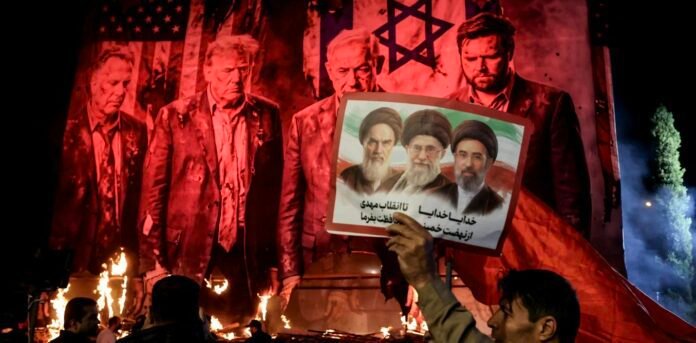
To Iran, the midterm results have not changed its public position. Mojtaba Khameini has issued statements directing the IRGC to widen the conflict in the region and perhaps beyond should the U.S. and Israel attack again. At the same time, a statement attributed to him indicates that hostilities between the United States and Iran will persist regardless of the balance of party political power in Washington.

This raises questions about the prospects for diplomacy. During the summer, the U.S. and Iran agreed to an initial 14-point memorandum of understanding that, if finalized, could have brought a permanent end to the hostilities. But since the 60-day clock on that agreement lapsed, no parallel diplomatic agreement has emerged.

No practical solution

Even with the major shift in the U.S. political landscape, it remains unclear whether Trump will resume operations against Iran before the new Congress is sworn in. The messy election result in Israel – which has left the pro-war, and potentially outgoing, Prime Minister Benjamin Netanyanu with potentially more reason to double-down in Iran – only complicates matters.

The U.S. military certainly appears to be ready to engage in a new round of attacks against Iran if so directed, and Iran is ready to retaliate. But given the shortcomings in the U.S. inventory – with munitions and missile and air defense capabilities depleted by eight months of war – escalation is something Trump and his inner circle will have to consider with caution.

Iran might force the issue by engaging in asymmetric attacks in the region or beyond that they have not attempted already. Or it could launch a coordinated offensive with its partners in the region – notably the Houthis in Yemen, who have become more active in their own conflict with Saudi Arabia in recent months.

But save an event that the Trump administration perceives is giving it cover to act, there are no clear indications emerging from Washington as to which way it will move.

Vance diagnosed a widely perceived political problem for Republicans: Voters don’t want more war. But what he noticeably didn’t mention was a practical solution. The Middle East conflict – and the United States’ role in it – are, as such, locked in a stalemate.

America and Iran have both borne significant political, military and economic costs. A decision not to pursue an endgame would leave those sunk; doing so may only increase them.

Source: Iwpost.com

NASA unveils mysterious X-70 experimental aircraft using AI-generated image

0
nasa-unveils-mysterious-x-70-experimental-aircraft-using-ai-generated-image
NASA unveils mysterious X-70 experimental aircraft using AI-generated image
NASA has announced a new experimental aircraft, the X-70 Fractal, that will supposedly feature reconfigurable flight-control technology and a modular design for swapping in different payloads. But much remains unknown about the aircraft’s design and development timeline, even as NASA administrator Jared Isaacman said the X-plane could take flight within two years.

The mystery surrounding NASA’s newest X-plane was exemplified by the agency’s press release, including an apparently AI-generated image of the X-70, showing a dark silhouette vaguely resembling a military fighter jet obscured by smoke. The news was announced by Isaacman during the UP.Summit held at the agency’s Kennedy Space Center in Florida on November 4.

“The X-70 Fractal gives NASA a crewed, high-performance platform to test advanced flight-control, maneuverability, and other cutting-edge technologies in real flight,” Isaacman said. “Its modular design and ability to rapidly swap internal and external payloads will keep our teams flying, learning, and moving quickly from one experiment to the next.”

NASA’s press release described the X-70 as a crewed aircraft designed to cruise at Mach 0.75 while reaching a maximum altitude of up to 45,000 feet, and having an operational range beyond 1,726 miles (2,778 kilometers). The article did not mention a specific aircraft manufacturer that might be helping the agency develop the X-plane.

The X-70 would also have a takeoff weight of 10,000 pounds (4,536 kilograms) and a design capable of accommodating up to 2,000 pounds (907 kilograms) of experimental payloads both internally and externally. Ars has reached out to NASA for more details.

Return of the Blackbird?

Another X-plane is also expected to be announced at the UP.Summit on November 6, according to Aviation Week. That would coincide with a scheduled announcement from President Donald Trump at the event.

This comes after Isaacman previously appeared in front of another smoke-shrouded silhouette image with the tagline “Rebuilding our X-plane portfolio” during the All-In Summit in Los Angeles held from September 12–14, according to TWZ. That silhouette appeared strikingly similar to the SR-71 Blackbird that flew Cold War reconnaissance missions at supersonic speeds in the stratosphere.

Rumors have circulated about a possible revival of the SR-71 in one form or another, after former NASA employees told Aviation Week they received job offers to help restore an SR-71 to operational flight capability.

In September, the publication also reported on the removal of a NASA-owned SR-71 with the tail number 844 that had stood on display at NASA’s Armstrong Flight Research Center inside Edwards Air Force Base in California.

Quiet supersonic flight testing

Meanwhile, NASA recently commemorated the first flight anniversary of its supersonic X-59 Quesst, a needle-nosed aircraft designed by Lockheed Martin to reduce sonic booms to sonic thumps. Ars has previously looked at how this X-plane program is intended to support the design of future supersonic airliners that may fly overland while minimizing disturbances for buildings and people below.

Since first taking to the skies on October 28, 2025, the X-59 has completed over 40 flight tests, including both low-speed flights and supersonic test runs reaching Mach 1.53, according to NASA. Such testing has taken place at NASA’s Armstrong Flight Research Center inside Edwards Air Force Base in California.

The X-59 also recently completed its first cross-country journey from California to Florida with stopovers in Texas and Alabama, accompanied by an F-15 and an F/A-18 from the agency’s research fleet that served as chase planes. It sat on the ground as a static display during the NASA Max Power airshow at Kennedy Space Center in Florida from November 7–8.

The supersonic aircraft will resume its test flight schedule once it returns to Armstrong Flight Research Center in California, a NASA spokesperson told Ars. Given the agency’s latest X-plane push, the X-59 may not be flying alone for many more years.

Source: Iwpost.com

Melania Trump to Get Nobel Peace Prize?

0
melania-trump-to-get-nobel-peace-prize?
Melania Trump to Get Nobel Peace Prize?


President Donald Trump’s longtime dream of winning the Nobel Peace Prize has taken an unexpected twist, with his own wife suddenly emerging as a contender for the prestigious honor and sparking jokes that her success could spell trouble for their marriage.

First Lady Melania Trump has climbed ahead of her husband in prediction markets for the 2027 Nobel Peace Prize following her involvement in negotiating a humanitarian ceasefire between Russia and Ukraine.

The surprising development has fueled speculation about how the president, who has repeatedly argued that he deserves the award, might react if his wife received the recognition before him.

The first lady’s newfound attention follows her role in securing a temporary ceasefire in Oleshky, a Russian-occupied Ukrainian city devastated by years of war. The agreement, reached October 23, allowed desperately needed humanitarian supplies to enter the region and provided a safe passage for civilians seeking evacuation.

The diplomatic breakthrough resulted in the evacuation of nearly 800 people, according to the White House. On Thursday, November 5, Melania welcomed Russian and Ukrainian representatives to Washington, where Ukrainian officials presented her with the Order of Princess Olga, First Class, in recognition of her efforts.

Her growing international profile has also shaken up the Nobel Peace Prize predictions. Earlier this week, Melania briefly climbed into second place on the Kalshi prediction market, with a 4% chance of winning compared with her husband’s approximately 1%. By November 4, her market-implied odds had risen to roughly 6%, while Trump’s stood near 1.5%.

Although those figures reflect speculative trading rather than the Nobel Committee’s actual deliberations, the prospect of Melania beating her husband to the prize quickly became a source of political entertainment.

During an episode of the “Inside Trump’s Head” podcast, journalist and author Michael Wolff joked about what might happen if the first lady won.

“He would divorce her,” Wolff quipped.

Podcast host Joanna Coles took the joke even further, suggesting Trump would leave his wife for longtime aide Natalie Harp.

The remarks were humorous speculation, not evidence that the Trumps are considering divorce. Still, they attracted attention because of the president’s well-documented fascination with the Nobel Peace Prize and his previous comments about sharing the spotlight with his wife.

During a Republican fundraising dinner in March, Trump joked about Melania’s success following the release of her documentary, “Melania.”

“There’s only room for one star in a family,” he told the audience, suggesting that his wife’s growing celebrity was creating some unexpected competition at home.

The president delivered the remarks playfully and went on to praise her performance as first lady. Nevertheless, the comments have resurfaced as Melania’s diplomatic accomplishments draw international recognition.

Trump’s pursuit of the Nobel Peace Prize has become a recurring political storyline. He was passed over in 2025 when Venezuelan opposition leader María Corina Machado received the honor. Machado later presented Trump with her Nobel medal, although the Nobel Committee clarified that the award itself could not be transferred.

The president was disappointed again in October 2026 when former United Nations human rights chief Navi Pillay received the prize for her work advancing peace and international law.

Melania’s latest accomplishment has introduced another intriguing possibility into that ongoing saga.

Her diplomatic efforts have also involved cooperation with Pope Leo XIV, who separately appealed for humanitarian assistance in Oleshky. The Vatican has acknowledged the first lady’s role in helping secure the ceasefire while emphasizing the contributions of multiple parties.

Despite the jokes about marital rivalry, there is no verified evidence that Melania’s Nobel prospects have caused trouble between the couple. Trump has publicly praised her work on Ukraine, and the 2027 award remains nearly a year away.

For now, the irony is difficult to ignore: After years of chasing one of the world’s most coveted honors, Donald Trump is watching his wife receive serious international attention for the very achievement he has long wanted for himself.

Source: Iwpost.com

Blue Origin says it is building a higher-performing rocket engine at 1/4 the cost

0
blue-origin-says-it-is-building-a-higher-performing-rocket-engine-at-1/4-the-cost
Blue Origin says it is building a higher-performing rocket engine at 1/4 the cost
KENNEDY SPACE CENTER, Fla.—Blue Origin announced two significant upgrades to its New Glenn rocket on Thursday, reducing the cost of manufacturing the vehicle and expanding its capacity for payload delivery to geostationary orbit and the Moon.

With these upgrades, the company aims to eventually position New Glenn to launch more than 1,000 times a year.

“There has never been higher demand for launch, ever,” Dave Limp, chief executive officer of Blue Origin, said during the UP.Summit conference at the Shuttle Landing Facility in Florida.

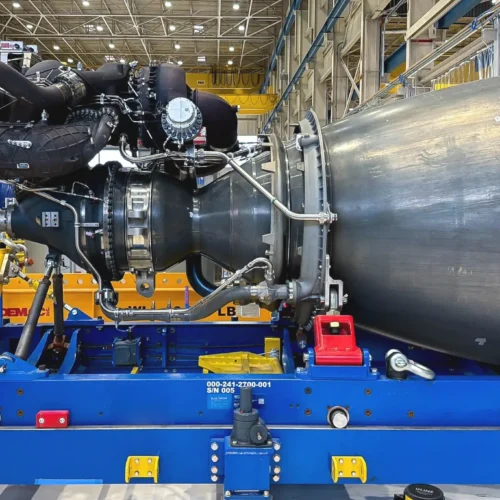
Blue Origin has already begun test firing a new engine, called Northstar, that will eventually replace the BE-4 engine that powers the first stage of New Glenn. Separately, the company also said it was developing a hydrogen-oxygen third stage for the rocket, GS3, to give it an extra kick.

A new Northstar

The Northstar engine is a simplified but more powerful version of the BE-4 engine, Limp said. It has half the number of parts, 30 percent less mass, and about 65 percent can be 3D-printed.

Blue Origin believes it can manufacture the engine at 25 percent of the cost of a BE-4 engine, and eventually reach the point where each engine can be assembled in less than a day. The company is deep into development and testing of Northstar, having already begun a test-firing campaign.

“To get access to space at a lower cost, we have to look at every part of the vehicle,” Limp said. “This is going to be a game-changer.”

The BE-4 engine powering New Glenn today has a thrust of 640,000 pounds, and Limp said Northstar will have a starting thrust of 715,000 pounds. Like the BE-4 engine, Northstar burns methane and liquid oxygen using an oxygen-rich staged combustion cycle and a single-shaft turbopump architecture.

Limp said the company will continue to manufacture the existing BE-4 engine for United Launch Alliance, which uses two of the engines to power its Vulcan rocket.

GS3 provides a nice kick

Blue Origin is developing a third stage for New Glenn called GS3 (creatively named Glenn Stage 3) to offer direct injection to geostationary orbit and Earth-escape trajectories. The third stage fits within an interstage, preserving the full fairing volume for customer payloads.

The stage can fly on both the smaller 7×2 variant (as in seven first stage engines and two second stage engines) of New Glenn as well as the larger 9×4 variant. According to Blue Origin, a GS3-equipped New Glenn 7×2 can carry 8 metric tons directly to geostationary orbit and 10 metric tons to translunar injection. Those figures increase to 14 tons and 20 tons, respectively, for the larger 9×4 variant.

As the rocket’s third stage, it needs to be light, Limp said. For this reason, the third stage is made mostly of composites, which are high-performing and lightweight. But there’s a problem with that.

The trouble with hydrogen

The stage will be powered by the company’s BE-7 engine, already used by its lunar landers. This engine is optimized for in-space operations and uses liquid hydrogen and oxygen propellants. But hydrogen is the smallest atom and therefore leaky. With composites, thermal cycling and mechanical strain can cause cracking, exacerbating losses of molecular hydrogen.

Limp said the company was not sure a large composite tank, 5.5-meter diameter in this case, could be constructed that would contain hydrogen at high pressures.

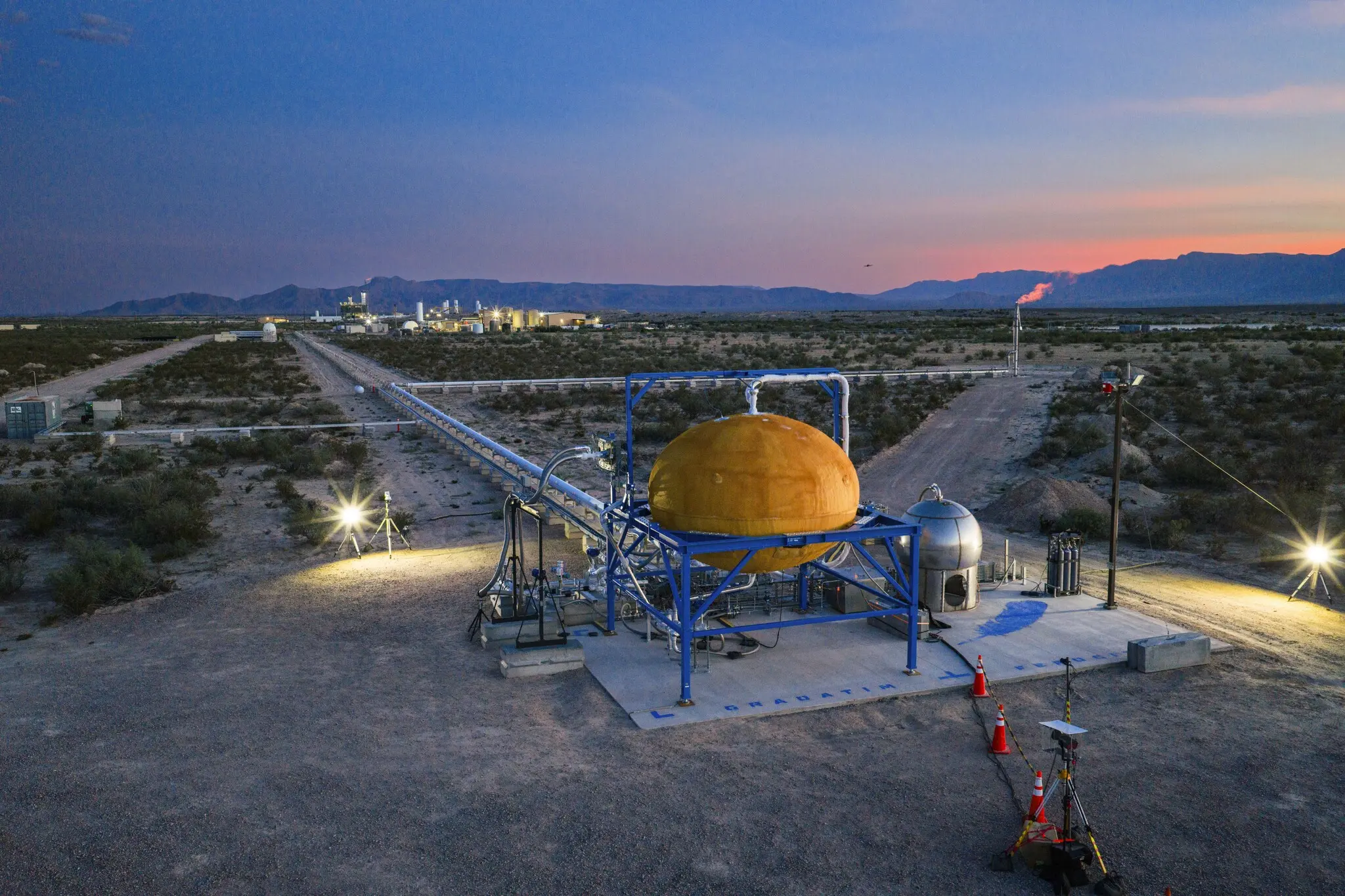
Blue Origin has successfully tested a 5.5-meter composite test tank in West Texas.

Blue Origin has successfully tested a 5.5-meter composite test tank in West Texas. Credit: Blue Origin

The company recently had a breakthrough at Launch Site One in Texas, when it completed its first composite liquid hydrogen tanking test. During the test, the tank was pressurized to 100 percent of the maximum force expected during operation for 2.5 hours. It was even successfully tested at 150 percent of this maximum pressure for 10 minutes.

That gave the company confidence that a GS3 based on composite tanks was a concept that could go forward, and now the company is aiming for a debut in 2028 for a government customer.

“We have one customer signed up for cislunar space in 2028,” Limp said. “We are open for business.”

Source: Iwpost.com

Israel’s election wave of another color

0
israel’s-election-wave-of-another-color
Israel’s election wave of another color

<

article id=”post-952391″>

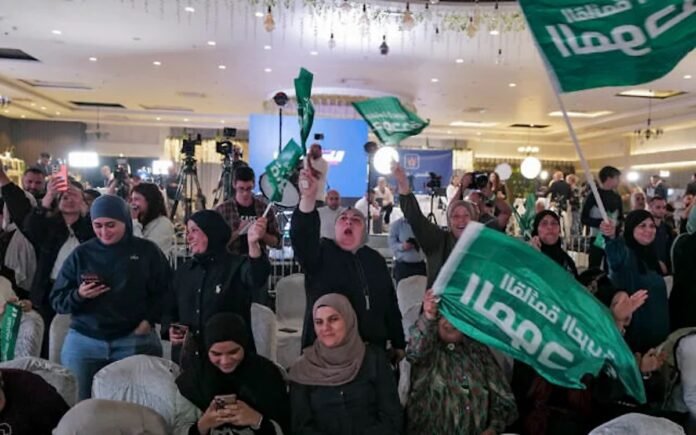
The headline of Israel’s October 27 election was supposed to be a referendum on Benjamin Netanyahu. Instead, the most consequential result came from the fifth of the country that Israeli politics has spent decades treating as a spectator. The Joint List and Ra’am won 19 of the Knesset’s 120 seats, the most Arab-led parties have ever held.

That number sits squarely in the gap between the two Jewish-led blocs. Neither Netanyahu’s camp nor Gadi Eisenkot’s can reach 61 seats alone. For the first time, the question of who governs Israel runs directly through Nazareth, Sakhnin and Rahat.

The scale of the shift is hard to overstate. According to the Central Elections Committee’s completed count, the Joint List won 11 seats and Ra’am 8, against a combined 10 in the outgoing Knesset. The previous high-water mark was the 15 seats the united Joint List won in March 2020.

Nearly 840,000 people voted for the two Arab-led lists, a 64% increase over 2022. Arab turnout roughly doubled to about 80%, outpacing a national turnout that was itself a historic 78%. Arab-led parties took about 14.7% of the national vote, up four points.

The local stories are even starker. In Tarabin, a Bedouin village in the Negev where Likud had won majorities in the past two elections, turnout nearly doubled and Ra’am took 93% of the vote.

Why the wave came

Three forces converged. The first was unity. Arab turnout has long tracked whether the parties run together: it reached 63.5% when the Joint List first formed in 2015 and peaked near 65% in 2020, then collapsed after the 2021 split. In 2026 Hadash, Ta’al and Balad re-formed the Joint List, and voters responded.

The second was fear. Arab communities have endured a crime wave the state has failed to contain: 252 Arab citizens were murdered in 2025, the deadliest year on record. Since October 7, Arab citizens have also faced heightened suspicion, arrests over speech and a campaign in which candidates openly courted Jewish voters with anti-Arab rhetoric. Even the right to run was contested: the Supreme Court overturned the Central Elections Committee’s disqualification of both the Joint List and Ra’am on October 2.

The third was a sense that the vote could finally matter. With the Jewish blocs evenly split, Arab parties campaigned on a simple pitch: staying home is not neutral. Both lists ran on security in Arab towns and investment in Arab local authorities, even as they diverged on the wider conflict.

From voters to kingmakers

The arithmetic is simple. Eisenkot’s bloc plus the two Arab-led parties makes 67 seats, a comfortable majority. Netanyahu’s 53 has no path to 61 without defections from the other side.

But the two Arab parties bring very different theories of power to the table. Ra’am’s Mansour Abbas, who in 2021 made his party the first independent Arab faction to join a governing coalition, wants back in. He has said he would join an Eisenkot government if Ra’am receives the internal security portfolio, and his party’s Jewish deputy is a deliberate signal of openness.

The Joint List, led by Yousef Jabareen, is offering something narrower. It says it will vote with the opposition to remove Netanyahu, Itamar Ben-Gvir and Bezalel Smotrich, but will not sit in a government while the occupation of the West Bank continues. That points to a minority government: Ra’am inside, the Joint List supporting from outside on confidence votes.

The opposition’s dilemma

The obstacle is not Arab willingness but Jewish reluctance. Eisenkot and his partners campaigned on a pledge not to rely on Arab parties. Avigdor Liberman still refuses outright, and right-leaning members of Eisenkot’s own Yashar party could balk.

Eisenkot has instead set conditions for cooperation, reportedly including recognition of Israel as a Jewish state, support for national service and condemnation of Hamas as a terrorist group. Abbas has said these need not be an obstacle. Jabareen counters that they apply to coalition members, which the Joint List does not intend to be.

Meanwhile, Netanyahu and Likud have claimed, without evidence, that Arab parties “stole” the election with foreign backing, and have cast any Jewish-Arab partnership as dangerous to Israel. They point to the arrest of three activists suspected of vote-buying with alleged ties to Ra’am, which the party denies. Election officials have rejected the broader charge: the committee’s chair, Justice Noam Sohlberg, said that even if the suspicions are proven, they would not undermine the overall result.

The street is split too. Thousands rallied in Tel Aviv for a Jewish-Arab government, while protesters gathered outside Eisenkot’s home in Herzliya to oppose one.

What the wave means

The argument for partnership is that 19 seats are the democratic voice of a fifth of Israel’s citizens. Shutting them out would tell Arab voters that turning out changes nothing, and invite the disengagement that followed 2021. Supporters also note that Ra’am’s last stint in government delivered an unprecedented budget for Arab towns.

The argument against is that the Joint List rejects Israel’s definition as a Jewish state, and that a government dependent on parties outside the Zionist consensus would be fragile on security and war. Critics recall that the 2021 coalition with Ra’am lasted under two years.

Either way, something has shifted. When President Isaac Herzog begins consultations after certification, Arab party leaders are expected to recommend Eisenkot, which may make him the frontrunner for the mandate. Whoever receives it will have 28 days, extendable by 14, to build a government.

Waves recede. Whether this one leaves a permanent mark depends less on Arab voters, who have made their point, than on whether Israel’s Jewish-led parties are prepared to treat that vote as a partner rather than a problem. The answer will shape not just the next government, but what Arab citizens conclude about the value of the ballot box.

Leon Hadar is a journalist, blogger, analyst, author and consultant. Read his Global Zeitgeist Substack here and become a subscriber here.

Source: Iwpost.com

0FansLike
0FollowersFollow
0FollowersFollow
0SubscribersSubscribe
- Advertisement -
Google search engine

Recent Posts