9.1 C
London
Monday, November 2, 2026
Home Blog

Taiwan to criminalize Nvidia AI chip smuggling to China

0
taiwan-to-criminalize-nvidia-ai-chip-smuggling-to-china
Taiwan to criminalize Nvidia AI chip smuggling to China

<

article id=”post-952209″>

Taiwan is moving to criminalize the unauthorized export of advanced AI chips to China, aiming to close a loophole exposed when Nvidia-powered servers bought on the island reached Chinese buyers via Indonesia, Japan, and Hong Kong.

The Legislative Yuan’s Economics Committee held a public hearing on Monday on an amendment to the Foreign Trade Act proposed by lawmakers of the ruling Democratic Progressive Party (DPP). It would ban exports of specified integrated circuits, key wafer materials, components and chipmaking equipment to mainland China without government approval.

Violators would face up to 10 years in prison and fines of NT$5 million to NT$10 million (US$155,000 to US$310,000), according to the proposed amendment. The same penalties would apply to anyone shipping controlled goods to China through a third country, while illegal gains would be confiscated.

The bill follows a case in which prosecutors in Keelung indicted nine people in August this year, including the general manager of Taiwanese firm Flying Tiger Technology and staff at the local units of Nvidia and Super Micro Computer. They allegedly diverted 74 Nvidia B300 servers to Chinese buyers for a profit of more than NT$600 million (US$18.5 million).

Yet none of the nine faces an export charge. Prosecutors relied on breach of trust and document forgery under the Criminal Code, building their case around the fake end-user papers the group used to pass Nvidia’s and Super Micro’s checks and a cover story that the servers would run in a rented data center in Taiwan.

Selling the servers to China broke the two companies’ internal rules and US export curbs, but not Taiwanese law. In legal terms, Taipei was prosecuting a paperwork fraud rather than an export violation.

Taiwanese officials and commentators said the amendment would close that gap by making the unauthorized export of listed chips, materials and equipment to China a criminal offense in its own right, whether the goods are shipped directly or routed through a third country.

“As a global hub of the semiconductor and AI supply chains, Taiwan’s export controls on these products have drawn international attention,” William Liu, director-general of the International Trade Administration under the Ministry of Economic Affairs, said at Monday’s hearing. “Export controls have shifted from preventing weapons proliferation to becoming a strategic tool for countries to protect their technological edge and national security.” 

He said the ministry was studying a full package of measures to bring high-end chips under control, giving enforcement a more appropriate legal basis and common standards. He added that this would help block illegal transshipments and safeguard Taiwan’s “silicon shield” while keeping the industry internationally competitive.

He said the ministry was working with overseas partners to step up enforcement as smugglers used increasingly sophisticated methods to evade controls, including:

  • Laundering the origin of goods through third countries;
  • Setting up shell companies in Southeast Asia and the Middle East;
  • Declaring high-end AI chips as ordinary consumer chips; and
  • Dismantling chipmaking tools, exporting the parts through different customs points and reassembling them overseas.

“The amendment is in line with the US-Taiwan reciprocal trade agreement and Taiwan’s national security interests,” said Wang Guo-chen, an associate research fellow at the Chung-Hua Institution for Economic Research (CIER). “But Taiwanese firms in China could be caught in a crossfire, facing Chinese fines if they follow US law and stop selling chips there, or US export controls if they listen to Beijing.”

However, Tseng Chih-chao, deputy secretary-general of the Association for Chinese Economic and Financial Research, said the amendment may not be enough to tackle Taiwan’s real security risks, as it targets only chips and related equipment and materials.

“Why does this amendment single out mainland China when the trade agreement with the US also covers North Korea, Iran and Russia?” he said. “If the current system has loopholes, the government should fix the general control mechanism rather than pass a law that is merely a policy statement.”

He said the Foreign Trade Act already allowed the ministry to designate controlled goods and destinations by public notice, while its entity list covered more than 11,000 entities. He added that adjusting those notices would be more flexible and efficient than writing specific countries and technologies into law.

Smuggling routes multiply

Since 2024, Nvidia-powered servers have repeatedly slipped through Taiwan and into China via Thailand, Indonesia, Japan and Hong Kong, but most smugglers were only exposed this year.

In March 2026, the US Department of Justice charged Super Micro co-founder Yih-Shyan “Wally” Liaw, the company’s Taiwan sales manager Ruei-Tsang “Steven” Chang and contractor Ting-Wei “Willy” Sun with conspiring to divert US-assembled servers containing restricted Nvidia chips to China. Liaw and Sun were arrested in California, while Chang, a Taiwanese citizen, remains at large.

US prosecutors said about US$2.5 billion worth of servers were sold to a Thailand-based company in 2024 and 2025, with at least US$510 million diverted to China between late April and mid-May 2025. To pass a compliance check, the group allegedly placed dummy servers in Thai warehouses and used hair dryers to swap labels and serial-number stickers.

Two months later, Taiwan’s Coast Guard Administration, acting on orders from Keelung prosecutors, searched 12 locations on May 20 and seized about 50 Supermicro servers worth more than US$15 million, along with luxury cars and NT$9 million in cash. Authorities detained three Taiwanese men on suspicion of forgery. 

Prosecutors said the trio had shipped servers from a northern Taiwan port with export documents listing a Northeast Asian country as the destination. The country was later identified as Japan, with at least one shipment reportedly passing through Japan to Hong Kong and mainland China, the suspected final stop. The May 20 raid was the first stage of the investigation that led to the indictment of nine people in Keelung in August.

In June, media reports said Taipei was considering restricting AI chip sales to all customers in China, not just firms on its export blacklist such as Huawei, as part of its trade talks with Washington. The move would allow Taiwan to prosecute AI chip smuggling as a crime for the first time.

Last month, Economy Minister Kung Ming-hsin said the government would add AI servers and cutting-edge semiconductors to Taiwan’s export-control list, making unauthorized shipments of such hardware to China a criminal offense under the Foreign Trade Act.

“Going forward, some of our measures on controlled items will correspond to American ones because we have made quite some commitments in the Agreement on Reciprocal Trade,” Kung said.

However, the bill’s fate is uncertain. The opposition Kuomintang (KMT) and Taiwan People’s Party (TPP) together hold a majority in the Legislative Yuan, so a proposal from ruling-party lawmakers could stall in committee or in cross-party negotiations without their support, some observers say. Neither party has publicly stated its position on the bill.

President Lai Ching-te’s DPP government has another option. Under the Foreign Trade Act, the economy ministry can already designate controlled goods and destinations by public notice, though exports to China are currently restricted only for 12 categories of wafer-fabrication equipment.

Adding AI servers and high-end chips to that list would make unlicensed shipments to China a violation, with penalties of up to five years in prison, the route Kung outlined last month. Lin Ching-fu, a law professor at National Tsing Hua University, told the hearing this would achieve the bill’s aims without amending the act. 

But a public notice cannot do everything the bill would. Only legislation could double the maximum jail term to 10 years, explicitly cover shipments routed through third countries and make confiscating illegal gains mandatory.

Read: China’s H200 hunger drives Nvidia chip smugglers to Japan route

Follow Jeff Pao on X at @jeffpao3

Netanyahu says he is open to broad Israeli government but insists on leading it

0
netanyahu-says-he-is-open-to-broad-israeli-government-but-insists-on-leading-it
Netanyahu says he is open to broad Israeli government but insists on leading it

Israeli Prime Minister Benjamin Netanyahu said Monday he was open to talks on forming a broad government but insisted that he should remain prime minister, Anadolu reports.

Likud “aspires to form a broad government with our partners and with any party that wishes to do so and does not support terrorism,” Netanyahu said on US social media platform X.

“I am open to holding a dialogue on the matter,” he added.

Netanyahu claimed that “the public in Israel does not want a government that is dependent on Ra’am and the Joint List,” referring to the two Arab parliamentary lists.

“From day one our hand has been extended to establish a broad national government,” he said.

Netanyahu also claimed a mandate to remain prime minister following last week’s parliamentary elections.

“A clear majority of the Jewish public chose Likud as the largest party and me, as prime minister, to lead the next government,” he said.

Meanwhile, former Prime Minister Naftali Bennett’s Together party, Yair Golan’s Democrats and Avigdor Lieberman’s Yisrael Beytenu have decided to recommend that President Isaac Herzog task Yashar leader Gadi Eisenkot with forming the next government.

The opposition parties’ backing gives Eisenkot the support of 48 lawmakers.

The two Arab parliamentary lists are also expected to recommend Eisenkot, potentially raising his support to 67 lawmakers in the 120-member Knesset.

Netanyahu’s bloc secured 53 seats in last week’s elections, compared with 48 for opposition parties and 19 for Arab parties, leaving neither bloc with a parliamentary majority.

However, recommendations to Herzog do not guarantee the formation of a governing coalition. Lieberman has rejected joining a government that includes Arab parties or depends on their parliamentary support.

Herzog is scheduled to begin two days of consultations with parliamentary factions on Wednesday before selecting a lawmaker to receive the mandate to form the next government.

Turkey’s Race to the Moon: How Ankara’s Space Ambitions Could Reshape Its Geopolitical Influence

0
turkey’s-race-to-the-moon:-how-ankara’s-space-ambitions-could-reshape-its-geopolitical-influence
Turkey’s Race to the Moon: How Ankara’s Space Ambitions Could Reshape Its Geopolitical Influence


The significance of the mission will be measured not only by whether Turkey reaches the moon on schedule, but also by whether the technologies, partnerships and industrial capabilities developed in the process can strengthen its position

Turkey is preparing to take a significant step in its space program with its first lunar mission scheduled for 2027, an ambitious undertaking that reflects Ankara’s broader efforts to strengthen technological independence and establish itself as an emerging player in an increasingly competitive international space sector.

Beyond the scientific objective of reaching the moon, the program forms part of a larger strategy involving domestic satellite development, aerospace technologies, international partnerships and the construction of a spaceport in Somalia. Together, these initiatives could expand Turkey’s geopolitical influence as outer space becomes an increasingly important domain of competition between major powers, particularly the United States and China.

The Scientific and Technological Research Council of Turkey (TÜBİTAK) developed the mission, which is expected to launch in the first half of 2027. In September 2026, Turkish authorities announced the completion of the spacecraft’s manufacturing, assembly, and integration, with the next phase involving environmental testing.

According to the announced mission plan, the uncrewed spacecraft will travel for approximately two months before entering a polar orbit around the Moon, roughly 100 kilometers above its surface. It is expected to conduct scientific observations for at least three months, with the possibility of extending operations depending on its performance. After the orbital phase, it will make a controlled descent toward the lunar surface.

Yet the mission’s importance extends beyond its technical objectives. For Ankara, developing advanced space technologies could also translate into greater strategic autonomy, industrial competitiveness, and diplomatic leverage.

“Turkey’s lunar ambitions should be interpreted as an integral component of Ankara’s broader pursuit of strategic autonomy, technological sovereignty, and international influence. While the scientific significance of reaching the Moon is undeniable, the geopolitical implications extend considerably beyond the immediate objectives of space exploration,” Dr. Hande Gül, an academic researcher in Political Science and International Relations, told The Media Line.

Turkey’s lunar program reflects a broader effort to position itself as an emerging space actor within a changing international order

“From the perspective of International Relations, outer space has increasingly evolved from a predominantly scientific domain into an arena of strategic competition, technological leadership, economic opportunity, and diplomatic influence. In this context, Turkey’s lunar program reflects a broader effort to position itself as an emerging space actor within a changing international order,” she added.

Turkey’s efforts have accelerated since the Turkish Space Agency’s establishment in December 2018 and the announcement of its National Space Program in 2021. The initiative outlined ten strategic objectives, including lunar exploration, satellite development, independent access to space and human spaceflight.

Several milestones have already been achieved. In April 2023, Turkey launched its domestically developed high-resolution Earth observation satellite, İMECE. In January 2024, Alper Gezeravcı became the first Turkish astronaut to travel to the International Space Station. Later that year, the country launched TÜRKSAT 6A, its first domestically-developed communications satellite, aboard a SpaceX Falcon 9 rocket from the United States.

For Mustafa Metin Kaşlılar, vice president of the Turkish Foreign Policy Research Center, these developments demonstrate the expanding scope of Ankara’s technological ambitions.

“In this regard, Turkey’s space projects cover a particularly broad spectrum. Significant progress has been made in the development of indigenous satellites. In July 2024, Turkey’s first domestically developed communications satellite, TÜRKSAT 6A, was launched into space. Furthermore, Turkey is expected to continue its efforts in this field through the development and deployment of high-resolution Earth observation satellites, including the İMECE satellite program,” Kaşlılar told The Media Line.

For Kaşlılar, these developments should be examined within the transformation of international competition.

Space has become one of the most critical arenas of strategic competition among countries such as the United States, China, and Russia

“The space dimension of international relations has transcended the boundaries of traditional geopolitics, introducing a new and critical domain in which interstate competition, cooperation, and strategic security policies extend beyond the Earth. In particular, I would argue that space has become one of the most critical arenas of strategic competition among countries such as the United States, China, and Russia,” Kaşlılar told The Media Line.

“Unlike the initial space race during the Cold War, today’s space domain is no longer exclusively state-driven. Rather, it has evolved into a multidimensional sphere involving private companies, military integration, and commercial interests,” he continued.

Unlike the initial space race during the Cold War, today’s space domain is no longer exclusively state-driven

The growing importance of private aerospace companies and commercial launch infrastructure has created opportunities for emerging space actors, but it has also highlighted the technological dependencies that countries such as Turkey are attempting to reduce.

Despite its progress in satellite manufacturing, Ankara continues to rely on external launch infrastructure. Its planned 2027 lunar mission is expected to use a SpaceX launch vehicle, demonstrating the distinction between developing a spacecraft domestically and possessing independent access to space.

Gül considers this dependency one of the central geopolitical questions surrounding Turkey’s program.

“For an emerging middle power such as Turkey, dependence on external technological suppliers can create significant strategic vulnerabilities. These vulnerabilities become particularly apparent during periods of geopolitical tension, export restrictions, sanctions, or disruptions in international supply chains,” she explained.

“Consequently, investment in indigenous space technologies should be understood as part of a long-term national strategy aimed at strengthening technological sovereignty and improving the country’s capacity to act independently in strategically sensitive sectors,”she added.

Nevertheless, questions remain over how quickly Turkey can transform its ambitions into operational capabilities.

Although Turkish authorities have reported substantial progress on the spacecraft and its domestically-developed hybrid propulsion system, the 2027 deadline remains contingent on the successful completion of testing and other technical preparations. The program has also undergone schedule adjustments since its initial announcement in 2021.

“The feasibility of Turkey’s 2027 lunar mission requires a careful distinction between political ambition, technological readiness, and operational capability,” Gül said.

“In Turkey’s case, the 2027 objective should therefore be understood as an ambitious target rather than an outcome that can be considered technologically guaranteed,”she added.

She stressed that the technical complexity of lunar exploration varies considerably according to the mission’s objectives.

“A lunar flyby, an orbital mission, a controlled impact on the lunar surface, and a soft landing represent fundamentally different levels of technological complexity. Reaching the vicinity of the moon is a significant achievement, but successfully navigating a spacecraft through deep space, establishing reliable communications, performing orbital maneuvers, and executing a controlled terminal descent each involve additional technical requirements,” she noted.

However, even if the mission encounters delays, the technological investments associated with it could produce benefits across other sectors, including defense and aerospace.

“Advanced propulsion research, autonomous navigation, precision guidance, secure communications, high-performance sensors, and sophisticated materials may contribute to civilian scientific missions while also possessing relevance for aerospace and defense-related industries,” Gül explained.

Turkey’s existing experience in defense technologies could create opportunities for knowledge transfer between the space sector and other strategic industries

“Turkey’s existing experience in defense technologies could create opportunities for knowledge transfer between the space sector and other strategic industries,” she added.

One of the most consequential components of Ankara’s longer-term strategy is taking shape not in Turkey itself, but in Somalia.

The spaceport project, currently under construction, is intended to provide Turkey with greater independence in launching satellites and other spacecraft. Somalia’s proximity to the equator benefits certain orbital trajectories, while its coastline provides access to launch corridors over the Indian Ocean.

The project also reflects Turkey’s expanding relationship with Somalia, where Ankara has developed cooperation involving security, infrastructure, economic development and diplomatic engagement.

Kaşlılar considers the facility essential to the broader national program.

“One of the most significant aspects of Turkey’s National Space Program is undoubtedly the spaceport project currently under construction in Somalia. Through this initiative, Turkey aims to secure independent access to space. In this respect, I would argue that Somalia represents a cornerstone of Turkey’s broader space ambitions,” he said.

“More generally, space activities constitute a strategic investment area in which Turkey is allocating substantial financial resources to projects that could enhance its international standing and strengthen its position among the world’s leading spacefaring nations,” he added.

Nevertheless, the construction of a spaceport does not by itself guarantee independent launch capabilities. Rocket development, operational infrastructure, technical personnel and sustained investment remain necessary.

Gül cautioned against equating the establishment of launch infrastructure with technological independence.

“Therefore, the existence of a planned spaceport should not automatically be equated with independent access to space.

Strategic independence will emerge only if Turkey develops or secures reliable control over the critical technological and operational components necessary for sustained launch activities,” she explained.

Gül also emphasised that the project has wider implications for Turkey’s regional presence.

“A spaceport project could potentially expand this relationship into an advanced technological sector, thereby strengthening Turkey’s long-term strategic presence in the Horn of Africa,” she said.

“Nevertheless, it is essential to distinguish between the strategic potential of the project and its actual operational feasibility,” she added.

These ambitions also intersect with the growing rivalry between Washington and Beijing, whose competing space programs increasingly encompass technological development, commercial infrastructure, lunar exploration and influence over international rules.

As a NATO member with longstanding Western security ties, Turkey is seeking to expand its domestic capabilities while maintaining international cooperation. Its strategy does not necessarily require choosing exclusively between competing space powers.

“Rather than viewing space cooperation exclusively through the binary framework of American-Chinese competition, Turkey may seek to maximize its strategic opportunities by engaging with multiple international actors while developing selected indigenous capabilities,” Gül explained.

“However, this approach should not be confused with geopolitical neutrality. Turkey’s institutional commitments, security relationships, technological dependencies, and economic partnerships continue to shape the boundaries of its strategic choices,” she added.

An important development came on August 31, 2026, when Turkey became the 71st country to sign the Artemis Accords, a US-led framework establishing principles for the peaceful and sustainable exploration of outer space.

The agreement does not automatically grant participation in NASA missions, but it provides a framework for future cooperation at a time when the United States is seeking to expand international engagement around lunar exploration.

“Turkey has also joined the Artemis Accords. Through this framework, Turkish scientists, engineers, and domestic aerospace companies have gained opportunities to participate in future civilian space missions, supply chains, and technological development processes alongside NASA and other signatory countries,” Kaşlılar said.

“For Turkey, this historic step can be regarded as one of the most significant milestones in its space diplomacy, following the country’s achievements in human spaceflight,” he added.

The diplomatic dimension of lunar exploration could become increasingly significant as governments and private companies examine the potential use of resources found on the moon.

Water ice, particularly in lunar polar regions, has attracted scientific interest because of its potential applications in life-support systems and the production of propellants. However, technological costs and unresolved regulatory questions continue to limit the commercial prospects of resource extraction.

Under the 1967 Outer Space Treaty, celestial bodies cannot be appropriated through national sovereignty claims, although the interpretation and regulation of resource utilization remain matters of international debate.

For Turkey, participation in these discussions could eventually become another source of diplomatic influence, even without the financial or technological resources required to compete directly with established space powers.

“As an emerging space actor with established experience in multilateral diplomacy, Turkey could contribute to international discussions concerning the governance of lunar resources and the prevention of excessive concentration of strategic advantages among a limited number of technologically dominant states,” Gül explained.

Yet the more immediate economic benefits of the program are likely to emerge on Earth through research, manufacturing and industrial development.

“More tangible economic benefits are likely to emerge through technological innovation and industrial development on Earth. Investment in space technologies can stimulate research-intensive industries, strengthen advanced manufacturing, encourage the development of specialized engineering expertise, and generate opportunities for high-value employment,” Gül said.

“It can also create pathways for Turkish companies to participate in international aerospace supply chains and technological partnerships.”she added.

Kaşlılar similarly sees the lunar mission as part of a longer-term effort to elevate Turkey’s international position.

“The lunar program will undoubtedly remain one of Turkey’s primary strategic objectives in the coming period. Its successful implementation could represent a significant step towards securing Turkey’s place among the world’s leading spacefaring nations,” he said.

However, the gap between Turkey and established space powers remains considerable, particularly in sustained lunar operations, launch infrastructure and financial resources.

Gül stressed that Turkey’s ambitions should be assessed in relation to the capabilities of countries that have already established extensive space programs.

“Nevertheless, it would be analytically misleading to portray Turkey as an immediate competitor to established space powers such as the United States or China.

It would be analytically misleading to portray Turkey as an immediate competitor to established space powers such as the United States or China

The technological, institutional, and financial asymmetries between these actors remain substantial.

Instead, Turkey’s most realistic strategic objective is to establish itself as a credible emerging space power capable of developing selected indigenous technologies, participating in international scientific partnerships, and contributing to the governance of an increasingly contested strategic domain.”she noted.

For Ankara, the immediate challenge is therefore not necessarily to compete directly with the United States or China, but to develop a durable technological and institutional foundation capable of supporting future space activities.

As the planned mission approaches, its significance will be measured not only by whether Turkey reaches the moon on schedule, but also by whether the technologies, partnerships and industrial capabilities developed in the process can strengthen its position over the longer term.

“The greatest strategic achievement would not necessarily be the establishment of a Turkish presence on the lunar surface,” Gül concluded.

“Rather, it would be the emergence of Turkey as a technologically capable, diplomatically relevant, and institutionally credible actor in shaping the future of space exploration. Ultimately, the geopolitical significance of Turkey’s lunar program will be determined not by the distance it travels into space, but by the extent to which it transforms scientific ambition into sustainable technological capacity, economic development, and international influence.,” she concluded.


The American Dream wasn’t built for climate change

0
the-american-dream-wasn’t-built-for-climate-change
The American Dream wasn’t built for climate change

To Sierra Isley, the American Dream brings to mind a home ringed by a white picket fence. “The house in the suburbs is just what you’re taught growing up,” the 26-year-old said. “You know, that’s what you see on TV.” What she wanted for her life was a bit different from that picket-fence ideal, but she still saw the prospect of buying her first house two years ago as a chance to live out what she called “that big dream that everybody has as a kid.” 

Isley and her girlfriend, Jamie, were moving from Philadelphia to Asheville, North Carolina, and found a home they liked, a three-bedroom brick house with lots of natural light and a big tree out front. With some help from their parents, they put down a deposit and got their offer accepted. But when they went to sign the closing papers, a complication got in the way: The house had a huge lien on it. After consulting with lawyers, they decided to break the contract and hunt for an apartment to rent in Asheville.

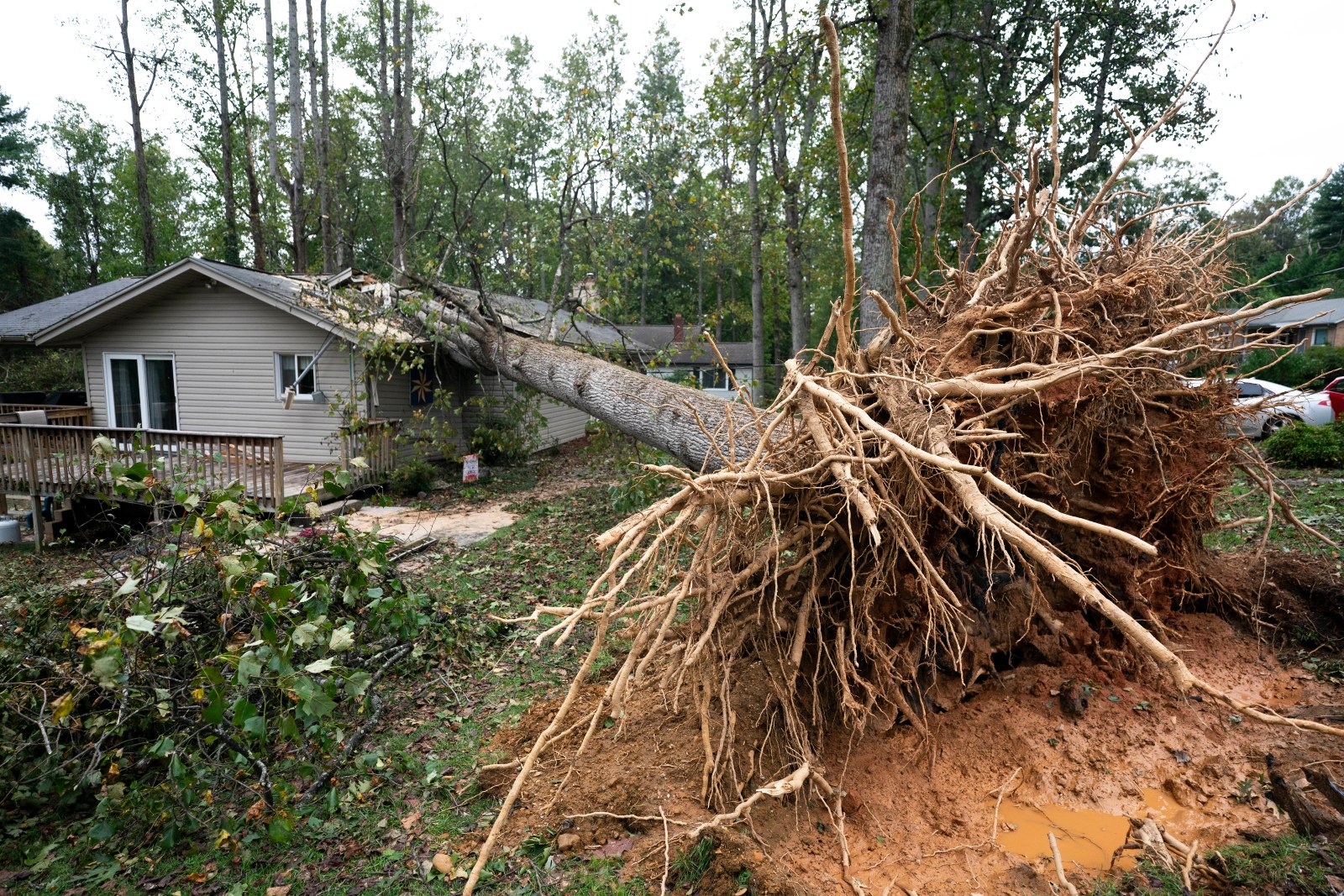
It was a blessing in disguise. One month later, while Sierra and Jamie were still unpacking boxes and building furniture, the remnants of Hurricane Helene turned Asheville into a disaster zone. The basement of their apartment flooded, but they were luckier than some of their neighbors, whose homes had been destroyed. 

Owning a home has long been seen as a cornerstone of the American Dream — a way to build wealth that you could use one day to pay for your children’s education and fund your retirement. That arrangement was always more precarious than it was made out to be. But as fires and floods damage homes and drive up insurance rates, pouring your life savings into a house has become riskier than ever. In a report called “Property Prices in Peril,” the firm First Street projected last year that climate risks could knock nearly $1.5 trillion off the value of American homes by 2055. For some people, the sociologist Rebecca Elliott wrote, “the American dream of homeownership may become a nightmare.”

Photo of an uprooted tree crashed into the roof of a home

A fallen tree on a home in the aftermath of Hurricane Helene in Asheville, North Carolina, in September 2024. Sean Rayford / Getty Images

Americans are beginning to grasp the threat that climate change poses to their aspirations. According to exclusive polling for Grist from the think tank Data for Progress, 58 percent of likely U.S. voters believe that climate change will hinder their ability to achieve the American Dream over the next 20 years, including 42 percent of Republicans. The survey suggests that people are worried that climate change will increase the cost of living, a concern so widespread that it’s expected to sway the midterm elections on Tuesday.

The irony is that fossil fuels have long been promoted as necessary ingredients for the American “way of life.” Starting a century ago, oil and gas companies led extensive campaigns to tie their products to comfort and prosperity, a narrative that has been repeatedly deployed by politicians and oil industry executives to thwart climate action. President Donald Trump’s administration has often said that efforts to rein in fossil fuels threaten the American Dream. Earlier this year, when the administration scrapped Biden-era rules to cut emissions from cars, along with the Environmental Protection Agency’s authority to regulate climate change, it touted the effort as “restoring the American Dream.”

But the fossil-fueled American Dream is in the process of destroying itself. Greenhouse gas emissions from burning coal, oil, and gas have ushered in a new period of precarity, undermining the promise that each generation can expect a better life than the last. Scientific reports warn that climate change “imperil[s] the quality of life” for communities in the United States, disrupting livelihoods and cultural traditions. 

Either Americans decide to reimagine what makes up the American Dream and abandon that oil-soaked version of prosperity, or climate change will dismantle it for them.


The memories of living through Hurricane Helene are still fresh in Isley’s mind. Hauling water from their flooded basement up to the toilet to flush it when the water ran out. Driving to Jamie’s parents’ house in Atlanta, holed up in a room with both of their cats until they couldn’t take it anymore. Coming back to Asheville and cooking meals in the Crock-Pot with disposable liners because even when the water was running again, it wasn’t safe to wash dishes with.

Two years later, Isley browses Zillow for fun, but she looks at homes through a post-disaster lens. “Now I have that fear in the back of my mind — anywhere near a river, or even a stream, if there’s a little bit of water on the map, I’m like, ‘Oh, no,’” she said. Jamie is trans, and after Trump was elected in 2024, the two of them briefly entertained the idea of moving somewhere with more protective policies, like California. But Isley’s mind immediately went to wildfires. Out of the question. 

Photo of a young woman in the forest with fallen leaves, wearing a yellow backpackclimate haven,” somewhere that would fare better than the rest of the country as the world warmed. Those promises were shattered when almost 14 inches of rain fell on Asheville over three days in September 2024. The French Broad River overflowed its banks, flooding homes and destroying parts of the town’s River Arts District. In western North Carolina, more than 74,000 homes were damaged, and only about 4 percent had flood insurance, resulting in $9.5 billion in uninsured residential property losses. 

Home values in western North Carolina have declined since the storm, especially in the hardest-hit counties. Asheville’s average home price shrunk 5 percent over the past year, while the national average increased 1.2 percent.

To some degree, housing markets are already pricing in the risk of increased environmental hazards. Homes within FEMA’s high-risk flood zones sell for 2.8 percent less, on average, than what they would otherwise sell for, according to a 2023 study published in the journal Nature Climate Change. The researchers found that homes exposed to flood risk were still overvalued by between $121 billion and $237 billion, though — and they identified Appalachia as a hot spot of overvaluation, one year before Helene hit. The devaluation of homes in high-risk zones is unfolding unevenly and causing “tremendous social harm,” said Elliott, a sociology professor at The London School of Economics and Political Science.

Homes are billed as a way for people to build wealth, but they can turn into a trap. After Superstorm Sandy devastated New York City and the New Jersey coast in 2012, many homeowners couldn’t sell their houses for enough money to buy a new place, leaving them stranded. Even homes that haven’t seen any kind of devastation are at risk of losing value as more people become wary of living in floodplains, coastal places exposed to storms, and wildfire-prone areas. “Those homes could become, in effect, economically worthless even before they are physically uninhabitable,” Elliott wrote in a study about property values and climate change.

Photo of a home tilted on the sand with the words for sale written on it80 percent, with the average single-family mortgage holder now paying $209 per month. Homeowners in the riskiest areas are paying substantially more, and many in California have been dropped by their insurers. Home insurance rates are rising faster in the Midwest than any other region, driven by the costs of severe storms. 
“We are, for a lot of people, on the edge of a dysfunctional insurance marketplace,” Heller said. The more extreme weather we’re seeing is only part of the story: He argues that the insurance industry has become a “climate opportunist,” using climate change as an excuse to justify excessive rate increases.

People relying on Social Security benefits who own condos around Lake Tahoe are particularly vulnerable to rising rates, said Andrew Engler, the founder and CEO of Rock Rose Risk, who helps people in California protect their homes against wildfire and get their insurance premiums down. They’re facing ballooning homeowners association payments, to share the cost of insurance in a risky wildfire area, on a limited paycheck. If they try to move, their properties are worth significantly less because of the huge HOA bills, Engler said. Economists estimate that rising insurance costs linked to disaster risk have reduced the growth of home prices by more than $40,000 in the most hurricane- and wildfire-prone ZIP codes.

Renting might make you more nimble, but it doesn’t insulate you from these costs. One reason rents are going up is because landlords’ property insurance rates are increasing. “Whether you are a homeowner or a renter, we’re all paying for living under the increased risks of climate change,” said Caroline Nagy, the associate director of housing policy at Americans for Financial Reform. That makes it harder for people to save for a home — if that’s even a good idea anymore.


When Sierra Isley walks around her neighborhood these days, she sees the evidence of Helene all around her — in the form of banners with the slogan “Asheville Strong” and shirts that say “WNC Strong.” 

One of the most surprising things about disasters might be the way that people who live through them rise to the occasion and come together. In the aftermath of the Helene, with the power and cell service knocked out, Sierra and Jamie walked all around town, talking to their neighbors to try to learn what had happened. People started congregating at the fire station where there was fresh water.

“It’s hard to put into words what that experience was like, but I’ve never felt more of a community, and really having to lean on my neighbors and feeling like my neighbors were leaning on me,” Isley said.

While the American Dream is usually all about independence and personal freedom, living through a disaster has a way of revealing how people depend on each other. The experience can prompt people to hold tightly to what they have, doubling down on protecting their communities, said Nick Tinoco, a sociology researcher in a doctoral program at the University of California, Los Angeles, who interviewed survivors of the 2018 Woolsey Fire in Los Angeles County. Some of the residents he talked to have taken things into their own hands and organized volunteer fire brigades, and plan to stay behind to defend their neighborhoods during future fires. 

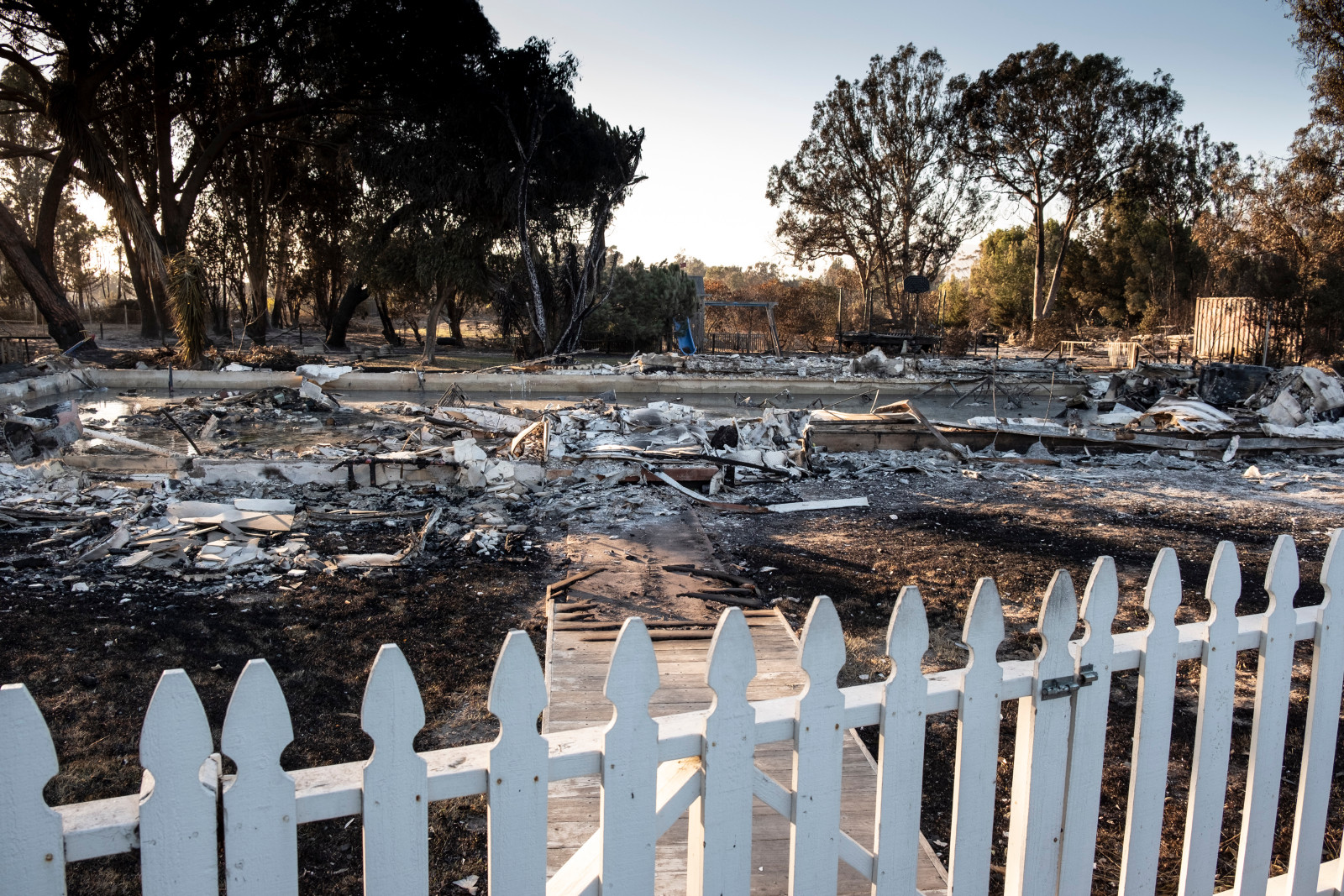
Photo of wreckage from a fire on the ground behind a white picket fencepoll from Ipsos last year showed that 46 percent of baby boomers associate homeownership with the American Dream, but only 13 percent of Gen Zers do, suggesting that there’s room for its defining features to change.


Sierra and Jamie couldn’t help but wonder what happened to the house they’d almost bought, and they drove over to check it out soon after Hurricane Helene hit. It was still standing, but they couldn’t see if there was any damage hidden inside. “Who knows if it flooded or anything like that, what kind of storm damage it took, and that would have immediately been our problem,” Isley said.

Living through Hurricane Helene didn’t just make Isley relieved she hadn’t bought a house in Asheville. It has shaped what she wants for her life, helping her discover a passion for public health and pushing her to want to work in emergency preparedness. Now she’s applying to schools to pursue a master’s degree in public health.

“I think I owe it to people like me, people in other rural communities who are going to face the same kind of climate change emergencies, to use my skills to help combat climate change and natural disasters,” Isley said. “I just feel such a calling.”


Abdul El-Sayed’s Race Has Been Defined Islamophobia. Will It Be Determined By It?

0


As Abdul El-Sayed’s one-time primary opponent attempts to redirect closing arguments in the Michigan Senate contest to the topics of Israel and antisemitism, the Democratic nominee has entered the final stretch of the midterms against a barrage of bigoted attacks over his own race and religion.

President Donald Trump called him a “jihadist.” Health and Human Services Secretary Robert F. Kennedy Jr. went on a racist rant against Arabs. According to Michigan state Sen. Mallory McMorrow, a mailer went out showing El-Sayed’s face next to the World Trade Center’s Twin Towers.

“They are running the most bigoted, hateful, Islamophobic campaign I’ve ever seen,” McMorrow told a local TV outlet. McMorrow, who ran for the Democratic Senate nomination but dropped out before the August primary, is taking a far different tack than Rep. Haley Stevens, the Democratic primary runner-up who has spent the race’s final days painting El-Sayed as an angry antisemite and crossed party lines Sunday to endorse Republican contender Mike Rogers.

Rogers has sought to portray El-Sayed as anti-American and repeatedly tried to tie his opponent to the Muslim Brotherhood. He insists the attacks have nothing to do with faith. But that is exactly how many observers see them, including Muslim Republicans who have been disgusted by the rhetoric.

As the election draws to a close, the Islamophobic attacks have taken a backseat to Stevens’s claims of antisemitism — most prominently concerning a PAC ad that connected high grocery prices to U.S. spending on Israeli military aid — and a personal feud between the former primary opponents. And some of El-Sayed’s allies worry that the Muslim and Arab-baiting attacks will work. One recent poll found that 38 percent of Michigan voters said they would be less likely to vote for a Muslim candidate.

Michigan’s Muslim and Arab organizers have not been taking the attacks lying down, however. In interviews last month, two prominent leaders in Dearborn’s Arab American community described widespread excitement over the opportunity to vote for the man who would be the first Muslim in the U.S. Senate.

“It very much feels like when President Obama was running and his whole campaign was around like hope. That’s what it feels like,” Layla Elabed, the organizing director at Arab Americans for Progress, told the Intercept on October 8.

Elabed, the sister of Rep. Rashida Tlaib, D-Mich., was one of the key movers in the Uncommitted movement, which urged Michigan voters to withhold their votes from Joe Biden during the 2024 primary in protest of his support for Israel’s war on Gaza. The movement succeeded in making a statement, but also drew criticism from centrist Democrats for allegedly fracturing party unity.

Elabed’s current group is an evolution of the Uncommitted movement. Its canvassers have been knocking on doors to turn out support for El-Sayed and other candidates.

“I don’t think many people in Dearborn are surprised by Haley Stevens,” Elabed told The Intercept on Monday. “Arab American Democrats in Michigan have been sounding the alarm about her for years, warning our fellow Democrats about a pattern of putting political interests ahead of the people she was elected to represent.”

She believes the same coalition that came together for Uncommitted could help push El-Sayed over the top this election.

“Abdul has been able to really take a stand on all the issues that were really important to anti-war voters and anti-genocide voters,” she said. “It’s not a coincidence that that same coalition, that same base of Democratic voters are now all coming out to support us.”

Hers is not the only group seeking to mobilize Muslim and Arab voters, who make up a sizable slice of the Michigan electorate. The Arab American Political Action Committee has also endorsed El-Sayed. Its president, Osama Siblani, said there is widespread enthusiasm for El-Sayed in areas with dense Arab populations such as Dearborn.

Siblani compared El-Sayed’s potential victory to John F. Kennedy’s pathbreaking election as the first Catholic president.

“First of all, he’s qualified. Second of all, he’s saying the right things, he has a good agenda,” Siblani. “His opponent is an asshole. In addition to all of this, he is breaking the ceiling for our community and for other communities. That is a plus.”

The goal of the Arab and Muslim-baiting attacks from El-Sayed’s enemies is clear, according to Nazita Lajevardi, an associate professor of political science at the University of Michigan.

“Islamophobia is a tried and true strategy for garnering a candidate support and swaying the vote,” she said.

“When political elites discriminate, it does mobilize people into action.”

Yet it is also possible that the attacks on El-Sayed’s identity will lead to greater turnout in places like Dearborn, she said.

“I think scholarship would tell us that when political elites discriminate, that it does mobilize people into action. Past scholarship would say yes, it would, but it’s an open question,” she said.

Elabed agreed that the attacks are nothing new. “We’ve watched it play out time and time again,” she told The Intercept. Stevens’s about-face isn’t a major development, she said, “It’s that the rest of the Democratic Party is finally seeing what our communities have been saying all along. We weren’t wrong. We just weren’t being listened to.”

Siblani expressed a similar sentiment on Monday. “I’m not surprised, I’m disgusted,” he wrote of Stevens in a text message, attaching an emoji of a person vomiting.

Stevens’s choice to jump ship for the Rogers campaign appears to have galvanized El-Sayed’s base. His campaign announced a one-day fundraising record after his fellow Democrat pulled her endorsement on Sunday.

After ProPublica Investigation, House Democrats Demand Answers on U.S. Citizens Detained by Immigration Agents

0
after-propublica-investigation,-house-democrats-demand-answers-on-us.-citizens-detained-by-immigration-agents
After ProPublica Investigation, House Democrats Demand Answers on U.S. Citizens Detained by Immigration Agents

What Happened: Citing ProPublica’s recent investigation, House Democrats are again asking the Trump administration to explain why hundreds of U.S. citizens have been held by immigration agents and how the government verifies citizenship during immigration operations.

In an October letter to Department of Homeland Security Secretary Markwayne Mullin, California Rep. Lou Correa and 39 other legislators demanded the administration share the number of citizens that immigration agents have detained and how the government is tracking such encounters. They also asked for more information about how agents are trained to verify citizenship and legal status.

Why It Matters: ProPublica counted more than 500 Americans detained by immigration agents — almost certainly an undercount since the government is not transparently tracking the cases.

Experts told us the cases collectively show federal agents running roughshod over the constitutional rights of citizens. We found more than 100 Americans who were questioned about their citizenship, 63 Americans detained while recording, 36 Americans held for at least a day without being able to contact a lawyer or their family and roughly a dozen citizens deported, mostly children.

What They Said: “We remain concerned that the Department’s actions are violating American citizens’ constitutional rights to due process, equal protection, and freedom from unreasonable search and seizure, and request transparency regarding the Department’s actions,” the representatives wrote in their letter to DHS.

DHS has long insisted it is not arresting U.S. citizens, and it defended its immigration operations as “highly targeted.”

“These members of Congress have shown more concern for criminal illegal aliens who’ve broken our laws and destroyed any possibility of ever remaining in our country than they ever have for Rachel Morin, Laken Riley, Jocelyn Nungaray, and the true victims of illegal alien crimes in America,” a spokesperson wrote to ProPublica.

Background: Democrats have been pushing the second Trump administration for more details about how immigration agents are interacting with U.S. citizens since early 2025. Last year, congressional Democrats announced a wide-ranging investigation into immigration agents’ detention of U.S. citizens in response to our earlier reporting that found that more than 170 citizens were detained by immigration agents.

Last month, Rep. Teresa Leger Fernández, a New Mexico Democrat, introduced a bill, Justice for Citizens Wrongfully Detained by ICE Act, that would make it easier for citizens to sue immigration agents for wrongful arrests.

Read the Investigation

Support Independent Journalism:

As a nonprofit newsroom, we rely on donations from individuals like you to fuel our work. Your support today will directly fund investigations that shine a light on urgent issues: corporations prioritizing profits over public safety, health insurers denying coverage to patients, unintended consequences of new laws and more.

Third person dies of bird flu since virus started jumping to livestock

0
third-person-dies-of-bird-flu-since-virus-started-jumping-to-livestock
Third person dies of bird flu since virus started jumping to livestock

A person in Washington state has died from bird flu after exposure at an infected dairy farm, state health officials reported Sunday. It marks the third human bird flu death in the US since a strain of highly pathogenic (H5) avian influenza (HPAI) made the unprecedented jump from wild, migratory birds to dairy cows, which was first reported in the US in March 2024.

The person who died was a Yakima County resident and was said to have had underlying health conditions, which could have made the person more vulnerable to the infection. On Friday, county officials reported that the person was severely ill and hospitalized. In the subsequent announcement of the person’s death, officials said they would not be releasing further information about the person, including their name, gender, or age, out of respect for the family’s privacy.

“Our hearts go out to the individual’s family and loved ones during this difficult time,” Dave Atteberry, health officer for the Yakima Health District, said in a statement. “Avian influenza can cause severe illness, particularly among people who have underlying health conditions. While this is a serious and heartbreaking outcome, the risk to the general public remains low.”

Continued threat

In all, three people have tested positive for bird flu in Washington since the virus was reported in dairy cattle in the state on October 8. All three have been in Yakima County. While announcing the death on Sunday, officials also reported the third case. That case, like the first case, was in a person who had exposure to an infected dairy herd in the county. Both people have reportedly not experienced severe illness nor been hospitalized.

Since the October 8 report of infected herds, Washington state has had 40 detections of bird flu in dairy cows, according to the US Department of Agriculture. Most of those have been in Yakima County, which has reported detections in 33 herds.

This year, the USDA has reported 134 cases of bird flu in cattle, including cases in Texas, Washington, Idaho, Utah, and Kansas. The USDA lists no other reports of cases in other domestic livestock, including swine. But the virus has continued to spread in other wild and captive mammals. A report last month from ProPublica revealed that the virus is raging on a mink farm in Utah. The report raised alarm because mink is a species that could give the virus opportunities to mutate to better spread among humans.

To date, no human-to-human transmission of HPAI has been reported from the over 70 human cases detected since 2024. Of the cases, only three have resulted in death. The first death was in a 65-year-old Louisiana resident with underlying health conditions, who became critically ill in January 2025 after exposure to infected wild and backyard birds. The second death, in November 2025, was reported by Washington state officials as an older adult with underlying health conditions who also had exposure to infected backyard birds.

Country Singer Sparks Internet Frenzy After Spraying ‘Stinky’ Bare Foot on Plane

0
country-singer-sparks-internet-frenzy-after-spraying-‘stinky’-bare-foot-on-plane
Country Singer Sparks Internet Frenzy After Spraying ‘Stinky’ Bare Foot on Plane


Country singer Jessie James Decker found herself in a bizarre situation aboard a recent flight when a mysterious bare foot appeared on her armrest. But instead of quietly putting up with the unwelcome intrusion, she pulled out a spray bottle and took matters into her own hands, sparking a fierce debate online.

The 38-year-old singer shared the hilarious encounter on Instagram on Oct. 28, showing a passenger’s bare foot stretched into her personal space from the row behind. Decker, visibly disgusted, covered her nose before aiming a small spray bottle at the offending foot.

Within seconds, the foot disappeared as its owner quickly pulled away, leaving Decker struggling to contain her laughter.

The singer claimed the foot smelled terrible and turned to her millions of followers with one simple question: “What would you have done?”

The video quickly ignited a heated discussion about airplane etiquette, with many viewers applauding Decker for refusing to tolerate another passenger’s questionable behavior.

Some argued that putting bare feet on someone else’s armrest was unacceptable, while others joked that they would have taken even more drastic measures. One commenter suggested the passenger should have been escorted off the aircraft.

A self-described former flight attendant also weighed in, explaining that she routinely told passengers to remove their feet from armrests because the cabin was a shared public space.

But just as the internet appeared ready to declare Decker the winner of the unusual confrontation, a surprising theory emerged.

What if the mystery foot belonged to her own husband?

Several suspicious followers suggested that the person behind Decker was actually former NFL star Eric Decker, whom she married in 2013. Some questioned whether the entire encounter was simply a playful prank between the couple rather than a genuine confrontation with a stranger.

One commenter insisted the singer would never spray an unsuspecting passenger, prompting Decker to fire back with a cheeky response.

“Have you seen Eric’s feet? Toeeeee UP,” she joked, appearing to cast doubt on the theory without revealing the foot owner’s identity.

The mother of four has not publicly identified the mystery passenger, and the video offers no clear indication of whether she knew the person. The airline and flight destination also remain undisclosed.

For now, the identity of the barefoot traveler remains a mystery. But Decker’s unexpected response has reignited one of air travel’s most divisive debates: Just how much bad passenger behavior should fellow travelers be expected to tolerate?

US must help North Koreans find the truth that Kim Jong Un fears

0
us-must-help-north-koreans-find-the-truth-that-kim-jong-un-fears
US must help North Koreans find the truth that Kim Jong Un fears

Sungju Lee. Photo: CNN

Growing up in Pyongyang, I believed the stories I was told about my home country. They were so powerful that, even as a young boy, I dreamt of becoming a military officer like my father. I imagined that one day I would march proudly in a North Korean uniform before Kim Il Sung. Because the communist regime taught us that he was immortal, such a dream was readily believable.

When Kim Il Sung died of a heart attack in 1994, I could hardly comprehend it. The man we had been taught to regard as our “Eternal Father” was mortal after all. His body, draped in the flag of the Workers’ Party, was placed in a glass sarcophagus for the entire country to see, exposing the first crack in the regime’s mythology.

When my father expressed skepticism about the regime’s future, our entire family was expelled from Pyongyang. We left behind a life of relative comfort in the nation’s capital and were sent to an impoverished rural area in the northeast. My parents told me we were taking a vacation. What we found instead was a place filled with starving people. With no government rations, children searched desperately for anything they could eat. For the first time, I encountered communism’s suffering – not in a history book or a political speech, but in the hollow faces of children abandoned by the regime I had once worshipped.

Soon, my parents disappeared as well, and my life was consumed by hunger and fear. At 12 years old, I was living on the streets alongside other boys who became my brothers. We begged, stole food, fought and climbed onto cargo trains in search of places where we might find something to eat. Every day was a struggle to survive. Every night brought the possibility that one of us might not wake up.

Those years of hardship stripped away any love I still felt for the regime that ruled my homeland.

But only after I escaped did I fully understand how powerful it can be for North Koreans to encounter the truths the government has worked so hard to conceal. A single piece of information can create doubt. Doubt can become judgment. Judgment can become courage. Information gains its greatest power when people can make sense of it, share it and act on what they learn.

That is why the democratic world must pair efforts to reach people inside North Korea with sustained investment in young North Korean escapees. Information alone is not enough. North Koreans also need people who can interpret it, give it meaning and transform it into a vision for change. Escapees can turn information into understanding, understanding into agency and agency into leadership.

The regime understands the danger of that process. In footage released in 2022, two North Korean teenagers were sentenced to 12 years of hard labor for watching and sharing South Korean films and music videos. Their public trial took place before roughly 1,000 students– a calculated warning to an entire generation. Amnesty International has documented severe punishments for North Koreans who consume South Korean television and K-pop, including imprisonment in labor camps and, in some cases, execution. No government secure in its legitimacy would fear a television drama or a song, but Kim Jong Un knows where outside ideas can lead.

For decades, international partners have supported North Korean voices and fostered emerging leaders in the North Korean escapee community. Chief among them has been the National Endowment for Democracy (NED). This work rarely produces immediate headlines or appears on the evening news. It lacks the spectacle of a missile launch or a summit between world leaders. But it is vital. It helps North Koreans question government narratives, form independent judgments and discover that other futures are possible.

With NED’s support, North Korean escapees created a platform where emerging leaders could organize around a common cause and develop a shared vision for our homeland. That work has transformed scattered voices into a growing movement for human rights, dignity and democratic change. It has shown young escapees that they are not merely survivors of North Korea’s brutality. Instead, they can become leaders capable of shaping its future.

I was once a boy who dreamt of marching before a dictator. I later became a starving child on the streets. Today, I am a free man who understands that the regime’s greatest weapon is not its missiles or its army. It is the lie.

America should help more North Koreans begin the journey from obedience to doubt, from doubt to understanding and from understanding to action. That means supporting independent information, investing in escapees who can guide, organize and inspire others, and refusing to abandon the North Korean people simply because change may not come quickly. Kim Jong Un fears ideas because he knows the truth can outlive any dictator—and eventually bring down the lies that sustain him.

Sungju Lee is author of Every Falling Star: The True Story of How I Survived and Escaped North Korea. He is a Fulbright scholar and doctoral candidate at the Carter School for Peace and Conflict Resolution at George Mason University.

French Onion Grilled Cheese

0
french-onion-grilled-cheese
French Onion Grilled Cheese
French Onion Grilled Cheese brings sweet caramelized onions, melted Gruyère and provolone, and buttery toasted sourdough together in one irresistible sandwich.

French Onion Grilled Cheese turns a favorite bowl of soup into a wonderfully satisfying sandwich. Sweet yellow onions slowly caramelize until they’re soft, golden, and almost jammy. A little thyme, Worcestershire sauce, and beef broth bring that familiar savory French onion flavor without making the filling soupy.

Between thick slices of sourdough, nutty Gruyère and mild provolone melt around the onions, creating a rich, stretchy center. Meanwhile, a light swipe of Dijon adds just enough brightness to balance every buttery bite.

The trick is simple: give the onions time, then toast the sandwiches over gentle heat so the bread turns crisp while the cheese melts completely. It’s an especially lovely lunch or cozy, no-fuss dinner with a green salad or a cup of soup. A classic grilled cheese, just dressed up enough to feel special.


Two stacked French Onion Grilled Cheese halves with toasted sourdough, caramelized onions, melted cheese, and thyme.
French Onion Grilled Cheese brings sweet caramelized onions, melted Gruyère and provolone, and buttery toasted sourdough together in one irresistible sandwich.

Recipe Yield: 2 servings

INGREDIENTS

4 slices thick-cut sourdough bread (about 1/2-inch thick)
2 tbsp unsalted butter, softened
1 tsp Dijon mustard
4 oz Gruyère cheese, freshly shredded
2 oz provolone cheese, sliced or shredded
2 large yellow onions, thinly sliced
1 tbsp olive oil
1 tbsp unsalted butter
1/4 tsp kosher salt
1/8 tsp black pepper
2 tbsp low-sodium beef broth
1 tsp Worcestershire sauce
1 tsp fresh thyme leaves (or 1/4 tsp dried)

INSTRUCTIONS

1. Soften the onions:
Heat olive oil and 1 tbsp butter in a wide skillet over medium heat, then add onions and salt and cook for 5 minutes until softened.

2. Caramelize slowly:
Reduce heat to medium-low and cook for 30–40 minutes, stirring every few minutes, until the onions are deep golden brown and jammy, adding a splash of water if they begin to stick.

3. Build the flavor:
Stir in beef broth, Worcestershire sauce, thyme, and black pepper, then cook for 1–3 minutes until no loose liquid remains and transfer the onions to a bowl.

4. Prepare the bread:
Spread the outside of each sourdough slice with softened butter, then spread Dijon mustard on the inside of two slices.

5. Assemble the sandwiches:
Divide half the Gruyère and provolone between the two bottom slices, add the caramelized onions, then top with the remaining cheese and bread, keeping the buttered sides facing out.

6. Grill until golden:
Cook the sandwiches in the wiped skillet over medium-low heat for 3–5 minutes per side until golden and melted, covering briefly over low heat if the cheese needs more time.

7. Slice and serve:
Let the sandwiches rest for 1 minute, then slice in half and serve warm.


Helpful Tips to Perfect This Recipe

  • Take your time with the onions: Deep caramelization creates the signature French onion flavor. Keep the heat gentle so the onions become sweet and golden without burning.
  • Keep the bread crisp: Allow the broth to cook off completely before assembling. A concentrated, jammy onion filling delivers rich flavor without making the sourdough soggy.
  • Make ahead for easier lunches: Prepare the caramelized onions up to 3 days ahead and refrigerate. Warm them before assembling, then grill the sandwiches fresh for the best melted cheese and crisp bread.

Rate This Recipe

Enjoyed this recipe? Your rating helps other home cooks!

0FansLike
0FollowersFollow
0FollowersFollow
0SubscribersSubscribe
- Advertisement -
Google search engine

Recent Posts