9.9 C
London
Sunday, October 25, 2026
Home Blog

7 Killed, at Least 40 Injured in Terror Attack on Jordan Church 

0
7-killed,-at-least-40-injured-in-terror-attack-on-jordan-church 
7 Killed, at Least 40 Injured in Terror Attack on Jordan Church 


Seven people were killed and at least 40 others injured when attackers opened fire inside a church in Hmoud, in Jordan’s Karak governorate, on Friday, prompting authorities to launch a search for the perpetrators. 

The attackers reportedly arrived by car, entered the church and began firing before fleeing. No group has claimed responsibility for the attack. 

Jordanian state television broadcast footage showing two men who appeared to be carrying pistols approaching the church and firing. A third man, apparently armed with a semiautomatic rifle, then approached and opened fire before all three ran toward the church. 

People inside scrambled for cover, with some hiding beneath pews and others moving away from windows, according to witnesses. Prayers and screams could be heard as some people tried to escape. Video recorded by witnesses showed shattered glass and pools of blood on the church floor. 

Interior Minister Mazen al-Faraya said at a news conference that authorities were working to apprehend the perpetrators, whom he described as a “group of extremists.” 

A government statement said the attack was “carried out by unknown assailants,” without saying whether any of the gunmen had been captured or killed. 

“Investigations are underway at full speed,” the statement said. 

King Abdullah II said authorities would “confront the terrorist act that targeted Karak with the harshest penalties.” Security measures were tightened ahead of the king’s visit to see those injured in the attack. 

Prime Minister Jafar Hassan said during a security meeting in Karak on Friday evening that terrorist ideology and blind extremism were behind the attack. He said the assailants would be punished and that legal measures would be taken against those seeking to introduce extremism. 

Jordan declared three days of national mourning, according to the kingdom’s Petra News Agency. 

Karak has a sizeable Christian community in majority-Muslim Jordan. Such violence is rare in the country, although deadly attacks have occurred in the past. 


Tom Cruise Suffering Hollywood ‘Nightmare’

0
tom-cruise-suffering-hollywood-‘nightmare’
Tom Cruise Suffering Hollywood ‘Nightmare’


Tom Cruise is facing one of the biggest box-office disasters of his legendary Hollywood career, and the financial fallout from his latest movie could be even worse than anyone initially feared.

The 64-year-old superstar, who has spent decades dominating theaters with blockbuster hits, is watching his ambitious new film, Digger, struggle spectacularly at the box office. Industry reports now suggest the costly production could lose as much as $250 million, turning what was supposed to be a bold career move into an expensive Hollywood embarrassment.

The dark comedy, directed by Oscar-winning filmmaker Alejandro González Iñárritu, opened on October 2 to a disappointing $8 million across more than 3,300 North American theaters. It managed just $20 million worldwide during its opening weekend, a stunningly weak debut for a movie carrying Cruise’s name.

Three weeks after its release, the situation has only deteriorated. According to Box Office Mojo, Digger has earned approximately $46.5 million worldwide, nowhere near what it would need to recover its enormous production and marketing costs.

The financial stakes are staggering. Although Warner Bros. has cited a production budget of $125 million, industry estimates have placed the actual cost closer to $160 million to $180 million. The studio reportedly spent another $100 million promoting the film.

The Los Angeles Times reported that Warner Bros. could lose at least $150 million on the project, while TheWrap cited an even more alarming projection of approximately $250 million in losses, including anticipated revenue from streaming and other platforms.

For Cruise, the disappointment is particularly striking because Digger represented a dramatic departure from the action-packed movies that made him one of the world’s most recognizable stars.

Instead of performing death-defying stunts or saving the world as Ethan Hunt, Cruise plays Digger Rockwell, a powerful oil tycoon desperately trying to repair his reputation after triggering an environmental catastrophe.

The unconventional satire features a celebrated supporting cast, including John Goodman, Riz Ahmed, Sandra Hüller and Jesse Plemons. But even that star power wasn’t enough to convince moviegoers to fill theater seats.

Critics were sharply divided, with the film earning a 53% rating on Rotten Tomatoes. Opening-night audiences gave it a disappointing C+ CinemaScore, although its verified audience rating on Rotten Tomatoes has been considerably more positive.

The disastrous opening quickly turned into an even bigger problem. Ticket sales plunged 60% during the movie’s second weekend before dropping nearly another 72% the following weekend. By its third weekend, the film’s theater count had fallen dramatically.

The marketing campaign also attracted attention after Warner Bros. took the unusual approach of incorporating negative reviews into advertisements, encouraging audiences to judge the controversial movie for themselves.

The disappointing performance has fueled questions about Cruise’s ability to draw audiences outside the blockbuster franchises that have defined much of his recent career. His opening-weekend numbers were his weakest as a leading man since 2007’s Lions for Lambs.

RadarOnline has also reported claims from an unnamed insider that Cruise is privately furious about the movie’s failure and frustrated with those around him. However, those allegations have not been independently confirmed, and there is no verified evidence that the actor has blamed colleagues for the disappointing results.

Despite the financial catastrophe, Digger has received praise from some critics for its ambitious storytelling and Cruise’s willingness to take an unusual creative risk.

Still, the numbers tell a brutal story. For a star whose name has been synonymous with box-office success for more than 40 years, Digger is shaping up to be one of the most costly disappointments of his career.

And with the film already struggling to stay in theaters, Hollywood may be left debating how one of its biggest stars ended up at the center of such an extraordinary box-office collapse.

Gwadar in the Regional Energy Equation: Strategic Opportunity or Costly Promise for Pakistan?

0
gwadar-in-the-regional-energy-equation:-strategic-opportunity-or-costly-promise-for-pakistan?
Gwadar in the Regional Energy Equation: Strategic Opportunity or Costly Promise for Pakistan?

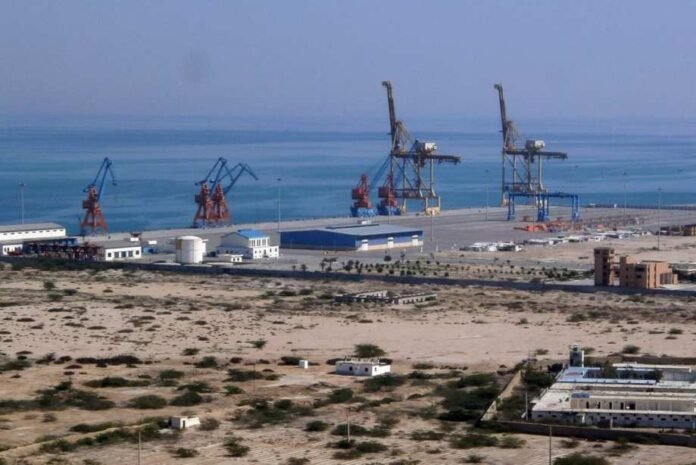
Marine bunkering services have begun at Gwadar. Meanwhile, according to reporting in June 2026, the proposed $10 billion Saudi refinery announced for the port in 2019 had yet to attract the promised investment. These contrasting experiences raise a fundamental question: where should Pakistan begin with Gwadar’s development? The strongest starting point is commercial activity with existing customers and measurable revenue. That can provide a foundation for larger investments.

Pakistani fuel, a new market

According to a July 2026 announcement by Pakistan’s Port Community System, Gwadar’s inaugural commercial bunkering operation delivered 2,500 tonnes of very low sulphur fuel oil produced by Cnergyico. Vitol conducted the operation with Pakistan’s National Logistics Corporation (NLC). Cnergyico’s coastal refining complex is located in Hub, Balochistan. Gwadar therefore offers an outlet for domestically refined fuel to international shipping.

The immediate challenge is securing repeat business. A vessel will choose Gwadar if fuel prices and the total cost of the call are competitive, and supply is reliable. Can the initial service become a sustained commercial operation?

Publishing sales volumes and net revenue would help answer that question. Investors would gain evidence of an established market rather than projections of potential demand.

Fujairah and Duqm: competition beyond geography

Gwadar faces competitors that have spent years building their commercial networks. The Port of Fujairah describes itself as one of the world’s three largest bunkering hubs. Storage and blending facilities, supported by established suppliers, give customers operational advantages. Fujairah also lies outside the Strait of Hormuz. That geographical position is no exclusive advantage for Gwadar.

In Oman, Duqm’s refinery provides an industrial foundation for the port. The Omani-Kuwaiti joint venture OQ8 announced in February 2025 that refinery throughput had reached 255,000 barrels per day, exceeding its nameplate capacity of 230,000. Duqm illustrates how sustained production and sales give economic substance to a coastal location.

Gwadar’s geographical advantages also have limits. Oil loaded at terminals inside the Gulf must still pass through Hormuz to reach Gwadar, unless pipelines first carry it to export terminals outside the strait.

Gwadar can offer another location for services and distribution. Becoming an alternative energy export route requires connections extending beyond the port itself.

From TAPI to CASA-1000: How can Afghanistan benefit from energy corridors?

The Saudi refinery: a shifting location

Reuters reported in January 2019 that Saudi Arabia planned a $10 billion refinery at Gwadar. In June 2021, the Financial Times reported that the proposed location had shifted towards Karachi. Yet the Express Tribune’s June 2026 report again described Pakistan seeking Saudi investment in a Gwadar refinery. This history makes clarification of the project’s final location and structure essential.

For Pakistan, the distinction between proposed and committed investment has practical consequences. Building associated infrastructure around funding that remains unsecured increases the cost of waiting. Publishing the project’s implementation stage and conditions for a final investment decision would help prevent premature commitments.

Gulf investors have multiple options. Reuters reported in March 2025 that Aramco was discussing investments in two proposed Indian refineries. Saudi Arabia and the UAE also signed the India–Middle East–Europe Economic Corridor memorandum. Pakistan is negotiating for capital within this competitive environment. Predictable access to foreign exchange and profit repatriation will form part of investors’ calculations alongside project economics.

The China route: strategic value, financial responsibility

Transporting oil from Gwadar to Xinjiang has geopolitical appeal. The engineering difficulties remain substantial. Research by Andrew Erickson and Gabriel Collins in the Naval War College Review examined the challenges of crossing the approximately 4,700-metre Khunjerab Pass and the associated pumping requirements. Severe cold and landslide risks also affect maintenance costs.

An independent assessment of transport costs and guaranteed demand should precede public financial commitments. The route’s strategic value to China should be reflected in its financial contribution. Any future transport agreement should specify ship-or-pay obligations and establish who bears the cost of unused capacity if throughput falls. That allocation will determine Pakistan’s exposure to commercial risk.

From underground wealth to diplomatic power: Azerbaijan’s energy strategy

Balochistan: protection and local participation

The March 2024 attack on an administrative complex near the port demonstrated its vulnerability. Reuters reported that two soldiers and eight attackers were killed, with the Baloch Liberation Army claiming responsibility. Across the wider corridor, the 2017 announcement establishing a dedicated protection force put its strength at 15,000 personnel. That figure was not specific to Gwadar, but indicates the scale of the protection mission.

Security expenditure belongs in the project’s economic accounts. Local support also affects investment durability. A 2023 field study of Gwadar’s fishing communities examined their exclusion from aspects of development decision-making. Participation and continued access to livelihoods would strengthen residents’ stake in the port’s future. Their civilian demands must be considered separately from armed violence.

Pakistan’s priority: building Gwadar’s market

At this stage, expanding maritime services with identifiable customers offers a credible foundation. Evidence of sustained trade would strengthen the case for further investment, while tangible benefits for Balochistan’s residents would give development a firmer local footing.

Pakistan’s strongest negotiating position will come from a port that earns revenue today. Larger projects should build on that record, with partners sharing the financial risks of the strategic benefits they seek.

The views expressed in this article belong to the author and do not necessarily reflect the editorial policy of Middle East Monitor.

Assad Is Gone, Former Supporters Remain: Can Syria Reconcile Without Justice? 

0
assad-is-gone,-former-supporters-remain:-can-syria-reconcile-without-justice? 
Assad Is Gone, Former Supporters Remain: Can Syria Reconcile Without Justice? 


As families continue searching for missing loved ones, the reemergence of figures associated with Bashar Assad’s former government raises questions about accountability, economic settlements, and the future of Syria’s political transition 

For nearly 15 years, Hussein al-Tawil and his family have waited to learn what happened to Ali Ahmad al-Tawil, a 29-year-old civilian from Jabal al-Zawiya in the Idlib countryside who disappeared in Damascus in late 2011.  

Year after year, the family received no answers. They did not know whether Ali was alive or dead. According to his brother Hussein, Ali disappeared at the hands of militias loyal to former Syrian President Bashar Assad.  

When Assad’s government collapsed, the family hoped Ali might be among the detainees released from prisons or that newly accessible detention facilities and records might finally reveal his fate. But they found no trace of him. They received neither a death certificate nor any official document explaining what had happened.  

Now, as Hussein continues waiting for news of his brother, he watches figures who once supported Assad reappear in public life, with some seeking proximity to Syria’s new authorities.  

For Hussein, Assad’s fall did not end his family’s ordeal. Instead, it raised another question: How can Syria pursue national reconciliation while so many families still do not know what happened to their loved ones?  

We had hoped for transitional justice that would hold criminals accountable

“We had hoped for transitional justice that would hold criminals accountable, and for moral justice that would remove from public life those who supported Assad through the media, arts, politics, and sports,” al-Tawil told The Media Line.  

He said the renewed public prominence of former government supporters has deepened the anguish of victims’ families, particularly those still waiting for information about missing relatives.  

His concerns extend beyond the absence of accountability. He fears that networks of influence established under Assad could survive by shifting their allegiance to the new leadership.  

In his view, some figures who supported the former government may now be prepared to offer their loyalty to the new authorities in exchange for preserving their economic interests and influence. Without meaningful institutional change, he warned, the same practices that enabled authoritarian rule could reemerge under different leadership.  

Al-Tawil’s experience reflects a broader debate in Syria over the return of individuals associated with Assad’s government to economic, political, and public life, even as victims’ families continue demanding information about the disappeared and accountability for past abuses.  

Syrian political activist and former opposition figure Jubair al-Sukkari believes Assad’s removal has not yet produced the deeper changes many Syrians expected.  

Speaking to The Media Line, al-Sukkari criticized the appearance of figures associated with the former government in institutions established during Syria’s transition, particularly those involved in transitional justice and preserving the memory of victims.  

He cited what he described as the appointment of Futah Saqr, whom he characterized as having a Baathist background and family connections to figures associated with the former government, to a role involving the preservation of historical memory and archives at the National Commission for Transitional Justice.  

Al-Sukkari questioned the criteria used to select individuals entrusted with documenting the Syrian uprising and preserving the experiences of its victims, arguing that such responsibilities require the confidence of survivors and their families.  

The Media Line has not independently verified Saqr’s alleged position, the nature of her responsibilities, or the background described by al-Sukkari. His statements are presented as allegations rather than established findings.  

Al-Sukkari also raised concerns about Fadi Saqr, a figure formerly associated with the pro-Assad National Defense Forces, questioning the public reemergence of individuals linked to armed formations from the previous era without adequate scrutiny of their past roles.  

He referred to allegations of abuses involving pro-government armed groups in Damascus and other parts of Syria and called for investigations into those suspected of participating in violations.  

Such allegations do not, by themselves, establish individual criminal responsibility, which must be determined through evidence and appropriate legal proceedings.  

For al-Sukkari, the renewed visibility of former Assad supporters sends a painful message to those who opposed the previous government and lost relatives during the conflict.  

As families of victims and relatives of martyrs, we have so far achieved only the first objective of our revolution, which was the fall of the regime

“As families of victims and relatives of martyrs, we have so far achieved only the first objective of our revolution, which was the fall of the regime,” he said.  

He also criticized what he described as the marginalization of some military officers who defected from Assad’s forces, arguing that individuals who opposed the former government have not always been given the roles they expected in the new state.  

Nevertheless, al-Sukkari emphasized that backing Assad did not necessarily mean someone had committed crimes. 

“There is a difference between a supporter and a criminal,” he said. 

He argued that Syrians who supported Assad politically or worked in civilian state institutions should not automatically be treated in the same way as individuals found responsible for abuses against civilians.  

Financial settlements involving businessmen associated with Assad’s government have become another major source of controversy.  

One prominent example is the settlement involving businessman Mohammed Hamsho, who was closely tied to the economic circles around the former president.  

Syrian President Ahmad al-Sharaa defended such settlements during a meeting with members of the Syrian diaspora in New York in September.  

Al-Sharaa said authorities had confiscated approximately 80% of Hamsho’s assets while allowing him to retain the portion they determined had not been acquired unlawfully.  

He argued that companies associated with Hamsho provided employment for approximately 40,000 people and that confiscating all their assets could jeopardize those jobs and harm Syria’s economy.  

The president also stressed that a financial settlement would not protect Hamsho from criminal prosecution if he were found responsible for other offenses.  

His remarks outlined the government’s argument for separating asset recovery and economic continuity from criminal accountability.  

Critics, however, question whether such a distinction can be maintained in practice, particularly when individuals with substantial financial resources and established networks may retain influence over public institutions or investigations.  

Bishr al-Hawi, a member of Syria’s People’s Assembly, told The Media Line that it is important to distinguish between the political return of former government figures and the continued economic activity of businessmen previously associated with Assad.  

According to al-Hawi, former political figures have not returned to their previous positions of influence, while some businessmen have negotiated financial settlements with the new authorities and retained portions of their wealth.  

He acknowledged that traders and business figures associated with the former government have resumed economic activities but said they are less prominent than under Assad.  

Al-Hawi argued that these individuals have not necessarily regained their former economic standing or political influence, adding that Syria needs the resources some of them possess.  

At the same time, he acknowledged delays in implementing transitional justice.  

The transitional justice file has not received the momentum we had hoped for

“The transitional justice file has not received the momentum we had hoped for,” al-Hawi said.  

He said the People’s Assembly seeks to accelerate the process in cooperation with the relevant executive institutions.  

In a significant acknowledgment, al-Hawi said the assembly had not yet received a draft transitional justice law from the National Commission for Transitional Justice.  

He explained that the commission was expected to submit a legislative proposal for parliamentary consideration and eventual approval, but that this had not yet happened.  

The People’s Assembly is awaiting the proposal before beginning its legislative review, he said.  

His comments highlight a central tension in Syria’s transition: Economic settlements involving figures associated with the former government are moving forward while, according to a member of the legislature, the proposed legal framework for transitional justice has yet to reach parliament.  

Al-Moutassim al-Kilani, a researcher specializing in international criminal law, said the reintegration of individuals associated with the former government must be governed by clear legal standards that protect victims’ rights and prevent financial or political influence from replacing accountability.  

Speaking to The Media Line, al-Kilani stressed that support for Assad, by itself, does not establish criminal responsibility.  

Criminal accountability, he explained, must be based on specific conduct and evidence rather than former political affiliations.  

He warned, however, that financial settlements could produce impunity in practice if money, personal connections, or political influence obstruct investigations or shield individuals from prosecution, even without any formal grant of immunity.  

Recovering public assets, he argued, does not extinguish criminal liability or eliminate victims’ rights to truth, justice, and reparations.  

“Recovering the money is a duty, but it does not pay the price of torture, killing, or enforced disappearance,” al-Kilani said.  

Recovering the money is a duty, but it does not pay the price of torture, killing, or enforced disappearance

He maintained that genuine national reconciliation requires establishing the truth, acknowledging abuses, compensating victims, and reforming the institutions that allowed violations to occur.  

He also rejected collective punishment, emphasizing that former political affiliation or employment in state institutions should not be treated as proof of criminal wrongdoing.  

For al-Kilani, one of the greatest risks is that old networks of influence could preserve their ability to shape political decisions, security institutions, the judiciary, and the economy simply by transferring their loyalty to the new leadership.  

“Changing loyalties does not dismantle a corruption network, and changing faces is not enough if the same mechanisms of control remain in place,” he said.  

He argued that preventing a recurrence of past abuses requires an independent judiciary, accountable security institutions, transparent economic agreements, and effective protections for victims seeking justice.  

The National Commission for Transitional Justice has previously stated that economic settlements do not constitute pardons for serious violations and do not grant immunity from criminal prosecution.  

Questions remain, however, about how that principle will be enforced, whether independent mechanisms exist to examine the records of individuals entering settlements, and what safeguards will protect victims’ claims from political or economic interference.  

The Media Line contacted the head of the National Commission for Transitional Justice for comment on criticism of the transitional justice process and settlements involving figures associated with Assad’s government.  

The commission’s chairman referred the request to its media office.  

After several hours of follow-up, the media office said it would provide answers at a later time but did not specify when. The Media Line had not received responses to its questions by the time this report was prepared.  

The debate reaches beyond whether former Assad supporters should be allowed to participate in Syria’s public life.  

While the authorities defend certain settlements as a means of recovering assets, preserving jobs, and supporting a fragile economy, some former opposition activists and victims’ families fear that reintegrating influential figures without sufficient scrutiny could undermine confidence in the country’s new institutions.  

Legal experts emphasize that transitional justice should neither criminalize everyone who supported the former government nor let economic arrangements replace investigations and accountability.  

With a member of the People’s Assembly acknowledging delays in the legislative process, the question of how Syria will balance economic stability, reconciliation, and victims’ rights remains unresolved.  

For Hussein al-Tawil, however, the debate is not primarily about financial settlements or political appointments.  

It is about one missing person.  

Nearly 15 years after his brother Ali Ahmad al-Tawil disappeared in Damascus, Hussein and his family still do not know what happened to him.  

The government Hussein holds responsible for his brother’s disappearance has fallen, but its collapse has not brought the family the answer it has awaited for so long.  

And as figures from Syria’s past return to public life, Ali remains missing, leaving his family to ask what political change can mean for those who are still waiting for the truth.  



For Black voters, climate action means little without relief from rising costs

0
for-black-voters,-climate-action-means-little-without-relief-from-rising-costs
For Black voters, climate action means little without relief from rising costs

This story was originally published by Capital B and is reproduced here as part of the Climate Desk collaboration.​

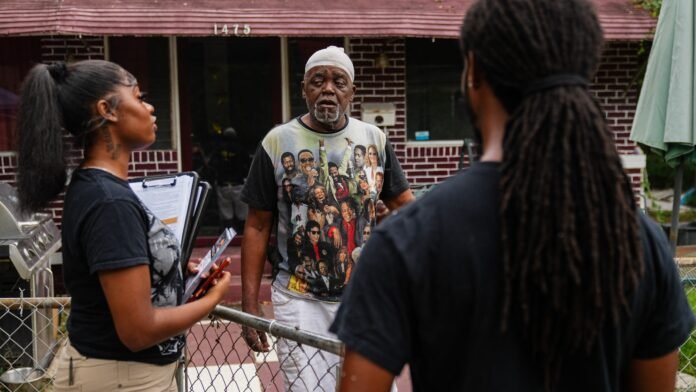
For Elijah Lee, protecting the environment has always been about what’s happening close to home.

He grew up in a predominantly Black, low-income community in Roanoke Rapids, North Carolina, and went to school next to a paper mill that filled the air with pollution. He always wondered why it seemed like the only employment option for people in town. 

Now, as data centers expand in Virginia, where he moved as a teenager, he fears the political promises of data center-driven economic growth won’t reach him or his generation. 

At 18, Lee is preparing to vote in his first midterm election. Climate policy ranks among his top concerns. But he understands why people struggling to pay their bills might not put it first.

“It’s hard to care about the quality of your air or your food that you eat and whether or not that food is actually clean when you can’t even afford the food in the first place,” he said.

New polling suggests that tension is widespread. Black voters may not name climate change as their biggest election concern, but they still want leaders to address it. 

Read Next

In a seven-state survey conducted by HIT Strategies for the Climate Equity Action Fund and the League of Conservation Voters, only 9 percent of Black registered voters ranked climate change among their top three issues motivating them to vote, compared with 74 percent who selected the cost of living. 

At the same time, most respondents said they wanted climate policy to be a top issue for their elected officials. Even among Black Republicans, 79 percent said it was important for candidates to prioritize addressing climate change.

Interviews with voters and advocates suggest the gap is not simply a messaging issue, but also about whether voters see the connection between environmental policy and their immediate needs. Increasingly, it is also a question if voters should even prioritize climate positions when voting because they cannot trust elected officials to deliver lower bills, cleaner water, and protection from corporate pollution.

“Young people today want to ensure we have a future where we can live prosperously,” Lee said. “We understand that the future requires environmental protections. But we also understand that it is not being prioritized today.” 

Climate politics at the kitchen table

The survey, taken from September 24 through October 10 this year, included 2,000 Black and Latino registered voters in swing states in the 2024 election. Seven in 10 respondents in Arizona, Georgia, Michigan, Nevada, North Carolina, Ohio, and Pennsylvania said they are likely to vote in the November midterm elections. 

Across both groups, 89 percent said it was important for candidates to prioritize lowering energy costs, 86 percent said the same about reducing air and water pollution, and 82 percent wanted candidates to prioritize addressing climate change.

Erica Tebbs, a senior analyst at HIT Strategies, said the problem is not convincing Black voters that environmental threats exist.

“The proof that is needed is that their concerns will be addressed and responded to by elected officials and that a vote will result in a real impact in their community,” Tebbs said. “That’s where the doubts lie.”

Read Next

For Tebbs, those answers show why climate’s relatively low ranking on a list of election issues should not be read as indifference. When questions turn to the cost of electricity, safe drinking water, or extreme weather, the concerns become personal and immediate. By contrast, the phrase “climate change,” can feel abstract.

Bill Hairston, national field director for the League of Conservation Voters, sees a similar dynamic in conversations with residents. Data center development, he said, has become one of the issues bringing people into discussions about energy and environmental policy. Residents worry about what the facilities will mean for their bills, air pollution, and housing costs and gentrification. 

“I think it’s actually just putting the two and two together,” Hairston said.

Hairston grew up in Charleston, West Virginia, where his grandparents’ home sat in a poor, Black neighborhood. Daily, coal trucks passed nearby. He remembers the grass around the house looking yellow, with soot on it. 

“I never saw my grandmother’s grass green,” he said. 

He didn’t fully connect those conditions to the decisions shaping his neighborhood when he was young, but he said voters should be making those connections more often.

For Hairston, conversations about data centers offer an opportunity to connect an industry’s presence with questions about health, affordability, and government oversight. Rather than treating those as separate concerns, he wants residents to consider who makes the decisions and whose interests those decisions serve.

Who pays for the data center boom?

The poll found substantial concern among Black voters about what data centers could mean for electricity costs.

Black voters also showed skepticism that policy promises actually benefit their households.  

Respondents were told Congress was considering a policy requiring companies building data centers to pay for the electricity they use rather than passing costs to consumers. Even with that protection described, 52 percent of Black voters expected data centers to raise electricity costs for everyday Americans.

“They don’t necessarily trust that this type of policy will really protect the public from taking on these costs,” Tebbs said.

For Andrea Cristina Mercado, who leads Climate Equity Action Fund, the results show clearly that Black communities are confronting failed policies related to climate change and the environment.

Read Next

Lee, who now lives in the data center capital of the U.S., is an example of this. He questions the tax breaks offered to data center developers and the promises of jobs used to promote the facilities. He worries that communities will be asked to accept the costs without receiving the benefits they were promised.

“I understand the importance of wanting to bring money into Virginia,” Lee said. But “to pass these things off as mass sources of employment is just not true.”

For Mercado, that is why climate policy cannot be separated from affordability and the economy.

“We actually believe that climate policy has to address the needs of working people,” she said, and that is why affordability is leading to “the emergence of a massive organic movement against data centers.”

Shared concerns across party lines

Concern about climate change among Black voters extended across party identification more than it did among Latino voters in the survey.

Among Black Republicans, 79 percent said it was important for candidates to prioritize addressing climate change. Among Latino Republicans, 59 percent said the same.

Hairston said this had to do with the lived experience of Black voters, who are subjected to more pollution and climate change-related issues like flooding. 

He sees those experiences as an opening to organize around protections that reach beyond party labels. For climate advocates, the challenge is persuading people that taking action can produce results.

Nearly half of respondents said that powerful interests and wealthy corporations would always block meaningful efforts to reduce climate harm, regardless of what ordinary people did, and that they believed it was already too late to reduce that harm.

But 45 percent of Black voters said people working together through voting, petitions, and boycotts could hold government and corporations accountable and reduce the harmful effects of climate change.

Tebbs said those doubts about political power mattered especially to younger voters. 

But the possibility of change is still visible among young people, said Lee, who is a first-year college student. He pointed to a group of high school students in Spartanburg, South Carolina, organizing against a proposed data center as an example of students seeking a say in the future being built around them.

He wants older voters to listen to those concerns rather than assume a generation raised with technology will welcome every project built to support it.

“We know that this is the future that we’re inheriting, the markets that we’re inheriting, the housing that we’re inheriting, the food prices that we’re inheriting,” he said. “And so I think more than anything, I’m being driven by deep concerns, but also by a deep hope that we can turn this around.”


Rocket Report: SpaceX says no thanks to military launches; Spanish rocket nearly ready

0
rocket-report:-spacex-says-no-thanks-to-military-launches;-spanish-rocket-nearly-ready
Rocket Report: SpaceX says no thanks to military launches; Spanish rocket nearly ready

Welcome to Edition 9.16 of the Rocket Report! Lots of SpaceX-related news this week including a couple of Thursday shockers. In one story, the company told the US Space Force thanks, but no thanks after being offered three military launch contracts. Then, on the civil space side of things, SpaceX’s Starship may required up to 22 refuelings to support a lunar landing, a NASA safety panel said.

As always, we welcome reader submissions, and if you don’t want to miss an issue, please subscribe using the box below (the form will not appear on AMP-enabled versions of the site). Each report will include information on small-, medium-, and heavy-lift rockets as well as a quick look ahead at the next three launches on the calendar.

Miura 5 getting closer to launch. PLD Space says its Miura 5 rocket, due to undertake its inaugural launch next year, is nearing final integration, Aviation Week reports. The rocket is one of three Miura 5s the company has already manufactured, with the other two designed to qualify key system elements, CEO Raúl Torres said in an October 19 program update. PLD Space now targets a first flight of the small-lift vehicle before mid-2027.

Fully integrated stage … “Manufacturing these three vehicles has allowed our teams to work continuously across different stages of production and integration, applying the lessons learned from each qualification campaign directly to the launch vehicle,” Torres said. One Miura 5 second stage is now fully integrated to kick off system-level testing under representative operating conditions. The second stage is at PLD’s Teruel test facility for its qualification campaign, including wet dress rehearsal and a static hot-fire test.

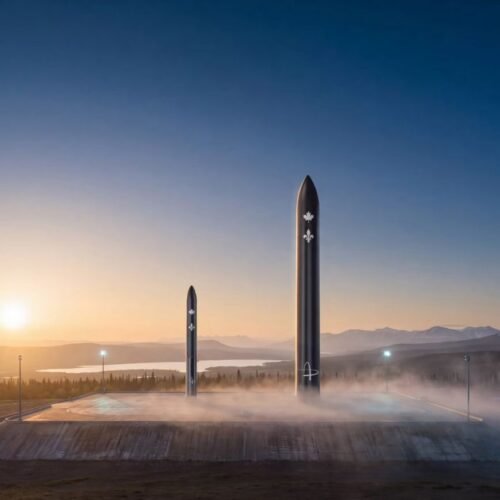
Reaction Dynamics seeks to raise $350 million. One of three prominent Canadian launch startups, Reaction Dynamics, said it is seeking to raise $350 million to grow its staff from 68 to more than 350 people, spaceQ reports. The company is developing the small-lift Aurora rocket, which Reaction Dynamics hopes will reach orbit in 2028. Reaction Dynamics also announced plans to build a medium-lift rocket, Borealis, for a debut by 2031.

You’ve got the aurora, and the borealis … With a lift capacity of 6 tons to low-Earth orbit, Borealis would carry a little under half of the advertised payload capacity of Rocket Lab’s Neutron vehicle. “We founded Reaction Dynamics because we believe Canada should be able to reach orbit on its own terms,” the company’s founder and chief executive, Bachar Elzein, said. “Aurora is how we get to orbit in 2028. Borealis is how we deliver sovereign access to orbit, at scale, by 2031.” Both of the dates appear to be highly aspirational, but we wish them luck.

Rocket Report
Keep up with the latest in space exploration and rocket launches.

Sign Me Up!

Rocket Lab sets next Electron launch date. After 97 launches of Electron, it is not exactly news that Rocket Lab is preparing for its 98th launch of the vehicle. The mission, launching three HAWK satellites for the constellation operator HawkEye 360, is due to launch as early as 07:00 UTC on Friday, October 23.

So why are you writing about it? … Two reasons. First of all, it’s worth noting that Rocket Lab continues to be only the second company to develop and frequently fly a purely commercial rocket. Secondly, we love the name of the mission, “We’re Not Hawking Around.” Kudos to the Rocket Lab team for keeping launch fun and fresh, even after moving through dozens of launches.

SpaceX says no thanks to Space Force launches. The Space Force recently tried to book rides for three future satellite missions, but SpaceX declined to offer its services, Politico reports. No other rocket companies offered to take them either, the publication reported. A top Space Force official, Brig. Gen. Eric Zarybnisky, the acting portfolio acquisition executive, acknowledged growing pains for the government and space industry as demand for rockets increases. “Temporarily, there are some things we’ll need to work through, again, as we get new providers flying,” he said. SpaceX has been declining to sign new Falcon 9 and Falcon Heavy launch contracts for all kinds of customers.

No one else has capacity … The three Space Force missions that didn’t find a ride were listed through the National Security Space Launch initiative. Two of the missions were for the Space Development Agency. The agency is a branch of the Space Force that’s building a network of hundreds of military satellites in low-Earth orbit to provide expanded data services, and missile warning and tracking capabilities. Other potential launch providers, United Launch Alliance and Blue Origin, are both working through setbacks with their launch vehicles. Zarybnisky remained optimistic that Blue Origin and ULA will work through their technical problems and that new competitors will get up and running in time.

Who will win the medium-lift launch race? It has been 13 years since the debut of a new medium-lift rocket in the United States, the Antares vehicle developed by Orbital Sciences Corporation. Nearly a decade and a half later, there is a new generation of medium-lift vehicles coming online, and they are starkly different from Antares, which had not just Russian engines but a core stage manufactured in Ukraine.

Which comes first … In a new article, Ars updates the status of four medium-lift rockets under development in the United States: Stoke Space’s Nova, Relativity Space’s Terran R, Rocket Lab’s Neutron, and the Eclipse vehicle being built by Firefly and Northrop Grumman. The publication also (somewhat hazardously) predicts the order in which the four rockets will make their debut.

Japanese rocket launches historic Phobos mission. Japan launched a $578 million mission Monday on a five-year expedition to land on the largest moon of Mars and retrieve samples for return to Earth, Ars reports. The robotic Martian Moons eXploration mission, known as MMX, lifted off at 3:41 pm EDT Monday (4:41 am Japan Standard Time Tuesday) from Tanegashima Space Center in southern Japan.

This has been tried before … The MMX spacecraft rode into orbit atop a 207-foot-tall (63-meter) H3 rocket, Japan’s flagship launch vehicle. The rocket assigned to MMX debuted a new souped-up configuration with four strap-on solid rocket boosters, full-throttle main engines, and an extended payload shroud to accommodate the demands of Japan’s heaviest and most ambitious interplanetary mission to date. MMX is not the first mission to attempt a sample return from Phobos. Russia’s Phobos-Grunt sample return mission failed soon after launch in 2011, before it could set off for Mars. (submitted by tsunam)

Chinese rocket debris found in Midwest. In September, a Chinese rocket took off from a remote spaceport in the Gobi Desert, released 10 satellites into orbit, then reignited its engine and put itself on a trajectory to rain down debris over the American Midwest, Ars reports. The rocket’s flight on September 15 lasted between 75 and 80 minutes, and it came down without completing a full orbit of the Earth. Social media posts at the time showed streaks of fiery debris falling from the sky, heading north over Kansas toward Minnesota. The overnight spectacle was also visible on the western horizon from Wisconsin.

A surprising find … The exact time, location, and direction of the debris allowed experts to connect it to the launch of a Zhuque-2E rocket, a medium-lift vehicle built by a Chinese company called LandSpace. The rocket had launched from Dongfeng, a commercial launch zone co-located with the military-run Jiuquan Satellite Launch Center in northwestern China, less than two hours before. The incident was largely forgotten until the last few days, when a farmer in rural Minnesota discovered a circular metal object about 11 feet in diameter lay amid the forest of corn stalks.

Arianespace targets Nov. 23 return for Ariane 6. Arianespace has announced that the next Ariane 6 launch will take place no earlier than November 23, marking the rocket’s return to flight after ground testing reportedly revealed an issue with one of its turbopumps, European Spaceflight reports. The flight will carry 36 Amazon Leo satellites aboard an Ariane 64, the rocket’s four-booster configuration. It will be the fifth Ariane 6 flight of 2026 and the tenth since the rocket’s inaugural flight in July 2024.

Situation is on track … Arianespace’s new announcement follows a report from French newspaper La Tribune, published a day earlier, claiming ArianeGroup had resolved an anomaly affecting a liquid hydrogen turbopump that had disrupted the rocket’s launch schedule. According to the report, the anomaly was first detected during an engine acceptance test shortly before the start of summer. Asked by European Spaceflight to comment on the report, an ArianeGroup spokesperson declined to address it directly and instead pointed to the newly announced launch date. “The next launch has been announced today, so the situation is on track.”

How many Starships will be required for a lunar landing? On Thursday, the NASA Aerospace Safety Advisory Panel held its quarterly meeting, during which panel member Charlie Precourt (a former NASA astronaut) spoke about risks associated with the Artemis Program and landing humans on the Moon, Ars reports. One of these is the number of refuelings required to support a Starship lunar landing.

Uncertainty remains … “With respect to Artemis IV, however, we’ve got a large number of firsts that reduce the likelihood of mission success,” Precourt said. “We need to keep our eyes on numerous required fuelings for the lander. I think the last estimate is around 22 flights.” In response to this, SpaceX founder Elon Musk replied that NASA’s safety panel estimate was not accurate. “That’s way too high,” Musk said. “Actual number will be more like 6 to 8.”

SpaceX will attempt a rocket and upper stage catch. It has been a little more than three weeks since the 14th test flight of the massive Starship rocket, which largely went well despite some issues with the Raptor rocket engine. SpaceX has gleaned enough data from that test to attempt a catch of both the Super Heavy first stage of the rocket and the Starship upper stage on the next flight, Ars reports. SpaceX founder Elon Musk said he believes success is “more likely than not” for these attempts, but he added the company is hardware rich if there are failures.

Working with the FAA … Both catches would happen at the company’s launch site in South Texas, Starbase. SpaceX is currently targeting November for this 15th test flight. One of the big hurdles is regulatory, as the Starship vehicle must return to the launch site over land, including northern Mexico. “We have had significant constructive engagement with the FAA, and we expect the license for our Flight 15 to include return to launch site and tower catch for both stages,” SpaceX President Gwynne Shotwell said.

Blue Origin goes bigger on New Glenn. Blue Origin announced a major expansion of its already considerable Florida launch facilities last Friday with the intent of eventually flying more than 100 rockets a year from there, Ars reports. The company said it would add two launch pads for the New Glenn rocket, in addition to two already under construction at Cape Canaveral. The company is also investing heavily in a new manufacturing facility that will produce up to 150 upper stages for a larger variant of the New Glenn rocket.

More missions … The company also plans to procure two additional landing ships to catch and return the first stage of the New Glenn rocket (it currently has one, named Jacklyn). Finally, Blue Origin said it would add a new customer integration facility, built in conjunction with the US Space Force, that will feature four payload bays to process multiple missions at the same time. “These investments are centered on one goal: building the capacity to support more missions, more reliably, and more efficiently,” said Ian Richardson, senior vice president of operations at Blue Origin.

Next three launches

October 23: Electron | We’re Not Hawking Around | Māhia Peninsula, New Zealand | 07:00 UTC

October 23: Long March 6A | Unknown payload | Taiyuan Satellite Launch Center, China | 10:15 UTC

October 23: Long March 4B | Unknown payload | Jiuquan Satellite Launch Center, China | 19:25 UTC

Reality TV Star Dead Months After Fairytale Wedding

0
reality-tv-star-dead-months-after-fairytale-wedding
Reality TV Star Dead Months After Fairytale Wedding


MTV reality star Anika Rashaun, who appeared on “The Real World” and “The Challenge,” has died at just 34, only months after marrying her husband in what she described as a dream wedding.

Rashaun died on October 1 following a battle with stage 4 breast cancer, which she was diagnosed with in the summer of 2025. Her death has left friends, former castmates and loved ones mourning a woman remembered for her adventurous spirit, fierce loyalty and determination to live life on her own terms.

The heartbreaking news gained widespread attention on October 23, shortly after what would have been Rashaun’s 35th birthday.

Her longtime best friend, Tiara Ramos, revealed details of her illness in an emotional tribute published October 5. The two had been close for more than 20 years, sharing countless milestones before the devastating diagnosis changed their lives.

Ramos said the cancer diagnosis came as a shock, particularly because Rashaun’s mother had previously battled breast cancer. According to Ramos, her friend had never been identified as high-risk or advised to prioritize mammograms.

Despite her illness, Rashaun experienced one of the happiest moments of her life earlier this year when she married Kyle Rehn on Valentine’s Day in San Marcos, California.

The couple exchanged vows in February, less than eight months before her death. Sharing wedding photographs on Instagram afterward, Rashaun described the celebration as a dream and said she and Kyle could not have imagined a more perfect day.

Friends later remembered the wedding as a fairytale, making the couple’s time together as newlyweds especially heartbreaking.

Rashaun first captured viewers’ attention in 2016 when she joined MTV’s “Real World Seattle: Bad Blood.” The season reunited cast members with people from their past, including Rashaun’s former boyfriend, Will Groomes.

She returned to television in 2017 as a contestant on “The Challenge: Invasion of the Champions,” although her run ended during the third episode.

Away from the cameras, Rashaun built a career as a professional matchmaker, dating coach and entrepreneur. She founded ASKANIKA, a lifestyle and relationship-focused brand, while continuing to pursue opportunities in entertainment.

She also spoke openly about her cancer experience on the podcast “Breast Friends Forever: BFFs Battling BC,” encouraging women to attend medical appointments, pay attention to changes in their health and advocate for themselves.

Her story carries particular significance during Breast Cancer Awareness Month. The Centers for Disease Control and Prevention advises people with a family history of breast cancer to discuss their individual risk and appropriate screening options with a healthcare professional.

As news of her death spread, former “Real World” castmate Theo King-Bradley shared an emotional tribute, expressing sadness that he never had another opportunity to see her and recalling the memories they made together.

Other friends honored Rashaun around October 22, which would have been her 35th birthday, remembering her remarkable energy, love of travel and willingness to embrace new experiences.

Ramos recalled a woman who moved to Thailand without knowing anyone, went skydiving on a first date and pursued ambitious business ideas from childhood.

“She loved life. She lived life,” Ramos wrote.

For those closest to Rashaun, the loss extends far beyond her reality television career. She leaves behind her husband, family and a circle of friends who watched her chase dreams, build relationships and celebrate life’s biggest moments.

Ramos ended her tribute with a promise to honor her friend’s memory by living more boldly and continuing to support efforts to find a cure for breast cancer.

US orders diplomats to depart Saudi Arabia

0

The US State Department has ordered some diplomats and family members to depart from its missions in Saudi Arabia and plans to withdraw family members from a number of other US ​missions in the region, US officials told Reuters. The order came as attacks in Saudi Arabia killed ​at least one person and injured eight […]

Chile passes law establishing annual day of friendship and solidarity with Palestine

0
chile-passes-law-establishing-annual-day-of-friendship-and-solidarity-with-palestine
Chile passes law establishing annual day of friendship and solidarity with Palestine

Sixteen years after recognising the State of Palestine, Chile will mark its first official Day of Chilean-Palestinian Friendship and Solidarity on 7th January 2027, following the passage of a new law celebrating the historic ties between the two peoples.

Published in Chile’s Official Gazette on Thursday, 22nd October 2026, Law No. 21,843 officially designates 7 January as an annual day of friendship and solidarity with Palestine. The move also reaffirms Chile’s commitment to Palestinian human rights, going beyond a symbolic celebration of the longstanding relationship between the two countries.
The move goes beyond celebrating the historic friendship between the two peoples. It also reaffirms Chile’s commitment to protecting human rights, particularly those of the Palestinian people, in line with UN principles.

The legislation contains two articles. The first establishes 7th January as the annual day of friendship and solidarity between Chile and Palestine. The second provides for commemorative activities celebrating the relationship between the two peoples, while reaffirming Chile’s commitment to the United Nations’ universal human rights protection system.

“Commemorative activities may be held to celebrate friendship and solidarity between Chile and Palestine, reaffirming Chile’s commitment to UN human rights principles and the rights of the Palestinian people”.

First introduced in January 2024, the proposal later moved to the Senate, where several amendments were made before its approval. It then returned to the Chamber of Deputies for a final vote on 22nd September, where it secured majority support, paving the way for it to become law.

During parliamentary discussions, Senator Vlado Mirosevic Explained his support for the legislation, Mirosevic said: “I voted in favour of this bill because it speaks of something that is not foreign to Chile; it speaks of ourselves and our history.”

He emphasised that Palestinians and their descendants had contributed to Chile’s industrial, social and cultural development, while maintaining enduring connections with their ancestral homeland.

Senator Sergio Gahona similarly described the legislation as more than a symbolic gesture,“Voting on this initiative is not simply about setting a date on the calendar, but about profoundly recognising a community that forms an integral part of the soul of our country,” he told the Senate.

Gahona highlighted the contributions of families originally from Bethlehem, Beit Jala and Beit Sahour to Chile’s economic and social development.

The bill received broad support in Congress, securing 100 votes in the Chamber of Deputies and 30 in the Senate. Congresswoman Carolina Tello welcomed the new law, saying it would provide an opportunity to organise events, bring people together and raise awareness about human rights and respect for international law. “On 7 January, we will be able to hold activities and meetings that highlight the importance of human rights and respect for the international community,” she said.

Tello also expressed hope that the law would help raise awareness of the humanitarian crisis in Palestine and prevent similar tragedies elsewhere. “We are happy, and I hope this initiative will help prevent what we are witnessing in Palestine from happening in other parts of the world,” she said, adding: “No to genocide in Palestine.”

The Palestinian Embassy in Chile also welcomed the new law, describing it as an important milestone in relations between the two countries. In a statement shared on social media, the embassy celebrated the publication of Law No. 21,843 on 22 October, officially designating 7 January as the annual Day of Chilean-Palestinian Friendship and Solidarity.

“This law marks a milestone in relations between Chile and Palestine,” the embassy said, adding that it recognises the shared history and strong bonds between the two peoples.

The embassy said that the new annual commemoration would provide an opportunity to celebrate the longstanding friendship and solidarity between Chile and Palestine.

Why 7th January? The date was not chosen by chance. The date holds special meaning for both Chile and Palestine. On 7th January 2011, Chile officially recognised Palestine as an independent and sovereign state under former President Sebastián Piñera.

According to legislative records from the Library of the National Congress of Chile, commemorating this historic decision was a key aim of the initiative from the beginning, reflecting an important milestone in relations between the two countries.

During Senate discussions, Senator Matías Walker highlighted the significance of the date and reaffirmed Chile’s longstanding support for a peaceful settlement and a two-state solution in line with international resolutions.

Everybody panic: A Valve developer said “HLX” in public

0
everybody-panic:-a-valve-developer-said-“hlx”-in-public
Everybody panic: A Valve developer said “HLX” in public

Gamers still hoping against hope for a true follow-up to Half-Life 2 (after so, so many years) may remember last year’s flurry of speculation that Half-Life 3 was finally nearing completion. Amid all those rumors, though, we never got any official sign from anyone inside Valve that a Half-Life project was currently in development.

That changed this week thanks to an apparent slip-up during a panel at GameSoundCon, an industry conference devoted to “the art, technology, and business of game audio.” In a panel devoted to Valve’s use of open audio engines (captured in this Vimeo clip), Valve composer and audio artist Mike Morasky let an interesting string of three letters slip while talking about the way the company implements high dynamic range (HDR) audio:

Our HDR system is basically that’s one of the three pieces that come together to make an HDR that you can easily optimize. And in fact, I think Deadlock has their own version of HDR. HLX has its own version, so on and so forth [emphasis added].

“HLX,” of course, has been widely reported as the internal code name for Valve’s next Half-Life project. The codename has shown up in Valve engine code since at least 2024, but it has never been referenced in public by a Valve employee until now (though Morasky was responsible for a close call in an interview last year).

In the panel video, fellow panelist and Valve sound designer David Feise can be seen mumbling a sarcastic “nice work” to Morasky after the HLX codename slips out of his mouth. Later, while the audience is clapping at the end of the Q&A session, Feise leans in to Morasky and appears to say, “Good job—you only said HLX once!”

When are they gonna get to the HLX factory?

An official utterance of the “HLX” shibboleth is of course a good sign for those looking for any indication of the franchise continuing beyond 2020’s Half-Life Alyx. But the question of when Valve will make its next Half-Life project official still looms large.

Remember, it was just under a year ago that journalist Mike Straw was adamant that Half-Life 3 would be a Steam Machine launch title. Now that the Steam Machine launch has come and gone without even a nod toward an announcement, we can understand why Valve watchers would be more gun-shy than usual over any new rumors.

Longtime Valve watcher Tyler McVicker—who said Half-Life 3 was in the “final stages of development” and suggested a 2026 announcement was “likely” last year—admitted in a recent video that he now doesn’t believe that HLX is being announced this calendar year. But he also pointed to recently increased coding activity within Valve (as measured by externally viewable internal “commit” numbers) that something big might be coming sooner than later.

One thing is for sure: Whenever Half-Life 3 finally is announced and released, it will have to be truly incredible to make up for the loss of the long-running metagame of speculating about its mere existence.

0FansLike
0FollowersFollow
0FollowersFollow
0SubscribersSubscribe
- Advertisement -
Google search engine

Recent Posts