19.8 C
London
Thursday, October 15, 2026
Home Blog

US banks on bunker-busting Tomahawks to crack China’s missile wall

0
us-banks-on-bunker-busting-tomahawks-to-crack-china’s-missile-wall
US banks on bunker-busting Tomahawks to crack China’s missile wall

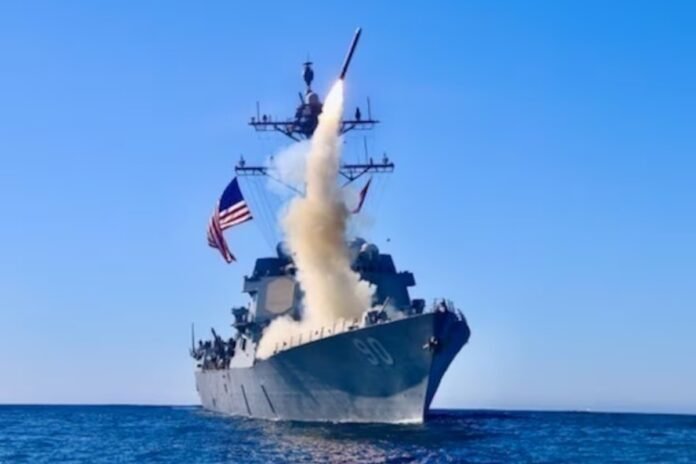
The US Navy’s bunker-busting Tomahawk push reflects growing recognition from the Iran war that striking deeply buried missile sites protected by robust air defenses requires long-range standoff weapons. But the missile faces serious operational, logistical and escalation challenges against China.

The US Navy plans to award Raytheon an exclusive, sole-source contract for low-rate initial production of the Joint Multiple Effects Warhead System (JMEWS), advancing a bunker-busting variant of the Tomahawk cruise missile from development to operational manufacturing, multiple media outlets reported.

According to a pre-solicitation notice published by Naval Air Systems Command, the procurement will equip the Tomahawk Block Vb with a two-stage warhead that combines penetration capability and blast-fragmentation effects to destroy hardened underground bunkers, missile silos, and command centers from about 1,600 kilometers away.

The US Navy justified the non-competitive award by citing the RTX subsidiary’s proprietary technical data and continuous role since 1994 as the missile’s sole developer and manufacturer, noting no other contractor could meet deployment timelines without duplicative costs.

While exact dollar figures, delivery schedules and production volumes were withheld, recent budget plans slated funding for 35 re-certified missiles with upgrade kits ahead of a projected 2027 initial operational capability.

The initiative, overseen by Patuxent River’s PMA-280 office with work centered in Tucson, Arizona, gives surface destroyers and submarines standoff precision-strike options against fortified adversarial infrastructure without placing manned aircraft inside hostile air-defense envelopes.

The performance of US munitions on Iranian underground sites during Operation Epic Fury may leave much to be desired, prompting the development of the JMEWS Tomahawk Block Vb.

While intense US and Israeli strikes initially crippled Iranian ballistic missile operations, Iran rapidly reconstructed damaged facilities and resumed daily strikes. Iranian forces were bulldozing and unearthing sealed bunkers hours after attacks, preserving an estimated half of their mobile launchers and firing 15 to 30 ballistic missiles daily.

Despite enduring more than 20,000 strikes targeting infrastructure and logistics, Iran leveraged deep mountain fortifications, spare component stockpiles and deceptive decoys to sustain its primary deterrent.

Dwindling US stocks of standoff munitions may have prompted the development of a bunker-busting Tomahawk. Shortages may have forced the US to rely on shorter-range weapons like the Joint Direct Attack Munition (JDAM), requiring aircraft to fly closer to targets and potentially enter enemy air defense range.

Those lessons carry critical operational implications for a potential conflict over Taiwan. In a July 2023 report for the James Martin Center for Nonproliferation Studies (CNS), Decker Eveleth notes that the People’s Liberation Army Rocket Force (PLARF) relies heavily on subterranean networks opposite the Taiwan Strait to protect its frontline strike assets from counter-battery bombardment.

According to Eveleth, Base 61 — headquartered in Huangshan, Anhui — disperses its conventional missile brigades across Fujian, Jiangxi, and Zhejiang into subterranean facilities excavated by Base 68 engineering units upon receiving strategic warning.

Eveleth observes that these mountain tunnel complexes house transporter-erector-launchers (TELs) for hypersonic DF-17s, DF-16s, and DF-15s, enabling crews to service and mate warheads inside hardened bunkers before rolling out to pre-surveyed launch pads.

He adds that Base 61 links these launch sites to subterranean command posts via dedicated fiber-optic networks, ensuring high survivability and enabling rapid “shoot-and-scoot” salvos during a cross-Strait conflict.

As such, “shooting the archer” – destroying TELs before they launch their missiles – may no longer be sufficient to suppress the missile threat the PLARF poses to Taiwan and to US and allied forces – it is now imperative to destroy those underground missile facilities.

But China’s dense air defense network may preclude attacking those underground facilities with traditional bunker-buster bombs such as the BLU-109 and GBU-28, both of which are dropped from aircraft. Hence, a standoff bunker-buster option such as the JMEWS-armed Tomahawk Block Vb may be necessary to attack those targets.

Still, the bunker-busting Tomahawk may not be a wonder weapon against China’s missile forces. While the Tomahawk proved devastating against adversaries with obsolete, non-existent, or disjointed air defenses, such as Iraq, Afghanistan and Iran, its performance against a peer adversary with a modern and dense air defense network, such as China, is debatable.

The Russia-Ukraine War may offer a glimpse of how subsonic cruise missiles perform against modern air defenses.

In the aftermath of a July 2026 Russian air attack on Ukraine, the Ukrainian media outlet Militarnyi reported that Ukrainian air defenses destroyed 31 of 33 Kh-101 air-launched cruise missiles and all six Kalibr ship-launched cruise missiles launched during the attack – but failed to destroy any Russian ballistic missiles during the attack, owing to a shortage of Patriot interceptors.

While the Russian Kh-101 and Kalibr are functionally equivalent to the US Tomahawk, their effectiveness may also depend on the quality of mission planning behind the strikes.

Although the US Tomahawk may be much slower than ballistic missiles, extensive US intelligence, surveillance and reconnaissance (ISR) capabilities, combined with the Tomahawk’s long range, could enable complex flight paths through pre-identified gaps in enemy air defenses. US strike packages may also include suppression/destruction of enemy air defenses (SEAD/DEAD), whereas Russia may rely more on sheer numbers.

Beyond target-end interception, the survival of US launch platforms within Chinese anti-access coverage presents an equally pressing dilemma.

For instance, while the US Army has forward-deployed the land-based Typhon launcher to the Philippines, the battery’s sizable multi-vehicle footprint, constrained archipelago geography, and limited road infrastructure leave it vulnerable to persistent Chinese ISR tracking and rapid counter-battery strikes.

US ships with Tomahawk cruise missiles may also be vulnerable to saturation strikes that deplete their limited missile interceptors, while US submarines must contend with China’s growing ability to track them within the First Island Chain, especially in the South China Sea.

Industrial capacity also poses an acute bottleneck. Before Operation Epic Fury in February 2026, the US military maintained roughly 3,100 Tomahawks in its pre-war inventory; by April, US forces had expended more than 1,000 rounds.

With unit replacement costs running at US$2.6 million and procurement lead times stretching to 47 months per missile, a high-intensity conflict against China would exhaust existing inventories far faster than US assembly lines can replace them.

The kill chains guiding Tomahawk missiles to their targets may also be vulnerable, as China could disrupt or destroy the sensors and networks involved, or misdirect Tomahawk strikes through deception and concealment.

Cruise missile strikes on the Chinese mainland also raise the issue of nuclear ambiguity. While current US Tomahawk missiles are strictly conventional, the US is currently developing a Nuclear-armed Sea-Launched Cruise Missile (SLCM-N), a move that can complicate identifying an attack as nuclear or conventional. That ambiguity may heighten the risk of an inadvertent nuclear escalation.

Whether the JMEWS-equipped Tomahawk Block Vb can fundamentally alter the cross-Strait operational balance will ultimately depend less on its penetrating warhead alone than on the US’s broader ability to expand munitions production, harden launch platforms against preemptive strikes and establish robust escalation guardrails to prevent conventional subterranean strikes from triggering a strategic nuclear response.

Bulgarian PM breaks ranks with EU leaders to back Trump-Putin diesel deal

0
bulgarian-pm-breaks-ranks-with-eu-leaders-to-back-trump-putin-diesel-deal
Bulgarian PM breaks ranks with EU leaders to back Trump-Putin diesel deal


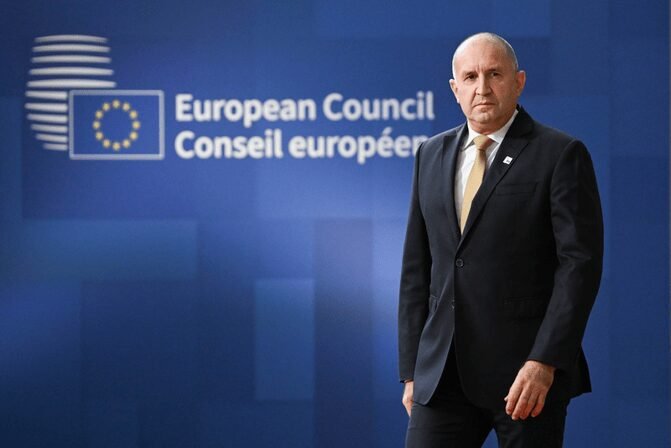
Bulgarian Prime Minister Rumen Radev stunned Brussels on Thursday morning by backing the controversial diesel supply deal agreed between US President Donald Trump and Russian President Vladimir Putin in defiance of Western sanctions.

“You know what is our problem right now in Europe? High fuel prices,” Radev said in English as he arrived at a two-day summit of leaders.

“Any step in reducing fuel prices and to guarantee our competitiveness, we appreciate.”

His comments put him at odds with his fellow EU leaders, who have strongly condemned the deal as risky, dangerous and misguided. To make it happen, the US has eased sanctions on imports of Russian diesel until April 2027.

“We very much regret this agreement on diesel. It’s obviously not a very big part, but still it’s in the wrong direction,” Swedish Prime Minister Ulf Kristersson said. “Every step now to help the Russians to increase their financing of the war is a bad sign.”

Earlier on Thursday, High Representative Kaja Kallas told Euronews that the diesel deal was a gift to Putin at a time when Russia is escalating its bombardment.

“The question is: what has he (Putin) given in return? What we see is that he’s actually increasing the attacks on civilians and civilian infrastructure. The ceasefire that was also announced is not really working on the Russian side,” Kallas said.

In another sign of his split from the EU consensus, Radev criticised Ukraine’s strikes against Russia’s oil refineries, which Trump has asked President Volodymyr Zelenskyy to halt immediately. Zelenskyy has since said his campaign will continue.

“I don’t support strikes on any refineries,” Radev said.

“I don’t support strikes on any energy power plants, like Russian attacks on energy power plants in Ukraine, because this hits us back. The prices in Europe are (skyrocketing).”

European leaders have largely rallied behind Zelenskyy, arguing the strikes on Russia’s oil refineries give Kyiv a powerful leverage over Moscow.

They see Trump’s request as a desperate attempt to lower fuel prices ahead of the midterm elections, where Republicans risk losing both chambers to Democrats.

Since his election victory early this year, Radev has positioned himself as a contrarian voice in the European debate over Russia’s full-scale invasion of Ukraine.

The prime minister recently told Euronews that the bloc’s strategy of “peace by force” had failed and urged his fellow leaders to engage in diplomacy with the Kremlin.

Read more via Euronews

Yemeni premier calls Houthi attacks, siege of Taiz ‘war crime’

0
yemeni-premier-calls-houthi-attacks,-siege-of-taiz-‘war-crime’
Yemeni premier calls Houthi attacks, siege of Taiz ‘war crime’

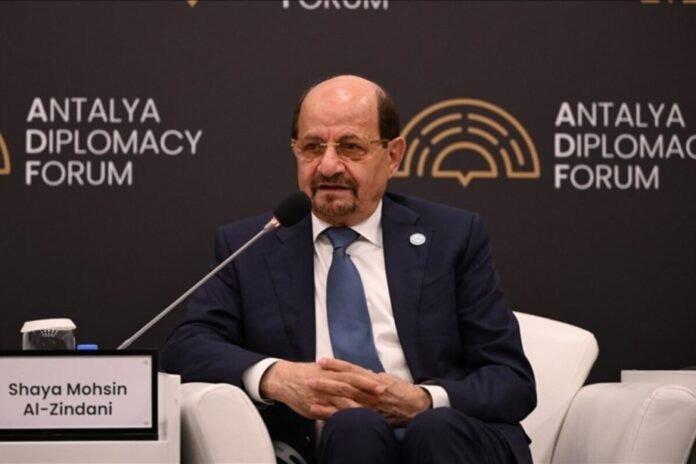
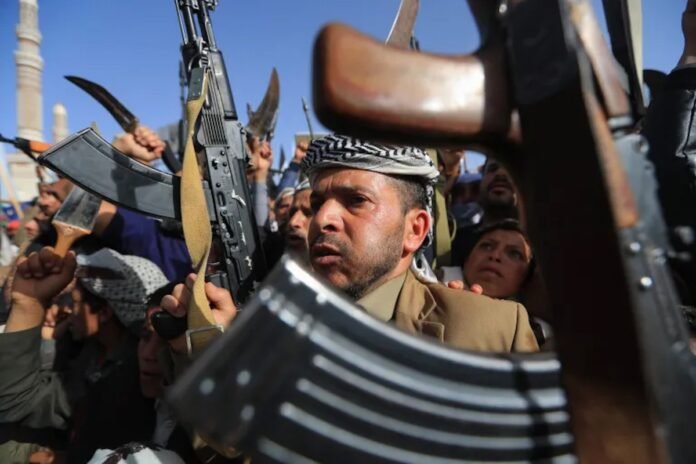
Yemeni Prime Minister Shaya al-Zindani said Wednesday that Houthi attacks on civilians and the siege of the southwestern city of Taiz constitute a “war crime,” stressing that those responsible would face punishment and accountability, the prime minister’s office wrote on US social media company X, Anadolu agency reported.

His remarks came during a call with Taiz Gov. Nabil Shamsan to discuss humanitarian conditions, public services and the effect of the siege.

“The Houthi terrorist militia’s continued targeting of civilians in Taiz and its unjust siege of the city constitute a war crime that is not subject to a statute of limitations,” said al-Zindani.

Shamsan briefed the premier on humanitarian and human rights conditions in Taiz and violations against residents, it said.

The briefing covered restrictions on access to food, medicine, water, fuel and essential services, as well as attacks on residential neighborhoods that have caused civilian casualties, including to women and children, and shelling of vital infrastructure and health facilities.

The governor warned of growing risks to civilian lives and public health.

READ: Rights groups warn Houthi siege threatens millions in Yemen’s Taiz

Al-Zindani said the government was working alongside local authorities to address the consequences of the siege and Houthi escalation, stressing that it would not leave Taiz residents to face the challenges alone.

The premier urged the international community, the UN and human rights and humanitarian organizations to fulfill their moral and legal responsibilities and take urgent action to lift the siege and protect civilians.

He also urged continued media and human rights efforts to bring the city’s humanitarian conditions to domestic and international attention. Al-Zindani called for professional and objective documentation of violations attributed to the Houthis.

There was no comment from the Houthi group.

Yemeni human rights and humanitarian organizations said the Houthis have closed most roads leading to government-controlled areas of Taiz province.

Saudi Arabia has faced attacks in recent days on airports and civilian facilities amid an escalating military confrontation with the Houthis. The escalation began in July following a period of relative calm after a UN-brokered truce took effect in April 2022.

Yemen has been engulfed in conflict since the Houthis seized the national capital, Sanaa, and several provinces in September 2014, prompting a Saudi-led coalition to intervene in March 2015 in support of the internationally recognized Yemeni government.

READ: Yemeni army claims 1,250 Houthis ‘neutralized’ in ‘Dawn of Yemen’ operation

Greta Gerwig channels Bowie in psychedelic The Magician’s Nephew trailer

0
greta-gerwig-channels-bowie-in-psychedelic-the-magician’s-nephew-trailer
Greta Gerwig channels Bowie in psychedelic The Magician’s Nephew trailer

Director Greta Gerwig could have made pretty much any movie she wanted after 2023’s Barbie racked up nearly $1.5 billion at the box office. She chose to make Narnia: The Magician’s Nephew for Netflix, an adaptation of C.S. Lewis’ sixth novel in The Chronicles of Narnia series. Gerwig has said little publicly about the film, other than that she was inspired by 1960s-era David Bowie, although she said it would not be a musical. Netflix just released the trailer, set to “Stairway to Heaven,” and it’s quite the psychedelic ride.

The first book in the series, The Lion, the Witch, and the Wardrobe, was published in 1950, and Lewis did not initially intend to write any more Narnia adventures. But then an acquaintance asked how the London lamppost ended up in the middle of Narnia’s woodland, and Lewis was intrigued enough by the question to start a prequel, The Magician’s Nephew, in order to find an answer. Lewis found it difficult to finish the book, however, writing four other Narnia books first before completing The Magician’s Nephew in 1955.

There have been several adaptations, in various media, of The Chronicles of Narnia, most recently the early 2000s film franchise adapting the first three novels in the series. Those films showed diminishing returns, however, and by 2011 the film rights had expired. There were initial plans to adapt the fourth novel, The Silver Chair.

The original book was set in 1900, but Gerwig shifts the setting to the 1950s, postwar London. Digory Kirke (David McKenna) lives next door to Polly Plummer (Beatrice Campbell), and the two embark on a magical journey to other worlds after Digory’s eccentric uncle, Andrew Ketterley (Daniel Craig), tricks them into trying on magic rings. Then Digory accidentally unleashes the evil empress Jadis (Emma Mackey, who played Physicist Barbie in Barbie) from a sleeping spell, and chaos breaks out.

The cast also includes Kobna Holdbrook-Smith as a London cabby named Frank; Ava Jager as Polly’s sister Violet; Carey Mulligan as Digory’s mother, Flora; Tom Bonington as Mr. Potts; Ciaran Hinds as the adult Digory; and Meryl Streep voicing Aslan. Denise Gough, Susan Wokoma, Gerard Monaco, James Murray, and Samantha Spiro also appear in as-yet-undisclosed roles.

Narnia: The Magician’s Nephew will open in theaters on February 12, 2027. It will start streaming on Netflix on April 2, 2027. It’s the first Netflix film to have a wide theatrical release. Gerwig has a two-picture deal for the Netflix Narnia series, so we might get her take on The Lion, the Witch, and the Wardrobe next (assuming she’s following the books’ chronology).

Digory’s Uncle Andrew (Danial Craig) is the titular magician.

Digory tries on a magic ring.

How non-state alliances are reshaping the global order

0
how-non-state-alliances-are-reshaping-the-global-order
How non-state alliances are reshaping the global order

Yemen’s civil war reignited in early October, as Saudi Arabia brought in Turkish and Pakistani military support to fight the Houthi rebels, who have governed much of northern Yemen as a de facto authority and waged a guerrilla war in the country since 2004.

Having spent more than a decade fighting Saudi-led forces and enduring US, British and Israeli strikes, the Houthis have survived as a powerful regional force with close ties to Iran. Their continued ability to threaten Yemen’s neighbors and Red Sea shipping was demonstrated again by retaliatory strikes against Saudi infrastructure in recent days.

Although Iran is its main state ally, the Houthis, also known as Ansar Allah, are far from isolated. A spokesperson for the US military’s Africa Command said in September that the growing cooperation between the Houthis and the al Qaeda-affiliated Somali Islamist group Al-Shabaab was a “highly concerning, escalatory threat to regional stability,” according to the Financial Times.

Contact between the two ideologically opposed groups—Houthis are Zaydi Shiites, and Al-Shabaab has been strongly ideologically opposed to Shiism—has been publicly evident since at least 2024, with the Houthis supplying weapons and technical training to Al-Shabaab, which, in return, has been providing access to piracy smuggling routes along the Somali coast.

In recent years, similar ties have emerged between the Houthis and other non-state groups in Somalia. The Islamic State in Somalia (ISS) has received Houthi weapons and drones while helping them monitor ships in the Gulf of Aden. The Houthis, Al-Shabaab, and ISS have also coordinated with Somali pirates to transport goods and target vessels in the Red Sea.

“During the Gaza conflict, Ansar Allah persuaded Al-Shabaab, ISS, and Somali pirates to attack vessels and block their passage into the Red Sea in solidarity with the Palestinians,” stated a 2025 article in the Carnegie Endowment for International Peace.

Since 2022, the Houthis have meanwhile paused fighting with Al Qaeda in the Arabian Peninsula (AQAP) amid the Yemeni civil war. According to the think tank Jamestown, this collaboration is transactional and focused on short-term arrangements: the Houthis can acquire funds and smuggling routes, and Al Qaeda affiliates can procure weapons and manufacturing capabilities.

Along with the Houthis’ decades-long relationship with the Lebanese-based force Hezbollah, which also has the backing of Iran, the group has more partners than its isolated diplomatic standing suggests.

Foreign state support remains crucial to non-state groups. Much has been made of Iran’s “Axis of Resistance,” but British support for the Arab Revolt during World War I demonstrated how Western powers could use local armed groups to shape Middle Eastern affairs.

The US and Soviet Union refined proxy warfare during the Cold War, covertly financing, training, and arming foreign militant movements, from the US-backed Nicaraguan Contras to Soviet support for the Revolutionary Armed Forces of Colombia (FARC). This helped push militant groups into the drug trade, with the superpowers willing to turn a blind eye when criminal profits helped keep their allies fighting.

Supporting non-state groups also provided smaller states with means to strike at more powerful adversaries. Between the 1970s and 1980s, Libya supplied the Irish Republican Army with weapons, explosives, and funding to attack British targets.

The partial decline in state support immediately after the Cold War forced many non-state militant groups to become self-reliant. Globalization, along with improved communications and financial networks, brought them into increasing contact with organized criminal organizations, even as state support rebounded.

Together, the “crime-terror nexus” has built a global black market of smuggling routes, safe houses, arms dealers, financiers, money launderers, and shared technology.

Distinguishing lines have faded—militant groups like the Houthis have turned to drug smuggling to fund their operations, Yemeni authorities alleged, according to reporting by the nonprofit Organized Crime and Corruption Reporting Project. Somali pirates have also become more militarized due to their cooperation with the Houthis.

Alliances between non-state groups are mostly loose and temporary partnerships, and even groups like Al Qaeda have become decentralized, giving local affiliates greater freedom to pursue their own interests.

From Al Qaeda’s role in 9/11 to the Red Sea crisis involving the Houthis and their allies, these non-state groups have shown they can reshape global affairs independent of state sponsors. The global illicit economy generated around $6 trillion in 2025, according to the International Coalition Against Illicit Economies, giving criminal and militant networks growing reach across international trade and finance.

Governments and businesses also have to contend with these groups moving through the formal economy; in 2023, Gulf-based traders were sanctioned for brokering charcoal exports from Al-Shabaab-controlled territory.

As the global order grows more unstable due to ongoing wars, cooperation among non-state groups makes it harder for governments to control them and for the private sector to avoid them.

Pursuing instability

Africa has experienced this phenomenon most severely. Since the 2023 outbreak of Sudan’s civil war, largely between the Sudanese Armed Forces and rebel Rapid Support Forces (RSF), an estimated 150 groups have taken part in fighting.

Competition for territory and Red Sea access, alongside political influence and control over the illicit gold trade, has attracted tribal militias, Islamic groups, foreign mercenaries, and criminal groups into the conflict.

These actors have typically alternated between the two main warring sides based on their own financial and political interests. Cooperation between traders, smugglers, and armed groups helps keep gold and weapons moving across borders, with “[t]he growing incentivization of armed actors toward revenue capture and other criminal activities… deepening self-perpetuating drivers of the conflict,” according to the Africa Center.

Outside powers have similarly sought to secure influence over Sudan, often leaning on private forces and intermediaries. At various times, for example, the RSF received support from Russian private military companies (PMCs) backed by the UAE, UAE-linked Colombian PMCs, and aircraft operated by a US contractor supporting RSF logistics, according to a Reuters investigation. But shifting local alliances have frustrated foreign attempts to control the conflict, forcing them to continually adjust their own relationships as the balance of power changes.

Nonetheless, the UAE’s position as the world’s second-largest gold exporter, bolstered by Sudan’s huge gold reserves, suggests that the benefits of the conflict may outweigh the incentive to end it. As a Brookings article states, “the UAE has been the major buyer of Sudan’s gold, which many observers believe is the ‘lifeblood’ of the civil war.”

A recent setback for non-state groups in Africa came in Mali, where government forces, backed by Russian government-controlled Africa Corps, retook the city of Kidal in October 2026. The city was seized in April — alongside additional Malian territory — by Jama’at Nusrat al-Islam wal-Muslimin (JNIM), an al Qaeda-affiliated coalition, in coordination with the secular Azawad Liberation Front (FLA), a secular Tuareg separatist coalition. The FLA controlled Kidal for years before Malian and Russian forces retook it in 2023.

The October offensive in Mali was welcomed in Niger and Burkina Faso. In the 2020s, the three countries removed their elected leaders through military coups. The military juntas that followed strengthened cooperation with Russia and promised to defeat insurgencies and increase domestic ownership of resources.

They have extracted substantial payments from Western mining companies and increased state control over the mining sector. But JNIM, FLA, and other groups still operate across significant territory, and the frequent changes in control in Kidal show how unsettled the conflict remains.

JNIM’s regional agenda is meanwhile aided by drug and human trafficking networks, with the group providing security and safe haven to smugglers in exchange for a share of their income. Additionally, despite the global rivalry between al Qaeda and the Islamic State, their Sahelian affiliates JNIM and the Islamic State in the Greater Sahara initially cooperated against Western and regional forces, before turning to the conflict in the region.

These groups have withstood or emerged despite the combined efforts of the French-led counterterrorism mission Operation Barkhane, UN peacekeeping efforts, and actions by foreign powers-backed PMCs since the early 2010s. They may also outlast the latest Russia-backed effort to defeat them, particularly if they continue to expand ties regionally and globally.

Washington weighs its options

Washington is navigating this expanding web of non-state actors with few effective options. In Sudan, Washington has pressed the Sudanese Armed Forces “to sign an unconditional ceasefire that would freeze the conflict and allow unimpeded access for critical aid deliveries,” according to Al Jazeera, but has failed to secure an agreement.

Over the summer, the Trump administration meanwhile considered strikes in Mali to target non-state actors, but their spread across the Sahel would require a wider campaign. The limited effectiveness of the 2025 US strikes in Nigeria to attack camps of an armed group affiliated with the Islamic State, Lakurawa, highlights the difficulties in containing these groups through airstrikes alone.

The Trump administration is seeking to stabilize relations between the Democratic Republic of the Congo (DRC) and Rwanda, while formalizing mineral supply chains and securing US access to minerals under the Washington Accords. But armed groups like M23, which control the mines, work together with mineral smugglers to connect resources to international buyers, complicating any efforts to build a secure supply chain.

Foreign companies, meanwhile, continue to act as eager buyers from these networks. A 2025 Global Witness investigation revealed that Luxembourg-based commodities trader Traxys purchased conflict coltan smuggled from DRC to Rwanda, while another 2026 report by the nonprofit found that smuggled coltan also found its way “into global markets and popular consumer products, despite due diligence systems.”

For now, Washington may have to tolerate these networks, as its focus on reasserting dominance over the Americas is challenged by a range of militant and criminal organizations operating there.

In 2025, the administration designated dozens of criminal groups in Latin America as foreign terrorist organizations, and has carried out lethal strikes through Operation Southern Spear on suspected drug-smuggling boats in the Caribbean and Pacific.

Yet, besides controversy surrounding the operation’s legal basis and civilian deaths, the strikes are “badly mismatched to the nature of its target. Drug trafficking organizations are decentralized criminal networks that absorb enforcement pressure by rerouting shipments, replacing personnel, and splintering into smaller groups, states the John Quincy Adams Society.

Latin American militant groups have long crossed paths with more general criminal organizations. The Revolutionary Armed Forces of Colombia (FARC) had longstanding ties to drug traffickers, with a 2015 InSight Crime report alleging that FARC members trained fighters from Mexico’s Jalisco cartel.

Comandos de La Frontera (CDF), which includes dissident factions of the now-defunct FARC, reportedly works with the Ecuadorian gang Los Lobos, moving drugs from Colombia toward the Ecuadorian coast while also dealing with weapons, ammunition, and stolen gasoline, Diálogo Américas reports.

Hezbollah-linked criminal and financial networks have also been reported across Latin America for decades. A Colombian intelligence report mentioned by El Heraldo in 2025 alleged links between Hezbollah, Venezuela’s Cartel de LOS Soles, ELN, and FARC splinter factions cooperating for drug trafficking and money laundering activities, through a network allegedly based in Dubai and operating via shell companies in Qatar.

In 2025, the Trump administration offered up to $10 million for information on Hezbollah’s financial institutions in the tri-border area of Argentina, Brazil, and Paraguay, a longstanding hub for smuggling and money laundering that operates with support from regional criminal networks.

The enormous investments involved in organized crime networks have created global economic connections, with Chinese underground banking networks helping Mexico’s Sinaloa cartel move drug proceeds across borders, according to a report by AI investigations company TRM Labs.

The military threat has also evolved as militant groups and organized crime networks overlap, with cartels now operating “more like insurgent groups than purely criminal organizations, employing tactics such as improvised explosive devices (IEDs), drones, and the recruitment of foreign mercenaries,” according to the New Lines Institute for Strategy and Policy.

State policies can also enable these groups to become more lethal. Los Zetas emerged from a Mexican special forces unit whose members received US training, before becoming the armed wing of the Gulf cartel.

The Zetas eventually became a powerful independent organization, helping it establish links with Hezbollah-linked networks. Hezbollah has also sought to exploit domestic criminal networks, with American authorities documenting its efforts to use local criminal groups to support operations within the US.

A new normal

These networks may be based where government control is weak, but their global reach makes them a challenge for all states. The Sinaloa cartel has extended its drug trafficking routes into Africa, crossing jihadist-controlled territory, and has been working with European criminal networks to distribute the substances to European markets.

Revenue from these activities can then finance weapons, recruitment, and further operations for all actors. While non-state groups often engage in violent competition with one another, their ability to work together has made even bitter rivals useful partners when interests align.

Al Qaeda’s persistence despite decades of US pressure demonstrates the resilience of these groups. Though the Houthis’ future remains uncertain amid a widening Saudi-led military campaign backed by Turkey and Pakistan and talk of renewed US strikes, the coalition assembled against them reflects how influential they have become, partly through assistance from their non-state partners.

The Taliban likewise returned to power after near-defeat in 2021, becoming Afghanistan’s de facto government despite limited international recognition. Its successful insurgency benefitted from ties to drug traffickers connected to regional and international criminal networks, as documented by researcher Hamid Azizi in his 2024 article.

While Washington’s focus returns to its great power competition amid war with Iran, the Russia-Ukraine War, and competition with China, it cannot ignore the underworld actors that are thriving through opportunistic cooperation.

Their supply chains have become so developed that states rely on them to sustain their economies, with the Kinahan cartel’s reported involvement in Russian oil shipments helping keep Russia’s sanctioned economy afloat.

The role of non-state groups in fragile regions complicates traditional mediation efforts, as key actors involved in unrest and conflict are often no longer governments, “but profit-driven corporations and armed factions operating outside the bounds of state control,” states the think tank Foreign Policy in Focus.

As non-state groups and commercial interests forge cross-border ties that bypass governments, states are increasingly losing their role as primary architects of the global order, as businesses work with whichever actors can secure their interests.

John P. Ruehl is an Australian-American journalist living in Washington, DC, and a world affairs correspondent for the Independent Media Institute. He is a contributor to several foreign affairs publications, and his book, Budget Superpower: How Russia Challenges the West With an Economy Smaller Than Texas’, was published in December 2022. Follow him on X @john_ruehl.

This article was produced by Economy for All, a project of the Independent Media Institute, and republished with kind permission.
Software development and rules stability: Prototype racing in 2030

0
software-development-and-rules-stability:-prototype-racing-in-2030
Software development and rules stability: Prototype racing in 2030

The rising tide that has been the Drive to Survive effect has lifted more boats in motorsport than simply Formula 1’s. Sportscar racing is enjoying its own surge in popularity internationally at races like Le Mans in France, but also in North America in IMSA’s WeatherTech Sportscar Championship. For one thing, multi-hour, multi-class racing lends itself better to the age of streaming and second screens than it did linear broadcast TV, and fans are taking advantage of that: IMSA’s audience grew by more than a third domestically and almost a quarter internationally last year.

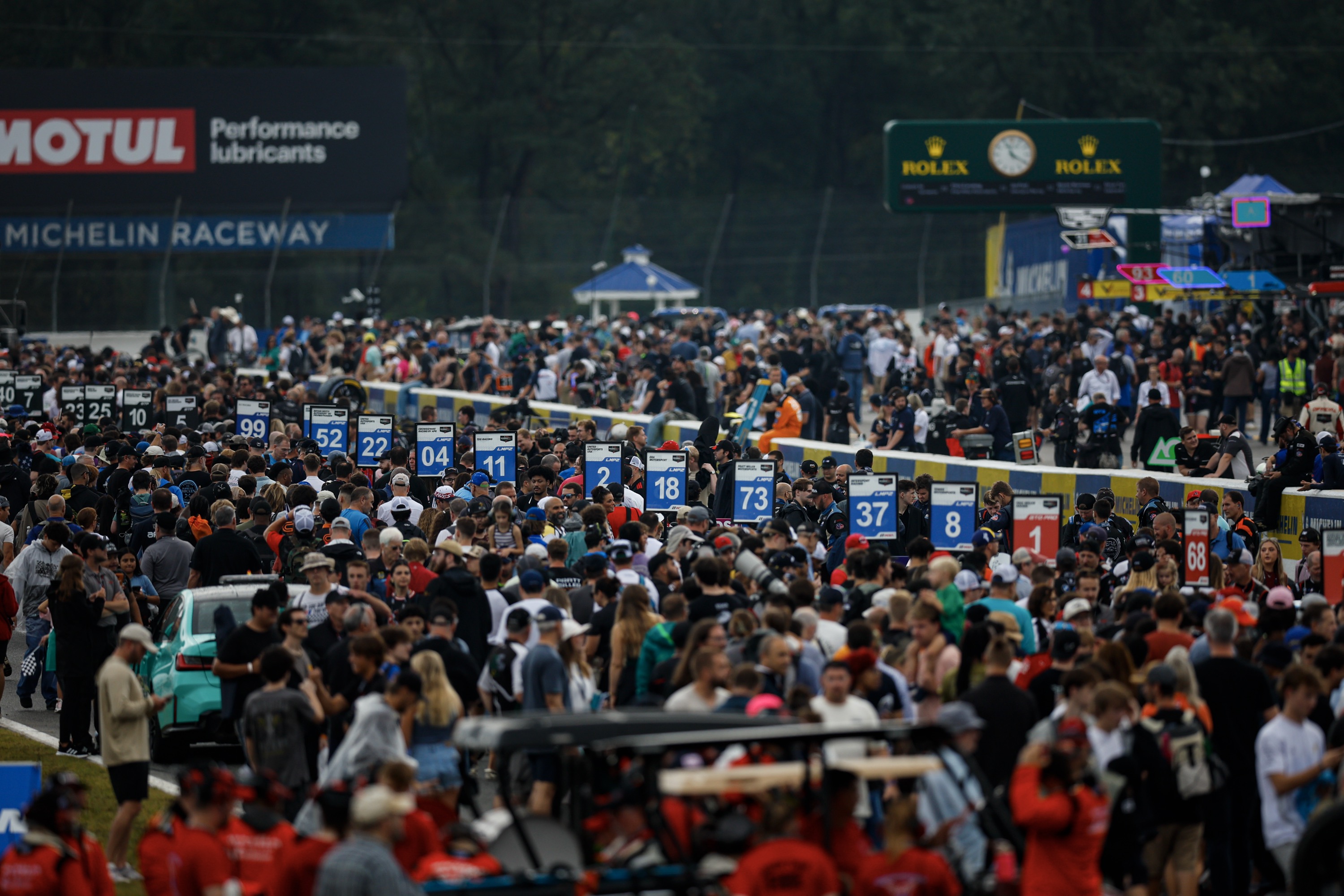
Having some of the coolest-looking cars racing today certainly helps, whether that’s the (mostly) hybrid prototypes or the GTs, racing versions of road-going cars from Porsche, Ferrari, and others. And it definitely helps that fan access at the races is virtually unmatched, with open paddocks and grid walks that now see huge crowds get up close to the cars just before the start of each race.

“I think we’re just scratching the surface,” said IMSA President John Doonan. “I think besides the people that are here on the ground, the people watching, people engaging with us on social media, I’m seeing the passion come out more. Just on the grid walk, these fans coming up and being so excited to be here.” The series has certainly been making an effort, among other things getting local high school students exposed to the industry and starting a partnership to train more mechanics with ASE.

IMSA’s 2026 season wrapped up at the start of the month at Road Atlanta in Georgia. Although the 10-hour Petit Le Mans is now the regular finale, the race predates the WeatherTech series as well as its predecessor, the American Le Mans Series, first being held in 1998 after Elan Pharmaceuticals founder Don Panoz got a bright idea to invite the cars that raced at the French enduro to come here to the US. It worked and led to some classic races; no one who watched it could forget Allan McNish’s recovery drive in 2008, clawing back two laps after crashing on the way to the grid to hunt down and beat the Peugeots. (Don’t take my word for it, watch it for yourself.)

BRASELTON, GEORGIA - OCTOBER 3: Pre-Race, Fan Walk during the IMSA WeatherTech SportsCar Championship Motul Petit Le Mans on October 3, 2026 at Road Atlanta in Braselton, Georgia (Photo by Jake Galstad/Lumen via Getty Images)

I wasn’t kidding about the crowd on the grid walk.

I wasn’t kidding about the crowd on the grid walk. Credit: Jake Galstad/Lumen via Getty Images

2026’s running was perhaps not quite an all-time classic. As often happens, weather played its part, suppressing the crowd size and making life complicated for the teams and drivers on track. Nearly four hours were spent neutralized behind the safety car, with 16 cautions that prevented this year’s race from ever really developing a rhythm. The first half of the race was dominated by the Acuras, and the BMWs were also strong, but in the end victory went to one of the two Porsche 963s—believe it or not, the marque’s first prototype Petit Le Mans win (although in 2015 a slower GTLM Porsche 911 RSR managed to take overall victory).

This being the real world, things in sportscarland aren’t entirely easy. The war in the Middle East has disrupted both the World Endurance Championship—the series built around the 24 Hours of Le Mans—and a new Asian Le Mans series. And as always, at the top level, the sport is dependent upon manufacturer largesse, something that usually vanishes in the face of worsening economic outlooks. Porsche cut its factory prototype program in half last year, parking the two cars it had campaigned in WEC and leaving just the two cars running in IMSA. Betting heavily on an EV transition that hasn’t come to pass, plus the effect of Trump’s tariffs on US-generated profits, are mostly to blame for the decision to pull back.

But Porsche is not the only one; Alpine announced earlier this year that it was retiring from the WEC at the end of this year. There were hopes that the program might be saved by Geely, the Chinese automaker that owns Lotus and Volvo. Sadly, just today it emerged that it’s unlikely to happen, and two more cars will fall off the grid at the end of the year. Acura is also calling time on its GTP program in IMSA, preferring to focus its motorsports efforts on IndyCar. In doing so, it almost certainly means there will be no Honda presence at Le Mans in the near future, something many fans had hoped to see.

Then again, the end of those other programs does mean room on the grid for others to join. This year saw Genesis enter the WEC, and next year both Ford and McLaren are joining WEC as well. So the trajectory is positive.

CHICHESTER, ENGLAND - JULY 10: Lando Norris of McLaren drives the McLaren MCL-HY Hypercar as it makes its public debut during the Goodwood Festival of Speed at Goodwood Motor Circuit on July 10, 2026 in Chichester, England. (Photo by Jakob Ebrey/Getty Images)

Next year McLaren returns to endurance racing.

BRASELTON, GEORGIA - OCTOBER 3: #93: Acura Meyer Shank Racing w/Curb Agajanian, Acura ARX-06, GTP: Renger van der Zande, Nick Yelloly, Alex Palou during the IMSA WeatherTech SportsCar Championship Motul Petit Le Mans on October 3, 2026 at Road Atlanta in Braselton, Georgia (Photo by Jake Galstad/Lumen via Getty Images)

But this is the last we’ll see of Acura for now.

One reg to rule them all?

That all three factory efforts have chosen the IMSA-written LMDh technical regulations rather than Le Mans’ own Hypercar ruleset says something. Hypercar gives OEMs greater technical freedom, including the option to have all-wheel drive hybrid systems or use bespoke batteries, whereas the LMDh rules mandate common hybrid systems and gearboxes, as well as requiring each OEM to start with one of four approved carbon-fiber chassis.

The lack of spec components in Hypercar was definitely a factor when Ferrari chose those rules for its 499P, as well as Toyota with the GR010 (now TR010) and Peugeot with the 9X8. Aston Martin’s road-derived Valkyrie, too. But going that route is more expensive than using some common parts, and is that extra cost even worth it when the cars all have performance balanced to roughly the same lap times anyway? That process has just enough friction that we still haven’t seen a 499P race in IMSA despite the US being Ferrari’s largest market.

“We’re fortunate that Aston Martin saw the opportunity to come [to IMSA]. I think we absolutely 100 percent need one set of regulations. I think our vision is that LMDh by sheer vote has been the choice of the OEMs,” said Doonan. “I think rules stability is really important, and this has always been a laboratory for advancement in an authentic way, but I think the more stable that we can make the platform rules-wise is only going to help its stability and longevity,” he said.

The good news is that most stakeholders also agree that having two sets of regs is daft and that from 2030—when the current rulesets expire—everyone should be reading from the same sheet.

“The way to go forward is to have one category. And everybody behind the scenes… there’s a lot of talks, a lot of meetings, and they’re going exactly that way,” said Urs Kuratle, head of Porsche’s prototype program. “On the other hand, with the big success sports car racing had in the past four years, we also have great races in the WEC with the Hypercars. We have record crowds, both sides of the Atlantic. So that basically proves that concept also works. And if it was the enabler, the two different congregations or regulatories or whatever, that was the way to enable the sports car renaissance, then it was a good success. If you would ask, it would have been clever to do it with one rule set from just beginning, the answer would also be yes. But it worked,” Kuratle told me.

BRASELTON, GEORGIA - OCTOBER 3: #24: BMW M Team WRT, BMW M Hybrid V8, GTP: Sheldon van der Linde, Dries Vanthoor, Robin Frijns during the IMSA WeatherTech SportsCar Championship Motul Petit Le Mans on October 3, 2026 at Road Atlanta in Braselton, Georgia (Photo by Brandon Badraoui/Lumen via Getty Images)

What does this sport look like in five years?

What does this sport look like in five years? Credit: Brandon Badraoui/Lumen via Getty Images

It looks likely that IMSA’s approach will win the day. “We see the next set of regulations as being an evolution of LMDH, and there’s got to be a way to have everybody see the value of what has happened with LMDH. And the OEMs did by saying, “Well, geez, I could run in the top category in a pretty cost-effective manner,” Doonan said. “Without being repetitive, stability is critical in so many areas of this right now because when headwinds that we don’t control come, my hope would be that this would be… a place where automakers can come market, Michelin and Motul can come market,” Doonan said.

One reason some of us love prototype racing is that in many cases it really has improved our road cars. Direct technology transfer from the racetrack to the road is less common than it was, but still happens—Porsche’s T-hybrid engine and its electric turbocharger are directly descended from Porsche’s 919 Hybrid race car, for example.

In the future, it’s more likely that software will be the place to look to see it happening. That’s something IMSA has been accelerating, offering the vast amounts of data generated during its races to researchers and developers to work with. “Now IMSA Labs has opened up this whole new opportunity to come into this space, use the data that we generate to prove out or build out new software solutions, business solutions, AI, predictive analysis. All of those things can happen here in real time, in a controlled environment, in a regulated environment,” Doonan said.

“The OEMs have told me point-blank learnings from the hybrid system on the GTP cars, more so the strategy of how the hybrid is being implemented are immediately being utilized in product development for road cars, flat-out. And that’s been told to me by OEM representatives. We still have to allow things like that to be authentic and real in sportscar racing, in my opinion,” Doonan said.

A porsche 963 at night, seen from above.

The #6 Porsche Penske 963 finally got Stuttgart a prototype win in Atlanta.

The #6 Porsche Penske 963 finally got Stuttgart a prototype win in Atlanta. Credit: Porsche

“It should be a technology which is also transferable to the roadcar business or for any OEM. I think that’s an important thing,” Kuratle said. “It has to be something the fans would love to see. But I make a stupid example now: whether or not you develop your own fuel pump. A fan in the grandstand doesn’t really care. So it does not matter if everybody has the same cheap pump in the cars. These are things which should be avoided in the future. But all the environmental topics have to be touched. We cannot burn shitloads of fuel on all these things,” Kuratle said.

Texas Man Makes Terrifying Discovery in Estate Sale Box

0
texas-man-makes-terrifying-discovery-in-estate-sale-box
Texas Man Makes Terrifying Discovery in Estate Sale Box


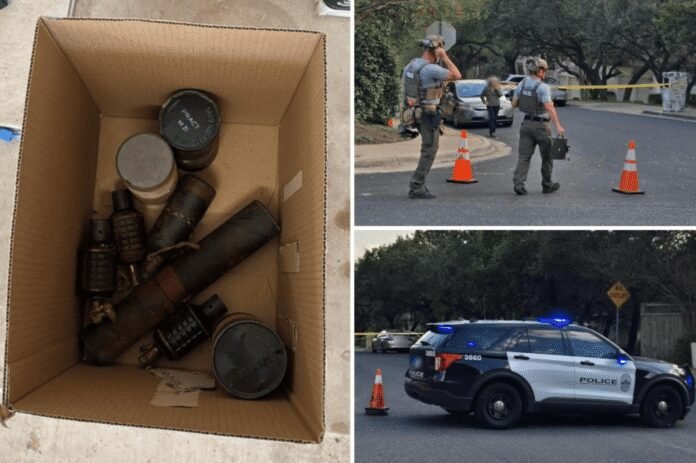
A Texas man’s bargain-hunting adventure took a frightening turn when he opened a box purchased at an estate sale and discovered six World War II-era grenades that police determined could still be dangerous.

What appeared to be a collection of old military memorabilia quickly became a potential emergency, prompting Austin police officers to secure the neighborhood and call in specialized bomb technicians.

And despite being approximately 80 years old, the explosives were reportedly in remarkably good condition.

The unusual discovery occurred Monday, October 12, after the unidentified man returned home with several boxes he had purchased at an estate sale.

While sorting through the contents, he noticed objects resembling military hand grenades and realized he might be dealing with something far more dangerous than ordinary antiques.

He contacted the Austin Police Department, which dispatched officers to investigate.

Recognizing the potential threat, patrol officers established a safety perimeter and kept neighbors away while waiting for the department’s Explosive Ordnance Disposal team.

Bomb technicians eventually recovered six grenades, several of which resembled the iconic American Mk 2 fragmentation grenade.

Nicknamed the “pineapple” because of its distinctive grooved metal exterior, the Mk 2 was widely used by U.S. troops during World War II and remained in military service through later conflicts.

Photographs released by authorities showed multiple grenades inside the box, along with old military packaging and cylindrical containers.

One container appeared to have markings associated with an M21 practice grenade, although that did not establish that the other devices were harmless training equipment.

Police said specialists used X-ray technology to examine the grenades and determine whether they contained potentially dangerous components.

What they discovered was concerning.

“Based on their interpretation of the X-ray images, the grenades appeared to be live and were treated accordingly,” an Austin Police Department spokesperson told the Houston Chronicle.

The bomb squad subsequently carried out procedures to render the devices safe, eliminating the potential hazard without reported injuries or property damage.

The department praised the responding officers for their quick actions and the bomb squad for safely handling the unexpected discovery.

Police emphasized that decades-old explosives can remain dangerous even when they appear damaged, rusted or inactive.

The age and stability of their internal components may be uncertain, making them particularly hazardous for anyone without specialized training.

Fortunately, the estate sale customer was not accused of wrongdoing.

Authorities determined that he had unknowingly purchased the grenades and reported the discovery rather than attempting to move or dismantle them.

Police confirmed that no crime had been committed in connection with the incident and that no criminal investigation was ongoing.

However, the discovery highlights the legal risks surrounding possession of military explosives.

Under Texas law, unlawfully possessing certain explosive weapons can constitute a third-degree felony, punishable by two to ten years in prison and a fine of up to $10,000.

There are legal exceptions for certain federally registered or otherwise authorized items, but functional military grenades are subject to strict regulations.

The Austin discovery is not the first time old military equipment has unexpectedly turned up among secondhand belongings.

In February 2025, employees at a Goodwill store in South Portland, Maine, discovered grenades and mortar rounds inside a donation container.

The store was evacuated while the Maine State Police Bomb Squad examined the items.

In that case, authorities determined the devices were inactive.

The Austin incident was more concerning because bomb technicians believed the six grenades could still function as explosives.

Investigators have not disclosed where the estate sale items originally came from, who previously owned the grenades or how long they had been stored.

There is also no indication that the seller knew the box contained potentially hazardous military equipment.

The Austin Police Association used the discovery to remind residents that old military ordnance should never be handled casually, regardless of its age or appearance.

Anyone who discovers a suspected grenade, artillery shell, mortar round or similar device should leave it undisturbed, move away and contact emergency services.

For one Texas resident, a seemingly ordinary estate sale purchase became an encounter with a dangerous piece of American military history.

And thanks to his decision to alert police, the unexpected discovery ended safely rather than becoming a far more serious emergency.

Egypt ‘Seriously’ Considering Joining Saudi-Turkey-Pakistan Defense Pact 

0
egypt-‘seriously’-considering-joining-saudi-turkey-pakistan-defense-pact 
Egypt ‘Seriously’ Considering Joining Saudi-Turkey-Pakistan Defense Pact 


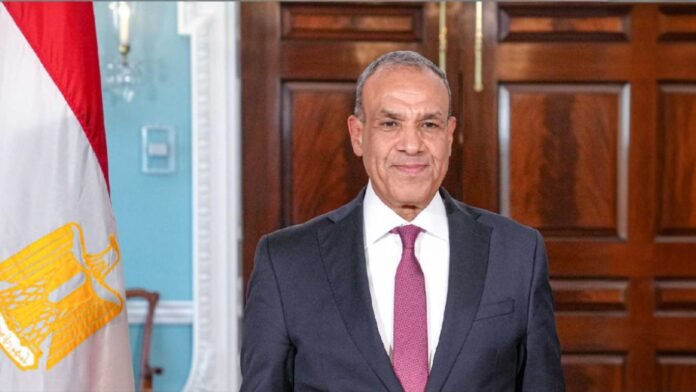
Egypt is seriously considering joining the Mecca Joint Defence Agreement with Saudi Arabia, Turkey and Pakistan and is prepared to provide Riyadh with broad support following recent attacks by Iran-backed Houthis in Yemen, Foreign Minister Badr Abdelatty said. 

“Whatever is being asked by the Saudis, of course we will respond,” Abdelatty told Bloomberg on the sidelines of the International Monetary Fund’s annual meetings in Bangkok. “Without any reservation, we are providing all kinds of support.” 

Asked specifically about Egyptian military assistance to Saudi Arabia, Abdelatty said Cairo was prepared to respond to requests from Riyadh. 

He also said Egyptian membership in the Mecca Joint Defence Agreement “is under serious consideration from the Egyptian side.” 

Saudi Arabia, Turkey and Pakistan signed the trilateral agreement in Mecca on August 7, 2026, as the countries sought a common security position amid the US-Iran war. The pact provides that an attack against one member will be considered an attack against all. 

Egypt decided not to join the agreement when it was signed. Abdelatty said Cairo maintains close relations with each of its three members. 

Egypt’s peace treaty with Israel was among the issues surrounding potential membership. Article VI prohibits Cairo from entering military alliances that conflict with its obligations to Israel, while Turkey and Pakistan have taken highly adversarial positions toward Israel. Reports also indicated Saudi reservations about Egyptian participation because of diplomatic frictions and differences over regional strategy. 

Cairo has additionally sought to preserve its strategic independence and partnerships with India, Greece, Cyprus and the UAE. Turkish Foreign Minister Hakan Fidan has previously said the agreement was designed to allow expansion. 

Jonathan Hessen, a senior fellow at the Jerusalem Institute for Strategy and Security, told The Jerusalem Post on Wednesday that he doubted Egypt was genuinely preparing to join. 

Hessen pointed to a trilateral meeting in Cairo the same day involving the defense ministers of Egypt, Cyprus and Greece, saying it “does not necessarily bode well for the Turkish narrative that Egypt would soon join.” 


Shape of Pope Leo’s papacy more uncertain after cancer diagnosis

0
shape-of-pope-leo’s-papacy-more-uncertain-after-cancer-diagnosis
Shape of Pope Leo’s papacy more uncertain after cancer diagnosis


When US Cardinal Robert Prevost emerged on the balcony of St. Peter’s Basilica in May 2025 as Pope Leo XIV, the new leader of the Catholic Church, ​he struck a stark contrast from his predecessor Francis.

Leo, young for a pope at 69, appeared energetic, spoke in a strong voice and had no known ‌history of health issues. Francis, who died at 88, had become increasingly frail during his 12-year papacy.

With the Vatican’s announcement on Tuesday that Leo, now 71, was diagnosed with lung cancer after surgeons removed part of his right lung that afternoon, the world’s 1.4 billion Catholics are again unexpectedly facing the reality of a sick pope.

Leo, the first US-born pontiff, has emerged as an increasingly influential voice beyond the Church, raising alarm about the ​risks posed by artificial intelligence and drawing the ire of US President Donald Trump by criticising the Iran war.

The future shape of Leo’s papacy — once expected to be dynamic with many ​foreign trips and the pope stepping into a leading moral role on the global stage — is now more uncertain. Medical experts say the ⁠pope’s prognosis will depend on several factors, including whether the cancer had spread to his lymph nodes, currently unknown.

“It’s too early to say how this will affect Pope Leo’s agenda and his ​ability to carry on the duties of the papacy,” John Thavis, a Vatican expert and author, told Reuters.

“If his recovery is complete and no aggressive therapy is needed, the pope may be ​able to carry on as usual,” he said.

PLANNED SOUTH AMERICA TRIP IN QUESTION

One immediate question Leo faces is whether to proceed with an 11-day tour of Uruguay, Argentina and Peru from November 6 to 17. The trip is known to be a high priority for the pope, who spent decades as a missionary and bishop in Peru.

The original schedule, announced last month, would have made it one of the most intense foreign trips ever ​undertaken by a pope, with Leo leading some 50 events and giving 36 speeches across a 10-city tour.

Dr. Stephen Liu, a lung cancer expert at Georgetown University in Washington and division ​chief of hematology-oncology at MedStar Georgetown University Hospital, said the trip may need to be postponed, depending on Leo’s recovery.

“A trip to South America that quickly is possible, if this is an early-stage lung cancer ‌and no further ⁠therapy is needed, but it is a tight timeline, and recovery is highly variable,” said Liu.

Leo had been keeping a rapid pace of foreign travel, already making four tours in 2026 and attracting large crowds. More than 800,000 people turned out to see him in Paris last month.

‘ONE DAY AT A TIME’

Catholics have often witnessed a pope deal with illness. Francis, who had part of one lung removed as a young adult, was prone to respiratory infections. He was also hospitalised as pope for colon and hernia surgeries.

John Paul II began to suffer symptoms of Parkinson’s disease ​in the 1990s, although the Vatican only confirmed ​his diagnosis in 2003.

John XXIII died in ⁠1963 from stomach cancer that was not disclosed by the Vatican until after his death.

Benedict XVI however, who succeeded John Paul, was the first pope to resign in 600 years, stepping down in 2013 after he said he no longer had the strength for the job.

The Vatican, long ​reticent to discuss papal health issues, has been unusually transparent in Leo’s case.

The pope himself announced to pilgrims in St. Peter’s Square on ​Sunday that a “localized nodule” had ⁠been found in his lung and he needed surgery. He also said it was detected early and was well contained.

The Vatican later provided a detailed medical bulletin hours after Leo had undergone surgery.

Another statement may be released on Wednesday afternoon, but details on the pope’s prognosis are expected to take a few days as doctors perform the necessary tests.

According to the American Cancer Society, the five-year relative ⁠survival rate for ​non-small cell lung cancer is 67% when the disease remains confined to the lung.

Dr. Giuseppe Cardillo, chief of thoracic ​surgery at Rome’s San Camillo Forlanini hospital, said removal of lung cancer discovered at an early stage usually results in an “excellent” prognosis.

Elise Allen, author of a biography of Leo for Penguin Peru, said people should not “jump the gun” in ​making conclusions about how the pope will recover.

“Let’s take it one day at a time,” she said.

Source:  Reuters

Georgia man sues Flock, sheriff’s office over alleged ALPR-fueled retaliation

0
georgia-man-sues-flock,-sheriff’s-office-over-alleged-alpr-fueled-retaliation
Georgia man sues Flock, sheriff’s office over alleged ALPR-fueled retaliation

A small-business owner in Georgia has sued Flock and the Coweta County Sheriff’s Office over alleged retaliation using license plate cameras.

“[The lawsuit] alleges illegal [license plate tracking] searches over many months without probable cause and unrelated to any specific investigation,” Hall & Lampros, attorneys for plaintiff Tyler Murkerson, wrote in a press release. “The lawsuit alleges that Flock also failed to put safeguards in place to prevent illegal surveillance by officers by accepting free-text-field entries instead of specific case numbers or investigations.”

Murkerson’s saga began in February 2023, when he was arrested by sheriff’s deputies over an alleged seatbelt violation; those charges were dropped months later. In September 2024, Murkerson sued the department, accusing them of excessive force. The case was only recently settled.

While that lawsuit was pending, Murkerson says his car’s license plate was searched multiple times in the Flock system. Additionally, he alleges that deputies followed or monitored him as he drove to and from his home.

His attorneys claim that, when searching for Murkerson’s vehicle, sheriff’s deputies entered nonsense rationales. This has been a widely reported weakness of the Flock system.

“Throughout the relevant period Flock’s platform required only that some text be entered in a free-form field, and it accepted whatever was typed—‘investigation’ and, on twenty separate occasions at one department, ‘hehehe,’” the October 8 complaint states. “The only justifications entered for the searches of Mr. Murkerson’s vehicle were ‘info’ and ‘37.’ Neither corresponds to any investigation, case, incident, or call for service. A search recorded that way documents no investigation. It documents only that someone typed something. Flock has since conceded, by its own conduct, that its platform should have required a verifiable law enforcement justification before executing a search.”

In August 2026, Flock announced it would change its software and require “case codes for all law enforcement searches by the end of the year” as a way to mitigate these abuses. The Coweta County Sheriff’s Office began its own audit of the system that same month, and the complaint notes that “three employees had resigned before the audit was completed.”

“What’s really troubling is when that type of surveillance is available, so that the police can do Fourth Amendment-implicated searches without any controls,” Chris Hall, one of Murkerson’s attorneys, told Ars. “For us, it’s not the privacy of taking photographs of your license plate. This is focused on illegal activity and what we allege is that they did violate Georgia law and violate the Fourth Amendment—because it’s a search and surveillance put on somebody.”

Lunchtime

Flock has been under increased scrutiny, with hundreds of law enforcement agencies dropping the company recently, largely because of a backlash over overbroad and unwanted surveillance.

Brian Hofer, the chair of Secure Justice, a California-based organization that has scrutinized the use of Flock and other surveillance technologies, said he’s unaware of another lawsuit of this type. But, he added, it matters what agencies actually do compared to what they say they do.

“Over the years, a number of law enforcement agents have told me that ‘culture eats policy for lunch,’” he emailed Ars. “I think this lawsuit is another example of why guardrails don’t work, analogous to the Trump administration disregarding court orders and the law in general. The remedy is to prohibit use of the technology, at least until the culture of policing changes for the better.”

Flock responded to our request for comment with a short statement. “Flock stands by the integrity of its technology and the important role it plays in helping law enforcement solve crimes, find missing people, and keep communities safe,” a spokesperson said. “We disagree with the claims raised in this lawsuit and intend to vigorously defend our position in court.”

Coweta County Sheriff’s Office did not immediately respond to Ars’ request for comment.

0FansLike
0FollowersFollow
0FollowersFollow
0SubscribersSubscribe
- Advertisement -
Google search engine

Recent Posts