Two narratives emerge as Israeli media center on a terror attack and the Leiter family, while Arab outlets shift between the Israeli victim, Palestinian attacker, and wider conflict
The ramming incident near Ramallah that critically injured Neria Leiter, the son of Israel’s ambassador to Washington, Yechiel Leiter, is also becoming a case study in how differently the same event is being presented across Middle Eastern media.
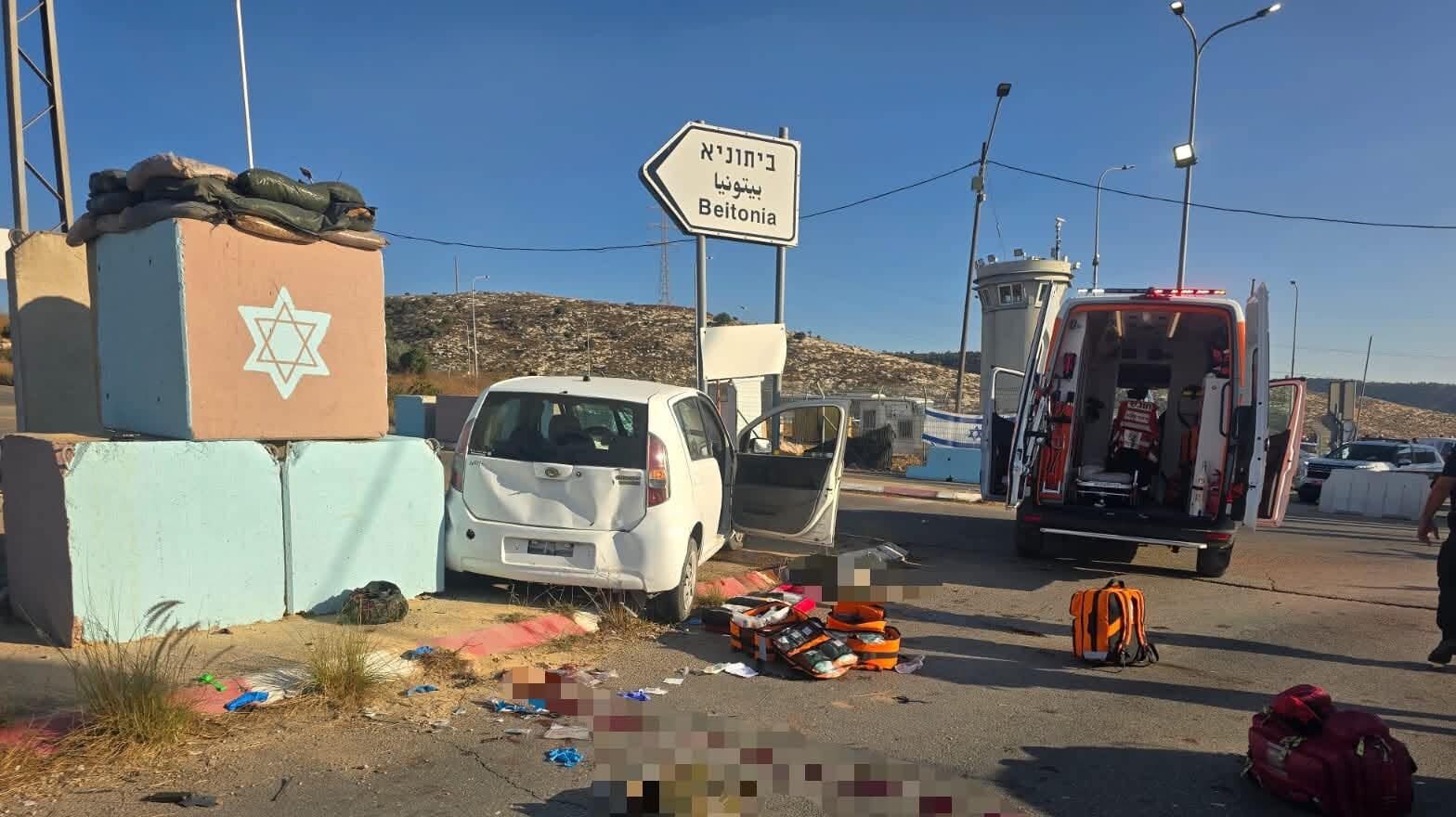
An Israel Defense Forces (IDF) reservist was critically wounded at a checkpoint on Wednesday near Beit Horon and the Palestinian village of Beit Ur al-Fauqa. He was later identified as Neria Leiter, the son of Israel’s ambassador to Washington, Yechiel Leiter. There is currently no evidence, however, that he was deliberately targeted because of his father’s diplomatic position.
In much of the pan-Arab coverage, Leiter’s identity quickly became the main news hook. Al Jazeera changed the emphasis toward “the son of Israel’s ambassador to Washington,” while describing Mahmoud Suleiman as the Palestinian who carried out the ramming and was subsequently killed. But the report then widens the lens considerably, connecting the incident to Israeli military operations, settlement activity and rising violence across the West Bank.
Jordanian outlet Saraya follows essentially the same structure: the ambassador connection is prominent, but the second half of the report focuses heavily on Israeli closures, the raid on Suleiman’s hometown and the broader West Bank escalation.
Egypt’s Al-Ghad TV’s breaking report is almost entirely focused on Neria Leiter: his identity, his condition, and his relationship to the ambassador. The Palestinian attacker and the wider political context are largely absent from that particular update.
Palestinian media frame the story differently. WAFA’s initial headline was simply “Martyr by Occupation Gunfire Near Beit Ur al-Tahta.” It reported that Mahmoud Suleiman was shot while inside his vehicle and initially did not center the alleged ramming at all. Arab48 is more cautious. Rather than omitting the Israeli version, it says the incident was “described by the Israeli side” as a ramming attack and explicitly notes that no evidence had yet been presented establishing the motive or background.
The Arabic service of Anadolu, Turkey’s state-run news agency, makes a similar editorial choice. Its headline is “Israeli Army Kills Palestinian at Checkpoint West of Ramallah,” while the claim that he conducted a ramming attack is attributed directly to the Israeli army and police rather than presented as an independently established fact.
Al-Quds Al-Arabi, an independent pan-Arab daily newspaper, by contrast, straightforwardly calls it a ramming operation while simultaneously using “martyrdom” terminology for the Palestinian killed, illustrating how security-event terminology and Palestinian nationalist language can coexist in the same report.
The immediate follow-up of Al Mayadeen, a Lebanese pan-Arab satellite news channel, focuses not on Leiter but on Israeli forces entering Beit Ur al-Tahta and approaching the home of “the martyr Mahmoud Suleiman, perpetrator of the ramming operation.” The emphasis therefore shifts rapidly from the Israeli casualty to the Palestinian attacker and the Israeli response.
Iranian coverage goes considerably further ideologically. Mashregh and ISNA circulated headlines describing a “martyrdom operation” and referring to the Israeli casualty as a “Zionist soldier.” Both also reported that the Israeli had been killed—a claim that should be treated cautiously because it conflicts with the current reporting on Leiter’s condition, which is critical.
Israeli media coverage of the car-ramming attack that critically injured Neria Leiter consistently presents the incident as a deliberate terrorist attack and centers the story on Leiter’s identity, the loss of his brother in combat, and his continued IDF reserve service.
Initial reports focused primarily on the attack before the identity of the victim was known. The Times of Israel reported that the assailant accelerated toward a police cruiser at the checkpoint, striking Leiter, who was serving alongside a police officer. It identified the attacker as Mahmoud Mohammad Sliman, 29, from Beit Ur al-Tahta, and reported that IDF troops shot him dead. The outlet later updated its coverage after identifying Leiter as the son of Yechiel Leiter, the Israeli Ambassador to the US.
The Jerusalem Post similarly led its initial report with a “car-ramming terror attack” on Highway 443, reporting that the attacker was killed and that one person had been seriously wounded. Its early coverage, published before Leiter’s identity became central to the story, concentrated almost entirely on the security incident and the victim’s medical condition.
Ynet’s framing shifted markedly once Leiter was identified. Its headline emphasized that he was the ambassador’s son and that his brother had been killed in Gaza nearly three years earlier. The report described Leiter as an IDF reservist working with police when the attacker drove into him, while devoting substantial attention to Maj. Moshe Yedidya Leiter, who was killed in northern Gaza on Nov. 10, 2023.
N12 took a similar approach. Its updated headline identified Leiter as the ambassador’s son, while its report said the attacker drove toward a police vehicle and struck him before being killed by security forces. N12 also highlighted Ambassador Leiter’s appeal for prayers, his statement that his son “needs a miracle,” and Neria Leiter’s hundreds of days of reserve service since Oct. 7.
Kan framed the incident explicitly as a ramming attack in Binyamin, reporting that the attacker emerged in a vehicle and accelerated toward a police cruiser. Its subsequent coverage shifted toward the Leiter family, reporting that the ambassador was returning to Israel and emphasizing that Neria continued serving hundreds of reserve days even after losing his brother in Gaza.
Across the Israeli coverage, then, there is relatively little dispute over the basic characterization of the incident. The principal difference is emphasis: early reports centered on the attack and the killing of the assailant, while later coverage increasingly became a story about the Leiter family—a critically wounded reservist, his ambassador father, and a brother already killed in the war. Israeli outlets also place the attack within a broader security context, with some linking it to a recent series of terrorist attacks and heightened IDF activity in the West Bank.
The contrast between Israeli and Arab coverage is clearest in how each frames the attack. Israeli coverage consistently presents the incident as a terrorist attack before shifting attention to Leiter’s identity, military service, and family history. Arab coverage varies in tone and emphasis, ranging from a focus on Leiter to framing the event around the Palestinian attacker’s death or the wider West Bank conflict, while Iranian outlets portray it explicitly as anti-Israel resistance.