15.7 C
London
Saturday, September 26, 2026
Home Blog

Your uncle’s frozen Mac says it’s infected after viewing a Google ad. Now what?

0
your-uncle’s-frozen-mac-says-it’s-infected-after-viewing-a-google-ad.-now-what?
Your uncle’s frozen Mac says it’s infected after viewing a Google ad. Now what?

Researchers say they recently found Google ads delivering a sophisticated tech support scam that freezes the screens of both Windows and Mac devices and displays messages urgently instructing them to phone a bogus call center.

The ads were displayed all over the web, including on high-traffic maps, weather, real-estate, document-hosting, and sports sites. Users who called the number were then urged to pay hefty fees, grant remote access to their devices, or divulge personal information. From August 31 to September 14, security firm Netskope observed users from 619 customer organizations click on the malicious ads, although none of them were actually scammed because Netskope blocked the content.

Roughly 62 percent of the organizations were based in the US, with Japan and Australia accounting for the Nos. 2 and 3 spots. Since the firm has visibility into only a tiny sliver of Internet activity, the number of people exposed to the ads—including those who fell victim to it—is likely much higher. Netskope tracked more than 250 Google Ads campaign IDs across at least 284 legitimate publisher sites.

So, what about Uncle Louie?

“For the victim, that tradecraft turns an ordinary ad click into a browser that appears to seize up on a fake security warning,” Netskope said. “The locker fills the screen, hides the cursor, swallows the usual exit keys, and lags the browser, all to manufacture the sense of a broken machine and pressure the person into calling the number on the screen. Nothing on the computer is actually locked, but in the moment it is convincing enough to push people toward the scam.”

By now, many people, including a fair number of readers of this site, ridicule and shame people who fall for such scams. These criticisms fail to account for a sizable portion of Internet users who have little or no understanding of how computers and the Internet work. Combined with their need to get things done quickly and the growing difficulty of navigating the web, this lack of awareness makes a sizable portion of users prime targets. There’s little doubt that some critics have close friends and family who are among those who simply don’t know enough to be wary.

Further making the scam convincing, the software kit that delivers the fake warnings is designed to be stealthy and closely mimic the signs of a real infection. The browser address bar no longer appears, the warning screen occupies the entire screen, and presses of escape and many other keys are disabled. The browser performance degrades, sounds play, and pages lag, giving the impression that something is seriously wrong. Messages urging the user not to restart the machine and to call a call center immediately flash. Attempts to close the browser only make the scam message refresh.

The warnings appear only after a user makes a mouse movement. The software is also encrypted and only decrypted and then displayed in the browser memory. Both these conditions prevent many endpoint security wares—and possibly Google’s ad filters—from detecting the malice. Further, the warning ads appear differently depending on whether the targeted user device is running Windows or macOS.

Google didn’t say what caused its scanners to miss the scam campaign or give any indication the ads have been fully removed from its massive ad platform.

“We have zero tolerance for scams,” the company said in a statement. “We’re actively investigating the campaigns in this report and will take action against accounts that violate our policies.” The company has said that last year it blocked over 99 percent of violating ads before they were ever served.

As Netskope noted, devices aren’t actually locked up, even though most of the usual keys for closing the scam window have been disabled. In this case and many similar ones, users can still easily exit the window. For both Windows and macOS devices, this can be done in most cases by pressing the escape key and holding it for several seconds. The press will force the browser out of full screen and release the keyboard lock, and from there, the tab can be closed. An alternative approach is to invoke the Windows Task Manager (control-shift-escape) and exit the browser. On a Mac, the keys are (cmd-option-escape). In both cases, users can reopen the browser without restoring the previous session.

No legitimate company will ever advise users to call a phone number when they’re infected. Under no case should people hit by tech support scams call the number. Those who provide informal tech support for friends and family might consider writing the above advice on a Post-it and affixing it to screens.

Macron: Russian Attack on Europe “Plausible”, Pledges Troops to Saudi Arabia

0
macron:-russian-attack-on-europe-“plausible”,-pledges-troops-to-saudi-arabia
Macron: Russian Attack on Europe “Plausible”, Pledges Troops to Saudi Arabia


French President Emmanuel Macron denied Thursday that the CIA had warned France of a possible Russian drone operation targeting southern Europe, even as he pledged to send French “military assets” to protect a key Saudi Arabian oil facility on the Red Sea.

In a joint interview broadcast on France 2 and TF1, Macron said, “We can deny this piece of information, the CIA did not inform France of this information and the Italian defence minister said the same thing.” His comments came after Spanish daily El Mundo reported that the CIA had alerted several southern European governments to a possible Russian drone operation targeting Spain, France and Italy. Italian Defence Minister Guido Crosetto also rejected the report Thursday, writing on X that the alarm raised by the Spanish newspaper “serves no one and is not confirmed,” adding, “We already live in difficult, ‘nervous’ times, and no one needs more fuel on the fire.”

Pledge to protect Saudi oil route

Macron said France would send “military assets” — including troops, radar systems and defensive systems — to protect the Yanbu site of the East-West pipeline on the Red Sea, which gives Saudi Arabia an alternative route for shipping crude and refined oil to European markets. “We will not be engaging in any conflict,” he said. “Our aim is to help stabilize the oil market.” The pipeline, which can carry 5 million barrels of crude per day with capacity to temporarily reach 7 million, has become critical during the Middle East war by letting Saudi Arabia bypass the Strait of Hormuz. The port, which also holds major oil storage and refining facilities, has been targeted by Iran-backed Houthi forces in Yemen during the conflict.

Macron said disruptions at such sites are quickly felt by consumers: “As soon as one of these locations is relaxed, the immediate impact is seen at the gas pump. You’ll see it in two days.” Hard-left France Unbowed leader Jean-Luc Mélenchon criticized the deployment plan and called for a parliamentary vote, saying, “Sending troops to Saudi Arabia means entering a theatre of war. If the base is attacked, what will we do? There’s no question of becoming a belligerent party.”

Warning on Russia’s hybrid campaign

Macron also addressed Russia’s escalating hybrid campaign against Europe, citing the drone attack on Leipzig/Halle Airport on the night of Aug. 4-5, which German authorities have blamed on Russia. He said France has not suffered a similar attack but that one remains possible. “When you ask me, ‘Could this happen?’ my answer is yes,” he said. Macron said Russia views “Europe to be the strategic heart of Ukraine” and called the possibility of a Russian attack on Europe “plausible,” adding, “It is clear that there have been several signs indicating that Russia is preparing to do this.”

Macron said a potential Russian mobilization of roughly 300,000 personnel was a “credible scenario” that was “often shared” among officials, calling it a sign Moscow is prepared to “make even greater sacrifices to take over the entire Donbas.” He estimated Russia would need a year and a half to two years at its current pace to seize the remaining Donbas territory it does not control, “with terrible losses and suffering for Ukraine.”


Separately Thursday, NATO Secretary General Mark Rutte said the alliance is prepared to respond to sabotage and drone incidents across Europe. Speaking in New York at an event commemorating the Sept. 11, 2001, attacks, Rutte said, “Russia is doing more and more when it comes to the cyber etc. domain, but… NATO is ready for this,” adding that response options are in place “when it comes to hybrids to make sure that we stay strong.” Rutte argued that the rising number of hybrid incidents in NATO countries shows Russian President Vladimir Putin is struggling in Ukraine’s fifth year of war. “Putin is in a bad place,” he said, adding that citizens of NATO’s 32 member countries can remain calm and urging members to increase support for Ukraine. “All the response options are there, and we will use whatever we need,” Rutte said.

His remarks followed a Danish intelligence warning Thursday of a growing risk of Russian military action against NATO countries, including further hybrid attacks, alongside the Spanish media reports of a possible Russian drone threat to Spain, France or Italy.

Hegseth calls for Europe to lead its own defense

U.S. Defense Secretary Pete Hegseth said Thursday that European allies must take the lead in defending their own continent, calling for NATO to become a “real hard-line military alliance.” Speaking at a meeting of NATO defense ministers, Hegseth proposed a “NATO 3.0” aimed at strengthening military capabilities and deterrence in Europe. “NATO 3.0 is post-Cold War recognition that (NATO) needs to go back to a real hard-line military alliance that has real military capabilities capable of deterring right here on the continent and taking the lead for the conventional defense of Europe,” he said.

His comments follow Washington’s recent notice to allies that it will no longer provide certain warships and aircraft in the event of an attack on a NATO member, prompting European allies and Canada to assess resulting capability gaps. Under Article 5 of NATO’s founding treaty, an attack on one member is considered an attack on all, though the provision does not automatically require military assistance from allies. The U.S., which fields NATO’s largest armed forces, is seeking to reduce its conventional role in Europe but does not plan to withdraw its nuclear weapons stationed on the continent, which remain central to NATO’s deterrence strategy.

Melania Trump’s Shocking Comments Raise Eyebrows (Video)

0
melania-trump’s-shocking-comments-raise-eyebrows-(video)
Melania Trump’s Shocking Comments Raise Eyebrows (Video)


Asked about growing up under communism, Melania Trump offered an answer that did not fit neatly into the usual Republican warnings about life behind the Iron Curtain.

“I didn’t miss anything,” the first lady said during a Sept. 23 appearance on Fox & Friends, describing her upbringing as a “very beautiful childhood.” She credited her parents with providing a happy family life.

The exchange came after co-host Brian Kilmeade asked why Eastern Europeans with backgrounds like hers might appreciate freedom and liberty more deeply than Western Europeans or even some Americans.

Rather than opening with a grim account of deprivation, Melania spoke warmly about the home in which she grew up. But she also acknowledged that the political system imposed limits.

“It’s not as free as here in the United States,” she said, explaining that people needed to watch their behavior. Viewers can watch the exchange in the clip shared by Fox & Friends.

That qualification matters. Melania described a happy childhood under a communist government; she did not say communism itself was beautiful or advocate adopting it in America.

Still, her affectionate recollections offered a striking contrast to the sweeping attacks on communism frequently heard from her husband and his political allies. A personal memory of a loving home proved more complicated than a familiar political talking point.

Melania was born in Slovenia in April 1970, when it was part of Yugoslavia. According to her official White House biography, she later pursued modeling, moved to New York in 1996 and became an American citizen in 2006. She remains the only first lady to have become a naturalized U.S. citizen.

There is also historical context often lost in shorthand descriptions of her upbringing. Communist Yugoslavia was not part of the Soviet Union. Its leadership broke with Moscow in 1948, decades before Melania was born, and maintained an independent position. U.S. diplomatic records document that split while also describing the country’s authoritarian government.

The childhood discussion followed questions about her efforts to reunite Ukrainian children with their families. Melania said representatives were communicating with Russia and Ukraine and working toward another reunification. Those remarks described ongoing efforts, rather than announcing a newly completed agreement.

Her television appearance also included promotion of a forthcoming two-part docuseries following her earlier film, Melania.

She said the series would feature more one-on-one conversations and answers to personal questions viewers had not previously heard her address. She suggested November as a possible release window but said an exact date had not been set.

Melania also discussed giving her husband candid feedback on his speeches, saying she offers her honest assessment even when he would rather not hear it.

On her childhood, that candor produced an answer with two parts: affection for the life her parents gave her and recognition that the country around them offered fewer freedoms. Both belong in the story.

Chinese Nationals Among 212 Arrested as Pakistan Cracks Down on Global Call Center Fraud 

0
chinese-nationals-among-212-arrested-as-pakistan-cracks-down-on-global-call-center-fraud 
Chinese Nationals Among 212 Arrested as Pakistan Cracks Down on Global Call Center Fraud 


[ISLAMABAD] Pakistani authorities have arrested 212 people, including Chinese nationals, in raids on three illegal call centers in Islamabad linked to an alleged international online fraud network. 

The National Cyber Crime Investigation Agency (NCCIA) conducted simultaneous operations in the capital’s E-11 and G-10 sectors over the past 24 hours, targeting call centers allegedly involved in defrauding victims in Pakistan and abroad.  

Officials said the centers used several schemes, including impersonating Google representatives, “tasking fraud,” and romance or “love-dating” scams. 

Tasking fraud typically begins with fake online opportunities offering victims money for completing simple assignments, such as liking videos, rating products, or promoting content. Scammers may initially make small payments to build trust before persuading victims to deposit larger amounts to complete higher-value tasks or withdraw supposed earnings. 

Once larger sums are transferred, victims may be asked for additional payments or lose contact with the operators, leaving them unable to recover their money. 

Citing a spokesperson for the NCCIA, the state-run Associated Press of Pakistan (APP) reported that authorities recovered a large quantity of equipment, including 306 mobile phones, 383 computers and CPUs, and 299 monitors and laptops. 

The detainees included Pakistani and Chinese men and women. Authorities did not disclose how many Chinese were arrested. 

Chinese nationals have also featured in several recent Pakistani investigations into illegal call centers and online fraud, including a separate NCCIA case earlier in September in which investigators identified a Chinese national as the alleged mastermind of an online investment and e-commerce scam. 

Investigators in the latest case also reported possible links to networks in India and Brazil. 

A case has been registered, and officials said that the call center premises were designated as a temporary sub-jail because of the large number of suspects. Investigators are continuing to examine the alleged financial links of the network and determine the individual roles of those detained.  

The latest operation comes amid a broader Pakistani crackdown on illegal call centers and organized cyber fraud. In July 2025, the NCCIA arrested 149 people, including 48 Chinese nationals, in Faisalabad in a raid on a call center allegedly involved in Ponzi schemes and investment fraud. 

In August 2026, Pakistani authorities also conducted major operations in Islamabad involving hundreds of foreign nationals. One operation involved 258 foreigners, including Chinese nationals, while a separate crackdown led to the arrest of 114 foreigners, including 111 Chinese and three Vietnamese nationals, over alleged cyber and online fraud activities. 

The continuing operations show the increasingly international nature of cyber-fraud investigations in Pakistan, with Chinese nationals repeatedly appearing among those detained or identified in cases involving illegal call centers and online financial scams. 

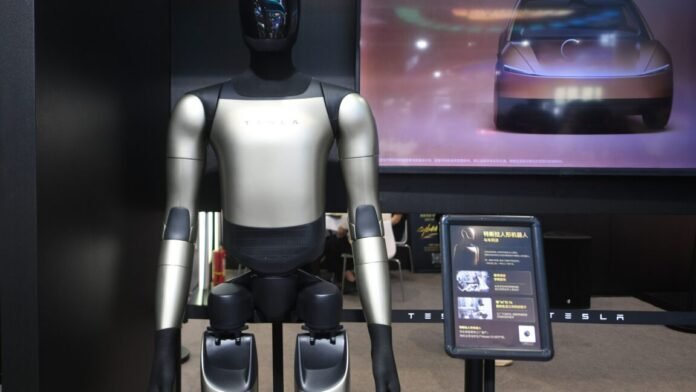
Tesla workers balk at training Optimus humanoid robots as replacements

0
tesla-workers-balk-at-training-optimus-humanoid-robots-as-replacements
Tesla workers balk at training Optimus humanoid robots as replacements

Tesla’s pivot from making electric cars to humanoid robots is facing challenges because of complex robot hands and disgruntled employees pushing back against training their robotic replacements. The struggle to scale up production comes as Tesla CEO Elon Musk has bet the company’s future on AI and robotics.

As someone who frequently makes claims that fail to materialize, Musk has described the Optimus humanoid robot as potentially “the biggest product ever” during Tesla’s second-quarter 2026 earnings call. But he also acknowledged that making an autonomous humanoid robot capable of handling many different tasks is “one of the hardest things to solve”—and now extensive reporting by The Information has revealed multiple complications that Tesla is trying to tackle while developing general-purpose robots and scaling up for mass production.

Tesla’s Fremont factory in California has already stopped making the Model S sedan and Model X SUV as of May 2026, with the company switching both line workers and engineers over to working on Optimus, according to The Information.

But the newest version of Optimus, called Optimus V3, has proven challenging from a development and manufacturing standpoint. The Information’s reporting describes troubles with getting production line equipment to precisely line up components, along with limitations in running the production line too fast. Tesla has reportedly scaled up production to hundreds of robots per week—but the company is targeting production numbers surpassing 1,000 robots per week by the end of 2026.

The automotive industry and other industries have already been using specialized industrial robots, such as robotic arms, for decades. Tesla and many other automakers and robotics companies are betting that humanoid robots coupled with advances in AI models could eventually unlock general-purpose robots that can handle a diverse array of tasks while fitting more seamlessly into human workplaces.

Hardware and AI challenges

It’s no secret that making robotic hands capable of doing delicate manipulation tasks on par with human hands is a huge engineering challenge. The complexity of such robotic hands has translated into more production headaches for Tesla as human workers must manually assemble Optimus hands and forearms that together have more than 100 small components such as screws.

The imperfect and manually intensive manufacturing process has led to newly produced robots that require immediate fixes. Touch sensors for the robot’s hands have also proven unreliable enough so that Tesla has now developed a glove-like layer of sensors that can be replaced without replacing the entire robot hand.

The robot’s AI capabilities are also reportedly still insufficient for general-purpose operations, which is unsurprising given the challenges facing every robotics company on that front. Instead, one of The Information’s sources described Tesla’s Optimus robots as currently requiring programming to do specific tasks in carefully controlled environments.

One of the biggest challenges facing all robotics companies is getting enough training data to help robots visually learn a wide variety of manual tasks. The heavy reliance on imitation learning prompted Tesla to have factory workers in Texas and California wear special suits designed to record their physical movements while working.

However, The Information described some workers complaining because they “knew the robots were designed to eventually replace them.” So Tesla has apparently shifted that data collection responsibility to dedicated teams and has also set up “training hubs” for such teams.

Competition to make robots

The Information also makes a point of highlighting Tesla’s continued reliance on Chinese suppliers to make various robot components. The Information previously reported on Silicon Valley startups bringing robotic parts from China to the United States in their luggage.

The US robotics industry’s supply chain reliance on China has persisted despite the Trump administration trying to boost domestic supply chains and robotic production. In July, the Federal Communications Commission banned new foreign-made robots such as humanoid robots and four-legged robot dogs, along with robot vacuum cleaners.

Many of Tesla’s reported challenges in making humanoid robots are not unique. But that may be little comfort when Tesla also faces stiff competition on multiple fronts, as automakers in China, Japan, and South Korea are also developing humanoid robots, not to mention dedicated robotics companies pursuing humanoids. Toyota plans to invest billions of dollars in upgrading factories with robots, including some humanoids, while Hyundai is planning to deploy up to 25,000 Atlas humanoid robots developed by US subsidiary Boston Dynamics over the next several years.

One of the companies furthest along in commercial deployment of humanoid robots is Oregon-based Agility Robotics, which first put them to work at an Atlanta-area warehouse owned by GXO Logistics in 2024. But the overall business case for humanoid robots still has to be proven through more sustained and cost-effective deployments—not to mention showing that such robots can work safely around humans.

Japan’s new ambassador will test Manila’s China balancing act

0
japan’s-new-ambassador-will-test-manila’s-china-balancing-act
Japan’s new ambassador will test Manila’s China balancing act

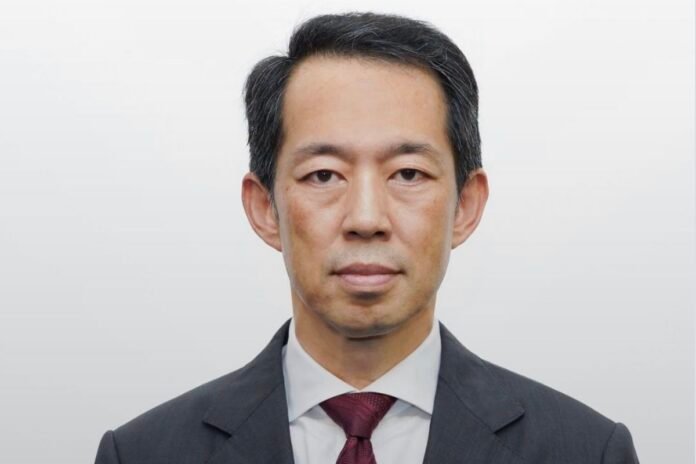
As Manila and Tokyo mark the 70th anniversary of normalized diplomatic relations, elevate their ties to a Comprehensive Strategic Partnership, and face rising security tensions in the West Philippine Sea, the arrival of Kitagawa Katsuro as Japan’s new ambassador to the Philippines comes at a pivotal moment in regional geopolitics.

He arrives not merely as a diplomat, but as the face of a Japan assuming a larger strategic role across the Indo-Pacific.

A career diplomat with more than three decades at Japan’s Ministry of Foreign Affairs, Kitagawa brings to Manila deep experience in security policy, nuclear nonproliferation, European affairs and relations with South Korea — diplomatic assignments that have exposed him to some of East Asia’s most sensitive security challenges.

His posting reflects a remarkable transformation in Philippine-Japan relations, once centered primarily on trade, investment and development assistance and now evolved into one of Asia’s most important strategic partnerships.

Defense cooperation, maritime security collaboration and regional stability have become central pillars of that partnership. The Reciprocal Access Agreement and expanding military and coast guard cooperation illustrate how profoundly bilateral ties have changed in recent years.

For the Philippines, Japan has become an increasingly important security partner, supporting the modernization of Philippine maritime capabilities through coast guard vessels, surveillance equipment, capacity-building programs and defense cooperation initiatives.

Unlike many of the region’s security relationships, the Philippines-Japan partnership enjoys broad domestic support in both countries and is reinforced by deep economic and people-to-people connections. But while Ambassador Kitagawa’s arrival offers opportunity, it also highlights the difficult strategic choices Manila faces in a fast-changing geopolitical environment.

The implications for Philippine-China relations are particularly significant, as Beijing is likely to view the deepening of Philippines-Japan security cooperation with growing concern.

From Beijing’s perspective, strengthening defense ties among the Philippines, Japan and the United States may look like part of a broader effort to constrain China’s regional influence. Joint exercises, intelligence-sharing arrangements, maritime cooperation and reciprocal military access agreements inevitably affect Chinese strategic calculations.

Whether this perception is accurate is beside the point. In international politics, perceptions often shape behavior as much as reality does. Closer Philippines-Japan security cooperation could therefore feed into increased Chinese suspicion.

That, in turn, could translate into greater diplomatic friction, more assertive behavior in disputed waters and heightened tensions in the West Philippine Sea — the first of several risks associated with Manila’s expanding strategic partnership with Tokyo.

The second risk is strategic entrapment. Japan’s security concerns extend far beyond the South China Sea to the East China Sea, North Korea and the Taiwan Strait. As Manila strengthens defense relations with Tokyo, pressure could build for greater policy coordination on these broader regional issues.

The Philippines naturally benefits from closer ties with Japan, but policymakers must ensure that cooperation does not create expectations of automatic Philippine involvement in future regional contingencies beyond the country’s immediate security priorities. A sovereign foreign policy requires strategic flexibility.

The third risk concerns the over-securitization of Philippine-China relations. Security cooperation is important, particularly amid persistent tensions with China in the West Philippine Sea, but it should not become the sole lens through which Manila views Beijing.

China remains an important economic partner, and bilateral relations encompass trade, investment, tourism, educational exchange and regional diplomacy. Excessive reliance on military and security frameworks could narrow opportunities for diplomatic engagement and confidence-building. Deterrence and dialogue should proceed simultaneously.

The fourth risk is excessive dependence on external partners. The Philippines understandably welcomes Japan’s security assistance, which contributes significantly to maritime capacity-building and defense modernization. But no external partner can replace the need for indigenous capability.

The long-term foundation of Philippine security lies in a modern navy, a capable air force, a professional coast guard, improved maritime domain awareness and stronger defense institutions. Foreign partnerships should complement national capabilities, not substitute for them.

The fifth and final risk is regional polarization. ASEAN has traditionally sought to maintain strategic equilibrium amid major-power competition, and as security partnerships multiply across the Indo-Pacific, concerns may grow over the formation of competing geopolitical blocs.

The Philippines must therefore carefully balance its expanding security relationships with its commitment to ASEAN centrality and regional inclusivity.

In many respects, Kitagawa’s tenure will test whether the Philippines can successfully pursue what might be called strategic diversification — stronger ties with Japan, the United States, Australia and other like-minded countries, while maintaining open communication channels with Beijing.

Ultimately, Kitagawa’s arrival reflects the emergence of the Philippines and Japan as key strategic partners in shaping the Indo-Pacific’s future. The success of their partnership will not be measured solely by the number of military exercises conducted or defense agreements signed, but by whether stronger cooperation advances regional stability, protects national interests and reduces the risk of conflict.

For the Philippines, the challenge is to strengthen security ties with Japan without transforming them into an unnecessary source of confrontation with China. For Kitagawa, that may be the most important mission of all.

Rommel C. Banlaoi, PhD, is director of the Philippines–China Studies Center at Diliman College, president of the Philippine Society for International Security Studies and former president of the Philippine Association for Chinese Studies.

5 Netanyahu claims at UN that clash with documented findings

0
5-netanyahu-claims-at-un-that-clash-with-documented-findings
5 Netanyahu claims at UN that clash with documented findings

Israeli Prime Minister Benjamin Netanyahu has repeatedly used the UN General Assembly podium to defend Israel’s actions in Gaza and the occupied West Bank, making claims that have been challenged by international bodies, humanitarian agencies and, in some cases, data from Israel’s own military, Anadolu reports.

In speeches between 2024 and 2026, Netanyahu rejected allegations of genocide, described civilian casualties as exceptionally low, blamed Hamas for Gaza’s aid crisis and played down Israeli occupier violence in the occupied West Bank.

A review of five such claims shows substantial discrepancies between Netanyahu’s account and documented findings.

– Genocide allegation is ‘the greatest lie of the century’

In his 2026 UN address, Netanyahu called accusations that Israel was committing genocide in Gaza “the greatest lie of the century,” arguing that warnings to civilians, vaccinations and food deliveries were incompatible with genocide.

A UN-mandated Independent International Commission of Inquiry reached the opposite conclusion in September 2025. After examining witness testimony, satellite imagery, official statements and other evidence, it found reasonable grounds that Israeli authorities and forces had committed four of the five acts defined as genocide under the Genocide Convention.

The commission also concluded that statements by Netanyahu and other senior officials were evidence of genocidal intent. Israel rejected the findings.

The International Court of Justice has not issued a final judgment in South Africa’s genocide case, but has ordered Israel to prevent acts covered by the convention and enable urgently needed humanitarian assistance.

– Civilian casualty ratio is exceptionally low

Netanyahu told the General Assembly in 2025 that Gaza’s civilian-to-combatant casualty ratio was below two to one, calling it exceptionally low.

He also said in his Sept. 27, 2024 UN address: “And no army has done what Israel is doing to minimize civilian casualties.”

A joint investigation by The Guardian, +972 Magazine and Local Call, based on a classified Israeli military intelligence database, found that as of May 2025 about 8,900 named Hamas and Palestinian Islamic Jihad fighters were listed as dead or probably dead, compared with an overall death toll of about 53,000.

The figures suggested roughly 83% of those killed were civilians.

Since Israel’s genocidal war on Gaza began in October 2023, more than 73,000 Palestinians have been killed and around 175,000 injured, according to Gaza’s Health Ministry.

– Hamas stole much of Gaza’s humanitarian aid

Netanyahu has repeatedly accused Hamas of stealing large quantities of aid entering Gaza.

In his 2026 UN address, he said Hamas “stole much of the food we let into Gaza,” as he argued that the group was keeping Palestinian civilians in harm’s way.

An internal US Agency for International Development review found no evidence of systematic diversion of US-funded aid by Hamas. It examined 156 cases of theft or loss between October 2023 and May 2025 and found no indication that Hamas benefited.

Senior Israeli military officials were also reported to have said they found no evidence that Hamas systematically stole UN aid, describing the UN distribution system as largely effective.

– Two million tons of food disproves starvation claims

Netanyahu told the UN that Israel had enabled the distribution of 2 million tons of food into Gaza, or about one ton per resident, presenting the figure as evidence against allegations of starvation and genocide.

“What genocidal regime enables the distribution of 2 million tons of food into Gaza? That’s a ton for every person.”

But aid entering Gaza is not the same as food reaching civilians. UN agencies have documented restrictions, insecurity, damaged roads and military operations that hindered collection and distribution.

Israel completely halted the entry of goods and humanitarian supplies from March 2 to May 18, 2025, and has repeatedly blocked, restricted, and paused the entry of humanitarian supplies over long periods throughout the conflict

In August 2025, the UN-backed Integrated Food Security Phase Classification confirmed famine in Gaza Governorate, saying more than half a million people across Gaza faced catastrophic conditions marked by starvation, destitution and death.

The latest IPC assessment says 1.4 million people are still projected to face high levels of acute food insecurity through December 2026.

– Occupier violence is the work of a small fringe

In his 2026 address, Netanyahu described violence by Israelis in the occupied West Bank as the work of about 150 “juvenile delinquents” and suggested only “two or three” Palestinians had been killed.

UN monitoring shows a far wider pattern.

By July 20, 2026, the UN Office for the Coordination of Humanitarian Affairs had recorded more than 1,330 occupier attacks resulting in casualties or property damage since the start of the year — more than six a day.

OCHA also recorded 18 Palestinian deaths linked to occupier attacks by that date: 12 killed by occupiers, three by Israeli forces and three in cases where responsibility was disputed.

Between January 2023 and July 2026, OCHA said occupier attacks and related access restrictions had caused full or partial displacement in 121 Palestinian communities.

The figures contrast with Netanyahu’s portrayal of occupier violence as a marginal phenomenon.

Can Trump ever be wrong? His pick to lead FDA refused to say.

0
can-trump-ever-be-wrong?-his-pick-to-lead-fda-refused-to-say.
Can Trump ever be wrong? His pick to lead FDA refused to say.

Heidi Overton, President Trump’s nominee to lead the Food and Drug Administration, went before the Senate health committee Thursday, facing questions about her stances on vaccines, flavored vapes, birth control, and abortion, among other issues. She spent nearly two hours stonewalling senators, even on softball questions.

Overton, a physician with a doctoral degree in clinical investigation, is currently the deputy assistant to the president for domestic policy. She previously worked at a conservative think tank and has taken a clear stance opposing abortion, raising obvious questions about her objectivity. The FDA is currently reviewing the safety of the abortion pill, mifepristone, despite extensive data showing it is extremely safe.

Overton also notably stood behind President Trump at a press conference in August during which Trump falsely called the measles, mumps, and rubella (MMR) vaccine “quite lethal.” He further claimed that vaccine doses for infants are “like the size of a soda bottle,” and called for the MMR vaccine to be split into three separate immunizations, despite no evidence of benefit from such a split and no such individual immunizations being available in the US.

Vaccine contradictions

In the hearing, Overton directly contradicted Trump on several occasions, saying at various times that “the MMR vaccine is not lethal” and that “the MMR vaccine is safe and effective.”

Still, when Sen. Maggie Hassan (D-NH), asked “Do you think it’s possible for the president to ever be wrong about something?” Overton dodged. Instead of answering the question, she began spouting a non-answer that started with: “I’ve had the privilege of working for the president for over a year and a half and have had robust discussions with him.”

Hassan cut her off, pressing: “Is it possible for him to be wrong?” But again, Overton was evasive.

Hassan asked her if she thought the MMR vaccine might be lethal. Again, Overton said it was safe and effective. “So,” Hassan asked,”was the president wrong when he suggested that the combined measles, mumps, and rubella vaccine may be lethal?”

“Senator, the president asks questions and wants the best outcomes for the American people right now.”

Hassan kept pressing, switching to Trump’s false claim that Tylenol taken during pregnancy is linked to autism in children. “Was he wrong when he said that? Yes or no?” Again, Overton didn’t answer, only saying “There is no current evidence of a causal link between Tylenol and autism.”

“I wish it wasn’t so difficult for members of the administration to just plainly say that the president’s wrong,” Hassan said. “And it’s really concerning to me that you are equivocating on it here.”

Bad options

Sen. Lisa Blunt-Rochester (D-Del.) also asked about the vaccine claims Trump made in August, noting that reports suggested it was Overton herself who suggested to Trump that the combination vaccine could be split into multiple shots. Even if there was reason to think splitting the vaccine would improve safety and/or efficacy, it would take huge investments and years of trials to get the individual vaccines approved in the US.

“So obviously,” Blunt-Rochester asked, “you think these were good options, correct?”

Overton replied that, in her current role, her job is to give Trump options.

“You wouldn’t have provided bad options, right?”

But Overton again wouldn’t answer Blunt-Rochester’s question. “This is just a simple question,” Blunt-Rochester interjected. “This, I thought, was the easy question.” Blunt-Rochester went on to ask Overton if she reviewed data about splitting the MMR vaccine or if current doses were the size of a soda bottle, but again she dodged the questions.

Flavored vapes

The FDA has been without a commissioner since May, when Marty Makary resigned from the role after resisting Trump’s pressure to approve flavored vapes. The FDA issued a policy allowing their sale in early May, despite bipartisan opposition to the products, which are largely seen at being marketed to youth.

Sen. Chris Murphy (D-Conn.) laid out a timeline of how it happened, saying:

On April 30th, it’s a Thursday afternoon, Reynolds, one of the biggest tobacco companies in the country, makes an $8 million donation to the president. Two days later on Saturday, because of that donation, they have lunch with the president and they tell him that they want a change in FDA rules, especially regarding flavored vapes. The president calls the FDA commissioner, he calls the secretary of [the health department], and three days later on Tuesday, new guidance is issued that paves the way to the sale of flavored vapes.

Murphy asked Overton if she saw a connection between the donation and the policy change, and if that’s how she thinks the FDA should work. “I reject the framing of that question,” Overton replied, adding that Trump is “committed to the best possible outcomes for American.”

Sen. Tim Kaine (D-Va) pushed Overton on upcoming plans that the Trump administration has to further ease regulation of tobacco products, including fruity vapes. Kaine asked what Overton, a key domestic policy advisor, knew about the upcoming changes. But Overton would only say that she was “not involved in those discussions.”

“Dr. Overton, now come on, don’t play games with me,” Kaine said. “I didn’t ask whether you were involved in them. I asked, are you aware … are you aware of discussions that is going on about whether the FDA will roll back tobacco safety regulations? And that’s an easy [question]. You’re either aware of them or you’re not.”

After again declining to answer the question, Kaine gave up, saying “Let the record reflect that the witness refused to answer the question. I yield.”

“Pretty good job”

On the topic of birth control and abortion, Overton was equally evasive, refusing to say whether she thinks IUDs (intrauterine devices) are a form of abortion or whether women are polluting the water supply by taking birth control pills—both things anti-abortion groups claim.

Even for friendly questions, Overton refused to answer things directly. Sen. Ashley Moody (R-Fla.) asked about illegal, imported vapes, something Overton mentioned wanting to crack down on in her opening statement. Moody asked a softball question, simply getting Overton to confirm the FDA’s current rules for vaping products, which allow products to be sold while applications for FDA approvals are pending.

“If someone files an application, they can sell, right?” Moody asked multiple times.

But Overton didn’t answer the question and Moody became frustrated, exclaiming at one point: “I’m just trying to find out what the law is!”

Halfway through the hearing, Murphy summed it up succinctly, telling Overton: “You’ve done a pretty good job of avoiding answering questions.”

Finland and Sweden scramble Quick Reaction Alert jets to intercept Russian aircraft

0
finland-and-sweden-scramble-quick-reaction-alert-jets-to-intercept-russian-aircraft
Finland and Sweden scramble Quick Reaction Alert jets to intercept Russian aircraft


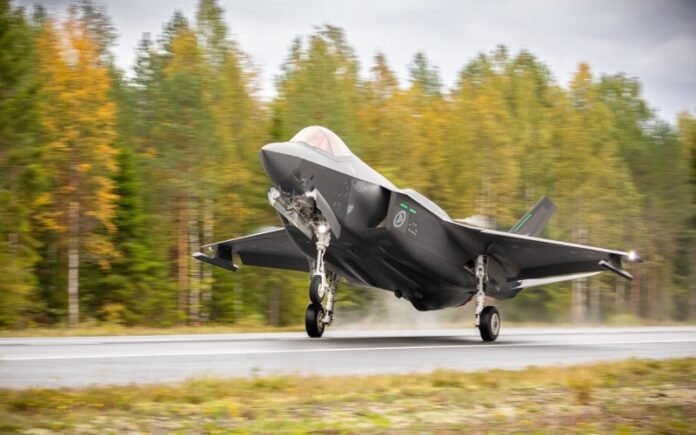
Finland’s air force said on Friday that Swedish and Finnish fighter jets had been scrambled to identify Russian fighter jets flying over the Gulf of Finland.

The air force said that the two Nordic countries’ Quick Reaction Alert (QRA) jets had been scrambled on Thursday.

They had identified a Russian detachment consisting of a Tu-134 transport aircraft, MiG-31 fighter jets and Su-30 fighter jets “in international airspace over the Gulf of Finland.”

According to the military it was the first joint operational “identification mission” for the two air forces.

Swedish Prime Minister Ulf Kristersson commented on the operation on X, saying that “the Baltic Sea has never been as vulnerable as it is now – but it has also never been better protected than it is right now.”

Tensions over the Baltic Sea have risen sharply in recent years and Nordic jets are regularly scrambled to intercept Russian aircraft.

In the wake of Russia’s 2022 invasion of Ukraine, Sweden and Finland both dropped decades of military non-alignment and joined NATO.

The incident came on the same day that the Danish Defence Intelligence Service (DDIS) said that the risk of Russian military action against NATO countries was growing and an outright invasion was “highly unlikely” but possible.

“There is a low but growing risk that Russia will launch a limited military attack against one or several NATO countries bordering Russia,” Thomas Ahrenkiel, the head of the DDIS, told a press conference at which he presented an updated assessment of the threat from Russia.

He said that the agency still considered it “highly unlikely that Russia would see any interest in invading a NATO country, but we cannot rule it out”.

In the DDIS assessment, the agency said that Russia would likely carry out more so-called “hybrid attacks” against targets in the West.

It noted that in the past such attacks had “mainly been aimed at creating fear and weakening public support for aid to Ukraine”.

But they had now started to include actions meant to stop support from reaching Ukraine, such as sabotage against defence companies or railway transports carrying military equipment, the agency said.

The DDIS said it thought Russia would intensify such attacks, which could also include “destructive cyber attacks that cripple critical societal functions.”

Europe on alert

European countries have been on high alert for any Russian interference, with fears that Moscow could target Kyiv’s Western backers as the Kremlin’s invasion of Ukraine drags on into its fifth year.

In November, NATO military officials said a new US anti-drone system had been deployed to the alliance’s eastern flank.

And following a violation of Polish airspace, NATO Secretary General Mark Rutte announced the formation of the Eastern Sentry programme, which aims to deter further Russian incursions.

Some European officials described the incidents as Moscow testing NATO’s response, which raised questions about how prepared the alliance is against potential threats from Russia.

The Kremlin has dismissed allegations that Russia is behind some of the unidentified incursions in Europe as “unfounded.”

Read more via Euronews

N Korea’s hypersonic test a check on Japan’s nuclear ambitions

0
n-korea’s-hypersonic-test-a-check-on-japan’s-nuclear-ambitions
N Korea’s hypersonic test a check on Japan’s nuclear ambitions

North Korea’s recent hypersonic test signals an evasive theater nuclear strike capability aimed directly at Japan—a proxy warning backed by Russia and China as Japan rethinks its nuclear taboos.

This month, multiple media outlets reported that North Korean leader Kim Jong Un oversaw the test launch of an upgraded hypersonic missile system from the country’s eastern Wonsan area, a move aimed at piercing regional missile shields while rebuffing diplomatic overtures from the US and South Korea.

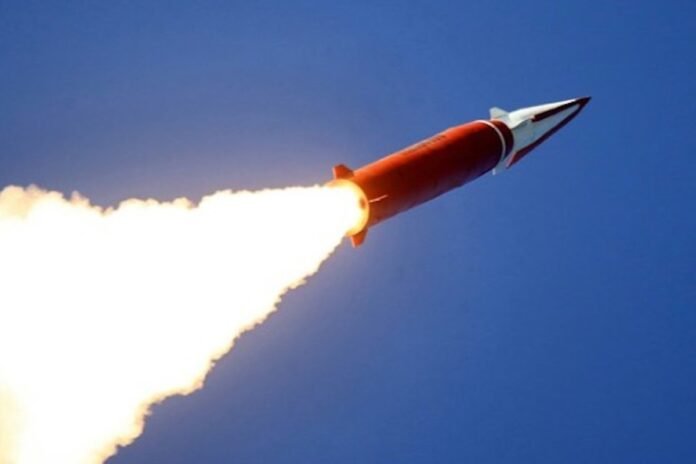
State-run Korean Central News Agency (KCNA) displayed flight trajectories for the “Hwasongpho-11Ma-1,” a short-range ballistic missile (SRBM) tipped with a sharp, dart-like hypersonic glide vehicle (HGV) engineered to maneuver at low altitudes and evade interceptor missiles.

According to South Korean and Japanese defense assessments, North Korea fired two missiles into the Sea of Japan, reaching peak altitudes of 60 to 70 kilometers and flying roughly 440 to 600 kilometers before splashing down outside Japan’s exclusive economic zone (EEZ).

Kim, accompanied by his daughter Kim Ju Ae, described the weapon as an “irresistible force” meant to inflict an “incurable headache” and an unavoidable blow on adversaries.

The test underscored North Korea’s expanding technological capabilities and hardened stance amid bolstered ties with Russia, directly countering diplomatic overtures at the UN General Assembly, where the US and South Korea sought renewed dialogue without preconditions.

The unveiling of the Hwasongpho-11Ma-1 reflects a critical evolution in North Korea’s military posture, as advancing hypersonic delivery systems, accelerating missile mass production and expanding fissile material output converge to operationalize a warfighting doctrine under a usable tactical nuclear shadow.

Delving into the specifics of North Korea’s Hwasongpho-11Ma-1 SRBM, The Korea Herald reported this month that the system pairs a KN-23 (Hwasong-11Ga) solid-fuel rocket booster with a dart-like hypersonic glide vehicle terminal section.

The outlet said the Hwasongpho-11Ma-1 SRBM is engineered for high defense penetration and ultra-precise strikes against critical installations across the Korean Peninsula, using unpredictable, low-altitude aerodynamic maneuvering during its glide phase to defeat regional missile shields.

While South Korea’s military tracked test flights covering 440 to 600 kilometers, North Korean state media telemetry, cited by The Korea Herald, recorded an operational range of up to 908.2 kilometers, which the report highlighted as evidence of its extended regional reach.  

While SRBMs such as the Hwasongpho-11Ma-1 are often categorized as precision conventional strike assets, their strategic value lies in their role as regional nuclear delivery systems, where even a single warhead penetrating theater air defenses can cause catastrophic damage to critical infrastructure.

As Japan increasingly questions its post-war defense constraints, openly debating the acquisition of nuclear-powered submarines and refusing to reaffirm its Three Non-Nuclear Principles, North Korea is demonstrating an asymmetric strike option to check those ambitions.

Critically, North Korea is not operating as an isolated rogue actor in this posture. Its hypersonic missile signaling acts as a proxy warning for China and Russia, both of which view Japan’s emerging nuclear debates as a direct threat to the regional balance of power.

While China uses diplomatic pressure against Japanese remilitarization and Russia accelerates strategic alignment with North Korea, North Korea fires the missile that gives the tangible warning.

In terms of nuclear dynamics, the introduction of the Hwasongpho-11Ma-1 SRBM aligns directly with North Korea’s broader push to accelerate SRBM production and miniaturize its nuclear warheads.

In an August 2024 International Institute for Strategic Studies (IISS) report, Zuzanna Gwadera highlighted this rapid expansion of tactical nuclear delivery systems, underscored by the delivery of 250 TELs for the Hwasong-11D SRBM, which can carry up to 1,000 projectiles.  

Gwadera explained that North Korea aims to pair these mobile launchers — alongside its nuclear-tasked KN-25 super-large artillery systems — with miniaturized Hwasan-31 warheads under its centralized “Nuclear Trigger” command framework.

She added that these systems are tailored to repel allied forces and overwhelm South Korean and US missile defenses with mass salvo strikes, even as launcher production outpaces current estimated warhead stockpiles.

Highlighting North Korea’s ramped-up missile manufacturing, Vann Van Diepen detailed in a July 2026 report for 38 North that Kim Jong Un ordered a 2.5-fold increase in ballistic and cruise missile production capacity over five years in June 2026, underscored by dozens of KN-23 short-range ballistic missile bodies awaiting completion.

Van Diepen assessed that the wars in Ukraine and the Middle East have provided North Korea with strong impetus to ramp up output to endure the high ammunition expenditure rates typical of modern conflict.

He observed that North Korea requires deeper magazines to absorb allied strikes on road-mobile launchers, penetrate robust theater missile defenses, and sustain high-intensity barrages throughout a prolonged war.

However, Van Diepen cautioned that stockpiling sufficient missiles for domestic war plans while concurrently supplying Russia’s battlefield needs creates a severe industrial balancing act for the regime.  

Furthermore, The Chosun Daily reported that North Korea has officially opened a second uranium enrichment facility at the Yongbyon complex. The outlet said the facility can house 28 centrifuge cascades capable of yielding 85 kilograms of highly enriched uranium annually, enough for three to four additional warheads.

Combined with active enrichment operations at Kangson and Kusong alongside ongoing plutonium reprocessing, The Chosun Daily estimated that North Korea’s annual weapons-grade uranium output may surpass 300 kilograms — enough for roughly 15 warheads per year.  

This industrial surge aligns with the strategic trajectory outlined in a July 2024 report from the Bulletin of the Atomic Scientists, which said that North Korea is steadily modernizing its nuclear force, possessing enough fissile material for up to 90 warheads while likely having assembled around 50.

The Bulletin report projected that North Korea produces enough weapons-grade plutonium and highly enriched uranium to add roughly six warheads annually, potentially amassing a stockpile of 130 warheads by 2030.

The report added that this capability is reinforced by solid-fuel strategic missiles, tactical strike systems, and sea-based platforms engineered to diversify delivery and maximize pre-launch survivability.

By fielding advanced tactical delivery platforms like the Hwasongpho-11Ma-1, North Korea establishes a theater nuclear posture tailored to check Japan, operationalizing a shared strategic objective with China and Russia to deter a Japanese nuclear breakout and lock in regional escalation dominance.

0FansLike
0FollowersFollow
0FollowersFollow
0SubscribersSubscribe
- Advertisement -
Google search engine

Recent Posts