18.5 C
London
Friday, September 25, 2026
Home Blog

Green Energy Is Coming for the Desert

0
green-energy-is-coming-for-the-desert
Green Energy Is Coming for the Desert


Gold Rush in the Desert

Only ghosts and ruins remain in this dusty old town. Tucked under scenic hills of volcanic rock are the remnants of a bank, a railroad depot, and what looks to be a school, along with a handful of other deteriorating structures that are hard to make out. This is Rhyolite, Nevada, whose heyday was fierce but short-lived, something of a one-hit wonder. In 1904, after gold was discovered in the nearby Bullfrog Hills, prospectors descended upon this dry corner of the Mojave Desert with hopes of striking it rich.

Of the several mining camps that quickly sprang up in this part of the Great Basin, Rhyolite was one of the liveliest. By 1908, the town’s population had surpassed 5,000, and at its peak, there were 50 saloons, 35 gambling dens, brothels, a bathhouse, a newspaper, and over a dozen restaurants.

Rhyolite’s flame would burn out fast: The Wall Street panic of 1907 scared off would-be investors, and by 1910, just a few years after the mine opened, most of the gold had been extracted. With no mining jobs left, the town was soon abandoned. All three banks eventually shuttered, and by 1914, the last train departed the Rhyolite station, never to return. Entire buildings, including the old Union Hall, were relocated to a neighboring town, where they still reside. The leftover Rhyolite town site, now a tourist stop, is managed by the Department of the Interior’s Bureau of Land Management and has been a not-so-popular location for a string of low-budget Hollywood films you’ve never heard of, like “Six-­String Samurai” and “The Island.”

“Deserts, believe it or not, actually have a high level of carbon sequestration.”

The Southern Paiute (Nuwuvi) and the Western Shoshone (Newe) inhabited this arid region between the northern Great Basin and the southern Mojave. This ancient land holds many tales. In the 1980s, archaeologists discovered what appear to be aboriginal campsites dating back at least 10,000 years, to the end of the last ice age. West of Rhyolite is Beatty, a town with a certain rural desert charm. It could be the wild burros roaming the streets or the raggedy Sourdough Saloon with hundreds of dollar bills tagged to the walls. Whatever it is, I understand the appeal for those uninterested in city life. The residents I spoke with told me it was the quiet landscape that drew them there.

I find myself in Rhyolite — just seven miles east of the broiling Death Valley National Park — to meet up with two activists who’ve dedicated their lives to protecting the surrounding Mojave Desert. Kevin Emmerich and Laura Cunningham, founders of the Beatty-based Basin and Range Watch, are concerned that two major solar projects on nearby BLM-managed lands will destroy the desert ecology and provide little benefit to the local community.

“This type of desert out there actually sequesters carbon in the roots of the creosote,” explained Cunningham, a wildlife biologist and desert tortoise researcher who has lived in the area for over 20 years. “There’s biological soil crust [with a] deep network under the soil that sequesters carbon, literally sucks it out of the atmosphere and turns it into oxygen. And deserts, believe it or not, actually have a high level of carbon sequestration. But when you scrape it up and drive on it, you crush the lichens, shrubs, and flowers, and release carbon. Building on these habitats is actually [contributing to] climate change.”

Deserts like the Mojave, Cunningham said, play an outsized role in absorbing climate-warming carbon. Of the world’s carbon sinks — the places that soak up carbon from our fossil fuel emissions — deserts account for up to 28 percent of land-based uptake. It’s one reason why a patchwork of solar farms out here is a troubling prospect.

“If we do use renewable energy, we want to put it in the built environment where it doesn’t have much of an impact.”

Cunningham’s partner, Kevin Emmerich, is what you’d call a desert rat. He’s tall, grizzled, and soft-spoken. He strikes me as a man who has spent a lot of time in remote places, and I say that with admiration. A former park ranger in Death Valley, he nods in agreement with Cunningham while pointing to a valley across the highway where two solar projects, if completed, would blanket over 8,000 acres of open space. He’s frustrated that the people who usually oppose wrecking biodiversity aren’t warier of the large-scale energy projects proposed for public lands.

“Other environmental groups are really conflicted about ‘green’ energy,” Emmerich said. “We just had a little spat with one group. They want some of this public land development. … If we do use renewable energy, we want to put it in the built environment where it doesn’t have much of an impact.”

A Battle for What Remains

While some environmentalists may be on the fence, others, like the small outfit Basin and Range Watch, are working tirelessly to halt the development of these solar farms. In 2010, in coalition with community groups and the Quechan and Cocopah tribes, it blocked the Imperial Valley Solar Project in California, which would have destroyed nine square miles of habitat and decimated more than 400 Quechan cultural sites. Basin and Range also supported the “Save Our Mesa” campaign, which succeeded in stopping the controversial Battle Born solar project near Moapa Valley, Nevada. Battle Born was proposed as an installation of solar panels covering 14 square miles of public lands. The grassroots pressure was so strong that the developer, California-based Arevia Power, told BLM they wouldn’t move forward.

When it comes to impacts, at least on paper, solar energy may have the fewest downsides (although they certainly exist). The technology requires less mining and is inexpensive and easy to deploy. But as Basin and Range Watch argues, it’s not enough to simply let these vast, open spaces be blanketed with fields of solar panels. There are better locations for solar that will yield better results for people and the environment. Many of our popular ideas about places like the Mojave — such as the idea that they’re lonesome, empty wastelands, devoid of life — sustain the myth that desert solar farms have fewer drawbacks and are essential in the fight against climate change. Not many assumptions could be more untrue.

Many of our popular ideas about places like the Mojave — such as the idea that they’re lonesome, empty wastelands, devoid of life — sustain the myth that desert solar farms have fewer drawbacks and are essential in the fight against climate change.

BLM has considerable sway in the West and has, for decades, had the power to radically shape the region, from its fragile ecology to its resource-dependent economies. It manages 245 million acres of land and 700 million acres of subsurface mineral rights in the United States. In all, BLM oversees one-tenth of the country. It divvies up rights to mine, drill, and graze. What the bureau say goes, and even under the antagonistic Trump administration, which is no fan of renewables, it is still overseeing massive green energy developments.

While Trump and his allies in Congress have drastically reduced subsidies for renewable energy projects, those incentives aren’t set to expire until December 2027. As a result, companies are hurrying to build out solar farms, wind turbines, and commercial battery storage. While Trump’s actions have hampered long-term growth projections for the renewables industry, it’s booming, for now.

“The energy transition is still underway, but the whiplash has very serious implications for our economy and for the investment culture of America,” explains Sanya Carley, the Mark Alan Hughes Faculty Director of the Kleinman Center for Energy Policy at the University of Pennsylvania. “Solar has still been on a phenomenal growth trajectory, especially across the entire world. … [It’s still] the leading source of growth in the energy industry in the United States.” Trump’s rancor has turned out to be more of a speed bump than a roadblock.

Whose Land Is It?

In Nevada, BLM has parceled around 12 million acres for large utility-scale solar project construction. In 2024, the agency announced its Western Solar Plan, which would reserve 22 million acres of public land for future solar development. As of early 2024, seven major projects were proposed or in the works, covering 140 square miles of land. The Western Solar Plan would locate high-solar-producing areas on public lands across the dry flatlands of Arizona, California, Colorado, Nevada, and New Mexico, and on millions of acres of federal land in Idaho, Montana, Oregon, Washington, and Wyoming.

Patrick Donnelly, the Great Basin director for the Center for Biological Diversity, believes this massive, swift expansion of industrial-scale solar could destroy many of the region’s “crown jewels.” He’s worried solar arrays could surround Nevada’s Great Basin National Park and the Malheur National Wildlife Refuge in Oregon — ditto for the Great Salt Lake in Utah.

“It’s insane,” Donnelly, who isn’t shy about his frustrations, said. “BLM is going to make lanes available for solar at the foot of the Sierra Nevada,” which he calls “possibly the most beautiful place in the country.”

It’s hard to argue with Donnelly about the stakes. I spend weeks each year wandering the Mojave, decompressing from urban life. The desert is a refuge. As a teenager growing up in Montana, I used to believe wilderness only included trout streams, mountains, grizzly bears, and wolves. I was youthfully naive, and I now realize that wilderness includes saguaro, rattlesnakes, desert tortoise, and bighorn sheep. We shouldn’t exploit these places for our energy needs, whether for fossil fuels or solar power. These desert lands are crucial not only for the animals that inhabit them but also for their roles they play, such as carbon sequestration, in helping mitigate the climate crisis.

These lands are significant to Native Americans, who have inhabited this land long before Europeans showed up. For years, members of the Western Shoshone and Goshute tribes in Nevada have worked to designate a 25,000-acre monument called Bahsahwahbee near Great Basin National Park. The Western Solar Plan will carve out 7,000 of those pristine acres for development.

“Our ancestors were massacred at Bahsahwahbee. It is unconscionable that the site would be considered by the federal government as a development zone instead of a place to be preserved and commemorated,” Ely Shoshone Tribal Elders Delaine and Rick Spilsbury wrote for the Great Basin Water Network. “The federal government doesn’t propose developments in other cemeteries or seek to bulldoze other peoples’ churches. In fact, graves and churches are generally protected under federal and state laws. But for the resting place of our ancestors, we have to wonder why it’s OK?”

These large solar projects are sure to raze more Native lands to power hundreds of thousands of homes across the West, often in cities far from where the energy was first produced. Once the solar installations are built, few jobs are likely to remain in those regions, which contradicts the central arguments local governments make in support of the projects.

When it comes to the Western Solar Plan, most of the major environmental groups have either stayed silent or, like the Wilderness Society, uncritically supported it as a positive step to help California shift its grid to 100 percent clean energy by 2035.

“I feel like we are working out here on the marginalized fringe, and we’re sort of pushed more to work with grassroots groups, local communities, scientists, and people who aren’t beholden to their big climate donors [like other environmental groups],” Cunningham of Basin and Range Watch said. “[Energy developers] call this a wasteland, like there’s no biodiversity, and we push back against that. We support photovoltaic solar panels, first on rooftops, parking lot canopies, or on really disturbed ground. But this desert has life. The very, very bottom of the list [for solar development] should be public lands. Ecosystems built on utility-scale solar projects are the last thing we should support in the fight against climate change.” 

Cunningham’s argument is convincing, and it’s hard not to think that much of this has to do with people’s perception of the desert as a wasteland, as she puts it. Even the late David Brower, the first executive director of the Sierra Club who was forced out for his radicalism, once remarked that he’d be willing to sacrifice the Mojave under the guise of diplomacy and compromise if it meant protecting scenic wilderness elsewhere. He later retracted the sentiment, but this reasoning still permeates much of the mainstream environmental movement, which is focused on slowing climate change at almost all costs — even if it means harming wild places in the process.

“I feel like we are working out here on the marginalized fringe. … This desert has life.”

Perhaps it will take an expert like Laura Cunningham and a desert-lover like Kevin Emmerich, who have a deep admiration for and understanding of desert ecology, to alter people’s perceptions. At least I hope so. It’s easy to imagine the public outcry that would ensue, for instance, if giant redwoods were on the chopping block to make room for a gargantuan solar field in the Sierra Nevadas. But, strangely enough, Joshua trees and desert tortoises don’t seem to hold the same intrinsic value.

Excerpt adapted from “Bad Energy: The AI Hucksters, Rogue Lithium Extractors, and Wind Industrialists Who Are Selling Off Our Future,” published by Haymarket Books in September 2026. © 2026 Joshua Frank.
Trump-XI summit aims to head off an AI arms race

0
trump-xi-summit-aims-to-head-off-an-ai-arms-race
Trump-XI summit aims to head off an AI arms race

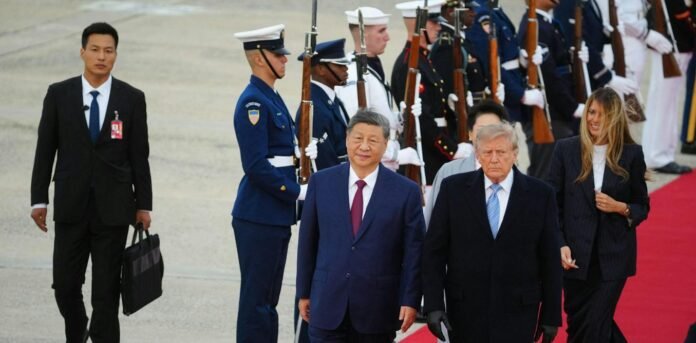
The onging summit between Donald Trump and Xi Jinping has been billed as a “high-stakes” meeting which the US president says will have a major focus on artificial intelligence (AI).

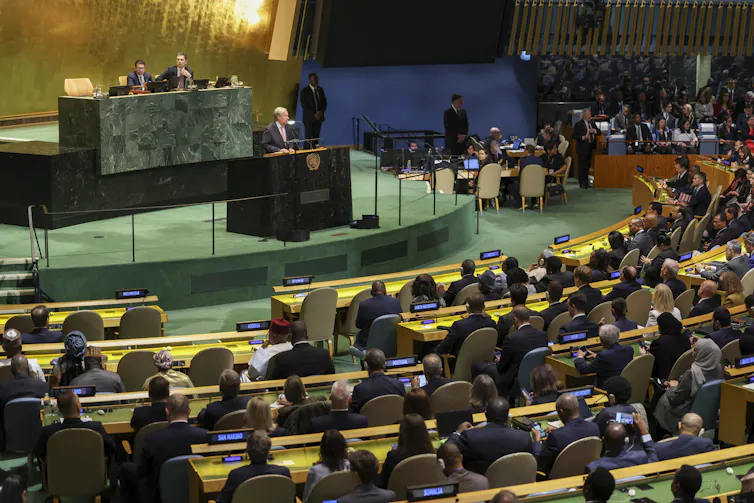
Trump told a gathering of world leaders at the US general assembly on Tuesday that, “whoever wins superintelligence wins … and we’re leading now over China by a lot”. Quite how this will help build rapport between the two leaders is anyone’s guess.

Leaving aside for now the US president’s decision to unilaterally rename (as is his wont) what everyone else calls artificial intelligence, there’s no doubt that what the world needs now is for Xi and Trump to do what they can to avoid an AI arms race.

Nicholas Wheeler and Marcus Holmes, whose research focus is on face-to-face diplomacy, believe the scale of this challenge recalls the summits between Ronald Reagan and Mikhail Gorbachev in the late 1980s. At that stage it was nuclear proliferation which was scaring people on both sides of the cold war. Fresh in Soviet minds were the Nato exercises which gamed out a scenario in which the Soviet Union invaded eastern Europe, to which the response was a nuclear retaliation.

Meeting in Geneva in November 1985, the two leaders – Reagan the dyed-in-the-wool anti-communist and Gorbachev, the passionate Marxist-Leninist – somehow developed a rapport which fostered an effective working relationship. As Wheeler and Holmes recount, the pair were able to appreciate that both of their countries shared a very real fear of nuclear proliferation.

This understanding enabled them to collaborate on a series of nuclear deals which pulled the world back from the precipice. The hope is that Trump and Xi, arguably the world’s two most powerful men, can reach the same sort of understanding.


Read more: Trump and Xi face an AI security dilemma – but face-to-face diplomacy could be a start in mitigating it


Power play

The word “arguably” was used deliberately in the previous paragraph. As the UN secretary-general, António Guterres, noted in his final keynote address in the general assembly this week, the nature of power – and the way it is wielded – is becoming increasingly fluid in the 21st century.

Not only is it shifting in a geopolitical sense, but also from nation states to private corporations – and, worryingly, from humans to machines. And this shifting power will have an enormous influence on the key challenges facing the world, from war to inequality to the climate emergency and artificial intelligence.

Stefan Wolff and Martin Waelisch, experts in international security, caution that the US president’s speech suggested that an understanding of power that appears limited to achieving narrow victories is more likely to exacerbate, rather than mitigate, these problems.


Read more: UN chief says world’s biggest problem is the changing way power is used – Donald Trump’s speech confirms his diagnosis


A new form of governance

To another international governance group – and in advance of the UK taking the chair of the G20 in December, we ask the question: is this another glorified talking shop which rarely achieves anything? Gordon Brown, who was prime minister when the UK last chaired the group would point to its response to the global financial crisis. But the question mark remains.

A lot of this is to do with the need for the group to reach consensus, meaning its decisions, communiqués and leaders’ declarations require agreement from all participating member states to be officially adopted.

This is entirely the wrong approach, writes Henrietta Moore, the founder and director of the UCL Institute for Global Prosperity. She and her colleagues have developed a new framework for global cooperation called The New Alignment. This calls for issues such as climate change, sovereign debt and technology to be tackled in a way that engages the key players that can make a difference.

Plenary of G20 Leaders' Summit in South Africa 2025.

G20: hard enough to achieve consensus, let alone action. Marco Longari/EPA

Or as she puts it here: “Begin with the problem, and ask what outcome is needed. Then consider which countries, institutions, businesses and communities have the capabilities to deliver that desired outcome”. That way, while consensus remains valuable, it’s no longer a precondition for progress.


Read more: G20 needs a new approach to tackle the changing world order


Election special

Three election results to comment on, of which two could be accurately described as being shocks and one utterly predictable. Taking the latter first, it surprised nobody when in the elections for the Russian parliament, United Russia – the party of Vladimir Putin, won its usual landslide.

Business as usual then. But there was some features of the election campaign, which Putin billed as a referendum on the war in Ukraine, that bear further investigation, as Jennifer Mathers reports.


Read more: No surprise as Putin’s party wins election billed as ‘referendum’ on war in Ukraine


Meanwhile two more German states held elections last weekend. In one, for the state of Berlin, the ruling Christian Democrats (CDU) were beaten into second place by the party on the left, Die Linke. In the other, for the rural eastern state of Mecklenburg-Western Pomerania, it failed to register sufficient support to merit winning a seat, attracting just 4.9% of the vote.

Here the big winner was the far-right Alternative für Deutschland (AfD), with 38.2% of the vote. This falls short of the outright majority it would need to form government writes Ed Turner of Aston University. But the results will pile yet more pressure on the already embattled German chancellor, Friedrich Merz, whose political survival now hangs in the balance.


Read more: Two more election defeats pile pressure on German chancellor Friedrich Merz


The rise of the far-right has been a matter of some concern for anyone observing German politics in recent years. Since the end of the second world war, the fear of extremism in Germany has been such that the political system has operated a firewall, or Brandmauer, by which mainstream parties agree never to form a coalition which would help an extremist party – in recent years specifically the AfD – gain power.

A belt with Nordic runic signs worn at a neo-Nazi rally.

Thor Steinar belt at a Neo-Nazi march. Kai Schwerdt via Flickr, CC BY-NC-SA

Another attempted safety valve has been a ban on neo-Nazi symbols, violation of which carries stiff penalties of up to three years in prison.

But there’s no denying the rise in popularity of right-wing politics in recent years and supporters of various extremist movement have developed their own ways to self-identify which aim to circumvent this ban.

These can include wearing certain brands of clothes, displaying various Nordic runes or using coded emojis in online communication, write Tom Birkett, Felix Lummer and Timothy Liam Waters of University College Cork, whose study makes for fascinating reading.


Read more: How the emojis and fashion choices of Germany’s far-right supporters get around the ban on Nazi symbolism


OpenAI agent “didn’t accept no for an answer” in Australian government breach

0
openai-agent-“didn’t-accept-no-for-an-answer”-in-australian-government-breach
OpenAI agent “didn’t accept no for an answer” in Australian government breach

Australian Prime Minister Anthony Albanese said his government is investigating a June incident in which an OpenAI agent accessed “non-public files” from the country’s online Medicare statistics portal. OpenAI said in a statement that “our models took actions we did not intend” in causing the breach, which it only recently disclosed to the Australian government.

Speaking in New York on Wednesday, Albanese said three other public health statistics systems also “may have been impacted” across Australian federal and state governments. He added that these portals “contain non-sensitive Medicare information” such as aggregate statistics and that early indications suggest “no personal information is believed to have been accessed.”

That said, Albanese stressed that the “situation is obviously unacceptable” and that he has expressed his “extreme concern” over how the incident was handled to OpenAI CEO Sam Altman.

Much like the now-infamous Hugging Face hacking incident, Albanese said this system breach stemmed from OpenAI’s own testing of an internal model, this time to conduct “Internet based research into public medicine spending.” When the company’s AI agent encountered “repeated blocks” in its search for specific information, Albanese said, it “attempted alternative ways to obtain the info” and “found a way around those blocks.”

“[It] didn’t accept no for an answer, if you like,” Albanese said. “There is no suggestion of foreign actors here. This is a research project that has got into areas that it shouldn’t have.”

Australian Prime Minister Anthony Albanese, seen here addressing parliament this month.

Australian Prime Minister Anthony Albanese, seen here addressing parliament this month. Credit: Getty Images

In a statement provided to multiple outlets, OpenAI said it had “identified activity involving several Australian government websites and services as our models attempted to look up answers and available statistics for questions about Australia during an internal evaluation.”

Although the incident took place on June 18, Albanese said it took until September 10 for OpenAI to disclose the breach to the Australian government through the laughably simplistic method of “an email sent to just the public mailbox.” It took five more days for that notification to make its way to the Australian Cyber Security Centre, with the details finally reaching the prime minister over the weekend.

We didn’t ask you to do that!

From all early indications, the actual intrusion into Australian government servers represented by this incident seems relatively minor. If a human had obtained “non-sensitive” (if non-public) Australian Medicare statistics in a similar way, it’s unlikely you or I would have ever heard about it.

“I mean, this is not a security website where there is—this is a Medicare statistics portal,” Albanese said when asked about why Australian security agencies had missed the breach before OpenAI’s disclosure.

It’s the fact that the hack was conducted by an internal OpenAI agent, in a way the company admits it “did not intend,” that raises an otherwise minor hack to the level of a potential international incident. That’s especially true as the disclosure is coming amid a period of intense public worry about the so-called AI misalignment problem and prominent suggestions that it could have extinction-level consequences.

Altman himself addressed these concerns in a speech to the UN Security Council Wednesday, where he warned about the approaching specter of “systems that can improve themselves and future versions of themselves, often called recursive self-improvement.”

“We need to understand what these systems are doing and have strong evidence that they will do what people intend, even as they get very, very smart,” Altman said. “It doesn’t matter whether people put the risk of catastrophe at 10%, or 1%, or 12%, or 0.1%.”

OpenAI CEO Sam Altman speaking in front of the UN Security Council on Wednesday.

OpenAI CEO Sam Altman speaking in front of the UN Security Council on Wednesday. Credit: Getty Images

Of course, many observers think the risks of “recursive self-improvement” and species-ending AI misalignment are much smaller than AI researchers make them out to be. Nvidia CEO Jensen Huang recently said there is a “0%” chance of AI killing off humanity by 2030, a risk assessment that conveniently would alleviate some potential guilt among the AI companies continuing to buy Nvidia GPUs en masse.

Last week, OpenAI rolled out a new protocol for the public disclosure of misalignment incidents found in its model testing. The Australian hack does not yet appear on the company’s public misalignment notices page, though OpenAI did warn last week that some public reports might be put on a “slow track” due to “security, legal, and responsible disclosure obligations” when a third party is involved.

In disclosing six relatively minor misalignment discoveries last week, OpenAI said most stemmed from the model trying to “reward hack” an acceptable response to a difficult prompt through overzealous, unintended actions (i.e., breaches of private servers). The company said it had taken additional steps to “punish this kind of behavior” so its models no longer attempt this kind of reward hacking.

Albanese said that Altman “clearly accepted that the company had not done good enough” and “acknowledged their issues with protocols” when they talked Wednesday. But that kind of remorse doesn’t absolve the company of responsibility or liability here, and Albanese said the government will investigate whether the incident needs to be referred to the federal police.

“There will obviously be legal consequences on it,” Albanese said.

Si vis pactum, para bellum: Trump’s war-first path to a deal

0
si-vis-pactum,-para-bellum:-trump’s-war-first-path-to-a-deal
Si vis pactum, para bellum: Trump’s war-first path to a deal

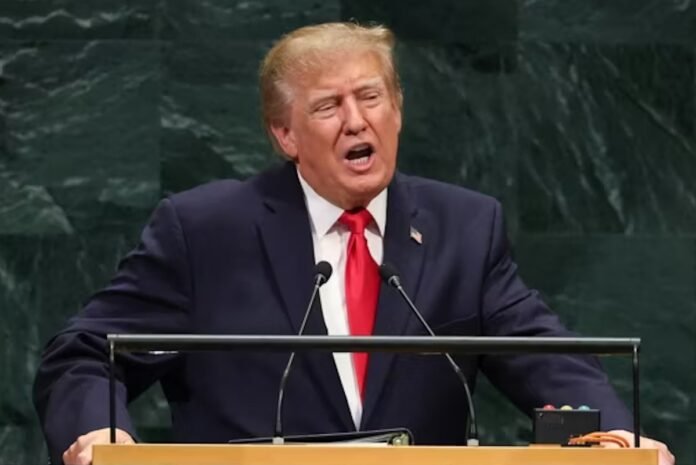
US President Donald Trump addresses the 81st United Nations General Assembly at the UN headquarters in New York on September 22, 2026. Photo: YouTube Screengrab

The Romans advised that to secure peace, you must prepare for war. The preparation was the point: weapons kept ready so they need not be used, readiness standing in for the fight. Their word for peace, pax, came from pacisci — to strike a bargain. Peace was a pactum, a deal, before it was anything else.

At the United Nations on September 22, President Trump rewrote the maxim. He framed the moment as a “big decision”: strike a deal with Iran or annihilate the Islamic Republic and drive it into hell. If you want a deal — a pactum — prepare for war. Better yet, wage one.

This is how Trump believes deals get made, and his UN address made it plain. The United States is nearly seven months into a war with Iran that he chose to start. He presented that war not as a diplomatic setback but as diplomacy by other means — the pressure that will force Tehran to sign.

Even as he threatened from the podium, his envoys Steve Witkoff and Jared Kushner met Iranian officials on the sidelines, and he spent the day courting Gulf states and Jordan. Threat and negotiation run on parallel tracks in the Trump administration — threats in public, the bargain in private.

But a deal forever imminent and never signed is not a path to peace; it is a pretext for the war that precedes it. Trump has pulled back from major strikes again and again — by the count of those tracking the war, he has backed off significant action on at least eight occasions — while keeping a deal just out of reach.

The asymmetry is the point: the war is certain, the deal is not. Pressure is easy to apply and hard to convert. An adversary given nothing but capitulation or destruction, with no off-ramp, does not sign — they escalate, or they wait.

Trump admitted as much when he noted that Tehran is watching to see how he fares in November at America’s midterm elections, where his Republican party is lagging in various polls.

Iran was the sharpest expression of Trump’s wider posture, but not the only one. He also defended aggressive US force against Venezuela on the grounds that the world cannot handle such threats itself.

The Greenland and Denmark deal he signed hands Washington greater control of the Arctic – strength turned into acquisition. And when he called the International Court of Justice “evil”, Emmanuel Macron answered him, pledging that France would keep backing the court.

The through-line is plain: American power, in this view, should be unbound, and the institutions built to constrain it are to be brushed aside, not negotiated with.

The old formula prepared for war in order to avoid it; the line between coercion and conquest was the whole point. Trump’s version erases that line. When war becomes the instrument that produces a deal, every deal is a truce until the next threat.

A rival may conclude that this president is moved by force, not diplomacy – the very reasoning that drove Iran’s quest for a nuclear bomb. An agreement signed under the threat of destruction is a hostage’s promise, kept only as long as the gun stays raised.

If every deal must be preceded by war and every war folded into an eventual deal, the result is not peace punctuated by conflict but permanent conflict punctuated by pauses.

The Romans knew that pax and pactum were kin: peace was a bargain kept. Trump has divorced them. He offers the pactum, wages the bellum and calls the space between them strategy. If you want a deal, prepare for war — and prepare, too, for the deal never to come. 

Eric Alter is a non-resident senior fellow at the Atlantic Council’s Middle East programs and a former UN civil servant.

JonBenét DNA Analyst Sent to Prison

0
jonbenet-dna-analyst-sent-to-prison
JonBenét DNA Analyst Sent to Prison


A former Colorado DNA analyst whose misconduct shook confidence in hundreds of criminal investigations has been sentenced to 10 years in prison. But claims tying her crimes to the unsolved murder of JonBenét Ramsey leave out a crucial finding from authorities.

Yvonne “Missy” Woods, 66, received the sentence September 8 after pleading guilty to cybercrime, first-degree perjury, attempting to influence a public servant and forgery, according to the Colorado First Judicial District Attorney’s Office.

Her punishment follows a scandal involving altered and deleted laboratory data, false reports and renewed questions about cases that depended on her work.

For those following JonBenét’s murder, however, there is an important distinction. Boulder police and prosecutors told Fox News Digital that a CBI review found Woods’ misconduct had not affected the Ramsey evidence.

That finding undercuts suggestions that Woods’ prison sentence represents a breakthrough in the little girl’s case.

Woods worked for the Colorado Bureau of Investigation from January 1994 until November 2023, meaning she was employed there when JonBenét was killed. But employment at the agency does not establish that she mishandled evidence in that investigation.

The criminal conduct covered by her guilty plea occurred between 2008 and 2023, according to prosecutors. She entered the plea June 23 under an agreement requiring between eight and 16 years behind bars.

The investigation began after a CBI intern discovered missing data in a sample Woods had processed years earlier. Prosecutors ultimately identified 53 cases involving false or misleading reports, while alterations to laboratory notes affected hundreds more.

In many of the charged incidents, Woods reported that DNA was absent when testing had detected it. Prosecutors said that stopped some investigations before scientists could proceed to identifying or comparing the DNA.

The criminal investigation did not establish that she created false DNA identifications or false positive results—a distinction that does not erase the damage caused by concealing evidence.

“I failed that responsibility,” Woods said at sentencing, acknowledging the consequences for defendants, victims and families. A restitution hearing is scheduled for November 12.

One case drawn into the fallout involved Michael Clark, who was convicted in 2012 of killing Marty Grisham in Boulder in 1994.

According to Denver7 reporting published by KOAA, Clark’s conviction was overturned and he was released in April 2025. As of the September sentencing coverage, he was awaiting a retrial, with proceedings paused over evidence-disclosure issues. CBI has said Woods’ misconduct did not affect the DNA testing in his case.

Clark’s attorney, Adam Frank, separately sought early investigative records from the Ramsey case, arguing they could support claims about mistakes in Boulder police investigations. That request was denied. It did not establish that Woods tampered with JonBenét evidence.

Meanwhile, John Ramsey continues to press for additional testing in his daughter’s case.

“I believe getting the crime scene evidence into the hand of an outside DNA lab is step one,” he told RadarOnline.

His frustration is longstanding, but police dispute suggestions that they are ignoring forensic opportunities. On their official case page, investigators describe working with the FBI, CBI and outside forensic laboratories.

In the department’s December 2025 video update, Police Chief Stephen Redfearn said detectives had conducted new interviews, collected additional evidence and tested or retested other items to pursue fresh leads. Authorities have not publicly detailed all ongoing testing.

JonBenét was 6 when she was reported missing from her family’s Boulder home on December 26, 1996. She was found dead inside the house later that day.

Nearly 30 years later, the investigation remains open. Woods’ conviction establishes serious wrongdoing in Colorado’s forensic system, but it does not identify JonBenét’s killer or establish that her evidence was compromised.

2 IDF Reservists Killed After Drone Crashes, Explodes in Northern Gaza 

0
2-idf-reservists-killed-after-drone-crashes,-explodes-in-northern-gaza 
2 IDF Reservists Killed After Drone Crashes, Explodes in Northern Gaza 


Two Israel Defense Forces (IDF) reservists were killed Thursday in the northern Gaza Strip when a drone they were operating crashed inside a military post and later exploded for reasons that remain under investigation, the IDF reported. 

The IDF Spokesperson on Friday morning cleared for publication the deaths of Sgt. Maj. (res.) Nadav Kali, 24, from Har Halutz, and Sgt. Maj. (res.) Ofek Moalem, 23, from Jerusalem. Both were evacuated to Barzilai Medical Center in Ashkelon, where they were pronounced dead. 

Kali and Moalem served in Battalion 7007 of the 16th Brigade and were operating the drone in northern Gaza as part of an IDF operation. 

Their first flight with the drone was completed successfully. During a second flight, however, the aircraft crashed inside an IDF post for reasons that have not yet been determined. 

After the crash, the two reservists approached the drone to examine it at close range. The drone then exploded, killing the two soldiers. 

IDF officials are investigating what caused the drone to crash and subsequently explode. The circumstances surrounding the incident have not yet been established. 

Pending the findings of the initial investigation, the IDF has suspended drone operations. 

New Jersey fines data center $1.1M after drone pics expose 62 gas generators

0
new-jersey-fines-data-center-$1.1m-after-drone-pics-expose-62-gas-generators
New Jersey fines data center $1.1M after drone pics expose 62 gas generators

This week, New Jersey ordered the operator of one of the East Coast’s largest planned data centers to pay a $1.1 million fine for secretly installing and operating gas generators in violation of the state’s Air Pollution Control Act.

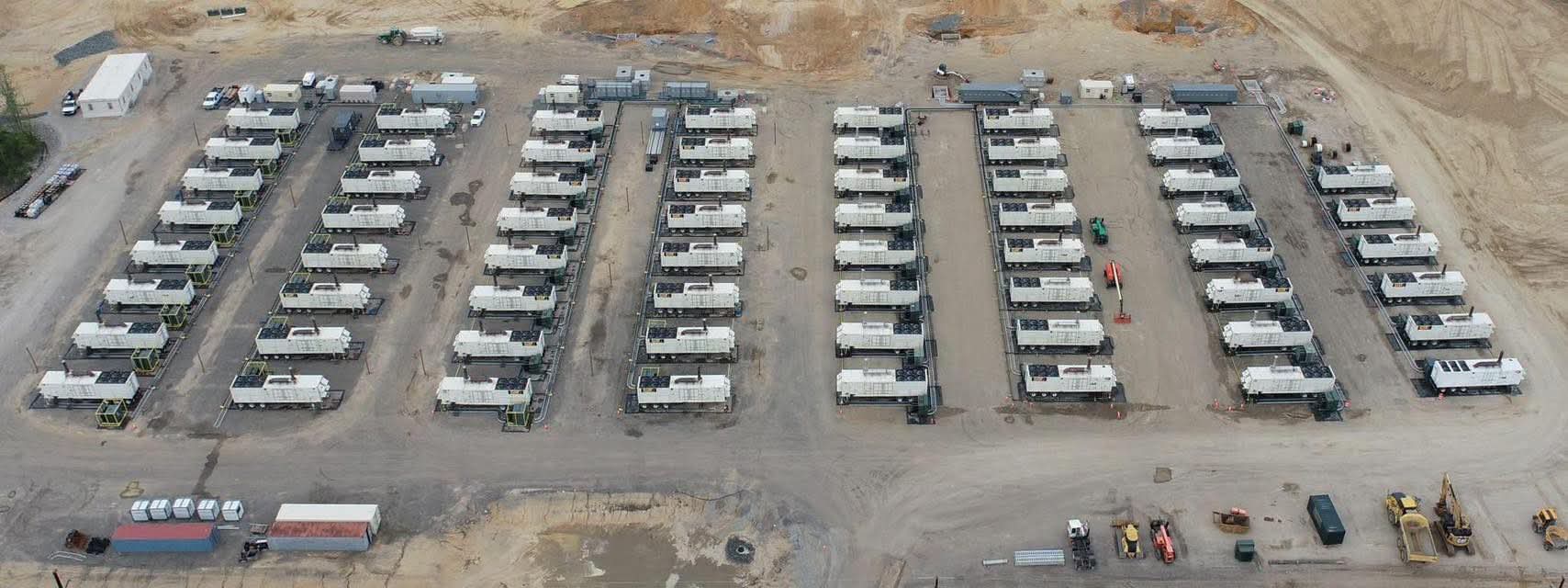
DataOne got hit with the fine after an investigation by The Guardian and Floodlight News in August shared thermal drone footage showing that 45 of the 62 gas generators were operating. None of the generators had permits required for generators with 37-kilowatt capacity or higher, despite running at 1,982-kw capacities more than 50 times higher than the state limit.

States track gas generators like DataOne uses because they emit “carbon dioxide, nitrogen oxides, carbon monoxide, and other combustion-related pollutants,” officials from New Jersey’s Department of Environmental Protection (DEP) noted. Those pollutants can worsen asthma, trigger heart attacks, and cause early deaths.

Calling out the enforcement action as “by far the largest ever taken against a data center in New Jersey,” DEP Commissioner Ed Potosnak vowed that data centers would not be “constructed or operated with impunity in this state.”

However, while historic, the state’s solution doesn’t immediately relieve residents’ concerns. DataOne was given 45 days to apply for the permits or else cease operations, but they can continue operating the gas engines while seeking permits. Nichole Gardner, a co-chair of a local environmental nonprofit Sustain SJ, told Ars that “we believe it is insufficient, both in dollar amount and enforcement. The DataOne site should be made to discontinue operations during the 45-day period until the proper permits are issued.”

In a statement to The New York Times, the company seemed unfazed by the fine.

“We will apply for the air permits for the temporary generators,” a DataOne spokesperson said, while noting that DataOne “disagreed” with the fine. Eventually, the polluting gas generators will supposedly be phased out, as the data center is “transitioning to low-emission, quiet fuel cells,” the spokesperson noted.

Fine seems like “pocket change”

Previously, DataOne told Floodlight that it “remains committed to meeting all applicable environmental and permitting requirements.”

But trust is broken with the neighbors of the Vineland data center. The residents know the data center is powering Microsoft’s AI tools like Copilot and worry DataOne will do whatever it takes to keep that deal in place. They’re questioning why DataOne would quietly start operating potentially polluting generators in an area “near farmland, homes, and two schools,” the NYT reported. Also baffling, because their concerns were first raised at a public town hall in February, they want to know why it took state and local officials six months to enforce the state’s pollution controls. Tiffany Leone-Vespa, a mother who’s been in the neighborhood for 18 years, told the NYT that questions remain about air quality.

“What have we been breathing in since they’ve been running these generators without permits?” Leone-Vespa said. “What emissions were released? What’s the air quality surrounding this neighborhood? Has it ever been measured?”

Steve Brown, another longtime Vineland resident, told the NYT that “it’s a ‘don’t ask for permission, just ask for forgiveness later’ kind of deal” that wouldn’t deter similar threats.

“It’s still kind of a drop in the bucket for a company that has several billion dollars of capital,” Brown said.

Leone-Vespa agreed that million-dollar fines won’t end billionaires’ data center pollution.

“What’s $1.07 million?” she told the NYT. “They should have done it for each generator they were running, illegally. They’re billionaires. It’s like pocket change.”

Gas generators “impossible to miss”

Zac Landicini founded Sustain SJ to fight for responsible development in South Jersey. He told the NYT that he spoke up at the public town hall meeting last February after a “farmer first spotted ‘some type of unit’ on satellite imagery” taken on DataOne’s site. The farmer wasn’t trying to probe the site, Ars learned, but was innocuously photographing a neighboring golf course.

Floodlight’s report shares many aerial shots showing what the farmer saw, which stunned state inspectors who finally visited the 2.6 million-square-foot data center complex in July. According to the NYT, the “tractor-trailer-size” generators were “impossible to miss” and certainly were not there when inspectors last visited in December 2025.

Drone image showing DataOne’s Vineland data center.

Drone image showing DataOne’s Vineland data center. Credit: via Sustain SJ

In New Jersey, there are more than 80 data centers planned or under construction, but DataOne is notably the first data center operator to rely on gas generators to create its own off-grid supply. Although the state previously was welcoming to such expansive data center projects, public backlash pushed the state to recently pass a law ending data center tax credits. That blocked data center developers from a fund that previously offered $250 million in incentives, and it showed residents that they had more power than data centers might think.

According to Floodlight, DataOne tried to get permits for about 30 gas generators, but after New Jersey’s DEP “found multiple deficiencies,” DataOne withdrew its application in May. At that time, the company planned to pivot to using fuel cells emitting less harmful pollutants. In the meantime, maintenance logs showed it had been using the more problematic generators, some of which were first turned on in October, Floodlight reported.

For the public, DataOne’s project appears continually shrouded in secrecy. After the project was announced in March 2025, construction progressed quickly before the public began to understand how big the data center would be, South Jersey Climate News reported. Backlash was immediate, however, when Vineland’s mayor and council proposed giving DataOne a $6.2 million loan.

Matt Williams, a resident and Sustain SJ member, told SJ Climate News that “it caught everybody by surprise” that the town would try to use public funds for a private project.

DataOne ultimately rejected the loan, but the complaints started rolling in from that point forward. Most immediately frustrating for residents was noise pollution from the data center. That prompted a federal lawsuit from residents after DataOne notched several public health violations for excessive noise. Sustain SJ’s Gardner told Ars that complaints remain while the state’s fine seems like “a slap on the wrist” for DataOne that ignored that “local residents are impacted on a daily basis.”

“This has been a recurring theme with this project—the state and local government consistently prioritize the interests of these companies over the well-being of the community that has been dealing with noise and pollution for months,” Gardner said.

DataOne not trusted as “good neighbor”

On Instagram, Sustain SJ noted that on the same day New Jersey issued the fine, DataOne was holding a public town hall, promising residents in Frankfort, Indiana, that “they’d be ‘good neighbors,’ specifically regarding sound and light.” The group cited a local report where DataOne CEO Charles-Antoine Beyney was quoted saying that his company “decided to build on” the experience they had in Vineland and “do it the exact contrary here in Frankfort.”

To Sustain SJ, it seemed like Beyney was hyping up his company for “just simply following the rules.”

Until there’s more transparency and residents are given a voice in how data centers are operating, groups like Sustain SJ are advocating for a state-wide moratorium on new projects.

“We have been fighting this development for nearly a year and we have proven time and time again that they cannot be trusted to be ‘good neighbors,’” Gardner said.

Six arrests for smuggling migrants via Schengen airports

0
six-arrests-for-smuggling-migrants-via-schengen-airports
Six arrests for smuggling migrants via Schengen airports


Europol supported a migrant smuggling investigation involving law enforcement authorities from 17 countries. The criminal network was also engaged in document fraud and money laundering.

The action day on 22 September 2026 in Austria, Italy, Spain, and the United Kingdom (UK) led to six arrests, 10 house searches, and multiple seizures, including ID documents, electronic equipment, evidence, and a large amount of cash.

The action day on 22 September 2026 in Austria, Italy, Spain, and the United Kingdom (UK) led to six arrests, 10 house searches, and multiple seizures, including ID documents, electronic equipment, evidence, and a large amount of cash.

Operating across Europe, the network allegedly smuggled migrants from the mainland Europe to the UK by air. Its operations relied heavily on fraudulent documents, which enabled migrants to travel illegally through airports in the Schengen Area and Schengen-associated countries. 

The majority of migrants entered the European Union (EU) using genuine passports and, in many cases, valid Schengen tourist visas. Once inside the EU, they destroyed and disposed of their identity documents, replacing them with counterfeit ones provided by the smuggling network. These documents were then used to conceal identity and travel across the EU.

During the initial phase of the investigation, law enforcement authorities in Belgium, Finland, Germany, Iceland, Ireland, Sweden and the Netherlands actively investigated the different migrant smuggling routes towards the UK used by this criminal organisation. Overall, the routes identified during the investigation spanned 17 countries.

Large network of migrant smugglers across the EU

Multiple cells were identified across the EU. One of them, based in Vienna, Austria, and believed to have dealt with the supply of fake documents, involved Afghan and Pakistani nationals. The suspects are connected with the setting up of a widespread network of services, primarily mobile phone shops to allegedly launder criminal profits.

Another cell based in Spain is believed to have supplied a large number of counterfeit documents. This cell allegedly facilitated the distribution of over 1 000 fake IDs, sent via couriers from United Arab Emirates to the EU, North and South America and the Caribbeans. Investigative leads in different countries suggest that the wider criminal network generated more than EUR 2 million in illegal proceeds.

Document fraud networks generally supply migrant smuggling and other criminal groups.  They often stay under the radar as law enforcement authorities across the EU seize individual fake documents in seemingly unrelated cases. The exchange of information of seizure of counterfeit documents between national authorities is therefore crucial to identifying and dismantling the networks involved in document fraud.

Europol’s support

Europol supported the operation by facilitating information exchange, providing operational coordination, and delivering analytical assistance to both migrant smuggling and financial investigations.

Two experts from Europol’s European Centre Against Migrant Smuggling were deployed to Italy and the UK to coordinate with the headquarters, cross-check operational data against Europol’s databases in real time helping generate new investigative leads.

Participating countries: Austria, Belgium, Finland, France, Germany, Greece, Iceland, Ireland, Italy, Netherlands, Norway, Portugal, Spain, Sweden, Switzerland, the United Kingdom and the United States.

New Europol centre reinforces support against migrant smuggling

Migrant smuggling remains a key criminal threat for the EU, requiring coordinated action across the entire criminal chain – from recruitment and transit, to provision of fraudulent documents and the financial flows that sustain the business of smugglers. Europol supports investigations through a data-driven approach, enhancing cases provided by national authorities with operational analysis and expertise. Europol also facilitates information exchange and coordinates joint operations to disrupt criminal networks.

To strengthen Europol’s efforts to combat migrant smuggling, Regulation (EU) 2025/2611 was adopted in December 2025. This new EU legislation underscores the importance of addressing migrant smuggling at the EU level through enhanced cooperation, including the establishment of Europol’s European Centre Against Migrant Smuggling (ECAMS) in March 2026.

ECAMS ensures better systematic exchange of information and coordination of efforts. This includes strengthening expertise in OSINT and financial investigations, as well as enhancing the operational impact of the network of liaison officers from Frontex, Eurojust, and the Member States.

Bond vigilantes on a savage hunt as global yields run wild

0
bond-vigilantes-on-a-savage-hunt-as-global-yields-run-wild
Bond vigilantes on a savage hunt as global yields run wild

TOKYO — The bond vigilantes are back — and now they’re patrolling every major debt market at once. As deficits balloon, spending runs unchecked and oil prices spike, investors are reasserting control over markets that once seemed shielded from shocks and sending yields skyrocketing.

The revolt spans the US, Japan, Europe and beyond as a deepening Iran war upends economic trajectories and markets alike. That’s refocused markets on a problem that fell off the radar over the last decade: sheer oversupply.

Global debt topped US$365 trillion in early 2026 — nearly seven times the combined economic output of the US and China, according to the Institute for International Finance. The timing is pointed, as US President Donald Trump and Chinese leader Xi Jinping staged a show of cooperation in Washington this week with very little in substance to show for it.

As Carlos Casanova, economist at Union Bancaire Privée, puts it: “The Trump-Xi summit extended the US-China trade truce by two months, but produced no major breakthroughs. The meeting was primarily focused on managing bilateral tensions, with AI competition, semiconductor controls, Chinese investment in the US and Taiwan remaining contentious issues.”

While Trump and Xi held talks that could’ve been an email, bond markets were sounding alarms about the chaotic global environment that both economies will encounter in 2026’s final stretch.

“Every major bond market’s feeling the heat at once,” says deVere Group CEO Nigel Green. “Anyone positioned for a global easing cycle has had the ground pulled from under them.”

Japan flashed the first warning, with 10-year yields hitting a 30-year high near 3%. This week, US Treasuries followed, with yields reaching levels unseen since 2007 — traders called it “Black Wednesday.” Thirty-year yields sit at 22-year highs; 10-year yields are at two-decade highs.

In Europe, French 10-year yields at 4.6% mark a new post-2008 financial crisis high. Yields in Greece and Italy have risen by similar magnitudes. Earlier this month, yields on Germany’s 30-year Bund surged totheir highest since 2011, around 3.84%. 

Capital Economics’ John Higgins notes some see 5% on the US 10-year as a potential meltdown threshold — though he’s not convinced that’s the exact number; higher yields clearly threaten US fiscal sustainability and equities alike.

Verdence Capital’s Megan Horneman warns the whole Treasury curve is turning into a headwind for risk assets, potentially setting up “a pretty messy end of year” for stocks. “When you see violent moves in the Treasury market, something ends up cracking,” she said.

Not everyone’s alarmed, though. UBS Global Wealth Management still favors equity upside despite volatility from inflation, geopolitics, debt and AI-bubble fears. Yet Bank of America raised its year-end two-year yield forecast to 5%, with implications for credit across the $32 trillion US economy.

Things are likely even worse than the data show. IIF economist Emre Tiftik notes that higher inflation has helped contain debt ratios, masking underlying vulnerabilities.

Yet, he says, “as benchmark rates rise, interest expense is set to surge, while structural pressures from healthcare and public pension spending remain largely unaddressed.”

At the same time, mature-market governments now spend more on interest expense than the world invests in either artificial intelligence, defense or clean energy.

“The key question is what could trigger an inflection point in dollar demand,” Tiftik adds. “Episodes over the past year have tested the ‘debasement trade,’ yet US securities remained well bid despite heightened volatility and speculation, partly because alternative markets lack comparable depth and liquidity. However, as structural pressures—including heavy debt-service burdens—become more visible and binding, such episodes may become more frequent, and market reactions could be sharper and more abrupt.”

What’s clear is that government bond yields have recently “jumped in quite an alarming way,” says Robin Brooks, economist at the Brookings Institution.

Brookings argues that markets think central banks are behind the curve. The evidence: this week’s “wild rise in yields emanated out from the front end of the curve,” from the two-year end of the maturity spectrum. This pushed up everything out to the 10-year yield as inflation concerns heat up.

It’s clear, too, that high-debt countries are extremely vulnerable. “The exception to the pattern” whereby longer-term yields stayed anchored “doesn’t hold for high-debt places like France, Italy and Greece,” Brooks explains, noting that the rise in government yields across Group of 10 nations is alarming. It’s also worth noting, he says, that French yields are up even more than the US, which this year saw its national debt top $40 trillion.

All this has International Monetary Fund (IMF) chief Kristalina Georgieva saying it’s “impossible to stress strongly enough how critical it is” to bring down debt and prioritize fiscal consolidation.

“There are these two things that must be done: bring debt levels down, put fiscal consolidation as a priority, and make sure that the central banks deliver on their mandate for price stability,” she says. “It’s impossible to stress strongly enough how critical it is to get the courage to take the steps that are necessary. These are politically tough steps to take, but necessary steps to take.”

The OECD’s latest outlook similarly expects rising yields to force governments to rein in spending, boost efficiency and shore up revenue.

Stanford University economist Hanno Lustig argues post-2008 central bank policy obscured how much long-term debt governments were really taking on. In the decade after Lehman, central banks — the Fed, ECB, Bank of England, Bank of Japan — absorbed much of the new bond issuance themselves, effectively letting governments borrow at low policy rates rather than true market rates. That accelerated further during Covid-era stimulus.

2013 was a hinge point: the BOJ’s aggressive quantitative easing effectively capped 10-year JGB yields near zero, killing price discovery and putting a floor under Japanese bond prices.

Now, Allianz’s Mohamed El-Erian argues, markets face a perfect storm — inflation, stronger-than-expected US growth, Middle East tensions, a more hawkish Fed and AI-bubble anxiety — while investors remain psychologically anchored to the artificially low yields of the post-2008 era.

In a new analysis, Fitch advisory unit BMI points out that the rise in government bond yields in recent months “has renewed concerns that a tightening of financial conditions could ultimately slow economic activity. Higher market interest rates do not automatically translate into a credit crunch. Nevertheless, sustained increases in funding costs can lead banks to tighten lending standards and become more selective in extending credit to households and firms.”

The result, BMI warns, “is a contraction in credit availability that amplifies the initial tightening in financial conditions. A credit crunch would constitute a meaningful downside risk for developed market economies.”

Credit, BMI adds, is central to supporting activity, as it finances household spending and business investment – which together account for the bulk of developed markets’ output, averaging 74% of GDP. “A broad-based tightening in credit conditions,” BMI concluded, “could therefore act as a significant drag on economic growth.”

All this puts France’s fragile finances are back in focus. Prime Minister Sébastien Lecornu is racing to finalize €54 billion ($61.8 billion) in spending cuts by early October, arguing fiscal discipline alone can close one of the eurozone’s largest deficits.

Fitch had warned back in September 2025 that French debt would climb toward 121% of GDP by 2027 without a credible stabilization path. It’s being proven right: French debt is now projected to hit a record 119.3% of GDP in 2026, per the finance ministry.

Eurasia Group’s Mujtaba Rahman notes the bind: a tough 2027 budget risks toppling Lecornu’s government ahead of next spring’s presidential election, even though most parties want to avoid that outcome.

Measures like a pension freeze will draw fierce pushback, but Lecornu appears set on pushing the budget through anyway — the first real step, in theory, toward fixing France’s finances. It previews the eurozone’s broader problem: yields jumping to multi-year highs.

Yet Japan may be the most powerful accelerator of global turmoil as the “yen-carry trade” grows decidedly wobbly. The yen’s recent plunge to 40-year lows even drew a rare response from the US Treasury Department.

US Treasury chief Scott Bessent engaged in Washington’s first all-in joint yen intervention since 1998. The resulting jump in the yen isn’t what Bessent had hoped for, but it’s been enough of a turn to upend currency markets.

The foreign exchange theatrics coincide with the 41st anniversary of the 1985 “Plaza Accord,” which sharply boosted the yen against the US dollar. By some measures, the dollar-yen misalignment is about 33%, with “fair value” of between 105-125 yen to the dollar from about 158 now.

Though Bessent’s real concern is China’s rising competitiveness, his focus on the yen speaks to Trump World’s worry that the dollar is too strong as US manufacturing wanes.

Trump’s desire for a “Mar-a-Lago Accord” would mostly target the Chinese yuan – and a record $1.2 trillion trade surplus despite rising US tariffs. But since the 1980s, when Trump was a New York real estate mogul, Japan has been a key economic boogeyman in his worldview of countries he believes take advantage of the US.

Trump and Bessent also clearly view Tokyo’s policy as more malleable than Beijing’s. Bessent, for example, spent recent months railing against the Bank of Japan for not tightening faster. He even warned traders that “I am the house” when bets against the yen and the BOJ are concerned.

Bessent has had far less to say about the People’s Bank of China, which remains biased toward lower rates. This is despite China’s much greater economic scale with annual GDP of $20.8 trillion versus Japan’s $4.3 trillion.

Part of the worry is that Tokyo is the biggest holder of US Treasuries with $1.1 trillion. Team Bessant clearly worries that Japanese officials might sell large blocks of dollars to stabilize the yen, setting off a panic in markets and sending yields even higher in the US and everywhere else.

Markets and their resident bond vigilantes, of course, are way ahead of this possible dynamic.

Follow William Pesek on X at @WilliamPesek

US, Iran should return to dialogue to end war, Xi tells Trump at White House

0
us,-iran-should-return-to-dialogue-to-end-war,-xi-tells-trump-at-white-house
US, Iran should return to dialogue to end war, Xi tells Trump at White House

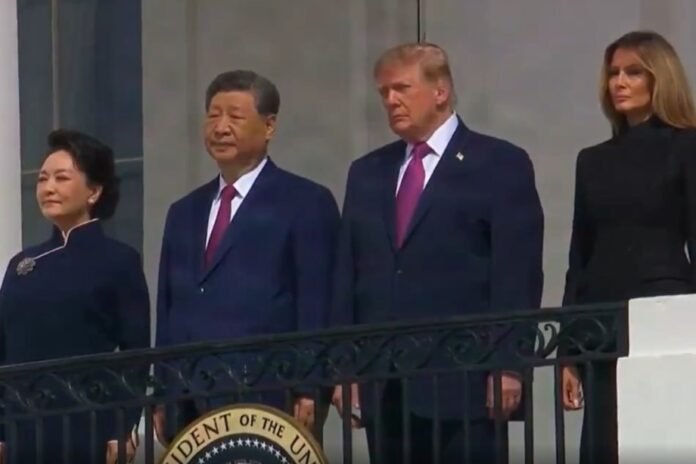
During a closed-door meeting at the White House, Chinese President Xi Jinping on Thursday urged the US and Iran to return to dialogue to end their war.

China has “always believed that the sovereignty and security of all countries should be respected” and has played a constructive role in easing tensions, Xi told US President Donald Trump, according to the state-run Xinhua news agency.

It has “encouraged relevant parties to stay committed to peaceful solutions and maintain the momentum of talks,” he said.

He expressed China’s support for the US and Iran returning to the framework deal they agreed to in June and voiced hope that both sides ultimately reach a comprehensive agreement covering the nuclear issue and other matters and achieve peace as soon as possible.

After the US and Israel launched the war against Iran on Feb. 28, Pakistan helped secure a ceasefire on April 8 and later hosted more than 20 hours of talks between American and Iranian officials in Islamabad.

READ: Iran says possible new war with US could expand to Indian Ocean

Following weeks of mediation, Pakistan and Qatar helped secure the June 18 deal, which provided the two sides with a framework and 60 days to negotiate a longer-term agreement aimed at ending the war.

However, the two sides soon resumed retaliatory strikes, with tensions continuing.

Xi also urged the US to “adhere to the correct position of opposing ‘Taiwan independence’” and handle the Taiwan question prudently to lay a solid foundation for bilateral strategic cooperation and relations.

Beijing’s position on safeguarding its national unity and territorial integrity is “crystal clear,” he said.

China considers Taiwan a breakaway province, while Taipei has maintained its self-rule since 1949.

Xi also said that building a constructive China-US relationship based on strategic stability is not an expedient measure nor something that can be achieved overnight, additionally calling for translating the new vision of a constructive bilateral relationship of strategic stability into action.

READ: Iranian president rejects Trump’s terrorism accusation, says Iran ‘victim of terrorism’

0FansLike
0FollowersFollow
0FollowersFollow
0SubscribersSubscribe
- Advertisement -
Google search engine

Recent Posts