13.1 C
London
Sunday, October 11, 2026
Home Blog

In New Mexico, a river runs through ‘the middle of a hellscape’

0
in-new-mexico,-a-river-runs-through-‘the-middle-of-a-hellscape’
In New Mexico, a river runs through ‘the middle of a hellscape’

This story was originally published by Capital & Main.

It’s an early May afternoon, and Charlie Barrett has parked his pickup in a pullout along a county road a few hundred feet from the Black River in southern New Mexico, just a mile from where it empties into the Pecos River. 

He has stopped to set up a video camera that detects heat and gasses invisible to the eye to check for emissions at a nearby oil and gas operation. 

Stepping out of the truck, Barrett finds the pullout muddy and dotted with puddles — an anomaly during an ongoing drought. A gray chunk of salt the size of a medicine ball sits near a mud puddle flecked with shimmering, white crystals.

“Unfortunately this is pretty common,” he said. “It’s also quite dangerous.” It appeared that someone had dumped oilfield wastewater — also known as produced water — at the pullout. The extremely saline and toxic byproduct of oil and gas production carries a mix of petroleum compounds and oilfield chemicals. Produced water can be radioactive, too. Barrett said he worries that people would unwittingly drive through the muck or pull off the road and walk through it. 

All day, every day, hundreds of semi trucks haul the toxic produced water from well sites to disposal stations along the highways and backroads of this far corner of New Mexico. That water is an unwanted byproduct of oil and gas development. More than three barrels of wastewater come out of the ground for every barrel of extracted oil, on average in New Mexico. As fossil fuel production has skyrocketed in the Permian Basin, the amount of produced water has followed. In addition, the water-to-oil ratio increases as wells and oilfields age — a process known as “watering out.” 

A man walks on a rural road

Charlie Barrett, a thermographer with Oilfield Witness, points out a chunk of salt that likely fell off of a truck carrying oilfield wastewater near Malaga, New Mexico. Jerry Redfern / Capital & Main

New Mexico state rules ban produced water use for anything outside the oilfield. This has led to a parallel industry devoted to gathering, transporting and reinjecting produced water deep underground. That, in turn, has led to a rise in seismic activity in the region, as well as dramatic blowouts that spew toxic water when injection wells fail.

Barrett works for industry watchdog Oilfield Witness as a thermographer, using a thermal camera to measure gaseous emissions from oilfield equipment. As he set up to record, produced water trucks rumbled by under a cloudless sky. 

Barrett began filming. “Oh, man, that’s fucking terrible,” he said. On its small screen, in wavy, candy-colored hues, the camera revealed the heat signatures of three active flares near a house. “Got a person’s home here and then this mess … all producing CO2 and methane and other volatile organic compounds, blowing right into their home,” he said, looking through the viewfinder. “Jesus, man. It’s ridiculous.”

When he looked at the footage later on a bigger screen, he found another lit flare in the video, in addition to the first three. One shot — four flares. This despite the fact that New Mexico has banned nearly all flaring since 2022. 

Companies burn off — or “flare” — natural gas for a few reasons, including: it doesn’t meet specifications; it is over pressurized in a pipeline; or it’s required for equipment maintenance. Though better for the climate than venting unburned gas into the atmosphere, flaring still produces carbon dioxide and other toxic pollutants. 

Barrett documents emissions coming from nearby oil and wastewater storage tanks on an oil well site near Loving. Jerry Redfern / Capital & Main

Later, Barrett sat on a small boulder along a quiet bend in the Pecos River, talking about his work. The river gurgled; dragonflies hovered, and the grasses rustled as more oilfield trucks rumbled over a nearby bridge, a reminder that Barrett was sitting in one of the most prolific fossil fuel basins on the planet. 

“It sucks,” he said. “It’s a beautiful river in the middle of a hellscape.” 

Several months earlier, the last time Barrett visited this spot, he found salt deposits covering the ground between the bridge and the riverbank. “I mean, the whole road was flooded over,” he said. “We couldn’t confirm one way or another if that was an actual produced water spill,” he added, but there are few other possibilities. 

Such a spill would represent another environmental shock for this troubled river. The irony: The river needs more water. U.S. Geological Survey data going back nearly 40 years shows the annual snowpack slowly but steadily declining in the mountains around the Pecos River’s headwaters. River flow measurements in the upriver town of Pecos show the same. 

As climate change heats and dries New Mexico, and the Pecos River runs ever lower, one of the biggest drivers of that change sits atop the river’s banks, just feet from where Barrett sits — 75,000 square miles of oil and gas wells across 55 counties in New Mexico and Texas: the vast Permian Basin. 

Water and geology

The Pecos River, favorite of Looney Tunes character Yosemite Sam and the historic demarcation line of the Wild West, starts among some of New Mexico’s highest mountains east of Santa Fe and runs south for more than 500 miles before entering Texas at New Mexico’s lowest point. 

Its headwaters rush untamed through miles of steep canyons and pine-covered slopes, garnering it a National Wild and Scenic River designation. Its waters nourish farms and ranches across the center of New Mexico. But where it exits the state, the Pecos looks more like a tightly managed creek — a conveyance delivering carefully tallied water through the middle of the Permian Basin, the country’s most productive oil and gas region. 

The environmental group American Rivers has twice named the Pecos one of the country’s most endangered rivers: once in 2024, along with New Mexico’s other waterways, and in 2021 all on its own.

Both the river and the Permian Basin are natural features of a landscape transmogrified by the human desire for energy from fossil fuels. 

Over the last century, people have drilled tens of thousands of wells, stitched the basin with pipes and released carbon trapped tens of millions of years ago, all to power cars and jets and buildings. That released carbon changed the chemistry of the atmosphere, trapping heat that warms the planet and dries New Mexico. 

Meanwhile, on the Pecos, as on other rivers across the state, there is a greater demand for less and less water year after year. Last winter’s snow bust only added to the pressure.  

“It is totally terrifying in a lot of ways,” said Hannah Riseley-White, the director of the New Mexico Interstate Stream Commission. Her job is to make sure that the state meets its obligations to all of the groups that have a stake in river water.

“Everyone this spring got tired of me at the beginning of every meeting screen-sharing the snowpack figures for all of the basins that we manage,” she said. “It fell off the cliff. It wasn’t just record breaking. It was beyond anything that we could have imagined in terms of snowpack.”

The previous winter wasn’t much better. Neither are the long-term forecasts. Riseley-White said she expects a 25% to 30% decrease in river water by 2070.

“So the biggest challenge that the Pecos faces is just aridification due to climate change,” she said.

The percentages come from New Mexico Gov. Michelle Lujan Grisham’s 50-Year Water Action Plan, which lays out how global warming will shrink New Mexico’s water supplies in coming decades. It also proposes how to conserve existing supplies and create new water sources in a very dry state. That includes treating oilfield wastewater — the stuff Barrett believes he found on the roadside — to make it clean enough that the state will allow it to be used outside the oilfield for industrial and other, broader uses. 

A string of oil wells lines the Pecos River south of Loving. There are 380 oil and gas wells within a half-mile of the river in New Mexico. Aerial photography made possible by LightHawk. Jerry Redfern / Capital & Main

“The industry’s actually advocating for repurposing produced water and pumping it into this river,” Barrett said, while sitting beside the Pecos. 

To date, the legal maneuvering to make that happen has been unsuccessful. A recent push to change state rules and allow the broad use of treated wastewater ended when Lujan Grisham appeared to have influenced a rulemaking body’s deliberations. Another push to change state rules is underway, but no deadlines have been set. State environmental groups strongly oppose the idea, arguing that it’s not possible to be 100% sure that all toxic chemicals are removed from the water.

Meanwhile, over the border, the Texas branch of the Sierra Club has tallied five proposals to discharge treated produced water into the Texas portion of the Pecos River watershed, though none have yet been approved. 

“Do I think [treated] produced water will solve all of our problems in the Pecos? No,” Riseley-White said. “But thinking about it as one of the many sort of tools in the toolbox I think makes sense.”

She added: “Part of coming up with creative solutions is going to necessarily require looking at all of the options, and that’s certainly one of them. And I think technology is there to clean water to various standards. It’s just a question of whether financially the incentives are there.”

Other dangers

Endangered animals live along the Pecos River, including the dunes sagebrush lizard and the Texas hornshell mussel. The lesser prairie chicken was part of that group until the U.S. Fish and Wildlife Service formally removed its protections under the Endangered Species Act in early 2026, despite its declining population.

“There’s going to be just increasing challenges in ensuring that there’s sufficient water for those species, just like for the other users that depend on it,” Riseley-White said. One successful example: While working with the hornshell on a tributary of the Pecos, “landowners recognized that if there was water in the Black [River] for the hornshell, that meant that there was water there for them, too,” she said.

The latest challenges to endangered animals’ survival comes from Washington. In early July, the Department of the Interior rolled back the definition of “harm” to mean only directly injuring or killing endangered species. Noise and habitat destruction would no longer be considered threats to an endangered species’ well-being. 
Read Next

In late July, the department rescinded the so-called “blanket rule” that covered threatened species with many of the same protections afforded endangered species. It also imposed consideration of the economic cost of protecting plants and animals — i.e. the additional costs to oil and gas production.

Taken together, the two changes undo historic protections for plants and animals across the country, including those that call the Pecos River watershed home. Of the thousands of oil and gas wells that pierce the ground in New Mexico’s share of the Permian Basin, 380 are within a half mile of the river. Another 11 injection wells — used to dispose of produced water — lie within that same stretch. 

“The sound pollution and light pollution also affect this river ecosystem,” Barrett said. He studied ecology and wildlife management and previously worked for the Texas Parks and Wildlife Department and the Texas A&M Forest Service as a staff ecologist. He said the oilfield disturbance “drives a lot of species away from this ecosystem, which can lead to extirpation, which is regional extinction.”

Despite the enormous challenges, Riseley-White said she remains optimistic.

“My hope in the Pecos is that as we face these challenges, we can get all of the different interests at the table and find solutions that make sense to everybody,” she said.

“I think it’s challenging, but I think it’s definitely possible,” she said.

Copyright 2026 Capital & Main


Israel To Hold Multi-Front Security Meeting on Iran, Gaza, Lebanon and Syria 

0
israel-to-hold-multi-front-security-meeting-on-iran,-gaza,-lebanon-and-syria 
Israel To Hold Multi-Front Security Meeting on Iran, Gaza, Lebanon and Syria 


Israeli leaders will hold a security meeting at the Kirya on Sunday evening to assess developments involving Gaza, Lebanon, Syria and Iran as the country maintains a heightened state of alert. 

The meeting comes as uncertainty surrounds the Trump administration’s plans toward Iran. N12 reported Wednesday that the Pentagon instructed US Central Command to complete preparations for a possible resumption of large-scale fighting against Iran. 

No date for an attack was included in the directive, according to N12, and President Donald Trump has not made a final decision. Israeli officials are concerned that a miscalculation by one of the parties could trigger a wider conflict even if those involved do not seek an escalation. 

President Trump said the following day that the United States would not attack Iran before the Nov. 3 midterm elections, while maintaining that Tehran would not be permitted to possess nuclear weapons. Reports that evening said the Pentagon had also developed plans for a large-scale attack on Iran. 

Israel’s security establishment is concerned that continued attacks between Saudi Arabia and the Houthis, alongside tensions between the United States and Iran, could increase the risk of conflicts expanding across the Middle East. 

Israel is seeking to avoid a war during the sensitive period ahead of the elections, but remains on alert over the possibility that an unexpected development or a miscalculation of another party’s intentions could result in escalation. 


McDonald’s Filet-O-Fish Supplier Under Fire

0
mcdonald’s-filet-o-fish-supplier-under-fire
McDonald’s Filet-O-Fish Supplier Under Fire


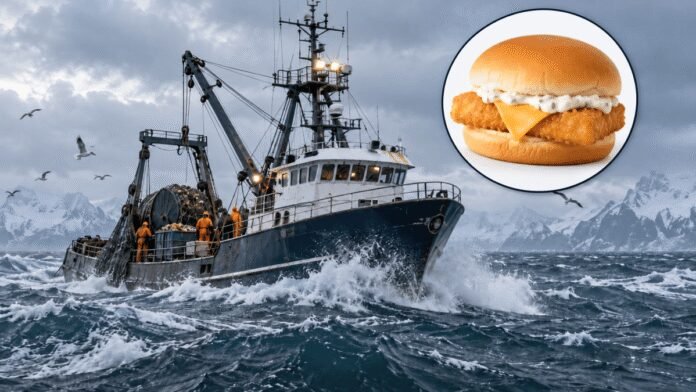
The fishing industry responsible for supplying McDonald’s famous Filet-O-Fish sandwiches is facing growing criticism over its impact on Alaska’s salmon populations, as Native communities struggle to preserve a centuries-old way of life.

Every Filet-O-Fish sold in the United States contains wild-caught Alaska pollock, a whitefish harvested in enormous quantities from the Bering Sea. But the massive nets used to catch pollock also trap salmon and other marine animals, raising concerns about an industry that supplies seafood to millions of Americans.

According to an Associated Press investigation, Bering Sea pollock operations have accidentally caught an annual average of approximately 18,000 Chinook salmon and 288,000 other salmon, primarily chum, over the past decade.

The unintended catch, known as bycatch, represents a relatively small percentage of the industry’s total haul. However, the numbers have become increasingly controversial as salmon populations decline across western Alaska.

For Alaska Native families along the Yukon River, the consequences extend far beyond fishing.

Salmon has provided food, income and cultural traditions for generations. Families have historically spent their summers catching fish, preparing them for smoking and passing those skills down to their children.

Now, severe fishing restrictions have left many communities unable to continue those traditions.

In 2024, American and Canadian authorities agreed to suspend the harvest of Yukon River Chinook salmon for seven years to help struggling populations recover. Similar restrictions have affected chum salmon and fishing communities along the Kuskokwim River.

In the remote Alaska village of Rampart, the changes have been particularly painful.

Brooke Woods, a Koyukon Alaska Native and commissioner for the Yukon River Inter-Tribal Fish Commission, told the Associated Press that her community has lost an important connection between generations.

“We have this big void in our lives right now,” Woods said.

Her 3-year-old son has never experienced setting a salmon net alongside his parents, something previous generations learned from an early age.

Her mother, Janet Woods, questioned why local families face strict fishing limits while large commercial vessels continue operating offshore.

“Why are we the only ones that have to take the burden?” she asked.

The restrictions also create practical hardships. Rampart has no grocery store, and residents must travel hours to reach larger communities for supplies. Traditionally, salmon helped families fill their freezers and reduce their dependence on expensive store-bought food.

Meanwhile, Alaska pollock remains one of the world’s largest commercial fisheries, producing more than 2 billion pounds of fish annually, according to the National Oceanic and Atmospheric Administration.

McDonald’s maintains that its U.S. Filet-O-Fish sandwiches contain pollock from sustainably managed fisheries certified by the Marine Stewardship Council.

Fishing companies also point to extensive safeguards designed to prevent salmon from becoming trapped in their nets.

These include specialized escape devices, independent monitoring, coordination between fishing vessels and temporary closures of areas where salmon are frequently encountered.

During one four-day fishing trip documented by the Associated Press, the crew of the F/V Progress accidentally caught approximately 210 chum salmon.

Captain Maverick Blake said avoiding salmon was an important part of the operation. His vessel burned nearly 3,000 gallons of fuel while traveling to different fishing grounds in an effort to reduce accidental catches.

Industry representatives argue that these efforts demonstrate a commitment to responsible fishing.

However, scientists say the broader salmon crisis is complicated.

Research points to warming ocean temperatures and changing marine conditions as major contributors to the collapse of several western Alaska salmon populations. Federal fisheries officials have also cautioned that eliminating trawl bycatch alone would not reverse the declines.

A 2025 NOAA study examined how changing ocean conditions influence the overlap between salmon and pollock, potentially increasing the likelihood that both species encounter commercial fishing nets.

Genetic testing has also shown that many salmon accidentally caught in the Bering Sea originate outside western Alaska, including fish from other parts of the North Pacific.

Nevertheless, some of the salmon caught belong to the struggling populations that Native communities are being prohibited from harvesting.

NOAA reported that approximately 47% of Chinook salmon caught as bycatch in 2023 originated from western Alaska river systems. The agency also estimated that, since 2011, Chinook salmon lost to pollock fishing represented an annual average equivalent to approximately 1.9% of western Alaska Chinook returns.

Although those figures suggest that bycatch is not the principal cause of the salmon crisis, critics argue that reducing preventable losses remains important when populations are already dangerously low.

The controversy has also become a political issue ahead of Alaska’s November elections, with candidates facing pressure to address industrial trawling and its effects on fishing communities.

Commercial fishermen, charter operators and Alaska Native leaders have raised concerns about whether existing regulations adequately balance the economic benefits of the pollock industry against the need to protect other fisheries.

Federal regulators have already established salmon bycatch limits and avoidance programs, but the debate over whether stronger restrictions are necessary continues.

For McDonald’s customers, the controversy raises questions about what sustainable seafood certification means and whether existing protections go far enough.

For families living along Alaska’s rivers, the stakes are much more personal. The longer salmon runs remain depleted, the greater the risk that younger generations will grow up without learning traditions that have connected their communities to the rivers for centuries.

Review: 4-hour Musk documentary feels like two different films

0
review:-4-hour-musk-documentary-feels-like-two-different-films
Review: 4-hour Musk documentary feels like two different films

Elon Musk is a very familiar figure to Ars readers, given his massive influence (for better and worse) on the technology sector over the last 20 years. Oscar-winning director Alex Gibney’s latest biographical documentary—simply titled Musk—covers a lot of well-known ground and challenges the carefully crafted public image of Musk as a visionary tech titan.

Gibney’s documentary presents Musk as more of a Gilded Age confidence man, rejiggered for the 21st century: an investor cosplaying as an inventor whose real genius is pumping stocks and dazzling investors and the public alike with visions of a high-tech utopian future. The film is bound to push all the right outrage buttons, whether one is a Musk fan or a detractor—which makes it very much a product of the peculiar social media-driven era in which we live.

Gibney has been making documentaries since the 1980s, covering such varied subjects as Jimi Hendrix, Hunter S. Thompson and gonzo journalism, WikiLeaks, Scientology, Steve Jobs, Elizabeth Holmes (the subject of another forthcoming documentary, You Can See Everything, featuring comedian Nathan Fielder), Boris Becker, The Sopranos creator David Chase, alleged Russian interference in the US 2016 presidential election, the opioid epidemic, and cyclist Lance Armstrong. He snagged his first Oscar nomination for 2005’s Enron: The Smartest Guys in the Room, and won the Oscar for Best Documentary Feature two years later for Taxi to the Dark Side.

Tackling the subject of Elon Musk seems like a natural progression from those earlier works. Gibney has never been one to shy away from controversy, but even before Musk’s release, the film drew the ire of its subject and threats of a defamation lawsuit. There were even (as yet unfounded) rumors that Universal Pictures was getting cold feet about theatrically releasing the film in international markets.

There’s certainly no shortage of material for Gibney to work with and the film covers the most well-known aspects of Musk’s life: Tesla and the fatalities linked to its driver-assistance systems, SpaceX, Starlink, his purchase of Twitter, his shift from warning about the risks of AI to fully embracing it with Grok, his embrace of Trump, the creation of DOGE, his alleged drug use, and his 14 (possibly more) children. Those interviewed include ex-wife Justine Musk, Kara Swisher, Martin Eberhard, Geoffrey Hinton, former MAGA influencer Ashley St. Clair (who bore a child by Musk), Cory Doctorow, Adam Becker, and Sam Harris. David Byrne co-wrote and performed an original song for the soundtrack, “Let Me Sell You a Dream,” incorporating more of Musk’s words.

Gibney is a gifted filmmaker and Musk is exceptionally well-done. But the documentary ends up feeling like two very different films. The first half focuses on the early entrepreneurial years, deftly incorporating archival footage with the usual talking heads. It reminds us of who Musk used to be—honestly, I miss that public version of Musk, even if it was carefully cultivated—and what little is known about his family background serves to humanize him a little.

Visionary or flim-flam man?

young Elon Musk sitting on a wooden crate while brandishing a charger in one raised hand. A blue early Tesla prototype is to the left.

Musk then

Older Musk in dark blue suit and tie, standing at podium at political event, arms spread wide, as he speaks into a microphone

Musk now.

The second half focuses on Musk after his purchase of Twitter and embrace of Trump. The notoriously thin-skinned Musk has accused Gibney of making a “hit piece.” It’s not, but the tone in the second half is markedly different and certainly more adversarial, leaving little doubt as to where Gibney stands. (The director is a staunch critic of the so-called journalistic “view from nowhere” and his documentaries typically have a strong point of view.)

During a post-screening Q&A, Gibney revealed that he’d actually finished the documentary in 2024, but HBO asked him to keep going to document Musk’s “heel turn,” if you will. One assumes he recut the first half in the process, but perhaps that’s why Musk feels like two different documentary films smushed together. It’s also how the documentary ballooned to a nearly four-hour run time (with a 10-minute intermission). Gibney joked during the Q&A that the real question should be, how did he limit himself to just four hours when it could easily been stretched to six? In that case, perhaps it might have worked better as a six-episode documentary miniseries.

Musk declined to be interviewed for the film, so the director created an AI version of Musk uttering verbatim public quotes as a stand-in for a real interview. I get why Gibney decided to do this and it’s conceptually apt: this is the AI future that Musk and his ilk are working so hard to bring about, popular opinion be damned. So sure, give him the AI avatar treatment. But the execution is lacking; it’s creepy uncanny valley stuff. The AI Musk pales in comparison with the archival footage of the actual Musk, which is far more interesting precisely because it’s real.

Musk is a frequently compelling portrait of a complicated man but that portrait is incomplete in some crucial ways. Gibney’s portrayal is as much tragic anti-hero as con artist or flim-flam man—an idealistic dreamer ultimately corrupted by wealth and power, or what Gibney calls “noble cause corruption.” The first half of the documentary made me mourn who Musk once was, and wonder what kind of man he might have become had he made different choices at crucial points on his rise to the top. But the film sheds little light on why he ended up on such a dark path.

Would Musk agreeing to be interviewed have helped? I am not so sure. This is a man, as the film makes clear, who really isn’t capable of self-reflection or facing hard truths, and he has the wherewithal to keep his bubble intact. As his wealth and influence have increased, so has his detachment from reality. Somehow it still hasn’t made him happy.

Musk is now playing in select theaters in New York and Los Angeles. It will open broadly across the US on October 14, 2026.

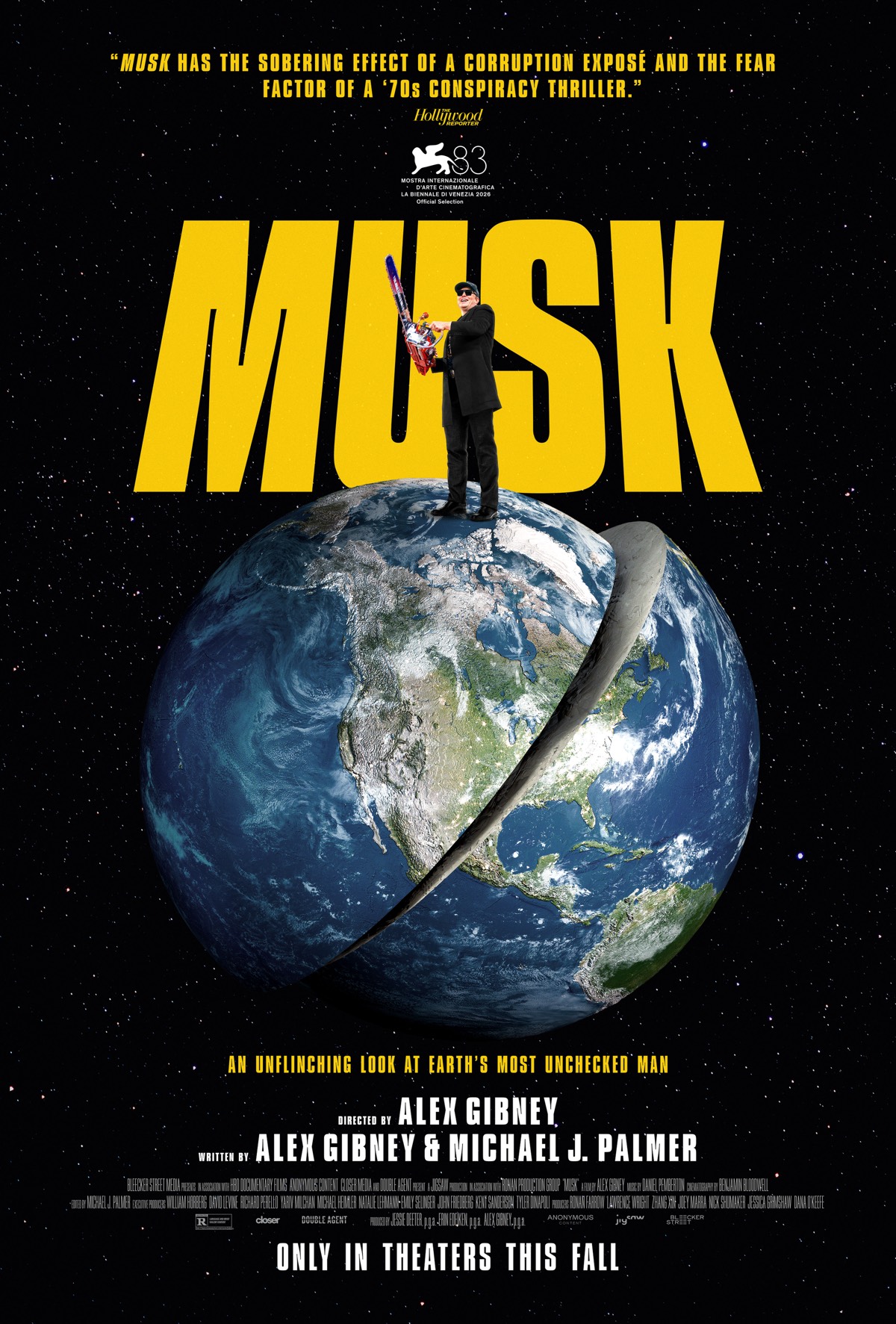
poster art for Musk documentary showing the planet earth with Musk standing on top wielding a chain saw

Credit: Bleecker Street


Hamas urges national dialogue after Palestinian elections postponed to next year

0
hamas-urges-national-dialogue-after-palestinian-elections-postponed-to-next-year
Hamas urges national dialogue after Palestinian elections postponed to next year

Palestinian resistance group Hamas said late Saturday that the postponement of Palestinian elections until next September should pave the way for a “comprehensive national dialogue,” expressing readiness to take part, Anadolu reports.

It said conditions are not in place for free and fair elections in the occupied Palestinian territories, including occupied East Jerusalem.

Hamas said it is ready to join “serious and productive” talks to reach binding agreements on restructuring Palestinian institutions, particularly the Palestinian National Council and Legislative Council.

It also urged an agreement on a national strategy covering a common political program, arrangements for a transitional period and confronting serious Israeli threats to the Palestinian cause, particularly in the Gaza Strip.

READ: Palestinian president postpones legislative elections to Sept. 11, 2027

The group said rebuilding and reforming Palestinian institutions through free and fair elections remained a national priority.

Earlier Saturday, Palestinian President Mahmoud Abbas issued a decree setting Sept. 11, 2027, for simultaneous presidential and legislative elections, replacing an earlier plan for elections this November.

Nearly 2.97 million Palestinians are eligible to vote, including around 1.59 million in the occupied West Bank, 1.24 million in Gaza and 140,000 Palestinian residents in occupied East Jerusalem.

Palestinians last held legislative elections in 2006, when Hamas won a majority of seats.

The Palestinian political system has remained divided since 2007, with Hamas governing Gaza and the Fatah-led Palestinian Authority based in the occupied West Bank.

READ: Islamic Jihad says Palestinian factions agree in Cairo to postpone elections

Pentagon Raises US Death Toll From Iran Operations to 21 

0
pentagon-raises-us-death-toll-from-iran-operations-to-21 
Pentagon Raises US Death Toll From Iran Operations to 21 


The Pentagon raised the number of US service members killed during operations against Iran to 21 on Friday, revising casualty figures that officials said had undercounted deaths. 

Six US officials told The Washington Post in September that information in the Defense Casualty Analysis System (DCAS) was underreporting fatalities. Defense Secretary Pete Hegseth called that report a “complete lie.” 

The revised figure includes two noncombat deaths, according to a US official who spoke to the Post on the condition of anonymity. Maj. Sorffly Davius, 46, an Army National Guard member, died in Kuwait on March 6. The other death was an unidentified Navy suicide in September. 

Updated DCAS figures also show that 865 service members have been wounded. 

Separately, the military added the death of Sgt. Devin A. Seibel, 26, who was killed in a training accident in Iraq in May. The military said his death was not connected to ongoing operations against Iran and now lists it in DCAS under Operation Inherent Resolve. 

Democratic members of the House Armed Services Committee welcomed the revised casualty figures but criticized the Pentagon over the inaccurate count. 

“There is no excuse for a mistake of this magnitude,” the committee’s top Democrat, Rep. Adam Smith (Washington), and Rep. Chrissy Houlahan (Pennsylvania), the top Democrat on the military personnel subcommittee, said in a statement, calling the fact that Congress had to get involved to have the Pentagon correct its numbers “an embarrassment” for the military. 

The Pentagon did not acknowledge in a statement to The Post that the casualty numbers had been changed. It said, however, that additional revisions are being made to the way DCAS records casualties. 

Those changes include the creation of a “pending adjudication” category as the military works through casualty reporting. Defense Scoop first reported the addition of the new category. 

Prime Video unveils Blade Runner 2099 full trailer at NYCC

0
prime-video-unveils-blade-runner-2099-full-trailer-at-nycc
Prime Video unveils Blade Runner 2099 full trailer at NYCC

We got our first look at Prime Video’s new sci-fi series Blade Runner 2099 in July at San Diego Comic-Con. With the show’s premiere roughly six weeks away, the streamer unveiled the full trailer this weekend at New York Comic-Con. Co-stars Michelle Yeoh and Hunter Schafer (Euphoria) joined showrunner Silka Luisa (Shining Girls) onstage for the big reveal.

As Luisa described the show during the NYCC panel Saturday night:

We are 50 years after [Blade Runner] 2049 and, bad news, the worst has happened. The replicant uprising that has been bubbling up in the films has taken place and the humans have lost. So the creations have surpassed their creators. And the series, the big question it asks is, ‘What happens when our time as a species ends?’ 2099 is taking place at a junction point when one species is ending and a new one is rising. The first film, something I loved about it, was that it was looking at mortality on a micro level. Roy Batty and the other replicants were fighting for more life. This show asks that same question but on a macro level. Mankind—what happens when we realize our time is running out? And are we going to accept that loss? Can we hold on to our humanity during it?

Yeoh stars as Olwen, the dying Replicant, while Schafer plays Cora. The cast also includes Hugo Hamlet as Buster Friendly, as well as Dmitri Abold, Lewis Gribben, Katelyn Rose Downey, Daniel Rigby, Johnny Harris, Amy Lennox, Sheila Atim, Matthew Needham, Tom Burke, and Maurizio Lombardi—all in as-yet-undisclosed roles.

Prime Video will drop all eight episodes of Blade Runner 2099 on November 25, 2026.

Godzilla Minus Zero

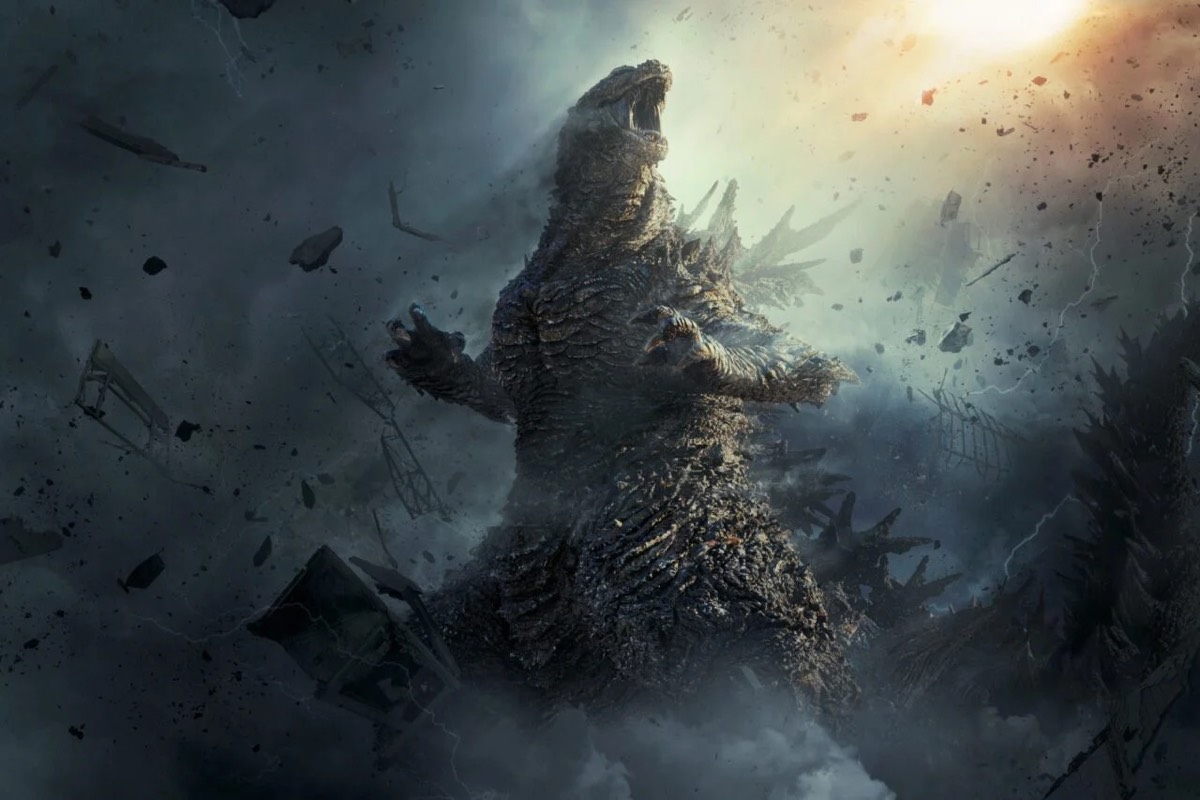
We also got a new trailer for Godzilla Minus Zero, the sequel to director Takashi Yamazaki’s gloriously grounded kaiju epic, Godzilla Minus One, which became a major international hit and snagged an Oscar for best visual effects.

Godzilla Minus One focused on kamikaze pilot Kōichi Shikishima, who struggled with survivor’s guilt after he failed to take action when Godzilla attacked the Japanese base on Odo Island in 1945. Kōichi was one of only two survivors and rebuilt a life with a woman named Noriko and the orphaned baby she rescued, Akiko. But then Godzilla re-emerged, and Kōichi resolved to die fighting the monster to atone for Odo Island.

Credit: Toho International

Spoiler alert: Kōichi survived, thanks to Tachibana’s forgiveness and mechanical ingenuity. He reunited with Noriko, who had a strange black bruise on her neck. And we saw a chunk of Godzilla’s remains start to regenerate, leaving things open for the sequel. Per the official synopsis for Godzilla Minus Zero:

War reduced Japan to zero, and Godzilla plunged it into minus. Two years have passed since then, and the country has faced agonizing struggles to achieve recovery and finally reclaim its daily life. Just as humanity managed to cling to a hard-won peace, a new threat strikes, crushing hope in an instant. There is no third time. Everything ends here.

Most of the main cast from Godzilla Minus One are returning: Ryunosuke Kamiki as Kōichi; Minami Hamabe as his wife, Noriko; Sae Nagatani as Akiko; Hidetaka Yoshioka as Kenji Noda, director of the Large-Scale Disaster Response Bureau; Kuranosuke Sasaki as Seiji Akitsu, captain of the Shinsei Maru; Miou Tanaka as Tatsuo Hotta, former captain of the destroyer Yukikaze; Sakura Ando as Sumiko Ōta, Kōichi’s neighbor; and Yuki Yamada as Shirō Mizushima, a Shinsei Maru crewman. The cast also includes Min Tanaka as biologist Kanji Murakami and Masami Nagasawa as Aoyama.

Godzilla Minus Zero hits theaters on November 3, 2026. Legendary Pictures plans to release Godzilla x Kong: Supernova—its Monsterverse sequel to 2024’s Godzilla x Kong: The New Empire—in 2027.


Europe’s Ukraine commitments collide with fiscal reality

0
europe’s-ukraine-commitments-collide-with-fiscal-reality
Europe’s Ukraine commitments collide with fiscal reality

Subscribe now with a one-month trial for only $1, then enjoy the first year at an exclusive rate of just $99.

France’s fiscal troubles shift Ukraine’s burden to Germany

Diego Faßnacht reports that France’s worsening debt dynamics and rising borrowing costs are narrowing its fiscal room to sustain Ukraine support, increasing Germany’s relative importance. But Berlin’s own political position is weakening, making Europe’s continued assistance increasingly dependent on fragile domestic coalitions and greater reliance on EU-level borrowing.

China’s industrial strength defies demographic doomsayers

Scott Foster reports that China’s demographic decline has not translated into industrial retreat, with global companies increasingly relying on Chinese suppliers, manufacturing processes and technology. Toyota’s use of Chinese components and Qualcomm’s new licensing deal with Huawei reinforce his argument that China remains a formidable industrial and technological competitor.

Russia and Europe drift further from a Ukraine settlement

James Davis reports that the diplomatic deadlock is strengthening hardline arguments in Moscow that Russia can secure its interests only through a decisive military victory rather than negotiation. With Europe maintaining support for Kiev and Washington struggling to shift either side’s position, prospects for a settlement are deteriorating further.

Woman Swept Out to Sea by Massive ‘Tidal’ Wave and Survives

0
woman-swept-out-to-sea-by-massive-‘tidal’-wave-and-survives
Woman Swept Out to Sea by Massive ‘Tidal’ Wave and Survives


What was supposed to be one last peaceful walk during a family vacation turned into a terrifying fight for survival when a massive wave swept a woman and her husband off a pier and into the Atlantic Ocean.

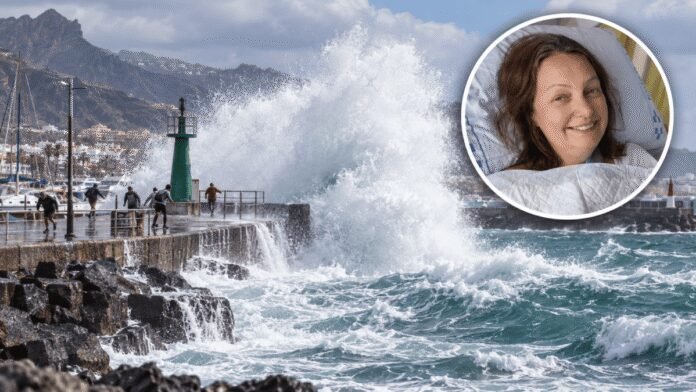
Jane Bradshaw, 55, was visiting Tenerife, a popular Spanish vacation destination off the coast of Africa, with her husband Marcus and her elderly parents when disaster struck. Within seconds, the couple found themselves underwater, separated by powerful waves as horrified onlookers scrambled to save the people being dragged into the sea.

Now, nearly a year after the deadly incident, Jane is opening up about the horrifying experience, the serious injuries she suffered and the medical ordeal that followed her rescue.

The couple, from Stockport in Greater Manchester, England, had traveled to Tenerife to help Jane’s parents enjoy a relaxing getaway. Her mother has Alzheimer’s disease, while her father was awaiting hip surgery, making the couple’s assistance especially important.

On November 8, 2025, as the family prepared to return home, Jane and Marcus decided to take one final walk along the harbor at Puerto de la Cruz.

It was a decision Jane would come to regret.

As they walked along the pier, she noticed an enormous wave building beyond the harbor wall. Sensing the danger, she shouted for her husband to run, but there was almost no time to react.

The water crashed over the pier with tremendous force, sweeping people into the ocean and leaving Jane struggling to understand what had happened.

When she opened her eyes, she was deep underwater.

Somehow, she managed to fight her way back to the surface, where she could hear screams coming from the harbor. Her first thought was finding Marcus, who had disappeared in the chaos.

She eventually spotted him struggling against the powerful current near a harbor wall. Fortunately, he had rope in his backpack, which became an unexpected lifeline when someone above managed to grab it and pull him to safety.

Jane, however, remained trapped in the water with a broken arm and little strength to fight the waves.

Every surge threatened to drag her farther from safety, while the slippery harbor wall made escaping almost impossible.

As bystanders rushed to help, one man tied towels together and lowered them toward her, giving her something to grab. He managed to guide her along the wall toward a set of steps, where she desperately struggled to climb out.

Despite the pain, Jane knew she needed to escape before another wave struck.

She eventually reached safety but collapsed almost immediately, overwhelmed by her injuries.

The disaster was part of a series of dangerous coastal incidents that struck Tenerife that afternoon. Emergency officials reported that 10 people had been swept into the water at Puerto de la Cruz, where one woman died and nine others were injured, including three who suffered serious injuries.

Across the island, powerful waves and hazardous seas were linked to three deaths and at least 15 injuries that day. Authorities had warned of dangerous coastal conditions, including strong winds and powerful surges, before the incidents occurred.

For Jane, surviving the ocean was only the beginning.

Doctors initially diagnosed her with a broken upper arm, eight fractured ribs, chest injuries involving her lungs, severe swelling around her hip and extensive bruising across her back. Marcus also needed stitches for a serious cut to his arm.

After two days under observation at a public hospital, Jane was transferred to a private medical facility because she had travel health insurance.

She initially welcomed the move, believing private care might provide better treatment. Instead, she later described the experience as deeply distressing.

According to Jane, medical staff struggled to manage her multiple injuries, and she experienced serious problems with chest drains used during her treatment. She also claimed there were lengthy periods when she received little attention and that Marcus sometimes had to help with tasks normally handled by medical professionals.

Her lung complications complicated arrangements to return home, leaving her hospitalized in Tenerife for five weeks.

The prolonged hospitalization took an emotional toll, particularly as the couple struggled with the aftermath of an accident that had nearly cost them their lives.

Eventually, Jane was cleared to travel back to England accompanied by a doctor. An ambulance met her at Manchester Airport and took her directly to Manchester Royal Infirmary, where medical staff began a fresh assessment of her injuries.

It was there that doctors discovered two additional fractures involving her pelvis and sacrum, bones that form part of the lower spine and pelvic structure.

Jane said the difference in her treatment was extraordinary, recalling how relieved she felt when doctors began addressing her pain and thoroughly examining her injuries.

But another troubling discovery emerged during her recovery.

A physiotherapist noticed that medical notes from Tenerife incorrectly described her injuries as the result of a surfing accident.

The mistake helped explain why hospital workers had repeatedly asked Jane about surfing, even though she had been injured in a deadly coastal disaster.

Once the circumstances were clarified, her rehabilitation team recognized that she needed more than treatment for broken bones and damaged muscles. The psychological effects of nearly drowning, witnessing the chaos and enduring weeks of difficult medical treatment also required attention.

She was referred for specialist psychological support alongside physical rehabilitation.

Before the accident, Jane had been exceptionally active. She regularly ran races, cycled long distances, completed demanding hikes and enjoyed outdoor adventures with her husband.

Suddenly, activities she had once taken for granted became difficult or impossible.

In an account published by Manchester University NHS Foundation Trust on October 7, Jane revealed that she was still struggling with post-traumatic stress disorder, including flashbacks of the incident.

Although she has managed to return to cycling, she has not regained her previous fitness and remains unable to run. Her injured arm also continues to limit her movement.

She described the emotional difficulty of adjusting to a body that can no longer do everything it once could, explaining that looking healthier on the outside does not necessarily mean someone has fully recovered.

Jane now receives specialized rehabilitation through Manchester’s Major Trauma Enhanced Rehab Service, which combines intensive physical therapy with psychological treatment for people recovering from severe injuries.

The ordeal has also affected her family, particularly Marcus, who not only survived the same terrifying wave but took responsibility for helping Jane through weeks of uncertainty.

During the initial chaos, the couple lost their phones and glasses and were taken to different hospitals, leaving them unable to contact one another. Marcus eventually located his wife and notified their daughter and Jane’s parents before handling complicated arrangements involving medical care, insurance and travel.

Even after returning to England, he needed time away from work to help care for her.

While Jane continues to rebuild her strength, her experience also serves as a reminder of how quickly dangerous coastal conditions can turn an ordinary sightseeing trip into a life-threatening emergency.

The Canary Islands’ emergency authorities advise visitors to stay away from exposed piers, breakwaters and coastal areas during warnings for rough seas. Large waves can surge across seemingly safe walkways with little warning, particularly when powerful ocean swells reach harbor walls.

For Jane, the physical injuries are slowly healing, but the memories of that afternoon remain much harder to escape.

What began as a final stroll with her husband became a disaster that changed her life, leaving her grateful to have survived but still working toward the active future she once imagined.

Pillay’s defiance, Sharif’s disgrace: The prize, the praise, and the politics of prostration           

0
pillay’s-defiance,-sharif’s-disgrace:-the-prize,-the-praise,-and-the-politics-of-prostration - - - - - 
Pillay’s defiance, Sharif’s disgrace: The prize, the praise, and the politics of prostration           

The 2026 Nobel Peace Prize has exposed two political universes: a South Africa that defies imperial power and Israeli impunity, and a nuclear-armed Pakistan whose prime minister has elevated subservience into an instrument of statecraft.

History occasionally delivers a political verdict so devastating that satire becomes redundant. The 2026 Nobel Peace Prize has produced precisely such a spectacle. On one side stands Navi Pillay, the formidable South African jurist who confronted apartheid and exposed Israel’s conduct in Gaza as genocide. On the other stands Shehbaz Sharif, prime minister of nuclear-armed Pakistan, who has repeatedly championed Donald Trump for the same distinction, apparently convinced that a president presiding over devastating wars deserves humanity’s highest honour for peace-making. One confronted Pharaoh. The other volunteered to polish his throne.

The contrast exposes something more damning than diplomatic embarrassment: Sharif’s spectacular deficit of political dignity.

South Africa, without nuclear weapons, has confronted Israel and its Western protectors through international law. Sharif, governing a nuclear-armed nation with one of the world’s largest militaries, cannot apparently distinguish a defender of international justice from its most powerful antagonist. South Africa confronts empire; Sharif competes for its affection.

South Africa’s defiance deserves extraordinary admiration because it challenges the imperial order’s central hypocrisy: international law binds Western adversaries while Western allies enjoy institutionalized impunity. Its historic genocide case against Israel shattered the presumption that Palestinian suffering must remain beyond judicial scrutiny whenever accountability inconveniences Washington.

Guterres in Islamabad: Genocide, cowardice, and the cage of Imran Khan

Pillay’s leadership of the UN commission concluding that Israel committed genocide in Gaza embodies this magnificent tradition of principled resistance.

A nation that defeated apartheid has become a formidable challenger of Zionist domination and Israeli impunity. Where Western governments manufacture euphemisms to sanitise atrocities, South Africa demands accountability.

Sharif, meanwhile, has perfected a more contemptible diplomatic philosophy: never confront power when you can flatter it, never defend principle when you can exchange it for patronage. His renewed campaign for Trump’s Nobel ambitions comes amid Gaza’s devastation, American-Israeli aggression against Iran, and Washington’s vindictive
assault upon international judicial institutions.

The slaughter at Minab, where a 28th February American air strike killed scores of Iranian schoolchildren, remains among the war’s most horrifying atrocities. Yet Sharif continues campaigning for Trump’s glorification.

For grieving Iranian families, his enthusiasm must appear positively obscene: a neighbouring Muslim nation’s leader lobbying to honour the president responsible for unleashing the war that devastated their lives.

And what qualifies Trump for this sanctification? His administration has armed and shielded Israel amid Gaza’s destruction, prosecuted a catastrophic war against Iran, threatened sovereign nations, and sanctioned international judicial officials. His presidency exemplifies imperial aggression stripped of diplomatic cosmetics: military violence marketed as peace, coercion presented as negotiation, and impunity defended as strategic necessity. His Nobel ambitions mock the prize’s professed principles, although its history of rewarding dubious peacemakers makes such ambitions less surprising.

Sharif’s justification is Trump’s supposed salvation of South Asia from nuclear catastrophe. How convenient that a ceasefire between two sovereign states should become Washington’s personal miracle, with Sharif volunteering as its principal evangelist. Even granting American diplomacy some credit, preventing one war cannot absolve responsibility for prosecuting others. Otherwise, the Nobel becomes an imperial rewards program in which powerful men collect humanitarian honours while their military campaigns accumulate civilian corpses.

The contrast with Pillay makes the absurdity complete. The Nobel Committee, exceptionally, recognises someone who actually embodies the prize’s professed ideals: a jurist who strengthened institutions capable of prosecuting humanity’s gravest crimes. Washington punishes those institutions. Sharif campaigns to celebrate the president responsible.

The contradiction could scarcely be more damning: one leader defends international justice, another undermines it, and Sharif insists that the latter deserves a peace prize.

READ: Pakistan’s Mecca Pact: The guns Gaza never got

Sharif personifies the culture of political subordination within sections of Pakistan’s ruling establishment, where foreign patronage masquerades as statecraft. The generals monopolise strategic authority; Sharif supplies the civilian genuflection. Yet his obsequiousness remains his own choice, not an unavoidable diplomatic necessity.

Pakistan’s participation in Trump’s Board of Peace compounds the disgrace. Sharif calls it engagement, but influence requires independence and the willingness to dissent. Without these, participation risks becoming complicity in the management of the ongoing mass murder of Palestinians.

Diplomacy requires negotiating with power, not worshipping it. Pragmatism protects national interests; sycophancy sacrifices dignity for personal favour. Sharif has made the latter his political signature. The Nobel decision has exposed a devastating contrast. Pillay’s South Africa demonstrates that moral authority requires neither nuclear weapons nor Washington’s permission. Sharif demonstrates that commanding a nuclear-armed nation cannot compensate for the absence of political independence.

Navi Pillay confronted Pharaoh and received the Nobel Peace Prize. Shehbaz Sharif bowed before Pharaoh and received only the spectacle of his own humiliation. One defended the dignity of the oppressed. The other squandered the dignity of a nation for an imperial patron’s applause.

The views expressed in this article belong to the author and do not necessarily reflect the editorial policy of Middle East Monitor.

0FansLike
0FollowersFollow
0FollowersFollow
0SubscribersSubscribe
- Advertisement -
Google search engine

Recent Posts