20.8 C
London
Thursday, September 24, 2026
Home Blog

G20 needs a new approach to tackle the changing world order

0
g20-needs-a-new-approach-to-tackle-the-changing-world-order
G20 needs a new approach to tackle the changing world order

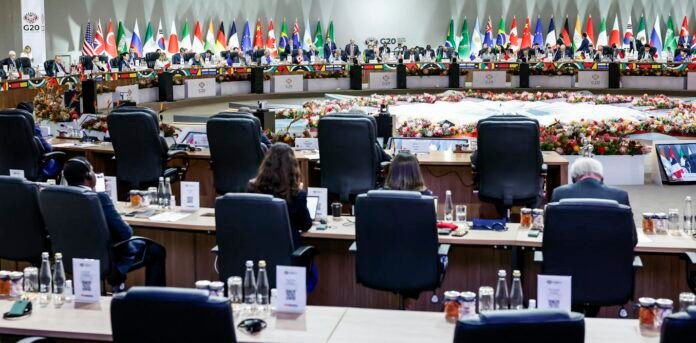
In December, the UK will take over the G20 presidency from the United States. The world is a remarkably different place since the UK last hosted the G20 in 2009. Back then, it led a collective response to the 2008 financial crash, mobilising more than US$1 trillion (£740 billion) to rebuild economies across the world.

In 2027, it will arguably face an even stiffer challenge – leading cooperation when the major powers in the world no longer see eye-to-eye on the nature of problems, let alone the pathway to solutions.

The world is experiencing the highest number of armed conflicts since 1946. Strategic rivalry now runs deeper through trade, technology, energy and finance. Yet these are precisely the areas where no country can secure prosperity by acting alone. The old order is fractured, but our interdependence is stronger than ever.

At Davos in January 2026, the Canadian prime minister, Mark Carney, rightly called on the world’s middle powers to band together in the face of attempts by great powers such as the US and China to turn economic integration, tariffs, financial infrastructure and supply chains into instruments of coercion. The same applies across the other converging pressures of today, from debt and financial resilience to climate, emerging technologies and food security.

Since then, the European Union has opened the door to Canada becoming its first associate member, proposing deeper collaboration on technology, critical minerals, energy and defence. These are examples of countries building flexible partnerships around shared risks and shared capabilities, rather than waiting for universal agreement. This is the logic the G20 now needs.


Read more: Mark Carney: a master of statecraft in an era short of great orators


The US presidency of G20 this year has been characterised by a lack of action and strained relationships between countries. So Andy Burnham’s government has a rare opportunity to set a new direction on global cooperation.

The UK has the chance to pioneer a new approach to international leadership suited to the world as it is now. In this era of fragmentation, G20 leadership will be judged not by declarations alone. It needs to demonstrate an ability to realign governance with the realities of shared risk, and to demonstrate that collective action remains possible in a divided world.

New approach

I believe the UK should adopt a new, three-tier approach – pushing for consensus where sufficiently ambitious action can command universal support, and broad agreement where an overwhelming majority is ready to proceed. Most importantly, under UK leadership, the G20 needs to strive to build open, problem-specific coalitions where neither of those routes can produce meaningful action.

The idea starts from a simple but important reversal: begin with the problem, and ask what outcome is needed. Then consider which countries, institutions, businesses and communities have the capabilities to deliver that desired outcome, and which policies are able to work together, rather than against one another.

Consensus remains valuable, but it stops being a precondition for progress. Instead, what’s needed is a way of turning partial agreement into practical cooperation.

An example of how this can work is in tackling sovereign debt – a country’s borrowing from domestic or foreign creditors to fund public spending and investments. Here, progress doesn’t depend on involving every G20 member. It requires the debtor country, its bilateral and private creditors, multilateral lenders and the relevant financial institutions to act together.

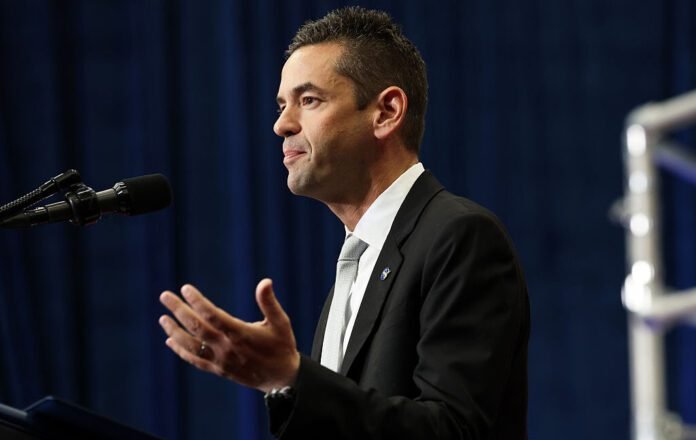
Canada's prime minister, Mark Carney, speaks at a podium watched by EUropean commission president, Ursula von der Leyen.

Canada’s prime minister, Mark Carney, is keen for his country to join the EU as an associate member. EPA/Ronald Wittek

The necessary coalition will, of course, be different depending on the issue involved, such as food security, artificial intelligence, critical minerals or resilient supply chains. This proposal would enable the G20 to match nations with key issues, rather than trying to create a fixed club of middle powers or an alternative geopolitical bloc.

Adopting this framework will also enable the countries of the global south, who led the last four G20 presidencies, to ensure their voices are heard on the most pressing issues directly affecting their countries.

New Alignment

To achieve this, UCL’s Institute for Global Prosperity has developed a new framework for global cooperation called The New Alignment. I co-lead our new global convening platform, the New Alignment Hub, with economist Dennis Snower.

We aim to build the necessary infrastructure to make this level of deep, cross-border collaboration possible – bringing together universities, thinktanks, research institutes, civil society, business and practitioner networks across many different regions.

Its working groups can develop and test proposals to shape policy. It can provide the collaborative engine for the UK’s G20 presidency, and help make the Think20 process (the G20’s official engagement group for thinktanks and research institutes) into a route from ideas to implementation.

With that infrastructure in place, the UK’s opportunity is larger than choosing the right list of G20 themes and priorities, because it extends to changing how the institution works. Success should be measured by coalitions formed, resources mobilised and policies implemented at local, national and international levels.

Britain showed in 2009 that it could convene the institutions required to meet a global emergency. In 2027, it can demonstrate something just as important: that a divided world is not condemned to inaction.

This new approach offers a route away from consensus-seeking towards deep, meaningful collaboration between key players on the most pressing issues of our time. And the UK has the opportunity to lead the way in achieving it.
Asia pays the price as rich nations borrow like emerging markets

0
asia-pays-the-price-as-rich-nations-borrow-like-emerging-markets
Asia pays the price as rich nations borrow like emerging markets

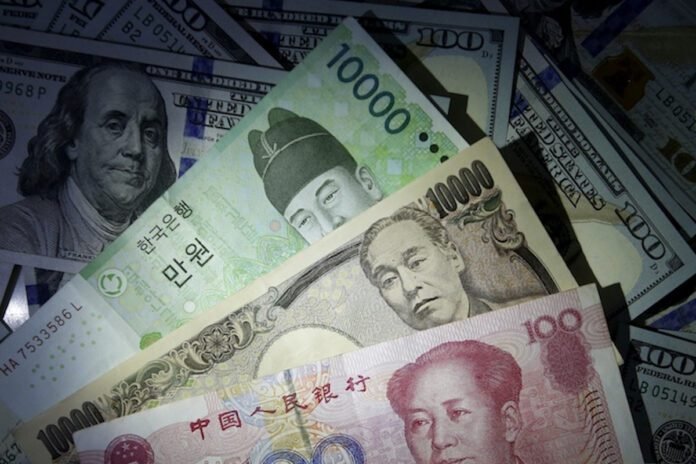
Global debt has passed US$365 trillion, and the cost of carrying it is now rising faster than any government can control. For investors with money anywhere in the world, few risks matter more over at least the next two years.

Asia funds a large share of Western borrowing through its central bank reserves and its savers, and it’s now paying for that borrowing through its own bond markets and currencies.

Government borrowing costs across the G7 are higher than at any point since mid-2008, the summer before the global financial system came close to collapse. The debt those costs apply to is vastly larger today.

The Institute of International Finance, which reports global debt rose by more than $10 trillion in the first half of this year alone, blames an electoral cycle that rewards quick fixes and punishes restraint.

In 1997, Thailand, Indonesia and South Korea were made to cut spending and raise interest rates as the price of international rescue. The IIF now says the US, Japan, France and the UK face persistently large deficits and rising interest bills, problems long associated with struggling emerging market sovereigns.

None is being forced to implement remotely comparable discipline. Advanced economies paid more than $3.3 trillion last year in interest on internationally traded government debt, more than the world spent on artificial intelligence, defense or clean energy.

G7 interest bills have risen almost 85%, and with deficits already large, much of that bill is met with fresh borrowing. Higher rates enlarge interest bills, bigger bills widen deficits and wider deficits demand more issuance.

More issuance forces governments to pay higher yields to find buyers, pushing rates up again. The 10-year US Treasury yield hit 5.15% this week, its highest since 2007, and 30-year yields touched 5.45%, unseen since 2004.

At a recent five-year Treasury auction, indirect bidders, including foreign central banks, took just 54% of the sale, down from a typical 65%.

More than $30 trillion of debt across mature and emerging markets is approaching maturity, much of it issued when money was almost free. Rolling it over at the highest rates in a generation will swell interest bills for a decade or more.

In 2022, an unfunded UK budget sent gilt prices into freefall within days, forced the Bank of England into emergency intervention and brought down the then prime minister, Liz Truss. UK 10-year gilts now yield close to 5.4%, well above their level going into that episode.

The next trigger could be an oil spike, a badly received auction or a budget markets refuse to fund. Investors are underestimating the likelihood of a disorderly episode in a major sovereign bond market over the next two years, and Asia would be among the first to feel it.

Malaysia’s 10-year bond now trades at its widest discount to US Treasuries since 2007, and Indonesian and Thai spreads are close to similar extremes. When US government debt pays more than most of emerging Asia, capital has incentive to leave and regional currencies come under strain.

Policymakers across the region must choose between tightening to defend their currencies at the expense of growth, and protecting growth at the risk of capital flight.

The Reserve Bank of Australia is widely expected to hike next week, with Australian 10-year yields already at levels last seen in 2011.

Japan’s 10-year yield has reached 3.08%, the highest since 1996, even as manufacturing growth slows to a seven-month low. With public debt well above twice the size of its economy, every rise in yields bites straight into the budget.

Japan is also the largest foreign holder of US Treasuries. Higher yields at home give its insurers and pension funds a compelling reason to bring money back, and a sustained shift would strip away a pillar of demand for US and Western debt, pushing global yields higher still.

China led a $6.5 trillion surge in emerging market debt in the first half, lifting the total above $110 trillion, and its local government liabilities carry a heavy refinancing burden.

Much of emerging Asia holds deeper reserves and sturdier external positions than in 1997, yet no buffer fully offsets a world where risk-free US paper pays above 5%. Stocks and bonds sold off together this week on inflation and fiscal fears, undermining the long-held belief that government bonds reliably cushion equity losses.

Governments have learned inflation is the least painful way to shrink debt. The IIF attributes most of the 25-percentage-point fall in global debt-to-GDP since 2021 to inflation. Almost none of it came from repayment, and savers bore the cost.

Nominal yields that look generous can prove expensive in real terms. For investors in Asia, currency exposure now matters as much as asset selection, since swings against the dollar can erase years of returns in months.

Diversification across regions, currencies and asset classes, and close scrutiny of sovereign and corporate balance sheets carry more weight than at any time in the past 15 years.

Asia paid heavily for fiscal failure in 1997, and now it risks paying again for someone else’s. Investors should be asking which bond market buckles first, and whether their portfolios can withstand the shock.

Nigel Green is founder and CEO of the deVere Group.

21 years after disaster helped bring peace to Aceh – has botched Indonesian response to floods reignited calls for independence?

0
21-years-after-disaster-helped-bring-peace-to-aceh-–-has-botched-indonesian-response-to-floods-reignited-calls-for-independence?
21 years after disaster helped bring peace to Aceh – has botched Indonesian response to floods reignited calls for independence?

Thousands gathered at Baiturrahman Grand Mosque in Banda Aceh on Aug. 15, 2026, to commemorate 21 years of peace between Indonesia and the separatist Free Aceh Movement, or GAM.

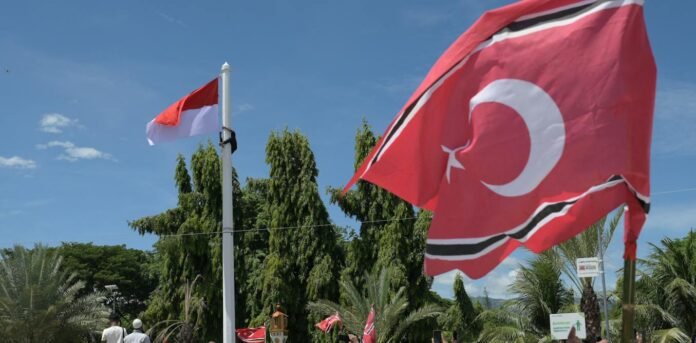
Some participants raised GAM’s red, black and white crescent-star flag and chanted “Free Aceh,” while others lowered Indonesia’s national flag and replaced it with the former separatist movement’s flag.

These were politically significant acts in a province where GAM fought a nearly three-decade armed struggle for independence before the 2005 Helsinki agreement ended the conflict.

And the Aug. 15 display was not an isolated incident. In December 2024, former GAM members raised the crescent-star flag during the movement’s anniversary, with one former combatant expressing hope that it would eventually fly across Aceh. The flag appeared publicly again in December 2025, at which point Indonesian soldiers dispersed crowds displaying it.

The return of these independence symbols and slogans comes as Aceh continues to recover from severe floods and landslides that struck the province in late November 2025.

A different natural disaster, the 2004 tsunami, helped create conditions that accelerated the peace process between Aceh and Jakarta. Yet two decades later, it is criticism of the central government’s response to the latest emergency that has served to intensify expressions of independence.

As a scholar of nationalism and political geography, I see the resurgence of pro-independence sentiment in Aceh not simply as evidence that separatism is returning, but also as a reminder that national belonging is continually negotiated between states and citizens, and can be harmed by perceived neglect in times of need.

That matters beyond Aceh. The peace agreement transformed a bloody separatist conflict into one of Southeast Asia’s best examples of post-conflict reconciliation. Renewed tensions would raise questions not only about Aceh’s relationship with Indonesia, but also the durability of a peace settlement that has held for more than two decades.

Peace ended war, not nationalism

GAM’s struggle was about more than opposition to policies made in Jakarta. Founded in 1976, the movement presented Aceh — located on the island of Sumatra at the westernmost edge of Indonesia — as a distinct nation that should be independent from Indonesia. GAM drew on Acehnese history to portray independence as the restoration of a sovereignty that had existed when Aceh was an independent sultanate. The nearly three-decade conflict killed thousands. Civilians bore much of the violence, with Indonesian security forces and GAM both implicated in abuses, including torture, arbitrary arrests, extortion and forced displacement.

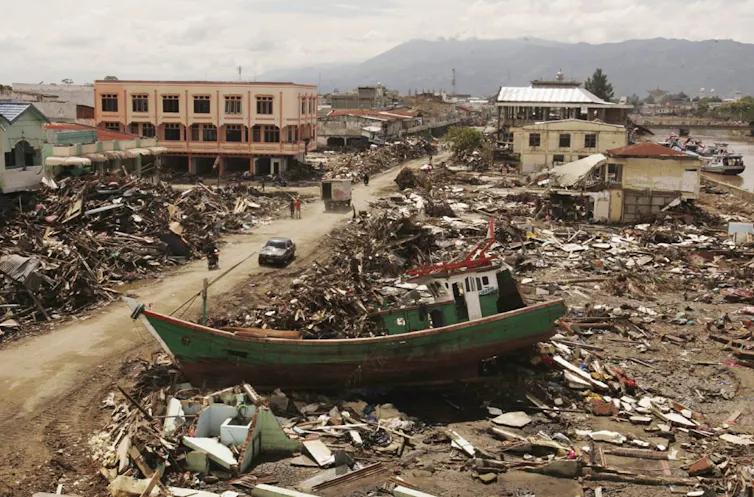
The devastating tsunami of 2004 acted as a catalyst to peace, shining a light on the suffering of Aceh’s population while opening the doors to international aid and presence.

A boat lies on rubble and debris.

Banda Aceh was one of the hardest-hit regions struck by the 2004 tsunami. Patrick Aventurier/Gamma-Rapho via Getty Images

The armed conflict officially ended with the signing of the 2005 Helsinki agreement, but it did not make Acehnese nationalism disappear. Instead, it made room for Aceh’s political distinctiveness within Indonesia. The agreement gave Aceh extensive self-governing powers, allowing local political parties, expanding political representation and granting the region the authority to enact provincial laws. Substantial discretion over economic affairs and natural resources was handed to Aceh, although lingering grievances over revenue-sharing provisions related to the province’s gas fields remain to this day.

The political settlement largely succeeded in ending the organized armed campaign for independence.

GAM disarmed, and many of its former leaders moved into electoral politics, forming local parties and winning positions in Aceh’s government and legislature. But while the armed movement ended, pro-independence ideas and symbols did not disappear entirely.

That distinction matters because peace did not depend on Acehnese abandoning their distinct political identity and simply becoming Indonesian; it depended on changing the terms of their relationship with Indonesia.

Aceh could remain part of the country while retaining considerable control over its own political affairs. In that sense, Helsinki did more than end a war. It created political conditions that made remaining within Indonesia acceptable.

From disaster to independence talk

The November 2025 floods and landslides killed more than 1,000 people and forced more than 1 million to relocate. Aceh was among the hardest-hit provinces.

It brought citizens into much more direct contact with the Indonesian government and made people dependent on public authorities for assistance and recovery.

Calls for Jakarta to designate the floods and landslides a national disaster began soon after they struck, but President Prabowo Subianto rejected them, arguing that Indonesia had sufficient capacity to manage the crisis. Prabowo’s rejection of foreign aid, in particular, led to widespread anger in Aceh and provided a strong contrast to the response in 2004, when international assistance was crucial to the post-tsunami effort.

Almost a year later, significant challenges persist in Aceh. As of Sept. 7, 2026, only 649 of the 34,777 permanent homes needed for those displaced had been completed. The latest available data also showed that 93 regional road segments remained nonfunctional, while only 188 of 676 bridges had been restored as of Aug. 8.

On Aug. 14 – one day before the GAM flag event – a civil-society coalition again raised white flags and called on Jakarta to declare the disaster a national disaster.

But why do grievances over the government’s response turn into pro-independence talk in Aceh?

History offers part of the answer. A strong Acehnese identity has not always meant wanting to leave Indonesia. Acehnese leaders supported Indonesian independence from the Dutch colonial empire in 1945, and even the Darul Islam rebellion of the 1950s – which sought to transform Indonesia into an Islamic state – did not seek an independent Acehnese country. Opposition to Dutch colonial rule, followed by Islamic networks and solidarity, helped connect Acehnese elites to the wider Indonesian political community.

It was only later, as relations with the central government deteriorated, that independence became the goal.

This history suggests that Acehnese nationalism is not a fixed political force that periodically resurfaces unchanged. Different understandings of the nation can compete and be renegotiated as political conditions change. Acehnese and Indonesian national identities are therefore not necessarily mutually exclusive; their relationship has changed as the political relationship between Aceh and Jakarta has changed.

The return of “Free Aceh” chants and GAM-associated symbols shows that, more than two decades after the peace agreement, independence remains available as a political language for expressing dissatisfaction with Indonesia — especially in moments like natural disasters that have hurt government legitimacy.

A woman with a megaphone stands in front of posters.

An activist in Banda Aceh shouts slogans during a protest over the Indonesian government’s handling of the November 2025 floods. Chaideer Mahyuddin/AFP via Getty Images

Nationalism as a two-way process

For more than two decades, Aceh has remained peaceful and within Indonesia, while retaining extensive autonomy and a distinct political identity.

Yet the continued use of “Free Aceh” slogans and separatist symbols shows that belonging to Indonesia is not simply settled by peace, autonomy or the passage of time. Nor can nationalism be understood simply by looking at how countries build identity through schools, maps, flags and ceremonies.

Rather, nationalism works both ways: Indonesia promotes a shared identity, but Acehnese also negotiate what belonging to Indonesia means through their interaction with the state.

Perhaps the more important question, then, is not why independence talk has returned, but what has kept Aceh within Indonesia for the past 21 years.

The Netherlands Criminalizes Purchase of West Bank Settlement Goods as European Restrictions Expand 

0
the-netherlands-criminalizes-purchase-of-west-bank-settlement-goods-as-european-restrictions-expand 
The Netherlands Criminalizes Purchase of West Bank Settlement Goods as European Restrictions Expand 


The Netherlands has made purchasing goods produced in Israeli settlements in the West Bank a criminal offense, joining several other European countries that have imposed restrictions on trade with the settlements. 

The Dutch measure, decided in July, took effect September 22. Violations can carry penalties of up to six years in prison, community service or a fifth-category fine, currently set at up to €103,000. 

Among European Union countries, Ireland, Belgium and Spain have also imposed restrictions on trade with Israeli settlements. Those countries, along with the Netherlands, recognize Palestine as a country. 

Calls have increased for the 27-member EU to adopt bloc-wide restrictions over Israel’s military operations in Gaza and increased violence in the West Bank. 

Norway is separately considering legislation that would trade with businesses operating in Israeli settlements in the West Bank and East Jerusalem a crime that can carry a jail sentence.  

Foreign Minister Espen Barth Eide said he expects Norway’s parliament, the Stortinget, to vote on and approve the proposal. A public consultation on the legislation is scheduled to end September 19, 2026. 

Under the proposal, Norwegian individuals and companies would be barred from importing or exporting goods produced in Israeli settlements, including wine and agricultural products. Restrictions would also extend to real estate transactions and infrastructure and construction services connected to the areas. 

Intentional violations could carry fines or prison sentences of up to three years, while negligent violations could result in up to six months in prison. The rules would apply to Norwegian citizens and companies. 

European boycotts targeting the West Bank will also be a focus of an upcoming event hosted by the International Christian Embassy Jerusalem. Alongside its celebration of the Feast of Tabernacles, participants will tour the West Bank, while the organization plans to challenge boycotts through public advocacy and legal avenues. 

ICEJ Senior Vice President and Spokesman David Parsons said the organization must balance its opposition to the measures with the legal obligations facing supporters. 

“There’s a sort of tension here that we don’t want to encourage people to defy the criminal laws of their country,” Parsons said, “but we will encourage Christians to support these communities as best they can.” 


NASA chief concerned China may deny access to parts of South Pole

0
nasa-chief-concerned-china-may-deny-access-to-parts-of-south-pole
NASA chief concerned China may deny access to parts of South Pole

Last month, China delayed the launch of an ambitious robotic mission to the South Pole of the Moon, Chang’e 7, until early next year. The country did not provide a detailed explanation for the schedule slip, but it was welcomed by NASA Administrator Jared Isaacman.

“They are targeting the exact same location on lunar South Pole,” Isaacman said Wednesday evening at the Off World conference in Houston. “We may have dodged a bullet with the Chang’e 7 mission a couple of weeks ago because that would have gone to the Shackleton crater.”

Much of the lunar surface is pretty barren, but the South Pole, and the Shackleton Crater in particular, offers some of the most coveted real estate there. That’s because the high rims of the crater create permanently shadowed regions known as “cold traps,” where it’s thought that water (in the form of ice, of course) and other useful materials may have accumulated over billions of years.

Limited real estate

In all of NASA’s and China’s plans for long-term settlement on the Moon, relatively few square miles at the South Pole of the Moon matter the most. It’s there that both countries believe they can establish an enduring presence that will help them learn techniques for expansion further into the Solar System. Isaacman and other US officials have started to express concerns that China could establish exclusion zones where robotic probes and then human missions go. Chang’e 7 will bring considerable mobility to the Moon.

“It has rovers, it has hopper drones like we now have in development but didn’t eight months ago, and could have potentially denied access to some of the most interesting spots,” Isaacman said. “They want to interact with the water ice, and they want to get really good at the skills for where they’ll want to go next for their Neil Armstrong-like moment. Except it won’t be on the Moon, it’ll be on Mars.”

No country has softly landed a spacecraft at the lunar poles, which are more difficult to reach than equatorial regions of the Moon. The delay of Chang’e 7 opens up the possibility that NASA could reach this terrain first, with the initial launch of Blue Origin’s Blue Moon Mark 1 vehicle. This large lander will carry two NASA probes to the South Pole, possibly as early as spring of 2027.

Isaacman’s comments come amid a debate about whether it really matters if NASA gets back to the Moon with humans before China lands there. The Asian nation has set a target of landing its first astronauts on the Moon by or before 2030 and is making considerable progress in developing a crewed spacecraft, rocket, and lander to accomplish this.

Does the race actually matter?

Does it matter if China gets to the Moon before NASA gets back? After all, China would only be repeating what the United States did in 1969 with the Apollo mission. In Isaacman’s view, it does.

“That will call into question every other country around the world,” Isaacman said of China landing on the Moon next. “Like, whose security guarantee should I trust? Should I trust the United States and NATO? Should I trust China if they’re the emerging technical superpower here? Whose technology should I buy? Whose military hardware should I buy? Whose standards should I adhere to? Who am I listening to on AI? Am I listening to the United States or am I listening to China on that? All of that’s on the table.”

This should never have been a race, Isaacman said, noting US space policy failures going back to the Reagan administration. He estimates that NASA has spent $100 billion across multiple presidential administrations, Democrat and Republican, that has led nowhere. Meanwhile, China just had its first human spaceflight in 2003 and has since expanded its capabilities to the point where it now rivals the United States in space.

“If you come up short with who comes down the ladder first, the impact is felt around the world,” Isaacman said.

Switzerland votes on proposal to enshrine stricter neutrality in constitution

0
switzerland-votes-on-proposal-to-enshrine-stricter-neutrality-in-constitution
Switzerland votes on proposal to enshrine stricter neutrality in constitution


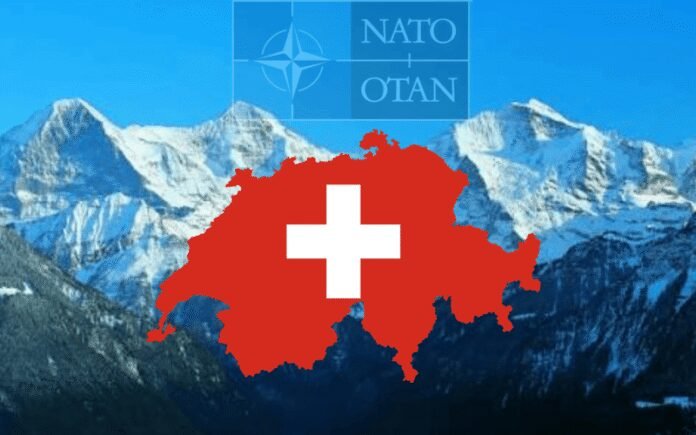
Switzerland is set to vote on Sunday on a proposal to strengthen the country’s traditional policy of military neutrality by enshrining a stricter definition in its constitution.

The initiative, launched by the pro-sovereignty Pro Switzerland organisation, would require neutrality to be armed and perpetual, prevent closer ties with NATO and restrict sanctions to those mandated by the United Nations. The proposal has gained attention following Switzerland’s decision to support European Union sanctions against Russia after its invasion of Ukraine.

The Swiss government and parliament have rejected the initiative, arguing that it would be too rigid and limit the country’s ability to respond to changing geopolitical circumstances.

Foreign Minister Ignazio Cassis has defended a more flexible interpretation, saying neutrality should not mean indifference to violations of international law. Opinion polls indicate that more than 60% of voters are expected to reject the proposal, according to surveys published last week.

via Euronews

Stop mad Donald’s Iran war: open letter to the US Congress

0
stop-mad-donald’s-iran-war:-open-letter-to-the-us-congress
Stop mad Donald’s Iran war: open letter to the US Congress

Dear Members of Congress,

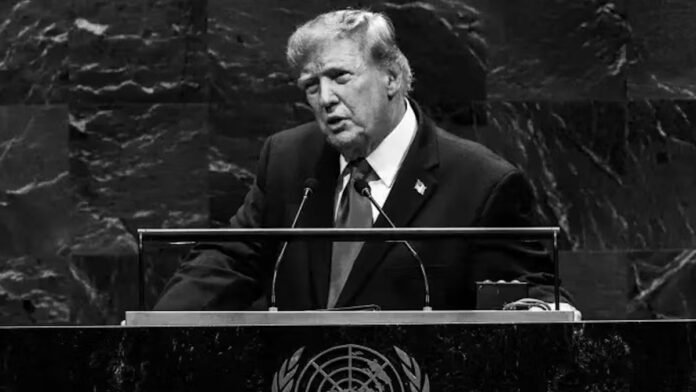
In truly deranged remarks to world leaders at the UN, Donald Trump declared that “I have a big decision to make,” whether to negotiate a deal with Iran or instead to “annihilate the Islamic Republic” and drive Iran “into hell with no chance of survival.”

He posed it as his personal choice. The fact that the American people are dead set against Trump’s war means nothing. And as for the voters, he added that he gives “absolutely no credence” to the coming midterm elections in deciding on his actions and on Iran’s fate.

Nothing binds this President. He is not bound by law, the Constitution, the UN Charter, or public opinion at home and abroad. When asked at the start of the year whether he has any limits on his power, he said “Yeah, there is one thing. My own morality. My own mind. It’s the only thing that can stop me.”

Trump opened his speech with the 250th anniversary of the Declaration of Independence, hailing America’s freedom. The fact is that Trump’s authoritarianism far outdoes that of King George III, against whom the colonies rebelled.

Among the founders’ indictments of Mad King George was that “He has affected to render the Military independent of and superior to the Civil power.” Yet our own mad king has decided that the survival of a whole civilization is in his hands alone.

Trump is emboldened in his contempt for Congress because the Republican members of Congress have abdicated their constitutional responsibilities, terrified of their own president, and forsaking their constituents for campaign lucre from AIPAC and the military-industrial complex.

The Constitution is unambiguous regarding Congress’s responsibility. Article I, Section 8 assigns Congress, not the President, the sole power to declare war. That is not a choice or an option. The Constitution doesn’t say that Congress can play dead and let the President declare war. The Framers made this choice deliberately, because they were explicitly rejecting the power of a king to take the nation to war.

In Federalist 69, Hamilton assured the public that the President’s war powers would be far less than the British monarch’s. Madison stated the principle plainly in a letter to Jefferson in 1798: “The constitution supposes, what the History of all Govts demonstrates, that the Ex. is the branch of power most interested in war, & most prone to it. It has accordingly with studied care vested the question of war in the Legislature.”

The founders’ careful design has been overturned because of the unconstitutional subservience of the Republican members of Congress to Trump and to the military-industrial-digital complex. And yes, under Democratic presidents, most Democratic members of Congress also looked the other way when those presidents chose to go to war.

The war with Iran is Trump’s folly but Congress’s disgrace for not stopping it. It is a war without a purpose that has created mass suffering in Iran, tens of billions of dollars of direct outlays, and staggering damage to American military bases in eight countries of the Middle East.

The closure of the Strait of Hormuz has sent world and American prices soaring for oil, gas, fertilizers, and more. And the world has duly noted that Iran can hold its own against US aggression, albeit at great sacrifice to the people of Iran and the region.

America’s much vaunted AI battlefield has been exposed in the most horrifying way. On the first day of the war, an American missile struck the girls’ elementary school there, killing more than 150 people, most of them girls aged seven to 12, and the military’s own inquiry reportedly found that overreliance on artificial intelligence contributed to the targeting.

Trump blamed “Iran or somebody else,” and seven months later the administration has offered no findings, no apology and no compensation to the families.

The President’s threat to annihilate a member state of the United Nations, delivered from the General Assembly podium, disgraced Trump in front of the world. It also violated Article 2(4) of the UN Charter, which prohibits even the threat of force against another state. Nearly all the world stands aghast.

I write to you because you cannot simply walk away from Trump’s recklessness, shaking your heads silently. You have a job to do, so do it. The craven Republican Party has to find even a minimal level of guts to tell Trump, “No, you do not have the power to destroy Iran. Any war with Iran depends on us, and we don’t support you and our constituents want this war to stop.”

A clear majority of Americans oppose this war, and poll after poll shows that the opposition to the war is growing. A few Republicans have found that courage. Last week three more Republicans broke ranks to support ending the war. Their colleagues should follow.

Many of you receive campaign contributions from military contractors and technology companies deeply involved in the war. Many of you take money from AIPAC, which champions the war that Netanyahu did so much to help launch. This has to stop, as it is a dereliction of your constitutional duty and a violation of your oath.

Congress holds the power of the purse. The fiscal year ends on September 30, and every bill that funds the Pentagon is your opportunity to prohibit funds for unauthorized offensive operations against Iran.

The right course for the US is simple. Congress should cut off funding, and the US should stop further attacks and go home. We need no agreement with Iran or anyone else to stop the war that we started. By ending the war you will immediately restore some sanity and safety to the world energy markets, food supplies, and prices faced by Americans and others around the world.

How America has declined from the glorious moment when John F. Kennedy stood at the same podium at the UN on September 20, 1963, after having negotiated the Partial Nuclear Test Ban Treaty with the Soviet Union.

He told the assembled leaders that the treaty can be a lever, and Archimedes, in explaining the principles of the lever, was said to have declared to his friends: “Give me a place where I can stand—and I shall move the world.”

My fellow inhabitants of this planet: Let us take our stand here in this Assembly of nations. And let us see if we, in our own time, can move the world to a just and lasting peace.

Members of Congress, to save our nation’s honor and our Constitution, you must do your duty to stop this war, and stop Trump’s brazen, destructive, and unconstitutional grab for power.

Respectfully,

Jeffrey D. Sachs

University Professor, Columbia University

Jeffrey D. Sachs is a University Professor and Director of the Center for Sustainable Development at Columbia University, where he directed The Earth Institute from 2002 until 2016. He is also President of the UN Sustainable Development Solutions Network and a commissioner of the UN Broadband Commission for Development. He has been advisor to three United Nations Secretaries-General, and currently serves as an SDG Advocate under Secretary-General Antonio Guterres. Sachs is the author, most recently, of “A New Foreign Policy: Beyond American Exceptionalism” (2020). Other books include: “Building the New American Economy: Smart, Fair, and Sustainable” (2017) and “The Age of Sustainable Development,” (2015) with Ban Ki-moon.

–CommonDreams

George Clooney’s Heartbreaking Talks with Presley Gerber Revealed

0
george-clooney’s-heartbreaking-talks-with-presley-gerber-revealed
George Clooney’s Heartbreaking Talks with Presley Gerber Revealed


George Clooney reportedly spent hours trying to support Presley Gerber through some of his darkest periods before the 27-year-old model’s sudden death.

The Hollywood star had become far more than simply a famous friend of Presley’s parents, Cindy Crawford and Rande Gerber. Sources familiar with the families told the Daily Mail that Presley and his sister, Kaia Gerber, knew Clooney as “Uncle George,” while Presley developed an especially close bond with the actor.

“George would spend hours talking to Presley,” one source told the outlet, adding that Clooney would do virtually anything to help Rande’s family.

The accounts have not been publicly confirmed by Clooney himself, but additional reports have described the same close relationship between the longtime friends and their families.

According to the Daily Mail’s sources, Clooney offered Presley advice for years, including after Presley’s 2018 DUI arrest.

One insider said Clooney warned him against making choices that could put his future at risk, telling him to be careful.

As Presley’s struggles continued, the messages reportedly became more personal.

The source said Clooney would send notes reminding the young model that he was there for him, while another person familiar with their relationship said Clooney’s recurring message was to “stay clean.”

Clooney had previously discussed his own youthful experimentation with cocaine in a 2025 Esquire interview, while making clear that he did not consider himself to have had an addiction.

That history, sources claimed, allowed Clooney to speak candidly with Presley about drugs without sounding judgmental.

The connection between the families stretches back decades.

Clooney and Rande Gerber were close friends long before Presley became a public figure and later went into business together. In 2013, Clooney, Gerber and entrepreneur Mike Meldman created Casamigos tequila.

Diageo later purchased the company in a deal valued at up to $1 billion in 2017.

Presley had increasingly discussed his mental health and substance-use problems publicly before his death.

He launched a social-media series called “Mental Health Mondays,” intended to encourage conversations about issues people often keep hidden. His sister Kaia also discussed how her brother’s struggles had affected their family in an August 2026 Vogue interview.

Just three months before his death, Presley appeared with his parents at a June 11 mental-health event in Malibu, where he spoke publicly about addiction, treatment and his efforts to improve his life.

That history makes the timing of his death particularly painful.

Presley died Sunday, September 20, at a rehabilitation facility in Santa Monica, California.

According to the Santa Monica Police Department, officers responded at approximately 9:35 a.m. to the 1000 block of Berkeley Street following a report of a possible overdose.

Police found an adult man dead at the location. The Los Angeles County Department of Medical Examiner later identified him as Presley.

Paramedics officially pronounced him dead at 9:45 a.m.

While police are investigating Presley’s death as a suspected overdose, authorities have not officially determined that an overdose killed him.

The distinction is important.

The Los Angeles County Medical Examiner performed an examination on September 21 but deferred both the cause and manner of death, meaning additional testing or studies are required before a final determination can be made.

The medical examiner said that process could take several months.

Santa Monica police have said there is currently no indication of foul play.

Presley’s family confirmed his death through a representative and asked for privacy during what they described as an extremely painful time.

Sources close to Clooney say Presley’s death has hit the actor especially hard because of both his bond with Presley and his decades-long friendship with Rande.

One source described Clooney as devastated by what happened, while another said there was no anger surrounding Presley’s struggles, only sadness.

Those comments remain secondhand accounts rather than public remarks from Clooney.

What is established is that Clooney and Rande have been close friends and business partners for decades, and Clooney has remained deeply connected to the Gerber family.

For a man Presley reportedly grew up calling “Uncle George,” the relationship appears to have extended well beyond Hollywood friendship.

And according to those who witnessed it, Clooney spent years trying to make sure Presley knew one thing above all — that he did not have to face his struggles alone.

Contrary to some reports, you don’t have two brains

0
contrary-to-some-reports,-you-don’t-have-two-brains
Contrary to some reports, you don’t have two brains

Late last week, we started seeing headlines about how new research was suggesting we might have two brains instead of the one that seems to show up on MRI scans. As is so often the case, these rumors can be traced back to a single press release put out by one of the universities where the work was done.

You do not have two brains. It’s a silly way to look at the results of the new paper.

But there are far better ways to look at the results, ways that can help us understand how the brain gets put together and illustrate some of the general ideas behind developmental biology. So let’s take a look at what the research actually shows and place it in the context of brain development.

Where are you?

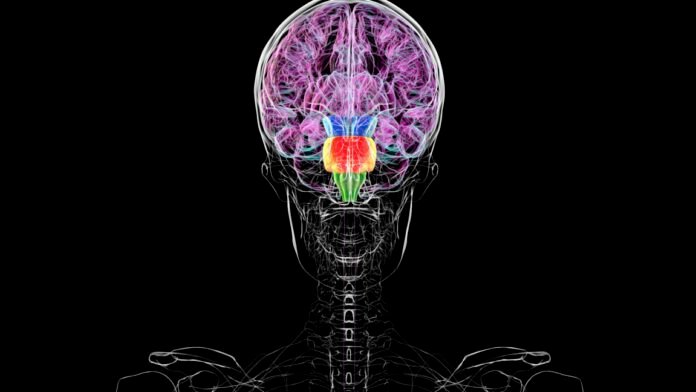
You may think body segments are something that show up in things like crustaceans and insects. But our nervous system also develops in segments. Vertebrates have four major ones: the forebrain, midbrain, hindbrain, and spinal cord. (Some of these later develop segments within them, but we’ll skip over those.) The new paper is largely focused on providing part of the answer to an obvious question: how do those segments get there?

That sort of question is the bread and butter of developmental biology, a field that focuses on how organisms start off as a single cell and, through a series of carefully timed and choreographed processes, produce all the tissues found in adults.

To think about the question, we need a bit of context. By the time the first cells that are committed to develop into neurons show up, the vertebrate embryo already knows its head from its tail, and its back from its belly. (We won’t go into how the embryo learns that, but we know a lot about that, too.) The embryo consists of three tissues at the time: the endoderm, which will line our guts, the mesoderm, which will form muscles and bone, and the ectoderm, which will go on to form the skin.

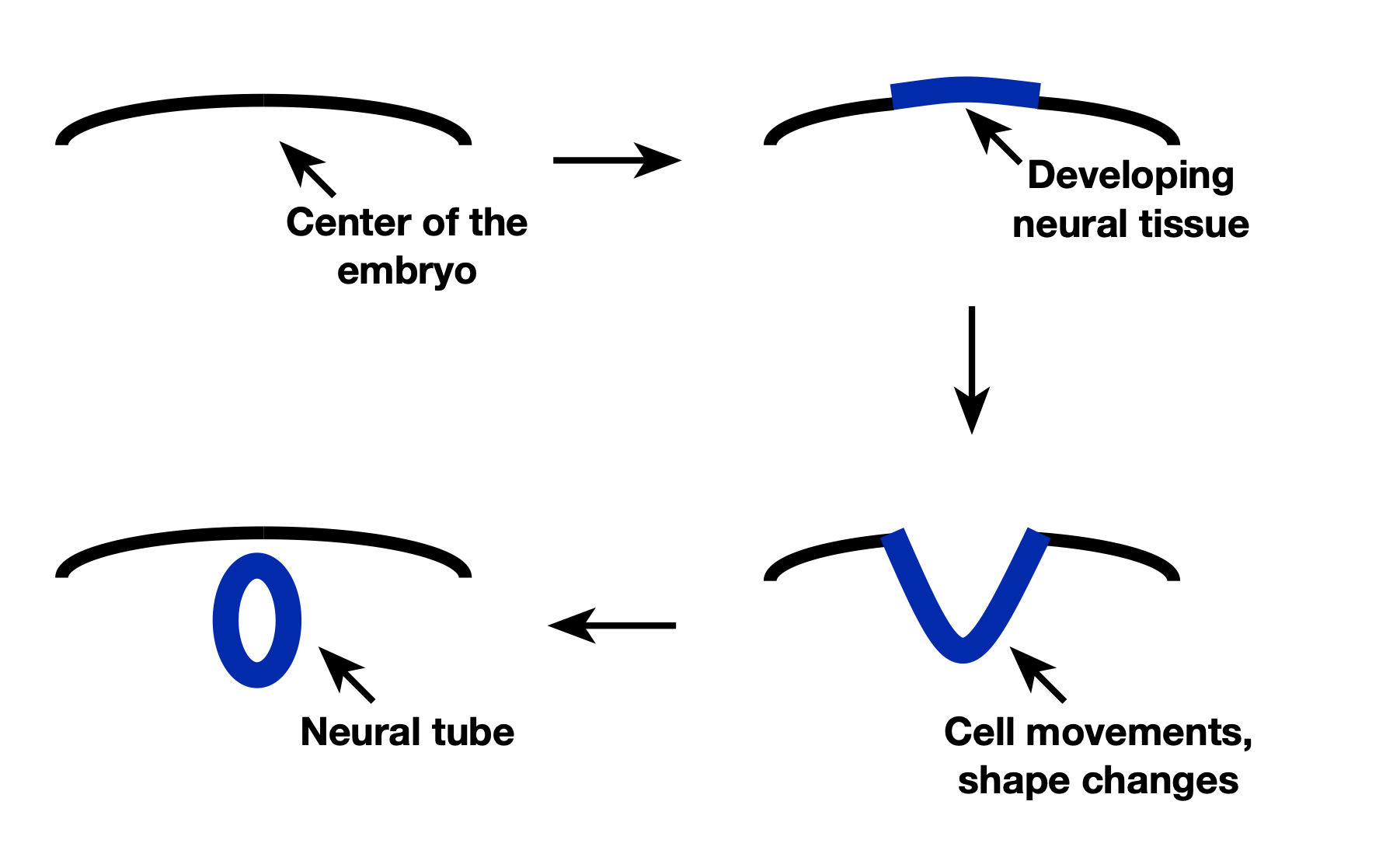
Neural cells form as a thickening of the ectoderm that runs down the center of the embryo from head to tail. The center of these thickly packed cells drops down, while the sides fold up, eventually forming an oval-shaped tube that pinches off from the rest of the ectoderm. All the signals that run up your spine, every sound and shape you process, every thought you will ever have—all of these and more depend on the descendants of these cells.

A section across a vertebrate embryo as development proceeds. At first, there’s nothing on top but ectoderm. At the center of the left-right axis of the embryo, the ectoderm thickens and adopts a neural fate (upper right). The neural precursors then start shifting in a way that causes them to adopt a deep V shape (lower right). This process eventually brings the two ends of the developing neural tissue together, and they merge, forming a tube (lower left).

A section across a vertebrate embryo as development proceeds. At first, there’s nothing on top but ectoderm. At the center of the left-right axis of the embryo, the ectoderm thickens and adopts a neural fate (upper right). The neural precursors then start shifting in a way that causes them to adopt a deep V shape (lower right). This process eventually brings the two ends of the developing neural tissue together, and they merge, forming a tube (lower left). Credit: JOHN TIMMER

(While this is being presented as a sort of “how vertebrates develop,” there are key differences among them. In mice, the formation of neural tissue happens nearly simultaneously along the entire head-to-tail dimension. In chickens, the process starts in the head and moves slowly to the tail, such that there are already brain structures forming at a time when some of what will be the spinal cord doesn’t even know it will be a nerve cell yet. And tadpoles form a fairly simple spinal cord that gets expanded and reorganized as they change into frogs. So, while the general process is similar in all vertebrates, many species have adapted it to different styles of development.)

By all appearances, all these newly formed neural cells look more or less the same. So we end up back at the original question: how do the segments of the nervous system form?

Remember that, by the time these cells start forming, the embryo already knows its head from its tail. That raises two very simple possibilities. One is that the ectoderm cells that the nerve cells form from already know where they are, and so the nerve cells inherit positional information from them. The alternative is that after the neural cells form, their non-neural neighbors can send signals to them to tell them where they are. So if cells in the head make a different collection of signaling molecules from those in the tail, this can transfer positional information to the developing nervous system, telling it where to form the brain and where to form the spinal cord.

Dividing up the brain

The new work builds on decades of studies that have identified many key regulators of early processes. One of those earlier findings was that the ectoderm of the early embryo activates two genes, one in the front half of the embryo, one in the back. So nerve cells can inherit at least some crude positional information from the ectoderm they form from.

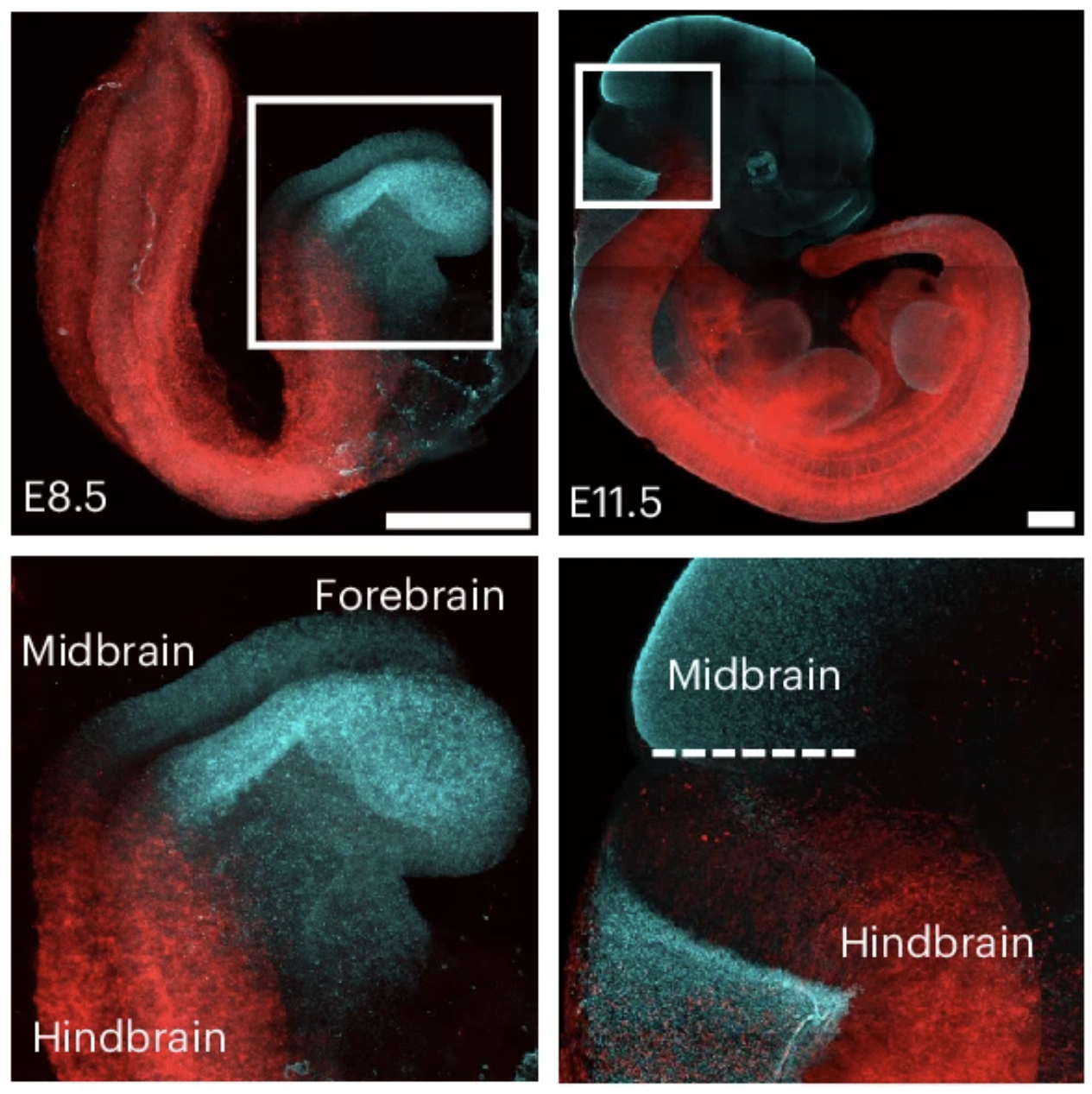
The key to this work is that the researchers modified a copy of these genes so that it activated fluorescent proteins wherever the gene was translated into a protein. So, they engineered mice where half of the early ectoderm glowed red, and the other half glowed cyan. These colors were maintained as the embryo formed nerve cells and the cells started to develop into the brain.

They found that while the hindbrain glowed red, the rest of the brain glowed blue. The inherited positional information set up one of the key boundaries in the brain. In other words, as soon as cells know they’re going to eventually develop into neurons, they know whether they can potentially form part of the hindbrain and not the mid- or forebrain. (This is, roughly, where the idea of “two brains” in the press release comes from.)

Other experiments expanded on this. Similar genetic tools let them activate a fluorescent protein in individual cells in the early ectoderm. They found that, in 96 percent of the cases, the descendants of these single cells were all in the hindbrain, or all in the midbrain and forebrain. They also worked with human stem cells and showed similar things were happening there: Exposure to the right signals would tell the stem cells where they were, and the nerve cells inherited that information as they formed. If you wanted to form neurons that are only found in the hindbrain, you have to first send the stem cells down the hindbrain path.

Four images of the developing brain, all showing distinct red and cyan regions.

Early cell labeling shows that the hindbrain and spinal cord (red) remain a separate fate from the midbrain and forebrain (cyan).

Early cell labeling shows that the hindbrain and spinal cord (red) remain a separate fate from the midbrain and forebrain (cyan). Credit: Jokhai et. al.

There obviously may still be some flexibility here—the 96 percent exclusive behavior they saw is not 100 percent. It’s not clear whether that’s a limitation of their experimental system or just a product of the fact that cells at the border between the front and back of the ectoderm can change fates if they wander a bit in the right direction. Things happen very quickly in early development, and it’s also not clear how the timing of what we can see compares to the timing of what’s going on with the genes that were used to mark different cells.

It’s also less certain what’s going on at the other key borders. Differences between the mid- and forebrain seem to arise later, and largely due to the action of signaling molecules that diffuse through the developing brain and provide positional information. In contrast, very little is known about how the hindbrain and spinal cord adopt different fates; the new paper cites only one reference on the topic. That reference suggests they are also separate fates very early in development, but it seems that more work needs to be done there.

Why does any of this matter?

Obviously, the different areas of our brain and the spinal cord go on to form very different structures, which later perform very different functions. So forming these segments is important. But it’s also important that the different identities get established early—in fact, it’s essential to their ability to develop so differently.

There are two key reasons for this. The first is that having a different identity allows cells to respond to the same signal in different ways. For example, early on when it’s a relatively simple tube, pretty much the entire nervous system is exposed to the same two signals: a molecule called sonic hedgehog diffuses from the bottom of the tube, and a group of molecules called BMPs from the top.

You might expect that, since all the cells of the tube are neural precursors, they’d respond to the same signals in the same ways. But they don’t. Instead, their segment identity directs these signals into overlapping sets of responses that differ in the different areas of the brain. In other words, when midbrain cells see BMPs, they respond in different ways than the cells of the spinal cord do. By dividing the nervous system up early, cells inherit a developmental history that allows a limited number of signals to trigger a great deal of complexity.

(The way that developmental history changes how things are interpreted also enables the signals to be recycled. BMPs initially tell cells whether to develop as neurons or not. Later, they tell developing neurons what identity to adopt once the neuron matures. Later still, BMPs help direct the migration of mature neurons in the developing spine. We don’t have to evolve entirely new signaling systems in order to do different things.)

The other thing is that the junction between segments can be a distinct environment, one where cells are exposed to influences from both of the neighboring identities. At the midbrain-hindbrain boundary, for example, cells activate a distinct set of genes that include signaling molecules that go on to influence the development of the neighboring tissues on both sides of the boundary. As you’d expect from the above, these signals made at the border trigger different responses in the midbrain and hindbrain, since those two segments have different developmental histories.

While the new work says nothing about how many brains you actually have (it’s one with several distinct regions within it), it provides another piece for the puzzle of how the incredible complexity of our brains gets generated from a flat sheet of cells that, just a few hours before, would have happily developed into our skin instead. And it provides a great window into how organismal development works in general and the sorts of experiments we can do to help however many brains we have understand these processes.

What is the extent of the UN’s impunity when it comes to the two-state politics?

0
what-is-the-extent-of-the-un’s-impunity-when-it-comes-to-the-two-state-politics?
What is the extent of the UN’s impunity when it comes to the two-state politics?

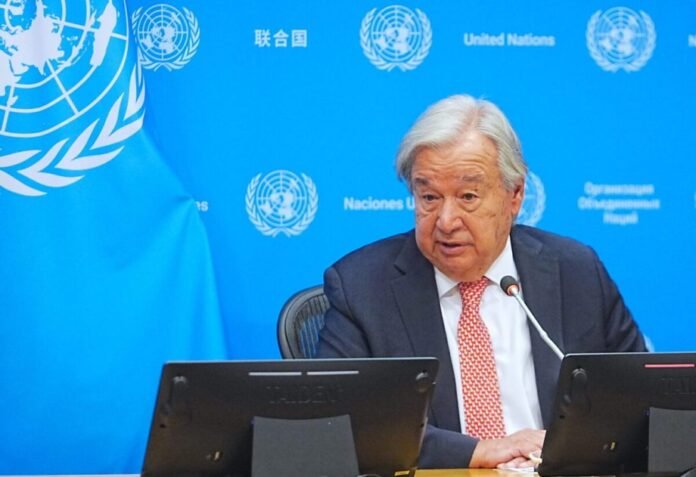
Once again, UN Secretary General Antonio Guterres stressed that there is no other option to the two-state paradigm. Speaking at a meeting hosted by France, Canada, the United Kingdom and Saudi Arabia on the sidelines of the UN General Assembly, Guterres noted that there was a contradiction between diplomatic support for the two-state politics and actions on the ground that threaten its implementation.

And yet, “There is simply no alternative,” Guterres declared. Even while Israel is blatantly creating an alternative that involves a prolonged genocide and ongoing settlement expansion.

For several years Guterres has been denying the possibilities of other political solutions for Palestine. A single democratic state, which many Palestinians have spoken in favour of, is not an option for Guterres. Decolonisation is also not an option.

What Guterres deems the only solution is a defunct paradigm which not only shackles Palestinians to humanitarian aid, but also allows Israel ample time to colonise further Palestinian territory.

Time has already run out for the creation of two-states, as Guterres knows. It has also run out much more for Palestinians who, after having their land partitioned in 1947, were forced to adhere to international impositions supporting colonial expansion in Palestine.

Rather than say that there is no alternative to the two-state paradigm, Guterres should explain why. Why, in the warped reasoning of the UN, is it still considered legitimate to say that the two-state is the only solution when it hasn’t provided a solution at all?

Why is Guterres calling for the full implementation of Trump’s peace plan which provides no security for Palestinians in Gaza? What is Guterres actively supporting when the two main paradigms so far – the two-state compromise and Trump’s plan – have only enabled colonial expansion, military occupation, genocide and forced displacement?

According to Guterres, the plan is for two sovereign democratic states. Israel is a settler-colonial enterprise, and therefore not democratic. Palestine is symbolically recognised with barely any contiguous territory remaining. Without decolonisation, a Palestinian state will only remain symbolic and illusory, no matter the funds that are funnelled to the Palestinian Authority. Guterres has never explained how a defunct paradigm can bring about two democratic states, when the paradigm cannot even challenge the discrepancy between the coloniser and the colonised.

“For Palestinians and all those who care about peace in the Middle East, support for two States must go beyond words,” Guterres stated. Words, however, must first truly explain what the two-state politics intended to achieve. Those who uphold the Palestinian people’s right to liberation, self-determination and a Palestinian state  cannot support the two-state, which is tantamount to supporting Israeli colonialism. Supporting Palestine means that international impositions are discredited.

There has been more than enough proof of where the international community’s loyalties lie, and this culminated in Israel’s genocide in Gaza.

Perhaps there is more confidence in impunity now, in calling the two-state paradigm the only solution after the international community created its own impunity for complicity in genocide. This makes the two-state politics more perilous than ever. If no steps were taken to stop Israel’s genocide, with a clearly visible kill toll, why would any world leader take any steps to discredit the defunct two-state compromise and its normalised statistics of forced displacement and ethnic cleansing?

The views expressed in this article belong to the author and do not necessarily reflect the editorial policy of Middle East Monitor.

0FansLike
0FollowersFollow
0FollowersFollow
0SubscribersSubscribe
- Advertisement -
Google search engine

Recent Posts