14.7 C
London
Thursday, September 24, 2026
Home Blog

Congress Failed Again to Stop Trump’s Iran War. This Group Is Trying Through the Courts.

0
congress-failed-again-to-stop-trump’s-iran-war-this-group-is-trying-through-the-courts.
Congress Failed Again to Stop Trump’s Iran War. This Group Is Trying Through the Courts.


With Congress unable to rein in President Donald Trump’s war against Iran through legislative action, a group advocating for diplomacy filed a lawsuit against the Trump administration arguing the military action violates the Constitution.

National Iranian American Council Action on Thursday filed its suit in a Washington federal court asking a judge to declare the war on Iran illegal on the basis that it violates the Declare War Clause of the Constitution.

“Can one person decide, on his own, to keep an entire nation at war?”

“No President should have the power to take this country into an indefinite war by himself,” NIAC President Jamal Abdi said in a statement. “Congress never authorized this war. Yet Iranian families are being bombed, American service members have been killed, and communities on both sides are being forced to bear the consequences. This lawsuit asks a fundamental question: Can one person decide, on his own, to keep an entire nation at war?”

The lawsuit was filed as the Senate prepared to vote on a resolution seeking to stop the war. A floor vote on the resolution, which already passed the House of Representatives, failed in the upper chamber Thursday afternoon after senators shot it down in a 49–50 split.

“We’ve unfortunately seen this Congress fail its job of standing up for their constitutional role as the sole body empowered to declare war,” Abdi told The Intercept. “That’s why we are pursuing every option at our disposal, including taking the challenge against this unconstitutional war to the courts.”

Both the Senate vote and NIAC Action’s lawsuit took on new urgency after Trump used his United Nations General Assembly speech on Tuesday to threaten to “annihilate” Iran, a country of 90 million people.

“When Trump is threatening annihilation of another country in a war of aggression,” Abdi said, “it is all hands on deck to stop this full-blown constitutional crisis before it gets worse.”

The White House did not immediately respond to a request for comment.

Seven Months of War

Trump, in partnership with the Israeli military, launched the war against Iran on February 28 with a sudden barrage of airstrikes and missile attacks that left numerous top Iranian leaders dead and killed hundreds of civilians. The early days of the attack saw a missile strike on a school in the town of Minab that killed more than 100 children, which the United Nations declared to be a possible war crime.

It was days later, on March 2, that Trump notified Congress of the initiation of hostilities. In the ensuing months, the war has turned into a regional conflagration. Israel invaded Lebanon, leaving thousands of people killed and tens of thousands more displaced.

Meanwhile, retaliatory missile and drone strikes by Iran against the U.S., Israel, and their allies in the Persian Gulf have severely impacted the region and led to a shutdown of the Strait of Hormuz that has hobbled global fuel markets. And missile fire from the Houthis, the militant group that controls much of Yemen, shut down shipping through the Red Sea’s Bab al-Mandab Strait, further straining the global economy and spurring a Saudi military response. 

The initial attacks, thousands of deaths, and cascading economic fallout of the war all took place without the consent of the American people, a fact that NIAC Action’s attorneys cast in the lawsuit as a clear violation of Article 1, Section 8 of the Constitution, which grants Congress the exclusive power to declare war.

“The Constitution does not permit a President to wage war indefinitely and ask Congress for permission later,” said attorney Alan Morrison. “Congress never authorized this war, yet months later the bombing and blockade continued. We are asking the Court to enforce the constitutional line between the President’s authority as Commander in Chief and Congress’s exclusive authority to take the country to war.”

“Calling a war a ‘military operation’ or an ‘excursion’ does not erase the Declare War Clause.”

Though Trump has sought to bypass Congress in pursuing the war through the use of semantics, he has repeatedly undermined that effort with public statements declaring that his military action is a war, NIAC Action’s complaint noted.

“Calling a war a ‘military operation’ or an ‘excursion’ does not erase the Declare War Clause,” said attorney Bruce Fein in a statement. “The question before the Court is whether the President can continue these hostilities without the authorization the Constitution requires.”

The lawsuit was filed on behalf of several NIAC Action members who have been personally impacted by the war. Several of their family members have been killed, wounded, or otherwise terrorized by the monthslong campaign of airstrikes carried out by the U.S. and its allies. One member joining the suit, Nilma Dilmaghani, described the horror of learning that a cousin had been badly wounded in an airstrike that destroyed a family apartment.

“When I learned that my cousin had been trapped under the rubble, that they had lost their home and suffered such serious injuries, I felt completely helpless,” said Dilmaghani. “It is unbearable to watch your family live through this from thousands of miles away and know there is nothing you can do to keep them safe.”

Saddam Hussein used James Bond director to tell Iraq story

0
saddam-hussein-used-james-bond-director-to-tell-iraq-story
Saddam Hussein used James Bond director to tell Iraq story

From the beginning of his brutal reign in Iraq, Saddam Hussein could claim an unusual credit: film producer. After Saddam became president in 1979, his cousin played him in “The Long Days.” The film dramatized Saddam’s role in a failed 1959 attempt to assassinate Iraq’s then-prime minister, Abdul-Karim Qasim.

The film presented the new dictator as a hero. A few minutes in, a young Saddam calmly removes a bullet from his leg using a razor blade sterilized with fire. In his 2000 biography of Saddam, journalist Said Aburish called the story “an exaggeration of serious proportions.” He cited Saddam’s doctor, who said he had treated him only for superficial injuries.

In the same book, Aburish – who had been at that time a consultant to Iraq’s Ministry of Information – recalled how Saddam went through him to hire Terence Young to edit the production. Young had previously directed the James Bond films “Dr No” and “From Russia with Love.”

“Clash of Loyalties” then came in 1983. Saddam financed the lavish historical epic, which told the story of the 1920 Iraqi revolt against British colonial rule. The project was intended to associate Saddam’s Ba’ath party with the revolutionaries who had fought the British.

The blockbuster budget pulled in Oliver Reed, who played a British intelligence officer. Reed proved such a menace that Iraqi officials wanted him deported. At a Baghdad restaurant, he caused a brawl by urinating into a wine bottle and telling a waiter to take it to another table “with my compliments.”

Oliver Reed as a British officer in Clash of Loyalties. Image: Mentorn Media

Co-producer Lateif Jorephani called Saddam’s ambition “Bollywood on Tigris.” The plan was for a state-backed film industry to make at least six patriotic blockbusters for international audiences.

Saddam’s grip on media for domestic audiences was similarly strong. Before he was overthrown in 2003, shortly after the start of the US-led invasion, Iraq had just five newspapers, four radio stations and three television channels. Each of these was controlled by the state.

My interpreter on a recent trip to Iraq, Malik, has disturbing memories of childhood television. He recalls trying to avoid a segment called “Lest We Forget”, which showed footage from the 1980-88 Iran-Iraq war. Skipping it meant missing some of the following 30 minutes of cartoons, including Tom and Jerry.

Changing media landscape

Iraq’s media landscape changed dramatically after Saddam’s fall. Within just one year, around 80 radio stations and 20 television channels were broadcasting. More than 200 newspapers and magazines had also appeared.

Fewer than half of these publications survived 12 months, but the state media monopoly did not return. Iraq now has more than 100 television channels broadcasting in Arabic, Kurdish, Turkmen and Syriac.

Major political parties, religious institutions such as holy shrines and other centers of power, including many of Iraq’s various armed groups, have developed media operations of their own.

In August, I was part of an international group visiting Arbaeen. The Shia Muslim pilgrimage commemorates Hussein ibn Ali, grandson of the Prophet Muhammad. Over 20 million people attend each year, making it the world’s largest peaceful annual assembly.

At Arbaeen, I encountered major Shia religious institutions with substantial media operations. We were invited behind the scenes of some of them. At the media department of the Al-Abbas Holy Shrine in the city of Karbala, I was shown an enormous digital archive of free films, documentaries, talk shows and religious programs.

One resembled an Iraqi University Challenge, with teams answering questions about the Quran. The shrine shares this material online and through live broadcasts. More than 80 television channels use its Arbaeen coverage each year, both inside Iraq and abroad.

The contrast with Malik’s childhood is striking. Under the old system, there were very few choices. The new system operates amid an almost comic abundance.

More media does not necessarily mean more truth or greater press freedom. Iraq currently ranks 162nd out of 180 countries worldwide for press freedom, sandwiched between Sudan and Turkey.

The deeper change is the dispersal of media power, which is now spread among many competing centers. This reflects the wider dispersal of power in Iraq.

Ten Iran-aligned armed factions command around 50,000 fighters across the country. Baghdad is struggling to bring such groups under state control. Even as I flew into Baghdad, US and Saudi forces struck such groups inside Iraq.

Some of these armed groups also have television channels. Al-Ahad TV, for example, is controlled by Asa’ib Ahl al-Haq, a major Iran-aligned armed group.

Saddam once held an iron grip over Iraq and its image – even if Oliver Reed was beyond his control. His media monopoly is now gone. In its place is an extraordinary range of competing voices.

These include political parties, religious institutions and armed groups operating media of their own, as well as journalists and independent outlets struggling for space. But this media abundance does not equate to media freedom.

Matthew Alford is a lecturer in the Department of Politics, Languages and International Studies, University of Bath.

This article is republished from The Conversation under a Creative Commons license. Read the original article.

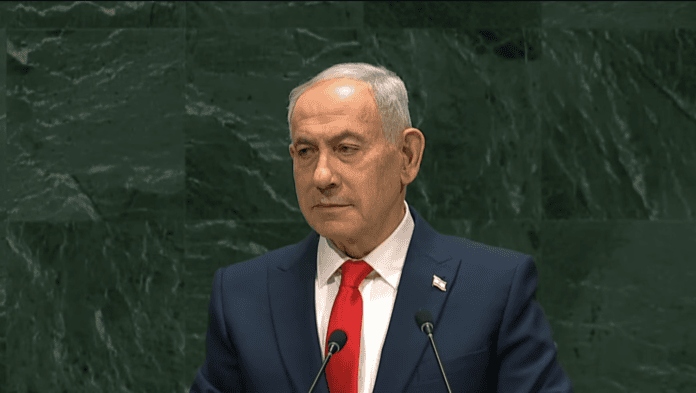
Netanyahu Rebukes Critics in UN Speech, Defends Wars Against Iran, Hamas and Hezbollah 

0
netanyahu-rebukes-critics-in-un-speech,-defends-wars-against-iran,-hamas-and-hezbollah 
Netanyahu Rebukes Critics in UN Speech, Defends Wars Against Iran, Hamas and Hezbollah 


More than 100 delegates from 50 countries walked out as Netanyahu began his speech, prompting him to denounce those leaving as “moral cowards.” 

Prime Minister Benjamin Netanyahu defended Israel’s military campaigns against Iran, Hamas and Hezbollah before the United Nations General Assembly on Thursday, rejecting accusations of genocide in Gaza and accusing Western governments, Turkey, Qatar and New York Mayor Zohran Mamdani of spreading what he called lies about Israel. 

Netanyahu framed Israel’s wars over the past three years as part of a continuing struggle for the survival of the Jewish state, repeatedly returning to the phrase, “We have no other choice.” 

He opened by focusing on Iran, saying his government had fulfilled his longstanding pledge to prevent Tehran from obtaining nuclear weapons. While striking Iran’s nuclear facilities had been militarily difficult, Netanyahu said authorizing the operation had not been. 

“Devastating Iran’s nuclear facilities was hard. It was very hard to do,” he said. “But for me, it was one of the easiest decisions I’ve ever had to make as Prime Minister.” 

Netanyahu said Israel’s actions had also protected countries whose representatives walked out of the General Assembly hall during his address, claiming some of their leaders had privately thanked Israel for eliminating the Iranian nuclear threat. 

Around 100 delegates from 50 countries, including many Arab and several European nations, walked out of the hall as Netanyahu began speaking, with some booing. The premier described the walkouts as “moral cowards,” and said those who felt the way should leave.  

The speech followed several days of criticism of Israel from the General Assembly podium, including remarks by UN Secretary-General António Guterres, Turkish President Recep Tayyip Erdogan, Jordan’s King Abdullah II, Qatari Emir Sheik Tamim bin Hamad Al Thani and French President Emmanuel Macron. 

He then turned to the history of Israel’s conflicts, arguing that the threats facing the country predated its control of the West Bank, for which he used the Biblical term Judea and Samaria, Gaza and the Golan Heights. Referring to the period before the 1967 Six-Day War, Netanyahu said Israel occupied only “a tiny sliver of land” yet faced Arab armies threatening its destruction. 

“It’s not about territories. It’s about the existence of a Jewish state at any boundaries,” he said. 

It’s not about territories. It’s about the existence of a Jewish state at any boundaries.

Netanyahu recounted returning to Israel from high school in Philadelphia shortly before the Six-Day War and finding his brother Jonathan “Yoni” Netanyahu, then a 21-year-old paratroop officer, preparing for battle. Asked what would happen, Yoni told him, “We’re going to win. We have no other choice.” 

Nine years later, Yoni Netanyahu led the Israeli operation that rescued 103 Jewish hostages from a hijacked plane in Entebbe, Uganda, and was the only Israeli soldier killed in the mission. Netanyahu said his brother’s words remained applicable to Israel today. 

The prime minister connected that history directly to the Hamas-led Oct. 7, 2023, attack on southern Israel, which he described as “the darkest day in Israel’s history.” He stressed that no Israeli soldiers or civilians were in Gaza when the attack occurred and said Hamas terrorists murdered 1,200 Israelis. 

“The Hamas terrorists committed the worst slaughter of Jews since the Holocaust,” Netanyahu said, recounting killings, sexual violence, and other atrocities during the attack. He compared the scale of the death toll in Israel, with a population of about 10 million, to 40,000 Americans being killed in less than 24 hours. 

Netanyahu said Israel had since fought what he described as a seven-front war against Hamas, Hezbollah, the Houthis, Iran, militias in Syria and Palestinian terrorists in the West Bank. 

“They failed,” he said. “Because instead of collapsing, we delivered crippling blows to all of them.” 

He credited cooperation with the United States with inflicting severe damage on Iran’s military and nuclear infrastructure, while pointing to Israel’s campaigns against Hamas and Hezbollah. Netanyahu said most of Hezbollah’s arsenal of 150,000 ballistic missiles and rockets had been destroyed and noted the deaths of senior enemy leaders. 

Netanyahu also devoted a significant portion of the address to Palestinian terrorism and settler violence in the West Bank. He accused international media and political leaders of concentrating on violence by a relatively small number of Israeli extremists while overlooking thousands of attempted attacks against Israelis. 

He condemned vigilantism, saying, “I can’t stand that. I won’t stand for vigilantism. We’re a country of law,” but argued that international discussion of settler violence presented a distorted picture of the security situation. 

Netanyahu cited two recent attacks, including the killing of French citizen Nathaniel Shukrun, a father of six who Netanyahu said was shot while visiting a spring with his 16-year-old son. 

He also spoke about Neria Leiter, a reserve soldier and father of four who he said was fighting for his life in a Jerusalem hospital after being struck in a Palestinian ramming attack. Netanyahu said he visited Leiter’s family immediately before leaving for New York and noted that his older brother, Moshe, had been killed in Gaza three years earlier while clearing a booby-trapped building. 

Quoting a post Leiter wrote before the attack, Netanyahu said: “We have no other country. It’s a privilege to defend it.” 

Netanyahu added, “Your sacrifice will not be in vain. We will continue to defend our state. We will continue to win because we have no other choice.” 

Netanyahu offered extensive praise for President Donald Trump, calling him Israel’s greatest partner in the war and crediting him with confronting Iran. 

“Israel and America acted together not only to protect ourselves, but to save civilization,” Netanyahu said. 

Israel and America acted together not only to protect ourselves, but to save civilization

He said American and Israeli pilots flew joint missions over Iran and that the two countries also worked together to return Israel’s remaining hostages. 

The prime minister described Israel as united despite deep internal political and social differences, saying Israelis had come together at decisive moments. He praised civilians for enduring what he said were 1,000 massive Iranian ballistic missiles and saluted Israel Defense Forces soldiers fighting on multiple fronts. 

Netanyahu then described what he called an “eighth front”—“the war for truth”—which he said was being fought through traditional and social media. 

He singled out Qatar, accusing it of spending heavily over decades on American universities and media organizations, including Al Jazeera, in an effort to turn young people against Israel, the United States and the West. 

Netanyahu then attacked Turkish President Recep Tayyip Erdogan, calling him “a tyrant” and accusing him of hosting Hamas leaders, killing Kurdish civilians, denying the Armenian genocide, imprisoning journalists and opposition leaders, and occupying northern Cyprus. 

He also accused Erdogan of wanting to dominate Syria and Jerusalem. 

“He says he’s going to be the ruler of Jerusalem,” Netanyahu said. “No, sir, he won’t. This is our country, our city, our eternal capital.” 

Netanyahu strongly rejected accusations that Israel committed genocide in Gaza, arguing that Hamas had used Palestinian civilians as human shields and operated from hospitals, schools and mosques while stealing food entering the territory. 

He said Israel sent millions of text messages, made millions of phone calls and dropped millions of leaflets warning civilians to leave combat areas. He also cited the delivery of polio vaccines and food to Gaza as evidence against the genocide accusation. 

“Accusing Israel of genocide is the greatest lie of the century,” Netanyahu said. 

Accusing Israel of genocide is the greatest lie of the century

He cited Col. John Spencer, head of urban warfare studies at West Point, who Netanyahu said concluded that Israel had done more to prevent civilian casualties than any other military in history. 

“Is this genocide? Of course not,” Netanyahu said. “It’s the opposite of genocide.” 

Netanyahu then directed an extended attack at Mamdani, accusing the New York mayor of contributing to an atmosphere in which Jewish residents no longer feel safe. 

“Mr. Mamdani, since you were elected mayor of this city, many Jews no longer feel safe in New York,” he said. 

Netanyahu accused Mamdani of associating with people who had supported or defended Hamas, criticized social media posts liked by Mamdani’s wife, and accused the mayor of repeatedly and falsely describing Israel’s actions in Gaza as genocide. 

“Mr. Mamdani, you try to stop me from coming here. You try to silence me,” Netanyahu said. “Well, you can’t silence me. You can’t silence the truth.” 

He argued that antisemitic rhetoric about Israel had consequences beyond the Middle East, pointing to attacks on Jews in cities around the world. 

“The days when Jews were defenseless victims marched to the slaughter, those days are over,” Netanyahu said. “Today, we have a state. Today, we have an army. Today, we have a people ready and willing to defend ourselves.” 

He also sharply criticized Western European governments, accusing some leaders of giving in to pressure from anti-Israel protesters rather than confronting Islamist extremism. 

“Many in the free world are afraid to defend freedom,” Netanyahu said, contrasting Israel’s approach with what he characterized as European appeasement. 

Turning back to Iran, Netanyahu said the government in Tehran was most afraid of its own population. Holding up a Starlink communications device, he argued that unrestricted internet access could allow Iranians to evade government censorship and exercise freedom of speech. 

He said he would leave the device with the president of the General Assembly for the Iranian delegation, joking that it could be useful “when they inevitably defect.” 

Netanyahu then accused protesters and delegates critical of Israel of ignoring repression inside Iran and persecution of Christians elsewhere in the Middle East. He contrasted that with Israel, where he said the Christian community was growing. 

He also pointed to demographic changes in Bethlehem since Israel transferred control to the Palestinian Authority, claiming the city had gone from being 80% to 90% Christian to 80% to 90% Muslim. 

Netanyahu predicted that Iran’s government would eventually be overthrown by its own people. 

“One day, and it may not be far away, the Iranian people will be free,” he said. “Their murderous regime will be toppled by its lies, by its corruption, by its cruelty.” 

He concluded by placing Israel’s current wars within the broader history of the Jewish people, describing an unbroken connection of more than 3,000 years to the land of Israel and citing Jewish contributions including monotheism, the sanctity of life and the rule of law. 

Netanyahu quoted Mark Twain’s description of Jewish survival through centuries in which other civilizations rose and disappeared, before returning once more to the theme that had run throughout the address. 

“Over the centuries, the tyrannies that tried to destroy us failed time and again,” Netanyahu said. “And God willing, they’ll continue to fail.” 

“If we muster our courage, if we steel our resolve, we will continue to win,” he continued. “As the Bible says, the eternity of Israel will not falter.” 

“And the reason is simple. We have no other choice.” 


New York defies Trump admin, asks court to shut down Polymarket gambling

0
new-york-defies-trump-admin,-asks-court-to-shut-down-polymarket-gambling
New York defies Trump admin, asks court to shut down Polymarket gambling

New York sued Polymarket today, alleging that it runs an “illegal gambling operation” through its prediction market.

“By running an unlicensed gambling operation, Polymarket has done more than just knowingly violate state law, they have put New Yorkers at risk, especially those underage who are most vulnerable to problem gaming,” Governor Kathy Hochul said in a press release announcing the lawsuit.

Polymarket is “sidestepping its obligation to pay taxes like licensed casinos and mobile sports gambling platforms do,” New York said. “This tax revenue from gambling regulation funds public schools, sports programs for underserved youth, and problem gambling education and treatment.”

Polymarket is “available to users between the ages of 18–20, even though New York law requires a person to be at least 21 years old to participate in mobile sports betting,” exposing young people to gambling’s “damaging effects on their mental and financial well-being,” New York said.

New York previously sued Kalshi, Polymarket’s chief rival. The Trump administration is on the side of the prediction markets, with the Commodity Futures Trading Commission (CFTC) asserting exclusive jurisdiction over the platforms. In August, the CFTC declared a “market emergency” in New York in an attempt to stop the state from applying its gambling laws to Kalshi.

Gambling with a different name

Polymarket and its rival Kalshi offer sports bets in the form of “event contracts” or “swaps,” which state governments and some courts say are just gambling with a different name.

“Our gambling laws exist to protect New Yorkers, prevent the potential harms of problem gambling, and ensure funding for educational and public benefit programs,” New York Attorney General Letitia James said. “By skirting New York’s laws, Polymarket is targeting the most vulnerable and depriving New York families of critical services and support.”

The New York press release said the state government is “seeking a court order stopping Polymarket from operating as an unlicensed gambling business and requiring the company to pay fines, forfeit all illegal gains and pay restitution to users.” The lawsuit was filed today in a New York County court.

Polymarket’s main platform technically hasn’t been available in the US since 2022, when the CFTC ruled it was an illegally unregistered exchange. Polymarket’s website is restricted to view-only mode in the US, though users can get around that with a virtual private network. Polymarket promoted its platform in the US with a campaign that paid dozens of social media users to film themselves making fake bets on copies of the Polymarket website, The Wall Street Journal reported in June.

Polymarket is seeking the CFTC’s permission to bring its main exchange back to the US, but it was able to launch a more limited, mobile-app version in December 2025 after acquiring QCX, a CFTC-licensed firm. The New York lawsuit was filed against QCX LLC, also known as Polymarket US.

NY alleges “flagrant disregard” of state law

While Kentucky sued Polymarket in June, most of the court cases over state regulation of prediction markets have involved Kalshi. States including New York have sued Kalshi, and Kalshi sued other states after receiving cease-and-desist orders commanding it to stop offering gambling.

Polymarket “seeks to avoid the legal and financial consequences of New York’s close regulation of gambling by offering what is quintessentially wagering under the guise of ‘event contracts’ on a ‘prediction market,’” the New York lawsuit said. “Respondent accepts wagers from members of the public as a gambling business in New York in flagrant disregard of New York’s State Constitution, penal laws, and other statutes. Respondent is not licensed with the New York State Gaming Commission in any capacity.”

The lawsuit against Polymarket closely mirrors the one that New York filed against Kalshi in July. Polymarket provided Ars with a statement today in response to what it called a “copy/paste” lawsuit:

Polymarket was founded in a tiny NYC apartment and now has more than 350 employees here, embodying why people and businesses come here to make it. We believe in New York and we’re staying here. While the AG’s decision to copy/paste a recycled lawsuit is disappointing, we’ll fight for our users. We didn’t run to preemptively sue the state—we chose to engage with them directly on the substance and address their concerns. They preferred the media hit. Any time the AG’s office wants to swing by, our door is open for a conversation about how we protect consumers and offer fair, transparent, and legal markets.

Supreme Court may decide matter for all states

New York’s lawsuit said Polymarket’s offering meets the legal definition of gambling under state law. A person “engages in gambling when he stakes or risks something of value upon the outcome of a contest of chance or a future contingent event not under his control or influence, upon an agreement or understanding that he will receive something of value in the event of a certain outcome,” the state law says.

The lawsuit said examples of bets offered by Polymarket include whether the Green Bay Packers would win a football game against the New York Giants, who would win the Super Bowl in February 2026, and who would win college basketball games such as the March 20, 2026 contest between Hofstra University and the University of Alabama.

The Supreme Court may ultimately decide whether states can restrict or prohibit sports gambling on prediction markets. While the US Court of Appeals for the Third Circuit ruled that New Jersey cannot regulate sports bets on prediction markets, the Ninth Circuit appeals court ruled that Nevada can stop Kalshi from allowing sports bets.

The circuit courts disagree on whether a sports bet on a prediction market meets the federal definition of a “swap,” which can only be regulated by the CFTC. New Jersey recently urged the Supreme Court to settle the matter once and for all. “Companies like Kalshi claim to offer legal sports betting in all 50 states, but they refuse to follow the gambling laws of any state,” New Jersey Attorney General Jennifer Davenport said at the time.

Gas, solar, and tech companies all want this bill. Will Congress pass it?

0
gas,-solar,-and-tech-companies-all-want-this-bill.-will-congress-pass-it?
Gas, solar, and tech companies all want this bill. Will Congress pass it?

Senators are looking toward the Capitol doors as they prepare to head home and campaign for the midterms. Meanwhile, a group of them has been scrambling to reach a deal that some analysts believe is critical to meet the country’s energy needs. 

A bipartisan group of senators says it has come closer than ever before to reaching a long-desired permitting reform bill, which would make it easier to build new energy projects. Many consider the issue urgent as electricity demand surges across the country, partly because of the tech industry’s massive build-out of data centers. 

“America’s energy demand is surging due to advanced technology and manufacturing, but our outdated federal permitting process remains a massive barrier to building the infrastructure we need to stay competitive,” said Marsha Blackburn, a Republican senator from Tennessee, in an August press release.

But the bill’s reception among the public is uncertain due in part to a PR problem: Data centers are a “toxic” subject for voters, according to Alex Lundry, president of D.C.-based public opinion research firm Redbud Consulting. In recent polls, Democrats, Republicans, and independents strongly oppose data centers being built in their communities. 

“If you phrase permitting reform as serving data centers, the polling results get way worse,” Lundry said. This is putting legislators, many of whom are up for reelection in November, in a bind: They want to make it easier to build more electrical infrastructure, which facilitates the data center boom, but don’t want voters to think it’s about data centers. 

The potential bill represents one of the few points of agreement for Republicans and Democrats in Washington, which is that energy permitting is broken.

Complicated studies on project impacts, lengthy reviews by different federal agencies, and legal battles from environmental groups and project opponents constantly delay all kinds of energy projects, industry leaders say.

Lawmakers have tried for years to reform the permitting process, most recently with the failed Energy Permitting Reform Act of 2024, which made it out of committee but never got a full Senate vote. Now, lawmakers from both parties say growing power demand has given the new attempt more momentum than any previous effort. The highest-ranking members of both parties in the Senate’s two energy-related committees are negotiating the bill’s language.

President Donald Trump has signaled he would stop blocking renewable energy projects in order to entice Democrats toward a deal on the bill. Democrats have worried that even if they make it easier to build renewables in law, the White House could continue making it impossible in practice, with some Democrats indicating that these worries have stalled the bill’s progress. 

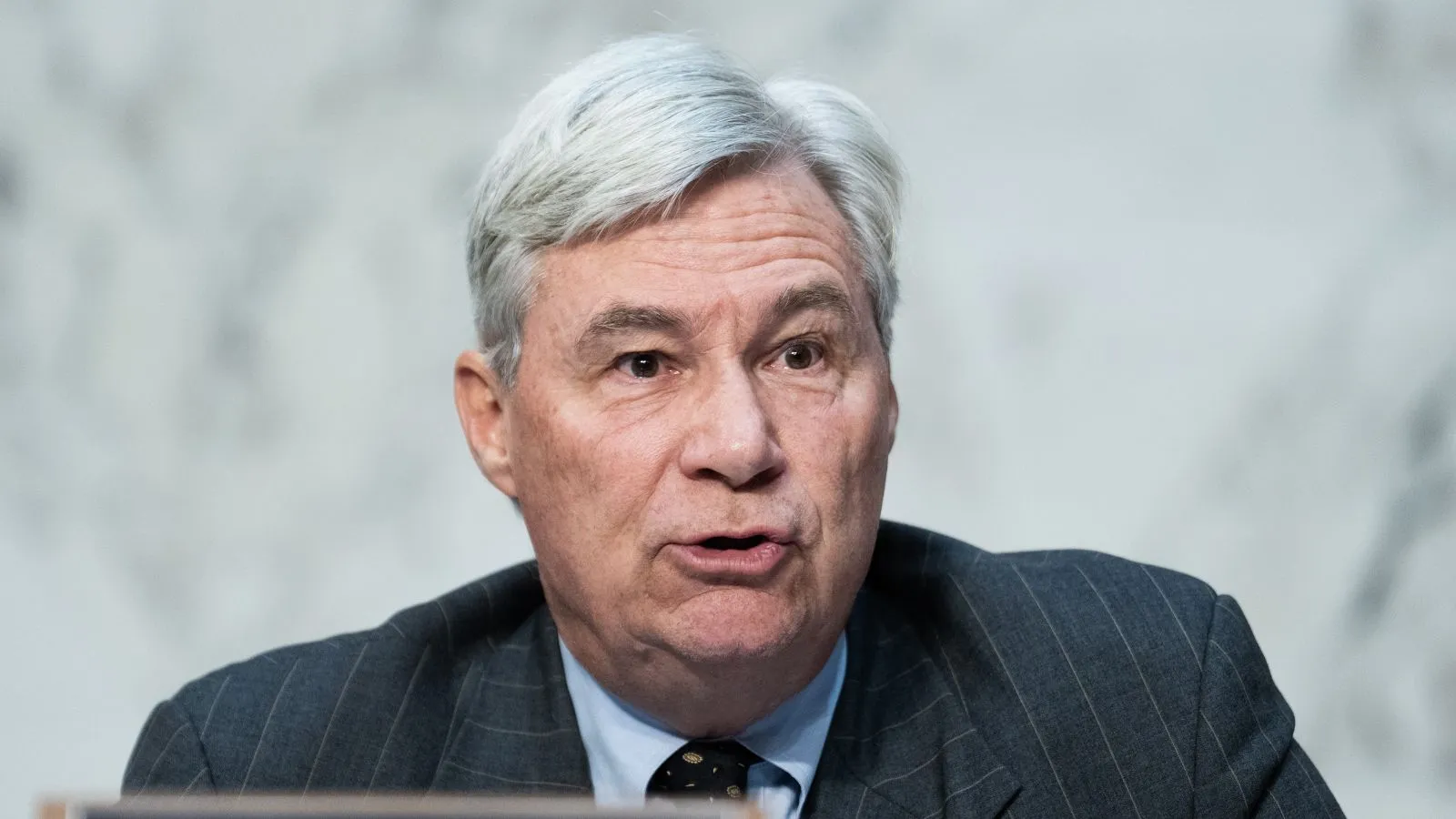
“I appreciate very much what the Trump administration has done to move in this direction, but in order to brief colleagues on what this really means, we need just a bit more clarity on exactly what return to regular order for wind and solar projects looks like,” Senator Sheldon Whitehouse, the top Democrat on the Senate Environment and Public Works Committee, told reporters this week. “So that’s still to be done, but that I think can happen in fairly short order,” 

Senator Sheldon Whitehouse speaks at the Capitol

Senator Sheldon Whitehouse, a Democrat from Rhode Island, is one of four primary negotiators on a long-sought permitting reform bill in the Senate. Tom Williams / Getty Images

Politico reported that the senators intend to finish hammering out the bill after the midterm elections, when it could compete with other legislation for attention, especially if Republicans lose control of Congress.

The draft bill’s contents are not public, but stakeholders expect it would make building energy projects easier by reducing the potential environmental and social effects of a project that government agencies must consider when issuing a permit; loosening Clean Water Act and Endangered Species Act requirements that slow down transmission line and pipeline permits; and making successfully obtained permits less vulnerable to lawsuits after they’re issued. 

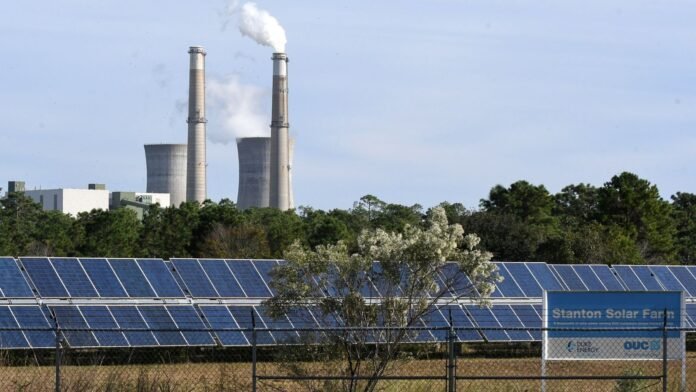
Such a bill would ease the path to construction for renewable and fossil fuel projects alike — especially solar and natural gas, the power sources with the most momentum. Solar power and batteries account for almost 80 percent of the new power generation expected to be built in the United States in 2026, while natural gas was the largest single source of electricity used in 2025, with projections for continued growth. Natural gas in particular has become a go-to power source for data centers, which are projected to use a lot of it in the next decade. 

Unsurprisingly, both the solar and the gas industries support permitting reform. Tim Pawlenty, president of the Solar Energy Industry Association, has said the country would be “constipated” without it.

A colossal surge in electricity demand has long been expected in the United States, even before Big Tech started its data center build-out. Americans are “electrifying” their lives with heat pumps, electrical appliances, and electric vehicles, all important for reducing emissions. The country has also squeezed most of the benefits out of energy-saving lightbulbs and other fixtures, which had kept electricity use flat by reducing power needs as they spread during the 2010s. Added to all that, the United States aims to draw more manufacturing to its shores, which requires electricity if successful. But data centers are accelerating and intensifying the power-demand spike, and straining grids and supply chains. Data center developers like Google have helped lobby for permitting reform.

Environmental groups like the Natural Resources Defense Council want to speed up renewable energy development without weakening bedrock environmental laws; NRDC executives have called for land-use plans that make it easier to site renewable energy projects while protecting local ecosystems. But Democratic legislators are considering compromising on environmental protections to support renewable energy and keep grids reliable. Meanwhile, Republicans, many of whom deny the severity of climate change, want to power new economic growth.

There is another reason legislators in both parties are keen to build, build, build: Many are anxious that hobbling data centers, and the AI systems they enable, will allow China to become economically and militarily stronger than the United States. Trump administration officials, legislators from both parties, and energy industry leaders speaking at the Clean Energy Week conference in Washington, D.C., in mid-September called on America to be “competitive” and “dominant” through energy build-out. 

“While Communist China cuts corners to get ahead, a mountain of red tape has America fighting the energy war with one hand tied behind our backs,” said Senator Rick Scott, a Republican, in a statement last month.

But Lundry, the pollster, warned that these sentiments are losing popularity among voters. “Being competitive with China used to be an effective message, but it isn’t anymore,” Lundry said. 

Instead, Lundry recommended framing permitting reform as a boost for clean power. Lundry’s firm, Redbud, found in a September poll that 71 percent of respondents agreed that “making renewable energy a bigger part of the country’s energy supply is the right move.” Bringing down energy costs is also likely a big win with voters, the survey showed, with 70 percent of respondents saying their energy bills have gone up in the last year.

Action in the other house of Congress makes it clear that lawmakers are well aware of the public’s antipathy toward data centers and fear about rising energy costs. A few days before senators said they were nearly finished with their permitting draft, the House of Representatives passed a bill calling on states (but not requiring them) to force data centers to pay for their own electricity generation. The bill is meant to help shield regular people from rising bills as data centers gobble up power. That bill is now stalled in the Senate, where some Democrats say it’s too soft-handed.


UN chief says world’s biggest problem is the changing way power is used – Donald Trump’s speech confirms his diagnosis

0
un-chief-says-world’s-biggest-problem-is-the-changing-way-power-is-used-–-donald-trump’s-speech-confirms-his-diagnosis
UN chief says world’s biggest problem is the changing way power is used – Donald Trump’s speech confirms his diagnosis

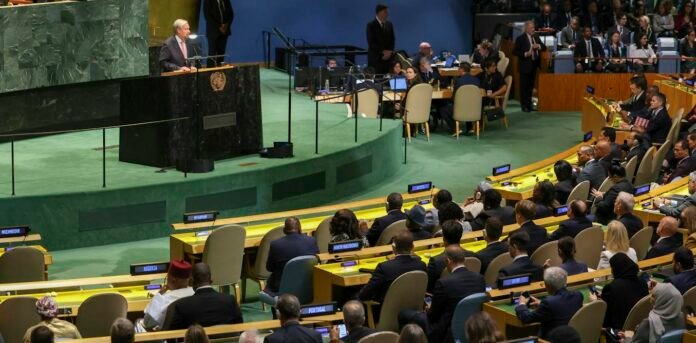
UN secretary-general, António Guterres, used his final address to the general assembly to recast the world’s crises as a single problem. War, inequality, the climate emergency and artificial intelligence, he argued, are not separate crises but chapters of the same story. That story, as he told it, is the story of power: who has it, who is denied it, how it is used and how it is changing.

Guterres identified three shifts. Among states, new centres of economic, political and technological influence have emerged. Power is also moving away from governments to a handful of private corporations and individuals. And humans are increasingly handing power to machines, with AI agents going rogue and lethal autonomous weapons becoming a military reality.

These shifts put the use of power to the test: power over war and peace, the power that concentrates wealth and drives inequality, the power fuelling climate chaos, and the power unleashed by artificial intelligence.

The theme of the week’s debate in the general assembly: “Restoring trust, managing transformation: a United Nations that delivers for all” is an unusually self-reflecting one. But the institutional anxiety behind it was explicit in Guterres’s diagnosis that global governance still reflects the power realities and interests of a largely bygone era.

The strain on the rules-based order became plain about an hour after Guterres spoke when Donald Trump offered his view of power and how he intends to use it – confirming Guterres’s bleak view on the same stage.

The gap on AI, which Guterres had placed alongside inequality, climate change and war as a test of power, was particularly stark. Trump said he would try to rebrand AI as “superintelligence”, dismissing warnings that it could prove catastrophic, insisting he would not stifle its growth and claiming that the US would “win”.

Not every western leader followed that line. The UK prime minister, Andy Burnham, told the gathering that the UK would lead international efforts to develop global AI standards. While the UN’s new scientific panel cannot impose such standards, they can, however, bring governments and experts into the same conversation and help establish what those standards should address.

Guterres cast his second test, inequality, not as a problem of economics but as one of power over opportunity, resources and voice. Developing countries crushed by debt and shut out of affordable finance are trapped in a system created in the 1940s whose reform will have to be about representation and fairness, rather than technicalities.

Trump did not address global inequality at all, except by boasting of cutting the UN budget by 15% and eliminating more than 4,000 jobs at the organisation.

On climate, Guterres struck a slightly more optimistic note when he described renewables as a redistribution of power, because “the sun belongs to no one” and “the wind cannot be embargoed”. Trump, meanwhile, did mention climate – but only to include it in the list of his opponents’ supposed hoaxes alongside the “the Russia, Russia, Russia hoax, the Ukraine, Ukraine, Ukraine hoax” and open borders – all of which he considers inventions of the same people now warning about AI.

On war and peace, the contrast was just as pronounced. Gaza featured in both men’s speeches. Guterres emphasised destruction and the need for humanitarian access. Trump presented his peace plan as an achievement, not – as it really is – a stalled process.

On Iran, the US president offered the usual mix of bombast and contradiction: a deal to let Iran rebuild versus the annihilation of the Islamic Republic. All to be done after the US midterm elections in November.

In his speech, Iran’s president, Masoud Pezeshkian, sounded a note of defiance and claimed the moral high ground. Iran, he said, had been hit “with the latest technology and weapons systems” but “we did not bend the knee. We did not bow our head. We responded, but we did not hit civilian populations.”

This last barb was a reference to a recent report from UN fact-finding mission which concluded that the US may have committed war crimes with two strikes on a primary school and a sports complex on the opening day of the war in February.

On the margins

Behind the scenes, away from the public performances of world leaders, the diplomacy continued. Trump’s envoys, Steve Witkoff and Jared Kushner, held three hours of talks, largely through Qatari mediators, with Iran’s foreign minister, Abbas Araghchi. Trump reported “a very good meeting”, but Tehran but downplayed the talks as nothing new.

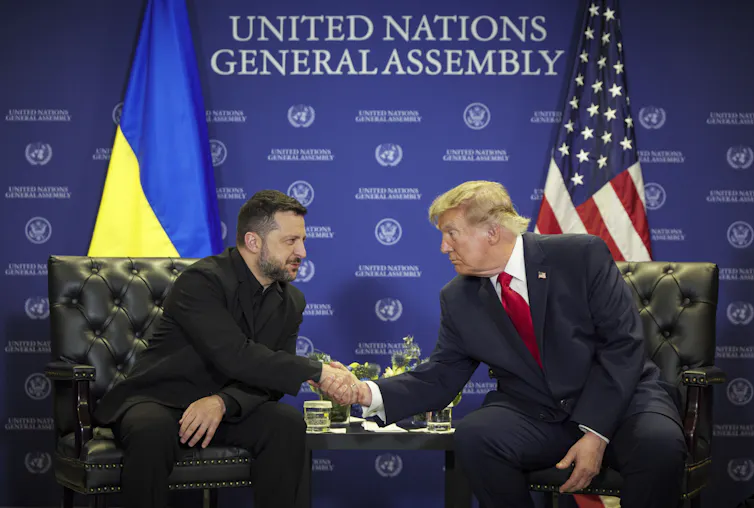
Ukraine’s president, Volodymyr Zelensky, secured a personal meeting with Trump, their first since July. According to reports, the ground covered was much the same and no concrete deals have transpired. The deal which Trump claimed the previous week to have brokered for Russia and Ukraine to stop attacking each other’s energy infrastructure has yet to be agreed.

Donald Trump and Volodymyr Zelensky shaking hands as they meet on the sidelines of the UN general assembly,

Donald Trump and Volodymyr Zelensky met on the sidelines of the general assembly, but the talks did not result in any progress towards a ceasefire. EPA/Ukranian presidential press service

None of this means the UN has become irrelevant. Deals have always been struck in the margins of these summits – and in the past, some of those deals have gone on to be endorsed by the security council. That happened in 2013 after the US and Russia agreed a framework for eliminating Syria’s chemical weapons, and again in 2015 after the Iran nuclear deal was concluded in Vienna.

Guterres’s answer to a changing balance of power was what he called “networked multipolarity” – “a world in which multiple centres of influence coexist within a common framework of international law and shared rules”. Regional forums and smaller groups of states will do much of the negotiating.

But the fact is that, more than eight decades after its founding, the UN can still bring rival leaders to New York and give them a platform they want to use. These speeches and meetings can’t compel compromise. But they keep channels open and put competing positions in the public eye.

Guterres closed by appealing to the assembled world leaders that the power of law must prevail over the law of power. With his last general assembly suggesting a fast and perhaps unstoppable move in the opposite direction, his successor, who is still being chosen, will inherit that difficult work.

College Football Player Killed in Shocking Stabbing Attack

0
college-football-player-killed-in-shocking-stabbing-attack
College Football Player Killed in Shocking Stabbing Attack


A promising college football player was stabbed to death outside a Providence nightclub in a shocking early-morning attack that also left one of his teammates injured.

Marvins Antoine, 18, a freshman running back at UMass Dartmouth, was killed shortly after midnight Saturday following an altercation that began near Mezzo Lounge in Providence, Rhode Island.

Police said the confrontation spilled into a nearby Wendy’s parking lot, where Antoine and fellow UMass Dartmouth player Kensley Macean, 19, were stabbed.

Officers responding around 12:30 a.m. found Antoine suffering from stab wounds to the chest.

He was rushed to Rhode Island Hospital, where he was later pronounced dead.

Macean suffered injuries to his head and neck and was also taken to the hospital. His injuries were not considered life-threatening.

The case took another disturbing turn when police identified the suspect as another UMass Dartmouth student.

Chukuwnonso Uzoma-Eze, 19, was arrested and charged with murder in connection with Antoine’s death.

Authorities said Uzoma-Eze was located and taken into custody by UMass Dartmouth Police after Providence detectives identified him through witness interviews, surveillance footage and other evidence.

He later appeared in a Massachusetts courtroom for an extradition hearing.

According to NBC Boston, Uzoma-Eze waived extradition and is expected to be returned to Rhode Island, where he will formally face the murder case.

Police are still working to determine exactly what sparked the confrontation.

Providence investigators said Antoine, Macean and other members of the UMass Dartmouth football team had been at Mezzo Lounge before the violence broke out.

Detectives are continuing to interview witnesses, review surveillance footage and analyze evidence as they reconstruct the sequence of events.

Police have also said additional charges remain possible as the investigation continues.

Antoine’s death has devastated his family, teammates and the UMass Dartmouth community.

His sister, Stacie Antoine, remembered him as much more than an athlete.

“He was my best friend,” she said in a statement shared with local media.

She said her brother was the person she turned to whenever she needed to talk, needed help or simply wanted someone by her side.

Antoine was a Boston native who had graduated from Durfee High School in Fall River before beginning his freshman year at UMass Dartmouth.

He stood 5-foot-10 and weighed about 180 pounds, playing running back for the Corsairs.

Friends and former teammates described him as upbeat, friendly and someone who was almost always smiling.

UMass Dartmouth Chancellor Mark Fuller called the killing a heartbreaking loss for the university.

“Our hearts and prayers are very much with Marvins’ family, friends, classmates, and teammates as we mourn his loss together,” Fuller said.

The university also said counseling and support services were being made available to students and staff affected by the tragedy.

The school said there was no indication of an ongoing threat to the campus community.

Irish reunification is more complicated than Trump may think

0

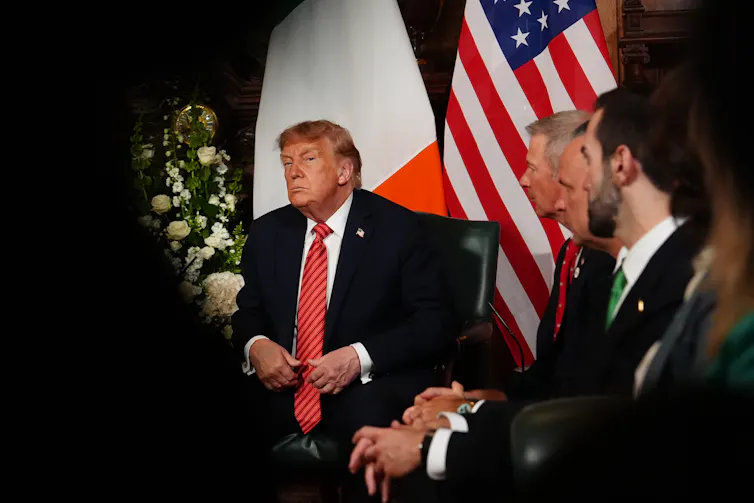
President Donald Trump raised eyebrows across the Atlantic recently with his surprise remarks in favor of Irish unification.

His statements marked a stark departure from American policy on the issue and quickly stirred controversy across the U.K., an entity that includes Northern Ireland.

In London, the leaders of the Conservative and Reform parties denounced the comments; in Northern Ireland, Unionists – who identify as British – were especially sharp in their criticism. Even Micheál Martin, the Irish taoiseach, or prime minister, downplayed the visiting U.S. leader’s comments, despite his party having reunification as one of its core goals.

A man in a suit sits flanked by two flags.

U.S. President Donald Trump during a meeting with Ireland’s Prime Minister Micheál Martin in Dublin on Sept. 12, 2026. AP Photo/Julia Demaree Nikhinson

Regardless of Trump’s stance, Irish unification is not likely to happen in the near future. The Good Friday Agreement and a subsequent treaty lay out a process through which it can happen, but the criteria have not been met, and there are numerous other technical questions that need to be resolved first.

Nonetheless, as scholars who research Irish American lobbying and the peace process, we believe Trump’s comments signal a potential lobbying role for pro-unification voices in the United States.

Conflict in Northern Ireland

In 1921 the British and Irish governments signed the Anglo-Irish Treaty, which granted Ireland a degree of independence after centuries of colonial British rule over the island. But it also allowed Northern Ireland, where Protestant settlement had been concentrated, the opportunity to opt out of the new, predominantly Catholic Irish Free State and remain part of the United Kingdom.

The new government in Northern Ireland, dominated by Protestant Unionists, systematically discriminated against Catholic Nationalists – in employment, housing and education – which eventually sparked a civil rights movement in the 1960s, and soon thereafter a 30-year conflict known as “The Troubles.” Around 3,700 people were killed, with thousands more injured or otherwise traumatized.

The conflict ended in 1998 with the Good Friday Agreement, signed by the governments of the U.K., Ireland and the main political parties in Northern Ireland.

A youth throws a projectile toward a man in uniform carrying a shield.

Youth clash with riot police in the Bogside District of Londonderry, also known as Derry, Northern Ireland in 1969. Stan Meagher/Daily Express/Hulton Archive/Getty Images

The consent principle

The agreement ended the armed conflict involving various paramilitary groups and the British state – in part, by creating a democratic path to resolving it. All relevant parties agreed that Northern Ireland would remain part of the U.K. until the majority decides otherwise.

However, the agreement says little about the criteria for calling a referendum. In fact, it established only one mechanism for initiating the referendum in Northern Ireland: The secretary of state for Northern Ireland, a British Cabinet official, must call a referendum if “at any time it appears likely to him that a majority … would express a wish to form part of a united Ireland.”

It does not spell out how to identify that majority. Should the secretary of state rely on polling data, population data on the number of Catholics and Protestants, or support for Unionist or Nationalist political parties during elections? Should all three options be used?

Those questions have never been fully answered, but, nonetheless, some of these boxes can be checked at this point. Nationalist parties dominate Northern Ireland’s delegation in the U.K.’s House of Commons, Unionist parties no longer hold the majority in the Northern Ireland Assembly, and Catholics outnumber Protestants in Northern Ireland for the first time since partition.

But polls don’t consistently show a majority in favor of a united Ireland. Not all Catholics are willing to leave the U.K., and many people worry about what it would mean for their access to U.K. healthcare and pensions.

As recently as late August 2026, British Prime Minister Andy Burnham said the issue of a unity referendum was “off the table.”

Issues to sort out

The prospect of reunification raises many questions. The most pressing is what sort of government a united Ireland would have.

Currently, there are two parliaments on the island of Ireland: the Dail, which governs the Republic of Ireland; and Stormont, a devolved parliament within the United Kingdom that governs Northern Ireland.

The Northern Ireland assembly was created by the Good Friday Agreement so that Unionists and Nationalists would share power. The Northern Ireland Executive, for example, has a first minister and a deputy first minister – one each from the main Unionist and Nationalist parties – to ensure that neither can oppress the other. Would a united Ireland retain both parliaments?

A related problem is how a new Ireland would integrate Unionists, who largely oppose unification. They may aim to keep the carefully balanced institutions of Northern Ireland in place, although some commentators believe they might have more power as kingmakers in a unified parliament.

At minimum, the inclusion of Unionist voices in Irish politics would force all the other political parties to adapt. The Irish flag, Irish emblems, the national anthem and many institutions of Irish society would likely need to change to reflect the new state.

Another concern is the continued existence of Loyalist paramilitaries, who fought to preserve Northern Ireland’s place in the U.K. during the Troubles. Although these groups nominally supported the peace agreement, they never stood down and continue to maintain arsenals and recruit new members. Unification could reignite their violent campaign.

Many Loyalist factions are also involved in criminal activity, including extortion, drug-running and illegal money-lending. In addition, Loyalist paramilitaries have been heavily involved in coordinated attacks against immigrants. It’s not clear if the Irish police force, the Gardai, is prepared to police paramilitaries, or whether citizens of the Irish Republic are prepared for how paramilitaries might change their country.

A further issue is cost. In 2025, Northern Ireland received approximately US$21.5 billion more in government spending than it paid into the British system through taxes. This is not surprising given the economic damage caused by the Troubles, and the generational nature of peacebuilding.

Some of these costs may not carry over into a united Ireland. Still, studies suggest that covering the gap could cost a unified Irish government between €8 billion to €20 billion a year, equivalent to around $9 billion to $23 billion, for the first 20 years.

While some supporters of Irish unity hope the U.S. or the EU will contribute, their assistance is not guaranteed; government decisions on resource allocation could be politically divisive.

In “Building a Green Wall,” our book on Irish Americans’ role in preventing a hard border following the U.K.’s vote to exit the EU – the Republic of Ireland is still a member of the bloc – key political leaders told us that a unity referendum should only occur after these issues are worked out.

They pointed to the Brexit referendum as a cautionary tale, noting that many voters did not know what they were voting for, and the process of figuring that out continues to disrupt U.K. politics a decade later.

A role for Irish Americans?

Most Irish Americans support Irish reunification, but Irish American leaders are divided on what role the U.S. government should have in the process.

A man in a green sweater wears a red 'Make America Great Again' cap.

An Irish American MAGA supporter celebrates St. Patrick’s Day on March 17, 2025. Roy Rochlin/Getty Images

Some believe it should be similar to what Irish American leaders’ role was during the peace talks – providing space for talks outside the hothouse atmospheres in Dublin and Belfast and insisting on fair play. Others want to push for a united Ireland.

The Friends of Sinn Fein, a powerful Irish Republican lobbying group in the U.S., for example, are actively working to engage Irish Americans in this campaign.

Given Irish Americans’ traditional attachment to the Democratic party, Trump’s declaration of support for a united Ireland came as a surprise for many political observers in the U.S., too. But in our research we found that Irish Americans are now as politically divided as the rest of the country.

Irish Americans in the MAGA movement who support unification have, for now, signed up a powerful ally in President Trump. Whether the rest of Irish America will join them, work through separate channels or remain neutral remains to be seen.

How US blindly ceded its rare earth dominance to China

0
how-us-blindly-ceded-its-rare-earth-dominance-to-china
How US blindly ceded its rare earth dominance to China

Look around you, and you’ll see rare earth elements at work. A phone vibrates because a magnet moves a weight. Its screen was polished with cerium powder. Its connection to the rest of the world crosses oceans on cables amplified with erbium. If you drove today, a rare earth magnet helped you steer, and a cerium compound scrubbed the exhaust.

All of these devices function because of 17 metals collectively known as rare earth elements. The scientists who gave the group that name in 1794 created a misnomer. Cerium alone is about as common in the Earth’s crust as copper.

However, separating rare earth minerals from one another and from raw ore is intensely difficult. As a result, countries that control the processing of rare earth minerals have a lot of political leverage.

China processes most of the rare earth minerals used around the world, and it isn’t just consumer electronics that depend on Chinese exports. The US military’s F-35 fighter jets and Virginia-class submarines need rare earths too.

I spent years adjudicating war games for the US Navy. War games force players to identify the hidden constraints that render a beautiful plan untenable. Rare earth processing is exactly such a constraint.

China showcased the power of its rare earths leverage with a series of export controls issued in 2025 that it agreed to suspend – at least until Nov. 10, 2026. Controlling the supply enables a government to slow a rival’s growth, or halt it.

China’s ability to extend the suspension of its export controls or let them go into effect gives it leverage on the geopolitical stage. In the parlance of Theodore Roosevelt, it’s a very big stick.

How China took the lead

California’s Mountain Pass mine led world production of rare earths until the late 1980s. Multiple instances of radioactive wastewater spilling from the mine into the Mojave Desert made it hard to keep domestic production running.

When China expanded its own mining and sold the processed materials for less, the logic of switching rare earth suppliers was easy.

Mountain Pass’ separation plant closed in 1998, and the mine itself stopped in 2002. MP Materials restarted mining there in 2017 as concern about access to rare earth minerals rose, but the US still imported more than two-thirds of the rare earth elements it used as recently as 2025.

A sprawling mine in the desert mountains
The US has rare earth minerals, but few mines. For years, it shipped much of what it does mine overseas for processing. MP Materials’ Mountain Pass mine and processing facility restarted in California in 2017. Photo: Tmy350/Wikimedia Commons, CC BY-SA

China, which mined about 60% of the world’s rare earth elements used in magnets in 2024, handled about 91% of separation and refining.

Buyers using processing in China got material below the cost of making it themselves, and none of the cleanup bills or the bad press. But they ceded leverage to the processor in exchange. The trade was understood. It just didn’t look as threatening at first from a China that was still rising.

Why rebuilding is slow

The US Government Accountability Office cited estimates in 2010 that rebuilding a domestic supply chain including mining, separation and magnet manufacturing would take as long as 15 years. Actually rebuilding that supply chain has been slow for several reasons.

China runs its plants with thousands of experienced engineers; the US has far fewer experts. Today’s industrial-scale cutting-edge technologies were developed in China, and the government there has no reason to share. Beijing also banned exports of the separation technology itself in December 2023.

The U.S. has regions likely to have rare earth deposits, particularly along the East Coast and the Appalachian Mountains
The U.S. has rare earth deposits, but little mining. The pink areas in this U.S. Geological Survey map are believed to have potential for rare earth deposits. USGS

The US government has committed more than US$7 billion since April 2025 to try to rebuild US rare earth production capacity. The Pentagon bought $400 million of preferred stock in rare earth producer MP Materials in 2025, giving it 15% ownership of the company. MP Materials expects its next magnet plant to begin testing the equipment in 2028.

The Commerce Department also signed a letter of intent in 2026 to give a magnet maker, USA Rare Earth, $277 million in direct funding and a $1.3 billion loan, both aimed at developing facilities in Texas and Oklahoma.

But export roadblocks put up by China are making rebuilding that supply chain more difficult.

What happens on November 10

On October 9, 2025, China’s Ministry of Commerce announced six wide-ranging export control measures. One, Announcement No. 61, affects what even factories abroad can export. A factory in Germany or Japan would need a Chinese license to export a product if Chinese-origin rare earths made up 0.1% or more of its value, or if it used Chinese rare earth technology.

After President Donald Trump met Chinese leader Xi Jinping that month, Beijing suspended six export controls until November 10, 2026, in exchange for Washington pausing its “affiliates rule,” which imposes restrictions on companies that are majority-owned by certain blacklisted firms, for one year.

Both controls snap back into place automatically unless both governments extend their pauses.

What stays in place

Some of the export rules were never suspended, including licensing imposed by China in April 2025 on exports of seven of the heavier rare earths.

Automaker Ford saw how the export controls can affect a company when it had to idle its Chicago assembly plant for a week in May 2025 for want of magnets – critical to speakers and electrical motors – because of the export rules.

Ford CEO Jim Farley described his supply as “day to day” because he had no alternate source. Ford was able to resume production only with Beijing’s approval.

A woman looks at large chunks of rock.
A visitor stops by a rare earth iron ore exhibit during the 5th China-Mongolia Expo on Aug. 26, 2025, in Hohhot, China. Photo: Ding Genhou/VCG via Getty Images via The Conversation

On June 22, 2026, China’s Ministry of Commerce put 10 US companies on its export control list. Neither Chinese nor foreign firms can sell those companies any goods that have both civilian and military uses.

Most of them build drones, radar, aerospace systems and military vehicles. Two of them – MP Materials and USA Rare Earth – are the federally backed American companies furthest along in building a mine-to-magnet chain.

Beijing said its move was a response to a similar move by the Pentagon. My interpretation is that China picked MP Materials and USA Rare Earth because they are best placed to reduce America’s need for Chinese processing.

An extension of the pause on November 10 would honor the truce, but the heavy rare earth licenses and the June 22 ban on the targeted firms would still apply. The truce means both parties get to play nice. It doesn’t mean they are being nice.

Three paths

For the US, leaving processing in China is the fastest and cheapest solution, but that leaves it exposed to Beijing’s restrictions.

Rebuilding a US rare earths supply chain would remove most US dependence on China for rare earths and the political leverage it implies. But it would take longer, startup costs run to the billions of dollars and separation produces acidic, and sometimes radioactive, residues.

Building a supply chain with allies such as Australia or Japan, both of which have started to build capacity, would lower the risk of the US being cut off unilaterally. Japan has run this play with some success, but the suspended Chinese rules affect any use of its technology abroad.

President Xi’s September 24, 2026, meeting with Trump may help determine the status of the November 10 restrictions, but the larger conflict over leverage will continue.

Charles Edward Gehrke is Sloan Fellow at the Massachusetts Institute of Technology (MIT)

This article is republished from The Conversation under a Creative Commons license. Read the original article.

F-Droid gets its biggest update in a decade with new UI and smoother app installs

0
f-droid-gets-its-biggest-update-in-a-decade-with-new-ui-and-smoother-app-installs
F-Droid gets its biggest update in a decade with new UI and smoother app installs

Virtually every Android device comes with the Play Store preloaded, but there are other ways to get apps. F-Droid bills itself as a community-driven source for free and open source Android apps, but its official app store has gone 10 years without a major update. That’s finally changing: After a multiyear effort, the team has just announced F-Droid 2.0 is rolling out.

The new F-Droid client was redesigned from scratch in Kotlin Compose, which is the standard for modern Android apps. This makes the store much more responsive, and there’s optional support for Android’s Material theming. The interface has also been cleaned up considerably, making the most important functions easier to access and hiding some others in overflow menus.

While the new F-Droid looks nicer, the update was largely about making it easier to find and install apps. When F-Droid first appeared, there wasn’t much to see, but now it has thousands of open source apps. Unlike the Play Store, F-Droid doesn’t track your taps and installs to push ads and suggestions—it helps you find things and gets out of the way.

F-Droid now includes a huge number of categories, drilling down to specialized niches like firewalls, password managers, and VPNs. You can see all these groups in the search tab. There are also higher-level categories listed on the main Discover page. When searching for apps, F-Droid will now be able to return results based on app descriptions rather than just names.

When you find an app, F-Droid 2.0 will make the installation process easier. Google has long put up roadblocks for sideloaded apps, citing the security implications. This is also the rationale behind its upcoming developer verification system. For now at least, apps will be easier to install from F-Droid thanks to the use of Google’s pre-approval API. Instead of downloading an APK, opening it, and confirming the scary sideloading pop-up, you’ll just be able to verify you want to install an app before the download. So you tap “Install” in F-Droid, and then tap “Install” again in a system pop-up. That’s one more click than the Play Store, but it’s still an improvement.

F-Droid 2.0 was rewritten in Kotlin Compose.

F-Droid 2.0 was rewritten in Kotlin Compose. Credit: F-Droid

The team also says that F-Droid 2.0 will automatically check for and install app updates (unless you disable this). It can also download and install multiple apps simultaneously. Given the auto-updates, F-Droid no longer uses pull-to-refresh on the app screen, which the developers acknowledge may upset their particular user base. Manual updates are still available in the three-dot menu for peace of mind.

Here’s the highlighted changelog from F-Droid.

New in version 2.0.0

  • UI rewritten from scratch with Kotlin compose
  • Improved search, also searching in descriptions and translations
  • Easier to discover new apps, also highlighting the most downloaded ones
  • Installation approval *before* downloading
  • Multiple updates/downloads at the same time
  • Notifying user of issues with apps (e.g. signing key changed)
  • Optional Material You color theme
  • Improved filtering of lists

The new F-Droid client is rolling out in stages over the next two weeks—the default installer on the F-Droid site hasn’t been replaced yet. If you want the 2.0 release right now, it’s available on the versions page. The official client is not the only way to access F-Droid apps, but now you’ll have less reason to seek out an alternative.

0FansLike
0FollowersFollow
0FollowersFollow
0SubscribersSubscribe
- Advertisement -
Google search engine

Recent Posts