12.6 C
London
Thursday, September 24, 2026
Home Blog

FBI rushes to investigate if ShinyHunters hack of thousands of employees is real

0
fbi-rushes-to-investigate-if-shinyhunters-hack-of-thousands-of-employees-is-real
FBI rushes to investigate if ShinyHunters hack of thousands of employees is real

The FBI is now investigating claims from a hacker group that thousands of current and former employees’ personal data was stolen after the group exploited a previously unknown bug found on an agency jobs website.

On Tuesday, 404 Media reported that ShinyHunters took down the agency site, FBIJobs.gov, then posted a banner on the homepage that said “THIS SITE HAS BEEN SEIZED BY SHINYHUNTERS.”

About two to three terabytes of data were taken, ShinyHunters told The New York Times. None of the data has been leaked yet, but it included “names of current and former agents as well as applicants and corresponding home addresses, phone numbers, names of spouses, certain medical information, and other data.” According to Bloomberg, the data could be used to potentially retaliate against agents, with one sample appearing to include “potentially sensitive professional information on the FBI employees’ work focus such as counter-intelligence work on China, Russia and Iran, as well as work against street gangs.”

The group’s motive was not to extort the FBI or seek a ransom, it claimed. Instead, the strike was meant to force the FBI to either remove or edit a May advisory warning about ShinyHunters that the group said circulated “disinformation in an attempt to ‘disrupt’ our operations.”

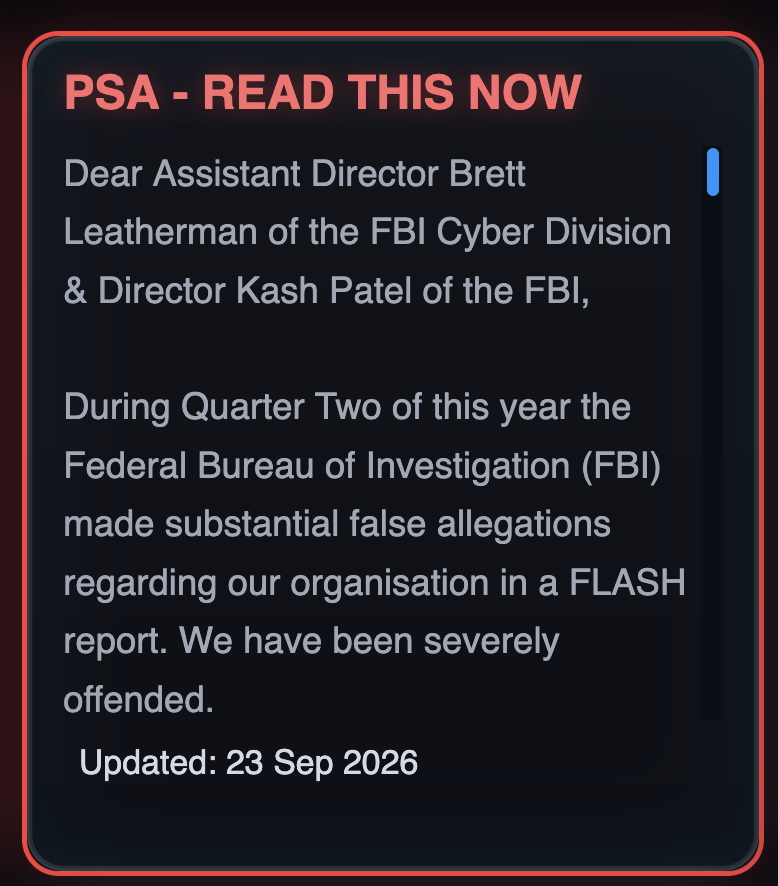
Screenshot of the ShinyHunters message,

Screenshot of the ShinyHunters message,

In a message posted on the dark web that was reviewed by Ars, ShinyHunters said it was “severely offended” that the FBI alleged that they sometimes use “exaggerated claims” to extract payments from victims. “We wish to state unequivocally our threats and claims are very real,” the group said. “Not exaggerated and never a bluff.”

ShinyHunters was also upset that the FBI claimed the group conducts swatting attacks against corporate workers and makes sextortion threats. That “never” happens, ShinyHunters said.

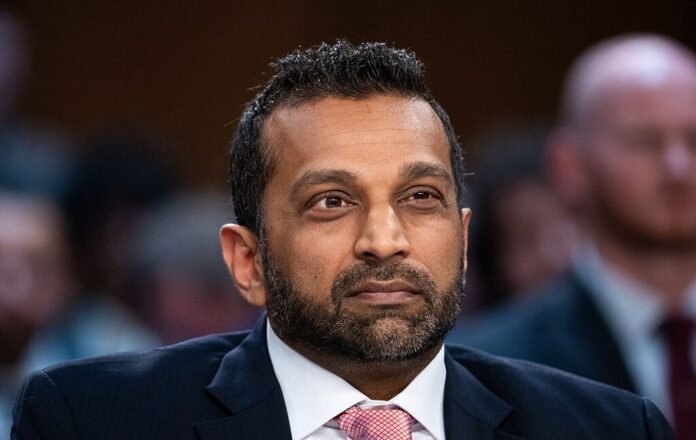
To get the advisory changed, ShinyHunters told FBI director Kash Patel and the assistant director of the FBI Cyber Division, Brett Leatherman, that they had one week to comply with demands or presumably risk a breach of sensitive employee data.

FBI warns employees to be safe

Not many details have been released on how ShinyHunters got access to the data. ShinyHunters would only tell NYT that “it had weaponized a zero-day, or previously undiscovered, computer bug within the Oracle PeopleSoft software, an application that companies use for human resources and financial management.” So far, Oracle is silent on that bug, reports said, while ShinyHunters said it plans to continue using the zero-day for its “businesses’ normal operations.”

The FBI has not confirmed that the hack occurred, but it has begun probing the claims. On Wednesday, the FBI said in an X post that “the point of breach is still undetermined—whether a third-party or the FBI’s enterprise.” Until more information is known, the FBI said, “we are actively and aggressively investigating this matter and working closely” with third-party providers that support the jobs site “to mitigate any and all risk.”

As of Wednesday, the jobs site remained inaccessible, as sources inside the FBI told Bloomberg that all personnel received an email warning them to “take steps to protect themselves while the investigation continues.”

ShinyHunters has not said what will happen if the FBI misses the deadline, but cybersecurity experts told the NYT that most likely the data will be leaked online.

“We cannot comment on what we will do if the FBI does not comply with our request,” ShinyHunters said in an email to the NYT. “We reiterate we are not extorting the FBI and this is NOT financially motivated.”

“Our intention, goal, and motive is solely to set the record straight,” the group said.

Israeli election authority bars United Arab List party from Knesset race

0
israeli-election-authority-bars-united-arab-list-party-from-knesset-race
Israeli election authority bars United Arab List party from Knesset race

Israel’s Central Elections Committee voted Wednesday to bar the United Arab List party, or Ra’am, led by Mansour Abbas, from running in the Oct. 27 Knesset election, Anadolu reports.

The committee approved Ra’am’s disqualification by 18 votes to five, accepting petitions that alleged “the party rejects Israel as a Jewish and democratic state, incites racism and expresses support for an armed struggle against the country or actions of a terror organization against Israel.”

Earlier Wednesday, the committee also voted 19-5, with two abstentions, to disqualify Knesset member Ofer Cassif from running as part of the Joint List on grounds that he allegedly “denied Israel’s existence as a Jewish and democratic state.”

The panel also voted to disqualify Balad party chairman Sami Abu Shehadeh “on the grounds that he supported an armed struggle or actions of a terror organization against Israel.” Israeli media reported that the decision secured a large majority within the committee.

Under Israeli election law, the disqualification of an individual candidate requires Supreme Court approval before taking effect, while decisions barring electoral lists can be appealed to the court.

The petitions were filed by Israeli parties and organizations, including National Security Minister Itamar Ben-Gvir’s Otzma Yehudit and Prime Minister Benjamin Netanyahu’s Likud.

The Supreme Court is expected to review the disqualification decisions ahead of the election.

There was no immediate comment from Ra’am on the committee’s decision.

Ra’am won five seats in Israel’s 2022 parliamentary election. Polls indicate the possibility of it securing the same number — or slightly more — in the upcoming election.

Around 21% of Israel’s population is Palestinian Arab.

The Oct. 27 election is being contested by 38 lists, with parties required to cross the electoral threshold to enter the 120-seat Knesset.

A government must command the support of at least 61 lawmakers in the 120-member parliament.

The disqualification decisions come amid heightened political debate over the role of Arab parties and candidates in Israel’s electoral system ahead of the vote.

What Israeli and Arab Media Are Saying About the Attack That Injured Israeli Ambassador Leiter’s Son  

0
what-israeli-and-arab-media-are-saying-about-the-attack-that-injured-israeli-ambassador-leiter’s-son  
What Israeli and Arab Media Are Saying About the Attack That Injured Israeli Ambassador Leiter’s Son  


Two narratives emerge as Israeli media center on a terror attack and the Leiter family, while Arab outlets shift between the Israeli victim, Palestinian attacker, and wider conflict  

The ramming incident near Ramallah that critically injured Neria Leiter, the son of Israel’s ambassador to Washington, Yechiel Leiter, is also becoming a case study in how differently the same event is being presented across Middle Eastern media.  

An Israel Defense Forces (IDF) reservist was critically wounded at a checkpoint on Wednesday near Beit Horon and the Palestinian village of Beit Ur al-Fauqa. He was later identified as Neria Leiter, the son of Israel’s ambassador to Washington, Yechiel Leiter. There is currently no evidence, however, that he was deliberately targeted because of his father’s diplomatic position.  

In much of the pan-Arab coverage, Leiter’s identity quickly became the main news hook. Al Jazeera changed the emphasis toward “the son of Israel’s ambassador to Washington,” while describing Mahmoud Suleiman as the Palestinian who carried out the ramming and was subsequently killed. But the report then widens the lens considerably, connecting the incident to Israeli military operations, settlement activity and rising violence across the West Bank.  

Jordanian outlet Saraya follows essentially the same structure: the ambassador connection is prominent, but the second half of the report focuses heavily on Israeli closures, the raid on Suleiman’s hometown and the broader West Bank escalation.  

Egypt’s Al-Ghad TV’s breaking report is almost entirely focused on Neria Leiter: his identity, his condition, and his relationship to the ambassador. The Palestinian attacker and the wider political context are largely absent from that particular update.  

Palestinian media frame the story differently. WAFA’s initial headline was simply “Martyr by Occupation Gunfire Near Beit Ur al-Tahta.” It reported that Mahmoud Suleiman was shot while inside his vehicle and initially did not center the alleged ramming at all. Arab48 is more cautious. Rather than omitting the Israeli version, it says the incident was “described by the Israeli side” as a ramming attack and explicitly notes that no evidence had yet been presented establishing the motive or background.  

The Arabic service of Anadolu, Turkey’s state-run news agency, makes a similar editorial choice. Its headline is “Israeli Army Kills Palestinian at Checkpoint West of Ramallah,” while the claim that he conducted a ramming attack is attributed directly to the Israeli army and police rather than presented as an independently established fact.  

Al-Quds Al-Arabi, an independent pan-Arab daily newspaper, by contrast, straightforwardly calls it a ramming operation while simultaneously using “martyrdom” terminology for the Palestinian killed, illustrating how security-event terminology and Palestinian nationalist language can coexist in the same report.  

The immediate follow-up of Al Mayadeen, a Lebanese pan-Arab satellite news channel, focuses not on Leiter but on Israeli forces entering Beit Ur al-Tahta and approaching the home of “the martyr Mahmoud Suleiman, perpetrator of the ramming operation.” The emphasis therefore shifts rapidly from the Israeli casualty to the Palestinian attacker and the Israeli response.  

Iranian coverage goes considerably further ideologically. Mashregh and ISNA circulated headlines describing a “martyrdom operation” and referring to the Israeli casualty as a “Zionist soldier.” Both also reported that the Israeli had been killed—a claim that should be treated cautiously because it conflicts with the current reporting on Leiter’s condition, which is critical.  

Israeli media coverage of the car-ramming attack that critically injured Neria Leiter consistently presents the incident as a deliberate terrorist attack and centers the story on Leiter’s identity, the loss of his brother in combat, and his continued IDF reserve service.  

Initial reports focused primarily on the attack before the identity of the victim was known. The Times of Israel reported that the assailant accelerated toward a police cruiser at the checkpoint, striking Leiter, who was serving alongside a police officer. It identified the attacker as Mahmoud Mohammad Sliman, 29, from Beit Ur al-Tahta, and reported that IDF troops shot him dead. The outlet later updated its coverage after identifying Leiter as the son of Yechiel Leiter, the Israeli Ambassador to the US.  

The Jerusalem Post similarly led its initial report with a “car-ramming terror attack” on Highway 443, reporting that the attacker was killed and that one person had been seriously wounded. Its early coverage, published before Leiter’s identity became central to the story, concentrated almost entirely on the security incident and the victim’s medical condition.  

Ynet’s framing shifted markedly once Leiter was identified. Its headline emphasized that he was the ambassador’s son and that his brother had been killed in Gaza nearly three years earlier. The report described Leiter as an IDF reservist working with police when the attacker drove into him, while devoting substantial attention to Maj. Moshe Yedidya Leiter, who was killed in northern Gaza on Nov. 10, 2023.  

N12 took a similar approach. Its updated headline identified Leiter as the ambassador’s son, while its report said the attacker drove toward a police vehicle and struck him before being killed by security forces. N12 also highlighted Ambassador Leiter’s appeal for prayers, his statement that his son “needs a miracle,” and Neria Leiter’s hundreds of days of reserve service since Oct. 7.  

Kan framed the incident explicitly as a ramming attack in Binyamin, reporting that the attacker emerged in a vehicle and accelerated toward a police cruiser. Its subsequent coverage shifted toward the Leiter family, reporting that the ambassador was returning to Israel and emphasizing that Neria continued serving hundreds of reserve days even after losing his brother in Gaza.  

Across the Israeli coverage, then, there is relatively little dispute over the basic characterization of the incident. The principal difference is emphasis: early reports centered on the attack and the killing of the assailant, while later coverage increasingly became a story about the Leiter family—a critically wounded reservist, his ambassador father, and a brother already killed in the war. Israeli outlets also place the attack within a broader security context, with some linking it to a recent series of terrorist attacks and heightened IDF activity in the West Bank.  

The contrast between Israeli and Arab coverage is clearest in how each frames the attack. Israeli coverage consistently presents the incident as a terrorist attack before shifting attention to Leiter’s identity, military service, and family history. Arab coverage varies in tone and emphasis, ranging from a focus on Leiter to framing the event around the Palestinian attacker’s death or the wider West Bank conflict, while Iranian outlets portray it explicitly as anti-Israel resistance. 


RFK Jr.’s CDC isn’t letting states order COVID-19 shots for kids, blocking access

0
rfk-jr.’s-cdc-isn’t-letting-states-order-covid-19-shots-for-kids,-blocking-access
RFK Jr.’s CDC isn’t letting states order COVID-19 shots for kids, blocking access

As respiratory virus season nears and fall vaccination drives get underway, more than half of US children are facing uncertainty over access to this year’s COVID-19 shot. The Centers for Disease Control and Prevention has unexpectedly delayed the distribution of the shots to a key federal program and some states.

Usually, the CDC would allow states to order the newly available seasonal COVID-19 vaccines through the federal Vaccine for Children (VFC) program, which provides vaccines at no cost to children who are uninsured, underinsured, Medicaid-eligible, or Indigenous people in the US. Approximately 52 percent of all US children are eligible for vaccines through the program.

Additionally, The Guardian reports that at least 11 states and one US territory are part of a universal vaccine purchase program, in which they buy all vaccines for children—regardless of their ability to pay or insurance status—through contracts otherwise for the VFC. The 11 states and one territory include: Alaska, Connecticut, Hawaii, Maine, Massachusetts, New Hampshire, New Mexico, Rhode Island, Vermont, Washington, Wyoming, and American Samoan.

“The delay in VFC means delays in these states’ ability to get vaccine for all children,” Demetre Daskalakis, former director of the CDC’s National Center for Immunization and Respiratory Diseases and chief medical officer at Callen-Lorde Community Health Center, told The Guardian.

Kennedy’s track record

In a statement, the Department of Health and Human Services told Ars Technica that “CDC has not yet finalized procurement decisions for COVID-19 vaccines through the Vaccines for Children and Section 317 programs.” The department—currently run by ardent anti-vaccine activist Robert F. Kennedy Jr.—declined to answer the question of why there was a delay in the decision. But the statement suggested that Trump officials were questioning whether children should get the vaccine.

“HHS and CDC are committed to … ensuring that vaccines purchased through federally funded programs are appropriate for the populations those programs serve,” the department said in the statement. It added that additional information about the decision will be released “soon.”

The unexplained delay fits with Kennedy’s well-established disdain for COVID-19 vaccines, which he has falsely called “the deadliest vaccine[s] ever made,” and has actively tried to blame them for the deaths of children, despite no evidence to support the allegations.

In 2021, at the height of the pandemic, Kennedy petitioned the Food and Drug Administration to revoke authorization of COVID-19 vaccines and refrain from issuing any other approvals, also falsely claiming that the “risks of serious adverse events or deaths outweigh the benefits.” Instead, Kennedy’s petition urged the FDA to promote the use of the de-worming drug ivermectin and the anti-malaria drug hydroxychloroquine against COVID-19, which were found to be ineffective and potentially risky in large, high-quality clinical trials.

Last year, Kennedy unilaterally revoked recommendations for COVID-19 vaccines for children (as well as during pregnancy). Last fall, he also dragged his feet on signing off on CDC recommendations for the shot.

Current recommendations

After a federal judge reversed many changes Kennedy made to federal vaccine guidance, the current CDC vaccine schedule for children says that healthy children aged 6 months to 17 years can get the vaccine through “shared clinical decision-making” and children who are moderately or severely immunocompromised are recommended to get the shot.

The guidance differs from what leading medical organizations have recommended for this year. Earlier this month, 2026–27 respiratory virus immunization recommendations and the evidence base behind them were released in a collaborative effort by the American Medical Association, the Vaccine Integrity Project, the American Academy of Pediatrics (AAP), the American Academy of Family Physicians (AAFP), the American College of Obstetricians and Gynecologists (ACOG), and the Infectious Diseases Society of America (IDSA).

The medical groups recommend that children aged 2 to 18 get vaccinated if they are at higher risk or if they desire to be vaccinated. But, notably, they continue to strongly urge that all infants age 6 months to 23 months get vaccinated against COVID-19.

“The youngest children remain at high risk for severe disease,” American Academy of Pediatrics wrote in a news release this month. The hospitalization rate of infants 6 to 11 months during the 2024-’25 season was higher than that of adults ages 50-64 years, the academy noted. And most young children hospitalized with COVID-19 are healthy and not at high risk; only about 42 percent of children ages 6 to 23 months hospitalized from October 2022 to April 2024 had an underlying condition.

Roberta DeBiasi, who led the AAP Committee on Infectious Diseases COVID-19 subgroup, said “If you look at it from the standpoint of how severe their disease can be, the number of hospitalizations and how many of those children you’d need to vaccinate to prevent that, it’s really on par with the older adults.”

EU countries back carbon market changes to curb price spikes

0
eu-countries-back-carbon-market-changes-to-curb-price-spikes
EU countries back carbon market changes to curb price spikes


European Union countries agreed on Wednesday to keep more spare CO2 permits in the bloc’s emissions trading system (ETS), to try and avoid spikes ​in carbon prices, according to EU diplomats and a document seen by Reuters.

The ‌plan, first proposed by the European Commission in April, is part of the EU response to a surge in fuel prices triggered by the Iran conflict, which has left governments scrambling for ways to ​curb energy bills.

The ETS is the bloc’s main climate change policy, and is ​not the main reason for Europe’s rising energy prices – but the ⁠changes agreed on Wednesday respond to requests from governments including Poland and Italy to ​curb the ETS’s contribution to electricity costs.

EU countries’ ambassadors agreed in a closed-door meeting to ​stop removing excess CO2 permits from the market, as is currently done, two EU diplomats told Reuters.

Instead, spare CO2 permits would be retained in a special “market stability reserve” as a supply buffer that ​could be released into the ETS market to counter price spikes.

The ETS obliges big ​polluters like power plants and factories in Europe to buy permits to cover their CO2 emissions, ‌and trades ⁠spare carbon permits in a market where their price fluctuates daily.

At present, if there are more than 400 million CO2 permits in the market’s stability reserve (MSR), the excess is deleted. The MSR is designed to release 75 million extra permits into the ETS, if ​the EU carbon price ​more than doubles.

Countries ⁠agreed that no spare CO2 permits will be cancelled until 2030, according to a draft of their agreement seen by Reuters.

From ​2031, if there are more than 800 million permits in the ​MSR, the ⁠excess will be cancelled. This threshold will then decrease each year.

EU countries will now negotiate the final rules with the European Parliament, before they take effect.

On average, the ETS contributes ⁠11% ​to EU industries’ electricity bills, although in countries with ​fossil fuel-heavy power mixes like Poland it is far higher. It is lower in countries with large amounts ​of low-carbon nuclear and renewable energy, like Sweden.

Source:  Reuters

The Ellisons Could Make a Killing in Big Surveillance With the Paramount Merger

0
the-ellisons-could-make-a-killing-in-big-surveillance-with-the-paramount-merger
The Ellisons Could Make a Killing in Big Surveillance With the Paramount Merger


Seth Stern is the director of advocacy for Freedom of the Press Foundation.

Mark Zuckerberg’s Meta remains embroiled in litigation over whether its products are designed to hook kids. But Zuckerberg’s got nothing on another centibillionaire pushing to expand his influence over the next generation: Larry Ellison, the octogenarian oligarch of Oracle. Ellison not only brags about having even more data about us than Meta but runs a global surveillance machine and is a major military contractor

A toothless consent decree intended to resolve an antitrust case brought by a group of state attorneys general may clear the way for his and son David’s President Trump-facilitated takeover of Warner Bros. Discovery, the parent company of CNN, HBO, and a major film studio, Warner Bros. Pictures. U.S. District Judge Araceli Martinez-Olguin still needs to approve the decree, and she noted in an order on Tuesday that she has some questions about its “factual and legal underpinnings.”

If it goes through, the merger will give the Ellisons unprecedented control over what the next generation watches and reads on social media, news, TV, and in movies. Trump steered co-ownership of TikTok to Oracle earlier this year, a move enabled by the Biden administration’s misguided TikTok ban. And last year, David’s Skydance Media became Paramount Skydance, gaining control of CBS, Paramount Pictures, Paramount+, and more in a massive consolidation bankrolled by Ellison senior.

We’ve seen the Ellisons’ willingness to censor content in exchange for Trump rolling out the regulatory red carpet for their media acquisitions. Larry Ellison reportedly promised Trump to overhaul CNN if the deal went through, and David Ellison echoed promises of “sweeping changes.” A Paramount spokesperson said “no [such] commitments” were made regarding CNN, but there’s no dispute that David made editorial concessions to the Federal Communications Commission in exchange for approval of the Paramount–Skydance merger, and the Bari Weiss-helmed network is already following through.

Just how far they will go to push narratives that bolster their far more lucrative interests in war and surveillance tech (and suppress ones that don’t) isn’t yet clear, but it’s not looking good. For a preview, take a look at this Flock Safety commercial masquerading as a short-form news segment, recently published by The Free Press, the blog Paramount bought from opinion columnist Weiss to pave the way to put Weiss in charge of CBS News.

Proponents of the lawsuits against Meta worry about algorithms warping kids’ minds, while critics are concerned with surveillance and user privacy, as well as the First Amendment implications of liability for sorting content. Now both sides can find common cause: The future $111 billion “Warner-Mount” deal threatens to brainwash kids and bolster surveillance all at once. 

The perfect feedback loop: Stoke America’s fears about crime, terrorism, and anything else they choose to inspire further public investment in Oracle’s products. 

Like Meta, Warner-Mount will have a profit incentive to design algorithms that keep kids glued to their screens, even if it leads them to dark corners of the internet. But the Ellisons’ agenda reaches far beyond likes and follows. Their “really profoundly scary technology” empire (that’s a quote from Oracle Vice Chair and former CEO Safra Catz about the tech it provided Israel after October 7) relies on government spending which requires a public primed to accept its tax dollars being diverted to those scary technologies under the guise of keeping us safe.

There’s no better way for the Ellisons to accomplish that end than buying up as many media holdings as possible while their buddy is president. It’s the perfect feedback loop: Stoke America’s fears about crime, terrorism, and anything else they choose to inspire further public investment in Oracle’s products.

Before handing the Ellisons control of even more of our media, we should remember their track record, which dates back long before they took control of CBS News.

A decade ago, Larry boasted about Oracle’s invasive surveillance products tracking how long a person lingers in a particular aisle of a specific store, which led to a privacy lawsuit that settled for $115 million. He bragged that 5 billion people were in Oracle’s “ID Graph” back then. “How many people are on Earth, 7 billion? Two billion to go,” he added at the time. In fact, Ellison and his companies have settled all manner of consumer and investor fraud lawsuits. But those dings are just the cost of doing invasive business for a behemoth now valued at somewhere around $440 billion. 

“Citizens will be on their best behavior because we are constantly recording and reporting everything that’s going on.”

For a glimpse into how Ellison sees Oracle’s role in shaping the future, he told investors in 2024: “Citizens will be on their best behavior because we are constantly recording and reporting everything that’s going on.” 

At the World Governments Summit in Dubai in February 2025, he said countries worldwide should “unify” all of their national data into a single database an AI model could study, as he argued this is the only way to unlock AI’s full value for governments.

Oracle already has a nearly $7 billion contract to run its software across the Pentagon, the intelligence community, and the Coast Guard. It’s a founding partner of Stargate, the $500 billion data center buildout Trump announced during his first week back in office, with Ellison by his side.

So the same person who wants to surveil us to keep us on our best behavior, sell “profoundly scary weapons” to foreign armies, and unify the world’s data into one AI brain will now control a huge slice of the news and entertainment industries? It goes far beyond foxes guarding henhouses.

Of course, there’s never been a firewall between elite interests and the media. Hollywood framed U.S. regime-change wars and foreign interventions as heroic underdog stories. TV shows and news outlets have done their share of propaganda-laundering as well. 

But as with Meta and its algorithms, the entertainment industry’s motives have, until now, been more straightforward, like gaining access to government sources and selling movie tickets. War profiteers that do news and movies as a side hustle have far more to gain, and they’re likely to push their narratives far more aggressively because the stakes are so much higher.

Ellison-owned outlets are already deploying their playbook to counteract the public backlash to surveillance. The Free Press segment is not the only time Oracle and Flock’s interests have converged. The Intercept recently reported that a shady astroturfing firm called Neighbors for Strong Communities, which ran deceptive AI-generated campaigns in support of the Paramount–Warner merger, has also “partnered” on PR campaigns with Flock. (There’s no known corporate partnership between Oracle and Flock, but both companies are undoubtedly invested in shifting the conversation around surveillance in a less skeptical direction.)

But that’s nothing compared to what the Ellisons and their ever-expanding pool of our personal data could accomplish in the AI era, especially when paired with a media juggernaut created by cozying up to the same authoritarians that Oracle hopes will buy more of its tech.

Despite their billions, the Ellisons would likely never have gained their media stronghold without their social, political, and economic ties to Trump. So while there’s plenty of room to disagree on what role the courts should play in checking predatory practices by tech companies like Meta, this much shouldn’t be controversial: Oligarchs should not be colluding with the government to shape what the next generation thinks.

Mosque attack highlights evolving extremism landscape that has brought Pakistan-Afghanistan ties to crisis point

0
mosque-attack-highlights-evolving-extremism-landscape-that-has-brought-pakistan-afghanistan-ties-to-crisis-point
Mosque attack highlights evolving extremism landscape that has brought Pakistan-Afghanistan ties to crisis point

The suicide bombing and gun attack that killed dozens in northwest Pakistan on Sept. 18, 2026, highlighted the fragile security situation in the South Asian country. But it also shone a light on the complex and evolving extremism landscape there and the strained relationship between Pakistan and neighboring Afghanistan.

The assault took place as worshipers gathered for Friday prayers in the city of Kohat, in Khyber Puktunkhwa province, northwest Pakistan. A suicide bomber rammed an explosives-laden car through the wall of a police complex in the city of Kohat, targeting the mosque inside. Gunmen then exchanged fire with law enforcement officials during a 20-hour standoff. In all, 31 people were killed, including 16 police officers, while over 100 people were reported injured.

Supporters of the militant group Ittehad-ul-Mujahideen Pakistan, or IMP, claimed responsibility on encrypted apps like Telegram. But other seemingly aligned groups distanced themselves from the attack. Pakistan responded by conducting airstrikes in Afghanistan, home to at least one of the gunmen.

Over the past two years, we have conducted fieldwork in this region and closely monitored the operational and propaganda activity of violent extremist groups, including the IMP. The attack and its fallout reveal much about the state of collaboration and friction among the various militant entities that have fueled violence.

Who is Ittehad-ul-Mujahideen Pakistan?

The IMP is a jihadist coalition formed in April 2025 from three smaller militant factions: Lashkar-e-Islam, the Hafiz Gul Bahadur Group and Inqilab-e-Islami Pakistan.

By late 2025, it had become the most active jihadist group in Pakistan after the Tehrik-i-Taliban Pakistan, also referred to as the Pakistani Taliban.

The IMP’s main objectives appear to be weakening the Pakistani state through attacks on police and security forces and advancing Islamist rule. Its operations are largely concentrated in northwest Pakistan in areas along the Afghan border, where the group has used tactics including deadly suicide bombings, vehicle-borne improvised explosives and rockets.

Prior to the Kohat attack, IMP members were responsible for a May 2026 checkpost assault that killed 15 police and a July vehicle bomb attack at a police station in the city of Bannu.

The IMP styles itself as a unified front that brings various jihadist factions operating in Pakistan together under one command. Its recent propaganda, for example, includes a video by a religious cleric urging unity among jihadists.

That message aligns with that of Al‑Qaida in the Indian Subcontinent, or AQIS, to which the IMP is linked. In recent years, AQIS has sought to become the backbone of a united coalition operating in the Afghanistan-Pakistan region.

But attempts to unify the various militant groups operating in Pakistan appear to have been undermined by the specifics of the Kohat attack.

Indeed, the targeting of a mosque – and the extent of civilian deaths – prompted an intra-jihadist quarrel. Within hours, the Pakistani Taliban and another group, Jamaat-ul-Ahrar, released statements denouncing the attack and disavowing any role.

The Afghan Taliban, whose leadership the Pakistani Taliban pledges allegiance to and which Islamabad accuses of sheltering the group, also condemned the attack. AQIS likewise criticized the attack and urged followers to avoid activities that could taint their aim, ideology and operations.

For AQIS, the fallout is particularly damaging: It had spent the preceding months showcasing IMP as a model affiliate and a unifying force in the contemporary jihadist landscape.

By mid-2026, AQIS was promoting the IMP as one of its global fronts. The June–July issue of its flagship magazine, Nawa-e-Ghazwa-e-Hind, featured the IMP’s campaign in Pakistan in an infographic. And a May editorial had urged greater coordination among jihadi groups, citing IMP-aligned cooperation as the model.

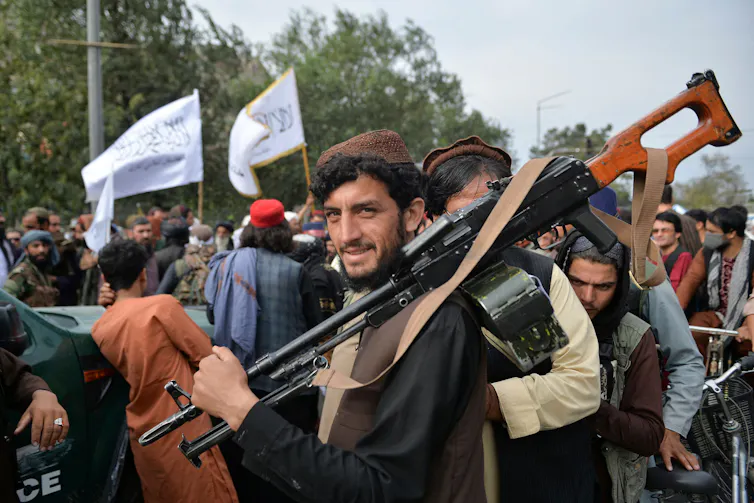
A man holds a large gun while white flags fly in the background.

Pakistan-Afghanistan ties have deteriorated since Taliban fighters took control of Kabul in August 2021. Hoshang Hashimi/AFP via Getty Images

Militant convergence and competition

The ongoing intra-group disquiet should not distract from the larger picture of violent extremism in the region. Pakistan is facing its most serious security crisis in two decades; the country now ranks first in the Global Terrorism Index.

Driving this trend is a combination of organizational convergence and competition among extremist groups, including local and transnational jihadist groups, as well as separatist groups in the southwestern province of Balochistan.

With respect to the jihadist groups, the Pakistani Taliban has absorbed more than a hundred factions since 2020, while AQIS has drawn the IMP into its orbit.

AQIS and the Pakistani Taliban, however, remain distinct entities. Though there have been indications of occasional collaboration in their activities, various attempts at a formal merger have repeatedly failed since 2020, owing to ideological differences that persist. Most notably, AQIS has transnational ambitions, while the Pakistani Taliban’s focus is on Pakistan.

This dynamic of convergence is also evident in Balochistan, where key ethnonationalist groups have consolidated since 2018 under the Baloch Raaji Aajoi Sangar umbrella.

At the same time, fault lines in the wider regional militant landscape have also driven violence. The Islamic State Khorasan Province – the Islamic State group’s official affiliate in the region – remains hostile to the Pakistani Taliban, AQIS and IMP alike – as well as to the Afghan Taliban and the Pakistani government.

As a transnational group competing with locally rooted actors, the Islamic State Khorasan Province, or ISKP, encourages a cascading trend of extreme violence.

A second subtler form of competition runs within the Pakistan Taliban-AQIS-IMP axis itself. Nominally allies, the groups compete for relevance, resources and recruits by outbidding one another with more extreme tactics. It is precisely that logic that appears to lie behind the Kohat attack.

Cross-border tension

Both the collusion and competition dynamics among groups are sustained by interstate tensions that give militants the opportunity to exploit counterterrorism gaps. In particular, the worsening relationship between Pakistan and Afghanistan has entrenched many of the militant groups Pakistan is confronting.

Relations between the two countries have deteriorated since the Taliban seized control of Afghanistan in 2021. While Pakistan began with tactics such as border closures, trade restrictions and limited strikes on Pakistan Taliban camps, intended to pressure the ruling Taliban to act against anti-Pakistan militants within its borders, it crossed into open war in February 2026. That’s when Pakistan struck Taliban military installations across the border in Afghanistan.

A fragile ceasefire followed, but it has been strained by continued cross-border attacks, Pakistani airstrikes on militant hideouts in Afghanistan, and Afghan Taliban strikes on alleged ISKP bases in Pakistan.

For the Pakistani government, the Pakistani Taliban is an Afghan-based threat that the government in Kabul must act on. While for the ruling Taliban in Afghanistan, the Pakistani Taliban are a domestic issue for Pakistan to deal with.

A man looks across rubble.

Afghans inspect damage following Pakistani airstrikes in Nurgal district of Kunar province on Sept. 21, 2026. Shafiullah Kakar/Anadolu via Getty Images

Tensions were already escalating by the time the Kohat attack took place on Sept. 18. And the attack itself carried the two features most likely to inflame them.

The group that claimed the attack is built around networks believed to operate from sanctuaries across the border in Afghanistan; Pakistani authorities identified at least one of the bombers as an Afghan national.

For Islamabad, that was confirmation of the Afghan government’s complicity in the worsening security situation in Pakistan. The accusation carries a particular irony, since for decades, Pakistan’s military and intelligence establishment nurtured the Afghan Taliban as a strategic asset. When the Taliban retook Kabul in August 2021, Pakistani leaders celebrated, expecting it to rein in the Pakistani Taliban. The Afghan Taliban, on the other hand, has been willing to facilitate talks between Islamabad and the Pakistani Taliban, but not to crack down on a group that it fought alongside against U.S.-led forces for well over a decade.

As such, the Kohat attack has hardened, rather than merely reinforced, Pakistan’s demand that Kabul dismantle militant sanctuaries. The retaliatory strikes that have followed – Pakistan’s first airstrikes on Afghan soil since June – have merely reopened the cycle of Pakistani cross-border action and Afghan retaliation.

As climate disasters multiply, Indigenous governance offers a way forward

0
as-climate-disasters-multiply,-indigenous-governance-offers-a-way-forward
As climate disasters multiply, Indigenous governance offers a way forward

Indigenous lands from Canada to Ecuador to Nepal are increasingly being hit by catastrophic storms, fires, and floods. Worse, these climate disasters often come one after the other as overlapping crises rather than isolated incidents. Still, despite the ongoing destruction, Indigenous peoples continue to prove that they have the knowledge and skills to respond, if only global powers will let them. 

Even amid growing recognition by scientists and policymakers of the power of Indigenous expertise to respond to climate change, the key role that Indigenous governance plays in those knowledge systems has not received as much respect.

That’s according to a new report from Land Is Life that highlights the global success of Indigenous climate adaptation and resilience amid escalating crises. The report also says supporting Indigenous governance through legal recognition, financing, and partnerships — none of which are occurring on a large scale — is the best way to reduce climate disaster risk worldwide. 

“We show that it’s not that they are only the most impacted, but they are already implementing effective solutions,” said Luisa Castañeda Quintana, the executive director of Land Is Life, a global nonprofit dedicated to Indigenous self-determination. “When it comes to adaptation, we don’t really need to create new structures or systems. We just need to see what is working.”

The report adds to an expansive body of research showing that Indigenous self-determination, land stewardship, and cultural knowledge and practices are proven climate solutions. The report, released today, offers dozens of examples. In Kenya, Indigenous Endorois and Tugen women cultivated drought-resistant varieties of sorghum, millet, and other key foods that provided some of the region’s only harvests in years with severe drought. In Brazil, Coordination of Indigenous Organizations of the Brazilian Amazon — the nation’s largest regional Indigenous network — helps organize fire management and response. It also provides training and mobilizes response teams. 

The report is based on detailed case studies and more than 200 survey responses from 46 countries spanning six ecosystems: forests, mountains, drylands, freshwater systems, grasslands, and coastal. Castañeda Quintana said a broad global study was essential to show climate change and environmental disasters are not limited by national or even ecological boundaries, and responses to them must transcend borders. It also is essential to recognize that disasters do not arrive one at a time. More than 80 percent of survey respondents said that they face two or more at once, and over 90 percent reported rising frequency. 

For example, in 2019, the Kichwa People of Sarayaku in the Ecuadorian Amazon faced devastating floods along the Bobonaza River, destroying crops and homes. Daniel Santi, who is the president of the community, which numbers roughly 1,600 and inhabits more than 500 square miles, said that his people were able to respond effectively because of their strong governance structures that were already in place. In other words, self-determination and governance allowed them to decide how best to prepare for, and respond to, a crisis. “This organization makes it possible to confront any problem and any threat,” Santi said. 

The report argues that the combination of Indigenous governance and knowledge is what makes these adaptation strategies so effective. Knowledge rooted in the land can be put into action immediately. Sarayaku elders, for example, noticed rain and lightning patterns at the river’s headwaters that signaled possible flooding and were then able to warn the community. Sarayaku structure includes clear decision-making processes, mechanisms to address the most urgent needs like housing for families with destroyed homes, and dedicated representatives to communicate status updates and needs with external authorities. According to Santi, these responses are guided by minga, a Kichwa term for solidarity and collective responsibility. 

But many countries do not legally recognize Indigenous peoples or their governments, refuse to use Indigenous languages for emergency alerts, and continue to criminalize Indigenous culture. Those conditions can weaken the impact of Indigenous knowledge and governance. 

Read Next

Santi believes Indigenous peoples have a lot to teach the world about adapting and responding to climate change, but communities like his need support as it continues to accelerate. He is calling for greater legal protections for Indigenous land and authority, as well as resources and partnerships that embrace Indigenous knowledge and decision-making.

In Peru’s Ausangate Regional Conservation Area, Quechua communities joined a conservation organization to document environmental indicators, improve community monitoring, and pursue other efforts that combined Indigenous knowledge with Western research. According to the report, this is an example of how productive partnerships increase resilience. 

The report also found other shortcomings in many of the world’s mitigation and adaptation strategies. They include climate initiatives that focus on short-term benefits, rejecting Indigenous self-governance and imposing external authority on communities, and drawing on or celebrating Indigenous knowledge without supporting the people who provide it. 

Despite growing evidence that shows Indigenous land stewardship is effective and that providing Indigenous communities with direct financing helps with global climate adaptation, funding and legal security remain insufficient. “It’s always the lack of resources and the lack of access to funding that makes it so difficult for us to work, especially when climate change makes us the most vulnerable,” said Anisha Buda, who is from the Kaike Magar community and is a program officer at the national Indigenous Women Forum in Nepal. 

Rather than outlining a specific template for Indigenous governance, the report urges governments, philanthropists, and policymakers to foster the conditions that allow Indigenous communities to thrive. Flexible and direct funding is one of those key conditions. Land Is Life released the report during New York Climate Week specifically to call out the need for more direct financing for Indigenous communities. Despite billions of dollars pledged around the world, barely any of that money is earmarked for Indigenous peoples. And even when it is, Indigenous leaders say that they still don’t receive it. 

“It’s also so frustrating, right?” said Buda. “Because there are so many projects that are supposed to be for Indigenous peoples, but they are implemented by non-Indigenous organizations and non-Indigenous peoples.” 

With the U.S. and European countries pulling back billions of dollars from climate commitments in recent years and wars in Iran and Ukraine stretching global resources, Indigenous leaders worry they will be left even further behind. 

“We are in a moment where resources are scarce,” said Gisela Hurtado, the report’s author. “Where can we put the little money that we have? Where can we put it to make it much more effective? And for me, for the report, the idea is put it into what already is working.”

As the climate continues to change and the world experiences escalating impacts, Hurtado says the Indigenous responses outlined in the report offer a way forward. “What they are seeing in the territories, we’re going to see it also in the future,” Hurtado said. “They are the ones that are much more connected with the Earth to know what is going to happen in the future.”


The coming war with Russia: a European road to ruin

0
the-coming-war-with-russia:-a-european-road-to-ruin
The coming war with Russia: a European road to ruin

NATO, EU and E3 leaders are taking Europe down a path to be ready for war by 2030. In the light of European bellicosity, Russia could decide to start this sooner. If so, the US would be unwilling to fight Russia on Europe’s behalf.

Unable to defend itself against Russia’s conventional ballistic/hypersonic missiles, Europe would suffer a rapid defeat and very high military losses. Even after suing for peace, destruction of Europe’s energy system would plunge Europe into economic crisis.

Europeans should be invited publicly to debate these risks and have their views heard.

1. Introduction – understanding war’s nature

As European leaders’ calls to be ready for war with Russia by 2030 grow ever louder, we would do well to consider the advice of war’s greatest philosopher, General Carl von Clausewitz:

“Wars must vary with the nature of their motives and the situations that give rise to them. The first, the supreme, the most far-reaching act of judgment that the statesman and the commander have to make is to establish by that test the kind of war on which they are embarking; neither mistaking it for, nor trying to turn it into, something alien to its nature. This is the first of all strategic questions and the most comprehensive.”[1]

We should think hard on the nature of war with Russia: how our leaders’ public statements are heard in Russia; when such a war might start; how it might unfold; what its consequences and costs might be. This article builds one such scenario.

2. The strategic context

To begin, we must understand how we got here. It is clear, to anyone familiar with strategic history, that the roots of the crisis run back to 1989. When the Berlin Wall fell, there was an opportunity to build a durable, inclusive European security architecture – one that accommodated Russia’s legitimate security interests.

That opportunity was squandered. Through the 1990s and 2000s, despite the original reassurances offered to Russia, NATO expanded relentlessly eastward. Prescient voices of caution – Kennan, Matlock, Burns, Kissinger, Mearsheimer – were dismissed or ignored. So too were Russia’s explicit and repeated red-line warnings.

The Russo-Ukraine War must be understood in this context. The West is replete with conventional opinion that Russia intervened for imperial ambition. But all the credible evidence suggests that Russia went to war because it concluded – rightly or wrongly – that NATO expansion represented an existential threat. In Russia’s eyes, this was – and still is – a defensive war of survival.[2]

Not surprising given that Kaja Kallas, EU foreign policy lead, has called publicly[3] for the breakup of Russia. Whatever one thinks of Russia’s methods, understanding its motivation is critical to understanding the nature of our future war with Russia.

3. Russia responds to European escalation

Notwithstanding this fundamental insight, the publicly stated intention of the E3’s leaders – Macron, Merz and soon, no doubt, Burnham – is to increase the supply to Ukraine of long-range precision drones and cruise missiles, all capable of striking deep into Russian territory.

In response, Moscow’s public warning is unambiguous: if this continues, directly targeting European production facilities will not be ruled out.

If E3 leaders choose not to take this warning seriously – a logical assumption, given that they have ignored all of Russia’s previous warnings – it is quite possible, even likely, that such a conflict could start this year, much earlier than Europe’s planned 2030. The second half of 2026 is thus taken as the start line for this scenario.

In September 2026, with its warnings ignored, and attacks into the Russian heartland increasing with increased E3 weapons deliveries, Russia acts. Conventional ballistic missile and hypersonic strikes destroy key E3 drone and missile production facilities in Britain’s Midlands, the Ruhr, and outside Bordeaux.

NATO Article 5 is invoked. But Article 5 does not require military action – it requires each member to take “such action as it deems necessary.” The shallowness of the guarantee upon which E3 leaders assumed they could rely is now exposed.

Spain and Hungary decline to commit forces. Italy, Poland, and several Eastern European members equivocate. More importantly, the White House, after recently appearing to shift to support operations against Russia, now has urgent second thoughts.

Having just lost a war in Iran, with badly depleted ammunition stockpiles, no domestic appetite for US troops fighting and dying on the other side of the Atlantic, and the mid-terms ahead, “Extending Russia” [4] does not look like such a good idea.

The White House quickly concludes it is not in the US national interest to join a war with Russia on the European mainland. After spent years talking about strategic autonomy without creating it, the E3 now know what this means.

4. The first 3 months of the war

Nevertheless, trapped in the political narrative they have constructed, the leaders of the E3 and smaller willing nations – perhaps the Dutch, Scandinavians and Baltics – respond.

The only place where an offensive is possible is in the air. But Europe’s strike packages now discover what Ukrainian pilots have known for years.

Whilst a small proportion of European cruise missiles find their targets, the majority are destroyed by Russia’s layered and well-practiced S-400 and S-500 networks, which also exact an unsustainable toll on European pilots and aircraft.

Without American suppression of enemy air defenses – and perhaps even with it – there is no further prospect of achieving air superiority nor any effective counterattack.

In response to the air strikes, Russia takes the gloves off, determined once and for all to remove the threat from Europe to its people and homeland. Russia strikes airfields, training bases, dockyards, logistics hubs, and marshaling yards, inflicting 1,000s of military casualties amongst European forces before they can even deploy.

The Europeans now learn the lesson that the US has just learned in the Gulf – European militaries have very little protection against conventional ballistic attacks, and none against hypersonic missiles.[5]

The point is cruelly reinforced by simultaneous Russian strikes that systematically dismantle the Europe’s energy infrastructure – gas terminals, power stations, grid interconnectors, storage facilities – with the same clinical precision applied to Ukraine’s grid from 2022 onwards.

Acutely vulnerable as the world’s largest regional hydrocarbon importer, at 12.8 million barrels per day,[6] Europe’s energy system is already under severe strain – the consequence of self-defeating sanctions on Russian oil and gas, recently compounded by the Strait of Hormuz energy shock.[7]

At sea, Russian submarines have deployed into the North Sea and Atlantic, and a wartime blockade has been announced. The mere threat of losing commercial vessels is enough for maritime insurers to withdraw cover and for shipping companies to stand down.

Europe’s hydrocarbon imports grind to a halt and energy systems start to fail. The lights begin to go out. More importantly, without diesel, Europe’s farming, fishing and food logistics systems fail. Although only two to three months into the conflict, Europe’s economic situation is now perilous.

4. The ceasefire, costs and consequences

Faced with the binary choice of escalating with nuclear weapons or accepting defeat, British and French leaders pause. Both nations’ nuclear deterrents exist to deter nuclear attack on their own territories, not to take nationally suicidal action to rescue a failing conventional campaign.

Meanwhile, the US – having made its position on the sidelines clear and now acutely worried about the risk of nuclear war with Russia – is urgently working with both sides to bring the war to a close, which can only be done on Russia’s terms. Under intense pressure from the US and smaller European nations, E3, NATO and EU leaders sue for peace.

Only three months into the conflict, the human costs are already severe. Military casualties are orders of magnitude higher than Western and NATO losses in 25 years of operations in Iraq and Afghanistan. But military surrender is not the end, just the beginning.

With its energy system shattered, European industrial production is collapsing, and unemployment is surging. Europe’s largest countries, other than Germany, are already shouldering debt-to-GDP ratios over 100%[8].

European public finances buckle and then crack under the rapidly increasing burden of emergency energy subsidies, future reconstruction costs, collapsing stock markets, bond-market runs leading to higher government interest costs and lost tax revenues.

The failed state that is Ukraine provides indisputable evidence of what comes next. An economic contraction of 10% is the conventional criterion for a depression[9]: Ukraine’s is over 30%. The US is fiscally unable – and the rest of the world politically unwilling – to offer a Marshall Plan. Thus, Europe faces alone an economic contraction greater than the Great Depression.

The political consequences are no less profound. The coalitions that launched the war collapse, and the leaders who led the charge are rapidly and ruthlessly deposed. NATO and the European Union, both judged complicit in the war’s commission, are irreparably fractured.

Populist and nationalist movements surge. Social contracts between elites and the peoples, built over generations and in societies that had not experienced war on their own soil since 1945, strain to the breaking point. Europe, once a coherent political and economic region, now faces a dystopian reckoning.

5. Conclusion – the choice Europeans face

If this scenario is plausible – even remotely so – are the risks the E3 leaders are inviting us to accept worth it? Without any public discussion?

There is an alternative: it’s called diplomacy. Not the diplomacy of ultimatums, nor meaningless peace conferences from which one belligerent is triumphantly excluded. But rather the diplomacy of honest conversation, in which each side listens to the other.

Russia’s security needs are not difficult to understand. Because they have been repeating them for 20 years, almost ad nauseam for those of us who were prepared to listen and hear. A neutral Ukraine. No NATO membership. Real security guarantees.

All of which Russia was willing to offer and Ukraine willing to accept in March 2022 – before Volodymyr Zelensky was persuaded otherwise by Boris Johnson and Joe Biden.

As General André Beaufre wrote: “In war the loser deserves to lose because his defeat must result from errors of thinking, made either before or during the conflict.”

Over the first quarter of this 21st century, Western leaders in general and European leaders in particular have a consistent track record of “errors in thinking” – as our failed operations in Afghanistan, Iraq, Libya, Syria and now Ukraine unequivocally prove. This time though, the stakes for Europeans could not be higher.

To conclude, before they march us onwards towards war, our leaders owe us two things. First, an honest, public, strategic assessment of the risks to which this course of action could expose us.

Second, an opportunity for our views to be sought and our voices to be heard. After all, it is we, not they, who will be the ones expected to fight the war and bear its costs and consequences.

The choice we Europeans face is simple. Should we change course toward peace, and begin a difficult but honest diplomatic conversation with Russia? Or should we let our leaders – guided by a political narrative that they have constructed and ignoring the existential risks set out here – continue to lead us onwards towards war?

As did their illustrious predecessors, a century or so ago, in the summer of 1914?

Commodore (Rtd) Steven Jermy RN is the founder of Mor Gallos and the author of Strategy for Action: Using Force Wisely in the 21st Century (2011). He offers strategic advisory services to organizations in the energy, defense, and geopolitical risk sectors. Enquiries: advisory@morgallos.co.uk

References

1. Steven Jermy, ‘Right Now NATO Could Not Win a War with Russia’, Responsible Statecraft, 29 January 2025. https://responsiblestatecraft.org/nato-war-with-russia/

2. Steven Jermy, ‘Russia Is in the Driving Seat’, Brave New Europe / NATO Watch, 15 May 2025. https://braveneweurope.com/steven-jermy-russia-is-in-the-driving-seat

3. George Kennan, ‘A Fateful Error’, New York Times, 5 February 1997; William J. Burns, ‘Nyet Means Nyet’, US Embassy Moscow cable, 1 February 2008 (WikiLeaks); John J. Mearsheimer, ‘Why the Ukraine Crisis Is the West’s Fault’, Foreign Affairs, Sep/Oct 2014.

4. ‘Oreshnik Missile Is Unstoppable, Undetectable’, The Week India, 21 December 2024. https://www.theweek.in/news/defence/2024/12/21/oreshnik-missile-is-unstoppable-undetectable-another-military-analyst-echoes-putins-claims.html

5. International Energy Agency (IEA), World Energy Outlook 2024.

6. ‘Lloyd’s Executive Likens LNG Attack to Nuclear Explosion’, Resilience.org, 20 September 2004. https://www.resilience.org/stories/2004-09-20/lloyds-executive-likens-lng-attack-nuclear-explosion/

7. Kyiv School of Economics / World Bank, Ukraine War Damage Assessment, various reports 2023–2025.

8. IMF Fiscal Monitor – General Government Gross Debt (% of GDP). https://www.imf.org/external/datamapper/GG_DEBT_GDP@GDD/

9. General André Beaufre, An Introduction to Strategy


[1] Carl von Clausewitz, On War, tr. Michael Howard & Peter Paret. (Princeton, 1976) p.88.

[2] George Kennan, ‘A Fateful Error’, New York Times, 5 February 1997; William J. Burns, ‘Nyet Means Nyet’, US Embassy Moscow cable, 1 February 2008; John J. Mearsheimer, ‘Why the Ukraine Crisis Is the West’s Fault’, Foreign Affairs, Sep/Oct 2014.

[3] https://fampo.no/estonias-pm-kaja-kallas-calls-for-the-breakup-of-russia/

[4]https://www.rand.org/content/dam/rand/pubs/research_reports/RR3000/RR3063/RAND_RR3063.pdf

[6] International Energy Agency (IEA), World Energy Outlook 2024. Europe’s oil import dependency at approximately 12.8 million barrels per day.

[8] IMF Fiscal Monitor – General Government Gross Debt (% of GDP). https://www.imf.org/external/datamapper/GG_DEBT_GDP@GDD/

[9] Kyiv School of Economics / World Bank, Ukraine War Damage Assessment, various reports 2023–2025.


This article was first published on the Mor Gallos – Using Power Wisely in the 21st Century Substack and is republished with kind permission. Read the original here and become a subscriber here.

Mor Gallos focuses on geopolitics, war, energy, economics and their intersection. It is written by Cdre (Rtd) Steve Jermy RN, former offshore energy CEO and author of “Strategy for Action: Using Force Wisely in the 21st Century.”
XPRIZE Wildfire winners spotted fires within 10 min—but couldn’t stop them

0
xprize-wildfire-winners-spotted-fires-within-10-min—but-couldn’t-stop-them
XPRIZE Wildfire winners spotted fires within 10 min—but couldn’t stop them

Wildfire detection from space and firefighting drones featured among the finalists honored in the $11 million XPRIZE Wildfire competition. Although no team walked away with either of the two grand prizes, such technologies could prove helpful as the world grapples with the growing costs of worsening wildfire disasters.

The competition’s First Prize track for space-based wildfire detection challenged teams to accurately detect all fires across a large swath of Australia within 10 minutes. A second Autonomous Response Prize track challenged teams to autonomously detect and put out a high-risk fire located somewhere within rural Alaska while ignoring decoy fires—all within 10 minutes of the fire igniting.

“We want to be able to prepare and provide tools for firefighters to really allow them to do the best job,” said Andrea Santy, program director of XPRIZE Wildfire, in an interview with Ars. “They’re great at what they do, but it’s unfair to continue to put them in harm’s way when there’s technology coming online that can help keep them safe, keep communities safe, and protect ecosystems.”

The competition saw 45 qualified technical submissions in the space-based detection track and initially drew more than 300 teams from around the world in the Autonomous Response track. The latter challenge in particular attracted a diverse array of proposed technological solutions in the early stages.

“At the very beginning, we saw things like sound being able to put out a fire, lasers and all sorts of robotics like robotic dogs,” Santy told Ars. “We had ground systems and aerial systems.”

But as the XPRIZE Wildfire judges focused on the most practical solutions for finding and suppressing a fire in 10 minutes, they weeded out technologies that would have a harder time meeting the time and geography requirements.

“We want to be able to have technologies that can detect a fire before it’s detected by anyone else,” Santy said. “A 911 call is still the most typical way that we find out about wildfires, and on average, that’s going to be at least 15 minutes.”

A full list of winners can be found in the XPRIZE Wildfire press release posted on September 23. Ars spoke with Santy about the technologies behind the winning approaches and why ongoing wildfire disasters have only made the competition more relevant in recent years.

Space-based fire spotters

Space-based detection of wildfires can make use of multiple existing satellite constellations, but satellites designed specifically for spotting wildfires have just begun to come online. The German aerospace company OroraTech first launched a dedicated wildfire detection constellation of satellites in March 2025, while the Google-backed FireSat program launched its first microsatellites in July 2026.

“Current satellites are not built for wildfire detection—they’re built for a lot of other environmental monitoring and weather monitoring,” Santy explained. “So we’re always trying to look at how we take that data that’s not wildfire-specific and use it for a wildfire context.”

That is why teams in the space-based detection track focused on offering AI and software systems that harness existing satellite imagery and other data to provide wildfire detection capabilities across large areas.

“Our teams were challenged with being able to detect a fire essentially instantly and then transmit the data in a usable way so that it is intelligence to firefighters on the ground, reducing as many false positives as possible,” Santy told Ars.

The real-world test for finalists took place at the New South Wales Rural Fire Service in Australia in April 2026. None of the teams fully met the challenge requirements to win the $3.5 million grand prize offered by the Australian-based Minderoo Foundation, a competition sponsor and co-designer, but several were still recognized for their accomplishments.

The first-place winner of $500,000 was the UK-based SIRIUS Wildfire Alliance. That organization offered a system capable of identifying and modeling the potential spread of wildfires, drawing upon both optical and radar data from satellites.

A prize of $250,000 went to second-place winner Team Snuffed based in Arizona. The competition’s press release credited Team Snuffed with providing “transparent, auditable and uncertainty-aware wildfire detection,” and highlighted the solution as being especially user-friendly for firefighters.

Special recognition prizes of $100,000 each went to MyRadar based in Florida, DeepFire based in Louisiana, and the German company Mayday.AI that adapted an algorithm originally designed for detecting volcanic ash to help detect wildfire smoke through cloud cover.

Send in the drones

Rapid detection of wildfires is one challenge, but getting firefighting resources to the scene fast enough to stop the spread is another. Teams competing in the autonomous wildfire response track put their technologies to the final test in the sparsely developed rural landscape of Nenana, Alaska, near Fairbanks in June 2026.

The finalists typically deployed ground-based sensors and sometimes drones to help detect wildfires across a 386-square-mile area of Alaska, approximately the size of the San Francisco Bay Area in California or San Antonio in Texas. Once a high-risk fire was detected, they launched their own versions of firefighting drones that flew to the scene and attempted to suppress the fire.

All three finalists successfully detected the high-risk fire in under 10 minutes, while two of the three also deployed drones that attempted to put the main fire out. But none quite managed to fully extinguish the blaze, which is why the grand prize ultimately remained out of reach in this track as well.

“The really exciting part was, we did have a team that was able to do all of the actions within the 10 minutes and very accurately hit the fire,” Santy said. “But they weren’t able to put enough suppressant on it to knock it down entirely.”

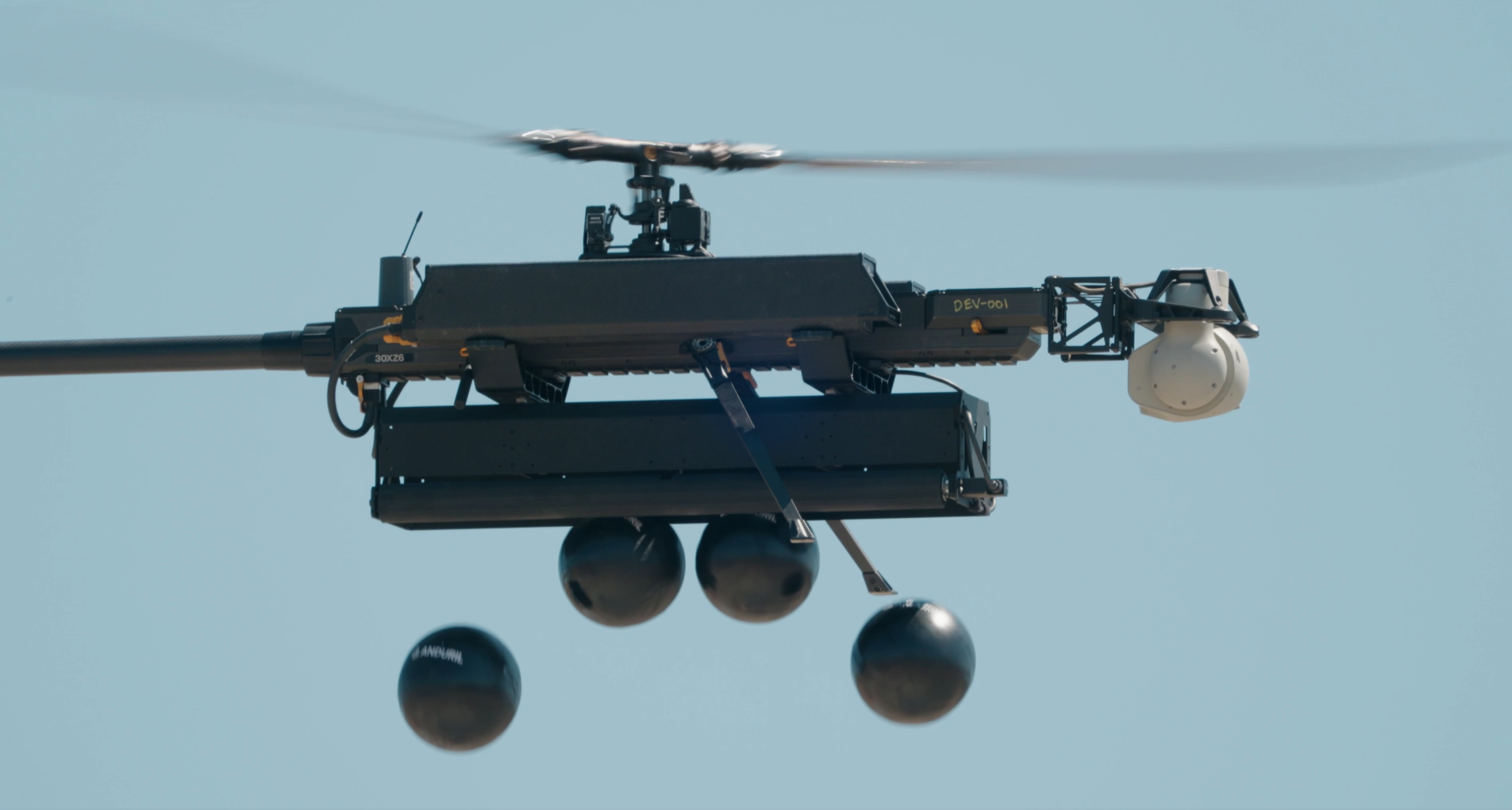
A first-place prize worth $1.2 million went to Anduril Industries, a US company that has multiple contracts with the US military and Department of Homeland Security. The company installed a Sentry Tower equipped with thermal imaging sensors along with AI-driven computer vision to detect possible fire ignitions. It then deployed a small swarm of drones to provide aerial surveillance before sending out a Ghost-X autonomous drone to drop “fire retardant balls” on the target fire.

Anduril Industries Ghost-X drone dropping fire retardant balls in a test of fire suppression capability. The single-rotor drone is seen in side profile with four balls just starting to fall.

Anduril Industries’ Ghost-X drone dropping fire-retardant balls in a test of fire-suppression capability.

Anduril Industries’ Ghost-X drone dropping fire-retardant balls in a test of fire-suppression capability. Credit: Anduril Industries

Anduril also won an additional $1 million prize from Lockheed Martin for providing the fastest wildfire detection capability.

The second-place prize of $800,000 went to the Germany-based company Dryad Networks. Dryad deployed a network of 170 solar-based ground sensors to sniff for gases emitted by smoldering fires, before putting an observation drone into the air to geolocate the fire and finally sending in a Silvaguard Suppression Drone to attack the fire.

Two teams from the UK and Australia joined forces under the name AURA Foresight to nab the third-place prize of $500,000. AURA Foresight combined AI-powered software with cheap off-the-shelf hardware in what team co-lead Rob Vernon described as the “Home Depot approach,” sending out a swarm of DJI drones for attempted fire suppression.

“They had just weeks to pull things together,” Santy said. “They met for the first time in Alaska.”

The costs of wildfire disasters

The relevance of the XPRIZE Wildfire competition has been repeatedly underscored by real-world events. When the competition first launched in April 2023, a wind-fueled wildfire razed the historic Hawaiian town of Lahaina on the island of Maui and killed at least 102 people in August of the same year.

The summer of 2023 also saw Canada’s most destructive wildfire season send huge plumes of toxic smoke drifting across much of the United States, turning city skies into something out of Blade Runner 2049 or Mad Max: Fury Road and creating hazardous health conditions for millions of people.

Then came the costliest wildfire disaster in history, which destroyed almost 12,000 homes and killed 31 people in Los Angeles in January 2025. That event alone cost an estimated $140 billion in losses and ranks among the top-five costliest natural disasters, according to an analysis published by the journal Nature Reviews Earth & Environment.

Another wind-driven wildfire combined with extreme heat to create South Korea’s largest wildfire on record in March 2025. Drought and heatwaves have also fueled wildfires across many European countries amid heatwaves in recent years, with the 2026 wildfire season threatening NASA’s Deep Space Communications Complex near Madrid and forcing more than 320,000 people to evacuate their homes in Spain and France alone.

Extreme wildfires have still been regularly burning through Canada’s boreal forests, destroying towns and forcing thousands of First Nations people to flee their homes. Such widespread wildfire smoke events have impacted US cities nearly every summer for four years, often leading to air quality alerts for more than 100 million people each time.

“We know that wildfires are becoming more intense, more frequent,” Santy said. “They’re even happening in places where it’s not a natural part of the landscape, like in the Amazon or up in tundra regions.”

There have been discussions about a possible follow-up XPRIZE competition focused on wildfires. But for now, the competition organizers are focused on supporting potential deployments of the most promising technologies with firefighting agencies.

“You want to be able to provide as many tools as you can, but also the right tools for the right environment,” Santy said. “And one of the things that we really focus on is ensuring that anything XPRIZE puts forth has been tested.”

0FansLike
0FollowersFollow
0FollowersFollow
0SubscribersSubscribe
- Advertisement -
Google search engine

Recent Posts