17.8 C
London
Saturday, September 26, 2026
Home Blog

Floods, fury and new calls for independence in Aceh

0
floods,-fury-and-new-calls-for-independence-in-aceh
Floods, fury and new calls for independence in Aceh

Thousands gathered at Baiturrahman Grand Mosque in Banda Aceh on August 15, 2026, to commemorate 21 years of peace between Indonesia and the separatist Free Aceh Movement, or GAM.

Some participants raised GAM’s red, black and white crescent-star flag and chanted “Free Aceh,” while others lowered Indonesia’s national flag and replaced it with the former separatist movement’s flag.

These were politically significant acts in a province where GAM fought a nearly three-decade armed struggle for independence before the 2005 Helsinki agreement ended the conflict.

And the Aug. 15 display was not an isolated incident. In December 2024, former GAM members raised the crescent-star flag during the movement’s anniversary, with one former combatant expressing hope that it would eventually fly across Aceh. The flag appeared publicly again in December 2025, at which point Indonesian soldiers dispersed crowds displaying it.

The return of these independence symbols and slogans comes as Aceh continues to recover from severe floods and landslides that struck the province in late November 2025.

A different natural disaster, the 2004 tsunami, helped create conditions that accelerated the peace process between Aceh and Jakarta. Yet two decades later, it is criticism of the central government’s response to the latest emergency that has served to intensify expressions of independence.

As a scholar of nationalism and political geography, I see the resurgence of pro-independence sentiment in Aceh not simply as evidence that separatism is returning, but also as a reminder that national belonging is continually negotiated between states and citizens, and can be harmed by perceived neglect in times of need.

That matters beyond Aceh. The peace agreement transformed a bloody separatist conflict into one of Southeast Asia’s best examples of post-conflict reconciliation. Renewed tensions would raise questions not only about Aceh’s relationship with Indonesia, but also the durability of a peace settlement that has held for more than two decades.

Peace ended war, not nationalism

GAM’s struggle was about more than opposition to policies made in Jakarta. Founded in 1976, the movement presented Aceh — located on the island of Sumatra at the westernmost edge of Indonesia — as a distinct nation that should be independent from Indonesia.

GAM drew on Acehnese history to portray independence as the restoration of a sovereignty that had existed when Aceh was an independent sultanate.

The nearly three-decade conflict killed thousands. Civilians bore much of the violence, with Indonesian security forces and GAM both implicated in abuses, including torture, arbitrary arrests, extortion and forced displacement.

The devastating tsunami of 2004 acted as a catalyst to peace, shining a light on the suffering of Aceh’s population while opening the doors to international aid and presence.

A boat lies on rubble and debris.
Banda Aceh was one of the hardest-hit regions struck by the 2004 tsunami. Photo: Patrick Aventurier/Gamma-Rapho via Getty Images via The Conversation

The armed conflict officially ended with the signing of the 2005 Helsinki agreement, but it did not make Acehnese nationalism disappear. Instead, it made room for Aceh’s political distinctiveness within Indonesia.

The agreement gave Aceh extensive self-governing powers, allowing local political parties, expanding political representation and granting the region the authority to enact provincial laws.

Substantial discretion over economic affairs and natural resources was handed to Aceh, although lingering grievances over revenue-sharing provisions related to the province’s gas fields remain to this day.

The political settlement largely succeeded in ending the organized armed campaign for independence.

GAM disarmed, and many of its former leaders moved into electoral politics, forming local parties and winning positions in Aceh’s government and legislature. But while the armed movement ended, pro-independence ideas and symbols did not disappear entirely.

That distinction matters because peace did not depend on Acehnese abandoning their distinct political identity and simply becoming Indonesian; it depended on changing the terms of their relationship with Indonesia.

Aceh could remain part of the country while retaining considerable control over its own political affairs. In that sense, Helsinki did more than end a war. It created political conditions that made remaining within Indonesia acceptable.

From disaster to independence talk

The November 2025 floods and landslides killed more than 1,000 people and forced more than 1 million to relocate. Aceh was among the hardest-hit provinces.

It brought citizens into much more direct contact with the Indonesian government and made people dependent on public authorities for assistance and recovery.

Calls for Jakarta to designate the floods and landslides a national disaster began soon after they struck, but President Prabowo Subianto rejected them, arguing that Indonesia had sufficient capacity to manage the crisis.

Prabowo’s rejection of foreign aid, in particular, led to widespread anger in Aceh and provided a strong contrast to the response in 2004, when international assistance was crucial to the post-tsunami effort.

Almost a year later, significant challenges persist in Aceh. As of September 7, 2026, only 649 of the 34,777 permanent homes needed for those displaced had been completed. The latest available data also showed that 93 regional road segments remained nonfunctional, while only 188 of 676 bridges had been restored as of August 8.

On August 14 – one day before the GAM flag event – a civil-society coalition again raised white flags and called on Jakarta to declare the disaster a national disaster.

But why do grievances over the government’s response turn into pro-independence talk in Aceh?

History offers part of the answer. A strong Acehnese identity has not always meant wanting to leave Indonesia. Acehnese leaders supported Indonesian independence from the Dutch colonial empire in 1945, and even the Darul Islam rebellion of the 1950s – which sought to transform Indonesia into an Islamic state – did not seek an independent Acehnese country.

Opposition to Dutch colonial rule, followed by Islamic networks and solidarity, helped connect Acehnese elites to the wider Indonesian political community. It was only later, as relations with the central government deteriorated, that independence became the goal.

This history suggests that Acehnese nationalism is not a fixed political force that periodically resurfaces unchanged. Different understandings of the nation can compete and be renegotiated as political conditions change.

Acehnese and Indonesian national identities are therefore not necessarily mutually exclusive; their relationship has changed as the political relationship between Aceh and Jakarta has changed.

The return of “Free Aceh” chants and GAM-associated symbols shows that, more than two decades after the peace agreement, independence remains available as a political language for expressing dissatisfaction with Indonesia — especially in moments like natural disasters that have hurt government legitimacy.

A woman with a megaphone stands in front of posters.
An activist in Banda Aceh shouts slogans during a protest over the Indonesian government’s handling of the November 2025 floods. Chaideer Mahyuddin/AFP via Getty Images via The Conversation

Nationalism as a two-way process

For more than two decades, Aceh has remained peaceful and within Indonesia, while retaining extensive autonomy and a distinct political identity.

Yet the continued use of “Free Aceh” slogans and separatist symbols shows that belonging to Indonesia is not simply settled by peace, autonomy or the passage of time. Nor can nationalism be understood simply by looking at how countries build identity through schools, maps, flags and ceremonies.

Rather, nationalism works both ways: Indonesia promotes a shared identity, but Acehnese also negotiate what belonging to Indonesia means through their interaction with the state. Perhaps the more important question, then, is not why independence talk has returned, but what has kept Aceh within Indonesia for the past 21 years.

Azifah Astrina is a PhD candidate in political Science, University of Illinois Urbana-Champaign; Universitas Gadjah Mada

This article is republished from The Conversation under a Creative Commons license. Read the original article.

AI was supposed to hit new grads hard. So far, unemployment data says otherwise.

0
ai-was-supposed-to-hit-new-grads-hard-so-far,-unemployment-data-says-otherwise.
AI was supposed to hit new grads hard. So far, unemployment data says otherwise.

Last month, we shared word of a Stanford University study that found entry-level employment in so-called “AI-impacted” occupations lagging well behind that in other fields. Now, a new working paper from economics researchers at Munich’s CESifo finds the opposite, arguing point blank that “there is no evidence of any significant, widespread displacement or reduction in hiring of recent college graduates in absolute or relative levels.”

In “The Early Impacts of AI on Employment Among Recent College Graduates,” researchers Robert Fairlie and Jane Wu said they decided to focus on recent graduates “because changes in labor demand may first appear through reductions in hiring.” As AI gets good enough to at least perform the “relatively standardized tasks” in many entry-level office jobs, they argue, firms could reduce new hiring for simpler roles rather than laying off more experienced long-term employees.

There’s some reason to believe 2026’s graduating job seekers might be more at risk of AI displacement than those graduating just a year or two prior. The CESifo researchers point to a recent sharp increase in the number of firms “replacing a large number of employee tasks with AI” in a Census survey, as well as broad increases in AI spending per employee and ChatGPT Enterprise token use in the last 12 months.

Anecdotally, some major names also think that this is the year AI is finally capable enough to start replacing the jobs of some recent graduates. Venture capitalist Marc Andreessen said earlier this year that “AI literally until December [2025] was not actually good enough to do any of the jobs that they’re actually cutting.” And BlackRock CEO Larry Fink said in March that “the speed at which AI is changing” led him to worry that “when this year’s college graduates enter the workforce, we could see the highest unemployment rate among them in years—even without a recession.”

Nothing to see here (yet)

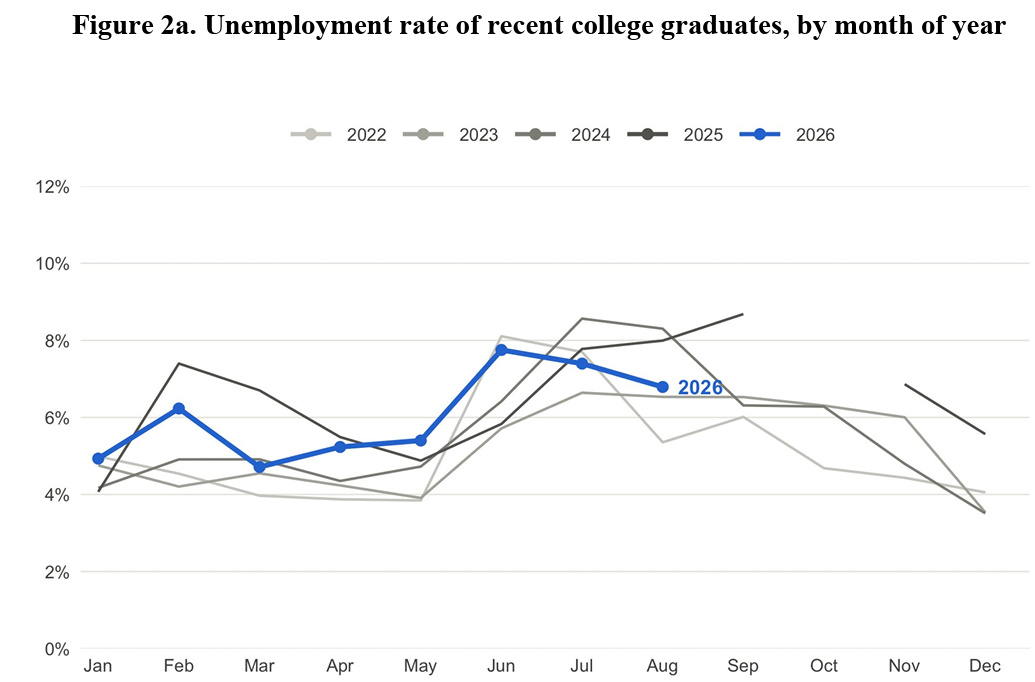
To determine if those kinds of worries were valid, the CESifo researchers looked at detailed microdata from the US Census’ Current Population Survey to determine unemployment trends among recent college graduates (i.e., Bachelor’s degree recipients 22 to 25 years old who aren’t pursuing higher degrees). Since these unemployment numbers predictably spike as fresh graduates enter the job market in the summer months, the researchers looked at year-over-year and seasonal trends going back to 2022 (which is both the year employment returned to pre-pandemic levels and the year ChatGPT was released).

The 2026 jobs market looks incredibly normal for recent graduates.

The 2026 jobs market looks incredibly normal for recent graduates. Credit: CESifo

At a base level, the summer unemployment rate for those young college graduates in 2026 (7.3 percent) was well within the range seen in previous years (from 6.3 percent in 2022 to 7.8 percent in 2024). The 2026 numbers were similarly unremarkable when expanded to include graduates who told the CPS survey they “want a job” even though they weren’t actively looking for one (and thus don’t officially count as part of the official “unemployed” labor force).

To test the robustness of these findings, the researchers created statistical tests to compare the recent college graduates both with non-college graduates in the same age range and with older college graduates (aged 30 to 49). They also broke down employment by potential “AI exposure” based on a 2023 study of which job roles AI systems were best equipped for.

In almost all of the comparisons, any trend differences between the groups in the 2022 to 2026 time frame studied were not statistically significant. Overall, the data “tell a consistent story in which unemployment among recent college graduates in summer 2026 was not unusually high relative to earlier summers” across comparison groups, the researchers wrote.

So how does this analysis square with the recent Stanford study that found an almost completely opposite result? Well, Stanford’s study was based on payroll data from HR firm ADP, which covers a decent cross-section of the economy but might miss some elements of a wider Census survey. The ADP data also looks at the total supply of jobs in various fields, while the unemployment rate being studied here also takes into account the aggregate demand for those jobs. That demand could easily shift even if the supply of jobs in certain fields starts contracting due to AI.

Overall, the CESifo researchers conclude that the Summer 2026 unemployment data serves as a “useful first test” of how accelerating AI usage is—or, as the data show, is not—impacting the current US job market. But current trends do not imply future performance, of course, and the researchers warn that “if the intensity of AI use in the workplace continues to increase, the graduating classes of 2027 and later might be more affected than the class of 2026, and additional years of data will be needed to hone in on whether effects emerge as workplace use of AI deepens.”

‘Terms of Endearment’ Star Debra Winger Arrested at New York Protest

0
‘terms-of-endearment’-star-debra-winger-arrested-at-new-york-protest
‘Terms of Endearment’ Star Debra Winger Arrested at New York Protest


Debra Winger was among more than 100 people arrested outside the United Nations on Thursday as protesters gathered ahead of Israeli Prime Minister Benjamin Netanyahu’s address to the General Assembly.

The 71-year-old actress, whose films include Terms of Endearment, An Officer and a Gentleman and Urban Cowboy, appeared in images from the demonstration wearing a shirt that read “Fund People Not Bombs.” In an Instagram Story shared after her arrest, Winger called it “my honor to be arrested alongside the legend @lsansour,” referring to activist Linda Sarsour, according to Parade.

The arrest was part of a sit-in organized by Jewish Voice for Peace near First Avenue and East 39th Street. The group said demonstrators were calling for an end to U.S. arms support for Israel. It listed Winger and Sarsour among those arrested, along with Susan Sarandon, Hacks star Hannah Einbinder, author Glennon Doyle and Chelsea Manning. (JVP)

The demonstration unfolded in the street near the U.N., where protesters chanted “Let Gaza live.” Jewish Voice for Peace said more than 104 people were arrested; the group posted video from the protest on Instagram. The publicly available reports reviewed for this story did not establish what, if any, individual charge Winger faces. An arrest at a protest does not by itself mean someone has been convicted of a crime. (JVP)

Netanyahu’s speech drew protests outside the building and walkouts by some delegates inside. In his remarks, he rejected allegations that Israel is committing genocide in Gaza. Protest organizers used the occasion to press their opposing position on the war and U.S. military support for Israel. (JVP)

Winger’s appearance was consistent with her recent public activism. She was among Jewish figures who signed an open letter last year calling for Israeli leaders to address Palestinian rights. This time, the actress found herself in cuffs alongside fellow demonstrators—and made clear in her message afterward that she stood by the decision to join them.

Review: The iPhone 18 Pro is Apple’s coolest smartphone (but only literally)

0
review:-the-iphone-18-pro-is-apple’s-coolest-smartphone-(but-only-literally)
Review: The iPhone 18 Pro is Apple’s coolest smartphone (but only literally)

As Apple’s Tim Cook era draws to a close, we’re seeing more experimentation with the iPhone’s design than we’ve seen in a long time, but you wouldn’t know it from the iPhone 18 Pro. This absurdly fast, full-featured handset might be eclipsed by the hype around the iPhone Duo this year, but it’s still just as good as its immediate predecessor.

Of course, not too much has changed since the iPhone 17 Pro. There’s the new variable aperture and other camera controls for those who want to get granular with their mobile photography, a welcome addition given the iPhone’s reputation for inflexibly opinionated computational photography.

Beyond that, though, all the most important changes are under the hood: a new chip, better battery life, and much-improved thermals that both give the phone better sustained performance and make it cooler to the touch in many situations.

I think we’re seeing something of a transition for the “Pro” iPhones. They may still be the flagships in a sense, but Apple is at least for now saving its flashier design ideas for new products like last year’s iPhone Air or this year’s iPhone Duo.

The Pro phones aren’t the sexy, cool ones right now; they’re the everything-and-the-kitchen-sink, cover-for-every-kind-of-obsessive-user workhorses. I think that’s a great space for them to occupy, and this year’s iteration is no exception.

Design

The iPhone 18 Pro mostly looks and feels like last year’s flagship. It’s a function-over-form design (at least compared to something like the iPhone Air) with good materials.

I’m not normally one to care too much about color in these phones. For my personal phone, I’ve always just grabbed whatever was closest to black. (Apple says this year’s black is the blackest yet, of course.) But I have to admit the new burgundy color of my review unit is appealing, even though it’s quite the fingerprint magnet, in a long tradition for iPhones.

The main design difference this time around is a smaller Dynamic Island, that cut-out at the top of the screen that houses the front-facing camera and sensors. Apple has achieved this by moving the IR camera underneath the OLED panel, now in the top-left corner of the screen.

A new pixel arrangement allows infrared light to pass through in that spot, while the pixels in this region operate at twice the brightness to compensate for lower density, so there’s little visible effect on the image on the display. You can tell there’s something subtly going on in that corner if you know what to look for and look closely, but I don’t think most people will notice.

As I wrote when the Dynamic Island was first introduced, the way Apple combines the per-pixel brightness and absolute blacks of the OLED panel with creative software to turn what should be something of an albatross—a big, chunky hole in the screen—into an appealing feature by displaying live activities and other information around the sensors is one of the company’s more impressive design ideas in recent years. The execution is excellent and remains so.

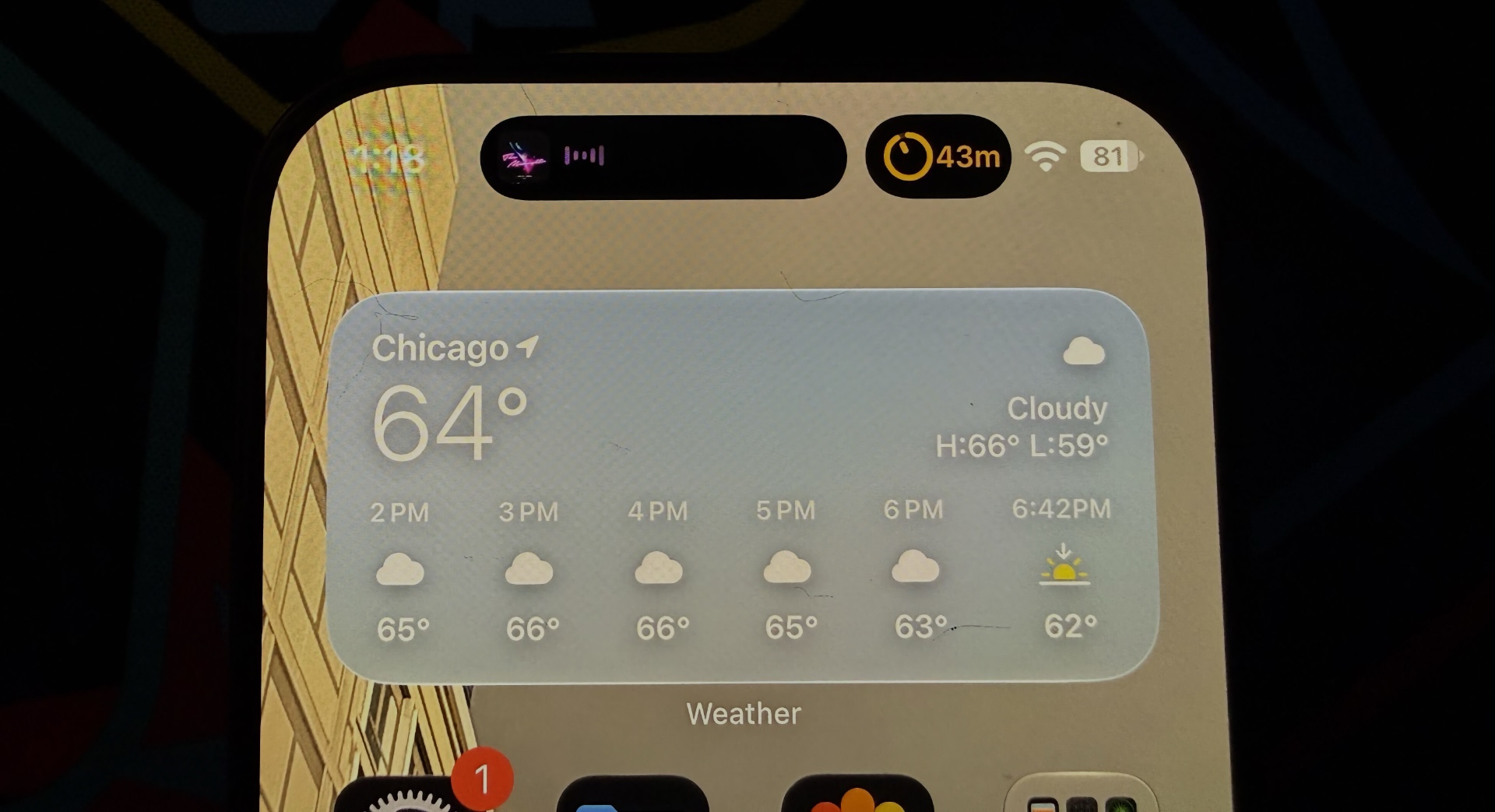
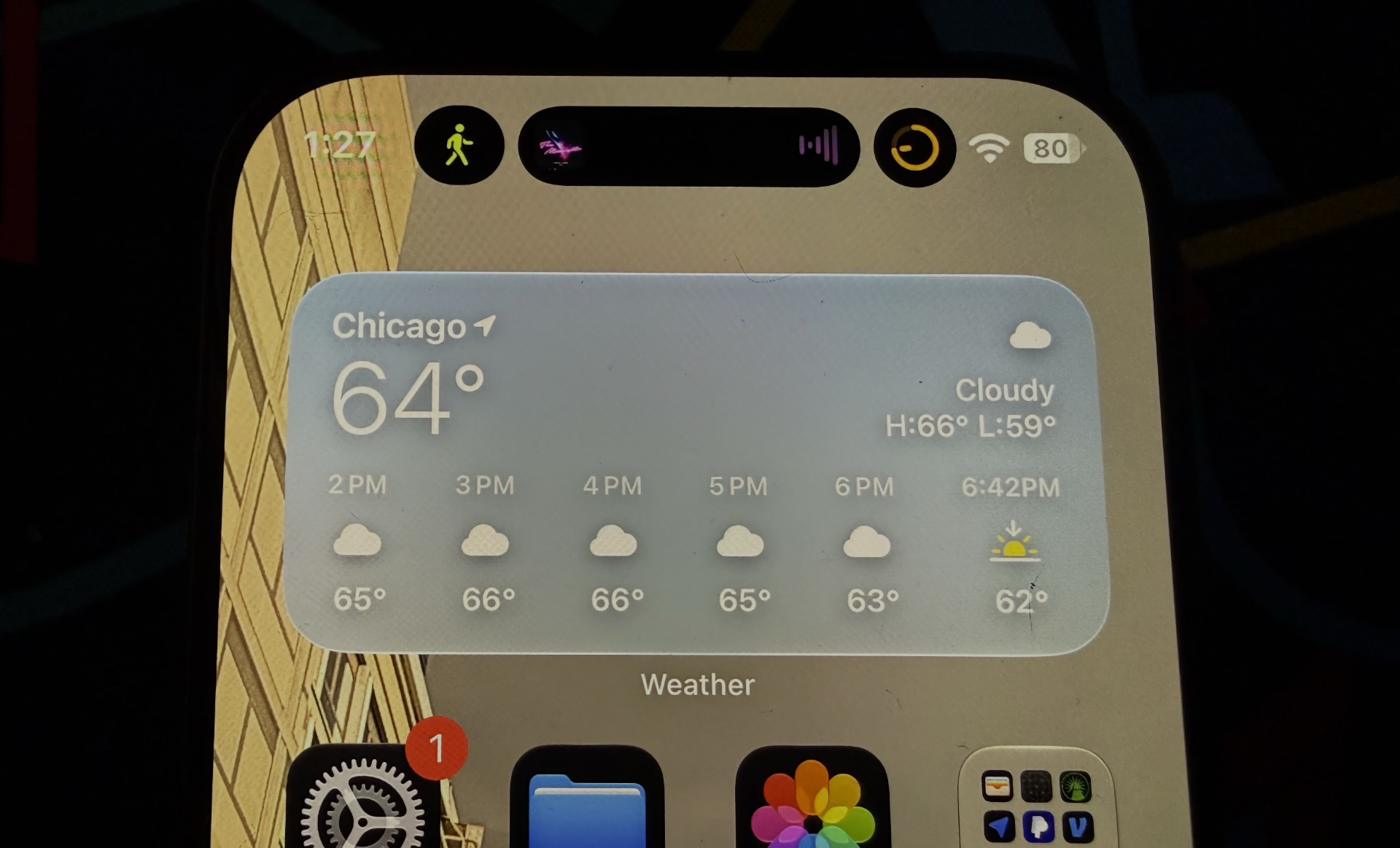
Now, that hole is less big and chunky, making it sensible for Apple to now show up to three live activities at once in the region, not just one. The middle one has more information, while those on the left and right are basically dots with just enough to tell you something useful.

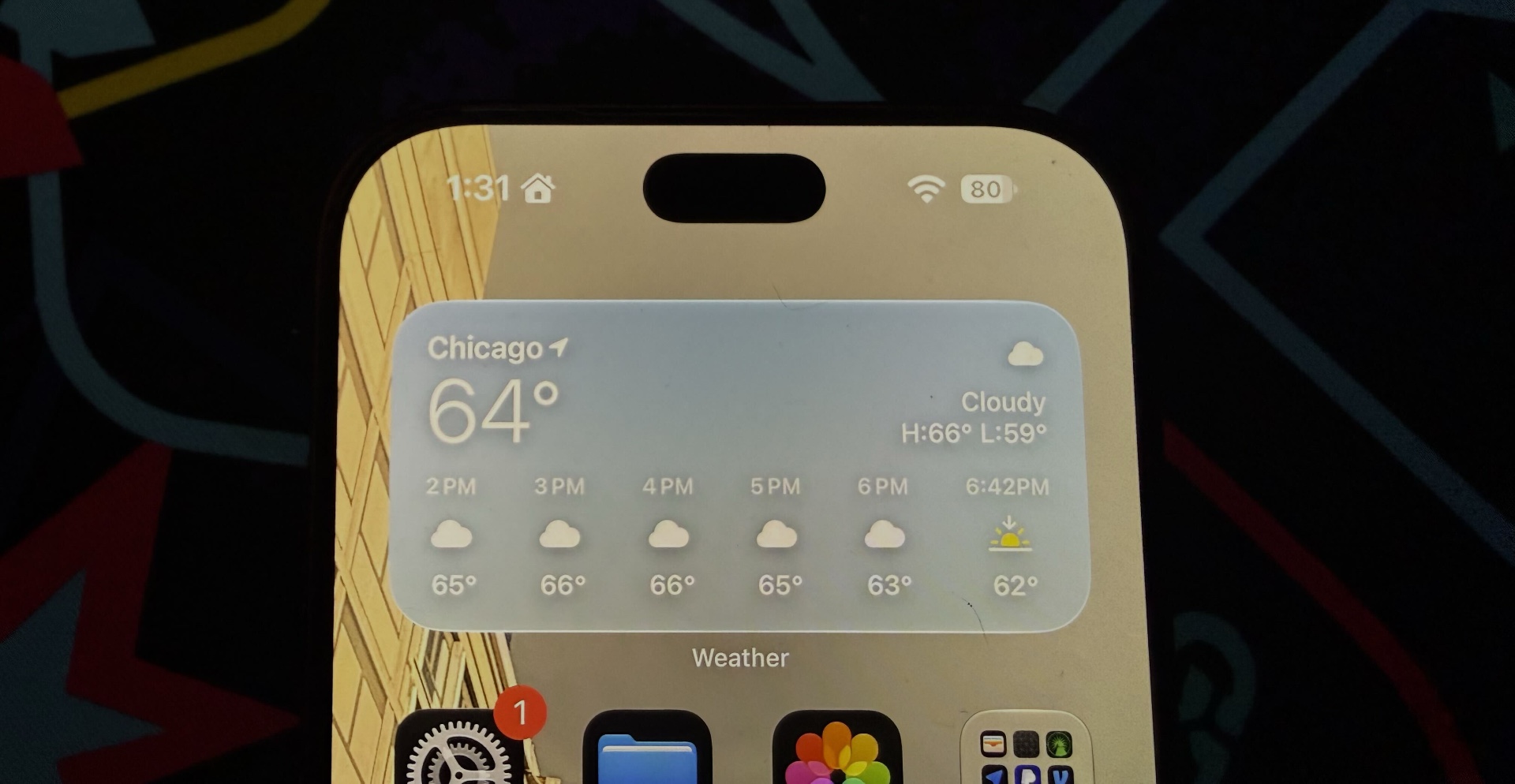
In this shot of two Live Activities on the new Dynamic Island, I’ve lowered the exposure so you can subtly see the distortion where the IR sensor is in the top-left. It’s much harder to see with the naked eye.

Three black cutouts

And here are three Live Activities at once, which wasn’t possible on prior iPhones.

It’s also now possible to show more information on a second live activity when there are just two being displayed; I found this even more appealing than showing three live activities.

This isn’t enough of a reason to upgrade from an earlier Dynamic Island phone, of course, but it has made a good feature a little bit better.

Performance and thermals

Let’s talk specs, performance, and the main story with this phone—heat management. For most specs, this is last year’s iPhone 17 Pro. But the A20 Pro chip has some improvements that make this one of the more notable performance steps in a while.

A20 Pro

First up is the new A20 Pro chip. Apple has gone from a 3-nanometer process node in the A19 Pro to 2 nm here. It has a 6-core CPU with four efficiency cores and two performance cores—nothing new there. The GPU has seven cores, each with a Neural Accelerator that Apple says helps improve GPU-based AI workloads. (There’s hardware-accelerated ray-tracing support, too, though few games or apps utilize it.)

Also for local AI features (which are a big emphasis for this year’s iOS 27), there’s the dual 16-core Neural Engine.

Apple also says the A20 Pro has “the widest memory interface ever shipped in an iPhone” (naturally) with 50 percent more bandwidth. Based on what Apple has said so far about it, that seems to be mainly to improve AI performance. I’m speculating here, but given that Apple Intelligence and Siri AI features work fine on other recent iPhones, I imagine that’s a bit of padding to enable support for future AI features that won’t work on the 16 Pro or 17 Pro.

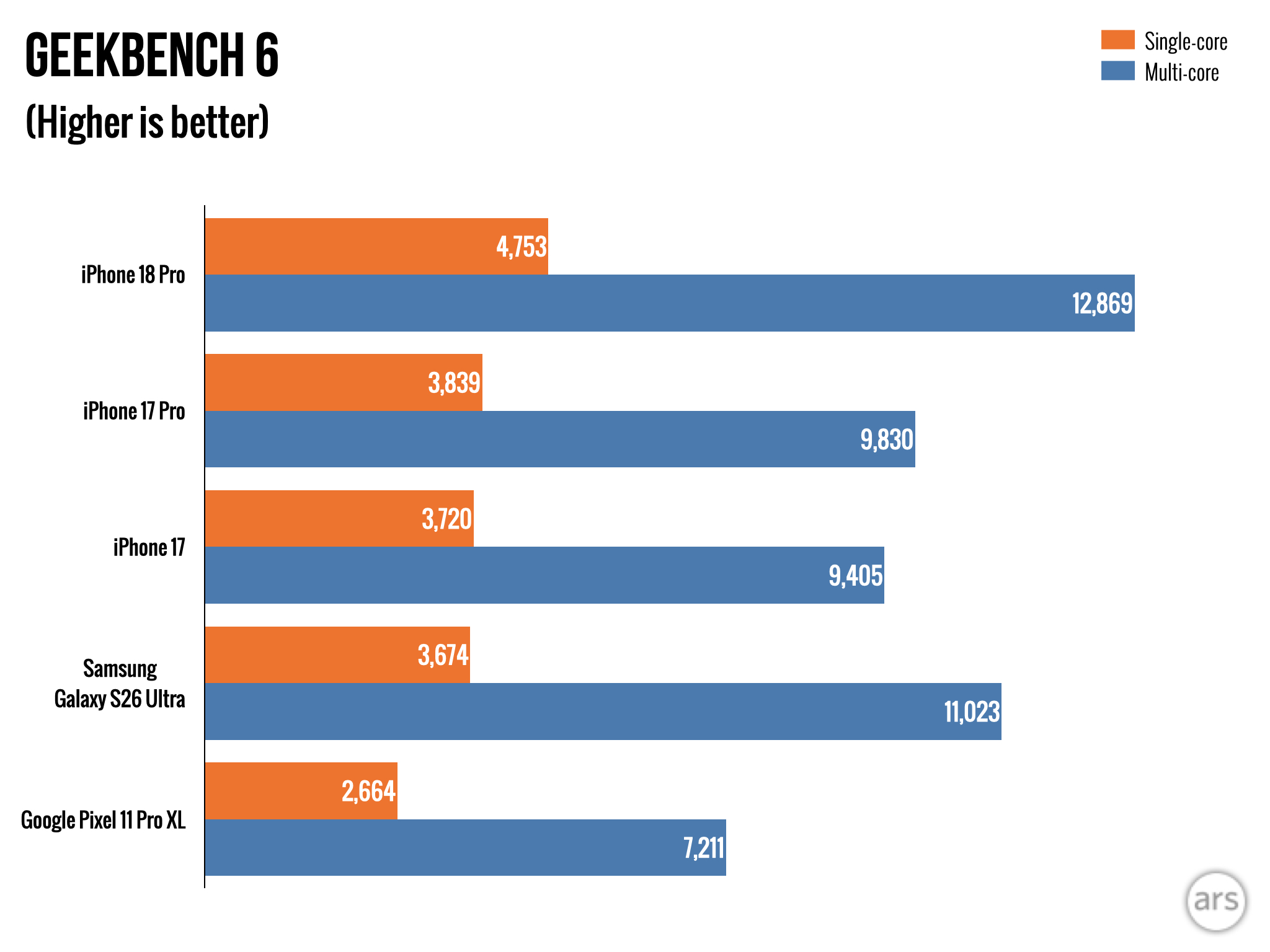
Unsurprisingly, and as the 3DMark benchmark chart below shows, that could make a big difference in graphics performance, too. It’s not like many people were complaining about the 17 Pro’s frame rates in Genshin Impact or Diablo Immortal, but hey, they definitely won’t be now.

Improved heat management

The chip has been re-architected in a couple of ways. New chip packaging promises improved heat management, thanks in part to a design that puts the system-on-a-chip next to the memory instead of stacked on top of it.

The most notable improvement is arguably a larger vapor chamber. Last year’s iPhone 17 Pro introduced the vapor chamber as an additional cooling measure, meant to help the phone sustain good performance for longer and distribute heat more sensibly. A copper material on the display plate helps keep the display cooler, too.

Apple promises up to 40 percent better sustained performance compared to last year’s Pro and up to 100 percent better than the iPhone 16 Pro before that. That’s neat, but sustained performance wasn’t a big problem for most users before. The main benefit is that the phone feels cooler and is less likely to overheat.

In my view, the better thermals are the most welcome addition to the iPhone 18 Pro. Many of us who have tried to use our phone as a GPS on the car dashboard on a hot summer day know the frustration of features shutting down when the phone goes into crisis heat-management mode. And even in normal use, like during online gaming or web browsing while streaming video, iPhones from a couple of years ago or earlier tended to get quite hot.

It’s been quite cool and overcast in Chicago this week—fall is here at last—so I haven’t been able to test the former of those extreme cases, but I’ve used the phone enough to be able to report that there is noticeable improvement in the more day-to-day scenarios. It still gets warm in some situations, like when I read the 3DMark benchmarks, but most of the time, it subjectively seems better than a couple of generations ago.

It’s normally hard to notice the absence of a problem, but my own iPhone 16 Pro has gotten hot frequently enough over the past couple of years that the contrast has been real and felt.

We’ll leave the camera specs to the cameras section of the review, but there are a couple of other spec changes worth noting.

A beefy battery (and other updates)

First off, there are further battery life improvements. Apple has long used offline video playback as one of its measures, and it says the iPhone 18 Pro can offer up to 36 hours of that on a single charge, compared to 33 for its predecessor. (It’s up to 45 for the 18 Pro Max and 39 for the 17 Pro Max.)

Subjectively, I’m impressed by the battery performance. My personal daily driver is an iPhone 16 Pro Max, which is currently sitting at 86 percent maximum capacity per Apple’s battery health panel in the Settings app.

I have no complaints; I charge it for about an hour in the morning, then do whatever I want with it (other than maybe intensive 3D gaming) with the brightness cranked up until the next morning, when I charge again.

I noticed the iPhone 18 Pro showing higher percentages when I wake up in the morning than my 16 Pro Max with similar use, which is impressive for a smaller phone—even though my 160 Pro Max’s battery has aged a bit.

In terms of other additions, Apple has put its proprietary C2 cellular modem in the 18 Pro, which uses less energy than the Qualcomm modem in the 17 Pro, so that’s part of the battery life story here, too.

And if you’re inclined to charge wirelessly rather than with a USB-C cable, the iPhone 18 Pro has wireless charging at up to 25 W.

Cameras

If you’ve read my iPhone reviews before, you may recall that I am not a photography geek. This is not the review to read if you want a deep dive on optics or how well this thing will work in a professional photo shoot. (I’ll leave it to more skilled and knowledgeable people to assess the phone from that perspective, as there are already many such reviews out there.)

I’m a point-and-shooter. Thanks to both new hardware features and developments in computational photography, that’s actually where some of the more interesting and fastest-moving developments have been happening in the iPhone and its Android competitors over the past few years.

Sure, the iPhone 18 Pro is “pro” in the sense that it will be used by content creators and others who approach snapping photos or capturing videos far more seriously and creatively than I do. But really, it’s the phone that sometimes lets non-pros like me produce quasi-pro-looking images despite ourselves.

Take the new variable aperture feature, which got the most fanfare when this handset was announced. The ability to tweak this setting manually is a niche proposal, really; many people will rarely, if ever, touch it. That said, it adjusts automatically based on what’s in the scene by default, so in many cases, even folks like me will get slightly better photos.

A robot figurine on a desk mat in front of a MacBook Pro

Taken with the iPhone 18 Pro at f/1.48.

A robot figurine on a desk mat in front of a MacBook Pro

Taken with the iPhone 18 Pro at f/1.8.

A robot figurine on a desk mat in front of a MacBook Pro

Taken with the iPhone 18 Pro at f/2.8.

A robot figurine on a desk mat in front of a MacBook Pro

Taken with the iPhone 18 Pro at f/4.

There’s also Photographic Styles 3, the latest generation of Apple’s set of non-destructive presets for the general appearance and vibe of the photos you’re taking. Think Instagram filters, but less blunt force. Previously, Photographic Styles were basically just color balance settings, but Photographic Styles 3 allows for texture tweaks, too.

This includes four texture options: film, glow, soft skin, and standard. These options—especially the film one—allow the iPhone’s built-in Camera app to compete with some third-party apps that try to give photos warmer, more film-like looks. I won’t say it’s enough to make everyone drop those alternatives, but it’s good to have more options for those who are loyal to the main app.

Apart from these and a few other minor tweaks, it’s the same triple-48 MP rear camera system that we reviewed in last year’s iPhone 17 Pro, paired with the same front-facing 18 MP camera.

With the variable aperture and the other custom camera controls that are now accessible in the built-in Camera app (all the others are available on other recent iPhones), Apple has finally done plenty to address long-standing complaints that iPhone cameras were a little too opinionated for some users’ tastes.

Yes, these new features enable better point-and-shoot photos in some narrow situations, but user control seems to be the main pitch for the cameras this year.

For those who just want a good phone

This was Tim Cook’s last year as Apple’s CEO, and the iPhone 18 Pro is the quintessential iPhone of the Cook era: practical, pricey, loaded with features to cover ever more niche edge cases, and not especially bold in its design or ambitions—all to a high standard of quality.

This is the formula that has made it the world’s most popular flagship smartphone. There’s nothing wrong with that formula. Its recent predecessors were all great phones, and this one is, too.

But we all know the era of buying a new smartphone every year or two to enjoy amazing new features has passed. (Which is also great, by the way—for our pocketbooks, for the environment, for a whole bunch of reasons.) If you have an iPhone 17 Pro, there’s little reason to upgrade. Yes, we’re seeing some notable performance improvement year over year here, but I don’t think too many of us were complaining about the A17 Pro’s performance to begin with.

My daily driver is an iPhone 16 Pro, and I won’t be pulling the trigger this year, either. In fact, I think you’re still in great shape with your iPhone 15 Pro, if that’s what you have, provided your battery is still holding up.

Go further back than that, though, and all these little things start to accumulate into something enticing. That’s where we’re at, and that’s where we’ve been for a while now.

I wouldn’t go so far as to say the modern flagship smartphone is perfect in all respects; Apple and its competitors still find small ways to refine it and up the ante for specific types of users year after year, and I expect that to continue. And last year’s base iPhone 17 is still more than good enough for almost everybody.

But after almost two decades of competition and iteration, it’s at least directionally perfect. The basics are all here, and they don’t need to change. I wish the price hadn’t risen, but I suppose that’s the reality we live in right now.

If you want something new and flashy to impress your friends or to satisfy your brain with a novel experience, hold out for the iPhone Duo next month or venture into the slightly more energetic Android market. But if you just want a good phone that leverages all the latest technological progress without overdoing it for attention or progress’ sake, the iPhone Pro line is a good fit.

The good

  • Greatly improved thermal management has added up over two generations
  • Ditto for battery life
  • Very strong graphics and AI performance
  • New custom camera controls and photographic styles help you get (a little bit) out of the typical Apple-processed look

The bad

  • Some might find it a little heavy
  • This isn’t really a bad thing, but there’s not much here to excite you or to inspire an upgrade if you already own a recent iPhone

Cabinet Approves Contested School Decree as Italy Confronts Immigration Debate

0
cabinet-approves-contested-school-decree-as-italy-confronts-immigration-debate
Cabinet Approves Contested School Decree as Italy Confronts Immigration Debate


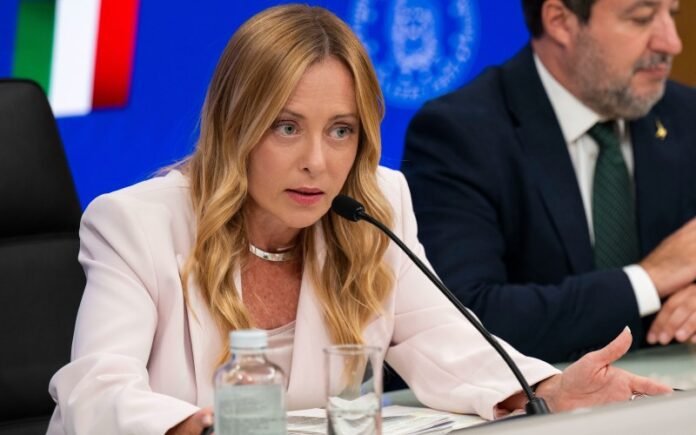
Italy’s government approved a decree Thursday that caps the share of foreign pupils in classrooms at 30% and bans burqas and niqabs from schools, a measure Prime Minister Giorgia Meloni described as a step toward a school system that integrates without abandoning rules — even as opponents cast it as an attempt to blunt a rising rival on the far right ahead of elections expected in 2027.

“Today, the Council of Ministers approved the decree on schools,” Meloni wrote on social media after the cabinet meeting. She said the measure includes “a 30% cap on the number of students per class who do not have an adequate command of Italian, more tools for learning our language, and a ban on the burqa and niqab in schools.”

“These are common-sense measures that do not divide but rather foster genuine integration, preventing the formation of ‘ghetto classrooms’ and ensuring equal opportunities for all students,” she said, adding that the government intends to keep following “a school system that integrates without abandoning rules, supports those facing the greatest challenges, and puts everyone in a position to start from the same baseline.”

Fines Parents Who Skip Italian Classes

Under the draft decree, the 30% cap will take effect in primary school classrooms starting in the 2027-28 school year, applying to pupils who are not Italian nationals, were not born in Italy, or have attended fewer than two years of nursery school in the country. The decree also sets fines of up to €1,000 ($1,137) for anyone who enters school premises wearing a face covering, which members of the ruling coalition describe as a symbol of Islamist oppression and a lack of respect for women’s dignity.

A political test ahead of 2027

The decree comes as Meloni faces pressure from National Future, a party founded in February by former army general Roberto Vannacci that is already polling at around 8%, while surveys show her coalition trailing the center-left bloc. National Future has made schools central to its campaign, calling for “remigration” — the deportation of foreigners to their countries of origin — and arguing that Islamic “contamination” in classrooms damages national identity.

Meloni first outlined the school plan Sunday at a rally of the youth wing of her Brothers of Italy party, where she said parents of children who do not speak Italian would be required to attend language courses. The announcement followed her unveiling last week of a partial rollback of Italy’s unpopular road tax, in what appeared to be part of a broader effort to shore up coalition support before the 2027 vote.

School principals have raised concerns that the cap will be difficult to enforce in areas with large immigrant populations, particularly in northern Italy. The draft decree says that if demand exceeds the 30% threshold, education authorities will redistribute pupils among nearby schools based on family needs and access to education, without specifying how that would work in practice. President Sergio Mattarella, who must sign off on the decree, has said he is wary of placing barriers on education.

Language rules carry fines for parents

Education Minister Giuseppe Valditara told a news conference at Palazzo Chigi that roughly 34,000 school classes in Italy currently exceed the new 30% threshold. He said first-generation foreign students arrive with one year less preparation in Italian, and that the “implicit dropout” rate — a failure to reach required academic competencies — stands at 10% for foreign students, compared with 5.7% for Italians. “Our goal is to place the Italian language at the center as a major tool for integration; knowing Italian means integrating,” Valditara said, adding that the measure differs from past circulars that addressed only small numbers of foreign students per class.

The decree also targets parents directly. Citing OECD research on the importance of parental involvement in a child’s education, Valditara said schools will be required to report serious cases of integration difficulty to social services, which will arrange Italian-language courses for parents. Those who fail to complete the courses face fines of €200 to €1,000. An earlier draft of the decree had proposed removing a child from the family home in cases of parental non-compliance, a provision that did not appear in the version approved Thursday.

According to the ISMU Foundation, about 900,000 foreign students attend Italian schools, making up 11.6% of the total student population; roughly 43% come from other European countries and 32% have African backgrounds. Opposition leaders condemned the decree, with Democratic Party leader Elly Schlein calling it “a shameful decree that seeks to hide the government’s inability to address the real problems of the public school system behind a new ideological banner.”

Immigration remains politically sensitive in Italy even though the country’s immigrant population share is lower than in several European peers — about 12% in 2025, compared with 21% in Germany and 19% in Spain, according to Rockwool Foundation data.

Are the Americans returning to Myanmar? They never really left

0
are-the-americans-returning-to-myanmar?-they-never-really-left
Are the Americans returning to Myanmar? They never really left

Adam Castillo, a former president of the American Chamber of Commerce in Myanmar who had lobbied for sanctions relief in exchange for US, was released in recent days after spending over three months in detention.

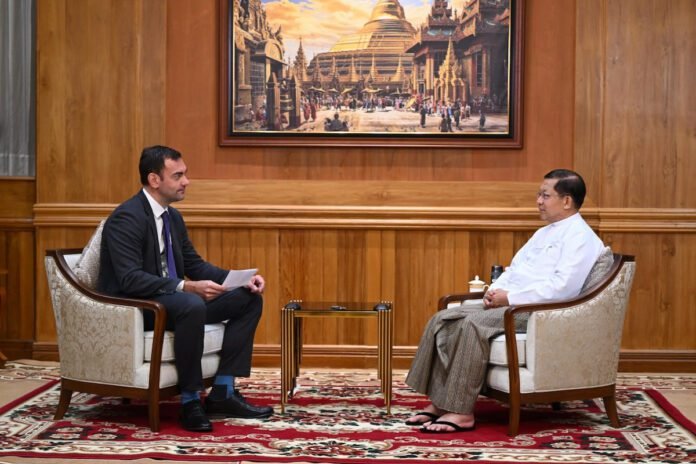
In the same week, Time magazine’s Charlie Campbell sat down with Senior General Min Aung Hlaing in Naypyitaw. The coup leader, now calling himself president after December and January’s sham elections, said he had treated Aung San Suu Kyi “extremely leniently” and urged the United States and other Western countries to rethink sanctions.

It was his first face-to-face interview with a major Western outlet since the 2021 coup. To be fair to Time, the interview was no puff piece. It described the military dictatorship in plain, critical terms.

But the interview’s occurrence arguably mattered more than its content: a democracy-toppling soldier still struggling for legitimacy at home and abroad had appeared as “president” in one of America’s best-known news publications.

Time’s exclusive did not happen in a vacuum. Since July 2025, the junta has retained the Washington lobbying firm DCI Group on a US$3 million-a-year contract to boost the beleaguered regime’s profile.

This year, Foreign Agents Registration Act filings showed Roger Stone, a longtime Trump confidant, receiving $50,000 a month through that arrangement to help “rebuild” relations with Washington. It’s unclear how those lobbying funds have been used to coax and generate media coverage favorable to the generals in US news outlets.

But the release of an American citizen and Min Aung Hlaing’s interview are pieces of a wider Naypyitaw campaign to reopen closed doors in Washington.

Pressure without disengagement

Since the coup, Washington has taken meaningful measures to punish Myanmar’s military for toppling democracy. The BURMA Act passed with bipartisan support, and sanctions and assistance programs helping the anti-coup opposition expanded.

Yet the resistance still has not received some of the non-lethal technology it has repeatedly sought, including advanced early-warning systems against airstrikes and broader protective equipment.

Diplomatically, Washington lowered its in-country representation below ambassador level. Commercially, however, the relationship never disappeared. Some American brands remain visible, while trade continues even though government-to-government engagement under the Trade and Investment Framework Agreement is suspended. In 2025, US-Myanmar trade in goods and services still totaled $1.1 billion despite the sanctions.

The deeper issue is geography. Myanmar borders China, links Southeast Asia with South Asia and opens onto the Bay of Bengal and the Indian Ocean – a location whose resources and trade routes matter to both Beijing and Washington. American policy, then, cannot be read through the lens of democracy and human rights alone.

That tension between strategic interest and democratic principle dates to the Cold War. In the early 1950s, the CIA backed Kuomintang remnants operating from Shan State against communist China, creating a sovereignty crisis for then civilian leader U Nu’s government and driving Burma to the United Nations.

Washington later pressed the KMT forces to leave, but the episode showed how quickly and easily Burma could become part of a larger strategic contest.

After Ne Win seized power in a 1962 coup, relations with the US cooled but did not disappear. President Lyndon Johnson received him at the White House in 1966. A declassified State Department memorandum described the visit as a “gesture of support” for Burma’s neutrality and independence, while noting that a small US military-assistance relationship had continued since 1958.

Then came the drug war. Under a 1974 narcotics-control agreement, Washington supplied six Bell 205 helicopters to Burma, officially for drug suppression. The program expanded over the following years and ended after the military’s bloody crackdown on democracy protesters in 1988.

The helicopters were not simply a symbol of cooperation: Accounts from the period say they were also used in military operations against ethnic armed groups fighting for autonomy against the military regime.

The pattern changed after the 8-8-88 crackdown. Washington imposed sanctions on the SLORC and later the SPDC, the successive military juntas, while the Drug Enforcement Administration kept a narrow channel of cooperation open.

A 1998 State Department report said the DEA shared intelligence and carried out joint investigations with Burmese counternarcotics authorities. The same report noted that the country’s drug-control apparatus was effectively under the Directorate of Defense Services Intelligence, then headed by spymaster chief Khin Nyunt.

There was no full normalization and no material aid or training at that stage, but operational cooperation endured. After political reforms began in 2012, those channels quickly widened. By 2015, the Obama administration had issued a national-interest waiver allowing counternarcotics assistance and direct engagement with Burmese police.

From armed struggle to reform

The 1990s also brought another kind of American influence. Gene Sharp, the scholar of non-violent resistance, worked with Burmese activists on the Thai border and wrote “From Dictatorship to Democracy” at the request of Burmese exiles. His ideas later traveled far beyond Myanmar.

By the 2000s, Western support had increasingly shifted toward civil society, humanitarian work, capacity building, and NGO-based politics rather than armed struggle.

Among many border-based activists, that shift changed the character of the opposition: it strengthened the non-violent political space but did not dislodge a military that remained strong on the battlefield and well positioned geopolitically.

Then, in what became known as the reform era, Washington shifted course. After the 2008 Constitution and the 2010 election, Washington moved from isolation toward what it called “pragmatic engagement.”

Aung San Suu Kyi and her battered and persecuted National League for Democracy (NLD) party entered the parliamentary process, sanctions eased gradually and the Obama administration cautiously opened military-to-military contact around human rights and civilian control.

The wager was that engagement could reinforce reform without surrendering leverage. In 2013, the State Department itself described the approach as “carefully calibrated military-to-military engagement,” aimed at exposing Burmese officers to civilian control, human rights and professional military norms. It was a cautious policy, not an embrace of the generals. But the 2021 coup showed how little institutional change had taken root inside the military.

New Trump terms

Today, Min Aung Hlaing is again testing how far Washington’s strategic interests can pull policy away from isolation. Rare earths, scam compounds, trade and China all give his government talking points suited to the Trump administration’s more transactional approach.

So far, the pressure architecture built to punish the 2021 coup remains largely intact. US sanctions still target the military, the Ministry of Defense and regime-controlled banks, while US persons are prohibited from providing certain financial services to the state-owned Myanma Oil and Gas Enterprise (MOGE).

Export controls on military and sensitive technology remain in place. More than $1 billion in Myanmar foreign reserves at the Federal Reserve Bank of New York has also remained beyond the junta’s reach since the coup.

Min Aung Hlaing’s appeal for sanctions relief in his Time interview shows that US pressure still bites. It also suggests that the junta’s isolation carries a real cost, even as his coup regime searches for another route back to Washington.

The larger lesson is not that the United States has always backed Myanmar’s generals. It has not. The lesson is that American strategic interest in Myanmar has persistently survived periods of sanctions, estrangement and political ruptures like the 2021 coup.

For Myanmar’s democratic forces, that means US support cannot simply be assumed to follow automatically from shared democratic language – Washington has always had other interests too.

Min Aung Hlaing’s appearance in Time is, therefore, more than a media moment. Naypyitaw is once again knocking on doors that lead to Washington. In 2011, Washington’s re-engagement came with conditions and a democratic script. In 2026, Naypyitaw is testing whether Washington might reopen political engagement on more transactional terms.

So, are the Americans coming back to Myanmar? The answer is that they never completely left and yesterday’s terms for re-engagement are not today’s under Trump.

Nyein Chan Aye is a Washington, D.C.-based journalist writing on Myanmar, China, the U.S., and regional affairs.

Army halts arrests of ultra-Orthodox Haredi Jews draft dodgers: Israeli newspaper

0
army-halts-arrests-of-ultra-orthodox-haredi-jews-draft-dodgers:-israeli-newspaper
Army halts arrests of ultra-Orthodox Haredi Jews draft dodgers: Israeli newspaper

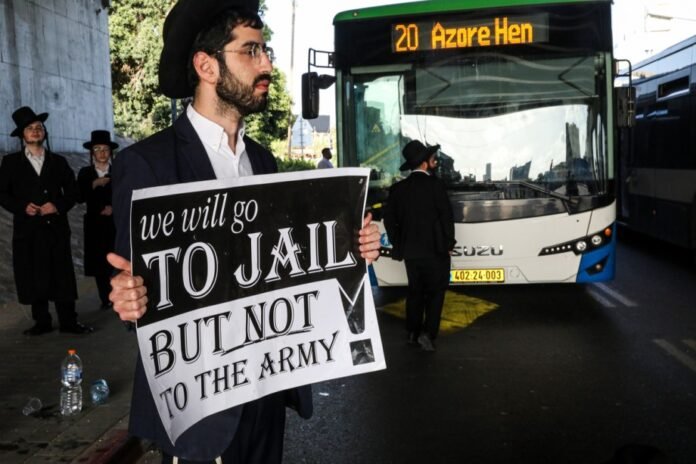
The Israeli army has halted arrests of ultra-Orthodox Haredi Jews wanted for failing to comply with military draft orders amid concerns that the arrests could trigger protests, according to Israeli media.

Haaretz reported Friday that the army had decided to suspend arrests of Haredi draft dodgers over fears of unrest and protests across the country as Israeli elections approach.

The army attributed the move to “operational needs,” without providing further details, according to the newspaper.

Haaretz said arrests had been extremely limited even before the decision was taken.

According to figures cited in an Israeli Supreme Court ruling, only 16 Haredi draft dodgers were arrested during the first half of 2026, the newspaper said.

Haaretz cited unnamed police sources as saying that “there are no plans to resume them in the near future.”

The sources said arresting wanted individuals requires the deployment of large police forces and that the suspension was initiated by the military police.

According to Haaretz, the decision on whether to carry out arrests rests with the army, while the police are responsible only for implementing them.

“The suspension has coincided with a halt in ultra-Orthodox protests against the military,” the newspaper noted.

Haredi Jews continue to protest against military service following a Supreme Court ruling on June 25, 2024, requiring them to enlist and barring financial support for religious institutions whose students refuse military service.

Haredim make up around 13% of Israel’s population of 10 million and oppose military service on the grounds that they devote their lives to studying the Torah.

Senior rabbis, whose followers view their rulings as religious directives, have called on Haredi men to refuse enlistment and even to “tear up” draft orders.

They also argue that integration into secular society threatens their religious identity and the continuity of their community.

For decades, members of the Haredi community were able to avoid military service after turning 18 by repeatedly obtaining deferments on the grounds that they were studying at religious seminaries until reaching the exemption age, currently 26.

The decision came about 33 days before Israeli elections scheduled for October amid sharp domestic political debate over Netanyahu government policies.

Dozens of Delegates Walk Out as Netanyahu Addresses UN General Assembly

0
dozens-of-delegates-walk-out-as-netanyahu-addresses-un-general-assembly
Dozens of Delegates Walk Out as Netanyahu Addresses UN General Assembly


Dozens of delegates walked out of the United Nations General Assembly as Israeli Prime Minister Benjamin Netanyahu began his address in New York on Thursday, Sept. 24, while others remained in the chamber despite sharp international divisions over Israel’s conduct in Gaza and elsewhere in the region.

Reuters reported that “dozens of delegates” left the General Assembly hall as Netanyahu began speaking. Anadolu Agency, reviewing footage from the session, said representatives of roughly 70 countries either walked out or did not attend the speech.

Among the delegations Anadolu identified as participating in the protest were Turkey, the Palestinian delegation, Tunisia, Syria, Algeria, Yemen, Egypt, Iraq, Saudi Arabia, Jordan, Iran, Qatar, Lebanon, Malaysia, Kuwait, Indonesia, Sudan, Spain, Brazil and Peru.

The same review found that a number of countries previously reported as joining the walkout actually remained represented in the chamber. They included Colombia, Slovenia, Ireland, Uganda and Kenya, as well as the United Arab Emirates, Bahrain, Germany, Argentina, Hungary, the United Kingdom, France and China. Al-Monitor separately reported from New York that Bahrain, China and Colombia remained during Netanyahu’s address.

Colombia’s presence was particularly noteworthy because Vice President José Manuel Restrepo, representing President Abelardo De La Espriella, delivered Colombia’s General Assembly speech immediately before Netanyahu took the podium. Netanyahu was also scheduled to meet Restrepo during his brief visit to New York, according to the Israeli Prime Minister’s Office.

Relations between Colombia and Israel have improved under De La Espriella after deteriorating under his predecessor, and reports that the Colombian delegation walked out Thursday are contradicted by both Al-Monitor and Anadolu’s review of the session.

Slovenia also remained represented, according to Anadolu. Prime Minister Janez Janša met Netanyahu on the sidelines of the General Assembly the same day, with both governments describing a strengthening of bilateral relations. Israel opened its first resident embassy in Ljubljana earlier in September.

As delegates left the chamber, Netanyahu responded from the podium: “If there are any other moral cowards who haven’t left this hall, please do so now.”

Netanyahu used the speech to defend Israel’s military campaigns in Gaza and against Iran and to reject accusations that Israel has committed genocide in Gaza. “Israel didn’t commit genocide. Israel prevented genocide,” he said, calling the allegation “the greatest lie of the century.”

He also attacked Turkish President Recep Tayyip Erdoğan, calling him a “tyrant” and accusing him of supporting Hamas, repressing journalists and seeking influence over Jerusalem. “He says he will be the ruler of Jerusalem,” Netanyahu said. “No, sir, you won’t. It is our city.”

Turkey rejected the remarks. Turkish presidency Communications Director Burhanettin Duran said Netanyahu’s use of the UN podium to make what he called “baseless accusations” against Turkey and Erdoğan was incompatible with the UN’s “ideals of peace, law and dialogue.”

Duran also said Netanyahu’s statements could not “make his massacres, the humanitarian catastrophe in Gaza and the proceedings before international law invisible.”

Netanyahu also criticized Qatar, accusing Doha of financing American universities and Al Jazeera in an effort to “brainwash young minds to hate Israel, hate America, hate the West,” and pointing to Qatar’s hosting of Hamas officials.

Qatari Deputy Ambassador to the United States Hamad Al-Muftah responded that Netanyahu was “speaking to a half-empty room,” which he said “says plenty about the support for this message.”

Al-Muftah rejected Netanyahu’s characterization of Qatari funding for American universities, saying much of it supported US university campuses in Doha’s Education City. He also defended Qatar’s contacts with Hamas as part of its role as a mediator in negotiations involving Israel, Hamas, the United States and Egypt.

Court rules Pentagon can blacklist Anthropic for refusing to enable Claude features

0
court-rules-pentagon-can-blacklist-anthropic-for-refusing-to-enable-claude-features
Court rules Pentagon can blacklist Anthropic for refusing to enable Claude features

A US appeals court today approved the Department of Defense’s blacklisting of Anthropic technology. Judges decided the Trump administration had authority to blacklist Anthropic for withholding certain AI features from the military even if Anthropic had no malicious intent.

In a 2-1 ruling issued by the US Court of Appeals for the District of Columbia Circuit, a panel of judges said the “case raises profoundly difficult questions about the appropriate military uses of an almost unimaginably powerful new technology.” The US “raises the deeply sobering prospect of overly constrained AI models shutting down unexpectedly and thus causing important military operations to fail. Anthropic raises the deeply sobering prospect of unconstrained AI models hallucinating inappropriate targets for lethal military force,” the ruling said.

Trump and Defense Secretary Pete Hegseth “must determine how best to balance the competing risks,” the court said. “In doing so here, the Secretary did not transgress any limits on his authority under the Supply Chain Security Act or the Constitution. Accordingly, we deny the petitions for review.” The same court previously denied Anthropic’s emergency motion for a stay in April.

The two judges who ruled against Anthropic were both appointed by Trump and served in the first Trump administration. Judge Gregory Katsas was previously deputy counsel to the president, and Judge Neomi Rao served in the Trump administration’s Office of Management and Budget.

Two courts, two different decisions

Anthropic sued the Trump administration in March after it ordered federal agencies to stop using Anthropic’s products and banned defense contractors from doing any business with Anthropic. Anthropic may appeal today’s ruling, either by asking for an en banc review with all of the appeals court judges or by petitioning the Supreme Court.

“We respectfully disagree with the court’s decision,” an Anthropic spokesperson told CNBC. “Another federal court has already held the government’s parallel designation unlawful. We remain confident in our position and are considering all options, including further review.” Despite the ongoing legal battle, Commerce Secretary Howard Lutnick recently said the Trump administration and Anthropic have patched up their relationship and are “in tune.”

Two courts have been reviewing the US blacklisting of Anthropic. A judge in US District Court for the Northern District of California ruled last month that the action was illegal because Anthropic does not meet the definition of a supply-chain risk, which is limited to “the risk that an adversary may sabotage, maliciously introduce unwanted function, or otherwise subvert… a covered system.”

Today’s ruling from the DC Circuit did not dispute the district court’s primary finding. But it said the district court was tasked with reviewing whether the decision was allowed under one law while the appeals court has exclusive jurisdiction to review the decision under a different, more permissive grant of authority.

The district court decision found a violation of 10 U.S.C. § 3252, in which supply chain risks are limited to malicious actions by adversaries. The appeals court reviewed the blacklisting under 41 U.S.C. § 4713, which doesn’t have the same restrictions. Notably, Congress gave the DC Circuit appeals court exclusive jurisdiction to review procurement actions taken under Section 4713 designations.

Bad motive not required

Today’s ruling said:

We have no quarrel with the Northern District’s conclusion that use of the critical noun adversary, combined with the sinister connotation fairly pervading the string of sabotage, maliciously introduce, and otherwise subvert, indicate that bad motive is required to support a designation under section 3252. Likewise, we have no quarrel with the Northern District’s conclusion that Anthropic has acted with no such bad motive in its dealings with the Department. But as explained at length above, no such bad motive is required to support a designation under the much broader definition set forth in section 4713.

The US designated Anthropic as a supply chain risk under both 3252 and 4713. The latter statute defines “supply chain risk” as “the risk that any person may sabotage, maliciously introduce unwanted function, extract data, or otherwise manipulate the design, integrity, manufacturing, production, distribution, installation, operation, maintenance, disposition, or retirement” of covered technology products “so as to surveil, deny, disrupt, or otherwise manipulate the function, use, or operation of” those products or the information stored or transmitted on them, the court said.

The use of “any person” shows that the definition is not limited to adversaries or foreign entities, the court said. The court also pointed to the word “deny,” which it said applies to Anthropic preventing the US from using certain Claude features.

“In sum, we conclude that the Secretary’s concern about Anthropic disabling Claude from performing lawful actions requested by the Department qualifies as a ‘supply chain risk’ within the meaning of section 4713,” the court majority said. It also said “the Department reasonably feared that Anthropic might manipulate Claude’s design to prevent it from performing national-security functions that the Department deems contractually authorized and necessary.”

Judge’s dissent

The dissenting vote was cast by Judge Karen Henderson, a George H.W. Bush appointee. Henderson disputed the majority’s reading of the definition in 4713, saying that when “viewed in their statutory context, the verbs at issue are all directed at deliberately impeding or eavesdropping on the ‘function, use, or operation’ of a covered article that has entered the federal supply chain.”

Congress “enacted the statute in response to calls from the US intelligence community for legislation to meet the threat of ‘[h]ostile nation state and other bad actors’ infiltrating the federal government’s information and technology systems through its supply chains,” Henderson wrote. She said the definition should not be interpreted to cover “a contractor’s honest and upfront enforcement of restrictions on a covered article’s use disfavored by the government.”

Anthropic alleged, and the district court judge in California agreed, that the Trump administration illegally retaliated against the company after it refused to drop restrictions on the use of its products for lethal autonomous warfare and mass surveillance of Americans.

The appeals court said that Anthropic “encodes restrictions into Claude that prevent the model from performing tasks that Anthropic wishes to prevent. On more than one occasion, these restrictions have stopped Claude from performing tasks requested by government users. And recently, a dispute arose over whether the contractual prohibitions barred the use of Claude in an ongoing overseas military operation, leaving the Department uncertain whether Claude would perform as needed and intended.”

The case in the Northern District of California was presided over by Judge Rita Lin, a Biden appointee. Lin determined that the blacklisting violated the First Amendment. “The empty invocation of national security is not a blank check to punish and retaliate against government critics,” she wrote.

The politics limiting US arms deliveries to Taiwan

0
the-politics-limiting-us-arms-deliveries-to-taiwan
The politics limiting US arms deliveries to Taiwan

On March 28, 2025 a rollout ceremony took place at Lockheed Martin’s F-16 production facility in Greenville, South Carolina. Two F16V block 70 jets were ready for final testing, and the ceremony marked the formal handover to Taiwan. The Greenville ceremony was attended by Taiwan’s Defense Minister and by Taiwan’s US representative.

Taiwan does not have formal diplomatic representation in the United States. No high ranking US defense officials or counterpart to Taiwan’s Minister of National Defense Po Horng-hui was present at the ceremony.

Greg Ulmer, President of Lockheed Martin Aeronautics, speaks at the rollout ceremony for the first new Taiwanese F-16 Block 70. Image credit: Phil Hamby, Director of Governmental Affairs, South Carolina Military Department

The jets for Taiwan were part of the “Peace Phoenix Soaring” program. Taiwan was allowed to order 66 of the advanced F-16s, the first new jets from the United States since George H. W. Bush authorized 150 F-16 A/B jets to Taiwan in 1992. These original jets were stripped of their ground-attack capability, and other systems were downgraded.

It was not until 2023 that the original jets completed a US-approved upgrade program called “Peace Phoenix Rising”, rebuilding Taiwan’s original F-16s to the F-16V standard. While upgraded, the airframes are now over 30 years old and are inferior to new models.

Taiwan’s F-16s at Hicham AFB, Hawaii

The planned purchase of the new F-16s, at a cost of almost US$8 billion, was supposed to be completed in 2026. Except for the first two, no more jets have yet been produced by Lockheed for Taiwan. Various excuses have been made, including alleged supply bottlenecks and manufacturing issues.

The first for F-16 Vs left Greenville in March, 2026, seventeen months after the rollout. (The long delay has not been explained.) On the final leg of their journey to Taiwan, the two jets (tail numbers 6727 and 6828) departed Hickam Airfield in Hawaii but they were called back and returned to Hawaii. As of this date they are still sitting at the airfield.

No one has yet explained why the jets were called back. The story of the F-16’s so-far failed delivery to Taiwan is part of a pattern of delayed arms sales to the island.

Secretary of State Marco Rubio says that delays in selling arms to Taiwan are based on worries about shortages in US military production of needed weapons. But this logic certainly does not apply to F-16 manufacturing which Lockheed had earlier moved from Ft. Worth to Greenville.

In Greenville, Lockheed is making F-16s for Taiwan, Bahrain, Slovakia, Bulgaria, Morocco and Jordan. In 2025, the Lockheed factory delivered initial batches to Bulgaria receiving its first Block 70 aircraft in the spring, alongside ongoing fulfillment for other global buyers like Bahrain.

The first Bulgarian F-16 Block 70 takes off for the maiden flight. Image: Lockheed Martin

There were no reported delivery delays for Bulgaria, Bahrain or other customers aside from Taiwan. In the aerospace portion of the huge $20 billion Taiwan arms backlog are many critical defense systems.

For example, F-16 IRST (Infrared Search and Track) Systems that includes 55 advanced targeting and tracking pods designed to give Taiwan’s F-16s the ability to detect stealth threats such as China’s J-20 stealth fighters are delayed; MS-110 Recce Pods that support long range, high resolution digital imagery for intelligence gathering, have not been delivered; and significant backlogs of AIM-9X Block II Sidewinder air to air missiles have not been delivered plus advanced air-to-ground missiles like AGM-154 Joint Standoff Weapons (JSOW), and air-launched Harpoon anti-ship missiles could be years behind schedule.

Taiwan also won’t get Mark 48 torpedoes until the end of the decade; and the NASAMS (air defense system) until 2031. Taiwan is getting Himars and has ordered 84 ATACMS missiles, the first 16 delivered in 2024 and a second batch in 2025.

There are plenty of other delays and reports that sometimes the equipment sent to Taiwan was old and damaged. In 2024, for example, the US sent Taiwan moldy body armor and pallets containing “unserviceable” equipment and ammo including machine guns.

While there are significant short supply problems and heavy demands for US weapons in Ukraine, Europe and the Middle East, Taiwan is the greatest danger zone in East Asia.

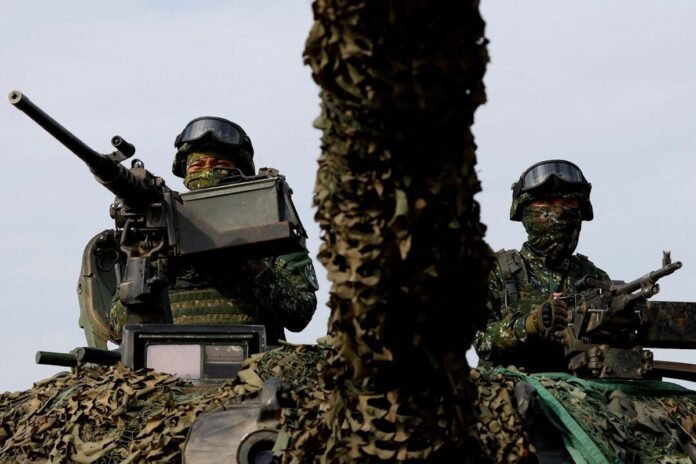
China continues to carry out continuous exercises rehearsing the components of a future quarantine or blockade, demonstrating how the PLA could surround the island, control shipping lanes, and test response timelines by the United States and Japan.

Beijing maintains relentless pressure through increased Coast Guard patrols, civil-military fleet integration, and continuous air-and-naval movements near the island. It flies some of its most modern aircraft, including fighters and bombers and reconnaissance platforms, continuously around Taiwan.

Taiwan gets most of its weapons from the United States. The Taiwan Relations Act (1979) mandates that the United States “will make available to Taiwan such defense articles and defense services in such quantity as may be necessary to enable Taiwan to maintain a sufficient self-defense capability.”

Successive administrations have found significant wiggle room in determining what to sell to Taiwan, when to sell it, and what conditions might be attached. For example, when AIDC (Taiwan’s biggest aircraft maker) wanted to produce an indigenous fighter aircraft, the US made sure that the new jet was limited in range and capabilities.

The top issue is politics, specifically US-China relations. China pushes back strongly every time there is an arms sale for Taiwan. Making matters worse is the US conflict with Iran and support of Ukraine against Russia. These wars eat up US defense stocks and put heavy demands on the US Air Force and Navy.

One impact: the US took the carrier USS George Washington, normally based at Fleet Activities Yokosuka in Japan as part of the US 7th Fleet, out of the Indo-Pacific through the Singapore Strait and into the US Central Command (CENTCOM) area of operations.

This left the Far East without a US aircraft carrier, which has long been regarded as critical to defending Korea, Japan and Taiwan.

This week’s visit of President Xi Jinping to Washington highlights Washington’s interest in reducing tensions with China, facilitating trade and avoiding conflict. But the more Washington aims at calming the waters with China, the less likely Taiwan is to get the arms it needs to defend its island.

If Taiwan cannot hold out against an outright attack, the US will find it exceedingly hard to help the island survive.

Stephen Bryen is a former US deputy undersecretary of defense and special correspondent at Asia Times. This article was first published on his Weapons and Strategy Substack and is republished with permission.

0FansLike
0FollowersFollow
0FollowersFollow
0SubscribersSubscribe
- Advertisement -
Google search engine

Recent Posts