16.2 C
London
Friday, September 11, 2026
Home Blog

Android can now securely migrate your logins between password managers

0
android-can-now-securely-migrate-your-logins-between-password-managers
Android can now securely migrate your logins between password managers

As longer, more complex passwords have become a necessity, remembering all those strings of numbers, letters, and special characters has become nearly impossible. Password managers can solve that problem, but what happens when you want to move to a different login organizer? Sure, you could manually type all your logins into a new app, but now Android can do that for you without the tedium.

Google designed the new login transfer process to happen entirely on your phone, so you need the corresponding apps installed with your credentials synced. To start the move, you’ll have to find the import option in the app you want to use. The location of that feature will vary, but in Google Password Manager (built into Android), it’s near the top under the settings tab.

The import option in Google Password Manager will plug in to the new migration system, while export still just creates an unencrypted CSV with your passwords that can be dumped into any app. It will be similar in other apps, so make sure to start the process in the app you want to use. Currently, this works in Google’s app, 1Password, Bitwarden, and Dashlane.

Once you trigger the migration, the Android system will verify your identity and ask you to confirm the move in your new password manager. Android can move both passwords and passkeys without creating any risky text files. Even if you’ve got a lot of passwords, the process should wrap up quickly.

The migration happens in the Android system even if started from a third-party app.

The migration happens in the Android system even if started from a third-party app. Credit: Google

This feature doesn’t require an OS update or new app downloads beyond grabbing the password manager you want to use. It’s integrated with Google Play Services and works on all devices running Android 8.0 Oreo or higher. Play Services support currently only goes back to 7.0 Nougat, so password migration should work on virtually every operational Google-certified Android device in the world.

If you want to use a password manager that isn’t on the list, you’re currently stuck doing a manual import or an unencrypted CSV. This feature relies on the Credential Transfer API, which the previously mentioned apps have all implemented. Google says more password managers will add support for transfers via this API eventually but does not offer a timeline.

AI researcher resigns from Anthropic over fears of losing human control

0
ai-researcher-resigns-from-anthropic-over-fears-of-losing-human-control
AI researcher resigns from Anthropic over fears of losing human control


An Anthropic researcher said he is resigning from the company over concerns the artificial intelligence firm and its competitors are not acting responsibly in AI development, echoing concerns raised inside and outside of the industry about the technology’s potential to elude human control.

Jacob Coxon, who said he spent three years doing research at both Anthropic and OpenAI, said Tuesday on the social platform X that the two AI companies are more focused on beating each other and global competitors in developing the most advanced model possible than they are on safety.

OpenAI and Anthropic caused a stir this summer when they announced, about a week apart, that their models had broken out of testing environments and obtained unauthorized access to real computer systems. The announcements prompted concerns about models going rogue and carrying out other, more harmful tasks. Both companies said at the time they were pausing some evaluations while they put more monitoring measures and guardrails in place.

The technology’s rapid development has led some in the U.S. as well as global leaders to call for a more cautious approach. U.N. human rights chief Volker Türk urged countries this week to put “cast-iron guarantees in place around the safety and security of AI before it is too late.”

In his social media posts, Coxon said Anthropic and its chief rival OpenAI “are racing straight to self-improving superintelligence and gambling with our lives.” He warned that some working on AI development believe it could threaten human life by the end of the decade.

“Do not underestimate the power of this technology,” he continued. “These will soon be superhuman systems that can hack anything, revolutionize any field overnight, and acquire real power and resources. We have all witnessed the progress in each of these domains, and progress is not slowing.”

His posts reached more than 100 million people overnight.

Coxon is not the first AI insider to publicly raise such concerns. Both Anthropic and OpenAI have seen high-profile resignations in recent years that were tied to safety concerns. Two current Anthropic employees also responded to Coxon’s post in agreement.

Sen. Bernie Sanders, a Vermont independent who has called for AI safeguards and regulation, agreed with Coxon’s concerns and said he would soon introduce legislation to pause AI development and ban superintelligence.

“The very people building this technology admit that it could threaten the future of humanity,” Sanders said Wednesday on social media.

AI companies themselves have at times highlighted the technology’s threat to humanity, which skeptics have seen as part of a push to make their products seem all-powerful. Coxon said the fears he outlined in his post are not a “marketing stunt.”

Coxon did not respond to messages seeking comment. Anthropic and OpenAI did not immediately respond to requests for comment.

Anthropic has long pitched itself as the more responsible and safety-minded of the leading AI companies, ever since its founders quit OpenAI to form the startup in 2021. The company recently said it was taking action to “prioritize safety over speed when the two are in tension.”

Anthropic and OpenAI are each ramping up for buzzy initial public offerings and locked in steep competition with each other. They’re also each on a mission to outpace the development progress of Chinese AI companies, a race the Trump administration has been keen on winning.

Source: AP

Al-Qaida’s Afghan Presence Persists 25 Years After 9/11 

0
al-qaida’s-afghan-presence-persists-25-years-after-9/11 
Al-Qaida’s Afghan Presence Persists 25 Years After 9/11 


UN monitoring findings point to continued al-Qaida activity, TTP support, and AQIS networks under Taliban rule 

[ISLAMABAD] Twenty-five years after 9/11, the United States killed Osama bin Laden, decimated al-Qaida’s founding leadership, and spent two decades and trillions of dollars fighting a war in Afghanistan. 

Yet the network responsible for the September 11, 2001, attacks has not been eliminated. 

Although al-Qaida’s senior leadership is marginalized and its capability and intent to conduct external operations remain unclear, the organization has survived through adaptation. It decentralized its command structure and embedded itself in regional conflicts, fragile states, and allied armed groups. 

The attacks, which killed nearly 3,000 people, transformed global security and triggered the US-led “War on Terror.” 

Beginning with the invasion of Afghanistan and the overthrow of the Taliban, the campaign evolved into a two-decade war that reshaped US foreign policy, military strategy, and geopolitics across the Middle East and South Asia. 

US military forces severely weakened al-Qaida’s central leadership, culminating in the 2011 raid that killed bin Laden in Pakistan. The organization, though, was not eliminated. 

It reorganized through decentralized networks and regional affiliates across Africa, the Middle East, and Asia. 

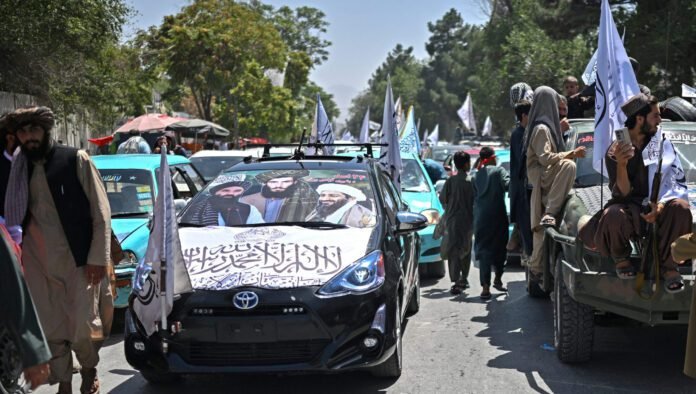
The US withdrawal from Afghanistan in 2021 and the Taliban’s return to power revived a central post-9/11 concern: whether Afghanistan could again offer an environment in which terrorist organizations could regroup, recruit, and assist allied networks. 

One enduring consequence of the war is the unresolved case against Khalid Sheikh Mohammed, whom US authorities describe as the alleged mastermind of the attacks. 

Captured in Pakistan in 2003 and transferred to Guantanamo Bay in 2006, Mohammed has spent more than two decades in detention without trial. A military judge has scheduled his trial, alongside three co-defendants, to begin on June 5, 2028—nearly 27 years after 9/11. 

The delay reflects the legal and political complications of the post-9/11 detention system. Prosecutors recently declined to appeal a ruling excluding statements Mohammed made after years of Central Intelligence Agency detention and interrogation, choosing instead to preserve the 2028 trial schedule. 

Recent UN assessments indicate that al-Qaida maintains a persistent presence in Afghanistan under Taliban rule. The UN Analytical Support and Sanctions Monitoring Team said in its August 10 report that al-Qaida’s status and strength in Afghanistan remained unchanged. 

The report said the terrorist threat emanating from Afghanistan also remained largely unchanged and that the ability of numerous terrorist groups to operate there posed an enduring threat to neighboring countries and Central Asia. 

Al-Qaida provided ideological guidance, training, and support to Tehrik-e Taliban Pakistan (TTP) in its insurgency against Pakistan, according to the report. 

The UN report said al-Qaida’s official media arm, As-Sahab Media Foundation, published a statement on April 28 supporting the Taliban and, for the first time, TTP in operations against Pakistan. 

Al-Qaida in the Indian Subcontinent (AQIS) has evolved from a fragmented group into a regional terrorist entity, according to the UN assessment. The report said AQIS had established logistical and financial networks that operated through decentralized, scattered cells rather than large units. 

The report said AQIS leaders remained in Kabul and had been issued Afghan identity documents, known as tazkiras, suggesting close cooperation between the Taliban and AQIS. 

25 years after 9/11, al-Qaida has a larger territorial presence across three continents than at any point since [its] founding

Alex Mishra, a Washington-area policy analyst focusing on Afghanistan, al-Qaida, and geopolitical alignments, told The Media Line that “25 years after 9/11, al-Qaida has a larger territorial presence across three continents than at any point since founding.” 

Mishra argued that the group’s lower profile should not be mistaken for disappearance or defeat. 

Asif Durrani, Pakistan’s former special representative for Afghanistan and a former ambassador to Iran and the United Arab Emirates, offered a different assessment. He told The Media Line that “there was relatively little to discuss about al-Qaida,” which he described as an organization that had “lost its teeth and appeal.” 

According to Durrani, the Islamic State (ISIS), also known as Daesh, has displaced al-Qaida as the more prominent jihadist threat. ISIS once controlled large areas of Iraq and Syria at the height of its power. 

“Terrorism in its known form has lost its importance; the [term] … ‘war on terror’ is no longer a currency in international politics,” Durrani said. 

Terrorism in its known form has lost its importance; the [term] … ‘war on terror’ is no longer a currency in international politics

Durrani pointed to the case of Ahmed al-Sharaa, Syria’s president, noting that he was once associated with jihadist groups but, in his current political role, has gained acceptance from President Donald Trump and several European leaders. 

Kamal Alam, formerly a nonresident senior fellow at the Atlantic Council and an expert on Afghan affairs, took a more cautionary view. He told The Media Line that “al-Qaida’s presence in Afghanistan is at its highest level since the Taliban’s return to power in 2021 and the group’s expulsion by US Special Forces.” 

Alam said the killing of al-Qaida leader Ayman al-Zawahiri in Kabul after the Taliban takeover demonstrated the group’s continued presence in Afghanistan. 

The Taliban publicly denies hosting terrorist groups, but Alam said UN agencies and independent assessments have documented the presence of al-Qaida, ISIS, and other regional and transnational armed groups in the country. 

While describing al-Qaida as more decentralized and competing with ISIS for influence, he said the broader threat extends beyond the two groups and involves armed networks linked to Syria, Iraq, and Africa. 

“The key concern is not the label, al-Qaida or ISIS, but the growing network of groups with regional and international connections,” Alam said. 

Atlanta-based geopolitical analyst Erik Lehmkuhle told The Media Line that “the Taliban’s return to power had given al-Qaida a permissive environment to operate.” 

The Taliban’s return to power had given al-Qaida a permissive environment to operate

Lehmkuhle cautioned against interpreting al-Qaida’s reduced visibility abroad as weakness or compliance, saying the group was pursuing “a deliberate strategy of operational patience.” 

Andy Vermaut, a Brussels-based human rights activist and counterextremism expert, said the unresolved Mohammed prosecution remains one of the most serious failures of the post-9/11 system. 

“A quarter-century after 9/11, the inability to try alleged mastermind Khalid Sheikh Mohammed is still a major outstanding problem,” Vermaut told The Media Line. 

Vermaut said torture, including waterboarding, and the exclusion of statements obtained under coercion have undermined the prosecution and prolonged the case. He argued that the United States should have pursued a public trial under ordinary law rather than creating a system that has left the case unresolved for two decades. 

Afghan Taliban chief spokesman Zabiullah Mujahid rejected Afghan responsibility for the 9/11 attacks, saying the plotters received training, housing, and logistical backing outside Afghanistan and that no domestic infrastructure or complicity was involved. 

“There was no such arrangement or infrastructure in Afghanistan at that time,” he told The Media Line. 

Mujahid argued that Afghanistan had since undergone significant changes following “20 years of American aggression,” after which the Islamic Emirate and Islamic rule were established in the country. 

He insisted that the government neither permits foreign armed factions to operate within its borders nor harbors foreign organizations, dismissing warnings of terrorist safe havens as foreign propaganda. 

Without naming al-Qaida, Mujahid further claimed that such groups now have broader opportunities to live and operate in “Arab countries.” He did not identify the countries to which he was referring. 


How Donald Trump’s war in Iran is failing the legitimacy test in the eyes of US voters

0
how-donald-trump’s-war-in-iran-is-failing-the-legitimacy-test-in-the-eyes-of-us-voters
How Donald Trump’s war in Iran is failing the legitimacy test in the eyes of US voters

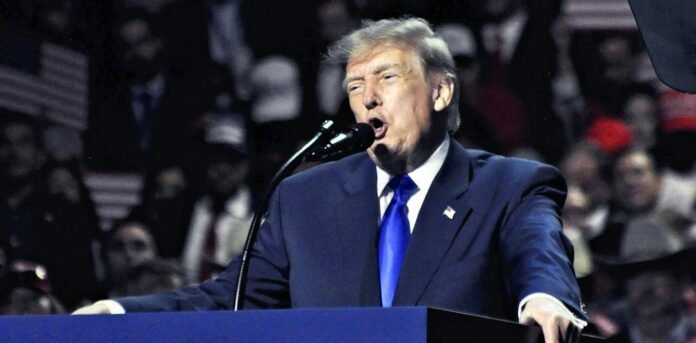
Donald Trump now has a new proposed timetable for his war with Iran, albeit without a clear purpose. Heading to the Republicans’ midterm convention in Texas this week, the US president told reporters the war would end “immediately after the election”. This is coming from a president seven months into a conflict that he predicted would last only weeks.

For all that time, the US has been jostling with Iran for military and strategic control over the Strait of Hormuz while seeking to further degrade the Islamic Revolutionary Guard Corps’ military capabilities. But without strategic direction, victory is impossible and Iran’s leverage over the Strait allows it to keep defining the negotiating battlefield.

Capability without a definition of victory produces exactly what we have watched for weeks: tit-for-tat strikes that have failed to move the needle on the Strait, let alone Iran’s nuclear program.

But behind the shortcomings of Trump’s kinetic application of hard power lies a more profound failure. As much as wars depend on a coherent military strategy, they also need a strategic narrative – a story that provides and sustains the legitimacy of war. Trump’s war has never had one.

With the mid-term elections looming in November, the political costs of that absence are only becoming more acute for Trump and the Republican party.

Consider the inventory of justifications offered since February. Before the war began, Trump promised anti-government protesters that “help is on its way”. But when the bombing started it was about destroying Tehran’s nuclear and ballistic missile programmes. Then, within a day, it was also about forcing regime change.

Over several months, none of these ambitions were realised. In August, the vice-president, JD Vance, announced a new hierarchy of aims: keeping oil and gas cheap for Americans as “goal No. 1”, with Iran’s nuclear question demoted to second place.

Last week Vance went further by insisting that there isn’t a “war” at all, even though Iran had fired missiles at Kuwait in retaliation to US strikes on the cities of Bandar Abbas, Ahvaz, Aghajari, and Sirik. With each new justification and framing of this conflict, the original rationale for the war becomes harder to identify.

This matters because legitimacy is itself a source of state influence, especially in the context of wars of choice. It is what generates societal resolve at home, sustains the support of allies, and preserves the institutional prestige of the military asked to do the fighting. Strategic narratives are the vehicle through which such legitimacy is achieved; they can convert painful sacrifice into a cost that is worth sustaining.

And there is now a great deal of sacrifice that has yet to be given meaning. US Navy sailors enforcing the blockade have suffered from low morale – one crew member of the USS Abraham Lincoln went overboard in August due to mental health, after a record deployment without a port call.

American military fatalities resulting from Iranian retaliatory strikes on US bases in the region have been quietly reclassified by the Pentagon and moved out of the war’s official death toll. There are mounting accusations of civilian casualties in Iran, where Iranian officials claim that a US strike targeted a wedding ceremony near the Hormuz coast last week that killed four.

Unconvincing narrative

These losses strain America’s image among allies. However, the audience that most needs convincing is Trump’s own. His Maga approach was built on the premise that: “Great nations do not fight endless wars” and his support base is clearly concerned about lengthy foreign entanglements. Yet these are the voters now being asked to absorb the war’s costs without a compelling story that justifies them.

Anti-war protest in Washington DC, April 2026. Piles of Maga hats in the foreground.

Donald Trump and the Republican Party will need to convince US voters that the war against Iran is justified. Sue Dorfman/ZUMA Press Wire

Come the mid-terms, they will inevitably vote with inflation and gas prices in mind when they reach the ballot box. Polling already shows an erosion in support for the war.

Wars of choice have failed this legitimacy test before – sometimes before a single shot was fired. In August 2013, the then UK prime minister David Cameron asked parliament to sanction airstrikes against Syria’s Assad regime after chemical attacks and lost.

The government’s case rested on a story of salvation, national standing and the moral duty to act. But that narrative could not compete with a rival story of loss, in which intervention meant repeating the errors of Iraq: mission creep, the futile sacrifice of soldiers’ lives, and further damage to a reputation already bruised by two inconclusive wars in Iraq and Afghanistan.

There is an uncomfortable lesson for Washington here. The British case suggests that once a public comes to view a war of choice through the frame of loss – futile sacrifice, eroded prestige, no discernible end – no quantity of firepower can restore its legitimacy. The problem Trump has is that he initiated a shooting war with Iran first, leaving the narrative vacuum to be filled afterwards. Now it is filled with images of a bombed wedding, exhausted sailors and vessels sitting stranded in the Strait of Hormuz.

Stories which successfully sustain public consent for military force often share two main ingredients: an immediate threat to the homeland, and an opportunity for the initiator to assume the role of saviour. Twenty-five years ago, the September 11 attacks supplied both in their most visceral form. This is why the invasion of Afghanistan garnered public and allied support.

Trump currently has neither of these to fall back on. There is no communicated threat to Americans at home and no one is being rescued. There is only a rotating stock of rationales, none of which has held long enough to become convincing.

Until his administration can communicate a narrative that speaks to an existential Iranian threat at home and casts America as the saviour of something worth saving, Trump’s story will be written for him.

He risks being remembered as just another gung-ho president who rushed into a Middle Eastern war he did not understand – the very legacy he promised voters he would never repeat.

Boy developed “toasted skin” condition from using a laptop every day

0
boy-developed-“toasted-skin”-condition-from-using-a-laptop-every-day
Boy developed “toasted skin” condition from using a laptop every day

Fears that modern electronic devices may harm children are nothing new. Gadgets with screens of any size have long been allegedly melting, rotting, and/or corrupting the brains of youths for decades. However, a medical case report published this week offers a new and alarming way our digital doodads may cause physical harm.

In BMJ Case Reports, two UK doctors, Mara Znagoveanu and Edward Artley, report the case of a boy who came to an emergency department with alarming marks on his abdomen. The marks were described as being in a patch about 15 centimeters (six inches) wide, made of flat, reddish-brown “interlacing lines forming irregular circles and a lace-like morphology.” A picture of the marks is here.

Mysterious marks

The boy, whom they described only as being in “mid-childhood,” was not in any pain, and the rash was not warm to the touch or tender. He and his parents said they couldn’t think of any recent injuries or trauma that might explain the marks. He was otherwise healthy, hadn’t recently been ill, and had no systemic symptoms, such as fever or fatigue. Everything about the boy’s health, growth, and medical history looked normal.

Nurses in the emergency department initially described it as “spontaneous bruising.” A physical exam yielded no insights; there were no other skin abnormalities, abdominal tenderness, or signs of organ trouble. They did a chest X-ray, searching for an explanation. It revealed a small patch of whiteness over his left lung, indicating cells or fluid, such as pus or blood.

As the doctors were taking blood for further testing, the boy told them that he did have one injury: About a week prior, around when the marks appeared, he was play-fighting with his siblings and got pushed into a chair. He said he didn’t mention it before because he didn’t want his siblings to get in trouble.

The new information pointed the doctors to the idea of an underlying traumatic injury. They did a computed tomography (CT) scan, looking for internal abdominal injuries. But they found none, besides the small blip in his lungs that the X-ray showed—which could have just been incidental from a minor infection.

Without finding anything else of note, the doctors discharged the boy with a short course of antibiotics used to treat lung infections. But they conveyed their uncertainty about what was actually going on, advising his parents to check back if anything changes or if the marks didn’t go away.

Getting warmer

Two weeks later, the boy was back in the hospital, and the marks were worse. They were bigger, darker, and tender. There were patches of pink, and some of his skin was visibly breaking down. A picture of the marks is here.

Based on the appearance, the doctors started reconsidering some sort of bruising and started asking him more questions. This is when he mentioned that he was homeschooled and used a laptop for his schoolwork. He said he typically did his work by resting his laptop on his abdomen while he worked, sometimes for up to eight hours a day, and often while the laptop was charging. Then they understood what it was.

The doctors diagnosed the boy with erythema ab igne (EAI), which translates from Latin as “redness from fire” and is also sometimes called “toasted skin syndrome.”  This is a skin condition caused by repeated, prolonged exposure to low-grade heat—heat not hot enough to cause actual burns. It’s most often seen in adults, and common causes include using heating pads or hot water bottles for chronic pain or sitting too close to space heaters. Some people also develop it from certain occupational hazards, like glassblowing and metal work. EAI produces a lace-like rash, just like the boy’s.

It’s unclear how EAI develops exactly. But researchers hypothesize that chronic heat exposure leads to damage to superficial blood vessels and the release of red blood cells, forming the tell-tale red reticulated pattern.

While the boy’s condition looked ominous, the good news is that EAI is generally benign and reversible—once you remove the heat source. For severe or long-term conditions, some pigmentation and scarring can remain. But the boy’s parents checked back in over several months, reporting that the rash faded and then completely resolved. Hopefully, he also got some sort of laptop stand.

Got a Connection to Dominican Baseball? Text Us on WhatsApp.

0
got-a-connection-to-dominican-baseball?-text-us-on-whatsapp.
Got a Connection to Dominican Baseball? Text Us on WhatsApp.

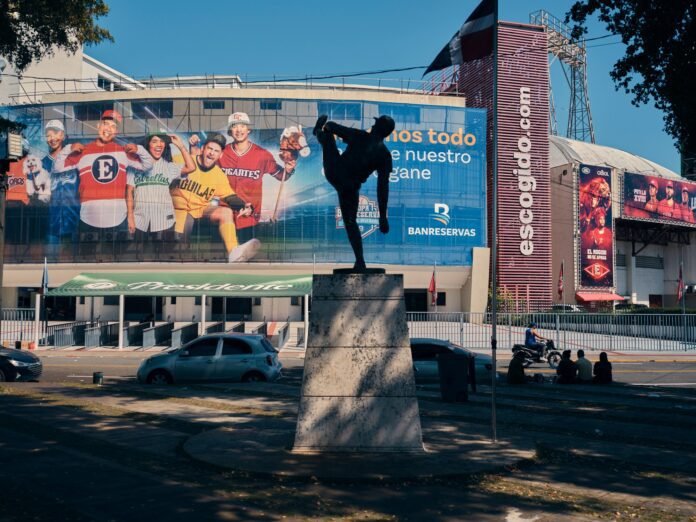
Major League Baseball teams sign more players from the Dominican Republic each year than any nation besides the U.S. Almost every neighborhood is home to a baseball field where kids as young as 4 begin learning to play. In our months of reporting, we’ve rarely come across anyone in the Dominican who doesn’t have some connection to the sport: a sibling or uncle or son who aspires to be a professional player, or who once did.

As beloved and important as baseball is in the Dominican, industry practices can hurt young players and their families. Dozens of trainers and players have told us that adolescents are expected to perform at levels never asked of their peers from other countries and enter into agreements with teams at much earlier ages. (We just published a story about abusive moneylending practices that have sprouted from this system.) We’re planning more stories brought to our attention by this community.

We want this work to reach people whose lives are touched by the issues we’re investigating. If that’s you, we want you to be able to easily connect with our reporting team and share tips or experiences you think we should know about Dominican baseball. The more people we hear from, the more impactful our reporting on these complex issues can be. (Learn more about ProPublica and our mission.) 

For this series, we’re opening a WhatsApp line because it’s a popular way to keep in touch in the Dominican, and international calls and texts are free. All you have to do is text “baseball” to our WhatsApp number, 1-917-207-6447.

If you’re not a WhatsApp user, if you can still get in touch with our reporting team via email:

If you would prefer another way to get in touch, see our advice here.

What can you expect if you text our number? 

You’ll get a link to our latest stories about baseball. We’ll also ask about your connection to baseball and ask you to share anything that you think our reporters should look into as we continue investigating. 

If you give us permission, we’ll also send you quick updates from our series every now and then. 

What kind of tips and comments are helpful? 

We want to hear about baseball-related issues and experiences that are important to you, whether they’re connected to finances, health, education or something else. Below are a few of the topics we’re already reporting on; if you have related experiences to share, we would appreciate hearing about them.

  • Illness and injury related to performance pressure 
  • Wide availability of anabolic steroids and consequences of use
  • Conditions at training academies (pensiones)

If you have a connection to baseball — whether you’re a current or former player, trainer, parent of a player, doctor who treats athletes, someone who works for an MLB team or you have some other link — we would love to hear from you.

If I don’t have a connection to baseball but want to follow along, should I sign up?

Yes, we’ll share updates from our investigations, along with links to our latest reporting.

What if I know someone who has a connection to baseball?

Please send them a link to our baseball series or have them text “baseball” to our WhatsApp number, 1-917-207-6447. And thank you — we need to reach as many people as we can.

We will read everything you send and follow up with you if we have further questions or are interested in including something you’ve shared in our investigations. 

We take your privacy very seriously. Our reporters speak to people every day who want to share information but fear retribution. Our reputation is built on protecting sources, and we take that responsibility to heart. You can request to speak on background, which means you would not be named in our stories.

Will ProPublica sell my information to anyone?

No.

We must challenge the UAE’s role as a haven for hostile state activity

0
we-must-challenge-the-uae’s-role-as-a-haven-for-hostile-state-activity
We must challenge the UAE’s role as a haven for hostile state activity

The international community has rightly become more alert to the threat posed by hostile states beyond their own borders. Putin’s war machine depends on networks that circumvent Western sanctions. Beijing’s repression does not stop at China’s borders. And dirty money and cross-border financial crime undermine the rule of law at home. Concerningly, the UAE has become a haven for all three problems at once.

Addressing this now matters because as the West is deepening its economic relationship with the UAE. The European Union is considering a bilateral free trade agreement, while the UAE is also pursuing accession to the Comprehensive and Progressive Agreement for Trans-Pacific Partnership (CPTPP). A closer relationship may bring economic opportunities, but the West should not avoid confronting some uncomfortable questions.

For me, the most disturbing aspect concerns the Uyghur people.

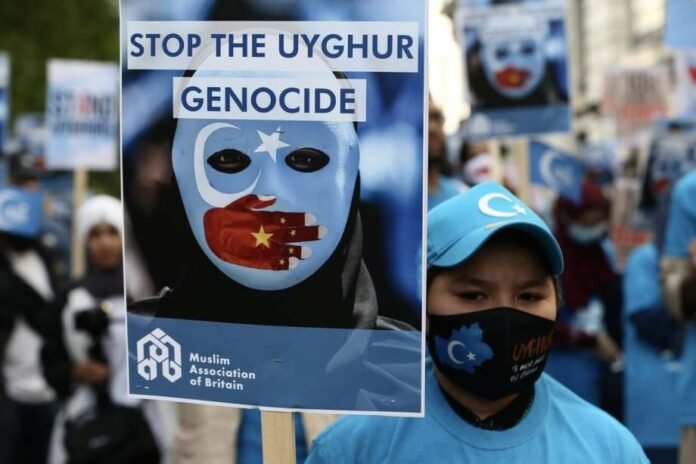
The Chinese Communist Party (CCP) has subjected Uyghurs to a campaign of mass arbitrary detention, surveillance, religious and cultural repression, forced labour and torture in the Uyghur region. The independent Uyghur Tribunal concluded that China had committed genocide against the Uyghur people through the imposition of measures intended to prevent births. The UN Human Rights Office concluded in 2022 that abuses may constitute crimes against humanity, and Human Rights Watch recently reported that severe repression, including pressure on Uyghurs abroad, continues.

Beijing increasingly pursues those who escape its reach through what has become known as transnational repression. And the UAE has featured repeatedly in the evidence.

Research by the Uyghur Human Rights Project and Oxus Society identified the UAE among six Arab states participating in China’s transnational repression of Uyghurs. Human Rights Watch has previously documented reports of Uyghurs detained in the Emirates facing deportation.

Associated Press reporting found that UAE authorities arrested and deported at least five Uyghurs to China in late 2017 and early 2018. In one reported case, a Uyghur detainee was interrogated in the UAE by people believed to be Chinese police.

There are wider concerns about Chinese security activity. Freedom House reported that in 2021 UAE authorities detained a young Chinese dissident transiting Dubai airport and permitted Chinese embassy staff to interrogate him. His girlfriend said she was separately detained for eight days in what she described as a Chinese-run “black site” in Dubai.

READ: Netanyahu warned by UAE president before Oct. 7 events, failed to brief security chiefs: Haaretz

For Uyghurs, this is not an abstract geopolitical argument. People who escaped the CCP have discovered that its reach can extend thousands of miles beyond China’s borders. A country seeking a privileged economic relationship with Britain should prevent such repression, not become another place in which it is allowed.

Nor is China the only concern. Western governments have repeatedly identified UAE-based businesses as part of networks sustaining Russia’s war economy. The UK and EU sanctioned companies for their role in trading Russian oil, using opaque corporate structures and deceptive shipping practices to facilitate Russian oil trading.

The US Treasury has described the UAE as one of the jurisdictions Russia has exploited to obtain foreign-made technology and equipment, and has sanctioned numerous UAE-based businesses for supplying high-priority goods to Russia. It has separately targeted Dubai-based financial and cryptocurrency operations for facilitating Russian finance and sanctions evasion.

Then there is illicit finance and the rule of law. The UAE has made reforms and was removed from the Financial Action Task Force’s ‘grey list’ in 2024. Britain and the UAE also maintain a formal partnership to tackle illicit financial flows, with this month marking the anniversary of its strengthening. But cooperation should be judged by outcomes, not announcements.

Consider the case of Muhammad Tahir Lakhani and Muhammad Ali Lakhani, British citizens who were found liable for fraud of approximately US$45 million by the UK High Court. The judgment found that false representations had knowingly been made to lenders. Despite these rulings, the Lakhanis continue to reside in the UAE and have not satisfied the judgment. 

Difficulties in enforcing cross-border judgments on fraud in the UAE have become so significant that legislators have raised the Lakhani case directly with ministers. Yet when asked what representations had been made to the UAE authorities and what guidance was available to victims, ministers declined to provide information. That silence offers little reassurance that the existing system is working.

These issues should not be treated in silos. They reveal a broader vulnerability. An international commercial hub can also become valuable terrain for authoritarian states, sanctions evaders and those seeking to put assets, and themselves, beyond the effective reach of justice.

The answer is not to turn our backs on countries such as the UAE. The West has legitimate strategic and commercial reasons to work with it, and closer cooperation can be part of the solution. Indeed, the UK will host the Illicit Finance Summit this December, strengthening global enforcement against dirty money, and forging new partnerships on information sharing and asset recovery.

Trade cannot be divorced from national security, human rights and the rule of law. Before the EU enters any new bilateral trade agreement with the UAE, commissioners should demand measurable progress: no complicity in China’s persecution of Uyghurs; demonstrable action against sanctions-evasion; and effective mechanisms through which lawful cross-border judgments can be recognised and enforced.

OPINION: Indonesia-UAE ties need to go beyond the dam

The views expressed in this article belong to the author and do not necessarily reflect the editorial policy of Middle East Monitor.

LinkedIn beats “BrowserGate” lawsuits over scanning users’ Chrome extensions

0
linkedin-beats-“browsergate”-lawsuits-over-scanning-users’-chrome-extensions
LinkedIn beats “BrowserGate” lawsuits over scanning users’ Chrome extensions

LinkedIn beat two lawsuits over its practice of scanning users’ browser extensions, with a judge granting the Microsoft subsidiary’s motion to dismiss the cases. The users who sued LinkedIn failed to adequately allege that they have standing to sue because neither asserted that they “had browser extensions installed that conveyed private information to LinkedIn,” ruled Judge Vince Chhabria in US District Court for the Northern District of California.

In his ruling on Tuesday, Chhabria gave the plaintiffs leave to amend their complaints but said he doubts they can make a plausible case. “Given LinkedIn’s further arguments that users voluntarily download browser extensions, which by their nature intentionally expose data to websites, it seems unlikely that the plaintiffs will ever be able to allege a privacy violation, much less prevail at the end of the day,” Chhabria wrote.

California residents Nicholas Farrell and Jeff Ganan separately filed class actions against LinkedIn in April, seeking to represent themselves and other LinkedIn users. Ganan’s attorney, J.R. Howell, said he is evaluating whether to bring the claims in a California state court, which has different requirements on standing, or to appeal the US district court ruling in the US Court of Appeals for the Ninth Circuit.

“The federal court determined that it lacked jurisdiction to hear the LinkedIn users’ claims,” Howell told Ars today. “The court did not adjudicate whether LinkedIn’s surveillance practices were lawful. The ruling is not a vindication of the mass surveillance program alleged in our complaint.”

“BrowserGate” stems from dispute over scraping

As we wrote in April, the plaintiffs filed their lawsuits after a report alleged that “LinkedIn Is illegally searching your computer.” LinkedIn did not deny that it scans browsers to identify extensions and already disclosed in its privacy policy that it uses cookies and similar technologies to collect information about each user’s “web browser and add-ons.”

The so-called “BrowserGate” report was issued by a German entity called Fairlinked, which describes itself as a trade association and advocacy group for commercial LinkedIn users. It appeared to be run by the same people behind Teamfluence, an Estonian software company that sued LinkedIn in Munich after its CEO was banned by LinkedIn.

Howell, Ganan’s lawyer, also serves as counsel for Fairlinked in the US. In a June court filing, Howell wrote that “my investigative work with Fairlinked e.V. and Browsergate occurred before my office filed the Ganan complaint.”

LinkedIn said in a motion to dismiss that it uses detection systems to identify the type of automated scraping and bot activity that Teamfluence was deploying. LinkedIn told the court:

Teamfluence, an Estonian platform, is one of those groups that traffics in scraping. It markets a Google Chrome browser plug-in designed to “[i]dentify 100% of your LinkedIn traffic.” LinkedIn caught it and banned its CEO from the platform, leading to a legal dispute in Germany. A German tribunal recently determined that “[t]he ‘Teamfluence’ software violates [LinkedIn’s User Agreement],” and that LinkedIn’s “suspending the Claimants’ user accounts is objectively justified overall and not arbitrary.”

Judge: Plaintiffs did not allege concrete harm

After the German court order, the Teamfluence-linked group called Fairlinked emerged with the BrowserGate report, which attracted coverage on a number of tech news sites.

“No surprise: the founder of Teamfluence sits on Fairlinked’s board,” LinkedIn’s motion said. “Having been caught for scraping, and held to have violated LinkedIn’s terms, he has now embarked on an international retaliation campaign by manufacturing a fake privacy controversy. But it is Teamfluence that is scraping data without consent.” Teamfluence’s CEO and founder is named Steven Morell.

Chhabria’s ruling said that neither Farrell nor Ganan “alleges that they, specifically, had browser extensions installed that conveyed private information to LinkedIn. Ganan never alleges that he had any extensions installed at all. Farrell alleges that he ‘has long had several browser extensions installed,’ and that, in general, browser extensions ‘often reveal sensitive private information about its users,’ but he never alleges that one of his own browser extensions revealed such information.”

The judge said the “allegations are insufficient to confer standing because only ‘those plaintiffs who have been concretely harmed by a defendant’s statutory violation may sue that private defendant over that violation in federal court.’ Identifying categories of private information that hypothetically could be revealed by surveillance of browser extensions is not enough to allege standing ‘particularized to a plaintiff’s circumstances,’” as precedent requires.

Ganan argued in a filing that the harm is “the unpermitted probe, not its yield,” but Chhabria wrote that “a plaintiff must identify ’embarrassing, invasive, or otherwise private information collected by’ the defendant.”

Lawyer vows to continue case

LinkedIn’s motion to dismiss said it uses detection tools “to identify whether a visitor to the platform is operating a browser extension that could threaten the security and integrity of the platform,” and that “LinkedIn detects information that browser extensions openly provide to all websites in order to interact with them. The information is publicly available and in no way private. And LinkedIn’s right to detect this information is disclosed and agreed to by all its members. So is LinkedIn’s right to use security-focused vendors to detect and prevent potential abuse.”

LinkedIn said that some Chrome browser extensions extract job listings and related data from the company’s website, and that LinkedIn’s terms prohibit extensions that scrape or copy data from the site. LinkedIn’s “rich platform and robust community make LinkedIn a target for opportunistic software developers who seek to scrape its data for their own purposes,” the company said.

Howell told Ars today that the Ganan lawsuit “alleges that LinkedIn deployed code without users’ consent to surveil their internal computing environments, collect information, and route data to third parties.”

“The companies developing and deploying these technologies should not get to decide, on their own, the boundaries of our privacy,” Howell said. “As their ability to observe and profile people expands, meaningful consent and judicial scrutiny become more important. … We intend to pursue these claims in a forum that can adjudicate them on their merits.”

We also contacted Farrell’s lawyers about the judge’s ruling and will update this article if we get a response. Although Farrell’s lawyers don’t appear to have coordinated directly with Fairlinked, the claims in their lawsuit were based largely on the group’s BrowserGate report.

Brent holds above $100 as tanker attacks dampen hopes for Hormuz traffic recovery   

0
brent-holds-above-$100-as-tanker-attacks-dampen-hopes-for-hormuz traffic-recovery - 
Brent holds above $100 as tanker attacks dampen hopes for Hormuz traffic recovery   


Oil prices rose on Thursday, extending gains that took Brent over $100 a barrel in the previous session, as traders braced for deeper supply disruptions after Iran and the United States launched their largest ​attacks on shipping since their six-month-old conflict began.

Brent crude futures were up by 40 cents, or 0.4%, at $101.61 ​a barrel by 0814 GMT. U.S. West Texas Intermediate crude rose by 49 cents, or 0.51%, ⁠to $96.54.

Brent prices have surged nearly 30% from lows touched in early August as a permanent agreement between the U.S. and ​Iran to cease attacks never materialised and fighting resumed later in the month.

“The recent run-up in prices lays bare the market’s approach: this conflict ​will last longer than anticipated even a month ago, let alone at the beginning of the summer. If oil supply and exports are diminished, the oil balance remains tight and prices remain elevated,” PVM analyst John Evans said.

U.S. President Donald Trump warned that the U.S. may hit Iran’s Pickaxe ​Mountain, urging Tehran to be cautious, and said that the war will likely last beyond the November midterm elections.

Iran said ​it had attacked 10 ships near the Strait of Hormuz on Wednesday, after the U.S. sank five Iranian oil tankers. Iran’s Islamic Revolutionary Guard ‌Corps ⁠said it would escalate its response to any further attacks.

Oil flows through the Strait of Hormuz, the waterway that before the war carried roughly a fifth of global oil and gas supplies, remain far below pre-war levels, while pressure is also mounting in the Red Sea as Iran-aligned Houthi militants have stepped up strikes against Saudi Arabia.

While fears of prolonged and more severe ​supply disruptions in the Gulf ​have lifted Brent above $100, analysts ⁠say the durability of the rally will hinge on China.

In the physical crude oil market, the dated Brent oil benchmark, against which roughly two-thirds of supply is priced, has been ​above $100 since September 3, according to LSEG data.

China, the world’s largest crude importer, ​has stepped up ⁠purchases in recent weeks after months of subdued demand, boosting physical crude markets, ING analysts said in a note.

If Chinese buying continues to recover, it could amplify the impact of any supply disruptions and drive prices higher, but a pullback in imports could temper ⁠the ​market’s gains, ING said.

“For months the bearish case rested on soft Chinese demand ​as a reliable dampener. That dampener was never structural. It was a drawdown, a buffer being spent, and buffers empty,” said David Jorbenaze, global oil ​market lead at commodities information provider ICIS.

Source:  Reuters

More than 70% of new solar is being built in states that voted for Trump

0
more-than-70%-of-new-solar-is-being-built-in-states-that-voted-for-trump
More than 70% of new solar is being built in states that voted for Trump

States that voted for Trump are leading the country in solar adoption. In recent years, Republican opposition to solar has mounted, with the Trump administration making it more difficult to build solar on federal land and Congress scaling back federal tax credits for the industry. But a new report from the Solar Energy Industries Association has found that states that voted for Donald Trump in the last presidential election counted for eight of the top 10 solar-building states in the country in the first half of the year. 

“At least at the macro level, Republican-led and governed states are not only open to but embracing solar energy as a technology,” said Tim Pawlenty, CEO of the Solar Energy Industries Association and a former Republican governor of Minnesota. 

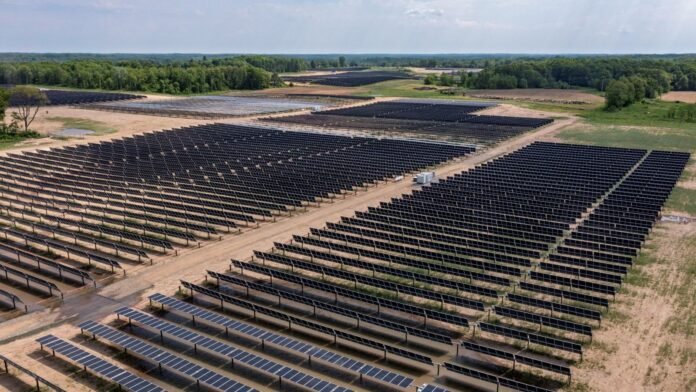
Altogether, solar construction in Trump-supporting states has buoyed an ongoing explosion in national solar deployment. The country added more than 11 gigawatts of solar power in the second quarter of 2026, an increase of 45 percent compared to the same period in 2025. States that supported Trump in the last election made up close to three-fourths of that growth.

Texas and Florida, the two largest Trump-supporting states by population, were ranked first and third, respectively. Those Sun Belt states have been consistent leaders in solar construction, as have Indiana, Ohio, and Arizona, which have also remained in the top 10 solar-building states since 2024. Missouri, Arkansas, Michigan, and Utah also reached the top 10 in some, but not all, of those years.

Those red states are fostering solar development through their general pro-business attitude and booming electricity-hungry industries, even if they don’t support solar for climate-related reasons. Republican-leaning states tend to have more available land and easier permitting processes for energy projects, Pawlenty said. That attractive business environment has also drawn electricity-consuming industries, like manufacturing and data centers, to red states, producing demand for quickly constructed, cheap energy sources like solar.

“Red states, as a general proposition, have sort of a pro-build mentality. They want to build things,” Pawlenty said.

But the future for solar in red states is more complicated. After Congress passed the Inflation Reduction Act in 2022, energy companies investing in solar projects and homeowners buying solar for their rooftops received tax credits for their investments. But last year, Congress passed the One Big Beautiful Bill Act and brought an early end to the credits. Credits expired for most uninitiated solar farms on July 4, 2026. As a result, solar developers rushed to start construction before the deadline, helping create a bump in solar installations in the second quarter of 2026. The lack of tax credits could make solar growth less certain in the future, especially for rooftop solar projects, which have already begun declining in 2026, the solar industry report notes.

The nature of this uncertainty is not the same for all solar-investing, Trump-voting states. While Texas has remained a titan in solar development, earning the top spot in 2024, 2025, and the first half of 2026, other states are just beginning their solar booms. Michigan, a politically mixed state where a majority of voters chose Trump in 2024, reached the top 10 for the first time this year. The state has climbed steadily from 23rd place in 2024 to fourth in the first half of 2026. 

Whether Michigan, which lacks Texas’ year-round strong sunlight, can maintain that solar energy growth after the end of federal tax credits is another question, said Michael Craig, an associate professor in the University of Michigan’s School for Environment and Sustainability. Solar farms may remain economically feasible to build without the credits only in areas with the right weather. 

“The economics of solar largely depends on your solar resource,” said Craig. ”The better the resource, I’d say the less important the tax credits are.” 

Without federal tax credits, Michigan’s solar industry will likely fall back on state clean energy goals, which create demand for solar by mandating that utilities build renewable power sources. Though Michigan voted for Trump in 2024, the state has a Democratic governor and Democrat-led state Senate. The state established a law that utilities must generate 50 percent of their power from renewables by 2030. That requirement, in combination with data center electricity demand, is likely a large factor in the state’s rapid solar rise, Craig said. 

Nonetheless, some strategists have argued the solar industry needs tax credits less than it needs an easier federal permitting process and continued power demand to support growth. Even if Congress never reinstates the tax credits, those structural factors could push the industry forward, especially because solar requires relatively little time to build compared to other power sources. Regardless of cost, tax credits, or even geography, that speed still counts for something, said Rachel Skaar, communications director for Solar Energy Industries Association.

“Solar and storage can deploy so much faster than other technologies,” Skaar said. “So when we talk about the need for energy right now, solar and storage can provide it.”


0FansLike
0FollowersFollow
0FollowersFollow
0SubscribersSubscribe
- Advertisement -
Google search engine

Recent Posts