16.1 C
London
Tuesday, September 8, 2026
Home Blog

Microsoft Store Gradually Returns To Syria After Years of Restrictions  

0
microsoft-store-gradually-returns-to-syria-after-years-of-restrictions  
Microsoft Store Gradually Returns To Syria After Years of Restrictions  


[DAMASCUS] Users in Syria have begun regaining access to the Microsoft Store in recent days without the need for virtual private networks (VPNs), marking a new development after years of restrictions that limited Syrians’ access to a range of digital services provided by US technology companies.  

Users inside Syria said they were able to open the store through Syrian internet connections, browse apps and games, download and install them, and update software directly. Previously, accessing the service often required a VPN or a connection routed through networks outside the country.  

Access, however, does not yet appear to be universal. Other users said the store remains blocked for them or that they are still unable to access some of its services, suggesting that availability may be rolling out gradually or could vary depending on internet service providers or account settings.  

Microsoft has not yet issued an official statement explaining the apparent restoration of access in Syria or why availability continues to differ among users.  

The development is significant beyond access to an app store. For years, Syrians faced restrictions on US-based digital products and services due to sanctions and other controls on business and technology services provided to the country.  

Syrian users, technology companies, and software developers often relied on technical workarounds to bypass geographic restrictions and access certain platforms, while other services remained entirely or partially unavailable.  

The change comes as US policy toward Syria undergoes a broader transformation, with Washington easing or removing a number of restrictions previously imposed on the country. Those changes have opened the way for international companies to reassess which products and services they can legally provide to users in Syria.  

So far, however, Microsoft has not publicly linked the apparent restoration of Microsoft Store access directly to those policy changes. It therefore remains unclear whether the shift in US policy is the immediate reason for the service’s availability.  

The return of the Microsoft Store also does not necessarily mean that all Microsoft products and services are now available in Syria. Certain subscriptions, payments, cloud products, and other services may be subject to separate rules and restrictions.  

Still, the ability of some Syrians to access the Microsoft Store without using a VPN represents another indication that part of the digital isolation the country experienced for years may be beginning to recede.  

The extent of that shift could become clearer in the coming weeks, particularly if Microsoft expands access to additional services and other major US technology companies take similar steps to restore their products and platforms for users in Syria. 


Iran war: Tehran’s assertive rhetoric signals a new and dangerous phase in conflict

0
iran-war:-tehran’s-assertive-rhetoric-signals-a-new-and-dangerous-phase-in-conflict
Iran war: Tehran’s assertive rhetoric signals a new and dangerous phase in conflict

Iran’s threat to target American warships with an enhanced ballistic missile appears to mark a new and potentially more dangerous phase of the Middle East conflict, six months in. Tehran says its solid-fuel Qassem Basir missile enables it to “take action against any threat, even before it is carried out”. Reports have suggested that the Qassem Basir was the missile used in tests Iran claimed to have carried out against US warships on September 5.

Washington acknowledged an Iranian attack on its nuclear-powered aircraft carrier USS George Washington and a guided-missile destroyer near the Strait of Hormuz. But it said it was unclear whether the new missile had been used and confirmed its vessels had evaded the attack. But the more assertive rhetoric coming out of the Islamic Republic suggests it is moving beyond the largely retaliatory strategy that characterised much of the war and is increasingly prepared to raise the stakes itself.

Tehran has also announced it is preparing to sign an agreement with Oman which would establish a new corridor through the Strait of Hormuz extending out into the Persian Gulf, although this has yet to be confirmed. Taken together, these developments suggest that Iran is no longer simply responding to escalation – it is increasingly trying to drive it.

This does not mean Iran has the upper hand militarily. Far from it. But Tehran appears to have concluded that prolonging and widening the conflict can improve its bargaining position by making the war increasingly expensive for the US and the rest of the world.

It’s an extraordinary reversal for a conflict intended to force Tehran’s hand and even possibly achieve regime change. Military superiority, while inflicting enormous damage on Iran, has not produced the political outcomes aimed at by the US and Israel.

The regime survives, its missiles continue to operate, the question of its nuclear programme remains unresolved, and its regional network retains offensive capabilities – something seen clearly in the latest attacks by Houthi rebels on Saudi Arabia. Meanwhile, the Strait of Hormuz has become a potent instrument of economic leverage for Tehran.

Never-ending cycle of confict

The war seems to have settled into a cycle: escalation, diplomacy, agreement, renewed coercion and then another return to diplomacy. Far from resolving anything, however, the six-month conflict looks to have taught Tehran that resisting US pressure eventually produces better terms.

The latest escalation suggests Iran is now exploiting that lesson. Tehran does not need to defeat the US navy or completely control the Strait of Hormuz. It needs only to make passage sufficiently dangerous that shipping companies hesitate, insurance premiums rise and energy markets price disruption into every barrel of oil.


Read more: Iran war has become a lesson in how power really works


Recent shipping data show commodity traffic through Hormuz falling to its lowest level since May. Tehran is now threatening wider restrictions on navigation and “economic warfare” if Washington continues trying to strangle the Iranian economy.

This changes the logic of the conflict. Trump sought to make Iranian resistance progressively more expensive. Iran is now making American coercion progressively more expensive too. It cannot match American firepower, but possesses something Washington cannot eliminate by force militarily: its geography and ability to control one of the world’s most important energy corridors.

The conflict should therefore be measured against its political objectives. The broader ambitions associated with the Trump-Netanyahu campaign were to fundamentally weaken or change Iran’s political system, eliminate its nuclear threat, destroy its long-range missile capability and break its network of regional allies.

Six months later, none of these objectives has been decisively achieved. The still-unresolved issue of Tehran’s nuclear ambitions particularly demonstrates the limits of military power. Bombs can destroy facilities, but not the political incentives that lead states to seek strategic deterrence.

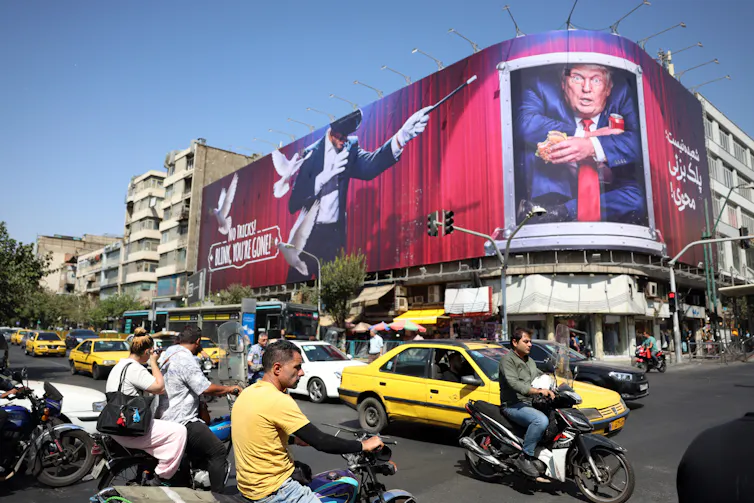
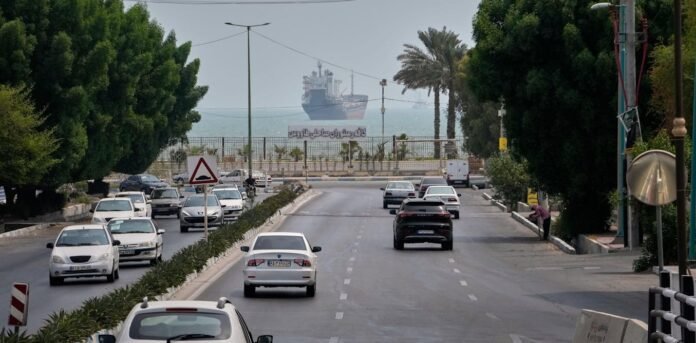
People drives cars and motorcycles in the centre of Iran past an anti-Trump banner.

Iran’s economy is in tatters but the political will remains unbroken after six moinths of war. EPA/Abedin Taherkenareh

Other regional powers are watching. Saudi Arabia has long sought domestic enrichment capabilities. If Middle Eastern governments conclude that a nuclear capacity provides protection against external attack, proliferation pressures could increase rather than diminish. Ultimately, the nuclear question returns to where it began: negotiation.

Trump’s escalation trap

Meanwhile the costs are becoming global. Energy, insurance and shipping costs have all risen and will surely have political ramifications. Meanwhile, Russia benefits from higher hydrocarbon revenues and China gains strategically whenever US naval assets, munitions and political attention are diverted from the Indo-Pacific.

Gulf states face an uncomfortable lesson too. US bases intended to guarantee their security can also make them targets in a conflict they did not start.

None of this means Iran is winning militarily. Its economy and infrastructure have suffered enormously – and America can still inflict far greater destruction. But Iran does not need to defeat the US. It needs to prevent Washington from using military superiority to force it into political submission while making continued armed conflict progressively more painful.

Trump is therefore caught in an escalation trap partly of his own making. He can tighten the blockade, but Iran can disrupt Hormuz. He can intensify bombing, but Tehran can widen its retaliation against Washington’s Gulf allies. He can negotiate, but Iran now has reason to demand stronger guarantees and potentially better terms than it accepted in June.

And US threats lose their coercive power when repeated escalation keeps bringing Washington back to negotiations.

The latest Iranian actions therefore represent more than another exchange of missiles. Six months after Trump and Netanyahu sought to force Iran into submission by force of arms, Tehran has learned that the longer it survives, the greater the costs it can impose and the stronger its eventual bargaining position may become.

America can still escalate far beyond anything Iran can match. What it can no longer assume is that escalation brings victory closer. Iran’s latest moves suggest Tehran now believes the opposite.

Iranian president vows to continue resistance until ‘aggressors’ regret attacks

0
iranian-president-vows-to-continue-resistance-until-‘aggressors’-regret-attacks
Iranian president vows to continue resistance until ‘aggressors’ regret attacks

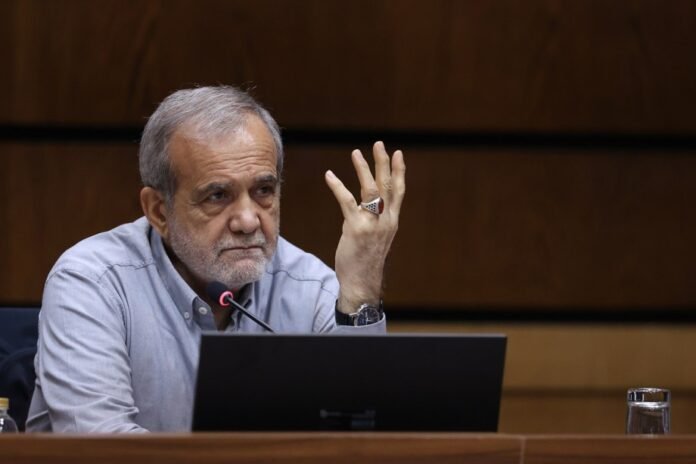
Iranian President Masoud Pezeshkian said Tuesday that Tehran would continue resisting attacks until what he called the “aggressors” fully regret their actions, Anadolu reports.

“Iran has always opposed war and has regarded avoiding warmongering as essential to safeguarding the interests of the people and regional security,” Pezeshkian said on the US social media company X.

“But just as it has bravely defended itself against aggression until today, it will continue this resistance with strength until the aggressors fully regret it, and will safeguard the rights of the great Iranian nation,” he added.

His remarks come amid the ongoing US-Iran conflict and heightened tensions across the region.

READ: Iran warns South Korea of ‘serious consequences’ over military role in Hormuz

Iran and the US signed a memorandum of understanding in June following mediation by Pakistan and Qatar, providing for an end to hostilities and a framework for further negotiations.

Tehran has accused Washington of violating the memorandum and failing to implement its commitments, while Iranian officials have repeatedly said US military operations and a naval blockade must end for tensions to ease.

Earlier Tuesday, Iranian Foreign Minister Abbas Araghchi said during a phone call with his Japanese counterpart Toshimitsu Motegi that Washington’s return to its commitments under the Islamabad memorandum would pave the way for a de-escalation.

​​​​​​​Araghchi also said Iran and Oman had made significant progress in negotiations on establishing a temporary transit route through the Strait of Hormuz.

READ: Iran’s parliamentary speaker warns US energy assets in Gulf exposed to Iranian retaliation

The White House made a “Tetris” clone. The Tetris Company was not amused.

0
the-white-house-made-a-“tetris”-clone-the-tetris-company-was-not-amused.
The White House made a “Tetris” clone. The Tetris Company was not amused.

An anti-immigration-themed adaptation of Tetris was removed from the White House website over the weekend. The move comes days after The Tetris Company disavowed any involvement with the game and said that it “take[s] copyright infringement very seriously.”

The White House’s “Build the Wall” game asked players to stop a “Zombie Border siege” by stacking Tetris-styled bricks in an attempt to “hold the line.” Unlike in Tetris, though, the blocks in “Build the Wall” don’t disappear when you complete a line, meaning each brick contributes to an impassable barrier for the pixel-art “zombies” marching in from the “Southern Border.” That change makes the gameplay pretty uninteresting for anything but cheap propaganda, and it also means that every game quickly and ironically ends with a “Border Breached” message when the blocks inevitably fill up the well.

Amerika Garcia Grewal, co-director of Texas migrant rights group Frontera Federation, told AFP last week that the makers of the game “have lost touch with what it means to be human and care for others.”

“Build The Wall” was one of five simple web games that went up on a new “Arcade” section of WhiteHouse.gov (as well as an alternative arcade.gov URL) just before Labor Day weekend. The game’s previous URL now returns a 404 / Page Not Found error and has done so since sometime after Sunday morning, according to Internet Archive snapshots (where a playable version is still available). Other Trump Arcade games based on Flappy Bird and Snake remain on the site today.

Hey, that’s our game

In a statement provided to the press on Friday, a spokesperson for The Tetris Company said it was “reviewing the matter” and that the company “was not involved in the creation of ‘Build the Wall’ and did not authorize or license the Tetris brand or intellectual property for the game.” The company reiterated that message in a social media post Friday afternoon, writing that it “believe[s] in the power of connection and bringing people together, not dividing them.”

The Tetris Company has a long history of protecting its intellectual property via frequent takedown requests and legal proceedings against games that copy its gameplay and/or style. And while unofficial Tetris clones are still relatively easy to find, officially licensed versions of the game are available on everything from the Data Zapper M7000 to a giant plastic chicken McNugget.

While gameplay mechanics and rules are generally not copyrightable, the look and feel of a particular expression of those rules can be protected under US copyright law. In 2012, a Circuit Court judge identified some basic elements of Tetris that he said could earn this kind of “trade dress” protection when appearing in concert, including the size of the playfield and the “next piece” display. Legal arguments aside, the White House probably wants to avoid a prolonged public fight with the makers of a beloved video game during the run-up to federal legislative elections.

In promoting the launch of the White House Arcade site, the White House social media team created parody videos mimicking the iconic start-up sequences from classic game consoles from Sega, Nintendo, and Sony. The Trump administration has previously used explicit Halo imagery to promote its military policies, a move that resulted in pointed silence from Microsoft.

Convict or fete? The world is splitting on Myanmar’s generals

0
convict-or-fete?-the-world-is-splitting-on-myanmar’s-generals
Convict or fete? The world is splitting on Myanmar’s generals

Two Myanmars appeared on the world stage this month. In Geneva, the United Nations’ human rights chief, its Independent Investigative Mechanism for Myanmar, and the European Union told the Human Rights Council of a country whose civilians are bombed, tortured, conscripted and displaced by their own armed forces.

Meanwhile, in Hanoi, Myanmar’s coup maker and self-appointed president, Senior General Min Aung Hlaing, was received with the pageantry of a head of state. Phnom Penh will repeat the treatment from September 11-12.

Two calendars: one of evidence, one of optics. Unless the first sets the terms for the second, the second wins.

The High Commissioner’s report on the Rohingya and other minorities, covering June 2025 through May 2026, documents intensified military attacks, mass displacement, forced conscription, arbitrary detention, humanitarian obstruction and continued systematic discrimination against the Rohingya. It also names abuses attributed to the rebel Arakan Army and the damage done by unregulated rare-earth extraction.

Its recommendations to states are cutting and clear: a UN Security Council referral of the military to the International Criminal Court, a halt to transfers of arms, ammunition, jet fuel and dual-use items, and — in the report’s own words — states should “refrain from lending political legitimacy to the military’s purported exercise of civilian authority.” It warns that “figures on verified deaths represent an underestimation.”

The UN Independent Investigative Mechanism, addressing the same Council, reported that “serious international crimes are being committed with greater frequency and intensity” and that “civilians are the principal victims.”

It has now assembled evidence from more than 1,600 sources and 750 witnesses and shared material with the International Criminal Court (ICC), Argentine authorities and the International Court of Justice. This is not unsubstantiated commentary. It is an evidence-based judicial pipeline.

The European Union closed the loop. Brussels identified forced conscription, continued military access to arms and intensified airstrikes as the drivers of the crisis, and said that “the EU does not recognize any elections that are neither free nor fair and that aim to legitimize the military.”

Three institutions, one message: escalating violations, an evidentiary record built for court and a refusal to call a stage-managed vote democracy.

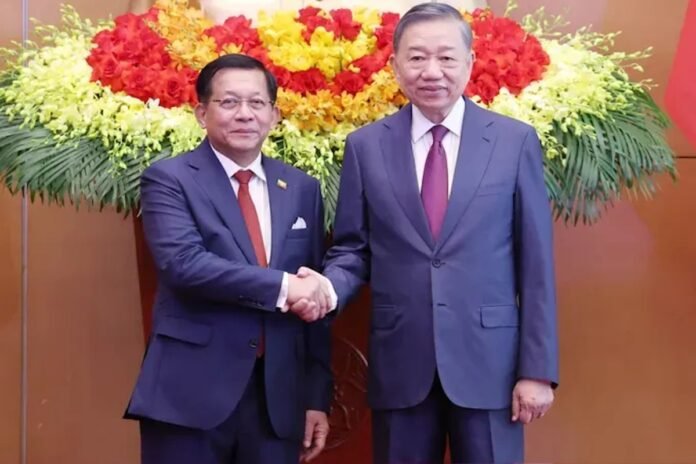
In the same week, on September 5, Min Aung Hlaing’s talks in Hanoi with Vietnamese leader To Lam produced an agreement to deepen defense and security cooperation as “a pillar” of bilateral ties, covering military training, young-officer exchanges and information sharing.

His visit also took in a VinFast factory and Viettel, whose Mytel joint venture operates inside Myanmar. The Straits Times reported that Phnom Penh will host him later this week — his eighth country visit and fourth to an ASEAN member since he took the presidency this year.

ASEAN summits still exclude Min Aung Hlaing pending progress on the Five-Point Consensus. But carefully selected bilateral hosts confer, one visit at a time, the trappings of a normal head of state while the bloc’s collective policy notionally holds. As a recent Stimson Center essay put it, “ASEAN should distinguish functional engagement from political rehabilitation.” That distinction is being blurred in real time.

The policy test

Four conclusions follow. First, the New York credentials fight matters more than it looks. When the UN General Assembly’s Credentials Committee reconvenes, member states will decide whether the seat labeled “Myanmar” carries the voice of a coup regime whose airstrikes the EU has just condemned, or the mandate of Myanmar’s coup-ousted elected representatives.

The Geneva record doesn’t resolve credentials on its own — that remains a procedural matter — but it raises the political cost of upgrading the military’s UN standing. Keeping Ambassador Kyaw Moe Tun in his seat is the minimum consistent with the UN’s own findings.

Second, ASEAN states that want to preserve any credibility for the Five-Point Consensus should publish the conditions under which they engage bilaterally with Min Aung Hlaing. Silence turns “pragmatism” into rehabilitation.

Vietnam and Cambodia may need to talk to Naypyidaw about borders, migration and organized crime. They should say publicly what they’re asking for — and what happens if it isn’t delivered.

Third, targeted pressure should follow the enablers Geneva has now named: arms, ammunition, jet fuel, dual-use goods, opaque financial channels and extractive-resource revenue.

That points to a coherent next phase — energy-sector sanctions on the Myanma Oil and Gas Enterprise, evidence-based measures at the Financial Action Task Force, and scrutiny of the scam-center finance that has metastasized out of the border zones.

Any sanctions regime needs civilian safeguards for humanitarian remittances and lawful family transfers, so it punishes enablers, not ordinary people. Buyers of Myanmar-origin heavy rare-earth oxides and the processors who launder their provenance belong on the same list.

Fourth, and most uncomfortable for the anti-coup resistance: international credibility is indivisible. The UN High Commissioner names the military first and most severely, but the Mechanism’s evidence pipeline does not discriminate. A federal-democratic Myanmar cannot demand accountability for the junta while excusing violations by anyone flying an anti-junta flag.

Rakhine and the Rohingya are not a side file. They are the credibility test on which the rest of the case rests. The National Unity Government and ethnic revolutionary organizations should treat civilian protection, minority rights, humanitarian access and transparent investigation as strategic assets, not concessions.

The Spring Revolution’s strongest asset abroad has always been the coherence of the facts.

New research from the Stimson Center, based on 287 interviews in Sagaing, Magway and Mandalay between November 2025 and February 2026, found that 90% of respondents believe the revolution should end only through armed victory over the military — while those same respondents pressed their own side for greater unity and cleaner governance.

The public inside the country is not ambivalent about the junta. It is asking its allies not to be ambivalent either. The task in the coming weeks is to make sure the Geneva calendar sets the terms for Hanoi and Phnom Penh — not the other way around.

That means conditioning contact, closing supply lines, protecting the UN seat, funding the evidence and refusing to treat a coup election as a democratic reset.

James Shwe is a semi-retired professional engineer based in California and an advocate for democracy in Myanmar.

EV batteries last longer than drivers feared

0
ev-batteries-last-longer-than-drivers-feared
EV batteries last longer than drivers feared

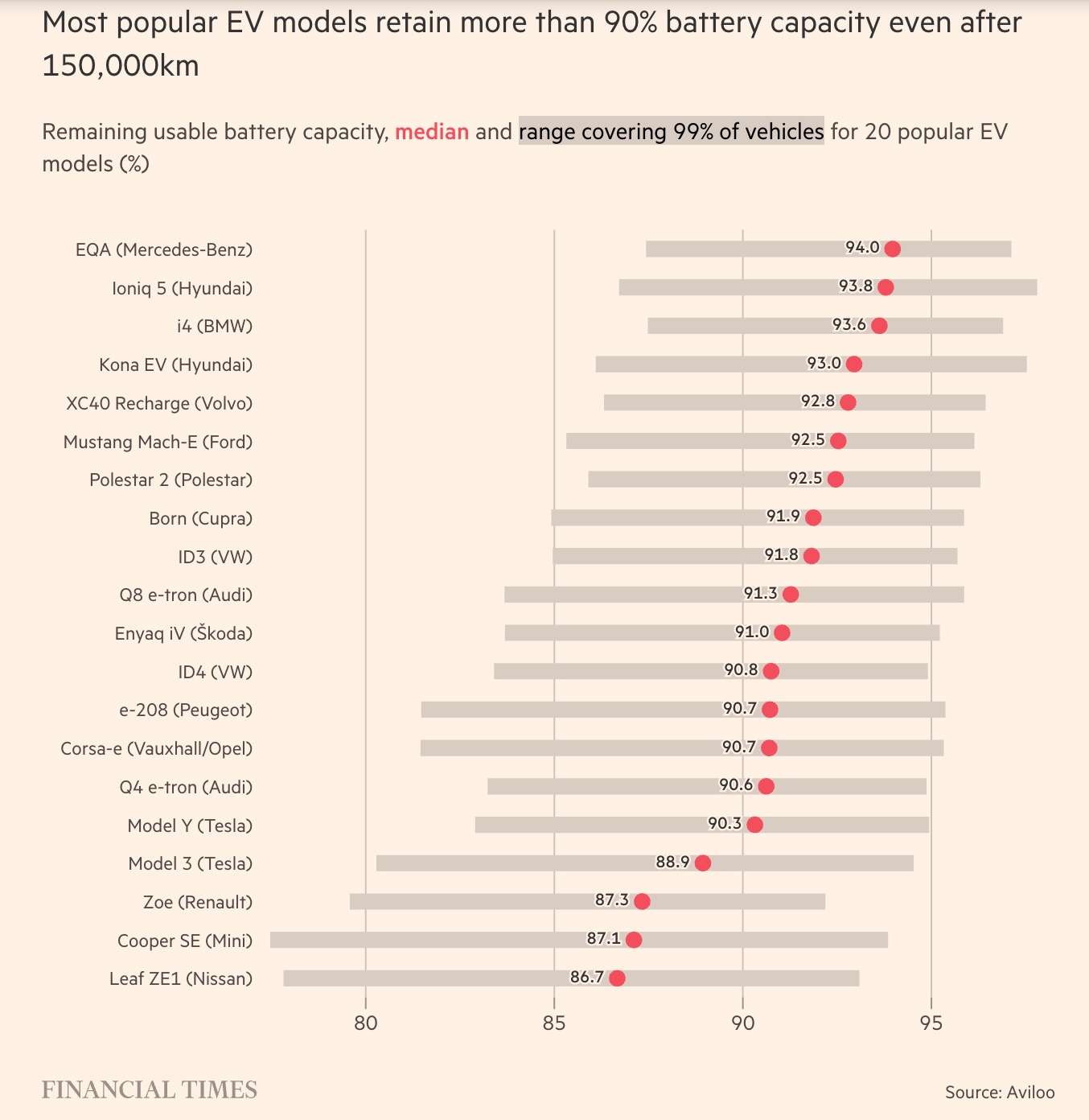
Electric vehicle batteries are lasting longer than previously feared by drivers, with most used EVs able to retain about 90 percent of their original usable battery capacity after 150,000 kilometers, a new study has shown.

Despite a surge in global EV sales on the back of rising fuel prices, long-term battery durability continues to be one of the key concerns for drivers when they consider switching from a petrol model to an electric car.

EV battery warranties typically cover eight years or 100,000 miles (160,000km) with car manufacturers required under the warranty to provide a replacement battery if capacity falls below 70 per cent.

According to the latest study published by Aviloo, an Austria-based group that analyzes battery health, the median state of health (SoH)—which represents the remaining percentage of a battery’s original usable capacity—for 20 popular EV models stood between 87 percent and 94 percent after 150,000 km.

The median SoH was between 91 and 97 percent after 50,000 km, and 88 and 95 percent after 100,000 km. The study was based on more than 500,000 tests Aviloo carried out globally on the 20 EV models including Tesla’s Model Y and Volkswagen’s ID.4 between 2022 and 2026.

The Aviloo study, which did not include Chinese models due to lack of data, also showed that the speed of battery degradation varied significantly even within the same EV model depending on climate conditions, battery size, and driver habits, such as parking.

“In contrast to a combustion engine car, where age and mileage would more or less carry the value of the car and technical condition, that’s not the case for an EV,” said Marcus Berger, chief executive of Aviloo. “The car might look the same—same age, same mileage—and you don’t know how it has been treated.”

For Nissan’s Leaf ZE1 model, which requires more frequent charging to cover the same distance than other EV models due to the smaller size of its battery, the median SoH at 150,000 km varied by as much as 13.5 percentage points—equivalent to about 29 km of real-world range per charge and the largest spread among the 20 EV models covered by the study.

Aviloo said the spread between the individual cars could vary by up to 11 percentage points for Tesla’s Model Y, 11 and 12 points for VW’s ID.4, and more than 12 points for Hyundai’s Ioniq 5.

Berger said batteries of EVs in hotter climates degraded faster, while another key factor was how much the batteries were charged when the EVs were parked. “What very few consumers know is: don’t park your cars with 100, 90 or 80 percent state of charge. It’s just harming the battery,” he said, adding that the ideal level was between 30 and 70 percent.

Aviloo’s study came as three of the UK’s largest EV organizations recently called on the government to introduce mandatory battery health certifications to boost confidence for buyers and reward owners who have properly maintained their vehicles.

“We see the customer demand for confidence in battery health,” said James Strong, used-car sales and delivery manager at Tesla UK, adding that “a nationally recognized battery state of health standards” would strengthen confidence in the used EV market and improve transparency for consumers.

Amazon Plane Skids Off Runway onto Busy Road in Miami

0
amazon-plane-skids-off-runway-onto-busy-road-in-miami
Amazon Plane Skids Off Runway onto Busy Road in Miami


An Amazon cargo plane burst into flames after overshooting a runway at Miami International Airport and crashing onto a busy roadway Sunday afternoon, leaving multiple people injured.

The Boeing aircraft, which was flying for Amazon, was landing at the airport when it overran the runway around 2 p.m. and barreled onto Northwest 42nd Avenue, according to authorities.

Miami-Dade Fire Rescue said the plane struck multiple vehicles after leaving the airport grounds.

Dramatic images from the scene showed the Amazon-branded aircraft sitting dangerously close to a building as thick smoke poured from the wreckage.

More than 60 firefighters rushed to the scene, where crews were met with heavy flames and smoke coming from the aircraft.

The plane caught fire as a result of the crash, according to Miami-Dade Fire Rescue.

Officials confirmed that there were multiple patients injured, although the exact number of victims and the severity of their injuries were not immediately known.

It was also unclear whether anyone had been killed.

The aircraft had departed from San Juan, Puerto Rico, before attempting to land in Miami.

The Federal Aviation Administration said Flight 7598 overran the runway after landing at approximately 2 p.m. The cause of the crash remains under investigation.

Miami International Airport said the aircraft overran one of its diagonal runways and became disabled near the northwest end of the airport.

A ground stop was put into effect following the crash as emergency crews descended on the scene. NBC 6 also reported seeing video apparently showing the damaged Amazon aircraft at the airport.

Amazon said it was still gathering information as the situation unfolded.

“We’re working closely with local authorities and officials to understand exactly what happened,” the company said.

Amazon added that its immediate priority was the “safety, well-being, and care of everyone involved” and said it was working to support those affected.

Authorities had not immediately revealed how many crew members were aboard the flight.

Miami-Dade Mayor Daniella Levine Cava said her office was closely monitoring the emergency.

“Right now, our focus is on everyone involved and making sure our first responders have what they need,” she said.

The crash remains under investigation.

How ‘egalitarian’ Sweden became more comfortable with wealth

how-‘egalitarian’-sweden-became-more-comfortable-with-wealth
How ‘egalitarian’ Sweden became more comfortable with wealth

Sweden is imagined as the land of equality, modesty and Jantelagen – the unwritten rule that no one should think they are better than anyone else. But there has also been a fascination within Sweden with its billionaires, especially those who abide by these dominant cultural norms.

In the case of Ingvar Kamprad, the founder of furniture giant IKEA, Swedes appreciated that he drove an old car (a Volvo, of course), engaged with employees working on the floor in his stores, and every year personally handed out Christmas gifts. His (some would say strategic) display of ordinariness made people overlook the fact that Kamprad was one of the world’s richest people and had moved to Switzerland to avoid Sweden’s high taxes.

But things have changed. The Wall Street Journal has written about Sweden’s surprising “capitalist makeover” and the Financial Times has reported on the idea the country is “overflowing with billionaires”. And in 2024 The BBC broadcast a documentary podcast called Super-rich Swedes. There are good reasons for their interest.


We think we know Sweden – a peaceful nation grounded in social democracy, natural beauty, IKEA and Abba. But in 2026, is this still the real Sweden? Ahead of the country’s general election on September 13, The Conversation UK has teamed up with its Swedish partner universities for a series of articles examining why this small nation remains so fascinating.


While for a long time Sweden was a country with some of the world’s highest taxes, this no longer applies to capital taxation. For instance, it no longer has a wealth tax, an inheritance tax or a property tax. The ideal of egalitarianism doesn’t seem to align with patterns of wealth accumulation, especially at the very top.

Forbes calculates more than 50 US-dollar billionaires in Sweden. This becomes even more extraordinary in a country of just 10.6 million people.

We used Forbes and UN data and found that in 2025 Sweden ranked fourth globally, with 4.7 dollar billionaires per million people. When excluding micro-states (fewer than one million people), Sweden is outnumbered only by Singapore (9.9), Hong Kong (9.1) and Cyprus (7.3), but before Switzerland (4.6) in fifth place. It ranks much higher than some of the world’s largest economies like the US (2.7), Germany (2.1), Canada (2.0) and the UK (0.8).


Read more: ‘We got lazy and complacent’: Swedish pensioners explain how abolishing the wealth tax changed their country


It is difficult to say for sure whether changes in regulation and wealth concentration have altered cultural norms, but there are clear indicators. Younger generations are now expressing strong materialistic values. When they rank what matters in life, earning money comes second to being with friends and far more important than being with family or getting an education.

Young Swedes and adults alike dream of building a “money machine” by investing in stocks so they can exit the labour market long before retirement. This might be surprising to some, since Sweden has long been shaped by a strong work ethic, both politically and culturally.

In research for a yet-to-be published paper, we found Swedish tabloids and business magazines show a remarkable rise in reporting about billionaires. This includes a fascination with their personal lives and framing them in positive terms such as “entrepreneurs”, “investors” and “philanthropists” (rather than “capitalists”, for example).

Awe and suspicion

This does not mean that wealth is no longer a sensitive topic in Sweden. When studying articles about billionaires in one of the country’s leading tabloids, we found an ambivalent form of “wealth porn”. In Sweden “wealth porn” tends to oscillate between celebrating it and questioning the luxurious lifestyles of billionaires.

The articles tempt readers with drone images and descriptions of lavish mansions – but they also repeatedly point out how reluctant the billionaires are to display and talk about their wealth. This frames the topic as socially sensitive and sometimes even dangerous to the billionaires’ personal safety. Readers are invited to fantasise about life as a billionaire – the transgressive act of breaking Jantelagen adds spice to the fantasy.

This kind of “wealth porn” remains focused on the moral issues around conspicuous consumption. Even though Sweden has long been a model of social democracy, the processes through which billionaires accumulate fortunes, and the political influence such wealth can generate, largely escape scrutiny.

black bentley parked at the side of a road in gothenburg, sweden, with a tram approaching in the distance.

Swedes don’t mind admitting they’d like to get rich – but are conflicted about those who are already ultra-wealthy. nrqemi/Shutterstock

Swedes’ ambivalence towards billionaires is also illustrated in a recent survey we conducted with a representative sample of the population. We asked people a set of questions about their views on money and wealth – it turned out that many find money a strong personal motivator. These people supported statements like “to have a lot of money is an important driver for me”. This suggests there is no social taboo around trying to get rich.

People also said money matters socially, as they largely supported statements like “money gives status and respect”. This indicates that hiding personal wealth may not be so important. In fact, displaying it might bring social benefits – being seen as a successful entrepreneur and someone to look up to, for example. We also asked about caps on wealth, but found strong support for statements like “one can never have too much money”.

While this indicates that Swedes value wealth, they still hold an ambiguous relationship with the super-rich. People reacted strongly against seeing the rich as “good role models for others”.

Striving to get rich seems to have become more socially acceptable in Sweden. Perhaps it always has been the way, but Swedes just never spoke about it (at least not in public). Actually being rich remains a contested topic. If Jantelagen still exerts any influence, it seems to be centred on shaping attitudes towards the wealthy themselves – rather than as a force to discourage the pursuit of wealth.

China’s Uzbekistan jet sale tests Russia’s grip on Central Asia

0
china’s-uzbekistan-jet-sale-tests-russia’s-grip-on-central-asia
China’s Uzbekistan jet sale tests Russia’s grip on Central Asia

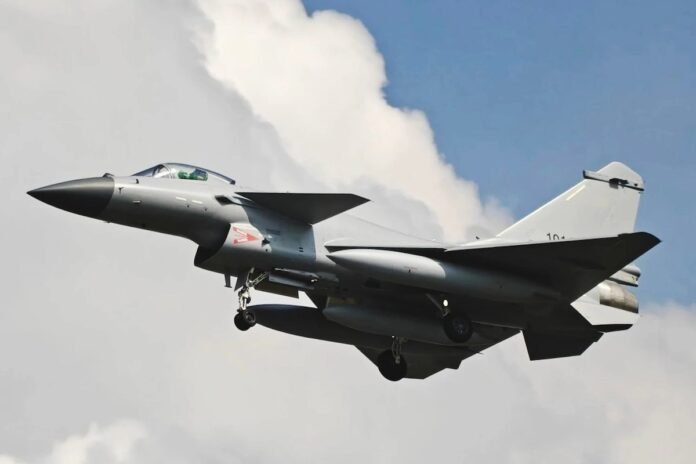
Uzbekistan has confirmed that it operates Chinese J-10CE fighter jets — turning months of speculation into a significant development for Central Asia’s defense market.

The purchase does more than modernize Tashkent’s aging combat fleet. It marks China’s entry into one of the most consequential arenas of military procurement in a region long dependent on Soviet and Russian aircraft.

Uzbekistan is now the second confirmed foreign operator of the J-10CE, after Pakistan. At least six aircraft appeared in official footage released around the country’s Independence Day celebrations — the clearest evidence yet of the purchase.

The significance lies elsewhere. Uzbekistan’s combat aviation has long been built around Soviet-designed MiG-29s, Su-27s and Su-25s, and the J-10CE brings a new supplier, weapons ecosystem, maintenance infrastructure and training relationship into a system with deep Soviet and Russian roots.

The question is no longer whether China can sell sophisticated weapons abroad. It’s whether Beijing can establish itself as a credible alternative supplier of advanced combat aircraft.

Export breakthrough

Pakistan gave the J-10CE its first export breakthrough, beginning deliveries in 2022 and integrating the fighter into an air force that already operates substantial Chinese-origin equipment.

Uzbekistan presents a different test: entry into a fighter market shaped for decades by Soviet and Russian platforms.

Russia has traditionally held structural advantages in Central Asia’s fighter market: Soviet-era inventories created long-term reliance on Russian spare parts, maintenance, training and compatible weapons. But that dependence is becoming less automatic.

According to SIPRI, Russian exports of major arms fell sharply between 2016-20 and 2021-25, as the war in Ukraine strained Russia’s defense industry and pushed some traditional customers to diversify suppliers.

This doesn’t mean Russia is disappearing from Central Asia’s defense market. Russian equipment remains deeply embedded in regional militaries, and Moscow retains extensive institutional, training and security ties. What’s changing is the assumption that Russia will automatically supply the next generation of major weapons.

China is well positioned to capitalize on that opening. Uzbekistan already operates Chinese air-defense systems and drones; the J-10CE extends that relationship into frontline combat aviation.

The fighter deal is also unfolding against a broader expansion of Chinese economic influence. China has emerged as Uzbekistan’s largest trading partner, and Chinese investment and joint ventures have expanded rapidly. The J-10CE, then, is not an isolated arms transaction — it adds a high-end military dimension to an increasingly important economic relationship.

Russia’s wartime constraints may have widened the opening, but Beijing spent years building the economic and defense relationships needed to walk through it.

The Pakistan factor

The J-10CE is no longer being marketed on specifications and price alone.

Pakistan’s operation of the aircraft has let potential buyers assess the export version in active service, and its reported performance during the May 2025 India-Pakistan clash appears to have sharpened international attention on the fighter.

Claims about individual aircraft losses remain politically contested and should be treated with caution. But the clash nevertheless gave Chinese combat aviation something valuable in international arms markets: operational visibility.

Fighter procurement involves more than buying an airframe. Governments weigh sensors, missiles, electronic-warfare capabilities, maintenance requirements, and whether a supplier can sustain the system for decades.

Pakistan therefore gives Beijing an operational reference point when marketing the J-10CE, and Uzbekistan’s decision suggests that reference point may be gaining value.

The next test could come outside Central Asia — and it would matter, because it could turn what now looks like a two-country export story into evidence of a wider Asian market for the aircraft.

Bangladesh is moving toward acquiring J-10CE fighters as part of a broader modernization effort. Dhaka already operates considerable Chinese-origin military equipment, so the transition would be less dramatic than in Uzbekistan.

Its importance lies elsewhere. If the J-10CE gains customers in Pakistan, a former Soviet Central Asian republic, and Bangladesh, Beijing could show that its advanced combat aircraft compete across very different defense markets — not just among China’s closest strategic partners.

That could add competitive pressure on Russian manufacturers in markets where MiG and Sukhoi aircraft have traditionally been the principal non-Western fighter option.

Crowded arms market

China is unlikely to simply replace Russia across Central Asia. The emerging pattern is diversification, not substitution: Turkey has expanded its defense footprint, particularly through drones; other suppliers are finding openings too; and Russia retains major structural advantages built up over decades of military integration.

Uzbekistan’s J-10CEs nevertheless make the changing market unusually visible. China has already supplied Central Asian states with drones, air-defense systems, armored vehicles and other military equipment. Selling an advanced fighter to an air force built around Soviet aircraft is a qualitatively different step.

For Uzbekistan, diversification offers greater choice as it modernizes its armed forces. For Russia, it means competing in a market where historical dominance can no longer guarantee future orders.

For China, the significance extends beyond a handful of fighter sales. Pakistan gave the J-10CE its first export customer and its operational reference point. Uzbekistan now gives Beijing something potentially more consequential: evidence that Chinese frontline combat aviation can break into a former Soviet defense market.

If Bangladesh follows, the J-10CE could look less like a platform built around one strategic partnership and more like a fighter with a genuinely global export market.

Saima Afzal is a researcher specializing in South Asian security and regional geopolitics across the Middle East, Afghanistan and the Indo-Pacific. She is a research scholar at Justus Liebig University in Germany.

Gulf Funding and Gaza’s Political Horizon Hang in the Balance

0
gulf-funding-and-gaza’s-political-horizon-hang-in-the-balance
Gulf Funding and Gaza’s Political Horizon Hang in the Balance


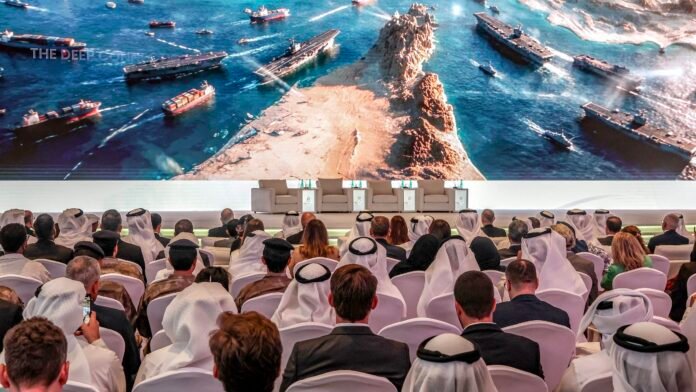
At Abu Dhabi’s Hili Forum, Nickolay Mladenov delivered a blunt warning: Gaza’s proposed path out of war could collapse if Israel launches another major offensive. In their detailed report, Waseem Abu Mahadi and Jacob Wirtschafter show how an already fragile plan for Hamas’ disarmament, an Israeli withdrawal, Palestinian civilian administration, and reconstruction has become entangled with Israeli election politics and the wider Iran conflict.

Mladenov, the Board of Peace’s high representative for Gaza, said another offensive would make Gulf governments unwilling to finance rebuilding and force Israel to assume direct responsibility for the territory. “It would certainly exclude anyone in the Gulf, be that the UAE, Qatar, Saudi Arabia, anyone else, [from] financing any reconstruction in Gaza,” he said.

The money is substantial on paper and elusive in practice. The UAE, Qatar, Saudi Arabia, and Kuwait have pledged a combined $4.2 billion, part of $17 billion promised by the US and other countries. Gaza’s needs are far larger: A joint European Union, United Nations, and World Bank assessment put the 10-year recovery and reconstruction bill at $71.4 billion. Little funding has been disbursed, and few projects have advanced beyond clearing rubble.

At the core lies a sequencing dispute. Israeli officials say no troops will withdraw and no rebuilding can proceed before Hamas is fully disarmed. The Board’s roadmap links disarmament to a phased Israeli withdrawal and the handover of civilian governance to a Palestinian technocratic committee. Hamas has described its own acceptance as conditional. The committee remains in Cairo, no international stabilization force has deployed, and Israel controls more than half of Gaza.

The conflict with Iran has made the political terrain still more difficult. Gulf governments are concentrating on Iranian attacks, the Strait of Hormuz, alternative energy routes, and doubts about US security commitments. Emirati and Qatari officials at the forum called for stronger regional self-reliance, while Gaza slipped down the agenda.

Abu Mahadi and Wirtschafter also trace Palestinian concerns that decisions about Gaza are being made without Palestinians at the table. With legislative elections scheduled for Nov. 28 and Israel’s vote due a month earlier, the full report is worth reading for its portrait of a reconstruction effort caught between war, politics, and a rapidly changing regional order.

0FansLike
0FollowersFollow
0FollowersFollow
0SubscribersSubscribe
- Advertisement -
Google search engine

Recent Posts