RAF Fairford big-scale attack try represents serious threat to US
A US Air Force B-52H Stratofortress at RAF Fairford in 2019.
The British Police say that the five men arrested in connection with a suspected bomb plot targeting RAF Fairford are all British nationals. Nothing has yet been said officially about who was behind the plot.
The risk to US assets and personnel in the UK remains extremely high.
United Kingdom police are releasing the five terror suspects on bail.
We don’t yet have the names of those arrested or their family background and history. The five are young men in their early twenties.
The five men all come from the London area.
Leaked images show the 5 men accused of driving 3 vans full of explosives into RAF Fairford!
The woman eyewitness who called the police using the 999 emergency service says that there were more than five individuals that emerged from the three vans.
A bomb disposal robot was filmed examining three vans near RAF Fairford
No explanation is yet available from the local police about the possibility of other suspects, although the police gave assurances that there was no further danger. Gloucestershire Police assured residents that the situation was contained and that there was believed to be no ongoing, wider threat to the immediate public. No investigation seems to be underway to track down others possibly involved.
The vans allegedly contained explosives and chemicals. Those arrested were said to be wearing suicide vests which is why photos from the scene show them apprehended with shirts off.
We do not yet have a clear idea of what was in the vans. The area around the vans was cordoned off, and police used a bomb disposal robot. Large black barrels appeared to be scattered around and near the three white vans.
So far we don’t know anything much about the terrorist plan of attack. The fact that the five were outside the vans when they (perhaps others too) were spotted, opens the question of what was the exact plan for the attack. Did the five (perhaps others) run when they were spotted?
We do not know if the vans were rented or purchased.
It is obvious this was a well planned and financed operation that involved not only assembling the terrorists and training them but also provided intelligence and coordinates on how to strike the airbase. This means more than just five guys operating on their own. It suggests a well coordinated plan of attack backed by significant resources.
We don’t know where the explosives and other gear came from. If UK police and intelligence services had any warning, we don’t know if that included tracking the acquisition of bomb-making materials.
In practical terms this means that it is reasonable to believe a significant terrorist organization remains operational in the UK. No additional arrests have been announced. The government has not indicated any public concern about a larger threat inside the UK.
Most observers say that the attack was an Iranian-led operation because Iran had a strong motive to disrupt American bombing operations. There are well over 100,000 persons in the UK born in Iran. It is likely the number of persons of Iranian background born in the UK is significantly higher, and Iran has support from the likes of Hezbollah (Lebanon) and Iraq and its Iran-aligned militias.
There is a disconnect between what President Trump said about the planned attack and what was seen on the ground when the terrorists were apprehended. Trump said that the successful interception was the result of close collaboration between American and British intelligence services. He stated that the suspects were “looking to do big damage to our fort” (referring to the UK air base which is shared by the US). He revealed that US and British intelligence had been tracking the individuals beforehand, noting, “We had them under investigation…. We had them under view for a long time, and we got them.”
The problem is the operation was exposed by a local woman who was shocked to see three large white vans blocking a road close to RAF Fairford. Her arrival reportedly sent a group of men running into fields around the airbase. She called the police who arrived some 25 minutes later, according to news reports. Having the terror group “under investigation” did not lead to the police intervention to block the attack. In plain terms this means that the threat was known, but the intelligence services and police authorities did not know operational details including the location and timing of the planned attack.
RAF Fairford is the forward operating base of the US Air Force in Europe (USAFE). It supports the rotational deployment of long range bombers including the B-1B Lancer and B-52H Stratofortress and occasionally the B-2 Spirit. The base was used for long range bombing attacks on Iran and could be again.
The British government and Counter Terrorism Policing have not formally named a state actor or confirmed who was behind the plot. British Defense Minister Wes Streeting said he did not “want to speculate at this stage of the investigation” on who was behind the attack. However, if UK police and intelligence were tracking the terrorists prior to the planned attack, as suggested by President Trump, they would not have doubts about who was behind the attack.
The Iranian Embassy in London formally issued a statement categorically rejecting and strongly condemning any attempt to link Iran to the arrests, calling the speculations “unfounded and malicious”.
It remains to be seen if the UK cracks down on those involved in the RAF Fairford operation, especially the organization backing the terrorists. Until that happens, the threat to US operations and personnel in the UK remains extreme.
This article was first published on former US Deputy Undersecretary of Defense Stephen Bryen’s newsletter Weapons and Strategy. It is republished with permission.
Iran Has Wounded and Killed More Americans Since the End of Operation Epic Fury
As ceasefire negotiations faltered and U.S. casualties of the Iran war mounted, the Trump administration on July 7 attempted to rebrand the struggling war effort by announcing the conclusion of Operation Epic Fury.
But in the 12 weeks since, more U.S. military personnel have been injured and killed than in the 18 weeks of Epic Fury. Of the 880 U.S. troops left wounded or dead, 444 have occurred since July 7, according to the official Pentagon count.
President Donald Trump’s war of choice has left nearly 100 U.S. troops wounded or dead this month alone, according to the Pentagon. This includes 29 Navy sailors and eight Marines added last week to the official tally of those injured, following claims by a top Iranian official that an attack with a new “anti-ship missile” had “created hell for the Americans.”
The Marines were injured in a cruise missile attack on September 14, according to two U.S. officials who spoke to The Intercept on the condition of anonymity. The Marines were aboard an unidentified vessel in the Strait of Hormuz, they said, and potentially suffered brain trauma among other injuries. The attack was first reported by NBC News.
A cargo ship was hit that same day by a projectile in the Strait of Hormuz, according to the United Kingdom Maritime Trade Operations organization. The officials would not say if Marines have been stationed on commercial vessels transiting the Strait.
The Navy did not answer The Intercept’s questions about when and where the sailors were wounded. A Navy official said that casualties had been “fully validated” but would not name the affected “units.”
This latest in a series of casualty spikes comes as additional details of the toll of Iranian attacks on U.S. troops become more apparent. Air Force personnel, alone, endured more than 1,200 “alarm reds” — the official code for imminent attack by missiles, aircraft, or ground forces — during just 38 days earlier this year, according to Air Force chief of staff Gen. Ken Wilsbach. He noted that these Iranian strikes also led to more than 420 “long lonely walks” by explosive ordnance disposal technicians. Dealing with such munitions can be lethal: Army Sgt. Michael Emmanuel Swinton, 30, of Fayetteville, North Carolina, was killed and another soldier was wounded “during a controlled detonation” of an Iranian attack drone at Iraq’s Erbil Air Base in July.
President Donald Trump recently said the conflict with Iran is “small potatoes,” Vice President JD Vance asserted it is not a “war,” and Commerce Secretary Howard Lutnick announced: “There haven’t been American deaths, it’s really just an economic choke-out.”
At least 19 personnel have died according to the official Pentagon count of war dead, including 11 killed by hostile fire. The actual number of troop deaths in the region since the war began is higher. The latest known fatality is Capt. Bianca Wilkerson, 37, of Norfolk, Virginia, who died on September 18 from a “coronary issue,” according to her brother. He said she returned from Saudi Arabia on September 10 and was headed back but died on the return flight, according to reporting by the Virginian-Pilot.
For almost six months, The Intercept has reported on anomalies in official counts offered on the website of the Defense Casualty Analysis System, or DCAS, which tracks “deceased, wounded, ill or injured” service members for Congress and the White House. On April 21, for example, the number of wounded-in-action troops declined by 15 without public acknowledgment by the War Department. Despite repeated questions for months, the Pentagon has not commented on the disparities.
Prior reporting by The Intercept also found that the Pentagon’s official tally of dead and wounded personnel is a gross undercount, stemming from what one U.S. government official called a “casualty cover-up.” When the Washington Post also recently suggested that the Pentagon had suppressed the casualty numbers, self-styled War Secretary Pete Hegseth called the report “DISGUSTING and FAKE.”
The Pentagon’s list of the names of the dead is still, for example, missing Maj. Sorffly Davius, a signals and communication officer with the New York Army National Guard who was assigned to the headquarters of the 42nd Infantry Division and died while on duty in Camp Buehring, Kuwait, on March 6.
The military has claimed that Davius was part of another mission but a recent National Guard news release noted that when “Trump made the decision to attack Iran and launched Operation Epic Fury on Feb. 28, the division headquarters began conducting combat operations.” The 42nd served as the primary headquarters leading what became, according to Maj. Gen. Jack James, the division commander, the “largest and first long-range precision fires campaign in the history of the United States Army.” James specifically saluted Davius whom the Guard admitted was “conducting operations” when he died.
The eight Marines added to DCAS last week appeared in the tally almost 10 days after the September 14 attack. Historically, there was little lag between a casualty occurring in the field and its inclusion in the DCAS system, according to two people who used to work on the official casualty tally. “We got it very quickly. We could report the number of casualties very fast,” Joan Crenshaw, who worked on DCAS during the war on terror, previously told The Intercept, noting that data was refreshed daily. A current U.S. official also previously told The Intercept that the recent reporting lags are a blend of incompetence and deliberate slow-walking of casualty data to manage public fallout.
Iran’s ability to overwhelm U.S. air defenses in the Middle East using attack drones and advanced ballistic missiles, as previously reported by The Intercept, has left the U.S. military in a precarious situation. Despite months of claims by Trump and Hegseth that Iran’s military was annihilated, Iran has attacked more than 15 bases across the Middle East, according to information from U.S. officials and Iranian reports. These strikes damaged or destroyed hundreds of facilities at U.S. bases in Bahrain, Iraq, Jordan, Kuwait, Oman, Qatar, Saudi Arabia, and the United Arab Emirates, according to Central Command. Air Force personnel alone conducted 48 airfield repairs in a little more than a month, according to Wilsbach.
An Iranian missile and drone attack on February 28 destroyed Navy facilities in Manama, Bahrain, the region’s most critical U.S. military logistics hub. The Pentagon claimed for months that the strikes did not significantly impact military operations, but acting Navy Secretary Hung Cao recently admitted that Iran “blew the hell out of Bahrain.”
Boeing “incredibly excited” to serve as nation’s only astronaut transportation
NASA announced on Monday that it will exercise options to purchase two additional flights on Boeing’s Starliner spacecraft, as well as financially support the company in its efforts to return the crewed vehicle to flight and find a new rocket after the Atlas V vehicle retires.
The space agency’s announcement confirms reporting by Ars Technica earlier this month on NASA’s plans to maintain access to low-Earth orbit after the impending retirement of SpaceX’s Crew Dragon vehicle.
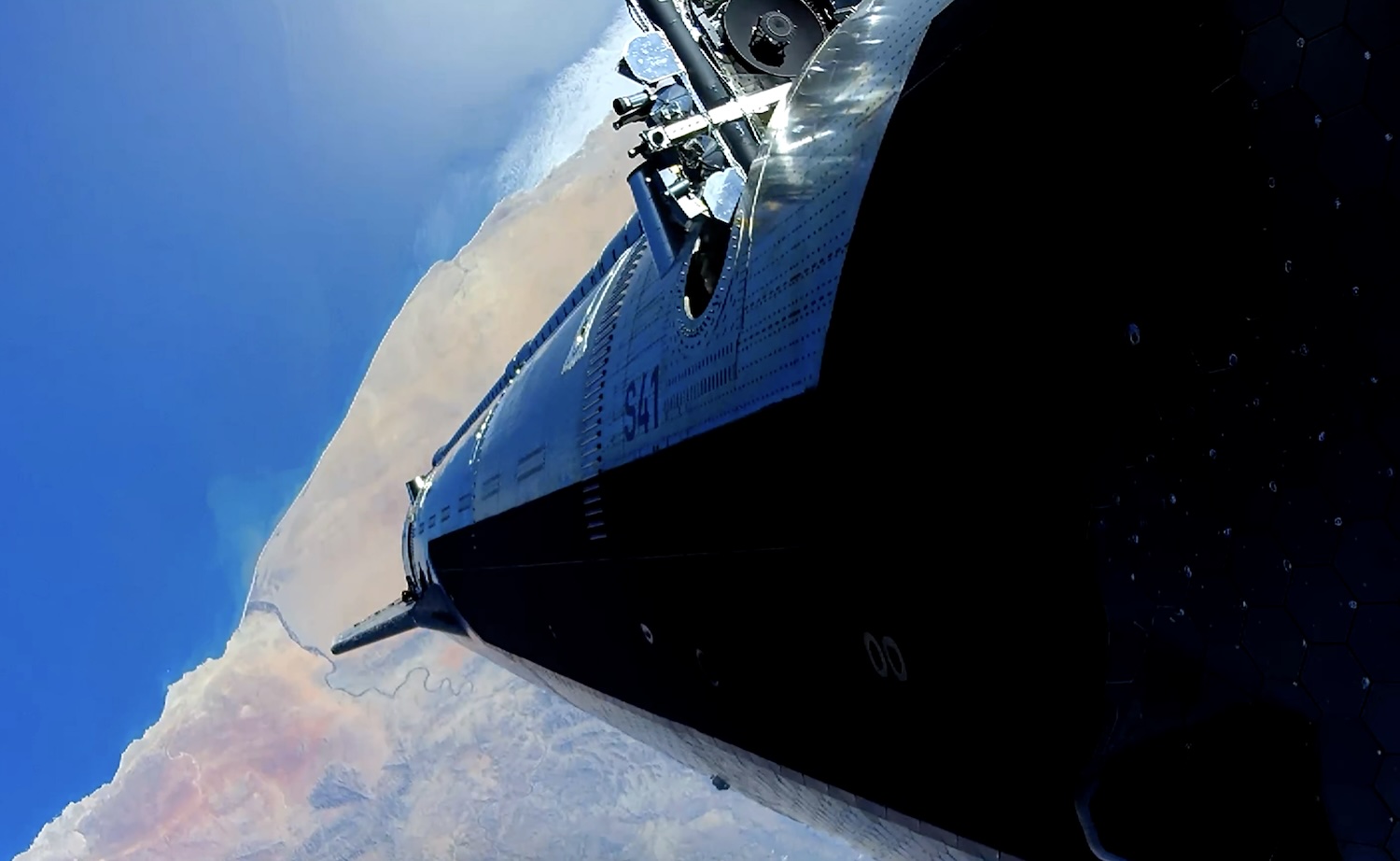
“I do not think it’s a secret that SpaceX intends to sunset older platforms like Falcon and Dragon as they concentrate on their next-generation capability, Starship,” NASA Administrator Jared Isaacman said during a news conference on Monday afternoon.
Starliner struggles to get going
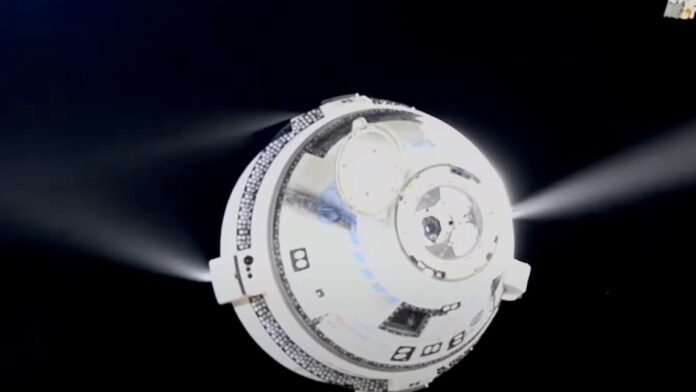
Dragon has successfully been flying NASA astronauts into orbit for more than six years. Boeing, by contrast, has struggled mightily to bring the Starliner vehicle into service for NASA. Starliner experienced numerous issues on uncrewed test flights in 2019 and 2022; most seriously, thruster issues nearly led to the catastrophic loss of two astronauts during the spacecraft’s first crew test flight in June 2024.
There had been some discussion that Boeing would walk away from the Starliner program, which has incurred more than $2 billion in losses for the company. The fact that NASA—which has already provided $5.1 billion as part of the “fixed price” Commercial Crew program to Boeing—felt obliged to spend additional funding underscores that this was a possibility.
During the news conference, Dana Weigel, manager of NASA’s Low Earth Orbit Program, said the space agency would pay $359 million to Boeing to help the company complete a rebuild of the reaction control system thrusters that have overheated in flight, as well as certify United Launch Alliance’s Vulcan rocket for human missions.
NASA also said it would exercise options to order two additional crewed missions on Starliner, bringing its total spaceflights on the vehicle to six.
Presently, NASA has manifested an uncrewed demonstration flight on the spacecraft, Starliner-1, which could launch in December 2026 or January 2027. It also has three crewed missions already on contract, the first of which, Starliner-2, could fly in mid-2028. NASA said Monday that veteran astronaut Woody Hoburg would command that mission.
Facing a difficult decision
With the retirement of Dragon likely by or before 2030, NASA faced a difficult decision. As it contemplates a future in low-Earth orbit, the space agency is considering extending the International Space Station’s lifetime to 2032. It is also supporting the development of private space stations, known as CLDs (commercial LEO destinations). The space agency needed some way to get its astronauts there.
Starliner, for all of its flaws to date, was evidently the best option. Some critics have suggested that NASA should fund a second crew competition that would include Boeing, Blue Origin with its under-development “space vehicle” and potentially others such as The Exploration Company.
But Isaacman seemed reluctant to make such an investment, which likely would cost billions. During the news conference, he noted that NASA’s future demand for astronaut flights to low-Earth orbit will be two seats every six to nine months. The nation has already invested heavily in Boeing’s effort, and with Starliner close to being ready, it would be foolish to throw the nation’s considerable investment away, NASA officials said.
Boeing, for its part, appears to be energized by the opportunity to claim the mantle of the nation’s provider of access to low-Earth orbit for US astronauts.
“We’re incredibly excited about the partnership with NASA,” said John Mulholland, vice president and program manager of Commercial Crew at Boeing. “To continue to fly to the International Space Station, and then obviously, with the Vulcan certification, missions beyond the current six that we have. Certainly, we have talked to all of the CLD providers about becoming their preferred transportation supplier in the future.”
Boeing will compete against … Boeing?
All of this requires Boeing to execute, of course, which it has yet to do. Another major concern for NASA and the private space station operators is the cost. Boeing, for a time at least, is likely to have a monopoly on crew transportation after Dragon exits the market.
For the Starliner-2 through Starliner-6 missions, NASA and Boeing have agreed to a price point of approximately $90 million per seat. However, this summer, as Boeing was negotiating with CLD providers, the company would not commit to seat prices in the 2030s.
“We couldn’t provide detailed pricing to the CLD suppliers as the Vulcan rocket has not been certified, and the spacecraft has not been certified, and we don’t have detailed pricing on the Vulcan,” Mulholland said. “That will come in the future, and obviously we want to be as competitive as possible.”
Swiss voters reject tighter neutrality rules that would have curbed NATO cooperation
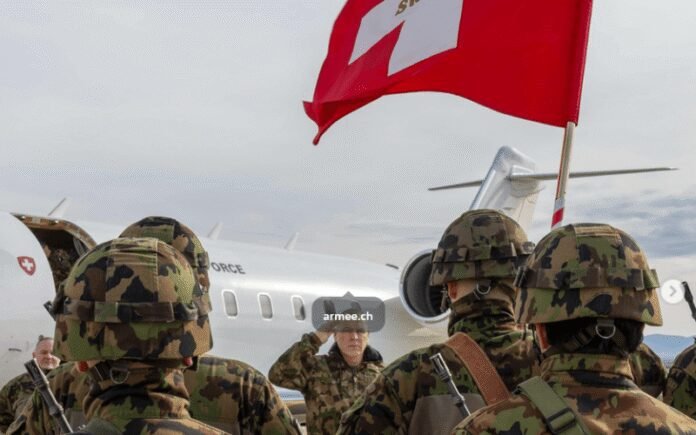
Swiss voters on Sunday firmly rejected a proposal to adopt a more restrictive form of neutrality that would have blocked their country from imposing economic sanctions or cooperating with NATO.
All cantons and about 70% of voters rejected the proposal for a strictly defined version of neutrality to be written into the Swiss constitution, final results from the Federal Statistical Office showed.
“This result is not a vote against neutrality. Switzerland was neutral yesterday, it is neutral today, and it will remain neutral in the future,” Foreign Minister Ignazio Cassis said at a press conference following the outcome.
While Swiss neutrality has been internationally recognised since the end of the Napoleonic wars in 1815, how the government implements it is not spelled out.
The right-wing Swiss People’s Party (SVP) has said that Switzerland’s traditional position has been eroded after Bern imposed sanctions on Russia following its invasion of Ukraine.
The campaign had funded posters across the country urging people to vote “No war, yes to neutrality”, featuring white peace doves, ahead of the vote.
Cassis said the rejection allows Switzerland to continue deciding on economic sanctions on a case-by-case basis and to cooperate with partners when doing so strengthens the country’s security, which, he stressed, also depends on the security of its neighbours and the European continent.
SWISS GOVERNMENT, MOST PARTIES OPPOSE THE PROPOSAL
Apart from the SVP, most parties and the Swiss government opposed the proposal. The Green Party, the Social Democrats (SP), the Centre Party and the FDP all expressed relief over Sunday’s outcome.
“Voters understood what the SVP wanted: it wanted Switzerland to isolate itself internationally and shirk its responsibilities when international law is being trampled on,” said Sibel Arslan, a lawmaker for the Green Party.
An FDP statement said the decision was important for an armed, neutral Switzerland that retains the ability to act.
The SVP meanwhile accepted the defeat and said it currently had no plans for further action.
“I’m of course not pleased with the result,” said SVP lawmaker Lukas Reimann, adding that the commitment to Swiss neutrality expressed by all sides during the campaign was encouraging.
“It is absolutely clear that neutrality belongs to Switzerland and is part of Switzerland’s identity,” he said. “Going forward, we will judge the opponents of the initiative by that commitment.”
If the government or opponents of the initiative were to stray from neutrality, for example by adopting tougher sanctions, the party would need to become active again, Reimann said.
‘SWISS VOTERS LIKE NEUTRALITY’
Fabio Wasserfallen, a professor of European politics at the University of Bern, said before the vote: “Swiss voters like neutrality, but they approve of how the government is implementing it at present.”
“They are also generally in favour of the sanctions on Russia over the war in Ukraine, and don’t want that to change.”
The campaign wanted the constitution to stipulate that Switzerland cannot join or cooperate with any military or defence alliance unless attacked, and that it refrain from joining any sanctions unless approved by the United Nations.
Arizona Lawmaker Proposes More Federal Support for English Fluency Services
An Arizona congresswoman has proposed three bills that would fund literacy classes, dual language programs and training for teachers of students learning English in the state, hoping to remedy gaps highlighted by Arizona Luminaria and ProPublica.
Rep. Adelita Grijalva, a Democrat, filed the bills Sept. 16, the same day Arizona Luminaria and ProPublica reported that the state had lowered the score students need to pass its English proficiency test. Experts warned the change will push thousands of students out of language services before they know English well enough to succeed in school. Superintendent of Public Instruction Tom Horne, a Republican longtime defender of Arizona’s English-only policies, approved the change.
Grijalva’s Reaching English Learners Act would create competitive grants of up to five years for colleges that partner with high-need school districts or early childhood programs to train teachers to lead classrooms of English learners. It gives preference to programs that recruit teacher candidates who were once English learners or come from underrepresented groups. Colleges would pay at least half the cost of the training. The bill does not specify a cost for the program.
A spokesperson for Grijalva said she had previously drafted the bills but noted that Arizona Luminaria and ProPublica’s reporting underscored why federal support is needed to improve English learning.
In a statement to the news organizations, Grijalva said, “Superintendent Horne’s mismanagement of the misguided ‘English-only’ model underscores the need for real federal support for English learners, educators, and their families, which is exactly what my legislation would provide. Instead of repeating the mistakes of the past by simply making the English proficiency test easier to pass, we should give students the resources and support they need to actually succeed in the classroom, including through supporting bilingual education.”
Horne disputed Grijalva’s characterization, arguing that the English-only model is superior to bilingual education. “To put bilingual education in schools is to sacrifice the students to dogma and condemn them to not learn English properly, which negatively will affect their future academic endeavors and their hope for good jobs in the economy,” Horne told the news organizations.
The state Department of Education has previously defended its decision to make it easier to pass the test by saying it first administered the exam to 600 native English speakers to set a baseline for the changes. The department skipped this step in 2020, when it made the last major change to the test, officials noted.
As the news organizations reported, after the state lowered the score needed to pass the fluency test, the statewide pass rate, known as the reclassification rate, jumped to 26% in 2026, from 12% the year before. Of the nearly 113,000 students who took the exam, about 30,000 were classified as proficient and removed from English-language services this school year.
Proposition 203, which Arizona voters approved in 2000, established the state’s English-only policies. Students learning English spend two to four hours a day in separate English instruction until they pass a test showing they’re fluent enough to learn in a mainstream classroom.
Past attempts by the state to reclassify large numbers of children learning English as fluent prompted federal investigations. The government alleged that placing such students in classrooms where they struggled because they lacked knowledge of English violated their civil and educational rights. Arizona agreed to a settlement more than a decade ago to resolve the matter.
Grijalva proposed two other bills to aid English learning and literacy.
Samantha Ramos teaches students during her English-language development class at John B. Wright Elementary School in Tucson, Arizona, in August.Cassidy Arazia for ProPublica
One of the measures, the Families Learning and Understanding English Together Act, would authorize $75 million a year from 2027 through 2031 for family literacy programs. Head Start programs, school districts, adult education providers and nonprofits could apply for grants of $150,000 to $1 million a year to teach English and literacy to young children and their caregivers together. To qualify, programs would have to serve areas where English learners are a majority, or growing share, of students at local schools.
The Supporting Young Language Learners’ Access to Bilingual Education Act, would fund dual-language immersion programs for children from low-income families from preschool through fifth grade. Students in those programs would learn in English and a second language and would use the second language for at least half the school day. The bill would authorize $15 million for 2027 and unspecified amounts in the following four years.
Since Democrats do not have a majority in either house of Congress, the bills do not stand much of a chance this year.
Yemen’s Houthis move to control crucial waterway – our research maps the countries most at risk
The advance of the Iran-aligned Houthi rebel group in Yemen has driven more than 130,000 people from their homes since the beginning of September, deepening the humanitarian crisis in an already poor country with a long history of domestic conflict.
The Houthis have swept down Yemen’s western coast, seizing the strategic port city of Mocha as well as the town of Dhubab and several islands in the Red Sea. A key aim is to control the Bab al-Mandab Strait, one of the world’s most important maritime chokepoints.
This narrow passageway is bounded by Djibouti to the west and Yemen to the east, and is a primary shipping route connecting Asia with Europe. Around 15% of global seaborne trade passes through Bab al-Mandab annually, worth more than US$1 trillion (£756 billion).
This includes a substantial amount of oil. Saudi Arabia, which supports government forces in Yemen, has grown particularly reliant on exports via the Red Sea since Iran effectively closed the Strait of Hormuz in February following the start of its war with the US and Israel.
The Strait of Hormuz is another maritime chokepoint, so its closure has led to higher global fertiliser and food prices. Global energy costs have also surged, with oil prices rising from around US$70 per barrel in February to roughly US$90 per barrel by the end of August. The escalating hostilities in Yemen pose further uncertainty to global trade.
Three of the world’s maritime chokepoints are located in the Middle East.La Terase / Shutterstock
Who is most exposed?
In 2025, we published research that measured the impact of maritime chokepoint disruptions. Our findings revealed which countries stand to lose most from shipping disruption through the Bab al-Mandab Strait.
Over a dozen countries depend on the strait for more than half of their maritime trade by value, with Eritrea (87%), Djibouti (78%), Sudan (67%), South Sudan (65%) and Chad (61%) standing out as the most reliant states. Yemen itself relies on the Red Sea for 54% of its trade by value.
Here, maritime trade refers not only to goods loaded directly at a country’s own ports but also to trade transported into a country from foreign ports and connected maritime routes. This explains why landlocked South Sudan and Chad also appear among the countries most exposed to disruption in the Bab al-Mandab Strait.
Given its role in connecting Europe with Asia, the Bab al-Mandab Strait is important for countries outside the region too. Roughly US$520 billion of Chinese maritime trade passes through the strait annually, with this value standing at US$243 billion for India and US$226 billion for the US. Germany and the UK rely on Bab al-Mandab for US$208 billion and US$190 billion of trade respectively.
We calculated that the economic losses associated with a 30-day Houthi blockade of the Bab al-Mandab Strait could amount to US$30 billion, rising to US$40 billion in the case of a 45-day blockade. This is due to increased fuel costs associated with rerouting, as well as higher freight rates and growing insurance premiums.
A screengrab taken from a video made available by the Houthi military media center on September 22 shows Houthi fighters in the coastal town of Dhubab, Yemen, located next to the Bab al-Mandab Strait.Houthi Military Media Center Handout / EPA
The Houthis have attacked Red Sea shipping in earlier periods of disruption in the region, including the crisis that began in late 2023 following the Hamas-led October 7 attack on Israel and the outbreak of war in Gaza. At that time, the group said it was acting in support of Gaza.
Major shipping operators subsequently decided to take longer but safer alternative routes via the southern tip of Africa, adding up to 15 days to the journey between Europe and Asia. While some shipping corporations resumed their Red Sea routes in the intervening years, others continued to avoid the region entirely.
Since the recent return to hostilities in Yemen, the Houthis have so far insisted they will only attack ships linked to Saudi Arabia. Nevertheless, the latest escalation risks prompting shipping companies that had continued to use Bab al-Mandab to divert their vessels around Africa too, while encouraging other operators to maintain their avoidance of the waterway.
Data from the PortWatch platform, a joint International Monetary Fund and University of Oxford initiative which monitors maritime trade disruptions, suggests only 22 vessels transited the Bab al-Mandab Strait on September 20.
This compares with around 70 vessels per day before the Houthis began attacking Red Sea shipping in 2023, and around 30 vessels per day prior to the recent escalation of hostilities in Yemen.
Unchoking the chokepoint
Moving forward, the question is what solutions are available. The link between the situation in Bab al-Mandab and the wider conflict in the Middle East makes a quick diplomatic solution challenging and unlikely.
Increased naval deployments would have been the conventional approach to keep the strait safe. Yet earlier such attempts by the US and its allies both in the Bab al-Mandab and Strait of Hormuz have failed. The mere threat of attack has deterred many vessels from crossing each waterway.
Iranians drive next to a billboard in Tehran, Iran, depicting the sinking of a US aircraft carrier.Abedin Taherkenareh / EPA
Continued instability in the Red Sea region will further reduce the attractiveness of this route for shipping companies, pushing ocean carriers to reorient their long-term fleet deployment around southern Africa.
This situation would be particularly disastrous for Egypt. Before the 2023 crisis, Egypt received billions of US dollars worth of fees from ships transiting the Suez Canal, which connects the Mediterranean Sea to the northern tip of the Red Sea.
The current situation in the Bab al-Mandab Strait is another wake-up call that the security of maritime chokepoints is vital for countries around the world.
One of my fundamental beliefs about the world is that Ramez Naam ought to blog more. Ramez is one of the world’s greatest futurists — he predicted the solar and battery revolutions long before these were widely understood.
If you were reading Ramez in 2011, you were able to understand the future of both energy technology and climate change, long before other people did. His earlier book More than Human is still a great guide to the kind of biological enhancements that AI might make possible.
Ramez is also an excellent science fiction author, having written a trilogy of novels in which nanotechnological telepathy is distributed as a party drug (I’m not sure if he actually expects that to happen, but it’s a very cool idea).
Unfortunately, although he does have a Substack (which you should absolutely follow), Ramez does not blog regularly. However, after having a lengthy private debate with him about Recursive Self-Improvement, I was able to prevail upon him to write up his thoughts for my blog.
To say that RSI is a big deal in the AI world would be a colossal understatement. Among AI researchers, entrepreneurs and AI safety people, there’s a widespread belief that as AI gets better at improving itself, there will be a “fast takeoff” or “FOOM”, in which AI’s capabilities “take off” and create a technological Singularity. This event is a staple of science fiction, including works by my favorite sci-fi author, Vernor Vinge.
A lot of people in the industry believe that this moment is now close at hand, and are racing toward that prize. But Ramez — normally among the most wide-eyed of techno-optimists — is highly skeptical that we’ll see anything like the “FOOM” of Vernor Vinge novels. In this lengthy, well-researched post, he explains his skepticism.
Personally, I’m agnostic. Ramez’s case necessarily rests on a lot of assumptions; although it’s cogently laid out, I think the real answer is that we’ll just have to wait and see whether the Singularity arrives.
But even more fundamentally, I don’t know how much this debate matters in the practical sense — even without the kind of Singularity depicted in sci-fi novels, AI capabilities are improving so rapidly that they’re already superhuman in many respects, and soon will probably be strongly superhuman in most or all dimensions. The AI of 2040 is going to look godlike, whether or not it explodes into an actual god in 2027.
Still, it’s a very interesting argument, and Ramez’s thoughts on the future of technology are always worth listening to.
1. AI is Helping Improve Itself
AI is already helping improve itself. The question is whether even fully autonomous recursive self-improvement (RSI) would cause a runaway intelligence explosion.
The theory is that each generation of AI could build a better successor, faster than the last generation did. That could lead to a “fast takeoff,” with capabilities surging to artificial superintelligence (ASI) in a year, months or even days.
Here’s my take: Given our best current data, the AI self-improvement loop would need to be roughly 5–10× stronger to sustain itself, let alone run away. I’ll explain this math in section 8. I expect incredibly rapid AI progress by the standards of nearly any other technology. But the evidence we have doesn’t suggest a sudden explosion to incomprehensible superintelligence anytime soon.
People use “recursive self-improvement” to mean everything from AI boosting the productivity of human researchers to AI bootstrapping itself to incomprehensible intelligence. Here’s my taxonomy: productivity gains (Type 1), increasing autonomy while still facing diminishing returns (Types 2–4), and a runaway loop to superintelligence if we can ever find accelerating returns (Type 5).
Figure 2. Five types of AI self-improvement.
We’ve made real progress on Types 1 and 2: AI helps both researchers and engineers inside of AI companies, and powerful models can train and improve smaller ones. We haven’t yet seen clear evidence for Type 3 (though Alibaba just made some strong claims) and certainly not for Type 4. I do expect autonomous self-improvement to arrive at some point. I’m skeptical that it leads to Type 5 – runaway super-intelligence – without a major conceptual breakthrough.
I do expect narrow superintelligence in highly verifiable domains. Think chess, Go, formal math, parts of computer science and coding. Highly verifiable domains are largely formal and structured types of work where machines can generate unlimited training data, with perfect or near-perfect verification of correct vs incorrect, and do so entirely in software without waiting on the physical world or humans. That’s an ideal setting for AI learning.
Figure 3. What makes a domain highly verifiable?
In fact, we already have narrow superintelligence in game plang. We’re seeing it happen now in the most formal parts of math, in particular in proofs and in finding counter-examples that disprove major conjectures.
That isn’t the same as broad superintelligence. Even our most powerful models need far more training data than humans, struggle to learn reliably from ongoing experience, and fail in surprising ways on tasks people find straightforward. Superhuman math doesn’t automatically mean superhuman judgment everywhere else.
3. Real AI Research is Harder than Benchmarks or Forecasts
Benchmarks and forecasts suggest that AI models should reliably succeed at coding tasks that take humans hours, without human help. The real world is messier. OpenAI’s internal data shows much shorter stretches of autonomous work on research tasks.
In its Research Acceleration / RSI report, OpenAI showed how often its models completed tasks with and without human help, grouped by how long a human would need to do the work.
Figure 4. OpenAI’s internal research tasks. Source.
Even on tasks that would take a human less than 15 minutes, OpenAI’s models succeeded without human intervention only 86% of the time. The estimated task length at 80% success was roughly 15 minutes over the first seven months of the year. July’s results were similar to the whole period average.
Fully autonomous RSI would require an AI to string together a great many research tasks reliably, stretching out over complex tasks that humans need weeks or months to accomplish. OpenAI’s data suggests that we aren’t close.
Anthropic also released a graph showing how Claude accelerates AI research. It shows that internal AI models collaborate on or even lead more than 90% of R&D tasks. That’s objectively impressive. At the same time, the graph reports zero cases of AI autonomously completing AI R&D tasks.
Figure 5. Claude’s role in internal AI R&D. Source.
These are incredible tools. But they still need skilled people to set direction and get them back on track.
The Gap Between Benchmarks and Reality
For years, METR has been publishing a chart showing what length of coding task (measured in human hours to complete) best-in-class AI models can achieve. It’s been called the most important graph in AI. METR’s Mythos Preview evaluation estimated that the model could succeed at 80% of coding tasks that took humans three hours.
Epoch’s own rule of thumb is that every five additional points of ECI (their overall benchmark of AI capability) correspond to roughly a doubling of METR’s task horizon. Using that formula, we’d expect GPT 5.6 Sol and GPT 6 Astra to be 80% successful at completing tasks of around 4 hours and 11 hours of human length, respectively.
Another estimate (a forecast) of AI task length comes from the AI 2027 scenario, which estimated that by July 2026, frontier AIs would be 80% successful accomplishing tasks of around 11 hours. Fairly similar.
Inside OpenAI, though, the July research-task horizon at 80% success was roughly 15 minutes.
Here’s the gap:
Measured Progress vs. AI 2027 and ECI-extrapolated METR
Figure 8. Forecasts, benchmarks, and real AI research. Tracker · OpenAI.
A four-hour benchmark horizon is about 16 times longer than OpenAI’s research horizon. AI 2027’s 11-hour forecast is about 44 times longer. Of course, the tasks being performed by researchers at OpenAI aren’t the same as those in the METR benchmark. So we should expect some discrepancy. This, however, goes well beyond that.
Actual AI research at OpenAI is an order of magnitude or more harder than metrics, benchmarks, or forecasts suggest. That should make us wary of relying too much on benchmarks, or of saying that future scenarios like AI 2027 are “on track.”
The authors of the related AI 2040 project still describe AI 2027 as roughly the future they expect, and say reality is tracking closer to it than even they expected. That’s not what we see from within OpenAI. This isn’t an apples-to-apples comparison, but the difference is remarkable. AI 2027 appears to be substantially over-optimistic in this regard.
In January of this year, Nathan Witkin made a case that the METR graph was exaggerating progress. The real world data suggests that at least some of his critiques were correct. The gap between benchmarks, forecasts, and data gleaned from actual use of AI should influence our expectations about the future.
4. The Sharp Diminishing Returns to Impressive AI Numbers
OpenAI’s report also shows impressive increases in AI token usage, in compute spend per researcher, and in lines of code written. But these aren’t results. They’re intermediate measures. How much progress do they actually drive?
Researchers used 124x more tokens per person. Engineers shipped roughly 7x as many lines of code per person. Researchers ran 1.6x as many experiments per researcher vs OpenAI’s 2025 whole year average.
Figure 11. From tokens to code to experiments. Source.
More tokens and code don’t tell us much on their own. The 1.6× experiment pace is closer to useful research output. Even that doesn’t mean AI is improving 1.6× faster.
An enormous increase in AI output has accompanied a much smaller increase in experiments run.
This isn’t a controlled experiment. We don’t know what would happen if researchers switched back to an older model. But it gives us a useful view of AI-assisted research inside a frontier lab.
It’s not just OpenAI. Anthropic reports that their engineers are now producing 8x as many lines of code per person as they did in 2024 – somewhat similar to OpenAI. Anthropic also sees significant diminishing returns between productivity and AI progress. Here’s a direct quote from its Mythos Preview system card:
“Productivity uplift does not translate one-for-one to capabilities progress. We surveyed technical staff on the productivity uplift they experience from Claude Mythos Preview relative to zero AI assistance. The distribution is wide and the geometric mean is on the order of 4×. […] We estimate that reaching 2× on overall progress via this channel would require uplift roughly an order of magnitude larger than what we observe.”- Anthropic, Claude Mythos Preview System Card; emphasis mine
Translation: To double the pace of AI progress, Anthropic estimates that AI would need to increase the productivity of their employees by roughly a factor of 40 relative to no AI assistance.
This is an estimate, not a measurement of progress. Even the 4× productivity figure comes from an opt-in survey of 130 Anthropic staff. I put more weight on OpenAI’s logged experiments, though the two sources measure different things.
We don’t yet know how much those extra experiments are accelerating AI improvement, if at all. In general, there are also steeply diminishing returns of more experiments in most branches of science.
That means that a 60% increase in experiment pace could be on the order of a 10% boost to AI improvement pace. (A power law exponent of 0.2, for those who want to do the math.) That’s speculation for now. We’ll learn more as the labs publish results.
Test Time Compute Also Has Diminishing Returns
What about giving the same AI model more time to think?
That scales badly also. In OpenAI’s recently publicized results on unsolved math problems, success rises roughly with the log of compute over the range shown. It shows logarithmic diminishing returns. In plain English, each additional doubling of compute for a model buys roughly the same gain in success rate, while costing twice as much.
Figure 13. Test-time compute and math performance. Source.
What About Agent Swarms?
What if we throw more agents at it instead? A common RSI / ASI idea is that once we have AIs at a certain capability level, we can just spawn more copies and put them to work.
Adding agents can get tasks done faster and sometimes reach a higher capability level. But on the three benchmarks in Toby Ord’s analysis, expanding a swarm buys less improvement per token than letting one agent think longer.
His rough rule of thumb is a square root. If one agent can accomplish a task in 10 hours, then 100 agents could accomplish it in one hour. The speedup is 10, the square root of the number of agents (100). But to get this speedup, you increase the total cost in tokens or run time compute by the same factor. So going from one to 100 agents can get a task done in one tenth the time. But it’ll be ten times as expensive.
Parallel agents can save time, at a much higher compute cost.
Another challenge is that agents often think alike. In a study comparing LLMs with 467 people, the first ten AI responses offered collective creativity comparable to about eight to ten people. After that, roughly two extra AI responses added as much as one extra human response. A separate study across model families also found less diversity in AI responses. That doesn’t mean every agent has the same idea. But a hundred copies may offer less variety than a hundred different researchers.
OpenAI says the model behind its Navier–Stokes result was developed through “large-scale reinforcement learning on top of a previously pretrained model.” Formal math is a highly verifiable domain, which makes it a particularly good fit for that approach: Machines can generate nearly limitless amounts of training data, and verify that solutions are correct or incorrect, all in software. My guess is that this model’s full results will show an especially large improvement in math.
I do think Lisan makes good points about cybersecurity. If you’re searching for a security vulnerability at a target site and can divide the search among agents, speed may justify a huge token bill. Swarms can be dangerous even when they’re inefficient.
I’m less convinced that this scales to research breakthroughs. Inventing something like the transformer probably takes more than searching a space someone has already defined.
Building a better model can bring gains that extra thinking time or more copies of the old model can’t. Look at the gap between Astra and OpenAI’s internal model on the same math problems.
Figure 14. Better models versus more thinking time. Source.
That’s the strongest version of the RSI argument: a more capable AI could do research that today’s model can’t do, however many copies we run.
But building that better model also runs into diminishing returns. More training data, more training compute, larger models, and more reinforcement-learning (RL) compute all show diminishing returns in published scaling studies. Making dense models larger usually raises the compute needed for each output token, too. None of these routes gives us a free pass around the problem.
AI capabilities are rising quickly. But the public data doesn’t show a sustained acceleration. To the extent that AI tools are boosting productivity, they may be being offset by the problems growing harder. Or we may simply be early. Either way, the trend isn’t showing a fast takeoff.
Figure 16. Frontier ECI gains since January 2024. Source.
The public ECI frontier-the best score among models released by each date-has gained about 16 points a year on a trend fitted from January 2024 through September 2026. That’s blisteringly fast progress, but this period doesn’t show a runaway surge.
Here’s the same frontier in absolute ECI points, through July 2026, to put it in perspective.
Figure 17. The absolute frontier ECI score. Source.
The public frontier also can’t tell us everything happening inside the labs. Anthropic gives us a closer look in the Opus 5.5 system card, using its own version of the index, AECI.
Eli Lifland, a co-author of AI 2027 and AI 2040, saw the apparent trend break as a warning that we were heading toward an intelligence explosion:
“Anthropic is probably right here [that they hadn’t reached dangerous levels of AI self-improvement], but alarm bells should be going off! Our processes are not ready to handle an intelligence explosion and we appear to be going full-steam ahead toward one.” – Eli Lifland, On Mythos’s AI R&D Capabilities
What looked like acceleration now appears more consistent with a one-time jump. The level went up. The rate hasn’t kept climbing.
Keeping Up the Pace Takes Exponentially More Resources
Achieving those gains has required an enormous increase in the inputs to AI. For example, consider computing power. Epoch’s estimates of AI chip capacity, measured in NVIDIA H100 equivalents, show roughly 127-fold growth in just over three years (including projections at the end of this period).
This is total AI chip capacity, including inference. Still, the increase is striking: vastly more computing capacity has accompanied much steadier gains in measured capability.
The broader picture looks similar. Here are six inputs alongside capability gains, going back to February 2023.
Everywhere we look, AI has diminishing returns. It gets more expensive in treasure and talent to make each step forward. More of every input has been required to maintain steady gains in AI capabilities.
We’ve been able to scale these inputs because, until recently, the cost was within the scope of what hyperscalers could pay from their profits. That is no longer the case. From this point forward, future AI investment will increasingly depend on AI revenues going up. And the scale of the numbers – 3% of US GDP is now going into AI infrastructure – suggests that eventually the growth rate will decline.
If investment growth does slow, to anything less than its current blistering exponential pace, capability progress could slow too. Even if investment growth continues (which I expect for the foreseeable future) a slowdown from its current exponential growth rate to a more modest one (which I also expect) could lead to a slower pace of progress. Better AI research tools may be needed to offset that.
Better AI May Be Needed Just to Maintain the Pace
The day when we need better AI tools just to continue the pace of AI progress may already have arrived. Not because investment is slowing, but because the problem of improving AI itself gets harder at each step.
“we believe that internal usage of recent AI models has been a key factor in maintaining the current rate of progress, but we do not yet see clear signs of dramatic acceleration beyond that rate.”- Anthropic, Claude Fable 5.1 & Claude Mythos 5.1 System Card, section 2.3 – emphasis theirs.
The key word is maintaining-and Anthropic italicized that word in its own system card. Increasingly capable AI may be essential just to keep the pace of improvement where it is.
Gains on Other Benchmarks Don’t All Carry Through to Research
Opus 5.5 improves substantially on several coding and computer use benchmarks. But on CoBench, Anthropic’s benchmark built from historical AI R&D problems, it gains just 2.6 percentage points over Opus 5, within the reported error bars.
Why the smaller gain here? Maybe AI research is simply harder than other tasks. Bear in mind that CoBench isn’t testing the ability to produce significant discoveries. It’s much more limited in scope. It asks models to investigate historical AI R&D problems using code, logs, and documents. That’s useful research debugging and productivity work, but it doesn’t directly test whether a model can invent a new architecture or make a conceptual breakthrough.
The evidence on open-ended research suggests another obstacle: coming up with useful ideas that haven’t already been tried.
Tom Cunningham and Manish Shetty have a useful apple-picking metaphor. An AI can pick the low-hanging fruit quickly, while humans can still reach ideas the AI can’t.
Once those apples are picked, another copy of the same agent finding them again doesn’t help. A stronger model can reach higher. To add my own flourish, the apples may also get sparser and farther apart as you climb. The RSI question is whether each harvest gives us enough to build a better apple-picker.
Figure 22. The apple-picking model of AI R&D. Source.
This pattern shows up across R&D. Bloom and colleagues document fields where research effort grows while research productivity falls. A famous example is Eroom’s Law: in the historical drug-development data, the inflation-adjusted R&D cost per new approved drug roughly doubled every nine years.
Figure 23. Eroom’s Law in drug development. Source.
Pharma has other complications, including regulation, difficult clinical trials, and rising expectations for safety. Existing treatments can also raise the bar for a useful new drug. But some of this difficulty may also be that the low-hanging fruit has been picked.
Lessons from Software R&D
Stockfish, the chess engine, gives us a more direct look at software research. We have records of experiments aimed at improving it and the gains that followed. This gives us a real-world dataset to look at the gains of experimentation in software.
As a result, several RSI models draw on this data. That said, not all the improvements came from these experiments. Several important ideas also came from outside the project, so we shouldn’t give its experiments all the credit.
Epoch’s analysis of software R&D estimates returns to research effort at about 0.83 for Stockfish, a bit slower than linear. These are diminishing returns, but gentle ones. These returns, however, are improvements in computational efficiency. And more compute does not turn directly into more AI capability. As we saw earlier, AI capability also has steep diminishing returns from adding more computational power. So we shouldn’t read that 0.83 as the return from experimentation to AI capability itself. AI capability grows much more slowly than compute, as we’ve seen already.
Andrej Karpathy’s autoresearch demonstration gets closer to the process we want to understand. A “teacher” AI agent changes a smaller “student” AI model’s training code, runs it, checks the result, and tries again. The teacher agent itself doesn’t improve, but it is able to improve the “learner”. This is my Type 2: A stronger AI improves a weaker one.
One public run, posted by an agent operating on Karpathy’s behalf, reported 89 experiments over roughly 7.5 hours. About 92% of that session’s gain arrived by run 44. Gains came quickly, then slowed. The setup was deliberately small, with a five-minute training budget per experiment. But the agent could change the architecture, optimizer, and training settings; it wasn’t limited to a handful of knobs.
A later public run got further, so the first run hadn’t hit a hard ceiling. This is a useful early example of autonomous research, and yet another place where we see the diminishing returns endemic in AI research. That said, this was a very early experiment. I expect future systems to do much better. This particular AI improvement loop will likely grow stronger.
From More Activity to Better Ideas
This is where the distinction matters. More tokens can buy more code, and more code can help us run more experiments. But experiments only improve AI if they uncover something useful.
Figure 25. From AI activity to useful improvements.
AI Still Struggles With Big Research Ideas
The bigger question is whether AI can come up with ambitious new research ideas or conceptual breakthroughs.
Anthropic’s description of Opus 5.5 is blunt:
“As with previous models, it is weaker on open-ended research: internal users report that it mostly testsincremental ideas and prefers less ambitious hypotheses, and in our human-run biology exercise, it deferred to the published literature and struggled to develop novel ideas (Section 2.2.2).”- Anthropic, Claude Opus 5.5 System Card, section 2.3.3; emphasis mine
METR’s assessment in the same card identifies what may still be missing:
“This is highly uncertain, but we expect that full automation of AI R&D will require large improvements in foresight, prediction, creating one’s own feedback loops, and generally other skills that might typically be referred to as researcher ‘judgement’ or ‘taste’.”- METR, quoted in the Claude Opus 5.5 System Card, section 2.3.6
In these examples, humans still supply much of the direction and judgment.
Future models will probably get better at this. But in the world’s stockpile of potential training data, we have many more examples of incremental work than of breakthroughs. I wonder whether that makes novelty harder to learn. That’s speculation, but worth watching.
This is also tough to address by simply running more copies of the AI. A huge number of parallel agents can help with the incremental improvements or searching over a large set of parameters, but for breakthrough ideas they may run into the homogeneity problem: More parallel agents still think alike.
8. The Self-Improvement Loop Doesn’t Look Strong Enough
How far are we from the self-improvement loop being strong enough to sustain itself, or to propel itself into runaway super-intelligence? Can we quantify this?
We can make a rough estimate. Better AI helps with research; useful research produces better AI. For the loop to sustain itself, each round must produce enough gains to propel the system through the next loop, even as improvements get harder to discover.
In a recent paper, The Economics of Recursive Self-Improvement, Tom Cunningham and colleagues modeled this from the standpoint of how much more productivity every point of additional ECI produces from an AI. They ask first and foremost what that number would need to be to create a self-sustaining feedback loop. And secondly, they try to determine what that productivity-per-ECI-point number is today.
First, they find a self-sustaining RSI threshold of roughly 15% more research productivity per extra ECI point. In their model, that’s about where better AI would generate enough progressto sustain the loop.
The picture below shows the idea. At the threshold, each cycle of gains powers the next. Above the threshold, the feedback loop accelerates. Below the threshold, the feedback loop is too weak, and the rate of improvement it brings drops on each cycle. This model isolates the software loop; outside investment can still drive rapid progress.
Figure 27. Three illustrative feedback paths. Source.
Updating this slightly with data from the Stockfish experiments puts the threshold a little higher, at roughly 19% per ECI point. I wouldn’t put much weight on that precise difference. Both estimates are uncertain. But they give us a way to think about the strength of the feedback loop and a rough band at which self-sustaining or runaway RSI may begin.
How Fast Are Gains Coming Now?
The second thing Cunningham and team do is make a rough estimate that the current AI productivity gain is about 9% per ECI point. That’sbelow their self-sustaining threshold.
I like the model. OpenAI’s newer data, however, suggests the loop may be quite a bit weaker.
Cunningham’s estimate of 9% productivity gain per ECI point is based on Anthropic’s survey of 130 staff, who reported roughly 4× the productivity they’d have without AI. Cunningham and colleagues compare that with a 16-point capability gain since early Claude Code.
That comparison assumes the earlier tools added little or no productivity, so ‘no AI’ is a reasonable starting point. The authors say this explicitly. I’m not sure the assumption holds for the same researchers doing the same work, but that’s a smaller issue.
The authors themselves know that this is a rough calculation, and warn that the 4× survey estimate is probably too high.
OpenAI’s newer data gives us a firmer way to check the number: Actual logged experiments over time, rather than human estimates of their own productivity with and without AI. I put more weight on this for three reasons:
Full sample, not opt-in. Similarly, OpenAI’s data catches every active experimenter, while Anthropic’s only reflects the 130 employees who took the time to answer the survey – and who therefore may not be a representative set.
Enormously more data. We don’t know how many experiments are in the 32 weeks of OpenAI data, but it’s likely at least tens of thousands of individual examples and possibly hundreds of thousands.
Any way you slice it, the new OpenAI data, released after Cunningham’s paper was drafted, is a larger, more comprehensive, more representative, and almost certainly more accurate dataset than Anthropic’s internal opt-in survey of employees.
Now let’s use OpenAI’s experiment data to calibrate the productivity gain per ECI point. We know that in August, OpenAI researchers ran ~1.6× as many experiments per person per month as the 2025 average. If we pair that with roughly 16 points of frontier ECI improvement, it works backward to about 3% productivity gain per point of ECI. By contrast, 9% compounded over 16 points would mean roughly 4× productivity.
Here’s OpenAI’s published weekly series alongside that hypothetical path of 9% more productivity per additional ECI point. The blue line ends at ~1.6×. The red line shows what 9% per point would imply if 16 ECI points were spread across this period. That doesn’t match what we see from OpenAI’s data.
I want to be clear here that all data sets are noisy. We don’t know exactly what model researchers were using on what days, or whether the new experiments were also higher quality than old experiments. We need more experiments and more data to further calibrate these numbers. Working with what we do have, what we see is a quite low boost to productivity from each additional ECI point.
Figure 29. Experiment pace versus a hypothetical path. Source.
Even that 3% could give better models too much credit. OpenAI also used far more tokens and had more compute for experiments. Those could account for some of the increase in experiment pace. So the range is probably a bit lower.
I use 2–3% productivity gain per ECI point as a working assumption, allowing for some help from those other inputs. This is still a rough estimate, albeit one that’s based on the best real-world data we have.
Figure 30. Productivity estimates and the takeoff threshold. Source.
With those assumptions, 2–3% per ECI point against a 15–19% threshold leaves a roughly five- to tenfold gap. That’s a big gap, though its size depends on how well experiment counts capture useful research and whether the assumed capability change is right.
Figure 31. Diminishing returns around the loop. Source.
AI is helping build better AI. Under this estimate, though, each turn of the loop adds less than the last. The feedback would have to become much stronger to sustain itself.
The loop itself could strengthen too. Better training data, memory, and research judgment could all help.
A breakthrough on the scale of the Transformer architecture in 2017 could change the picture much more. That would be a good reason to revisit these estimates.
Better researchers might also run fewer experiments and learn more from each one. A handful of better ideas can matter more than a mountain of routine runs.
Still, diminishing returns in machine learning aren’t new. Cortes and colleagues were fitting machine learning scaling curves in 1993: More examples reduced error, following a power law with diminishing returns. These diminishing returns and harsh scaling laws are as old as machine learning.
They didn’t appear for the first time with transformers or LLMs or deep learning. That doesn’t prove today’s relationships will last forever. But until we see evidence that we’ve found a new approach that scales without these inhibitors, we should plan for diminishing returns as likely to be with us for some time.
Software, Hardware and Economic Feedback
That said, the world is more than just software. Tom Davidson, Basil Halperin, Thomas Houlden, and Anton Korinek model software progress, hardware progress, and economic feedback together. Better AI helps design better chips; better chips support better AI; economic growth finances more investment in both.
Several feedback loops can combine to overcome diminishing returns even when one loop alone can’t. I think it’s fantastic that someone has attempted a model that integrates all these different avenues of improving AI through software, hardware, and economics.
But I have questions about the software loop itself. In their central calibration, fully automating software research puts that loop roughly at the threshold for explosive growth, even without help from better hardware or broader economic growth.
Recall that Cunningham’s model puts the self-sustaining threshold at roughly 15% more research productivity per additional ECI point, while our estimate using OpenAI’s experimental data puts today’s gains at only 2-3%. These models use different measures, so we can’t equate their numbers directly. But the contrast matters: their fully automated software loop reaches the threshold, while our best estimate from current data puts today’s loop far below it.
Having AI do all the research doesn’t eliminate the diminishing returns inherent to improving AI, or the broader problem of useful ideas getting harder to find. This is the distinction between Type 4 and Type 5 in the taxonomy above.
An AI might autonomously design, train, and test its successor, and still need exponentially more resources to make each additional step forward. Closing the loop doesn’t tell us whether it’s strong enough to sustain itself.
The authors do account for diminishing returns. The concern is whether their calibration overestimates how much useful AI research each round of software improvement produces. Diminishing returns appear to be fundamental to machine learning. We see them in training, in test-time compute, and in the search for better algorithms. Full autonomy could remove human bottlenecks without removing any of those constraints.
We’ve already seen this within autonomous research. In the Karpathy autoresearch example above, most of the gains arrived early, and more experiments bought progressively less improvement. That was a small experiment with a fixed teacher model, not a test of fully autonomous RSI. It doesn’t settle the question. But it illustrates why removing the human from an experiment loop doesn’t, by itself, remove diminishing returns.
I do expect the feedback loop to get stronger over time. Better AI should become better at research. But based on our best current data, reaching self-sustaining feedback requires a loop roughly five to ten times stronger than today’s.
Treating fully automated software research as already at that threshold is a substantial leap, before we add the benefits of hardware improvements or economic growth. I could be wrong, but I’d like to see evidence that autonomy brings enough additional useful discoveries to close that gap.
On hardware, I have some further reservations. The model doesn’t explicitly include the years it can take to turn a chip design into deployed hardware. The authors discuss physical bottlenecks, and I’d like to see manufacturing and construction delays built into the predictions.
I also wonder how much past chip progress came from better ideas, and how much depended on ever more expensive factories and equipment. If we give researchers too much credit for gains that also needed those investments, we could overestimate what faster AI research alone would produce.
Even with those reservations, this is the most compelling paper and model I’ve seen for combining feedback loops in software, hardware, and economics to understand how fast they could push AI forward.
I’m not convinced it establishes that a fast AI takeoff is possible under realistic conditions. More data could help us calibrate that judgment. But it gives us a useful framework for understanding what could happen beyond the software layer alone.
This is an important paper that helps us model AI as part of a broader economy that might have larger feedback loops around it. I appreciate it, and I’m glad they wrote it.
These estimates rest on less data than I’d like. I might be putting too much weight on a few observations and reaching a comforting conclusion I want to believe. We need better measurements, shared often enough to catch changes as they happen.
Now Wu, Arjun Ramani, and Basil Halperin, with their colleagues at the Elasticity Institute, have written a concrete proposal: How to Measure RSI. It lists eight things the labs could share to help answer these questions. Check it out.
Figure 33. Eight proposals for measuring RSI. Source.
I’d especially like to see how much useful research each new model adds, holding resources roughly constant, and how that research translates into better AI. That’s how we’ll learn whether the loop is getting stronger.
What the Future Holds
AI is already helping build better AI. It’s improving at a stupendous pace, and I expect that to continue. We already have narrow superintelligence in chess and Go.
I expect increasingly superhuman performance in parts of formal math, coding, and cybersecurity, and any other verifiable domain where machines can generate training data and verify success at machine speed. Those are powerful capabilities. That doesn’t mean we’re close to super-intelligence for less verifiable, messier, open-ended work – or to a general ASI.
I’m skeptical of a fast takeoff to super-intelligence, but evidence matters more than hunches. Let’s collect the data we need to get a clearer picture of what’s happening. Including evidence that could change our minds. If better AI starts producing enough useful research to make the next round easier, I want to know. If the gains keep shrinking, I want to know that too.
Ramez Naam is an AI, climate tech and deeptech investor. He is a speaker on AI, energy and disruptive technologies, and an award-winning author of the Nexus trilogy and other books. Subscribe to his Substack here.
This article was first published on Noah Smith’s Noahpinion Substack and is republished with kind permission. Become a Noahopinion subscriber here.
New Octagon Project Responds to ‘Erosion of Truth’
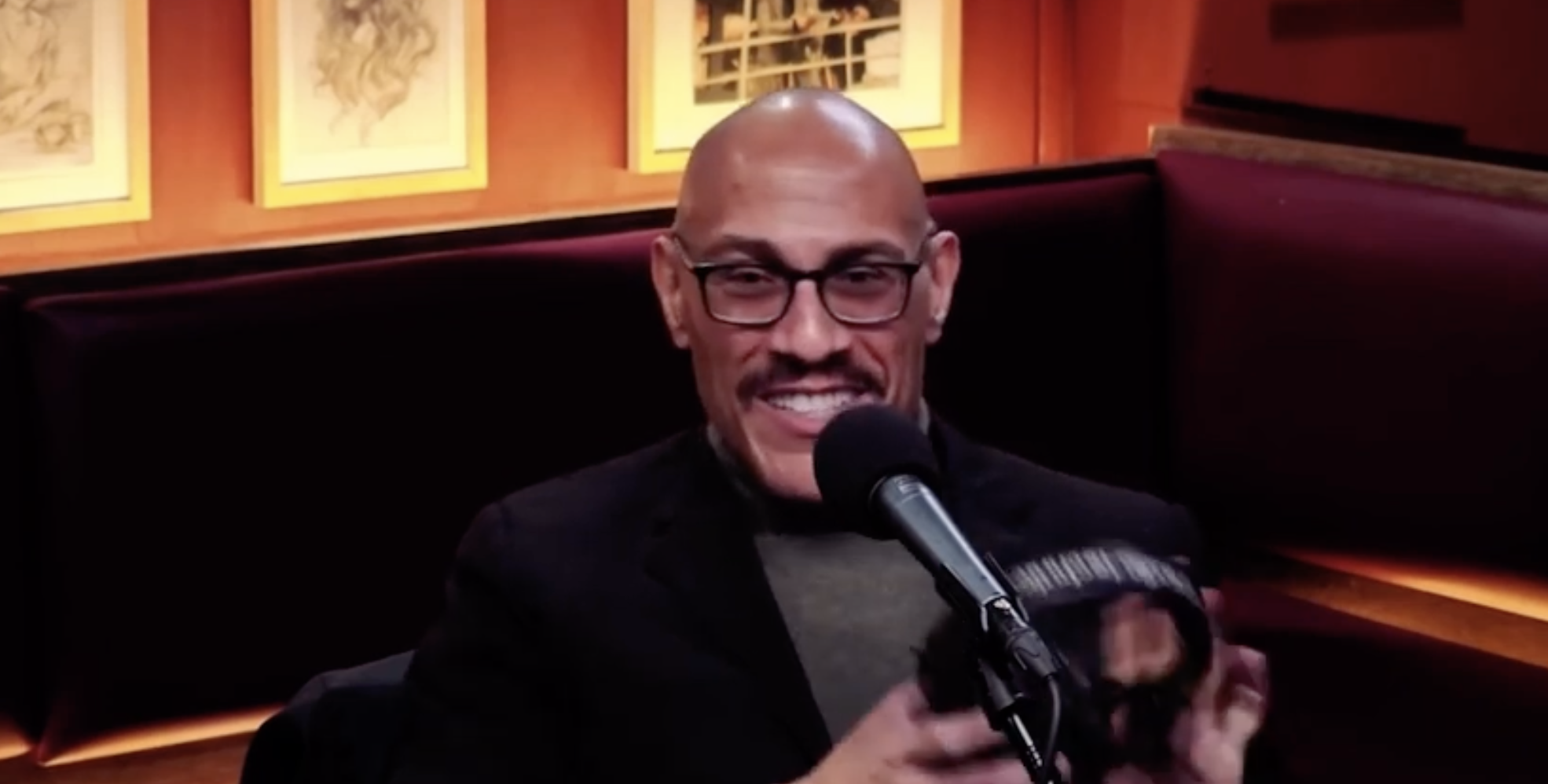
Journalist David Christopher Kaufman unveils The Octagon Project, a new education initiative intended to counter disinformation, encourage civic engagement, and help Jews and other supporters of Israel speak publicly with confidence
The day after Hamas’s October 7, 2023, assault on Israel, while families were still searching for loved ones and the scope of the killings was only beginning to emerge, David Christopher Kaufman watched a different battle ignite far from the southern Israeli communities under attack.
Across American campuses and city streets, he saw activists place the blame on Israel before, he says, “one soldier, one Israeli soldier had been deployed to Gaza.”
For Kaufman—a Jewish, Black and gay journalist, former New York Post editor, father, and founder of the Counterintuitive newsletter on Substack—the response was not simply shocking. It was clarifying.
“I was always Zionistic, always pro-Israel, always, I would say, sort of center of the road,” he says. “… It wasn’t that October 7th radicalized me. It was October 8th that radicalized me,” he told The Media Line.
It wasn’t that October 7th radicalized me. It was October 8th that radicalized me.
Now, as he prepares to launch The Octagon Project, Kaufman is turning that reckoning into a campaign focused on what he sees as the defining struggle of the moment: defending truth, confronting intimidation, and urging Jews who have retreated to the sidelines to speak again.
The Octagon Project is a new education initiative intended to counter disinformation, encourage civic engagement, and help Jews and other supporters of Israel speak publicly with greater confidence.
David Christopher Kaufman. (Screenshot: YouTube)
“What we saw on October 8, 2023, even while the blood was still flowing through the kibbutzim of southern Israel, while Hamas terrorists marauded through southern Israel, …” he says, “what we saw were these groups of anti-Israel, anti-Zionistic, antisemitic activists across America, especially at academic institutions, entirely blaming Israel.”
Kaufman says the language used by organizations claiming to speak for marginalized people made the moment more personal. “I’m a black or brown person. I’m what they would call a queer person. And I’ve often known what it’s like to be a marginalized person,” he says. “And I said, these people do not speak for me. I do not believe this way. And I have the ability to speak for myself, and I will speak for myself.”
“I won’t have my name or my identity weaponized against my own community and for agendas that I don’t support in any way whatsoever.”
I won’t have my name or my identity weaponized against my own community and for agendas that I don’t support in any way whatsoever
He describes the period since October 7, as an accelerating collapse of shared factual ground. “What I’ve seen … is an erosion, is a failure of truth,” he says. He points to what he calls “the lie of the genocide, the lie of Israeli apartheid, the lie that antisemitism is not a problem in the US.”
Its effects, in his view, are concrete: “And with that, fear, timidity, violence.” Jews and supporters of Israel, he says, fear “the specter of cancellation, of violence, of the mob” and often lack “the tools or the confidence in order to espouse the truth.”
Asked why so many people remain publicly silent, Kaufman says they need no permission to speak. “It’s our right as Americans, as fundamental Americans to protest and to push back.” Yet he believes the public narrative has been seized by an organized and amplified minority.
“Most Americans are not interested in Gaza. They’re not interested in America,” he says. “What you see is an over-representation and an over-reliance on the loudest voices that have drowned out everybody else.”
The Octagon Project, he says, aims to help those people “find their own voice, especially Jews.”
Kaufman’s concern about the Democratic Socialists of America (DSA), a US political organization that backs candidates who identify with democratic-socialist politics, is central to that mission. In response to a question about separating progressive politics from antisemitism, he rejected the premise that the danger is merely possible.
“Well, it’s not if they might have antisemitic values. They do have antisemitic values. There’s no question,” he says.
He contends that candidates backed by the DSA are subjected to ideological tests disproportionately focused on Israel and Zionism. “No other country, no other entity, no other ideology faces such stringent requirements,” he says. “And there is a double standard that is not represented for any other group besides Israel.”
“Israel is a country full of Jews,” he continues. “So, … this double standard, that is the antisemitism.”
What most alarms him is how quickly candidates aligned with that political movement have advanced. Kaufman points to a New York congressional race in which, he says, a Democratic Socialist presumptive nominee won by 2,000 votes in a district of more than 750,000 people.
“Think about that,” he says. “She will represent New York City in the Congress of the United States of America where she will have very real political power, and she won by just 2,000 votes.”
The lesson, he says, is not that the outcome was inevitable. “Somehow we, whoever we are, we have failed, and something must be done.”
Kaufman uses the word “radicalized” to explain his own shift, but he defines it as a political and moral awakening. “Yeah, I’m very much not a terrorist, and I don’t support terror of any kind,” he says.
“When I say radicalized, it means that I was very much awoken … to the reality of the threat that we face and the fact that something must be done about it,” he says. “And on some level, by any means necessary. I’m not necessarily talking about violence, of course, but if that means that we make this our fundamental political cause above everything else, that’s going to be acceptable.”
For him, that includes a new voting standard. “Any politician who has used the genocide lie and libel publicly is a politician I will not vote for, ever,” he says. Though he has long been an independent who voted Democratic in presidential elections, he adds: “If, in 2028, we have a candidate who has used the genocide libel as a Democratic nominee for president, I will not vote for them. It’s not even an option, period.”
Kaufman sees no contradiction between journalism and activism. “I fundamentally am rooted in this idea of the truth. And if we don’t actively and even radically fight for the truth, then what do we have left?”
That obligation is informed by his heritage. “As somebody who’s also African-American, I am sort of propelled and undergirded by the history of Black people in America and what it means to face injustice and what it means to face civil rights,” he says.
What I see facing Jews in America is a fundamental battle for civil rights, no different than African-Americans faced 40 or 50 years ago
“What I see facing Jews in America is a fundamental battle for civil rights, no different than African-Americans faced 40 or 50 years ago,” he argues. “I saw my father went to a segregated school in the South. That’s where I come from. And I see this battle facing Jews today as exactly the same.”
“I cannot stand as a Black person demanding equality for Black people if I don’t demand the same equality for Jews,” Kaufman says. “And those demands must be resolute. They cannot be compromised ever.”
He acknowledges antisemitic and anti-Israel extremism on the political right, but says that extremist currents on the left are especially potent because of their cultural influence and because dissent is less tolerated. “The left controls culture. The right controls politics in a way. The right controls power,” he says. “But we live in a highly culturally sensitive environment and moment, and you could say that the New York Times (NYT) in some ways is more important than the White House.”
His concern about the New York Times is personal. Kaufman says he initially took an allegation about Israel seriously precisely because it appeared in the newspaper where he once worked, and still retains “a fundamental trust in the New York Times and the essentialism of the New York Times.” But, he says, after reading it closely, “What I found was a piece of astounding unseriousness. Where was the smoking gun? Where were the whistleblowers?”
Still, he refuses to be pessimistic. “I still have hope,” Kaufman says. To give up on the NYT, he says, would be “to admit defeat in sort of the sanctity and the core values of our country.” As a father of small children, “I’m not ready to go there yet.”
David Christopher Kaufman. (Screenshot: Instagram)
Kaufman also rejects the idea that defending Israel requires defending every decision made by Israel. Having lived there for years at a time and followed its media in Hebrew, he says the country is too often presented as either uniquely virtuous or uniquely malevolent.
“When you spend time in Tel Aviv walking around the city, what you notice is just how regular it is,” he says. “It’s a city full of just regular people, regular Western-style people doing regular Western-style things, going to the mall, picking up their children, going to marriage counseling, going grocery shopping, having very normal lives.”
He believes advocacy should emphasize that normality. “Israel makes regular mistakes, just like every other nation,” Kaufman says. “We should hold Israel accountable to every mistake that it makes, but also within the context of the fact that every nation makes mistakes.”
The test, he says, is whether criticism seeks improvement or dismantlement. “If we can begin to talk about these errors and mistakes, not in an anti-Zionistic way, not in the language of, well, we must dismantle Zionism, but in a way of making Israel a stronger democratic nation, then that I think is very important.”
That includes confronting inequality. “Every thinking person who’s really spent time in Israel has to admit to themselves” that there is some degree of inequality, he pointed out. “That’s just the truth. That’s an unfortunate truth, but it is the truth.”
But, he says, the answer is not to deny Israel’s legitimacy. “We want to fix that to make Israel a stronger democratic nation. We want to fix that to make Israel more equal for all of its citizens, including its Arab citizens.” He calls that position an expression of “a deep love for Israel and an unbreakable belief in its legitimacy to exist and to exist as a Jewish nation.”
When the conversation turns towards “Mamdaniville” and the rising antisemitism in New York, Kaufman reserves some sympathy for what he calls “sideline Jews”—those who are neither anti-Zionist nor yet prepared to speak publicly.
“When I see sideline Jews, my first reflexive response is to feel compassion for them,” he says. “I’ve spent my whole life with a reality of what it means to be discriminated against.”
Most American Jews, he says, have not lived with what he calls “this feeling of vast physical insecurity.” That makes it deeply destabilizing to feel betrayed by a country that has offered safety and opportunity.
“It must be very, very difficult to suddenly wake up and realize that the country that you love, that you’ve called home, that your parents have called home, the country that has been incredibly good to you and the country that you have been incredibly good to in return … it must be incredibly overwhelming to feel that that country is betraying you,” Kaufman says.
He believes Jewish leaders have failed to prepare their communities for that possibility. “We haven’t seen our Jewish leadership really saying to American Jews, wake up people, the glory days are over, and we need to figure out a plan B,” he says.
According to Kaufman, The Octagon Project will seek new coalitions, but he does not favor repairing alliances that he believes abandoned Jews after October 7. “We don’t bring these people back to the table. We create an entirely new table,” he says.
He argues that work should begin within the Jewish community: “You have Jews of color, you have LGBT Jews, you have feminist Jews. So, number one, start at home, find them.” Efforts should then extend to outside partners, including Zionist Black, Latino, Hindu and Christian groups in his view. “Our allies are out there,” Kaufman says. “We need to make an effort and go find them.”
Those alliances, he says, must rest on “shared values, shared outcomes, shared agendas, not through philanthropy o,r dare I say it, white guilt.”
In three years, Kaufman hopes the project will help stop the advance of political extremism through better organization and new candidates. But the outcome he wants most is to help fearful Jews find their voices.
“What they have going for them is that they’re extremely well-organized and they’re extremely well-funded,” he says of the political forces he opposes. “Well, our side has the money. There’s no question about that. What we don’t have is the collective organization.”
He says he hears the same anxieties every day: “David, we are afraid. We don’t know how to engage. We are worried about our children. We’re worried about our jobs. We’re worried about our academic careers.”
“That fear and that worry is 100% legitimate,” Kaufman says. Yet he hopes it will not become permanent. “If we can find ways to empower Jews who have not yet found their voices, who I’ve said are suffering from the curse of timidity, if we can find them to step up and be revolutionary and be Jews who defend other Jews, then I will feel like I have done my job.”
As another October 8 approaches, Kaufman returns to the premise from which The Octagon Project began.“We are living in an era where lies have become the truth. I think that it started with Israel, Gaza, and the Jews.”
We are living in an era where lies have become the truth. I think that it started with Israel, Gaza, and the Jews
Then he invokes an old warning: “It’s a cliché. What starts with the Jews never ends with the Jews.”
For Kaufman, that is the reason to speak out.
“The erosion of the truth,” he says, “this is my biggest fear and warning. We need to fight back against this erosion of the truth.”
Starship’s first orbital launch gives lift to SpaceX’s next-gen Starlinks
SpaceX’s Starship rocket thundered into the sky over South Texas early Monday. It was the 14th test flight of the world’s most powerful launch vehicle. This time, however, the rocket’s massive upper stage squeezed out some extra oomph from its Raptor engines and accelerated to orbital velocity.
On all of Starship’s previous flights, SpaceX intentionally dialed back the full capability of the rocket to fly a suborbital trajectory, slow enough for Earth’s gravity to pull the vehicle back into the atmosphere before it could complete a full lap around the planet. After several successful suborbital flights in a row, SpaceX officials decided this launch should go all the way to low-Earth orbit. And it did.
What’s more, SpaceX packed 26 of the company’s newest generation of Starlink broadband satellites into the rocket’s cargo bay. One by one, the flat-packed satellites—too large to fit inside SpaceX’s workhorse Falcon 9 rocket—were released from Starship’s payload deployer using a system of pulleys and cables to eject the satellites overboard like a Pez dispenser spits out candy.
A dramatic morning
Starship Flight 14 began with a booming sendoff from Starbase, Texas, at 8:49 am EDT (7:49 am local time; 12:49 UTC) as 33 methane-fueled Raptor engines pushed the 407-foot-tall (124-meter) rocket off its launch pad. The engines generated up to 18 million pounds of thrust to propel the fuel-laden rocket into the sky over Starbase, SpaceX’s private spaceport just north of the US-Mexico border.
Heading east from South Texas, the rocket powered through the speed of sound and soared into the stratosphere before its Super Heavy booster stage detached from Starship’s upper stage. The booster executed a rapid high-altitude turnaround to begin thrusting back toward the Texas coast. Several minutes later, the Super Heavy first stage made a controlled splashdown in the Gulf of Mexico just off the coast of Starbase.
The upper stage continued its climb into space before shutting off its Raptor engines a little more than eight minutes into the fight. Up to this point, the rocket followed a similar trajectory as SpaceX’s previous Starship test flights.
The company’s flight control team had a few minutes to decide whether to proceed with the next phase of the flight: a restart of one of Starship’s Raptor engines to add the final bit of speed required to reach orbital velocity. For a brief period, it appeared as if SpaceX was going to forego the orbital flight and allow Starship to continue coasting toward a reentry over the Indian Ocean, as it had done many times before.
The question of what to do next centered on the performance of the rocket’s Raptor engines. One of the six Raptors on Starship shut down prematurely during its ascent burn, and the five others burned longer to compensate for the malfunction. Less of a worry for Starship’s orbital flight, but still a concern for future launches, was the apparent failure of two of the 33 Raptor engines on the Super Heavy booster—one during launch and another during the booster’s return maneuvers.
Dan Huot, a SpaceX commentator providing live updates on the company’s webcast of Monday’s flight, initially reported that mission managers were going to abort the orbit insertion burn. Officials ultimately decided to proceed. The failed Raptor engine was not the same one that needed to fire to place the rocket into low-Earth orbit and steer it toward reentry and splashdown at the end of the flight.
A view inside the engine bay of the Starship rocket, with three “sea level” Raptor engines in the middle and three “vacuum” Raptor engines in the outer ring. One of the steerable center engines was used for the orbit insertion and de-orbit burns.
Credit: SpaceX
A view inside the engine bay of the Starship rocket, with three “sea level” Raptor engines in the middle and three “vacuum” Raptor engines in the outer ring. One of the steerable center engines was used for the orbit insertion and de-orbit burns. Credit: SpaceX
SpaceX engineers were being “extremely conservative” in their planning for Monday’s flight, Huot said. A worst-case scenario for the first orbital flight of Starship would have been a failure that stranded the 100-ton vehicle in orbit. That could have caused it to fall back to Earth in an uncontrolled manner, creating a potential risk to public safety.
“We were only going to go if we were very confident in the core systems that have to work to get you out of orbit once you’re up there,” Huot said. “We took some extra time, added some extra drama, but we were able to clear the … three center engines and do our first ever orbital insertion burn. So that was a huge success.”
The Raptor engine selected for the insertion burn performed flawlessly, reigniting for 19 seconds to give Starship the nudge it needed to overcome the pull of Earth’s gravity. The maneuver added approximately 204 mph to Starship’s speed, a little more than 1 percent of the rocket’s overall velocity, to reach a stable orbit at an altitude of about 171 miles (276 kilometers).
Delivering for Starlink
Achieving orbit meant SpaceX could continue with the next phase of the mission. This involved the first deployment of commercial-grade Starlink V3 satellites for the company’s global broadband network. SpaceX launched a batch of Starlink V3s on the previous Starship flight in July, but that mission was suborbital, and the satellites quickly burned up as they fell back into the atmosphere.
The Starlink V3s will bring significant upgrades to the Starlink constellation. The satellites can only launch on Starship. They’re too large to fit inside the payload fairing of the Falcon 9 rocket, which SpaceX has used to deploy more than 12,000 Starlinks since 2019. The Starlink V3s, each weighing about 2 metric tons (4,400 pounds) at launch, are fitted with larger power-generating solar arrays and improved antennas.
The changes enable each Starlink V3 platform to add 1 Tbps of capacity to the Starlink network, 10 times more than the older satellites launching on Falcon 9, according to SpaceX. There were 26 Starlink satellites aboard Monday’s launch. Future Starships could deliver up to 60 Starlink V3s to orbit on a single flight. On its website, SpaceX wrote that Starlink V3s will “greatly expand the network’s capacity and user speeds.”
Upgraded Starlink satellites will also improve the network’s performance for direct-to-device connectivity. Future Starlink V3s could also be used for SpaceX’s Starshield service for the US military. SpaceX reported that its satellite team established contact with all 26 Starlink V3s after separating from Starship.
The satellites launched Monday were initially deployed into a low-inclination orbit, ranging about 30 degrees north and south of the equator, due to strict range safety rules restricting overflight of populated areas during launch. SpaceX is expected to launch Starship into higher-inclination orbits as it gains flight experience with Starship and debuts new launch pads in Florida and Louisiana.
One of SpaceX’s Starlink V3 satellites is seen exiting the rocket’s Pez deployer as the vehicle soared over South Africa.
Credit: SpaceX
One of SpaceX’s Starlink V3 satellites is seen exiting the rocket’s Pez deployer as the vehicle soared over South Africa. Credit: SpaceX
SpaceX’s first Starlink V3s had to wait a while for a ride to space, but Monday’s flight showed Starship is up to the task. SpaceX started phasing out Starlink launches on the Falcon 9 earlier this year. There are no more Falcon 9 launches for Starlink on SpaceX’s schedule at Cape Canaveral, Florida. Falcon 9 launches to place older-generation Starlink satellites into polar orbit will continue from Vandenberg Space Force Base, California, at least for a while longer.
Caleb Henry, director of research at Quilty Space, expects SpaceX to work on integrating the new capabilities of Starlink V3s into the Starlink network in the coming months. More already-built Starlink V3s will likely be on most of SpaceX’s next series of Starship flights.
“They just sat at a warehouse in Texas, as I understand it, because the satellites were finished well ahead of the launch vehicle,” Henry said in a live broadcast of Monday’s Starship flight hosted by Spaceflight Now (the author of this story was also a guest).
SpaceX said before Monday’s flight that this group of Starlink V3 satellites will be integrated into the broader constellation. They should begin serving customers as soon as a few weeks after launch, according to SpaceX, but it will likely take many more launches for Starlink customers to notice a difference in their service.
“It’s great that they have the capacity onboard in orbit, but until there is a meaningful number of V3 satellites launched, they won’t be the spacecraft that defines the user experience just yet,” Henry said.
Calling it a day
Soon after completing the satellite deployment sequence, SpaceX officials decided to bring Starship home earlier than planned, giving up on a chance to test the vehicle’s long-duration endurance in orbit.
“Out of an abundance of caution given the engine issue experienced during ascent, the flight control team decided to limit the duration spent on orbit and proceeded with de-orbiting Starship to a splashdown location in the northern Pacific Ocean,” SpaceX wrote in a recap of Monday’s test flight. “This area was one of two pre-coordinated landing zones identified before launch that was cleared of sea and air traffic.”
The de-orbit burn went off without a hitch, and Starship plunged back into the atmosphere over the Pacific Ocean, guiding itself toward a splashdown north of Hawaii, one of multiple backup return sites mapped out in advance of Monday’s flight. The reentry was uneventful, and Starship’s heat shield appeared to hold up well against temperatures up to 2,600° Fahrenheit (1,430° Celsius) as the vehicle streaked over the remote Pacific.
A bird’s-eye view of Starship in orbit captured by a camera on one of the Starlink V3 satellites.
Credit: SpaceX
A bird’s-eye view of Starship in orbit captured by a camera on one of the Starlink V3 satellites. Credit: SpaceX
Like its most recent flights, Starship dropped belly-first through scattered clouds before turning upright for a final landing burn. The splashdown was right on target, with the final moments of descent in view of a buoy prepositioned at the backup landing zone.
Splashdown occurred at 11:57 am EDT (15:57 UTC), a little more than three hours after liftoff, three times longer than Starship’s previous suborbital flights. The original flight plan called for a mission lasting nearly 10 hours.
As expected, the vehicle tipped over and broke apart in a fireball upon reaching the ocean, and was unable to replicate the serendipitous intact splashdown on Starship’s last flight in July. SpaceX anticipates most of Starship’s water landings to have fiery endings, but the days of Starship splashdowns may be nearing their end.
“Most importantly, Starship made it to orbit,” Huot said after splashdown. “We did our first ever orbital insertion burn. We kept the drama up a little bit as we were going through that coast time making sure everything was good. We were only going do all this stuff today if we were really, really sure that those sea level engines on Starship were going to perform because we needed to do that de-orbit burn.
“We were able to get there,” Huot said. “We got on orbit. Teams continued to look at it. We were going to get the data that we wanted, so we made the call due to this earlier reentry to [near] Hawaii.”
What’s next for Starship?
SpaceX has a steady stream of Starships and Super Heavy boosters in production and testing at Starbase, setting up for an increasing cadence of flights in the coming months. The company has not announced any official launch dates, but a schedule of “upcoming high-profile missions” released by the Federal Aviation Administration’s Air Traffic Control System Command Center this week indicated the next Starship flight could take off from Starbase in October.
Ground crews are moving into testing and activation of a new Starship launch pad at NASA’s Kennedy Space Center in Florida, with an eye toward hosting a Starship launch there before the end of the year. A cavernous new Starship factory is also taking shape at Kennedy. SpaceX is expected to transport Super Heavy and Starship rockets to the Florida launch base from its factory in Texas until the new on-site production facility is complete.
The results from Monday’s test flight suggest that SpaceX still has work to do on the latest iteration of its Raptor engine. The Raptor 3 engine variant uses a lighter, streamlined design, combining a lower part count with higher thrust.
A family portrait of SpaceX’s Raptor engines.
Credit: SpaceX
A family portrait of SpaceX’s Raptor engines. Credit: SpaceX
SpaceX has now encountered engine problems on each of the three Starship flights that have used Raptor 3s. During a May flight, one Raptor engine shut down prematurely on the Super Heavy booster, and another stopped running on Starship’s upper stage a few minutes later. Multiple Raptor engines failed to ignite on the launch pad for the next flight in July, prompting a last-second abort. SpaceX swapped out two of the engines before proceeding with a successful launch a week later.
Elon Musk, SpaceX’s founder and CEO, wrote on his social media platform X that the changes introduced with the Raptor 3 engine “greatly reduces mass and leak paths, but makes it harder to replace some parts.”
“While deleting parts sounds easy in theory, it is actually very difficult to figure out how to do so in practice and requires many iterations,” Musk continued. The inside of the Raptor 3 engine “has very complex geometry that can only be manufactured using highly modified 3D metal printing,” he wrote in another post.
Although the Raptor 3 is still a work in progress, the propulsion issues have not stopped SpaceX from making headway with Starship, and it’s unlikely the engine problems on Monday’s flight will delay the next Starship launch.
The FAA is also giving SpaceX the all-clear on Monday’s flight. The regulatory agency will not require SpaceX to conduct a formal mishap investigation. An FAA spokesperson told Ars: “All flight events for both the Starship vehicle and the Super Heavy booster occurred within the scope of planned and FAA authorized activities.”
Next on SpaceX’s to-do list will likely be an attempt to bring Starship back to Starbase for a catch by the launch pad’s giant mechanical arms, repeating a feat engineers have already accomplished with Super Heavy booster. Returning Starship to the launch site will require a reentry over land, necessitating additional safety reviews to ensure no undue risk to populated areas as the vehicle approaches Starbase. Eventually, SpaceX aims to make these landings routine enough to enable full and rapid reuse of Super Heavy and Starship.
Other near-term objectives for Starship include longer-duration orbital flights and then the first demonstration of in-orbit refueling, a prerequisite for future missions to land astronauts on the Moon under the auspices of NASA’s Artemis program.
In the meantime, expect Starship to launch many more Starlink satellites. Commercial and government demand for Starlink services, along with SpaceX’s longer-term plans for orbital data centers, will keep Starship plenty busy as engineers bring the rocket’s more advanced capabilities online.
Brightline shows people want more trains. But who will pay for them?
The first thing Brightline wants you to know about its bankruptcy is that the trains will keep running.
“BUSINESS AS USUAL,” read a message the company sent to customers after filing for Chapter 11 bankruptcy protection. The move followed months of discussions with bondholders, according to the Financial Times, and will give the privately operated higher-speed rail line time to borrow another $490 million as it strives to increase ridership enough to keep up with payments on $4.4 billion in debt accumulated building, expanding, and operating the railroad.
Despite the setback, trains will continue zipping between Orlando and Miami at up to 125 mph because the filing does not include Brightline Trains Florida, the division that operates the line. It also does not affect Brightline West, which is developing a run from Las Vegas to Los Angeles.
The company began offering service between Miami and West Palm Beach in 2018, then extended service to Orlando beginning in 2023. It has been held up as an example of how the private sector can bring high-speed rail to the United States, especially in regions with few transit options and little in the way of financing for them. The system saw ridership increase by 14 percent, and revenue by 17 percent, between January and August compared to the same period last year. It is also moving ahead with plans to expand service to Tampa and add a station in Cocoa.
“Brightline is a critical part of Florida’s transportation network that has changed the way people move around the state,” Patrick Goddard, CEO of Brightline Florida, said in a statement that followed Friday’s filing. “This transaction will be a catalyst for further growth in ridership and revenue.”
Brightline serves about 3.5 million people a year and generates roughly $240 million in revenue, which is less than half the ridership and one-third the income it predicted in 2024, Tim Hynes, head of Global Credit Research at Debtwire, told the Associated Press. That’s why Brightline needed to rework its debt and obtain additional financing.
Beyond its financial struggles, Brightline has faced scrutiny over its safety record. As of January, 182 people had been killed by its trains since 2018, many in collisions at crossings or involving people on the tracks. Brightline says none of the incidents were caused by train operations and points to hundreds of millions of dollars it has invested in safety improvements.
Yet Brightline’s struggles come even as it finds enthusiastic riders.
Ivan Reich enjoys rail travel and often rides Brightline for the 40-minute commute from his home in West Palm Beach to his office in Fort Lauderdale, where he practices bankruptcy law. He also uses it when he goes to Miami Heat basketball games, though he concedes that at $35 per ticket, it is too expensive for daily use. (A round-trip ride between Miami and Orlando can cost as little as $120.)
“Brightline’s literally like going to the airport and being on a plane,” he said. “It’s a luxury experience. It’s nice. It’s pleasant. It’s comfortable.” Beyond the cost of a ride, “there’s nothing to complain about.”
With Amtrak smashing ridership records and Brightline’s ridership rising, Americans appear increasingly willing to travel by rail. Brightline’s financial troubles raise a more difficult question: Who will pay to build the infrastructure needed to give more of them that option?
Brightline West is developing a 218-mile high-speed rail line between Las Vegas and the Los Angeles suburb of Rancho Cucamonga, where passengers could connect to a commuter line for the ride into LA. The roughly $21 billion project has received a $3 billion federal grant and is seeking a $6 billion federal loan as it works to secure the financing it needs to build the line.
Jim Mathews, who leads the Rail Passengers Association, sees Chapter 11 restructuring as a beneficial move that “probably gives Brightline breathing room” to get out from under “a crushing” debt load, he told Grist in an email. Improving the company’s financial outlook will benefit passenger rail overall by ensuring more people have access to it.
That said, the government needs to play a stronger role in financing rail because the sustained investment needed to launch projects is often beyond the private sector’s means, even with public-private partnerships. “Building a railroad is very hard and very expensive,” he said. “This is a good example of why governments always have a legitimate role to play.”
Money isn’t the only challenge. Private rail operators must also integrate their systems with existing public infrastructure, said Alon Levy, a research scholar at the New York University Marron Institute. Brightline West’s decision to stop in Rancho Cucamonga rather than Los Angeles illustrates the difficulty, Levy said, because reaching the city would require greater coordination with Metrolink. Building a more integrated passenger rail network will require “top-down federal action,” they said.
Rick Harnish, who leads the High Speed Rail Alliance, argues that rail should be treated more like other forms of transportation. Airlines don’t pay to build airports, and trucking companies don’t pay to build highways. Taxpayers do, because “private capital will not invest in the kind of infrastructure you need to fund public transit,” he said.
For Harnish, rising ridership on Brightline and Amtrak suggests the demand is there. What’s missing is greater public investment in the infrastructure needed to meet it. “It’s time for both the feds and states to start investing in good, high-quality tracks,” he said.
For Brightline, the immediate challenge is keeping the trains running. The larger one — for Brightline and passenger rail in general — is figuring out who pays to build the tracks beneath them.