Home Blog

Child Star Says He Hit Rock Bottom Weeks After Divorce Announcement

0
child-star-says-he-hit-rock-bottom-weeks-after-divorce-announcement
Child Star Says He Hit Rock Bottom Weeks After Divorce Announcement


Frankie Muniz is opening up about one of the most difficult stretches of his life just weeks after announcing the end of his marriage to longtime partner Paige Price.

The 40-year-old Malcolm in the Middle star shared an emotional message on social media Friday, revealing that the previous six weeks had left him feeling overwhelmed and forced him into some serious self-reflection.

“The last 6 weeks of my life have been a nightmare I’m praying to wake up from,” Muniz wrote, adding that everything had felt “heavy, unclear” and as though it were falling apart.

But Muniz made clear that he does not view the difficult period as the end of his story.

Instead, the actor-turned-race car driver said the experience has forced him to confront parts of his life that he believes need to change.

Muniz said he had read that sometimes “hitting rock bottom” can serve as a wake-up call, pushing a person to make changes they may have avoided for years.

“This isn’t the end of the story,” he wrote, explaining that he now plans to begin what he described as the difficult and often uncomfortable work required to improve his life.

Muniz did not specify exactly what triggered the turbulent six-week period, so it would be speculation to attribute all of his comments directly to his marriage breakup. However, the timing comes shortly after he and Price publicly announced that they were ending their marriage.

The couple revealed their decision on July 1 after previously keeping a period of separation private.

In their announcement, Muniz said that after roughly a decade together, their relationship had evolved into what felt strongest as a friendship and co-parenting partnership.

The pair share 5-year-old son Mauz Mosley Muniz, who Muniz said remains the center of their lives.

Muniz also praised Price for supporting his career over the years and said the two planned to continue working together through Muniz Racing while raising their son.

Their relationship dates back to 2016. They became engaged in 2018, eloped in October 2019 and later held a formal wedding ceremony in February 2020. Their son was born in March 2021.

Despite Muniz’s emotional message, there are already signs that he and Price remain committed to the friendly relationship they described when announcing the split.

Just one day after his “rock bottom” post, Muniz shared new photos showing himself, Price and Mauz together following the boy’s soccer game.

“Post soccer shenanigans with the fam,” Muniz wrote, celebrating after Mauz received a medal for sportsmanship.

The family outing appeared consistent with the former couple’s earlier promise to remain a team as parents, although neither Muniz nor Price has suggested publicly that they are reconciling.

Price also publicly defended Muniz in July after he faced criticism over the lighthearted way their separation was initially announced.

She said divorce was obviously not something they were excited about, but argued that they were still two adults capable of remaining on the same team.

Muniz’s personal upheaval comes during an unusually busy period professionally.

He recently returned to the role that made him famous in Malcolm in the Middle: Life’s Still Unfair, the revival of the hit sitcom that originally ended in 2006. The new installment reunited Muniz with Bryan Cranston, Jane Kaczmarek and other returning cast members.

At the same time, Muniz has continued pursuing his racing career, including competition in NASCAR’s Craftsman Truck Series.

For now, Muniz appears focused on rebuilding rather than pretending everything is fine.

He ended his message by telling others going through their own difficult periods that reaching a low point does not necessarily mean their story is over.

For Muniz, at least, he appears determined to treat the past several weeks as a turning point rather than a final chapter.

Nepal isn’t the only disaster-struck country waiting for money from the global climate Loss and Damage Fund

0
nepal-isn’t-the-only-disaster-struck-country-waiting-for-money-from-the-global-climate-loss-and-damage-fund
Nepal isn’t the only disaster-struck country waiting for money from the global climate Loss and Damage Fund

As it faces the enormous task of rebuilding from a deadly flood that tore through communities in the Himalayas, Nepal is seeking compensation from the international Fund for Responding to Loss and Damage – meaning from countries that are major contributors to climate change, which it blames for the disaster.

Nepal Foreign Minister Shisir Khanal said it was not merely a request for aid or charity but a demand for justice and “legal and moral liability.”

“Nepal’s greenhouse gas emissions are virtually negligible. Yet, we are paying the ultimate price for a global crisis we did not create,” Khanal told the Kathmandu Post. “The rapid melting of glaciers and these catastrophic mountain tsunamis are direct consequences of global climate change.”

The New York Times compiled images from mountaineers and maps showing how the glacier collapsed on Aug. 26, 2026.

Nepal’s US$20 million request is small compared to the billions of dollars in damage, but it is an important test of the Loss and Damage Fund’s credibility. So far the fund, created during the U.N. climate conference in 2022 to respond to the impacts of climate change in developing countries, contains a fraction of the money major greenhouse gas emitters pledged to contribute, and it has paid out nothing despite requests from at least 119 nations.

Climate change is raising the risk

It is scientifically well established that global temperatures are rising and fueling ice melt and more extreme climate and weather conditions around the world.

Increasing greenhouse gas concentrations, largely from burning fossil fuels, have pushed global temperatures so high that sea levels are rising, and shrinking glaciers and thawing permafrost are leaving mountainsides less stable. A September 2026 U.N. Environment Program report determined that it is now inevitable that the planet will warm by at least 1.5 degrees Celsius (2.7 degrees Fahrenheit) compared to temperatures before the Industrial Revolution. Communities will have to adapt to increasing hazards.

The world committed under the Paris climate agreement to try to limit warming to 1.5 C in an attempt to avoid the worst effects of climate change. But it is not on track, and many countries are paying the price.

Is the fund just words?

At least 119 countries have submitted requests for money from the Loss and Damage Fund to help them respond to disasters or adapt to climate change.

About 93% of the requests as of June 2026 involved extreme events such as floods. Over three-quarters included slow-onset events, such as requests for help building the infrastructure, including sea walls, and the capabilities to adapt to sea-level rise.

Together, the requests totaled $2.8 billion – about 10 times the amount of money that had actually reached the fund.

Wealthy countries have so far pledged to give about $820 million to the Loss and Damage Fund, but they have delivered only about a third of that – $250 million to $300 million. The U.S. withdrew its support for the fund in 2025.

The fund’s board, meanwhile, has yet to disburse money for any of the requests. At the most recent board meeting in June 2026, officials considered four requests for funding, but none were approved.

The board has a responsibility to ensure that the money will be used appropriately. But one analysis of comments countries made while negotiating the creation of the fund and decisions of the fund board suggested that the slowness of both the disbursals and the setting up of the fund had been deliberate – a practical evasion of a responsibility agreed to on paper.

The board is scheduled to meet next in December 2026. Eight of the 26 board members formally requested an emergency meeting to respond to the disaster in Nepal quickly. The co-chairs of the board acknowledged the request, but how the board might respond was unclear.

Nepal needs billions for recovery

Nepal is asking for about $20 million from the fund. However, the country’s finance minister, Swarnim Wagle, estimated that the country would need US$4 billion to $5 billion to rebuild from the flood damage – nearly a tenth of its national economy.

Nepal lost over 10% of its hydropower capacity when a glacier collapsed on Aug. 26, causing the landslide and flood. Mud, water and rock inundated several riverside communities near the border with China, killing more than 1,400 people and leaving thousands more missing. The flood also broke through several hydropower dams in the Bhote Koshi river basin.

Mud covers a river-side village. The flood spread far from the river's banks, fully engulfing some homes.

The flood buried several riverside communities in mud and rock and damaged more than a dozen hydropower dams, knocking out about a tenth of Nepal’s power production. Daniel Ceng/Anadolu via Getty Images

In Nepal, many of the risks come from melting glaciers. The Himalayas and neighboring Hindu Kush mountains together contain one of the world’s largest volumes of ice, but studies show they have been losing that ice fast as temperatures rise, with the loss rate doubling since 2000. When glaciers retreat, the result can create glacial lakes prone to outburst floods and unstable slopes prone to landslides like Nepal experienced.

Nepal is receiving aid directly from other countries, but it wants support from the Loss and Damage Fund in part because of what that would represent.

The symbolism of the Loss and Damage Fund

In many ways, the fund is symbolic, and that symbolism is important.

Vulnerable countries fought through years of international climate talks to establish a principle of climate compensation and distinguish it from charity. Even if the amount that the fund disburses to Nepal is relatively small, it would represent compensation for harm caused by climate change.

Countries are often willing to provide humanitarian assistance, but they are resistant to providing funding labeled “loss and damage,” unwilling to assume responsibility – and potentially liability – for climate change.

People stand on a board to reach second-floor windows of a home. The mud largely covers the first floor.

People in the town of Devighat try to clean a home that was covered by the landslide’s debris. Pedro Pardo/AFP via Getty Images

The decision establishing the fund is very clear that contributions are voluntary and the act of contributing should not be interpreted as an acknowledgment of liability. Climate-vulnerable countries consented to that language in the hope that it would bring in much-needed help.

If the fund acts promptly and pragmatically on that shared responsibility, global efforts to establish liability for climate change through international tribunals and courts could ease.

Speed matters

To be effective, the Loss and Damage Fund needs to be more agile and responsive to the needs of the most climate-vulnerable countries. During negotiations to set up the fund, one negotiator emphasized the need for resources to be accessible within 24 to 48 hours of a climate disaster.

A coalition of experienced adaptation and disaster response organizations has argued that the fund should prioritize effective existing local and national programs and low-cost and low-risk projects. These include community-based resilience and recovery with local volunteers, health centers and cash transfers to flood-affected households.

France 24 used amateur video from along the flood’s path to reconstruct the damage.

From response to anticipation

The Loss and Damage Fund could also use its symbolic and modest financial position to nudge the broader humanitarian, development and climate finance ecosystem toward what’s known as anticipatory action.

Anticipatory action involves moving resources into at-risk places before the disaster hits. It has been proven to speed up the response and recovery.

Emphasizing this approach could also lead to better forecasting, early warnings and planning that takes climate change into account to protect people in vulnerable regions around the world.

Ed Sheeran Calls Gaza War ‘Catastrophic and Unjustifiable’ Onstage After Macklemore Dispute 

0
ed-sheeran-calls-gaza-war-‘catastrophic-and-unjustifiable’-onstage-after-macklemore-dispute 
Ed Sheeran Calls Gaza War ‘Catastrophic and Unjustifiable’ Onstage After Macklemore Dispute 


Ed Sheeran opened his solo concert in Philadelphia on Saturday by condemning the civilian suffering in Gaza while also addressing the Oct. 7 attack on Israel, following controversy over the removal of Macklemore from his tour after the rapper’s pro-Palestinian activism. 

“This is a humanitarian issue, and I cannot hide how I feel about it anymore,” Sheeran told the crowd at Lincoln Financial Field. “What happened in Israel and at the Nova Music Festival on Oct. 7th was horrific and compounded centuries of Jewish pain. What is happening in Gaza is a catastrophic and unjustifiable and disproportionate.” 

He continued: “My heart has been broken by the scale of devastation and loss of civilian lives, of children’s lives. And the systemic injustice we’re seeing unfold in the West Bank cannot be overlooked.” 

Sheeran’s comments came after Macklemore was dropped from the tour following appearances at Sheeran’s September 4–5 New Jersey concerts. Macklemore shouted “Free Palestine,” displayed images of destruction in Gaza and performed “Hind’s Hall,” while describing Israel’s actions as genocide. 

The performances divided fans and drew criticism, including from singer Pink, who said the imagery was offensive to Jewish audience members. New England Patriots owner Robert Kraft, whose group owns Gillette Stadium, where the tour was headed, also objected to Macklemore’s participation. The tour promoter removed Macklemore September 14 after venues threatened to cancel upcoming concerts. 

Sheeran said the decision was the promoter’s rather than his. Finneas, Lukas Graham, Aaron Rowe and Irish band Beoga subsequently withdrew from the tour in solidarity with Macklemore. 

Macklemore later pledged his entire $1 million in net tour earnings to six Palestinian aid organizations and challenged Kraft to match the donation for Israeli causes. Kraft said Sheeran had already contacted him and pledged $2 million toward humanitarian aid in the region. 

Macklemore previously drew controversy in 2014 when he appeared onstage in Seattle wearing what many considered a broadly antisemitic, stereotypically Jewish costume. 

Sheeran spoke for nearly four minutes Saturday, acknowledging mistakes in his handling of the dispute and saying he wanted his concerts to remain a safe space. 


Nearly 147,000 Yemenis displaced in September amid escalating fighting, government says

0
nearly-147,000-yemenis-displaced-in-september-amid-escalating-fighting,-government-says
Nearly 147,000 Yemenis displaced in September amid escalating fighting, government says

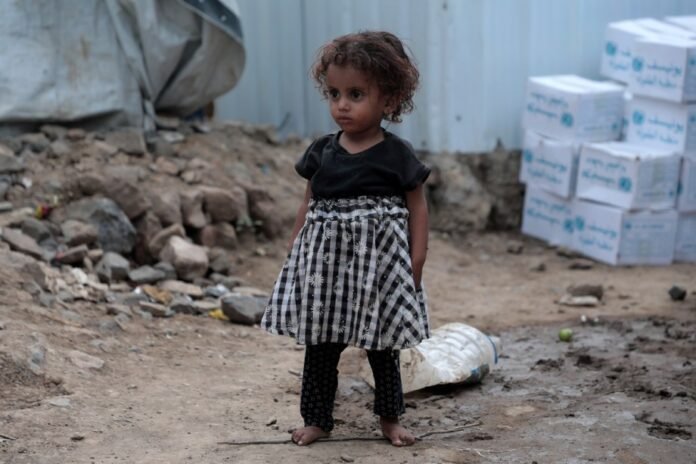
A Yemeni governmental body said on Sunday that nearly 147,000 people have been displaced this month amid ongoing military escalation in the war-torn country, Anadolu reports.

The Executive Unit for the Management of Displaced Persons Camps documented the displacement of 21,583 families, comprising 146,943 people, between Sept. 1 and 18 due to deteriorating security conditions.

It said the displacement was recorded in eight provinces: Taiz and Lahj in the southwest; Aden, Abyan and Shabwa in the south; Al-Hudaydah in the west; and Hadhramout and Al Mahrah in the east.

According to the report, Taiz received the largest number of displaced, with 11,534 families comprising 80,792 people, distributed across 15 districts. Lahj ranked second, receiving 5,472 families comprising 38,304 people across nine districts.

The government body also recorded the arrival of 1,622 families, comprising 7,162 people, in Aden, most of whom were hosted by local families in several districts.

It said 1,471 families comprising 10,297 people were displaced to the districts of Hays and Al Khawkhah in Al-Hudaydah, while another 1,278 families comprising 8,946 people arrived in Abyan.

The body also recorded 110 displaced families in Hadhramout, 70 in Al Mahrah and 26 in Shabwa.

It called on international and local organizations to provide “urgent, life-saving assistance” to displaced people, warning that delays in the response could “exacerbate the crisis and increase pressure on host communities.”

The rise in displacement comes amid a broad military escalation along Yemen’s western coast and in areas of Taiz province, where the Houthis have advanced and taken control of positions previously held by government forces.

Fighting has resumed on several fronts in Taiz, Marib and Al Jawf in the north, Al Bayda in central Yemen, amid a military escalation that began in early July, in the worst escalation since a UN-brokered truce in April 2022.

The fighting intensified in September, with the Houthis taking control of several strategic positions in Al-Hudaydah and Taiz provinces, including the strategic city of Mokha, extending as far as Mayun Island in the Bab al-Mandab Strait.

Yemen has been at war since the Houthis seized the capital Sanaa and several provinces in September 2014, before a Saudi-led coalition intervened in March 2015 in support of Yemen’s internationally recognized government.

Former EPA officials: Trump is letting data centers make people sick

0
former-epa-officials:-trump-is-letting-data-centers-make-people-sick
Former EPA officials: Trump is letting data centers make people sick

This story was originally published by Mother Jones and is reproduced here as part of the Climate Desk collaboration.

While tech oligarchs grandstand about the existential danger AI superintelligence poses to humanity, former Environmental Protection Agency officials say we should be worried about a more immediate threat to our health: the data centers that power those AI models. 

The former EPA researchers, now working with the nonprofit Environmental Protection Network, are warning in a new report that since January 2025, Donald Trump’s EPA has embarked on a systematic weakening of pollution safeguards, permitting processes, inspection norms, and other guardrails — at least 30 different actions — that could increase the health risks associated with the data center boom. 

There are currently about 3,000 data centers in the United States, and more than 1,500 new centers are in the planning stages. But as developers build out this vast, energy-hungry infrastructure, the country is losing the government regulatory safeguards that are needed to ensure that expansion is done safely, the ex–EPA officials say. 

Read Next

Dan Costa, who spent 35 years at the EPA studying air pollution, noted that for decades the environmental agency, which was established in 1970, had a large and committed cadre of researchers who investigated emerging sources of pollution and new environmental threats.

“Over the decades, toxicologists, chemists, atmospheric scientists, modelers, and engineers worked in concert with academic colleagues on behalf of the American people — not on behalf of industry,” Costa said in a press briefing last week. “We wanted to carry out EPA’s mission of protecting people’s health from industrial air pollution.”

Now, though, that workforce has been gutted. The Trump administration has dismantled EPA’s main research office, and the agency’s priorities have shifted away from strict enforcement of pollution standards. “Transforming the nation’s energy system, while diminishing its scientific capacity to understand what the impacts are going to be, makes no sense,” Costa said. 

But that appears to be the direction the country is heading in. President Donald Trump is “positioning America as the global leader in AI,” EPA Administrator Lee Zeldin wrote in a memo last year. The agency is “committed to bolstering” those efforts, Zeldin said, by “cutting heavy-handed regulations to ensure America can build and power the data centers essential to Making America the AI Capital of the World.” 

Read Next

Since Trump returned to the White House, data center developers have seized the opportunity to expand at a rapid pace, helped by the administration’s moves. In some cases, that deregulation has involved keeping old coal-fired plants online past their planned decommissioning times in order to power data centers; other times, it has meant easing regulations on the use of onsite fossil fuel-powered turbines to power hyperscale data centers like xAI’s Colossus. 

The agency has proposed a rule change that would let developers begin constructing data centers and their associated power plants before they get air pollution permits. And it has directed the agency’s enforcement staff to avoid any action that could “unduly burden or significantly disrupt” energy production or power generation.

According to one study the former EPA researchers cited in their new report, pollution associated with the AI boom may lead to 1,300 additional deaths per year. 

Physician and former EPA administrative official Lynn Goldman said some health impacts of increased data center pollution might be felt quickly — for example, heart attacks or premature births associated with particulate exposure. Others, such as cancer, might take years to emerge. “The AI industry’s race for advantage should not be a matter of life or death,” Goldman said at the press conference. “Families shouldn’t have to pay for the AI boom with their health.” 


Gunfire Near Notre Dame During Packed Football Game

0
gunfire-near-notre-dame-during-packed-football-game
Gunfire Near Notre Dame During Packed Football Game


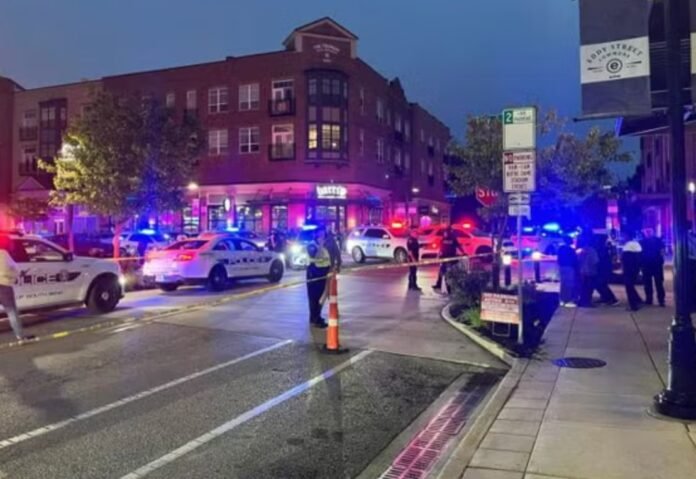
A shooting just outside the University of Notre Dame campus sent police scrambling and triggered an emergency shelter-in-place order Saturday night while more than 77,000 football fans packed Notre Dame Stadium for a prime-time rivalry game.

The frightening incident unfolded around 7:30 p.m. near Eddy Street Commons, a busy shopping, dining and entertainment district on the southern edge of the campus in South Bend, Indiana.

South Bend police said Notre Dame officers initially alerted them about a man who had reportedly been seen carrying a gun and pointing it at people in the area.

Officers located someone matching that description near the south end of Eddy Street Commons, but police said the man was not armed when they encountered him.

Then the situation escalated.

As roughly 20 South Bend officers were working in the area, police said a single gunshot rang out near the intersection of Eddy Street and Angela Boulevard.

Officers found a woman suffering from a gunshot wound to her leg. Her injuries were described as non-life-threatening, and she was taken to a hospital for treatment.

A South Bend police officer was also injured by the gunfire. Investigators believe the officer may have been struck by a ricochet or shrapnel. The officer was treated at the scene and was also expected to recover.

Police said another person suffered an injury during the incident that was not caused by gunfire and may have occurred during a fight surrounding the shooting.

The new information is important because initial reports said only one person had been injured. Authorities later clarified that the woman and police officer were both hurt by the gunfire, while a third person suffered a separate injury.

Notre Dame quickly activated its NDAlert emergency notification system.

People inside Notre Dame Stadium were told to remain there, while others around campus were instructed to shelter in place as officers searched for the suspected shooter.

The university’s emergency system is designed to send mass notifications by text, phone, email and campus loudspeakers during major emergencies, including incidents involving active violence.

Authorities described the person they were searching for as a heavyset Black male with dreadlocks who was wearing blue shorts, a black shirt with a red-and-blue design and one white shoe.

Police said the suspected shooter fled west from the area.

Notre Dame, South Bend and St. Joseph County officers worked together to secure the area around Eddy Street Commons and the university. Police also cleared parking garages and building entrances and temporarily closed businesses while investigators tried to determine exactly what had happened.

The shelter-in-place order was later lifted after officials determined there was no continuing threat to the campus.

South Bend Police Chief Scott Ruszkowski said authorities were unwilling to take chances with tens of thousands of people nearby, particularly with massive crowds expected to spill out of the stadium after the game.

Despite the emergency outside, the game itself continued.

Notre Dame Stadium had an official attendance of 77,622 for the matchup between No. 3 Notre Dame and Michigan State. The game marked the 80th meeting between the longtime rivals and their first matchup since 2017.

Notre Dame entered halftime with a 17-10 lead before shutting out Michigan State in the second half and winning 27-10.

The victory improved the Fighting Irish to 3-0 and kept the Megaphone Trophy at Notre Dame.

While fans inside the stadium watched the game continue, investigators outside were still working to identify and locate the person responsible for the gunfire.

As of Sunday, the South Bend Police Department’s Violent Crimes Unit was continuing the investigation. Police have asked anyone with information to contact Michiana Crime Stoppers anonymously at 574-288-STOP.

The shooting occurred in an especially sensitive location because Eddy Street Commons sits immediately adjacent to Notre Dame and becomes heavily congested with students, visitors and football fans on game days.

The university’s emergency website now lists the campus as operating under normal conditions.

Magen David Adom’s Blood Supply Helped Save a Mother Who Needed 50 Units

0
magen-david-adom’s-blood-supply-helped-save-a-mother-who-needed-50-units
Magen David Adom’s Blood Supply Helped Save a Mother Who Needed 50 Units


Yael Bibi needed about 50 units of blood and blood components just 10 days after childbirth, revealing why hospitals must have tested donations ready before an emergency

Ten days after giving birth, Yael Bibi was at home in Tel Aviv with her daughter. It was her husband’s first day back at work. She woke from a nap with the feeling that something was seriously wrong. “I just felt that something bad was happening to my body,” she said. Bibi called her husband and asked him to come home. While he was driving back, she phoned again. “Stay with me on the line,” she told him. “If something happens to me, someone should know.”

Within hours, Bibi was undergoing emergency surgery. She had suffered a severe postpartum hemorrhage and would receive approximately 50 units of blood and blood components before the crisis was over. Few patients ever require that much, but her case helps explain why Israel’s hospitals need donated blood on hand every day, including during the months when collecting it becomes more difficult.

Summer is one of those periods. Many Israelis travel or take vacations, leaving fewer people available to donate. Dr. Shafir Botner, who oversees Magen David Adom’s (MDA) paramedic training program, said MDA experienced a shortage during July and August this year. The supply had stabilized by September, when he spoke with The Media Line at the organization’s national blood center in Ramla, but the collection problem returns during vacations and holidays. “Summer is a challenging time in Israel,” Botner said. “A lot of people are on vacation, and collecting blood from the public is much more challenging than during the rest of the year.”

We know that you want to have a vacation with your family. We need you to come and donate blood.

Collecting a large surplus earlier in the year is not a solution. Blood has a limited shelf life, so units gathered during winter cannot simply be held until summer. MDA follows its inventory and contacts donors whose blood types are in short supply. Botner said type O blood is frequently the hardest to maintain, prompting the organization to approach those donors directly during July and August. “We know that you want to have a vacation with your family,” he said. “We need you to come and donate blood.”

MDA handles both the country’s emergency ambulance service and its national blood bank. Botner said that combination is unusual and gives the organization access to communities throughout Israel as well as a picture of what hospitals are likely to need. Donations collected around the country are taken to the blood center in Ramla, where they are tested and prepared. From there, units are sent to hospitals, the Israel Defense Forces, and MDA helicopters. The blood center is underground and protected against external threats.

It’s a delicate balance all the time

Deciding where the blood goes requires constant adjustment. MDA considers the size and location of each hospital, along with the kind of demand it may face. A medical center near the Gaza border, Botner said, cannot be treated in the same way as a small hospital in another part of the country. MDA also keeps an emergency supply in low-temperature storage. Units nearing expiration are moved into regular use and replaced with newer ones. “It’s a delicate balance all the time,” he said. “We need to supply enough units to each hospital according to the needs.”

Bibi had never given much thought to that system before she needed it. When her husband arrived home, she got up to use the bathroom and saw a large amount of blood and clots. Her vision went dark, and she told him to catch her because she was falling. Even then, she thought the bleeding might be a normal part of recovering from childbirth. Friends had told her that postpartum bleeding could stop and then return, so she called a nurse expecting to be sent to a clinic for fluids. The nurse heard what was happening and responded differently. “She told me, ‘No, no, no. You are not going anywhere. I’m sending an ambulance to your home,’” Bibi said.

By the time the MDA team arrived, Bibi said, the color had drained from her face. She still told the paramedics that she could walk to the ambulance. They put her on a stretcher instead. “I didn’t understand how serious it was,” she said. She left home without taking anything with her, convinced that she would receive fluids at the hospital and be back within a couple of hours. Doctors initially could not find where the blood was coming from. A CT scan revealed a bleeding artery in her uterus, and she was told she needed emergency surgery.

I received about 50 units of blood and blood components. I weigh 42 kilograms, so it was an unbelievable amount.

During the operation, Bibi said, she lost another liter of blood and developed DIC, a dangerous condition in which the body can no longer clot blood properly. Doctors tried several methods to control the hemorrhage and began transfusing blood and blood components. “I had lost almost all the blood in my body,” she said. “I received about 50 units of blood and blood components. I weigh 42 kilograms, so it was an unbelievable amount.”

Postpartum hemorrhage is seen regularly in hospitals, Botner said, but most cases are controlled with medication. Some women need one or several units of blood. A patient requiring approximately 50 units is a different category. “Fifty is very rare and very uncommon,” he said. “It’s a very exceptional story.” Bibi’s treatment depended on blood that had been collected, tested and made available before anyone knew she would need it.

Bibi remained sedated and on a ventilator for two days. When doctors woke her, she could not stand, and her legs were badly swollen. She needed physical therapy to help her learn to walk again. Having a newborn waiting for her changed the pace of her recovery. “There was someone who needed me,” Bibi said. “As soon as I left the hospital, I was already getting up with her at night, changing her, and taking care of her. That helped me return to life.”

I had never been sick and had never been hospitalized. Suddenly, 50 units. It can happen to anyone.

She did not know at first how much blood she had received. Different hospital departments had administered units during different stages of the emergency, and Bibi only began putting the details together after she was discharged. MDA later checked its records using her identification number and told her the total was approximately 50 units and components. “I thought, ‘That’s crazy. How many people had to donate for me to receive all that and still be here alive?’” she said. Until then, she had associated major blood use with terrorist attacks, traffic accidents, and soldiers. “I was a regular person. I had never been sick and had never been hospitalized. Suddenly, 50 units. It can happen to anyone.”

MDA later asked Bibi to speak at an event about what she had survived. She prepared a presentation and assumed that the people in the room were involved in coordinating blood drives. At the end, an organizer asked whether anyone in the audience had donated blood to her. Several people stood and were invited onto the stage. “I started crying, and then they all hugged me,” Bibi said. “Apart from giving birth to my daughter, I don’t think I have ever experienced anything so emotional.”

Egyptian president meets CIA chief, calls for agreement to resolve Iranian crisis

0
egyptian-president-meets-cia-chief,-calls-for-agreement-to-resolve-iranian-crisis
Egyptian president meets CIA chief, calls for agreement to resolve Iranian crisis

Egyptian President Abdel Fattah al-Sisi met in Cairo on Sunday with CIA Director John Ratcliffe and called for an agreement to resolve the Iran crisis and restore regional stability, Anadolu reports.

Sisi expressed Cairo’s “full support for efforts aimed at reaching a comprehensive agreement that resolves the Iranian crisis, thereby contributing to the restoration of regional security and stability and ensuring the freedom of international navigation,” the presidency said in a statement.

He also stressed Egypt’s rejection of any assault against the security and sovereignty of Arab countries, and underlined the need to solve regional crises through diplomatic means while addressing their root causes.

Regional tensions escalated after the US and Israel launched attacks on Iran in February, prompting Tehran to respond with strikes on countries in the region hosting US military assets. Tehran also closed the Strait of Hormuz, one of the world’s most important waterways for oil and gas shipments.

Washington and Tehran reached an agreement in June to end hostilities and reopen the Strait of Hormuz to navigation, but the deal later faltered amid disagreements over navigation and security arrangements in the strategic waterway.

During Sunday’s meeting, the Egyptian president called for the full implementation of the Gaza ceasefire agreement.

He praised mediators’ efforts to implement the Gaza ceasefire roadmap and stressed Egypt’s commitment to consolidating the truce, protecting civilians, ensuring aid access and creating conditions for a political process toward a two-state solution, the statement said.

US President Donald Trump announced a 20-point plan to end the Gaza war on Sept. 29, 2025. It included the release of Israeli captives, the disarmament of Hamas, a partial Israeli withdrawal, the formation of a technocratic administration and the deployment of an international stabilization force. The first phase of the plan took effect on Oct. 10, 2025.

The second phase calls for a broader Israeli military withdrawal, reconstruction and the start of the disarmament process. Israel, however, continues to occupy about 70% of the Gaza Strip and insists that Palestinian factions must disarm before it withdraws.

​​​​​​​The agreement followed two years of Israel’s genocidal war on Gaza, which has killed nearly 74,000 people, injured over 174,000 since October 2023 and left the entire enclave in ruins.

Ukraine Strikes Moscow Refinery as Russia Votes and Kyiv Region Reports Civilian Deaths

0
ukraine-strikes-moscow-refinery-as-russia-votes-and-kyiv-region-reports-civilian-deaths
Ukraine Strikes Moscow Refinery as Russia Votes and Kyiv Region Reports Civilian Deaths


Kyiv reports new territorial gains in Donetsk as Moldova investigates a suspected drone incursion and Ukraine presses governments to close Russian cultural centers over alleged espionage and propaganda

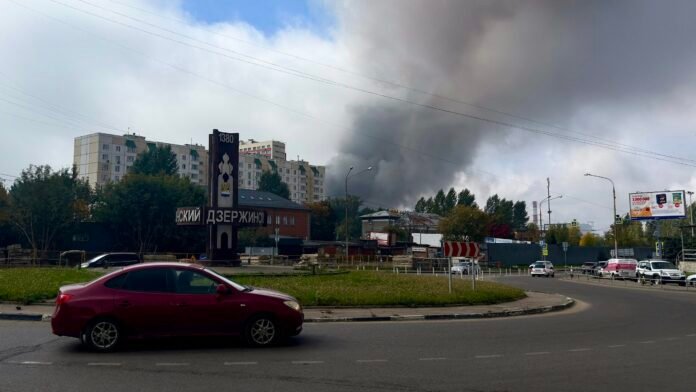
Ukraine struck a Moscow oil refinery with long-range weapons on Sunday, September 20, targeting a facility its military said supplies Russian forces, as Russia held the final day of parliamentary voting and Ukrainian authorities reported deadly Russian attacks around Kyiv. The exchanges accompanied Ukrainian claims of territorial gains in eastern Ukraine and fresh concerns about security beyond the battlefield.

Russian authorities reported two deaths and 20 injuries in the Moscow region. Moscow Mayor Sergei Sobyanin described the assault as unprecedented and alleged that its purpose was to disrupt the election. President Volodymyr Zelenskyy said Ukrainian forces used domestically produced drones and missiles, including Flamingo and Pelican missiles, against oil and logistics facilities.

Regional officials said roughly 400 people were evacuated from an apartment building in Ramenskoye. Sobyanin acknowledged damage at the Moscow refinery but did not provide a detailed assessment.

Ukraine’s General Staff said the attack damaged several processing installations at the Gazpromneft-Moscow refinery. Zelenskyy said Ukrainian weapons also struck a logistics facility in the Voronezh region. Russian aviation authorities temporarily restricted airport operations near Moscow.

The refinery attack forms part of Ukraine’s campaign against facilities supporting Russia’s war effort. Kyiv has developed long-range weapons to reach military and industrial targets well beyond the front line, while Moscow has repeatedly attacked Ukrainian cities and energy infrastructure.

Russia’s three-day State Duma election was its first parliamentary vote since the February 2022 invasion. President Vladimir Putin has presented it as a measure of support for the war. United Russia was expected to retain control, with most antiwar candidates excluded.

Election officials reported turnout above 50% by early Sunday afternoon and said voting continued despite cyberattacks. Initial results were expected Sunday evening, with fuller results Monday. The campaign took place under restrictions that expose critics of the armed forces to lengthy prison terms.

Ukrainian authorities, meanwhile, said Russian drone attacks killed a woman and three children in the Kyiv region. A mother and two children died when a home was struck; another girl died in a hospital following a separate attack.

Governor Tymur Tkachenko reported damage at 31 locations across five districts. Fastiv sustained the heaviest damage, including to residential, industrial, agricultural, and utility properties.

Ukraine also announced progress on the ground. Brig. Gen. Andrii Biletskyi, commander of the 3rd Army Corps, said troops had reclaimed another 40 square kilometers, about 15 square miles, near Lyman in northern Donetsk during Operation Vivaldi.

“Shandryholove and Derylove have been liberated. Drobysheve is under full Ukrainian control,” Biletskyi said.

The operation became public on September 15, although Ukrainian attacks in the area had been tracked for months. The corps described coordinated assaults intended to penetrate Russian positions while protecting Ukrainian flanks. The reported gains could complicate Russian efforts to advance around Lyman, but the territorial claims lacked independent confirmation.

Neighboring Moldova reported a separate overnight security incident involving an unidentified aircraft resembling a drone near Berezlogi and Dereneu. The Foreign Ministry condemned the unauthorized flight as a violation of national airspace. It did not identify the aircraft’s origin or operator.

Police investigated reports of an airborne explosion but initially found no debris, impact marks, or fires confirming that an object had fallen or exploded on the ground. Authorities were continuing their investigation, and no connection to either side’s overnight attacks had been established.

Ukraine’s diplomatic response to Russian activity abroad extended beyond airspace concerns. Foreign Minister Andrii Sybiha said Saturday that Kyiv had approached governments about restricting or closing Russian House cultural centers, alleging that Moscow uses the network for disinformation, destabilization, and espionage.

“Our shared European home is not the place for ‘Russian houses’ promoting war propaganda,” Sybiha said.

The appeal followed German measures against the Berlin center after an attempted explosive-drone attack at Leipzig/Halle Airport that Germany attributed to Russia. Moscow denied responsibility.

Rossotrudnichestvo, the Russian agency operating the centers, has been under European Union sanctions since 2022. Germany has given notice terminating the agreement governing the Berlin institution, which is due to expire in mid-2027, and ordered Russian personnel to leave. Russia responded to German measures by ordering the closure of Germany’s consulate in St. Petersburg and Goethe-Institut cultural centers.

Elderly Walmart Customer ‘Beaten to Death’ by Parents of Teen Employee

0
elderly-walmart-customer-‘beaten-to-death’-by-parents-of-teen-employee
Elderly Walmart Customer ‘Beaten to Death’ by Parents of Teen Employee


An elderly Walmart customer was beaten to death by the parents of a teen employee who he had argued with after accusing her of nearly ramming his wife with a shopping cart, according to his grieving widow.

Bert Atienza died of blunt head trauma at a hospital on June 8, a day after two people attacked him inside a Walmart in Norfolk, Va., WTKR reported on Monday.

“My husband was still able to speak, he said, ‘Help me, get up,’ but I told him, ‘no you’re bleeding. Your mouth is bleeding. Ambulance is coming,” Atienza’s wife Josephine said.

“I look at him again. He has no more consciousness.”

The 77-year-old was grocery shopping with his wife of 42 years after a morning at church when a 17-year-old employee tore down the aisle the couple was in, almost clipping Josephine with a cart.

“He said, ‘You almost hit my wife with your heavy cart, and you did not even say excuse me or apologize to her,’” Josephine Atienza told the outlet.

“If he sees things that he doesn’t like, he will tell it to you straightforward. That’s how it is. He doesn’t care who you are,” Josephine said, explaining her husband’s personality.

Atienza and the unidentified employee argued for a moment before the worker chucked a can towards the couple as they walked away, she said.

The teen allegedly called her parents for backup and Travis White and Erika Mitchell were hunting down the elderly couple inside the store minutes later.

Bert Atienza was browsing a shelf in one of the aisles when White and Mitchell allegedly attacked him as their working daughter looked on, according to store surveillance video obtained by WTKR.

The elderly shopper was shoved from the back, grabbed and punched as onlookers walked away.

Atienza was then shoved into the shelving unit and collapsed to the ground, as one of the suspects kicked the injured man.

“They crowded my husband, one of the adults hit him in the face. He fell down on the floor. I was terrified. I don’t know what’s going on,” Josephine said.

“While he’s on the floor, they’re still kicking him and I told them stop. My husband has heart problems,” Josephine said.

Josephine was left sitting on the ground holding her husband in her lap in a heartbreaking image captured on video.

Bert Atienza spoke briefly to his wife but then lost consciousness before help arrived.

Atienza was rushed to a hospital where he died the next day.

Travis Lathan White pictured after his arrest for the fatal Walmart attack in Norfolk, Virginia.
Travis Lathan White pictured after his arrest for the fatal Walmart attack in Norfolk, Virginia. Norfolk Sheriff’s Office
Erika Latrice Mitchell was charged, alongside White, with second-degree murder in the death of Bert Atienza.
Erika Latrice Mitchell was charged, alongside White, with second-degree murder in the death of Bert Atienza. Norfolk Sheriff’s Office

Medical officials ruled his death a homicide.

White, 44, and Mitchell, 42, were arrested days later and charged with malicious wounding by mob, aggravated malicious wounding and conspiracy to commit a felony, WAVY reported.

The charges were later increased to second-degree murder, according to court records viewed by The Post.

Josephine Atienza and her husband Bert Atienza pose for a photo.
Josephine Atienza speaks about the attack that killed her husband, Bert Atienza, who died after being assaulted inside a Walmart in Norfolk. Facebook/Josephine Milo Atienza

Their attorney contested the charges, saying the suspected killers were defending their daughter and the alleged assault was not premeditated.

“They did not go there, intending for any of this to happen. It was an emotional situation. Their daughter called them. She was distraught. They went, as any parent would do, to try to make sure that their daughter was safe and then the situation kind of erupted. It was spontaneous almost,” James Broccoletti told WTKR.

“We think that the evidence establishes at best an assault because they punched the gentleman, there is some evidence my client may have kicked him, but that’s simple assault, that’s a misdemeanor. There is nothing that goes further than that, that indicates that there was any chance or likelihood or probability that this man would die as a result of this.”

They are being held in Norfolk jail without bond.

Their teen daughter, who no longer works for Walmart, was charged with assault and battery, aggravated malicious wounding and conspiracy to commit a felony, WAVY reported.

She is being held at Norfolk Juvenile Detention Center, but officials are withholding her name because of her age.

0FansLike
0FollowersFollow
0FollowersFollow
0SubscribersSubscribe
- Advertisement -
Google search engine

Recent Posts