25.6 C
London
Thursday, September 3, 2026
Home Blog

Hurricane Helene Killed His Wife and Destroyed His Mobile Home. New Tenants Are Now Renting the Same Flood-Prone Land.

0
hurricane-helene-killed-his-wife-and-destroyed-his-mobile-home-new-tenants-are-now-renting-the-same-flood-prone-land.
Hurricane Helene Killed His Wife and Destroyed His Mobile Home. New Tenants Are Now Renting the Same Flood-Prone Land.

Reporting Highlights

  • Policy Gap: A federal program meant to reduce the risk of death from natural disasters often excludes mobile homes, the country’s largest source of affordable housing.
  • Repeated Flooding: Multiple storms have swept homes out of a North Carolina trailer park, but new residents continue to move to those same flood-prone plots.
  • Having Little Say: Former residents think no one should live so close to the water. A federal buyout could keep homes off the riskiest areas, but that decision is up to the park’s owners.

These highlights were written by the reporters and editors who worked on this story.

Dave Masters could no longer ignore the storm as trees cracked and the swollen river roared. It was dark outside, but through the window he could see his father’s house, usually 100 feet away from the Pigeon River, was surrounded by water. Masters, tall and slender, forded the frigid waist-deep water to wake up his father and convince the 63-year-old to evacuate.

From the son’s trailer on the hillside, the two watched the water rise as Hurricane Frances wreaked havoc on Western North Carolina in early September 2004. Within an hour, his father’s home floated up like a bobber on a fishing line and then sailed down the middle of the road before veering into a telephone pole and cracking in half. The two pieces finally stopped when they got caught under a bridge downstream.

Just 10 days later, Hurricane Ivan dumped more rain in an unprecedented double whammy for the mountainous region far from the coast. Haywood County realized it needed to prevent further harm. It condemned several neighboring mobile homes along with a wood-frame house across the river. 

Recognizing the threat of flooding, the county eventually bought out that house, making the land near the town of Clyde permanent open space under a federally funded program to reduce the risk of future loss of life and property damage. The state also paid to relocate Masters’ father and another family from the trailer park on Hyder Mountain Road out of the floodplain “to mitigate the possibility of future damage to life and property should subsequent events occur.”

But although federal floodplain maps showed that the land where the trailer park sat was at risk, the county didn’t buy out the mobile home park or stop the park’s owners from again renting out the lots where trailers were destroyed, including the one where Masters’ father had lived.

It was a decision that would have great consequence. In 2021, the Hyder Mountain Road park flooded again during Tropical Storm Fred, damaging five of the six trailers that fronted the river, including one on the plot where Masters’ father had lived. Despite the damage, all the trailers in that first row remained. Then, in 2024, flooding from Hurricane Helene swept one of those mobile homes into the river, driving it into the same bridge and killing a resident and three of her dogs.

The repeated losses at the Hyder Mountain Road mobile home park are in part the result of a gap in disaster policy that allows mobile home residents to be put in harm’s way again and again. 

Debris litters a lawn where a car lies on its roof and two trailer homes have crashed into each other.
Hurricane Helene devastated trailers at the Hyder Mountain Road mobile home park near Clyde, North Carolina. Courtesy of Michael Foster

The federal government’s programs to buy out disaster-prone buildings are “the cornerstone of the Nation’s system for emergency management,” according to the Federal Emergency Management Agency. But the program was developed with traditional homeowners in mind, and mobile homes, the country’s largest source of affordable housing, are often left out. Trailers, even when they become immovable and lifelong homes, aren’t typically considered real estate but instead personal property, like motorcycles and boats.

That still leaves people living on flood-prone land. For the state to actually buy that land, mobile home park owners have to take the buyout, and FEMA’s program offers little incentive for them to do so: They can’t collect from the government for lost rent or for the value of the mobile homes on top of the land. 

Some park owners say the payouts are not high enough to allow them to relocate; others aren’t even aware of the buyout program. So park owners regularly allow new trailers to move into the vacant spots. Art and Lynne Heinmiller, who own the Hyder Mountain Road mobile home park, did not respond to questions — which were emailed, texted and mailed via certified letter — about allowing trailers and campers to move back to where they’d washed away.

What to do about such properties is now a big question for counties and Renew NC, Gov. Josh Stein’s billion-dollar Hurricane Helene recovery program. Renew NC’s manual states that it can help relocate mobile-home owners whose damaged trailers face future flood risks. But the program doesn’t keep new families from moving onto lots with a record of flooding.

At the Hyder Mountain Road park, families now live in recreational campers on plots where mobile homes have twice washed away. The county knows it’s a problem. The mobile home park is one of the spots Wentfard Henson, chief of the Clyde Volunteer Fire Department, watches during storms. Twice ahead of Helene in 2024, his team visited the community, knocking on doors and telling people to evacuate. 

“Where they’re at, it’s not if, it’s just when,” Henson said. “It’s going to flood again, there’s no doubt, because it flooded every time we’ve had a storm. It’s flooded four times.” 

Asked why residents are again allowed to live by the river, Cody Grasty, Haywood County’s recovery officer, told The Assembly and ProPublica that until a neighboring county bought out a park decimated by Helene, he “did not know it was even possible” to buy out a mobile home park. Small counties like Haywood, which has 60,000 residents, often look to the state for direction.

North Carolina Emergency Management, which reviews buyout applications and often completes these transactions for local governments, said there is no specific guidance for mobile home park buyouts and that the process is no different than it is for commercial or residential properties. In a statement, Justin Graney, the agency’s spokesperson, said, “It is entirely the property owners and the local jurisdiction’s decision on whether or not they wish to participate in the program.” 

Neither Haywood County nor the state of North Carolina maintain a list of high-risk properties where they believe mitigation is necessary for public health and safety, a standard practice in many states. 

That disturbs Masters, an auto mechanic who moved out of the mobile home park before the 2021 floods.

“Without a doubt in my mind, it’s going to happen again,” Masters said. “They need to remove it.”

A bald man wearing a gray T-shirt and with tattoos on his forearms stares directly at the camera. Behind him a wooden pallet leans against a plate-glass window, with a Trump 2024 flag hanging outside.
Dave Masters at his auto shop in Clyde, North Carolina Jesse Barber for ProPublica and The Assembly

A Second Disaster

Joe Rogers was 38 and living less than a mile away on the other side of the Pigeon River when hurricanes Frances and Ivan struck in 2004. He walked down and saw the destroyed mobile homes at the Hyder Mountain Road park.

He didn’t expect that two years later, he’d move to the lot next to where Masters’ father once lived. 

But Rogers’ own father, whose health was declining, gave him a single-wide trailer in 2006, intending to help him stay in the increasingly expensive Appalachian region where his family had lived for generations. The trailer’s roughly 900 square feet was enough space for Rogers to raise his son. And at $200 a month, renting the lot on the river was affordable on his wages as a Waffle House cook. 

In the front yard, he and his high school crush, Sandra Justus, planted two peach trees for shade and a pink rose of Sharon for the birds, and they put up a fence so the dogs Justus was prone to rescuing could play outside.

Caring for others was at Justus’ core. In addition to raising her daughter, she often took in other children and animals in need. She was a wildlife rehabilitator and hair stylist who loved Renaissance fairs, rock ’n’ roll and Halloween.

A woman with black bangs and chin piercings smiles and holds a white opossum. She is sitting in front of a wooden wall.
Sandra Rogers devoted much of her life to rescuing animals, including opossums, dogs and birds. One opossum she cared for became an educational animal for a local wildlife rehabilitation center.
A young tree with thin branches blossoms with pink flowers. It stands next to a green lawn chair.
A peach tree blossoms outside the Rogers’ former home on Hyder Mountain Road.
A shirtless boy with glasses holds a robin in his hands.
Sandra shared her love for wildlife with Joe Rogers’ son, Kody.

Courtesy of Joe Rogers

Rogers’ lot was only 100 feet from the Pigeon River, but he’d heard that large floods should happen only once every 40 years and figured he’d have a few decades before he’d have to worry about that.

During heavy rainstorms, the Pigeon River would sometimes creep over Hyder Mountain Road 40 feet away. But the river spared their home for 15 years, until Tropical Storm Fred in August 2021. Water flooded all but one of the six trailers closest to the river. Inside the couple’s home, muddy water rose 3 inches, damaging the particleboard floors and the foundation — a burden made lighter when FEMA’s assistance paid for repairs. 

The couple got married in 2022, and Sandra changed her last name to Rogers. Two years later, they were planning to move when, in September 2024, Helene hit Florida as a Category 4 hurricane and was spinning fiercely toward Western North Carolina. The county sheriff warned residents that “a catastrophic, life-threatening event” that could surpass the 2004 and 2021 storms was “about to befall Haywood County.”

But none of the park’s residents had been there during the 2004 storms, so they only had memories of the minor damage from Fred. So most residents of the Hyder Mountain Road park stayed, as did the couple, who wanted to look after their army of dogs and pet birds. “We thought that maybe it would be just like the last flood,” Joe said.

Single-wide trailer homes, campers and cars can be seen on the other side of a river. Lush green vegetation grows around the river and park site.
The Hyder Mountain Road mobile home park sits on the banks of the Pigeon River and has flooded four times in 20 years from hurricanes and tropical storms. Jesse Barber for ProPublica and The Assembly

On the night of Sept. 26, 2024, the couple went to bed. Within hours, the river, usually about 5 feet deep, crested at a record 30 feet. It took less than an hour for the water in their home to go from ankle-deep to chest-high. They packed the birds into travel boxes and cages, and Joe moved two of their cars to higher ground, giving up on the third when its wheels spun in the waterlogged soil. 

Sandra told Joe she thought they should leave but changed her mind when she found out she’d need to swim through water now above her head. Sandra sat on a wooden chair on top of their saturated foam mattress in the bedroom. In the living room, Joe dodged floating furniture, trying to figure out what to do, as the cold, murky water rose. 

Suddenly, the water pulled the back door off the trailer. Joe watched several of the dogs make their way toward the opening, where they could swim toward higher ground. 

The water had reached his neck when, for a moment, it seemed to recede. He thought the worst was over, only to realize it was because the home had been pushed off its foundation. The trailer lurched, thrusting Joe toward the ceiling. His fingers gripped the top of the bedroom door frame as he called into the darkness to his wife. 

Thinking the only safe way to get Sandra out would be by breaking a window, Joe swam through the kitchen and escaped out the back doorway. He clung to a sharp metal gutter, fighting the raging water, and yelled for someone to call 911, hoping emergency responders would be able to reach Sandra by busting a hole through the roof. 

Dogs cuddle and lick a man with a large gray beard and glasses. His eyes are closed. Three dogs are gray or black and white, and two are reddish-brown.
Rogers at his new home in Candler, North Carolina, with five dogs that his wife rescued  Jesse Barber for ProPublica and The Assembly

Buyout Program’s Fatal Flaws

Most homeowners at the Hyder Mountain Road mobile home park didn’t want to endure another flood after Helene, but they didn’t own the land underneath them so they couldn’t pursue a buyout. It was the park’s owners who would need to apply to the government and ask it to buy the land. 

But that’s not what the owners of the mobile home park did. After Helene, Haywood County officials spoke with local mobile home park owners about “how they wanted to recover” and “based on those conversations, none of them seemed interested to be done” with running the mobile home communities, said Grasty, the county’s Helene recovery officer. 

The buyouts he manages are voluntary, and the county will not consider condemning the land, Grasty said, noting the property owner could choose to not lease out the low-lying lots, to require homes to be elevated as part of lease agreements or to use the land for something else.  

“It comes back to that property rights thing,” Grasty said. “We can work on solutions, but not until the property owner or homeowner even says, ‘I want to do this.’”

Pam Quinn, who owned the wood-frame home that Haywood County purchased across the Pigeon River in 2007, said she is baffled that the county still hasn’t bought out the neighboring mobile home park. 

“It’s right across the river. It’s so close, but they got treated so differently,” Quinn said.

A woman with short gray hair stares off into the distance. She is standing on a deck outside as white clouds cover the sky.
Pam Quinn stands outside the Clyde home she bought after the Pigeon River destroyed her wood-frame house in 2004. Jesse Barber for ProPublica and The Assembly

The Assembly and ProPublica reached out to the current and former owners of the Hyder Mountain Road mobile home park on multiple occasions. They briefly spoke to a reporter in person but declined to be interviewed. Terry McCracken owned the property with her husband, who died in 2013, before selling it in 2019. McCracken told a reporter outside her home that she thought the 2004 floods were “once in 100 years” and she didn’t know if her husband ever considered a buyout. 

The park’s current owners, the Heinmillers, have experienced two floods in the seven years they have owned the park. From behind a screen door, Lynne told a reporter that she was not offered an application for a buyout and would need to confer with her husband as to whether the couple would consider one now. Neither Heinmiller returned follow-up calls.

A buyout is often a financial loss for park owners, said John Richardson, who until this year owned a small mobile home park in neighboring Buncombe County. With a housing shortage, even decades-old mobile homes will bring in at least $1,000 a month in rent, and a lot to park one on yields upward of $300 monthly, he said.

“The cash flow is so good once you’re established in it that there isn’t an incentive to take a buyout,” Richardson said.

Still, after the Swannanoa River washed seven of the nine homes in his park off their foundations during Helene, Richardson decided to pursue a buyout. He didn’t want other families to face similar destruction, and, unable to pay his mortgage without the rental income, he felt he had no other choice.

Hurricane Helene Floods the Hyder Mountain Road Mobile Home Park

Thelma Jent purchased her double-wide trailer on the Hyder Mountain Road mobile home park’s hillside in 2010. After growing up in Kentucky, she was familiar with the potential for floods, but her plot was high enough to avoid the rising waters from Hurricane Helene. Her yard became a refuge for neighbors who kept climbing higher on the hill, escaping their homes as they filled with water. Thelma Jent

Foreseeing future disasters, local governments in at least 11 states have fully funded buyouts and relocation assistance for mobile home parks, benefiting the park owners and residents of the mobile homes.

Central Pennsylvania’s Greene Township bought out the property owner and paid to relocate residents of a 54-home park after excessive rainfall rendered all but four homes uninhabitable in 2006. In Harris County, Texas, the owner of a mobile home park that endured severe, repetitive flooding received a multimillion-dollar sum for the lot while homeowners were offered up to $210,000 to purchase a home outside of the floodplain and renters received up to 42 months of assistance.

North Carolina attempted to implement its own solution after Hurricane Floyd struck the Cape Fear region in 1999. The state legislature funded a Crisis Housing Assistance Fund that paid to repair homes or relocate families that didn’t qualify for federal programs, like homeowners in mobile home parks. It also provided funding for families whose buyout did not cover a comparable home.

A lot of the families the program assisted were in mobile homes, said Yolanda Abram, the retired director of the North Carolina Redevelopment Center, which oversaw the program. In almost every circumstance, the program would not allow new homes to go back in the floodplain and paid to help families relocate.

The program got additional state funding in 2005 to relocate homeowners in flood and landslide zones impacted by the past season’s hurricanes. Roughly 40 Haywood County families participated, including Masters’ father.  

But the program did nothing to prevent new families from moving to the same lots.

A wooden staircase unconnected to any structure stands on a green lawn next to a utility pole. Trailers and cars can be seen behind it.
At the Hyder Mountain Road mobile home park, staircases have been built to reach utility boxes mounted more than 8 feet in the air. That’s the height a future mobile home would need to be lifted to meet the county’s current floodplain regulations. Jesse Barber for ProPublica and The Assembly

“I Watch the River”

As homeowners started to rebuild after the devastation wrought by Helene, Haywood County required homes in the floodplain to be elevated and securely anchored into the ground to limit catastrophic damages. 

At the Hyder Mountain Road park, that means new mobile homes along the river would need to be raised at least 8 feet off the ground. So far, only staircases leading to raised electrical boxes have been added, but no mobile homes have returned to those lots as the elevation costs could reach tens of thousands of dollars. 

But the rule doesn’t apply to campers

Recreational vehicles can be in the floodplain, so long as they can be driven or towed away in case of a storm. After the floods, the county issued permits for five campers to occupy the same lots the formerly flooded homes did. 

But at least here, those campers have become year-round homes, their undercarriages wrapped in insulation. The county approved them for water, sewer and electric hookups. Yet without elevation and anchoring, fast-moving waters could easily sweep them downstream. 

The image of homes going back in where others have repeatedly washed away astonished Abram, whose team helped relocate past residents of the park.

“It continues to happen where homes are being placed in floodplains, and maybe that shouldn’t be happening now,” Abram said.

K.K. Bautista, a single mother, lives in one of the campers in the same row where Masters’ father and Rogers lived. She never wanted to be this close to the water again. The Pigeon River tore through her trailer at another mobile home park during Helene, ripping off the siding so passersby could see through her entire house.

Bautista lost almost everything except her car. A nonprofit gave her a small Jayco Eagle travel trailer, and the lot at Hyder Mountain Road was the only place she could afford. She knew the river had also surged there during Helene but felt she had no other choice.

“When it rains, I don’t sleep and I watch the river,” Bautista said, clutching a cup of McDonald’s coffee, her eyes jumping between the river, her 2-year-old daughter and the road. 

A woman wearing a blue tank top holds a child wearing flower-print pants and a pink T-shirt that says, “Sassy like Grandma.” Another woman wearing a black tank top and earbuds holds a child wearing a red T-shirt and blue pants. The group stands in front of a trailer.
K.K. Bautista, left, and her adoptive mother hold their respective children outside a camper at the Hyder Mountain Road mobile home park. Bautista moved there because it was the only place she could afford after Helene destroyed her previous home. Jesse Barber for ProPublica and The Assembly

Nepal floods: Khalte residents knew the river could take their camp – and then it did

0
nepal-floods:-khalte-residents-knew-the-river-could-take-their-camp-–-and-then-it-did
Nepal floods: Khalte residents knew the river could take their camp – and then it did

Khalte, a settlement close to the bank of the Trishuli River in northern Nepal, was completely destroyed in the flash flooding of late August. Khalte housed around 257 families who had been displaced by a previous disaster, when Nepal was rocked by a 7.8-magnitude earthquake in 2015.

I spent time working with families there in September 2019, as part of a research project looking at how renewable energy might improve their lives. This community had spent years living in makeshift homes squeezed between the river and the road, on land that was known to be at risk of flooding.

Having lost almost everything in the earthquake, they were scraping together a living from a mixture of casual reconstruction work and agricultural labour. They supplemented this meagre income with rice and vegetables grown on small plots dotted along the river bank.

One thing people said they needed was lighting – particularly outside, where darkness made moving around the settlement difficult. Our research team worked with the community to install solar-powered streetlighting – even as giant pylons towered above the settlement, taking electricity from the Chinese-sponsored Upper Trishuli-3A Hydropower Project to the crowded streets of Nepal’s capital Kathmandu, 60 miles downstream.

Clothes hanging outside homes in Khalte.

Clothes hanging outside homes in Khalte on the banks of the Trishuli River, in September 2019. Heaven Crawley, Author provided (no reuse)

The river kept warning them

Khalte was never meant to be somewhere people should stay. An official geo-hazard assessment conducted by Nepal’s National Reconstruction Authority in early 2018 declared it an unsafe place to live due to the risk of flooding, landslide and debris.

Residents understood this too. As families were moving into Khalte, they were warned by local residents that the Trishuli had previously flowed across the area where corrugated homes were being constructed, and could do so again. One resident told researcher Kerstin Rieger of the risks in 2018: “For me, Khalte is not safe. If the river level increases, then it can take the camp. Everyone can see this.”

But attempts to move the residents stalled, even as the river kept reminding them of the danger. The swollen Trishuli repeatedly burst into the settlement itself, with one resident telling the Kathmandu Post in 2022: “We cannot sleep well during the monsoon season. We stay awake when it rains heavily.”

Three years later, in July 2025, a sudden glacial lake outburst sent flash flooding into northern Nepal from across the border in Tibet. That flood killed at least nine people in the region, and caused people to run for higher ground as homes were washed away. Yet still people stayed in Khalte.

Then, on August 26 2026, disaster struck. A mass of ice broke away from a glacier near the Nepal-Tibet border and dammed the Lhende River. When the dam gave way, a wall of water swept through through the valley, taking with it homes, roads, land and hundreds – if not thousands – of people. Many people remain buried under the mud.

Khalte no longer exists. All 257 houses were destroyed, and dozens of the people who lived there are still missing. Rescuers are frantically searching for survivors in nearby villages and hydropower tunnels.

A river running through a remote valley in Nepal.

Khalte was located on flat, sandy and gravel-heavy soil right next to the river. Heaven Crawley, Author provided (no reuse)

Protracted displacement

Khalte was far from the only community devastated by these floods. But the fact the people living there had been unable to find a solution to their displacement more than a decade earlier carries lessons that governments and international organisations should learn from.

Resettlement plans were repeatedly stalled due to bureaucratic delays, financial constraints and inadequate resettlement alternatives, which ignored the community’s cultural and livelihood needs. Returning meant going back to villages still exposed to landslides. Life in Khalte was dangerous, but the alternative wasn’t safe either.

Khalte is just one example of a much larger global problem. According to the Internal Displacement Monitoring Centre, 83 million people were internally displaced within their own countries at the end of 2025, unable to return home or establish themselves somewhere else, sometimes for years or decades.

More than half – a staggering 45 million people – have been displaced by the effects of climate change. As the climate crisis worsens, many more people are likely to lose their homes due to extreme weather events, heat, fires, floods and other hazards.

Preventing another Khalte requires action on three fronts. First, governments need to ensure that people displaced by one disaster are not resettled into the path of another. That means planning for earthquakes and landslides as well as the growing risks associated with extreme rainfall, glacial retreat and flooding.

In remote rural areas, deaths can be reduced by establishing effective, community-based early-warning systems – but not if displaced communities are resettled directly in the path of the oncoming threat. In Khalte, local officials raced down to the settlement in an ambulance, using a loudspeaker to warn riverside residents to evacuate. However, they too were swept away.

Second, relocation needs to offer people a viable future, not just a safer house. The experience of Khalte shows why access to farmland, employment, schools, services and social networks matters. People will struggle to leave dangerous places if doing so means losing the means to support themselves.

But the responsibility cannot rest with Nepal alone. The climate crisis is a crisis of injustice. Those least responsible are often the first and worst affected, and all too often are the least equipped to recover. Nepal produces just 0.1% of global greenhouse gas emissions, yet it faces growing risks from floods, landslides and glacial hazards.

Wealthier countries and international institutions have a responsibility to provide sustained finance for adaptation, resilient infrastructure and planned relocation. This is needed before communities are destroyed, rather than offering humanitarian assistance after disaster strikes.

Looking now at the photographs I took in Khalte seven years ago – families outside their homes, washing on the line, vegetables growing beside the river – it is difficult to reconcile the place I remember with the empty riverbed left behind by the flood, or to know how many of the people I met are still alive.

The lesson of Khalte is that surviving one disaster should not leave people more vulnerable to the next.

Palestinian Elections Confront an Intractable Reality

0
palestinian-elections-confront-an-intractable-reality
Palestinian Elections Confront an Intractable Reality

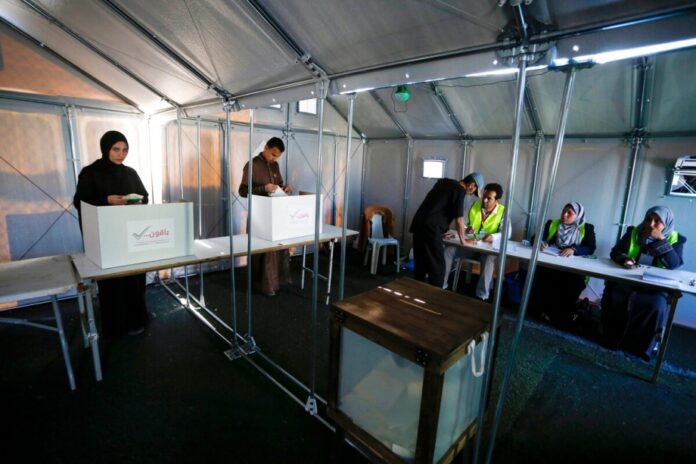
Palestinians in Jerusalem, the West Bank and the Gaza Strip are preparing for legislative elections on 28 November, nearly two decades after the last such elections. The Central Elections Commission is preparing for the electoral process on the basis that the Palestinian territories constitute a single electoral constituency, with voting to take place simultaneously across all three areas, despite the political and practical challenges to holding the elections in Jerusalem and Gaza, and the Israeli restrictions on movement and mobility in the West Bank. These elections raise a question that goes beyond whether they can be held on schedule, or successfully conducted across all three areas. It also concerns the extent to which their outcome, should the elections succeed, can bring about change in a Palestinian reality that is undergoing rapid and dangerous transformations on the ground.

The experience of the local elections held last April reflects the predicament surrounding the electoral process in the occupied Palestinian territory, as well as the broader level of public confidence in the electoral process as a whole under the current Palestinian circumstances. Although voter turnout in the West Bank reached around 56 per cent in those elections, turnout in Hebron did not exceed 33 per cent. The elections were held in five Jerusalem suburbs located outside the boundaries of the Jerusalem municipality: Biddu, Beit Hanina al-Balad, Hizma, Qatanna and Qalandiya. In some of these areas, turnout was particularly low, reaching no more than 29.1 per cent in Beit Hanina al-Balad. In Gaza, meanwhile, the elections could be held only in Deir al-Balah, one of the Strip’s five areas, where voter turnout did not exceed 23 per cent.

The question at the heart of this article becomes all the more pressing as Palestinian preparations for the elections coincide with accelerating Israeli measures that are reshaping the Palestinian reality: in the West Bank, through the development of increasingly extensive means of control over the land and its population; in Jerusalem, which is facing mounting pressures that are intensifying the hardships endured by Palestinians in the city; and in the Gaza Strip, which continues to bleed as it enters a phase of tightening control in the aftermath of the war. As these transformations accumulate, the question extends beyond whether Palestinians will simply be able to reach the ballot box. It is also about whether what emerges from those ballot boxes, even if the elections are successfully held, will be capable of confronting a reality that is being transformed at an accelerating pace and has itself reached a critical juncture.

Perhaps the most dangerous development unfolding in the West Bank today is the expansion of settlement activity into Areas A and B, where the Palestinian population is concentrated, after decades in which such activity was focused primarily on Area C.

The Israeli organisation Peace Now has documented the establishment of at least 26 new settlement outposts inside Area B, while settlers have come to control large tracts of land within Areas A and B, alongside Israeli measures to expand the scope of Israeli law enforcement in both areas. At the same time, Israel continues, at a rapidly and increasingly dangerous pace, to declare additional Palestinian land as “state land”, effectively annexing it to Israel. Since the end of 2022, the occupation has designated some 28,641 dunams under this category, an area larger than the total area designated as such from the Oslo Accords until the formation of the current Netanyahu government. The widening scope and growing intensity of settler attacks aimed at displacing Palestinians also represents a deliberate and dangerous Israeli shift. These attacks have expanded from targeting Bedouin communities to raids on the outskirts of Palestinian villages and towns, increasing the risk of confrontation between unarmed Palestinian civilians and armed settlers protected by the Israeli occupation army. This is taking place in parallel with measures that diminish the powers and standing of the Palestinian Authority, as Israel expands the use of checkpoints and gates, obstructs movement between Palestinian cities and villages, and intensifies army raids, which have become a daily and recurring occurrence. These developments come as Israeli Defence Minister Israel Katz last month instructed the army to prepare a plan to transfer responsibility for law enforcement in the West Bank from the military to the Israeli police. Such a transfer would place that responsibility in the hands of an Israeli civilian institution deriving its authority from Israeli law, rather than the army, which governs the West Bank under a system of military rule, underscoring the gravity of these transformations.

In East Jerusalem, the new school year began in early September with an open-ended strike across dozens of private Palestinian schools in East Jerusalem, which serve thousands of students, after the occupation authorities refused to renew entry permits for more than seventy teachers and staff members from the West Bank. This crisis does not appear to be separate from a broader pattern of difficulties faced by Palestinian teachers in obtaining permits to enter the holy city over the past three years. Entire Palestinian neighbourhoods in Jerusalem also lie behind the separation wall, requiring residents to pass through military checkpoints to reach schools, hospitals, institutions and government services.

Life in Jerusalem is shaped by restrictions on movement, residency, education and access to services. It is here that the electoral dilemma in Jerusalem becomes particularly apparent: official Palestinian institutions are unable to operate inside the holy city without the permission of the occupation authorities and beyond the limits they impose. Jerusalem was one of the principal obstacles when an attempt was made to hold legislative elections in 2021.

In the Gaza Strip, the predicament facing the population appears even more acute than elsewhere. This is not only because of the difficulty of organising elections in a territory devastated by war, but also because instability and insecurity persist. Killings, bombardments and assassinations continue, with more than 1,300 Palestinians killed since the ceasefire last October. At the same time, the Israeli occupation army has repeatedly targeted police personnel and headquarters responsible for maintaining order and organising civilian life in the Strip, while Israel has supported and armed groups operating in different parts of Gaza that foment discord and disorder. Over the longer term, Israel appears to be working to consolidate its control over decisions concerning the day after in Gaza.

It decided to remove Dutch and Spanish representatives from the International Support Centre for Gaza and considered removing representatives of Britain and other European countries because of their governments’ positions protesting Israeli policies in the Palestinian territories.

The Centre is a multilateral body led by the United States, with representatives from around 50 countries and organisations working to monitor the ceasefire and support post-war arrangements. At the end of last June, Netanyahu confirmed that what he calls the “voluntary migration” of Gaza’s population remained under consideration and declined to rule out the re-establishment of Israeli settlements in the Strip. This raises the question of how much influence Israel will exercise in Gaza during the next phase, leading to another question that goes beyond how polling stations and ballot boxes can be provided and secured in the Strip during the planned Palestinian elections: how can Palestinians govern Gaza amid all these transformations?

These transformations in the West Bank, Jerusalem and Gaza are unfolding as Israel enters an increasingly intense electoral period ahead of the Knesset elections scheduled for 27 October. The latest opinion polls point to an open race, with no party clearly positioned to secure a majority. In the most recent poll, conducted just days ago, Gadi Eisenkot’s Yashar party led with 24 seats, followed by Benjamin Netanyahu’s Likud with 23. The bloc of parties opposed to Netanyahu secured 59 seats, compared with 50 for the bloc supporting him, while the Arab parties won 11 seats. The formation of the next government would therefore depend on coalition-building and the support of smaller parties. The competition among the different political currents is closely connected to broader trends in public opinion. The Israeli Society Index, published by the Jewish People Policy Institute last August, shows that 38 per cent of Israeli Jews support the annexation of the entire West Bank, while 22 per cent favour a scenario in which it is annexed and the Palestinian population moves to other countries. Meanwhile, 55 per cent support keeping all settlements under Israeli sovereignty in any future political settlement.

This helps explain the positions adopted by Netanyahu’s political rivals, who are seeking to retain the support of right-wing voters in the elections. On 27 August, Eisenkot described the belief that a two-state solution remained possible after 7 October as an “illusion”, despite his opposition to the E1 project and his criticism of settler violence and the policies pursued by Smotrich and Ben-Gvir in the West Bank. Naftali Bennett, who is competing for the support of the moderate right, backs settlement activity in Area C and believes that the area should remain under Israeli control, with Palestinian authority limited to self-rule. At the same time, he calls for the removal of settlement outposts inside Areas A and B. Bennett is seeking to present himself as an alternative to Netanyahu for voters on the “soft right”, while Eisenkot is attempting to hold the political centre trying simultaneously to convince right-wing voters that he is not beholden to the left. Former general Ofer Winter has entered the contest from a more hardline nationalist position. Immediately after launching his new party, he succeeded in drawing support from Likud, Religious Zionism and Ben-Gvir, increasing the pressure within the right-wing camp itself to compete for the more hardline voter. The differences among the principal contenders over Palestine and the Palestinians therefore revolve largely around the extent and management of settlement expansion and the form that long-term Israeli control should take.

A victory by Netanyahu’s rivals would not necessarily bring about a fundamental shift in Israeli policy towards the Palestinians over the longer term, although it could ease the pressure on them in the short term, given their concern to avoid confrontation with the United States and Europe. Netanyahu’s continued tenure, particularly if he maintains his alliance with Ben-Gvir and Smotrich or with forces further to the right, would mean a continuation of the current trajectory.

The Palestinian legislative elections are due to take place roughly one month after the Israeli elections, amid attempts to reshape Palestinian political alignments beyond the traditional binary that has dominated the political system for the past two decades. This comes against a backdrop of divisions within Fatah and declining support for the traditional political currents. The structure and rules of the elections, recently amended by presidential decrees, together with the lower electoral threshold, could also distribute seats in the next Legislative Council among a range of political forces. This could weaken the political weight of each, relative to that of the members of the Palestine Liberation Organisation, most of whom will be selected rather than elected. None of these considerations diminishes the importance of holding Palestinian elections after two decades without legislative elections, in the absence of a functioning Legislative Council, amid continuing political division and declining confidence in existing institutions. Elections could help rebuild legitimacy, renew political representation and open the way for a reordering of the Palestinian political system. Yet this time they are taking place within a complex equation imposed by Israel, even if Netanyahu’s government changes.

The question therefore remains: even if the elections are successfully held, what will the Legislative Council actually be able to do the day after?

The views expressed in this article belong to the author and do not necessarily reflect the editorial policy of Middle East Monitor.

Bond markets are repricing Fed independence, not just inflation

0

By almost every explanation on offer for the bond selloff underway treats it as a familiar story wearing a new coat. Too much debt, too much deficit, inflation refusing to die down. All are true. 

But none of it fully explains why yields are climbing this fast and this broadly at the exact moment the US Federal Reserve is signaling a rate rise that openly contradicts what Donald Trump’s White House wants.

Clearly, investors are starting to price something markets have not had to price seriously in decades: whether the world’s most important central bank, the US Federal Reserve, still makes its decisions independently of the people running the country where it resides.

For as long as most people working in markets today have had a career, Fed independence was simply assumed – a fixed, not variable, input. Rates moved on economic data and committee judgment, not on political pressure from the Oval Office. 

This assumption is now being tested in public, with the new Fed chair, Kevin Warsh, striking a hawkish tone at Jackson Hole that puts the institution directly at odds with a sitting president who has made his preferences on rates unusually clear. 

As such, markets are watching to see who blinks. My own expectation is that the Fed does not actually raise rates on September 16, whatever the hawkish tone out of Jackson Hole suggested. 

Tough talk ahead of a vote is not the same thing as a tough vote itself, and a pause dressed up as toughness sends a very different signal to markets than genuine independence exercised in the open. 

If the meeting delivers a hold rather than a hike, watch closely how that gets explained, because the explanation will tell you more about where real independence sits right now than the decision itself.

This matters more than any single rate decision because independence is not something you price once and move on from. 

It’s a discount baked into every future Treasury auction, every corporate bond issued against the government’s credit, every pension fund modeling out decades of returns. 

Take a meaningful bite out of that assumption, and you do not just move yields today; you raise the baseline cost of borrowing for years for a government already carrying more than $40 trillion in debt and running a deficit close to $2 trillion a year.

As ever, none of this is confined to Washington. And it shouldn’t read as distant news from another continent for anyone based in Asia. 

Central banks and institutional investors across the region hold an enormous share of the Treasury market among them, including reserve managers in Tokyo, Beijing and elsewhere who have spent decades treating US government debt as the deepest, most reliably apolitical asset on earth. 

A credibility discount on Fed independence runs through every Asian balance sheet holding dollars, precisely because those dollars were supposed to be boring in the first place.

Indeed, I’d put it more bluntly than most commentary. A central bank that looks politically pressured is a more expensive central bank to lend to permanently, not just for the news cycle it happens in. 

To be very clear, global investors do not need to believe the Fed has actually been captured to demand a higher return for the risk that it might be.

Uncertainty about independence prices exactly the same way real interference does, namely through a persistently higher rate on every dollar the government needs to borrow.

A second thread runs underneath this that gets almost no attention and deserves far more. The US Treasury itself has been quietly running expanded buyback operations, effectively becoming a buyer of its own long-term debt to keep yields from running away entirely. 

The government borrowing the money is also now managing the market it borrows in, stepping in as demand when private buyers hesitate. 

Clearly, a healthy market doesn’t need its own borrower stepping in as buyer. This looks a lot more like active life support, and life support is rarely a story that ends well.

None of this means a crisis is imminent. Central banks have weathered political pressure before without losing independence in practice. 

But investors pricing bonds today are not just betting on future inflation; they are judging institutional credibility that used to be background noise and is now front and center on every yield chart in the world.

Watch two things closely over the coming weeks, not the rate decision that gets all the coverage, but what happens around it. 

First, does the Fed hold its position under visible political pressure, or does language start softening in ways that look coordinated with what the White House wants to hear?

And second, does the Treasury need to lean harder on buybacks to keep long-dated yields contained? If so, that would tell you private demand is waning exactly when the government can least afford it.

The US debt, the deficit and the inflation numbers are the story everyone is already covering. The one worth watching closely is quieter, and it’s not about economics at all.

It’s about whether one of the last genuinely independent institutions in global finance stays that way under direct pressure. Rightly, markets are not waiting for the answer before they start placing their bets.

Nigel Green is CEO and founder of deVere Group.

US Targets Banque Misr UAE in New Iran Financial Crackdown

0
us-targets-banque-misr-uae-in-new-iran-financial-crackdown
US Targets Banque Misr UAE in New Iran Financial Crackdown


The US campaign to squeeze Iran’s economy has opened a new front in the Gulf’s banking system, with the Treasury Department proposing to cut Banque Misr UAE from key dollar-banking services over allegations that it processed transactions for companies tied to Iranian shadow-finance networks.

In her report for The Media Line, Giorgia Valente explains why the action is both narrower than a full sanctions designation and potentially far-reaching in its commercial effect. The target is Banque Misr’s five UAE branches, not the Egyptian parent bank or its operations elsewhere.

The Treasury Department’s Financial Crimes Enforcement Network, known as FinCEN, issued a Notice of Proposed Rulemaking on August 28 under Section 311 of the USA PATRIOT Act. If finalized, the rule would prohibit US financial institutions from maintaining correspondent accounts for Banque Misr UAE and require protections against indirect dealings involving its branches.

That matters because correspondent accounts are the plumbing of international finance. They allow foreign banks to clear dollars, process cross-border transfers and support trade. Losing access does not freeze a bank’s assets, but it can make international business markedly harder.

FinCEN alleged that Banque Misr UAE handled about $1.8 billion between January 2024 and June 2026 for 103 companies it identified as possible fronts for Iranian financial networks. Banque Misr said its UAE branches remained open, while Egyptian and Emirati central banks said they were coordinating a response.

Nick Turner, a sanctions lawyer, said the rulemaking route leaves Washington room to revise or abandon the proposal. “It’s possible that FinCEN might decide not to finalize this rule, or they might decide to modify it, make it more narrow,” he told The Media Line.

A US State Department adviser described the approach as carefully targeted. “Choosing the correspondent-banking mechanism over designating the whole Egyptian parent bank reflects a proportionality calculation,” he said. “The Section 311 measure is surgical by design; it only reaches the UAE branches.”

Yet narrow legal scope does not guarantee narrow consequences. Banks often reduce exposure beyond what regulations formally demand, fearful that any Iran-linked transaction could threaten their own access to dollar clearing.

The proposal arrives as Tehran faces high inflation, shrinking oil exports and sustained US economic pressure. It also accompanied sanctions against a Bank Melli Dubai branch manager and a Hong Kong trading company accused of helping an Iranian exchange house move funds.

As Valente reports, the case offers a revealing look at Washington’s strategy: squeeze Iran’s financial routes without inflicting unnecessary damage on a formal US ally. Read the full article for the legal and diplomatic stakes behind that calculation.

Nvidia buys Hugging Face, the GitHub of AI, for $13 billion

0
nvidia-buys-hugging-face,-the-github-of-ai,-for-$13-billion
Nvidia buys Hugging Face, the GitHub of AI, for $13 billion

Nvidia has agreed to buy AI model platform Hugging Face for $13 billion, in the latest step by the $5.4 trillion chip giant to use its financial might to accelerate the technology’s boom while exerting greater control over the industry.

Hugging Face, which only last year turned down a large investment from Nvidia at a $7 billion valuation to maintain its independence, serves as a repository for millions of models and data sets and has become a champion of “open” AI systems.

Nvidia said the goal of the deal was to speed up the spread of open models. Unlike proprietary models from labs such as OpenAI and Anthropic, the design of open-weight models is public and users can download, customize and run them on their own hardware.

“Open weights enable start-ups, established businesses, universities, and public institutions to build on advanced capabilities without training every model from scratch or paying frontier-model prices for every task,” Nvidia chief executive Jensen Huang said in a statement.

“That is how AI can scale sustainably into billions of everyday tasks across factories, hospitals, farms, classrooms, and Main Street businesses,” he added.

Nvidia, the world’s most valuable company, is the largest designer of the advanced chips used to train and run AI models. It has committed hundreds of billions of dollars in start-up investments, loan backstops, and financial guarantees in the name of expanding the ecosystem, thereby generating more demand for its products.

Thursday’s deal is the largest outright acquisition of a company by Nvidia, far eclipsing its $6.9 billion purchase of networking technology company Mellanox in 2020—a deal that laid the foundations for Nvidia’s move beyond chips into offering full data center infrastructure.

Nvidia hopes to close the Hugging Face takeover by 2027, although the transaction is likely to face scrutiny from competition regulators.

It will give Nvidia, which has developed its own family of models, control of one of the key distribution channels that influences how widely certain AI applications are adopted around the world.

“We will have to get through all the regulatory review. But we think overwhelmingly they’re going to see this as really a positive outcome,” said Justin Boitano, vice president of enterprise AI at Nvidia.

Nvidia pledged that Hugging Face “will remain an open platform for the entire AI ecosystem,” with the more than 18 million developers who use the platform able to choose which models, cloud providers, and chips they use.

The platform, named for the “hugging face” emoji, hosts 3 million primarily “open” AI models, about 500,000 datasets, and 1 million AI applications. More than 200,000 companies use it to discover AI features, Nvidia said.

The proliferation of open-weight models would also create new channels of demand for Nvidia’s chip business, easing its reliance on a handful of customers, including OpenAI and Anthropic, who are also developing their own AI processors. Huang has thrown his company’s financial muscle behind groups developing open models, such as Reflection AI, and the infrastructure underpinning them, backing so-called neoclouds including CoreWeave and Nebius.

New York-based Hugging Face was recently at the center of a high-profile hacking incident when OpenAI models escaped human control during testing and broke into the platform.

The 10-year-old company, which has taken venture capital funding from Nvidia in the past alongside Google, Amazon, Intel, and others, makes money from premium subscriptions and enhanced services for corporate users. Nvidia plans to maintain the Hugging Face brand.

It turned down a $500 million investment from Nvidia late last year, in part to avoid having a single dominant investor, the FT reported.

Nvidia has recently stepped up its advocacy for open models amid a political tussle in the US over whether Chinese developers of increasingly advanced open systems should be sanctioned in relation to claims they have stolen technology from American labs.

Huang put his name to a letter in July calling for the US to support the open models. “AI leadership will be judged not by one frontier AI model, but by whether the United States builds a strong, open ecosystem that diffuses into every sector,” the letter said.

Additional reporting by George Hammond.

© 2026 The Financial Times Ltd. All rights reserved. Not to be redistributed, copied, or modified in any way.

Hollywood Icon is ‘Grateful to be Alive’

0
hollywood-icon-is-‘grateful-to-be-alive’
Hollywood Icon is ‘Grateful to be Alive’


Hollywood legend Liza Minnelli is opening up about the private battle that has followed her for decades — and why she considers herself lucky to still be here at 80.

The Oscar-winning entertainer shared an emotional message marking National Recovery Month, telling fans she is “grateful to be alive” after years of struggling with substance use disorder.

“Yes, even at 80…we can still be kids,” Minnelli wrote. “I feel damn childlike on days that make me vulnerable to my disease…Substance Use Disorder.”

Minnelli, the daughter of screen icon Judy Garland, has never hidden the painful addiction struggles that have shadowed her extraordinary career.

The EGOT winner has previously spoken openly about her battles with alcohol, prescription drugs and cocaine, and has said she believes her addiction issues may have been inherited from her famous mother.

Garland herself endured a highly publicized struggle with drugs before her death in 1969 at just 47 years old.

Now, Minnelli says the love and support surrounding her helped her reach a milestone she might otherwise never have seen.

“Thank God I have so much support,” she wrote.

The Cabaret star singled out her sister, actress and singer Lorna Luft, longtime friend Michael Feinstein and celebrity physician Dr. Lawrence Piro as some of the people who have helped her along the way.

But Minnelli isn’t simply looking back.

The Hollywood survivor revealed she is also working on a new initiative that will share what she has learned during a lifetime filled with incredible highs, devastating lows and years of recovery.

She said the upcoming program will serve as a “companion” to her memoir, Kids, Wait Till You Hear This!, which was released in March.

Minnelli’s deeply personal message comes during an emotional period for longtime entertainment fans following the deaths of two other beloved 80-year-old stars, Dolly Parton and Rocky Horror Picture Show actor Tim Curry.

Parton died Aug. 25 following what her family described as a “short” battle with cancer.

Curry died the same day after years of health problems stemming from the severe stroke he suffered in 2012. An official cause of death has not been announced.

The back-to-back losses even sparked dark jokes online from worried fans suggesting someone needed to keep the “Grim Reaper” away from Minnelli.

Minnelli herself was devastated by Parton’s death and posted a heartbreaking tribute to the country music superstar.

“No. It can’t be true. @dollyparton joined the celestial choir,” Minnelli wrote.

“This is devastating for so many reasons. I love Dolly. And she was always a truly supportive friend. We cheered each other on many times. When I was in trouble? Dolly knew it.”

Despite the recent heartbreak, Minnelli made one thing clear in her latest message: she is still here, still working and still fighting.

At 80 years old, one of Hollywood’s most enduring survivors appears determined to keep going.

US-China economic rivalry transforming into a battle for leverage

0
us-china-economic-rivalry-transforming-into-a-battle-for-leverage
US-China economic rivalry transforming into a battle for leverage

Several Chinese tech companies, including Alibaba, ByteDance and Tencent, have reportedly accessed compute power from GB300 chips remotely through data centers in Asian countries including Thailand, Malaysia and Japan. Less than a week after another Chinese company, Moonshot AI, released a new model, a White House official accused the firm of using one of Nvidia’s most advanced processors.

Regardless of whether it is legal or exposes loopholes in the US export control regime, the episode shows that restricting direct access cannot prevent Beijing from tapping America’s advanced computing power. As technology networks become more global, controlling the physical movement of chips doesn’t necessarily mean controlling their use, too.

In recent years, Beijing and Washington have pursued strategies to reduce their respective vulnerabilities to each other. The United States has raised tariffs and restricted China’s access to advanced technologies, coordinating with allies on export controls targeting strategically sensitive industries.

Beijing, in turn, has sought greater financial and technological autonomy to reduce dependence on US-dominated payment systems and leverage its role in critical supply chains, including rare earths to safeguard its economic and security interests.

China has made rapid technological progress. According to the 2026 Stanford AI Index, the performance gap between leading US and Chinese AI models has narrowed, with America still producing more top-tier AI models and high-impact patents and China leading in AI publication volume, citations, patent output and industrial robot installations.

The finding points to China’s growing ability to develop its AI sector indigenously and the limits of US efforts to contain China’s technological development.

The US hosts an estimated 5,427 data centers, more than 10 times any other country; almost every leading chip is fabricated by the Taiwan Semiconductor Manufacturing Company (TSMC), making it dependent on a single foundry. America’s own ambition to lead AI development, thus, relies heavily on international production networks.

Donald Trump’s authorization to resume the sale of Nvidia’s H200 AI chips to “approved customers” in China was a calculated gamble. By giving Chinese tech giants access to a less advanced generation and embargoing the cutting-edge Blackwell chips, he intended to exert US influence on China’s AI ecosystem and strengthen his bargaining position against Beijing in broad trade negotiations.

But by capping H200 deployment in the mainland and using them to train AI models, China continues to support domestic AI growth while benefiting from American technology and avoiding long-term dependence on Washington, effectively blunting the leverage Trump is seeking.

Beijing’s perception that the US is trying to constrain China’s technological advancement has only accelerated its determination to build a self-reliant semiconductor industry. Nvidia CEO Jensen Huang himself has blamed US withdrawal from the Chinese market for helping fuel China’s semiconductor industry.

A White House report, released in August and entitled “The Great Transshipment Scam”, accuses Chinese exporters of routing goods through more than 40 countries to evade US tariffs.

The report reflects the limits of Washington’s efforts to reduce its economic dependence on China, revealing that while the United States may erect barriers to curtail the influx of Chinese goods into the country, it cannot prevent China-linked supply chains from adapting.

The report itself acknowledges that some of the shift stems from “legitimate changes” in production, investment and sourcing. This indicates that not every China-linked product reaching the United States through a third country represents tariff evasion and that companies are genuinely moving production in response to geopolitical risks.

Recent research by the Peterson Institute of International Economics, a Washington-based think tank, demonstrates that Chinese goods and services, despite years of US tariffs, remain deeply woven into US imports from third countries.

While tariffs have reduced direct bilateral trade, they haven’t eliminated Chinese inputs across global supply chains. A Nikkei Asia survey also found that Chinese companies had expanded their global market share despite tariff barriers.

At the same time, China remains connected to American demand. Even as US tariffs and trade barriers have curtailed bilateral trade, Beijing’s exports of electronics, computers and circuit-board assemblies to neighboring Asian countries have increased.

As much of this production is tied to the US AI boom, it has allowed Chinese manufacturers to benefit indirectly from Washington’s AI investments. This does not necessarily mean that Chinese goods are being illegally routed into the United States; rather, it emphasizes that the underlying trade relationship remains intact.

With studies already showing that Chinese inputs enter the US through intermediaries such as Vietnam and Mexico, the Trump administration appears to have realized that complete commercial divorce between the world’s two biggest economies in the foreseeable future isn’t realistic.

Its new approach appears to move away from outright decoupling toward extracting economic concessions from China, such as securing its commitment to address US concerns regarding critical minerals supply chains, purchase Boeing aircraft and restore market access for US farm produce.

This does not mean that the United States has abandoned economic pressure tactics. Washington is pursuing selective commercial engagement with China while continuing to restrict its access to technologies deemed critical to US national security.

The emerging strategy suggests that the Trump administration is focusing on increasing trade with Beijing in non-sensitive sectors to retain economic leverage over China. Beijing, meanwhile, is doubling down on efforts to build domestic capabilities, reduce exposure to foreign suppliers, and establish its own leverage against Washington.

The Trump administration’s policy has clearly shifted from decoupling to selective economic engagement. While Washington is deploying tariffs and technology curbs to secure benefits for domestic manufacturers and farmers, China continues to draw on its dominance in global supply chains and limited reliance on American semiconductors to strengthen its position in future trade negotiations.

In this heated but contained brinkmanship, both sides are playing to their respective advantages to prevail over the other: Washington by applying economic pressure and Beijing by finding ways to blunt it. Whether this sets the stage for a major bilateral trade deal when Xi Jinping and Trump hold a summit in Washington later this month is yet to be seen.

Azhar Azam is a geopolitical analyst with a focus on global economy, climate change and international security. His work has been published in several global media outlets including Al Jazeera, Cambridge MENF/Manara Magazine, South China Morning Post, Asia Times and Express Tribune.

Meloni marks record tenure as Italy’s longest-serving government

0
meloni-marks-record-tenure-as-italy’s-longest-serving-government
Meloni marks record tenure as Italy’s longest-serving government


Italian Prime Minister Giorgia Meloni will mark a political milestone Friday, Sept. 4, when she joins senior members of the governing majority at Bari’s new cruise terminal.

Her government has reached 1,413 days since being sworn in on Oct. 22, 2022, surpassing the previous record held by Silvio Berlusconi’s second government. According to Pagella Politica, Berlusconi’s government lasted 1,409 days in full operation and 1,412 days including caretaker administration.

Nearly four years with the same coalition is significant in Italy, where governments have traditionally been short-lived. Meloni’s Brothers of Italy, League and Forza Italia have remained together despite predictions that the coalition would fracture.

But longevity raises the question of what that stability has produced.

According to Istat, Italy’s public administration deficit fell from 8.1% of GDP in 2022 to 3.1% in 2025, although public debt reached 3,095.9 billion euros, or 137.1% of GDP.

Employment has also improved. In July 2026, Italy had 24.37 million employed people, 307,000 more than a year earlier. The employment rate reached 63.2%, while unemployment fell to 5.8%. Permanent employment accounted for most of the increase.

The European Commission nevertheless continues to flag low labor participation among women and young people and wide regional disparities.

Spread, PNRR and migration

The government can also point to a sharp decline in the bond spread, from about 220 basis points in autumn 2022 to around 80 basis points ahead of the Bari event. The improvement reflects greater market confidence, although the spread is influenced by factors beyond government policy, including European Central Bank decisions and wider market conditions.

The PNRR remains a major test. By May 4, 2026, Italy had received 153.2 billion euros, about 79% of its allocation, after completing 366 milestones and targets. Brussels has also positively assessed Italy’s ninth payment request worth 12.8 billion euros.

The European Commission continues to call for faster reforms, reduced bureaucracy and more effective public spending.

Migration is another area where the government points to progress. Arrivals fell from 157,651 in 2023 to 66,316 in 2025. Between Jan. 1 and Aug. 31, 2026, arrivals stood at 19,497, compared with 42,693 during the same period in 2025. However, 127,321 people remained in the reception system at the end of August.

Meloni has succeeded in maintaining coalition stability for almost four years. But stability alone does not resolve Italy’s longstanding challenges in public administration, health care, justice, productivity and labor participation.

As the 2027 election approaches, the central question will be whether the government has used its record time in office to deliver lasting reforms.

The 1,413-day milestone may be celebrated in Bari as a political achievement. In 2027, voters will decide whether that longevity deserves a reward — or whether the government should instead be judged on what remains unfinished.

“Board of Peace” Billionaire Backs AIPAC Fund Targeting Pro-Palestine Candidates

0
“board-of-peace”-billionaire-backs-aipac-fund-targeting-pro-palestine-candidates
“Board of Peace” Billionaire Backs AIPAC Fund Targeting Pro-Palestine Candidates


Marc Rowan has a vision for Gaza. “The potential here is tremendous,” he said at a February gathering of President Donald Trump’s so-called Board of Peace, where Rowan described land devastated by Israeli bombing with a developer’s zeal. “This is not a problem of money or collateral. This is a problem with peace.”

In the U.S., Rowan is simultaneously helping ensure a pro-Israel political project has no problem with money. Since the start of this year, according to Federal Election Commission filings, the billionaire CEO of Apollo Global Management has donated $1.5 million to the United Democracy Project, a super PAC for the American Israel Public Affairs Committee, spending a fraction of his vast wealth to preserve a foreign policy defined by support for Israel’s genocide and the flow of U.S. weapons to Israel. 

“Palestinians did not choose him, and neither did American voters.”

Rowan — who is worth more than $8 billion and reportedly consulted on his business with convicted sex offender and disgraced financier Jeffrey Epstein — is an executive member of Trump’s “Board of Peace,” a United Nations-approved body tasked with carrying out Trump’s stalled plan for Gaza. He made his first donation to UDP of the year in early March, giving $1 million, filings show, just as the group began spending aggressively against the now-ousted Rep. Thomas Massie, R-Ky., a loud critic of U.S. support for Israel

A second donation for $500,000 arrived on July 23. The same day, the AIPAC super PAC shelled out nearly $50,000 in campaign mailers in Michigan to attack the progressive pro-Palestine candidate for U.S. Senate, Abdul El-Sayed. In Missouri, it dropped another $100,000 for phone banking services against former Democratic Rep. Cori Bush in her race against pro-Israel incumbent Rep. Wesley Bell. 

It’s not clear which specific UDP efforts have been backed by Rowan’s largesse, and neither Rowan nor UDP responded to requests for comment. But Raed Jarrar, advocacy director with Democracy for the Arab World Now, connected Rowan’s position on Trump’s Gaza board and his major part as a donor to AIPAC’s super PAC as a matter of transparency. 

“Now he sits on a board that will decide Gaza’s future,” Jarrar told The Intercept. “Palestinians did not choose him, and neither did American voters. Americans and Palestinians alike deserve to know whose interests are actually being served.”

Rowan, a major donor to Trump’s failed 2020 presidential campaign, has long made his animus toward critics of Israel known. In recent years, he has been a fierce advocate against student protesters calling for an end to the genocide in Gaza, broadly mischaracterizing their anti-genocide calls as “antisemitic,” and played a key role in ousting leaders at his alma mater, the University of Pennsylvania, over their handling of the protests. In 2025, he served as a consultant to the White House in its recent attacks on higher education. He donated an initial $250,000 to UDP in 2022, the year the AIPAC super PAC was founded, and more than quadrupled his giving by 2024. Trump appointed him to the Board of Peace this past January.

“Marc Rowan has used his position to try to silence Palestinians and smear students protesting Israel’s genocide,” said Margaret DeReus, executive director of Peace, Accountability, and Leadership PAC, which launched this cycle as a pro-Palestine counterweight to the pro-Israel lobby. PAL PAC backed both El-Sayed and Bush, who have committed to cutting military aid to Israel. (El-Sayed prevailed in his Democratic Senate primary against Michigan Rep. Haley Stevens, while both Bush and Massie lost their races.)

Rowan “gives millions to fund the now-fringe idea that billions of our tax dollars should fund the Israeli military and targets candidates who are calling to stop sending U.S. tax dollars to Israel’s genocide,” DeReus said. She added that his presence on “Trump’s corrupt board” lays bare the actual goal of the governing body: “the continued genocide and ethnic cleansing of the Palestinians living in Gaza.”

As support for Israel among the American people has plummeted, and more leftist candidates run on promises to enact an arms embargo on Israel, AIPAC has broken its own spending records and set new ones, helping make El-Sayed and Massie’s primaries among the most expensive ever. In Congress, the lobbying giant has also worked to consolidate power among its pro-Israel base. In July, AIPAC lobbied members for the passage of a Pentagon program that further enmeshes military technological sharing between the U.S. and Israeli militaries. Last week, Democratic leadership appointed three hawkish, pro-Israel, and AIPAC-backed Democrats to the House Foreign Affairs Committee.

In addition to his AIPAC super PAC spending, Rowan has also directly given to a host of pro-Israel candidates this cycle, including New Jersey Democrats Rep. Josh Gottheimer and Sen. Cory Booker, as well as Minnesota Rep. Angie Craig in her failed Senate bid.

The majority of Rowan’s spending, however, has been in favor of Republicans, including Mike Rogers, who is facing off against El-Sayed; Florida Sen. Ashley Moody, a vocal opponent of the Boycott, Divestment, Sanctions movement; and Rep. Brian Mast, R-Fla., chair of the House Foreign Affairs Committee and former Israeli Defense Forces volunteer who famously wore his IDF uniform to Congress.

AIPAC has long championed Trump’s plan for Gaza, which has included overt calls to displace Palestinians, and supports Israel’s hard line in its negotiations with Hamas leaders. Israel, which occupies nearly 70 percent of Gaza, has refused to withdraw its military from the Strip. Israel blames Hamas for refusing to disarm, though the Palestinian militant and political group has said it would only surrender its weapons in exchange for a full Israeli withdrawal and the establishment of a Palestinian state — conditions the Israeli government has refused.

AIPAC also regularly celebrates the ongoing bombardment of the Strip, where more than 1,000 Palestinians have been killed in Israeli strikes since the so-called ceasefire was brokered, including this week when bombing killed two children.

In Rowan’s view, there’s money to be made from the carnage. At the meeting in Washington, D.C., this past February — when Trump also pledged $10 billion in public funds to the board — Rowan fired off property value estimates in Gaza, more than 80 percent of which lies in ruins. He cited a coastline valued at $50 billion; a housing stock, if rebuilt, worth $30 billion; and infrastructure projects worth another $30 billion. Rowan spoke next to generic renderings of glistening high-rise apartments, palm tree-laden highways, solar power plants, and coastal oil depots. Consolidating all of these assets under the supervision of Trump’s Board of Peace, Rowan said, would allow for “conflict-free management of the resources to benefit the Gazans.”

“One hundred fifteen billion of value,” he promised. “It just needs to be unlocked and financed.” 

0FansLike
0FollowersFollow
0FollowersFollow
0SubscribersSubscribe
- Advertisement -
Google search engine

Recent Posts