Israel and Turkey Trade Warnings After Strike on Syrian Airbase
Israel and Turkey exchanged warnings Thursday following Israeli airstrikes on Syria’s Abu al-Duhur airbase, with Jerusalem saying it acted to prevent a Turkish military deployment and Ankara rejecting that explanation as tensions rise over influence in post-Assad Syria.
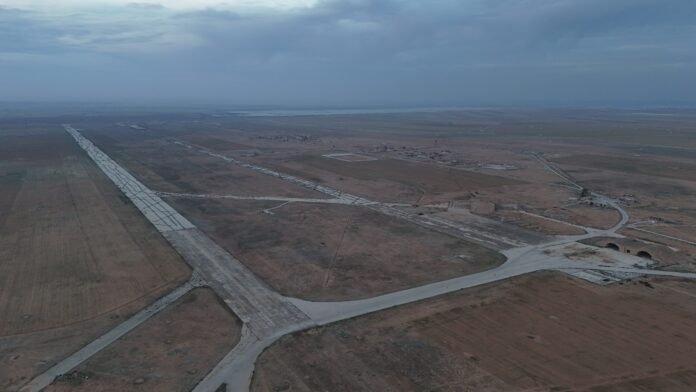
Eight Israeli strikes hit the base in Idlib province early Tuesday, damaging its runway without causing casualties, according to Syrian authorities. Satellite images also showed craters on the runway. Syrian officials said a Turkish delegation had inspected rehabilitation work at the facility hours before the attack.
Prime Minister Benjamin Netanyahu’s office said Syria was “on the verge of breaching” an agreed “status quo in security matters” by preparing to station Turkish forces at the base. Israel views the possible establishment of Turkish military infrastructure in Syria as a security threat.
Turkey called Israel’s account “untenable” and said no Turkish troops had been stationed at Abu al-Duhur. Ankara said its military cooperation with Damascus was limited to training, technical assistance and exchanges of expertise. Turkish officials accused Netanyahu’s government of using the claim to justify unlawful military action and destabilize Syria.
Syrian Foreign Minister Asaad al-Shaibani said Damascus had informed Israel that no Turkish deployment was planned. He condemned the attack as “an unjustified provocation, a violation of Syria’s sovereignty, and a direct threat to regional and global stability.”
US Special Envoy for Syria Tom Barrack called the bombing an “unnecessary escalation.” Washington is working to strengthen a communications mechanism among Israel, Turkey and Syria to prevent misunderstandings from triggering a direct confrontation.
Turkey became a major supporter of President Ahmed al-Sharaa’s government after forces led by al-Sharaa removed Bashar Assad in December 2024. Ankara and Damascus signed a military cooperation agreement in 2025, while Israel expanded operations inside Syria, destroying former regime military assets and occupying additional territory near the Golan Heights.
Israel and Syria have since held US-mediated security talks, but they have not reached a formal agreement governing Israeli operations or foreign military deployments.
Michael Wright, the veteran and beloved actor best known for his role in the beloved 1991 movie The Five Heartbeats, has died at age 70.
Wright’s wife, Susan, confirmed his death Friday evening in an emotional Instagram statement.
“It is with profound sadness and an unimaginable heaviness in my heart that I share the passing of my beloved husband, Michael Wright,” she wrote.
A cause of death has not yet been publicly revealed.
Wright was widely known for playing Eddie King Jr. in Robert Townsend’s musical drama The Five Heartbeats.
The film became a cult favorite and helped make Wright a familiar face to generations of movie fans.
His career stretched across nearly five decades and included numerous roles in both film and television.
One of his most acclaimed performances came in the 1983 movie Streamers.
Wright’s work in that film earned him the Volpi Cup for Best Actor at the Venice Film Festival.
His wife said the family plans to share more details about his life and legacy in the coming days.
“In the coming days, when we are ready, we will share additional information regarding Michael’s life, legacy, and how we intend to honor and celebrate him,” she wrote.
Wright leaves behind a long career filled with memorable performances, but for many fans, he will always be remembered as Eddie King Jr. from The Five Heartbeats.
More details about his death and memorial plans are expected to be released by his family.
West Nile virus outbreak kills four in North Macedonia
Four people have died from West Nile fever out of 38 testing positive for the disease so far this year in North Macedonia, with three of them dying in the past week, the health ministry revealed this week.
The virus, which mostly spreads to people through mosquito bites, can cause severe, life-threatening illness in about one in 150 people who are infected, according to the World Health Organization.
The detection comes as the WHO has warned that warmer temperatures are giving mosquitoes more time and territory to spread the virus across Europe, with cases climbing in Greece and Italy this summer.
The ministry’s report said that 28 males and 10 females had been infected, and 33 of them were above the age of 60. Twelve of the cases were detected last week.
All of the cases, most of which occurred in the region around the capital Skopje, were hospitalised, according to the report.
The average number of people infected with West Nile virus in the period from 2011-2025 was less than one a week during the top summer months, when mosquitoes spread, the report showed.
The ministry said it had intensified efforts to inform and protect people in the areas affected by the virus, and was taking measures to control the spreading of the mosquito population.
In neighbouring Serbia, up to six people were reported as infected so far this year, according to epidemiologist Dragana Plavsa, quoted by the NIN weekly.
Syria warns continued Israeli attacks fuel regional tensions, demands UN action
Syria warned Saturday that continued Israeli attacks on its territory would fuel tensions and instability in the region and threaten the safety and security of civilians, calling on the UN Security Council and the international community to take action to halt the Israeli assaults, Anadolu reports.
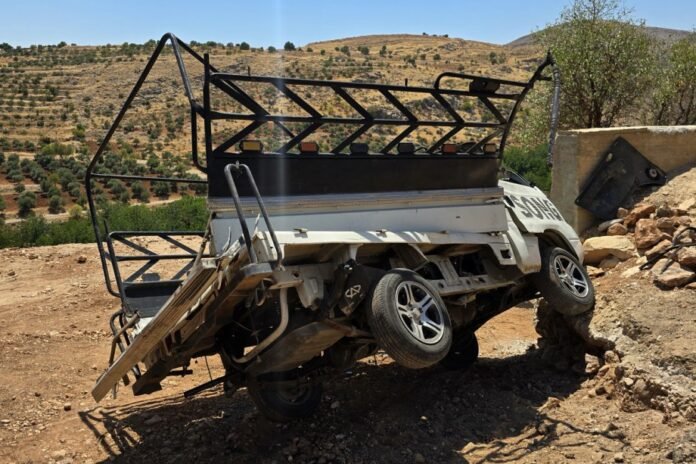
In a statement, the Syrian Foreign Ministry strongly condemned an Israeli drone strike on a civilian vehicle in the town of Beit Jinn in the western Damascus countryside, injuring several people.
“This attack constitutes a flagrant violation of Syrian sovereignty and territorial integrity, as well as a blatant breach of international law,” the ministry said.
It added that the attack was the latest in repeated Israeli attacks on Syrian territory and held Israel “fully responsible” for the repercussions of these attacks. It warned that the continued attacks would heighten tensions and instability in the region and threaten the safety and security of civilians.
READ: US says intelligence behind Israeli strike on Syria air base was wrong
The ministry called on the international community and the Security Council “to shoulder their legal and political responsibilities, work to halt these attacks, and put an end to Israel’s repeated violations of Syrian sovereignty.”
The SANA news agency earlier said that one person was injured in the attack, without giving details about his condition. The Israeli army, for its part, claimed that the targeted person posed “an immediate threat” to its forces operating in the area.
The strike came days after Israeli warplanes carried out eight airstrikes targeting the runway of the Abu al-Duhur airbase in northwestern Syria’s Idlib province, causing material damage to its infrastructure, according to SANA.
Israel has occupied most of Syria’s Golan Heights since 1967. Following the fall of the Bashar al-Assad regime in late 2024, Israel declared the 1974 disengagement agreement collapsed and moved into the demilitarized buffer zone and other areas, including the Syrian side of Mount Hermon (Jabal al-Sheikh).
Since then, Israel has expanded its attacks across Syria, targeting weapons and missile depots as well as strategic military sites.
READ: Israeli drone strike injures 1 in southwestern Syria
Rocket Report: SpaceX makes its mark on the Moon; ULA names new boss
Welcome to Edition 9.07 of the Rocket Report! China’s workhorse Long March rocket family appears to be rebounding quickly from a rare launch failure August 10. Chinese officials have not publicly released any information on what may have caused the Long March 7A rocket to break apart less than 90 seconds after liftoff, but the rocket’s use of YF-100 engines initially raised questions about the failure’s impact on other Chinese rockets that use the same type of engines. But no biggie. YF-100 engines returned to flight six days later with the successful flight of a Long March 12 rocket, and the heavy-lift Long March 5—also with YF-100 engines—is set to launch in a few days with one of China’s most important space missions of the decade: the Chang’e 7 lunar lander en route to the Moon’s south pole.
As always, we welcome reader submissions. If you don’t want to miss an issue, please subscribe using the box below (the form will not appear on AMP-enabled versions of the site). Each report will include information on small-, medium-, and heavy-lift rockets, as well as a quick look ahead at the next three launches on the calendar.
Trouble in Taiwan. A prototype for a future satellite launch vehicle developed by Taiwan’s top weapons manufacturer veered off course shortly after liftoff Wednesday, Taiwan’s Central News Agency reports. The “trajectory anomaly” prompted the activation of the rocket’s self-destruct mechanism. The government agency responsible for the test flight, the National Chung-Shan Institute of Science and Technology (NCSIST), reported no injuries or property damage. Debris from the rocket fell into a planned safety control zone near the southern tip of Taiwan.
Parallel paths… Details about Wednesday’s rocket test are scarce, but the flight likely involved a sub-scale suborbital version of NCSIST’s planned military satellite launcher. The launch was the first test flight for the military’s satellite launch program, which focuses on developing a solid-fueled rocket to place small payloads into low-Earth orbit. At the same time, the civilian Taiwan Space Agency is developing a liquid-fueled satellite launcher that could be ready for orbital missions in the early 2030s.
The Ars Technica Rocket Report
The easiest way to keep up with Eric Berger’s and Stephen Clark’s reporting on all things space is to sign up for our newsletter. We’ll collect their stories and deliver them straight to your inbox.
Second failure for South Korea’s Innospace. A small suborbital rocket owned by South Korean startup Innospace lost control Thursday seconds into a test flight from Brazil’s Alcântara Space Center, the company said in a statement. The Brazilian Air Force, which runs the spaceport, activated the Sebit rocket’s flight termination system after it deviated from the planned trajectory. Innospace said there were no injuries or property damage. “While we regret that the planned flight could not be fully completed, the test flight provided valuable flight data from key systems, including the launch pad, propulsion system, and guidance, navigation and control (GNC),” Innospace said.
Hard times… Sebit is a “multipurpose suborbital rocket” designed to carry payloads up to 100 kilometers (62 miles) altitude, the boundary between Earth’s atmosphere and space. This was the second consecutive failure for Innospace, which attempted its first orbital launch from the same Brazilian spaceport in December. In a similar outcome to this week’s launch, Innospace’s Hanbit-Nano orbital rocket spun out of control seconds after liftoff.
Satellite operators fear launch crisis. SpaceX’s success with the Falcon 9 rocket helped open new avenues to orbit for a host of satellite startups. But the Falcon 9 may soon go away. SpaceX is eager to retire it in favor of the much larger, still unproven Starship rocket. This has led to consternation in the commercial satellite industry, Ars reports. There are growing concerns that SpaceX will largely focus on its own payloads—Starlink V3 satellites and orbital data centers—because of their potential to drive far greater profits. The Starship rocket’s Pez satellite dispenser, optimized for Starlink, is an indication of the company’s priorities.
Coming soon… SpaceX’s Gwynne Shotwell has previously said the operational lifetime of the Falcon 9 may end in 2030 or 2032. However, more recently, commercial satellite customers have been running into difficulties when trying to purchase a launch after 2028. One source said SpaceX has told the US government that it intends to end commercial launches after 2028 but will continue flying the Falcon 9 rocket for a limited number of federally contracted missions after that. Whether or not these dates stick, it has become clear to commercial satellite operators that they can no longer reliably plan their future around the workhorse Falcon 9.
Ukraine strikes Russian rocket factory. Ukrainian President Volodymyr Zelenskyy confirmed on Saturday that his country struck the Progress Rocket Space Center deep within Russia using ground-launched cruise missiles, Ars reports. “In Russia’s Samara region, one of the key enterprises within Roscosmos—the Progress Center, which was involved, among other things, in electronics production–was hit,” Zelenskyy said on X. “Flamingo missiles were used. A good achievement.”
Soyuz in the crosshairs… The largest city in the Samara Oblast, about 900 km from the Ukrainian border, Samara is home to Russia’s most important manufacturer of rockets. The Progress Center assembles the workhorse vehicle for Russia, the Soyuz-2 vehicle, as well as the newer Soyuz-5 rocket. The facility also builds military satellites. Russia uses the Soyuz-2 rocket, which has a lift capacity of about 8 metric tons to low-Earth orbit, for various civil and military purposes. Notably, it is the principal rocket used for Russia’s human spacecraft launches, raising questions about spillover effects for the International Space Station.
There’s now a second reusable Chinese rocket. It has been a little more than a month since China recovered an orbital-class rocket booster for the first time. A second launch operator accomplished a similar feat Tuesday in another sign of China’s growing launch capability, Ars reports. The Zhuque-3 rocket, developed by an 11-year-old company named LandSpace, lifted off from China’s Jiuquan Satellite Launch Center on Tuesday. The medium-lift rocket successfully placed a single satellite into low-Earth orbit, and its first-stage booster returned to an on-target landing downrange in the Gobi Desert. This was the second flight of LandSpace’s Zhuque-3 rocket. The booster crash landed on the first Zhuque-3 flight last December.
Deep bench… LandSpace’s achievement this week follows the successful recovery of a Chinese Long March 10B booster in July. Several more Chinese companies seem poised to attempt booster landings in the next few months. None of China’s space companies—even the country’s colossal state-owned enterprises—can come close to matching SpaceX’s rapid-fire launch schedule. Collectively, they only launch about half as often as SpaceX. But that is with a fleet of entirely expendable rockets. China’s foray into the realm of reusable rockets could change that.
Charting America’s launch dominance. New research is beginning to quantify just how much the introduction of SpaceX’s Falcon 9 rocket, the adoption of reuse, and the vehicle’s high cadence have upended the global launch market, Ars reports. One of the more striking findings by public policy researchers based in the United Kingdom and Italy, based on new research published in Economics Letters, comes in the cumulative payload to orbit by nation. Russia and the United States tracked fairly close to one another for decades. That began to change in the last 10 years, and amid the Falcon 9 rampup in the early 2020s, the United States has pulled ahead dramatically.
Reuse or bust… SpaceX has also made significant gains in controlling costs compared to other nations, thanks to reusable rockets. A decade ago, the United States and Europe had similar launch costs. Today, according to publicly available data, launch costs in Europe are now three times higher than for comparable payloads in the United States. The researchers estimate that the average cost of sending a kilogram of payload to orbit in the United States is now $3,225, compared to higher costs elsewhere: Japan ($5,287), China ($5,809), Russia ($6,682), and Europe ($9,897). India is higher still at nearly $15,000 a kilogram.
Au revoir to Ariane 6 Block 3. The European Space Agency is no longer considering the Ariane 6 Block 3 evolution, an upgrade that would have introduced a new upper stage made of carbon-fiber reinforced plastic to replace heavier legacy metallic structures, European Spaceflight reports. An ESA spokesperson said development continues on technologies for Ariane 6 Block 2, some of which have already started flying (larger solid rocket boosters). An orbital transfer vehicle, or kick stage, named Astris will become available as an add-on for Ariane 6 missions around 2029. But ESA has halted work on the new lightweight Icarus upper stage after the project failed to win support from ESA member states.
Tightening the screws… The first public indication of the death of Ariane 6 Block 3 came from SpaceScout, which reported earlier this month on a presentation from ESA scientists on a proposed robotic mission to orbit and land on Saturn’s moon Enceladus. The team developing the mission said they are reassessing their design, which previously assumed the availability of Ariane 6 Block 3 for launch in the 2030s.
SpaceX’s new scar on the Moon. New images from NASA’s Lunar Reconnaissance Orbiter show the aftermath from the impact of a spent Falcon 9 rocket body on the Moon. NASA released the images this week, showing a fresh impact scar near Einstein Crater, located on the western limb of the Moon as seen from Earth. LRO’s narrow-angle camera captured a view of the Falcon 9 upper stage’s impact site at multiple angles, revealing a new crater approximately 60 feet in diameter and less than 10 feet deep. The rocket was left flying in deep space after launching a commercial Moon lander in 2025.
A learning opportunity… The rare, but not unprecedented, collision between an abandoned rocket and the Moon offered a chance for some unexpected research. The impact excavated pristine materials from below the lunar surface that have escaped weathering from the solar wind, galactic cosmic rays, and micrometeorites. It also provided an opportunity for asteroid trackers on Earth to refine their methods for impact predictions. It turns out their predictions of the Falcon 9’s impact site was accurate to about 0.6 miles, according to NASA.
Starship recovered from Indian Ocean. SpaceX’s most recent Starship test flight may have ended July 24, but its mission isn’t over yet. The spacecraft unexpectedly remained intact after splashdown in the Indian Ocean last month, prompting SpaceX officials to come up with an ad hoc plan to recover the vehicle. Over 24 days, a recovery ship towed the spacecraft engines-first several hundred miles to the Australian territory of Christmas Island. From there, SpaceX hopes to find a way to bring the spacecraft back to the company’s home base in South Texas.
Hardware rich… Engineers have reams of data from all 13 test flights of Starship and its giant booster rocket, known as the Super Heavy. But there’s no match for inspecting hardware after returning from space. SpaceX routinely recovers and reuses Falcon 9 booster stages with near-flawless performance. The handful of minor failures with the Falcon 9 have centered on the rocket’s single-use upper stage. So, getting Starship back in one piece is a boon. Engineers are particularly interested in inspecting the ship’s heat shield as they home in on a design for full and rapid reusability.
China will soon launch an ambitious Moon mission. As soon as this Sunday, a Long March 5 rocket will launch from a coastal seaport in China, carrying the Chang’e 7 lunar exploration mission, Ars reports. This is the latest and most sophisticated mission in China’s successful lunar exploration program, which dates back nearly two decades. The mission will pack a punch: It contains a lunar orbiter with high-resolution cameras and other sophisticated tools, a lunar lander, a lunar rover, and a mini-hopper of a probe. Although the lander’s mass has not been disclosed publicly, it is several times larger than the NASA-backed probes that have recently landed on the Moon, such as Firefly’s Blue Ghost.
Location, location, location… But what is most notable about Chang’e 7 is where the probe is going. It will land near one of the most compelling regions of the Moon, Shackleton Crater, very nearly at the south pole. Much of the lunar surface is pretty barren, but the south pole, and Shackleton Crater in particular, offers some of the most coveted real estate there. This is because the high rims of the crater create permanently shadowed regions known as “cold traps,” where it’s thought that water (in the form of ice, of course) and other useful materials may have accumulated over billions of years. In all of NASA’s and China’s plans for long-term settlement on the Moon, relatively few square miles at the south pole of the Moon matter more.
New boss at ULA. United Launch Alliance has promoted Chief Operating Officer Mark Peller to president and CEO, succeeding Tory Bruno, who left ULA in December to develop and manage national security programs at Blue Origin, Aviation Week and Space Technology reports. Peller joined ULA at the company’s formation in 2006 and most recently led development of the Vulcan rocket, which successfully debuted in 2024 but has been grounded since early this year by a problem with its solid rocket boosters.
Taking the reins… Peller will have his work cut out for him. ULA, a 50-50 joint venture between Boeing and Lockheed Martin, lost its long-standing position as the Pentagon’s preferred launch contractor last year. That was before ULA grounded the Vulcan rocket following an anomaly with one of its strap-on solid-fueled boosters on a launch in February. The rocket overcame the malfunction and still delivered its payload to orbit, but it was the second time such an anomaly has occurred in the last three Vulcan missions. It’s not clear whether ULA will be able to resume Vulcan launches before the end of the year as engineers redesign parts of the booster’s nozzle structure. In the meantime, Boeing and Lockheed Martin last month confirmed they guaranteed a loan to ULA to help it through “financial challenges” caused by the grounding.
Next three launches
August 21: Falcon 9 | Starlink 10-39 | Cape Canaveral Space Force Station, Florida | 15:14 UTC
August 22: Falcon 9 | Starlink 15-20 | Vandenberg Space Force Base, California | 07:25 UTC
August 24: Long March 5 | Chang’e 7 | Wenchang Space Launch Site, China | 00:05 UTC
Now, some of those last remaining lands free of roads are under threat from the Trump administration’s proposed rollback of the 2001 Roadless Rule. That includes southeast Alaska’s Tongass National Forest, where eagles, bears, salmon, and many other species thrive in old-growth coastal forest along the Inside Passage.
In announcing its plan, the administration said rescinding the rule would remove prohibitions on road construction and logging on nearly 59 million acres of national forest, arguing that the rule slowed economic development. A 30-day public comment period on the formal proposal starts once it is published in the Federal Register. Instructions on how to submit comments are included in the proposal.
In Congress, another effort is underway to try to change the law through an amendment to the Wildfire Prevention Act. That change, if approved, would both remove the Roadless Rule and prevent the US Forest Service from reinstituting it in the future, despite overwhelming public support for the rule.
As ecologists who have spent decades studying wilderness and the animals and ecological functions that depend on undisturbed habitats, we believe it’s important to understand that preserving roadless areas has value for environmental health, clean water, wildlife survival and people’s own well-being.
What is the Roadless Rule?
The National Forest Roadless Area Conservation Policy, better known as the Roadless Rule, was issued in January 2001 by President Bill Clinton. It has had overwhelming public support and received more public comments than any other rule in history.
The rule prohibits road construction, maintenance and commercial timber harvest in inventoried roadless areas within the National Forest System. It applies to over 58 million acres across the country, excluding Idaho and Colorado, which have their own state-specific roadless rules. While most of these roadless areas are in the western states and Alaska, 38 total states as well as Puerto Rico host roadless areas.
The nation’s inventoried roadless areas are primarily in the western US and include large parts of southeast Alaska, where 14,779,000 acres of roadless areas are within National Forest System land.
The nation’s inventoried roadless areas are primarily in the western US and include large parts of southeast Alaska, where 14,779,000 acres of roadless areas are within National Forest System land. Credit: US Forest Service Enterprise Map Services Program
The primary goal of the Roadless Rule is to maintain forest health and productivity for future generations. It also helps avoid exacerbating the US Forest Service’s road maintenance backlog by not making new roads.
The Roadless Rule prohibits new road construction, with very limited exceptions, as well as commercial logging in designated roadless areas. It does not restrict other uses that are compatible with the management plan, such as hiking and mountain biking, or resource uses such as grazing livestock and working existing mining claims.
Beyond providing vital habitat for species and enabling healthy forests, the rule protects drinking water for the millions of Americans whose water flows from national forests. It also preserves high-quality recreation opportunities—hiking, camping, hunting, and fishing—that Americans cherish.
The problem with roads in national forests
While roads can provide benefits, such as access to forests, they can also do ecological harm.
Roads enable invasive weeds to spread by being carried on vehicle tires and deposited in exposed soils, erode sediments into streams and fragment habitat that wildlife rely on. Vehicles directly kill and injure animals through collisions. They occasionally start fires, too. A recent study found that fires are more likely to start in areas with roads than in areas without.
Studies show that road noise displaces wildlife, increases stress, and can affect wildlife behavior patterns at distances of over a mile from the road.
And roads don’t just cause problems for species on land. Most roads cross streams and rivers, which requires building a way for those waters to keep flowing under the road (structures called culverts). While culverts can be designed to allow fish to pass through and maintain ecological connections, they are rarely built to do so. This leads to declines in the health of fish populations and can leave some species locally extinct.
The benefits of roadless areas
Inventoried roadless areas are among the most ecologically intact and wildest places left in the United States, yet—unlike Wilderness Areas and National Parks—there are no signs acknowledging their boundaries when you enter one.
Most are part of larger ecosystems, directly adjacent or ecologically connected to better known national parks and wilderness areas. Removing Roadless Rule protections would erode ecological buffers to these more famous protected lands.
For some species, roadless areas protect critical core habitat. For instance, over half the suitable habitat for relictual slender salamander, a critically imperiled species native to the Sierra Mountains of California, occurs in a roadless area. Nearly 40 percent of Mount Pinos, lodgepole chipmunk, an imperiled subspecies of the lodgepole chipmunk, also live in roadless areas in California.
Research shows that every formal roadless area provides habitat for at least two wildlife species of conservation concern – those facing risks to their long-term survival – with the median roadless area supporting 10 of these imperiled species. Some Arizona roadless areas contain habitat for up to 62 of these species.
Roadless areas also protect watersheds that supply drinking water to 47 million Americans.
Without this protection, these watersheds would still provide water, but their long-term health and hydrological sustainability could be compromised if roads block stream flow and increase sediments flowing into waterways. The result can be higher costs for water purification.
The Forest Service’s own watershed health assessment, known as the Watershed Condition Framework, uses road density as a key indicator of conditions that can disrupt water quantity and quality.
What is at risk in rescinding the Roadless Rule?
The Trump administration’s proposed rollback, expected to be formalized in 2026, would open these last wild places to development, fragmenting habitats that can never be restored.
The American public spoke loudly in 2001 when they supported the Roadless Rule. Two decades later, the public comments submitted on the rescission notice overwhelming opposed rolling back the rules, a Center for Western Priorities review found, reaffirming that US roadless forests remain as vital and valued as ever.
Protecting these areas is about promoting healthy ecosystems on public lands so they can provide hiking, hunting, and fishing opportunities for generations to come to enjoy the tranquility of being in nature.
US Approves Possible $4.5 Billion Tanker Sale to Qatar
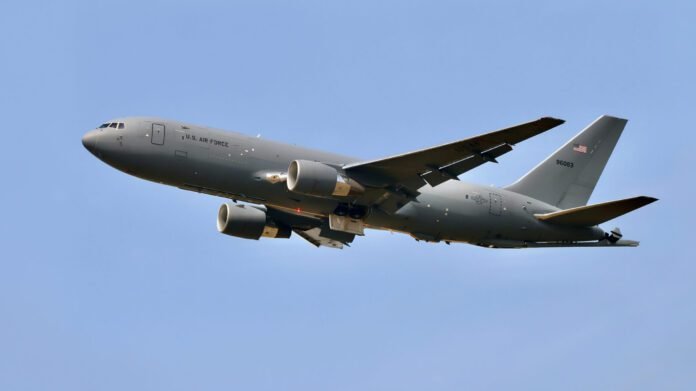
The US State Department approved a possible $4.5 billion sale of four Boeing KC-46A Pegasus aerial refueling aircraft and associated equipment to Qatar on Thursday, seeking to improve the Gulf country’s ability to operate with US and allied forces during heightened regional tensions.
The proposed foreign military sale includes as many as four tankers, eight Pratt & Whitney PW4062 turbofan engines, radar-warning receivers, laser-warning equipment, communications systems, spare parts, training and logistical support.
The Defense Security Cooperation Agency notified Congress of the approval. Lawmakers can seek to block or modify the transaction, while the final price and number of aircraft could change during negotiations. State Department authorization does not mean a contract has been completed.
The KC-46A can refuel military aircraft in flight, transport cargo and carry passengers or patients. Acquiring the tankers would allow the Qatar Emiri Air Force to keep its fighter aircraft in the air longer and operate farther from Qatari territory.
US officials said the package would help Qatar address “current and future threats” while improving cooperation with American and allied forces. The proposed sale “will not alter the basic military balance in the region,” according to the government notice. Boeing would serve as the principal contractor.
Qatar hosts Al Udeid Air Base, the largest US military installation in the Middle East and a major command center for US Central Command. Washington designated Qatar a major non-North Atlantic Treaty Organization ally in 2022.
The announcement comes during the continuing US and Israeli war with Iran, which began Feb. 28. Iran has attacked US installations and other targets in Gulf countries, while disruptions in the Strait of Hormuz have restricted regional energy shipments.
Qatar has invested heavily in its air force, acquiring F-15QA fighters from the US, Rafales from France and Eurofighter Typhoons from the UK. If completed, the tanker purchase would give those aircraft greater operational range and make Qatar one of a small number of countries operating the KC-46A.
Swiss opposition to tighter neutrality grows ahead of vote
Swiss voters look likely to reject a more restrictive form of neutrality, which would block the country from cooperating with NATO or imposing economic sanctions, a second poll on the topic showed on Friday.
Some 54% of voters opposed enshrining a narrower neutrality in the constitution, according to the survey conducted by GFS Bern for Swiss broadcaster SRG, with 42% in favour.
It follows a separate survey earlier this week which also showed the proposal, which has been backed by the right-wing Swiss People’s Party (SVP), looks unlikely to win a majority in the referendum on Sept. 27.
The Swiss government is against the proposal, with Foreign Minister Ignazio Cassis saying earlier this week it could isolate Switzerland, make the country less secure and create problems with neighbouring countries.
Neutrality is a defining feature of Switzerland but it did not need to be so strictly defined that government and parliament could not decide how to implement it, he told reporters on Wednesday.
Putting mice into hibernation causes a major loss of synapses
Our leading hypothesis for how our memories are stored is that when you learn something, the connections among neurons involved get stronger and physically larger, and that constitutes the memory. The trouble is that these connections significantly change over time—they’re plastic.
“If you compare the arrangement of these connections on day one with the same on day four or five, it’s very, very different,” says Kazumasa Tanaka, a neuroscientist at the Okinawa Institute of Science and Technology Graduate University in Japan. To learn how a memory that can last for years can sit on hardware that shifts every few days, Tanaka’s team made the shift a bit more dramatic. In a recent Science study, they induced a hibernation-like state in mice, which basically erased the state of more than half of their synapses. And yet the mice apparently have kept their memories.
Hibernation on demand
Hibernation is a specialty of squirrels, hamsters, and bears, but the neural circuit that triggers it is conserved across mammals, and is present in species that never hibernate in the wild—like mice. In June 2020, a team of researchers led by Takeshi Sakurai, a neuroscientist at the University of Tsukuba and a collaborator on Tanaka’s study, developed a technique to artificially activate this hibernation circuit. This can be done by activating a population called Q neurons in a region of the hypothalamus.
The result is a state dubbed QIH, for Q-neuron-induced hypothermia and hypometabolism.
“With our protocol, we can bring mice’s body temperature down to somewhere around 20° Celsius, and their heart rate and breathing rate decrease significantly as well,” Tanaka explains. Whether that counts as real hibernation depends on which hibernator serves as a reference. Bears in a hibernation state reduce their metabolic demand but don’t change their body temperature, which remains around 36° or 37° Celsius. On the other extreme, some species of squirrels enter super deep hibernation where their body temperature can go very close to freezing. “Artificial hibernation sits somewhere in the middle of that spectrum,” Tanaka says.
The most important thing about QIH, though, is that it can be switched on and off at will. In Tanaka’s experiments the mice spent 48 hours in the hibernation-like state and then woke up.
For their synapses, these 48 hours worked like Thanos’ snap.
Synaptic purge
To find out how many synapses are lost during QIH, Tanaka’s team implanted tetrodes, bundles of fine electrodes, into the hippocampus of freely moving mice. These let them record individual neurons firing. They found that activity dropped by about 70 percent once hibernation set in.
The brain tissues of some animals were imaged with a technique called serial block-face scanning electron microscopy before hibernation, during it, and days after returning to consciousness. It turned out the hibernation eradicated more than half of the synapses—in principle, this should erase most of the memories. “If you accept that memory traces reside in the efficacy of individual synapses, if you lose more than half of the synaptic connections, of course what you’d expect is impairment of the memory afterwards,” Tanaka says. But the team found no such impairment.
Before hibernation, the mice had been trained on two standard memory tasks. One was contextual fear conditioning, in which an animal learns to associate a particular box with a mild electric shock. The second was a plus-maze task in which the mouse learns to navigate its way to a reward. Performance in both tasks depends on memories stored in the hippocampus, which the team confirmed by creating a lesion in the region after training, which caused the memories to disappear.
When other mice, ones that were put into QIH, were aroused, though, they performed on these tasks just as well as the mice that did not hibernate. “What we found in these two different behavioral paradigms is the memory was completely intact,” Tanaka claims.
The survival of these memories through the purge of the synapses was also confirmed by brain activity recordings. Place cells, hippocampal neurons that fire when an animal occupies a particular spot, still fired in the same locations after arousal. And a decoder that read out the population activity could reconstruct where the mouse was just as accurately as before.
Returning synapses
Watching the same dendrites over eight days revealed that the synapses that vanished during hibernation reappeared after arousal and 82 percent of them came back at the same spot on the same dendrite they had occupied before, far above what chance would produce.
The synapses that vanished weren’t a random sample either. Scientists have developed a technique called eGRASP, which makes a connection glow green only where a neuron tagged during learning is connected to another neuron tagged during the same learning event. The team used this to look specifically at engram synapses, specialized synaptic connections between memory-storing neurons. It turned out that engram synapses sitting alone on a dendrite were eliminated by hibernation; engram synapses arranged in tight spatial clusters were preserved. Why clustering protects them is not yet understood, though. “Mechanism-wise, we don’t know,” Tanaka says. “That is one of the ongoing projects in the laboratory.”
What the team could do is look at the architecture of these clusters.
Multisynaptic boutons
Tracing the surviving clusters, Tanaka’s team found that a third of the clustered engram synapses were attached to something called a multisynaptic bouton. “Usually a single presynaptic terminal makes a synaptic connection with a single postsynaptic spine—a one-to-one relationship,” Tanaka explains. “In multisynaptic boutons, one presynaptic terminal makes synaptic connections with multiple postsynaptic spines. This is a rare structure. It’s difficult to find in the brain.”
In randomly chosen synapses from non-hibernating mice, only 3.3 percent sat on a multisynaptic bouton. The clustered engram synapses seen here were, if anything, slightly smaller than their neighbors—they weren’t the enlarged, strengthened connections the classic model would predict.
To check that this pattern really tracked memory rather than a general pattern of synapse loss, the team ran a negative control: they put a group of mice through long-term anesthesia combined with cytochalasin D, a drug that blocks the enlargement and stabilization of synaptic connections. That combination, just like QIH, suppressed neuronal firing and stripped out a comparable share of synapses, but the mice came out of it with impaired fear memory. In those animals, the clustered engram synapses were destroyed indiscriminately—just like every other synapse.
Tanaka thinks we should be careful in drawing conclusions about what the comparison does and doesn’t establish. “That is a major limitation of this study,” he says. “As of now, there is no way of manipulating the clustering of engram synaptic connections without compromising other aspects of the synapses and the network,” In other words, we have no way to selectively turn off these clusters to see if the memories get turned off with them.
“It’s an associative study rather than a test of causality,” Tanaka warns. But if the findings hold up, it may indicate a memory doesn’t need any particular synapse to survive, as long as the broader neural architecture around it is preserved.
But Tanaka’s lab is already considering a much weirder and potentially more profound implication.
Factory settings
“If the brain rebuilds itself after hibernation, does it rebuild the state it was in beforehand, or some preferred configuration of its own?” Tanaka asks. To find out, the team induced brief artificial hibernation in mice engineered as an epilepsy model, just before seizures had developed in the animals. “We found that the development of epilepsy was completely suppressed after hibernation, even though there were no additional manipulations taking place,” Tanaka claims. This, he argues, suggests the brain after hibernation returns to a kind of default network state, something like its factory settings, rather than simply returning to where it left off.
As epilepsy-related findings are still unpublished, Tanaka hopes his team will include them in a follow-up paper. Still, even if these early observations are confirmed, it’s going to be a long time before Tanaka’s findings find any clinical applications in humans. “There are so many challenges still remaining—more rigorous measures of safety, and ethics as well,” Tanaka says. “All of the studies so far have been done in mice. We need to move on to rats or monkeys and see if artificial hibernation actually has impact on the functioning of the brain or not. We still have so many things to do.”
New Questions Over Princess Diana’s Nearly 2-Hour Ambulance Delay After Fatal Paris Crash
Nearly three decades after Princess Diana’s death, a group of crime experts is raising fresh questions about one of the most debated details from that tragic night — why did it take nearly two hours to get her to the hospital?
Diana, 36, was fatally injured in the early-morning crash inside Paris’ Pont de l’Alma tunnel on Aug. 31, 1997.
Her companion, Dodi Fayed, and driver Henri Paul were also killed. Bodyguard Trevor Rees-Jones survived.
Now, a new episode of Fox’s Celebrity Crime Scene has put the spotlight back on the emergency response, with three experts questioning whether critical time was lost.
According to the program, the crash happened at approximately 12:23 a.m., but Diana did not arrive at Pitié-Salpêtrière Hospital until around 2:06 a.m.
That meant the trip from the crash scene to the hospital — less than four miles away — took roughly 1 hour and 45 minutes from the time of the collision.
Investigative crime journalist Jackson Buhaj said the timeline left him feeling that “something we are missing” remained unexplained.
He questioned why an ambulance carrying one of the most famous women in the world moved so slowly when Diana was suffering from catastrophic injuries and dangerously low blood pressure.
“There’s a level one trauma center 3.7 miles away, and it takes you an hour and 45 minutes to get her there,” Buhaj said on the show.
Retired Secret Service agent Rich Staropoli was equally troubled by the response.
He argued there appeared to be “no sense of urgency” despite the severity of Diana’s condition and noted the ambulance had a police escort.
The experts also discussed reports that the ambulance stopped during the trip when Diana’s condition deteriorated.
That decision was consistent with the French emergency medical system at the time, which placed a heavy emphasis on stabilizing critically injured patients at the scene and during transport rather than rushing them immediately to a hospital.
But Staropoli said he strongly disagreed with that approach in Diana’s case.
Another major issue raised by the episode involved what happened after Diana’s death.
Forensic scientist Kerry Daynes questioned the decision to embalm Diana less than 24 hours later.
Daynes explained that embalming removes blood and other bodily fluids, potentially eliminating the ability to perform certain later toxicology or medical tests.
The experts also revisited decades-old rumors that Diana may have been pregnant at the time of her death.
Those claims have circulated for years, but official investigations have not established that Diana was pregnant or that her death was the result of a murder plot.
A lengthy British inquiry known as Operation Paget investigated conspiracy allegations surrounding Diana’s death and ultimately found no evidence supporting claims that she had been assassinated.
The show’s experts nevertheless questioned whether more forensic evidence should have been preserved.
They were also critical of how quickly the crash site was cleared.
Buhaj claimed authorities moved rapidly to clean the tunnel, while Staropoli criticized reports that sanitation workers washed down portions of the scene and that the wrecked Mercedes was removed.
Daynes said preserving a potentially suspicious scene is crucial for forensic investigators.
“Preservation is everything,” she said.
The circumstances surrounding Diana’s death have fueled speculation for nearly 30 years.
French investigators concluded that driver Henri Paul was intoxicated and driving at high speed while attempting to escape photographers.
A British jury later concluded Diana and Fayed were unlawfully killed as a result of the grossly negligent driving of Paul and the pursuing paparazzi.
Investigators also determined that Diana was not wearing a seat belt.
The Celebrity Crime Scene experts said that detail may have been one of the most important factors of all, suggesting Diana might have had a far greater chance of surviving the violent crash had she been properly restrained.
Still, the unusually long emergency response remains one of the details that continues to fascinate those who have questioned what happened in Paris that night.
And nearly 30 years later, the experts say the timeline still leaves them asking the same question: