13.3 C
London
Saturday, August 22, 2026
Home Blog

Personalized pricing is “abhorrent,” but FTC limits may increase costs, critics say

0
personalized-pricing-is-“abhorrent,”-but-ftc-limits-may-increase-costs,-critics-say
Personalized pricing is “abhorrent,” but FTC limits may increase costs, critics say

Some Americans worry that the Federal Trade Commission’s rush to limit personalized pricing in the name of consumer protection could end up killing discounts they depend on or, counterintuitively, raising prices.

The FTC has no power to ban personalized pricing, in which a business uses a customer’s personal data to determine the highest price that person might be willing to pay for a product or service. But the agency believes it could set limits on the practice, including potential penalties for businesses that fail to disclose when customers may be paying more because data suggests they won’t balk at the price.

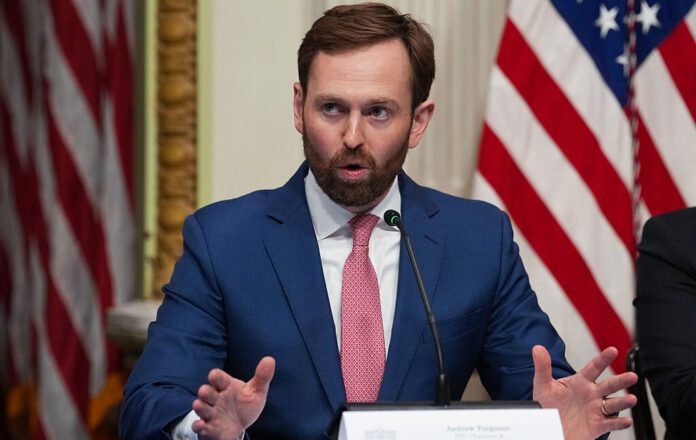
In a request for public comment on a proposed policy statement, the FTC acknowledged that personalized pricing is common in some industries. But FTC Chair Andrew Ferguson said new industries are increasingly tracking customers to set individualized prices, blindsiding consumers who expect a listed price in markets like retail “to be the same price that everyone else sees,” Ferguson said.

“The FTC does not have the legal authority to ban personalized pricing in all circumstances, but businesses that fail to tell consumers how their personal data is being used to set a price may be in violation of the FTC Act and other laws we enforce,” Ferguson said.

Members of the public were given 30 days to submit comments on the proposed change in enforcement.

FTC’s plan to combat surveillance pricing

The FTC said that there’s little economic research on how personalized pricing is impacting consumers, and it’s unclear how many businesses may be using it. But “the rise of data-driven ‘personalized pricing’ has the potential to transform our history of relatively limited variation in pricing from one consumer to the next,” the FTC’s policy statement said, potentially propping up more monopolists.

What research does exist, the FTC said, suggests that “while personalized pricing is likely to increase business profits, benefits to some consumers are accompanied by losses to other consumers and that the more sophisticated personalized pricing practices become, the less likely consumers are to benefit.”

If the public agrees with the FTC’s plan, personalized pricing could be found to violate the FTC Act when a seller misrepresents a price as static or widely available when it is actually personalized. That’s misleading, the FTC said, since customers who know how prices are set could take defensive measures, such as using a private browsing session or a virtual private network to mask their browsing history. Or they could choose to avoid sites that use personalized pricing altogether.

Additionally, the FTC wants businesses that use personalized pricing to disclose what data is used to set an individual’s price and to get consent to collect data for personalized pricing purposes. That would ensure businesses aren’t hiding the factors that influence pricing, the FTC said.

The agency explained that “consumers who reasonably believe that a personalized price is a discount based on their purchase history with that retailer when it is in fact a higher price based on information about their disposable income or their shopping habits with other firms, for example, may be deceived into not taking action to avoid the personalized price.” These disclosures would further give customers a chance to dispute incorrect data influencing their prices, the FTC said, or to “avoid the collection of that data in the first place.”

“Many Americans do not understand just how much data they generate every second of their lives,” the policy statement said. “Nor do they necessarily understand how those data are collected and stored, to whom they may be sold, or how they may be used—including, potentially, to price products and services uniquely for them on the basis of their intimate details.”

Early commenters loathe predatory pricing

The FTC listed several examples of businesses that could violate the FTC Act if they used personalized pricing in ways the agency deems misleading.

If a food delivery service raises prices because its data shows a customer may be unable to leave home, that would be deceptive. So would a grocery chain charging a family more for milk because data reveals they have more children. It would also be misleading if a hotel quoted a higher price after learning that a guest was traveling for a funeral and had few nearby options.

Even certain practices in industries where personalized pricing is more expected, like the rideshare industry, could be found in violation, the FTC said. For example, it would be deceptive if Uber charged a customer more after determining that no rival rideshare apps were installed on that person’s phone.

So far, dozens of Americans have submitted comments, and the majority want to see the FTC heavily regulate personalized pricing, which they view as discriminatory.

The practice is “atrocious” and “abhorrent” and an “egregious affront to consumer privacy and protections” that “should not be tolerated,” these commenters agreed. Low-income people seem most at risk of being disadvantaged, commenters suggested, as well as “naïve young people,” “poor people with limited access to information,” and “trusting seniors.” At the bare minimum, the FTC should ensure that personalized pricing cannot use a person’s race, gender, religion, or sexual preferences as a factor, commenters said. And to the furthest extent possible, the FTC should end the practice, the majority agreed.

“What is the point of trying to build a stable financial life if the cost of goods and services is no longer tied to a broader market but to a single person?” one anonymous commenter asked.

“This practice undermines fair markets by replacing transparent pricing with hidden, data-driven discrimination between buyers,” another supportive commenter, Sarah Burdell, said. “Consumers cannot verify whether they are receiving a fair price, eroding trust in commerce.”

“Those with less time, technical literacy, or resources to detect and circumvent these practices bear a disproportionate burden,” Burdell continued. “Moreover, because pricing algorithms often rely on data correlated with race, gender, age, or geography, personalized pricing risks reproducing discriminatory outcomes even absent explicit intent, potentially violating consumer protection and anti-discrimination principles.”

FTC may inadvertently kill discounts

Some commenters, however, were concerned that the FTC’s plan to limit personalized pricing was well-meaning but misguided.

A data privacy attorney, Blake Hunter Yagman, who said he has represented plaintiffs in both surveillance pricing and surveillance wage cases, warned the FTC that allowing the surreptitious data collection to go unchecked is quickly increasing mass surveillance. The practice “turns routine consumer data collection into an extractive pricing weapon,” another commenter agreed. Urging more action to combat the practice, the lawyer suggested that the FTC policy statement’s scope was too narrow and should penalize surveillance wage schemes, too.

Another critical commenter, Deymond Lashley, said that the scope was too broad, perhaps threatening discounts that customers depend on.

It’s true that some customers would be offered lower prices through personalized pricing, and the FTC is perhaps rushing rulemaking, Lashley said, and making assumptions about what customers reasonably expect at certain checkout points.

Lashley suggested that the FTC could “shape the future of commerce” by restricting price-setting in ways that limit competition by applying restrictions on personalized price discrimination that aren’t placed on other forms of price discrimination, like loyalty rewards programs or coupons. Some businesses that could benefit from personalized pricing schemes may be less likely to succeed in the market if the FTC intervenes too much, Lashley argued.

Another critic, Jessie Shettleroe, agreed that discounts could be lost. A concerned citizen, Shettleroe agreed that all of the conduct described in the FTC’s examples seemed plainly predatory but said that the FTC would be wise to slow down and sharpen the policy to ensure the most financially vulnerable consumers aren’t unexpectedly hit with higher costs.

“I would support the Commission going after all of it, hard,” Shettleroe said. “My concern is that this Proposed Statement will not accomplish that, and may make things worse for consumers like me.”

Shettleroe criticized the FTC’s required disclosures as legitimizing the practice, noting that the policy statement “describes conduct that outrages people, then offers a remedy that permits it with a notice attached. I do not want a disclosure. I want the practice prohibited where it is clearly exploitative.”

Most people won’t read those disclosures, Shettleroe argued, reducing the FTC’s intervention “to a compliance checkbox, not consumer protection.”

Instead, the FTC should be requiring that businesses provide an opt-out, which might “do more for consumers than every disclosure in this document combined,” Shettleroe said. Another commenter suggested that the FTC should require businesses using surveillance pricing to allow buyers to negotiate prices.

Most frustratingly for avid discount hunters, Shettleroe said the FTC’s “undefined scope” of what’s considered violating personalized pricing could threaten discounts that customers rely on to reduce costs.

“Nowhere does the Commission define ‘personalized pricing,’” Shettleroe said. “The operative phrase is prices that ‘vary based on their personal data.’ That covers my grocery loyalty card, emailed coupons, and app-only prices. Those save me money. If businesses cannot tell which practices are covered, the safe response is to stop personalizing altogether, and the first thing to disappear will be the discounts, not the surcharges. Please state explicitly that loyalty and membership pricing, coupons, promotional codes, and randomized price testing are outside the scope.”

The FTC may look to Congress for help refining its policy statement to resolve some of these concerns. Only Congress can ban personalized pricing, and a bill, the Stop AI Price Gouging and Wage Fixing Act, has been introduced in the House of Representatives. If passed, that law would “prohibit certain uses of algorithmic decision systems to inform individualized prices and wages,” as well as for other purposes.

That bill includes carve-outs for discounts that people have long depended on, including exceptions when a “discounted price is offered to members of a broadly defined group, including teachers, veterans, senior citizens, or students, based on publicly disclosed eligibility criteria,” as well as discounted prices “offered through a loyalty, membership, or rewards program that consumers affirmatively enrolled in.”


Warning of potentially the strongest El Niño in living memory

0
warning-of-potentially-the-strongest-el-nino-in-living-memory
Warning of potentially the strongest El Niño in living memory


Britain’s Met Office said Friday that the developing El Niño weather pattern was likely to be the strongest in living memory and potentially the largest such event since the 19th century.

El Niño is a periodic warming of sea-surface temperatures in the eastern Pacific caused by weakening trade winds. It occurs naturally every two to seven years and typically lasts between nine and 12 months. Its effects on weather around the world can threaten crops.

The Met Office said 2026 was likely to be remembered for the development of the largest El Niño in living memory and possibly the largest such event since the 19th century.

It also said 2027 was very likely to replace 2024 as the warmest year on record.

The Met Office’s latest forecasts showed equatorial Pacific sea-surface temperatures rising by more than 3 degrees Celsius later this year. A typical El Niño produces a rise of 1 to 2 degrees Celsius, while a 2-degree increase is considered a major event.

“This implies that if the forecast is accurate — and other forecast systems show similar extreme values — then 2026 will far exceed our recent experience of El Niño and its worldwide climate influences,” said Adam Scaife, head of long-range forecasting.

Blacklisted Chinese firm CGN runs power stations in South Korea

0
blacklisted-chinese-firm-cgn-runs-power-stations-in-south-korea
Blacklisted Chinese firm CGN runs power stations in South Korea

CGN headquarters. Photo: China Daily

China General Nuclear Power Corporation (CGN), a Chinese state-owned energy company, is blacklisted by the US for stealing nuclear secrets.  In South Korea, CGN runs five power plants, with a total generation capacity of 2.2 gigawatts (GW). The South Korean government allowing China access to South Korea’s power grid leaves South Korea and the US military in Korea vulnerable, creating a major national security risk for both South Korea and the US.

On July 24, 2026, CGN announced that it began commercial operation of a 557 MW LNG combined cycle power plant in the Daesan Industrial Complex in Daesan-eup (town), Seosan City, South Chungcheong Province. Petrochemical companies are in and near the Daesan Industrial Complex, and the power plant is about 45 miles west of the Camp Humphreys US Army base. 

The plant is expected to supply up to 3.9 terawatt-hours of electricity annually to the domestic power grid. This is the second unit of a power plant under CGN Daesan Electric Power Co, Ltd. The power plant also supplies electricity to the petrochemical companies, a critical industry.

CGN, through another subsidiary CGN Yulchon Electric Power, also operates the Yulchon Combined Cycle Power Plant situated in the Yulchon General Industrial Complex #1 in Sepung-ri, Gwangyang-eup, Gwangyang City, South Jeolla Province. With the capacity of 1,390 MW, the power plant is in the same industrial complex as Hyundai Steel Suncheon factory and Hyundai Steel pier.

Map: East Asia Research Center

CGN, which changed its name from China Guangdong Nuclear Power, has numerous subsidiaries. It has international subsidiaries. Among those, CGN Korea Holdings Co., Ltd, established on November 11, 1996, focuses on energy projects in South Korea. Its CEO is Ni Yanliang.

Under CGN Korea are CGN Daesan Power Co., Ltd., created on April 8, 2009, and CGN Yulchon Power Co., Ltd., established on July 28, 2009. The president of both CGN Daesan and CGN Yulchon is Song Ji-ho. CGN Korea, CGN Daesan and CGN Yulchon are 100% owned by CGN as of 2022, and as such, are not “private” companies as often described in the news media, but are part of China’s state-owned enterprise.

Based in Hong Kong, CGN Energy International Holdings, CGN’s subsidiary established in 2017, focuses on developing, investing, and managing non-nuclear energy projects outside of China. CGN Energy International, through its subsidiary in Korea, was involved in the project.

CGN was blacklisted by the US on August 15, 2019.  In 2016, the FBI charged Szuhsiung Ho (Allen Ho, a US citizen), China General Nuclear Power Corporation, and Energy Technology International with conspiracy to unlawfully produce and develop special nuclear material outside the US. 

According to the FBI, CGN had been stealing U.S. nuclear secrets for almost two decades. CGN used joint ventures, partnerships and other legitimate international commerce practices to infiltrate the US nuclear technology network and steal advanced nuclear reactor designs that could be dual use.  CGN, listed on the US Department of Commerce’s Entities List since 2019, is also on the US Department of War’s list of Entities Identified as Chinese Military Companies.

CGN, acting as an intelligence collection platform, engaged in decades of sophisticated economic espionage in the US to steal dual use technology using regular commercial practices.

CGN could engage in economic espionage in a similar way in the Republic of Korea (ROK) as well. Furthermore, with the access to the power grid and the energy technology network (including nuclear energy network) in the ROK, it could sabotage power production and distribution. Thus, CGN operating in Korea poses a grave threat to the national security of the ROK as well as the US.

This article was originally reported and published by the East Asia Research Center, which focuses on under-reported or unreported issues of concern on the Korean Peninsula, especially in South Korea.

Tara O, PhD, the author of the article and the founder of the East Asia Research Center, has worked at the Pentagon and at the Republic of Korea-US Combined Forces Command as a US Air Force officer focusing on East Asia issues. Her research areas include national security, the ROK-US alliance, human rights in North Korea, defectors, unification and political and economic systems.

Dr Tara O is a Fellow at the Institute for Corean-American Studies (ICAS). She is the author of The Collapse of North Korea: Challenges, Planning and Geopolitics of Unification. She serves on the board of directors of the International Council on Korean Studies and was the editor-in-chief of its International Journal of Korean Studies. An air force veteran, her research areas include the Korean contingency and unification, US alliance, human rights in North Korea, North Korean defectors, and South Korean politics.

Tunisians Demand Saied’s Departure as Public Services Fail

0
tunisians-demand-saied’s-departure-as-public-services-fail
Tunisians Demand Saied’s Departure as Public Services Fail


Hundreds of Tunisians demonstrated in the capital Thursday, demanding the departure of President Kais Saied as prolonged water and electricity cuts, medicine shortages, rising prices and restrictions on political freedoms intensified public anger against his government.

The newly established Nafas opposition movement organized the protest, seeking to unite political parties, independent figures and Tunisians who have not previously joined established opposition groups. Demonstrators marched through central Tunis and called for the release of imprisoned politicians, journalists and activists.

Public frustration has grown during a summer in which temperatures reached nearly 50°C (122°F) in some areas. Heavy demand strained the electricity network, while power failures disrupted water pumping, manufacturing and other services. Tunisia has also faced shortages of medicine and basic goods as its economic problems deepen.

“Today, the Tunisian people are living in humiliation,” former lawmaker Samir Ben Amor said. “There’s no water, no electricity, and no freedom.”

Saied, elected in 2019, dismissed the prime minister and suspended parliament in July 2021 before dissolving the legislature. He later expanded presidential authority through a new constitution, dissolved the Supreme Judicial Council and dismissed dozens of judges.

The president says the measures were legal and necessary to combat corruption and rescue the state from a political system that had failed to address Tunisia’s problems. Opposition groups and international rights organizations describe his actions as a dismantling of the democratic institutions established after the 2011 revolution.

Tunisia continues to struggle with weak economic growth, unemployment, debt and deteriorating public services. Saied rejected conditions attached to a proposed $1.9 billion International Monetary Fund program, saying they could increase hardship and threaten social stability.

Thursday’s demonstration followed larger protests on July 25, the fifth anniversary of Saied’s assumption of emergency powers. Rights groups say authorities have increasingly used prosecutions and security measures against political opponents, lawyers, journalists and civil society organizations.

Fighter jets help destroy Russian drone boat near European offshore gas platform

0
fighter-jets-help-destroy-russian-drone-boat-near-european-offshore-gas-platform
Fighter jets help destroy Russian drone boat near European offshore gas platform

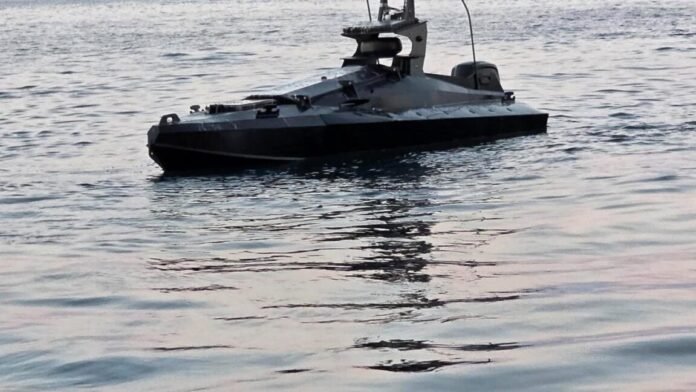
This week, Romania accused Russia of sending a drone boat loaded with explosives to a vital European natural gas platform in the Black Sea. A Romanian F-16 fighter jet used its cannons to disable the surface drone so that explosive ordnance experts could blow it up safely.

On August 20, the Romanian Coast Guard first spotted the maritime drone a few hundred meters away from the Neptun Deep project’s main drilling platform, where several hundred workers were busy with the platform’s ongoing installation, Defense Minister Radu Miruță said in a Facebook post. The offshore gas project would make Romania the largest gas producer in the European Union once it starts full production in 2027.

To protect the lives of the workers and the offshore gas infrastructure, the Romanian military scrambled two F-16 fighter jets to stop the drone with cannon fire, Miruță said. Army specialists later carried out a controlled detonation, as seen in a Facebook video shared by the defense minister.

The drone boat itself supposedly carried explosives, according to Miruță’s comments, as reported by Reuters. Romania’s president blamed Russia directly for the incident.

“I strongly condemn the intensification of these types of irresponsible incidents on the part of the Russian Federation,” wrote Nicușor Dan, president of Romania, in a post on the social media platform X. “We remain vigilant alongside NATO allies to defend ourselves and repel such challenges.”

This marks the second incident involving suspected Russian drones near the Neptun Deep offshore gas site this month. On August 11, the Romanian military destroyed two Russian-made flying drones found floating in the Black Sea near the Neptun Deep site.

In both cases, Romania confirmed with Ukrainian partners that the drones did not belong to the Ukrainian military.

The drone boat found near the Neptun Deep platform is an unknown type that is different from surface drones previously deployed by Russia, according to H.I. Sutton, an independent naval expert who runs the website Covert Shores.

Sutton highlighted features such as a “large hinged hangar in the forward hull” that may have allowed the drone boat to carry missiles or aerial drones. He also pointed to two flat antennas that may have enabled satellite communications with services such as Starlink, along with radar and other sensors.

The escalation spiral

The Neptun Deep project may be a tempting target for Russia because it represents a crucial energy site for the European Union. Once fully operational, the platform would double Romania’s gas production and help supply gas to other European countries such as Germany and Moldova, according to Reuters.

The broader Black Sea has become a hotly contested battleground since Russia launched its full-scale invasion of Ukraine in 2022. Despite lacking many traditional naval ships, Ukraine has used flying drones, missiles, and drone boats to damage and destroy Russian warships both at sea and in port.

Ukrainian drone strikes have also choked off Russian energy and grain shipping in the Sea of Azov and Black Sea, while simultaneously targeting “shadow fleet” vessels flagged to other countries that carry sanctioned Russian oil and gas.

But Russia has struck back by targeting ships and the ports that support most of Ukraine’s grain exports. Such constraints could lead to a global food crisis if European countries don’t help Ukraine find alternative ways to export its large grain harvest, said Cristian Vlas, Eastern Europe assistant research manager at the nonprofit conflict monitor ACLED, in a post on August 19.

Both Russian and Ukrainian drones have also sometimes strayed into the airspace of European countries such as Romania. Some of the incidents have been attributed to electronic warfare jamming sending drones off course, but others have been described as deliberate Russian provocations.

On August 16, two Spanish F-18 fighter jets deployed in Romania for a NATO mission intercepted and destroyed a drone that a NATO spokesperson described as being of Russian origin, CBS News reported.

Meanwhile, US intelligence experts have described Russia as likely being responsible for an attempted drone attack on Ukrainian cargo aircraft parked at Leipzig airport in Germany. The German government has yet to formally accuse Russia of being responsible.

Oil importer China won’t aid Trump economic warfare against Iran

0
oil-importer-china-won’t-aid-trump-economic-warfare-against-iran
Oil importer China won’t aid Trump economic warfare against Iran

The Trump administration is once again threatening to carry out “regime change” in Iran, this time using what President Donald Trump described as “economic warfare” against the nation rather than military might.

But as Treasury Secretary Scott Bessent demands the world play along with efforts to isolate Iran, the second-largest economy, China, is refusing to join the US sanctions campaign.

The Trump administration has failed to use military means to force Iran to open the Strait of Hormuz after it began restricting travel in retaliation for US and Israeli attacks in late February.

On Thursday, Bessent told CNBC that the new approach is to impose the “toughest sanctions in history” on Iran, ramping up a strategy that has inflicted suffering on the Iranian people but failed to force its leaders out of power for nearly 50 years.

Bessent emphasized that it would only work with the help of “all of our allies” carrying out the “greatest coordinated economic isolation in the history of the world.”

He made very explicit the goal of ratcheting up pressure on the regime by inflicting pain on the nation’s 90 million people, by causing “substantial inflation, both food inflation and ordinary inflation in Iran.” He compared the effort to the use of sanctions to strangle the economies of Venezuela and Cuba, which have fueled humanitarian crises in both countries.

Bessent issued an ultimatum that every nation is “either with us or against us,” and warned those who refuse to help with the administration’s effort to “squash the economy” of Iran that the US would “put its full might and force toward enforcing against you.”

He promised that any country that provides a “lifeline” to Iran would itself be sent into “economic oblivion.”

Iran responded to the threats by vowing a fearsome retaliation. “With preparedness across land, sea, air, air defense, and cyberspace, Iran’s armed forces will respond to the enemy’s new threats with crushing, punishing, and devastating responses,” said the chief of staff of Iran’s armed forces, Maj. Gen. Ali Abdollahi.

Iran’s parliament speaker, Mohammad Baqer Ghalibaf, acknowledged that the impact of further sanctions could indeed be devastating.

“We must make plans to deal with the unjust sanctions so that we can overcome them,” he said. “No matter how much military power we have, we won’t survive if people are hungry and we don’t have financial turnover, economic growth, and national production.”

As the US imposes its own blockade on Iran’s oil exports, Bessent called on China to “get with the program.” China buys about 80% of the oil exported from Iran, and Bessent emphasized that half of China’s energy comes from the Persian Gulf.

But Lin Jian, a spokesperson for China’s Ministry of Foreign Affairs, said during a press conference on Friday that China would not cooperate with efforts to isolate Iran.

“China believes that military means, sanctions and pressure tactics are not the solution,” Lin told an Iranian government broadcaster. “On the contrary, they will only lead to escalation that serves no one’s interests. We call for efforts to solve disputes through dialogue and negotiation.”

Asked about the potential effects on China’s energy imports from Iran, he reiterated, “China opposes illicit unilateral sanctions that lack basis in international law and UN Security Council mandate.”

The question now is whether Trump will make good on his administration’s threats and retaliate against China. It’s likely easier said than done, as an economic war with the US’s third-largest trading partner could further exacerbate the economic turmoil Trump is seeking to ameliorate before the midterm elections in November.

Danny Citrinowicz, a senior researcher at Israel’s Institute for National Security Studies, suggested that China would be unlikely to surrender easily in that fight.

“China has a strong interest in preserving Iran under the Islamic Republic and maintaining Tehran’s strategic relationship, and growing dependence, on Beijing,” he wrote on social media. “Any economic strategy that assumes China will eventually fall in line with Washington risks being built on a fundamentally flawed premise.”

Shipping traffic through the Strait of Hormuz is still far below prewar levels, with the daily number of ships passing through in the single digits, according to Reuters.

Crude oil prices are still 30% higher than at the start of the war, while US gas prices are still up by more than a dollar per gallon.

But Trump, seemingly unwilling to admit that his campaign there has been anything less than successful, is continuing to claim that the strait is wide open thanks to US military action.

As Gregory Brew, a senior analyst on Iran and oil policy at the Eurasia Group, explained, this has left the administration’s messaging on why exactly it is now pivoting to ruthless economic warfare appear like disjointed doublespeak.

“Bessent and others cannot say what this policy is meant to achieve – reopening the strait – because in the admin’s telling, the strait is already open,” Brew said. “As a result, this return to maximum pressure feels oddly devoid of purpose. The US is inflicting economic pain, felt mostly by Iran’s people, rather than its rulers, for no clear reason.”

-Common Dreams

‘Rocky IV’ Star Breaks Down Over Cancer Battle (Video)

0
‘rocky-iv’-star-breaks-down-over-cancer-battle-(video)
‘Rocky IV’ Star Breaks Down Over Cancer Battle (Video)


Dolph Lundgren spent decades playing one of Hollywood’s toughest men — but the “Rocky IV” star is now revealing the terrifying real-life fight that nearly took everything from him.

The 68-year-old action legend becomes visibly emotional in the new documentary “Dolph: Unbreakable,” which chronicles his years-long cancer battle and the moment doctors gave him a devastating prognosis.

At one point, Lundgren wasn’t even sure he would live long enough to see the documentary released.

“They came to me back in 2020 during COVID, and we started shooting footage,” Lundgren told Entertainment Weekly.

But everything changed after he received a kidney cancer diagnosis.

“I didn’t tell the documentary team about it for a while, but it wasn’t looking too good,” he said. “So, in 2021, I told them that maybe we should focus a little bit on that because I may not be around for the premiere of this thing.”

The frightening diagnosis completely transformed the movie.

Instead of simply looking back at Lundgren’s nearly 100-film career, the documentary began following the “Expendables” star through what became the biggest fight of his life.

Lundgren said his wife, Emma Krokdal, 30, even recorded footage while he was hospitalized because outside cameras were not allowed during the COVID era.

“What it symbolizes are the fights I’ve had in my whole life, framed by the big battle I had over four years with kidney cancer,” he explained.

The actor revealed in 2023 that he had quietly been battling cancer for years. Doctors eventually told him he may have just two or three years to live as the disease became more aggressive.

But Lundgren refused to give up.

In 2024, he delivered the news fans had been hoping for: He was cancer-free.

Now the towering actor who terrified audiences as Soviet boxer Ivan Drago in 1985’s “Rocky IV” admits surviving the ordeal has left him forever changed.

“It feels very satisfying and wonderful,” Lundgren said of being alive to watch “Unbreakable” finally reach audiences.

He admitted that even after surviving cancer, the emotional toll did not simply disappear.

Lundgren said he has undergone what he described as “survivorship therapy,” comparing the psychological aftermath to a soldier returning home from war.

“You faced your own mortality,” he said.

His therapists offered him an analogy that stuck with him.

Most people know death will eventually come, Lundgren explained, but rarely spend much time thinking about it. Cancer patients, however, have effectively seen the danger coming straight toward them.

“Once you’ve had cancer, you’ve seen the bus,” he recalled being told. “You saw the color of the bus, and you saw the number of it.”

The documentary also shows a surprisingly vulnerable side of the muscle-bound star.

Lundgren revealed that beneath his tough exterior, he has struggled with painful emotions since childhood.

“I had a problem with my dad, went through some abuse, and I found martial arts, which is the way to express myself and feel strong,” he said.

Acting later became another form of therapy.

For years, Lundgren said he imagined himself going out “like a Viking, in a blaze of glory.”

Cancer changed that mindset.

He now sees himself as an “older warrior” who can use his experiences to help other people — and believes showing vulnerability can require more strength than simply acting tough.

“Men aren’t supposed to be emotional; we are supposed to just soldier on, no matter what happens to us, but men are damaged, too,” Lundgren said.

Some of Hollywood’s other most famous action heroes appear in the documentary, including Arnold Schwarzenegger, Jean-Claude Van Damme and Lundgren’s longtime “Rocky” co-star Sylvester Stallone.

Lundgren revealed that Stallone became emotional after learning about his diagnosis.

The two men had long shared what Lundgren called a “tough-guy kind of camaraderie,” but the cancer scare changed their friendship.

Lundgren remembered being in a Beverly Hills store the day after revealing the diagnosis when Stallone suddenly called him.

The “Rocky” legend was crying.

“He’s in tears,” Lundgren recalled. “It was like, whoa. I was just in shock.”

The two have since grown much closer.

“I think those guys are softies too, like me,” Lundgren joked.

After surviving cancer, Lundgren says he is no longer interested in pushing himself the way he once did.

He is preparing to release an autobiography, “Fights Worth Fighting: Finding Strength in Struggle,” and hopes the next chapter of his life will be about helping younger people find strength and direction.

“I feel a little bit like that now: leaving another life behind, and I have a new life now,” Lundgren said.

And after coming terrifyingly close to losing it, he says he finally appreciates that life — and himself — more than ever.

“I’m kinder to myself than I was before,” Lundgren said. “I don’t push myself as much, and that makes me appreciate life more.”

“Dolph: Unbreakable” premieres Oct. 6 on VOD and digital platforms.

Lawsuit demands Logitech hand tariff refunds over to customers

0
lawsuit-demands-logitech-hand-tariff-refunds-over-to-customers
Lawsuit demands Logitech hand tariff refunds over to customers

Logitech is facing a proposed class action lawsuit for not giving customers tariff refunds.

In April 2025, Logitech raised the prices on 51 percent of its portfolio, with some prices increasing by as much as 25 percent.

The complaint seeks to “recover monies that Logitech extracted from American consumers as offset for import tariffs that the United States Supreme Court has since declared unlawful, tariffs for which Logitech now stands to be reimbursed by the federal government. This is all while Logitech retained every dollar of the corresponding price increases it charged its customers due to the illegal tariffs.”

A construction and residential housing builder in California, SJK Development, and California resident Ala Awadalla filed the complaint in the US District Court for the Northern District of California, San Jose Division on Tuesday. Per the complaint, both parties bought Logitech mice at higher prices.

“Had Logitech not inflated its prices in the name of the unlawful IEEPA [International Emergency Economic Powers Act] tariffs, Plaintiff[s] would have paid less for the same product. Plaintiff[s] has received no refund, credit, or other compensation from Logitech corresponding to the tariff component of the price Plaintiff[s] paid,” the complaint reads.

Logitech didn’t make a public announcement about the price hikes, which are still implemented. The complaint highlights multiple times that Logitech executives told investors that the price increases would or had offset the financial impact of the tariffs. This includes a call in May when Matteo Anversa, Logitech’s CFO, said, “The positive impact of the US price actions and favorable foreign exchange more than offset the impact of tariffs and higher promotions.” Anversa was discussing Logitech’s fiscal Q4 2026, which he noted was “the highest level of profitability in the history of the company outside of the COVID peak.”

In February, the Supreme Court ruled that President Donald Trump imposed the IEEPA tariffs illegally. The refund process is ongoing.

The complaint notes that “Logitech received a full refund of $61 million for the tariffs invalidated by the Supreme Court, including $15 million during the first quarter of fiscal year 2027 and $46 million subsequent to quarter end.” It adds:

… Logitech has been—and absent relief will continue to be— enriched twice over at its customers’ expense: once by the tariff-justified overcharges collected from Plaintiffs and the Class, and again by the government’s refund, with interest, of the very duties those overcharges were represented to cover.

The lawsuit is seeking a declaratory judgement that Logitech must give IEEPA tariff refund proceeds to customers.

Tariff lawsuits

Logitech joins a handful of other consumer tech companies, including Microsoft, Nintendo, and Sony, that customers are suing over tariff refunds. Some customers feel entitled to being refunded as these companies were, although mass refunds like this could present financial and logistical challenges.

For its part, Nintendo has argued that customers “received exactly what they paid for” and that there is not “anything ‘unjust’ about Nintendo retaining money that it may receive from the government as tariff refunds.” It also filed a motion to compel arbitration, a move that Logitech may also pursue, considering that its end-user license agreement has arbitration provisions.

Logitech didn’t respond to Ars Technica’s request for comment.

Belgian physician enters race to lead WHO

0
belgian-physician-enters-race-to-lead-who
Belgian physician enters race to lead WHO


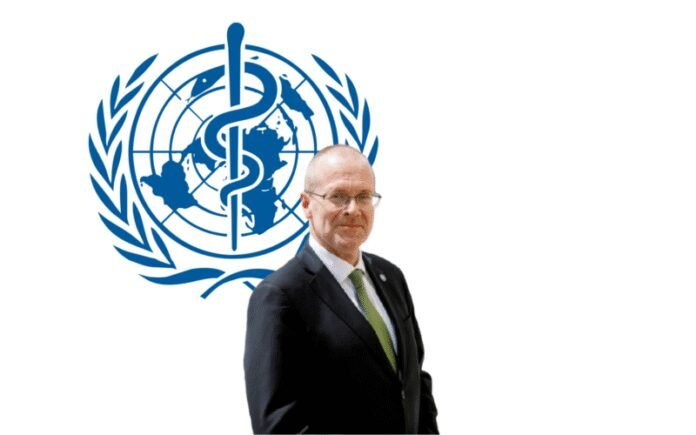
Belgian doctor Hans Kluge, head of the World Health Organization’s Europe region, is running for director-general of the agency.

In an email to WHO staff, which was seen by POLITICO, incumbent Director-General Tedros Adhanom Ghebreyesus confirmed that Kluge would step back from his role, effective Aug. 21, to campaign for the job.

Kluge is the third confirmed candidate in the race alongside Hanan Mohamed Al Kuwari from Qatar and Hanan Balkhy from Saudi Arabia.

Balkhy, WHO regional director for the Eastern Mediterranean, has also stepped back from her role during the campaign, as per the agency’s rules. Al Kuwari, who is a former public health minister, is serving as adviser to Qatar’s prime minister.

Nominations for the post opened in April, with a deadline of Sept. 24, 2026.

Corinne Capuano, director of programme management at WHO Europe, will head the European region on a temporary basis in Kluge’s absence.

Source: Politico

Israel preventing foreign support for Lebanese army, deputy PM says

0
israel-preventing-foreign-support-for-lebanese-army,-deputy-pm-says
Israel preventing foreign support for Lebanese army, deputy PM says

Israel is preventing several countries from providing support to the Lebanese army as the latter deploys in parts of southern Lebanon in line with a US-backed framework agreement signed in June between Lebanon and Israel, Deputy Prime Minister Tarek Mitri said Friday, Anadolu reports.

“Several countries have expressed their readiness to help the Lebanese army as it enters the pilot areas in the south, but Israel is objecting to this,” Mitri said, according to the Lebanese National News Agency.

“Pilot areas” refer to parts of southern Lebanon where security arrangements are being made in line with the framework agreement, including the withdrawal of Israeli forces to make way for the deployment of Lebanese troops.

Mitri also decried what he described as “clear Israeli intransigence” regarding the UN Interim Force in Lebanon (UNIFIL).

According to Mitri, Beirut wants an international body to remain in southern Lebanon to monitor developments there.

“Israel isn’t prepared to show good faith regarding negotiations and the framework agreement,” he said.

UNIFIL’s mandate in southern Lebanon is due to expire at the end of this year, with its full withdrawal expected to be completed in 2027.

Discussions remain underway over the future of the peacekeeping force’s mission in the country.

UNIFIL has been present in southern Lebanon since 1978 in line with UN Security Council resolutions. Its mandate includes monitoring the security situation and ensuring stability in the area.

READ: UNIFIL hands over position in southern Lebanon to Lebanese army

Regarding Beirut’s efforts to strengthen the authority of state institutions, Mitri said the government’s decision to consolidate the role of the state “is not one from which it will back down.”

He also said Beirut does not want to enforce its decisions by force in a way that threatens national unity.

His remarks come as Lebanon and Israel seek to implement the June framework agreement, which calls for a phased Israeli withdrawal from Lebanese territory and the deployment of the Lebanese army into vacated areas.

It also calls for the disarmament of armed groups, in reference to Hezbollah.

Despite the agreement, Israel has continued staging relentless attacks in several parts of southern Lebanon, which Beirut says are hindering the army’s planned deployments.

Since March 2, wide-ranging Israeli attacks have killed 4,348 people and injured more than 12,000 others, according to the Lebanese Health Ministry.

Israeli forces remain present in several parts of southern Lebanon, some of which they have occupied for decades.

Others were occupied during a previous round of fighting — in 2023 and 2024 — when Israeli forces advanced more than 10 kilometers into sovereign Lebanese territory.

READ: Israel pounds southern Lebanon with airstrikes, artillery despite truce deal

0FansLike
0FollowersFollow
0FollowersFollow
0SubscribersSubscribe
- Advertisement -
Google search engine

Recent Posts