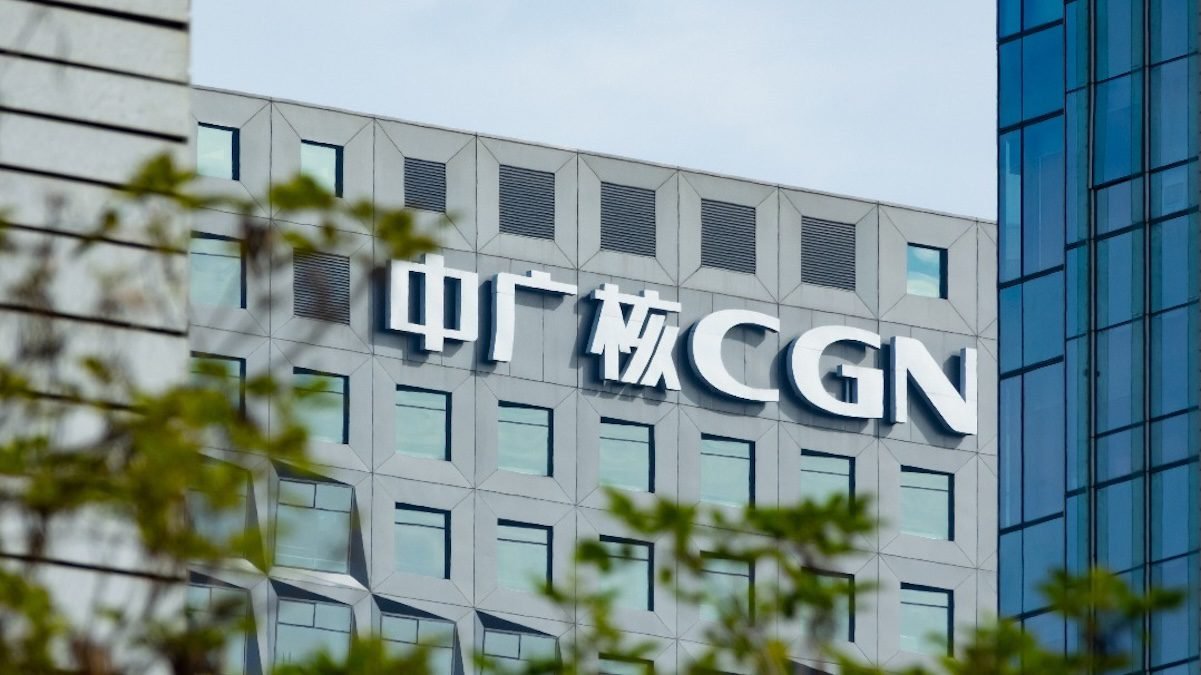

China General Nuclear Power Corporation (CGN), a Chinese state-owned energy company, is blacklisted by the US for stealing nuclear secrets. In South Korea, CGN runs five power plants, with a total generation capacity of 2.2 gigawatts (GW). The South Korean government allowing China access to South Korea’s power grid leaves South Korea and the US military in Korea vulnerable, creating a major national security risk for both South Korea and the US.
On July 24, 2026, CGN announced that it began commercial operation of a 557 MW LNG combined cycle power plant in the Daesan Industrial Complex in Daesan-eup (town), Seosan City, South Chungcheong Province. Petrochemical companies are in and near the Daesan Industrial Complex, and the power plant is about 45 miles west of the Camp Humphreys US Army base.
The plant is expected to supply up to 3.9 terawatt-hours of electricity annually to the domestic power grid. This is the second unit of a power plant under CGN Daesan Electric Power Co, Ltd. The power plant also supplies electricity to the petrochemical companies, a critical industry.
CGN, through another subsidiary CGN Yulchon Electric Power, also operates the Yulchon Combined Cycle Power Plant situated in the Yulchon General Industrial Complex #1 in Sepung-ri, Gwangyang-eup, Gwangyang City, South Jeolla Province. With the capacity of 1,390 MW, the power plant is in the same industrial complex as Hyundai Steel Suncheon factory and Hyundai Steel pier.

CGN, which changed its name from China Guangdong Nuclear Power, has numerous subsidiaries. It has international subsidiaries. Among those, CGN Korea Holdings Co., Ltd, established on November 11, 1996, focuses on energy projects in South Korea. Its CEO is Ni Yanliang.
Under CGN Korea are CGN Daesan Power Co., Ltd., created on April 8, 2009, and CGN Yulchon Power Co., Ltd., established on July 28, 2009. The president of both CGN Daesan and CGN Yulchon is Song Ji-ho. CGN Korea, CGN Daesan and CGN Yulchon are 100% owned by CGN as of 2022, and as such, are not “private” companies as often described in the news media, but are part of China’s state-owned enterprise.
Based in Hong Kong, CGN Energy International Holdings, CGN’s subsidiary established in 2017, focuses on developing, investing, and managing non-nuclear energy projects outside of China. CGN Energy International, through its subsidiary in Korea, was involved in the project.
CGN was blacklisted by the US on August 15, 2019. In 2016, the FBI charged Szuhsiung Ho (Allen Ho, a US citizen), China General Nuclear Power Corporation, and Energy Technology International with conspiracy to unlawfully produce and develop special nuclear material outside the US.
According to the FBI, CGN had been stealing U.S. nuclear secrets for almost two decades. CGN used joint ventures, partnerships and other legitimate international commerce practices to infiltrate the US nuclear technology network and steal advanced nuclear reactor designs that could be dual use. CGN, listed on the US Department of Commerce’s Entities List since 2019, is also on the US Department of War’s list of Entities Identified as Chinese Military Companies.
CGN, acting as an intelligence collection platform, engaged in decades of sophisticated economic espionage in the US to steal dual use technology using regular commercial practices.
CGN could engage in economic espionage in a similar way in the Republic of Korea (ROK) as well. Furthermore, with the access to the power grid and the energy technology network (including nuclear energy network) in the ROK, it could sabotage power production and distribution. Thus, CGN operating in Korea poses a grave threat to the national security of the ROK as well as the US.
This article was originally reported and published by the East Asia Research Center, which focuses on under-reported or unreported issues of concern on the Korean Peninsula, especially in South Korea.
Tara O, PhD, the author of the article and the founder of the East Asia Research Center, has worked at the Pentagon and at the Republic of Korea-US Combined Forces Command as a US Air Force officer focusing on East Asia issues. Her research areas include national security, the ROK-US alliance, human rights in North Korea, defectors, unification and political and economic systems.

Dr Tara O is a Fellow at the Institute for Corean-American Studies (ICAS). She is the author of The Collapse of North Korea: Challenges, Planning and Geopolitics of Unification. She serves on the board of directors of the International Council on Korean Studies and was the editor-in-chief of its International Journal of Korean Studies. An air force veteran, her research areas include the Korean contingency and unification, US alliance, human rights in North Korea, North Korean defectors, and South Korean politics.





, a Chinese state-owned energy company, is blacklisted by the US for stealing nuclear secrets. In South)