15.1 C
London
Monday, August 31, 2026
Home Blog

King Charles Secretly Urged Harry and Meghan to Come Back to Britain

0
king-charles-secretly-urged-harry-and-meghan-to-come-back-to-britain
King Charles Secretly Urged Harry and Meghan to Come Back to Britain


King Charles may be ready to end one of the ugliest royal family feuds in modern history.

Prince Harry was reportedly quietly encouraged by his father to return to Britain with Meghan Markle, with a royal insider claiming the monarch believes the fractured family is stronger together.

A longtime friend of Charles told The Daily Beast that Harry was “informally encouraged by the king” to come home from the United States as part of an effort to finally break the years-long stalemate.

“The king’s faith has played a part, but ultimately this is a strategic decision for the good of the family,” the source said. “The stand-off needed to be resolved.”

The revelation is a dramatic twist after years of bitterness, bombshell interviews and public attacks that left Harry and Meghan largely frozen out of royal life.

Harry, Meghan and their children have lived in California since stepping away as senior working royals in 2020. Their children had reportedly not been in England since 2022.

But sources now believe Charles may see an opportunity to bring the Sussexes back into the fold — at least privately.

There is one major complication.

The king’s friend said nothing substantial could have happened while Harry remained tangled in multiple legal battles in Britain.

The insider also described it as “vanishingly unlikely” that Harry would appeal his major civil court defeat involving the publisher of the Daily Mail, a case that could reportedly leave Harry and seven other claimants facing an enormous legal bill.

Even more explosive is what Harry’s potential return could mean for Prince William.

Asked whether William supported Charles’ apparent willingness to welcome Harry home, the source stressed that the king considers William and the future of the monarchy his “top priority.”

The insider refused to say whether father and son disagreed over how Harry should be handled, but insisted Charles was “immensely proud” of William and Kate Middleton.

That carefully worded response is unlikely to quiet speculation that tensions remain behind palace walls.

William and Kate have largely followed a strategy of completely disengaging from Harry and Meghan following years of family drama.

That approach became even more pronounced after Kate’s cancer diagnosis and has seemingly worked in the Waleses’ favor, with the couple enjoying strong public approval.

But ignoring Harry may become far more difficult if the Duke and Duchess of Sussex are once again spending significant time in Britain.

Harry and Meghan are believed to be staying with billionaire hedge fund manager Ian Wace and his wife, former model Saffron Aldridge.

Their reported arrival has apparently caused quite a stir among locals.

One source told The Daily Beast that neighbors were eager to get a firsthand look at Meghan after years of relentless headlines surrounding the duchess.

Another royal-connected source said Harry and Meghan’s presence in Britain itself suggested they had Charles’ blessing.

“If the king didn’t want Harry and Meghan here, they wouldn’t be here,” the insider claimed.

According to the source, palace figures could easily have made life uncomfortable for the Sussexes or quietly signaled that their return was unwanted.

Instead, the source claimed Charles and his staff are doing nothing to stand in their way.

“The king clearly wants them to be happy and settle here,” the insider said, describing the moment as a potentially huge chance for Harry and Meghan to “start again.”

Behind the scenes, Charles’ deputy private secretary Theo Rycroft is also reportedly playing a major role in handling the Sussex situation.

Rycroft is considered a possible successor to longtime royal aide Sir Clive Alderton, whose departure was announced shortly before Harry and Meghan’s reported return.

Royal insiders have long described a divide between palace “hawks,” who favor a tougher stance against Harry, and more conciliatory advisers who believe reconciliation is possible.

That battle reportedly became especially heated over Harry’s demands for security protection for his family while visiting Britain.

Some hardliners allegedly described Harry’s efforts as “emotional blackmail.”

Those same palace hawks were also reportedly unhappy when Charles met Harry for tea at Clarence House last year.

But insiders now insist Charles was hardly pressured into seeing his younger son.

The king invited Harry himself — and reportedly even served his favorite chocolate biscuit cake.

That meeting may have been an early sign that Charles was never willing to completely close the door on his son.

Now, with Harry and Meghan apparently back on British soil, the royal family could be entering a completely new chapter.

The biggest question is whether William — and the British public — will be willing to turn the page with them.

New Delhi in the context of India-China thaw, Russia, US, Canada

0
new-delhi-in-the-context-of-india-china-thaw,-russia,-us,-canada
New Delhi in the context of India-China thaw, Russia, US, Canada

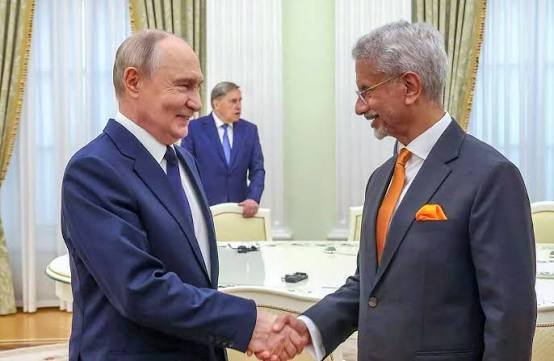
Two noteworthy events this past week spell out how India is now assessing the global context in which it operates. In Beijing, India’s National Security Advisor, Ajit Doval, met China’s Vice President Han Zhang, and Foreign Minister Want Yi. In Moscow, Foreign Minister S. Jaishankar met Russia’s President Vladimir Putin and First Deputy Prime Minister Denis Manturov.

Several significant recent events are spelling out the changes to the context. The emerging limits to US power are gradually coming to the surface in the Middle East, and within the American continent itself.

The new Turkey-Saudi Arabia-Pakistan alliance, the constrained positions of both the UAE and Qatar, the willingness of Oman to discuss the future of the Strait of Hormuz with Iran, the limits to economic sanctions on Iran without China’s acquiescence, and the inability to contain the Russia-Ukraine war – all must now be read in conjunction with the Canadian move to step away from trade discussions and slap counter tariffs on the US.

Assessed individually, these do not signal any definitive end to Washington’s power. Collectively, they mark ominous moments.

If the direction of the statements emerging from Doval’s Beijing’s talks was about building “normalcy” and a long-term strategic outlook for the India-China relationship, the talks in Russia were about optimizing an already strong relationship even in the face of US pressure.

From an Indian perspective, the message that comes through is that India is actively assessing a changing distribution of power globally and adjusting its priorities, capabilities, and relationships accordingly.

Rather than tying its fate to a single superpower, New Delhi is actively navigating a series of overlapping strategic partnerships – conceptualized as flexible parabolas of security and interest – to secure its national sovereignty and economic future.

As China extends its revisionist muscle across the Sub-continent and the South and East China Seas, India is finding common ground with Tokyo and Canberra, expanding mutual logistics access, swapping critical maritime tracking data and hardening regional supply chains.

Japan underpins this arc by funnelling high-tech defence and industrial investments into India, while Australia secures vital pipelines for critical minerals and energy alternatives.

Crucially, this alignment also forms the bedrock of the Quad, which is at once a strength and a risk, given Trump’s demonstrated inconsistency.

The Russia dilemma

Simultaneously, India retains its highly strategic relationship with Moscow. Recent high-level engagements underscore a bilateral partnership that is demonstrating resilience amid today’s incredibly complex global landscape.

Despite Western sanctions aimed at isolating the Kremlin, India-Russia bilateral trade has continued unabated, driven primarily by India’s purchases of Russian crude oil. India’s calculated engagement with Moscow provides the vital diplomatic breathing room necessary to manage its most volatile and dangerous relationship – the structural rivalry with China.

However, there are risks hovering over the relationship, not all of which originate in Washington or Brussels. Media reports indicate that CIA Director John Ratcliffe’s trip to Moscow last week was about either a highly likely threat to NATO member-states or Vladimir Putin’s use of some kind of nuclear weapon in Ukraine. Either event would bring India’s Russia position under immense pressure.

From a US perspective, as things stand today, this is a relationship that’s not easy to factor in unless Washington’s planners are ready to concede that the globe is now a far more complex system than the unipolar years of recent memory. Washington will also have to concede that its inability to arm Ukraine adequately and put pressure on Putin are the primary reasons why the Russia-Ukraine war persists.

Beyond Ukraine, multiple threads intertwine:

One, US strategic planners will know that if India completely severs its ties with Moscow in the present circumstances, Russia will have little choice but to fall entirely into a subordinate embrace with China. India’s severance will also destabilize the global oil and gas markets. China, however, will continue buying Russian oil and further entrench itself in the Russian economy.

Two, if Washington genuinely wants to cripple Russia’s economy and minimize the emerging complexities of the Russia-Ukraine war or even end the war, the security, economic and military uncertainties arising from Trump’s actions in the Middle East raise major questions over the US ability to exercise global power across multiple geographies and geo-economic dimensions.

Three, by the deepening architecture of the Quad, Washington is conceding that India is a major player to counter China in the Indo-Pacific, diversifying its networks of leverage.

The China thaw

The gradual thaw in India’s relationship with China augurs a new level of predictability and stability – a delicate pursuit of competitive coexistence, designed to lower immediate risks such as a multi-front war on India’s northern frontiers. However, China’s defense links to Pakistan will continue to cause worry.

Yet, any stabilization arises today from India’s and China’s intersecting economic interests rather than newfound geopolitical alignment or real trust. Slower domestic demand, a punishing property sector crisis and rising Western trade barriers are forcing Chinese firms to seek alternative production centres and product markets to diversify their industrial production capacities.

India, with its massive consumer base and expanding manufacturing ecosystem, presents a highly lucrative destination for a Chinese-led iteration of the global value chain diversification strategy. The deep economic fractures emerging in China’s domestic economic structure, coupled with its global constraints, might well transform Beijing’s internal vulnerabilities into a powerful incentive for India’s multi-alignment.

The paradox of this economic reality is that while India fiercely rejects China’s geographic revisionism, its industrial structure is increasingly dependent on Chinese manufacturing might. More concerning than the trade deficit number is the composition of the trade – electronics, machinery, active pharmaceutical ingredients, renewable energy components, etc.

To navigate this vulnerability, India is executing a multi-pronged policy. It is carefully calibrating a relaxation of restrictions on selective Chinese investments where inputs are completely irreplaceable, while aggressively utilizing that temporary space to build up its own domestic capacities.

It’s also focused on deepening its manufacturing and trade alliances with other industrial powers like Japan and the EU. The EU relationship will grow based on changing global economic realities, driven by both Washington and Beijing despite Brussels’s qualms about New Delhi and Moscow, albeit under the shadow of Putin’s threat.

Simultaneously, New Delhi is projecting power into China’s traditional sphere of influence by emerging as a key defense exporter to Southeast Asia, supplying BrahMos missiles to the Philippines, Vietnam and Indonesia to help them diversify their own security dependencies away from Beijing.

An inconsistent Washington

However, this strategy of strategic hedging and multi-alignment is not without risks. The volatile and often incoherent nature of Washington’s trade and foreign policy is the key among these risks.

The passage of aggressive US legislative measures, such as secondary sanctions bills empowering the American presidency to slap crushing tariffs on major importers of Russian energy, potentially brings Washington and New Delhi into direct economic conflict.

The US is also tightening its scrutiny over global supply chains, meaning that any substantial Chinese or EU firm-level participation in Indian manufacturing networks will be tracked intensively by this Trump administration.

If the Trump administration continues to aggressively use coercion to force compliance with its latest whims, it risks accelerating the creation of parallel financial and energy networks entirely outside Washington’s system, a signal that’s emerging from Canadian Prime Minister Mark Carney’s pushback against Washington’s trade policy.

These are developments that would severely test the maturity of Washington’s global strategic partnerships. They will cause dilemmas in New Delhi, too.

However, India’s moves, the changing contours of the Middle East and Carney’s snubs are early signals that an era of uncontested superpower dominance is gradually ending. By positioning itself at the intersection of competing geopolitical arches, New Delhi’s quest for strategic autonomy in a fragmenting world is not about isolating oneself from global rivalries, but rather is about managing inevitable dependencies without singular, dominating alliances.

China shows way in new pharma race: Own meds, don’t just make ’em

0
china-shows-way-in-new-pharma-race:-own-meds,-don’t-just-make-’em
China shows way in new pharma race: Own meds, don’t just make ’em

Pharmaceutical geopolitics is usually mapped through factories. China’s vast pharmaceutical supply chain, India’s strength in low-cost generics and the concentration of patented drug discovery in richer economies have shaped that discussion for years. But that map is becoming incomplete.

Two developments in China this past week point to the next layer of competition. Jiangsu province said it would support drugmakers pursuing overseas acquisitions, licensing and joint development. A day later, Huawei said it planned to deepen work with Chinese pharmaceutical firms on AI-assisted drug development and clinical applications.

The common thread is the capacity to turn molecules, clinical evidence and biological data into intellectual property, regulatory approvals and licensable drug assets. For India, and for African economies trying to build pharmaceutical industries, that distinction matters. China’s recent trajectory suggests that manufacturing is no longer the only route to pharmaceutical power.

China-headquartered sponsors ran 32% of global clinical trials in 2025, up from 2% in 2009, according to an IQVIA report. That measures trials run by Chinese-headquartered sponsors, not all trials physically conducted in China. Even so, it captures a striking shift in who is organizing drug development.

The money is following this shift in pharmaceutical research. Out-licensing deals by companies in Greater China reached a record $137.7 billion in potential headline value in 2025.

The total includes future milestones and royalties, not cash already banked. Yet global companies are plainly paying more attention to Chinese-origin experimental drugs.

Pfizer agreed last year to pay 3SBio $1.25 billion upfront for rights to an experimental cancer drug, with up to $4.8 billion more in milestones.

This May, Bristol Myers Squibb and Hengrui went considerably further, announcing a 13-program collaboration across oncology, hematology and immunology with a potential total value of about $15.2 billion, including $600 million upfront.

The point is not that China has displaced the United States at the top of drug innovation. It has not. Rather, Chinese firms are increasingly originating the assets that move through the pharmaceutical value chain instead of simply manufacturing them.

India’s trial boom is not enough

India is also becoming a larger center for clinical research. WHO data reported by the BMJ show that India accounted for 23% of global trial registrations between January 2024 and June 2025, behind China at 24%. WHO’s latest data also show South-East Asia’s trial numbers rising rapidly, driven largely by India.

The harder question is what India captures from that growth. NITI Aayog estimates that Indian pharmaceutical companies spend about 7% of net sales on research and development, against 15% to 20% for global companies. Indian life-sciences patent filings rose from 440 in 2013 to 3,576 in 2023, while China recorded 61,617 and the US 31,977. NITI still identifies weak R&D intensity as a constraint on India’s entry into biologics, biosimilars and advanced therapies.

A column by the founder of Indian biotech company PopVax and a professor at the Takshashila Institution estimated that India conducts fewer than 40 first-in-human Phase I trials of novel pharmaceuticals each year, compared with more than 1,000 in China and 800 in the US. The figures are estimates rather than official government counts, but they point to an important distinction between hosting clinical research and originating new drugs.

New Delhi knows the problem. Biopharma SHAKTI commits 100 billion rupees ($1.05 billion) over five years to strengthen India’s biopharmaceutical ecosystem, including a network of more than 1,000 accredited clinical-trial sites. Last week, the Health Ministry said industry consultations, training workshops and work on stronger data systems and a site-accreditation framework were already under way.

This infrastructure can help create an Indian innovation ecosystem, or merely make India a more efficient execution layer for somebody else’s. The difference lies in who designs studies, analyses the evidence, owns the investigational asset and negotiates the licence.

Privacy and power are different questions

It is tempting, then, to reduce this contest to a simple proposition: who owns the data owns the medicine. The reality is more complicated. Clinical data do not have a single owner in any straightforward sense.

International Good Clinical Practice rules distinguish source records maintained by investigators and institutions from data reported to sponsors, while placing obligations on both sides to protect participant privacy and preserve data integrity. India’s Digital Personal Data Protection regime, operationalized through new rules in November 2025, strengthens limits around the collection and use of personal information.

These safeguards matter but privacy protection is not the same as economic sovereignty. Protocol design, pooled datasets, biostatistics, regulatory dossiers, patents and licensing rights sit at different points in the chain. A country can protect a participant’s personal information while capturing relatively little of the downstream commercial value.

The strategic question is therefore not simply where data is stored. It is who has the institutions and expertise to turn evidence into a drug asset.

From trial capacity to drug discovery

The more useful test is what participation in global research leaves behind. Does it strengthen domestic science and help local firms turn research into commercially valuable drugs and intellectual property, or does a country remain primarily a source of patients, trial sites and data for innovation systems headquartered elsewhere?

India has shown that it can move up this chain. In 2025, Glenmark’s innovation unit secured a $700 million upfront payment from AbbVie for an experimental cancer therapy, with up to $1.225 billion more in milestones. Indian firms can originate and license high-value assets. The challenge is doing so at scale.

Africa shows what is at stake

The imbalance is sharper in Africa. WHO recorded 822 newly recruiting registered trials in its African Region in 2025, compared with 31,097 in the Western Pacific Region. Africa CDC’s health-sovereignty agenda now places data sovereignty alongside local production, calling for digital health systems anchored in African ownership of data rather than externally controlled platforms.

The answer is not crude data localization. India and African states have more to gain from remaining connected to global research networks. But investment in trial infrastructure should be paired with biostatistics, regulatory science, drug discovery, domestic sponsors and meaningful local access to research data. Partnerships using public institutions should build local scientific leadership rather than treat it as an optional extra.

Factories will remain essential to pharmaceutical security. So will cheap generics. China’s biotech rise, however, shows that a growing share of strategic value lies in the ability to convert research into an asset that somebody else is willing to license.

For the Global South, the next step is not merely to host more trials or manufacture more medicines. It is to capture a larger share of the knowledge and commercial value that clinical research creates.

Naina Sharma is a project associate at the Center of Policy Research and Governance (CPRG).

Türkiye mobilised all resources after passenger ship capsize off Northern Cyprus: President Erdogan

0
turkiye-mobilised-all-resources-after-passenger-ship-capsize-off-northern-cyprus:-president-erdogan
Türkiye mobilised all resources after passenger ship capsize off Northern Cyprus: President Erdogan

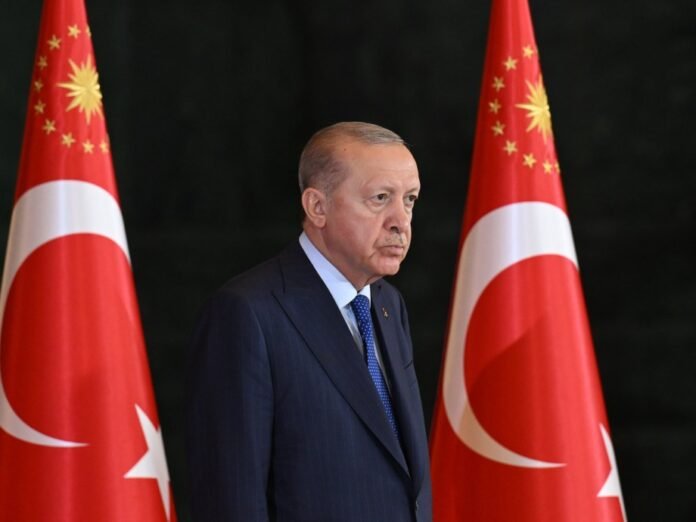
Turkish President Recep Tayyip Erdogan accepts 30 August Victory Day congratulations at the Presidential Complex in Ankara, Turkiye on August 30, 2026. [Mehmet Ali Özcan - Anadolu Agency]

Turkish President Recep Tayyip Erdogan accepts 30 August Victory Day congratulations at the Presidential Complex in Ankara, Turkiye on August 30, 2026. [Mehmet Ali Özcan – Anadolu Agency]

Türkiye has mobilised all available resources after the capsizing of a passenger ship sailing from Kyrenia to Mersin’s Tasucu port, President Recep Tayyip Erdogan said on Sunday, Anadolu reports.

In a statement on Turkish social media platform NSosyal, Erdogan offered his well wishes to the Turkish nation and Turkish Cypriot people over the accident.

“Immediately after the accident, we launched extensive search and rescue operations in cooperation with the authorities of the Turkish Republic of Northern Cyprus,” he said.

“As a result of these efforts, 237 passengers and crew members were rescued safely, while unfortunately seven of our brothers and sisters lost their lives,” Erdogan added.

He said efforts to reach those still missing were continuing uninterrupted, expressing hope for positive news from the search operations.

“We are also closely following this process, for which we have mobilised all the resources of our state,” Erdogan said.

He extended condolences to the families of those who lost their lives and offered his well wishes to those rescued.

Syria Removed From US Terrorism List: What’s Next? 

0
syria-removed-from-us-terrorism-list:-what’s-next? 
Syria Removed From US Terrorism List: What’s Next? 


The question is no longer whether the designation has been lifted, but whether its removal will translate into banks willing to deal with Syria, easier financial transfers, foreign investment, and financing for reconstruction

[DAMASCUS] The United States announced on Aug. 24 that it was rescinding Syria’s designation as a State Sponsor of Terrorism, ending a status that had been in place since 1979 and removing an additional layer of legal restrictions that had shaped the country’s relationship with the international financial and commercial system for decades.   

The move opened a new chapter for the Syrian economy—but it does not mean that money and investment will flow into the country overnight.  

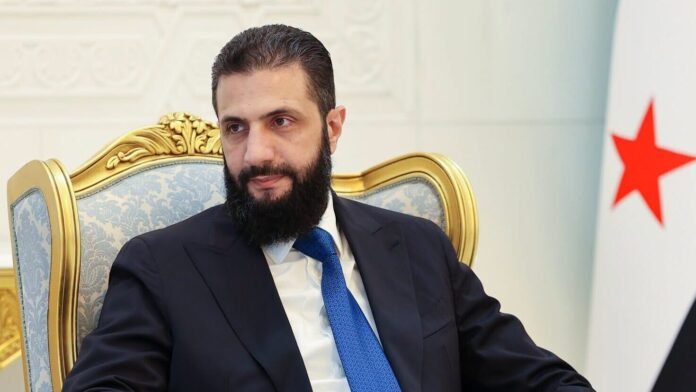
This decision is part of a broader US effort to ease restrictions on Syria following the fall of the former government. The United States also delisted Hay’at Tahrir al-Sham, the group led by President Ahmed al-Sharaa before he took office, as a Specially Designated Global Terrorist organization in the same announcement. Washington ended its comprehensive Syria sanctions program in 2025, and the Caesar Act was repealed in December of the same year.

The significance of the latest decision, therefore, does not lie in lifting all remaining sanctions on Syria at once, but in removing a legal and political designation that had affected foreign assistance, certain export controls, financial transactions, and the US position on financing for Syria through international financial institutions.  

For Syrians and investors, however, the more important question is no longer whether the designation has been lifted, but whether its removal will translate into banks willing to deal with Syria, easier financial transfers, foreign investment, and financing for reconstruction.  

Syria was placed on the US list of State Sponsors of Terrorism on Dec. 29, 1979, and was among the countries originally designated when the list was established.  

Over the following decades, Washington linked Syria’s continued presence on the list to the Syrian government’s support for groups the United States designated as terrorist organizations, the presence of leaders and members of Palestinian organizations in Damascus, and, later, Syria’s relations with and support for Hezbollah and Iran.  

The designation carried a range of legal restrictions, including bans on US arms exports and sales, controls on certain dual-use goods, restrictions on US foreign assistance, and financial constraints, as well as US opposition to certain forms of financing for Syria through international financial institutions.  

The US sanctions architecture targeting Damascus gradually expanded far beyond the State Sponsor of Terrorism designation.  

In 2004, additional restrictions took effect under the Syria Accountability and Lebanese Sovereignty Restoration Act, targeting exports and dealings with Damascus over Syrian policies in Lebanon and its support for groups designated by Washington as terrorist organizations.  

After protests against Bashar Assad’s government erupted in 2011, Washington imposed successive rounds of sanctions targeting Syrian officials and entities over the repression of protesters and human rights abuses.  

Pressure intensified again when the Caesar Syria Civilian Protection Act took effect in 2020. The law authorized sanctions against Syrian and foreign parties providing material support to the Assad government and, alongside earlier measures, contributed to Syria’s increasing isolation from the international financial and investment system.  

Syria’s removal from the State Sponsors of Terrorism list in 2026 therefore closes the oldest layer of a US restrictions framework dating back to 1979, while forming part of a broader process of dismantling restrictions accumulated over decades.  

Saudi-Syrian businessman Nabil al-Mazloum told The Media Line that the decision changes how investors view the Syrian market, even if it does not make investing in the country risk-free.  

Removing Syria from the State Sponsors of Terrorism list does not mean the market became safe overnight, but it fundamentally changes the way we look at it

“For us as businesspeople, removing Syria from the State Sponsors of Terrorism list does not mean the market became safe overnight, but it fundamentally changes the way we look at it,” al-Mazloum said.  

He said the obstacle in recent years had not simply been a lack of investment opportunities, but also difficulties with transferring money, dealing with banks, obtaining financing, and ensuring that a transaction would not become a legal risk due to sanctions.  

“When a barrier of this magnitude is removed, an investor can move from asking, ‘Can I even enter Syria in the first place?’ to asking a completely different question: ‘Where should I invest, with whom, and what return can I achieve?’” he said.  

Syria needs substantial amounts of capital to rebuild sectors severely damaged during years of war, from electricity, energy, transportation, and infrastructure to industry, housing, services, and banking.  

Al-Mazloum said the scale of the country’s needs creates significant investment opportunities but stressed that US political decisions alone will not be enough to attract capital.  

“Capital does not move on emotion or political decisions alone. Investors want to see banks capable of processing transfers, stable laws, enforceable contracts, guarantees protecting property rights, and the ability to repatriate profits,” he said.  

Investors who enter the Syrian market early may encounter greater opportunities, al-Mazloum added, but will also assume greater risks than those who wait until the market’s rules become clearer.  

The banking sector may prove to be one of the clearest indicators of whether the shift in US policy moves from the political sphere into the real economy. Even when certain transactions were legally permitted during earlier periods, years of sanctions and restrictions led many international financial institutions to avoid dealings with Syria due to legal risks and compliance costs.  

Anas Bitar, a businessman working in real estate development and money transfers in Damascus, told The Media Line that removing the designation carries economic and banking significance that goes beyond its political implications.  

He said Syria’s presence on the list had increased the perceived risks associated with virtually any financial dealings involving the country, prompting banks and international institutions to stay away from the Syrian market.  

Bitar said removing the designation could gradually ease that caution, open the way for the restoration of banking relationships, facilitate transfers and trade financing, and signal to foreign investors that dealing with Syria no longer carries the same level of legal and political risk.  

The effects, however, will not be immediate, he said. “International banks move very cautiously and need time to reassess risks, update their compliance policies, and verify which entities and individuals remain subject to sanctions.”   

One of the most important potential developments would be the restoration of correspondent banking relationships between Syrian banks and foreign financial institutions. Such relationships are essential for international transfers, trade financing, and the normal processing of cross-border payments.  

“The real indicator of whether this step succeeds will be seeing foreign banks restore correspondent relationships with Syrian banks, dollar and euro transfers taking place normally, and international companies able to finance their investments and repatriate their profits,” Bitar said. “Only then can we say that removing the designation has moved from a political decision to a tangible economic impact.”  

The real indicator of whether this step succeeds will be seeing foreign banks restore correspondent relationships with Syrian banks

Despite the significance of the decision, Syria’s removal from the State Sponsors of Terrorism list does not mean that all US sanctions connected to the country have ended.  

The United States continues to retain authorities allowing targeted sanctions against Assad and his associates, human rights abusers, those involved in the Captagon trade, and certain actors linked to destabilizing activities, terrorism, or proliferation.  

Syrian legal expert Fadi al-Hawari told The Media Line that distinguishing between removing the designation of the state itself and lifting all sanctions is essential to understanding the decision’s actual consequences.  

“From a legal perspective, removing Syria from the State Sponsors of Terrorism list does not mean that all US sanctions and restrictions related to Syria automatically disappear, because the designation represents a specific legal framework, while other measures and sanctions are based on different laws and executive orders and may target specific individuals or entities,” al-Hawari said.  

In his view, Syria’s removal from the list eliminates “an important legal layer of restrictions that surrounded its foreign relations for decades” and provides governments, institutions, and companies with a clearer legal basis for reassessing their dealings with the country.  

Reducing legal risks could open the door to greater participation by foreign companies in Syria’s reconstruction, but it does not resolve domestic problems that could continue to deter investors from entering the market.  

Foreign banks and companies will also need to continue screening the parties with which they do business to avoid transactions involving individuals or entities that remain under US sanctions.  

Al-Hawari said this will continue to influence decisions by international institutions because companies and banks consider not only whether a transaction is currently permitted but also the risk of future sanctions or legal exposure.  

The decision also carries a political benefit beyond its economic implications. Syria’s removal from a list it had been on since 1979 eliminates one of the most prominent symbols of the country’s decades-long isolation and opens the way for rebuilding its relations with the United States and international institutions on a different footing.  

Al-Hawari said the durability of the opening will depend on the Syrian state’s conduct and international commitments, as well as the ability of Damascus and Washington to build a political and legal framework that gives investors and international institutions confidence that the new course “is not temporary and subject to rapid reversal.”  

For Syria, then, the greatest value of the decision may not be an immediate influx of capital, but rather the removal of one of the barriers that for years kept the country outside the normal calculations of banks, companies, and investors.  

The real test will come later: when a foreign company attempts to transfer millions of dollars into a project in Syria, when a Syrian bank seeks to restore a correspondent banking relationship in New York or Europe, or when an international investor decides whether the opportunity presented by a market requiring extensive reconstruction is worth the risk.  

Only then will it become clear whether Syria’s removal from the State Sponsors of Terrorism list merely closed a legal and political chapter—or whether it helped open a new economic one.  



A 12TB Steam “teraleak” spills more than a decade of lost PC gaming history

0
a-12tb-steam-“teraleak”-spills-more-than-a-decade-of-lost-pc-gaming-history
A 12TB Steam “teraleak” spills more than a decade of lost PC gaming history

Here at Ars, we’re intimately familiar with data leaks surrounding Valve’s games, hardware, and the workings of Steam itself. But nothing could have prepared us for this weekend’s “terarelease” encompassing more than 12TB of content related to seemingly every title available on Steam between 2003 to 2013.

What’s being sold as an “as-complete-as-possible … content server dump” of Steam’s defunct “Steam2” server architecture from that time period is now circulating around via a BitTorrent tracker that Valve seems unlikely to ever completely purge from the Internet. The massive collection includes thousands of “depots” representing what seems to be every version of every game uploaded to those old Steam2 servers. That includes public release builds, of course, but in many cases also covers previously unseen pre-release, prototype, and playtest versions of popular titles published by Valve and third-party Steam publishers.

Steam2: Electric Boogaloo

The reason this weekend’s leaked content cuts off abruptly in 2013 is because that’s when Valve updated its content distribution system from “Steam2” to the current SteamPipe system. In moving from a proprietary file distribution format to standard HTTP file trees, the new system removed various update approval bottlenecks on Valve’s end and streamlined update and patch downloads so they only reflected file differentials.

Publicly accessible early versions of some games released before this SteamPipe transition had been considered lost content by archivists, no longer accessible from Valve itself and living on only as local downloads on aging machines. Apparently all that content wasn’t as lost as many thought, though. Longtime Valve watcher and data miner Gabe Follower (previously) wrote on social media this weekend that he had “verified that everything in Steam2 Teraleak was obtained via a publicly accessible [API] endpoint. It’s Valve’s fault…”

Spanish-language Valve streamer and analyst Scolcer also said on social media (via machine translation) that the teraleak was “obtained from a site that was 100% accessible to the public. It was there for everyone to download. No passwords. Nothing. Hidden in plain sight, but with no protection whatsoever.”

Gabe Follower walks us through some of what’s been found in the teraleak thus far.

What’s unclear right now if that API and publicly available Steam2 server content were accessed recently or if this weekend’s leak represents content that was privately archived before the 2013 server transition and is just now being made public. “It could more-so be a collection of different people that knew about it and accumulated whatever people had downloaded back then into this massive archive,” said The One Epicplayer, a moderator on the Valve Cut Content (VCC) Discord, which has long followed Valve betas and leaks.

“I haven’t been filled in on the full details but my suspicion is that these depot [files] were downloaded a long time ago and sat in a private collection,” CrazyBubba, another VCC Discord moderator, told Ars. “There were a lot of leaks a few years back and many folks hoarded files for years. … historically there have been issues with people lording content over other members.”

A readme file included with the leak offers “warm n good wishes to all hoarders who had stuff from this collection <3″ and encourages users to mirror and share it as widely as possible. On the VVC Discord, a user purporting to be the original uploader of the teraleak (who offered screenshots of a 22TB server upload log among their evidence) wrote that “getting this out really took a significant amount of effort from me and I would like it if it didn’t go to waste.”

Now you’re thinking with old Portals

Regardless of the hows and whys of the leak, eager gaming communities have wasted no time in digging through the “teraleak” in search of cut content and playable early versions of many now-classic PC games.

Multiple playable pre-release versions of Portal 2 contain some of the most intriguing cut content discovered so far. Already, teraleak diggers are finding deleted sequences including new dialogue from GLaDOS and Aperture CEO Cave Johnson’s consciousness trapped in a cube (“My life is torture, please kill me,” a scratch track version of Johnson says in cut dialogue that was previously seen in a text file included with the game). The early development version also apparently includes fun features like perfectly circular portals, an adhesive gel and slow-motion guns, and an interesting looking weapon model that was previously seen in official Valve documentary footage of the unreleased Half-Life 2: Episode 3.

“My life is torture, please kill me”

While there are no playable “Half-Life 3 confirmed” depots included in the leak, data trawlers have reportedly found some “ep3” data files seemingly related to the perpetually delayed expansion. Valve fans are also digging in to early betas of Left 4 Dead 2 and CS: GO featuring never-before-seen cut content, and some intriguing models and graphics related to F-Stop, the cancelled, camera-based game originally planned as a sequel to Portal.

Aside from Valve’s own published games, the teraleak also includes myriad early versions of titles from the many third-party publishers that were on Steam before 2013. Betas and prototypes for games ranging from Spore and Dragon Age: Origins to Batman: Arkham Asylum, Sonic the Hedgehog 4, and Spec Ops: The Line are among those that data miners have already identified for further study. And while that list won’t contain the early versions of those games that stayed on developers’ local computers and office networks, the playtest versions that were often uploaded to Valve’s servers near release often still contain some interesting content.

Even though this weekend’s leak doesn’t contain any games released in the last 13 years, the major publishers affected likely still won’t be too happy that Valve’s lax security apparently led to their previously unreleased early work product leaking out to the public (not to mention the piracy implications of releasing such a complete, if outdated, collection of Steam content). The teraleak highlights how Valve’s own servers now serve as an extremely high-profile single point of failure for the security of a massive chunk of PC game development history.

Some are worried about the legal implications of handling such large quantities of previously private game builds as well. “That archive contains a significant amount of 3rd party content, meaning we are dealing with a dramatically more dangerous situation than if it were just some Valve builds,” longtime Valve watcher Tyler McVicker wrote on social media. “Don’t touch it, it’s HOT. Take it from someone who got in trouble for beta stuff in the past.”

Six years ago, a highly publicized “gigaleak” of Nintendo’s internal development files cast a spotlight on countless previously unknown corners of the company’s history. This weekend’s leak seems poised to do the same for huge portions of PC gaming history.

Shania Twain Reveals Shocking Childhood Trauma

0
shania-twain-reveals-shocking-childhood-trauma
Shania Twain Reveals Shocking Childhood Trauma


Shania Twain may be one of country music’s biggest success stories, but behind the glamorous career, record-breaking sales and packed arenas is a life marked by poverty, devastating loss, betrayal and frightening childhood trauma.

The 60-year-old superstar has sold more than 85 million records worldwide, won five Grammy Awards and scored 16 Top 10 hits since her blockbuster 1995 album The Woman in Me launched her into superstardom.

Today, Twain is celebrated as a country music legend and has been praised by stars including Taylor Swift, Harry Styles, Kacey Musgraves and Post Malone.

But getting there came at an enormous personal cost.

Twain is now revisiting some of the darkest moments of her life as she pours her past into her deeply personal new album, Little Miss Twain.

“Shania’s a positive person by nature and she tries not to dwell on the past, but she’s only human,” a source told RadarOnline.com. “She’s been through a lot, and it’s left her with some serious scars.”

Twain’s difficult childhood began long before she became famous.

Growing up in Timmins, Ontario, Canada, she started singing in local bars when she was just 8 years old. Her parents pushed her to perform in an effort to bring desperately needed money into the household.

Twain has admitted she never wanted that life as a child.

“My mother really wanted me to be on the stage,” she previously told The New York Times. “So she got me up there very, very young. Too young.”

Her mother would sometimes wake her late at night so she could perform in bars after last call, when children were permitted inside.

Twain has described herself as a tomboy who would have rather played football with her brothers than entertain strangers.

But her childhood struggles went far beyond unwanted performances.

The singer has previously spoken about being inappropriately touched by a neighbor and witnessing horrifying violence inside her home.

She has recalled seeing her stepfather attack her mother, including smashing her head against a toilet and attempting to drown her.

Then, when Twain was only 22, tragedy struck again.

Her mother and stepfather were killed in a head-on car crash in 1987.

Twain had been trying to launch a singing career in Toronto, but suddenly returned home and became responsible for her three younger siblings.

“I fell apart, totally,” she said during a 2023 appearance on Hoda Kotb’s Making Space podcast. “I lost a very important foundation.”

Money was another constant struggle.

Long before Twain was reportedly worth hundreds of millions of dollars, her family sometimes didn’t have enough money for basic necessities.

In her 2011 memoir, From This Moment On, Twain recalled being unable to afford shampoo and eating simple meals made from boiled milk, bread and sugar.

“There were really difficult days,” a source said.

Those years of poverty reportedly helped fuel Twain’s relentless work ethic once success finally arrived.

“It taught her the value of money and the importance of working hard and investing wisely,” the source said.

But fame didn’t protect her from more heartbreak.

Twain’s 14-year marriage to music producer Robert “Mutt” Lange spectacularly collapsed after she learned he had been having an affair with her close friend, Marie-Anne Thiébaud.

Twain and Lange, who share son Eja, divorced in 2008.

The betrayal left the singer shattered.

“I was uncontrollably fragile,” Twain later admitted on the Armchair Expert podcast.

In a stunning twist worthy of one of her own country songs, Twain eventually fell in love with Marie-Anne’s former husband, Frédéric Thiébaud.

The two married in 2011.

Twain also faced a terrifying health battle that threatened the one thing responsible for her career — her voice.

After contracting Lyme disease in 2003, Twain suffered nerve damage affecting her vocal cords.

She eventually underwent surgeries in 2011 and 2018 in an effort to save her ability to sing.

“Some of Shania’s hardships have been especially bruising,” a source said, pointing to the singer’s health struggles.

Now, Twain appears ready to confront all of it through her music.

Little Miss Twain has reportedly become one of the most personal projects of her career, allowing her to examine the childhood pain, family tragedy, betrayal and health scares she endured on the road to becoming a global superstar.

“Shania’s very proud of this album,” the source said. “It’s certainly the most meaningful album she’s ever produced.”

For Twain, getting older has also brought a new willingness to accept her past instead of running from it.

“Time definitely allows — or has allowed me … to come to terms with a lot of things,” she told Billboard in July.

“And we learn to … enjoy our truth. It brings me a lot of joy to share that part of me.”

After decades of turning heartbreak into hit songs, Twain is finally telling the story behind the woman who survived it all.

ANALYSIS – The Plan for Post-Hamas Gaza Has a Palestinian Authority Problem

0
analysis-–-the-plan-for-post-hamas-gaza-has-a-palestinian-authority-problem
ANALYSIS – The Plan for Post-Hamas Gaza Has a Palestinian Authority Problem


While Israel may accept an arrangement, provided Hamas fully disarms, sources told TML that the technocratic government, even if not in name, is effectively the Palestinian Authority

Any agreement that relies on Israel working with the National Committee for the Administration of Gaza (NCAG), the Palestinian technocratic government, is likely doomed to fail, according to two Palestinian affairs analysts who spoke with The Media Line as decisions are being made about the next steps for governing and disarming the Gaza Strip.

Earlier this month, as US special envoy Jared Kushner was in the country, it was reported that the United States and Israel had reached an understanding that Hamas’ disarmament would involve transferring weapons not only to the NCAG, as originally envisioned, but also to the International Stabilization Force (ISF). The development came after Israel rejected an arrangement that would have placed the weapons solely under the NCAG’s control.  

Under the revised plan, according to media reports, US Maj. Gen. Jasper Jeffers, who heads the ISF, would oversee the transfer of the weapons. 

While Israel may accept such an arrangement, provided Hamas fully disarms before the next phase of the agreement moves forward, sources told The Media Line that the technocratic government, even if not in name, is effectively the Palestinian Authority. They argue that the PA lacks credibility in Gaza, making any disarmament arrangement that depends on the NCAG unlikely to succeed. 

The Palestinian Authority has not changed, according to Arab-Israeli analyst Khaled Abu Toameh. He told The Media Line that the PA is “simply being more careful” in its rhetoric because “the Americans, the Europeans, and the rest of the international community are watching them closely. So they are cautious. They’re being very careful. They’re keeping a low profile. They claim they are embarking on reforms… They called new elections. But the Palestinian Authority remains the Palestinian Authority, based on corruption, bad governance, mismanagement, and nepotism. Nothing has really changed.”

The Americans, the Europeans, and the rest of the international community are watching them closely. So they are cautious. They’re being very careful.

At the end of July, Hamas agreed to move forward with the Board of Peace roadmap, which called for Israel to allow aid into the Strip and withdraw troops as Hamas disarmed. However, Israel backtracked after seeing the final version of the roadmap presented by the United States. Under that plan, Hamas would surrender its heavy weapons, although the term was not clearly defined, while its light weapons would be administered and monitored by the NCAG. According to analysts, the NCAG’s connection to the PA is structured as a near-temporary stewardship. 

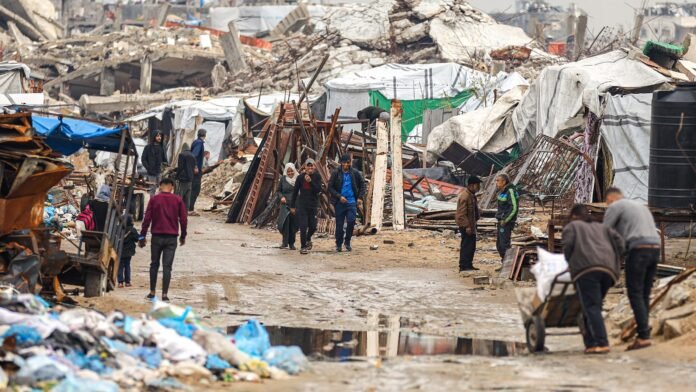
For now, because Hamas has not disarmed, the Palestinian committee has yet to begin governing the Strip. 

The NCAG is intended to operate temporarily in Gaza, restoring basic public services and infrastructure before eventually transferring governance to the PA once the authority completes reforms required by the United States. However, analysts told The Media Line that many NCAG members, including its chief commissioner, have close ties to the PA even if they are not currently PA officials. 

Abu Toameh and Maurice Hirsch, director of the Initiative for Palestinian Authority Accountability and Reform at the Jerusalem Center for Public Affairs, said the Palestinian Authority has yet to undertake meaningful reforms. 

Only a few months ago, the US State Department reported that Washington could not transfer aid to the PA because it had not ended its so-called pay-for-slay payments or public statements supporting terrorism, despite claiming that it had done so. 

“The PA continues to provide a system of compensation in support of terrorism through new mechanisms and under a different name,” the State Department reported in April 2026. 

A few months later, Hirsch explained, the PA established a new body to review eligibility for receiving payments, creating the appearance that new criteria had been introduced and that terrorists would no longer receive funds. But Hirsch said those changes should not be taken at face value. 

“They’re never gonna stop paying salaries to terrorists because that’s their commitment to their people. They’ve dug that hole so deep,” Hirsch told The Media Line. “There is no Palestinian leader who would be able to say he is no longer going to support the terrorists. That boat has sailed. Now the question is only how do you most effectively hide these payments.” 

Hirsch said the world will know that payments to terrorists have stopped when tens of thousands of Palestinians take to the streets complaining that they are no longer receiving money. 

“It’s all quiet,” Hirsch said. “In what world does anyone think payments have stopped? We’ll know the end of pay-for-slay when we see mass demonstrations on the streets of Ramallah, Tulkarem, Jenin and Shechem because the ‘freedom fighters’ are no longer getting paid.” 

He said he does not believe the Palestinian Authority under its current leadership should be trusted, arguing that one does not have to look far to find evidence that the PA is not promoting peace and coexistence but rather terrorism. 

He cited what he described as a basic statistical example. Under the Oslo Accords, Hirsch said, the PA was supposed to employ a 12,000-member civilian police force. Today, he said, it has a force of roughly 70,000. 

“Who are they fighting or planning to fight?” Hirsch asked. “When you look at everything, including the incitement in the school curriculum, there is no indication that this is a partner that Israel or the world can trust.” 

Abu Toameh expressed similar concerns, noting that the Trump administration’s original framework for the next phase in Gaza called for the PA to undergo reforms. If the administration still wants those changes, he said, it should demand reform, transparency, and accountability from the Palestinian Authority and then verify whether they are actually taking place. 

“Go to Ramallah, go to Abu Mazen [PA President Mahmoud Abbas] and check with him and ask him, ‘What have you done so far? We want to see tangible results,’” Abu Toameh contended. “If you’re not, if you’re just demanding, making demands that you’re not following up, then you are just revolving in a vicious cycle.” 

He also called on journalists covering the Palestinian Authority to expose what it is doing. 

Abu Toameh added that anyone who believes the PA will fight Hamas is returning to an approach tried in the 1990s and early 2000s, when the expectation was that the authority would confront Hamas and Palestinian Islamic Jihad. That approach, he said, failed. 

For Abu Toameh, that history raises a fundamental question about the plans now being drawn up for Gaza: If the Palestinian Authority could not fulfill those expectations in the past and has yet to demonstrate meaningful reform, why should Israel or the international community expect a different outcome this time? 

Don’t rely on the Palestinian Authority to deliver. The Palestinian Authority has lost its credibility.

“The Palestinian Authority is not qualified and is not capable of carrying out its duties and certainly not according to the roadmap, not according to Trump’s 20-point plan, and not even according to its own obligations under the Oslo Accords,” Abu Toameh stressed. “Don’t rely on the Palestinian Authority to deliver. The Palestinian Authority has lost its credibility. It’s not only lying to the international community, but it’s lying to its own people.” 


Islamabad, Riyadh agree to boost Pakistani agriculture and food exports to $3B in 2 years

0
islamabad,-riyadh-agree-to-boost-pakistani-agriculture-and-food-exports-to-$3b-in-2-years
Islamabad, Riyadh agree to boost Pakistani agriculture and food exports to $3B in 2 years

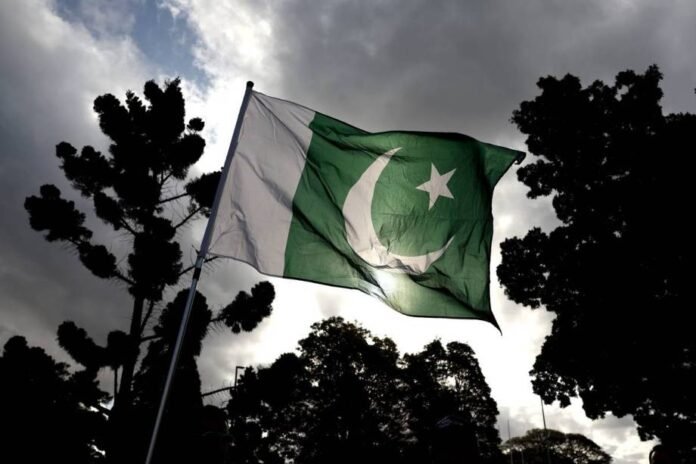
Pakistan and Saudi Arabia have agreed to boost Pakistani agricultural and food exports to the oil-rich kingdom up to $3 billion within the next two years, a joint statement on Sunday, Anadolu reports.

According to the statement, shared by the prime minister’s office, the agreement was reached after talks between Saudi Arabia’s Agriculture Ministry and Pakistan’s Food Security Ministry, at the initiative of Prime Minister Shehbaz Sharif.

The development comes after a Saudi delegation led by Environment, Water and Agriculture Minister Abdulrahman A. Alfadley visited Islamabad last week. The Pakistani side was led by National Food Security and Research Minister Rana Tanvir Hussain.

Sharif also met the Saudi delegation and discussed potential areas of bilateral cooperation.

The two sides identified rice, red meat, fruits and fruit concentrates, green fodder and water-efficient agricultural technologies as priority areas for expanding trade and investment, particularly through cooperation with Saudi Arabia’s private sector.

Pakistan supplied about 169,000 tons of rice worth $163 million to Saudi Arabia in 2025. The Saudi side expressed interest in further increasing bilateral trade of rice.

The two sides also reviewed Pakistan’s annual exports of around 30,000 tons of red meat valued at approximately $167 million. The Saudi side expressed interest in gradually doubling its imports of Pakistani red meat.

Green fodder was also identified as a promising sector for expanding trade and establishing long-term supply partnerships.

The two sides reviewed investment proposals from Pakistan’s private sector in livestock, agri-food processing and the rice value chain, agreeing to maintain coordination to advance the projects.

Both countries reaffirmed their longstanding strategic and fraternal ties and highlighted the alignment between Saudi Arabia’s Vision 2030 food-security priorities and Pakistan’s agricultural export potential.

Islamabad and Riyadh have increased bilaterral defense and economic cooperation in recent years. The two countries signed a a strategic mutual defense agreement last year, and a Mecca Joint Defense Agreement along with Turkiye earlier this month.

Why it matters that President Trump just dialed into a NASA news conference

0
why-it-matters-that-president-trump-just-dialed-into-a-nasa-news-conference
Why it matters that President Trump just dialed into a NASA news conference

As is standard procedure for major NASA missions, the US space agency held a post-launch news conference on Sunday morning at Kennedy Space Center in Florida to provide information about how the Nancy Grace Roman Space Telescope was faring during its initial maneuvers.

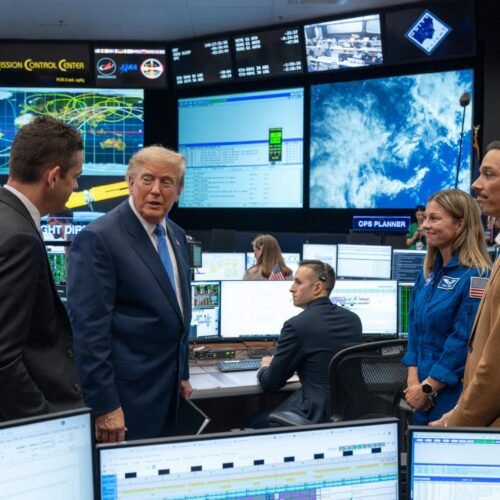
What was not standard, however, is what happened in the middle of the news conference. A little less than half an hour in, NASA Administrator Jared Isaacman looked down at his mobile phone, and then stood up and walked away from the dais where he had been seated behind a table along with other NASA officials. He briefly left the room.

Isaacman returned about a minute later, phone in hand, apologizing for interrupting NASA’s chief of science, Nicky Fox, as she was speaking about the mission. “The President of the United States of America would like to address and congratulate everyone on this mission,” Isaacman said, returning to his seat.

In an unusual moment, Trump then spoke through Isaacman’s phone to the assembled reporters and NASA officials. “I just want to thank everybody, and congratulate you. Boy, it looked beautiful on television,” Trump said of the Roman space telescope launch. “Jared is doing a fantastic job, you are doing a fantastic job, and I’m supplying you all that money.”

What is going on here?

So what to make of this? Presidents, historically, do not call into a NASA news conference. In truth, presidents do not spend much time thinking about space in general, or NASA in particular. This is changing with the increasing importance of space from a military standpoint, but for most presidents civil space lies fairly low on the priority list. Presidents call astronauts when they’re orbiting the Moon; they don’t dial into post-launch news conferences.

But Trump is clearly having a NASA moment. On Friday he spent several hours at Johnson Space Center in Houston, where he awarded the crew of Artemis II the Congressional Space Medal of Honor and then announced plans for a United States Space Academy. Then, over the weekend, he became enraptured by the prospect of launching the Nancy Grace Roman Space Telescope, NASA’s next great space-based observatory.

At every turn Trump has offered praise for Isaacman, a businessman and private astronaut who has been seeking to reform NASA for the modern era of spaceflight. The warm relationship is all the more surprising because it was only a little more than a year ago that Trump pulled Isaacman’s nomination to lead NASA, citing the lack of “complete alignment” with the America First agenda. Isaacman, a political moderate who leans Republican, had donated to some Democratic candidates in the past.

But late last year Trump had a change of heart and reinstated his nomination.

“With Jared, I have to tell you, everybody wanted him,” Trump said Friday, in Houston. “I got a lot of calls from Republicans and Democrats, something that doesn’t happen very often, and the people just said, “He’s just the best.’ There was no competition. And he’s turned out to be better than we even thought possible, right? Even better. So we’re lucky to have Jared.”

Isaacman has spent a lot of the last 12 months developing political relationships with people in the White House and Congress, on both sides of the aisle. In public statements he has broadly supported the Trump White House. But perhaps most importantly he has delivered wins for an Administration that has been swamped by a series of self-owns, including a deeply unpopular war in Iran, inflation, multiple scandals, and other setbacks. With NASA, Trump has been able to bask in the glow of the wildly successful Artemis II mission and now the launch of the Roman space telescope.

Striking while the iron is hot

Isaacman is clearly seeking to seize the moment and parley the President’s interest in NASA into future success for the space agency.

Scientists may scratch their heads as they watch Trump take credit for providing “all that money” for NASA when his first budget for the space agency sought to slash science funding by 50 percent, and cut it overall by 25 percent. The fiscal year 2026 budget proposal even sought to cancel the Roman space telescope. Now, Trump is trying to take credit for its success?

The reality is a little more nuanced. Trump likely does not comb through his budget requests line-by-line, especially for a civil space agency. Rather the cuts sought in fiscal year 2026 and 2027 (which have been, or will be largely repudiated by Congress) in the administration’s budget were driven by Trump’s head of the White House Office of Management and Budget leader Russ Vought, who has been waging a war on US government funding of science—with Trump’s backing.

Although he was certainly responsible for the cuts, it’s unclear how much Trump was interested in their details when they were proposed. But now, at least on a temporary basis, NASA has caught Trump’s interest. Sources said Isaacman has spent a lot of time with the President over the last three days, making the case for future science missions as well as the Artemis Program.

The question is whether this interest will be reflected in the budget request for fiscal year 2028, which is now in the initial stages of preparation. Will Trump, who frequently changes his mind on issues, stay invested in NASA?

NASA’s science programs could use some help. The agency has one more major science mission coming up, the launch of Dragonfly to Titan in 2028. After that the science cupboard looks more threadbare, and NASA could use some major new mission starts. And of course the race back to the Moon continues to heat up with China. If the United States is serious about landing humans there before the end of this decade the space agency could use more resources to make that a reality.

0FansLike
0FollowersFollow
0FollowersFollow
0SubscribersSubscribe
- Advertisement -
Google search engine

Recent Posts