So much solar: Digging into the list of every US power plant that went online this year
It’s been a wild first half of the year in the US power sector, with announcements of gigantic natural gas power plants and some long-awaited renewable energy projects coming online.
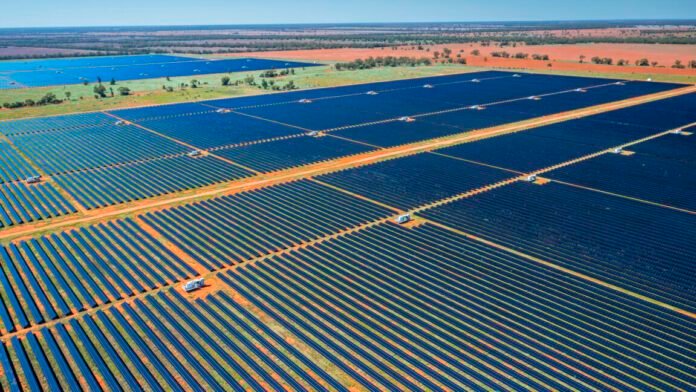
At times of rapid change, forecasting is difficult. So I feel a measure of comfort focusing on something concrete like the list of 368 utility-scale plants that began operation from January to June, according to data from the US Energy Information Administration. The group is dominated by utility-scale solar.
This is a top-heavy list, led by SunZia Wind South and SunZia Wind North in New Mexico, which went online this spring and are the largest wind farms in the country, with a combined generating capacity of 3,650 megawatts. SunZia has been in the works for about a decade and arrives at a time when US onshore wind power development has dwindled for a host of reasons related to regulations and public opinion.
In other words, the SunZia is not indicative of an onshore wind-energy boom. It is more like an echo from a past boom.
Next is Trumbull Energy Center in Ohio, a 900-megawatt combined-cycle natural gas plant that is part of an expansion of natural gas power in the PJM Interconnection grid region, which covers parts of the Mid-Atlantic, Midwest and South.
The fourth-largest new power plant—if we’re counting SunZia as two—is Vineyard Wind, the offshore wind project near Massachusetts, which, much like SunZia, has been in development for a long time and whose completion doesn’t reveal much about future trends.
It isn’t until the fifth-largest new plant that we see one that is connected to the broader trend in the data: Green River Energy Center in Utah, with 800 megawatts that includes 400 megawatts of solar and 400 megawatts of batteries.
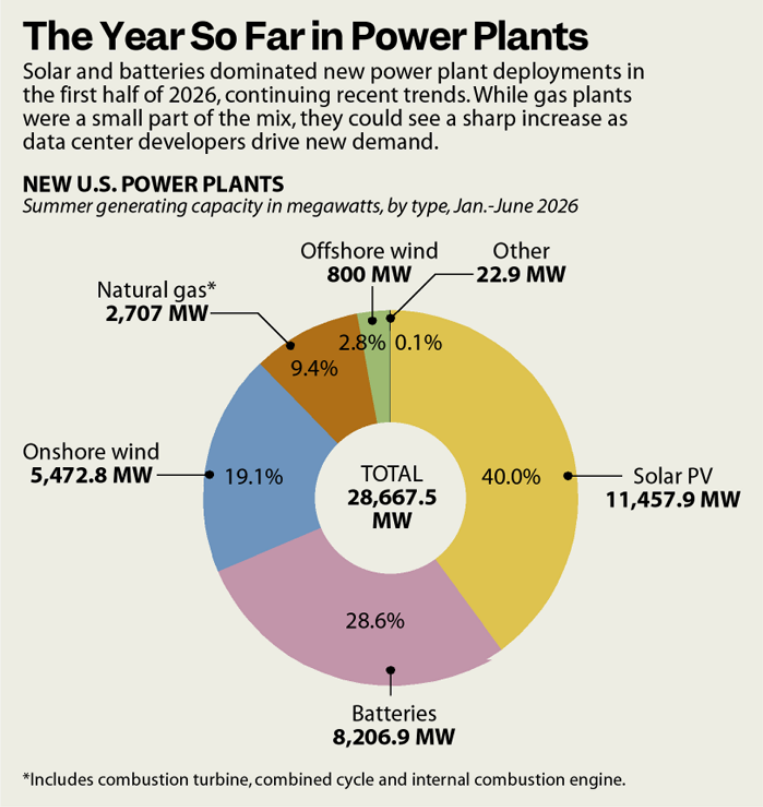
Indeed, the story of power plant completions in the first half of 2026 was mainly about utility-scale solar and batteries.
Utility-scale solar led in the number of projects coming online, with 207, followed by batteries, with 95.
Next were natural gas combustion turbines, with 22, and natural gas internal combustion engines, with 21.
Onshore wind had nine projects.
Combined-cycle natural gas, despite having massive amounts of announced capacity in development, had just 3 projects that went online. The high tide of new gas plants won’t arrive for another few years.
If we look at projects in terms of generating capacity, utility-scale solar led with 11,458 megawatts, followed by batteries, 8,207 megawatts, and then onshore wind, mostly because of the SunZia projects, with 5,473 megawatts.
The three largest types of natural gas plants added a total of 2,707 megawatts of new capacity.
Small-scale solar, including rooftop solar, is not part of this database.
A perpetual caveat: Power plant technologies have important differences to keep in mind when comparing generating capacity. The most obvious one is that solar doesn’t produce power at night. Another is that many gas plants only run a few days or weeks per year, when they’re needed to handle peak demand.
What do these numbers tell us? I asked Eric Gimon, a senior fellow at Energy Innovation, a San Francisco-based think tank.
Gimon explained that the bulk of new projects are small and mid-size utility-scale solar. They are not attention-grabbing. But they’re almost everywhere. Many of the solar projects are paired with batteries.
“These kinds of smaller-size projects are just easier to build, and the site possibilities are much more diverse and easy to find,” he said.
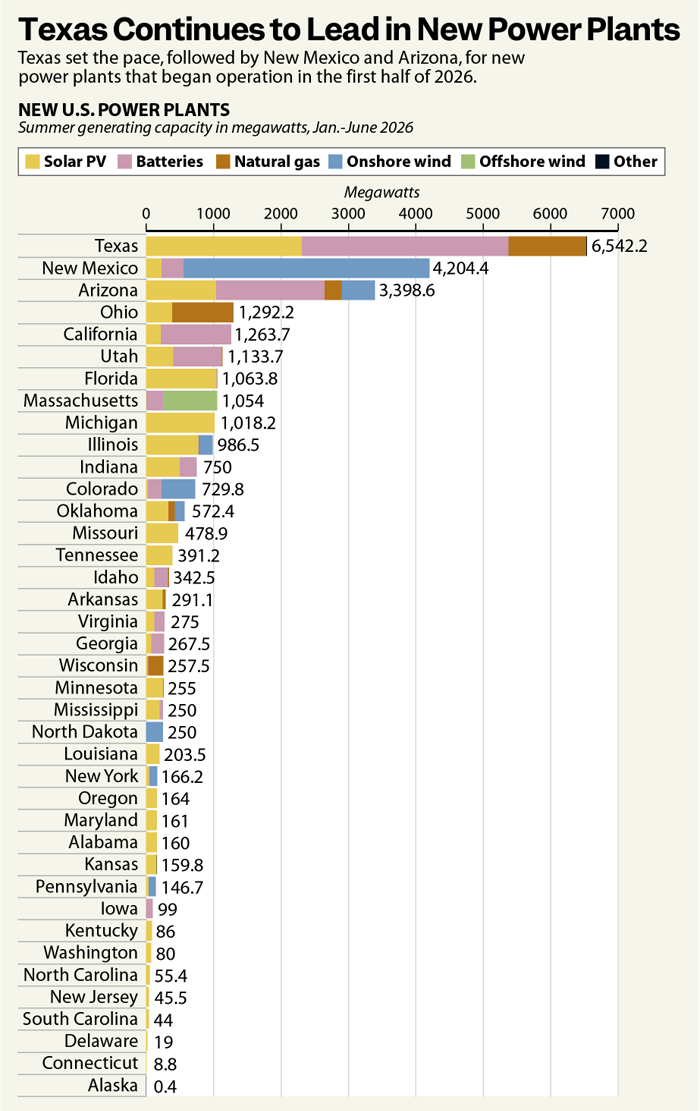
Now, let’s look at the new power plants in terms of where they were built. Three states account for about half of the country’s new generating capacity: Texas, New Mexico and Arizona.
Texas was the leader, with a power mix that leaned more heavily on batteries and gas than other states. The leading category in Texas was batteries, with 3,067 megawatts, followed by utility-scale solar, with 2,311 megawatts, and then natural gas combustion turbines or natural gas internal combustion engines, with 1,154 megawatts.
Texas’ policies have prioritized gas and battery plant construction to help bolster the power grid’s reliability at times of high demand.
Also, Texas illustrates how challenging the market is for new onshore wind. The state is the national leader in onshore wind, but brought no new projects online in the first half of the year.
One of Gimon’s takeaways is that we’re firmly in the era of utility-scale solar, with batteries playing a supporting role.
“The real underlying workhorse is solar plus battery,” he said.
Some other observations from this data:
Illinois ranked first in the number of new utility-scale solar projects, with 36, ahead of California, with 22, and Texas, with 16. Illinois’ projects tended to be on the small side, which is why it could lead in the number of projects but barely cracked the top 10 in overall generating capacity coming online. This is policy-driven and shows that state laws encouraging small and medium-size solar are leading to completed projects.
The “other” category of power technologies almost always has something interesting, with some tiny plant that isn’t indicative of anything, but is probably a good story. One that caught my eye is the 4 megawatts of hydropower that went online in Dakota County, Minnesota, which is in the Minneapolis-St. Paul metro area. The project at the Byllesby Dam is a replacement of hydropower turbines that have operated on the Cannon River since 1910, and got local media coverage when the county government announced the project a few years ago.
A 2.8-megawatt biomass power plant went online just a few miles from my house in Ohio, operated by the Columbus city government. It’s fueled by methane captured from waste at a sewage-treatment plant. I was unaware of this project and now want to take a closer look.
Looking ahead, the Energy Information Administration’s list of planned power plants shows that the utility-scale solar boom is likely to continue, and the final years of this decade are shaping up to bring a boom in natural gas power plants.
But it’s tough to pin down the size of the solar and gas booms because of uncertainty about many factors, including how much electricity demand will grow and what share of the growth will be driven by AI data centers.
So take some comfort in what we know for sure, which is the stuff that’s actually built, and realize that just about everything else comes with a question mark.
This article originally appeared on Inside Climate News, a nonprofit, non-partisan news organization that covers climate, energy and the environment. Sign up for their newsletter here.
Thousands stranded at Japan’s Narita airport after record rain kills four
Record rainfall left thousands of travellers stranded at Tokyo’s Narita airport on Friday as flooding in the surrounding area disrupted transport, knocked out power to homes and claimed at least four lives.
More than 360 millimetres of rain fell in 24 hours in parts of Chiba prefecture, which adjoins the capital Tokyo, inundating roads and railways during one of Japan’s busiest holiday weeks.
Heavy rain is hitting the Tokyo area today: thunderstorms are so severe that alerts are being automatically sent to residents’ phones. This is a scene from Ichikawa, a city that borders the east side of Tokyo.pic.twitter.com/EXkKgBJtVX
Authorities said four deaths have been confirmed so far, including one person trapped in a submerged vehicle, while another person is missing. Soldiers have been dispatched to the area to help with relief efforts.
“This case was an extremely unusual situation,” Chiba Governor Toshihito Kumagai told reporters on Friday morning. “I have responded to many disasters in the past, but I have never experienced a case like this.”
More than 22,000 households remained without power on Friday at 11:00 a.m. (0200 GMT), according to utility provider Tokyo Electric Power. In Chiba city, one of the worst hit areas, hundreds of people spent the night under foil blankets at government buildings serving as temporary evacuation centres.
Current visuals from Chiba City (千葉市), Chiba Prefecture, Japan.
The transport disruption left around 7,000 people stranded at Narita, an airport spokesperson said, adding that all flights are scheduled to operate normally on Friday. Japan Airlines said some flights may experience delays but no cancellations are currently expected.
Some major highways in Chiba were shut, forcing drivers onto alternative routes and causing heavy traffic, according to highway operator NEXCO East.
Several rail services also remained suspended on Friday morning, though some trains connecting Narita to Tokyo had resumed operations, easing congestion at the international transport hub.
【✈️Domestic/13:00】≪Bad weather forecast on Aug 14≫ Tokyo Narita : thunderstorm Please check your flight status at https://t.co/tZ6uS3S1H9
Overnight, hundreds of passengers queued to collect blankets, water bottles and snacks from airport staff before bedding down across the terminal building, footage on public broadcaster NHK showed.
“We are never going to forget this trip,” one American traveller stranded with his family at the airport told NHK.
The cast of Nickelodeon’s beloved ’90s sketch comedy show “All That” is mourning one of their own after the sudden death of former star Christy Knowings.
Knowings died this week in California at just 46 years old, her father, Charles Dunn, confirmed to ABC News on Friday.
The actress and comedian became a familiar face to a generation of Nickelodeon viewers after joining “All That” in 1997. She remained on the hit series for three seasons through 2000, sharing the screen with future stars including Kenan Thompson, Kel Mitchell, Amanda Bynes, Lori Beth Denberg, Josh Server and Nick Cannon.
News of her death quickly prompted emotional tributes from her former castmates.
Thompson, who later became one of the longest-running stars of “Saturday Night Live,” said the loss hit him especially hard.
“Man this one hit hard!!! Rest well Christy!!! Never could have imagined this day!!” Thompson wrote on Instagram alongside a photo of Knowings.
He remembered her as “a real one” and “one of the funniest people out here,” while sending his love to her grieving family.
“Gonna miss you buddy!!!” he added.
Mitchell also shared an emotional tribute, calling Knowings “truly one of a kind.”
Alongside clips highlighting some of her funniest “All That” moments, Mitchell remembered his former co-star as naturally hilarious, talented and completely fearless when it came to comedy.
“She had a gift for creating characters that were big, memorable, and completely her own,” he wrote.
Mitchell said he would always treasure the laughs and memories they shared as members of the “All That” family.
“Christy, thank you for sharing your incredible gift with all of us,” he continued. “Your talent, your characters, and the joy you brought to so many will never be forgotten.”
Knowings’ manager, Al Hill, also remembered her as a woman whose creativity extended far beyond acting.
“Christy was a multi talented lady,” Hill told ABC News. “Whether it was singing, acting, dancing, she was always creating. Always professional and dedicated to her work.”
Knowings previously spoke fondly about her Nickelodeon years, revealing in a 2019 interview with Bustle that one of her favorite memories involved creating the outrageous character Gloria Bankhead during Season 6.
Knowings described the character as an over-the-top version of Martha Stewart and said she became so immersed in the role that she stayed in character throughout the day.
“Everybody loved it!” she recalled.
Knowings also believed the diverse cast of “All That” played a major role in the show’s popularity and lasting cultural impact.
A Bronx native who described herself as Native American and Afro-Latina, Knowings said she and her castmates were able to bring their own backgrounds and cultural touches into the comedy.
“We would bring cultural nuances and it was celebrated,” she said.
For Knowings, the show represented something bigger than laughs.
“‘All That’ showcased the unity that we all wanted, needed and still need in a very humorous way,” she said.
Now, more than two decades after her time on the Nickelodeon staple, the stars who grew up performing alongside Knowings are remembering the woman whose larger-than-life characters helped define an unforgettable era of kids’ television.
Samsung Galaxy Z Fold 8 Ultra review: The ultra foldable with an ultra price
Samsung has largely defined the foldable phone category, but it’s no longer alone in releasing flexible devices. Google, Motorola, and a raft of Chinese OEMs have their own take on this form factor. Is the new Galaxy Z Fold 8 Ultra really “ultra” enough to remain on top?
This phone doesn’t have the wide frame of the new Z Fold 8, instead matching the approximate size and shape of the company’s last few tablet-style foldables. The Z Fold 8 Ultra is not a big leap, but it continues Samsung’s pattern of iterative foldable improvements. At this point, there’s very little left to improve. The compromises of going with a foldable over a regular flat phone have largely been erased with the Z Fold 8 Ultra. Well, except for the price.
Flatter and a little better
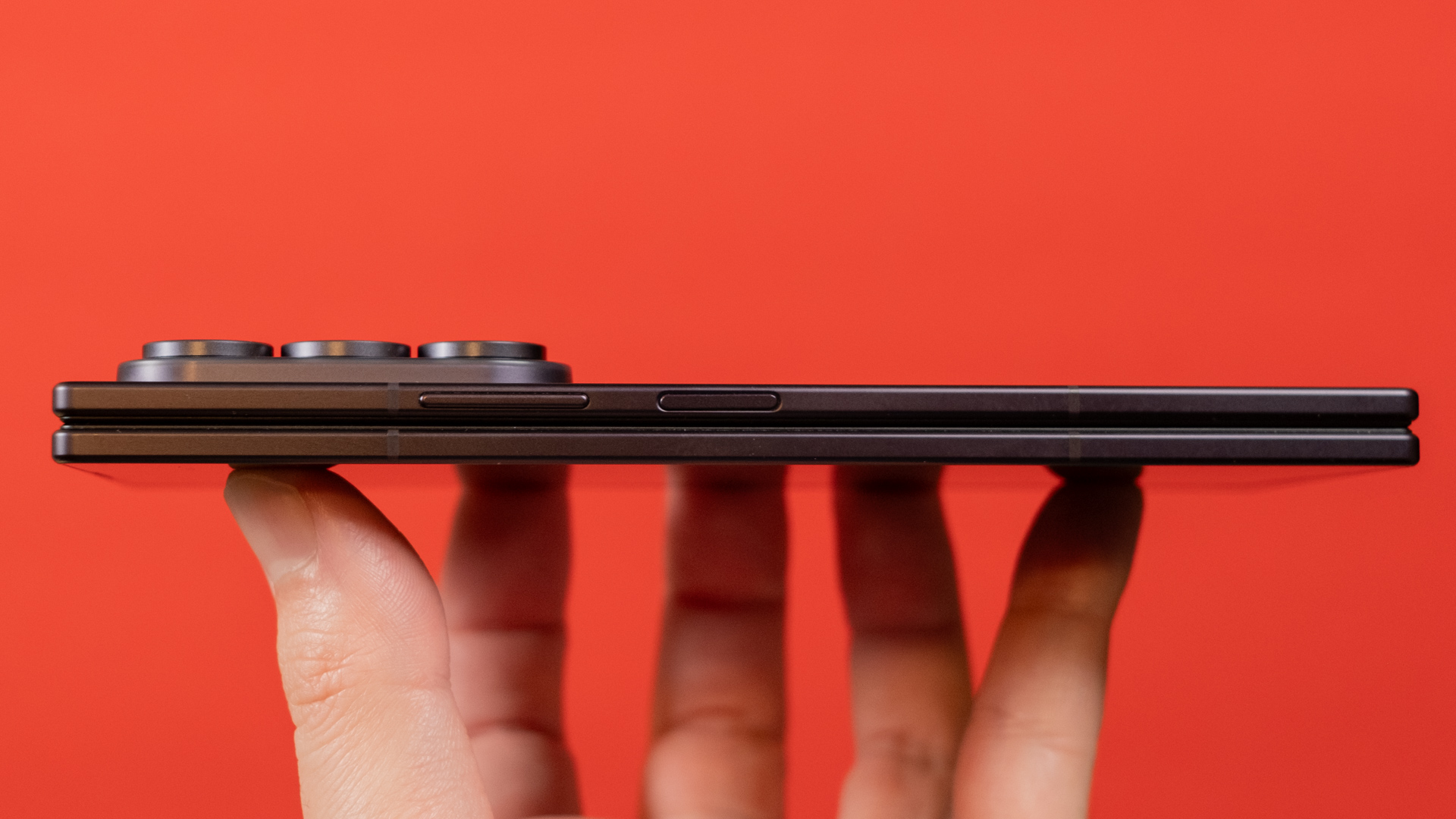
Foldables used to be real pocket-busters, almost like carrying two phones glued together. Samsung has successively shaved a few millimeters off every year, taking a leap last year with the Z Fold 7. The Z Fold 8 Ultra is even a bit slimmer than that phone, but the difference is basically imperceptible. It still has the same buttons in the same places, including a fingerprint sensor in the power button.
5,000 mAh, up to 63% charge in ~30 min with 45W Adapter, 20W Wireless Charging
Connectivity
5G, LTE, Wi-Fi 7, Bluetooth v6.0, SIM+eSIM
Measurements
Unfolded: 158.4 × 143.2 × 4.1 mm Folded: 158.4 × 72.8 × 8.9 mm, 215g
Colors
Violet Shadow, Graphite, Cream, Green Shadow (online)
The 2026 Samsung flagship foldable is barely thicker than the average flat phone when folded, which is impressive considering the powerful hardware inside. The two halves come together with no gap, and the hinge feels smooth and springy. The phone almost seems to “leap” into the unfolded configuration when you pry it open, and it ends up flatter than the Galaxy Z Fold 7, which didn’t quite reach 180 degrees. It’s structurally solid in this state, even though it’s barely 4 mm thick. It feels like a small tablet, not a phone that folds in half, but somehow, it is. You can fold it back up, and it fits in your pocket like any regular phone. It’s a very cool piece of hardware.
The Z Fold 8 Ultra is about the same thickness as a non-folding phone.
Credit: Ryan Whitwam
The Z Fold 8 Ultra is about the same thickness as a non-folding phone. Credit: Ryan Whitwam
The 6.5-inch 1080p cover OLED is about the same size and shape as any non-foldable smartphone on the market today. It has the latest Gorilla Glass Ceramic coating, and it’s plenty bright for outdoor use. The real star of the show is the 8-inch internal foldable screen. Its resolution is 2256 x 2504, a bit higher than last year’s phone, and its peak brightness has increased to 3000 nits.
Even very bright foldable screens can be hard to read in bright light because the plastic top layer is so reflective. Samsung has addressed that somewhat with the Z Fold 8 Ultra with its new anti-reflective layer. Reflections aren’t gone, but like the treated glass on Samsung’s flat Ultra phones, the intensity of reflections is much reduced. This makes the big internal screen more legible outdoors.
It’s like a regular phone when closed.
Credit: Ryan Whitwam
It’s like a regular phone when closed. Credit: Ryan Whitwam
The other screen update tackles the classic foldable crease. Early on, foldable screens had a veritable chasm running down the middle. That has been minimized to varying degrees, with some phones showing almost no crease at all. Samsung is now in that group with the Z Fold 8 Ultra thanks to its “Titanium Flex” technology. This metallic layer apparently supports the OLED better, eliminating the crease. If you look from the right angle in the right lighting, you may be able to see a bit of distortion, but you can’t really feel it while using the screen.
Samsung’s foldable hinge feels very solid.
Credit: Ryan Whitwam
Samsung’s foldable hinge feels very solid. Credit: Ryan Whitwam
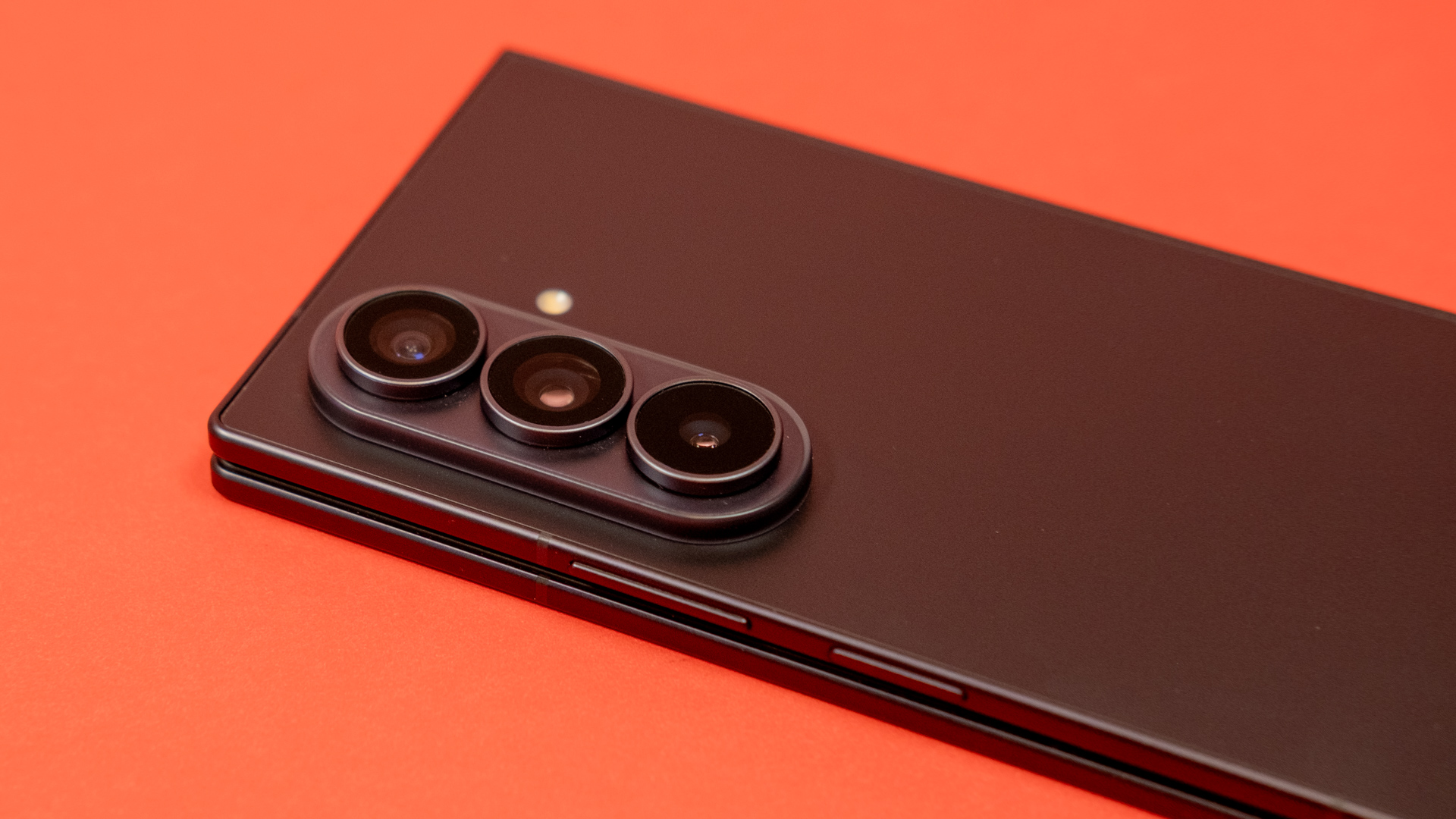
The only truly clunky aspect of the phone’s design is the camera module. Because the internals are so tightly packed, the camera hardware pokes way out past the rear glass. It stands out in the wrong way and can get snagged on your pocket when you try to put the phone away. The three modules are lined up in the corner in usual Samsung fashion, which makes the phone a wobbly mess when you set it down.
Just call it One AI
Samsung’s One UI is a known quantity at this point. It comes loaded with some duplicative apps and junk you may not want, like Facebook and LinkedIn. The interface can be a little cluttered, and there are features buried in the settings that you’ll probably never touch. But Samsung doesn’t change much year-to-year, so if you’ve used a Samsung phone in the past few years, the learning curve will be minimal.
Samsung makes a big deal out of multitasking on its foldables, offering robust window management that goes beyond what you get from Google or Motorola. It’s a snap to move apps around, break them out into floating windows, and save configurations. You can also have three apps running live in split-screen on the Fold, whereas most other foldables limit you to two.
Samsung’s multitasking is still great.
Credit: Ryan Whitwam
Samsung’s multitasking is still great. Credit: Ryan Whitwam
Android itself has more foldable optimizations than it once did, and Samsung has taken full advantage of that. For example, the taskbar on the Z Fold 8 Ultra is easy to bring up while using the phone, and you can pin it to the screen. It also shows more recent apps than the standard Google version of this feature.
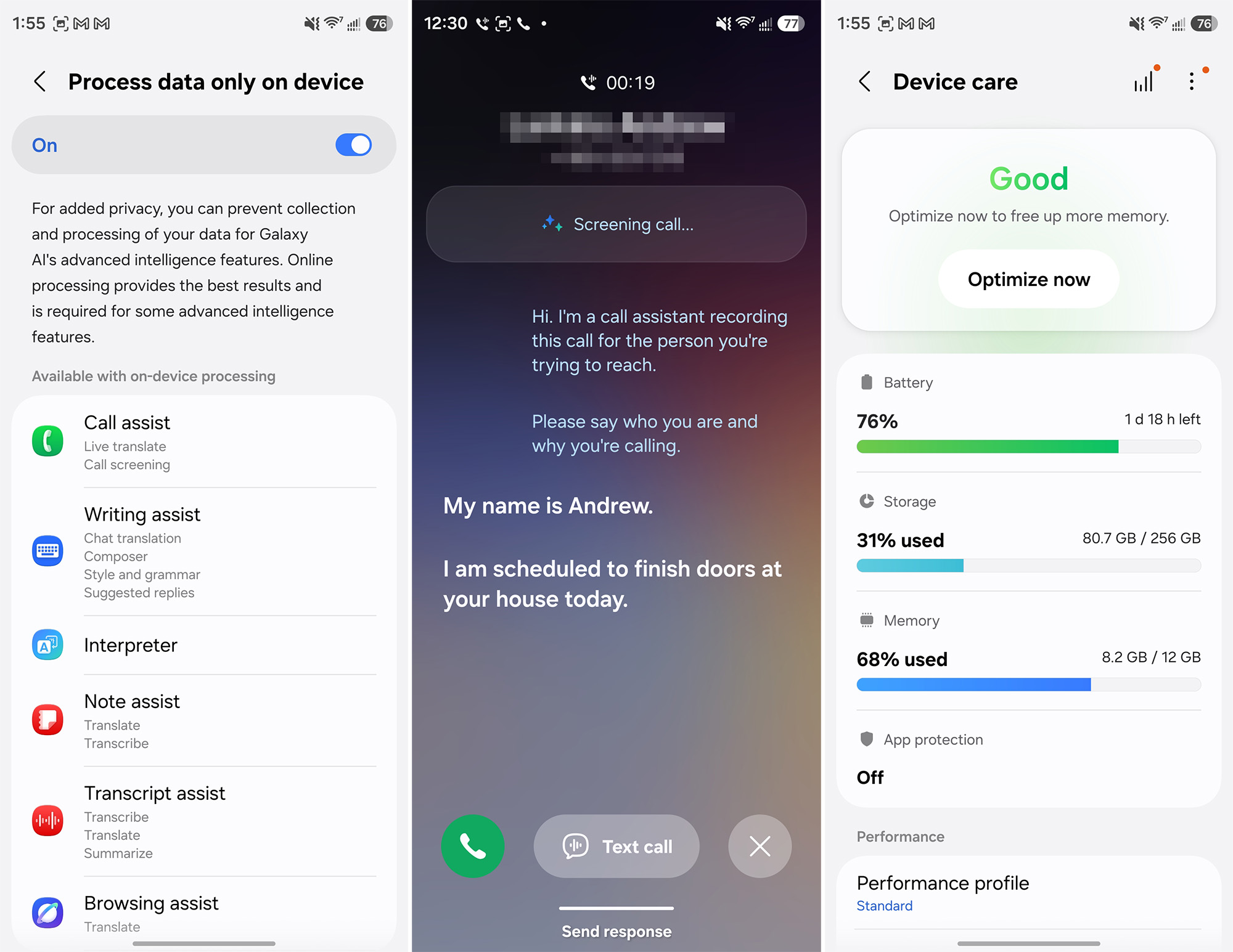
And then there’s the AI. Samsung has been all-in on Galaxy AI for the last couple of years, and it’s expanded that feature set even further with the 2026 foldables. Samsung does at least still offer the option to run its AI features solely through on-device processing. This keeps your data from going to the cloud but limits the AI features that are available.
Samsung is again pushing its Now Brief feature, and it’s one of the most perplexing AI features I’ve seen on a phone. It’s all over the device—the home screen comes with a widget, it appears on the lock screen, and it sends you notifications. But it still does almost nothing. The pitch is that Samsung uses on-device AI to ingest your data and produce actionable suggestions. More often than not, all you get are links to anxiety-inducing news stories, your calendar, the weather, and maybe some videos. I feel like I’m living in the “c’mon do something” meme every time I open Now Brief.
Samsung’s Now Nudge feature offers proactive suggestions powered by on-device AI. For example, you may see a suggestion to add an event to your calendar based on a text conversation. In general, this feature seems better at completing tasks correctly, but it still doesn’t show up very often. It is, however, nice that nudges now open apps in split-screen instead of taking you away from the content you’re viewing.
Samsung also gets even deeper Gemini AI integration with this release. Gemini Notebook (formerly NotebookLM) is preloaded, and it’s optimized for drag-and-drop and split-screen usage. That’s cool if you are a fan of Google’s AI research tool, which is admittedly one of the better things the company has done with LLMs.
More questionable is the expanded support for app automations, which debuted earlier this year on the Galaxy S26 series. The idea is that you can ask Gemini to complete a task for you, and it will use the appropriate app to get it done in the background. The list of supported apps has expanded to more than 40, including DoorDash, Temu, Airbnb, Delta, and Best Buy.
One UI can feel a little claustrophobic, but Samsung gets some things very right.
Credit: Ryan Whitwam
One UI can feel a little claustrophobic, but Samsung gets some things very right. Credit: Ryan Whitwam
Unsurprisingly, having Gemini operate even simple apps is very slow and fraught with errors. It gets there most of the time, but it’s nowhere near good enough that I’d trust the results without a thorough double-check. And at that point, why not just do it myself?
It’s not all AI retreads, though. Samsung has added something genuinely fantastic to its Galaxy AI portfolio, but it’s not the kind of AI it wants everyone talking about. As of the last version of One UI (and continuing in the version on the Fold), Samsung’s phone app does Google-style call screening. This is one of the biggest selling points for Pixel phones in this age of endless phone spam, and Samsung is finally on board.
As on Pixel phones, you have the option of directing a robot to answer a suspicious call. It transcribes what the caller says, giving you the option of answering or getting more information before picking up. This alone almost makes up for the issues I have with One UI.
Flagship performance
Like the Galaxy S26 Ultra, Samsung’s new flagship foldable runs on a version of the Qualcomm Snapdragon 8 Elite Gen 5 optimized specifically for its devices. This is functionally the fastest mobile processor in the world, featuring eight high-speed Oryon CPU cores and an Adreno GPU that can rival some laptop chips.
You won’t find yourself waiting on the Z Fold 8 to get things done (unless you ask Gemini to use an app). It’s a snappy experience, even when running multiple apps side by side. Games also run flawlessly on this device, as long as you don’t mind a toasty phone.
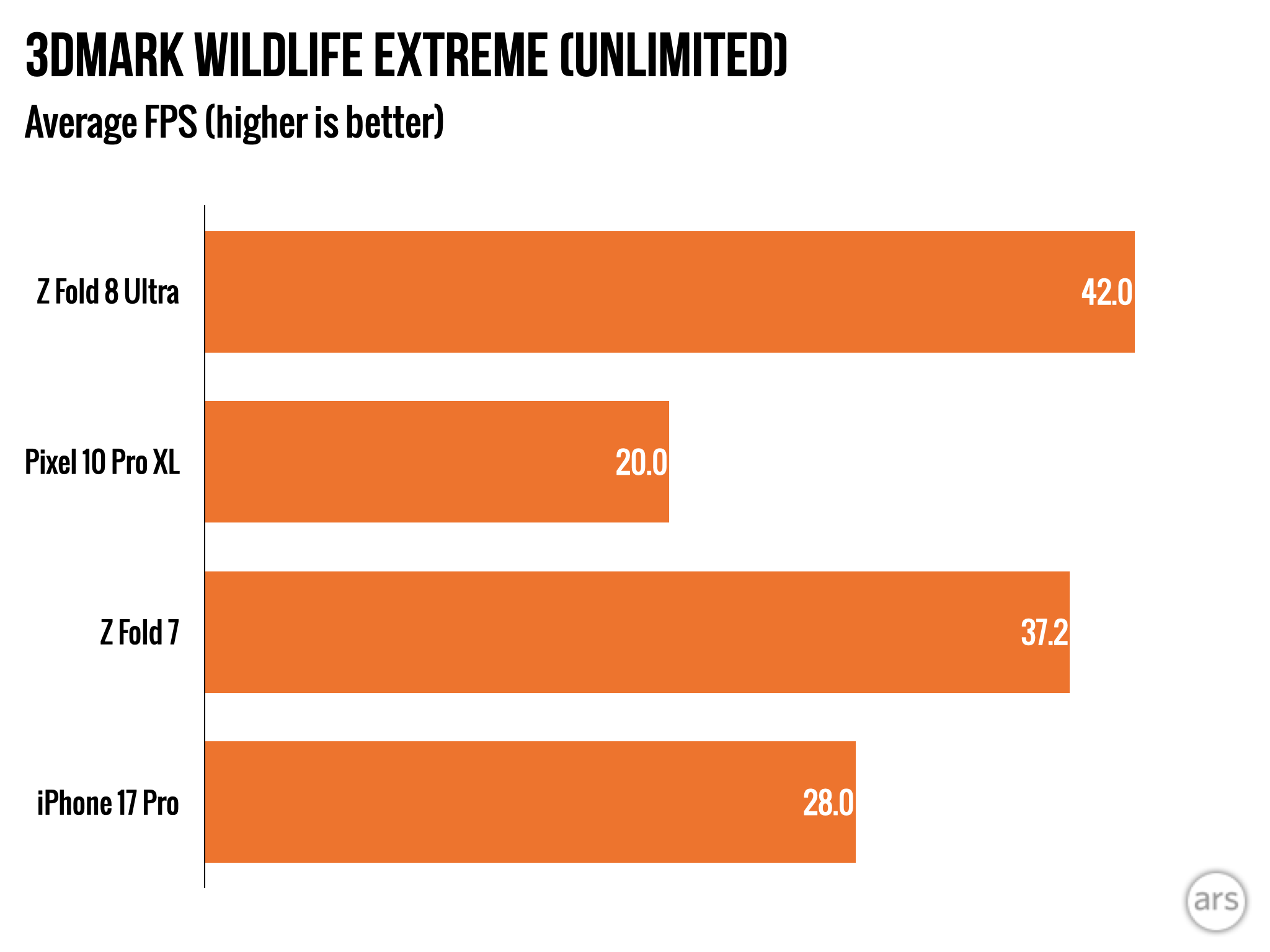
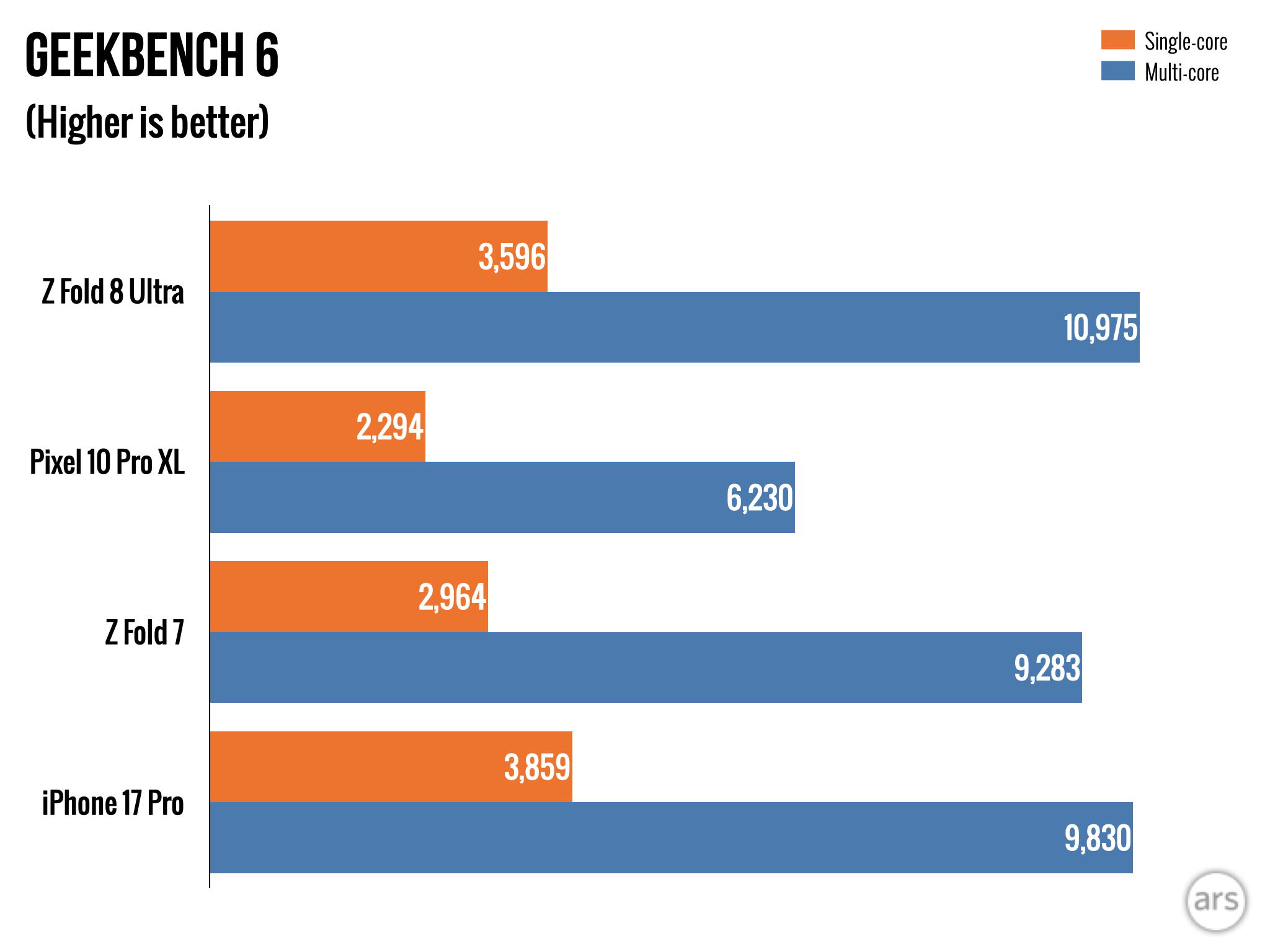
In benchmarks, the Galaxy Z Fold 8 Ultra scores very near the top of all current phones (see below). While the chip is identical to the one in the S26 Ultra, it doesn’t quite match that phone’s scores. This is most likely due to thermal constraints in the foldable.
The Snapdragon chip has a great GPU.
Ryan Whitwam
The Snapdragon chip has a great GPU. Ryan Whitwam
Samsung’s foldable is among the fastest phone available.
Ryan Whitwam
Samsung’s foldable is among the fastest phone available. Ryan Whitwam
The Snapdragon chip has a great GPU. Ryan Whitwam
Samsung’s foldable is among the fastest phone available. Ryan Whitwam
Heat is a problem in all smartphones—the benchmark scores you see bandied about are all based on full performance for short periods. When you stress a device for more than a minute or two, such as when you play a high-end game, performance will drop dramatically. In the past, some Samsung phones have throttled by more than half when heating up. The Z Fold 8 Ultra isn’t that bad, but you can expect to lose about 30 to 40 percent of that peak speed. However, that still leaves the Z Fold 8 with higher overall performance compared to, for example, a Google Pixel.
Samsung’s new foldable still comes with 12GB of RAM in the base model. You can upgrade to 16GB with more storage, but the phone is already very expensive. Overall, apps remain in memory long enough, and I haven’t noticed issues with multitasking. Still, at this price, 16GB of RAM would make more sense. Perhaps if we were not in the midst of the great AI RAM shortage, Samsung would have stepped up to 16GB.
The Z Fold 8 Ultra (left) is basically indistinguishable from the Z Fold 7 (right).
Credit: Ryan Whitwam
The Z Fold 8 Ultra (left) is basically indistinguishable from the Z Fold 7 (right). Credit: Ryan Whitwam
There aren’t many hardware improvements in this year’s Fold, but the battery and charging did get some attention. Having finally gone the silicon-carbon route, Samsung has increased the capacity of the traditional lithium polymer cells to 5,000 mAh (up from 4,400 mAh last year). That’s on par with most non-folding flagship phones. It’s not a night-and-day difference in longevity, and you can still drain it quickly by using only the big internal display, but you don’t have to worry about whether the Z Fold 8 Ultra will make it to bedtime most days.
If the Z Fold 8 Ultra doesn’t quite make it all the way to bedtime, you won’t be terribly inconvenienced. Samsung has boosted the charging from the measly 25 W peak speed of past foldables to a much more reasonable 45 W. That’s nothing compared to what you get with certain Chinese smartphones, but it’s much more livable. Samsung says you can go from empty to 67 percent in about 30 minutes with a compatible USB-PD charger.
Ultra cameras
One of the main selling points of the Z Fold 8 Ultra over the Z Fold 8 is the camera setup. While the wide-body foldable only has two rear cameras (both 50 MP), the Z Fold 8 Ultra has an upgraded triple setup with a 200 MP primary, a 10 MP 3x telephoto, and a new 50 MP ultrawide.
The cameras dominate the back.
Credit: Ryan Whitwam
The cameras dominate the back. Credit: Ryan Whitwam
The 200 MP camera is the same as last year’s foldable, and the sensor is identical to what’s in the Galaxy S26 Ultra. However, the aperture is narrower (less light collection) due to the constraints introduced by foldables. Photos are binned to 12 MP, showing good dynamic range and brightness, although Google does have Samsung beat there. They still have that distinctive vibrant and sometimes too contrasty look we associate with Samsung cameras.
Capture speed has always been a challenge for Samsung phones, which seem to lean toward being brighter, even at the expense of some blur. Things are better than they once were with the Z Fold 8 Ultra, but you should take a few snaps of any subject that is moving around to make sure you get one that’s crisp. Luckily, Samsung’s burst mode is quick and reliable.
Main camera, bright outdoor light.
Ryan Whitwam
Main camera, bright outdoor light. Ryan Whitwam
Main camera, fast movement.
Ryan Whitwam
Main camera, fast movement. Ryan Whitwam
Main camera, bright outdoor light.
Ryan Whitwam
Main camera, bright outdoor light. Ryan Whitwam
Main camera, fast movement. Ryan Whitwam
Main camera, bright outdoor light. Ryan Whitwam
Night mode.
Ryan Whitwam
3x telephoto.
Ryan Whitwam
Macro.
Ryan Whitwam
Ultrawide.
Ryan Whitwam
Main camera, overcast.
Ryan Whitwam
Ultrawide.
Ryan Whitwam
3x telephoto.
Ryan Whitwam
Main camera, bright light.
Ryan Whitwam
Night mode.
Ryan Whitwam
Main camera, mixed indoor light.
Ryan Whitwam
Macro.
Ryan Whitwam
3x telephoto.
Ryan Whitwam
You don’t get a telephoto camera with Samsung’s wider foldable, but this sensor increasingly feels like an afterthought for the Ultra. It’s still just 10 MP, and the sensor is tiny at 1/3.94 inches. it will get you a bit closer to your subject, but the results often look overprocessed. That’s doubly true if you zoom beyond 3x and count on Samsung’s processing to clean up the image.
The new 50 MP ultrawide does offer a nice upgrade over last year’s Fold, though. The field of view is wide enough that it offers a different perspective than the main camera but not so wide that the edges look distorted. The boosted resolution speeds up captures in low light and results in slightly better detail with the expected pumped-up Samsung colors. This sensor is also used for macro shots on the Z Fold 8 Ultra, and the detail you get close up is noticeably better than the last Fold.
While the still photos may have some foibles, Samsung’s video recording on the Z Fold 8 with the main sensor is a step up from almost any other phone. It can handle up to 8K resolution at 30 fps, and the enhanced stabilization available at lower resolutions is great for recording on the move. Video is crisp across the board, with great range and colors.
The foldable niche
In some ways, it’s amazing that a device like this exists. It’s hardly any more bulky than a traditional smartphone, but it’s a tablet that fits in your pocket. There’s almost no crease in the screen, and the hinge is rock-solid. Heck, you can even drop it in a pool, and it will keep ticking (IP48). The cameras, battery life, and performance aren’t as compromised as they were with past foldables, either.
The slow pace of change in mobile technology has prompted many of us to become a bit jaded, but if foldables of this caliber were somehow remarkably cheaper, they would be in everyone’s pocket. But that’s the problem—they’re not cheaper. In fact, all computing devices are getting more expensive.
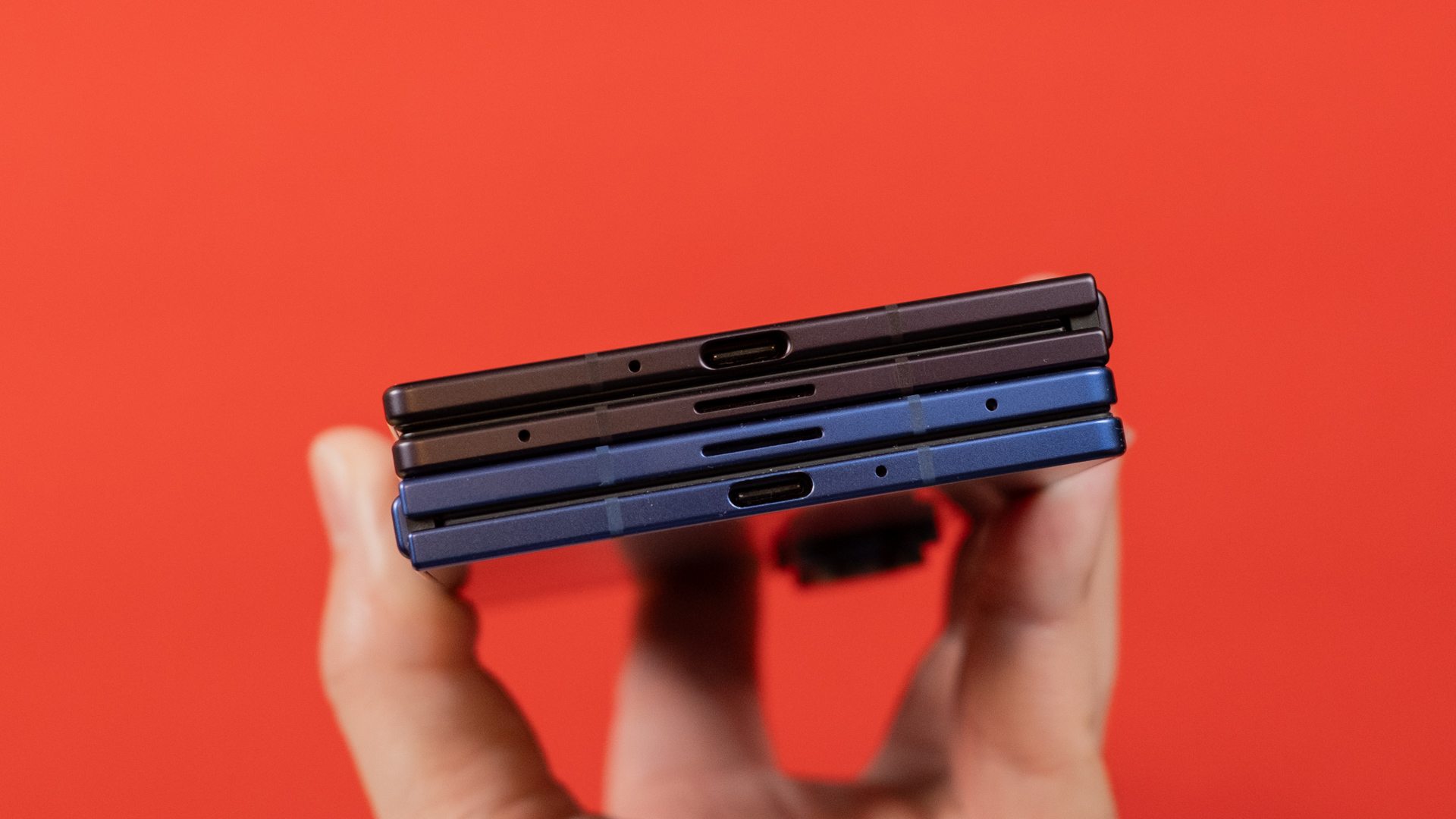
The Z Fold 8 Ultra (top) is a fraction of a millimeter thinner than the Z Fold 7 (bottom), but you’d never know.
Credit: Ryan Whitwam
The Z Fold 8 Ultra (top) is a fraction of a millimeter thinner than the Z Fold 7 (bottom), but you’d never know. Credit: Ryan Whitwam
The $100 price bump is quickly becoming a 2026 tradition, but that’s a bigger chunk of the price when you’re talking about a flat phone that used to cost $800 or $900. At $2,100, the Z Fold 8 Ultra is only a little more expensive than last year’s version. If you were willing to spend $2,000 on a foldable, $2,100 is not a big leap.
The dream of foldable mass adoption may be slipping away, but that doesn’t mean these devices don’t have a place. If you do most of your computing on a phone and could benefit from the added screen real estate, the Galaxy Z Fold 8 Ultra is a killer device. It won’t weigh down your pocket, and it lets you easily multitask and use apps with tablet-style interfaces. You’ll pay handsomely for that ability, but enough people are willing to do so that Samsung’s 2026 foldables are seeing record sales—though they still trail flat phones by a wide margin.
It’s a tablet that fits in your pocket.
Credit: Ryan Whitwam
It’s a tablet that fits in your pocket. Credit: Ryan Whitwam
For people who would consider spending two grand on a phone, this is a good option. But it’s not so much better than the Z Fold 7 that you need to rush out and get the new model. For Z Fold 6 owners who like the experience, though, this is a worthy upgrade.
22 oxygen stations out of service in Gaza amid Israeli blockade: Health Ministry
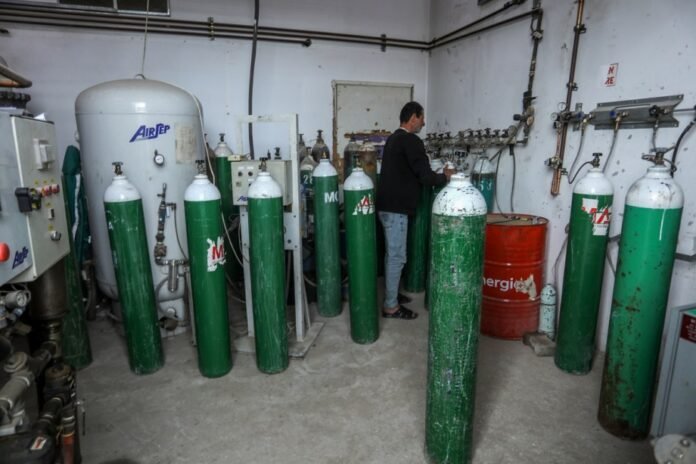
At least 22 of the Gaza Strip’s 34 oxygen stations have been forced out of service, the Palestinian Health Ministry warned Saturday, saying the remaining facilities also risk shutting down amid the Israeli blockade and a severe shortage of spare parts, Anadolu reports.
The ministry said in a statement that the 12 stations still operating are working under “extremely complex technical and mechanical conditions,” making it increasingly difficult to meet the oxygen needs of health facilities and medical service providers.
It added that the stations’ operational capacity has been “completely depleted” and that they are running beyond maximum capacity amid increasingly frequent breakdowns.
Only four of the 30 devices used to fill oxygen cylinders remain operational, the ministry said, warning that they “could stop at any moment” because engineering teams cannot carry out emergency maintenance.
“The availability of oxygen is not a medical luxury; it is a lifeline for many vital and life-saving departments,” it stressed.
The ministry warned that the remaining stations face “complete paralysis,” threatening oxygen supplies to hospitals and patients receiving treatment at home.
It called for the “immediate and direct opening of channels” to bring in spare parts and technical equipment needed to repair the stations, as well as the urgent delivery of new oxygen stations.
The warning came after Doctors Without Borders (MSF) said on Aug. 12 that Israeli authorities continued to restrict the entry of engine oils and spare parts needed to operate hospital generators, ambulances, and other vital facilities, putting thousands of lives at risk.
In its latest report Friday, the UN Office for the Coordination of Humanitarian Affairs said the Kerem Shalom crossing remains the only operational entry point for goods into Gaza, while restrictions continue on several essential supplies and types of equipment.
The latest World Health Organization data, published on Aug. 11 and covering the period through July 31, also showed major gaps in the availability of health resources and services across Gaza’s medical facilities.
A ceasefire has been in place in Gaza since Oct. 10, 2025, following an Israeli war that caused widespread destruction to the enclave’s health system and infrastructure.
Former Syrian General’s Detention Tests Beirut-Damascus Relations
A routine visit to the Syrian Embassy in Beirut has turned into a legal and political test for two neighboring countries adjusting to the fall of Bashar Assad’s government. Rizik Alabi reports that Lebanese authorities detained former Syrian Maj. Gen. Adel Issa, 67, after learning that Syria had issued an arrest warrant accusing him of murder and crimes against humanity.
Issa, a former commander of the Syrian army’s 17th Division, remains in Lebanese judicial custody. His arrest carries implications far beyond one man: A Syrian source told The Media Line that Damascus asked Lebanon months ago to surrender more than 200 senior security and military officers who fled after the Assad government collapsed in late 2024.
No extradition decision has been made. Lebanon’s public prosecutor at the Court of Cassation, Ahmad Rami al-Hajj, has requested the Syrian case file, arrest documents and supporting accusations. Issa’s family denies wrongdoing, saying he retired years before Assad’s fall and left the country after an armed group raided his home.
The legal machinery is slow by design. A Lebanese judge explained that Syrian authorities must supply a formal request detailing the suspect, alleged offenses and evidence. Prosecutors then examine jurisdiction, whether the conduct is also punishable under Lebanese law and whether the request may be political. Concerns about human rights or a possible death sentence could block a transfer.
Even judicial approval would not finish the process. Extradition requires a state decree recommended by the justice minister and signed by Lebanon’s president, prime minister and justice minister.
Legal expert Amine Bashir stresses that Damascus cannot treat more than 200 names as one package. Criminal liability is personal, meaning every former officer requires an individual warrant, evidentiary record and review. Finding and arresting the others would also pull Lebanon deeper into domestic politics, changing relations with Damascus and raising questions about Hezbollah’s influence.
Recent talks between Syrian and Lebanese interior officials suggest security cooperation is expanding. If Issa becomes the first prominent Assad-era officer extradited to Syria’s new authorities, his case could establish the path—or expose the obstacles—for hundreds more.
Read Alabi’s full article for the legal steps, political pressures, and unresolved questions behind a detention that may reshape accountability across the Syrian-Lebanese border.
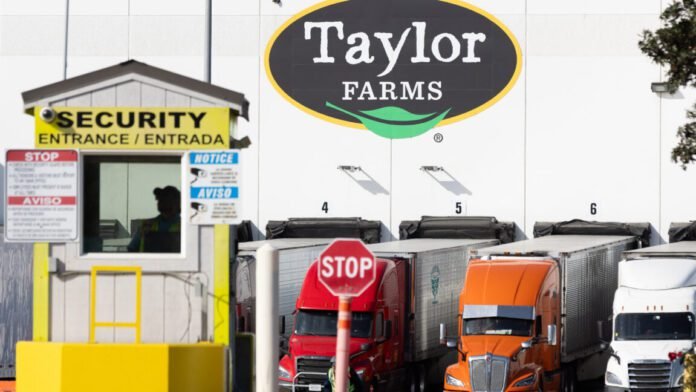
Taylor Farms’ connections to Trump admin spurs probe into Cyclospora response
As Americans cook their vegetables to at least 158°F to kill a diarrheal parasite that has sickened over 24,000 people and killed two this summer, one US Senator is turning up the heat on Health Secretary Robert F. Kenney Jr. over the government’s “calamitous response” to the record outbreak.
In a letter sent Thursday, Elizabeth Warren (D-Mass.) called the federal response to the Cyclospora outbreak “botched” and “marred by missteps.” She pointedly questioned whether corruption and incompetence within the Trump administration and its clear ties to Taylor Farms—the mammoth produce distributer that sold Mexican-grown iceberg lettuce linked to the outbreak—played a role in the federal government’s failures.
“[P]olitical contributions and direct White House lobbying from Taylor Farms… raise urgent questions about the role this influence-peddling may have played in loosening federal food safety oversight and hampering the federal government’s response to the outbreak,” Warren wrote in the letter.
As Ars Technica has previously reported, Taylor Farms made a $1 million donation to a Trump-backing super PAC, MAGA, Inc, in March 2025. That donation came just days after the Food and Drug Administration announced it was delaying implementing a food traceability rule that would have made it easier to trace and respond to outbreaks, like the Cyclospora outbreak.
Warren’s letter noted other donations to Trump-aligned entities from Taylor Farms and said the contributions totaled into the millions. She further pointed out that Taylor Farms has hired former Trump White House official Trent Morse to lobby on behalf of the company. Morse reportedly brokered a direct call between Taylor Farms and the White House after the FDA had linked the company’s lettuce to the outbreak. In the call, Taylor Farms allegedly made an “urgent plea” to delay a recall of the tainted lettuce.
Clear delay
Warren also noted a significant lingering question about the federal government’s response. Local media outlets reported that Taco Bell restaurants in Michigan and nearby states began pulling iceberg lettuce from their menus as early as July 7. Notices at the restaurant said they were unable to sell the produce “due to a nationwide recall.” But at the time, no recall had been reported by federal agencies.
On July 14, the Centers for Disease Control and Prevention reported the outbreak as being from an “unknown source.” The CDC and the FDA did not identify lettuce at certain Taco Bell locations as a source until July 17. The same day, Taylor Farms issued a recall, and the FDA published the recall notice on July 18. The recall notice did not include details or clear information about how much lettuce was being recalled or where it had been shipped. An FDA report identified this week found that Taco Bell’s parent company received just 2.5 percent of the tainted lettuce, with the rest going elsewhere. Walmart received 46 percent of the recalled cases.
Warren’s letter also questioned confusion about the FDA reporting that Taylor Farms’ lettuce had tested positive for Cyclospora, only to retract the claim the next day, calling it a false positive. Taylor Farms then claimed the FDA had apologized to it, which the FDA quickly denied.
Warren posed a series of questions to Kennedy, including whether Taylor Farms or a Trump political appointee pressed the FDA to reevaluate the test result, leading to the retraction. She is also seeking transcripts, summaries, and notes from communications between federal agencies and Taylor Farms.
“[T]he specter of corruption—and quid pro quo politics—casts a darker shadow” over the outbreak response than simply dangerously bad food safety policies from the Trump administration, Warren wrote.
In a statement to The Hill, a Taylor Farms spokesperson said that the company “acts in the interest of science and consumer health, not politics. We categorically reject suggestions that we attempted to receive or received favorable regulatory treatment due to political contributions or other improper influence. Any such allegations are false.”
A Health Department spokesperson told the outlet that the federal government’s investigations into the outbreak “were not impacted by staffing changes or reductions in force. Political contributions or relationships have no bearing on FDA or CDC outbreak investigations.”
NATO Baltic Air Policing jets shoot down drone over Latvia
Fighter jets operating under NATO’s Baltic Air Policing mission shot down a “foreign drone” in Latvian airspace on Friday, according to the country’s military.
In a statement, the Latvian armed forces said the drone had entered Latvia “as a result of Russian electromagnetic warfare” and that it was intercepted over the Balvi region in the east of the country.
The military has deployed additional air defence units to Latvia’s eastern borders and will continue to monitor its airspace, it said.
“As long as Russia’s aggression in Ukraine continues, a recurrence of cases where foreign drones enter or approach Latvian airspace is possible,” the military added in its statement.
Further airspace threats were identified in the municipalities of Augšdaugava, Preiļi, Rēzekne, Balvi, and Alūksne, but these have since ended.
The latest interception follows mounting drone incursions into NATO airspace along the alliance’s eastern flank, which remains particularly vulnerable to security challenges arising from Russia’s war in Ukraine, which began after Moscow launched its full-scale invasion of the country in February 2022.
In July, Romanian fighter jets shot down three drones over just three days amid a surge in drone-related incidents in the country. The Romanian Prosecutor General’s Office determined that at least one of the intercepted drones was of the Shahed-type used by Russian forces in its war against Ukraine, officials have said.
Romanian military divers also destroyed two Gerbera-type drones in the Black Sea on Tuesday, close to the Neptun Deep gas project.
“To ensure the safety of the shipping lane and the work being carried out around the platform, the decision was taken to carry out a controlled destruction by detonation,” Romanian Defence Minister Radu Miruță said at the time.
In June, a Ukrainian sea drone exploded in the Romanian port of Constanta after the Ukrainian military said it had veered off course as a result of Russian electronic warfare interference.
Another drone exploded close to a compressor station of the Trans-Balkan gas pipeline in Bulgaria last week.
NATO allies gathered on Wednesday to discuss the recent drone incursions and incidents, signalling their “full solidarity with and support for the affected Allies.”
“Allies reiterated that Russia bears full responsibility for the airspace violations, which are dangerous and unacceptable, and demonstrate Russia’s increasing tolerance for risk,” NATO said in a statement, adding that it “stands ready to deter and defend against any aggression.”
NATO’s Baltic Air Policing mission sees allies deploy in four-month rotations to air bases at Šiauliai in Lithuania and Ämari in Estonia, where they can be called into action by the NATO Combined Air Operations Centre in Uedem, Germany.
Latvia, Lithuania, and Estonia, as host nations, provide air command and control infrastructure and personnel for the mission, which was initially launched in 2004 and was expanded in 2014 following Russia’s illegal annexation of the Crimean Peninsula.
Pentagon funded a $533 million artillery plant that made nothing
This article was originally published by ProPublica, a Pulitzer-prizewinning investigative newsroom.
A robot was on fire. Again.
It was the summer of 2024, and the cutting-edge robots inside General Dynamics’ sweltering artillery factory near Dallas were catching fire with startling regularity, according to four former workers there. This wasn’t ideal, as the plant was supposed to be churning out urgently needed artillery shells for Ukraine.
The robots, giant metal arms with clamps for hands, would end up drenched in oil, which would then — no surprise — combust as they moved steel blocks heated to 1,800 degrees into and out of a machine that periodically erupted columns of fire. One blaze that summer melted a robot’s cables, putting it out of commission for a week.
Only weeks earlier, defense officials and executives had touted the factory’s innovative new machinery, imported from Turkey, at a gala opening ceremony. But employees were already used to spectacular mishaps, fiery and otherwise. “After the second, third, fourth time, it just became almost normal,” one former worker said. “It got to the point where I was not surprised by anything that happened there.”
Instead of producing shells in an efficient and streamlined fashion, the pricey machines kept failing in bizarre ways. The robot arms would swing out of control, smashing into carefully calibrated equipment, and sometimes they would unexpectedly drop hunks of steel five feet down to the floor.
The factory’s signature device, meant to precisely stretch the steel for the artillery shells, instead often cracked it beyond repair. Then there were the giant press machines, which required regular pounding with a sledgehammer to function properly but still botched the shaping of nearly every shell.
“We really didn’t have any standardized practice,” said Quantel White, a former employee. “It was just a bunch of guys taking turns going at the machine with a sledgehammer every night.” To workers, even the factory buildings themselves came to feel doomed, with acrid smoke hanging in 100-degree heat over foundations seemingly sinking into the earth.
The situation never improved. The US Army, which funded the factory, ordered work halted on two of its three production lines in August 2025. By then, General Dynamics had blown eight deadlines. Work on the third production line continued, but the facility never produced a single usable shell, according to a report issued by the Department of Defense’s inspector general in July.
The fiasco has cost American taxpayers $533 million, according to the Army. But the Army has not held General Dynamics or a key Turkish subcontractor — which provided the factory’s much-hyped but little-proven equipment — publicly accountable for the failures. Nor has it made General Dynamics pay a penny back.
Just the opposite: General Dynamics, one of the world’s largest defense companies, has been showered with new contracts, continuing its track record as one of the greatest beneficiaries of Pentagon spending. The company is still in charge of the factory. It recently announced that it will fix things there by bringing in another much-hyped but little-proven technology.
“It’s an absolute disaster,” said one former official in an Army office supervising the project. “The Army should’ve gone after recovering money from General Dynamics,” added the official, who, like others interviewed for this story, spoke on the condition of anonymity.
Publicly, the Army has been tight-lipped about what, exactly, went wrong at the factory, located in a sprawling suburb called Mesquite. The inspector general report described the failure but offered few specifics. It didn’t name the companies involved, much less any of the individuals responsible.
The report’s recommendations were tepid: The Army should determine whether the contract was “appropriately issued,” how “the money was spent” and whether it can recoup any of it. It should also “identify and implement a solution” for producing more artillery. Army officials deflected blame, telling the inspector general that they didn’t do anything wrong.
In a detailed statement to ProPublica, the Army said it will recover funding for the project by getting unspecified discounts from General Dynamics on production orders. “The Army is exercising rigorous oversight to ensure every dollar invested delivers capability to the warfighter,” the statement read. “Where vendors fail to meet contract specifications, as seen at the Mesquite facility, we are evaluating contract performance, seeking recoupment of funds and pivoting resources.”
As for General Dynamics, it has given no public explanation whatsoever. The company has said that it “met or exceeded requirements,” according to the inspector general report. General Dynamics declined an interview request from ProPublica. Company spokesperson Jeff Davis said ProPublica’s reporting “fundamentally mischaracterizes the circumstances and falsely impugns our record of employee safety and truthfulness with our customer.” He continued: “An article based on this foundation would be a materially false and misleading hit piece.” Davis did not respond to ProPublica’s request that he specify the alleged errors.
ProPublica reconstructed how the project went awry through interviews with 36 current and former employees of General Dynamics, the Army, the Pentagon and the White House. ProPublica also reviewed internal company documents as well as photographs and videos taken inside the factory.
Those involved described a project that was rushed and ill considered from the start. Congress paved the way, removing government contracting guardrails — meant to ensure taxpayer money isn’t wasted — so that Ukraine-related defense projects could be funded quickly. The Army took advantage, handing General Dynamics lucrative no-bid awards without knowing whether the machines it planned to use could perform the desired work. The Army’s due diligence was inadequate, four former Army and General Dynamics officials told ProPublica.
Compared with the multibillion-dollar budgets of other DOD projects, the financial cost of the Texas debacle is small. But the lack of consequences for the companies involved, in the view of defense-spending critics, is symptomatic of a larger problem: a deep-rooted culture at the Pentagon and in Congress in which expensive failures lead only to more spending. Such critics fear that extreme cases like this one could become more common if the Trump administration succeeds in boosting the defense budget from $1 trillion to $1.5 trillion. The administration is also seeking tens of billions of dollars for its war against Iran and pressuring defense companies to quickly ramp up weapons production.
“Too often the contractors have no accountability for their mistakes,” defense budget researcher William Hartung said. The Texas failure, he said, “is a foreshadow of what’s to come if the Trump administration gets the budget it asked for.”
The pitch
Russia’s invasion of Ukraine in February 2022 felt like an emergency to the Biden administration. For General Dynamics, it was an opportunity. And Firat Gezen was ready with a pitch.
In six years running General Dynamics’ Ordnance and Tactical Systems business, Gezen had earned a reputation as a deft strategist and salesman. At 50, he wasn’t an engineer, and he had no experience running factories. He had spent decades working on the financial side of the weapons business. With a ready smile and a delivery as smooth as his perfectly bald head, he knew how to woo corporate leaders and Pentagon arms buyers alike.
Gezen was also shrewd. In 2020, after the Army sought to diversify its artillery supplier base by contracting with a small Pennsylvania company, Gezen swooped in and bought that company. That allowed General Dynamics to maintain its stranglehold over the production of metal bodies for the standard American artillery shell, referred to by its caliber: 155 mm. “Firat throws his arm around you and talks to you nicely,” one former Army official said. “But he’s got, like, five things that he’s the sole provider of, and it’s exclusive. He’s got you locked up forever.”
Firat Gezen, former president of General Dynamics Ordnance and Tactical Systems. Photo: UA Army
That put General Dynamics in an ideal position. Russia and Ukraine were firing thousands of shells back and forth each day. The United States was a key supplier to Ukraine, but decades of disinvestment had left the US artillery industry emaciated. In March 2022, Congress passed the first in a series of bills allocating billions of dollars for Ukraine-related causes, including boosting artillery production. The next month, President Joe Biden pledged to send shells to Ukraine, and he wanted to move fast. But first someone had to make them.
The 155 mm shell has been a military workhorse for a century, owing to its simple, lethal power. Packed with TNT, the 33-inch cylinder can travel 10 miles when shot out of the barrel of a howitzer and send fragments flying hundreds of feet upon impact. But decades of asymmetric warfare in the Middle East, in which the United States relied largely on drones and bombs, had led some to believe the days of artillery battles were waning. By 2022, General Dynamics was the only producer of 155 mm metal shell bodies in the country, mainly in a century-old facility in Scranton, Pennsylvania.
Given that, the company was an obvious candidate to meet the sudden new demand. General Dynamics could simply replicate Scranton’s traditional manufacturing method, which dated back to the time of the Korean War. But in meetings with Pentagon officials in the fall of 2022, Gezen proposed an alternative: What if the Army funded a state-of-the-art production line that used a promising new technique?
Central to this proposal was a virtual unknown in the world of American defense: Repkon. The company had been operating in its home country of Turkey for decades, providing “turnkey production facilities in the metal forming industry.” (Coincidentally, Gezen himself was born to Turkish parents in the United States.)
But Repkon had never received a Pentagon contract, and certainly not for its signature metalworking process called “flow-forming.” Whereas the Scranton method mainly involves molding ultrahot steel in giant forging presses, Repkon added a step in which a fast-spinning machine squeezes and rolls out the metal like clay on a potter’s wheel.
The advantage, Gezen told defense officials, is that the same equipment could produce shells of various calibers. Most important, Repkon had a production line already available, meaning General Dynamics could start making shells faster than if it had to procure traditional equipment piece by piece.
Warning signs abounded. Army officials learned that the production line that Repkon wanted to sell had been designed to produce an older, simpler model of 155 mm shells, which was made with different steel.
It wasn’t clear that the Turkish equipment could even work with the steel used to make the newer 155 mm model, as the equipment had never actually produced it, according to four former General Dynamics and Army officials. Repkon said other countries were using the machines to produce the older model. But the Army and General Dynamics could not inspect those active production lines, Repkon told them, citing customer privacy.
The Army could have balked at all of this and insisted on learning more about the capacity of the Repkon machines to perform the desired work. But learning more would’ve taken time, and time seemed in short supply. “There was incredible pressure to go fast,” a former Army official said. Everybody moved forward.
In November 2022, the Army raced to give General Dynamics the first in a series of contract awards for the project that would ultimately be worth nearly $600 million if carried to completion. The next month, Congress granted the DOD extraordinary powers to award money for Ukraine-related causes without the usual contracting safeguards, dropping competitive bidding requirements and restrictions on so-called undefinitized contracting actions. UCAs allow a company to begin work even before finalizing the terms of its contract with the government. One defense executive compared them to “building the airplane as you’re flying it.”
The Army made the most of its expanded powers, awarding General Dynamics a number of UCAs without considering alternate proposals in a competitive bidding process. (The Army told ProPublica it selected the company because of its unique artillery production experience.)
In fact, the Army was so enamored with the proposal that it decided to order even more than Gezen had pitched. Instead of contracting for one Repkon production line, the Army signed up to buy three – without knowing whether any of them would work.
Gezen had never overseen a project this ambitious. Until then, he had mainly presided over smaller expansions of existing factories that used traditional methods.But he was optimistic it would work.“He’s extremely aggressive, willing to take risks,” one former colleague said.
Some of the Army’s scrutiny of the proposal occurred only after it began awarding contracts for it. The service and General Dynamics sent staffers to Turkey to inspect Repkon’s machinery, but they never inspected a full production line in action and there weren’t enough experts who could spot potential defects in the equipment, four former General Dynamics and Army officials said.
Crucially, before greenlighting the deal, the Army did not require General Dynamics to demonstrate that it could use the Repkon equipment to complete the entire production process and make shells that met the Army’s specifications. (The Army told ProPublica that “formal testing could not occur prior to full machinery installation.”)
If the typical contracting safeguards had been in place, perhaps everything that followed could have been prevented. If the Pentagon had been forced to open the project to competitive bidding, it would have had to consider other proposals in a painstaking review process. If restrictions on UCAs had been in effect, the Pentagon would have had to slow down and finalize the terms of the deal before allowing it to proceed, which might have surfaced its fatal flaws.
But one man’s due diligence is another man’s red tape. Soon, Repkon’s flow-forming machines were sailing across the Atlantic, heading eventually for Mesquite.
‘This is actually Hell’
On May 29, 2024, the mood in Mesquite was triumphant. After two short years of planning, the factory was opening, and defense officials and executives gathered there to celebrate.
“Our nation’s defense relies not only on our soldiers and other servicemembers in uniform but on production facilities like this one,” then-Army Secretary Christine Wormuth told seated dignitaries. She stood at a podium branded with the General Dynamics logo, with two howitzers posed behind her. She thanked the company’s CEO, Phebe Novakovic, and Gezen by name. “It’s a pleasure to highlight the fantastic work you all have done,” she said.
But everything was not as fantastic as it appeared. Artillery shells displayed around the plant that day had been shipped in from elsewhere, three former workers told ProPublica. A worker picked one up and was startled to discover it was fake — seemingly made of plastic. General Dynamics had already failed to perform a scheduled first article test, meant to demonstrate the facility could produce shells that met the Army’s specifications. The facility was supposed to start cranking out shells soon, but machines were barely functioning.
Soon problems seemed to explode out of every corner, according to interviews with 12 former factory workers. For one thing, the flaming robot arms also kept smashing into things. They slammed into computer numerical control machines, breaking their windows and bending their doors. They knocked over shells. They bashed into safety fences. Workers talked about the arms going “rogue” and began calling one of them “Johnny 5” after a sentient military robot from a 1980s movie.
Soon problems seemed to explode out of every corner, according to interviews with 12 former factory workers. For one thing, the flaming robot arms also kept smashing into things. They slammed into computer numerical control machines, breaking their windows and bending their doors. They knocked over shells. They bashed into safety fences. Workers talked about the arms going ‘rogue’ and began calling one of them ‘Johnny 5‘ after a sentient military robot from a 1980s movie.
Even simple equipment failed with slapstick regularity, six workers said. Conveyor belts broke down. Automated carts got lost. Safety gates meant to shut down machines when workers approached did not shut down machines when workers approached. A pipe exploded, spraying water up to the ceiling. Parts on Repkon machines deformed, leading a worker to discover that they were made with Chinese steel, possibly in violation of federal regulations. (The Army said it has no evidence of such violations.)
Smoke hung in the air; it rolled off the press machines when robots sprayed them with lubricant. Workers could feel the smoke in their lungs. When they blew their noses after shifts, their mucus was black. A worker complained to the Occupational Safety and Health Administration about a “respirable hazard” at the factory, according to an OSHA record and spokesperson. The agency opened an investigation in October 2024, and an inspector visited the facility.
The smoke-spewing press machines were scheduled to be operating on the day of the visit, but for some reason they weren’t running during the inspection, according to four former workers. OSHA issued no penalties, the agency told ProPublica. Staffers started to think it wasn’t just Repkon’s faulty equipment to blame for problems at the factory — it was General Dynamics management, too.
The plant could reach Sahara Desert temperatures when the furnaces or presses were on. “This is actually hell,”one worker thought to himself. It was hotter still inside cabinets containing drives that controlled critical machines, where it was regularly 140 degrees Fahrenheit, two former workers told ProPublica. An outside inspector warned in an email reviewed by ProPublica that, at that temperature, “you would not only have drives failing but also human lives failing.”
Every day seemed to bring more of the same: another machine broken, another frantic effort to repair it, another batch of misshapen shells tossed into the discard pile. As 2024 became 2025, little seemed to get better.
With so few shells passing inspection stations along the production line, many workers had nothing to do. A cat-and-mouse game ensued. Bored staffers spent endless hours gazing at their phones, leading supervisors to restrict phone use. So workers began bringing crossword books. Managers nixed those. Some workers were seen sleeping, so supervisors took away chairs.
“We sat around twiddling our thumbs, trying to find work, trying to figure out what was going on,” said Natashia Passmore, a former production technician in the plant. “It was a waste of government money, and it was a waste of our time.”
The dumpster fire
Tension rose between the Americans hired by General Dynamics and Turkish workers sent over by Repkon. The Repkon team was there to install the equipment, but it seemed equally flummoxed by the problems. General Dynamics workers found them evasive. They would give curt responses to questions in English but then be seen holding long, animated conversations in Turkish outside during frequent smoking breaks. A carelessly discarded cigarette butt sparked a real-life dumpster fire, three former workers said.
Repkon was especially secretive about the flow-forming machines, refusing to answer most questions about their operations. General Dynamics workers could tell when Repkon was testing one of them, because they would find metal shards scattered on the floor around it later. The shards looked like alligator teeth. “Oh, the tooth fairy was here,” one worker would think to himself.
Paranoia set in. Repkon refused to share passwords needed to control important equipment, according to five former General Dynamics employees. Sometimes workers would be startled by the sight of a machine moving by itself and realize it was being controlled by someone in Turkey. Spooked, General Dynamics workers tore out hardware to cut off remote access to the machines, two former workers said.
Rumors swirled among the Americans that the Turks were purposefully sabotaging machinery — or perhaps even engaged in some convoluted form of espionage. “It was astonishing how little progress we would make, month after month, year after year,” one former General Dynamics worker said. “People started speculating, ‘I wonder if they’re spying on us.’” General Dynamics assigned someone to shadow the Repkon workers in the factory, two former staffers said. (The Army said it has no evidence of sabotage or spying.)
Even the buildings themselves — a trio of vast, anonymous boxes tucked into the crook of two freeways — were plagued with problems. Walls cracked, and daylight became visible around window frames. Doors began dragging on concrete floors. When it rained, water would flood in — “like a tsunami,” one former worker said. The foundations appeared to be shifting or sinking, six former employees said. It was as if the whole dysfunctional factory — its fires and smoke, its idle workers and haywire machines — was being slowly sucked down into the earth.
Faced with the kaleidoscopic array of problems, the response from General Dynamics managers always seemed to be to plow forward. “Every single time they opened their mouths, it was: ‘We need to get into production,’” one former worker said. “Production is the only thing that mattered.”
“Nobody wins”
As the situation at the factory deteriorated, General Dynamics and the Army told a very different story to the public.
In April 2024, General Dynamics CEO Novakovic told investors: “In the US, we are rapidly increasing ammunition production with the opening of our Texas facility.” General Dynamics failed to conduct a scheduled first article test in Mesquite that same month.
That July, two months after the opening ceremony, Novakovic told investors that “the first line is running and producing as we anticipated.” In fact, the first line was not producing any usable shells, six former plant workers told ProPublica.
In September Doug Bush, then the Army’s acquisition czar and a key figure overseeing the project, said “there have been no major delays” to the Army’s goal of producing 100,000 artillery shells each month — a goal for which the Mesquite factory was critical. “Any delays you’ve had have been measured in, I would call them weeks, not months, certainly not years,” Bush told reporters. He downplayed the problems, describing them as merely a matter of adjusting a machine “so that it puts out shells just so, versus a little bit off.”
The next day, a laborer in Mesquite photographed the work of a machine meant to begin giving the shells perfectly smooth noses; it had instead mangled the metal into something that resembled the swirl of soft-serve ice cream.
A machine at the factory sometimes mangled artillery shells, meant to be perfectly smooth, into swirls that looked like soft serve ice cream. Photo: obtained by ProPublica
Also in September, Secretary Wormuth touted the Army’s artillery ramp-up at a conference, saying, “part of what’s enabling that are things like the brand-new plant that we opened up in Mesquite.” One month later, an Army contracting officer sent General Dynamics a letter of concern about its performance at the facility. The company missed the Army’s deadline for completing the first production line one month after that. (Wormuth declined to comment.)
Despite it all, Gezen remained optimistic through the fall of 2024. The issues in Mesquite were mere delays, he thought, and there were plans in place to fix them, according to a person familiar with his thinking. “If Firat’s guilty of something, it’s not wanting to see the truth in the matter,” a former colleague said. He “has a tendency to not want to listen to bad news.”
General Dynamics announced Gezen’s retirement in January 2025. Some industry insiders believe he was pushed out in part over Mesquite. (Gezen denied that but declined to sit for an on-the-record interview.)
The split screen of blown deadlines and rosy public comments continued into the second administration of President Donald Trump. In April 2025, General Dynamics missed the completion date for the second production line. That same month, Novakovic told investors, once again: “We are rapidly increasing munitions capacity and production with the opening of our projectile facility in Texas.” The company missed another first article test two months later.
As the failures mounted, a sinking feeling took hold in Army offices. The service assembled a team to assess the situation in the factory, which produced a report that gave little confidence the problems could be fixed. Finally, in June 2025, the Army told General Dynamics it was considering terminating the contract awards for the plant, a defense trade publication reported at the time. Two months later, the service ordered work halted on two of the factory’s three production lines.
But the Army did not unilaterally terminate the contract awards. “A termination for default would’ve taken years through the legal system, because General Dynamics wasn’t going to accept that,” a former Army official told ProPublica. “Nobody wins except the lawyers.”
This would not be the last act of generosity from the Trump administration to General Dynamics. In December 2025, according to the inspector general’s report, the government paid the company $26.3 million in “progress payments” for the second and third production lines in Mesquite, although neither line had ever produced a usable shell.
A novel solution
Two months ago, General Dynamics made an announcement that conjured a sense of déjà vu. To fix the problems at the factory, the company would team up with yet another unheard-of partner promising technological innovation. The solution this time? Artificial intelligence.
A news release from General Dynamics and the new company, Deterrence, was filled with techno-business jargon. “AI-enabled capabilities” and “intelligence and connectivity” would be added at Mesquite and other General Dynamics factories, the companies wrote. “AI transforms production facilities into strategic assets,” Deterrence’s CEO said in the release. “We’re building autonomous manufacturing systems that learn, adapt, and scale in real time.”
These pronouncements have baffled former Mesquite workers. “What are they talking about? There’s nothing to learn or adapt or scale,” one said. “It’s all broken.”
General Dynamics is doing this even as it replaces most of the Repkon equipment with traditional machines like those used in Scranton. How AI will wrest miracles from decades-old technology is unclear. But General Dynamics told investors it expects to be in production next year, and the Army told the inspector general that’ll amount to 20,000 shells a month.
Compared with Repkon, Deterrence is perhaps an even less conventional choice. Deterrence was established just three years ago and has never received a DOD contract. Its website gives no indication it has ever helped to manufacture anything. Its three founders have no prior defense experience. One of them worked at Tesla; the other two created a startup that enabled people to lock and unlock buildings with smartphones. Deterrence did not respond to a request for comment.
General Dynamics also pledged to put $200 million into the project. That’s a small sum for a company that generated more than $50 billion in revenue last year and gave CEO Novakovic a compensation package worth more than $25 million. (Meanwhile, the company furloughed or laid off most of the Mesquite workers.)
The Army says it won’t spend any more money on the project, but it has hardly blackballed General Dynamics. Since the Army shut down work on two production lines in Mesquite one year ago, General Dynamics Ordnance and Tactical Systems has received contract awards totaling $2.5 billion, the Army told ProPublica. (The service said this was for “distinct production lines and critical national defense requirements” unrelated to Mesquite.)
Repkon’s American offshoot is now at work setting up a TNT factory after receiving a no-bid contract from the Army worth $435 million. TNT is the primary explosive fill in 155 mm shells. Repkon Turkey’s CEO co-founded the American company, which was originally named Repkon USA. In March, it changed its name to Paligen Technologies. Some interpreted this as an effort to create distance from the Mesquite disaster. Paligen told ProPublica that it and Repkon are “different and wholly separate companies.” Repkon Turkey did not respond to requests for comment.
The one thing that key decision-makers appear to agree on is that they are absolutely not to blame. Gezen, the former General Dynamics executive, told ProPublica that the company and the Army did nothing wrong. In a brief conversation at his apartment door in a ritzy section of Washington, D.C., in May, Gezen maintained his sunny optimism. The Repkon equipment was a good option, and it may still be a good option, he said, holding an iced coffee in one hand and restraining a large dog with his other. In any case, he added, “it was the fastest option available.”
Bush, the Army’s former acquisition chief who had assured reporters there were “no major delays” to increasing artillery production, also declined to be interviewed. In a terse conversation in May, peering out from his half-closed front door in Northern Virginia, he told ProPublica: “All of this was done through appropriate procedures.”
Others who were involved, speaking on the condition of anonymity, engaged in mutual finger-pointing: The White House demanded too much too fast, Repkon and General Dynamics overpromised, the Army didn’t perform due diligence and Congress underwrote the whole thing.
The United States still is not close to producing the promised 100,000 shells per month, a former Army official told ProPublica in June,although otherinvestments to increase 155 mm production have turned out better. Ukraine still needs those shells, the official said, but attention has once again shifted. In the Middle East, it’s other munitions that the Trump administration has rapidly burned through during its war with Iran. Trump officials are now calling for ramping up production in those areas — and fast.
“Conventional ammo is back on the back burner,” the official said. “Everything now is about interceptors, missiles.”
Judge gives Google one week to fix “anticompetitive” app store download in Google Play
Google began offering third-party app store downloads in the Play Store earlier this week, but US District Judge James Donato says the company isn’t doing enough. After reviewing the process for accessing the first non-Google store, Donato ruled that Google has added unnecessary “anticompetitive friction,” ordering the company to rectify the issues.
While Epic and Google are patching things up with a global partnership agreement, the two are still on opposite sides of the antitrust case in the US. Google lost the case in 2023, and the intervening years have been about determining how to implement remedies to address Google’s anticompetitive behavior. One of the court’s key elements is the requirement that Google include third-party app stores in the Play Store, giving users an easy way to get apps from non-Google sources. Aptoide Games became the first such app store recently.
However, Google worked hard to avoid this outcome, attempting to settle with Epic to keep third-party app stores out. When it was forced to admit the Aptoide store under the terms of the ruling, Google didn’t exactly put up a banner welcoming third-party app stores. In fact, Judge Donato found in a Thursday hearing that Google’s implementation was not good enough, according to The Verge.
While there is a link to the Play Store’s alternative app store page, it’s buried several levels deep in its confusing menus. Epic lawyer Yonatan Even showed the court that even searching for “app store” and “aptoide” didn’t show the intended results like any other search. Instead, the Play Store shows an “are you looking for” banner that links to the third-party app store page.
Google doesn’t expose the app store landing page very well right now.
Credit: Google
Google doesn’t expose the app store landing page very well right now. Credit: Google
Google’s lawyers contended in the hearing that Epic had already agreed that app stores are in a special category due to their expanded permissions, so the extra step was appropriate. The court didn’t buy that explanation, though.
“That is not acceptable,” said Donato. “That has to be fixed. I want every possible variation that’s even only 70 percent properly phrased.”
You can get a non-Google app store in Google Play now, but Judge Donato says the process is still too cumbersome.
Credit: Google / Aptoide
You can get a non-Google app store in Google Play now, but Judge Donato says the process is still too cumbersome. Credit: Google / Aptoide
Another problem is the process of actually installing the store. When you finally get to the page with Aptoide (and eventually other stores), there is no install button, as you’d get with an app or game in the store. A “view” button opens another dialog to actually install. Again, Donato said this additional step was unnecessary and seemed geared toward discouraging users from downloading alternative stores. He said the button must change to “install” instead of “view.”
Google’s legal team agreed to make these changes, and Donato gave the company one week, noting they should contact him if there is any problem with that timeline. So we can expect a smoother install experience for alternative app stores very soon. It’s possible that once this process is complete, Epic will finally take advantage of the ruling it worked toward for years and release its own storefront in Google Play. For now, Aptoide stands alone.