20.2 C
London
Thursday, August 13, 2026
Home Blog

Toddler’s tragic death from brain-destroying amoeba offers lessons for doctors

0
toddler’s-tragic-death-from-brain-destroying-amoeba-offers-lessons-for-doctors
Toddler’s tragic death from brain-destroying amoeba offers lessons for doctors

A healthy toddler in Washington state fell ill abruptly. It began with vomiting, lethargy, and weakness on his right side. Then it progressed to a headache, fever, and trouble swallowing. At one point, he briefly became unresponsive, and he had episodes where he stopped breathing. Doctors admitted him to the hospital, but his condition only deteriorated.

The boy was infected with an ultra-rare amoeba known for ravaging the brain. The opportunistic pathogen was first identified in 1986 from the brain of a San Diego Zoo monkey, which died from the infection. Since then, only about 200 human cases have been recorded worldwide. About 90 percent of them have been fatal.

The initial symptoms can be vague and, given its rarity, the infection is notorious for being undiagnosed or misdiagnosed. Still, the scant medical literature does provide some telltale signs, clues of what it can look like on tests and scans. But for the toddler, the infection looked different, sending doctors down the wrong path.

It took over 30 days for his medical team to finally figure out what was going on. By then, it was too late. The boy had profound, irreversible brain injuries. After initial attempts at therapy had no effect, the boy’s parents made the heartbreaking decision to remove his breathing tube to end his suffering. A subsequent autopsy showed that he had had a severe stroke, the vasculature in his brain was necrotic, and his brain tissue was brimming with amoebas.

In a case report, published Wednesday in BMJ Case Reports, the toddler’s doctors at Seattle Children’s Hospital review how they were led in the wrong direction and how to prevent it from happening in the next case. They also report that the boy’s parents agreed to share his medical case in hopes that it can lead to earlier diagnoses.

False lead

One of the biggest missteps was a misdiagnosis early in his case. Often in these rare amoeba cases, the early symptoms are so vague that diagnoses are delayed. But in the boy’s case, doctors jumped to a diagnosis—the wrong one—based on an unusual presentation. When his parents brought him to an emergency room, his symptoms were vomiting, fatigue, lethargy, and weakness. A computed tomography (CT) scan showed he had a hemorrhage on his brain, requiring a shunt.

More imaging of his vasculature showed that some of his arteries were blocked or narrowed. This has not been reported with amoeba infections before. Doctors ended up diagnosing him with childhood Takayasu arteritis, a type of vasculitis. It’s a rare, systemic inflammatory condition that causes damage to large and medium arteries in the body. It wasn’t a perfect diagnosis, but it was the condition that fit best with what they could see. They treated the boy with immunosuppressive drugs, and his symptoms improved in the hospital. After about two weeks in the hospital, he went home.

However, a week later, he was back in an emergency department with vomiting. Doctors sent him home after tests found his shunt was working properly, suspecting it was likely a side effect of one of the medications for his inflammatory condition. But his parents brought him back two days later, this time with fever, lethargy, a headache, and trouble swallowing. He was re-admitted to the hospital, and his condition began to deteriorate. At this point, it had been 25 days since his first hospital visit. The next day, he needed to be intubated. Two days after that, day 28 of his illness, he became unresponsive, his eyes rolled upward with pinpoint pupils, and his muscles became floppy.

Doctors scrambled to figure out what was going on, running more tests. Imaging of his brain suggested his injuries were worsening. They upped his dose of immunosuppressive therapy, thinking it was due to his vasculitis. But it wasn’t helping as it did before, and they took him off it as they began to worry he could have a fungal infection.

Thirty days after his initial hospital visit, doctors performed a brain biopsy to try to find the cause of his condition. They also turned to metagenomic next-generation sequencing (mNGS) on samples from his cerebrospinal fluid, a test that picks up and reads any genetic material in the fluid to determine what might be in there. Both tests finally picked up the rare amoeba, Balamuthia mandrillaris. In the brain tissue, doctors could see the amoebas, and their genetic signature was in his brain, too. Once the amoeba was identified, doctors began a large regimen of antimicrobial and antiparasitic drugs. But by then, catastrophic damage had been done.

Lessons

Reviewing the case, the doctors note that while some aspects of his early condition resembled Takayasu arteritis, other aspects, like some of the early signs of injury in his brain, did not.

“In cases such as this with diagnostic uncertainty, we advocate against premature diagnostic closure and suggest the consideration of B. mandrillaris in atypical cases of progressive vasculitis,” the doctors write.

Not only did the misdiagnosis halt efforts to find a better explanation for the condition, but the doctors also acknowledge that the immunosuppressive treatment might have made it worse. It initially helped make the boy feel better, making doctors think they were on the right track. But immunosuppressive drugs may have made it easier for the amoeba to ravage his brain.

To keep this from happening again, his doctors recommend that before immunosuppressive treatment is started or escalated, doctors should do diagnostic testing on cerebrospinal fluid for infectious microbes. The genetic testing of the cerebrospinal fluid was positive, suggesting this could be a relatively noninvasive way to identify the amoeba in future cases.

B. mandrillaris infections

Early detection of a B. mandrillaris can make a difference of life and death for children. In 2010, doctors in Kentucky reported a case in a 2-year-old boy who survived. His infection was identified 10 days after he was brought to a hospital. Although he had a significant neurologic injury, he made improvements after he was discharged from the hospital. At discharge, he was unable to follow commands, communicate, or walk. After 22 months, he was able to hold himself upright, smile socially, follow simple commands, and was working on talking.

In these cases—and almost all others—it’s unclear how or why the patients became infected. B. mandrillaris lives in soil and water around the world, though cases are mostly seen in warm places. People are thought to get infected by inhaling the amoeba from windblown dust or by getting contaminated soil or water in a wound. Experts do not know why some people become infected and others don’t.  People with compromised immune systems are at higher risk, but healthy people, like the boy in the new case report, can also become infected.

Common initial symptoms of B. mandrillaris begin with fever, headache, vomiting, nausea, and tiredness. In some cases, people develop telltale skin lesions, particularly on the face. Neurologic symptoms can develop days, weeks, or months later, including changes in mental status, confusion, seizures, paralysis, and difficulty walking and/or talking.

French nuclear facility hit by jellyfish influx on anniversary of previous disruption

0
french-nuclear-facility-hit-by-jellyfish-influx-on-anniversary-of-previous-disruption
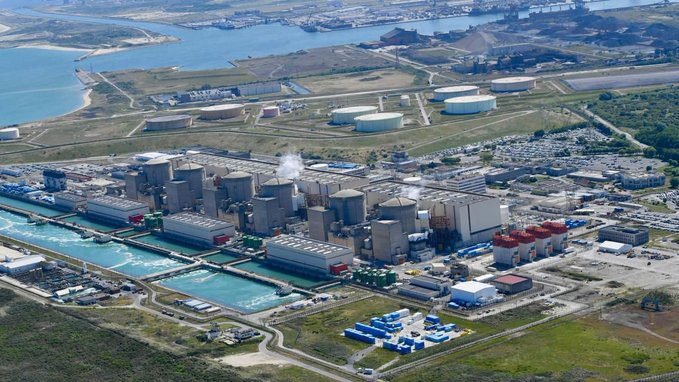
French nuclear facility hit by jellyfish influx on anniversary of previous disruption


Aug. 11 is quickly becoming jellyfish invasion day at the Gravelines nuclear power plant in northern France.

Despite spending hundreds of thousands of euros to protect the plant from a jellyfish swarm like the one that saw reactors shuttered on Aug. 11, 2025, French utility provider EDF on Tuesday was again forced to bring the parts of the facility offline due to the presence of “several dozen tons” of jellyfish blocking pumping systems.

“On-site teams are fully mobilized to ensure the safety of the facilities and to reconnect the reactors to the national power grid,” EDF said in a statement.

Three fishing vessels are now “constantly patrolling off the coast of the plant” to conduct “preventive fishing operations […] 24/7,” the company added.

Tuesday’s jellyfish invasion comes a the latest in a series of climate change-driven incidents that have affected French nuclear energy during a particularly infernal summer.

Nuclear power plants are typically built by rivers or on coastlines so they can use nearby water sources to cool their reactors. But a record number in France this summer have been forced to temporarily shut down due to heatwaves and droughts affecting their water supply.

Rising sea temperatures have made jellyfish swarms more common along the French coast in recent years, and those swarms can affect a plant’s ability to bring in seawater — which is what happened at Gravelines. Following last year’s incident at the plant along the North Sea, EDF installed cameras and deployed fishing boats to monitor the situation.

While the vessels “prevented a massive influx of jellyfish” on Saturday and Sunday, they were eventually overwhelmed as the swarm grew from “about 100 kilograms” to “several dozen tons,” the French state-owned utility giant said.

Opponents of nuclear energy were quick to jump on the incident.

“This only highlights that nuclear power plants are ill-equipped to deal with the consequences of climate change,” the French branch of Greenpeace said in statement.

Via Politico

Trump Sparks Assassination Fears After Bizarre Catering Cart Operation (Video)

0
trump-sparks-assassination-fears-after-bizarre-catering-cart-operation-(video)
Trump Sparks Assassination Fears After Bizarre Catering Cart Operation (Video)


Donald Trump’s security team reportedly went to extraordinary lengths to hide the president’s movements during a suspected Iranian assassination threat — including secretly moving him away from Air Force One in what one security source described as a “catering-cart farce.”

Trump, 80, had been attending the NATO summit in Turkey before leaving the country on July 8 when officials were reportedly confronted with intelligence suggesting Iran posed a credible threat to the president and whichever aircraft was carrying him.

What followed was an elaborate deception operation involving multiple presidential aircraft, confused reporters and White House staff who apparently had no idea Trump was no longer flying with them.

Trump had publicly said he planned to leave Turkey aboard an older version of Air Force One instead of the newer Boeing 747-8 donated by Qatar, joking that he wanted to use the older aircraft for “old times’ sake.”

Cameras then captured Trump boarding the older modified 747 through its left-side door.

Reporters boarded the same aircraft through a separate entrance, leading news organizations to believe Trump was traveling with them to Britain.

But according to reports, Trump apparently didn’t stay on the plane.

Instead, after boarding in full view of cameras, the president was allegedly removed from the opposite side of the aircraft using a catering container before being transferred to a military C-32A — a Boeing 757 used by senior U.S. officials.

Trump then reportedly flew secretly to Britain aboard the smaller aircraft.

Meanwhile, journalists and some White House staff continued flying aboard the presidential 747 believing Trump was still with them.

Without realizing it, they had apparently become part of the decoy operation.

The older Air Force One aircraft eventually landed at RAF Mildenhall in Britain at 10:16 p.m.

Trump was reportedly driven back to the presidential 747 and secretly boarded it again through another entrance.

He later appeared before reporters, walking down the plane’s upper stairs before crossing the tarmac and boarding the Qatar-donated 747-8 for the flight back to Washington.

When questioned about why the older aircraft had been used, Trump said he wanted U.S. troops stationed at the British base to get a look at the newer plane.

But behind the complicated aircraft shuffle was reportedly a much more serious concern.

Iran has repeatedly threatened Trump and members of his administration following the January 2020 U.S. strike that killed Iranian military commander Qassem Soleimani.

Decoy aircraft were also reportedly used at times during Trump’s 2024 presidential campaign after intelligence officials warned that Iran continued to pose a threat.

Despite the serious security concerns, one senior security source reportedly argued that the bizarre nature of the operation may have created another problem — making presidential security appear chaotic.

“There were real fears Trump could have been left a sitting duck for an assassination attempt if Iran knew exactly which plane he was boarding,” the source said.

Officials believed disguising Trump’s movements was necessary, the source explained, but reports that the president had to be moved using catering equipment made the entire operation sound like something from a spy comedy.

“This ‘operation’ descended into a catering-cart farce, with reporters and even some White House staff flying on a decoy plane believing the president was aboard,” the source said.

But the source stressed that the unusual maneuver was driven by a very real concern that revealing Trump’s exact location could expose him to an attack.

Former Secret Service agent Donald Mihalek defended the use of elaborate deception tactics, noting that decoy motorcades and aircraft have long been used when presidents travel through potentially dangerous areas.

“Anytime the president is in a theater where there’s potential combat danger, the Secret Service has employed protective counter measures including the use of a decoy,” Mihalek told The New York Times.

He added that the Secret Service’s primary responsibility is protecting the president — not explaining every security maneuver to the public.

“Their number one job is to keep the president safe,” Mihalek said.

White House communications director Steven Cheung also defended the operation.

“As the president has said recently, there are many enemies of America who have their sights on him, and we use every tool at our disposal — including distraction and misdirection — to address those threats,” Cheung said.

The extraordinary episode shows just how seriously officials are reportedly taking threats against Trump — even if protecting the president means turning Air Force One into part of an elaborate shell game.

An ultra-rare amoeba was destroying a toddler’s brain. Doctors missed it.

0
an-ultra-rare-amoeba-was-destroying-a-toddler’s-brain-doctors-missed-it.
An ultra-rare amoeba was destroying a toddler’s brain. Doctors missed it.

A healthy toddler in Washington state fell ill abruptly. It began with vomiting, lethargy, and weakness on his right side. Then it progressed to a headache, fever, and trouble swallowing. At one point, he briefly became unresponsive, and he had episodes where he stopped breathing. Doctors admitted him to the hospital, but his condition only deteriorated.

The boy was infected with an ultra-rare amoeba known for ravaging the brain. The opportunistic pathogen was first identified in 1986 from the brain of a San Diego Zoo monkey, which died from the infection. Since then, only about 200 human cases have been recorded worldwide. About 90 percent of them have been fatal.

The initial symptoms can be vague and, given its rarity, the infection is notorious for being undiagnosed or misdiagnosed. Still, the scant medical literature does provide some telltale signs, clues of what it can look like on tests and scans. But for the toddler, the infection looked different, sending doctors down the wrong path.

It took over 30 days for his medical team to finally figure out what was going on. By then, it was too late. The boy had profound, irreversible brain injuries. After initial attempts at therapy had no effect, the boy’s parents made the heartbreaking decision to remove his breathing tube to end his suffering. A subsequent autopsy showed that he had had a severe stroke, the vasculature in his brain was necrotic, and his brain tissue was brimming with amoebas.

In a case report, published Wednesday in BMJ Case Reports, the toddler’s doctors at Seattle Children’s Hospital review how they were led in the wrong direction and how to prevent it from happening in the next case. They also report that the boy’s parents agreed to share his medical case in hopes that it can lead to earlier diagnoses.

False lead

One of the biggest missteps was a misdiagnosis early in his case. Often in these rare amoeba cases, the early symptoms are so vague that diagnoses are delayed. But in the boy’s case, doctors jumped to a diagnosis—the wrong one—based on an unusual presentation. When his parents brought him to an emergency room, his symptoms were vomiting, fatigue, lethargy, and weakness. A computed tomography (CT) scan showed he had a hemorrhage on his brain, requiring a shunt.

More imaging of his vasculature showed that some of his arteries were blocked or narrowed. This has not been reported with amoeba infections before. Doctors ended up diagnosing him with childhood Takayasu arteritis, a type of vasculitis. It’s a rare, systemic inflammatory condition that causes damage to large and medium arteries in the body. It wasn’t a perfect diagnosis, but it was the condition that fit best with what they could see. They treated the boy with immunosuppressive drugs, and his symptoms improved in the hospital. After about two weeks in the hospital, he went home.

However, a week later, he was back in an emergency department with vomiting. Doctors sent him home after tests found his shunt was working properly, suspecting it was likely a side effect of one of the medications for his inflammatory condition. But his parents brought him back two days later, this time with fever, lethargy, a headache, and trouble swallowing. He was re-admitted to the hospital, and his condition began to deteriorate. At this point, it had been 25 days since his first hospital visit. The next day, he needed to be intubated. Two days after that, day 28 of his illness, he became unresponsive, his eyes rolled upward with pinpoint pupils, and his muscles became floppy.

Doctors scrambled to figure out what was going on, running more tests. Imaging of his brain suggested his injuries were worsening. They upped his dose of immunosuppressive therapy, thinking it was due to his vasculitis. But it wasn’t helping as it did before, and they took him off it as they began to worry he could have a fungal infection.

Thirty days after his initial hospital visit, doctors performed a brain biopsy to try to find the cause of his condition. They also turned to metagenomic next-generation sequencing (mNGS) on samples from his cerebrospinal fluid, a test that picks up and reads any genetic material in the fluid to determine what might be in there. Both tests finally picked up the rare amoeba, Balamuthia mandrillaris. In the brain tissue, doctors could see the amoebas, and their genetic signature was in his brain, too. Once the amoeba was identified, doctors began a large regimen of antimicrobial and antiparasitic drugs. But by then, catastrophic damage had been done.

Lessons

Reviewing the case, the doctors note that while some aspects of his early condition resembled Takayasu arteritis, other aspects, like some of the early signs of injury in his brain, did not.

“In cases such as this with diagnostic uncertainty, we advocate against premature diagnostic closure and suggest the consideration of B. mandrillaris in atypical cases of progressive vasculitis,” the doctors write.

Not only did the misdiagnosis halt efforts to find a better explanation for the condition, but the doctors also acknowledge that the immunosuppressive treatment might have made it worse. It initially helped make the boy feel better, making doctors think they were on the right track. But immunosuppressive drugs may have made it easier for the amoeba to ravage his brain.

To keep this from happening again, his doctors recommend that before immunosuppressive treatment is started or escalated, doctors should do diagnostic testing on cerebrospinal fluid for infectious microbes. The genetic testing of the cerebrospinal fluid was positive, suggesting this could be a relatively noninvasive way to identify the amoeba in future cases.

B. mandrillaris infections

Early detection of a B. mandrillaris can make a difference of life and death for children. In 2010, doctors in Kentucky reported a case in a 2-year-old boy who survived. His infection was identified 10 days after he was brought to a hospital. Although he had a significant neurologic injury, he made improvements after he was discharged from the hospital. At discharge, he was unable to follow commands, communicate, or walk. After 22 months, he was able to hold himself upright, smile socially, follow simple commands, and was working on talking.

In these cases—and almost all others—it’s unclear how or why the patients became infected. B. mandrillaris lives in soil and water around the world, though cases are mostly seen in warm places. People are thought to get infected by inhaling the amoeba from windblown dust or by getting contaminated soil or water in a wound. Experts do not know why some people become infected and others don’t.  People with compromised immune systems are at higher risk, but healthy people, like the boy in the new case report, can also become infected.

Common initial symptoms of B. mandrillaris begin with fever, headache, vomiting, nausea, and tiredness. In some cases, people develop telltale skin lesions, particularly on the face. Neurologic symptoms can develop days, weeks, or months later, including changes in mental status, confusion, seizures, paralysis, and difficulty walking and/or talking.

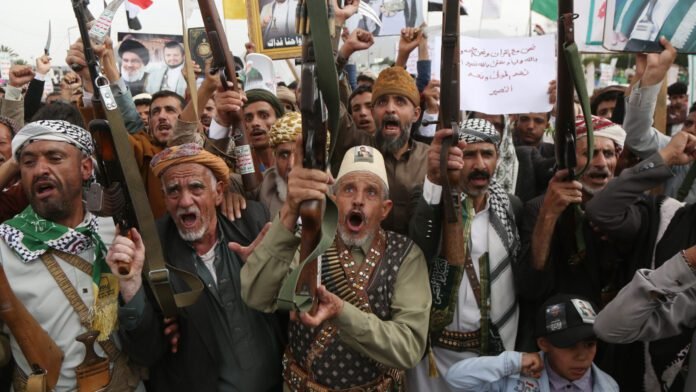
As Houthi Attacks Spread, Saudi Arabia Weighs a New Yemen Campaign

0
as-houthi-attacks-spread,-saudi-arabia-weighs-a-new-yemen-campaign
As Houthi Attacks Spread, Saudi Arabia Weighs a New Yemen Campaign


For three years, Saudi Arabia has sought to contain the Houthis while avoiding a return to full-scale war. What happens next turns on what Riyadh decides, Mohammed Qubaty, a Yemeni political figure, told TML

[ISTANBUL] Saudi Arabia is weighing whether to back a Yemeni ground campaign to retake the Red Sea coast from the Houthis, an offensive that would test forces Riyadh has spent seven months assembling out of rival Yemeni militias.

Ballistic missiles hit the commercial vessel Tihama on Tuesday in Bab-el-Mandeb, the strait at the southern mouth of the Red Sea, killing four of its crew. They were the first crew deaths from a Houthi attack since the American and Israeli war with Iran began in February.

The Houthis are the Iran-backed movement that has held Yemen’s capital and its north since 2014. They now control the Red Sea shore facing Saudi Arabia, and their weapons reach into the kingdom itself. On Aug. 9, they said a drone struck the Aramco refinery at Jazan, in southern Saudi Arabia. Yanbu, the Saudi export terminal farther up that coast, ships about 4 million barrels of crude a day.

Yemen’s Transport Ministry said three missiles struck the Tihama in succession and that the dead were three Pakistanis and an Indonesian. The coast guard put the toll at six dead and 10 wounded, including two Yemeni rescue personnel it said were also targeted. The Saudi daily Al-Watan reported three. The first account came from Al-Jumhuriya, a network owned by Tareq Saleh, a commander in Yemen’s internationally recognized government.

The Houthis did not claim responsibility for several hours. That evening, the Houthi-run channel Al-Masirah carried a statement from what it called the Yemeni armed forces announcing an operation against a ship carrying Saudi military equipment. It did not name the vessel. Iranian outlets, which call the group Ansarullah, reported two events that day: a commercial ship hit in the morning and a second at midday. Ambrey, a British maritime security company, said the Tihama was neither Saudi-owned nor Saudi-operated and had sailed from Mocha on Saturday.

“The whole coastline, from Bab-el-Mandeb through Mokha and Hodeidah to Ras Isa and As-Salif, is strategically important,” Mohamed Qubaty, a former Yemeni tourism and mass media minister who is acting chairman of the Southern Civil Democratic Rally, told The Media Line. “The Houthis know that eventually the outcome of any major confrontation could be tested there.”

That government, seated in the southern port of Aden, has spent a decade fighting the Houthis with Saudi backing and a decade divided against itself. Its army is a set of rival militias, some raised by Saudi Arabia and some by the United Arab Emirates, and welding them into one force is the problem Riyadh has worked on since January.

I think Saudi Arabia is keeping its options open and taking steps to ensure that, if confrontation with the Houthis becomes necessary, it enters it from a much stronger position

“I think Saudi Arabia is keeping its options open and taking steps to ensure that, if confrontation with the Houthis becomes necessary, it enters it from a much stronger position,” Nadwa Al-Dawsari, a Yemeni conflict analyst at the Middle East Institute and the Center on Armed Groups, told The Media Line.

Houthi missiles and drones have hit Mokha, a government-held port on the Red Sea, in seven waves, the seventh on Aug. 9, said Col. Wadhah al-Dubaish, spokesman for the Joint Forces on the west coast. Yemen’s Health Ministry put the toll at seven civilians killed and 30 wounded, two of them children; Al-Watan reported eight killed and 26 wounded. An earlier attempt on a fuel tanker inside the port killed a fisherman nearby. Missiles also hit al-Khokha, farther north.

On Aug. 5, Houthi military spokesman Yahya Saree claimed a ballistic missile strike on the Saudi oil tanker Wafa off Yanbu, and later that day, a second Saudi tanker, the Daisy, in the Gulf of Aden. Riyadh confirmed neither.

Mokha is a base for the Joint Forces, al-Dawsari said. The Houthis are trying to weaken them before they can join a ground offensive and to keep any escalation on their own terms.

Qubaty said he does not believe the Houthis can degrade them decisively. “We are speaking about formations numbering in the thousands,” he said. “The more important question is whether those formations can operate together.”

He said the Houthis may be striking before the government completes its military reorganization. “The recent strikes should not necessarily be read simply as evidence of Houthi confidence,” Qubaty said. “Preemptive violence can also reveal strategic anxiety—an attempt to disrupt forces before an adversary recovers the initiative.”

Preemptive violence can also reveal strategic anxiety—an attempt to disrupt forces before an adversary recovers the initiative

Inland, the fighting is over Marib, the government’s stronghold and the center of Yemen’s oil and gas production. The death toll from Houthi strikes there and in neighboring Hadramout on Aug. 6 ranges from 17 to 58. A military officer told Xinhua, the Chinese state news agency, that at least 35 government soldiers were killed.

China has an arrangement no one else does. Beijing opened direct talks with the Houthis after the July blockade and now clears its tankers one ship at a time, keeping Tehran informed, according to Chinese trade outlets and regional officials briefed on the matter. China buys most of Iran’s sanctioned crude, revenue that helps fund the Houthis. At least four Saudi tankers bound for China have since crossed.

India has more riding on the strait than most. Saudi Arabia was its third-largest crude supplier in June, and with Hormuz shut, that oil crosses the kingdom by pipeline and leaves through Bab-el-Mandeb. Two Saudi tankers bound for India and China turned back last month.

Fertilizer is the larger exposure. Saudi Arabia supplies 42% of India’s diammonium phosphate imports under contracts signed last year for 3.1 million tons a year, and the Gulf about 70% of its urea. India buys roughly a third of the world’s traded DAP and grows its rice and wheat on it. Delayed or costlier cargoes land in the October sowing season, and from there on, food prices.

“The Houthis have demonstrated that relatively modest military capabilities—combining drones, precision-guided missiles, and small maritime platforms — can impose enormous costs on the global economy,” Harsh V. Pant, vice president for studies and foreign policy at the Observer Research Foundation in New Delhi, told The Media Line.

The divided command has long kept the government from coordinating its forces, Qubaty said. New army and air force commanders have been appointed, and integration has accelerated over the past six months.

What changed in January was that the two patrons fell out. In late December, coalition aircraft bombed a weapons shipment that reached an Emirati-linked base in eastern Yemen without Saudi permission, coalition spokesman Turki al-Maliki said. Riyadh accused the United Arab Emirates of pushing southern separatists into operations along its border, and President Rashad al-Alimi gave Emirati forces 24 hours to leave.

Saudi airstrikes stopped those separatists, the Southern Transitional Council, from taking the south outright. Its leader was charged with treason and removed from the governing council on Jan. 15, and much of the leadership is in exile or detained in Riyadh. Abu Dhabi still backs the movement, and the two approaches remain at odds, al-Dawsari said.

A Saudi general, Maj. Gen. Falah al-Shahrani, now supervises the folding of those southern units into Yemen’s defense and interior ministries. He also oversees Nation’s Shield and the Emergency Forces, Saudi-created units struck this month.

For roughly three years, Saudi Arabia has sought to contain the Houthis while avoiding a return to full-scale war. What happens next turns on what Riyadh decides, Qubaty said. He distinguishes between preparing for contingencies and deciding to launch an offensive, and cannot conclude that Riyadh has made that decision.

Neither the United Arab Emirates nor Oman joined the 14-state maritime coalition Riyadh launched on July 30 to protect Red Sea shipping, and no Gulf partner signed the mutual defense pact Riyadh made in Mecca on Aug. 7 with Turkey and Pakistan. The Saudi Defense Ministry called the coalition purely defensive.

The Houthis called it an alliance to defend Saudi crimes, and denied charging ships to pass through the strait. Reuters reported in late July that the group was weighing transit fees, exempting Chinese vessels. “Instead of weeping over the targeted ships, stop your blockade and unjust aggression against the people of Yemen,” Saree said.

Saudi Arabia built the East-West Pipeline, known as Petroline, to move crude across the country to Yanbu and skip the Persian Gulf. But tankers leaving Yanbu for Asia must still sail the length of the Red Sea and out through Bab-el-Mandeb, past the Houthis. Houthi attacks there reduce the value of the alternative route and raise insurance and shipping costs, Qubaty said.

The Houthis have protected their military spending while many civilian employees go unpaid, Qubaty said. The group collects taxes, customs duties, and fees in the territory where most Yemenis live. Under a 2018 United Nations deal, revenue from the Houthi-held port of Hodeidah was to help pay those salaries, but about 50 billion Yemeni riyals, roughly $90 million at the rate used in Houthi areas, built up before the group took it, he said.

Mohammad Bagher Zolghadr, secretary of Iran’s Supreme National Security Council, said on Aug. 8 that the Strait of Hormuz will not open until Washington changes its behavior. His conditions include an end to operations against Iran and its allies in Lebanon, Iraq, Yemen, and the Palestinian territories, an end to the naval blockade, and sanctions relief.

Iranian influence over Houthi decisions has grown lately, Qubaty said, particularly in areas that touch on the wider regional confrontation and the chokepoints. “I would not say Tehran is necessarily in the driving seat, but it is highly influential,” he said.

I would not say Tehran is necessarily in the driving seat, but it is highly influential

Yemeni security sources told Al-Watan that Houthi leaders have converted hotels in the capital and two other cities they hold into temporary headquarters, and that officers of Iran’s Revolutionary Guard are running an operations room directing both the escalation and the group’s media line. Qubaty said Iranian and Revolutionary Guard-linked personnel have operated in Houthi-held territory for years, but declined to name individuals.

“Air and maritime power can degrade capabilities and contain immediate threats, but they do not by themselves change the territorial condition that generates those threats,” Qubaty said.

Any campaign has to be fought by Yemenis, not Americans, he said.

“A durable strategy requires three concentric circles of deterrence working together: Yemeni forces restoring sovereign control on the ground; regional partners providing the strategic support necessary to sustain that effort; and international powers securing the wider maritime environment,” Qubaty said. “None of the three is sufficient alone.”

“The strategic objective should not simply be military action for its own sake,” he said. “It should be to change the balance sufficiently that serious political negotiation becomes unavoidable.”

“The danger is that the Houthis demonstrate that an armed nonstate actor controlling strategically important territory can continue exercising coercive leverage over Bab el-Mandeb and international commerce,” Qubaty said. “That would have consequences far beyond Yemen.”

The Intercept Sues Trump for Selling Premium Access to Truth Social Announcements

0
the-intercept-sues-trump-for-selling-premium-access-to-truth-social-announcements
The Intercept Sues Trump for Selling Premium Access to Truth Social Announcements


The Intercept and the Freedom of the Press Foundation sued President Donald Trump and his staff Wednesday, challenging a Trump-owned media company’s plan to monetize the president’s social media posts.

The lawsuit is in response to a scheme announced last month by the parent company of Trump’s Truth Social platform to charge as much as $100,000 per month for early access to the president’s posts. 

By offering preferred access to presidential missives, the monetization plan, dubbed “Truth API,” would violate the First Amendment rights of journalists and other members of the public to equal access to official information, the lawsuit argues, while allowing Trump to trade his public statements for cold hard cash.

“Trump is trying to enrich himself by privatizing government information that he has no right to sell,” said Ben Muessig, editor-in-chief of The Intercept. “We won’t let it stand.”

The complaint filed in the Southern District of New York also asserts that the monetization scheme, which it described as an “out-and-out plan of extortion,” would violate the Fifth Amendment by charging “unreasonable sums” for equal access to government information and by undermining the right to equal protection under the law.

“This lawsuit seeks to vindicate the principle that the president of the United States cannot profit from the official government statements of the president,” said Nikhel Sus, Chief Counsel for Citizens for Responsibility and Ethics in Washington, which provided legal support for the lawsuit. “Every American is entitled to equal access to the president’s public statements. Individuals who pay $100,000 to the president’s personal company do not have any greater entitlement to those public statements.”

“Every American is entitled to equal access to the president’s public statements.”

Truth API is part of a broader effort to bring Trump Media & Technology Group into the black. Despite a steep up-front cost ranging from $60,000 to $100,000 per month, the company’s interim CEO Kevin McGurn has been explicit about the potential dividends awaiting customers willing to pay — and the potential gain for Trump and other shareholders.

“Truth API delivers a direct, licensed, real-time feed of the platform’s most market-moving Truths while advancing our strategy to monetize proprietary assets through a high-margin, recurring revenue stream,” McGurn said in a July 16 press release. “As adoption grows, we expect Truth API to become a meaningful, ongoing source of revenue for the company, creating lasting value for shareholders.”

No shareholder stands to benefit more than Trump, who holds the largest single stake in the company through a trust established when he retook the White House in January 2025. At the time, his 52.1 percent stake in the company was valued at $4 billion. The company’s stock has plunged in value since entering the market, causing the value of Trump’s stake to fall to around $1 billion, according to the complaint. 

In addition to the president, the lawsuit names as defendants Trump’s executive assistant Natalie Harp, White House Deputy Chief of Staff Daniel Scavino, the Executive Office of the President, and the White House Office. Representatives for the defendants and for Trump Media did not immediately respond to a request for comment.

Truth Social has its roots in the interregnum between the two Trump administrations, when Trump, an early adopter of X who used the platform extensively in his first term as president, was banned from his beloved app and other social media platforms in 2021 in the wake of the attempted insurrection on January 6. 

Weeks after the ban, he formed Trump Media & Technology Group and announced plans for a proprietary social media platform to be known as Truth Social. The platform, essentially a right-wing clone of X, launched in 2022, and Trump Media went public in 2024 via a merger with a special-purpose acquisition company, or SPAC, a process of entering the stock market that is typically subject to less scrutiny than a traditional initial public offering.

Shortly after acquiring Twitter and renaming it X, Elon Musk allowed Trump back onto the platform, and other social-media companies later followed suit. But Trump has continued to use Truth Social as his first and primary means of communication with the public. 

Still, despite enjoying the benefits of Trump’s universal name recognition and the potential for access-granting fringe benefits of investing in the company, Trump Media & Technology Group has been something of a financial loser. Just days after announcing Truth API, McGurn revealed in an earnings call on Monday that second-quarter losses had totaled $238 million.

Despite such dismal numbers, the potential return on investment for parties sinking money into the company goes beyond earnings by acting as a potential side-door for influence peddling and buying access, according to critics. Although his relationship with the administration has recently soured, few cases illustrate this more clearly than that of Justin Sun, a billionaire crypto kingpin who swiftly resolved an inquiry by the Securities and Exchange Commission after investing $30 million in the Trump family’s crypto venture, World Liberty Financial. Other major investors with a clear interest in gaining Trump’s favor have included an Emirati powerbroker and a failed businessman under investigation for money laundering.

“If you look back through the American presidency, there’s really no comparison for this kind of self-enrichment,” said Molly White, a researcher who has written critically of Trump’s crypto ventures and their various backers. “People have made quite a stink in the past about presidents selling books or family members of presidents peddling off of their connections, and that’s certainly true. But I mean, the scale here is just unprecedented.”

Critics of the president have raised similar concerns about Truth API. In a letter to the SEC last month, Sens. Adam Schiff, D-Calif., and Elizabeth Warren, D-Mass., pointed to numerous instances in which Trump had used Truth Social to hype individual stocks, including CitiGroup, Palantir, and Intel.

“The Trump Administration is the most corrupt in the nation’s history, and questions about inappropriate insider access to information about its policies and actions have raised questions on multiple occasions,” the senators wrote. “But even amid these clouds of corruption, Trump Media’s plan to disseminate market-moving information through the President’s own company, while charging insiders for access ahead of the public for the benefit of his company — and to the detriment of the investing public — represents a shocking abuse of the office of the President and the trust of the American public for his personal gain.”

Trump sued over “brazen” scheme to sell Truth Social API access for $100K a month

0
trump-sued-over-“brazen”-scheme-to-sell-truth-social-api-access-for-$100k-a-month
Trump sued over “brazen” scheme to sell Truth Social API access for $100K a month

President Trump was sued by nonprofit news groups today over Truth Social’s “Truth API” that sells real-time access to posts from Trump and other top users of the social network. Trump is profiting from selling preferential access to government information, the lawsuit said.

Trump’s social media company this month started charging customers up to $100,000 per month for the earliest access to posts that can have immediate impacts on financial markets. The first customers are mostly high-frequency trading firms that could benefit financially from getting official government news milliseconds before others.

“This scheme is profoundly corrupt. The President stands to gain financially by giving ‘market-moving’ government information to those who are willing and able to pay his personal company,” the lawsuit said.

Truth Social also intends to impose restrictions on web scraping tools and make its API the only way to access archived posts that have been deleted or edited, the lawsuit said. The lawsuit was filed by The Intercept and the Freedom of the Press Foundation, which argue that Trump is violating the US Constitution by preventing equal access to government announcements.

“A president selling priority access to news he himself generates for the benefit of a private company he controls is so blatantly corrupt and unconstitutional that it would have been hard to even fathom just a few years ago,” said Seth Stern, the Freedom of the Press Foundation’s chief of advocacy.

Trump “privatizing government information”

The lawsuit was filed in US District Court for the Southern District of New York. It asks the court to declare that posting official government information exclusively on Truth Social while charging for fast access through the API is unconstitutional and unlawful. It seeks an injunction prohibiting the president and aides from posting official government information exclusively on Truth Social as long as the platform maintains the paid API.

“Trump is trying to enrich himself by privatizing government information that he has no right to sell,” said Ben Muessig, The Intercept’s editor-in-chief. “We won’t let it stand.”

Trump frequently posts official government announcements exclusively on Truth Social, including military attacks and ceasefires, the hiring and firing of agency heads, and major domestic policies, the lawsuit said.

“Trump’s crooked scheme is particularly outrageous because, as documented by our Trump Anti-Press Social Media Tracker, he frequently uses his Truth Social account to berate journalists and even to announce his plans to sue them and criminally investigate them,” Stern said. “Then, he makes them wait in line behind paying customers to find out about it unless they’re willing to subsidize the platform he uses to attack them. This brazen grift targets not only the markets but the First Amendment.”

Truth Social seeks more customers

Besides Trump, defendants include Executive Assistant to the President Natalie Harp and Deputy Chief of Staff Daniel Scavino. Both Harp and Scavino have access to Trump’s Truth Social account and publish posts on his behalf, the lawsuit said. The other named defendants are the Executive Office of the President and the White House Office.

Trump Media & Technology Group, the owner of Truth Social, reported $1.7 million in revenue and a net loss of $238.1 million in the second quarter. The net loss included $190.4 million in “non-cash losses including unrealized losses on digital assets, digital assets pledged, and equity securities,” the company said.

Trump Media expects that Truth API will help generate more cash. Interim CEO Kevin McGurn said in an earnings call that the firm signed up over 10 customers, mostly high-frequency trading firms that are paying $60,000 to $100,000 a month.

McGurn said Truth Social is in conversations to sign up cloud computing companies, large news organizations, and developers of large language models. The company plans to eventually offer the Truth API to retail investors, he said.

The company’s press release that announced Truth API said that “markets already move on Truth Social posts” and that the service will become a significant, ongoing source of revenue. “Truth API is designed for organizations most impacted by the cost of a delay in information. This includes high-frequency and algorithmic trading firms that require a low-latency, machine-readable feed rather than manual tracking,” the company said.

Lawsuit alleges violation of 1st and 5th Amendments

The lawsuit argues that Truth API imposes an impermissible burden on access to Trump’s public announcements.

“The First Amendment guarantees equal access to the President’s public announcements, and even content-neutral burdens on that access must be narrowly tailored to serve a significant government interest,” the lawsuit said. “There is no legitimate interest, let alone a significant one, in permitting President Trump to profit from selling government information. Similarly, the Fifth Amendment prohibits charging unreasonable sums that cannot be justified to offset the cost of the government benefit, and granting preferential access to crucial government information for arbitrary and irrational reasons, as is the case here.”

The lawsuit said Truth Social appears set on making archived posts impossible to access without an API subscription. It pointed to a McGurn quote in which he said, “We’re going to create a lot of friction for those folks that aren’t coming to us directly.” This shows that Trump Media plans to disrupt web-scraping tools and ensure that users must subscribe to Truth API to access deleted or edited posts that are no longer available to the public, the lawsuit said.

The Intercept and the Freedom of the Press Foundation are both nonprofits and said they will be harmed by the Truth Social scheme. “Both face indefinitely delayed access to the President’s latest posts, and face permanent bars to the President’s archived posts, making it harder for both organizations to do their jobs,” the lawsuit said.

We contacted the White House today and will update this article if it provides any comment.

Germany should change Israel policy amid growing violence against Palestinians: Ex-envoy

0
germany-should-change-israel-policy-amid-growing-violence-against-palestinians:-ex-envoy
Germany should change Israel policy amid growing violence against Palestinians: Ex-envoy

Germany should change its policy toward Israel amid mounting violence against Palestinians in the occupied territories, former German Ambassador to Israel Steffen Seibert said Wednesday, Anadolu reports.

Israel’s settlement policy amounts to “displacement through psychological and physical violence,” Seibert said in an interview with the weekly Die Zeit newspaper.

Former Chancellor Angela Merkel had declared Israel’s security to be part of Germany’s national interest.

Seibert, who served as Merkel’s government spokesperson, said that commitment applies to Israel within its internationally recognised borders.

“But that does not apply to the settlers in the Jordan Valley. Under international law, these are illegal settlements that follow the ideology: ‘This is our land alone; God gave it to us,’” Seibert said.

“The German national interest does not apply to this; it does not support a sense of superiority over another population,” he added.

Seibert called for Berlin to clarify what it means when it says it stands by Israel.

“For decades, we have spoken of Israel as the only democracy in the region, and that is true. But that does not mean that our support extends to every action taken by the Israeli government — for example, not the occupation, which is now entering its 60th year,” he said.

Acts of violence by Israeli occupiers against Palestinians in the West Bank have increased in recent years. The Israeli army has repeatedly been accused of failing to take decisive action against such attacks.

Israeli human rights activists have accused the army of supporting occupiers in the West Bank in their acts of violence against Palestinians.

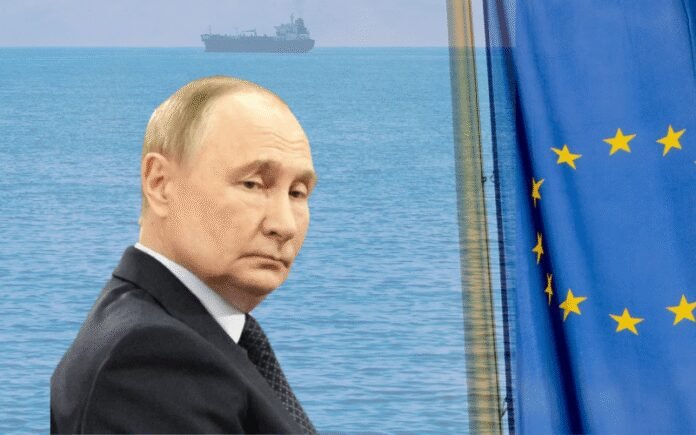
Putin says Russia will respond in kind if EU nations seize Russian vessels

0
putin-says-russia-will-respond-in-kind-if-eu-nations-seize-russian-vessels
Putin says Russia will respond in kind if EU nations seize Russian vessels


Russian President Vladimir Putin said on Wednesday that ​Russia will respond in kind if European countries ‌seize ussian merchant vessels, the TASS state news agency reported.

The comments come as the EU intensifies pressure on Russia’s so-called ​shadow fleet, expanding sanctions against hundreds of ​vessels and detaining some ships and their crews ⁠for checks. Some European governments have said they are ​exploring tougher maritime enforcement measures against ships suspected of ​sanctions evasion.

TASS cited Putin as saying of those measures: “Of course, this is nothing short of piracy and banditry. And if ​this is actually put into practice, we will be ​forced to respond in kind.”

He said, according to TASS, that ‌any ⁠Russian retaliatory action would not be limited to those waters where Russian ships were seized, but “will happen wherever we deem it necessary and appropriate.”

Putin was speaking from Russia’s ​far eastern ​island of Sakhalin, ⁠where he is observing military exercises. TASS also cited him as accusing NATO of making ​inroads into the Asia-Pacific region, and creating tension ​in the ⁠Arctic.

“NATO is making inroads into the region, new military-political blocs are being formed, and new weapons systems that ⁠pose ​a threat to Russia are being ​deployed or are slated for deployment,” it cited him as saying.

Source:  Reuters

Scientists define a new category of heat wave: ‘Snow eaters’

0
scientists-define-a-new-category-of-heat-wave:-‘snow-eaters’
Scientists define a new category of heat wave: ‘Snow eaters’

Matthew LaPlante doesn’t have to go to a lab to see his research in action. On some mornings, he can just look out his own window in the mountains high above Salt Lake City. After a warm night when the temperature stays above freezing, he’ll wake up and see that the snow level has dropped by inches, revealing more of the aspens he taps for syrup.

“It feels like a monster came and just in the middle of the night, took a bite out of a snowpack,” said LaPlante, a journalist and climate scientist at Utah State University.

So it’s fitting that scientists have started calling these kinds of heat waves, marked by unusually high temperatures in the spring and early summer, “snow eaters.” 

LaPlante was part of a recent study, published in the journal Science Advances, that attempted, for the first time, to identify what conditions exactly make for a “snow eater.” Compared to normal warm spells or heat waves, the researchers determined that these events happen when temperatures stay above freezing through both day and night for multiple days, typically three to five. These events can roughly double the rate at which snow melts, causing flooding and making it challenging to manage water resources. 

“Snow eaters” appear to be occurring earlier in the year and becoming more widespread in the Western United States as the climate warms. Since the 1850s, the study found, the area affected by snow eaters has increased by an average of about 40,000 square miles per century, and the first snow eater of the season has been arriving about one month earlier per century. 

The term “snow eater” has a murky history. By at least the 1880s, people in the West were talking about “snow-eating” chinooks, warm mountain winds that make snow disappear quickly. More recently, the phrase “snow-eater heat wave” first made headlines in March, when an early heat wave enveloped much of the West, quickly wiping away snowpack in the Colorado Rockies and California’s Sierra Nevada. The scientists hope the catchy, evocative term can help draw more attention to this type of heat wave, since there’s still a lot to learn. The study only looked at the Western U.S., but snow eater heat waves almost assuredly occur elsewhere, LaPlante said.

Solar radiation is a major, but sometimes overlooked, driver of snowmelt, said Noah Molotch, a professor of geography at the University of Colorado Boulder who was not involved in the new study. When it interacts with heat waves, those impacts are amplified. As snow crystals warm up, they lose some of their structure and light-reflecting abilities, causing snowpacks to absorb more sunlight and melt faster. “It’s a little bit of a — no pun intended — a snowball effect,” he said.

Much of the Western U.S. saw record-low snowpack this spring. What was really unusual about it, Molotch said, was how widespread it was. Colorado received less precipitation than normal this winter, while California got lots of precipitation, but in the form of rain instead of snow. But across the region, “the one thing in common was above-average air temperatures,” Molotch said.

These conditions have likely helped fuel exceptionally severe wildfires in the West, from Utah to Spokane, Washington, where hundreds of homes burned earlier this month. “Drought stress for mountain forests around the Western U.S. is heavily dictated by the snow that accumulates each winter and then melts through the spring and summer,” Molotch said. “There is a direct connection there in terms of the water availability and drought stress that can provide one of the important ingredients for increases in wildfire intensity and frequency.”

If scientists are able to better predict what will happen to snowpack, it could help water managers plan for what’s coming. Early or rapid snowmelt poses problems for managing water resources in the West, where snowpack serves as a key source of fresh water in the drier summer months. “Water that would otherwise be stored as snow comes out early, and then we have to deal with it as a hazard instead of a resource at our reservoirs and along the rivers and streams,” said Ben Hatchett, a co-author on the study and a scientist at Colorado State University’s Cooperative Institute for Research in the Atmosphere.

Snow-eater heat waves also may pose risks to skiers, hikers, and anyone else on or near mountains. They could be linked to hazards such as avalanches, glacial collapses, and permafrost melt, Hatchett said, though scientists are still investigating those connections. He lives in the Sierra Nevada, and he’s noticed one tangible change over his lifetime: The soundscape has changed.

“At night, it used to be quiet,” he said. “And now it’s not quiet, because everything’s melting all the time.”


0FansLike
0FollowersFollow
0FollowersFollow
0SubscribersSubscribe
- Advertisement -
Google search engine

Recent Posts