Germany should change Israel policy amid growing violence against Palestinians: Ex-envoy
Germany should change its policy toward Israel amid mounting violence against Palestinians in the occupied territories, former German Ambassador to Israel Steffen Seibert said Wednesday, Anadolu reports.
Israel’s settlement policy amounts to “displacement through psychological and physical violence,” Seibert said in an interview with the weekly Die Zeit newspaper.
Former Chancellor Angela Merkel had declared Israel’s security to be part of Germany’s national interest.
Seibert, who served as Merkel’s government spokesperson, said that commitment applies to Israel within its internationally recognised borders.
“But that does not apply to the settlers in the Jordan Valley. Under international law, these are illegal settlements that follow the ideology: ‘This is our land alone; God gave it to us,’” Seibert said.
“The German national interest does not apply to this; it does not support a sense of superiority over another population,” he added.
Seibert called for Berlin to clarify what it means when it says it stands by Israel.
“For decades, we have spoken of Israel as the only democracy in the region, and that is true. But that does not mean that our support extends to every action taken by the Israeli government — for example, not the occupation, which is now entering its 60th year,” he said.
Acts of violence by Israeli occupiers against Palestinians in the West Bank have increased in recent years. The Israeli army has repeatedly been accused of failing to take decisive action against such attacks.
Israeli human rights activists have accused the army of supporting occupiers in the West Bank in their acts of violence against Palestinians.
Putin says Russia will respond in kind if EU nations seize Russian vessels
Russian President Vladimir Putin said on Wednesday that Russia will respond in kind if European countries seize ussian merchant vessels, the TASS state news agency reported.
The comments come as the EU intensifies pressure on Russia’s so-called shadow fleet, expanding sanctions against hundreds of vessels and detaining some ships and their crews for checks. Some European governments have said they are exploring tougher maritime enforcement measures against ships suspected of sanctions evasion.
TASS cited Putin as saying of those measures: “Of course, this is nothing short of piracy and banditry. And if this is actually put into practice, we will be forced to respond in kind.”
He said, according to TASS, that any Russian retaliatory action would not be limited to those waters where Russian ships were seized, but “will happen wherever we deem it necessary and appropriate.”
Putin was speaking from Russia’s far eastern island of Sakhalin, where he is observing military exercises. TASS also cited him as accusing NATO of making inroads into the Asia-Pacific region, and creating tension in the Arctic.
“NATO is making inroads into the region, new military-political blocs are being formed, and new weapons systems that pose a threat to Russia are being deployed or are slated for deployment,” it cited him as saying.
Scientists define a new category of heat wave: ‘Snow eaters’
Matthew LaPlante doesn’t have to go to a lab to see his research in action. On some mornings, he can just look out his own window in the mountains high above Salt Lake City. After a warm night when the temperature stays above freezing, he’ll wake up and see that the snow level has dropped by inches, revealing more of the aspens he taps for syrup.
“It feels like a monster came and just in the middle of the night, took a bite out of a snowpack,” said LaPlante, a journalist and climate scientist at Utah State University.
So it’s fitting that scientists have started calling these kinds of heat waves, marked by unusually high temperatures in the spring and early summer, “snow eaters.”
LaPlante was part of a recent study, published in the journal Science Advances, that attempted, for the first time, to identify what conditions exactly make for a “snow eater.” Compared to normal warm spells or heat waves, the researchers determined that these events happen when temperatures stay above freezing through both day and night for multiple days, typically three to five. These events can roughly double the rate at which snow melts, causing flooding and making it challenging to manage water resources.
“Snow eaters” appear to be occurring earlier in the year and becoming more widespread in the Western United States as the climate warms. Since the 1850s, the study found, the area affected by snow eaters has increased by an average of about 40,000 square miles per century, and the first snow eater of the season has been arriving about one month earlier per century.
The term “snow eater” has a murky history. By at least the 1880s, people in the West were talking about “snow-eating” chinooks, warm mountain winds that make snow disappear quickly. More recently, the phrase “snow-eater heat wave” first made headlines in March, when an early heat wave enveloped much of the West, quickly wiping away snowpack in the Colorado Rockies and California’s Sierra Nevada. The scientists hope the catchy, evocative term can help draw more attention to this type of heat wave, since there’s still a lot to learn. The study only looked at the Western U.S., but snow eater heat waves almost assuredly occur elsewhere, LaPlante said.
Solar radiation is a major, but sometimes overlooked, driver of snowmelt, said Noah Molotch, a professor of geography at the University of Colorado Boulder who was not involved in the new study. When it interacts with heat waves, those impacts are amplified. As snow crystals warm up, they lose some of their structure and light-reflecting abilities, causing snowpacks to absorb more sunlight and melt faster. “It’s a little bit of a — no pun intended — a snowball effect,” he said.
Much of the Western U.S. saw record-low snowpack this spring. What was really unusual about it, Molotch said, was how widespread it was. Colorado received less precipitation than normal this winter, while California got lots of precipitation, but in the form of rain instead of snow. But across the region, “the one thing in common was above-average air temperatures,” Molotch said.
These conditions have likely helped fuel exceptionally severe wildfires in the West, from Utah to Spokane, Washington, where hundreds of homes burned earlier this month. “Drought stress for mountain forests around the Western U.S. is heavily dictated by the snow that accumulates each winter and then melts through the spring and summer,” Molotch said. “There is a direct connection there in terms of the water availability and drought stress that can provide one of the important ingredients for increases in wildfire intensity and frequency.”
If scientists are able to better predict what will happen to snowpack, it could help water managers plan for what’s coming. Early or rapid snowmelt poses problems for managing water resources in the West, where snowpack serves as a key source of fresh water in the drier summer months. “Water that would otherwise be stored as snow comes out early, and then we have to deal with it as a hazard instead of a resource at our reservoirs and along the rivers and streams,” said Ben Hatchett, a co-author on the study and a scientist at Colorado State University’s Cooperative Institute for Research in the Atmosphere.
Snow-eater heat waves also may pose risks to skiers, hikers, and anyone else on or near mountains. They could be linked to hazards such as avalanches, glacial collapses, and permafrost melt, Hatchett said, though scientists are still investigating those connections. He lives in the Sierra Nevada, and he’s noticed one tangible change over his lifetime: The soundscape has changed.
“At night, it used to be quiet,” he said. “And now it’s not quiet, because everything’s melting all the time.”
“They’re Putting Kids’ Lives at Risk”: How Abuse in a Tennessee Businessman’s Juvenile Prisons Remained Under Wraps
Reporting Highlights
Locked Down: Interviews with dozens of former staff and youth reveal how Wayne Halfway House failed to report suspected abuse to state officials across youth prisons in Tennessee.
A Company’s Mandate: According to several former employees at Wayne Halfway House’s youth prisons, an expectation to keep serious incidents secret came from the top: CEO Jason Crews.
Under Investigation: Tennessee said it is investigating the incidents WPLN and ProPublica uncovered at the company’s facilities.
These highlights were written by the reporters and editors who worked on this story.
The video clip lasted less than two minutes, but Tonya Webb remembers every second as heartbreaking.
The grainy surveillance footage, dated June 29, 2024, showed a teenager in an anti-suicide smock being dragged violently by other teens across the floor at Middle Tennessee Juvenile Detention Center. As guards watched, the teens pulled the smock over the boy’s head, exposing his naked body. Then they stuffed him, limbs flailing, into a cell.
One guard pushed the door closed, locking him in, and the boy pressed his face against the sliver of a cell window. The guard flashed the teens a thumbs-up.
Webb, a medication supervisor at the facility, saw the video when a co-worker showed it to her and knew she was looking at a serious violation of state policy. An incident like this one, in which employees encouraged youths to restrain another youth, would require staff to notify both the state and the boy’s family within 24 hours.
Webb said she raised questions about the incident with the compliance director for the facility. The director said she’d handle it, but after weeks went by with no sign of a state investigation, Webb confronted the deputy to the facility’s executive director.
“I know you’ve seen the video,” Webb recalled telling her. “Nothing’s being done about it.”
According to Webb, the deputy said, “I don’t know what you’re talking about.” Webb found her response baffling, as word of the attack had spread rapidly among staff and the footage was stored on the facility’s own security system.
WPLN and ProPublica obtained a recording of the video; Webb did not provide it. We asked the state’s Department of Children’s Services if it received an incident report from the facility on or around June 29, 2024. The department confirmed it did not. Webb later reported the incident to DCS.
A Tennessee businessman named Jason Crews was the executive director of the private company that ran Middle Tennessee Juvenile Detention Center at that time. He’s also the CEO of Wayne Halfway House, a separate company that had employees overseeing the detention center and that contracts with the state to operate other juvenile facilities. Crews did not reply to written questions about this incident, nor did his deputy and compliance director.
Interviews with dozens of former staff and youth, along with a review of emergency call logs, company records and state documents, reveal how Wayne Halfway House’s leaders failed to report suspected physical and sexual abuse to state officials across Crews’ facilities and prevented the public from learning about violent attacks by reducing the number of 911 calls. The state is now investigating incidents we uncovered.
According to Wayne Halfway House and Middle Tennessee Juvenile Detention Center employees who worked closely with corporate executives, there was an expectation that serious incidents be kept secret, and the directive came from Crews.
“You always call Jason and nothing gets reported without his permission — and that’s wrong,” said Kim Watts, the company’s former human resources director. She was fired in 2024 when “the company decided to go in a different direction,” according to her termination paperwork.
Liz Ryan, who oversaw juvenile justice programs for the Biden administration, reviewed a detailed summary of the incidents WPLN and ProPublica compiled, the corresponding state laws and policies and the company’s responses. “Wayne Halfway House Inc. and its leadership, including CEO Jason Crews, appear to have demonstrated a documented pattern of disregard for state law, federal law and professional standards,” said Ryan, who provided training and guidance to state and local governments about best practices for youth in the system.
“They’re putting kids’ lives at risk,” she said. “Absent immediate and vigorous state oversight and intervention, this seems like a disaster waiting to happen as allegations of this nature are warning signs in need of immediate examination.”
In a statement, Wayne Halfway House said the company follows state policy and law and “vehemently denies” that Crews or his company have ever discouraged staff from reporting serious or life-threatening incidents to the state or 911. It described its former employees as “untrustworthy sources” with a “clear bias” against the company and their allegations as “substantially flawed.”
Crews briefly spoke with the news organizations in April during a guided tour of one of his facilities, but he subsequently declined multiple requests for a formal interview. Wayne Halfway House provided detailed responses in writing to three rounds of questions.
DCS said that confidentiality laws limit the agency from commenting publicly about specific youth or investigations, but that it is looking into these incidents. “DCS is comparing the information provided with Department and provider records to determine whether required incident and abuse reports were made, whether appropriate medical care and notifications occurred and what actions were taken in response,” the agency said in a written statement. The results of its investigation will not be made public, it said.
Over much of the last decade, Tennessee has pushed to expand juvenile prison capacity — and to do so, it turned to Crews. Most youth in state custody for committing crimes are held in his facilities, which accommodate nearly 300.
About six weeks after the incident with the teen in the video, the state gave Wayne Halfway House a more lucrative contract to turn Middle Tennessee Juvenile Detention Center, located an hour south of Nashville, from a juvenile jail into a prison. Crews now runs all three of Tennessee’s highest-security youth prisons.
Jarvis; his mother, Crystal Smith, center; and his grandmother Chris Stone stand with their family dogs, Trip, left, and Pepper, in front of their home in Northern Alabama. Jarvis was released from a Crews facility last year.Stacy Kranitz for ProPublica
The youth in the video, Thomas Jarvis, recently turned 20. He recalls the attack as the worst ordeal of his years bouncing between facilities in Tennessee. Days after the incident, he said, he was taken to a hospital for an evaluation, then treated at a mental health crisis center.
Jarvis buried the trauma of the attack so deep that he never told his mother, grandmother or state caseworker, who was like a father to him.
His mother, Crystal Smith, heard about the incident for the first time in June, when we showed her the footage. Sitting at her dining room table in Northern Alabama, with laundry drying on the back of the chairs, she watched in horror as her son was dragged across the screen. “That’s my baby that they did that to,” she said. “That’s not right.”
Her elbows resting on the table and shoulders slumped, she wondered out loud what else had been kept secret.
Jason Crews, right, at Mountain View Academy in East Tennessee. Most youth in state custody for committing crimes are held in a facility run by Crews.Stacy Kranitz for ProPublica
For decades, Crews was a minor player in Tennessee’s juvenile justice system, running just two midsized facilities. But as the state sought operators for its youth prisons, he saw an opening, he told WPLN and ProPublica in April.
Crews’ facilities began accepting teens who other private providers lacked the capacity or desire to handle, becoming an important resource for the Department of Children’s Services. When the state needed a new operator for its largest private youth prison in 2020, it gave Crews the contract.
Mountain View Academy is a high-security facility surrounded by barbed-wire fencing that houses youth who have committed the most serious offenses, including rape and murder. The state also places youth there who have committed nonviolent crimes.
Under its previous operator, Mountain View had been plagued by riots that drew negative press and infuriated locals. Staff called police in the sleepy East Tennessee town of Dandridge regularly for months. In one news report, the town’s mayor said the situation was “not fair to the citizens of Dandridge.”
When Crews took over the Mountain View contract, he promised to get the facility under control. He called the facility a “beast nobody could tame.” Especially in the first months, Crews said, he was a daily presence at the facility, showing up every morning before the kids woke up and helping instill a sense of structure into their routine. But there were still riots, violence and life-threatening injuries inside the prison, according to a lawsuit and interviews with former staff and youth.
One major change was that under Crews, the facility’s problems were kept out of the public eye, former employees said.
The company’s written policy, in effect in early 2020, which WPLN and ProPublica obtained, stated that staff should call 911 “immediately” during a disturbance or riot, but multiple employees said leaders told them something different: Never call for outside help unless Crews or his deputies gave permission. This mandate pressured employees to handle many medical emergencies internally, without calling for help, according to interviews with nine former employees and youth.
WPLN and ProPublica obtained the 2024 version of the company’s emergency response plan for how to handle a riot or disturbance. The directive to call for help immediately was no longer in that policy. “Before law enforcement or emergency services enter our buildings at any time, Jason Crews, CEO must and will be called, no exceptions,” the policy read. It instructed staff to follow law enforcement’s instructions “if Law Enforcement has been called under the authorization of Jason Crews.” A new point was added that reads, “If possible, the disturbance is handled internally.”
In a statement, Wayne Halfway House denied that it ever prevented or discouraged staff from “initiating emergency response in life-threatening scenarios,” calling that allegation “categorically false.” The company pointed to other parts of the 2024 policy, like one for youth medical emergencies, which required staff to call 911 immediately.
The company also shared a new policy for how to handle riots, which went into effect in August 2025 and removes the mandate to call Crews. Now the policy says that staff should notify facility leadership and the company’s state director before police enter the building during a riot or disturbance. The purpose of the plan, the company said in a statement, is to ensure leadership is “simultaneously” notified about emergencies while staff call for help. “Our policies prioritize providing for the safety of all involved and putting our best resources into action when they’re needed the most,” the statement read. “In the rare instances that law enforcement response is required, our policies ensure appropriate staff are notified.”
Wayne Halfway House’s relationship with the police and the community has improved, according to law enforcement. In an interview with WPLN and ProPublica, Dandridge Police Administrative Sergeant Kevin Bunch said, “Call volume and the amount of time that a detective has to spend in this facility has greatly reduced since Mr. Crews’ company took over.”
Just nine months after Crews took over Mountain View, the company’s approach to 911 calls was put to the test.
Late on Nov. 21, 2020, guard Heather Boyd sat in the facility control room and received a radio call from a colleague begging her to call the police. Watching on the surveillance cameras, Boyd saw more than a dozen youth attacking a few guards. Following procedure, she tried to call her supervisor, according to a lawsuit that she later filed against Wayne Halfway House. When 20 minutes passed with no response, she called 911, which sent officers to quash the attack.
Nine former Mountain View employees and youth said that a directive not to call 911 unless Crews or his deputies gave permission pressured employees to handle many medical emergencies without calling for outside help.Stacy Kranitz for ProPublica
Days later, the company fired Boyd and at least two other guards, including one who was taken to the hospital. In an interview with WPLN and ProPublica, Boyd said company leaders told her they were firing her for “calling outside help” and breaking protocol. In the lawsuit, Boyd described the unofficial policy as “gross negligence and malfeasance.”
“I thought I’d done something to save somebody’s life,” she told us. “You shouldn’t have to choose a person’s life over your job.”
Wayne Halfway House denied many of Boyd’s claims in court, including that the company had a policy stopping staff from calling 911 during a life-or-death emergency and that she was wrongfully fired. Both parties quickly settled the case. The company said in a statement that it cannot comment about the settlement agreement due to its confidentiality requirement. It denied that any of the guards were fired for calling 911.
Two experts on correctional medical care said not every emergency at a facility like Mountain View requires a 911 call. But when it comes to injuries, medical staff should be involved in the decision.
In February 2024, however, Mountain View nurse Brandi Buchanan said she faced pressure not to call 911 despite her own professional judgment. She had witnessed teens attacking a guard in a dorm, smashing his ribs, pepper-spraying him and repeatedly kicking his head.
“We need to call the police,” Buchanan recalled telling other guards. “I’m sure he has internal injuries.” But the guards overruled her.
“I thought I’d done something to save somebody’s life. You shouldn’t have to choose a person’s life over your job.”
Heather Boyd, a former guard at Mountain View Academy who said company leaders told her they were firing her for “calling outside help” and breaking protocol
“We don’t do that,” she remembers one company veteran saying. Instead, employees called the operations manager, who was off duty and on a date. An agonizing 20 minutes later, she said, the manager arrived, and his date drove the injured guard to the hospital. The operations manager did not respond to a request for comment about this incident.
“At that point, I was like, ‘They care more about their reputation than their employee’s literal life,’” Buchanan said. She put in her notice shortly after.
Wayne Halfway House said in a statement to WPLN and ProPublica that the attack was “diffused before law enforcement response was needed” and “contained within a matter of minutes.”
The guard, Jason Zaske, suffered a lacerated spleen, a concussion and broken ribs, according to a GoFundMe set up on his behalf. “He thought he was dying,” Zaske’s wife told local media. The guard was unable to work for weeks.
Crews was angered by the wife’s public comments and wanted to fire Zaske, according to Watts, the company’s HR director at the time, who said she advised him not to. “I was like, ‘You can’t terminate somebody who just got injured at work,’” Watts recalled. Zaske wasn’t fired and went back to work at the company. He and his wife declined to comment for this story but confirmed he no longer works there. The company did not respond to Watts’ allegations but said it continued paying Zaske while he was recovering without putting him on workers’ compensation, which would have reduced his pay.
Several months after the Zaske incident, Watts was terminated by Wayne Halfway House. At first the company said her termination was for failing to meet job expectations, but Watts replied citing her latest performance review in which Crews said she was “a tremendous asset to the company.” The company sent her a revised termination letter saying it was going in a different direction. After she left the company, Watts filed a sex discrimination complaint against Wayne Halfway House with the Equal Employment Opportunity Commission, which declined to investigate.
In Tennessee, facilities like Mountain View must report significant incidents, including serious injuries to youth, within 24 hours. But former Wayne Halfway House staff said the company failed to report grave safety failures.Stacy Kranitz for ProPublica
WPLN and ProPublica spoke with more than three dozen former employees of Wayne Halfway House and former residents who said they knew of serious problems that endangered youth and staff inside the company’s facilities. Of those, more than a dozen said that Wayne Halfway House failed to report grave safety failures as required, preventing the state from learning about problems in its facilities.
In Tennessee, juvenile justice providers are required to report abuse and other serious incidents in their facilities to the state Department of Children’s Services, which then decides whether to investigate. Facilities must notify the state of significant incidents — including serious injuries to youth, escapes or restraint use — within 24 hours.
Wayne Halfway House said it designates specific facility leaders to report serious incidents directly to the state, which the company said is “consistent with best practices.” But a dozen lower-level former staff members said they didn’t trust management to file reports or to do so thoroughly, and two former managers said they felt pressured by the company not to report at all even though they were authorized to do so. One of those managers, who spoke on the condition of anonymity out of fear of career repercussions, said Crews told them to stop reporting as much to the state because it would make the company look bad.
Separate from a facility’s requirements to DCS, Tennessee law requires individuals to report any suspected child abuse, including physical and sexual abuse, to the department immediately. Nine former Wayne Halfway House staff members said they feared for their jobs if they reported serious incidents, including some suspected cases of child abuse, directly to the state. Several of them said they were pushed out after doing so. “The rebuke would be harsh and sometimes up to and including termination if we reported out,” said Mario Brown, a former therapist at Mountain View Academy. Brown was not fired from the company.
The company said that it did not fire staff for reporting abuse and that staff members have an individual legal responsibility to report child abuse and neglect to the state. Employees scared about retaliation could report anonymously to DCS, the company said. “WHWH is well aware that terminating an individual for them reporting incidents of this severity would create potential legal liability for the company.”
Webb, the former medication supervisor at Middle Tennessee Juvenile Detention Center, said that around the time when Jarvis was forced into a cell by other teens, management failed to report another violent altercation to the state. A surveillance video from 2024 shows the facility administrator, Lynda Odom, grabbing a girl by her wrists, backing her into the corner of the room and pulling her into a headlock. “I’m grabbing your neck because you need to stop,” Odom yelled as the girl struggled. Two other staffers helped to break them up, and one dragged the girl away screaming.
WPLN and ProPublica obtained a recording of the video; Webb did not provide it.
Webb said she went to the company’s director of compliance, Kelly Banks, who was visible in the video attempting to hold Odom back, and asked her if she was going to report the restraint to the state. Banks said she would handle it, according to Webb. Banks did not respond to requests for comment.
Odom, who no longer works at the facility, said that she followed proper procedure in restraining the girl and that no one had reached out to her to investigate the incident. “There was nothing to report,” she said when WPLN and ProPublica reached her by phone.
WPLN and ProPublica played the video for leaders at Handle With Care, the restraint training company used by Wayne Halfway House. The company said it “does not teach headlocks as restraint techniques.”
Crews declined to respond to questions about the incident. According to Wayne Halfway House, Webb was later fired for creating a hostile work environment. Webb said company leaders asked in her termination meeting if she had kept the videos of youth being harmed; she believes the company fired her for insisting leaders report incidents to the state.
Sexual relationships between staffers and incarcerated youth are illegal under any circumstances, but nearly two dozen former employees and teens said they suspected abuse was taking place in Crews’ facilities.
Five former staff members said they did not report suspected sexual abuse as required under state law because they were scared of retaliation from leadership, and two said they didn’t know it was a requirement.
Two former employees, one from Mountain View and the other from Standing Tall Music City, a Wayne Halfway House facility in Nashville, recalled talking to company leaders about specific cases of staff suspected of sexually abusing youth. They said they were not aware of the incidents being reported to the state.
The former Standing Tall employee, who spoke on the condition of anonymity out of fear of retaliation from the company, described confronting a female guard after finding her in a room with a youth alone. The former employee said they suspected the guard was sexually abusing the youth and reported it to the facility administrator, hoping he would begin an investigation. But a federal report that tracks sexual abuse in prisons showed no employee abuse or harassment of youth was reported to or investigated by the state in that facility in 2021.
Wayne Halfway House said it reported this incident to the state last week after WPLN and ProPublica asked the company about it.
Brown, the former Mountain View therapist, recalled a separate incident of suspected sexual abuse, which he did go on to report: a child whom he watched deteriorate session after session. Eventually, Brown said, the boy told him that a nurse at the facility had sexually assaulted him. Although Brown worried about getting fired, he reported the alleged abuse to the state. Shortly after, the child was moved out of the facility.
Wayne Halfway House said in a statement that it has documentation that rebuts Brown’s version of events but cannot comment further because of confidentiality reasons.
Brown eventually resigned. “It got to the point where this had weighed heavily on my mental health,” he said.
His main regret, he said, was leaving behind youth who trusted him.
Brown later returned to work for Wayne Halfway House, he said, because of his dedication to the kids. He no longer works for the company.
Jarvis spent nearly three and a half years in state custody as a teen and was released in March 2025, his family said.Stacy Kranitz for ProPublica
Years before Jarvis was dragged across the floor of Middle Tennessee Juvenile Detention Center, he was badly injured inside another Crews facility, according to Jarvis’ DCS case file. That time, too, the facility failed to report the incident to the state as required.
Jarvis landed in September 2021 at Hollis Academy, Wayne Halfway House’s flagship facility in rural Middle Tennessee. He had been there for several weeks when the company requested DCS move him to another provider. Right after, his case manager picked him up and took him to a routine doctor’s appointment at the health department. His file, which his family shared with WPLN and ProPublica, states that a medical provider discovered he had bruises in various stages of healing covering 80% of his body. Jarvis said the other youth had assaulted him.
“With this amount of bruising staff had to be aware,” a child abuse report submitted to DCS read.
A DCS investigator looked into the case and interviewed facility leadership. The facility, he said, never reported the injury to Jarvis’ state case manager or to the state as required. The documents don’t mention any repercussions for the facility, and DCS said it cannot comment because of juvenile confidentiality laws.
Wayne Halfway House declined to comment about this specific incident, citing a youth’s right to privacy. The company said it was not able to file a report for a youth no longer at the facility. But documents show that Jarvis had been at the facility for weeks when the bruising occurred.
Jarvis spent nearly three and a half years in state custody after being charged with arson for lighting his stepdad’s three-wheeler on fire. He was released from Mountain View in March 2025 following a court hearing.
Incarceration seems to have only worsened his trauma, said his grandmother Chris Stone, who took him in to live with her. Jarvis still seems angry, Stone said, and sometimes he threatens suicide. He never discusses what happened to him inside.
Inside her dimly lit brick home in Northern Alabama, with curtains drawn against the summer heat, Stone wept while recalling the assault her grandson endured while he was already at a low point. She still struggles to understand why the facility never informed her or other family members — and she wrestles with anger and guilt.
Sitting on the couch, she turned to her grandson, her blue eyes fixed on him. “Thomas, with my temper, something would have went down,” she said. She told him she never would have let the company hide what happened.
He sat silently beside her, without meeting her eyes.
Netanyahu rejects Trump’s Gaza roadmap – history tells us Israel may be planning to stay
The recent decision by Benjamin Netanyahu to reject the Board of Peace plan for Gaza sponsored by the US president Donald Trump is concerning – but is hardly surprising.
At the end of July, Hamas said it had accepted the deal and would begin a staged disarmament process – provided Israel carried out its own obligations under the deal, to end “all forms of aggression” and withdraw its forces from Gaza.
Hamas’s disarmament had been a major sticking point in talks, and its acceptance of the plan was touted as a breakthrough. But Netanyahu has now put it in doubt, stating that Israel “will not carry out any withdrawal until Hamas is genuinely disarmed”.
Israel’s stance will not have improved Netanyahu’s often fractious relationship with Trump. Despite boasting about their closeness, Netanyahu has repeatedly drawn Trump’s ire both publicly and privately for his refusal to acquiesce to US demands.
In June, the US president shouted and swore at the Israeli prime minister in an angry phone call over Israel continuing its aggression in Lebanon, despite the memorandum of understanding which mandated a ceasefire in both Iran and southern Lebanon. And last summer, he posted a warning online for Israel to cease its bombardment of Iran.
With Israeli elections scheduled for October, and Netanyahu’s domestic approval ratings at 33%, his ability to manage Israel’s relationship with its closest ally – something he has long cited as a strength – is under the spotlight.
But, while Netanyahu faces significant internal opposition, his policies towards the Palestinians in general and Gaza in particular are typically areas of consensus in Israeli politics. If there are differences among mainstream parties, it tends to be over details and tactics, rather than the overall military strategy.
When Netanyahu’s defence minister, Israel Katz, declared that Israel “will never leave all of Gaza”, his statement was not an outlier among the Israeli political establishment.
In fact, Gadi Eisenkot, Netanyahu’s main challenger for the premiership – who served in Netanyahu’s cabinet for the first eight months of the war on Gaza – also opposes the Trump deal and Palestinian sovereignty. He boasted recently: “I have never in all my 66 years said the words ‘Palestinian state’.” Yair Lapid, leader of the centrist Yesh Atid party, has similarly voiced support for Israeli territorial expansionism.
Mass funeral for 112 people killed in an Israeli airstrike on Gaza City in November 2023, whose bodies were recently recovered.EPA/Mohammed Saber
This shared opposition to relinquishing control of Gaza is perhaps unsurprising in view of public opinion. Since October 2023, polls have shown increased Israeli support for annexing and settling Gaza. In one poll taken in June 2025, 82% of Jewish Israelis were found to support the ethnic cleansing of Gaza. Meanwhile, Israeli support for Palestinian statehood is at a historic low.
Israel’s long claim on Gaza
Israeli claims on Gaza long predate the current era. Israel insists its current occupation of Gaza is in response to Hamas’s aggression, most notably its brutal attack of October 7 2023. Yet, as I discuss in my book A Short History of the Gaza Strip, Israel first invaded Gaza in 1956 – more than 30 years before Hamas was created, and 50 years before it came to power in the Palestinian enclave.
Israel’s founding prime minister, David Ben-Gurion – the country’s longest-serving premier before Netanyahu – first proposed annexing Gaza as early as 1949, during talks at the Lausanne Conference on Palestine. His proposal failed – but the idea remained. Six years later, Ben-Gurion – then serving as defence minister – tried to push through a cabinet proposal for Israel to occupy Gaza.
Israel’s founding prime minister, David Ben-Gurion, wanted to annex Gaza as long ago as 1949.National Photo Collection of Israel
In 1955, foreign minister Golda Meir (who would herself go on to be Israel’s prime minister) declared openly that Gaza was “an integral part of Israel”. These were not just words. A year after Meir’s statement, Israel invaded and occupied Gaza for the first time.
Israel withdrew from Gaza after four months following direct intervention by US president, Dwight D. Eisenhower, but during that time the occupying regime developed plans for building Jewish settlements in Gaza. When it reoccupied the Strip a decade later, it put those plans into action.
Israel has arguably remained the occupying power in Gaza since 1967. Although it removed its settlements and redeployed its military in 2005, it never relinquished control of Gaza’s airspace, water, commercial crossing and entry points, fuel, electricity, or population register.
As a result, many legal experts have argued that Israel continued to occupy Gaza after 2005, despite the evacuation. In 2023, of course, its military re-entered on the ground too.
Israeli plans today
For most of its history, then, Israel has occupied Gaza, a fact that may shed further light on its politicians’ views today. And as in 1956, Israel is now developing plans to maintain its occupation long into the future. Last month, Katz confirmed funding to establish three new military outputs in northern Gaza of the kind that historically preceded civilian settlements.
And while Netanyahu has claimed that Israel will not resettle Gaza, his Likud party recently sponsored a far-right rally calling for exactly that. Members of Netanyahu’s cabinet took part.
In view of all this, it is unsurprising that Netanyahu has rejected a proposal for leaving Gaza. But finding a way forward may need to go much deeper than simply replacing him.
This article features references to books that have been included for editorial reasons, and may contain links to bookshop.org. If you click on one of the links and go on to buy something from bookshop.org The Conversation UK may earn a commission.
Two hydrogen-burning engines powered this car to a new land speed record
It’s been far too long since I’ve been able to report a new land speed record. For a while, it looked like Bloodhound might have been able to make good on its 1,000 mph (1,609 km/h) attempt, but then the money ran out. As a result, Thrust SSC’s two-way average of 763.6 mph (1,229 km/h), set in 1997, remains the fastest anyone has ever driven a wheeled vehicle over a timed mile. But yesterday, on the Bonneville Salt Flats in Utah, a new record was set by the JCB Hydromax for hydrogen-powered cars.
JCB is a UK-based manufacturer of heavy industrial and agricultural equipment—think diggers, loaders, backhoes, tractors, and so on. And as JCB is based in the UK, it doesn’t have the luxury of being able to ignore carbon emissions targets; it has to have alternatives to diesel engines. For some products, that means switching to batteries, but the company has also been working with hydrogen. At first, that meant fuel cells, but after developing prototypes, JCB concluded the tech was too expensive and too fragile for life on the farm or the construction site. Instead, in 2020, the company started developing its own hydrogen combustion engine.
The idea of burning hydrogen in an internal combustion engine has been tried before with little success. For example, in 2006, BMW modified a naturally aspirated V12 engine in a 7 Series to run on hydrogen, which it did, but with 60 percent of the power and five times the fuel consumption compared to gasoline. More recently, Toyota’s president Akio Toyoda has been among the drivers of an experimental hydrogen-burning Toyota Corolla in some Japanese endurance races. In this case, Toyota started with the GR Corolla’s turbocharged three-cylinder engine; the forced induction from the turbocharger made up somewhat for the reduced energy density of hydrogen.
A cutaway of the JCB Hydromax
JCB
A cutaway of the JCB Hydromax JCB
The crew working on the car on the salt flats.
JCB
The crew working on the car on the salt flats. JCB
This is one of JCB’s hydrogen powered backhoe loaders.
JCB
This is one of JCB’s hydrogen powered backhoe loaders. JCB
The crew working on the car on the salt flats. JCB
This is one of JCB’s hydrogen powered backhoe loaders. JCB
JCB decided to build an entirely new hydrogen engine, drawing on its experience developing diesel engines and sharing much of the engine architecture. Hydrogen is injected into the cylinders at much lower pressure and temperature than in a diesel engine, and a spark causes ignition. Like JCB’s diesels (and the Toyota hydrogen race car), the engine is turbocharged, and like a diesel, it runs at very low revs.
Performance might match JCB’s diesel engines, but 74 hp (55 kW) won’t go very fast on the salt. Instead, each of the two hydrogen engines powering the JCB Hydromax has been seriously worked on, increasing their outputs to 800 hp (597 kW) apiece. That required doubling the engine speed to a heady 3,800 rpm, replacing the pushrod valves with double overhead camshafts for better control over timing, and moving to direct fuel injection at much higher pressure than the production engine. JCB also dry-sumped the engine, cut weight, and improved cooling. The JCB Hydromax even uses two ice tanks to cool the air leaving the turbocharger, down from 392° F (200° C) to below 50° F (10° C).
406.320
Behind the wheel yesterday was RAF Wing Commander Andy Green, who is no stranger to the record books. He also drove Thrust SSC through the sound barrier in 1997, and in 2006, he set a diesel-powered land speed record, again with JCB, with the JCB Dieselmax, which topped out at 350 mph (563 km/h). (Green was also set to drive Bloodhound, should it have happened.)
With a combined 1,600 hp (1,193 kW) and 2,600 lb-ft (3,525 Nm) and all-wheel drive, the JCB Hydromax set a speed of 400.623 mph (644.74 km/h) yesterday, followed by a run in the other direction of 412.135 mph (663.27 km/h) for a two-way average of 406.320 mph (653.91 km/h).
A happy team celebrates a new world record.
Credit: JCB
A happy team celebrates a new world record. Credit: JCB
That’s more than twice as fast as the previous hydrogen combustion land speed record of 185.5 mph (298.53 km/h) set by the BMW H2R in 2004 (using the rather power-limited V12 mentioned earlier). And it’s a lot faster than the fastest hydrogen fuel cell speed record as well, which stands at 303 mph (488 km/h), set by the Venturi Buckeye Bullet 2 in 2009. It also beats the fastest EV land speed record, which was set in 2016 by VBB3 at 341 mph (549 km/h). However, the fastest wheel-driven land speed record belongs to the nitromethane-fueled V8s of Challenger II, which set a record of 449 mph (722 km/h) in 2018.
“Bonneville is the spiritual home of the world land speed record, and JCB Hydromax has just written itself into that history,” Green said. “The car was terrific—stable, strong, and fast. Setting a world land speed record with hydrogen power, twenty years after Dieselmax, is a huge privilege. This record is a huge achievement by a world-class team and superb technology.”
Mass Casualty Incident Declared After Prison Lightning Strike
A terrifying lightning strike at an Ohio correctional facility sent at least 16 inmates to hospitals Tuesday evening, prompting authorities to declare a mass casualty incident as powerful storms hammered the state.
The frightening scene unfolded at the Grafton Reintegration Center, where incarcerated individuals were reportedly walking from one building to another after a meal when lightning struck nearby.
Early reports indicated eight people had been injured, but that number quickly doubled as emergency crews arrived and began evaluating patients.
At least 16 inmates were ultimately transported to area hospitals, according to WKYC.
Officials said the injuries were considered non-life-threatening overall, although several patients were reportedly described as being in critical condition in the immediate aftermath of the strike.
Ambulances from Lorain, Medina and Cuyahoga counties rushed to the correctional facility shortly before 6 p.m., while University Hospitals locations in Elyria and Westlake were warned to prepare for incoming patients.
“The call that we originally got was five patients apparently struck by lightning. That was how it came in to us,” LifeCare Ambulance COO Kim Mason told The Chronicle.
“That came in at about 5.30pm. What I can say is since then we have transported multiple patients from the facility, and a few of them were critical. I don’t have anything else on their condition at this time.”
The shocking incident came as Ohio was being battered by dangerous storms and severe flooding that had already turned deadly elsewhere in the state.
In Roseville, roughly 50 miles east of Columbus, one person died after suffering a medical emergency while raging floodwaters reportedly prevented first responders from reaching them.
The small community of about 1,500 residents was nearly surrounded by water, with only one road remaining usable, according to 13ABC.
The Ohio National Guard’s High Water Rescue Unit was expected to deploy to Roseville and nearby Crooksville as emergency crews struggled with the worsening conditions.
Gov. Mike DeWine had already signed an emergency declaration for Perry and Muskingum counties Monday and later confirmed that one person had died amid the flooding.
Parts of Ohio were inundated with several feet of water as the storm system moved through the region.
The National Weather Service had issued a flood watch for the Grafton area beginning at 11 a.m. Tuesday and lasting through 8 a.m. Wednesday.
The agency warns that anyone who hears thunder should immediately seek shelter inside a substantial building or vehicle and remain there for at least 30 minutes after the final rumble of thunder.
Even indoors, people are advised to avoid corded phones, computers and electrical equipment that could provide a path for electricity during a lightning storm.
Anyone caught outdoors should avoid isolated trees, bodies of water and objects that can conduct electricity while attempting to reach safe shelter as quickly as possible.
Authorities had not immediately released additional information on the inmates’ conditions or exactly how close the lightning strike was to the group.
The Ohio Department of Rehabilitation and Correction and local emergency agencies were contacted for additional information as officials continued assessing the aftermath of the dramatic storm.
An interconnected network of faculty groups, academic unions, and professional organizations is helping organize and sustain anti-Israel activism at US colleges and universities, including efforts to advance boycotts of Israel and support student protest movements, according to a report by the Anti-Defamation League.
The report identifies Faculty and Staff for Justice in Palestine, the American Association of University Professors, the California Faculty Association, the Coalition for Action in Higher Education, and the Sanctuary Campus Network among organizations involved in anti-Israel or pro-Palestinian campus activity.
Faculty participation became particularly visible during the spring 2024 campus encampments. At New York University and Columbia University, professors formed physical barriers around encampments as universities sought to clear them, while Northwestern University faculty members locked arms to prevent university police from reaching student tents.
Some faculty also helped establish or promote encampments. San Jose State University Professor Sang Hea Kil, an adviser to the campus Students for Justice in Palestine chapter, described helping set up an encampment at San Francisco State University before encouraging students at San Jose State to organize their own.
The ADL said faculty networks have also pushed divestment measures, opposed the adoption of the International Holocaust Remembrance Alliance working definition of antisemitism, and sought clemency for students facing disciplinary proceedings over protests.
Faculty and Staff for Justice in Palestine has grown to more than 130 affiliated faculty and staff groups, primarily in the United States, since forming in February 2024. Its chapters support Students for Justice in Palestine organizations and promote Boycott, Divestment and Sanctions efforts targeting Israeli institutions.
A 2025 ADL/AEN survey of 209 Jewish-identifying faculty found nearly three-quarters had observed anti-Jewish activity originating from faculty, staff, or administrators. One respondent said, “Faculty are not talking to me because they know I’m a Zionist.”
The report said cooperation among faculty activists, unions, student organizations, and community groups intensified following the Hamas-led October 7, 2023, terror attacks, allowing organizing efforts to extend beyond individual campuses and protest campaigns.
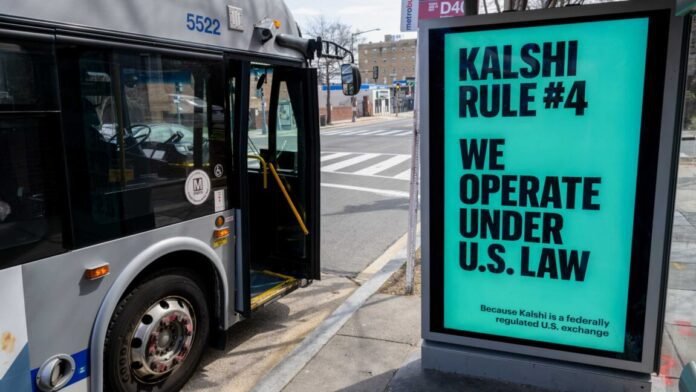
US tries to override New York gambling laws, orders Kalshi to keep operating
The Trump administration is trying to stop New York from enforcing its gambling laws against Kalshi, and yesterday said it ordered the prediction market to continue operating in the state.
The Commodity Futures Trading Commission (CFTC) announced that it exercised its emergency authority in response to a “market emergency.” The CFTC said it acted “to ensure market stability” and “ordered the exchange to continue to operate in accordance with the Commodity Exchange Act’s Core Principles.” The Trump administration took the action after a request from Kalshi.
The market emergency alleged by the CFTC is that New York Attorney General Letitia James sued Kalshi on July 31. James’ lawsuit seeks a court order to permanently enjoin Kalshi “from operating an unlawful gambling business” in the state. The lawsuit also demands that Kalshi “make full restitution to customers who have engaged in betting” and pay financial penalties.
“New York intends to make event contract derivatives waste away under its iron curtain of state gaming laws before the courts get the chance to issue final rulings,” CFTC Chairman Michael Selig said yesterday. “Congress did not intend for derivatives exchanges to be regulated under a patchwork of state gaming laws… New York has no business regulating these interstate financial markets. The commission is required by law to ensure order in these markets, and that is what we have done today.”
New York accused Kalshi of running “an illegal, unlicensed gambling operation,” with Governor Kathy Hochul saying that “Kalshi has chosen to ignore New York’s gaming laws.” The lawsuit was filed in a New York state court.
“The lawsuit alleges that Kalshi’s prediction markets meet the legal definition of gambling because the outcomes of the events on which its users are betting are uncertain and outside the control of the bettor or hinge on a game of chance,” said a press release issued by Hochul and James. “Despite this, Kalshi has failed to obtain a license from the New York State Gaming Commission, sidestepping its obligation to pay taxes like licensed casinos and mobile sports gambling platforms do. This tax revenue from gambling regulation funds public schools, sports programs for underserved youth, and problem gambling education and treatment.”
James said that “no matter what they call themselves, prediction markets like Kalshi are gambling platforms, plain and simple. By ignoring our laws, Kalshi is running an illegal operation and harming New Yorkers in the process.”
Trump admin claims exclusive authority
The CFTC says it alone has the power to regulate platforms such as Kalshi and Polymarket under the Commodity Exchange Act, a US law that gives the CFTC exclusive jurisdiction over designated contract markets (DCMs).
“These are financial exchanges that offer financial instruments and operate across state lines,” Selig said yesterday. “They match the bid from a resident of one state with the offer of a resident from another state and submit the trade to a clearinghouse that backstops the transactions of customers throughout the country.”
We contacted the New York governor’s and attorney general’s offices today and will update this article if they provide any comment on the CFTC action.
Kalshi previously asked a court to prevent New York from enforcing its gambling laws. A federal judge rejected Kalshi’s request on July 7, saying that “Congress did not intend to preempt all state actions that may relate to DCMs. Instead, the CEA leaves room for states to regulate tangential issues that may arise from trading swaps and other financial products on DCMs.”
Kalshi appealed that ruling to the US Court of Appeals for the 2nd Circuit. Kalshi is also trying to get James’ lawsuit moved from a state court to a federal one. New York is trying to keep its lawsuit in state court, saying that “New York has a strong interest in enforcing its police powers to regulate gambling” and that removing the lawsuit would disrupt the federal-state balance conceived by Congress.
“Kalshi’s claimed federal interest is simply an overreach that would disrupt the federal-state balance,” New York said. “Kalshi seeks to shield itself from state regulation of gambling through an overbroad reading of federal law contrary to the intent of Congress.”
The New York fight is one of numerous legal battles in which the Trump administration and prediction markets are trying to block state regulation. Minnesota, the first US state to pass a law prohibiting prediction markets entirely, was prevented from enforcing the law by a federal court ruling last month. The judge in the case said Minnesota’s total ban went too far but that US law may allow states to ban prediction-market wagers that don’t meet the legal definition of swaps.
Where can you score 12 points for killing a Russian soldier in a drone attack, 20 for damaging a tank and up to 50 for destroying a mobile rocket system? Not on the latest video game, but rather through Ukraine’s Army of Drones Bonus (ADB) programme.
Launched shortly after Russia’s full-scale invasion began in 2022, before being revamped in 2025, the ADB programme is where points win prizes. Military units can use the points and virtual tokens they have accrued to buy drones and other frontline equipment to use in the conflict from the Ukrainian government’s Brave1 website.
By August 2025, military equipment worth over US$5 million (£3.7 million) had been delivered via this marketplace as digital rewards for “playing” ADB. The scheme has since extended to reconnaissance and logistics operations, while capturing a Russian soldier now grants ten times more points than killing one.
The ADB programme is an example of what researchers call the “gamification” of war – where video game-like features are integrated into military training and combat operations. Ukraine’s former defence minister, Mykhailo Fedorov, who was removed from his post in July, has said “motivation” is a key rationale for the ADB programme.
“When we change the point values, we can see how motivation changes,” he stated in 2025. Ukraine’s government has described the ADB programme as “delivering results”, with submitted video evidence confirming nearly 820,000 Russian targets were hit in 2025. Increased numbers of Ukrainian military units are also now participating in the competition.
Other schemes in this conflict have also used elements of video game design. These include Play for Ukraine. Developed by Ukrainian IT specialists in 2022, this scheme is designed in the form of a numerical puzzle game where every move a player makes helps stage a cyberattack against Russian government and media websites.
As players make moves in the game, Play for Ukraine sends requests to targeted Russian servers. They eventually become overwhelmed, causing websites to slow down or crash. Play for Ukraine’s developers say 2,048 players had helped attack more than 200 Russian websites in the first month of the scheme alone.
The ADB programme is linked with the Brave1 online store, where Ukrainian military units can exchange e-points for drones and other frontline equipment.Brave1 Marketplace
Gamification is neither exclusive to Ukraine or war. Our own research on the gamification of citizenship shows how mobile apps use digital rewards, points and leaderboards to incentivise good civic behaviour, such as picking up litter, recycling and community volunteering.
For example, since launching in the UK in 2021, over 10 million items of litter have been logged as binned through the LitterLotto app. Every time a person takes a photo of themselves binning litter, they earn entries into cash prize draws. The Equiwatt app also encourages UK citizens to reduce their energy usage at peak times in exchange for gift vouchers and points while competing on leaderboards.
Gamification is a popular feature of many other mobile apps too, such as Duolingo and other digital learning platforms. These apps commonly use streaks to maintain user consistency, as well as points to help users climb weekly leaderboards and progress to higher levels. The point scoring used in modern digitised warfare is a darker side to this trend.
Whose lives count?
As well as helping entrench video game features on the battlefield, the ADB programme highlights the role of foreign fighters in the Ukraine conflict and the complexities of whose lives “count”. It is well known that both Russia and Ukraine have been recruiting foreign nationals to fight in the war.
This has sometimes been state sponsored. Ukraine’s president, Volodymyr Zelensky, recently warned that the North Korean government was sending as many as 50,000 soldiers to fight with Russian forces in Ukraine. Foreign fighters have also been recruited by more unofficial means.
Russia has set up a global network for recruiting foreign nationals, targeting economically, socially, legally vulnerable people from countries such as Bangladesh, Nepal, Cuba and Kenya. The means used to recruit these people have ranged from enticement through high salaries to deceit and coercion.
So the “Russian” personnel worth 12 points for Ukrainian troops are not always Russian. Foreign fighters are also often the ones who are used as human shields, as one Bangladeshi recruit described it in a 2026 interview with DW, a German broadcaster, or pushed to the front while the Russian troops stay behind. Even in a warzone where lives are not valued, some remain less valued than others and are therefore more likely to be killed.
The theme of gamification has continued despite these extreme conditions. Some Bangladeshi soldiers fighting in Ukraine have created huge online followings, ranging from several hundred thousand people to around 1 million, by vlogging from the frontlines. They share live videos of combat from a first-person point of view, narrating everyday life in battle and providing often dramatic footage of drone attacks and near misses.
Warfare itself is clearly changing. But whether gamified or not, the lives that are lost are very much real.