17.1 C
London
Tuesday, August 11, 2026
Home Blog

With new open models, Meta pitches another reboot of its struggling AI strategy

0
with-new-open-models,-meta-pitches-another-reboot-of-its-struggling-ai-strategy
With new open models, Meta pitches another reboot of its struggling AI strategy

Meta has announced its intention to focus on open-weight large language models. Additionally, the company announced the release of an open model called Muse Glimmer and a promise to open the weights for Muse Spark 1.2, its more powerful model, in the next few weeks.

Alongside these announcements, Meta CEO Mark Zuckerberg published a more than 6,000-word essay outlining the company’s philosophy about AI systems and governance moving forward. The essay aims to differentiate Meta from companies like OpenAI and Anthropic, which develop proprietary models and which have lobbied the US government for help competing against large-scale distillation—which involves using an existing model to train a new one—or open-weight models by Chinese labs.

Muse Glimmer is a 30 billion parameter model with a 128,000-token context window by default. It is distilled from Muse Spark, the larger and more capable model that Meta launched earlier this year. Glimmer is meant to run on users’ local machines, rather than via a cloud service or an API. Glimmer’s weights are open source under the Apache 2.0 license.

Muse Spark was introduced in April as a closed, proprietary, frontier-class model—Meta’s first major model release after a significant shake-up of the company’s AI teams last year, and a departure from its focus on models that are, by some definition, open. When Meta released Muse Spark 1.1 in July, it introduced its first paid service—again, a departure from its previous strategy. Muse Spark 1.2 was released on August 5 and was accompanied by Muse Code, a terminal coding agent.

Developers have generally found that Muse Code doesn’t quite match the frontier models from Anthropic or OpenAI in capability, but it competes well on cost—meaning it has similar positioning to many open-weight models from Chinese labs.

As a smaller model designed to run on consumer GPUs, Muse Glimmer won’t compete on that level at all—but it reflects a growing movement to bring some inference to local devices to reduce reliance and spending on the models produced by the big labs like Anthropic and OpenAI.

Open weights, open access

Alongside the model releases, Mark Zuckerberg is credited as the author of a lengthy open letter that details Meta’s corporate strategy with AI, and a broader argument for how AI should be developed, distributed, and regulated.

It follows several statements by other Big Tech and AI company leaders debating the merits of open-weight models, proprietary labs, and the practice of distillation—something that some Chinese labs have reportedly done to build models that compete with the latest efforts from Anthropic and others.

On July 24, several companies including Nvidia, Hugging Face, Meta, Mistral, Mozilla, OpenAI and others co-signed an open letter titled “Open Weights and American AI Leadership” that argued for the value of open-weight models as opposed—or at least in addition—to proprietary ones, and defended distillation as a legitimate practice, even as it carved out a distinction for “unlawful efforts to extract value from closed models.” It advocated for “targeted legal and commercial frameworks rather than sweeping restrictions on techniques that play an important role in AI innovation.”

On the topic of distillation, Meta and Zuckerberg wrote:

The ability for models to learn from other models is an important principle of how the open source ecosystem works. All AI models are derived from human knowledge. Some have tried to frame distillation as harmful, but I think it is important to protect the principle that you can learn from anything you can observe.

However, the majority of the essay focused on the notion of decentralized AI systems that are distributed widely. It also directly aims at arguments that tightly controlled, proprietary AI models and systems are needed because of concerns about existential threats or catastrophic misalignment:

It is surprising that the discourse from many developing AI is so filled with doom. I do not understand why anyone who believes that AI will eliminate most jobs and much of humanity’s relevance would rush to build that future. The notion that AI is so dangerous that the only safe path is an extreme concentration of power seems inherently problematic.

Zuckerberg wrote that the view of alignment taken by companies like Anthropic—which claims that it is trying to train singular and broad foundation models with operational parameters and guardrails that will ensure they benefit humanity broadly—is “fundamentally flawed.”

“People’s diverse values represent different tradeoffs they would make on important issues. There is no technological solution that can align with everyone’s opposing interests and values at once,” the essay says. “Any singular superintelligence would have to prioritize some values over others and in the process would be incapable of being benevolent to everyone.”

Instead, Meta argues here that models should be personalized to the needs and values of individuals or groups of individuals. It also claims that decentralization will make everyone safer, because it will give the benefits and advantages of “superintelligence” to everyone equally, instead of privileging “a small number of individuals, businesses, governments, or AI itself.”

A public recalibration

Meta has been lagging behind other big tech companies and major frontier labs for foundation models. Its models haven’t seen the kind of adoption that those developed by OpenAI or Anthropic have.

OpenAI and Anthropic have aggressively targeted enterprise customers, releasing powerful models and harnesses for knowledge work tasks like software development, and they have made significant inroads and generated substantial revenue from this strategy. Meta has not seen the same level of success.

Meta also saw a total overhaul of its AI division last year, when former Meta AI chief scientist Yann LeCun was replaced by former Scale AI CEO Alexandr Wang. The reset led to a change in focus.

In recent months, the debate around open-weight models and distillation has increased in volume as recent Chinese models like Alibaba’s Qwen3.8-Max and Moonshot’s Kimi K3 have been shown to rival Anthropic and OpenAI at the frontier. Those models may perform slightly worse in coding benchmarks, for example, but they are generally cheaper to use.

In a sense, Meta seems to be positioning itself as a US alternative to Alibaba, Moonshot, or DeepSeek—not quite as frontier-facing as Anthropic or OpenAI, but more open, customizable, and affordable. It is also orienting itself—at least with these public statements—more toward personal use as opposed to large-scale enterprise deployments, at least for now.

That is a retreat from some of its earlier ambitions, in a way, as the company takes advantage of changing winds to try to plot a new course.

Trump demands compensation from Iran for alleged atrocities of past 50 years

0
trump-demands-compensation-from-iran-for-alleged-atrocities-of-past-50-years
Trump demands compensation from Iran for alleged atrocities of past 50 years

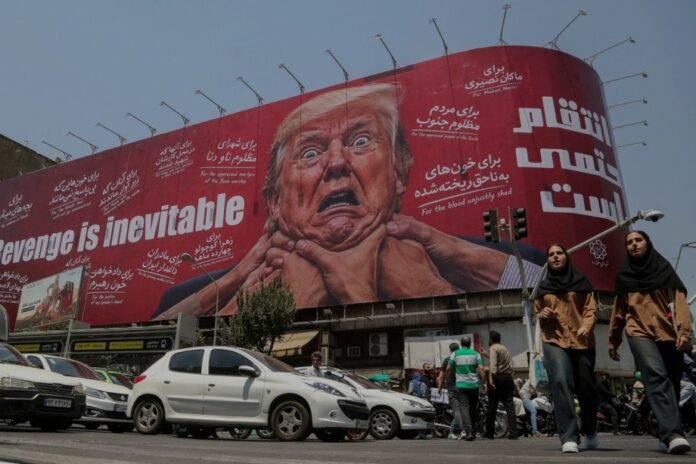
US President Donald Trump on Monday issued a counter-demand for financial compensation from Tehran, citing decades of alleged Iranian military activity and internal repression, Anadolu reports.

“I am … demanding compensation from Iran, for all of the people that they have killed and gravely wounded with their roadside bombs,” Trump posted on his social media platform Truth Social.

He specified that payments should be directed to the families of those killed on the USS Cole in an attack in 2000 and thousands of other combat casualties.

The US president also demanded compensation for “hundreds of thousands of innocent protestors” killed by the Iranian government over the past 50 years.

In a following post, Trump said Tehran should be “responsible for the damages and death caused to the people of Lebanon, Syria, Yemen, and Gaza.”

The ultimatum follows reports that Iranian representatives are seeking damages from the five-month regional war the US and Israel began on Feb. 28.

Trump dismissed these claims, asserting that reparations for Iran were “never mentioned” during negotiations. He confirmed he has instructed US representatives to incorporate these demands into all future talks.

Mecca Joint Defence Agreement Exposes Limits of US Military Reliance 

0
mecca joint-defence agreement-exposes-limits-of-us-military-reliance 
Mecca Joint Defence Agreement Exposes Limits of US Military Reliance 


Cyril Widdershoven, senior advisor at Blue Water Strategy, told TML that “Gulf leadership increasingly doubts that US power is able actually to prevent missile attacks, drone warfare, and maritime disruption”

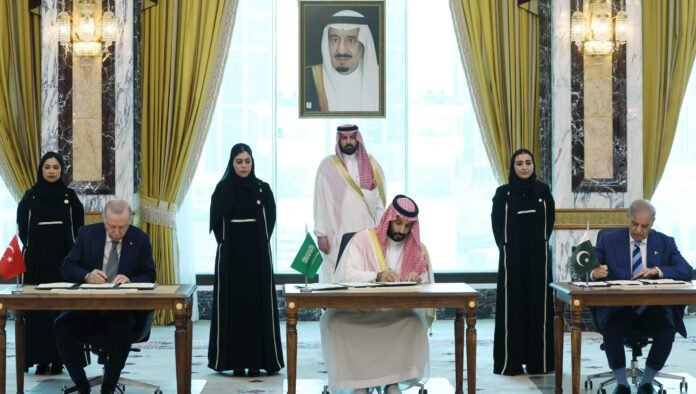
Two days after Saudi Arabia, Turkey, and Pakistan signed their new joint defense agreement in Mecca on Friday, the Houthis claimed a drone attack against Saudi Aramco’s Jazan refinery.  

The fire was extinguished without reported casualties, but the timing brought into immediate focus the central question surrounding the new pact: If an attack against one member is considered an attack against all, what does that commitment actually require from the other two?  

Signed on August 7, the Mecca Joint Defence Agreement commits the three countries to regard an armed attack against one as an attack against all. Turkish Foreign Minister Hakan Fidan has compared its collective-defense provision, technically, to NATO’s Article 5, and officials from the three countries have insisted that the agreement is defensive and not directed against Iran—or any particular state. A permanent secretariat is expected to be established in Saudi Arabia, alongside regular coordination among the parties’ foreign and defense officials. 

Yet describing Mecca simply as a new “Sunni NATO” risks obscuring what may be more important about it.  

The pact brings together three countries with substantially different strategic priorities: Saudi Arabia, still deeply dependent on American defense systems and intelligence; Turkey, a NATO member pursuing increasingly autonomous regional policies; and nuclear-armed Pakistan, whose primary strategic competition remains with India.  

It also emerged from discussions that predated the latest phase of the Iran conflict. Talks over a broader Saudi-Pakistani-Turkish framework had already advanced earlier in 2026, building on the bilateral Saudi-Pakistan Strategic Mutual Defense Agreement signed in September 2025. The continuing war involving Iran, however, appears to have accelerated the logic behind institutionalizing regional defense cooperation at a moment when missile attacks, maritime disruption and pressure on Gulf infrastructure have exposed the vulnerabilities of the existing security order. 

For Cyril Widdershoven, senior advisor at Blue Water Strategy, the agreement should not be understood as a clean break with Washington, but rather a “post-dependence insurance policy,“ reflecting a regional conclusion that while Washington may still possess the greatest military capabilities, “its willingness to use those capabilities, the conditions under which it will intervene and the identity of the threats against which it will provide protection have become uncertain,” Widdershoven told The Media Line.  

“The Gulf leadership increasingly doubts that US power is able actually to prevent missile attacks, drone warfare, and maritime disruption,” he said. “It does not question the capabilities of the US to attack Iran, defend Israel, deploy carrier groups, reinforce bases, and sell billions of dollars of weapons.”  

That distinction is central to understanding Riyadh’s position.  

Saudi Arabia is not replacing Washington with Ankara and Islamabad. Its military relationship with the United States remains difficult to replicate, particularly in high-end weapons, intelligence, logistics and integrated air and missile defense. Rather, the kingdom appears to be increasing the number of security relationships it can activate simultaneously.  

Widdershoven described this as an attempt to create “strategic redundancy.”  

From a Saudi viewpoint, there is only one main strategy: to build strategic redundancy

“From a Saudi viewpoint, there is only one main strategy: to build strategic redundancy by linking to the United States for high-end weapons and global deterrence, Pakistan for workforce, training, and possible strategic deterrence, and, right now, Turkey for operational experience, defense technology, and geopolitical reach,” he said.  

“At the same time, Riyadh wants to have China for economic leverage and diplomatic balance, while using it also for a selective engagement with Iran to reduce the probability of war. This is not coherence. It is hedging under pressure,” he argued.  

Abdulaziz Alshaabani, a Saudi political analyst, sees the same diversification but places greater emphasis on regional autonomy rather than declining confidence in Washington. “Saudi Arabia is building a more diverse and balanced network of security partners. While continuing to deepen cooperation with its traditional partners, it is also strengthening defense cooperation with important regional countries in order to enhance greater regional security, autonomy and stability,” Alshaabani told The Media Line.  

For Turkey, the benefits are different. Ankara enters the pact with NATO experience, a large conventional military and an increasingly important domestic defense industry. Its companies have become significant exporters of drones, missiles, electronic warfare systems, armored platforms, and naval technology, giving Turkey both a military and a commercial incentive to deepen its access to Gulf defense markets.  

But Turkish participation does not necessarily mean Ankara has accepted Saudi strategic leadership, nor that it would automatically enter every conflict involving Riyadh.  

Barın Kayaoğlu, chair and assistant professor of American Studies at the Institute for Area Studies at the Social Sciences University of Ankara, cautioned against interpreting the agreement as a sectarian military bloc.   

“It is no more a ‘Sunni NATO’ than it is a ‘Muslim NATO.’ So far, the three actors that have made the most noise about it are Israel, Iran, and the Houthis, none of which have contributed much to regional peace in a long time,” Kayaoğlu told The Media Line.  

“This is a defensive pact that, over time, could come to resemble the OSCE [Organization for Security and Co-operation in Europe] more than NATO. It is also important to remember that even NATO’s Article 5 does not amount to an automatic declaration of war,” he said.  

That qualification is important. Even though the agreement contains language resembling collective defense, the operational consequences remain less defined than the political commitment.  

Kayaoğlu argued that collective-defense provisions should not be interpreted as automatically placing each signatory at war with every adversary of another member.  

“The same principle applies here. Turkey and Pakistan will not suddenly find themselves at war with the Houthis, just as Turkey and Saudi Arabia would not automatically find themselves at war with the Taliban,” he said.  

Turkey and Pakistan will not suddenly find themselves at war with the Houthis

The comparison also highlights one of Mecca’s biggest unanswered questions: whether it evolves from a political commitment into an integrated security institution.  

No publicly available evidence yet indicates the existence of a NATO-style integrated military command. How intelligence will be shared, which threats trigger collective action, what military contributions each state must provide, and how disagreements among the signatories will be resolved will determine whether Mecca becomes an operational alliance or remains primarily a mechanism for strategic coordination.  

Alshaabani similarly cautioned against prematurely treating it as a conventional military alliance, noting that it currently functions more as a strategic coordination mechanism that could, over time, deepen into a broader security platform.  

Pakistan presents perhaps the most sensitive variable. Islamabad has decades of military relations with Riyadh and longstanding defense ties with Ankara. But its participation also introduces a nuclear-armed state into a Middle Eastern collective-defense framework, immediately raising questions about deterrence.  

The agreement itself should not be equated with a Pakistani nuclear guarantee for Saudi Arabia. Publicly available details do not establish an automatic nuclear umbrella, and Pakistan’s strategic posture remains overwhelmingly structured around India.  

For Widdershoven, the ambiguity itself may nevertheless have deterrent consequences.  

“It is currently unclear whether the 2025 agreement also covers Pakistan’s nuclear capabilities. This ambiguity is important, as Pakistan does not need to transfer nuclear weapons or explicitly place Saudi Arabia under a formal nuclear umbrella to generate deterrent value,” he said.   

It is currently unclear whether the 2025 agreement also covers Pakistan’s nuclear capabilities

“Pakistan’s nuclear doctrine, command structure and force posture are overwhelmingly designed around India. To redirect its strategic deterrent also to Iran or Israel could have severe consequences,” he added.  

That India dimension is also one reason the consequences of Mecca may extend well beyond the Gulf.  

The agreement links Saudi Arabia directly to Pakistan while strengthening Turkey, another close Pakistani defense partner. India, meanwhile, has developed a substantial defense-industrial relationship with Israel. Israel and India signed a memorandum in November 2025 to expand defense, industrial, and technological cooperation, while Israeli officials have continued to push for deeper strategic relations with New Delhi.  

In the eastern Mediterranean, Israel, Greece and Cyprus already have their own increasingly institutionalized security relationship. The three signed a Joint Action Plan for military cooperation for 2026, adding to an established trilateral framework covering security, energy and regional coordination. Those relationships have fueled speculation that a more explicit Israel-India-Greece-Cyprus alignment could develop as Turkey and Pakistan consolidate their own position. 

But that possibility should not yet be described as a counter-pact.  

India’s Ministry of External Affairs has specifically rejected reports that New Delhi approached Israel seeking a new defense treaty in response to the Mecca agreement. What exists instead is a collection of deepening bilateral and trilateral relationships that could acquire greater strategic relevance if regional bloc-building accelerates.  

Israeli officials had also discussed broader cooperation connecting Israel with India, Greece and Cyprus before the Mecca agreement was signed, meaning the emerging geometry cannot be explained solely as a reaction to the August pact.  

This is where the consequences of the current war involving Iran may prove larger than the agreement itself.  

The conflict has not simply pushed countries into two fixed camps. Instead, it is accelerating a regional system in which states maintain multiple, sometimes contradictory partnerships simultaneously.  

Saudi Arabia can expand defense cooperation with Turkey and Pakistan while remaining strategically connected to Washington, economically linked to China and diplomatically engaged with Iran. Turkey can remain inside NATO while building autonomous security structures outside it. Pakistan can deepen Gulf involvement while keeping India at the center of its military planning. India can maintain major economic relations with Saudi Arabia while simultaneously strengthening defense cooperation with Israel.  

Alshaabani argued that this increasingly autonomous approach is one of the agreement’s most significant features. “… Middle Eastern countries are becoming increasingly proactive in participating in regional security arrangements, rather than relying entirely on external powers to provide security. Saudi Arabia’s stronger defense cooperation with Turkey and Pakistan is one example of this trend,” he said.  

He also rejected the automatic interpretation of the framework as an anti-Iranian or anti-Chinese alignment. “Overall, the agreement is not directed against any particular country. Rather, the three countries are seeking, through institutionalized cooperation, to strengthen their collective deterrence capabilities and improve strategic coordination in responding to future regional security challenges.”   

Iran may nevertheless assess the pact through a different security lens.  

Saudi Arabia views Iranian missile capabilities and Iran-aligned armed groups as threats to its infrastructure and territorial security. Tehran, conversely, could perceive tighter military coordination among a wealthy Gulf power, NATO’s second-largest military, and nuclear-armed Pakistan as an emerging containment structure, regardless of the signatories’ declared intentions.  

Widdershoven described the resulting dynamic as a classic security dilemma. “Saudi Arabia sees Mecca as defensive insurance; Iran sees encirclement by a wealthy Arab monarchy, a major NATO military power, and a nuclear-armed Sunni neighbor,” he said. “Defensive measures on both sides begin to look offensive.”  

That may ultimately be the more consequential legacy of the Mecca pact. 

The agreement does not yet establish a Middle Eastern NATO, nor does it replace American military power. It does, however, formalize a trend accelerated by the Iran war: regional powers are increasingly building overlapping security networks of their own, even while retaining their older alliances.  

And if one new arrangement incentivizes another—Saudi Arabia, Turkey, and Pakistan on one side; deeper Israeli, Indian, Greek, and Cypriot coordination on the other; Iran turning further toward its own partners—the region may not be moving toward two stable, opposing blocs at all.  

It may instead be entering a more complicated system of competing and overlapping alignments, in which countries hedge across several partnerships until a crisis forces those commitments to be tested.  

What we see emerging is not a replacement regional order, but an increasingly competitive network of overlapping security pacts

As Widdershoven put it: “What we see emerging is not a replacement regional order, but an increasingly competitive network of overlapping security pacts, corridors, and transactional alignments. Still, this is not stability, but armed hedging,” he said. “Armed hedging, as history has shown, only works until the same crisis tests contradictory alliances.”   



Western Europe records hottest June and July on record

0
western-europe-records-hottest-june-and-july-on-record
Western Europe records hottest June and July on record


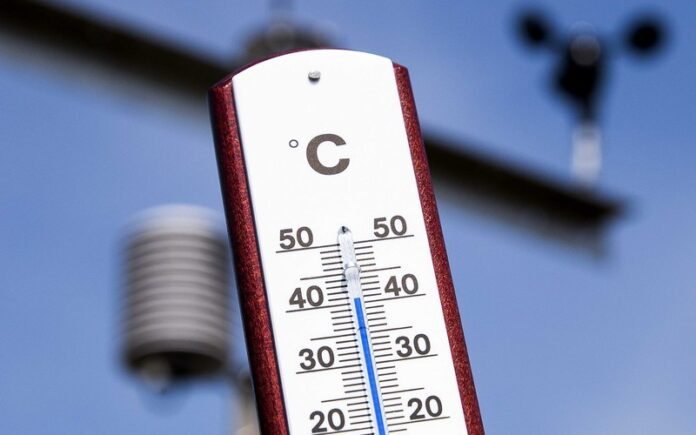
Western Europe experienced its hottest June and July on record, according to data released Monday by the EU’s Copernicus Climate Change Service.

The average temperature across the region for the two-month period reached 21.62 degrees Celsius (70.92 Fahrenheit), breaking the previous record set in 2022.

Copernicus said the figure reflected the “exceptional persistence of heat” in western Europe, where four heatwaveshave occurred since May.

The extreme temperatures have contributed to prolonged drought, major wildfires and new national temperature records across the region, as well as thousands of projected heat-related deaths.

Europe is the fastest-warming continent in the world, though temperatures varied considerably, with eastern Europe and Scandinavia experiencing much cooler conditions. For Europe as a whole, July was only the 11th warmest on record, with an average temperature of 20.49 degrees Celsius (68.88 Fahrenheit).

Conditions were drier than average across large parts of Europe in July, including Spain and other areas of the Iberian Peninsula, France, Germany, Austria, Hungary and the United Kingdom.

Ireland and parts of Iceland also experienced unusually dry conditions. Soil moisture in western Europe was significantly lower than in July 2022, when the region last experienced a severe drought.

“Persistent high-pressure systems trapped heat over western Europe, the extreme temperatures also amplified widespread drought,” said Samantha Burgess, strategic lead for climate at the European Centre for Medium-Range Weather Forecasts, which operates Copernicus.

“As soils dry out, they lose their ability to provide natural cooling, allowing heat to build more readily,” she added.

“This is a clear example of how climate change is intensifying heat extremes, with heat and drought increasingly reinforcing one another.”

River flows were also unusually low, with the Seine, Rhine and Danube among the hardest-hit waterways. Low water levels have disrupted transport, irrigation and energy production in several European countries.

The hot and dry conditions have also increased the risk of wildfires. France and Spain have battled particularly severe fires this summer, while serious blazes have also hit other parts of Europe, the northwestern United States and Canada.

Why are global ocean temperatures at record highs?

Copernicus also reported a record for global sea surface temperatures in July.

The average temperature across oceans outside the polar regions reached 20.96 degrees Celsius (69.73 Fahrenheit), surpassing the previous July record of 20.89 degrees (69.60 Fahrenheit) set in 2023.

Record temperatures were measured along parts of the Atlantic coast and in the western Mediterranean, accompanied by intense marine heatwaves.

A developing El Niño in the equatorial Pacific also contributed to the record. Copernicus director Carlo Buontempo described the emerging El Niño as “very large” and potentially unprecedented in its strength.

El Nino is the warm phase of a natural climate cycle in the Pacific Ocean that can temporarily raise global temperatures and alter weather patterns around the world.

Could 2026 become the hottest year on record?

Globally, July was the joint second-warmest on record, tied with July 2024.

The average global surface air temperature was 16.90 degrees Celsius (62.42 Fahrenheit), around 1.47 degrees (2.65 Fahrenheit) above the 1850-1900 pre-industrial average for July. July 2023 remains the hottest on record, with an average temperature of 16.95 degrees (62.51 Fahrenheit).

So far, 2026 is the third-hottest year recorded globally, behind 2024 and 2025. Scientists say the strengthening El Niño could push temperatures higher later this year.

Buontempo said scientists expect a new global average temperature record to be set either later this year or in early 2027.

The past 11 years have been the hottest on record. “We have not seen a climate that warm during our lifetime, and very possibly our civilisation,” Buontempo said.

“And the main driver for this warming — as we know — are the greenhouse gases,” he added.

Oceans absorb most of the excess heat caused by human greenhouse gas emissions. Higher ocean temperatures can contribute to heavier rainfall and stronger storms and damage marine ecosystems, including coral reefs.

Copernicus bases its climate analyses on billions of measurements from satellites, ships, aircraft and weather stations around the world.

‘Grease’ Star has Become a Recluse After Devastating Loss

0
‘grease’-star-has-become-a-recluse-after-devastating-loss
‘Grease’ Star has Become a Recluse After Devastating Loss


Stockard Channing was once one of Hollywood’s most recognizable faces, but these days, the Grease legend says she’s living a much quieter — and increasingly reclusive — life.

The 82-year-old actress, beloved for playing tough-talking Betty Rizzo in the 1978 classic Grease, has revealed that the death of her longtime partner, cinematographer Daniel Gillham, changed her life more deeply than she initially understood.

“I’ve lived alone since I lost Daniel and I’m happy being a recluse,” Channing told The Sunday Times.

Channing, who also starred in The West Wing, Practical Magic and To Wong Foo, Thanks for Everything! Julie Newmar, now lives in London after leaving her longtime home in Maine.

Her move came after Gillham died in 2014.

“My partner, Daniel, died in 2014 and it was more devastating than I realised; it had a lag effect,” Channing said. “The pattern of my life shifted, so I shifted my life from Maine.”

Channing and Gillham had been together since 1990 after meeting while working on the war drama A Time of Destiny.

Their relationship lasted nearly 25 years, until his death.

Before Gillham, Channing had already experienced a complicated romantic history that included four marriages — all of which ended in divorce.

She first married sculptor Walter Channing Jr. in 1963. They divorced in 1967.

Her second marriage was to Slavic languages professor Paul Schmidt. The pair were married from 1970 until 1976.

That same year, Channing married writer and producer David Debin, but the marriage ended four years later.

In 1980, she wed businessman David Rawle. They remained married for eight years before divorcing.

Looking back, Channing said she doesn’t necessarily view those marriages as failures.

Instead, she said they “all represent epochs of me.”

The actress also admitted she once considered becoming a mother but ultimately decided not to have children.

Now, at 82, she occasionally wonders what life might have been like if she had.

“I think about them now because it’d be great to have someone taking care of me,” Channing joked.

But she quickly added a characteristically blunt observation: “But hey, children can be just as selfish as everybody else out there.”

Despite describing herself as a recluse, Channing hasn’t disappeared entirely from show business.

She is currently directing a production of Samuel Beckett’s Krapp’s Last Tape, although she admitted she has no idea whether she will continue working afterward.

“Acting is like everything in life; you never know what’s going to happen,” she said.

Channing’s most recent television appearance came in Paramount+’s 2024 miniseries Knuckles, the Sonic the Hedgehog spin-off.

She played Wendy Whipple, mother of bumbling deputy sheriff Wade Whipple, portrayed by Adam Pally.

She has also continued working onstage, appearing as Clytemnestra in the Greek tragedy Elektra at Brighton’s Theatre Royal last year.

And fans of Practical Magic will soon get another chance to see Channing in one of her most beloved roles.

In September, she is expected to return as Frances Owens in the upcoming Practical Magic sequel, once again playing one of the eccentric witch aunts alongside returning stars Sandra Bullock and Nicole Kidman.

Nearly five decades after Grease turned her into a star, Channing appears increasingly comfortable keeping Hollywood at arm’s length.

After losing the man she spent nearly a quarter-century with, the actress says her entire life changed — and instead of fighting that change, she built a new one thousands of miles away.

Ars Live: Ross Scott discusses the Stop Killing Games movement

0
ars-live:-ross-scott-discusses-the-stop-killing-games-movement
Ars Live: Ross Scott discusses the Stop Killing Games movement

By now, any serious gamer is familiar with a favorite title becoming unplayable after a centralized online server gets shut down, or being unable to purchase and download a digitally delisted, critically acclaimed title from yesteryear. Can anything be done about this video game preservation problem?

To help answer that question, we’ll be hosting a live conversation with Ross Scott, the founder of the Stop Killing Games campaign, on August 11 at 2:30 pm ET as part of the Ars Live series. As Ars’ Senior Gaming Editor, I’ve documented countless examples of once vibrant games being left for dead by their creators.

You can watch the discussion live on YouTube when the time comes.

Scott founded the Stop Killing Games movement in 2024 after Ubisoft decided to shut down the servers for The Crew. Since then, he’s helped gather millions of gamers’ signatures on government petitions demanding legislative action to provide some form of perpetual access for games people purchase—either via continuing centralized server support or an option for players to maintain their own servers. The movement has already led to an official parliamentary debate and response from the European Commission and proposed legislation that is working its way through the California legislature.

I’ll be talking to Scott about how the movement came together, what’s animating gamers’ interest in long-term game preservation, and whether or not this problem can really be legislated away. We’ll also discuss how recent moves like Sony’s decision to stop selling PlayStation discs are impacting the debate over long-term game access.

Please join us for what should be a lively conversation.

Add to Google Calendar| Add to calendar (.ics download)

Zuckerberg’s superyacht ignored emergency channel, failed to aid stranded boat

0
zuckerberg’s-superyacht-ignored-emergency-channel,-failed-to-aid-stranded-boat
Zuckerberg’s superyacht ignored emergency channel, failed to aid stranded boat

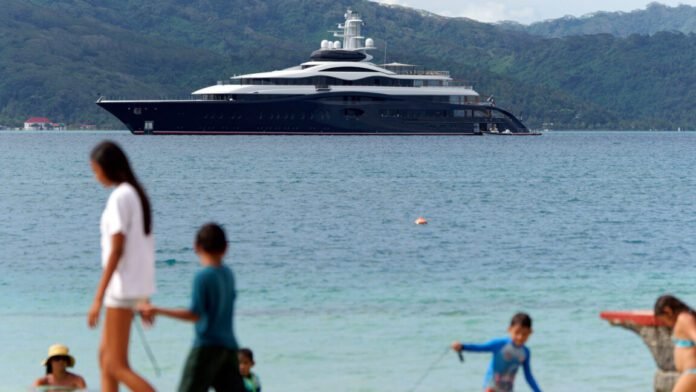
Social media scuttlebutt about Mark Zuckerberg’s $300 million superyacht failing to assist stranded boaters off the coast of Alaska was partly corroborated by ship-tracking data—and eventually prompted responses from both the US Coast Guard and a spokesperson for Zuckerberg.

The incident was made public when Michael Love, a passenger aboard the replica steamship Wilderness Legacy during an Alaska cruise, posted about it on the social media platform Bluesky. The ship detoured to rescue a stranded 21-foot skiff with two women, a child and a dog, after the US Coast Guard had supposedly first radioed Zuckerberg’s superyacht, Launchpad, for help without success.

“There was near unanimous booing when the captain announced this,” Love wrote in describing the Alaska cruise passengers’ response to the lack of help from Zuckerberg’s ship.

The US Coast Guard described being hailed for assistance by the stranded boat located near Point Highland, Alaska, at 9:32 pm on August 3, in a statement shared by Halifax Shipping News. After the Coast Guard determined the vessel was not in distress, it issued a marine assistance request broadcast asking for voluntary help from nearby mariners.

This is an important distinction because it means nearby vessels were not legally obligated to respond. If the Coast Guard had determined the stranded boat was in distress, then both international maritime law and US law would have legally required ship captains to render assistance.

Although Launchpad and its $30 million support ship, Wingman, were not legally obligated to assist in this case, it may have represented a missed opportunity to do a little bit of good, according to Love, the passenger aboard the Wilderness Legacy.

“Frankly, if I was Mark Zuckerberg I would be absolutely ecstatic at a chance to do something helpful for someone in need and maybe get some good PR out of it,” Love told the Alaska Beacon in a Bluesky message.

Zuckerberg and his family were not aboard the superyacht at the time of the incident, according to a spokesperson for the Chan Zuckerberg Initiative in a statement shared with Halifax Shipping News and the Alaska Beacon.

What the ship-tracking data shows

Ship-tracking data using AIS transponder data actively broadcast by each vessel shows that Zuckerberg’s 387-foot superyacht was initially moving ahead of the 192-foot Wilderness Legacy at a slightly faster speed. But then Launchpad slowed to a stop and allowed Wilderness Legacy to pass it.

Wilderness Legacy appears to proceed with assisting the stranded boat, as described by the YouTube channel The Yacht Report in a video showing the AIS tracking paths. The Coast Guard confirmed that the ship towed the boat to Farragut Bay so that it could find safe anchorage, and the Alaska Beacon reported that Wilderness Legacy was able to refuel the skiff for the rest of its journey.

Did Mark Zuckerberg’s superyacht refuse to help a vessel in distress?

However, the Coast Guard statement made no mention of Zuckerberg’s superyacht, Launchpad.

Launchpad’s support ship, Wingman, is described by the publication YachtWorld as being equipped with deck space for carrying a helicopter, a Triton submarine that acts as a personal submersible for superyachts, water scooters, and multiple smaller boats.

Ship-tracking data shows that Wingman moved past both Launchpad and the Wilderness Legacy without stopping. It also shows that Launchpad finally resumed moving again after the Wilderness Legacy appeared to return from having assisted the small skiff.

The missed emergency broadcast

The Zuckerberg spokesperson offered an explanation for why Launchpad did not initially respond to the Coast Guard’s request for assistance.

“As the Coast Guard noted, the boat was not in distress, and by the time the crew reviewed the Coast Guard contact on a different radio channel from the one they were operating on, the assist was already underway,” the spokesperson said in the statement shared with news outlets. “We’re grateful all parties are safe.”

But Democrat Senator Sheldon Whitehouse of Rhode Island, himself a member of an elite sailing club, in a Facebook post criticized the lack of response from Zuckerberg’s superyacht. “Vessels are supposed to monitor channel 16 at all times, for this exact purpose,” Whitehouse wrote. “Billionaires don’t follow that rule either?”

The US government’s radio watchkeeping regulations require any vessel equipped with a VHF marine radiotelephone to maintain watch on channel 16—reserved for emergency messages—whenever the radiotelephone is not being used for communication. Marine radiotelephones typically have dual-watch or even tri-watch features that specifically enable monitoring of multiple channels, with the transmissions on the emergency channel automatically taking priority.

That means any nearby ship monitoring the channel should have heard the stranded boaters asking the Coast Guard for help, along with hearing the Coast Guard’s follow-on request for assistance. It is also unclear why the crew of the support ship Wingman did not initially hear or heed the Coast Guard broadcast.

Zuckerberg’s superyacht has previously courted controversy for turning off its AIS transponder and “going dark” to avoid public ship-tracking services, according to YachtWorld. That is a tactic only used by “shadow fleet” vessels carrying sanctioned oil or gas, illegal fishing boats, and the high-profile owners of luxury yachts, such as Zuckerberg or Jeff Bezos.

But for safety-of-navigation reasons, the Coast Guard typically requires vessels to keep AIS activated in US waters. Such AIS tracking data helped shed a little more light on this latest controversy surrounding Launchpad.

Criminal gangs have diversified across Latin America, making them more resilient – but not untouchable

0
criminal-gangs-have-diversified-across-latin-america,-making-them-more-resilient-–-but-not-untouchable
Criminal gangs have diversified across Latin America, making them more resilient – but not untouchable

Latin America’s most powerful criminal groups have expanded beyond the drug trade – and have become more resilient as a result. That’s what my colleagues and I discovered while researching for a new study on the structural transformation of organized crime across Latin America and the Caribbean.

Criminal networks now draw revenue from illicit and legal sources alike. Many of them police neighborhoods and influence local politics. Others invest in legitimate businesses and exploit global transport and financial systems, using shell companies and digital payment platforms to conceal the origins of their money.

Their businesses extend into ostensibly legitimate sectors ranging from mining to fuel. This diversification shields criminal groups from “enforcement shocks,” such as crackdowns on drug smuggling. It can also help them buy protection from compromised officials and allow organizations to embed themselves more deeply in local economies. The struggle is increasingly over who sets the rules and who can enforce them.

A criminal economy goes corporate

Brazil is one place where these trends are on display.

On Aug. 28, 2025, more than 1,400 Brazilian law enforcement agents fanned out across eight states in what officials called the largest operation against organized crime in the country’s history. Their targets included more than a thousand gas stations, four ethanol plants, a trucking fleet, a port terminal, investment funds and offices on Avenida Faria Lima, the center of São Paulo’s financial district.

The investigation, known as Operation Hidden Carbon, exposed an alleged money laundering system tied to Brazil’s most powerful criminal organization, First Capital Command, or PCC. Investigators allege that the network used gas stations and other fuel businesses to launder illicit proceeds, channeling them through payment companies and investment vehicles that obscured their origins and ultimate ownership.

The scheme reportedly moved billions of dollars through the motor-fuel sector and a web of payment companies and investment vehicles, with some fintechs allegedly functioning as unlicensed banks. Authorities initially seized about R$1.2 billion, or roughly US$220 million, in assets.

Police cars park outside a building

Brazilian police launched a major operation on Aug. 28, 2025, against a vast money-laundering network involving organized crime and the financial sector. Miguel Schincarol/AFP via Getty Images

Operation Hidden Carbon illustrates a broader shift in organized crime across the Americas. Several of the region’s largest organizations now combine drug trafficking with illegal gold mining, fuel theft, migrant smuggling and the manipulation of digital payment systems. Others have also moved into logistics, finance, real estate and municipal services.

Many also assume functions typically associated with government, from enforcing local rules to delivering basic services. A 2025 survey across 18 countries found that 13% of respondents — equivalent to nearly 80 million people — said that local criminal groups provided order or reduced crime in their communities.

How criminal networks diversified

Criminal diversification did not happen all at once. Latin American groups built international trafficking alliances in the 1980s and 1990s, but the shift toward multi-market networks became more pronounced in the mid-2010s. As drug trafficking grew riskier, groups moved into migrant smuggling and illegal mining.

Cybercrime opened new revenue streams, while cryptocurrencies made it easier to conceal proceeds. The pandemic accelerated the trend by weakening state institutions and expanding informal economies.

Diversification boosts profits and spreads risk, reducing dependence on any single commodity or corridor.

Cocaine remains highly lucrative, so few organizations abandon it. Instead, they add new illegal activities to territories and logistical systems they already control. The same infrastructure and intermediaries can support several criminal markets at once.

The organizational structures have changed too. Rigid hierarchies have given way to looser networks of transporters and financial specialists operating through front companies. Money and personnel can move between activities as enforcement pressure and market conditions change. Real estate and commercial businesses conceal proceeds, while digital assets make transfers easier. That wealth can then be converted into political influence.

This adaptability complicates enforcement. Police and regulatory agencies are generally organized by crime type and national jurisdiction, while the networks they are attempting to shut down operate across markets and borders. Pressure on drug trafficking may push a group toward gold or extortion without destroying its finances. Raids may temporarily remove leaders but leave corrupt relationships and financial machinery intact, allowing the organization to regenerate.

Why force remains attractive

As my new study argues, political leaders across much of Latin America and the Caribbean are still judged primarily by how visibly they confront crime. People living with daily extortion and victimization want relief quickly. Soldiers on street corners and prisoners paraded before cameras offer immediate proof that a government is acting.

Financial investigations and judicial reform, by contrast, produce slower results and offer fewer immediate political rewards.

These political incentives help explain the enduring appeal of “mano dura,” or iron-fist security. El Salvador’s state of exception became the regional reference point after the official homicide rate fell from roughly 105 per 100,000 in 2015 to 1.3 by 2025. By June 2026, more than 92,000 people were imprisoned. But the crackdown also suspended constitutional protections, leading to mass detention without due process and hundreds of deaths in custody.

Two men in uniform stand guard over a man in handcuffs.

An alleged gang member is arrested by police in El Salvador. Yuti Cortez/AFP via Getty Images

Since El Salvador imposed its state of exception in 2022, governments in Argentina, Belize, Brazil, Chile, Colombia, Costa Rica, the Dominican Republic, Ecuador, Guatemala, Haiti, Honduras, Jamaica, Mexico, Panama, Paraguay and Trinidad and Tobago have adopted hard-line security measures inspired by or resembling mano dura. Peru’s newly inaugurated president, Keiko Fujimori, has promised a tougher security strategy, including a greater role for the armed forces in areas under states of emergency.

The limits of mano dura

Crackdowns that neglect financial and corruption investigations may suppress some forms of violence without dismantling the economic structures or political protection that sustain criminal power.

Ecuador shows how quickly those gains can unravel. After declaring an internal armed conflict in January 2024, the government sent troops into prisons and violent cities. Homicides initially fell before surging past 9,000 in 2025, the highest level in the country’s modern history.

The gangs survived because their power extended far beyond the streets. They retained control over prison networks and access to the ports that move cocaine through Guayaquil. Their relationships with corrupt officials also endured. Military pressure disrupted the gangs, but it also caused fragmentation and intensified rivalry between the resulting factions.

Washington raises the stakes

Across Latin America, right-leaning political candidates have gained ground by putting public order at the center of their campaigns. The resulting turn toward more punitive security policies makes slower institutional reform harder to sustain.

Washington is reinforcing this trend. The United States has expanded its use of foreign terrorism designations against criminal organizations. In May 2026, the State Department announced terrorism designations for the PCC and the Red Command, or CV, another major Brazilian faction, as foreign terrorist organizations. The designations took effect on June 5.

By July 2026, U.S. forces had carried out at least 67 strikes against suspected drug trafficking vessels in the Caribbean and eastern Pacific, killing more than 220 people. Yet the campaign appears to have done little to constrain cocaine supply. Traffickers have shifted routes in response to the strikes, and available evidence suggests no clear tightening of the U.S. market.

In August, Washington announced plans for a $1 billion security package for Colombia, as the country’s new government prepares to pursue a more militarized campaign against drug traffickers.

Military pressure, however, addresses only part of what makes criminal groups resilient. Their staying power depends on relationships with public officials and access to financial systems. Control of legitimate companies allows them to conceal ownership and launder criminal proceeds.

American financial intelligence and asset-recovery tools could help dismantle that infrastructure, depriving these organizations of the resources they use to expand.

Following the money

Brazil’s Operation Hidden Carbon points toward a more effective response. Investigators traced proceeds from gas stations through fintechs and investment funds, exposing the corporate structures and intermediaries behind them. They treated organized crime as a system embedded in the economy rather than solely as an armed threat on the street.

Such work lacks the immediate public impact of an armed raid, but its effects can be far greater. Asset freezes can deprive criminal groups of the capital they use to buy political protection and expand into legal and illegal markets alike. That is why investigators must go after the money and companies, not just the gunmen.

UEFA, AFC, CONCACAF hit out at Infantino over World Cup stake sale

0
uefa,-afc,-concacaf-hit-out-at-infantino-over-world-cup-stake-sale
UEFA, AFC, CONCACAF hit out at Infantino over World Cup stake sale


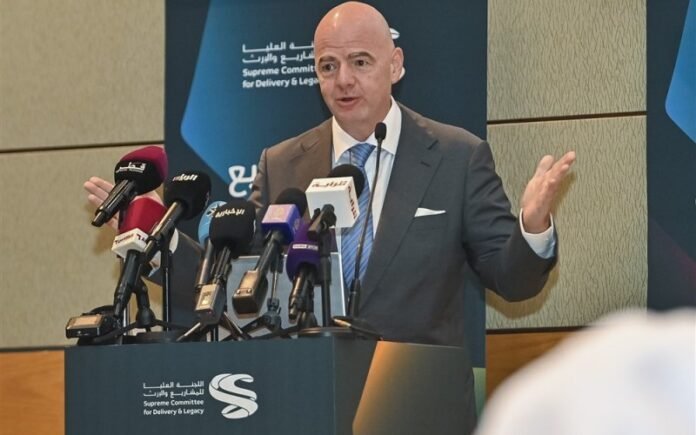
UEFA, the Asian Football Confederation (AFC) and CONCACAF, which ​runs football in the Caribbean, North and Central America, issued an open letter on Monday attacking FIFA President Gianni Infantino ‌over his conduct during the proposed sale of a stake in the commercial rights to the World Cup.

The statement, which stopped just short of openly calling for a new leadership, said that Infantino had broken trust “through deception” with the now abandoned proposal, had “placed himself above the collective” and the three confederations called for a fully independent review of ​what had happened.

“Football’s strength has always been its unity,” their open letter to the football family said. “We call for that unity to ​be honoured now, for leadership that serves football, not seeks to command it.”

The Swiss administrator has faced open revolt ⁠in the football world since he proposed and then abandoned a plan to carve off the commercial rights to the World Cup and sell 20% of them ​to private investors to raise about $4.2 billion.

UEFA, backed by the AFC and CONCACAF, have threatened to boycott FIFA tournaments until they receive a promise that ​no similar schemes will be proposed in the future.

“Leadership in football is not a possession,” they said in Monday’s statement. “It is not about holding – or demanding – power to be held. It is a duty of service to the football family that entrusts it.”

“When trust is broken through deception, when an individual places himself above the collective that entrusted ​him with authority, that duty has been abandoned.”

INDEPENDENT REVIEW

They also criticised a FIFA emergency meeting in Morocco last week, saying there was only one ​elected official present, while also calling for an independent review which FIFA would have no role in, to determine what led to this “profound failure of judgement.”

On Friday, Norwegian ‌Football Federation (NFF) ⁠President Lise Klaveness, seen by some as a potential candidate to replace Infantino, called on the 56-year-old to step down from the presidency immediately. Klaveness has long been an outspoken critic of Infantino.

After quelling in-house dissent at the emergency meeting on Wednesday, FIFA apologised to the 211 federations and Infantino rallied his support among the six confederations that make up the world governing body.

Africa’s confederation CAF released a statement on behalf of its 54 members backing Infantino on ​Thursday with CONCACAF member Mexico following ​suit along with South American ⁠countries Argentina, Paraguay, Ecuador and Bolivia.

On Friday, as Infantino attended the inauguration of Colombia’s new president Abelardo De La Espriella in Cali, FIFA released a blistering attack on the critics of the president.

It warned against what it called a “concerted ​and ongoing effort” to undermine Infantino, saying attempts to challenge his leadership must follow the governing body’s statutes ​and democratic procedures.

FIFA also ⁠echoed the statements of several of the bodies that supported Infantino, as well as one from South American confederation CONMEBOL.

FIFA’s statement came after reports by The Daily Telegraph about payments made by UEFA to a former employee during Infantino’s time as the European governing body’s general secretary, allegations he has denied and ⁠that FIFA has ​rejected as unfounded.

Almost 70 of FIFA’s 211 member associations have said publicly they will ​vote for Infantino with around a dozen either withdrawing previously promised support or saying they will not vote for him.

UEFA apart, the confederations who say they have lost confidence in Infantino ​are not completely united with several Asian nations backing him as well as Mexico from CONCACAF.

A new plan to preserve Georgia’s marshes: Give them space to migrate

0
a-new-plan-to-preserve-georgia’s-marshes:-give-them-space-to-migrate
A new plan to preserve Georgia’s marshes: Give them space to migrate

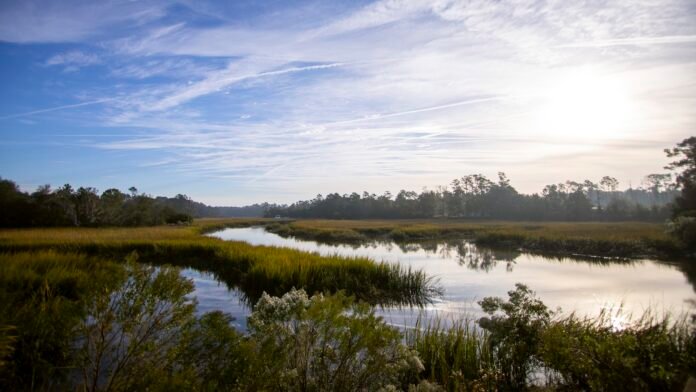
Decades ago, in order to build up a solid foundation for I-95 through Southeast Georgia, construction crews dug some earth near the town of Midway, Georgia, about 50 miles south of Savannah, and left a deep pit. There’s now a public park in that spot, bounded by a tidal creek on one side and the leftover dredge pit on the other. Although the park is over 15 miles from the ocean, high tide washes up the creek twice a day. Lush marsh grass fills the space between solid ground and the creek, but it’s a different scene along the other bank, where the salt water has steadily eaten away at the land while depositing sediment in the basin. Now, what was once a deep pit is a shallow mud flat with little islands of marsh grass cropping up in the middle, naturally moving in now that the ground is suitable for it.

But the grasses halt abruptly where they reach the small, muddy cliff of the bank — shorn away sharply where the tide has battered it.

“If we walk that way, you’ll be able to see some of the, well, just plain erosion,” said Phil Odom, chairman of Liberty County’s Consolidated Planning Commission, on a recent afternoon. “This is how much it has collapsed. We’ve lost about six, eight feet right here.”

Local leaders are hoping to fix that erosion at the water’s edge, and they’re approaching it in a way that considers the lessons of the I-95 construction and prior, failed attempts to address the problem. Instead of putting up a wall or using chunks of concrete to hold the soil in place, the county is attempting to restore the marsh grasses that grow here naturally. Their roots will help hold the soil in place.

“We hope for it to replicate nature,” said Shannon Marino with Zulu Marine, which builds what are known as living shorelines. “When our solutions are done, you should look at it and not really recognize it as a repair or a bulkhead or a solution. It should just look like nature.”

It’s an increasingly popular way to address coastal erosion in the face of rising seas. Georgia is home to more than a third of the connected marsh habitat along the coast of the Southeastern U.S. — hundreds of thousands of acres. It serves as a critical buffer against storms, and it’s broadly protected under state law. But as sea levels rise due to climate change, protecting the existing marsh plants is only one step. 

With the sea level on Georgia’s coast projected to rise one to two meters in the next 75 years, the marshes will need to move inland too. They’re well equipped to do that, according to University of North Carolina wetland scientist Lori Sutter.

“Because of the magic of salt marshes,” she said, “they’re able to persist in this environment where they’re flooded twice a day, every day.”

But that magic of salt marshes only works if they have somewhere to go. Once a migrating marsh encounters a paved road or a building, they hit a dead end. There’s nowhere for new grasses to take root, which means the rising tide can sweep in unabated, flooding both the marsh and that road or building. 

That’s why a new action plan by a coalition of conservation groups, scientists, government agencies, and coastal communities calls for protecting not just the salt marsh itself, but also the adjacent land. The plan has identified more than 56,000 acres of land in Georgia where marshes will likely migrate that are also currently open to development. 

“That creates this really vast area that you’re trying to conserve, which can be overwhelming,” said Courtney Reich, the coastal director for Georgia Conservancy. Her group is working with Phil Odom and the other stakeholders in Midway and is spearheading the Georgia work under the South Atlantic Salt Marsh Initiative, a multi-state effort to restore and protect coastal salt marshes. 

It’s a roadmap, not a binding policy or seizure of anyone’s land. Instead, the plan’s authors hope it can help landowners and public officials make informed decisions.

“You know, do we want to build up to the edge of the water or do we want to leave room?” Reich said. 

Short-term needs often drive land use conversations, she said. This plan aims to get people thinking about the long view.

Salt marshes by their very nature are always moving. Odom, an avid fisher, has watched Georgia’s dynamic coast change in slow motion over the last 75 years: deep salt water moving into areas that once teemed with marsh grass, marshes in new places, the tide creeping ever higher and leaving the ghostly skeletons of salt-choked trees in its wake. But sea level rise driven by climate change is forcing them to move faster — and adding urgency, because if the marshes can’t respond, Georgia’s coast will be left that much more vulnerable.


0FansLike
0FollowersFollow
0FollowersFollow
0SubscribersSubscribe
- Advertisement -
Google search engine

Recent Posts