16.1 C
London
Sunday, August 9, 2026
Home Blog

Iran security chief says Strait of Hormuz to remain closed until US meets Tehran’s demands

0
iran-security-chief-says-strait-of-hormuz-to-remain-closed-until-us-meets-tehran’s-demands
Iran security chief says Strait of Hormuz to remain closed until US meets Tehran’s demands

Iran’s top security official said Saturday that the Strait of Hormuz will remain closed until the US changes what he described as its hostile policies and meets a set of Iranian demands, Anadolu reports.

In a statement, Mohammad Bagher Zolghadr, secretary of Iran’s Supreme National Security Council, said Washington must “correct its behavior” before the strategic waterway can reopen.

He listed six conditions, including ending what he called threats against Iran’s supreme leader, permanently halting military action against Iran and its regional allies, withdrawing US naval and air forces involved in what he described as the blockade of Iran, compensating Tehran for damage caused during the recent conflicts, lifting US sanctions and releasing Iran’s frozen assets.

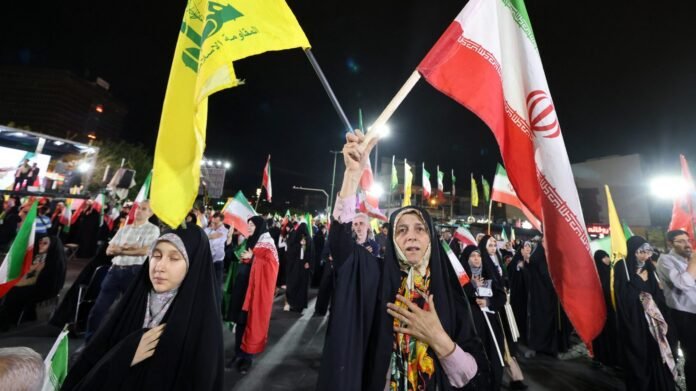
Zolghadr said the demands reflected the will of the Iranian people, citing nationwide rallies over the past six days.

READ: Oman says Strait of Hormuz talks progressing in ‘positive’ atmosphere

“The Supreme National Security Council will not retreat from these demands, whether in war or in negotiations,” he said.

Separately, Iranian army spokesman Brig. Gen. Mohammad Akraminia said the “Iranian order” governing the Strait of Hormuz was “irreversible,” adding that the US had “no choice but to accept the existing reality” or face “far greater costs than before.”

The remarks come as negotiations over the future of navigation through the Strait of Hormuz remain at an impasse.

Iran and the US signed a memorandum of understanding on June 18 through Pakistani and Qatari mediation, ending active hostilities and launching negotiations toward a broader agreement. The memorandum envisaged a gradual restoration of commercial navigation through the Strait of Hormuz, but implementation later stalled as both sides exchanged accusations of violating its terms.

READ: US expects Iran to ensure safe oil flow through Strait of Hormuz: Vance

Europe’s Biggest Firefighting Force Deployed as Wildfires Expose Prevention Gap

0
europe’s-biggest-firefighting-force-deployed-as-wildfires-expose-prevention-gap
Europe’s Biggest Firefighting Force Deployed as Wildfires Expose Prevention Gap


As wildfires sweep southern Europe, the EU has deployed its largest-ever shared firefighting force, but the escalating crisis highlights a widening gap between emergency response and long-term wildfire prevention.

Portugal and France activated the EU Civil Protection Mechanism, with France receiving four rescEU firefighting aircraft from Sweden and Cyprus. Portugal was reinforced with 118 firefighters, 45 vehicles from Spain, and three rescEU aircraft from Italy and Spain.

“We have regular wake-up calls, but this one is the biggest in the last couple of years,” said Commissioner Hadja Lahbib, stressing that “Europe stands together.”

According to the European Forest Fire Information System (EFFIS), the EU recorded 1,407 wildfires by 30 July 2026, scorching nearly 435,000 hectares and releasing an estimated 17.98 million tonnes of CO₂. While below last year’s record season, the figures remain above the 20-year average, with forecasters warning of “very extreme” fire conditions across Portugal, Spain, France, Italy and Greece.

The Commission says this summer’s operation is its largest since rescEU began in 2022, with 777 firefighters from 14 countries, 22 aircraft and five helicopters pre-positioned before fires erupted. However, while Brussels coordinates and funds the response, responsibility for tackling wildfires on the ground remains with national authorities.

Source: EuroNews

What’s Behind Pakistan’s Restrictive Guidelines To Control Foreign Media?

0
what’s-behind-pakistan’s-restrictive-guidelines-to-control-foreign-media?
What’s Behind Pakistan’s Restrictive Guidelines To Control Foreign Media?


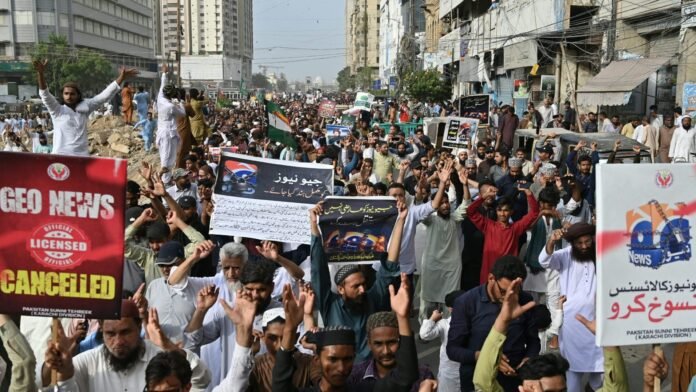
The new directives come amid sharp public criticism from Islamabad, which has accused foreign outlets, including Al Jazeera and the BBC, of biased coverage of the ongoing elections and unrest in Pakistan-administered Kashmir

[ISLAMABAD] Pakistan has introduced new rules expanding state oversight of foreign media, including imposing a requirement for government clearance before journalists and contributors working for international outlets can undertake reporting assignments outside the country’s three largest cities. The move has been strongly criticized by journalist organizations.

The directives issued by Pakistan’s Ministry of Information and Broadcasting, and described as the Foreign Media Facilitation Guidelines 2026, state that foreign-media personnel must obtain a No Objection Certificate (NOC) from the ministry’s External Publicity Wing before undertaking official reporting assignments outside Islamabad, Lahore and Karachi.

The guidelines also state that press accreditation or registration may be suspended or withdrawn for misuse, involvement in a cognizable offense, submission of false or forged documents, failure to report organizational changes within seven days, or actions deemed contrary to Pakistan’s ideology, sovereignty, security or public order.

The Media Line has reviewed a copy of the guidelines, which state that they “shall be applicable to all foreign or international print, electronic and digital media including social media and web-based platforms.”

Pakistani journalists working for foreign media organizations are also covered by the new guidelines. Under the rules, any Pakistani journalists, freelancers, and other contributors—including fixers, translators, and technical personnel—working with foreign outlets may require an NOC to conduct official reporting outside the three designated cities.

These guidelines do not appear to specify a general deadline for authorities to issue an NOC for reporting assignments. Critics argue that the requirement could hinder breaking news coverage, when journalists may need to travel within hours of a major event.

The Pakistani government says the guidelines are not intended to impose restrictions on the media, but to establish “an administrative mechanism” for verifying media personnel, facilitating their access and providing necessary assistance. The government also maintains that the measures do not amount to a blanket restriction on individuals’ movement.

These new directives come amid sharp public criticism from Islamabad, which has accused foreign outlets, including Al Jazeera and the BBC, of biased coverage of the ongoing elections and unrest in Pakistan-administered Kashmir.

As phased legislative assembly voting continues through August 10, the Information Ministry has ordered foreign journalists to leave the region immediately and obtain a formal NOC before returning.

Authorities said several foreign correspondents had entered the region without the required clearance, marking an early enforcement of the government’s new regulatory framework.

Pakistan has already tightened controls over domestic media through expanded cybercrime laws.

The Prevention of Electronic Crimes Act (PECA), along with its 2025 amendments, extended the government’s powers to regulate online expression. The amendments criminalized the intentional dissemination of information deemed false or likely to cause fear, panic, or unrest, carrying penalties of up to three years in prison and fines of up to Rs. 2 million. They also established a Social Media Protection and Regulatory Authority, giving the state broader powers to regulate digital platforms and online content.

According to a disclosure by the Pakistan Interior Ministry to the National Assembly, 187 cases have been registered under Section 26A of PECA for online misinformation, as of April 2026. Together with the new foreign media rules, the expanded PECA framework has raised concerns about increased government oversight of the media and online expression.

The Pakistan Federal Union of Journalists (PFUJ) has strongly condemned the federal government’s notification requiring foreign-media personnel to obtain permission before reporting outside the three designated cities. PFUJ is a representative body for journalists, advocating for press freedom, journalists’ rights and professional independence.

In a joint statement on Wednesday, PFUJ President Afzal Butt and Secretary-General Arshad Ansari called for the immediate withdrawal of the restrictions, warning that they could jeopardize the jobs of Pakistani journalists working for international media outlets.

PFUJ leaders said the move would only bring disrepute to Pakistan and further damage its international image, noting that the country already ranks among the lowest globally in terms of press freedom. They warned that the government’s actions could further worsen that record.

Both leaders warned that if their demand is not met, the union will launch protests and demonstrations across the country.

Iqbal Khattak, Pakistan’s country representative for Reporters Without Borders and executive director of Freedom Network, described the situation as “grave and alarming” for journalists working with foreign media.

Khattak told The Media Line that the restrictions had become so broad that even journalists’ sources could face scrutiny or consequences.

He said the guidelines appeared to give authorities greater ability to monitor what foreign journalists report and where they travel, calling the measures “highly dangerous” for press freedom.

Khattak said that while the measures are described as regulations, they effectively restrict journalists’ movement and ability to work freely.

He also warned that requiring Pakistani journalists working for foreign media to register with authorities could expose them to pressure if their reporting is later deemed negative or propagandistic.

He further criticized provisions allowing accreditation to be suspended or withdrawn on grounds including national security, public order or state ideology, saying such broadly defined grounds could create fear among journalists and discourage independent reporting.

Zain Zaman Junjua, an Islamabad-based senior journalist who has worked for several foreign media organizations, including AFP, told The Media Line that the regulations follow restrictions already imposed on domestic media through strict laws.

He said that international media had become one of the few remaining spaces for critical scrutiny of the government, but the guidelines appeared to be shrinking that space as well.

From his perspective, the rules were vague and offered little clarity about how they would be interpreted or enforced, leaving journalists and media organizations uncertain about how to comply. He questioned how reporters could obtain an NOC quickly enough to cover breaking news, given what he described as slow bureaucratic procedures.

Junjua also said the government appeared to be imposing restrictions on media organizations with global reach, even though they can bring Pakistani stories to international audiences far more quickly and widely than state-funded outlets can.

The regulations could hinder Pakistani journalists working for global media, especially those in remote and restive areas, restricting reporting and risking jobs.

“The regulations could hinder Pakistani journalists working for global media, especially those in remote and restive areas, restricting reporting and risking jobs,” he asserted.

Sajjad Azhar, a Rawalpindi-based veteran historian, writer and observer, told The Media Line that “Pakistan has now entered a highly controlled era, with laws enacted by Parliament rather than imposed by a dictator or military regime, through which media freedoms are being curtailed.”

Pakistan has now entered a highly controlled era

He acknowledged that Pakistan’s security situation is precarious and that foreign media could face threats from terrorist groups. Such restrictions might be understandable if introduced on security grounds, he said.

However, he noted that they followed an Al Jazeera report during the Kashmir elections, raising concerns that the measures are aimed less at protecting journalists than at restricting independent reporting and freedom of expression.

Azhar said foreign news organizations provide an important channel through which Pakistan is viewed and understood by global audiences.

He warned that restricting their ability to travel freely and report independently could create the perception that Islamabad is seeking greater control over how events in the country are portrayed.

At a time when Pakistan is seeking to strengthen its international standing and expand its global outreach, Azhar said, curbing the work of international media organizations could prove counterproductive.

Syed Jowdat Nadeem, a senior member of the Human Rights Commission of Pakistan, told The Media Line that the new restrictions “will hit journalists working for foreign media and international broadcasters particularly hard.”

Nadeem said news is often time-sensitive, and that requiring prior government permission to travel could delay or prevent coverage of major incidents.

He said independent journalism cannot function effectively when access to the field depends on administrative approval.

Nadeem warned that the policies could damage Pakistan’s international reputation by creating the impression that the country is becoming less open to independent scrutiny.

He said journalists already face intimidation, censorship, legal action and violence, while those covering conflict-hit or politically sensitive areas often face mistrust from both state institutions and local communities, making objective reporting increasingly difficult.

Nadeem noted that Pakistan’s media environment has been shrinking for years and said much of the censorship has become internalized.

North Korean missile unit deploys in Russia for Ukraine war

0
north-korean-missile-unit-deploys-in-russia-for-ukraine-war
North Korean missile unit deploys in Russia for Ukraine war


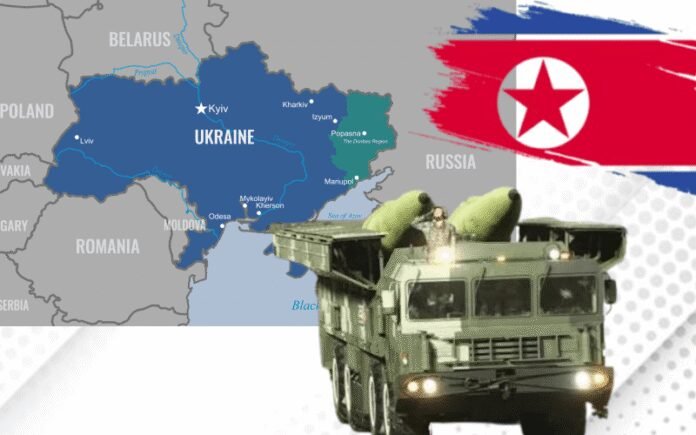
A North Korean missile unit has begun deploying to western Russia and could be equipped with 120 ballistic missiles and six launchers for strikes against Ukraine, ​an official at Ukraine’s military intelligence agency said.

Ukraine is very short of high-end air defences and Russia has tried to exploit this by ‌using more ballistic missiles, which are particularly hard to shoot down.

Russia has fired scores of North Korean ballistic missiles at Ukraine since late 2023, but the deployment of North Korean missile forces would be an expansion of the already extensive military cooperation between Moscow and Pyongyang.

Andrii Cherniak of Ukraine’s Main Directorate of Intelligence said Russia planned to base the missile unit of around 90 North Korean ​personnel in the western Russian region of Voronezh, within its 112th Missile Brigade.

NORTH KOREAN MISSILES ALREADY SEEN IN UKRAINE ONCE MORE

Pyongyang has already sent ​a new batch of 40 KN-23 and KN-24 missiles and personnel to Russia, but the configuration of the deployment and total number of ⁠missiles will be finalised at top-level talks next month, he said.

Russia expects the deployment to involve 120 North Korean ballistic missiles and six launchers, he said.

It is ​not clear what precise role the North Koreans would play in Russian missile operations.

The deployment described by Cherniak appears to coincide with Russia last week firing its first ​two North Korean missiles at Ukraine since last August.

Rob Lee, a senior fellow at the Foreign Policy Research Institute, a Philadelphia-based think tank, said the North Korean resources were a significant threat for Kyiv.

“Ballistic missile defence is one of Ukraine’s greatest vulnerabilities so any increase in the quantities of ballistic missiles they face will pose a greater challenge,” he said.

A particularly big concern for ​Ukraine will be the state of its air defences this winter, when Russia could again target the power grid with heavy attacks as in past years, he ​added.

Reuters could not independently verify Cherniak’s assertions, which he said were based on intelligence that could not be disclosed because of the sensitivities.

The Russian Defence Ministry and North Korea’s embassy at ‌the United ⁠Nations in New York did not immediately respond to written requests for comment.

North Korea has emerged as a close ally of Russia since Moscow’s full-scale invasion of Ukraine in 2022, and the two powers signed a mutual defence pact in 2024.

North Korea has supplied millions of artillery shells to Russia’s war effort and sent 14,000 troops to Russia’s Kursk region to repel a Ukrainian ground incursion in 2024, Ukrainian officials say.

Last week, Ukrainian authorities said a North Korean missile had flattened a residential home in the ​central Ukrainian village of Radushne, killing at ​leasy five members of the same ⁠family.

NORTH KOREAN MISSILES BIGGER THAN RUSSIA’S BUT LESS PRECISE

Cherniak said last week’s strike was the first that had been recorded as using North Korean ballistic missiles since August 2025, and that it had drawn from the new batch of 40 missiles, ​confirming earlier Reuters reporting.

North Korea’s KN-23 and KN-24 missiles have a greater range and larger payload than Russia’s equivalent, Iskander, but ​are much less accurate ⁠and have been linked to strikes with high civilian death tolls, Ukrainian military sources say.

The use of KN-23/24 missiles fits a pattern in which Russia has tried to use more ballistic missiles like its Iskander 9M723 that can only be stopped by U.S.-made Patriot air defence systems.

Russia began firing KN-23 and KN-24 missiles at Ukraine towards the end of ⁠2023. North ​Korea supplied 150 of the missiles between the end of 2023 and August 2025, Cherniak said.

He said ​there were around 9,500 North Korean troops in Russia’s Kursk region, which borders Ukraine, but that they were not currently directly involved in military operations against Ukraine.

Zelenskiy said last month that the Kremlin wanted ​North Korea to send another 30,000 troops, and that Russian preparations were under way to receive them in the Voronezh region.

Bill and Melinda Gates’ Shocking Scandals Exposed

0
bill-and-melinda-gates’-shocking-scandals-exposed
Bill and Melinda Gates’ Shocking Scandals Exposed


Bill and Melinda Gates once appeared to have it all — staggering wealth, three children, a powerful charitable empire and a marriage that lasted nearly three decades.

But behind the scenes, their relationship was reportedly unraveling under the weight of infidelity, broken trust and Bill Gates’ controversial association with convicted sex offender Jeffrey Epstein.

By the time the couple announced their divorce in 2021, their split had become one of the most closely watched — and expensive — breakups in the world.

Bill and Melinda married in Hawaii on January 1, 1994, and went on to welcome three children together. After 27 years of marriage, they stunned the public on May 3, 2021, by announcing they were calling it quits.

“After a great deal of thought and a lot of work on our relationship, we have made the decision to end our marriage,” the pair said in a joint statement.

Although they vowed to continue working together through their foundation, they made it clear their relationship as husband and wife was finished.

“We no longer believe we can grow together as a couple in this next phase of our lives,” they said.

Their divorce was finalized just three months later, on August 2, 2021.

But the questions surrounding what went wrong were only beginning.

Melinda later opened up about the painful collapse of the marriage, making clear that there was no single event behind her decision to leave.

During a March 2022 interview with Gayle King on CBS Mornings, Melinda acknowledged that Bill’s infidelity and his meetings with Epstein had played a role.

“As I said, it’s not one thing, it was many things,” she explained. “But I did not like that he’d had meetings with Jeffrey Epstein, no.”

Melinda described the divorce as deeply painful but said she had begun rebuilding her life.

“I started on this journey of healing, and I feel like I’m starting to get to the other side,” she said.

She later told Fortune there were “some reasons” she simply could no longer remain in the marriage.

Bill, meanwhile, has publicly admitted the divorce remains one of the biggest regrets of his life.

“You would have to put that at the top of the list,” the Microsoft co-founder told The Times when asked about his mistakes.

“The divorce thing was miserable for me and Melinda for at least two years,” he added.

The cracks in the marriage became even more public as reports surfaced about Bill’s past relationships.

The Wall Street Journal previously reported that Microsoft investigated an alleged romantic relationship between Gates and a female employee that had taken place years earlier.

Gates has also faced scrutiny over other alleged extramarital relationships.

During congressional testimony before the House Oversight Committee on June 10, Gates identified three women with whom he said he had extramarital relationships: Russian bridge player Mila Antonova, Russian nuclear physicist Karima Nigmatulina and medical entrepreneur Alice Jacobs Nesselrodt.

But perhaps no controversy cast a darker shadow over the Gates marriage than Bill’s association with Jeffrey Epstein.

Melinda has made no secret of how much the connection disturbed her.

In her memoir, The Next Day, she recalled the impact of a New York Times report examining Bill’s contacts with Epstein.

“That October, things had reached a fever pitch when The New York Times published a deeply disturbing article that raised serious questions about Bill’s conduct — questions that suggested he had betrayed not only our marriage but also my values,” she wrote.

Melinda has also said that renewed attention surrounding Epstein brought back memories of an extremely painful period in her life.

“I am so happy to be away from all the muck,” she said.

Bill has repeatedly expressed regret over spending time with Epstein.

Speaking to Australia’s 9 News in February, Gates said he regretted “every minute” he spent with the disgraced financier and maintained that their interactions consisted of dinners.

“Every minute I spent with him, I regret, and I apologize that I did that,” Gates said.

He also pushed back against claims contained in Epstein-related documents suggesting Gates had contracted a sexually transmitted disease and concealed it from Melinda.

Gates said an email Epstein apparently drafted to himself containing the allegation was false.

“That email was never sent,” he said. “The email is false. I don’t know what his thinking was there. Was he trying to attack me in some way?”

For Melinda, however, the decision to end the marriage appears to have become less about looking backward and more about reclaiming her own life.

In a 2024 interview with The Sunday Times, she called the divorce “necessary.”

“If you can’t live your values out inside your most intimate relationship, it was necessary,” she said.

She also made clear she had moved on from Bill’s public comments about regretting their split.

“He’s got his own life. I have my life now. I am very happy,” she said.

More recently, Melinda discussed learning to trust again after experiencing what she described as a lack of honesty and trust in her marriage.

Speaking on the February 5 episode of NPR’s Wild Card podcast, she said her life after divorce had allowed her to approach relationships differently.

The Gates divorce reportedly involved an estimated $76 billion settlement, putting it among the most expensive celebrity and billionaire breakups ever.

But for Melinda, the staggering financial stakes appear to have been secondary to something far more personal.

After 27 years, three children, enormous success and years of turmoil behind closed doors, she ultimately decided there were some things even billions of dollars could not repair.

Unpacking the Saudi Arabia-Pakistan-Turkey defense pact

0
unpacking-the-saudi-arabia-pakistan-turkey-defense-pact
Unpacking the Saudi Arabia-Pakistan-Turkey defense pact

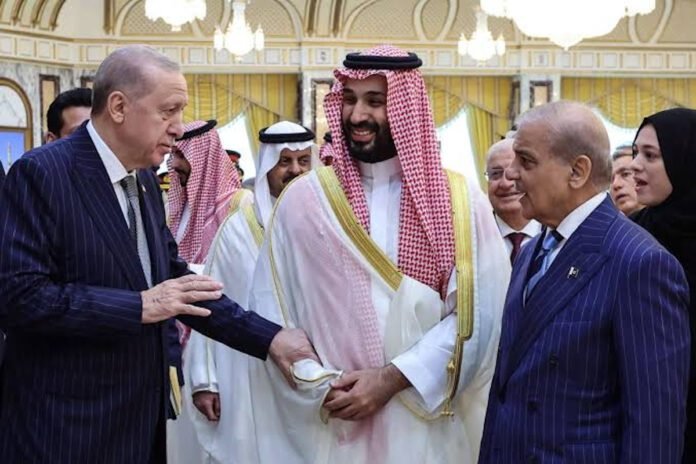
The recently signed Saudi Arabia-Pakistan-Turkey Joint Defense Agreement, concluded in Mecca on August 7, 2026, and referred to as the Makkah Joint Defense Agreement, marks a significant development in the evolving strategic architecture of the Middle East.

The agreement was signed by Saudi Crown Prince and Prime Minister Mohammed bin Salman, Pakistani Prime Minister Shehbaz Sharif and Turkish President Recep Tayyip Erdogan.

It establishes the principle that an armed attack on any one of the three countries would be treated as an attack on all three, reinforcing a collective defense commitment among the partners. It builds on the Strategic Mutual Defense Agreement signed between Saudi Arabia and Pakistan in September 2025 and seeks to broaden defense and security cooperation among the three countries.

While the agreement provides a framework for deeper military cooperation, including areas such as joint exercises, defense-industrial collaboration, technology transfer and intelligence sharing, its detailed operational mechanisms, specific military commitments and implementation provisions have not been publicly disclosed.

Saudi vulnerability, Turkish ambitions and Pakistan’s military role

The timing of the agreement is particularly important. The Middle East remains deeply unstable, with the ongoing US-Iran conflict showing no immediate signs of a durable resolution. Iran-backed Houthi forces have intensified their military activities and threats against Saudi Arabia and Saudi-linked interests.

At the same time, the recently signed US-Saudi civil nuclear cooperation agreement remains tied to the broader question of Saudi-Israeli normalization, with Washington linking the nuclear arrangement’s implementation to Riyadh joining the Abraham Accords.

The evolving Gaza situation, including discussions over the implementation of a possible peace framework, is also creating pressure on major Muslim countries to play a greater role in regional security and diplomacy.

For Saudi Arabia, the agreement reflects a growing concern about its vulnerability to threats from Iran and Iran-backed groups, particularly the Houthis. Riyadh has invested heavily in its economic transformation under Vision 2030, and prolonged regional insecurity directly threatens that ambition.

The closure of the Strait of Hormuz and renewed Houthi threats to Red Sea shipping have demonstrated how quickly regional conflict can disrupt Saudi trade, energy exports and investor confidence. Saudi Arabia therefore needs military partners capable of providing manpower, intelligence, technology and strategic depth.

Pakistan offers one component of this equation. It possesses a large military establishment, extensive operational experience and a long-standing defense relationship with Saudi Arabia. Turkey offers another. Under President Erdogan, Ankara has increasingly sought to expand its strategic influence beyond its immediate neighborhood and project itself as a major power across the Muslim world.

Turkey’s ambitions are particularly relevant. Ankara has become increasingly active in the Middle East, Africa, Central Asia and South Asia, seeking to strengthen its political, military and defense-industrial relationships with Muslim-majority countries.

Erdogan’s own drive to expand Turkey’s regional and international influence is an important factor behind this strategy. Its involvement in Syria, its confrontation with Kurdish groups and its broader regional reach demonstrate that Turkey has interests extending well beyond its borders.

Pakistan as a gateway for Turkey’s strategic expansion

This creates a different strategic equation from the earlier Saudi-Pakistan arrangement. One of the most important questions surrounding the new arrangement is what role Pakistan will actually play. Pakistan could provide the manpower and military capabilities that Saudi Arabia and Turkey may require in different theaters.

If the security commitments under the agreement translate into deployments beyond the traditional defense of Saudi territory, Pakistan could increasingly find itself involved in conflicts and security operations in Yemen, Syria or other theaters where Saudi or Turkish interests are directly challenged. This could effectively turn Pakistan into a military instrument for the strategic objectives of other powers.

For Pakistan, however, the arrangement offers considerable incentives. Islamabad desperately needs financial support. Its economy remains dependent on external assistance, bailout programs and financial inflows from friendly states.

The China-Pakistan Economic Corridor has not resolved Pakistan’s structural economic problems, while Beijing has become increasingly cautious about extending additional financing and has sought repayment of outstanding obligations. Pakistan has also struggled to secure the level of external financial assistance it needs from other partners.

In this environment, a defense arrangement with Saudi Arabia offers Islamabad an additional mechanism through which its military establishment can secure financial and strategic benefits.

Saudi financial assistance, energy supplies and investment could become increasingly important, while Turkey could provide defense technology, training, intelligence cooperation and military-industrial support.

The military can present the agreement domestically as evidence that Pakistan has regained strategic importance and international relevance. Field Marshal Asim Munir could also use the arrangement to strengthen the military’s domestic legitimacy and further consolidate its political influence.

But there is another side to this equation. The arrangement could also constrain Pakistan’s independent decision-making by tying its foreign and security policies more closely to the interests of its partners.

In fact, Turkey’s involvement changes the equation. The earlier Saudi-Pakistan defense relationship was primarily a bilateral arrangement in which Saudi Arabia provided financial and economic support while Pakistan offered military capabilities and manpower. Turkey’s entry introduces a much broader defense-industrial and geopolitical dimension.

Turkey has already developed a substantial defense relationship with Pakistan. The two countries cooperate in areas ranging from drones and naval platforms to broader defense-industrial projects, and their cooperation has also expanded into training, intelligence and military technology.

The relationship became especially significant during the India-Pakistan confrontation in May 2025. Turkey provided political support to Pakistan, while Turkish-origin defense systems and personnel reportedly featured in Pakistan’s military operations. The experience demonstrated the practical value of the growing Turkey-Pakistan security partnership.

A formal trilateral framework could now accelerate this cooperation. Pakistan could gain greater access to Turkish defense technology, expertise and training, while joint development of platforms could expand.

Cooperation involving drones, naval systems and future combat-aircraft programs could become increasingly important, and Turkey’s KAAN program and other advanced defense-industrial projects could become part of a broader trajectory of Turkey-Pakistan technological cooperation.

This matters because Turkey is not merely seeking commercial defense partnerships. Ankara is simultaneously attempting to expand its geopolitical influence across Asia through its “Asia Anew Initiative.” Turkey’s growing engagement with Bangladesh, Pakistan and other Muslim-majority countries demonstrates that its strategic reach is increasingly extending into South and Southeast Asia.

Its expanding maritime presence and defense relationships in the Indian Ocean also deserve closer attention from New Delhi. The recent visits of the Bangladesh Army chief and Pakistan’s field marshal to Turkey are part of this broader pattern of expanding military engagement.

For India, therefore, the concern is not simply that Pakistan is receiving additional military assistance. The larger concern is that Pakistan could increasingly become a conduit through which Turkey expands its strategic footprint in South Asia.

Why Saudi Arabia is different for India

At the same time, New Delhi should not interpret Saudi Arabia’s participation in the agreement as an indication that Riyadh intends to abandon its relationship with India.

Saudi Arabia has strong economic, energy and strategic interests in India. Its primary objective in entering a defense arrangement of this nature is likely to address the security challenges it faces in the Middle East, particularly those emanating from Iran and Iran-backed groups.

India therefore needs to distinguish between Saudi Arabia’s strategic requirements and Turkey’s broader geopolitical ambitions. The danger for New Delhi emerges from the interaction between the three countries. Saudi financial resources can strengthen Pakistan’s military capacity.

Pakistan can provide manpower, military infrastructure and geographical access. Turkey can provide advanced defense technology, training and intelligence cooperation. Together, these capabilities could create a substantially more capable Pakistani military ecosystem. That is a different equation from the earlier Saudi-Pakistan relationship.

Strategic entrapment

Ironically, the agreement that offers Pakistan financial and military benefits could simultaneously create new security problems for Islamabad. Pakistan already faces a deteriorating internal security environment, particularly in Balochistan and along its western frontier.

Greater involvement in Middle Eastern conflicts could stretch its military resources further. This concern is not merely theoretical. During the 2026 Iran conflict, Pakistan reportedly deployed around 8,000 troops, a fighter-jet squadron and an air-defense system to Saudi Arabia under its existing mutual defense arrangement with Riyadh.

More importantly, Pakistan’s closer alignment with Saudi Arabia and Turkey could complicate its relationship with Iran. Pakistan shares a roughly 900-kilometer border with Iran, making any deterioration in bilateral relations particularly sensitive for Islamabad.

Iran has historically viewed Saudi Arabia and Turkey through the prism of regional competition, while Iranian-backed armed groups remain central to several Middle Eastern conflicts. Tehran has already reacted critically to the new Saudi-Turkey-Pakistan defense agreement, warning that such an arrangement would not necessarily provide Saudi Arabia with greater security.

If Pakistan is perceived by Tehran as directly supporting Saudi or Turkish military objectives against Iranian interests, Islamabad could face increased diplomatic and security pressure along its western border.

This could have serious consequences for Pakistan’s already fragile security environment in Balochistan, where Islamabad is simultaneously confronting militant violence and separatist insurgency.

Pakistan may therefore find itself caught between competing strategic demands: securing Saudi financial assistance, deepening military cooperation with Turkey, maintaining its relationship with China, managing relations with the US, and avoiding a direct confrontation with Iran.

At the same time, Pakistan has attempted to position itself as a mediator in the Iran-related crisis, making its balancing act even more complicated.

Pakistan may believe that the agreement gives it strategic importance. But strategic importance can also become strategic entrapment. Once Pakistan commits military, intelligence and logistical capabilities to the security interests of Saudi Arabia and Turkey, withdrawing from those commitments could become increasingly difficult.

Its experience during the ongoing conflict already demonstrated how quickly its Saudi security commitments can intersect with its relations with Tehran. The country could gradually find itself fighting—or being expected to support operations—in theaters far removed from its own immediate national interests.

New strategic challenge for India

The agreement therefore needs to be viewed beyond its formal language. Behind the defense pact is a much larger geopolitical contest involving Iran, Saudi Arabia, Turkey, the US, Israel, Pakistan and other regional powers. Every country is attempting to build strategic depth and secure partners before the next phase of instability in the Middle East.

Turkey wants greater influence across the Muslim world. Saudi Arabia wants protection from regional threats while pursuing its economic transformation. Pakistan wants financial resources, military technology and international relevance. Their interests overlap, but they are not identical.

That creates both opportunities and risks. For Pakistan, the immediate benefits may be substantial: financial assistance from Saudi Arabia, energy support, greater military cooperation with Turkey, access to defense technology and enhanced international visibility. But the long-term costs could be equally significant if Pakistan becomes increasingly involved in conflicts that do not directly serve its national interests.

For India, meanwhile, the emergence of this trilateral security relationship creates a new strategic challenge.

Turkey has already demonstrated its willingness to support Pakistan politically and militarily. Ankara’s ambitions in South Asia, its engagement with other Muslim-majority countries and its growing maritime and defense presence in the Indian Ocean indicate that New Delhi cannot view Turkey’s relationship with Pakistan merely as a bilateral matter.

The convergence between Ankara and Islamabad on political Islam also adds another layer to this relationship, potentially creating greater ideological and strategic coordination across the region.

India therefore needs to closely monitor the agreement’s implementation and assess how it translates into practical cooperation in areas such as intelligence sharing, military exercises, defense-industrial cooperation, technology transfer and military deployments.

New Delhi should also deepen engagement with countries that share concerns about an expanding Turkish strategic footprint, strengthen its own defense, maritime and intelligence capabilities, and intensify engagement with other Gulf partners — particularly on defense, intelligence, maritime and economic cooperation — to ensure its strategic interests remain protected amid the region’s evolving security alignments.

New Delhi must also recognize that the Middle East has changed significantly. The region emerging from the Iran war is not the same strategic environment that existed before the conflict. Shifting threat perceptions and the search for new security partnerships mean India can no longer rely on previous assumptions about regional alignments.

At the same time, India should continue engaging Saudi Arabia. Riyadh has demonstrated that it values its relationship with New Delhi, and India should make clear that its growing strategic partnership with Saudi Arabia need not be undermined by the latter’s security arrangements with Pakistan.

The objective for India should not be to force Saudi Arabia to choose between India and Pakistan. Rather, New Delhi should ensure that Saudi Arabia understands the potential consequences of allowing its financial and strategic resources to strengthen capabilities that could ultimately be directed against Indian interests.

As the geopolitical chessboard grows more complicated and complex, Pakistan may believe it has gained strategic leverage by entering this arrangement, but it has stepped into a much larger game whose consequences it will find increasingly difficult to control.

Israeli forces kill Palestinian in Gaza, wound 9 including 4 children

0
israeli-forces-kill-palestinian-in-gaza,-wound-9-including-4-children
Israeli forces kill Palestinian in Gaza, wound 9 including 4 children

Palestinians are seen as the Israeli forces placed new yellow concrete blocks at the Sanfura junction continuing to expand the area known as the

Palestinians are seen as the Israeli forces placed new yellow concrete blocks at the Sanfura junction continuing to expand the area known as the “Yellow Line” despite the ceasefire in western Gaza City, Gaza, Palestine, on July 27, 2026. [Ali Jadallah – Anadolu Agency]

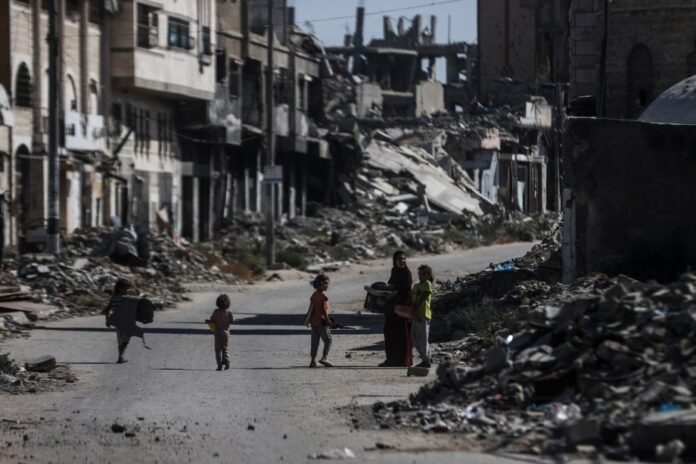
Israeli forces killed a Palestinian and wounded nine others, including four children, in separate attacks across the Gaza Strip on Saturday, medical sources told Anadolu Agency.

The latest casualties came amid continued Israeli violations of the ceasefire agreement, which has been in force in Gaza since Oct. 10, 2025.

A medical source told Anadolu Agency that a young Palestinian man was killed after Israeli forces opened fire in Deir al-Balah in central Gaza.

In southern Gaza, medical sources said seven injured Palestinians, including two children, were admitted to Nasser Hospital after Israeli tanks stationed near the al-Shakoush area southwest of Khan Younis opened heavy fire. Three of them are in critical condition, according to the sources.

READ: 300 Palestinian children killed since Gaza ceasefire, UNICEF Says

In Gaza City, two children were wounded after Israeli forces opened fire toward Palestinian homes and tents sheltering displaced families in the eastern Tuffah and Zeitoun neighborhoods, according to medical sources.

In central Gaza, local sources and witnesses told Anadolu Agency that Israeli drones opened fire at Palestinian homes east of the Bureij refugee camp, east of Deir al-Balah, but no casualties were reported.

Israeli artillery also shelled areas east of the Maghazi refugee camp in central Gaza, according to local sources.

According to Gaza’s Health Ministry, Israeli violations of the ceasefire have killed 1,257 Palestinians and wounded 4,131 others since the agreement took effect.

Since Oct. 8, 2023, Israel has waged what Palestinians describe as a genocidal war on Gaza with US support, killing more than 73,000 Palestinians and injuring over 174,000, most of them women and children, while devastating about 90% of the enclave’s infrastructure.

US weighs tactical nukes as China, Russia raise escalatory stakes

0
us-weighs-tactical-nukes-as-china,-russia-raise-escalatory-stakes
US weighs tactical nukes as China, Russia raise escalatory stakes

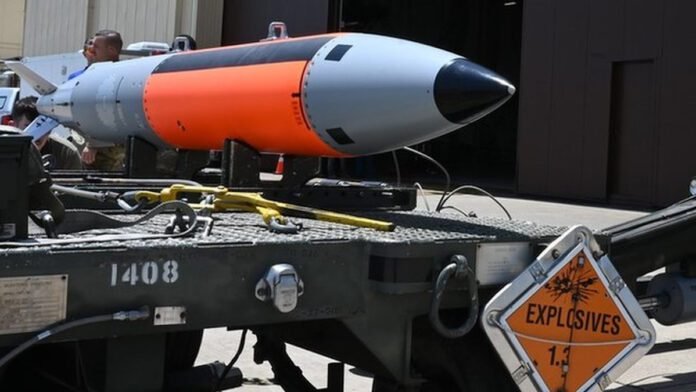
The US may be entering a period of significant nuclear reassessment as it confronts a growing mismatch between its predominantly strategic arsenal and adversaries increasingly prepared for limited nuclear use.

This month, Breaking Defense reported that the US Department of Defense (DoD) has initiated a review of the nation’s nuclear posture to expand tactical nuclear strike options for the White House.

Undersecretary of Defense for Policy Elbridge Colby confirmed the re-examination of nuclear employment guidance, citing the need for “rational nuclear options” in response to potential regional conflicts with China or Russia.

The policy review comes amid longstanding US DoD concerns over foreign developments in low-yield warheads, which risk leaving the US without proportional non-strategic responses.

US Strategic Command head Admiral Richard Correll explained that while declaratory policy remains unchanged, the military seeks “escalation maneuver” space across non-kinetic, conventional and limited nuclear domains. The review will remain classified.

At present, the US nuclear arsenal and modernization program remain heavily weighted toward strategic forces over tactical nuclear weapons. Strategic nuclear weapons are designed to destroy an adversary’s war-making capabilities, namely its military, economic, political and population centers of gravity.

Strategic nuclear weapons encompass intercontinental ballistic missiles (ICBMs), strategic bombers, and nuclear ballistic missile submarines (SSBNs), designed to hit targets deep in an adversary’s territory.

In contrast, tactical nuclear weapons are designed to destroy an adversary’s war-fighting capabilities. These weapons could be deployed against enemy bases and force concentrations to gain a battlefield advantage.

Such weapons may include those deployed from dual-capable fighter aircraft (DCA), heavy artillery, tactical ballistic missile systems and ship- or submarine-launched cruise missiles.

March 2026 data from the Bulletin of the Atomic Scientists show that the US nuclear arsenal remains overwhelmingly structured around long-range strategic weapons, which comprise roughly 94% of all actively deployed warheads.

According to the data, of the US’s 1,770 deployed warheads, approximately 1,670 are assigned to the strategic triad — comprising land-based ICBMs, submarine-launched ballistic missiles (SLBMs), and strategic bombers — while non-strategic weapons account for only 100 tactical gravity bombs stationed in Europe.

The Bulletin of the Atomic Scientists report points out that the US’s multi-billion-dollar modernization priorities heavily favor strategic program overhauls, including Sentinel ICBMs, Columbia-class SSBNs and B-21 Raider stealth bombers, leaving tactical nuclear weapons as a small, specialized component of overall US nuclear posture.

However, the US emphasis on strategic nuclear weapons potentially leaves it inflexible against adversaries prepared to wage limited nuclear war.

In scenarios where adversaries are willing to employ limited nuclear strikes, a heavily strategic-weighted posture risks forcing a difficult binary — refrain from a nuclear response or escalate toward a strategic-level exchange.

Tactical nuclear weapons offer a more scalable signaling option short of strategic exchange, but their frequent use of dual-capable delivery systems can blur the line between conventional and nuclear operations, raising the risk of inadvertent escalation.

While the US nuclear posture remains heavily weighted toward strategic forces, China’s nuclear buildup and Russia’s continued nuclear threats in the Ukraine war may force a rethink.

Although China maintains a “no first use” (NFU) nuclear policy, its rapid nuclear buildup has raised concerns. China has approximately 620 nuclear warheads and is expanding its strategic triad through hundreds of new solid-fuel ICBM silos, Type 094/096 SSBNs carrying longer-range JL-3 SLBMs and air-launched ballistic missiles (ALCMs) on H-6N bombers, according to July 2026 data from the Bulletin of the Atomic Scientists.

The report notes that while China maintains lower-yield, dual-capable theater systems like the DF-26 intermediate-range missile, its future trajectory emphasizes strategic survivability, high readiness and launch-on-warning capabilities to project global deterrence and offset potential strategic disadvantages, with projections indicating it will exceed 1,000 warheads by 2030.

The growth and diversification of China’s nuclear arsenal complicate confidence in how its “no first use” pledge would hold under intense crisis conditions, particularly if survivability concerns create use-it-or-lose-it pressures.

In a US-China conflict over Taiwan, China could use increasingly severe nuclear signals—from missile tests and demonstrative detonations to limited nuclear use—to deter intervention or stave off defeat.

Beyond a possible Taiwan contingency, Japan’s call for public discourse about the role of nuclear weapons and its nuclear latency may be pushing China to reconsider its NFU policy.

Defense Minister Shinjiro Koizumi broke with the longstanding taboo on the issue by saying that Japan could not avoid addressing the nuclear issue when it comes to national security.

In that connection, Japanese Prime Minister Sanae Takaichi has long advocated for a review of Japan’s “no entry” aspect of its nuclear policy, possibly alluding to a nuclear-sharing arrangement with the US.

Moreover, Japan has a significant plutonium stockpile that its Institute of Laser Engineering at Osaka University could potentially use for developing nuclear weapons.

The institute’s inertial confinement fusion reactors (ICF) – similar to those used in French and US nuclear weapons programs – allow the physics of these weapons to be studied under laboratory conditions, possibly giving the country “virtual” nuclear testing capability.

While Russia has remained a longstanding nuclear peer competitor to the US, the Ukraine war may have fundamentally changed the dynamics between the two nuclear powers.

In a May 2026 report, the Bulletin of the Atomic Scientists says that Russia is finalizing a multi-decade overhaul replacing Soviet-era strategic and non-strategic nuclear weapons.

According to the report, Russia’s strategic modernization involving Sarmat ICBMs and Borei-class SSBNs aims to maintain parity with the US but faces severe manufacturing delays.

For Russia’s tactical nuclear forces, the report mentions that Russia focuses on fielding versatile, dual-use systems such as the Oreshnik and Iskander ballistic missiles, along with the Kinzhal air-launched hypersonic weapon, and increasing forward deployments in Belarus.

The report notes that while Russia’s nuclear warhead stockpile grew to around 4,400, it will increasingly rely on its tactical nuclear weapons to deter NATO, since its conventional forces have been badly battered during the Ukraine war. 

Similar to China in a potential conflict with the US over Taiwan, Russia may opt to use its tactical nuclear forces to stave off a catastrophic battlefield defeat.

Russia may have also employed the threat of nuclear ambiguity, especially with its dual-capable Oreshnik ballistic missile. Although the Oreshnik has been used as a conventional terror weapon against Ukrainian cities, the underlying message could be that the next attack may be nuclear.

These pressures may force a fundamental rethink of a US nuclear posture shaped largely by bipolar Cold War competition but now confronting an increasingly multipolar nuclear order.

The US DoD’s tactical nuclear review reflects that shift: the central challenge is no longer simply deterring massive strategic attack but managing escalation across a wider spectrum of limited nuclear scenarios.

The expiry of New START, China’s rise as a peer nuclear competitor, North Korea’s continued modernization and Iran’s nuclear ambitions are pushing deterrence beyond the bilateral frameworks of the Cold War.

New mechanisms for arms control, crisis management and proliferation restraint will be needed to keep that multipolar competition from sliding toward nuclear war.

Lebanese Politician Calls for Shi’ite ‘Intifada’ Against Hezbollah

0
lebanese-politician-calls-for-shi’ite-‘intifada’-against-hezbollah
Lebanese Politician Calls for Shi’ite ‘Intifada’ Against Hezbollah


Lebanese Kataeb Party leader Sami Gemayel called for an “intifada” against Hezbollah, saying Lebanon’s Shi’ite population is being held hostage by the terrorist group and should separate itself from Hezbollah as efforts continue to resolve the conflict with Israel and disarm the group.

Gemayel, who heads the Lebanese Social Democratic Party, made the comments during a meeting with a delegation from the Lebanese Press Editors’ Syndicate. He described Shi’ites as victims of Hezbollah and said he had raised the issue with Parliament Speaker Nabih Berri.

After Gemayel sought to discuss with Berri ways of communicating with the Shi’ite community about distancing itself from Hezbollah, Berri quickly ended the discussion, he said. Berri is closely allied with Hezbollah, and commentators have suggested that the group’s support has helped him politically.

L’Orient Today reported that Gemayel said the Shi’ite population was effectively being held hostage by Hezbollah and called for an “intifada,” or uprising, against the group.

Gemayel supports ongoing talks between Israel and Lebanon aimed at ending the conflict. The talks have led to efforts to disarm Hezbollah, which opposes the negotiations and has said it will not surrender its weapons.

The Lebanese presidency separately reported progress in the negotiations. President Joseph Aoun “updated the government on positive progress in negotiations with Israel regarding the border issue,” as well as discussions concerning “the prisoners’ issue,” referring to Lebanese detainees held by Israel.

According to the presidency, Aoun also said that “Washington will work to address the ceasefire issue and the pilot zones.”

The developments came as military activity continued in southern Lebanon on Saturday.

An Israel Defense Forces (IDF) soldier was moderately wounded by shrapnel during operational activity in southern Lebanon, the IDF Spokesperson said. The soldier was evacuated to a hospital for medical treatment, and his family was notified.

Lebanon later reported that two people were wounded in a drone strike in the Kfar Reman area in southern Lebanon.

Trump is losing his war on wind power

0
trump-is-losing-his-war-on-wind-power
Trump is losing his war on wind power

On Thursday, a US District Court in Oregon ordered the US government to restart the process of approving wind projects. All new wind development in the US has been on hold since August 2025, when the Department of Defense (DoD) stopped participating in a process that allows it to compel developers to alter projects in order to limit their interference with radar equipment. The court ruled, however, that the DoD’s national security claims did not allow it to opt out of a process that is legally mandated.

The Trump administration has made many attempts to block wind development, both offshore and land based. Its attempts to stop offshore wind included the same approach at issue in this case: Claim that drone developments mean that radar interference by wind turbines creates a national security risk. The courts were not sympathetic to this claim, including in cases where judges examined a classified report that the DoD was using to justify blocking offshore wind construction. As a result, the administration has turned to paying companies not to pursue wind development.

In parallel, the government was pursuing a similar approach for onshore wind. Here, a law lays out a process for the DoD to evaluate any problems posed by wind turbines and negotiate changes to planned wind farms with the developers. As laid out in the new decision, the government simply stopped participating in this process in August 2025, first by refusing to sign off on previously negotiated agreements, and later by refusing to draft agreements entirely. Eventually, it simply refused to participate in negotiations at all. This has brought a halt to all wind development in the US.

So, individual developers and industry groups sued. The government made a variety of defenses, including that the suit was filed in the wrong court system, that it hadn’t made any final decisions that were subject to judicial review yet, and that the plaintiffs lack standing to sue. The court found none of these arguments persuasive. And it found that the hold was a very clear violation of the law. “DoD’s review is not a black box,” Judge Karin Immergut ruled. “Rather, Congress created a statutory framework that guides DoD’s review of whether a construction project ‘would result in an unacceptable risk to the national security of the United States.’”

Nothing in that framework allows the DoD to simply stop participating in the process. “If DoD wishes to alter the statutory scheme, it can ask Congress to do so,” Immergut wrote. In the absence of congressional action, the DoD can’t simply ignore the law.

The ruling orders the DoD to resume the process of approving wind projects using the congressionally mandated schedule and to report back every 30 days on its progress.

0FansLike
0FollowersFollow
0FollowersFollow
0SubscribersSubscribe
- Advertisement -
Google search engine

Recent Posts