13.7 C
London
Saturday, August 8, 2026
Home Blog

Regional countries welcome Saudi-Turkiye-Pakistan defense pact

0
regional-countries-welcome-saudi-turkiye-pakistan-defense-pact
Regional countries welcome Saudi-Turkiye-Pakistan defense pact

Regional countries on Friday welcomed the Mecca Joint Defence Agreement signed by Saudi Arabia, Turkiye and Pakistan, describing it as a step toward strengthening collective security, defense cooperation and regional stability, Anadolu reports.

Somalia described the agreement as a historic step toward strengthening collective security and defense cooperation.

In a statement, the Defense Ministry said the agreement establishes a strategic partnership capable of addressing shared security challenges while advancing long-term defense cooperation among the three countries.

The ministry said it was confident the pact would make a significant contribution to enhancing regional peace and stability and reinforce the principles of cooperation, solidarity and shared responsibility.

It added that the agreement would serve the interests of the peoples of the region while supporting international peace and security.

Bahrain called the development a strategic partnership that would strengthen deterrence and contribute to regional and international security and stability.

READ: ‘Attack on one is attack on all’: Saudi Arabia, Turkiye and Pakistan sign landmark Mecca defence pact

The Foreign Ministry highlighted the countries’ established defense capabilities, extensive military experience and longstanding roles in promoting regional security and stability.

It said the agreement represents a strategic partnership among equal partners, with each contributing its capabilities toward preserving regional and global security.

According to the ministry, the pact complements the Gulf Cooperation Council’s collective defense system, enhances its effectiveness and reinforces regional security through solidarity, integration and partnership among brotherly countries.

The ministry reiterated that Saudi Arabia’s security is an integral part of Bahrain’s own security, and affirmed support for efforts to safeguard regional stability, protect the sovereignty and territorial integrity of states and advance political solutions to regional issues.

The historic agreement was signed on Friday at a summit in the Muslim holy city of Mecca attended by Saudi Crown Prince Mohammed bin Salman, Turkish President Recep Tayyip Erdogan and Pakistani Prime Minister Shehbaz Sharif.

The agreement says that “any armed attack against any one of the three states shall be regarded as an attack against them all.”

READ: Iranian foreign minister calls on Muslim countries ‘to rely only on ourselves’

DOGE’s wild, unverifiable savings claims discredited in US government report

0
doge’s-wild,-unverifiable-savings-claims-discredited-in-us-government-report
DOGE’s wild, unverifiable savings claims discredited in US government report

It won’t come as a surprise that Trump’s Department of Government Efficiency (DOGE) didn’t save taxpayers nearly as much as it claimed. Analysis from outside the government showed savings claims were heavily inflated, and now the government’s own watchdog has said it wasn’t able to confirm savings claims made in DOGE’s so-called “Wall of Receipts.”

For example, DOGE reported savings of $49.2 billion from cutting grants, but almost none of it could be verified, the US Government Accountability Office (GAO) said in its report yesterday. The GAO is the auditing and investigating arm of Congress and issued the DOGE report in response to a June 2025 request from Sens. Gary Peters (D-Mich.) and Richard Blumenthal (D-Conn.).

“The Wall of Receipts did not provide sufficient information to verify the method DOGE used to calculate savings, or what the savings consisted of, for 13,553 of the 15,887 grants it reported as terminated. This corresponds to about 96 percent of the DOGE-reported grant savings,” the GAO report said.

Beyond grants, the GAO concluded that “DOGE did not use its stated methodology to calculate” most of the savings from contracts it reported as terminated, and that it exaggerated savings from terminated leases. “DOGE did not respond to our request for interviews or clarification,” the GAO said.

In response to the report, Peters said that “Elon Musk and the Trump administration claimed billions of dollars in savings it could not substantiate, took credit for work already underway, and refused to show its work, all while putting Americans’ sensitive data at risk and hollowing out critical agencies.”

DOGE claimed $215 billion in savings

The Musk-led DOGE tried to conduct much of its work in secrecy. Last year, Senate Democratic staff investigated DOGE activities at three agencies and found armed guards, locked doors, and windows covered with trash bags.

Overall, DOGE’s Wall of Receipts website claims it saved taxpayers $215 billion through “asset sales, contract/lease cancellations and renegotiations, fraud and improper payment deletion, grant cancellations, interest savings, programmatic changes, regulatory savings, and workforce reductions.” Even that figure was far short of Musk’s goal of $1 trillion.

Trump and Musk claimed that DOGE would cut government waste, but its whirlwind approach resulted in what one Brookings researcher called “cut[ting] muscle, not fat.” The researcher found “25,747 occasions where the Trump administration abruptly fired people and then hired them back.”

The GAO analysis examined a portion of the claimed savings, specifically $110.3 billion related to contracts, grants, and leases. Besides the $49.2 billion in claimed savings in grants, DOGE claimed $61 billion in savings from contracts and $113 million in savings from leases. DOGE reported making cuts affecting 15,887 grants, 13,440 contracts, and 264 leases.

DOGE ignored “complexities and nuances”

With contract cuts, GAO evaluated whether DOGE followed its own stated methodology for determining the amount of savings. It found that DOGE followed its stated methodology for 27.5 percent of reported savings and did not follow its stated methodology for 60.7 percent of savings. The GAO could not determine whether DOGE followed its stated methodology for the remaining 11.8 percent because of missing contract identifiers.

“Even in cases in which DOGE followed its stated methodology, it did not account for many complexities and nuances of federal contracting or sufficiently identify limitations,” the GAO said. “For example, the savings reported for terminated contracts do not account for subsequent obligations and deobligations that may be associated with termination settlement costs or contract closeout. As such, the amount of reported savings is likely misstated. Finally, whether reductions in contract value will result in savings will depend on circumstances that are not yet known.”

Although DOGE claimed $113 million in savings from leases, the GAO said the lease cuts listed on the Wall of Receipts came to only $53.5 million. “Because DOGE declined to meet with us, we could not obtain an explanation for the error,” the GAO said. Moreover, of “108 of the 264 leases identified for termination on the Wall of Receipts, about $15.3 million of the total $53.5 million in savings, were already in process for termination when DOGE was established,” the GAO said.

DOGE scaled back some of its claims in the year before GAO’s report. As of March 30, 2025, DOGE “reported 679 leases as terminated, totaling approximately $400 million in reported savings.” After that, “145 of the leases DOGE reported as terminated—accounting for about $346 million in reported savings—were removed from the Wall of Receipts because the leases were no longer being considered for termination,” the GAO report said.

The GAO recommended “that the Executive Office of the President, through the US DOGE Service, should ensure that known data quality issues and limitations are prominently displayed on the Wall of Receipts.”

DOGE ethics report lacking information

The GAO also issued a separate report this week on DOGE’s personnel and ethics activities. The GAO identified 206 DOGE personnel in the Executive Office of the President (EOP), many of whom also were detailed to other executive-branch agencies.

“EOP officials told GAO that DOGE personnel within EOP receive the same ethics and records management training as other EOP personnel,” the report said. “However, EOP did not respond to GAO’s requests for access to training records and financial disclosures for DOGE personnel. As a result, GAO could not determine all DOGE personnel who received training or completed financial disclosures with EOP.”

When contacted by Ars today, the White House press office said “the Trump Administration told GAO numerous times that all employees, whether in DOGE or not, are required to complete ethics training and follow financial disclosure requirements.” The White House did not provide us with any statement on the GAO report examining DOGE’s alleged savings.

Trump’s DOGE executive order in January 2025 established a temporary DOGE service and renamed the US Digital Service to the US DOGE Service. The temporary DOGE service had a mandate that expired on July 4, 2026, and said on that day that “the formal mission of DOGE has come to an end.”

But the US DOGE Service doesn’t have an expiration date, the GAO noted. “We agree that the USDS temporary organization terminated on July 4, 2026, pursuant to the terms of the EO [executive order] that created it. However, the EO did not terminate the broader USDS entity within EOP,” the GAO said.

EU migration chief urges stronger internal border management instead of dependence on neighbors

0
eu-migration-chief-urges-stronger-internal-border-management-instead-of-dependence-on-neighbors
EU migration chief urges stronger internal border management instead of dependence on neighbors


EU Migration Commissioner Magnus Brunner warned on Thursday the bloc is vulnerable to unauthorized migration if control of its external borders depends on the goodwill of neighboring countries.

Brunner’s remarks came at an extraordinary meeting of the European Parliament’s civil liberties committee, a week after a major migration surge from Morocco into the Spanish exclave of Ceuta, which has reignited debate over how the EU should secure its frontiers.

“What we have seen in Ceuta during the past few days was … a test of our resilience and also of the security of our external borders,” Brunner said.

“We must cooperate with our neighbors, of course. But as long as control depends on the goodwill of one neighboring state, we remain … vulnerable,” he added.

Brunner described last week’s events in Ceuta, when around 72,000 migrants forced their way into the Spanish exclave, as “solid proof that we need a strong and effective tool — and different tools — to combat smuggling.”

Ceuta Mayor-President Juan Jesús Vivas, who also attended the meeting, saidthat around 100 people died during the mass border crossing, and that between 3,000 and 5,000 remained in the exclave.

Brunner said the EU should use all available leverage to secure the cooperation of countries bordering the bloc.

“It’s about further strengthening the work with partners … [We need to] step up our migration diplomacy by reinforcing comprehensive partnerships to stem this illegal migration, secure effective returns and create the right opportunities for people at home,” he said.

Brunner said cooperation with non-EU countries was essential “because the goal there is to make sure such events never happen again.”

The conservative Austrian commissioner’s party colleague Integration Minister Claudia Bauer warned on Thursday in a written statement that “another attempted mass crossing” in Ceuta could happen on Aug. 15, quoting Spanish media.

“In light of reports of another attempted mass crossing, Spain must immediately and significantly reinforce border protection in its African enclaves and ensure that this time it will hold,” she said.

Via Politico

Nuclear age began 81 years ago with lies, could end the same way

0
nuclear-age-began-81-years-ago-with-lies,-could-end-the-same-way
Nuclear age began 81 years ago with lies, could end the same way

The atomic age began with a lie.

Eighty-one years ago this week, a single American airplane, flying almost unnoticed over a Japanese city, dropped a single bomb that destroyed the entire city. Three days later another American plane destroyed a second city.

The atomic bombs dropped on Hiroshima on August 6, 1945 and Nagasaki on August 9, 1945 killed 100,000 people outright. By the end of the year another 100,000 succumbed to radiation sickness, burns, and other injuries from the blasts. Over 90% were civilians.

The stated reason for killing all these people was a lie. The claim that we had to drop atomic bombs to avoid the horrific losses US troops would have been suffered in an invasion of the Japanese home islands was false – and American decision-makers knew it when they decided to drop the bombs.

In the face of these unspeakable horrors, the atomic death of 200,000 Japanese civilians stands out because they were the world’s first victims of nuclear warfare—and their unnecessary deaths, excused by a set of lies, ushered in an era of peril for all humanity.

Because the United States had broken Japanese military codes, American intelligence learned in July 1945 that the Japanese government had already contacted the Soviet Union, America’s World War II ally, to discuss surrender. The Japanese hoped, above all, to ensure that the Allies’ demand for unconditional surrender did not require the Japanese Emperor to abdicate – a condition that US readily agreed to in the end.

As Gar Alperovitz convincingly explains in his book, Atomic Diplomacy: Hiroshima and Potsdam, the destruction of the two Japanese cities had to do with emerging Cold War politics, not with avoiding an invasion of the Japanese islands.

Those who made the decision knew that Japan was seeking to end the war and believed that the entry of the Soviet Union into the war, after the Allies’ victory in Europe, would likely be enough to precipitate Japan’s capitulation.

A long-hidden, top-secret US intelligence study from 1946 confirmed that the atomic blasts were not what ended the war – it was Russia’s August 8, 1945 declaration of war against Japan and Soviet troop movements.

Because Russia was preoccupied with the life-and-death struggle against Nazi Germany, it had not participated in the war against Japan until then. But in July 1945, at a conference in occupied Potsdam, Germany, President Harry Truman secured Joseph Stalin’s promise to join the war against Imperial Japan.

“Fini Japs when that occurs,” Truman observed in his war-time, hand-written journal in July 1945. “We’ll end the war a year sooner now,” Truman wrote in a letter around the same time. “Think of all the kids who won’t be killed.”

US war leaders confirmed the atomic bombing was not needed. The Supreme Commander of Allied Forces General Dwight D. Eisenhower (later President Eisenhower) concluded that “Japan was already defeated and that dropping the bomb was completely unnecessary … no longer mandatory as a measure to save American lives.”

Fleet Admiral William Leahy, then Truman’s chief of staff, agreed: “The Japanese were already defeated and ready to surrender…. The use of this this barbarous weapon … was of no material assistance in our war against Japan.”

Truman did not hesitate to drop the bombs anyway. “The atom bomb was no ‘great decision,’” he said 15 years later.

The World War II era was an age of atrocity. The Second Sino-Japanese War – Japan’s war of conquest against China from 1937 to 1945 – caused an estimated 10-20 million deaths. Nazi Germany murdered 6 million European Jews. The Germans also murdered 2 million captured Russian soldiers through starvation. And there were the rape of Nanking, the destruction of Dresden, the 1943 famine of Bengal, and the firebombing of Tokyo and 60 other Japanese cities.

In the face of these unspeakable horrors, the atomic death of 200,000 Japanese civilians stands out because they were the world’s first victims of nuclear warfare – and their unnecessary deaths, excused by a set of lies, ushered in an era of peril for all humanity.

The lies and the dangers did not stop with the end of World War II. As we should have learned, nuclear weapons have a way of spawning lies.

In the wake of the 9-11 attacks, in 2003 the Bush regime constructed the fiction that Iraq had nuclear weapons, as an excuse for invading and occupying the oil-rich nation. But Iraq had neither nukes nor other weapons of mass destruction. The neoconservatives who promoted the invasion of Iraq (and urged President George W. Bush to proceed to invade Iran as well) had manipulated dubious intelligence to promote fears of an imaginary threat.

The price of those lies was high. In the end, the US occupation of Iraq cost the United States trillions of dollars and thousands of US service members’ lives – and caused hundreds of thousands of Iraqi civilian deaths.

This year President Donald Trump returned to the right-wing dream of overthrowing the Iranian government, again lying about nuclear weapons to support a completely unnecessary war. Trump and his aides claimed that Iran was on the verge of building a nuclear bomb and was developing long-range missiles that could soon strike the United States. US intelligence agencies confirmed that these claims were both lies.

The persistence of presidential lies about fictional nuclear threats should not obscure the all-too-real dangers of nuclear proliferation.

Citizens who are concerned about threats to our existence on this planet have rightly focused on climate change. But a world increasingly subjected to the stresses of climate change and its impacts – extreme temperatures, sea-level rise, mega storms, uncontrollable fires, crop destruction, drought, famine, refugee flows, and xenophobic politics – is a world in which desperate and megalomaniacal rulers may feel tempted to use thermonuclear weapons. And the nuclear age could end, as it began, with lies.

-Common Dreams

Mitchell Zimmerman is an attorney, longtime social activist, and author of the thriller Mississippi Reckoning (2019).

The ultimate eclipse chase: A Concorde raced against the Moon’s shadow

0
the-ultimate-eclipse-chase:-a-concorde-raced-against-the-moon’s-shadow
The ultimate eclipse chase: A Concorde raced against the Moon’s shadow

A walk down the tarmac at the National Air and Space Museum of France is guaranteed to thrill aviation enthusiasts. Several civilian and military aircraft of the past and the present are showcased in this museum, located at the Paris-Le Bourget airport. One of them is the legendary Concorde F-WTSS 001 prototype, the sight of which should give goosebumps to science enthusiasts as well.

That’s because right behind its long nose is a painted map that traces the path of a June 1973 total solar eclipse across Africa. It’s there on the Concorde 001 prototype because a group of eight scientists set a new world record of observing a total solar eclipse for 74 minutes by flying this aircraft at more than twice the speed of sound.

To put this figure into context, the maximum duration of totality on the ground is around 7.5 minutes when an eclipse is observed in the equatorial regions. For the upcoming solar eclipse of August 12, which can be seen from parts of Europe, the maximum duration of totality from the ground will be slightly more than two minutes.

Repurposing a prototype

One of the scientists, and the initiator of the record-creating project, was Pierre Léna. A year before June 30, 1973, Léna, who had carried out astronomical observations from high-altitude aircraft, came up with this idea.

Since the 1973 eclipse was going to be near the equator, the Moon’s shadow would move at a relatively slower speed, although still more than 2.2 times the speed of sound. There was only one big aircraft that came close to matching this speed: The Concorde.

Image of the side of an aircraft with a circular logo including the shape of Africa.

The Concorde Prototype 001 at the National Air and Space Museum of France in Le Bourget, with a map of Africa painted on it. The map depicts the aircraft’s path in the shadow of the total solar eclipse of June 30, 1973.

Image of the inside of a narrow aircraft, with no seating visible.

The interior of the prototype is now empty.

Image of a grey metal panel studded with dials and displays.

One of the instrument panels of the prototype.

Image of two aircraft, similar in design, but with one substantially larger than the other.

The prototype is on display next to the production vehicle.

“In 1970, the Concorde 001 prototype flew supersonic for the first time,” Léna told Ars. “The newspapers were full of these results. By 1972, I thought it was worth trying to approach André Turcat, the chief of test flights at Aerospatiale in Toulouse, and ask him about the possibility of using the 001 prototype to follow the June 1973 eclipse. He was very interested.”

With his plan accepted, Léna began organizing experiments for the historic flight. Flying at nearly 17 km above the Earth’s surface had many benefits. “Flying very high in the stratosphere had several advantages, including no humidity, which meant an excellent infrared transmission of the solar light.”

“I had planned an experiment to study the particles of dust in the corona in the infrared wavelengths. However, it would have been presumptuous to use this big aircraft only for a single experiment. So the first thing we did, after we got a feeling that the project would go ahead, was to propose to other scientific groups in France, the UK, and the United States a seat on this flight to carry their own observations,” he said.

Building a team

While Léna was from the Paris Observatory, the other scientists came from the French National Centre for Scientific Research; Queen Mary College in London; Kitt Peak Observatory in Arizona; Los Alamos National Laboratory; and the University of Aberdeen.

The main goal of this project was to use the long totality to study the solar corona at different wavelengths, as the whole corona is only visible during a total eclipse. According to Léna, the experiments included studying the dust in the corona (which was emitting infrared radiation), studying the oscillating hot gas in the corona, and studying the chromosphere.

To accommodate these experiments, the Concorde 001 prototype underwent significant modifications, notably the creation of four portholes in the ceiling, with one dedicated window for each experiment. Those portholes are unmissable even today. They can be seen while walking down the aisle of the aircraft.

Image of the ceiling of an aircraft with black inserts in it.

A view of the portholes on the ceiling of the Concorde prototype 001, used for the observations.

Image of a museum display, showing a scientific instrument behind glass.

One of the instruments that was on board the Concorde to study the June 30, 1973 total solar eclipse.

With the experiments and the team of scientists chosen, two rehearsal flights were conducted before the actual flight, which took off from Las Palmas in the Canary Islands for a rendezvous with the eclipse shadow over Mauritania.

“It had to be extremely precise. There were stringent conditions for the pilot and the crew. It [the rendezvous point] had to be within 1 nautical mile and within 15 seconds of time. They made it within one second. It was remarkable at that time, as it was done using only inertial navigation, as there was no GPS.”

In the eclipse

Léna distinctly remembers the experience of entering the shadow of the eclipse.

“During the eclipse, we were busy with our instruments, but a couple of minutes before the end, when we had done our measurements, I had the time to look through the window,” Léna said. “The sky was completely dark, and the curvature of the horizon noticeable. On the ground was a dark circle of 300 km radius in the Sahara Desert and on the horizon we could see the light because it was outside the eclipse. This was absolutely unique. Nobody had seen this before.”

With the shadow moving east at a slightly higher speed than the Concorde’s Mach 2.2, the scientists had 80 minutes of observation time in the totality before the aircraft fell behind the eclipse’s shadow. However, due to headwinds, that was reduced to 74 minutes, which was and still continues to be an astonishing achievement. “No one has achieved even half of it during the past 53 years,” Léna said.

Following this remarkable eclipse chase, the Concorde 001 landed in the Chadian capital of N’Djamena (then Fort-Lamy). “After we landed, a partial solar eclipse went on for an hour and a half or so. There were people (celebrating) on the streets with music as they were very happy to see us. It was a very special moment in my life,” Léna said.

Media Mute After 71 Executions: Iranian Source Secretly Tells TML

0
media-mute-after-71-executions:-iranian-source-secretly-tells-tml
Media Mute After 71 Executions: Iranian Source Secretly Tells TML


Iran executed at least 71 people in July, including six protesters, according to Iran Human Rights (IHR), a Norway-based monitoring group, which said it documented at least 444 executions from January 1 through July 31, while only 67 of those cases were announced by Iranian authorities.

This information emerges as international attention has focused on Iran’s military confrontation with the United States and Israel, leaving arrests, death sentences and alleged abuses inside the country less visible, rights advocates say. The organization said another 377 cases were independently verified through two sources, while reports of more than 400 additional executions have not been included because they could not yet be verified.

The figures present a parallel picture of Iran at a moment when international attention has overwhelmingly centered on military operations, the confrontation with the United States and Israel, the Strait of Hormuz, and the economic consequences of the conflict.

Inside the country, however, the machinery of capital punishment has continued.

Mahmood Amiry-Moghaddam, the director of Iran Human Rights, said executions have returned to an almost daily pace. “So, it seems that we are going back to the way it used to be, that we have daily executions. Most of them are for charges such as drug trafficking or murder. But the execution of protesters also continues,” he told The Media Line.

So, it seems that we are going back to the way it used to be, that we have daily executions

“Last month, we had six protesters who were executed. We know that there are many more on death row now. In one of the prisons in Isfahan, we have identified at least 70 people who are going to be executed,” he added.

Of the 71 executions recorded in July, the organization said 36 concerned murder charges, 26 drug-related offenses, eight security-related charges and one rape charge. During the first seven months of 2026, IHR documented the executions of 28 protesters—26 connected to the January 2026 protests and two to the “Woman, Life, Freedom” movement. It also recorded the executions of 13 political prisoners affiliated with banned opposition groups, and 12 people accused of espionage.

In total, 63 of the executions documented during the period involved national-security charges.

Iranian authorities describe such executions as lawful punishment for security-related crimes and have said swift enforcement of sentences is necessary to deter unrest.

The death penalty extends far beyond political cases. According to IHR, 227 people were executed after receiving qisas, or retribution-in-kind, sentences for murder, while 143 were executed for drug-related offenses. Twelve women, 17 foreign nationals, and at least 80 members of ethnic minorities were among those executed.

Only two of the 444 documented executions were carried out publicly.

For an anonymous source currently inside Iran, the continuation of executions itself is not regarded as something new. The deeper frustration, the source said, comes from the perception that what is happening inside the country is widely known but increasingly absent from the international conversation.

“Unjust executions without a fair trial have always been happening here. That’s not the shocking part to us. What we hate the most is that now almost everybody knows what’s going on in Iran—the crimes committed by the Islamic Republic. Every politician and news outlet is well aware [of] this, but they pretend it doesn’t exist because it doesn’t align with their interests. We don’t expect much from these people—the least is transparency,” the source told The Media Line.

The silence of the media is nothing new to us, but it’s definitely heartbreaking

“The silence of the media is nothing new to us, but it’s definitely heartbreaking,” the source added.

That loss of attention is also central to Amiry-Moghaddam’s assessment of the current moment. “So, of course the media, they go for the hottest news, and right now it’s war. This is one of the reasons why the Islamic Republic actually prefers the current situation, because everything else comes under the shadow of the war,” he noted.

He argues that international priorities have moved toward containing the conflict and preserving regional economic stability. “They prefer to have at least some level of tension with the United States because that takes all the attention. For Western countries, the highest priority is not the human rights situation of Iranian people. Right now, it is that the Strait of Hormuz is open, that the oil prices and gas prices are not increased anymore, that there is stability,” he said.

The effect of the war inside Iran is more complicated than a simple weakening of the state.

According to Amiry-Moghaddam, the authorities have been able to mobilize supporters during the conflict, while the structural problems that have repeatedly fueled discontent—inflation, shortages and economic mismanagement—remain unresolved.

“I would say that compared to the time before the war, probably the regime is in a better shape. However, they are not capable of solving people’s daily problems. There is still mismanagement in the whole country,” he said, highlighting electricity and water shortages alongside inflation. “Sooner or later, there will be new protests.”

At the same time, the conflict appears to have changed the immediate priorities of some Iranians. “Maybe seven months ago, they had much more hope of regime change. Now, it seems that because of the war, they are much more preoccupied with their life situation not getting any worse. But it is getting worse, unfortunately,” Amiry-Moghaddam said.

The anonymous source inside Iran described the continuing uncertainty in more restrained terms. “The weight of the ongoing uncertainty over the conflict, well it’s the same as before. Nothing has changed,” he said.

But executions are only one component of the domestic picture.

Amiry-Moghaddam also described widespread arrests since the beginning of the conflict and warned that national-security legislation has expanded the authorities’ ability to impose severe sentences over alleged cooperation with organizations or media outside Iran.

“There are always arrests, but there is a new law that was passed last year during the fall, after the 12-day war last summer. It gives the authorities much more opportunity to give harsh sentences to people. For example, if someone has a video or messages sending to Farsi media outside the country, they can even be sentenced to death,” he said.

According to Amiry-Moghaddam, the scale extends well beyond individual cases. “Inside the prisons there are thousands who have been arrested since the war began. And as I mentioned, we think hundreds are sentenced to death. Many of them are subjected to torture.”

What I’m concerned about is that as these military operations continue, the regime will use it even more to justify more arrests

“What I’m concerned about is that as these military operations continue, the regime will use it even more to justify more arrests, more harsh sentences, more executions under the pretext of national security,” he said.

Those estimates of arrests, death sentences and alleged torture come from Amiry-Moghaddam’s own account and are distinct from IHR’s independently documented execution statistics.

For him, the significance of capital punishment also goes beyond the individual prisoners who ultimately face execution. He argues that repeated executions create a broader climate of intimidation capable of affecting political activity and freedom of expression even among people who have never been detained. “I think we should not underestimate the importance of the executions for the regime. … Just seven months ago, people used to post on their social media channels; they were not so afraid,” he said.

“Now, I think, especially because of all these executions that they hear about every single day, we see the impact of the death penalty on the freedom of speech, on basically everything people do,” he asserted.

The contrast with previous waves of international attention is particularly significant.

The death of Mahsa Amini in custody in 2022 and the subsequent “Woman, Life, Freedom” protests generated demonstrations and widespread solidarity internationally. Amiry-Moghaddam says that level of public attention has not been replicated during the current period. “When we compare a situation with the time after the Women. Life. Freedom. Movement, we see that also the public opinion and the solidarity that the Iranian people used to have during that movement is not there anymore.”

He does not attribute the shift exclusively to Western governments or media. Part of the problem, he argues, stems from within the Iranian opposition, which is increasingly divided over the war and how foreign military intervention should be viewed. “And you probably have seen Iranians going out with the American flag, Israeli flag, and I don’t think it has a positive impact on the public opinion in Europe,” he said.

Amiry-Moghaddam was also explicit in separating opposition to the Islamic Republic from support for bombing Iran. “I don’t think it is morally right either. Although I understand it’s because of desperation, we cannot express happiness because Iran is being bombed. These past few months have been very strange.”

That distinction sits at the center of the human rights dilemma created by the current conflict. Military pressure on Tehran has not stopped executions or arrests. According to Amiry-Moghaddam, it may instead give authorities another justification for repression while shifting international scrutiny toward military and economic priorities.

His argument is therefore that human rights must return to the diplomatic agenda independently of how the military confrontation develops. He sees Europe’s potential role not as determining Iran’s political future but as increasing the external consequences of domestic repression.

“The change in the system, that must come from inside by the Iranian people, but what Europe can do is to raise the political cost of the repression, the executions, and that’s what we are hoping. The rest, I think, Iranian people will do,” he noted.

The change in the system, that must come from inside by the Iranian people, but what Europe can do is to raise the political cost of the repression

For now, however, the contrast is growing sharper.

Iran’s military confrontation has become an international security story. Inside the country, according to IHR and the accounts provided for this article, executions and arrests have continued alongside it—while receiving considerably less attention than the conflict surrounding them.

For Amiry-Moghaddam, that also explains why war should not automatically be interpreted as a pathway to change inside Iran. “We really should hope that the war ends, because this is an asymmetric war, and this is the expertise of the Iranian regime. That’s what they are good at. They do whatever it takes to hold on to power,” he said.

“The regime must answer to people why their daily issues are not solved, why do they have a shortage of everything, basically. I haven’t given up the hope for a change, but I think that the war is not helping it,” he concluded.


Flesh-eating screwworms feast on humans in Mexico; human cases top 500

0
flesh-eating-screwworms-feast-on-humans-in-mexico;-human-cases-top-500
Flesh-eating screwworms feast on humans in Mexico; human cases top 500

Since the flesh-eating screwworm fly reinvaded Mexico in 2024, human cases of the voracious parasite have been mounting. According to a July surveillance report from Mexico’s Ministry of Health, there have been over 500 human cases in 2025 and 2026. A study this week in the journal Emerging Infectious Diseases analyzed the information on over 200 confirmed cases reported between April 2025 and March 2026 and found that the infestation pace is increasing.

Among the 200 confirmed cases in the study, six deaths were reported. At least one of the deaths was directly caused by the fly’s maggots, researchers in Mexico reported in the study.

The New World screwworm (NWS) fly was once endemic in Mexico—as well as the US. The flies lay hundreds of eggs in the wounds, inflamed tissue, mucous membranes, and orifices of warm-blooded creatures. The resulting maggots hatch within a day and begin ravenously feasting on the living flesh of their victims. While the fly’s maggots generate ghastly, life-threatening wounds in a variety of warm-blooded species, including humans, they’re particularly devastating to livestock.

Amid a decades-long eradication effort, the fly’s populations were wiped out from the US, Mexico, and Central America. This was largely done with massive aerial releases of sterilized male flies, a technique that works because female NWS flies only mate once in their lifespans. Mexico declared NWS eradicated in 2003. Panama declared eradication in 2006 and kept an active, biological barrier along the Darién Gap at the border with Colombia. But in 2022, the barrier was breached, and Mexico began seeing cases in animals in 2024.

Mexico’s cases

Since the breach, there have been more than 36,000 animal cases of NWS in Mexico, with nearly 2,000 active as of August 5, according to the US Department of Agriculture. While human NWS infections—called myiasis—are a small fraction of the overall cases, the infestations can be severe and horrifying. The maggots can cause painful, rapidly enlarging deep wounds, which can destroy muscle, cartilage, and bone—even the skull—if not caught quickly. The wounds pose the risk of irreparable damage, secondary infection, sepsis, and, in extreme cases, death.

To better understand the human health impact of NWS’s reemergence in Mexico, researchers surveyed public health, epidemiological, and laboratory reports of confirmed NWS myiasis cases between April 2025 and March 2026. In 2025, the cases were being reported at a rate of about three per week. But in 2026, the pace increased to just over nine a week.

The study identified 204 cases in all, but two did not have sufficient data to be included in the analysis. Of the 202 remaining cases, researchers found 145 (72 percent) were in male patients. The age of fly victims ranged from 12 to 93 years, but skewed toward older adults, with a mean of 61. Most of the myiasis cases (77 percent) were in patients with one or more underlying health conditions, most commonly diabetes, alcoholism, cancers, and skin conditions.

When the flies infect humans, they seem to have the most success infesting the legs and feet, the study found; More than half (55 percent) of cases were in the lower limbs. But the flies are not picky. The next most common sites were reported as the head/neck, including the nose, mouth, and eyes. Fewer cases were seen in the upper limbs, trunk, ear, genitalia, and abdominal cavity.

Six deaths were reported among patients with confirmed NWS myiasis, but it’s unclear in most of the cases how much the infestation contributed to the deaths. Only one had NWS myiasis listed as the cause of the death. The other deaths were in patients with cancers, encephalitis, respiratory failure, and septic shock. The average age of patients with NWS-linked deaths was 79.5 years.

One Health approach

The geographic distribution of the human cases unsurprisingly mirrored the distribution of reported animal cases. But it remains unclear why men seem to be at higher risk of the flesh-eating maggots. They speculated that occupational exposure, outdoor activities, contact with animals, unattended wounds, or delayed healthcare seeking could be factors in the imbalance.

Overall, the researchers conclude that the cases highlight an important link between human and animal health.

“Because animal and human cases reflect northward spread of the NWS fly and that spread is expected to continue, surveillance, diagnostic preparedness, animal movement controls, and fly-suppression activities should be implemented proactively at the leading edge of expansion, rather than only after human cases are detected,” the researchers write. “Coordination between human health, animal health, wildlife, and agricultural sectors will be essential to guide prevention and control measures.”

The US reported its first animal cases in Texas in June amid the reemergence. Since then, the USDA has reported 45 animal cases. So far, no human NWS myiasis cases have been reported in the US from the fly’s resurgence. But there have been travel-related cases amid the reemergence in Central America and from people returning from other locations with endemic NWS populations.

​Out of bullets, US will have to adjust and change security policy

0
​out-of-bullets,-us-will-have-to-adjust-and-change-security-policy
​Out of bullets, US will have to adjust and change security policy

​While President Trump says the US is not short of weapons, he has told Ukrainian President Vladimir Zelensky that the US does not have Patriot interceptors to send to Ukraine because “we need them for ourselves.”

The best face to put on the situation is that some in the Pentagon leaked information that US stockpiles of critical weapons were dangerously depleted. The urgency in the leak came from the possible renewal of hostilities against Iran and the fear that it would become close to impossible to defend against Iranian missile and drone strikes if supplies ran out.

Others think the leaks were inspired by Iran war opponents trying to scuttle a decision to resume attacks against Iran.

In any case, the metrics are the metrics and they are not good.

This handout image, taken and released by the Ukrainian Presidential Press Service on July 28, 2026, shows Ukraine’s President Volodymyr Zelensky (L) and US President Donald Trump meeting in Washington, DC. Photo: Ukrainian government handout

The supply shortage in the Iran war took place because US production of weapons fell behind current needs. The US emptied its war supplies supporting Ukraine, without accounting for what would happen if the shelves were empty.

Two of the most important land-based air defense systems, THAAD and Patriot, reportedly are in dangerously short supply. US and allied forces have expended close to 80% of total US THAAD interceptor stocks relative to pre-war inventory levels.

At least two to three AN/TPY-2 X-band radars – the primary radar component for the THAAD system – have been confirmed damaged or destroyed in Middle Eastern host countries following Iranian targeted strike operations including those at

  • the Muwaffaq Salti Air Base (Jordan) where a US Army forward-deployed AN/TPY-2 radar was destroyed by a drone strike;
  • the Prince Sultan Air Base (Saudi Arabia), where high-resolution satellite imagery confirmed an AN/TPY-2 radar array and its support shelter sustained heavy fire damage from a precision strike, disabling the unit’s tracking capabilities; and
  • the UAE’s al-Ruwais where additional strikes targeted radar facilities tied to the regional THAAD network near al-Ruwais, causing operational degradation.
AN/TPY-2 radar from THAAD system destroyed in engagements with Iranian forces

Meanwhile, Patriot air defense systems operated by US and allied forces have sustained both physical damage and operational degradation.

In Bahrain, satellite imagery confirmed that Iranian precision strikes hit and destroyed key components of a US-supplied Patriot battery at Riffa Air Base, alongside damage to hardened structures at the site.

Defense assessments (including analysis by the Center for Strategic and International Studies) highlight that coalition forces expended approximately 65% of their total PAC-2 and PAC-3 interceptor inventories. The US entered recent operations in the Middle East with an estimated total of over 2,300 to 2,500 PAC-3 interceptors. Over 1,500 PAC-3 interceptors have been expended in defense against ballistic missiles and drone salvos, maybe more.

Distributed across active US Army Patriot batteries, 800 remaining rounds average out to roughly 13 PAC-3 interceptors per battery – enough to load only about two launchers out of a standard 6-to-8 launcher battery setup.

An additional 400 older PAC-2 interceptors remain in reserve, though these rely on blast-fragmentation rather than “hit-to-kill” kinetic impact, making them less effective against advanced ballistic threats.

PAC-3 Patriot interceptors are made by Lockheed in Camden, Arkansas. Lockheed produces around 600 rounds per year.

Under new US government contracts Lockheed is working to expand production. There are, however, a number of bottlenecks including production of the advanced seeker head for the missiles (made by Boeing) and manufacture and curing of the missile’s dual-pulse solid fuel rocket engines.

Boeing’s Huntsville, Alabama plant is the sole manufacturer of the active Ka-band millimeter-wave radar seeker for the PAC-3 MSE. The end-to-end lead time for a PAC-3 MSE interceptor is roughly 24 months for missile assembly and up to 30 months for component procurement and propellant curing. A seeker ordered today takes over two years to clear testing, integration at Lockheed Martin and field deployment.

Global demand for Patriot interceptors (including PAC-2 GEM-T and PAC-3) stands at a backlog of over 4,300 rounds—representing roughly 7 years of output at pre-surge production rates.

The US Army’s inventory of MGM-140 ATACMS (Army Tactical Missile System) is virtually depleted, following sustained operational expenditures in West Asia and military transfers to Ukraine. Reports based on internal Pentagon data indicate that U.S. forces have fired more than 1,300 ATACMS since early 2026, leaving the overall inventory at “virtually zero” or “rock bottom.”

ATACMS launch by HIMARS.

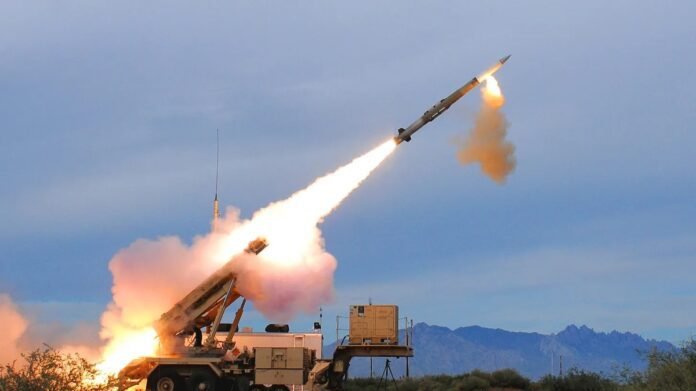
ATACMS production has been phased out and is being (slowly) replaced by PrSM, a longer range guided missile. PrSM is still in low-rate initial production.

From an operational point of view, until PrSM ramps up production, the army cannot support the precision-missile part of the HIMARS system. This means no more supplies whether for Ukraine, the Persian Gulf or other sensitive locations, especially Taiwan and Korea.

ATACMS forms a core component of South Korea’s Kill Chain and Korea Massive Punishment and Retaliation (KMPR) frameworks – part of the military’s “Three-Axis” strategy to conduct rapid, precision counterbattery strikes against North Korean long-range artillery, bunker complexes and missile sites near the DMZ.

The US Marines also thought they could use ATACMS to stop a naval invasion of Taiwan, but without supplies this isn’t possible.

155mm ammunition

The global supply of 155mm artillery shells remains under extreme strain. The 155mm artillery shell is widely considered the single most important heavy ground-fires munition in modern land warfare. Standardized across NATO and allied militaries, it serves as the backbone of tactical and operational fire support.

​Then-Secretary of the Army Christine Wormuth toured the Universal Artillery Projectile Line (UAPL) during the opening ceremony in Mesquite, Texas, on May 29, 2024. Photo: US Army / Sgt. 1st Class Nicole Mejia

Years of high-intensity consumption in Ukraine, operational usage in West Asia and multi-national stockpiling efforts have drawn down Western inventories to historic lows. Over the past four years, the US War Department has drawn down its 155mm reserves by over 3.6 million rounds – with over 3 million transferred to Ukraine, 112,000 used for internal training/testing, and 218,000 transferred via foreign military sales (FMS).

A new $469 million automated facility in Mesquite, Texas (operated by General Dynamics OTS) was intended to forge 30,000 projectile bodies per month. The OTS contract was halted after three years and the three new manufacturing plants in Mesquite failed to produce a single round. The US Army is trying to work with a new contractor for 155mm shells, but it is years away from expanding manufacturing much beyond what existing factories produce.

Implications

The 155mm debacle is just one of many roadblocks that will slow US rearmament. There are plenty of other problems including critical supplies, critical materials, sunset components, production bottlenecks and significant skilled labor-shortage issues.

Meanwhile the US is trying to patch up its procurement system and throw money at the shortages. If this ends up in another 155mm debacle, the implications are grave.

Optimistically, manufacturing adequate supply inventories will require around five to 10 years and in some cases for major systems (ships, submarines for example) a lot longer. On balance, the US will be in a weapons’ deficit for at least a decade.

The lack of enough military supplies will severely compromise US security policy in the years ahead. If key allies are unable, unwilling or too slow in building up their own stockpiles, critical alliances will be compromised to the point of becoming nonfunctional.

US potential adversaries will almost certainly test the United States, jacking up pressure along the fault lines of the international system. Results could include the complete collapse of Ukraine, a Chinese military operation against Taiwan, or efforts by North Korea to gain a stranglehold over South Korea. The US may find its presence on the peninsula too dangerous to be continued as US forces stationed there face a nuclear threat.

US potential adversaries will almost certainly test the United States, jacking up pressure along the fault lines of the international system. Results could include the complete collapse of Ukraine, a Chinese military operation against Taiwan, or efforts by North Korea to gain a stranglehold over South Korea. The US may find its presence on the peninsula too dangerous to be continued as US forces stationed there face a nuclear threat.

The US still has some significant assets. The US retains strong, superior airpower still unmatched by China and Russia. American command and control systems are significantly improved, and are being augmented by artificial intelligence and better sensors. The US leads most other countries in battlefield systems integration.

But, while trying to catch up, US land forces remain short on critical supplies such as anti tank weapons and artillery and are behind in fielding tactical and mid-range strike drones. The Navy looks capable on paper, but the fleet is aging, new construction is weak and slow and reliance on aircraft carriers remains an issue. If China proliferates its counter-carrier weapons to its allies and friends, the US fleet could find itself in real trouble. Even US carriers in far-distant Guam are at risk.

The US relies on a sea triad made up of carriers, Arleigh Burke class destroyers with AEGIS air defense systems, and nuclear attack and ballistic missile submarines (SSBNs). It takes 7 to 12 years to build a single nuclear submarine.

In addition, the US has failed in protecting US defense systems and technologies from compromise. Sloppy or non-existing security measures over the past three decades have left US systems at severe risk, and there is no sign whatsoever that Washington feels any incentive to plug the leaks and punish the transgressors.

This failure amounts to a massive scandal. There isn’t a Chinese military system that has not benefited from ripping off American technology. The only real differentiator is that China is much better at industrializing weapons than the United States, and light years ahead of Europe.

It is easy to forget that US power is mainly predicated on expeditionary forces, something like the UK in World War I and World War II. Expeditionary forces need to be constantly supported and supplied. In World War I, including the Battle of Mons and the Battle of Le Cateau, the small, professional force of roughly 80,000 men that comprised the UK expeditionary army was nearly exhausted by the end of 1914 – though it successfully helped stop the German advance at the First Battle of the Marne.

Britain paid a very high price, particularly in France and Belgium: 887,858 total military deaths and over 1.6 million wounded, with the vast majority of these European theater casualties occurring on the Western Front in France and Flanders.

Evacuation of Dunkirk, May-June 1940

In World War II Britain’s expeditionary force fared poorly.

During the 1940 Battle of Dunkirk and the campaign in France, the British Expeditionary Force (BEF) suffered roughly 66,000 to 68,000 total casualties – including around 11,000 killed, 14,000 wounded and over 41,000 captured or missing. They also abandoned nearly all their heavy equipment, trucks, and tanks.

The US does not have a separate expeditionary army or, looked at another way, the US Army, Marines, Navy and Air Force are almost entirely expeditionary by design. The US maintains troops in Europe, the Middle East, Korea and Japan and keeps bases outside the United States for land, air and naval forces.

In terms of fighting strength, the US has around 160,000 to 175,000 troops stationed outside the United States, with the most important located in Europe, South Korea and Japan. A significant setback at any of these locations would be, under any circumstance, extremely painful. The US would either have to try and reinforce deployed forces or rescue them. In an era of missiles and drones, getting supplies and reinforcements through would be a significant challenge.

Under current conditions, the US needs to redesign its defense posture, significantly improve defense production, augment vital stockpiles and evaluate how it can support US allies and US interests during the coming decade of supply shortages. At the same time, America’s allies have to do vastly more for their own security simply because the coming decade is fraught with risk and danger.

The next decade could be the most challenging for peace and security since the end of the Cold War.

Former US Deputy Under Secretary of Defense Stephen Bryen is a senior Asia Times correspondent. Read this and many other dispatches on his newsletter Weapons and Strategy.

Saudi Arabia, Turkey and Pakistan to sign joint defence deal

0
saudi-arabia,-turkey-and-pakistan-to-sign-joint-defence-deal
Saudi Arabia, Turkey and Pakistan to sign joint defence deal


Turkey, Saudi Arabia and Pakistan will sign a joint defence agreement on Friday, regional sources with direct knowledge of the matter said, ​at a time of regional turmoil with Gulf states coming under ​fire from Iran after it was attacked by the U.S. and ⁠Israel.

While the pact further cements a burgeoning grouping of major Sunni ​Muslim powers, there was no immediate clarity on each state’s commitments.

A Turkish ​official confirmed the agreement will be signed.

Turkey is a member of NATO. Saudi Arabia, another U.S. ally, is one of the world’s top oil exporters and the strongest ​Gulf state, while Pakistan is the only nuclear-armed Muslim country.

Turkish President Tayyip ​Erdogan and Pakistani Prime Minister Shehbaz Sharif, accompanied by powerful army chief Asim Munir, ‌will ⁠meet Saudi Crown Prince Mohammed bin Salman in Jeddah for the signing.

The pact follows nearly a year of negotiations, reported by Reuters in January, and as the Iran war exposes Gulf states’ security vulnerabilities and ​disrupts the shipping of oil ​and other ⁠key goods through the Strait of Hormuz.

Turkish Foreign Minister Hakan Fidan in January said that Ankara favoured a ​broader regional security platform to promote cooperation and stability.

An ​existing Saudi-Pakistani ⁠pact treats an attack on either as an attack on both and encompasses “all military means”, a Saudi official previously told Reuters.

The Pakistani military and ⁠government did ​not immediately respond to requests for comment.

Saudi ​Arabia’s government did not immediately respond to a request for comment.

Source:  Reuters

Hollywood Star Dead at 54 Just Hours After Falling Ill on Set

0
hollywood-star-dead-at-54-just-hours-after-falling-ill-on-set
Hollywood Star Dead at 54 Just Hours After Falling Ill on Set


Hollywood was left stunned when beloved Three’s Company star John Ritter died just hours after suddenly falling ill during rehearsals — and the shocking circumstances surrounding his death would later spark a bitter legal battle.

Ritter, one of television’s most recognizable comedy stars, was just 54 when he collapsed while working on his ABC sitcom 8 Simple Rules… for Dating My Teenage Daughter in September 2003.

What initially appeared to be a heart attack turned out to be something far more deadly.

The actor was actually suffering from an aortic dissection, a catastrophic tear in the body’s main artery that can become fatal within minutes or hours.

His wife, actress Amy Yasbeck, later argued that doctors failed to identify the danger quickly enough.

“John didn’t have a chance,” she said. “He was never given that chance.”

The tragedy unfolded on September 11, just days before Ritter was due to celebrate his 55th birthday.

He had been rehearsing at the Walt Disney Studios lot in Burbank, California, when he suddenly became nauseous and began sweating heavily.

Then came severe chest pain and vomiting.

Ritter was rushed across the street to Providence Saint Joseph Medical Center — the same hospital where he had been born decades earlier.

He arrived at around 6 p.m.

By 10:48 p.m., he was dead.

Doctors initially believed the sitcom star was suffering a heart attack and treated him accordingly.

But as Ritter’s condition rapidly deteriorated, physicians eventually discovered that he had an aortic dissection.

The dangerous condition occurs when a tear develops in the inner layer of the aorta, allowing blood to surge between the layers of the artery wall and force them apart.

Ritter was rushed into emergency surgery, but doctors were unable to save him.

The sudden death sent shockwaves through Hollywood.

Ritter had become a household name playing the hilariously accident-prone Jack Tripper on Three’s Company, which aired from 1977 to 1984.

His performance earned him both a Primetime Emmy Award and a Golden Globe and helped make him one of the most beloved sitcom stars of his generation.

But after his death, attention quickly turned to whether his fatal condition should have been detected sooner.

Yasbeck filed a negligence lawsuit involving the hospital and pursued wrongful death claims against two doctors.

One physician had treated Ritter on the night of his death.

Another had examined results from a body scan Ritter underwent in 2001, which the family alleged showed warning signs involving his aorta.

Several defendants eventually reached settlements with Ritter’s family totaling approximately $14 million.

The claims against the two doctors went before a jury.

Jurors ultimately ruled 9-3 in favor of the physicians, clearing both of wrongdoing.

But Yasbeck remained convinced that her husband might have survived if his condition had been identified earlier.

His devastating death came at a time when Ritter was enjoying a major television comeback.

After decades in Hollywood, he had landed another starring sitcom role in 8 Simple Rules, playing family patriarch Paul Hennessy.

The series continued after his death and addressed the loss of Ritter’s character on screen.

Ritter left behind four children, and several later followed him into Hollywood.

His son Jason Ritter became a successful actor in his own right, earning an Emmy nomination for Parenthood and appearing in Joan of Arcadia, Gravity Falls and Frozen 2.

Another son, Tyler Ritter, went on to appear in shows including NCIS, Modern Family and The McCarthys.

More than two decades later, Ritter’s shocking final hours continue to haunt fans — a beloved television star going from a normal day of rehearsals to an emergency operating room in the space of just a few hours.

For his family, the questions surrounding what happened that night made the loss even harder.

And for Yasbeck, one belief has never changed: her husband should have had more time.

0FansLike
0FollowersFollow
0FollowersFollow
0SubscribersSubscribe
- Advertisement -
Google search engine

Recent Posts