The Pentagon Is Posting Cryptic Biblical Messages on Social Media
As senior military leaders privately warned that the war with Iran was straining U.S. forces, depleting key missile defenses, and leaving the military without sufficient naval resources to continue protecting Israel, the Pentagon turned to Christian scripture in its official social media messaging.
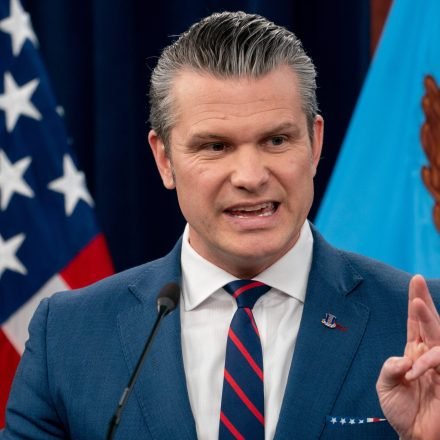
On Saturday, two Defense Department accounts on X posted images overlaid with the words “SEND ME.” The agency’s Rapid Response account published the phrase on a picture of a service member watching a helicopter above an aircraft carrier. Chief Pentagon spokesperson Sean Parnell quoted Isaiah 6:8 in a post and included the all-caps phrase on an image of a soldier silhouetted in the dark. The Department of War’s official account amplified both posts.
Isaiah 6:8 is a verse that appears in the Hebrew Bible and Old Testament in which the prophet Isaiah answers a divine call. When God asks, “Whom shall I send?” Isaiah replies, “Here am I. Send me.” The passage is widely used in many Christian traditions as an expression of accepting God’s call to a divine mission. The verses that follow describe God sending Isaiah to proclaim a message of judgment that culminates in cities “without inhabitant,” houses emptied of people, and the land left “utterly desolate” before eventual restoration.
It’s unclear what, exactly, the biblical quotation was intended to convey. The Pentagon declined to answer The Intercept’s questions about whether the posts reflected an expression of faith or proselytizing, a message about the war with Iran, or a coordinated communications strategy. “Nothing to offer you on this,” a Pentagon spokesperson said.
The posts followed months of controversy over the role of religion in the Defense Department under Secretary Pete Hegseth.
In March, The Intercept reported that the appointment of Christian activist Erika Kirk, wife of Charlie Kirk, to the Air Force Academy’s Board of Visitors alarmed former military leaders and constitutional advocates, who warned it could push the academy toward an overtly ideological vision of military leadership.
That same month, reporting later entered into the congressional record detailed complaints from more than 100 service members who alleged commanders described the war with Iran as “part of God’s divine plan” and encouraged troops to view the conflict through a biblical lens. Saturday’s posts placed similar biblical language on the Defense Department’s own official social media accounts.
The messages marked a notable institutional shift. Previous controversies centered on statements by individual commanders or political appointees. This time, multiple official Defense Department accounts amplified the same biblical passage, and the Pentagon declined to explain why.
That does not necessarily mean the Pentagon’s post violated the Constitution. The First Amendment generally prohibits the government from promoting or favoring a religion through its official actions. At the same time, courts have long allowed some traditional references to religion, including the national motto, “In God We Trust.”
Nelson Tebbe, the Jane M.G. Foster Professor of Law at Cornell Law School, whose scholarship focuses on constitutional law and religion, said the Pentagon’s post was different from those long-standing examples because it relied on a specific biblical passage rather than a general religious phrase and therefore could have a more direct impact on members of the military.
“Minor endorsements of religion by the government are common,” Tebbe said, pointing to phrases such as “God save this honorable Court,” commonly invoked in the Supreme Court. “This particular example involving the Pentagon spokesperson is less minor or incidental.”
Even so, Tebbe said recent Supreme Court decisions have made it unlikely that a court would strike down the Pentagon’s post.
“Recently, the Supreme Court has weakened the Establishment Clause, particularly the doctrine that used to prohibit government endorsements of religion in its own speech,” he said. “I would say that the chance of the Supreme Court invalidating this kind of practice is vanishingly small.”
Legal scholars say that constitutional question is separate from the practical consequences of the Pentagon’s messaging during an active conflict.
“Besides delegitimizing the U.S. military through such overtly Christian rhetoric and alienating non-Christian service members, such blatant Bible thumping in this context implies a religious war against Iran, foolishly confirming Iranian propaganda that the ‘Great Satan’ wants to wage war on Islam,” said Rachel VanLandingham, a former Air Force judge advocate and military law professor.
Since the 1979 Islamic Revolution, Iran’s leaders have referred to the United States as the “Great Satan,” portraying Washington as both a geopolitical rival and a religious enemy. Iranian officials have repeatedly framed conflicts with the United States and Israel as part of a struggle against Islam, making official biblical messaging from the Pentagon particularly vulnerable to exploitation as propaganda, VanLandingham said.
“Religious war is a slippery slope to total war.”
VanLandingham said the Pentagon’s messaging risked replacing military professionalism with religious symbolism at a moment when the armed forces should remain grounded in constitutional principles, rather than religious conviction.
“Religious war is a slippery slope to total war,” she said. “The U.S. military fights based on honor and fidelity to the law, not to Old Testament biblical passages.”
Prime Minister Andy Burnham has argued that parliament should wait before returning to assisted dying until palliative and social care are properly funded. His intervention comes before MPs are due to debate a new assisted-dying bill for England and Wales on September 11.
Public debate often centres on people with terminal illnesses who are experiencing unbearable suffering and want greater control over how they die. Burnham’s argument raises a wider question: can a choice be fully voluntary when access to palliative care, social care, suitable housing or practical support restricts the alternatives someone believes are available?
Supporters argue that failures in care should be addressed without indefinitely denying terminally ill adults an autonomous choice. Our comparative analysis of parliamentary debates in Canada and England and Wales nevertheless shows why the language surrounding that choice deserves attention.
Politicians sometimes present choosing when and how to die as an expression of independence, courage or dignity. Others suggest that avoiding dependence on relatives or public services can be part of behaving responsibly in later life. A 2025 ethical analysis argues that framing assisted death as both an autonomous choice and a social responsibility could create pressure on older people who need care.
This does not establish that requests are generally caused by poverty, pressure or inadequate services. But it does raise questions about how circumstances can shape a decision without amounting to direct coercion.
Different systems
Canada’s medical assistance in dying law, known as Maid, allows practitioner-administered and self-administered deaths, although every recorded Canadian Maid provision in 2024 was practitioner-administered.
The terminally ill adults (end of life) bill would create a narrower system in England and Wales. It would apply to adults with decision-making capacity who have an inevitably progressive illness or disease and are reasonably expected to die within six months. They would have to take the final action that causes their death themselves.
Suffering is not a separate eligibility requirement. The bill instead requires a clear, settled and informed wish, made voluntarily and without coercion or pressure from another person.
MP Lauren Edwards reintroduced the bill in June 2026 after the previous version passed the Commons but fell because it did not complete its Lords stages before the parliamentary session ended. Its second reading is scheduled for September 11.
Canada’s law also changed after its introduction. Following the Supreme Court decision in Carter v Canada, parliament legalised Maid in 2016 for adults with a grievous and irremediable condition, advanced irreversible decline, enduring intolerable suffering and a reasonably foreseeable natural death.
In 2021, parliament removed foreseeable death as an eligibility requirement. Canada now distinguishes between Track 1 cases, in which natural death is reasonably foreseeable, and Track 2 cases, in which it is not. England and Wales would not inevitably follow the same course, but Canada shows that eligibility rules and safeguards can be substantially revised after legalisation.
The distribution across neighbourhood income groups was broadly similar to that of all people who died from natural causes. Track 2 recipients were slightly more likely than this comparison group to live in the lowest-income neighbourhoods. Compared with Track 1 recipients, they were also slightly younger and more likely to be women or live alone. More lived in neighbourhoods with high residential instability.
These area-level measures do not reveal an individual’s income, housing conditions or reasons for requesting Maid. They cannot establish whether disadvantage contributed to a particular decision.
An Ontario chief coroner’s committee examined three deliberately selected Track 2 deaths involving possible social or structural vulnerability, including isolation, unsuitable housing and inadequate support. The committee stressed that the cases were not representative. They show the questions unmet needs can arise during an assessment without indicating how often these circumstances occur.
Practitioners reported that 74.1% of all recipients had received palliative care, compared with 23.2% of Track 2 recipients. The groups had different illnesses and proximity to death, and the figures do not establish whether available care was appropriate or adequate.
Small qualitative studies show that bereavement experiences vary. Interviews with nine people found that knowing the date of death could allow farewells and family rituals while creating an emotionally intense countdown. A separate study of 12 people who had experienced disagreement around Maid, documented unacknowledged pain and disenfranchised grief. Neither study shows how common these experiences are.
Choice and social circumstances
Our analysis suggests that praising assisted death as inherently brave or dignified risks creating an implicit contrast with people who continue to need care. Treating avoidance of dependence as socially responsible may reinforce fears of becoming a burden.
The England and Wales bill requires two doctors and a review panel to assess eligibility. Doctors must examine relevant records, make inquiries of health and social care professionals where appropriate, and discuss available treatment, palliative care, hospice care, symptom management and psychological support.
These are substantial safeguards. The bill does not, however, list an applicant’s reasons or unmet social needs as separate eligibility tests. Nor does it expressly require assessors to decide whether inadequate care or housing has narrowed the alternatives the applicant believes are available. A person may feel like a burden even when nobody has pressured them directly.
Reliable monitoring would therefore need information about applicants’ circumstances, access to care and reasons for requesting assistance. Canada’s data shows how difficult it is to assess inequality when official records rely heavily on neighbourhood measures and contain limited information about unmet needs.
Personal choice remains central to the case for assisted dying. Parliament should also consider how care shortages, isolation and fear of dependence may shape that choice before changing the law.
AI isn’t enough to protect social media communities from AI
Sometimes you have to fight fire with fire. But when it comes to AI slop and hateful content threatening the safety and value of social media platforms, adding more fire—in this case, more AI—can make the problem worse.
At its best, social media can be a haven for people who want to share their experiences and knowledge. It gets closest to this ideal when users contribute authentic, valuable content, whether that’s a uniquely thoughtful blog post or a helpful video on how to build a PC. Relying primarily on AI tools to preserve that authenticity misses what makes social media worthwhile in the first place: the people behind it.
Erroneous erasures
In April, a Slack channel for moderators of the r/AskHistorians Reddit community was usually busy. The channel, which automatically receives links to modmail messages, was flooded with alerts after dozens of comments and posts dating back 10 years were automatically removed from the subreddit.
“And there was nothing we or the experts [who posted the deleted content] could do about it,” Dr. Sarah Gilbert, one of the mods, told me.
This was particularly damaging to the subreddit because its users view the community as an archive of detailed responses that continue to educate people long after content is posted.
Reddit’s recently revamped AI moderation tools were apparently responsible for the removals, the moderators believe. After recovering the text of some posts, one of AskHistorians’ mods noticed that all the removed content linked to Rare Historical Photos, a historical image-sharing website. The mods think Reddit might have designated the website—and thus any post using its content for explanatory illustrations—as spam.
Reddit has not responded to a request for comment.
The deletion of the content erased valuable information that had taken time to aggregate (Gilbert tells me some people spend hours, “sometimes over the course of days,” researching and writing responses to questions submitted to the subreddit). Yet it’s possible that those erroneous removals, and others like them, have contributed to metrics intended to demonstrate how effective AI modding is on Reddit.
Reddit says that thanks to AI, it has “increased enforcement actions on hate and violent content by more than 200 percent” and that AI drives “faster, higher volume enforcement.” AI has “helped reduce exposure to potentially harmful content by more than 40 percent,” Reddit said this month. It also said that it uses large language models (LLMs) to catch “the highly subtle, coordinated patterns of fake behavior and artificial hype.”
But as the AskHistorians ordeal illustrates, more enforcement doesn’t necessarily mean better enforcement.
The false positives problem
The growth of generative AI has created new obstacles for social media moderation. Gilbert noted, for instance, that large language models “have made spam detection a lot harder,” as they seek to mimic real human voices. “Over the last two to three months, we’ve been absolutely flooded by LLM-powered spambots,” she said.
Marketing agencies are creating social media content designed to get brands cited by generative AI chatbots. Marketers have long used inauthentic social media posts to boost visibility, but the rise of chatbots has opened a new front. Startup ReachLLM, for example, focuses specifically on marketing through chatbots. As part of that effort, company representatives have created and moderate subreddits on Reddit.
These challenges have led some social media companies to explore new AI-based moderation techniques. Reddit, for example, says its AI tools have “revoked nearly [2 million] fake votes daily” and that it uses LLMs “to catch the highly subtle, coordinated patterns of fake behavior and artificial hype that older systems once missed.”
But many social media platforms have become overly reliant on AI modding tools that have been quick to penalize users for innocuous content.
Recently, Discord admitted that its AI mod system wrongfully banned about 8,400 accounts in May to early July. The AI mistakenly labeled images containing square grids, such as chessboards or spreadsheets, as CSAM and subsequently issued a permanent ban to the uploaders. (Discord says all affected accounts have since been reinstated.)
The company said its AI moderation was not intended for use without human supervision. It claimed that a human employee is supposed to review AI-flagged content before Discord takes action, but a bug caused the AI to bypass the human step and ban accounts.
The supposed mishap highlights why human guardrails remain essential in content moderation. Without meaningful oversight, an AI-based modding system can make thousands of mistakes in a matter of weeks, with lasting consequences.
Since 2025, manyFacebook and Instagram users have complained about mass bans they blame on AI moderation. The lack of human moderation has only fueled frustration among users who say they did not violate any rules, especially since there has been no way to speak with a Meta employee about what caused the ban or how to get an account reinstated. Meta has not said whether AI is behind the bans, but the company has increasingly relied on generative-AI-based moderation rather than humans in recent years—a shift that some people, including Meta employees, say is happening too quickly.
Tumblr is another social community where automated modding systems have failed. In March, Chenda Ngak, head of communications at Tumblr parent company Automattic, told The Verge that Tumblr’s automated systems wrongfully banned “sub-200” Tumblr accounts in one afternoon.
And in 2025, Tumblr users complained after the platform’s automatic content moderation systems inaccurately flagged content as “mature,” reducing its visibility. In both cases, users blamed AI. Tumblr never confirmed that AI caused these problems, but the company has said it uses “a mix of machine-learning classification and human moderation.”
AI moderation can save social media companies money and help remove harmful content faster. But until these systems can eliminate basic mistakes—like labeling a checkerboard picture as CSAM—they need human oversight.
“Back when there was more transparency in the system, we would routinely report hate and get an automated response that it wasn’t actually in violation of Reddit’s rules, prompting us to start an appeals process,” AskHistorians mod Gilbert said. “So it’s hard to trust the numbers because it’s hard to trust the ‘judgment’ of Reddit’s systems.”
False positives are a “huge problem” on Reddit, she said.
AI’s biases
Typical social media AI-based moderating systems use machine learning classifiers to analyze posts and identify and flag content that breaks platform rules. But it’s difficult for a machine to understand the nuances of sarcasm, satire, and slang.
Further, some research (examples here, here, and here) suggests that marginalized groups can be disproportionately affected by AI moderation. Without human oversight, AI can end up penalizing the very communities most vulnerable to the hateful content the systems are designed to combat.
Gilbert, who is also the research director of Cornell’s Citizens and Technology Lab, says that “marginalized and vulnerable populations are among those who experience the highest rates of moderation, and that typically this is a result of ‘false-positives,’” often driven by instances of counter-speech, language reclamation, and “responses to hateful content.”
“False positives are an equity issue. They mean that groups that are already marginalized are further silenced and censored,” she added.
AI moderators can also make communities less effective at moderating themselves. On Reddit, for example, some subreddit moderators would prefer to ban users who use hateful or violent rhetoric. But if Reddit’s AI removes such content before a human moderator sees it, those moderators lose the ability to assess whether a ban is warranted.
In terms of giving human mods more control, Reddit this week announced expanding testing for Rules Hub, a suite of tools that lets human mods “choose which rules should be automatically enforced, decide what happens when a rule is triggered (send to queue, filter, or remove), preview the experience before enabling it, and review logs and insights.” Reddit expects Rules Hub to eventually replace the Automod tool, which relies primarily on exact keywords.
AI is a tool, not the solution
Mods I’ve spoken with have repeatedly blamed the generative AI boom for a spike in content that breaks community-specific or broader platform rules. That’s a serious problem for social media sites that rely on user contributions.
Companies will continue to try new methods of moderating more reliably and effectively, but reducing human input is a step backward. Low-effort AI-generated content is changing the challenges moderation teams face, but that makes stronger approaches more necessary, where machine-scale detection can be combined with human judgment and expertise.
Just as social media has no value without people, content moderation can’t succeed without human judgment at the forefront.
Advance Publications, which owns Ars Technica parent Condé Nast, is the largest shareholder in Reddit.
2 Israeli Reservists Killed, 4 Soldiers Injured in Booby-Trapped Building in Southern Lebanon
The Israel Defense Forces (IDF) released the names Thursday of two reservists killed in an explosion in southern Lebanon.
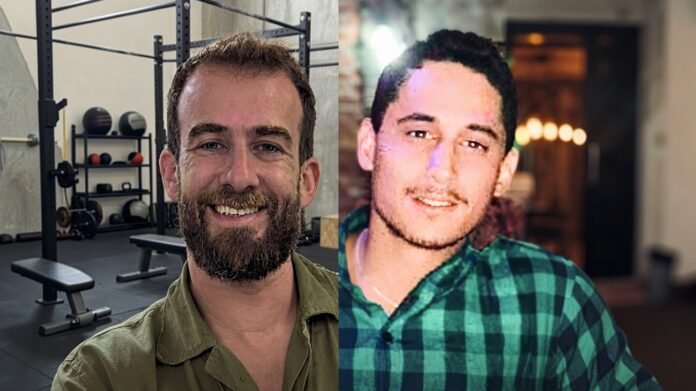
Maj. Harel Birenstock, 34, of Nokdim, and Master Sgt. (Res.) Tamir Vaknin, 33, of Eilat died in the blast. Four other soldiers were injured in the explosion.
Funerals for Birenstock and Vaknin are scheduled to take place Thursday.
The blast occurred while Israeli forces were searching a booby-trapped building in the village of Majdal Zoun in southern Lebanon.
An in-depth investigation into the incident has been opened, according to the IDF. Among the questions under review is whether the explosive device had been emplaced before the ceasefire or planted afterward. Military investigators are also examining the possibility that Hezbollah operatives remotely detonated the device after spotting Israeli soldiers operating at the site.
Following the incident, Israel accused Hezbollah of committing a blatant violation of the ceasefire and launched strikes across the surrounding area.
The deaths came as Israel and Lebanon continue indirect negotiations aimed at advancing a June framework agreement. The two sides are holding their seventh round of US-brokered talks in Rome.
German and Serbian authorities launch joint strike against Syrian migrant smuggling group
A coordinated international operation has dealt a significant blow to two international migrant smuggling networks with close links to Libya and the Western Balkans, leading to the arrest of three High Value Targets in Germany and Serbia.
This follows several years of intensive and extensive investigations led by the German Federal Police under the direction of three Bavarian Public Prosecutors’ Offices.
The action day, carried out on 5 August 2026, brought together authorities from Germany and Serbia under the framework of an Operational Taskforce coordinated by Europol. Investigators targeted senior members of two interconnected Syrian criminal networks believed to have organised the smuggling of more than 900 migrants into the European Union.
The operation resulted in:
3 High Value Targets arrested in Germany (1) and Serbia (2);
6 searches in the Saarbrücken area in Germany;
the seizure of extensive evidence, now under forensic examination.
Smuggling migrants across two of Europe’s busiest routes
The investigations uncovered two Syrian criminal networks operating simultaneously along the Central Mediterranean and Western Balkan migration routes, exposing the irregular migrants to life-threatening conditions throughout the journey while generating substantial illicit profits.
One criminal network with links to a militia operating in Libya allegedly arranged dangerous sea crossings from Libya to the Italian island of Lampedusa aboard overcrowded and unseaworthy boats carrying up to 61 migrants without life jackets or other safety equipment.
Migrants, predominantly Syrian nationals, are believed to have paid between EUR 6 500 and EUR 7 800 per journey before being moved onwards to Germany through secondary smuggling networks. Investigators estimate that this criminal network alone generated at least EUR 875 000 in illicit profits. During the investigation, one of the suspects was also repeatedly found with suspected counterfeit euro banknotes with a value of between EUR 30 000 and EUR 100 000.
A second criminal network operated from Serbia, coordinating the movement of migrants along the Western Balkan route towards Germany and other Western European countries. The network allegedly charged between EUR 2 000 and EUR 10 000 per person to smuggle predominantly Syrian nationals from Serbia via Hungary and from Bosnia and Herzegovina via Croatia into the European Union. From there, migrants were transported in cars, vans and lorries through Austria, Czechia, Poland, or Slovakia before reaching their final destinations.
Three senior facilitators targeted
The three suspects arrested had all been prioritised as High Value Targets within the Europol-coordinated Operational Taskforce, reflecting their prominent roles in organising large-scale migrant smuggling operations across multiple countries.
The suspect arrested in Saarbrücken, Germany, is a 26-year-old Syrian national, believed to have organised the smuggling of at least 125 migrants in five different facilitation journeys since October 2024.
The Serbian authorities also arrested in Belgrade two senior members of separate migrant smuggling networks on the basis of international arrest warrants issued by Germany.
One suspect, a 31-year-old Syrian national, is believed to have coordinated at least 17 large-scale smuggling operations involving more than 150 migrants travelling along the Central Balkan route under dangerous conditions between April and November 2022 alone.
The second suspect, aged 32, allegedly played a central logistical role in a network responsible for moving at least 625 migrants through Serbia towards Western Europe between 2023 and 2024.
Five additional members of this network had already been arrested during coordinated actions in Germany, the Netherlands and Bosnia and Herzegovina in 2025.
facilitating intelligence exchange between the participating countries;
providing operational analysis to identify links between investigations;
supporting the identification of High Value Targets;
coordinating operational activities during the action day;
deploying experts to provide real-time analytical and operational support.
Eurojust set up a joint investigation team (JIT) between German and Serbian authorities to coordinate the arrest of one of the suspects residing in Serbia. Through the JIT, judicial authorities shared information and evidence and executed the European Arrest Warrant on behalf of the German authorities.
The following authorities took part in the action day:
Germany: German Federal Police (Bundespolizei – BPOLI KB M; BPOLI WAI); Traunstein Public Prosecutor’s Office (Staatsanwaltschaft Traunstein); Landshut Public Prosecutor’s Office (Staatsanwaltschaft Landshut); Weiden in der Oberpfalz Public Prosecutor’s Office (Staatsanwaltschaft Weiden i.d.Opf)
Serbia: Criminal Investigation Directorate – Service for Combating Organised Crime, (Управа криминалистичке полиције – Служба за борбу против организованог криминала)
Star’s Daughter Reveals Shocking Consequence of Ozempic
Gracie McGraw, the daughter of country music superstars Tim McGraw and Faith Hill, is opening up about what she calls one of the biggest mistakes of her life.
The 29-year-old actress revealed that she used Ozempic for roughly three years before deciding to stop — and now says the popular weight-loss medication came with devastating personal consequences.
“I think it was probably one of the worst things I’ve ever done for myself, looking back,” Gracie wrote in a series of Instagram Stories posted Monday.
Although she initially celebrated the dramatic weight loss, Gracie said the injections eventually reignited an old eating disorder, warped the way she viewed her body and left her believing her internal system had been permanently changed.
At first, however, the results felt like a dream come true.
“At that time, I thought it was the best decision I ever made because I finally lost weight and got skinny,” she wrote.
Gracie said her slimmer appearance quickly brought her more attention and even more opportunities — a painful reality for someone who claims she had been mocked over her body for most of her life.
“I’ve been called fat and ugly my entire life, whether that had been from magazines or the internet, constantly saying I must have different genes than my sisters and parents because I was the ‘fat’ one and didn’t have the looks that my family has,” she wrote.
Gracie is the oldest of Tim McGraw and Faith Hill’s three daughters. Her sisters, Maggie and Audrey, are 27 and 24.
Growing up in one of country music’s most glamorous families only intensified the comparisons.
Hill, a five-time Grammy winner, became a major beauty icon during the 1990s and was once declared the “most beautiful woman in country music.” Her husband, Tim McGraw, has repeatedly appeared on lists celebrating Hollywood and country music’s most attractive men.
The couple married in 1996 and went on to become one of Nashville’s most famous power couples.
Gracie said she originally began taking the appetite-suppressing medication after being diagnosed with polyendocrine metabolic ovarian syndrome, previously known as polycystic ovarian syndrome, or PCOS.
The hormonal condition can cause weight gain, infertility, irregular or heavy menstrual cycles, acne, abnormal hair growth, skin discoloration and an increased risk of heart problems, according to the Cleveland Clinic.
Gracie acknowledged that the GLP-1 medication helped control some of her symptoms. But she said it also awakened dangerous thoughts and habits she believed she had left behind.
“I realized, ‘Holy c–p, I have been feeding into my eating disorder this whole time under the guise of this miracle shot,’” she wrote.
Gracie admitted she became “way too skinny” while taking Ozempic and claimed the experience had a lasting effect on her body.
“My internal system is forever changed since taking the meds,” she wrote.
After stopping the injections, Gracie said she began gaining weight again — just as Hollywood appeared to be racing back toward an ultra-thin beauty standard.
“Now as everyone is getting smaller and smaller, I am gaining my weight back and seeing how much losing all of that weight actually affected me and my views of myself,” she wrote.
Gracie said her own experience inspired her to speak out about what she sees as the entertainment industry’s increasingly troubling “skinny culture.”
A growing number of stars have faced public concern over their rapidly shrinking appearances, particularly as GLP-1 medications have exploded in popularity.
“The discourse we are seeing right now on certain bodies is not out of body shaming; it is out of concern,” Gracie wrote.
She added that she felt “triggered by the lack of help [for] someone who is actively dying in front of the world.”
“It’s extremely difficult to see, especially since seeing little kids online saying they wished they looked like that,” she wrote.
Gracie did not identify the person she was referring to.
However, Ariana Grande’s increasingly thin appearance has generated widespread concern among fans and fellow celebrities throughout 2025 and 2026.
The scrutiny intensified after Grande released the music video for her single “Petal” on July 31. Images of the 33-year-old Wicked star triggered a wave of worried reactions online.
Grande’s representative later announced that the Grammy winner planned to step away from public life after completing her tour.
For Gracie, the painful lesson was not simply about losing weight. It was about realizing how quickly praise, attention and outside approval can disguise something deeply unhealthy.
What once felt like a miracle, she said, ultimately left her struggling to rebuild her relationship with her body.
Anyone struggling with an eating disorder or disordered eating can seek support through the National Eating Disorders Association.
Hard Line on Payments: In her two years in the role, Louisiana attorney general Liz Murrill has opposed almost all compensation claims by wrongfully convicted people.
Freed After Four Decades: Elvis Brooks’ murder conviction was thrown out after a prosecutor admitted he hid potentially exonerating evidence. Murrill maintains he’s guilty.
A Higher Bar: Twenty-three people have sought compensation after judges threw out their convictions. Murrill has asserted that 22 have failed to sufficiently prove their innocence.
These highlights were written by the reporters and editors who worked on this story.
Elvis Brooks thought he had an airtight case when he applied for compensation from the state of Louisiana after he was wrongfully convicted in a fatal bar shooting that kept him in prison for more than four decades.
The 69-year-old New Orleans native has never wavered in his claims of innocence, insisting since his 1977 arrest that the cops had the wrong guy. But it would take nearly 45 years and a prosecutor admitting he failed to turn over key fingerprint evidence before the courts threw out Brooks’ conviction.
That decision made Brooks eligible for up to $480,000 under a program created by Louisiana lawmakers to pay those wrongfully convicted in a state with one of the highest rates of overturned guilty verdicts. But Louisiana Attorney General Liz Murrill, the top prosecutor in the state, has vigorously fought Brooks’ compensation claim, asserting in court filings that he is still guilty and therefore should not receive any money at all.
And it isn’t just Brooks: Since taking office two years ago, Murrill has opposed all but one of 23 compensation claims brought by people whose convictions have been vacated by the courts. These include cases in which the men were exonerated through DNA or blood evidence and others in which police are accused of fabricating evidence. Once, Murrill even threatened to block an exoneree’s ability to obtain a license to practice law if he didn’t drop his claim.
Civil rights attorneys say Brooks’ case is one of the most egregious examples of a wrongful conviction in recent years. Murrill has been pushing the court since September 2024 to reject his compensation claim and also to reinstate a manslaughter charge against him. The case is pending before a district court judge in New Orleans; attorneys are scheduled to appear for the next hearing Monday.
When Brooks heard what Murrill was trying to do, five months after he’d filed his claim, he said he was flooded with anger and disbelief. Once again, he said, the state was trying to rip away his good name and falsely brand him a killer.
“She knows people are innocent but she doesn’t care,” Brooks said of Murrill during a recent interview, his voice rising with frustration. “She wouldn’t want nobody to do this to one of her loved ones.”
Some states that have more recently created compensation funds have experienced startup problems. In Michigan, narrow criteria and confusion over eligibility have prevented exonerees from getting paid. But in Louisiana, conservative politicians who oppose the very existence of a compensation fund and therefore fight nearly every claim have proven to be the biggest obstacle.
Gov. Jeff Landry, a Republican who served as attorney general for eight years, during which time he hired Murrill as the state’s solicitor general, opposed 10 of 12 compensation claims during his tenure. Both have staked their political careers on a tough-on-crime agenda. By contrast, Murrill’s more moderate Republican predecessor, Buddy Caldwell, who served as attorney general from 2008 to 2015, opposed just 33% of all claims.
Louisiana Attorney General Liz Murrill has taken a hard line against compensating the wrongfully convicted in Louisiana, maintaining they haven’t proven their innocence.Christiana Botic/Verite News and Catchlight Local/Report for America
Murrill’s hard-line tactics, particularly in Brooks’ case, stand out among her peers in other states, said Jeffrey Gutman, a professor emeritus at the George Washington University Law School and a national expert on compensation funds.
“I can’t think of an attorney general who has been quite as aggressive in trying to prevent people from getting compensation,” Gutman said.
Murrill, through her spokesperson, declined interview requests and did not answer questions regarding her opposition to the compensation fund. Both she and Landry have made their views on the fund clear during recent legislative sessions. Murrill told lawmakers last year that defending the state against these claims consumes an enormous amount of time and resources and that the fund should be abolished altogether. And in June, Landry vetoed a bill passed unanimously by the Republican-controlled Legislature that would have increased the amount paid to the wrongfully convicted. In his veto statement, Landry painted many of the exonerees as “convicted criminals” whose only interest is money.
Murrill’s opposition doesn’t necessarily mean that Brooks and other exonerees won’t eventually be compensated. The claims are ultimately decided by one of a number of district court judges, whose approach to this issue may vary. But it ensures that a process the law says should take no more than five months could instead drag on for years, exacting financial hardship and emotional pain on people who have already endured decades of both, said Herbert Larson, an attorney representing exonerees and a senior professor at the Tulane University Law School.
“If they’ve got DNA evidence that points at somebody else, if they’ve got fingerprints that point at somebody else, if it looks like sloppy police work, then we should pay the money and not spend the next two years litigating it,” Larson said. “That’s not a very effective use of time and money on the part of the attorney general.”
Brooks filed his application in 2024, but more than two years later, his case has yet to be heard by a district court judge. After having 42 years of his life stolen — missing his son’s childhood and losing his parents and three siblings while he was behind bars — Brooks said he shouldn’t continue to suffer at the hands of the state.
“It’s miserable and it’s frustrating, the games they play,” he said. “But if they think I’m going to give up, wave the white flag, they got me wrong.”
Conflicting Evidence and a One-Day Trial
On most days, Brooks can be found riding his bicycle down to Tricou and Douglas streets in New Orleans’ Lower 9th Ward, where he was raised, or through the French Quarter, where as teens, he and his friends would go to meet girls.
But there is one place he avoids: a vacant lot at the intersection of Dauphine and Alabo streets. That’s where the Welcome Inn once stood, and where a murder took place that would change his life.
In July 1977, a man named Cecil Lloyd was seated at the bar in the local dive when he was shot to death during an armed robbery. Less than three weeks later, police arrested 19-year-old Brooks.
There was no physical evidence tying him to the killing, and a dozen people testified that Brooks was at a family party at the time of the shooting. But three white witnesses said they saw the perpetrators in the dimly lit room and picked Brooks, who is Black, out of a photographic lineup. Although studies have shown that witnesses often have difficulty correctly identifying suspects of another race, and despite the fact that the three witnesses gave conflicting descriptions, the jury found him guilty of first-degree murder after a one-day trial.
What the jurors weren’t told is that fingerprints lifted from beer cans held by the robbers did not match Brooks’, or that police suspected the same men had robbed several people less than a block away just before the Welcome Inn robbery, according to prosecutor records discovered by Brooks’ attorneys 40 years later. The victims of the earlier crime were shown a photo of Brooks and ruled him out as a suspect.
After his conviction, Brooks was sent to the Louisiana State Penitentiary at Angola at a time when the maximum-security prison was considered one of the most violent in the country. Three years after Brooks arrived, his brother Errol, who was serving a 99-year sentence there for armed robbery, was stabbed to death.
“Angola was a madhouse,” Brooks said. “A hellhole.”
A man was shot and killed in 1977 at the Welcome Inn bar, which used to sit on this corner in the Lower 9th Ward of New Orleans. Brooks was convicted for the murder in a one-day trial, despite evidence he was elsewhere at the time.Christiana Botic/Verite News and Catchlight Local/Report for America
While Brooks served his life sentence, the criminal justice system was being revolutionized through the introduction of DNA evidence and, with it, proof that innocent people had been convicted. This led to a deeper look into other factors contributing to wrongful convictions, including prosecutorial misconduct and mistaken eyewitness identifications, especially those made by witnesses with different racial backgrounds from the suspects.
As a result, the number of exonerations nationwide increased from 25 in 1989 to 259 in 2022, according to the National Registry of Exonerations, a project operated by universities in Michigan and California. By 2025, Orleans Parish, where Brooks was convicted, had the highest rate of exonerations among U.S. counties with more than 300,000 residents, according to the registry.
Many states reacted to the rise in exonerations by creating funds to compensate those who were wrongly convicted. Louisiana established its fund in 2005 and today is one of 39 states, in addition to the District of Columbia, that compensate the wrongfully incarcerated. But it is far from a rubber-stamp process.
“It’s miserable and it’s frustrating, the games they play. But if they think I’m going to give up, wave the white flag, they got me wrong.”
Elvis Brooks, exoneree
To be eligible, a person has to have been imprisoned as a result of a conviction that was later vacated by a court. Applicants, like in all states with these funds, must then prove their innocence. Having a conviction thrown out is not enough to do so: A court can vacate someone’s conviction for a number of reasons, including an ineffective attorney or significant errors committed by the judge or prosecution. But that only means there were problems with the original trial. It is up to the person applying for compensation to present evidence that they did not commit the crime.
In many states, innocence in the compensation process is proven by a “preponderance of evidence,” which attorneys understand to mean that there is more than a 50% chance that the person is innocent. This is the standard used in civil cases. The threshold is higher in Louisiana and some other states, where applicants are required to prove they are innocent by “clear and convincing” evidence. This is supposed to leave little doubt in the judge’s eyes that they did not commit the crime.
That’s the hurdle Brooks must clear to receive any money from the state.
Exonerated but Not Paid
Brooks filed for compensation in April 2024, just a few months after Murrill and Landry took office. He didn’t know much about the process, he said, except that it was meant to help people like himself get back on their feet after a wrongful conviction. Brooks assumed it wouldn’t take long at all, maybe a few months. But like nearly all the others, his request was met with fierce opposition from the attorney general’s office.
Murrill, seen by many as a future candidate for governor, has earned the reputation as a fighter unapologetic about the methods she is willing to use to enact a conservative agenda, both in the political world and the courtroom.
Verite News and ProPublica interviewed the attorneys of 17 of the people whose compensation claims Murrill opposed. The majority expressed shock at her tactics. When Landry was attorney general, his office regularly spoke with defense attorneys and assured them that the attorney general would not stand in the way of compensation in the rare times the office agreed that a former prisoner was innocent, according to two of the attorneys. Landry did not respond to a request for comment.
Those conversations no longer happen under Murrill, the attorneys said. In nearly every case, Murrill’s office has insisted that the exoneree either is guilty or has failed to sufficiently prove his innocence.
Of the 23 people who have had active claims under Murrill, four so far have been awarded compensation. The rest are pending. Of the successful claims, two of the men were cleared by DNA evidence, while blood serum evidence was used to prove innocence in the third. Yet Murrill opposed all three, delaying their compensation for nearly two years. (In the fourth case, Murrill dropped her opposition to Patrick Brown’s claim after the victim testified that the exoneree was innocent).
Malcolm Alexander was exonerated through DNA evidence in 2018 after 38 years in prison. Jeff Landry, who was the attorney general then and is now the governor, opposed his compensation claim, but a court later ruled in his favor.Christiana Botic/Verite News and Catchlight Local/Report for America
Jarvis Ballard is one of the four. He spent 23 years in prison before his 1999 rape conviction was vacated after his DNA was not detected in any of the blood or semen samples found at the scene. In addition, the victim reported two men committed the crime; however, three men, including Ballard, were prosecuted and convicted. The other two men testified that Ballard was not involved.
The St. Bernard Parish district attorney’s office admitted in a 2021 statement that the office had made a mistake in prosecuting him. “DNA evidence, witnesses recanting their prior statements and polygraph testing all supported the ‘actual innocence’ claims of Jarvis Ballard,” district attorney Perry Nicosia wrote.
In another case, Darrill Henry was sentenced to life in prison in 2011 for a double homicide. Nine years later, New Orleans Criminal District Court Judge Dennis Waldron threw out his conviction after DNA evidence found under the fingernails of one of the victims cleared him, saying there was “clear and convincing evidence that he is indeed factually innocent of the crime.”
And in a third case, Sullivan Walter was sentenced to 40 years in prison in 1986 for burglary and rape, among other charges. He was only 17 at the time but was tried as an adult. His conviction was overturned in 2022 when blood evidence ruled him out as the perpetrator.
“This is horrible,” Criminal District Judge Darryl Derbigny said to Walter as he ordered his release from prison, according to news reports. “I’m at a loss of words to express the sorrow and the anger I have at the treatment you’ve been dealt by the system.”
But in all three cases, Murrill told the courts that despite the DNA or blood evidence, the men did not sufficiently prove their innocence.
“They’re taking a position that is inconsistent with what many prosecutors argue every day in seeking conviction,” Zac Crawford, staff attorney at Innocence & Justice Louisiana, a nonprofit law firm specializing in wrongful convictions, said about Murrill’s office. “Prosecutors frequently use DNA testing to match someone to a crime as a means of getting a guilty verdict, and they are not willing to concede that that same evidence also proves innocence.”
Murrill hasn’t confined her fight against compensation claims to the courts, having used threats to prevent at least one exoneree, Calvin Duncan, from even pursuing a claim. After serving 28 years of a life sentence for murder, he accepted a plea deal to secure his release in 2011. Ten years later, a district court judge ruled that he was factually innocent and threw out his conviction, citing the suppression of exonerating evidence by police, among other factors.
When Duncan filed for compensation in 2023, Murrill issued a threat, Duncan said during a recent legislative hearing: drop the claim or she would charge him with perjury for falsely saying he was exonerated. At the time, Duncan was pursuing a law license. He said Murrill added a second warning: If he didn’t drop the claim, she would report him to the bar association to prevent him from getting his license.
Duncan said he reluctantly agreed to withdraw his compensation application, with the understanding that Murrill would then drop the matter. But she didn’t keep her word, Duncan told legislators. During Duncan’s campaign last year for New Orleans criminal court clerk, Murrill sent him a letter threatening “further action from this office” if he didn’t stop referring to himself as being exonerated. “You have not proven you were actually innocent,” she told him.
She then used his plea deal against him, saying, “You knowingly and voluntarily pled guilty to manslaughter and armed robbery.”
Duncan, who declined to comment, won his election but was stripped of his office after legislators, with Landry’s support, eliminated his position. His campaign manager said Duncan has paused his pursuit of a law license in part because of his race for court clerk and Murrill’s persistent threats.
Malcolm Alexander spent nearly 38 years in prison before being exonerated through DNA evidence in 2018. Despite the opposition of Landry, then attorney general, Alexander was later awarded compensation, though he said these claims aren’t all about money. Even more important is that when a judge awards an exoneree compensation, it comes with a definitive ruling that the person is, in fact, innocent.
So while Murrill’s desire to deprive exonerees of money is terrible, Alexander said, her efforts to prevent them from having their names officially cleared are truly reprehensible.
“It Wasn’t Right From Day One”
Brooks was 60 years old and had been in Angola prison for nearly two-thirds of his life when his legal team discovered a wealth of new evidence that appeared to conclusively prove his innocence. Among these items were fingerprints lifted from beer cans held by the shooters during the Welcome Inn bar robbery and fatal shooting. And those fingerprints did not match Brooks’.
In January 2019, Brooks’ legal team filed a motion to overturn his murder conviction. Leon Cannizzaro, the New Orleans district attorney at the time, objected, telling the court that his office did not purposefully withhold any evidence.
Brooks said he was ready to wage a lengthy legal battle to prove he was not a murderer. But five months later, Cannizzaro approached Brooks with an unexpected offer: If he agreed to plead guilty to manslaughter, his life sentence would be reduced to 42 years and he would be allowed to walk out of Angola prison. Brooks agonized over the decision. The idea of standing up in court and saying he had killed someone was unimaginable. But he also didn’t want to die an old man on a rusted prison cot. So he took the deal.
Two years later, as Brooks was struggling to adjust to life outside of prison and still strapped with a felony record, his legal team found a memo in a pile of records they had requested from the district attorney’s office that detailed a 2019 internal meeting with one of the prosecutors at Brooks’ murder trial. He admitted that they didn’t turn over the fingerprint evidence and that it would have been helpful to Brooks’ case, according to the memo.
The meeting had occurred just two weeks before Cannizzaro offered Brooks the plea deal. If Brooks had known about the prosecutor’s admission, he said, he never would have accepted the plea.
“It wasn’t right from day one,” Brooks said.
Brooks on his bike in New Orleans this yearChristiana Botic/Verite News and Catchlight Local/Report for AmericaA photo of Brooks’ parents and his great-niece hangs in the apartment at a senior center he moved into since his release from prison.Christiana Botic/Verite News and Catchlight Local/Report for AmericaChristiana Botic/Verite News and Catchlight Local/Report for AmericaBrooks on his bike in New Orleans this yearA photo of Brooks’ parents and his great-niece hangs in the apartment at a senior center he moved into since his release from prison.Christiana Botic/Verite News and Catchlight Local/Report for America
In 2022, when presented with this new information, the district court agreed. It ruled that the district attorney withheld crucial evidence when offering the plea deal and threw it out along with Brooks’ conviction. Current New Orleans District Attorney Jason Williams declined to retry the case, clearing the way for Brooks to file his compensation claim two years later.
Cannizzaro could not be reached for comment. In a statement issued after Brooks’ 2019 release from prison, the former district attorney said he offered Brooks the plea deal because his office believed he was “rehabilitated and will not go out and reoffend.” Cannizzaro rejected the idea that Brooks was wrongfully convicted, saying at the time that if he were innocent, Brooks and his attorneys would have turned down the deal. “Notably, they did not,” he said.
Murrill is now using that discredited plea deal against Brooks, just as she did in Duncan’s case, in an attempt to quash his compensation claim. In a September 2024 motion, Murrill claimed that by vacating Brooks’ manslaughter conviction while he was a free man and not a prisoner, the court essentially pardoned him. And under the state constitution, only the governor has the power to issue pardons. As a result, she has asked that the court reinstate the manslaughter charge against Brooks.
Murrill did not, however, address the fact that the court vacated the deal because prosecutors intentionally withheld key information, according to court records.
In her motion, Murrill said she only learned the plea deal had been thrown out when Brooks filed his claim. And that, said attorney Harry Daniels, who represents Brooks, is when she started the effort to reinstate charges against him. “It’s only when he started demanding what he’s entitled to for being wrongfully convicted that this even became an issue,” Daniels said.
Brooks has described applying for compensation as torturous, a barricade that is constantly preventing him from being able to move forward. And life has been difficult: His only source of income is his $994-a-month Social Security payment, enough to rent a one-bedroom apartment in a low-income senior center.
There are moments, though, he said, when he allows himself to dream about what he would do with the money. The first would be to buy a bigger headstone for his family gravesite, where his parents, four siblings and a nephew are buried in a single plot in the Green Street Cemetery. All but one died while he was wrongfully imprisoned. There is room on the headstone for only three of the seven names.
“I want to put all our names on there,” he said. “Give them some respect, especially my momma.”
Seven of Brooks’ family members are buried in a single plot in the Green Street Cemetery, but there is room on the headstone for only three names. If he receives compensation money, he plans to use some of it to buy a bigger headstone.Christiana Botic/Verite News and Catchlight Local/Report for AmericaSeven of Brooks’ family members are buried in a single plot in the Green Street Cemetery, but there is room on the headstone for only three names. If he receives compensation money, he plans to use some of it to buy a bigger headstone.Christiana Botic/Verite News and Catchlight Local/Report for America
South Asia slides into new kind of arms race unrestrained by rules
India and Pakistan fought an intense four-day war in May 2025 and the media narrative was dominated by fighter jets, drones and missiles. But the most consequential contest unfolded in orbit a few hundred kilometers up.
That short war was, arguably, the first between two nuclear-armed states to be shaped decisively by the use of satellites. Few analysts acknowledged this – and the silence matters. South Asia is now sliding into a new kind of arms race with no rules to restrain it.
The opening night on May 6 carried a lesson that should unsettle far larger air forces than those of the two countries involved. Pakistan, with a smaller military, fought a tightly networked battle that fused ground radar, airborne early warning, data links and satellite navigation into a single kill chain, planning and executing attacks. Pakistan’s strategy has been developed by an air force whose leadership had drilled that doctrine for years.
Pakistani officials claimed that one of their Chinese-built J-10C fighters downed an Indian Rafale with a PL-15 missile at more than 200 kilometers. This was a kill made from beyond visual range – something with little precedent in combat. India disputes the account, but its own chief of defense staff later conceded that the air force lost aircraft that day.
India regrouped and struck back hard over the following days. But the opening exchange was decided less by numbers, or by any single aircraft’s specifications, than by how well each side fused its radar, early warning, data links and missiles into one system, and by the training of the crews flying it.
Sitting over all this was space-based technology. Modern strikes run on satellites: satellite imagery to find targets, navigation to guide weapons and links to hold it together. Both sides drew on them and both used them to reach beyond their borders.
Despite the strength of India’s defense manufacturing industry, Delhi fell back on imagery bought from US commercial satellite firm Maxar Technologies to assess the damage its strikes had caused. Pakistan leaned on Chinese systems. According to India’s own deputy army chief, Beijing fed Pakistan live inputs on Indian deployments – and researchers have described how a BeiDou-enabled satellite network (the Chinese equivalent of GPS) reportedly supplied targeting data during the fighting.
This is where the familiar story about Pakistan’s dependence on China needs correcting. Reliance on a great power patron is not peculiar to Pakistan – most countries start out developing their space programs this way. India launched its first satellite on a Soviet rocket in 1975 and built its heavy-lift capability around Russian cryogenic engines, the high-efficiency rocket motors that burn super-cooled liquid fuel to launch heavy satellites, acquired in 1991.
China itself began with Soviet missile designs. Pakistan’s turn to China, after years of relying on a US system it feared could be switched off in a crisis, is a rational decision of the same kind India once made when it sourced most of its weapons and its first satellite launch from Moscow rather than the west.
Borrowed capability still comes with a cost. Commercial and allied space assets are becoming a strategic equalizer in South Asia, giving a smaller state capabilities it could not achieve on its own. The risk is that this hands a third power a seat inside a bilateral nuclear rivalry and ties a regional quarrel to the wider contest involving Washington, Moscow and Beijing.
India has chosen to respond with sheer volume, fast-tracking a home-grown program worth US$3.2 billion (£2.4 billion) for 52 dedicated military satellites to watch Pakistan, China and the Indian Ocean, plus a new space doctrine and counterspace arsenal. It has already demonstrated its ability to destroy a satellite in orbit in its 2019 Mission Shakti test. Pakistan is likely to respond by deepening its partnership with China.
Split-second decisions
The deeper hazard is not a battle in orbit but the way these systems compress the timing with which operational decisions are made. When commanders can watch an adversary almost in real time and believe a target can be struck within minutes, the pull to move first, before the target slips away, becomes hard to resist.
As I have written on the doctrine of limited air wars, nuclear neighbors rarely escalate deliberately. They tend to stumble into conflict under time pressure. Satellites do not make these states reckless. They reduce the margin for miscalculation.
And there is no rule book. The 1967 Outer Space Treaty bans weapons of mass destruction in orbit, but is silent on the conventional, electronic and cyber tools that actually shaped this war. Fresh norms have stalled. India has abstained from recent United Nations resolutions on responsible behaviour in space, wary of a rule-making process it sees as led by the established western space powers and shaped without India’s full say.
Meanwhile, Pakistan urges a restraint it cannot yet enforce. Nothing in the space domain resembles even the imperfect hotlines and arms-control treaties that disciplined the cold war rivalry between Washington and Moscow.
For years, the debate about war in space has focused on the US, China and Russia. Yet it may be here, between two states partitioned in 1947 that have fought four wars since, that the world first sees what space-enabled conflict between nuclear powers really looks like.
Having spent 17 years in the Pakistan Air Force before turning to research, I think the May war is not so much a story about Pakistan’s reliance on China than as two nuclear rivals racing the same space-enabled technology ahead of any restraint. The tools are advancing fast. The guardrails are not.
Google’s AI shake-up: DeepMind’s Hassabis steps aside, senior scientists depart
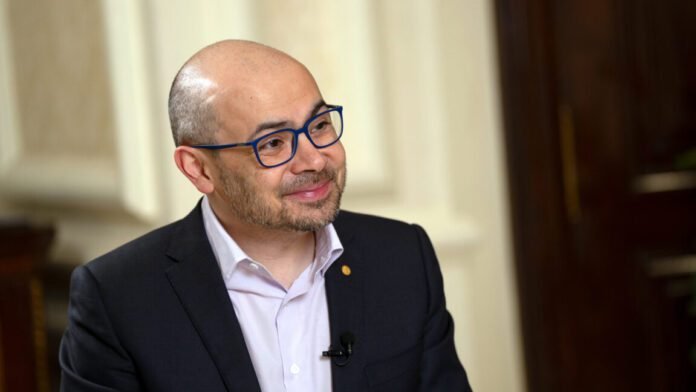
Google got a slow start with generative AI after seemingly being caught flat-footed by Microsoft’s Copilot reveal. What a difference a few years make. Now, Google is at the forefront of AI development (for better or worse), but new cracks are beginning to show. The company’s string of high-profile personnel departures continues, and DeepMind CEO Demis Hassabis has now said he will hand off day-to-day responsibilities to take on an oversight role at parent company Alphabet.
Hassabis was one of the founders of DeepMind, and he maintained a key leadership role after Google acquired it. As the generative AI boom took off, Hassabis has been one of the loudest voices predicting the impending creation of artificial general intelligence (AGI), which is typically described as an AI with human-like capabilities and intelligence.
In his memo announcing his decision to leave DeepMind, Hassabis again leans on the promise of AGI. “I’ve been working towards AGI my whole life and now, like many of you, I feel it is close at hand,” said Hassabis.
According to Hassabis, this shift will allow him to focus on the “big picture” work that is necessary at this moment. He will remain in charge of Google’s Isomorphic Labs, which uses AI to solve biomedical problems.
The daily operation of DeepMind, which works on the underlying AI research that fuels all of Google’s Gemini advances, will be handed off to Koray Kavukcuoglu. He will serve as DeepMind’s senior vice president, reporting directly to CEO Sundar Pichai. Hassabis, meanwhile, is becoming the chair of DeepMind and chief scientist at Alphabet.
While Hassabis is keeping his badge, some other prominent Google personnel have coincidentally announced their departure from the company at the same time. Key AI researchers Quoc Le, Oriol Vinyals, Jeff Dean, and Sanjay Ghemawat have decided to leave Google to found a startup called Discovery Loop. The startup’s goal is to use AI technology to automate scientific discovery. According to Steven Levy in Wired, the company was funded largely based on the sterling reputation of its founders.
Both Ghemawat and Dean are early Google hires who have left their mark on the company. Dean, in particular, is widely respected—you might even say idolized—within the company. As Google employee number 30, he had a hand in designing the systems that made Google search into the global information indexing powerhouse that it is today. Googlers even maintain an apocryphal list of “Jeff Dean Facts” that you can review on GitHub.
Jeff Dean was Google’s 30th employee and has been instrumental in designing Gemini models.
Credit: THOMAS SAMSON/AFP via Getty Images
Jeff Dean was Google’s 30th employee and has been instrumental in designing Gemini models. Credit: THOMAS SAMSON/AFP via Getty Images
More recently, Dean and Vinyals played a key role in designing Google’s Gemini AI models. Dean has also reportedly been among a group of employees pushing back on the company’s increased closeness with the Trump administration. Unlike Google, Discovery Loop is structured as a public benefit corporation, a for-profit entity intended to focus on public good. Although, both OpenAI and Anthropic have similar structures, so make of that what you like.
A troubling trend
Google’s announcement of the shake-up was framed in the typically cheery, PR-vetted language you would expect when something goes wrong. The report from Levy notes that Google CEO Sundar Pichai tried mightily to keep the group, especially Dean and Ghemawat, from leaving. After “multiple meetings” with Pichai, the four decided to move forward with their plans to exit.
In a vacuum, these changes might not look so bad. After all, Hassabis isn’t leaving the company, and Google has a deep bench of AI talent. But this isn’t the only change in Google’s roster of late. Earlier this summer, Google saw a string of high-profile departures, including Noam Shazeer, Google’s previous vice president of engineering and a co-lead of Gemini.
Shazeer was the lead author of the seminal 2017 paper “Attention Is All You Need,” which first described the transformer architecture that powers today’s expansive generative AI systems. He’s now at OpenAI, a real coup for the Google rival.
Around the same time, Google DeepMind VP John Jumper announced he was leaving for Anthropic. Jumper is famous in AI circles for his role in creating the protein-folding AI known as AlphaFold. He was soon after joined at Anthropic by senior DeepMind researchers Jonas Adler and Alexander Pritzel, who were reportedly instrumental in getting Gemini off the ground.
Pichai’s statement on the changes emphasizes Google’s strong position. “We’ve got amazing talent, world-class compute, and products that bring AI to more people than any other company,” said Pichai.
These staffing changes happen against a backdrop of slowing progress. After rapidly closing the gap between Gemini and other frontier models last year, Google now appears to be lagging. At I/O this spring, Google said it planned to release Gemini 3.5 Pro, its latest frontier model, in June. However, here we are months later, and we’ve only gotten new, lower-power Flash models. In the meantime, OpenAI and Anthropic have both rolled out new models that can’t stop hacking everyone.
Pro-Palestinian candidates score wins in US Democratic primaries
The results of US primary elections point to the growing influence of the Democratic Party’s progressive wing, which has placed the Palestinian issue at the centre of its political message.
Supporters of the movement say more than 250 progressives now hold elected positions across the United States. They also say that 35 progressive candidates defeated establishment Democratic candidates for Congress in this year’s primary elections, describing the results as a major shift within the party.
The United States is currently holding primary elections ahead of the November 2026 midterm elections, with Democratic and Republican voters selecting their parties’ candidates for Congress.
READ: American Jews favour Mamdani over Netanyahu as 30% say Israel committed genocide
Among the most notable results from Tuesday’s primary contests was Abdulrahman El-Sayed’s victory in securing the Democratic nomination for the US Senate in Michigan, alongside victories by several pro-Palestinian candidates, including Rashida Tlaib, Donovan McKinney, and William Lawrence.
Following his victory, El-Sayed stepped up his criticism of Israel, saying the issue was not limited to the government of Israeli Prime Minister Benjamin Netanyahu but also involved Israel’s policies themselves.
He said Israel had become under Netanyahu “more aggressive and more bloodthirsty”, accusing it of committing genocide and practising apartheid. He also questioned why the United States continues to fund a country that prevents the establishment of a Palestinian state, and said he opposed unconditional US military aid to Israel.
READ: Sciences Po Paris faces allegations of surveillance targeting pro-Palestine students